Heart & Hill: On Allison Hill, hard work, happiness and hope.

Burg in Focus: Wild Heart Ministries from GK Visual on Vimeo.

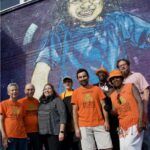
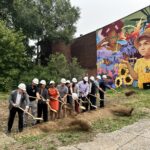
On a cool Saturday, Ben Countz, Serena Viera and Joanna Yoder prepared to battle trash.

They loaded themselves into a van and trailer and ventured to Nectarine Street on Allison Hill to collect two couches and a dresser.

Countz and Yoder manhandled the couch into the trailer then Countz navigated the narrow streets on the way to the incinerator. Back on 13th Street, Christina Herman wheeled her two daughters, ages 2 and 3, down the street, picking up trash as she went.

You might call this a typical day in the life of Wildheart Ministries, a youthful Christian group that operates out of the historic A. Carson Stamm Mansion on S. 13th Street.

Christina and her husband Tannon arrived in Harrisburg five years ago, joining a group of young missionaries who had settled into the mansion, calling themselves Burn 24-7. When that group relocated to California, the Hermans stayed behind, purchasing the mansion and starting their own organization.

“We felt called to stay here in Harrisburg, specifically Allison Hill,” said Christina. “We have a heart to see it transformed.”

The first transformation involved their own building, a stately, 109-year-old Georgian Revival built originally for a prominent Harrisburg attorney. The house—20 bedrooms and 15 bathrooms spread across 11,000 square feet—was in a state of disrepair.

“When we moved into the mansion, it was not a very pretty place,” Tannon Herman said.

Years of painting, fixing and rebuilding followed, repairing and wiping away decades of neglect. Today, Wildheart consists of four staff members, who can best be described as full-time community organizers, and three other mission-minded folks, who live in the house.

As a key part of its ministry, Wildheart began “Love the Hill,” an ambitious, five-year project to clean up Allison Hill.

In the summer of 2017, they took to the alley behind the mansion and started digging into the abandoned garages, filled with garbage from floor to ceiling. At first, the group used their own money to dump the trash.

“Our thought was we have a little bit of money,” said Christina. “All the bulk items, we just started taking in our trailers and dumping it ourselves and paying for it.”

The city Department of Public Works dropped in one day to see the goings-on and decided to haul the trash for free, as long as it was easily accessible for the employees and equipment.

So far, the group, with some 400 volunteers including many Allison Hill neighbors, has removed more than 1 million pounds of trash from the streets.

“We couldn’t do this without our neighbors being on board,” Countz said. “It’s not like we started this. I mean we are a part of it, but there have been so many people who have been doing this [in the city] and getting no credit.”

Tannon Herman said that their neighbors all find a way to contribute.

“When we go out on the street, the neighbors say, ‘Sweet, what are we doing today?’” he said.

If folks can’t help haul trash, they provide water, encouragement and, on sweltering summer days, popsicles.


Bit Different

Wildheart made the decision to remove trash based on Tri-County Community Action’s 2015 “Heart of the Hill” report, which noted that residents felt besieged by dumping and blighted, vacant buildings.

Blighted buildings not only held tons of trash, they provided a place for dealing and using drugs. So Wildheart has been boarding them up.

So, how does the group pay for all this? Donations primarily, along with its newest venture—Pure Bean coffee roastery, run out of the mansion’s low-ceilinged cellar. Like most of what Wildheart does, it’s a bit different.

The beans are air roasted, a technique rarely used, according to Countz, who does the roasting.

“We are in the minority of how coffee roasting is mostly done,” he said.

Unlike drum roasting, the chaff isn’t burned but blown away as the bean expands and releases it. The process creates a smoother, less bitter, less acidic coffee, he said. The ethically sourced, small-batch coffee can be purchased online or at the mansion.

As a shout-out to the neighborhood, 10 percent of all sales of their Love the Hill blend go to support their work.

Coffee and cleanups represent only parts of Wildheart’s ministry.

Quarterly block parties, Mondays at the Mansion worship and food distribution round out the group’s efforts. In addition, other organizations use the property for their events.

“We are increasingly getting more involved in collaborative efforts,” Tannon Herman said. “Part of the struggle of the neighborhood is there’s a lot of people doing good things, but not too many people doing good things together.”

Shirley Blanton, who’s resided in Allison Hill for 25 years, agrees that collaboration is necessary.

“You can’t do anything by yourself,” she said. “You need connection.”

One neighborhood resident thought so highly of Wildheart’s mission that he joined the house.

Quamell Durden discovered Wildheart through its outdoor worship. Curious, he ventured over, eventually joined the work crews, and, in June, entered the house to participate in its vision.

“It helped me to gain, basically, my happiness back,” he said.

Wildheart’s mission is to bring some happiness and hope to its neighborhood of Allison Hill.

Standing on the stoop of her home on the corner of Swatara and Nectarine streets, Leslie Defrank had only good words to say about the young people living in the mansion.

“Tannon and his family have been great to us and the neighborhood,” she said.

Wildheart Ministries is located at 333 S. 13th St., Harrisburg. They will hold their annual Neighborhood Harvest Party on Oct. 27. For more information, to volunteer or donate, visit www.wildheartministries.net.

Continue Reading

Food + Family: A dining dynasty returns with Valley Bistro.

Jacquie Ferentinos has deep roots in the Harrisburg restaurant business. So deep, in fact, that she says it runs in her blood.

It started when her grandparents opened the Keystone Restaurant on N. 3rd Street, a six-decade-old diner now run by her father. Jacquie remembers sleeping on the bench and taking baths in the three-compartment sink.

“My grandparents have been a huge inspiration for hard work,” Ferentinos said. “I mean they’re in their 80s and still there every day.”

Her love for serving food continued when she and her husband Steve opened Brick City Bar & Grille on N. 2nd Street, which they operated for three years. More recently, they owned a restaurant in Baltimore.

But Ferentinos just can’t stay away from the business. This time, her passion has extended to Valley Bistro, a casual eatery focused on fresh ingredients, located just outside of Enola.


This & That

Ferentinos completely re-did the space, which some may remember as the original location of Al’s of Hampden. She created a modern and urban atmosphere that feels like a restaurant you’d find in a bigger city.

Valley Bistro opens at 7 a.m. each day, serving breakfast and lunch. It’s a quick-service concept similar to Panera, and the menu caters to everyone from business people working nearby to families with little kids who want a sugar rush for breakfast with the Fruity Pebbles French toast.

For her part, Ferentinos loves the cannoli-stuffed French toast, the authentic gyros and all of the gluten-free options, including the cauliflower pizza.

The gyros are shaved off the cone and stuffed with French fries, and the machine is featured in the window so people can see the process. In fact, Valley Bistro is so focused on fresh ingredients that there’s no microwave or freezer.

Ferentinos said the restaurant offers catering and take-out, as well. Plus, the space is available to rent out for things such as birthday parties or work events after 2 p.m.

The early closing time is just one way that Valley Bistro caters to family, an intentional choice for Jacquie and Steve, who have three children.

Their previous restaurant ventures were tough because of the late nights, she said. But as their kids grow up, they wanted back in the business. Jacquie even helped out at the Keystone on weekends because she missed the industry so much.

“My biggest concern was the kids and how they would feel,” she said about starting a new restaurant.

With her youngest son heading to pre-school and a whole family on her side, she decided to take the leap. She said her kids were both patient and excited. While renovating the building, they would come in at night and answer the phones.

“Hi, thanks for calling Valley Bistro,” they’d chime.

The restaurant closes after lunch so the Ferentinos family can go home to their kids. There are even items on the menu named after their children, including “Stella’s Grilled Romaine Chicken Caesar Salad,” the “Maximus Burger” and “Gianna’s This & That.”

As Ferentinos goes back to work, she wants her children to learn the value of working hard to realize their dreams, as she did.

“I hope that they go to school, and they become doctors and lawyers,” she said. “But whatever it is, they will learn their roots from here, from us,” she said.


Good Party

Valley Bistro also draws on aspects of Brick City. Ferentinos said Brick City regulars loved the food, especially the burgers, so she brought much of that menu over to the new space.

She even faced some of the same pushback that she felt when opening Brick City. Valley Bistro sits in the same place where Al’s of Hampden was for over a decade, followed by Philly Steak & Shake.

People told her not to open the restaurant because of the turn into the building and because of the layout. But Ferentinos saw what it could be.

It was much the same at Brick City, she said. The previous two places in that location had failed, and people claimed it was a bad spot with no parking. Still, she and her husband gambled and succeeded.

“We did it financially on our own, and I remember on the opening night, we were so busy, and we just kind of looked at each other like, ‘Wow, we did this,’” she said.

Although Brick City closed in 2013, selling the space to Ted’s Bar and Grill, Ferentinos kept the Facebook page because it’s “kind of like a piece of her.”

“I always had the hope that I would be able to post on there again like, ‘Hey we’re opening a new place,’” she said. “And I did.”

Ferentinos has come a long way from the high school girl who couldn’t go to a football game because she was working at the Keystone. While some people dread the restaurant business, she loves getting to serve great food to great customers.

She thinks that good times around the table create memories that last a lifetime and, at the end of the day, she relishes interacting with customers and hearing how much they enjoyed the food.

“If you have good food then it’s a good party,” she said.

Valley Bistro is located at 4520 Valley Rd., Enola. For more information, call 717-695-7673 or visit www.valleybistroenola.com or the Facebook page.

Continue Reading

ABC’s of PT: For Physical Therapy Month, a doctor addresses the whys, the hows.

Every day millions of people wake up seeking an answer to their pain (neck, back, knee, etc.).

But more than that, it is what the pain prevents them from doing. They are looking for a way to get back to playing with kids or grandkids, taking that family vacation, and working without hurting so much.

Most want to do this without having to rely upon pain medication or consider surgery. People want a more natural solution, which is great because the human body is resilient and often can heal itself with a little TLC. This is the role and place for a physical therapist, and, each October, this educational message is emphasized during National Physical Therapy Month.

Many people do not make the choice to see a physical therapist because, first, they do not know what we do and how we can help them. Secondly, they do not realize how easy it is to see a physical therapist and, third, they are fearful of making the wrong decision for their ache/pain/issue.

So, let’s address these issues.

What is a physical therapist and what does one do?

Physical therapists are neuromusculoskeletal experts, meaning we help people with any problem that impacts muscles, joints or the neurological system (think stroke or MS, among many more), preventing a person from enjoying daily life and recreation. The issue could be new or old, after surgery, after an accident, or just because something hurts or prevents you from doing something you want to do.

We help people with problems such as trouble walking up steps, getting up from a chair, reaching into a cabinet or bending over to pick up a bag of groceries. Some people contact us because they just feel stiff or cannot move like they want or they hurt when they do. If you are looking to prevent worsening of some condition or just want your body to feel younger—a physical therapist can help.

How easy is it to see a physical therapist?

It’s very easy. In most instances in Pennsylvania, you can have immediate access to physical therapy services without a doctor’s referral. Technically, even Medicare patients can be seen for an evaluation without a doctor’s script but may not be able to be treated based on the provider they choose. In almost all instances, a doctor’s referral will be necessary for Medicare patients to get treatment and after 30 days for everyone else.


Why do people struggle to make the decision to get help?

Because many are fearful of making the wrong decision, that the choice they make will not lead them to the solution they want. They are nervous that the person or type of treatment they choose will not be the right one for them. Or they even feel let down by some provider or the medical system as a whole to the point they don’t know what to do—so they choose nothing. These feelings are understandable. But just because one treatment or one provider did not work does not mean the next won’t be able to help. Treating the human body is an inexact science—sometimes trial and error is necessary—and other times those other false starts leads to the right answer.

In the end, it comes down to what a person is willing to live with. Many people live with pain unnecessarily, unaware that physical therapy can help them live normal, active lives again.

Dr. Andrew Zang is board certified in orthopedics and a fellow of the American Academy of Orthopedic Physical Therapists. For more information, call 717-440-6197 or visit www.zangpt.com.

Continue Reading

Revolution in Care: Harrisburg native pens book on founding father, Benjamin Rush.

Illustration by Ryan Spahr.

From supermodels to rabbis, the subjects of award-winning investigative journalist Stephen Fried’s six books have been nothing if not diverse.

Now, with “Rush: Revolution, Madness and the Visionary Doctor Who Became a Founding Father,” this Harrisburg native has entered the territory of writers like David McCullough to produce a comprehensive biography of Benjamin Rush, a major figure in American history whose legacy has slipped, unfairly, into the shadows.

Signer of the Declaration of Independence, member of the Constitutional Convention, pioneer in the humane treatment of mental illness, vigorous advocate for racial, religious and gender equality and founder of Dickinson College, lifelong Philadelphian Rush had a unique vantage point from which to observe the birth of the American nation and the growing pains of its early years.

In an interview from his Philadelphia home, “down the street from the American Revolution,” as he describes it, Fried, who teaches journalism at both the University of Pennsylvania and the Columbia University Graduate School of Journalism, explained that he was drawn to Rush as a subject because the story allowed him to marry his interest in the problem of mental illness (he co-authored a 2015 book on the subject with former Rep. Patrick Kennedy) to an account of the American Revolution.

Rush, who was born in 1745 and died in 1813, offered the added benefit to a historian of a life that spanned a profoundly significant era. He was a “very political doctor trying to do important work in Philadelphia, who’s a wide-eyed revolutionary when the big guys come to town and, within two years, he’s one of them,” Fried remarked.

Rush had been engaged prominently in political activity as far back as 1773, when he co-wrote the anti-tax broadside that led to the Boston Tea Party and helped usher Thomas Paine’s pamphlet “Common Sense” into print.

Returning to Philadelphia after his participation in the Revolutionary War, in which he served as surgeon general to Washington’s troops in some of the bleakest days of the conflict, Rush resumed his medical practice, and by the mid-1780s, entered into a period of intense public engagement that included a major address to the American Philosophical Society in 1786. In that talk, Fried explained, Rush “lays down the framework for seeing addiction and mental illness as diseases and not failures of will or religious faith, which is how they were viewed at the time.”

Along with Benjamin Franklin, Rush worked to revive the Pennsylvania Abolition Society. A man of strong Christian faith (in contrast to many of the Deist founders), Rush was someone who, as Fried described it, “believed that religious liberty was bigger than organized religion,” opposing a religious test for public office in the proposed Pennsylvania constitution, as merely one illustration of his broadminded views.

Rush carried on an extensive correspondence with John Adams and was responsible for reconciling Adams and Thomas Jefferson a dozen years after the bitter election battle of 1800. The desire of Rush’s family and these ex-presidents to suppress this intensely personal correspondence, Fried argues, was one of the reasons he’s fallen into relative obscurity.

In letters like these, and a profusion of other writings, from which Fried quotes extensively in his book, Rush passionately articulated, in eloquent, but accessible prose, his vision of equality and liberty for the nascent American society.

“What I love about Rush,” Fried said, his enthusiasm for his subject evident in his voice, “is that the minute there is America, he starts realizing what the challenges will be. He doesn’t write about them as if he’s fixing them or that they will be easily fixed. He lays down the challenges: the challenge between science and religion; the challenge between liberty and good government.”

Central to Rush’s importance, he continued, is “how correctly he identified the main friction points dividing America and how reasonable his approaches to these things are. They still have great value today because he wrestles with them; he’s candid about the need to wrestle with them. The American experiment is that we’re going to wrestle with this. It’s always the best we can do. We wrestle with them and we ask: ‘How is America going to be different than other countries?’”

Fried is excited about returning to his hometown to discuss his book.

“Harrisburg is the greatest place to be from in the world,” he said, noting his many friendships here and the warm support he’s received from the local community for his previous work.

Asked to offer some final thoughts on Rush’s legacy and its contemporary relevance, Fried was emphatic about his enduring importance in American history.

“The message Rush spent most of his career trying to convince people of—of equality, of racial, religious, gender equality—I wish we could say that we had made more progress in these areas, but we haven’t made enough. Rush would probably say he didn’t expect us to, but that he always expected the challenge would be one that we would be open about and try to do better. We didn’t invent a country to have a perfect union. We invented a country to have an increasingly more perfect union. Rush really understood that.”

Stephen Fried will be at Beth El Temple, 2637 N. Front St., Harrisburg, on Oct. 21, at 7 p.m. for a presentation and book signing. General admission tickets are $25 ($20 for students) and include a dessert reception. For more information, email [email protected] or call the office at 717-232-0556. To learn more about Fried and his work, visit stephenfried.com.

Continue Reading

Leaving Act 47: The private sector has revitalized Harrisburg in the past. It can do so again.

Rep. Greg Rothman and Harrisburg Mayor Eric Papenfuse.

The Overlook Mansion on North Front Street stands after 117 years as if it is frozen in time in 1901.

William Reynolds Fleming, a mechanical engineer, built the home for himself and his wife next to the city waterworks. When Virginia Hammond Fleming passed away, she left the property to the Civic Club of Harrisburg, which was founded in 1898 with the mission of beautifying the city and improving civic engagement.

The Civic Club oversaw several citywide improvement projects, including maintaining the public water supply and the upkeep of the local jail. The Civic Club survived through two world wars, when the mansion was used as a supply site for the Red Cross. It remains active to this day.

The organization has been an outlet for generations of private citizens who care deeply about their city and invest their own time, energy and money to ensure their fellow citizens have pristine living conditions.

Almost a century after the Civic Club was founded, five of my colleagues joined me in creating a similar organization. Together we founded the Harrisburg Young Professionals in 1998. This year, we are celebrating the 20th anniversary of HYP and are proud to have watched it grow into a thriving organization.

After we returned home from college, my friends and I noticed that the city we once knew for its popular bars and restaurants was becoming run down. The YMCA, the local Presbyterian Church, the Gazebo Room, Lombardo’s and Harry’s Bar, which had been staples of the community, were barely recognizable.

To combat this, as president of HYP in 1999, I focused our group on encouraging hundreds of people to move back into the city and create jobs. Mayor Stephen Reed called for all hands on deck to help bring Harrisburg back to life, and the business community heard the call.

As a real estate broker, I was determined to revitalize the real estate in the city. RSR Realtors was involved in the expansion of Restaurant Row, Market Square Plaza and Capitol Heights residential.

This private-sector stimulus, combined with the signing of legislation by Gov. Tom Ridge in 2000 for the city rescue of the schools and the later implementation of Act 47, catapulted the city onto a healthy pace of economic growth.

Act 47 required Harrisburg to comply with certain recommendations issued by the Intergovernmental Cooperation Authority, which allowed the ICA to withhold all or part of the city’s revenue if these were not met. It also put a taxing authority in place for an enhanced earned income tax (EIT) and local services tax (LST).

This fall, the General Assembly will be voting on whether the city will be allowed to exit Act 47 while keeping the taxing authority.

Since stepping down as president of RSR Realtors and becoming a state representative for the 87th district, I have continued my work to help the city of Harrisburg come back to life. Although I represent the suburbs of Cumberland County, many of my constituents commute into the capital for work. They are only a portion of the more than 40,000 commuters who work in Harrisburg. I also understand the impact that a capital has on its surrounding neighborhoods in terms of crime rates and real estate value, among other factors.

I want the city of Harrisburg to succeed in the long term. My bill, House Bill 2557, would allow the city to continue its taxing authority while being free of Act 47. This would ensure that no job-killing tax hikes, such as the proposed 100-percent property tax increase and 2-percent commuter tax, would be necessary. Harrisburg would also be more attractive for businesses and investors because it would no longer be an Act 47 municipality once under state receivership.

The city has sold the troubled incinerator and its parking system, and the Harrisburg Water Authority was transferred to Capital Region Water. It has worked to renegotiate union contracts with police officers, firefighters and AFSCME.

While these solutions have aided in ridding the city of its debt, residents have been facing tax increases, especially from the Harrisburg School District.

This is detrimental to a city when 50 percent of the real estate is tax exempt, mostly due to state ownership, and when one-third of its population has salaries less than $30,000. With half of the city’s population near or below the poverty line, we must eliminate the current harsh climate for economic opportunity.

My bill would ensure that the city’s credit rating would improve and that residents, businesses and commuters would be given tax relief.

Scranton and Pittsburgh were able to diversify their tax structures when they were in an economic crisis, and, as a result, have attracted new industries to their communities, including natural gas.

For over a century, the residents and neighbors of Harrisburg worked hard to grow the city. To finish the work of revitalizing it, we must allow the private sector to develop free from heavy regulations and taxes.

As a member of the General Assembly, I have partnered with state Rep. Patty Kim of the 103rd district in helping the city. I have long admired Rep. Kim’s passion for Harrisburg. She has been a crucial advocate for the city and believes that our bill is key to its future prosperity.

The capital of Pennsylvania should be its shining city on a hill, overflowing with commerce and visitors. It has the potential to be an inspiration to the rest of the commonwealth for how to attract businesses and working families.

It is time to let the city be free to focus on how to ease the burdens facing business and property owners. There is no time to waste.

Let’s work together to make Harrisburg fruitful and inspiring again. We did it before and we can do it again, but this time, for good.


Rep. Greg Rothman represents Pennsylvania’s 87th legislative district.

Continue Reading

Harrisburg, By the Book: Literary roads converge during the 2018 Harrisburg Book Festival.

“How can we take this festival to the next level?”

That was the thought following last year’s Harrisburg Book Festival, even after a long weekend filled with acclaimed authors and thousands of guests, according to Midtown Scholar co-owner Catherine Lawrence.

She and Alex Brubaker, the bookstore manager, pondered how to make the festival even better. Well, a Grammy-nominated artist, an Oprah’s Book Club winner and President Barack Obama’s former speechwriter just might do the trick.

This month, Midtown Scholar hosts the 2018 Harrisburg Book Festival, the sixth such celebration of all-things literary, featuring a wide variety of book readings, signings and discussions, as well as children activities and more.

“We have exceptional novelists, historians, children’s authors,” Lawrence said. “The schedule is packed with the most interesting choices we could find. That is the important part of last year’s book festival that we definitely wanted to continue.”

Opening the festival is New York Times bestselling novelist and Oprah’s 2018 Book Club Selection author Tayari Jones, who will read from her novel, “American Marriage.” Grammy-nominated singer-songwriter—and now published poet—Mary Lambert will read from her new book, “Shame Is an Ocean I Swam Across.”

For the more politically minded, Beck Dorey-Stein, author of “From the Corner of the Oval,” is returning to Midtown Scholar, just months after her first visit. She will talk with another former White House employee and friend, David Litt, an Obama speechwriter who now is head writer for the comedy website and film company, Funny or Die. They will discuss what it was like coming of age in the Obama White House.

Another highlight will be Crystal Hanna Kim, who will read from her debut novel, “If You Leave Me.” Inspired by her grandmother who survived the Korean war, “If You Leave Me” follows the story of a young Korean refugee named Haemi Lee, who fled her home in the midst of the war. In the book, Lee grapples with her home crumbling, taking care of her widowed mother and younger brother and being in love with two other refugees.

“She’s a willful, independent, intelligent young woman,” Kim said. “But she’s living under the duress of poverty, hunger and violence.”

Kim also will converse with her friend and fellow debut novelist Lucy Tan of “What We Were Promised.” The pair will discuss the theme of home and how it is laced throughout their stories.

“I’m really excited to go to Harrisburg,” Kim said. “It seems like it is a really cultural city. And from what I heard, Midtown Scholar seems like such a strong cultural force in the city. I’m really excited to explore and be a part of a strong local community for the weekend.”


A Party

For Midtown Scholar, part of reaching “the next level” is pulling back on the number of events and authors this year. Rather than packing every hour with activities, the festival will space out events to give guests time to explore the bookstore and Harrisburg.

And, despite the major names on the schedule, attendees will have the same up-close-and-personal experience they’ve come to expect gathered around the bookstore’s stage.

“You might go see Tayari Jones in a venue of a thousand-plus attendees, but it’s easy to feel detached from the author,” Brubaker said. “We’re bringing in the same high-quality authors as these internationally renowned festivals—only in a much more intimate and personal setting—an independent bookstore.”

With so many acclaimed writers, Brubaker said that they expect more than 4,000 attendees, double last year’s number.

Aside from the opening and closing keynote speakers, the Harrisburg Book Festival is free and open to the public. For those who are not able to come out to the festival, Midtown Scholar will offer a podcast of the events the following day.

“One of our core missions at the book festival is to recognize that solitary act of reading and connect readers with not only the authors, but other readers in our community,” Brubaker said. “We want to throw a party to celebrate these books, these authors and our readers. We want to celebrate it with thousands of other book lovers across central Pennsylvania.”

The 2018 Harrisburg Book Festival will run Oct. 11 to 14 at Midtown Scholar Bookstore, 1302 N. 3rd St., Harrisburg. For more information, including a complete list of events, visit www.hbgbookfest.com.


Author Sightings

The 2018 Harrisburg Book Festival features numerous book- and literary-themed events, including appearances by the following writers and authors:

  • New York Times bestselling novelist Tayari Jones (opening keynote)
  • Grammy-nominated singer/songwriter and poet Mary Lambert
  • National Book Critics winner and New York Times bestselling critic Carol Anderson
  • New York Times bestselling historian Liza Mundy
  • President Barack Obama’s speechwriter David Litt and stenographer Beck Dorey-Stein
  • Caldecott honoree Lauren Castillo
  • Emerging novelists Crystal Hana Kim and Lucy Tan
  • Joe Beddia, whose pizza was named Bon Appetit Magazine’s “Best Pizza in America”
Continue Reading

Artist in Focus: P.D. Murray

Some amazing artists call the Harrisburg area home, and we feature their work in TheBurg each month. However, we feel that we still don’t do justice to the incredible painters, illustrators, photographers and sculptors that reside in central PA.

Therefore, from time to time, we plan to feature the work of a single artist in our pages. In so doing, we hope to give greater recognition to these talented individuals and better highlight the artwork created right here in our area.

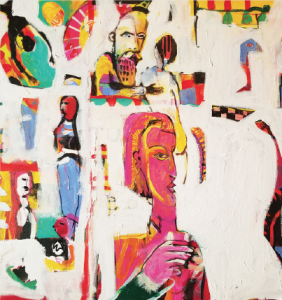
So, please enjoy this first selection from P.D. Murray, who is also our cover artist this month. Murray has been painting for more than 30 years and has become known for his distinctive modern expressionist style. You can see more of his work by visiting the Millworks in Harrisburg or by going to www.pdmurray.art.

Continue Reading

Travels in Beer: Harrisburg, Bavarian breweries collaborate, innovate–and you can taste the result.

Sure, you know pilsner. It’s that watery stuff stocked in beer coolers every Super Bowl Sunday, right?

Think again. When University of the Sciences beer professor Matthew Farber walks into a brewpub, he orders a pilsner as a test “because it’s a simple, clean, difficult-to-master style.”

“Because it’s so simple and clean, it becomes very elegant,” said Farber, director of the Philadelphia school’s brewing science certificate program. “Any flaws or problems are very apparent. To make it well means that a brewer has really good control of his or her process and raw materials.”

Now, a flavorful pilsner and an Oktoberfest beer steeped in Bavarian tradition are on tap in Midtown Harrisburg, while a 160-year-old German brewery prepares to launch an IPA to a cautiously curious market back home. All are products of a two-way collaboration between the Millworks Brewery and Keesmann Brewery of Bamberg, Germany.

It all started with Millworks owner Joshua Kesler.

Ancestry-wise, Kesler is typically American—“a little bit of this and a little bit of that,” he said.

He studied German in college because Spanish was booked up. Or because German was later in the morning. Whichever, he made it an avocation for the chance to “engage with people in their mother tongue. That was the one I picked, and I’m sticking with it.”

Through a friend in Germany, Kesler met Stefan Keesmann, owner of Keesmann Brewery in northern Bavaria. Kesler (German translation: “cheesemaker”) suggested a brewing and cooking collaboration to Stefan and his son Lukas Keesmann (also “cheesemaker”). The Keesmanns had entertained similar thoughts.

Thus, Stefan and Lukas Keesmann came to Harrisburg for a consultation in early July. Kesler and Millworks brewmaster Jeffrey Musselman returned the favor and ventured to Germany later in the summer.

The Millworks’ first resulting pour was its “Collaboration Pilsner,” a delicious take on the classic lager that’s dreamy with the kale salad, the cheeseburger and probably anything else on the Millworks’ menu. Musselman, 10 years in the business, said he increasingly appreciates a “well-made, simple beer, and that’s the way the Germans approach their beers.”

Putting a Millworks spin on a classic German pilsner included dry hopping a newish German hops called mandarina Bavaria, for a “marriage between an old-school pilsner but also using a hop variety that’s relatively new and more pleasing to the modern American craft drinker,” Musselman said.

The German purity law, the Reinheitsgebot, decrees that only beverages brewed with barley (or wheat), yeast, water and hops can be called “beer.” A malty imperial stout tastes nice, the Keesmanns told Kesler and Musselman, but it’s not beer.

“If you drop a cherry in it, you can’t call it beer,” said Kesler.

Musselman certainly loves the American arms race for the craziest tap in town, but his Germany visit affirmed the Millworks philosophy of beer as social catalyst.

“Beer over there is not seen as a luxury item,” Musselman said. “It’s part of their daily routine. It’s part of living a good life. That was the really cool thing I took home from the trip. It was neat to see people just enjoying a beer with friends at a beer garden and hanging out and talking and enjoying the good life.”


Traditional as Possible

American beer is deeply rooted in German traditions and techniques, brought to the New World by early immigrants.

By the mid-19th century, the city of Lancaster earned the nickname “Little Munich” for its profusion of breweries catering to German-Americans thirsty for home-style lagers instead of English ales.

Prohibition and post-World War II industry consolidation severed many of those ties.

Today’s American brewers can learn a thing or two from their German counterparts, said Farber. The United States is poised to reach 7,000 breweries this year, with two opening per day since 2012, and an emphasis on quality is now sharing priority with the rush to innovate.

“There’s such great attention to the technical aspects of brewing in Germany,” Farber said.

That combination of German tradition and American innovation now is also on tap at the Millworks, which recently released its Oktoberfest, a beer actually closer to a German springtime marzen.

A true German Oktoberfest beer is a light-colored lager, but Americans expect autumn color. Musselman said it’s “malt-forward” for “those bready, caramel notes.” All ingredients, including the hops, are German, hewing to a brew “as traditional as possible and also appealing to the American demographic.”

“When I have a sip of that beer, it immediately transports me to southern Germany,” Kesler said. “I start looking for the closest wurst I can find.”

Germany’s beer culture is “baked into their way of life,” he added. “It’s not that someone’s a beer drinker. Everyone’s a beer drinker.”


Both Ways

In Germany, new beers encounter skepticism, and yet, brewers must innovate incrementally to differentiate in a market where all brewers make the same products with the same ingredients, under the same rules.

Younger Germans are “picking up this IPA bug” in their travels, Kesler said, and American craft brewers are making inroads in the market. So the Keesmanns weren’t cautious about collaborating, but they were taking a risk. They approached the collaboration “trying to figure out what type of American-style microbrew would resonate with their very traditional customer base,” Kesler said.

The Keesmanns told Musselman they wanted to brew an IPA. The resulting New England IPA will reach German stores and restaurants next April. Juicy in taste and hazy in appearance, it allows Keesmann to reach that younger demographic while hewing to German brewing traditions.

And because Keesmann Brewery, like the Millworks, is food-oriented, the collaboration brings new dishes to each establishment, Kesler said. German dishes on the fall menu pairing with Millworks’ Oktoberfest include a schweinshaxe.

And that means?

“I hate to say it out loud, because it doesn’t sound great, but it’s pork knuckle,” Kesler said. “It’s this fantastic presentation of a huge hock. It’s pork tender with crispy skin on the outside. It feeds two people. It’s fun to pick away at while you’re drinking a big beer.”

And what else would the Millworks offer on the culinary side but smoked brisket? The Keesmanns and their families loved their taste of the Millworks specialty, and next year, chef Lance Smith will travel to Keesmann Brewery, guiding setup of an “American-style barbecue blowout in their beer garden.”

That visit also will go both ways, as the Keesmanns return to Harrisburg in March to help create a to-be-determined beer. Aiming for release with the Millworks’ rooftop beer garden opening on May 1, Kesler welcomes suggestions for the new beer’s style.

Farber knows of just a few other intercontinental collaborations, one being between the 2SP Brewing Co., in Delaware County, Pa., and a brewery in Japan, where there are “some interesting trends.” He also noted that Sierra Nevada collaborated with the world’s longest-operating brewery, the Bavarian Weihenstephan, to produce its Braupakt hefeweissbier.

The Millworks-Keesmann collaboration is “a great idea,” he said. “Innovation meets tradition.”

Musselman and Kesler hope to make the initiative a regular effort, with each team regularly crossing the ocean to swap brewing and culinary notes. Musselman, for one, is wondering about his hefeweizen, declared good by the Keesmanns, but not a true German hefeweizen.

“There absolutely is a lot to learn to really dial these beers into the German tradition,” he said.

The Millworks is located at 340 Verbeke St., Harrisburg. For more information, visit www.millworksharrisburg.com.

Continue Reading

Culture Club: Telugu Association is dedicated to beautiful language, good deeds.

The air was filled with excitement and the enticing smell of Indian cuisine as the sun began to set in Harrisburg.

Car after car arrived at the Scottish Rite Cathedral, quickly filling the parking lot as hundreds of women gathered to celebrate the kickoff of Mother’s Day weekend on a pleasant Saturday in May.

Women of all ages had gathered for the first annual JUL (Just Us Ladies) event hosted by the Harrisburg Telugu Association (HTA) to celebrate community, culture and female empowerment.

The origins of HTA started with a few dozen families who shared a love of Telugu, one of six languages recognized by the Indian government as “classical.”

A smile spread across HTA President Laxman Buddineni’s face as he described the language he holds dear.

“The alphabet contains 52 letters, and all words end in a vowel,” he said. “Some call it the ‘Italian of the East’ because it is beautiful and melodic, as is any poetic language.”

Buddineni went on to explain that India has 14 official and 256 unofficial languages.

“There are many gods in the Hindu culture, and poems praising the gods are written in Telugu,” he said.

To promote and preserve the language, HTA sponsors a Sunday school at the HARI Temple in New Cumberland, where students learn to read and write the ancient language, which is predominately spoken in the southern part of India.

HTA emerged from humble beginnings, starting out in 2002 with a few dozen families.

“Our goal was to reach out to needy people, promote the culture and preserve Telugu,” said HTA board member Venkataramireddy Sanivarapu.

Today, the nonprofit has grown to include 1,000 families, with 18 committee members.

“There’s a lot of satisfaction in helping people who come to Harrisburg negotiate their way around the community,” said board member Baba Sontyana. We work hand-in-hand with many nonprofits.”


Smiles & Laughter

During the Just Us Ladies event, attendees spent time socializing and visiting a variety of vendors who had filled the halls selling items like clothing, jewelry and accessories.

Many stood in line chatting while waiting to partake in an appealing array of appetizers before making their way to a packed ballroom to hear uplifting speeches delivered by notables like state Rep. Patty Kim and Dr. Sue Mukherjee, an assistant vice chancellor for Pennsylvania State System of Higher Education.

Speeches were followed by a fashion show, dance performances, a DJ, dinner and an audience-participation activity, which energized the crowd and tested knowledge of Bollywood favorites. A line from a song was sung for the audience, and attendees were tasked with providing the next line. Smiles and laughter filled the auditorium, and, soon, groups of ladies were on their feet singing and dancing, competing to be the first to recognize the next line.

Buddineni said that the event was created to raise money for causes at home and abroad. Thanks to Just Us Ladies, orphans in India will benefit from the $3,000 raised during the event. Harrisburg’s Shalom House received a matching amount.

Denise Britton, Shalom House executive director, said that the money would be put to use helping area women with basic health and wellness needs, shelter, life coaching and education. The organizers, inspired by the rousing success of the event, have decided to make it an annual affair.


Long-Held Values

Just Us Ladies may be the newest event, but there are many others.

HTA kicks off the new year each Jan. 2 with Ugadi, a grand, full-day celebration that attracts about 200 performers and 700 spectators.

“We wear cultural clothing and celebrate our heritage with programs designed to depict Indian art forms,” said Buddineni.

Additional activities throughout the year include a summer sports program, an annual picnic, an Adopt-a-Highway event that includes a daylong cleanup, and a floral festival called Bathukamma, when the ladies of the community gather together to celebrate the patron saint of womanhood. The group wraps up the year with a Thanksgiving food drive, where members raise money and youth volunteers serve Harrisburg seniors.

Sambasiva Ellanki, general secretary, said that the group is accepting new members and can always use more volunteers.

“Finding people with free time is a big challenge,” Ellanki said. “Everyone is busy.”

Another challenge is financial, a situation that is shared by many nonprofits.

Annual membership dues are kept deliberately low at $35 a family to attract as many people as possible. Currently, the group is working on finding grants to help keep the organization on financially stable footing.

Buddineni is optimistic that the situation will work itself out.

“We have a few commissioners in the state who are trying to find out more information on applying for grants as a minority nonprofit,” he said.

Until then, the group plans to continue to forge ahead, working with other nonprofits, helping newcomers to America integrate into the community, promoting socialization and family life, preserving the Telugu language and imparting long-held values to future generations.


To learn more, visit the Harrisburg Telugu Association website at www.ourhta.com or their Facebook page.

Continue Reading

Start Here Now: The ripple effect of volunteering.

When I was 10 years old, a 7-year-old boy named Rayshaun spent the summer at our home through the Fresh Air Fund.

The Fresh Air Fund allows children from New York City’s low-income communities to enjoy summer experiences in the countryside through visits with volunteer host families. Sean Combs, better known as “P Diddy,” recently revealed on “Jimmy Kimmel Live!” that he participated in the Fresh Air Fund as a child. In Lancaster, Pa., Diddy said, he milked cows, picked berries and got a chance to appreciate life outside of the hustle and bustle of the city.

“It really teaches you how to just relate with each other,” he said.

The first summer Rayshaun spent with my family, he had never played in grass before, and he thought the floor was more comfortable than a bed. Through the next several years, he learned to swim, fish, play baseball, hit a golf ball but, most importantly, be a kid. We would spend our summers making new memories together, working on reading and writing skills, as well as just sharing a stable family environment. Rayshaun is now 22 years old, a college graduate and an important member of our family.

Recently, I attended the opening retreat for Leadership Harrisburg Area Class of 2019.

During the retreat, we discussed servant leadership, color-code personality assessments, community service and nonprofits in our area. We also talked about our region as a whole by reviewing county information from the U.S. Census Bureau’s 2012-16 “American Community Survey” five-year estimates.

Even though I grew up in this area, seeing some of the statistics still shocked me. As I mentioned, my family was involved with the Fresh Air Fund, which helps children in New York City. However, when you look at the statistics, the poverty rate is lower in New York City than in Harrisburg. In New York, 20.3 percent of people live in poverty, while poverty affects 31.7 percent of people in Harrisburg. Also, 36.2 percent of New York residents over the age of 25 have a bachelor’s degree or higher, which is double the education level of Harrisburg residents.

Helping children and communities anywhere is important, and we loved our experience with the Fresh Air Fund, but what about places right outside of our own windows?

Research shows that, while over 90 percent of us want to volunteer, only 1 out of 4 Americans actually do. Studies also show that children whose parents volunteer were significantly more likely to do so themselves. From my personal experience, I have valued volunteering because my parents wove it into our lives. They never directly said, “You have to volunteer.” But watching them live with the desire to help others was very influential in my life.

We have all heard the excuses before: “I’m not sure how to get involved,” or, “I don’t have the time.”

My advice would be to just start here now. My employer, Gunn-Mowery, LLC, has an “Upside of Giving” committee. In the past few months alone, we have donated shoes to a local school, spent a day organizing clothes at Dress for Success, painted rooms at the Methodist Home for Children, volunteered at the Special Olympics, painted faces at the Girls on the Run 5K and cooked a meal at the Ronald McDonald house. Those are just a few examples of volunteer opportunities, and there are so many others.

My late grandfather, Sen. Hal Mowery, was a state leader, well-respected businessman, diligent advocate for children, education, healthcare and business and an exemplary, community-minded citizen. He often used the quote from Margaret Mead, “Never doubt that a small group of thoughtful, committed citizens can change the world. Indeed, it is the only thing that ever has.”

I urge you to go alone, get your friends together or assemble a small group from work. Even better, make it a family outing and expose your children to volunteerism at a young age. Just as a simple action has the ability to alter society, a single volunteer can help improve our community. Start here now.

Jamie Mowery Lewis is a marketing executive for Gunn-Mowery, LLC, a community publisher for TheBurg.


Continue Reading