Letter to the Editor: PENNVEST can help homeowners finance critical sewer repairs.

To The Editor:

I read “One Bad Party,” in your October issue, with interest. As the article notes, sewer lateral repairs can be costly – but, for homeowners dealing with this unexpected expense, there is help available. PENNVEST, in collaboration with the Pennsylvania Housing Finance Agency, offers low-interest loans to homeowners who find themselves needing to deal with sewer lateral costs. At 1.75% fixed-rate interest, and a maximum loan amount of $25,000, a  PENNVEST Homeowner Septic Loan presents an affordable solution to Harrisburg residents who find themselves attending neighborhood parties like the one Ms. Rowe describes. Anyone who would like more information can call the PHFA at 855-827-3466 and ask about financing for sewer lateral repair or replacement. The same loan can also be used to deal with on-lot septic repair or rehabilitation, for residents living outside the city.

Rebecca Hayden Kennedy | Region IV Project Specialist
Pennsylvania Infrastructure Investment Authority (PENNVEST)
Room 434 Forum Building | Harrisburg, PA  17120
Phone: 717.783.4488|Cell: 717.574.8454
www.pennvest.pa.gov


Continue Reading

March of Silence: Protestors take steps to battle human trafficking.

Greenlight Operation marchers quietly walked down State Street on Saturday.

Sometimes, silence is louder than shouts.

Hundreds of people walked the streets of Harrisburg on Saturday morning. Dressed in black, they quietly walked in solidarity with a not-so-silent message—slavery still exists.

“Human trafficking is not just an issue that’s in a far-off land,” said Jordan Pine, director of Greenlight Operation, which organized the 2018 Walk for Freedom in Harrisburg. “It’s here.”

While trafficking is often seen as an international issue, Pine urged people to recognize the slavery occurring around them. Human trafficking is the fastest growing criminal industry worldwide, Pine said.

Pennsylvania ranks No. 10 in the nation for most cases of human trafficking, according to the National Human Trafficking Hotline, as almost 200 cases of trafficking were reported last year. The majority of victims are women involved in sex trafficking.

Harrisburg specifically is a hotspot, as thousands of vehicles pass through central Pennsylvania daily. Pine noted that the trucking and warehouse industries in the area make it especially easy for transporting and holding victims.

“We talk about [trafficking] overseas, but it’s happening here,” Messiah College student Cameron Walker said.

Walker brought a few friends to the event, as she believes in bringing awareness to the issue of human trafficking.

“Awareness is a big issue,” affirmed Sarah Love, fundraising coordinator of Greenlight Operation. “There are a lot of things happening under people’s noses in this region.”

The Walk for Freedom is sponsored by the organization A21, a nonprofit working to abolish modern-day slavery around the world. Over 450 cities in more than 50 nations participated in the walk, and Harrisburg was one of them. Partnering with A21, Greenlight Operation invited community members from the greater Harrisburg area to the state Capitol steps.

Attendees had different reasons for coming, but all had the same mission. Harrisburg resident Edwin Beckford said being an African American helped him relate to the mission of abolishing slavery. “Slavery was part of our history,” he said.

Student Jessica Avallone remembered learning about human trafficking when she was 13 years old. “People are usually uncomfortable with talking about human trafficking, but it’s happening,” she said.

As Beckford, Avallone and hundreds of others organized into a single-file line, voices were hushed and signs were raised with attention-grabbing messages and shocking statistics.

“Every 30 seconds someone becomes a slave,” said one sign. “Human trafficking generates an estimated $150.2 billion annually,” and “1% of victims are never rescued,” said others.

The 3-mile walk passed the Capitol building, Broad Street Market and the Susquehanna River. Harrisburg police helped out by stopping traffic at intersections.

“My team and I felt that the walk was a success,” Pine said. “Awareness about the issue of human trafficking was spread.”

Pine said that the group raised about $2,500 for A21 and handed out more than 300 flyers with statistics about human trafficking, with the National Human Trafficking Hotline on them.

While Greenlight Operation has primarily been focused on raising awareness, such as through the walk, they are now also working on building a safe house for victims of human trafficking in the greater Harrisburg area. The safe house is set to open in two years and will be able to house five to eight women at a time for six to 12 months each.

To learn more about Greenlight Operation, visit www.greenlightoperation.org.

Maddie Conley is journalism major at Messiah College.

Continue Reading

Judge rules against abortion foes in Harrisburg “buffer zone” case.

The Planned Parenthood facility at 1514 N. 2nd St. is the city’s only abortion provider.

A request to halt a Harrisburg ordinance outlawing protests near medical clinics has been denied by a federal judge, despite claims from abortion opponents that it restricts free speech.

Two plaintiffs represented by a religious liberties group sought an injunction against Harrisburg’s “buffer zone” ordinance, which prevents protesting, picketing and congregating within 20 feet of health clinic entrances. The plaintiffs claimed in a 2016 suit that it limits their ability to conduct “pro-life sidewalk counseling” outside of the N. 2nd St. Planned Parenthood, Harrisburg’s only abortion provider.

The ruling does not end litigation on the matter, since attorneys at the Liberty Counsel, a Florida-based nonprofit representing the plaintiffs pro bono, already filed an appeal. But it means Harrisburg can continue to enforce the ordinance while the plaintiffs, Colleen Reilly of Lebanon and Becky Biter of Fayetteville, pursue a suit aimed at overturning the law entirely.

Reilly and Biter argued for the preliminary injunction last November, and federal judge Sylvia Rambo issued an opinion in late August denying it.

Rambo rejected their claim that the ordinance is narrowly tailored to limit anti-abortion speech. She said it regulated particular acts, such as picketing and congregating, instead.

“This complex question, simply put, is whether an ordinance passed by a local government entirely restrains a particular message or merely places reasonable limitations on how that message may be delivered,” the opinion states. “Upon thorough examination, this court finds that the Ordinance constitutes the latter.”

The plaintiffs testified in November that their methods of advocacy – which include approaching clinic patients and offering anti-abortion literature — would be more effective if they could walk with patients to the clinic door.

“Our goal is to show women they’re not alone,” Biter testified. “The best way is to get close to a woman, hug her, lead her away from the abortion facility, and sit her down in a safe place to show her someone cares.”

Rambo concedes that the ordinance “places a minor physical restriction on a profound right” of free speech. But she ruled that Harrisburg did not have a less restrictive alternative.

Harrisburg’s defense team has argued that lifting the buffer zone would empower more virulent, confrontational protesters. They say the city can’t afford to station police at its medical clinics, an argument Rambo found credible.

But Liberty Counsel founder Mat Staver said there’s at least one less restrictive policy – lifting the buffer zone entirely. And he thinks Supreme Court precedent is on his side.

“For cities that have these buffer zone laws or intend to pass them, I think it’s a matter of time before they are struck down,” Staver said.

But Harrisburg’s lawyers believe Staver is interpreting precedent too broadly. The Supreme Court did overturn a buffer zone statute in Massachusetts in 2014, which applied to all medical clinics across the state. Harrisburg Solicitor Neil Grover said such policies are stronger at the local level, where lawmakers don’t have to account for differences among hundreds of medical clinics.

“The situation we have here is radically different,” agreed Frank Lavery, outside counsel for the city. “It’s an ordinance for a small city that only applies to one small abortion clinic.”

If the Third Circuit Court of Appeals does grant the injunction, the decision would become binding precedent across the court’s jurisdiction, an area encompassing all of Pennsylvania, New Jersey and Delaware, Staver said. It would also be persuasive precedent in other parts of the country, where the Supreme Court ruling on statewide buffer zones already applies.

The case has cost Harrisburg $171,000 since it was first filed in 2016. Grover says the city is committed to defending it in court.

Continue Reading

Weekend Roundup with Sara Bozich

Happy Weekend!

Hiii! I’m guest-bartending tonight at Cafe 1500 for PCADV — come out and join me!

Tomorrow is 3rd in the Burg, your monthly reminder to enjoy Harrisburg and its gems. The Pennsylvania National Horse Show is still going on this weekend, including its Grand Prix event on Saturday.

The Steelers have a bye, so Sunday will probably involve some cold weather meal prep.

What are you doing this weekend?

(more…)

Continue Reading

Senate passes Harrisburg Act 47 bill, ending city’s financial distress and preserving taxes for five years

State senators take their seats just before voting on HB 2557.

A bill passed by the state Senate this evening will preserve Harrisburg’s current tax rates and let it exit Act 47, a state oversight program for financially distressed municipalities.

The Senate voted 48-1 with no discussion to pass House Bill 2557, which will allow Harrisburg to maintain its current local services tax (LST) and earned income tax (EIT) for five years after it exits state oversight. The bill also prohibits the city from enacting a commuter tax and convenes a five-member Intergovernmental Cooperation Authority (ICA) to monitor Harrisburg’s finances.

The legislation will take effect immediately after Gov. Tom Wolf signs the bill into law. The state House of Representatives passed it by a 185-5 vote on Monday.

After tonight’s vote took place, Harrisburg Mayor Eric Papenfuse thanked the lawmakers who supported its passage, including its sponsor, Rep. Greg Rothman, R-Cumberland County, and Harrisburg’s lawmakers in the House and Senate, Rep. Patty Kim and Sen. John DiSanto.

“While I wish we had been able to achieve a permanent solution for the city and the region, Harrisburg’s immediate fiscal crisis has lifted,” Papenfuse said. “I look forward to working with the new members of the Intergovernmental Cooperation Authority – as it’s time to roll up our sleeves and continue to work for the long-term success of Harrisburg and the capital region.”

The bill is the culmination of a 10-month lobbying effort by Harrisburg officials, who have long said the city needs stronger taxing powers to support the capital city. It will allow Harrisburg to preserve about $12 million in annual revenue that would be lost in a traditional Act 47 exit.

Act 47 allows Harrisburg to levy a 2 percent EIT on all residents and a $156 LST, even though state law caps EIT rates at 1 percent and LST at $56 per year. Without HB 2557, Harrisburg would be forced cut its EIT in half and slash its LST by two-thirds when it exits state oversight.

Local officials say those rates are untenable in Harrisburg, which supports large swaths of tax-exempt properties and a daily population of 50,000 commuters. Mayor Eric Papenfuse told lawmakers last month that the city’s emergency services and infrastructure would be in jeopardy if the city had to cut its taxes.

With HB 2557 in place, Harrisburg will also be spared high property tax increases that were prescribed in a three-year Act 47 exit plan.

The city did make one significant sacrifice in the final bill, which was amended last week to put a five-year time limit on the enhanced taxing power.

The original legislation only required Harrisburg to retire its tax rates once its surpluses partially funded a post-retirement benefit fund for its employees. Projections estimated that could take up to 20 years.

The amendment was made by the House Local Government Committee, and state Rep. Kim called it “the best we can do” in a Republican-controlled legislature. She hopes that the five-year timeframe will still give Harrisburg enough time to increase its tax base.

Local officials are cautiously optimistic that will be the case. City Councilman Ben Allatt said that a growing population and pipeline of development projects are already augmenting the city’s tax rolls, albeit slowly. He’s not sure if it will be enough to put the city the city in full financial stability in just five years.

“Any extension of our taxing authority is helpful, but it remains to be seen if this solves the structural deficit,” Allatt said. “My initial knee-jerk reaction is that it does not. It may close the gap, but only time will tell exactly how much.”

He hopes the city can renegotiate debt obligations over the next five years, which could significantly reduce its expenses in the future. Officials have also said that shedding its Act 47 designation will make Harrisburg more attractive to private investors.

Even though the bill passed by a wide margin in both bodies of the General Assembly, it encountered opposition from lawmakers who wanted Harrisburg to cut its tax rates. Others said the bill created a precedent of special treatment for distressed cities.

The Senate’s lone dissenting vote came from state Sen. Judy Schwank, D-Berks County. Schwank’s district includes the city of Reading, which has been in Act 47 since 2009.

Before the vote, Schwank said she couldn’t support a measure that assists one distressed city without addressing problems plaguing other municipalities across the state.

“I don’t begrudge Harrisburg anything. I think it’s a great city, but I object to piecemeal approach that we’re taking,” Schwank said. “If you have enough political capital to enact a process for your own city… it should be universal across the state.”

In a press conference held just after the vote took place, Kim said she sympathized with Schwank’s objection.

“This highlights the fact that we need uniform policy across the state to help third-class cities,” Kim said.

A 2017 report by the Pennsylvania Economy League found that municipal fiscal distress was accelerating across the state, and recommended offering more taxing flexibility to local governments.

This story was updated to include comments Patty Kim made at a Wednesday night press conference.

Continue Reading

Housing Study: Harrisburg faces shortage of rental housing now, expected to get worse

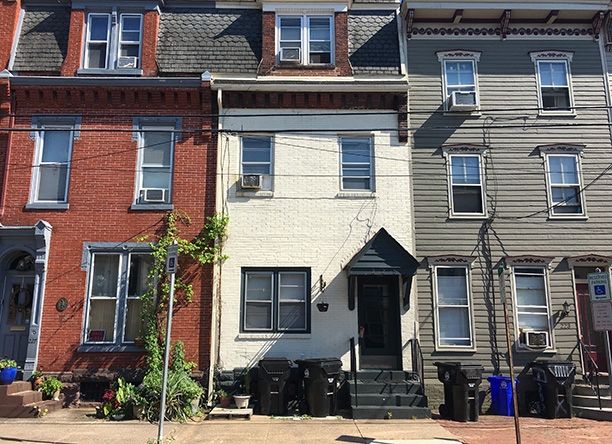
A set of typical Harrisburg rowhomes

The results of Harrisburg’s first citywide housing study are in, and they predict a shortfall of more than 200 rental units at all price points over the next three years.

Representatives from the consulting firm that prepared the study presented their main findings to City Council tonight. The authors said demand for rental housing in Harrisburg will outpace supply through 2020, even as development projects put new units on the market.

As a result, Harrisburg will face a shortage of approximately 244 rental units across the city – a figure that accounts for the city’s existing housing stock, new units coming onto the market and old units becoming uninhabitable. The study also considers population projections, which anticipate that Harrisburg will gain 300 households in the next three years, mostly in Allison Hill and Uptown Harrisburg.

The study didn’t offer any policy recommendations, but city hall officials intend to use its findings to develop long-term development strategies and housing policy proposals. Here are five of the main takeaways from the 100-page study:


Affordable housing and subsidized housing aren’t the same thing.

Developers and policymakers use three standard terms to describe different types of rental housing. Market rate properties are those where tenants pay rent in full, without any public subsidies or rental assistance. Rent is set by a landlord based on location, amenities and demand in the local market.

If a property has restricted rents, or is only open to renters making a certain income, it’s an affordable property. Some affordable housing properties are owned by local governments or nonprofits, but cities can also put zoning restrictions on private projects to make them affordable.

The final category, subsidized properties, offer rental assistance programs based on a renter’s income. This category includes public housing projects, such as Harrisburg’s Hall Manor.


Harrisburg is a low-rent city, but it’s also a low-income city.

The average apartment rents for $831 in Harrisburg. That’s low compared to other parts of Dauphin County, but it’s high for most Harrisburg residents. Nearly half of renter households in Harrisburg have incomes under $25,000. The median renter income is just $22,000 a year.

Housing affordability isn’t defined by the market value of rent, but by how much housing costs consume a person’s overall income. Affordability guidelines, which are set by the federal Department of Housing and Urban Development, say no household should spend more than 30 percent of its income on rent. By that standard, 40 percent of renter households in Harrisburg are cost-burdened. Data show a need for more rental units in the “very low” and “extremely low” income bands.


Demand for rental units will be highest in the Allison Hill and Uptown neighborhoods.

Population growth in Allison Hill and Uptown is expected to exceed other neighborhoods in the city over the next three years. But there’s only one apartment project planned in Allison Hill, which will add 48 units, and there are no upcoming projects slated for Uptown.

Without new housing supply, the scarcity of affordable units in those neighborhoods is expected to worsen. Only one-third of families in Allison Hill who qualify for affordable housing assistance currently receive it, the study says. Demand is even higher in Uptown Harrisburg, where 22 percent of income-qualified rental households get assistance.

“There’s great opportunity for development in both neighborhoods, not just for affordable housing but all rental housing,” said Robert Lenfeld of Real Property Research Group, the Columbia, Md.-based firm that authored the study.


The rental market is tight across Harrisburg, but particularly in Allison Hill.

Harrisburg has more than 4,000 vacant houses and commercial buildings. Abandoned, blighted buildings create eyesores and pose public safety risks, but when it comes to rental units – those that are part of the active housing market – some vacancy is a good thing, said Lenfeld. Fewer than 3 percent of Harrisburg’s rental units are currently vacant. Any figure below 5 percent indicates a tight housing market where renters have limited housing choice and landlords hold a large share of power.

“You want to have some vacancy in a market to ensure elasticity so people can move around and landlords don’t increase rents,” Lenfeld said.

Vacancy rates across the city range from .5 percent in Allison Hill to 4.3 percent in Midtown. South Harrisburg had no vacant units, but it also has the city’s largest share of subsidized rentals. Those rentals aren’t included in vacancy figures, Lenfeld said, since “you never run out of demand for subsidized units.”


Harrisburg’s rental population is aging.

The city’s population of senior citizens is expected to increase 2.4 percent each year through 2020. Seniors can choose to live in any rental unit on the market, but many elect to live in age-restricted properties that offer elevators, common spaces and other amenities that meet their needs. Not all age-restricted properties are affordable—in Harrisburg, only 165 units meet both classifications.

In Harrisburg, the distribution of age-restricted properties limits the housing choice of senior citizens. There are no age-restricted properties in South Harrisburg, whereas downtown has two high-rise towers that contain all of the city’s affordable, age-restricted housing stock. The Paxton Place development will add 37 new, affordable apartments for senior citizens when it’s completed next year. That’s good news for seniors in Allison Hill, but those who wish to find affordable housing in Midtown, Uptown or South Harrisburg will have to keep waiting.


Continue Reading

Harrisburg School Board meets new CRO, leaves charter school closure in limbo at October meeting

Chief recovery Officer Janet Samuels (left) and CFO James Snell (middle.)

Administrative turnover continues at the Harrisburg School District, which recently welcomed a new chief recovery officer and learned it would lose its top financial advisor.

Janet Samuels, the district’s new chief recovery officer, made her first appearance at a board meeting tonight after starting her job on Oct. 1. Samuels, a retired superintendent of Norristown Area School District, was appointed by the Pennsylvania Department of Education (PDE) to update and implement the district’s long-term recovery plan.

One of the first initiatives before Samuels is the selection of a full-time, permanent chief financial officer for the district, as interim CFO James Snell announced tonight that he would leave his post at the end of the year. The district’s recovery plan says it must have a full-time CFO.

Snell was appointed interim CFO at the start of the 2017-18 school year. He has only worked for the district as a part-time contractor, earning $100 an hour for 30 hours a week.

PDE told superintendent Sybil Knight-Burney in June that she must replace Snell with a full-time, permanent employee. Snell’s contract has been renewed each month as the district searches for his replacement.

Tonight, the board approved a new contract with Snell through Dec. 31. But he said he intended to resign his position when that contract expires.

“If I had 40 or 50 hours a week to give, I wouldn’t be making this comment,” Snell told the board. “But it’s not an option for me and I think the district needs more than what I’m able to provide.”

The district’s human resources department posted a help wanted ad to industry job boards this summer, but amended it and re-posted it recently, according to interim HR director Barbara Richard.

They hope to have a new candidate in by the new year. If they can’t find one, the district will appoint an interim director or see if it can operate without a CFO while the search continues, said Lance Freeman, an HR consultant.

The June letter from PDE also instructed the district to find a new business manager. Richard did not know if the district was still advertising that job. Bilal Hasan currently serves as acting business manager, but he does not have the professional certifications or experience required by the recovery plan.

Without mentioning any employees by name, Snell said tonight that he supported the district hiring a permanent business manager from within its own ranks.

“I do think the district is best served in the long run by growing and cultivating leadership from within, as opposed to turning to grey haired business managers to get you through a few years at a time,” Snell said.

The district’s last business manager, Kenneth Medina, was removed from his position last year and is currently suing the district to get his job back.

The school board also voted tonight to begin proceedings to close Premier Arts and Science Charter School, one of three charters operating in the district.

The board learned in August said the school reported inaccurate attendance figures and other data to the district and the state. Since districts reimburse charters per pupil they enroll, the inflated attendance figures allowed Premier to overcharge the district for the 2017-2018 school year.

The school has also logged low test scores and failed to meet many of the qualifications outlined in its 2013 charter application, according to a report.

A resolution to appoint a hearing officer to oversee the non-renewal proceedings failed to get a vote from the majority of the board. The motion got affirmative votes from board directors Judd Pittman, Danielle Robinson, Ellis Roy and Lola Lawson. Brian Carter voted against it, and Patricia Whitehead Myers, who worked for Premier until this summer, recused herself.

Board directors Carrie Fowler, Melvin Wilson and Lionel Gonzalez were absent.

After the meeting, solicitor Samuel Cooper declined to comment on where the vote tally left the proceedings. The board has already voted not to renew the school’s charter, but the non-renewal proceedings will determine how to close the school and transfer its 200 displaced students.

Continue Reading

Harrisburg’s Act 47 bill clears House vote; now heads to Senate.

A bill that will let Harrisburg exit financial recovery passed through the state House of Representatives this afternoon and now goes to the Senate for a final vote.

House Bill 2557, which would grant Harrisburg enhanced taxing privileges for five years and prohibit the city from enacting a commuter tax, passed with 185 yay votes and 5 nays. Lawmakers made just one technical amendment to the bill’s language before calling the vote.

The House vote was one of the last remaining hurdles facing the legislation, which lawmakers expect will have an even easier reception in the Senate.

But with only two more session days scheduled in October, there’s no guarantee that the Senate will act on HB 2557 by the end of the month.

If the bill becomes law, Harrisburg will be allowed to exit Act 47, the state oversight program for financially distressed municipalities, while still levying an enhanced local service tax (LST) and earned income tax (EIT).

Harrisburg was permitted to increase those taxes under Act 47. They bring in a combined $11.8 million for the city each year. Under current state law, Harrisburg would have to relinquish those tax rates when it exits the oversight program. But Harrisburg officials say they cannot cover basic expenses without the additional revenue.

The bill’s sponsor, Rep. Greg Rothman of Cumberland County, said after the vote that Harrisburg’s Act 47 exit will create a better climate for private sector investment.

“Since 1812, Harrisburg has hosted the capital city,” Rothman said after the vote. “To have a healthy body, we need a healthy heart… and we look forward to a revitalization of the city of Harrisburg.”

The legislation also convenes an Intergovernmental Cooperation Agency, a five-member board that will oversee Harrisburg’s finances. That provision was added to the bill last week, along with the five-year expiration date on the enhanced tax rates.

If the Senate does not pass HB 2557 this month, Harrisburg will have to adopt an Act 47 exit plan, which will dictate its budgets for the next three years. The latest draft of that plan calls for massive property tax hikes in 2020 — a proposal that residents, business leaders and local officials have roundly condemned.

Continue Reading

TheBurg Podcast: “Gut and Replace” Edition.

This Friday, there’s a chill in the air and a new episode of TheBurg Podcast ready for your ears.

City government is lying in wait as an Act 47 bill lingers in the statehouse. This week, Lizzy and Larry talk about amendments to that bill, which would let Harrisburg exit Act 47 – but, as always, there’s a catch. They also discuss the recent appointment of a new city council member, as well as a report analyzing the Third Street corridor.

Fruit enthusiasts, stay tuned ’til the end for an update on Lizzy’s hunt for Pawpaws.

Listen to the episode here, or subscribe to TheBurg Podcast in the Apple or Android podcast apps:

Read more about the topics discussed in this week’s episode:

House committee passes bill that would let Harrisburg exit Act 47, retain current tax levels for 5 years

Legislative staffer appointed as newest member of Harrisburg City Council.

ULI Report: Harrisburg’s 3rd Street corridor good, but could be great.

TheBurg Podcast is released semi-monthly by TheBurg Magazine. It is recorded in the offices of Startup Harrisburg and produced by Lizzy Hardison. Special thanks to Paul Coolley, who wrote our theme music.

Continue Reading

Harrisburg improves score on LGBTQ equality index

Harrisburg city hall

Harrisburg has substantially improved its score on an equality index formulated by the Human Rights Campaign, it was announced today.

For 2018, the city tallied a score of 81 out of 100 points on the group’s Municipal Equality Index Scorecard, which evaluates how inclusive municipal laws, policies and services are for the LGBTQ population.

In 2016, the city had a score of 68 points and, in 2017, 56 points.

According to the report, the reinstatement of the Harrisburg Human Relations Commission in late 2017 led to much of the improvement–a full 10 points.

“I commend the Human Relations Commission and all of our city workers who are helping to improve the quality of life for all of our residents and who are making Harrisburg a more inclusive and welcoming city,” Mayor Eric Papenfuse said, in a statement.

Harrisburg scored especially well in the categories of non-discrimination laws and of employment with the city.

The report demonstrated that Harrisburg could improve its score even more if it did two things: had an LGBTQ liaison in the mayor’s office and had an LGBTQ police liaison or task force.

Click here to read the full evaluation of Harrisburg.

Continue Reading