Following standstill, Harrisburg plans to continue debt negotiations in 2019.

A nine-month effort to reduce interest rates on a large portion of Harrisburg’s debt looks likely to continue into the new year.

City Council is expected to vote this month on a new contract with Marathon Capital Strategies, a New Jersey-based financial advisory firm that represents Harrisburg in discussions with creditors.

The city hired Marathon under a $75,000 contract in March. Since then, the firm has negotiated on Harrisburg’s behalf with Ambac Financial Group, which insured bonds that Harrisburg issued in 1997.

When Harrisburg defaulted on those bonds in 2012, Ambac paid out $21.5 million to the city’s bondholders over four years. The city must pay that sum back at a 6.75 percent annual interest rate.

Harrisburg could avoid those costly rates by paying Ambac ahead of schedule with cash. But the city can’t fork over $21.5 million of its own money without depleting its cash reserves. Since it’s shut out of credit markets, it also can’t borrow a new, lower-interest loan to wipe out its debt to Ambac.

But reducing the interest it pays to Ambac could save Harrisburg tens of thousands of dollars over a decade-long repayment period, according to city officials.

Twenty percent of the city’s annual budget currently goes to debt service. The less money Harrisburg spends on interest, the more it can funnel back to salaries, programs and capital improvement projects.

Under its repayment agreement with Ambac, Harrisburg could pay a maximum of $5.4 million per year to them in debt service from 2023 to 2032. The real figure will likely be lower because Harrisburg didn’t draw on its all available credit from Ambac, but it could be lower still if Marathon secures better interest rates.

Marathon initiated talks with Ambac in April and continued them through July, according to consultant Dan Connelly. He told council last night that they haven’t reached a resolution yet, but he thinks they can with a little more time.

“[It was] a mixed bag, but I think we can be optimistic,” Connelly said. “Ambac was very clear that they want to continue negotiations.”

City officials and consultants said that negotiations this year were complicated by questions about Harrisburg’s long-term financial stability. Drafts of the city’s Act 47 exit plan published this summer called for reductions to local services and earned income tax rates, which would have strained the city’s operating budget.

The release of that report, coupled with the failure to guarantee special taxing provisions for Harrisburg in June, led Mayor Eric Papenfuse to declare a fiscal emergency and a freeze on hiring and spending.

The city dodged financial meltdown in October when state lawmakers passed legislation allowing it to retain its current taxing authority for five years under a newly formed oversight committee.

Connelly said that the legislation could provide additional assurance to Ambac that Harrisburg will meet its debt obligations.

“There’s things to work with now that put negotiations into context and that I think can drive a solution,” Connelly said.

Harrisburg spent just $40,000 of the $75,000 budget for Marathon’s services in 2018 budget. Consultant fees range from $175 to $275 per hour, according to their contract.

City officials want to appropriate another $75,000 for Marathon to continue talks with Ambac in 2019. They expect a larger bill this year, since they’re also asking Marathon to develop a strategy to improve the city’s credit rating.

That strategy will be included in the five-year financial plan that Harrisburg must adopt with its oversight board in 2019.

“Hopefully, in that plan, we can find a path back to the bond market, which is one of the things we all need to get back to normalcy outside of Act 47,” city Solicitor Neil Grover said.

City officials said that the five-year time limit on Harrisburg’s current tax rates makes it even more important that the city build its savings and credit score now, while it can still count on a healthy revenue base.

Any savings generated from a reduced interest rate will likely be returned to Harrisburg’s general fund, council budget and finance chair Ben Allatt said.

“Any debt resolution will help us put money back in our operating budget that we’ll need most likely in the future, when we’ll see a potential reduction in tax revenue,” Allatt said.

Continue Reading

Lack of parking at new federal courthouse has local officials worried.

A rendering of the federal courthouse at 6th and Reily streets in Midtown Harrisburg.

As the construction of a long-awaited federal courthouse in Midtown Harrisburg inches forward, there remains one vital question that project managers haven’t resolved.

Where are patrons going to park?

Final land development plans for the $192 million project at 6th and Reily do not include proposals for any new parking structures. According to Mayor Eric Papenfuse, that’s a big problem.

The U.S. General Services Administration estimates that as many as 800 employees, jurors and other patrons will visit the courthouse on a given day.

They’re certain to strain nearby street parking, which is already in high demand among residents and some commuters.

What’s more, the construction of the courthouse will eliminate 60 existing parking spots in a surface lot, located on a parcel that was subsumed into the new building site.

The dilemma came up at a City Council work session tonight, where council members warned GSA representatives that the new courthouse could wreak chaos on Midtown’s parking supply.

Construction on the courthouse began in June and is expected to wrap in 2021.

Papenfuse explained that GSA won’t build new structures because federal agencies don’t guarantee parking for their employees. Instead, they rely on private developers or parking authorities to meet demand.

That works in most cities, Papenfuse said, but not necessarily in Harrisburg.

“The city’s in no position to float bonds to run a parking garage, and nobody is guaranteeing any revenue suitable for a private developer to build a garage,” he said. “We really don’t have a plan.”

Unlike their federal counterparts, state agencies often do reserve employee parking by leasing out blocs of parking spaces.

Those leases are a boon for parking operators, who can count on reliable income for large chunks of their real estate. They’re also used to secure financing for the construction of new infrastructure.

Without a similar guarantee for the 200 staffers at the federal courthouse, or more economic activity near the site, developers may see the construction of new parking infrastructure nearby as a risky investment.

The average cost of each space in a new parking garage is $25,000, according to parking industry experts. Then there are annual operating costs.

“They’re not going to build a garage without a long-term commitment that meets the overhead,” city Solicitor Neil Grover said. “But the courthouse is a long-term thing, and eventually there will be enough things going on that a developer will be interested at some point.”

Since Harrisburg was shut out of the bond market during its financial crisis, the city has no choice but to sit and wait for a developer to emerge.

“If we had a credit rating, we would build a parking structure,” Papenfuse said. “We would assume that risk was safe. But we looked at the numbers, and there’s no possible way anyone will loan us the money.”

A developer who did want to build new parking would have limited options for real estate. Much of the neighborhood is zoned for residential use, which precludes the construction of parking garages.

Unless Harrisburg granted a zoning variance, a new garage would have to go the nearby commercial or industrial zones, which are both in walking distance to the site, Grover said.

Papenfuse said the construction of new parking infrastructure near the courthouse would not violate the city’s contract with its private parking operator.

Standard Parking leased Harrisburg’s parking assets under a 40-year deal in 2013, but that agreement did not preclude the construction of new infrastructure to meet increased demand in the city, Papenfuse said.

Council members tonight were adamant that GSA and the city address the problem before it stressed an already-tight parking supply.

Council member Westburn Majors also expressed a preference for a multi-level parking garage. The anticipated demand for parking would require a vast expanse of real estate for a surface lot, he said, which could displace existing properties.

Project managers said that they continue to study options for off-site parking. Garages south of the courthouse, including ones in downtown Harrisburg, could be feasible sites if there was a shuttle service, according a representative from Dawood Engineering.

They could become feasible options if GSA provided shuttles to the courthouse.

City planning director Geoffrey Knight said Harrisburg could also help by building new bus stops and bike-share stations near the courthouse.

Council is slated to vote on the final land development proposal at its Dec. 18 legislative session.

Continue Reading

More Local, More Organic: With federal grant, Radish & Rye eyes expansion in Midtown Harrisburg.

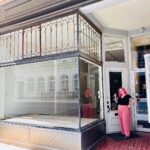
Julia and Dusty James outside the future home of Radish & Rye Food Hub in Midtown Harrisburg.

In life, good fortune sometimes takes you by surprise.

Julia and Dusty James had long planned to open a seven-day-a-week grocery store, building upon the success of their stand inside the Broad Street Market.

But, a few months ago, their project accelerated unexpectedly after they learned that they would receive a substantial, three-year federal grant, which took effect almost immediately. Now, they had to make their plan happen—right away.

“It did make us move faster than we thought we would originally,” said Dusty.

So, yes, the pressure is on now, but that’s OK with the Jameses, who are eager to convert their storefront on the 1300-block of N. 3rd Street into a second location for Radish & Rye Food Hub.

If all goes according to plan, the store should open this summer following a complete renovation of the 2,800-square-foot space, which will be split almost evenly between front-end retail and back-end production and storage.

Notably, the new store will include a full kitchen, which will produce baked goods and an array of prepared and semi-prepared meals. Otherwise, customers can expect to find the same types of local, organic and seasonal food sold from the cozy stand at the Broad Street Market, which will continue to operate.

“We think that, in order to be a viable option for people’s grocery shopping, we need to be open more than three days a week,” said Dusty.

That realization occurred to them quickly after they opened Radish & Rye in 2015. So, Dusty began checking out the storefronts near the market, occasionally walking into a building and seeing if the owner might be interested in selling.

In June 2017, they closed on a deal to purchase the retail and apartment building at 1308 N. 3rd St., which, on the ground floor, had housed many businesses over the years, including JM’s Thrift & Vintage. The idea was to rent out the location until they were ready, in a few years maybe, to open their own brick-and-mortar.

“We knew we wanted to be in Midtown,” Julia said. “Proximity to the market meant more parking in the area and access to our established customer base.”

Then, in September, the U.S. Department of Agriculture notified them that their application had been approved for a $333,410 grant under its “Local Food Promotion Program.” According to the USDA, only about 16 percent of applications for the grant program are funded.

After the initial surprise wore off, the couple began planning out the details for their store and helped their tenant, Alyce & Tre’sures Hair Gallery, find a new spot for her salon just two doors up the street.

The federal grant will go a long way toward getting the new location up and running, paying for such things as equipment, marketing and some wages. The Jameses are responsible for a one-third match of the grant amount, and the grant money does not cover building renovation costs, which will be substantial. Because Dusty is an experienced builder, he plans to act as his own general contractor, which will help both logistically and financially.

Dusty and Julia said that they’re optimistic that the community will embrace their new grocery. Yes, they expect to offer the organic and sustainable goods from the Pennsylvania producers they already feature—names like Apple Valley Creamery (East Berlin), North Mountain Pastures (Newport) and Calicutts Spice Co. (Hershey). But they believe that they can reach a lot more people with a seven-day-a-week schedule, greatly expanded options and prepared foods.

“Each day gets busier and busier (at the market),” said Julia. “Given our limited space and hours there, it feels more and more that we are at capacity.”

The market stand, they added, proved their concept as a business. It also has prepared them well for this next step, in terms of sourcing, product mix, customer service and the knowledge needed to run a busy grocery.

“With this store, we can offer greater convenience to our customers by bringing more items into the city and keeping prices low,” Julia said. “We want to make [our products] as accessible as possible.”

Radish and Rye Food Hub is located inside the brick building of the Broad Street Market, Harrisburg, with plans to open next summer at 1308 N. 3rd St., Harrisburg. For more information, visit www.radishandryehbg.com.

Continue Reading

Harrisburg officials see “a light at the end of the tunnel” as they conclude busiest year yet for demolitions.

Condemned properties at 335 and 337 Peffer St. are among the Harrisburg codes bureau’s demolition priorities in 2019. The city has identified a total of 41 properties it considers urgent candidates for demolition.

For years, Harrisburg’s fight against blighted homes has looked something like a game of Whack-a-Mole.

As soon as codes officers demolished one abandoned property, they’d be alerted to a different structure on the brink of collapse. A city-wide roster with hundreds of condemned and abandoned properties never seemed to get any shorter.

That changed in 2018.

Harrisburg demolished a record-breaking 42 properties this year, according to codes administrator David Patton, and is on track to raze two more before the end of December.

Combined with an uptick of private development projects this year, Harrisburg’s demolition rate has helped the city significantly reduce its stock of condemned housing, Patton said.

“We’re getting to a point where we see a light at the end of the tunnel,” he said. “We’ve reached a threshold where things are looking extremely good for the city.”

The codes bureau entered the year with more resources than ever for demolitions, thanks to a $250,000 allocation in the city’s 2018 budget. It also got $120,000 for emergency demolitions in June from the Community Development Block Grant fund.

The funds allowed Patton to double his in-house demolition capacity from the previous year, when crews tore down 24 buildings.

Mayor Eric Papenfuse pledged to keep the demolition budget steady in the new year. While the cost of demolition varies for each property, Patton hopes to match or exceed his demolition rate in the new year.

He’s already compiled a list of 41 priority properties.

Decades of suburbanization and migration out of the city left Harrisburg with more than 4,000 vacant residential, commercial and industrial structures, according to census data. The worst ones garner codes citations and condemnation orders, often after concerned neighbors lodge complaints with the codes bureau.

Patton said the city had as many as 700 condemned properties—those deemed unfit for human habitation—just a few years ago. Today, the tally stands at 388.

Some condemned properties can be saved with costly renovations. For instance, the Swallow Mansion on N. 6th Street, which been condemned since 2010, recently attracted the interest of a private developer who expects to spend up to $400,000 restoring it.

But the longer a property languishes, the more expensive its renovation becomes. Unsound structures are also liable to collapse or catch fire. It’s these properties that city officials target in their demolition program.

Codes officers inspect buildings daily and use a ranking system to determine which ones should be demolished, Patton said.

“Triage is very difficult because a lot of them are in equal levels of deterioration,” Patton said. “But I have an instinct when I look at certain properties. If we have to do something very quickly, we get it on the roster.”

Extreme weather or other emergencies can alter demolition priorities. Even so, Patton is trying to target this year’s efforts on areas with “extreme distress,” such as S. 18th Street, where seven properties are marked for demolition.

That’s good news to Gary Lenker, president of Tri-County Housing Development Corp., who said that a targeted strategy is the best approach to fighting blight.

“From a development standpoint, focusing on a block-by-block approach gets the most bang for your buck,” Lenker said. “You see the biggest results in a quicker fashion.”

Tri-County didn’t demolish any buildings in 2018, Lenker said, but did rehabilitate four homes on Hummel Street as part of the MulDer Square revitalization project. It has just one demolition planned for 2019.

Lenker said that the bureaucratic hurdles of demolition are often too cumbersome for a small nonprofit organization.

For each house the city demolishes, Patton has to get a “declaration of site emergency” from the mayor, ask utility companies to terminate service, and secure permits from the state Department of Environmental Protection.

He also has to obtain state clearances for properties with historical significance.

One such property is among Patton’s 2019 demolition priorities: the Biedelman House at 1225 Market St., which formerly served as the residence of the Pennsylvania lieutenant governor.

Patton also included the property on last year’s demolition list, in hopes it would pique the attention of preservationists and developers.

Though some prospective buyers visited the property this year, Patton doesn’t think any are prepared to salvage it.

The hulking building on the corner of Market and Evergreen streets has sat vacant for at least two decades. It now needs a new roof and an internal gut renovation.

“I had to make that effort to preserve it, but the last preservation estimate was $1 million,” Patton said. “Everything inside has deteriorated.”

Tearing down the Biedelman House could cost as much as $70,000, he said.

An array of factors affects the cost of a demolition, including the property’s location and material composition.

A demolition on a one-way street, for instance, may carry a high price tag if crews can’t park equipment outside.

Row home demolitions can also be costly. Adjacent properties have to be sealed off with new party walls, which are often more expensive than the demolition itself, Patton said.

Patton uses a combination of in-house and contracted labor to complete demolitions. City codes officers can easily demolish a freestanding property themselves for about $6,000, according to Patton.

The same project could cost $20,000 when done by a contractor.

Patton usually bids out row home demolitions, which can run up to $30,000 per home once crews construct party walls.

The most expensive demolition this year was a $59,000 project at 407 S. 13th St., where contractors tore down a row home with intricate brickwork and masonry arches.

The home was sandwiched between two occupied homes, Patton said. They each needed new stucco siding once the condemned property was carved out.

Patton said that he was sad to see the distinctive structure reduced to dust. But, as with many historic homes left abandoned for decades, he believed that there wasn’t an alternative.

“A lot of these areas do have unique architectural features, but the properties are just way past sell-by date,” Patton said. “There’s no administering first aid on these, and the only recourse is to demo.”

Continue Reading

Danielle Robinson replaces Judd Pittman as school board president.

Danielle Robinson returned to her post as president of the Harrisburg School Board tonight, ousting incumbent Judd Pittman in a 6-3 vote at an annual reorganization meeting.

Lola Lawson, a board veteran who was appointed to a temporary seat in August, will serve as vice president.

A member of the school board since 2012, Robinson served as its president from 2015 to 2017, when she lost her leadership role to Pittman. She was subsequently elected vice president for the 2018 calendar year.

Robinson and Pittman found themselves in opposite factions throughout most of 2018, as the board decided whether to retain superintendent Sybil Knight-Burney or conduct a nationwide search for her replacement. The board frequently split along slim margins on questions related to Knight-Burney’s tenure and administration, with the majority supporting her.

Following the resignation of two board members earlier this year and the appointment of two board veterans to replace them, the majority that consistently supported Knight-Burney grew from five members to six.

The members of that faction — Robinson, Lawson, Melvin Wilson, Ellis Roy, Lionel Gonzalez and Patricia Whitehead Myers — all voted for Robinson tonight.

Board directors Carrie Fowler and Brian Carter voted for Pittman. Pittman also cast a vote for himself, even though he nominated Carter to serve as president.

Robinson assumed her leadership position as soon as the vote was complete and presided over the remainder of the reorganization session. She nominated Lawson to serve as her second-in-command.

Pittman again nominated Carter for the vice presidency and cast a vote for him, even though Pittman himself got a nomination from Roy.

Lawson ultimately won the vice presidency with five votes from her colleagues.

After the reorganization, Robinson said that her priority in the new year is to unify the board and restore order to its meetings, which at times this year devolved into shouting matches over questions of policy and procedure.

Robinson said that she hopes to make meetings more efficient so that directors do not have to deliberate or argue over agenda items. She said that the discord over the last year arose when board directors arrived at meetings unprepared to vote.

“We don’t hash things out publicly,” Robinson said. “You should be able to come to a decision. This is not a time to claim, ‘I don’t know.'”

But the Pennsylvania’s Sunshine Act, which governs procedures for public meetings, requires all business by elected officials — including deliberation and votes on policy matters — to take place in view of the public. Only certain topics, such as litigation, negotiations on collective bargaining contracts and personnel actions, may be discussed in a closed-door “executive” session.

The topics discussed in executive session must later be disclosed at a public meeting.

Robinson said she was aware of the state’s Sunshine Act but maintained that board directors should come to public meetings ready to vote on agenda items. When asked if deliberation should take place in view of the public, she said, “Not at all. That’s for executive session. There should not be a board member asking about agenda items they don’t know about at [general meetings].”

Robinson conceded that the board’s committee structure can be improved to help board members prepare for general meetings. She also said that she’ll take a more decisive bent than her predecessor in contract negotiations, which are currently underway with the teachers union and Knight-Burney.

Knight-Burney is currently employed under the terms of her old contract, which expired on June 30. The board voted 5-4 this spring to renew it for a three-year term.

Robinson said that negotiations have stalled under Pittman’s leadership, and that “it should not have taken six months to negotiate a contract.”

The board’s annual reorganization came on the heels of news that test scores in the district declined during the 2017-18 school year, falling well below the benchmarks outlined in the district’s long-term recovery plan.

Data released by the state Department of Education last week show that John Harris High School, the district’s largest campus with 1,050 students, logged a 49-percent graduation rate, compared to a statewide average of 86 percent.

Only 16 percent of JHHS students demonstrated proficiency in English. 7.8 percent were proficient in math, and 10 percent proficient in science.

Knight-Burney addressed the state’s new school evaluation system at tonight’s meeting, but notably did not mention any specific data.

She did say that the performance of individual school buildings would likely garner them a new state designation: Comprehensive Support and Improvement (CSI) schools, a title reserved for institutions that perform poorly on academic growth and proficiency indicators. The designation will qualify the schools for additional guidance from policy experts and educational experts.

Robinson said the district needed new strategies to improve performance in the coming year, but declined to outline specific proposals until she met with her colleagues.

And while she agreed that the district could “absolutely” improve its academic performance, she also lamented what she saw as incessant negativity from members of the public.

Robinson has been a subject of criticism this year from the citizen-led school reform group, Concerned About the Children of Harrisburg (CATCH), which emerged as an organizing force this spring while the board debated Knight-Burney’s contract.

CATCH members have made clear their opposition to Knight-Burney, who they say has been slow to improve student performance and teacher retention during her seven-year administration. They’ve also criticized members of the school board, including Robinson, who they’ve said are too protective of her tenure.

Robinson said tonight that CATCH could be an asset to the board, but that its members were too adversarial and even bullying in their calls for change.

“You can’t say you want to help the district if you’re constantly down on the district,” said Robinson, who added that her son, a student at Marshall Academy, was being intimidated by classmates whose parents supported CATCH.

Robinson said she is the only board member with a child enrolled in Harrisburg schools. That gives her a unique perspective among her colleagues, she said, and a vested interest in seeing the district perform at its best.

“What sense does it make for me to do something that’s detrimental to his education?” Robinson said. “There have been things we’ve tried that have not worked, but I know we’ve made progress as a district.”

She pointed to the establishment of the Cougar Academy cyber school and new career readiness programs as some of the district’s recent successes. She credited Knight-Burney with bringing fresh ideas and innovative STEM programs to the district and reiterated her belief that the embattled superintendent is the right person to lead Harrisburg’s schools.

“A lot of people don’t see her work and dedication,” Robinson said. “But because change isn’t instantaneous, people think she isn’t doing her job.”

Robinson also suggested that the challenges facing the Harrisburg school district — low attendance rates, flagging test scores and meager graduation rate — were endemic to districts across the state.

“We have the same problems as every other district, but we’re the state capital so whatever happens here will trickle down,” Robinson said. “We have to keep fighting.”

This story was updated shortly after publication to include additional information about the CSI designation for select Harrisburg schools. 

Continue Reading

TheBurg Podcast: Demolition Edition

You may have already picked up a print copy of TheBurg Magazine today — why not chase it with a new podcast?

On this week’s episode, Lizzy and Larry recap the mayor’s annual budget presentation. Where is Harrisburg’s money going in 2019? They also discuss PennDOT plans to widen 1-83 in Harrisburg, as well as the article Lizzy wrote for this month’s magazine about the rise and fall of downtown retail in the city.

You can stream the episode here or subscribe to TheBurg Podcast in the Apple and Android podcast apps:


You can also read our coverage of all the topics we discussed in this week’s podcast. Lizzy’s retail story is also out in print today, as is Larry’s column — which jibes well with our discussion of the Broad Street Market at the end of the episode. Find a copy at one of our distribution locations.

Mayor proposes 2019 budget with no tax hikes, slight spending decrease from current year.

A 12-lane highway in Harrisburg? It’s possible in PennDOT plan for I-83.

Retail Therapy: More people are choosing to live, work and play in Harrisburg. Could a retail revival be next?

Let’s Talk: The nation’s “social infrastructure” may be withering, but Harrisburg’s is growing stronger.

TheBurg Podcast is released semi-monthly by TheBurg Magazine. It is recorded in the offices of Startup Harrisburg and produced by Lizzy Hardison. Special thanks to Paul Coolley, who wrote our theme music.

Continue Reading

Burg Blog: Go to Market

Four years ago, the Broad Street Market’s board of directors seriously considered padlocking the original, stone market building.

Most vendor slots were empty, and customers were sparse. So, the reasoning went, it would be more economical to just close the building and move the remaining vendors into the brick building, which had plenty of empty space of its own.

But the brick building had issues, too, closed twice over two years to battle vermin infestations.

Today, you would never know that any of this had occurred.

On market days, the crowds inside both buildings can be so thick that it’s often difficult to find a place to sit down and, for the first time in many decades, the market is 100-percent occupied, every vendor space filled.

Stroll through the once almost-shuttered stone building, and you have your choice of cuisine from around the world: African, Jamaican, Korean, Polish, Indian, Puerto Rican, Greek. There’s barbecue, pizza, baked goods, ice cream, cheesesteaks, seafood, even craft beer, some of the tastiest things you’ll find in central PA.

Beth Taylor, who’s managed the market for more than three years, has led this transformation. Two days ago, she told her vendors that she would be leaving her post effective Dec. 15. Hers will be tough shoes to fill.

Managing the Broad Street Market may rank among the hardest jobs in Harrisburg. Sure, it sounds like fun—managing a farmers market—but, in reality, it’s often grueling, thankless work, with long hours and no end of problems.

In a given week, thousands of people pass through the market, and they must leave satisfied. The manager also must keep happy dozens of vendors, who are independent business people with their own needs, desires, hopes and dreams. She also must manage the staff, ensure cleanliness, keep order, provide safety and maintain the 150-year-old buildings, no small tasks given the weekly mob scene.

Then there are the bosses.

Ultimately, the manager must answer to a nonprofit board of directors, whose members have their own thoughts and priorities. To add a wrinkle, the market buildings are still owned by the city, and some city officials want their own say in how things are run.

So does the community.

The Broad Street Market may be the one entity that nearly everyone in this diverse, divisive town claims as their own. Therefore, residents all have opinions about the market—the vendors, the parking, the prices, what it should be, what it shouldn’t be.

Think of your own job. Do you need, every day, to balance the wishes, needs and demands of thousands of patrons, dozens of vendors, a staff, a board of directors, city officials and some 50,000 residents? Probably not.

The market manager needs to be tough and smart and diplomatic, with both broad vision and concern for the smallest detail, as well as an ability to inspire and lead others. And sometimes she needs to stand her ground, and sometimes she needs to say “no.”

From what I saw, Taylor had these skills, and she helped make the Broad Street Market the amazing place it has become—a remarkable renaissance in just a few years.

I wish the board all the best in finding a great replacement. May the new manager be able to navigate this minefield of interests and build on what already has been accomplished.

The new manager, though, should harbor no romantic ideas or illusions about running the Broad Street Market. This is a tough job, and it requires a tough person to do it.

As a community, we would do well to welcome and support the new manager. The market may be the best representation of us as a city, the one place in town where everyone comes and sits, eats, laughs and shops, a place where people talk and connect and, upon leaving, seem happier for having been there.

Lawrance Binda is editor-in-chief of TheBurg.

Continue Reading

Let’s Talk: The nation’s “social infrastructure” may be withering, but Harrisburg’s is growing stronger.

Illustration by Rich Hauck.

In late October, a group of Harrisburg residents, officials and canine-lovers gathered on a brisk late afternoon to cut the ribbon on the city’s first public dog park.

To fit the occasion, there were, of course, the requisite speeches, some pooch-related puns and the yip and yap from city dogs off-leash and frolicking in the fresh, damp grass in the newly fenced area at N. 7th and Granite streets.

So, certainly, if you’re a mutt or hound, a pedigree or mix, this ribbon cutting was a landmark event, one you’ll probably relive in your doggie dreams until your next visit. Less emphasized, however, was what the park will mean for us—the humans of Harrisburg.

A few months back, Eric Klinenberg, a sociology professor at New York University, wrote about something he called “social infrastructure” for the Atlantic Monthly. In his piece, he lamented the poor, deteriorating condition of our shared spaces—libraries, parks, markets and the like. These, he said, offered natural opportunities for people to meet, talk, form friendships and otherwise make attachments, all to the benefit of themselves and their communities. Many of these social spaces, however, now are threatened by lack of care and investment, particularly on the part of governments, he wrote.

Naturally, Klinenberg’s article had me thinking about life in this city.

If I had to grade Harrisburg’s social infrastructure, I might give it a “B-minus,” maybe a firm “B” on a good day. So, not bad, but certainly room for improvement. The thing is, it wasn’t long ago when this mark would have been much worse. Harrisburg spent decades fraying and falling, with terrible consequences for the quality of life here. But, now, as the city bounces back, it is bucking the larger, national trend described by Klinenberg. Its social infrastructure is actually getting better.

Anyone who has visited a dog park knows that it’s not just the dogs that get friendly with one another. The owners stand around, watch their pets, and get to know each other. Many friendships, even relationships, have begun at dog parks, especially since even the most small-talk-challenged have a shared interest and natural launching point for conversation.

But I don’t mean to put too much pressure on one little dog park. In the decade I’ve been in Harrisburg, I’ve seen the social infrastructure in this little city improve dramatically.

Certainly, the Broad Street Market sits at the crossroads of the community and, as such, is a reflection of its social health.

After decades of struggle, the market has been on a prolonged upswing, thanks to a combination of strong management, excellent vendors and the general comeback of the Midtown neighborhood. If there is a load-bearing beam holding up Harrisburg’s social infrastructure, the Broad Street Market is it.

Walking through the crowded market buildings, you would never know that, not long ago, vendors, sparse as they were, seemed to outnumber shoppers. But, today, the market is the scene of thousands of interactions and conversations—from the main dining area to the Zeroday Outpost to the ordering counters to the shared tables. The market is prima facie evidence that we are a social species, happier together than when divided or isolated.

Spiraling out from the market, Midtown Scholar Bookstore has become a de facto community center; Strawberry Square has mounted a surprising rebirth as a gathering and meeting place; the Midtown Cinema parking lot has become a free outdoor film venue and flea market space; and profoundly underused Italian Lake Park is finding new life as a place for free outdoor concerts and events.

Some of the examples may not strictly fit Klinenberg’s definition of social infrastructure, since he distinguishes purely “public” spaces from commercial ones. However, both Midtown Scholar and Midtown Cinema basically donate their venues for community use, as, often, does HMAC. And I’m certain far more business gets done at the tables in Little Amps than at the ordering counter.

In fact, what I like so much about Harrisburg’s approach is that, for the most part, private entities—Friends of Midtown, the Harrisburg Parks Foundation, Friends of Italian Lake, Harristown, HYP, the LGBT Center, Bethesda Mission and many companies—have stepped up to build and strengthen the city’s social infrastructure when and where the cash-strapped municipal government could not. I like to think that TheBurg also contributes through our free magazine and community reporting, by donating staff to 3rd in the Burg each month and by sponsoring free events like the Harrisburg Mural Festival.

So, Dr. Klinenberg, take heart. I know you were in Harrisburg a few months back to give a book talk, but you really should return and, this time, stay awhile. Study what we’re doing. Speak to the people building Harrisburg’s social infrastructure from the ground up. Bring your dog. I think you’ll leave with more hope than when you arrived.

Lawrance Binda is editor-in-chief of TheBurg.

Continue Reading

Retail Therapy: More people are choosing to live, work and play in Harrisburg. Could a retail revival be next?

Boutiques and department stores brought shoppers to downtown Harrisburg in droves through the 1960s. This undated photo from the Dauphin County Historical Society shows a bustling scene outside Bowman’s Department Store on Market Street, which is now part of Strawberry Square.

It was close to 3:30 p.m. on a gray Monday afternoon when I found Moe Rammouni ringing up customers at Pal’s Apparel, his high-end streetwear boutique in downtown Harrisburg.

His clientele—two local guys, Rammouni said, who probably found Pal’s on Facebook or Instagram—came in seeking tracksuits and puffy parkas. It was Rammouni’s first sale of the day.

“Business is great now, but there’ve been some growing pains,” Rammouni said. “And there still are. You gotta have a lot of patience to do this.”

Rammouni has been in his storefront at 306 N. 2nd St.for just over a year. But he can already tell you what more seasoned merchants have been saying for decades: retail isa tough business. E-commerce has created a market where prices are low, consumer information abounds, and free, two-day shipping reigns supreme. Those conditions have devastated national chain retailers. In the past year alone, legacy brands like Sears and Bon-Ton have closed stores and liquidated inventory. Suburban malls are going dark as a result.

If not even the biggest brands can compete with online retail giants, where does that leave mom-and-pop shops?

These independent merchants have historically congregated in American cities, where dense populations and compact storefronts offered a symbiotic shopping experience. But the migration of people and businesses to the suburbs have decimated urban retail centers across the country. Harrisburg is no exception. The downtown boutiques, grocers and department stores that once animated the city’s streets are long gone. Their storefronts found second lives as offices and eateries, if they’ve been filled at all.

“To my left and my right, there’s vacant, commercial class-A space that could be turned into something magnificent,” said Rammouni. “I’d love to see more retail on 2nd Street.”

Even as they watch big-name competitors fold, merchants in Harrisburg think it’s a good time to start a small business. They say that the hardships rocking national chains highlight the power of independent retailers, which can offer superior expertise and customer service.

But if current businesses are going to flourish, their owners say, Harrisburg needs to fill its vacant storefronts.

“Don’t get me wrong—I love Harrisburg,” said Anela Bence Selkowitz, one of the city’s newest storefront retailers. “But there’s nowhere to shop.”

Bence recently opened Stash Vintage, a clothing and accessories store, in a shared storefront at 11 S. 3rd St. She’s near the restaurants El Sol and Bricco in the downtown SoMa neighborhood.

“I’d like to see three or four more boutiques on this block,” she said. “If this neighborhood was a destination where people could spend a whole afternoon, it would be a much better situation for us.”

Landlords agree that independent businesses have the best shot at success when they’re part of a dense network of stores. The good news is that Harrisburg’s commercial corridors are emerging from a long period of stagnation. Strawberry Square, the downtown mall that subsumed some of Harrisburg’s old storefronts in the 1970s, had a 40-percent vacancy rate just five years ago, according to Harristown CEO Brad Jones. It’s now at 5 percent.

“There’s been a lot of momentum, but retail is still a very tough sector for us, as it is for everyone else,” Jones said. “I don’t think we’ll ever get back to the way it was… But we are growing our density, and every year, it’s getting better.”

Rise and Fall

If you set out to do your Christmas shopping in Harrisburg in 1950, you wouldn’t have to travel far from 3rd and Market streets. Like most cities, Harrisburg’s central business district boasted everything from small specialty shops to multi-level department stores. Whether you wanted a custom hat, a tailored suit, a new armoire or the latest records, you could buy it in a downtown storefront.

Ken Frew, a librarian for the Dauphin County Historical Society, grew up on Derry Street, where he could pay 5 cents to take the bus to shop in downtown. “You could find anything you wanted down there, and you didn’t need a car to get it,” he said. “You had big anchor stores, sure, but you also had lots of other shops really keeping the place together.”

As a historian who has lived his whole life in Harrisburg, Frew has watched the city’s downtown evolve for decades. Its first major change came in the 1940s, he said, when customers started to favor their personal vehicles over public transportation. The shift carved the first cavities into Harrisburg’s downtown streetscape, as property owners began razing buildings to pave surface parking lots.

But the rise of the personal automobile dealt an even deadlier blow to cities. It facilitated movement to suburban communities, where residents could retreat after a day’s work in a downtown office. Segregationist housing policies and discriminatory lending practices accelerated the exodus. Urban planners played their part, too. Starting in the 1950s, cities including Harrisburg began to reroute major city streets with one-way traffic patterns. Under the guidance of Mayor Nolan Ziegler, Harrisburg officials reduced parking lanes and converted 2nd and Front streets to one-way, multilane mini- highways in 1956. “We are interested only if proper ingress and egress is assured,” Ziegler said at the time.

Ziegler and his engineering team got what they wanted. Following the 2nd and Front street conversions, it became easier than ever for commuters to zoom through Harrisburg as they came and went from work. The city’s small businesses became an unintended casualty.

“The one-way streets made it difficult to maneuver, and it was the end of downtown,” Frew said. “When people got off work, they went out of the city and stopped shopping. My dad was always grousing that it slowed business.”

Harrisburg’s population was close to 90,000 in 1950; by 1980, it had dipped to 53,000. As white, middle-class customers flocked to the suburbs, retailers followed suit. Harrisburg got its first suburban-style shopping center in 1951, when Kline Plaza opened on S. 25th Street. That, according to Frew, was “the first sign that retail was starting to plummet” downtown. The Harrisburg East Mall followed in in 1969. Some local business owners, like the men’s clothing retailer Allan Stuart, tried their luck opening satellite branches in suburban malls. But most found that their storefront model didn’t translate to the new setting. Others couldn’t match the prices of their chain competitors.

The erosion of the downtown merchant base was gradual, according to Stuart’s son, Jeb Stuart. But by his account, “the bottom fell out of downtown by the 1970s.”

Jeb Stuart recently curated an exhibit for the Historic Harrisburg Association that chronicles downtown retail during the city’s “urban golden age,” from 1918 to 1960. Walking through the exhibit, it becomes clear how much of the city’s retail space has been ceded to other industries. When retailers started to evacuate downtown Harrisburg in the 1950s, developers snatched up vacant storefronts and adapted them to other uses. Today, the Market Street property that once housed S.S. Kresge’s Co, a discount retailer, has become Whitaker Center. SciTech High School now occupies the space once held by G.C Murphy department store.

Many downtown retail spaces were acquired by Harristown Development, which the city created in the 1970s to spearhead urban revitalization projects. Chief among them was the development, in 1978, of Strawberry Square, a downtown mall with 1.4 million square feet of mixed-use office and retail space. Jeb Stuart worked as a leasing agent in Strawberry Square in the 1980s. He and his business partner tried to court national chains to fill first-floor retail spaces. When that didn’t pan out, they focused their efforts on small, mom-and-pop shops that catered to the downtown workforce.

“It was a challenge,” Stuart said. “But there will always be a downtown worker population in Harrisburg, so there will always be a need for some form of retail. But what you need now is retail that’s convenient, that fills a need or that offers a niche—because cool things can become destinations in themselves.”

Support System

The same malls that killed downtown retail in the 1960s and ‘70s are today facing a sea change of their own, thanks to the ascendency of e-commerce.

But does the newest disruption in retail represent a potential resurgence for urban storefronts?

“We all think we’re poised for a comeback,” said Isaac Mishkin, owner of The Plum, a women’s clothing boutique. “I see it inching forward. People are getting smarter and spending more time analyzing what people buy.”

Mishkin, who’s run The Plum from the same brick storefront on Locust Street for 50 years, is one of the lone legacy retailers in Harrisburg. To survive today, he believes that storefront merchants have to offer one thing that e-commerce companies can’t—attentive, experience-driven customer service.

“I learned how to sell the old-fashioned way,” Mishkin said. “We know how to dress customers when they come in. It’s not like department stores today where nobody waits on you.”

As accessories designer Amma Johnson put it, a customer’s most valuable commodity today isn’t money—it’s time. One reason customers have flocked to online retailers is because they can peruse goods and complete a transaction in minutes, eliminating the onerous task of driving to a mall to shop. To compete with that convenience, storefront retailers have to make a customer’s visit worth their while, she said. At her Amma Jo showroom in Strawberry Square, that means offering a pleasant shopping experience that puts the customer first. She’s also branched out into events, hosting networking happy hours and, more recently, a women’s empowerment and entrepreneurship panel. Johnson said that these events do generate sales. But she also sees them as an extension of her brand — the larger, more nebulous “feeling,” Johnson said, that people associate with her name and product. And that feeling can’t be conjured with pixels alone. She pointed out that even online companies are experimenting with brick and mortar retail models.

“A good brand is a good feeling,” Johnson said. “And even as powerful as a brand like Amazon is, they’re doing things like pop-up stores because it’s very hard to build a brand exclusively online.”

Andrew Kintzi, who run the men’s vintage store Midtown Dandy in a storefront he shares with Bence on 3rd Street, echoed what Johnson, Mishkin and other merchants said about running a storefront today.

“In terms of competing with other businesses, it comes down to the customer’s experience,” Kintzi said. “It’s being able to walk in the door, be greeted, trying something on and feeling materials. I want you to come in here, find something you love, and remember buying it here.”

Bence has a different take than her business partner. As she sees it, a good landlord can make or break a

retailer. And she says they’re hard to find in Harrisburg. She and Kintzi tried to set up shop on 3rd Street north of Forster, but were stymied by a paltry inventory of storefronts. Landlords wanted to charge exorbitant rents for sub-par spaces, she said, and wouldn’t accommodate requests to enhance them.

“You need a good deal with a good landlord who will work with you,” Bence said. “Landlords are really awful around here. They want way too much for empty shells.”

She contrasted that with her experience leasing from Harristown, which painted walls and constructed a small build-out in their storefront on S. 3rd Street. They’ll also include Stash and Midtown Dandy in their advertising and promotional materials.

“There’s a support system here, so it doesn’t feel like we’re just being thrown into a space,” Bence said. “It feels more like a partnership with the people who own the building.”

The final thing that retailers say they need is increased density in the downtown retail district. Johnson said that she chose her storefront in Strawberry Square because it offered the best chance to gain organic foot traffic—passersby who might not seek out her store on their own, but encounter her brand while going about their daily business. More than 6,000 people walk through the shopping center each day to shop, eat, work or attend events, according to Jones, making it one of the busiest commercial corridors in the city.

But the workforce population disappears on the weekend, creating wild variations in the pace of customers throughout the week. Retailers say the same is true elsewhere in the city. Chantal Eloundou, who opened Nyianga, a boutique selling African crafts and fabrics on N. 3rd Street, said business is best on days when the Broad Street Market is open, since it draws people down 3rd Street from state office buildings downtown. But the rest of the week can be a challenge.

“More retail would draw in more customers,” she said. “So, I say, the more the better.”

Critical Mass

Building a bigger retail landscape in Harrisburg would do more than just create a shopping destination.

Even though the industry can be precarious, experts say that locally owned businesses remain an essential part of any city’s community and economic development strategy. Besides creating jobs and building wealth for entrepreneurs, a diverse array of shops affords consumers more choice and competitive prices. It also drives tourism. Visitors who have enough reason to shop, eat and pass time in a city just might decide to move in.

“Having businesses, whether it’s retail or restaurants or services, really is a key component in making a thriving city where people want to live and shop and do business,” said Ken Hammaker, vice president at the Community First Fund, which loans to entrepreneurs in low-income communities across the state. “You need that component just as much as you need clean, affordable housing and good quality schools.”

Nobody understands that dynamic better than Harrisburg Mayor Eric Papenfuse, who touted his experience as a storefront business owner in both of his mayoral campaigns. Papenfuse and his wife, Catherine Lawrence, opened the Midtown Scholar Bookstore in 2003. In 2009, they moved the store to its current location at Verbeke and N. 3rd streets, into what used to be a movie theater and then a department store.

According to Lawrence, many of the nearby storefronts were underutilized when they moved in.

She and her husband convinced some recalcitrant property owners to sell them their neighboring buildings. County property records show their acquisitions began in 2008, the same year they purchased the two parcels that house the current Midtown Scholar, and continued through November 2013, the same month that Papenfuse won his first term as mayor.

Since he took office, these property holdings have opened Papenfuse to criticism that he prioritizes projects on 3rd Street to his own benefit. He said that it was always part of a greater strategy to build a community-oriented commercial corridor.

“We came in 15 years ago as young retailers interested in generating more foot traffic on this corridor,” Papenfuse said. “We looked at the market, at Midtown Cinema, and saw the potential for more of a critical mass more than just a single anchor store.”

Lawrence and Papenfuse are sympathetic to the challenges facing local retailers today. They know it takes a long time to build a customer base, develop a marketing strategy, and finance an inventory. Speaking as a city official, Papenfuse said that Harrisburg must provide the public services—smooth roads, inviting streets and a public safety presence—that enhance the city’s built environment and encourage tourism. It can also provide practical resources, such as business development programs, through the office of Community and Economic Development.

But speaking as a business owner, he said much of the responsibility for building a retail corridor lies with landlords and merchants who have a shared, community-oriented vision. Like Bence, he reserved special criticism for local landlords, who he says have been historically disinterested in maintaining their properties and identifying good tenants.

According to leaders in Lancaster, good landlords have made all the difference in their downtown business district, which has added more than 100 shops, restaurants and entertainment venues in the past half-decade.

“Historically, we’ve been fortunate that we’ve had a great number of local investors and property owners that are responsible for the fact that we still have this core area of retail downtown,” said Marshall Snively, president of the Lancaster City Alliance, a nonprofit community and economic development group. “They were patient at a time when other cities were leasing to anyone that would lease and very intentional in making sure it was lively retail that would add to the character of the city.”

It’s no coincidence that the evaporation of retail in Harrisburg coincided with the depths of its financial distress, a condition that began brewing in the 1970s and intensified through the 2000s. Today, local officials say that Harrisburg’s long-term recovery depends on whether or not the city can increase its population. But turning daytime workers into full-time, taxpaying residents will take more than new housing and better roads.

The urban theorist Jane Jacobs famously said that the hallmark of a healthy city is the “sidewalk ballet” of people darting between work, errands, meals and entertainment in a humming urban core. Plenty of people in Harrisburg participate in this “ballet” during the week, when almost 50,000 commuters flood the city. But boutiques, bars and restaurants, cultural and entertainment spaces convince them to stick around after hours. And it’s the coexistence of all these elements— apartments, workplaces, businesses and public spaces— that distinguish an urban ecosystem from a suburban office park or housing development. As Hammaker put it, all of these elements are all connected, and no one sector will flourish as long as the others falter.

And that includes retail. At a macro level, the realities of the industry may seem bleak. Dying malls and empty big-box stores have left unsightly cement husks in America’s suburbs. Amazon is colonizing private spaces with smart speaker robots as its CEO controls an ever-growing share of the world’s wealth. But locally, small retail businesses remain an integral component of vibrant, self-reliant cities. They create jobs, animate streets and offer a shopping experience that’s more than just transactional. One need only visit Stuart’s exhibit at the Historic Harrisburg Association to be reminded that retail is an indelible part of Harrisburg’s past. If the city is going to thrive, the same will have to be true in the future.


Continue Reading

Artist in Focus: Justin and Joelle Arawjo

Collaboration defines the artwork of Joelle and Justin Arawjo, otherwise known as Fennec Design.

Upon entering their studio in the Millworks, you will see many of the pieces that they’ve created together—the housewares and jewelry, the textiles and prints. These artists believe that the whole can be greater than the parts, each contributing their own unique talents to handcrafted, often natured-inspired items available both locally and around the world.

Fennec is our artist-in-focus for December. To see even more of their creations, please visit their Millworks studio in Harrisburg or their website at www.fennecdesign.com.

Photos by With Love and Embers.

Continue Reading