Harrisburg Democrats to weigh crowded primary field for city council, school board

This year’s municipal primary looks to be a hot one in Harrisburg, as Democratic voters face a crowded field for both City Council and school board.

Tuesday was the deadline for handing in nomination petitions, and numerous candidates filed, according to the Dauphin County Bureau of Elections & Voter Registration.

For council, three, four-year seats are up for grabs.

Three sitting council members have turned in nomination petitions: Danielle Bowers, Dave Madsen and Westburn Majors. This is the first contested race for Bowers, who was appointed last year to fill an open seat following the departure of former Councilman Cornelius Johnson.

The Democratic incumbents will face three challengers in the primary: Christina Kostelecky of Midtown, Brianna Smith of Midtown and Dionna Reeves of North Allison Hill.

No Republican candidates filed to run for council.

In the very crowded primary race for Harrisburg school board, 12 Democratic candidates will vie for five, four-year seats. These include current school board directors Lionel Gonzalez, Lola Lawson, Ellis R. Roy and Patricia Whitehead-Myers, and eight challengers: Jayne Buchwach, Lewis Butts Jr., Ralph Rodriguez, James Thompson, Doug Thompson Leader, Gerald Welch, Cory X. Williams and Steven Williams.

No one filed to run in the Republican primary.

In the only other city race, incumbent Treasurer Dan Miller is seeking re-election for a four-year term. He is unchallenged in the Democratic primary, and no candidate filed to run in the Republican primary.

On the county level, incumbents Jeff Haste and Mike Pries are running for re-election unopposed in the Republican primary for commissioner. On the Democratic side, incumbent George Hartwick and challengers Diane Bowman and Tom Connolly are running for the two Democratic slots.

For other county offices, all of the Republican incumbents have no competition in the primary: District Attorney Fran Chardo, Sheriff Nick Chimienti, Clerk of Courts Dale Klein, Recorder of Deeds Jim Zugay, Treasurer Janis Creason, Controller Timothy DeFoor and Register of Wills/Clerk of Orphans’ Court Jean Marfizo King.

On the Democratic side, Cole Goodman has filed for Recorder of Deeds, Tim Butler is running for Treasurer, Brad Koplinski is running for Clerk of Courts and Bridget Whitley has filed for Register of Wills/Clerk of Orphans’ Court. All are unopposed in the primary.

This list is regarded as preliminary pending possible challenges to nomination petitions, which sometimes knocks candidates off of the ballot.

The primary election is on May 21. The winners will continue on to the general election, which is Nov. 5.


Continue Reading

Harrisburg, Dauphin County municipal primary field begins to take shape

There are still a few days to go before final nomination petitions are due, but the Harrisburg and Dauphin County municipal primary races are already beginning to take shape.

The county Bureau of Elections & Voter Registration has posted the names of candidates who have handed in petitions as of end-of-day on Thursday for the primary.

In Harrisburg, three, four-year seats for City Council are up for grabs.

So far, all three sitting council members have turned in nomination petitions: Danielle Bowers, Dave Madsen and Westburn Majors. This is the first contested race for Bowers, who was appointed last year to fill an open seat following the departure of former Councilman Cornelius Johnson.

Midtown resident Christina Kostelecky is the only challenger thus far to turn in a nomination petition for a City Council seat.

In the closely watched race for five, four-year seats on the Harrisburg school board, incumbents Lionel Gonzalez and Ellis R. Roy have turned in petitions, as have challengers Jayne Buchwach and Steven Williams.

In the only other city race, incumbent Treasurer Dan Miller is seeking re-election for a four-year term. So far, he is unchallenged.

On the county level, Republican incumbents Jeff Haste and Mike Pries have turned in nomination petitions, as have incumbent Democrat George Hartwick and Democratic challenger Diane Bowman.

So far, only Republican incumbents have turned in petitions for county row offices. These include District Attorney Fran Chardo, Sheriff Nick Chimienti, Clerk of Courts Dale Klein, Recorder of Deeds Jim Zugay, Treasurer Janis Creason and Register of Wills/Clerk of Orphans’ Court Jean Marfizo King. As of last night, no candidate had submitted petitions for county controller.

Candidates have until this Tuesday, March 12, to turn in nomination petitions with sufficient valid signatures to the county Bureau of Elections. The primary election is on May 21. The general election is on Nov. 5.

Continue Reading

HBG Planning Commission approves Harrisburg University tower, now cut down to 17 floors

Architects from the firm Stantec show Harrisburg Planning Commission members street views of their latest design for Harrisburg University’s proposed downtown high-rise.

The Harrisburg Planning Commission this week gave its blessing to a new downtown high-rise for Harrisburg University, a building design that knocks another two floors off of the project.

The land development plan, approved unanimously by the commission on Wednesday night, envisions a 17-story building totaling 386,200 square feet of space at the corner of Chestnut and S. 3rd streets.

“I think this is a very good project,” said commission Chairman Joe Alsberry, before casting his vote in favor.

Last year, HU floated a concept for a building exceeding 30 floors, which would have made it the tallest building in the city. Last fall, the height was cut back to 19 floors and now has been approved at 17.

With Planning Commission approval, the land development plan now must be approved by City Council before HU can break ground.

The building (rendering left) consists of three parts: an academic portion that would house mainly health sciences programs, a separately owned hotel and a restaurant. The university envisions a two-year construction period.

In its vote on Wednesday, the city Planning Commission approved the consolidation of the four parcels that make up the building site: 222 Chestnut St. and 24, 26 and 28 S. 3rd St. Currently, 222 Chestnut St., the largest parcel, is a surface parking lot, while the 3rd Street parcels all house 19th-century commercial buildings, which would be demolished during the site-clearing process.

HU’s attorney and architects, who attended the meeting, were satisfied with the approval, with one exception.

As a condition for approval, the city’s Planning Bureau suggested that HU make changes to the building façade so that it would have a more “consistent” design, with less visible concrete.

City Planning Director Geoffrey Knight also noted how much the building looks like HU’s existing, 15-year-old tower on Market Street.

“We’d like architecture that is a bit more aspirational than the design indicates,” he said.

Knight emphasized that the city supports the project, but would prefer certain façade improvements for the sake of the city streetscape and skyline.

“We want to make sure it’s something that will age well,” he said.

HU attorney Diane Tokarsky of McNees Wallace & Nurick pushed back hard on the suggestion that design changes were needed.

“Beauty is in the eye of the beholder,” she said. “There would be a significant cost to the university to begin redesigning the façade of the building.”

City Solicitor Neil Grover clarified that the city can’t force the university to change its design.

Nonetheless, Tokarsky strongly objected to the condition placed on the approval. She said that she wanted an all-clear from the city, stating that any conditions not explicitly met could negatively affect the university’s next steps, including finalizing financing and putting construction work out for bid.

“We need to be able to say, ‘This is our building. This is the cost of our building,’” she said.

Planning Commission members discussed stripping out the condition that suggested the façade changes, but, in the end, opted to leave it in as part of its approval.

“I’m excited about this project overall,” said commissioner Anne Marek. “The only sticking point goes back to this façade conversation.”

In the end, HU representatives said they’d willingly continue the conversation with the city, but within limits.

“We would be happy to have further dialogue,” Tokarsky said. “But we need finality. We’re not redesigning this building.”

A Harrisburg University spokesman yesterday declined further comment for this story.

Continue Reading

Women in Business 2019

March is National Women’s History Month, the perfect time to honor the businesswomen of central Pennsylvania. Over the past several years, women increasingly have become a driving force in shops, offices and boardrooms throughout our area. We hope you enjoy learning about some of these women—how they started in business, how they succeeded and how they find purpose, meaning and even fun in their work. Maybe you’ll even decide to follow in their footsteps!

Sponsored Content

Continue Reading

Weekend Roundup with Sara Bozich

Happy Weekend!

It’s Daylight Saving weekend, which while you’re all excited about more daylight and spring, I’m here to remind you we’re losing an hour and don’t visit Twitter unless you’re prepared to join arguments about DST’s existence.

All of that to say, hey! I’m going out with a girlfriend on Saturday to celebrate our birthdays. I’ll be older soon.

We’re rolling out a bunch of events soon, so it’s a good time to make sure you’re on our email list.

Annnd, some shameless self-promotion: earlier this week, I was featured on WHP-TV’s ‘Women at Work‘ feature by Jasmine Brooks. You can watch it here.

What are you doing this weekend?

(more…)

Continue Reading

Harrisburg renews effort to fight lead paint hazards in city homes

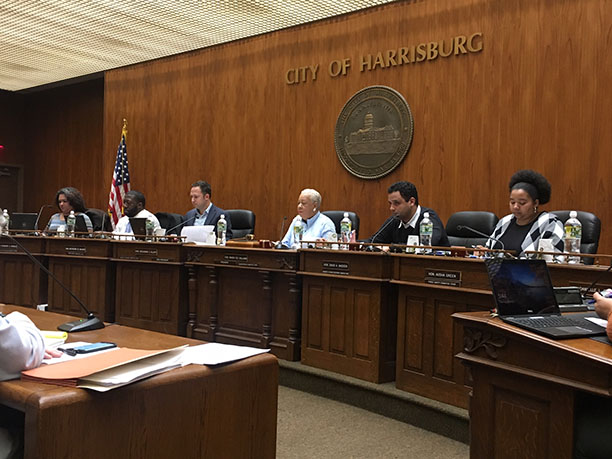
Harrisburg City Council during Tuesday’s work session

Harrisburg is known for its historic homes, which often have such touches as wide moldings, pocket doors and ceiling medallions.

Sometimes, those houses have something else much less desirable—lead-based paint.

Therefore, the city government wants residents to know that it is seeking applicants for its 2019 lead paint remediation program, an effort aimed at lower- and moderate-income owners and renters.

“It’s not just homeowners,” said Franchon Beeks, program manager and interim director of the city’s Department of Building and Housing Development. “We need more tenants and landlords to be aware of the program.”

The program is open to city residents who meet certain conditions, including income requirements (50 to 80 percent of median family income) and having children in the household younger than 6 years old, since eating chipped, lead-based paint can result in learning disabilities and behavioral problems. In addition, the housing unit must have been built before 1978.

Beeks spoke on Tuesday night during a Harrisburg City Council work session, offering council members a recent history of the program and a look at plans for 2019.

She told council that a federal Department of Housing and Urban Development (HUD) “Lead Hazardous Reduction Demonstration” grant for $3.7 million had expired on Dec. 31. However, last week, the city received notice that the Pennsylvania Department of Health had approved a one-year, $986,245 grant, allowing the lead paint control and remediation program to continue through 2019.

Beeks’ presentation wasn’t all good news.

She started by saying that the three-year HUD program got off to a slow start. By June 2017—halfway through the grant period—the city had fallen 20 units short of its benchmark of 70 remediated units. By Sept. 30, 2017, the city had fallen even further behind its goal, completing just 63 of an expected 100 units.

HUD then cited Harrisburg as “noncompliant,” the program manager resigned and Beeks was hired to replace him.

“We had a real problem with this grant,” said Mayor Eric Papenfuse. “We brought on Franchon, and, since then, things have really come around.”

By the end of the grant period in December, the city had completed 181 units, one more than its benchmark of 180. Still, the city left about $1 million of the grant money unspent, but that was largely because the average cost-per-unit, at $9,600, was far below the benchmark cost, Beeks said.

Susan Brown-Wilson, a former city councilwoman who is now client outreach and relocation coordinator for the program, said that they generated interest in the program by speaking before many organizations, attending numerous events and passing out information.

“We blanketed this entire city with flyers,” she said. “We did a lot of footwork to get the applications we received.”

Beeks and Brown-Wilson said that they expect to make the same outreach effort this time around, with a goal of remediating 70 units by year-end. They even plan to include program information in the city’s monthly sanitation bills.

“Having mailers in the trash bill will help with the visibility of this program,” said Councilman Westburn Majors.

To date, most of the participants have been homeowners, but Beeks said that she would like to reach more landlords and renters, as renters make up a large percentage of the city’s lower-income residents. Reaching this population has proven to be difficult, she said, even though the cost of relocation and temporary accommodations–necessary while the work is performed–is also paid through the program.

Looking forward, Beeks said that the city plans this year to apply for the next federal HUD grant, which will run from 2020 to 2023.

“For the next grant, we hope to increase our units,” Beeks said.

Click here for more information on Harrisburg’s Lead Hazard Reduction Program or call 3-1-1 and request an application.

Continue Reading

Small Bites: Mini doughnuts to help sweeten downtown Harrisburg.

The future home of Tiki T’s Mini Donuts and More

Maybe you’re in downtown Harrisburg as you head off to work at 8 a.m.

Or maybe you’re there on a weekend at 2 a.m., after a long night out.

Either way is fine with Will Horn. He plans to have enough hot, fresh miniature doughnuts on hand to satisfy both early morning and the late night confection cravings.

Next month, Horn will park his food business—Tiki T’s Mini Donuts and More—inside the snug, first-floor space at the newly renovated Bogg on Cranberry, at N. 2nd and Cranberry streets.

“A couple of years back, I would always go to downtown Harrisburg at night,” Horn said. “So, downtown Harrisburg has a special place in my heart.”

Horn began his business last year, selling freshly made doughnuts at the Lebanon Farmers Market and at Saturday’s Market in Middletown. Recently, he also began vending on weekends at the Vineyard and Brewery at Hershey. The 2nd Street location will be his first brick-and-mortar operation.

The space is small, only about 500 square feet. With no room for tables, all orders will be takeout. The late-night crowd won’t even need to go inside, as they’ll be able to purchase through an ordering window.

“I expect he’ll be very popular on Friday and Saturday nights, particularly,” said Brad Jones, CEO of Harristown Enterprises, which owns the Bogg on Cranberry, a fully renovated, 12-unit apartment building that opened last year.

Horn said that each doughnut starts with a vanilla base. He then adds flavors, many unique, which may include everything from maple bacon to S’mores to good, old-fashioned powdered sugar and glazed.

In case you can’t decide, free samples will be available.

“We have a plethora of new flavors,” Horn said. “Our goal is to come out with something new every month.”

The tiny doughnuts can be ordered by the bag or the bucket. Horn said that his machine churns about 1,200 doughnuts per hour, which equates to 40 buckets full.

Besides the signature doughnuts, Tiki T’s will offer its own branded coffee, bagels and waffles.

Right now, Horn is shooting for an April 15 opening. Once the doors open, you’ll have ample opportunity to stop by and sample, as Horn expects to be open some 81 hours a week, Monday to Thursday, 8 a.m. to 7 p.m., and Friday to Saturday, 8 a.m. to 2:30 a.m.

“Our goal is to help downtown as much as we can,” Horn said.

Tiki T’s Mini Donuts and More will be located at 221 N. 2nd St., Harrisburg. For more information, call 717-340-0025 or visit their website or Facebook page.

Continue Reading

Central Pennsylvania Youth Ballet remembers Marcia Dale Weary

Carlisle, Pa. – Marcia Dale Weary passed away at the age of 82 on March 4.

Marcia was born in Carlisle on March 31, 1936, the middle daughter of Dale and Melva Weary. She is survived by her sister Sandra Weary.

Marcia attended elementary schools in Pennsylvania and Alabama. She graduated from Carlisle High School in 1953. Marcia was passionate about two things – she loved to teach and she loved to dance.

She studied dance at local schools and spent summers in New York City attending classes at the School of Ballet Repertory. She was an instructor with the Hopper School of Dancing. While Marcia never danced professionally, perhaps her greatest accomplishments are in the world of dance.

Marcia founded the Marcia Dale School of Dance in 1955, where she taught classes daily and developed a teaching curriculum that is now trademarked and renowned in the industry for turning out exceptional dancers. Her vision was to give every child the opportunity to have access to exceptional ballet training. In 1962 Marcia Dale Weary and Richard Wynekoop of Carlisle founded the Ballet Guild of Central Pennsylvania to create a performing company that would present full-length ballet programs.

In 1974, the Marcia Dale School of Dance became Central Pennsylvania Youth Ballet – a nonprofit school and performing company. Today, Central Pennsylvania Youth Ballet is an internationally recognized school of classical ballet. Thousands of young people have passed through its acclaimed studios. Alumni are principals, soloists and corps de ballet members in the top companies in the world, including American Ballet Theatre, New York City Ballet, Boston Ballet, San Francisco Ballet, Pacific Northwest Ballet, Miami City Ballet, Pennsylvania Ballet, National Ballet of Canada, Les Ballets de Monte Carlo, and the Paul Taylor’s American Modern Dance, to name a few.

Marcia was hailed as one of the greatest ballet teachers of the time. She forged the path from a local dancing school to a global institution. Her unequaled dedication to her school, students and instructors and her unique teaching style have brought Central Pennsylvania Youth Ballet to the top of the dance field as a celebrated leader in dance education. In 1989, the New York Times stated that Weary is “considered one of the country’s foremost ballet teachers.” It also stated that Ms. Weary produces “dancers well known in the ballet world.” According to Dance Teacher magazine, she “produces students who have the whole package – attention to detail, early technical development, and a broad socialization into the arts. She and CPYB have been featured in leading newspapers and magazines, television news and features, books and in the award-winning documentary film presented on national public television, ‘Children with a Dream’.”

Marcia was the 1992 recipient of the Distinguished Service to the Arts Award for Central Pennsylvania; and the 2000 Carlisle Regional Arts Award, of which she was the first recipient. In June of 2005 she was recognized by the Pennsylvania Senate and House of Representatives for the 50 years of contributing to the cultural enrichment and enjoyment of countless citizens in Central Pa.

In 2007 Marcia received the Pennsylvania Governor’s Award for the Arts for Outstanding Leadership and Service to Youth; the 2009 Distinguished Citizen of the Commonwealth Award; the Central Penn Business Journal 2010 Woman of Influence Award for her leadership, integrity and accomplishments; and most recently, an Honorary Doctorate of Performing Arts from Dickinson College in recognition of her contributions to the performing arts.

Marcia, as the founder and director of the Central Pennsylvania Youth Ballet, never wavered from her vision to provide rigorous dance training for serious students and to enhance the cultural climate of the Central Pennsylvania Region through ballet performances. Marcia remained active in CPYB throughout her life, teaching more than 25 classes a week into her eighties.

Under Marcia’s leadership and guidance, Central Pennsylvania Youth Ballet has grown to a staff and faculty of 95, currently has 300 academic year students and an average of 600 students who come from around the world for the acclaimed summer program. In addition to producing successful dancers, Marcia has helped develop teachers, choreographers and administrators who have impacted the dance industry. Her exponential influence on the dance world is a ripple that can never fully be measured.

“Marcia built Central Pennsylvania Youth Ballet from the ground up. She has passed down her practices to the faculty and staff of Central Pennsylvania Youth Ballet so that her teaching and values will live on forever. Her beauty will continue to echo throughout the walls of the studios and into our hearts,” said CEO Nicholas Ade.

Marcia once said, “At every possible opportunity, I hope to instill in children a love for the arts and for classical music. Along with that, I hope to help them develop self-discipline, generosity, and the ability to focus.” There is no doubt that Marcia accomplished all of this and more in her life dedicated to teaching and dance. Her legacy lives on in all the lives she has touched and the strong organization that is Central Pennsylvania Youth Ballet, which is well positioned to continue to inspire, educate and impact the lives of its students, the community, and the world at large.

In lieu of flowers, donations made be made to Central Pennsylvania Youth Ballet to honor Marcia’s legacy.

For more information about the Central Pennsylvania Youth Ballet, visit www.cpyb.org

Continue Reading

Proposed STEAM charter school launches petition drive to reverse school board denial

The proposed PA STEAM Academy would move into this building, Midtown 2, in Harrisburg.

A group denied permission to open a new public charter school has begun a petition drive to overturn the decision of the Harrisburg school board.

The board of the proposed PA STEAM Academy needs to gather valid signatures from 1,000 city residents, 18 years and older, to force the matter to the Dauphin County Court of Common Pleas.

“The bottom line is—what’s in the best interest of the kids?” said Susan Kegerise, a former Susquehanna Township school district superintendent and now a member of the proposed charter school’s board. “We’re going to keep going because it’s in the best interest of the kids.”

PA STEAM Academy has until mid-April—60 days following the city school board’s unanimous denial of its charter application on Feb. 19—to gather the signatures for its appeal. If the court validates the petitions and issues a decree, the matter goes to the state Department of Education’s seven-member Charter School Appeal Board, which will make a final decision to affirm or overturn the school board’s decision.

To coordinate the petition drive, PA STEAM has contracted with Maverick Strategies, a Harrisburg-based consultant and lobbying shop. Over the next six weeks, Maverick will lead the effort to gather signatures during city festivals, on 3rd in the Burg nights, in Strawberry Square and at the Broad Street Market, among other places, according to PA STEAM board members.

Canvassers will also go door-to-door to gather signatures, with the goal of substantially exceeding the 1,000-signature mark, they said.

In the meantime, PA STEAM is still moving forward with a planned opening for the fall semester, said Carolyn Dumaresq, president of the charter school board and a former state secretary of education.

To do so, board members will need to hire a principal, six teachers and support staff, in addition to accepting the first round of students.

PA STEAM plans to open with 120 students, grades K-2, in Midtown 2 at N. 3rd and Reily streets in Harrisburg. The 115,000-square-foot building is currently occupied by HACC, but the college’s lease expires in 2022, and it is slated to begin moving programs out of the building later this year.

PA STEAM plans to expand on an annual basis, adding a grade level each year until it becomes a K-8 school. It also expects to grow horizontally, so that each grade level eventually would have 80 students.

Kegerise said that the PA STEAM Academy would feature small class sizes of 20 students, with a teacher and an aide per classroom, along with a strong creative component, community involvement, alignment among curriculum areas, skills integration and an emphasis on the use of technology. STEAM itself stands for science, technology, engineering, arts and math.

Doug Neidich, another board member, said that he believes it’s vital to offer educational options to young parents, many of whom leave the city when their children reach school age. He said that he envisions PA STEAM Academy as a possible feeder school for the city’s well-regarded SciTech High and for the arts-focused CASA charter school.

“We spent a ton of time getting this right, and we look forward to launching it,” said Neidich, CEO of GreenWorks Development, which owns the Midtown 2 building.

Dumaresq served for about 18 months as the state’s education secretary under former Gov. Tom Corbett. However, she said she doesn’t believe that her tenure necessarily will give the PA STEAM Academy an edge if the matter does go before the Charter School Appeal Board.

“It might seem like an advantage, but they’re very independent thinkers,” Dumaresq told TheBurg.

Elizabeth Hardison of the Pennsylvania Capital-Star reported today the Appeal Board remains populated with holdovers from the Corbett administration, as Gov. Tom Wolf has not made his own appointments.


For more information on the charter school appeals process, visit https://www.education.pa.gov/K-12/Charter%20Schools/Pages/Charter-Appeals.aspx.

For more information on the petition drive, contact Amanda Boris at [email protected].

Continue Reading

Passion & Policy: Gina Riordan’s personal story underscores her work at Drug Free Workplace PA.

Illustration by Ryan Spahr

Gina Riordan never imagined heading up a high-profile, public-facing nonprofit organization, but that’s exactly what happened.

“Public speaking was never my thing,” she said. “Now I do it every day. When you’re passionate about what you do, it makes a difference.”

Since November 2017, Riordan has served as program supervisor for Drug Free Workplace PA, a grant-funded program dedicated to helping Pennsylvania businesses and families navigate the world of substance use disorder.

The nonprofit, funded by the PA Commission on Crime & Delinquency, was established to create and implement Drug Free Workplace programs for Pennsylvania businesses, as well as educate community members. It provides tools, resources and expertise through in-person and online training sessions, offered free of charge.

“No other state besides Pennsylvania is putting funding toward prevention education that targets the workplace,” Riordan said.

In 2018, the organization helped 160 companies update their drug-free workplace policies, initiate drug testing, start or update employee assistance programs and more. Online and onsite supervisor training sessions educate employers on how to address workers with a substance use disorder and how to identify signs and symptoms.

Drug Free Workplace PA also offers families guidance on how to proceed and what to expect when helping a loved one with substance misuse.

After 25 years of working in business development and management, Riordan’s passion for helping and educating others about substance abuse was ignited by an unexpected turn in her own life. One of her five children has been “in and out of recovery” as a young adult, she said.

“I thought to myself, ‘We can’t be the only family going through this,’” Riordan said.

Far from it. According to the National Safety Council, 20.8 million Americans live with substance use disorder, affecting one in four families. Riordan’s first-hand experience, though, is what makes audiences sit up and take notice during her presentations.

“Seeing Gina’s real-life story was so compelling,” said Kara Luzik Canale, vice president of chamber operations, Harrisburg Regional Chamber & CREDC. “She’s the perfect person to stand up and say, ‘This does happen in your neighborhood and workplace.’ I can speak for her passion. She’s very passionate about her work.”

In November 2018, the Harrisburg Chamber hosted a “Lunch and Learn” workshop for area businesses to learn more about maintaining drug-free workplaces. According to Luzik Canale, Riordan developed and led the curriculum for the 90-minute “conversation starter,” which included information about free resources.

John Longstreet, CEO of the Pennsylvania Restaurant & Lodging Association, said his organization connected with Riordan and Drug Free Workplace PA because, “It’s such an important issue for everyone to know about with the opioid crisis.”

So far, Riordan has provided training workshops for five of the association’s 12 chapters statewide. Audiences have responded “very well” to the programs, Longstreet said.

“It’s not a feel-good program,” he said. “Everyone is surprised by the statistics. When someone who’s speaking has first-hand experience like Gina, people see it can happen anywhere. Audiences are very moved by her story.”

According to the U.S. Centers for Disease Control and Prevention, Pennsylvania has the fastest growing rate of drug overdose deaths in the nation. In fact, deaths within a 12-month period ending July 2017 totaled 5,443—a 43.4 percent increase compared to the previous 12 months. Emergency rooms across that state reported an 81 percent jump in opioid overdoses during that time.

Not surprisingly, the effect of these grim statistics carries over into the workplace. According to the federal Substance Abuse and Mental Health Services Administration, 77 percent of people using illegal substances are employed on a full- or part-time basis, affecting productivity, absenteeism and worker compensation costs.

In contrast, 80 percent of small- and medium-sized organizations in the United States operate without drug testing programs. Helping businesses initiate these programs is just one of the many free services offered by Drug Free Workplace PA.

In addition to her work there, Riordan serves on a national level as a Partnership for Drug-Free Kids family coach. On the state level, she has served on the Parent Panel Advisory Council and Access to Treatment task force.

“I just want to make a difference in helping to save lives,” Riordan said. “I like assisting individuals in need.”


For information about Drug Free Workplace PA, visit www.drugfreeworkplacepa.org.

Continue Reading