Musical Notes: Mature May

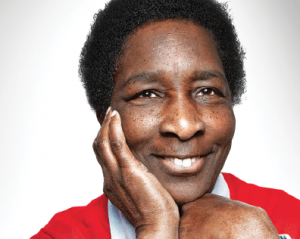
Joan Osborne. Photograph by Jeff Fasano.

Ah, springtime in Harrisburg, and the bees aren’t the only thing buzzing around here. We’ve got a lot of events and entertainment for you this month. So, it’s time, dear readers, for you to choose your own adventure.

If you’re looking for lively and local talent, CASA is hosting its annual live show on May 23, featuring junior and senior performances and sharing a theme, “Revolutions: A Lifetime on Repeat.” If a more traditional but still free festival is your thing, Dauphin County Parks and Rec’s Garden Faire on May 5 promises outdoor fun at Fort Hunter, featuring plants and art for sale, as well as music, food, games and more.

If you’re looking to get nostalgic, XL Live is bringing the “Saved by the ‘90s” interactive dance party to the Burg on May 11 with period cover bands, a DJ and costumes. This month, we also feature an extra show below. So, whatever your plans may be, join us in celebrating yet another busy season of songs. Cheers!

GABRIEL KELLEY, 5/10, 7PM, GREYSTONE PUBLIC HOUSE, $45
Part of the Harrisburg University Concert Series, the new “Music and Vines” lineup features singer-songwriters and focuses on pairing wine with intimate sets by well-known acoustic artists. Hot on the tail of a new EP, “Self-Titled,” Gabriel Kelley is first up, gracing the Greystone Public House for what is sure to be a moving performance. If you have love for some southern roots, this may be the show for you. If you’re looking for a night on the town with some class, this may be the venue for you. If you missed Kelley when he opened for Marcus King at Club XL, this your second chance to catch a performance by this talented musician.

JOAN OSBORNE, 5/14, 8PM, WHITAKER CENTER, $30
Another musical powerhouse is coming to Whitaker Center, performing the works of one of the most iconic musicians of our time. Joan Osborne shines as a vocalist, tackling and interpreting the lyrically rich songs of Bob Dylan. As a dedicated artist, Osborne became familiar with his works in 2016 while performing two residencies titled “Joan Osborne Sings The Songs of Bob Dylan” at Cafe Carlyle in New York City. Cutting straight to the heart with Dylan’s moving songs and her rich voice, this seven-time, Grammy-nominated and multi-platinum chanteuse is sure to dazzle even the most ardent Dylan fan.

SAVOY BROWN, 5/23, 7PM, XL LIVE, $10-15
If you can never get enough blues, XL Live is bringing what you need. Savoy Brown is an early British blues band that helped to launch the blues movement in the United Kingdom. Their memorable music is credited, in part, in bringing about the ‘70s British rock revolution. Founded by guitarist Kim Simmonds, the band has been through a few lineup changes over the years, but maintains their classic sound. Fun fact: their name came from an American blues label, Savoy Records, and they added “Brown” because members thought that the plainness of the word would balance out the elegance of “Savoy,” better describing their Chicago blues-sounding music.

LEGENDARY PERFORMERS OF DOO-WOP, SOUL AND ROCK N’ ROLL, 6/2, 3PM, SCOTTISH RITE, $45-55
We’re giving you a special, early head’s up for this epic showstopper, a must-attend for fans of early rock. The “Legendary Performers of Doo-Wop, Soul and Rock N’ Roll” stops by the Scottish Rite auditorium in Uptown Harrisburg, and headlining the event is the insanely talented Bobby Brooks Wilson, son of famous soul singer Jackie Wilson. What a story! Sent out for adoption as a child, Bobby Wilson later discovered his parentage after he had an established career as a Wilson tribute singer in Las Vegas. Sample his soulful sounds as well as appearances by the Duprees, Charlie Thomas’ Drifters and the Classics. It’s a real treat to get this kind of music in Harrisburg, and now that Flagship Productions has teamed up with Scottish Rite and Zembo, expect more amazing shows in the future.

Mentionables:

The Clarks, May 3, The Abbey Bar;
Bowie Live—The Ultimate David Bowie Tribute, May 4, XL Live;
The Hollow Roots, May 4, H*MAC Stage on Herr;
Hold Fast, May 4, River City Blues Club;
Marco Benevento, May 11, The Abbey Bar;
Don Johnson Project, May 11, River City Blues Club;
Hands Like Houses, May 16, H*MAC Capitol Room;
Josh Krevsky, May 16, Greystone Public House

Continue Reading

It’s a Stretch: A few at-home exercises can greatly improve your mobility.

Wouldn’t it be nice to get your workout done right before you go to bed, in your own bedroom?

It would certainly be convenient. That’s what I was thinking when I put this little mobility circuit together for you.

Mobility is important, and it only becomes more so as you age. That reality became apparent to me in my early 30s, when it became more difficult to ignore my mobility restrictions. That was when I began to take mobility seriously and sought to improve it.

Along the way, I picked up some good moves. Here are five mobility moves that you can do in the comfort of your own home/bedroom. While this mobility routine is not going to cover all of your fitness needs, it’ll certainly provide you with a simple plan that can help you move better and on a regular basis.

1. Standing Hamstring Stretch
For this movement, you’ll want to make sure that your hips are square to the bed to begin. Place one leg on top of the bed and stand firm on your opposite leg. Bring your hands out in front of your hips and place them on the bed. Don’t forget to breathe. Then switch legs.

2. Assisted Squat Stretch
Stand directly in front of your bed and bend over at the waist until you can grab the base (only perform this movement if your bed is sturdy, otherwise use a door frame).  Separate your feet so they are shoulder-width apart, and sink into your best squat. Continue to hold onto the base of the bed as you remain in the squat. Keep your heels flush to the ground and your chest up. And don’t forget to breathe.

3. Chest, Lats & Triceps Stretch
Stand directly in front of your bed, and place your hands on top of the bed. Keep your knees soft and your weight in your heels as you push your hips back and drive your chest toward the ground. You should immediately feel the stretch in your triceps, your upper back and your chest.

4. Elevated Pigeon
Stand directly in front of your bed, and place one leg on top of the bed in a 90-degree angle. Be sure to square your hips up with the bed and, from there, you can explore the stretch by bringing your hands onto the bed and reaching to your left and then your right. Then switch legs.

5. Half Kneeling Twist
Kneel down beside your bed with one knee on the ground as if you were about to perform a lunge. Be sure to place the leg closest to the bed in front of you (so the kneeling leg is furthest from the bed). Then rotate your body in the direction of the bed, and place your extended arms on top of the bed. Press down into the bed to engage your core, and make sure to breathe as you perform the stretch. Then turn around and get the other side.

Hold these stretches for about a minute to two minutes each.  And, do use caution if you’re a beginner. Rome wasn’t built in a day!

Ivan Black is the owner and trainer at Next Step Performance, 1100 N. 3rd St., Harrisburg. For more information, call 717-382-6398 or visit www.nsp.fitness.com.

Continue Reading

6 Candidates, 1 Question: Where do Harrisburg City Council candidates see the city going over the next four years?

Ah, May. Flowers bloom, birds sing and, if you live in Pennsylvania, candidates canvas and campaign.

Harrisburg almost always has interesting races, especially in off-year, municipal elections. Since the city is overwhelmingly Democratic, the primary is usually where the action is, and this year is no exception, as no Republicans are running for citywide office.

For City Council, six Democratic candidates are vying for their party’s nomination for three, four-year seats. The candidates include three current office-holders, Danielle Bowers, Dave Madsen and Westburn Majors, and three challengers, Christina Kostelecky, Dionna Reeves and Brianna Smith.

To get an idea of where the candidates stand, we asked all the same question, requesting that they keep their answers to 500 words. We hope that these responses offer insight into the candidates’ visions for the city and how they hope to achieve them. Responses are listed in alphabetical order and have been lightly edited to conform to our style and grammar guidelines.

The primary is May 21. Please vote to make your voice heard on the future of your city.
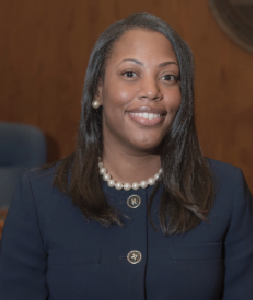
 

Danielle L. Bowers

Question: The term for this Harrisburg City Council seat runs for four years. What one or two major goals would you like to see Harrisburg accomplish over the next four years? Why? How would you, as a council member, try to accomplish these goals?

Answer: Over the next four years, I would like to see the City of Harrisburg accomplish the following two goals:

  1. Affordable Housing
  2. Economic Development

Affordable housing can be achieved through inclusionary zoning and blight reduction. The city conducted a housing study in 2018 to determine housing needs over the next five years. The study determined that there is a need for affordable housing in every area of the city over the next five years.

I believe the city should take a proactive approach to meet the impending need. Inclusionary zoning can be implemented to achieve affordable housing. Inclusionary zoning requires developers to designate a percentage of their housing units for low to moderate-income residents.

Blight reduction could also assist in achieving affordable housing. By reducing blight, I believe the city will have more viable sites for affordable housing. The city has a Harrisburg Property Reinvestment Board. The board meets monthly, and its sole purpose is to address blighted property throughout the city.

The goal of economic development can be achieved through promotion of equitable development, support of local entrepreneurs, and spurring job creation for local residents. Equitable development assists in achieving the goal of economic development within the city. Equitable development ensures that minority-owned business enterprises (MBEs), women-owned business enterprises (WBEs) and disadvantaged business enterprises (DBEs) are active participants in the city’s procurement and contracting opportunities. Equitable development could be achieved through participation in business workshops offered by the city, partnerships with the local chambers of commerce to identify businesses for contracting opportunities and targeted community engagement.

By supporting local entrepreneurs, the city will not only improve the local economy, but improve neighborhoods as well. Through local development, the city will provide access to goods and services available in their communities. Finally, economic development within the city will spur job creation for local residents. The city has a strong talent pool in an increasingly competitive labor market. Through increased development, the city should see more available jobs in various industries being filled by city residents who are qualified to succeed in these roles.

As a council member, I will work to ensure the city meets the two major goals of affordable housing and economic development. I believe these goals can be achieved through social innovation, effective research and collaboration between council and the administration. Should I be elected to serve a full term on City Council, I will continue to work to achieve these goals over the next four years.


Christina Kostelecky

Question: The term for this Harrisburg City Council seat runs for four years. What one or two major goals would you like to see Harrisburg accomplish over the next four years? Why? How would you, as a council member, try to accomplish these goals?

Answer: I’m Christina Kostelecky, and I’m running for our community. My goals focus on improvements for all residents rather than just a select few.

Economic development throughout the city. It’s time to focus on neighborhood development throughout the city. Evidence shows that costs are lower and returns are greater when we focus on small projects throughout neighborhoods. So, I’ll work with community groups and the planning commission to develop projects that our neighborhoods want that will benefit all Harrisburg residents. Imagine your neighborhood with wide sidewalks, clean streets and a locally-owned business just a few doors down.

I’ve spoken with Andrea, Shaun and Julia, local entrepreneurs frustrated with the hoops they’re jumping through while trying to start or expand a business in Harrisburg. I’m committing to the time and energy required to go through current legislation, line by line, to find outdated policies, to draft new language, and to build the coalitions necessary to reform the laws. Big, out-of-state developers don’t suffer from our tedious regulations; they simply hire expensive legal teams and pass costs along to the customers. Meanwhile, small business owners can’t afford to delay an opening (and therefore revenue) by several months. Our goal must be to encourage local businesses, not discourage them with antiquated, costly regulations.

Improve our schools. Undoubtedly you’ve heard about the state of our schools. Whether you’re a parent or are planning to have children, a business looking for a qualified workforce, or a long term resident of Harrisburg, you understand the importance of great schools and care deeply about their improvement. The quality of our city depends on the quality of our schools, and it’s time for City Council to play an active role in giving our city’s youth the positive learning environment and promising future they deserve. Simple steps like attending school board meetings can go a long way in making sure we stay on track with the administration and necessary improvements.

I recently met Kim and Yamaris, both parents of two who share my view that the solutions to our school problems are complex and will take time. Kim talks about walking a bunch of kids to school to make sure they stay safe, but she worries when she’s not around to do that. Yamaris dropped out of school and doesn’t want that for her own kids. While City Council members can’t change the schools overnight, we can hold the school board accountable. To that end, I commit to attending at least four school board meetings each year. Roughly two-thirds of our taxes go to the school system—I’m willing to pay that much when there’s some return on our investment.

Other goals include private-public partnerships for our community spaces (e.g. allow businesses to sponsor parks and paths), addressing affordable housing (e.g. reduce lot size restrictions), and increasing civic engagement by encouraging participation in citywide events. I invite each of you reading this to reach out to me; let’s start that engagement today—for our community!


Dave Madsen

Question: The term for this Harrisburg City Council seat runs for four years. What one or two major goals would you like to see Harrisburg accomplish over the next four years? Why? How would you, as a council member, try to accomplish these goals?

Answer: The goal is to improve the quality of life for our citizens. By making sure the budget reflects the health, safety and welfare of our community. We will accomplish this by continuing to invest in our police, fire and public works departments.


Westburn Majors

Question: The term for this Harrisburg City Council seat runs for four years. What one or two major goals would you like to see Harrisburg accomplish over the next four years? Why? How would you, as a council member, try to accomplish these goals?

Answer:
As a lifelong resident of the City of Harrisburg, I am excited about the opportunity to continue to serve my community on City Council. Over the next four years, my focus on City Council will be:

Continuing the work of improving public infrastructure and addressing blight.

In my role on City Council as chair of the Public Works Committee, over the last four years I listened to the needs of our community to improve the conditions of our neighborhoods. We know that as a city if we are going to be able to grow, attract new business and encourage existing businesses to expand, we must continue the work to repair our infrastructure and address blight.

Blight and trash discourage people from investing in our communities and neighborhoods. Last year, we went to the community to hold a series of meetings on ways to address these matters. The result was the adoption of a sanitation ordinance that increased fines and penalties for violations (including illegal dumping) and holds property owners accountable. Over the next four years, I remain committed to supporting increased enforcement and aggressively holding the responsible parties accountable for the cost of cleanup—instead of taxpayers. By improving the condition of our neighborhoods, we can restore a sense of pride in the city and attract more people to reside in the city while making it more attractive for businesses to locate in the city, which leads to jobs and improved living conditions for everyone. Over the next four years, I will work to develop policies that will encourage redevelopment.

Continued financial recovery and economic development.

Harrisburg has come a long way over the last four years. When I was elected to council in 2015, the city was in state receivership through Act 47. Council has worked with the administration to develop balanced budgets and stabilize our finances. Now the city is emerging from Act 47 and working with the Intergovernmental Cooperation Authority to develop a plan to improve our finances over the next five years. The law passed by the General Assembly gives the city five years, with our increased taxing authority under Act 47, to stabilize our finances.

My goal in the next four years is to make Harrisburg a more attractive place for investment. I will work with the business community to encourage reviving vacant commercial properties in our business corridors in Uptown, Allison Hill and throughout the city instead of looking to locate in surrounding areas outside the city. If we are able to grow our tax base through business development and growth in our neighborhoods, we will not need to increase taxes on a community that is already stretched. This includes working diligently with city departments to engage in partnerships with businesses, contractors and employers to provide greater opportunities for employment, job training and entrepreneurial experiences for the citizens of the city.

This is an exciting time for the city of Harrisburg, and I look forward to being a committed voice of the citizens, responsive to their needs and making Harrisburg an example of the benefits that can be gained when community, business and government work collectively for the good of the people.


Dionna Reeves

Question: The term for this Harrisburg City Council seat runs for four years. What one or two major goals would you like to see Harrisburg accomplish over the next four years? Why? How would you, as a council member, try to accomplish these goals? 

Answer: The city of Harrisburg has its share of challenges as I am sure other cities may have. A major goal I would like the city to accomplish over the next four years is the beautification of the city. Throughout areas of Harrisburg, there are vacant or abandoned properties. These vacant or abandoned properties are blight on the entire city, creating safety issues and a negative image.

Tackling this goal will be essential in improving the quality of life for residents. Encouraging revitalization throughout the entire city, not only in targeted areas, is a possible solution as all neighborhoods deserve attention. Community outreach will be a vital task to determine the needs in different neighborhoods around the city. Improving the overall attitude about Harrisburg can eventually create a feeling of hope and pride with city residents. Revitalization and beautification can keep residents living safely and thriving daily.

Other possible solutions to creating the beautification in our city are developing a strategic plan to include new policies and procedures for landlords. Landlord accountability needs to be reinforced, stricter enforcement of the current rules for blight remediation, and strengthening penalties for violations of city codes could all improve Harrisburg’s appearance. The revitalization of Harrisburg would be the responsibility of the city and city residents to rebuild and restore our community.


Brianna Smith

Question: The term for this Harrisburg City Council seat runs for four years. What one or two major goals would you like to see Harrisburg accomplish over the next four years? Why? How would you, as a council member, try to accomplish these goals?

Answer: One goal that I would like to see Harrisburg accomplish over the next four years is to increase job opportunities for today’s youth. For every young person, a job offering decent work is an important step in effecting the transition to adulthood, a milestone towards independence and self-reliance. For young people living in poverty and in other disadvantaged situations, employment is often the main means for achieving a better life. Creating and fulfilling income-generating job opportunities for young people can have a direct positive outcome for poverty improvement in Harrisburg. Youth employment benefits social development. It also benefits economic development by helping the entry of young, skilled people into the productive sectors of an economy and enabling the economy to sustain or increase its productivity and competitiveness in the global marketplace. Also, I would like to create partnerships with local businesses to invest in our youth by hiring them.


School Slate
Harrisburg City Council isn’t the only competitive primary race in Harrisburg this year.

The race for school board is arguably even more contentious, with 12 Democratic candidates competing for five, four-year seats. Like in the City Council race, no Republicans chose to run.

Below are the names of the candidates, with incumbents (elected and appointed) indicated by (I) after their names.

  • Jayne Buchwach
  • Lewis Butts Jr.
  • Lionel Gonzalez (I)
  • Lola Lawson (I)
  • Ralph Rodriguez
  • Ellis R. Roy (I)
  • James Thompson
  • Doug Thompson Leader
  • Gerald Welch
  • Patricia Whitehead-Myers (I)
  • Cory X. Williams
  • Steven Williams

At press time, several community groups were planning to host candidate forums and debates for both City Council and school board. We urge you to attend one of those events to learn more about the candidates.


Continue Reading

Heartbreaking, Relatable: “Working Woman” is a must-see in the annual HBG Jewish Film Festival.

Writing reviews requires consistency.

People expect the type of review they’ve always seen when they flip through the pages of TheBurg. They’ve grown accustomed to the specific voice in which I write these reviews. It’s a voice that is willing to give a critique, but still remain impartial—words from a critic, not a fan.

Even when I connect with a film, I remember that my personal connection is not the same connection that everyone else might make with a film. I try to write my film reviews as an unbiased reflection on an artistic work—still relaying the emotions, themes and message that the film presents, but doing so in a trusted, professional way.

This time, though, it was very challenging.

Michal Aviad’s “Working Woman” is an Israeli film about a woman who finds herself in a difficult position because of sexual harassment. While I can’t say that I’ve faced harassment to this extent in the workplace, I can pinpoint “lesser” examples, and many more from my social life, that allowed me to connect to this story at a visceral level. And so can most women.

The film is part of the lineup for the Edward S. Finkelstein Harrisburg Jewish Film Festival, and though it portrays an Israeli perspective on the world, the film transcends its demographic. This is a film that hits home for a lot of people, no matter their walk of life. This is a fairly common trait for the films that are chosen for the JFF—they speak to everyone. This one, in particular, had a lot to say.

Orna (Liron Ben-Shlush) has accepted a position as the assistant to a successful real estate developer, Benny (Menashe Noy).

“Is this the right time to learn a new profession?” her husband (Oshri Cohen) asks, having just opened a new restaurant a few months prior.

He is nervous about their family of four making a change so soon after the uncertain financial move they have made with his budding business. But, confident and quietly resolved, Orna is excited about the opportunity.

Soon, as the restaurant takes longer than expected to find its legs, Orna becomes the breadwinner in the family, throwing herself into the position and playing a major role in selling a sea-view high rise to several French customers. But providing financially for her family seems to come at a price. Her boss seems to have more than a working relationship in mind. Though she blocks his advances, Benny seems determined, making comments and acting inappropriately. Orna brushes off the sexual harassment and tries to focus on doing her job, but things keep getting worse.

Aviad fiercely portrays every woman’s nightmare in this Israeli drama. Women (and not just women, but in this scenario, it’s applicable) know something of Orna’s story. Maybe some haven’t been targeted by sexual harassment to this extreme—maybe they’ve only heard comments or had assumptions made by them that translated to work difficulties. Maybe some have had worse. But we all know what it’s like to be the recipient of unwanted behavior.

And that’s what makes “Working Woman” cut so deep.

Orna never specifies why she lets things continue without saying anything. Perhaps she believes her husband will not let her continue the job if he finds out. Or perhaps she sees this as commonplace—a part of the working environment. An interesting note (though unfortunately not surprising) is that Orna never considers filing a report or going to the authorities. Perhaps it is because she feels like it won’t accomplish anything. Every option that Orna has seems to point to her losing a position in a career she loves.

It also unequivocally points to Orna having to come to grips with the fact that the harassment is happening. We’d all like to believe that the human race is growing and learning, that discrimination is fading into the background. We’d all like to believe that we will never have to deal with something of this nature. And that desire sometimes leads to pretending—if we pretend nothing is happening then we can believe that we really are in a better world. Maybe the problem will solve itself, without us having to voice it or confront it.

Aviad offers an in-depth case study of the concept of freezing—the moment in which, during a fight-or-flight scenario, the body instead becomes immobilized. Since Orna probably has not done research into the psychological effects of sexual harassment, her moments of freezing affect her even more severely, especially in context with the conversations she has with her husband late in the film. We see this struggle in Ben-Shlush’s performance. Her pinnacle scene comes as she sits at her computer, typing up her own recommendation letter, trying to fix her problem while still deeply entrenched in it. It is a heartbreaking yet familiar scene in which she attacks herself instead of helping herself.

There are so many moments I can point to in order to recommend this film, but suffice it to say, “Working Woman” will simultaneously compel and upset. It is a story worth reflecting upon and a film that needs to be seen.

“Working Woman” appears this month at Midtown Cinema, 250 Reily St., Harrisburg. For more information, visit www.midtowncinema.com and www.hbgjff.com.


MAY EVENTS
At Midtown Cinema

Down in Front! presents
“Time Chasers” (1994)
Friday, May 10, 9:30 p.m.

3rd in the Burg $3 Movie
“Dark Crystal” (1982)
Friday, May 17, 9:30 p.m.

Edward S. Finkelstein Harrisburg Jewish Film Festival
May 11 to 16
Lineup can be seen at www.hbgjff.com.

Continue Reading

Watching the River Run: Susquehanna Greenway Partnership works to create happy trails, happy people.

For 500 miles, the mighty Susquehanna River glides peacefully through rolling mountains and sleepy towns, past wildlife and wilderness, beneath cloudless skies and towering bridges of stone and steel.

From Otsego Lake in New York to Maryland’s Chesapeake Bay, its glistening waters serve as the scenic backdrop for Kipona, Artsfest and the Pride of the Susquehanna riverboat, offering up the picture-perfect setting for picnics, boating, fishing, jogging and more.

Flowing in two main branches in a loosely drawn “Y,” the river has quietly connected the past to the present, the north to the south, the east to the west and the young to the young-at-heart.

Those connections fuel the mission of the Susquehanna Greenway Partnership (SGP), says Executive Director Corey Ellison.

“It’s all about connecting people,” said Ellison, an Alabama native who has backpacked and rock-climbed her way through Australia and other must-see points in the great outdoors.

She views the Susquehanna as the ideal natural accessory for recreation, economic development, history, culture and a healthier lifestyle.

“Studies consistently show that people want walkable, bike-able communities,” Ellison noted.

Embracing open space also attracts economic development and an influx of vibrant young people, raising the region’s quality of life and beauty quotient, she said.


Greenways & Blueways

The group’s seeds were planted in the early 2000s, when then-Gov. Tom Ridge challenged the state Department of Transportation and the Department of Conservation and Natural Resources to examine the potential of the commonwealth’s greenways. From there, a committee of 120-plus members developed the Pennsylvania Greenways Action Plan, and the Susquehanna Greenway Partnership was born.

Its charter was signed on City Island in Harrisburg with representatives from the state, federal, city and county governments on hand, along with local advocacy groups. Funded largely by state funds and foundation grants, SGP underscores the importance of greenways and “blueways,” as the march of development bulldozed over suburbia’s vast open spaces.

The strategic action plan, released in 2006, recommended the formation of a nonprofit. That same year, a board of directors was appointed, and SGP became a 501c(3) organization.

Since then, the partnership has been working to build out the idea of a connected greenway and to preserve and link strips of undeveloped land and the environment.

The planned corridor runs one to three miles on either side of the Susquehanna for the entire 500 miles of the western branch.

Based in Williamsport and Lewisburg, the partnership has concentrated its efforts on the central Susquehanna region, working to translate ideas into trails, parks and river access points.

SGP often uses Dauphin County as a model for greenway development and preservation.

Ellison pointed to the extensive county park system and the Capital Area Greenbelt, lovingly dubbed the “emerald necklace,” as proof of the capital city’s love affair with its greenways.

In and around Harrisburg, SGP often shares information at Greenbelt events and sponsors an annual photo contest.

The competition attracts photographers of all skill levels to the greenway. The images captured will be on display in the Capitol’s East Wing Rotunda through June 30. Picturesque landscapes, charming river towns, and panoramic sunsets are frequently captured on film, along with those iconic bridges of the Susquehanna.

“The greenway is so large and covers such a diverse geography that we are always surprised by the images that come in,” Ellison said.


A Resource

Ellison pointed out that many people who live along the river may know what’s in their own backyard, but not what’s upstream. And, of course, what begins upstream eventually flows down into the lower Susquehanna.

She acknowledged that the Susquehanna has a “storied past” that includes the good and bad—beauty and transportation, pollution and massive flooding.

In the recent past, swollen riverbanks and dirty waters caused people to move away from the river, both physically and mentally, Ellison said.

“They saw it as a risk instead of a resource,” she said. “It really is an opportunity, whether for recreation or economic development. We try to work with communities and groups to help see the river, not as a risk but as a resource.”

SGP offers a volunteer ambassador program for those who share the group’s passion. To grow the greenway, these ambassadors attend outreach events, talk to visitors, spread the vision and mission of greenways and identify access to trails.

Every year, the group also hosts a paddling event. This year, the Susquehanna Island Hopper event will allow paddlers to drift from outside Selinsgrove to the Mahantango Creek Fish and Boat Commission on Aug. 3. Early bird tickets are available.

Because last year’s pounding rains led to high river levels that forced the event’s cancellation, the partnership has formulated a backup plan. If the river is too high or too low, “hoppers” will go to a local lake and hike, but the trip is on—rain or shine.

The sojourn is suitable for all levels of paddlers, from beginners to experts and from teens to retirees. It is fully guided, complete with safety boats and naturalists who give “as-you-go” learning opportunities, pointing out wildlife and natural areas in a floating classroom.

Representatives of Selinsgrove will talk about its history as a river community.

SGP also offers day trips that can be found on its website.

Whether you paddle, picnic, picture-take or promote, you should know about this group and its resources. And its members invite you to visit their website, reach out and connect with them.

To learn more about the Susquehanna Greenway Partnership, visit www.susquehannagreenway.org.

Stories on environmental topics are proudly sponsored by LCSWMA.

Continue Reading

Changing the Game: An annual conference champions female athletes, women’s sports.

Loretta Claiborne didn’t walk or talk until the age of 4.

Born partially blind with intellectual disabilities in 1953, Claiborne was one of seven children raised in York by a single mother. Public school brought bullying, name-calling, anger and fighting.

The odds were against her. Sports, however, transformed her life.

Claiborne recently delivered the keynote address to about 100 south-central Pennsylvania health care professionals gathered in York for WellSpan Sports Medicine’s annual “Game Changers” conference.

“Loretta, your feet can take you further than your fists.”

That’s the life-changing advice a teenaged Claiborne heard from a teacher.

She took it to heart and started running with her older brother. It was 1966—a different era, before society generally accepted female athletes.

“My sister said I looked crazy running around Penn Park, and my mother said I would hurt my health,” Claiborne said.

She helped raise money to start a girls’ track team at William Penn Senior High School, then was called names like “retard” by teammates due to her disabilities. Claiborne recalls running in the school’s hallways for practice—boys were given priority on the outdoor track and field.

Claiborne’s feet propelled her to the finish line of 26 marathons (including a personal best of 3:03 in the 1982 Boston Marathon) and earned her seven running-related Special Olympics medals, plus three medals for bowling and figure skating.

The longevity and breadth of her career is incredible—she has competed in the Special Olympics since 1970 and also earned a fourth-degree black belt in karate. She talks about her accomplishments in a humble way, as if anyone else in the room could do it all, too.

She recalled many game changers within her own life: her mother, who was the first African American baby born in York Hospital, and her cousin Pierre Ritter, Harrisburg’s first African American police chief.

But she said the biggest game changer was the Special Olympics.

“I look back at the power of what athletics have done for me as a woman,” she said. “Without sports, I’d either be six-feet under or behind bars.”

Today, at the age of 65, the decorated Special Olympics champion is also championing causes.

She’s met four U.S. presidents and the pope. She was on a first-name basis with Special Olympics founder Eunice Kennedy Shriver, and she continues to serve on the Special Olympics International board of directors. She’s testified before Congress and the United Nations.

Her message? She encourages others to see abilities rather than disabilities.

“Everyone should have the right to play sports,” she said. “I’m going to keep pushing for women in sports, for people of disability.”


Really Listen

This June marks the 47th anniversary of Title IX, the civil rights law guaranteeing that women receive the same educational opportunities as men, including athletic ones.

According to the latest data, there are nearly 8 million high school athletes, including 3 million girls. Compare that to 1972’s participation rate—295,000 girls.

College athletes hit an all-time high of nearly 495,000 in 2017-18, and more than 216,000 were women. Back in 1972, only 30,000 were.

Disparities remain, however. According to the NCAA and the Women’s Sports Federation, schools spend less on female athletic programs, there are fewer female coaches than males, and participation among minority females is significantly lower than that of whites.

Conference organizer Dr. Mark Lavallee of WellSpan’s sports medicine program and head team physician for Gettysburg College, notes one of the most obvious changes in females athletes today.

“The acceptable body type has changed from skinny and twiggy to an athletic female build,” he said. “It’s now acceptable for women to have muscles.”

Interestingly, an increase in muscle mass requires more iron to power the body, meaning athletics can actually contribute to iron deficiency, said Dr. Helen Deitch of WellSpan Adolescent & Pediatric Gynecology.

Still, some athletes, both male and female, strive to be thin and lightweight, putting themselves at risk for eating disorders, stress fractures and anemia.

Conference sessions focused on training health care providers to identify and help athletes who may be suffering from medical conditions, as well as abuse, a timely topic given the rampant sexual abuse perpetrated by the USA Gymnastics and Michigan State University physician Larry Nassar.

“People ask why it’s happening in sports, and the thing you have to remember is that sports is often a sacred culture with tremendous power differentials,” said Kathy Bradley, a psychologist who oversees Gettysburg College’s Health & Counseling Center.

She instructed conference attendees on how to phrase questions to female athletes when abuse is suspected. Ashley Moss of Drayer Physical Therapy, Lower Dauphin (LD) High School athletic trainer for 12 years, said Bradley’s advice was valuable.

“In a world where things are always moving so fast, or we are trying to juggle more than one athlete at a time, we can overlook or miss the details we need to hear, to provide the best care,” Moss said. “This conference was a great reminder to slow down, ask the hard questions and really listen to what the athlete is saying.”

She has seen a rise in the number of LD’s female athletes continuing onto the collegiate level. And she cites numerous female role models at LD, including long-time field hockey coach Bea Hallman and current coach Linda Kreiser, as well as Ruth Goepfert, who helped establish LD’s swim team.

“Like Loretta Claiborne, LD has been very lucky with women who have paved the way in athletics,” said Moss.


For more information on the Game Changers in Sports Medicine Conference, visit www.wellspan.org.

Continue Reading

Musical Youth: Annual Mother’s Day concert showcases the passion, talent of the Harrisburg Symphony Youth Orchestra.

The pull and passion for music can begin early. Some quit and substitute other interests; others keep on.

Matthew Blanchard, a senior at Boiling Springs High School, a tubist and singer, discovered his musical passion upon attending a concert performed by the Harrisburg Symphony Youth Orchestra (HSYO) when he was in eighth grade.

“I was amazed by how professional the kids looked and sounded,” Blanchard recalled. “I also thought it would be amazing to play my tuba in the Forum. I was hooked immediately.”

Blanchard’s seat will be right on stage this month when the HSYO presents its annual Mother’s Day concert at the Forum in Harrisburg. The orchestra is also celebrating a special milestone this year: the 65th anniversary of the first HSYO performance.

“In 2004, as part of the Harrisburg Symphony Orchestra’s 75th anniversary celebration, a book was written chronicling the orchestra’s history,” says Mark Hunsberger, director of education, who began playing music in fourth grade. “In that book, the author, Cornelius A. Rodgers, recognized the HSYO as one of the 10-oldest in the country.”

That year, the youth symphony boasted 88 student members from 25 different public, private and home schools. It has now grown to more than 160 student musicians from 45 different public, private and home schools. There are currently two ensembles—one for middle school and one for high school.

“Those numbers alone speak not only to the sustainability of music education here in central PA, but to the growth of the music education communities which HSYO serves,” Hunsberger said.

While Blanchard was inspired by attending a performance, 12th-grader Julia Duvall, a violinist with the HSYO, said that hers started at the age of 3 due to an educational toy.

“I had a LeapFrog tablet that came with a classical music track,” Duval said. “I was obsessed with listening to different composers and playing with an interactive violin featured on the device.”
Range of Interests

HSYO has opened many opportunities for its young musicians and provided a professional atmosphere that teaches lessons going far beyond the intricacies of the music itself.

For Duvall, performing new and exciting compositions has further developed her musical skills. She is also a two-time winner of a scholarship that allowed her to attend “Summer at SEM Creative Arts” at Wyoming Seminary in Kingston, Pa., an international summer program for serious students of music, theater and dance.

“This program impacts these students on a number of levels, many of which have nothing to do with actual music making,” says Greg Woodbridge, HSYO’s music director. “Music is merely the vehicle through which they foster friendships, community and numerous skills they’ll use throughout life outside of music. At the very least, we hope to be building future audiences and educated music consumers through exposure to high-quality orchestral literature.”

According to Woodbridge, who began playing piano at 7 years old and took up the violin at the age of 9, HSYO musicians learn about belonging to a performing ensemble and how to play their instruments with a group, as opposed to playing alone.

“Because of the many activities outside of the orchestra in which students participate, they must have good time management skills,” he said.

Indeed, both Blanchard and Duvall have interests that take up other precious minutes of their days. Blanchard sings bass in the Boiling Springs Chorus and has participated in district and regional choral festivals. He also plays bass trombone in his school’s jazz band and Messiah College’s jazz band. He is president of the Fly Fishing Club at his high school and works at a fishing and tackle shop.

Duvall’s hobbies include yoga, baking and reading.

Despite their busy lives, HSYO’s Mother’s Day concert is a source of excitement for the two musicians, as they will have the opportunity to perform some of their personal favorites. Included in the repertoire are both classical and pops selections such as “Die Fledermaus Overture” by Johann Strauss, “Rumanian Rhapsody No. 1” by George Enescu, and selections from the “Harry Potter” and “Hook” soundtracks, scored by John Williams. In addition, a performance of “Der Schwanendreher” by Paul Hindemith will feature HSYO Concerto Competition winner, Kayra Hyatt.

“Each year, the HSYO holds a concerto competition for members of the orchestra,” Hunsberger explained. “The winner performs their selection with the full orchestra as part of the Mother’s Day concert.”

Also performing will be the Junior Youth String Orchestra with selections by John Rutter, Antonin Dvorak and Edouard Lalo.

While Blanchard plans to major in music education after graduation, Duvall sees her future in the medical field “while participating in an orchestra,” she said.

Whatever each student’s decision, Hunsberger knows the positive impact that HSYO has made on them individually, as well as on their communities.

“We’re helping them understand that they have something positive to contribute to the world,” he said. “And, if that happens to be through a career in music, even better!”


The Harrisburg Symphony Youth Orchestra (HSYO) Mother’s Day concert takes place on May 12 at 3 p.m. at the Forum, 500 Walnut St., Harrisburg. For more information, visit www.harrisburgsymphony.org.

Continue Reading

Heart of the Matter: Peyton Walker Foundation makes sure the beat goes on.

At a time when her young life should have been just beginning, Peyton Walker, a 19-year-old sophomore at King’s College, died suddenly on Nov. 2, 2013.

Peyton was taken by a sudden cardiac arrest incident related to hypertrophic cardiomyopathy, the genetic heart condition that she shared with her mother, Julie. During the interim, however, young Peyton lived life to the fullest, engaging in snowboarding, rock climbing, hiking or most anything that involved adventure and the outdoors.

Although Julie and husband Norm were devastated by the loss of their beautiful, vibrant daughter who was studying to become a physician’s assistant, it didn’t take long for Julie to become proactive in the wake of her grief. The day Peyton died, she was wearing a T-shirt that read, “What we do for ourselves dies with us. What we do for others and the world remains and is immortal.”

“How could I not carry on?” said Julie, of Mechanicsburg. “Every day, I focused that I’ve got to get my two feet on the floor and go. Wallowing and doing nothing was not an option. You have to keep going. It’s a choice. My daughter wanted to work in health care, and this was her mission.”

In the months that followed, Julie sowed the first seeds of what would become the Peyton Walker Foundation, of which she is now the executive director. The nonprofit organization was founded with a mission of increasing public awareness and survival rates of sudden cardiac arrest through education, screening and training. The organization’s first public screening took place at Trinity High School in Camp Hill in 2015. Since then, screenings have expanded beyond Cumberland County to include Dauphin, Perry, York and Lancaster counties and the Wilkes-Barre/Scranton area, where Peyton attended King’s College.

Sadly, Peyton hasn’t been the only young person to lose her life to sudden cardiac arrest, or SCA. Every three days, a student athlete dies from the affliction, the number-one killer of student athletes in the United States. In fact, central Pennsylvania recently was hit by the sudden deaths of three student athletes.

However, most heart conditions that lead to SCA are considered detectable and treatable, Peyton Walker Foundation representatives say. Therefore, the foundation holds free heart screening clinics for students ages 12 to 19 throughout central Pennsylvania. Additionally, AED (automated external defibrillator) and CPR training is given to all students who attend the screenings, since these devices increase the chances of survival for those stricken.

By March 2019, the Peyton Walker Foundation had screened around 2,100 young people in central Pennsylvania and the Wilkes-Barre area. Of those screened, at least 38 were found to have “issues,” Julie said.

“Families don’t always follow up on things, so it’s difficult to track exactly what happens afterwards,” noted Julie, who was diagnosed with hypertrophic cardiomyopathy in her late 20s. “Some who are found with issues are monitored or have surgery. Sometimes, the parents get screened to see if it’s something that’s hereditary.”

Peyton had received regular screenings since toddlerhood.

The Peyton Walker Foundation also provides free, fully certified CPR/AED training classes to members of the community. In addition, the foundation has donated more than 20 AEDs and supplies to several organizations in the area, including police departments, schools, athletic organizations and public venues.

In fact, the foundation launched a program on March 1 to install 21 new AEDs throughout the Harrisburg school district. The program was initiated in conjunction with Harrisburg schools, PinnacleHealth Foundation, UPMC Pinnacle, state and municipal leaders, students and others. Cougar Academy students in Harrisburg also received CPR and AED training.

Up at King’s College, the foundation has awarded more than $35,000 in scholarship funds for students enrolled in the physician assistant program. The privately funded scholarships are earmarked for students who plan healthcare careers as Peyton had.

Julie said that she is “blessed with a giant army of volunteers” who help spread the messages of the Peyton Walker Foundation. Susan Sherwood of Dillsburg is one of about 125 volunteers assisting the organization through fundraisers and heart screenings.

“I help in any way that I can,” said Sherwood, a family friend whose son was close to Peyton. “I feel very strongly about this.”

Just seven months after Peyton’s death, Sherwood’s husband, Carlton, lost his life to heart issues at age 67.

“We really admire Julie’s strength and perseverance in doing this work,” Sherwood said of her longtime friend. “We want to make to make sure that no other families ever have to suffer this kind of pain.”

To learn more about the Peyton Walker Foundation, including upcoming screenings and events, visit www.peytonwalker.org.

Continue Reading

Taste of History: Savor Gettysburg Food Tours whets the appetite of foodies, history lovers.

Photo by Karen Hendricks.

Gettysburg reminds Lori Korczyk of Epcot.

Just like the Disney park’s microcosm of world cultures, Gettysburg’s downtown streets are dotted with eclectic and ethnic restaurants, from Thai to Mexican, Italian to Irish, plus plenty of American eateries that blend cuisines—like melting pots—with culture and history.

The Adams County town’s crossroads drew Union and Confederate soldiers together during the pivotal 1863 Civil War battle and sealed its role in American history. Today, “the most famous small town in America” continues to draw more than a million visitors annually.

Korczyk saw an opportunity to establish Savor Gettysburg Food Tours (SGFT) six years ago, to appeal to foodies and history lovers alike.

“I always tell people to make a food tour the very first thing you do when traveling, because it gives you the lay of the land, maps out paces to eat and visit, and answers so many questions a traveler needs to know,” said Korczyk.


Keep It Fresh

During Korczyk’s “Historic Downtown Gettysburg Food Tour,” which spans three hours and about one mile, attendees visit and sample dishes from six restaurants.

Tour-goers try some of the best specialty dishes from downtown bistros and restaurants. A winery shop pairs wines with local fruit and cheese; an ice cream shop delivers a sweet ending.

Along the way, Gettysburg’s historic backdrop provides the tour’s flavor. Korczyk explains what the town and its civilians experienced during the Battle of Gettysburg.

“I knew there were remnants of the war, but I had never seen the cannonball or all the bullet holes in the brick walls,” said Amy Boothroyd of Hanover, who took a tour last October with her husband Josh to celebrate their anniversary. “Our tour guide pointed everything out.”

It was history that drew the Korczyks to Gettysburg for their retirement years—now they’re both tour guides. With a background in the retail and food service industry, Lori developed SGFT. Her husband Larry, a lifelong history buff, is now a licensed battlefield guide at Gettysburg National Military Park who also leads SGFT.

To keep it fresh, Korczyk occasionally shifts the tour lineup. But, she said, the Garryowen Irish Pub has been on the tour since day one, serving up shepherd’s pie and Magners Irish Cider.

Owned by Irish transplants Joanne and Kevin McCready, the Garryowen has racked up numerous awards and accolades, including “Best Irish Food Experience in North America” by Irish Pubs Global in 2017.

“Growing up in Ireland, we’re used to bars and restaurants being one thing, and that’s what we tried to do—not make an Irish bar, but to just make it a bar,” said Kevin, who was a carpenter in Ireland, then in Manhattan. “That way, it’s authentic.”

The couple, “together since we were both 16 in ’84,” said Kevin, moved to Gettysburg to be closer to friends and to open the Garryowen in 2007.

“It’s the longest I’ve ever had one job in my life,” Kevin remarked.

Tour-goers hear plenty of tales in the pub. Then there’s the authentic shepherd’s pie, Joanne’s mother’s recipe, and the extensive menu of 112 Irish whiskeys. And you may notice the hundreds of police and fire department patches tacked into the pub’s rafters.

“A guy who used to hang out here worked for the National Park Service,” McCready said. “He gave us a patch, and it snowballed from there.”

There’s Irish history, too. A wall mural pays homage to the 1916 Easter Rising leaders, who paved the way for today’s Republic of Ireland. The restaurant’s new courtyard showcases Irish-themed memorabilia, including a tin Titanic sign, a nod to Joanne’s great-grandfather, who worked on the iconic ship.

This year, a new addition to SGFT is the Hoof, Fin & Fowl, which features authentic seafood dishes by Baltimore native, chef/owner Jeff Jurkowski.

“We’ll feature one dish from the sea and one from land—our popular lamb lollipops,” said Jurkowski, who grew up in a family of Chesapeake Bay watermen.

After operating a popular roadside crab business in York for years, Jurkowski opened the Hoof, Fin & Fowl last September. His seafood experience guides his menu, which he describes as “adventuresome,” with fresh rockfish, pan-seared duck breast, authentic Maryland crab cakes and more.

He said that one of the best things about being on the tour is the personal connection with attendees.

“People always like to meet the owner,” he said. “The hope is people will enjoy their samples, remember us, and come back for dinner.”


Total Story

Annually, about 1,500 people attend 120 SGFT events, April through November. In December, Korczyk offers Christmas-themed food tours. Additionally, her daylong, summertime “Field-to-Fork Agritourism Experience” has transported past attendees to the Adams County countryside to pet goats and sample goat cheese, pick mushrooms and apples, sample wine and cider, and meet farmers and makers along the way.

“I’m definitely a foodie,” said Korczyk, who began baking alongside her mother at the age of 8.

And she’s enjoyed food tours in Rome, Venice, Quebec, Orlando, Vermont and—one of her favorites—Savannah, Ga. Korczyk has gleaned techniques and tips from all of them, woven into SGFT. Her downtown tour script, written out, spans 45 pages of material—all memorized—from the local historical society, battlefield guides, plus restaurant owners and chefs.

“Food tastes so much better when you know the total story—when you can talk to the restaurant owner, learn about the business and recipes,” Korczyk said. “And that’s what gives you memories.”


For more information on Savor Gettysburg Food Tours, visit www.savorgettysburgfoodtours.com.

Continue Reading

Sweet, Salty & Self-Made: Eat a snack. But first make it.

Turkey Hill “Taste Lab”

You may remember an early episode of “Seinfeld,” in which Kramer wanted to start a pizza place “where you make your own pie.”

Here in central PA, we may not have a restaurant (yet) where you can make your own pizza. But we can make our own candy bars in Hershey and our own ice cream and pretzels in Lancaster County.

Hershey has two opportunities for tourists and local chocoholics to create personalized candy bars. At $21.95 per person, the candy is much more expensive than wandering to the checkout line and tossing a Skor bar onto the conveyor belt as an afterthought.

But it’s not only the candy bar you’re paying for. The experience of designing the candy and the packaging gives the experience enough “wow” to justify creaking open your wallet.

Dubbed “The Authentic Factory Experience,” the process simulates an actual candy factory, complete with automation and sneeze guards. Each visitor is christened a worker and decked out in aprons, nametags and hairnets. You choose your chocolate and ingredients and then help work the controls to distribute those ingredients into a mold. While your candy cools, you set about the very important and potentially fame-inducing task of designing the packaging.

Though the actual experience lasts only 45 minutes, the pictures of your family holding up their enormous chocolate bar tins will last forever. It might be the only work you get your kids to do all weekend. Plus, the candy bar is huge and takes several sittings to finish (unless you’re me).

Less of a factory and more of a lab setting, you can also make your own candy bar at the Hershey Story downtown. The good folks at Hershey didn’t just replicate the industrial setting already available at Chocolate World. The Chocolate Lab is distinctive enough to stand on its own.

The lab is designed as a science classroom, complete with teachers wearing white lab coats. But it isn’t a dry lesson about the chemical composition of chocolate. The teachers ask questions to test their class’s knowledge of social studies and history, too. (Remember triangular trade?)

And in between those lessons and questions, everyone in the room gets to spoon chocolate into a mold. Just like in a real classroom full of kids, the teachers pause during each step of the lesson to make sure everyone is on the same step and no one is left behind.

There are only three ingredients available to add to your chocolate bar, all with historical significance. You will have to visit the Chocolate Lab to find out what they are. Your mold, still dewy with chilled chocolate, will be overflowing with a combination of those ingredients when you leave the lab.

To absorb the significance of the history behind the chocolate and the sugar cane plant in Cuba, visit the Hershey Story Museum conveniently located in the same building.


Scoop It

Turkey Hill Taste Lab also finds inspiration from a laboratory setting.

Unlike the peek-a-boo window at Hershey’s, Turkey Hill offers complete privacy in its closed-door lab. For 45 minutes, you will take a class the lab technicians describe as “Ice Cream 101.”

With your newfound knowledge, you will create your own ice cream flavor using an electronic menu board. It’s a higher-tech, up-scaled version of a frozen yogurt bar. You start with a vanilla ice cream base, then add as many as 10 different flavor extracts, swirl in accompanying variegates, then garnish with up to 20 different toppings. Next, you go into the lab to taste the flavor you designed.

If you also visit the interactive exhibits within the Turkey Hill Experience, you can immerse yourself in learning about the different steps in making ice cream. Each station is designed for all ages to have fun while learning. Some more cherries on top: design your own ice cream packaging, star in your very own Turkey Hill commercial, and taste unlimited ice cream samples.

The regular price for tickets to just the Taste Lab is $15.40. The “Triple Scoop,” which includes admission to both of these things plus Tea Discovery tea tasting, is well worth the price at $18. There are lower-priced deals available for seniors, kids and the military.

As far from the food lab concept as you can possibly get, there are two “twist-your-own” pretzel factories just south of Harrisburg: Intercourse Pretzel Factory in Intercourse and Julius Sturgis Pretzel Bakery in Lititz.

With no special aprons or hairnets to wear, you don’t even have to wash your hands before you handle your raw pretzel. There’s no sanitary way to bake your creation, so you are limited to kneading your dough, learning to twist it into the traditional arms from heaven shape, and taking all the pictures you want.

The attendants will also watch you to ensure you don’t eat raw dough. And if someone happens to try, they will receive a scolding and be asked to spit it out. (Do not ask me how I know this.) I would like to think that only Kramer would be able to get away with a stunt like that.

Continue Reading