Patients in need get their fill(ings) on Free Dentistry Day

Dr. Gilbert Carney provides dental care for a guest on Free Dentistry Day.

Doctors, hygienists and staff at Mechanicsburg Family Dentistry took care of patients on Friday, just like any other—except all cleanings, fillings and extractions were free of cost.

Just one of the 24 offices from across the country participating throughout this month, Free Dentistry Day is a chance for practices to help those in need of dental services.

“We try to give back to the community,” said Dr. Gilbert Carney of Mechanicsburg Family Dentistry. “Our office has always tried to help out where we can.”

According to the Pennsylvania Department of Health, the state meets only 39 percent of the dental care need, a 5,000-to-1 population-to-dentist ratio. This workforce distribution disparity, they say, contributes to the access care crisis in the state. In addition, only about one-third of U.S. dentists accept public insurance and in 2016, about 2.8 million Pennsylvanians were enrolled in Medicaid.

Many of the people visiting Mechanicsburg Family Dentistry on Friday lacked insurance.

“In Cumberland Valley, there is a disparity and a need,” Dr. Eric Solberg said. “We can’t address it all, but we can help some.”

Solberg also explained the importance of oral health to overall health, saying these free dentistry days can be life changing for people.

The Mayo Clinic supports Solberg’s claim, noting that emerging research has linked poor oral health to conditions like cardiovascular disease, endocarditis, birth complications and pneumonia. Oral disease, the PA Department of Health says, could be prevented through routine check-ups with a dentist.

Regular check-ups are something Brooks Bello is used to going into Mechanicsburg Family Dentistry for. But, just recently, her insurance stopped covering dental work, so her dentist suggested she come to the free day to avoid paying out of pocket.

Solberg explained that money for the free day comes completely out of the practice’s funds. In the previous three years of participating, they’ve donated an estimated $20,000 to $30,000 in supplies and voluntary work.

“We get as much physical work done as we can,” Solberg said.

Returning free day customer Michael Ruggles appreciates this, as he doesn’t have the insurance or funds to receive regular dental work.

“I miss that […] having dental cleanings,” Ruggles said.

Oral disease can often be treated and managed before severe complications develop, reported the PA Department of Health, however without the means to get check-ups, many people find themselves in the ER with high cost treatment.

For patients like Dwayne Smith, free dental day is his chance to get care he wouldn’t otherwise be able to receive. Without dental insurance, getting oral health care is too expensive.

“Dentistry is vital to overall health issues,” Smith said. “It’s one of the most vital things out there, but also one of the most expensive.”

Mechanicsburg Family Dentistry is located at 4824 E Trindle Rd, Mechanicsburg. More information can be found at https://www.mechanicsburgfamilydentistry.com/. To learn more about Free Dentistry Day, visit https://www.freedentistryday.org/.

Continue Reading

Dog’s Life: Author Garth Stein shares life, Hollywood lessons in book talk

Author Garth Stein speaks at Market Square Presbyterian Church.

The heavy mist that descended upon the capital city last Thursday evening was a fitting backdrop for bestselling author Garth Stein’s inspiring words to a captivated crowd of about 200 book-lovers at Market Square Presbyterian Church.

As the charismatic author of “The Art of Racing in the Rain,” now a major motion picture starring Milo Ventimiglia and Amanda Seyfried, the Seattle-based writer proved to be as insightful as the heart-tugging book’s narrator, a wise dog named Enzo. The memorable book was a fixture on the New York Times bestseller list for a remarkable 156 weeks.

Stein spoke with self-deprecating humor and fluidity, offering simple life lessons and inspirational wisdom as he shared anecdotes about his rocky journey to publication and beyond. He also spoke about the movie-making experience in Vancouver “(“Hollywood is so weird”), his love of race cars and dogs, his task-master/“muse” wife and their three sons, his devotion to the Seattle Seahawks football team, the desperate need for civil discourse, and much more in an hour-and-a-half.

Even TheBurg magazine drew praise from the author for its excellent writing and promotion of local bookstores and businesses in the city.

“You want Main Street to be a vibrant place,” he said, in praise of libraries, local bookstores, teachers, small businesses and community publications like TheBurg. “We want to make sure our communities are rich places.”

Sponsored by the Dauphin County Library System, Stein’s talk was offered free to the community. Goodwill donations will help support the library’s “Paws 2 Read” program, which allows children to gain better literacy skills by reading aloud to dogs, who would never judge a stammer or a struggle.

It is a program Stein would embrace.

With his stylish salt-and-pepper hair, dusting of a goatee, dark jeans and casual suit jacket, Stein could pass for one of the movie stars he has come to know on a first-name basis: “Milo” and “Amanda” (Ventimiglia and Seyfried), Kevin Costner and Patrick Dempsey (Dr. McDreamy), who was interested in making the movie in early discussions.

His blockbuster book is narrated by a soulful dog, and that was the intellectual hurdle that his first agent could not scale.

“Who would read a book narrated by a dog?” the cynical agent kept asking.

Stein wound up firing that skeptical agent, prompting his kids to ask, “When are you going to get a real job like the other dads?” His wife started demanding 40 pages a day.

Later at a book club, Stein shared his “fired agent” story. A fellow writer revealed that his book was narrated by a crow, and it managed to get published. Stein sent his book to that writer’s agent, who called him crying. So, bingo: Stein found his new agent, and it is an understatement to say that the rest worked out well.

His book reflects the uncommon wisdom and old soul found in man’s best friend, drawing comparisons to “Marley and Me,” “The Alchemist” and “Jonathan Livingston Seagull.”

The idea for the book came from Stein’s time after graduation from Columbia University in New York City working as a documentary filmmaker. He helped distribute a film about Mongolia, where they believe dogs are reincarnated as people. He was also inspired by a clever poem by Billy Collins called “The Revenant,” which is “written” by a dog in heaven. That is when the lightbulb went on in his head.

He had to continually remind filmmakers: “This not a book about a family and their dog. It’s about a dog and his family.”

He laughs when recalling a T-shirt he saw that read, “Never judge a book by its movie.”

Now that the movie is made, he has returned to Seattle.

“My chariot has turned back into a pumpkin,” he said.

He is working on a graphic novel and a novel inspired by –but not about, he laughs–his spunky 89-year-old mom, “A Couple of Old Birds.”

“A writer’s job is not just to write books,” he said. “It’s to get people to read books.”

One patron commented on Stein’s talk, saying, “The library really hit a home run with this one.”

In taking questions from the audience, Stein left with this thought: we place such low expectations on our dogs—don’t pee on the floor, don’t puke on the carpet. We should place far fewer conditions on our loved ones.

“We need to treat humans more like dogs, in a good way,” he concluded.

Continue Reading

The Week that Was: News and features around Harrisburg

These empty lots in Harrisburg may be rezoned.

Summer quickly turned into fall this week around Harrisburg, and the news was just as varied as the weather. Throughout the week, we reported a mix of city news, community developments and events. If you didn’t have time to read our stories as they happened, now is your chance to catch up.

2nd Street in Harrisburg has a final redevelopment plan as the city decided on the winning design for converting much of the main artery back to two-way traffic. The plan includes a turning lane and medians, but not a protected bike lane. Read the details in our news story.

Fall art season is here, and our arts writer has the lowdown on the new exhibits throughout central PA. Click here to fill up on new art shows.

Harrisburg Planning Commission gave the nod to a proposal to rezone a swath of Midtown Harrisburg. A split commission approved the proposal, which would allow larger, denser development in the area. We have the details here.

Harrisburg Regional Chamber & CREDC announced the recipients of its 2018 Catalyst Awards. In all, eight awards will be handed out, led by Eric Darr, who will receive the Catalyst Award for his work heading up Harrisburg University. Find out who won and why here.

Harrisburg’s finances are stable, with revenue projections about in line for the first half of the year, the city reported. In other news, the city announced a major lead abatement grant and the start of leaf collection. Read up on the recent city news.

Harrisburg’s music scene gets atmospheric this month, with a number of bands heading to town emphasizing experimental and improvisational styles. As always, our music writer features the best of the best in her monthly column.

Heartshine is coming to Midtown Harrisburg, a combination of community space and pay-what-you-can restaurant. The new venture on N. 3rd Street is slated to open, of course, on Feb. 14. Find out what it’s all about.

“Mamacha Carmen,” a new photography exhibit, opened in the Paper Lion Gallery in Lemoyne. Our visual arts writer tells us about the show and the fascinating ceremony behind it.

Sara Bozich has your plans for the first feels-like-fall weekend of the year. There may be a slight chill in the air, but it’s still plenty comfortable to get out and about for events like the 2019 Harrisburg Book Festival. Get the skinny on all your weekend activities.

TheBurg’s editor has a question for Harrisburg this month: “what’s up with that?” He takes a look at the city’s redevelopment, focusing on a key block of historic buildings in Midtown. Click here to read his October column.

TheBurg’s October issue dropped this past week, showcasing some great ideas for “fall fun,” in addition to our regular heavy does of community news and features. Pick up your copy at more than 500 locations in the area and/or visit our website.

Young conservationists are in the spotlight in TheBurg’s October issue, as we feature several environmental stewards in their teens and 20s. Meet these young people and learn about their projects by reading our feature story.

Do you receive TheBurg Daily, our daily digest of news and events? If not, subscribe here!

Continue Reading

Harrisburg residents prefer median, turning lane for 2nd Street redesign, says city

These renderings show concept 1 on the left and concept 2 on the right, for the intersection of N. 2nd and Wiconisco streets.

Median strips have triumphed over a dedicated bike lane, as Harrisburg today announced the winning design for its two-way 2nd Street conversion.

The city administration issued a release stating that residents overwhelmingly preferred “concept 1,” which features a center left-turn lane, along with partial median strips, along the two-mile stretch from Forster to Division streets.

“The public feedback greatly favored Concept 1, and so the city is ready to move forward with next steps towards its implementation,” according to the release.

The competing design, “concept 2,” included a protected bike lane, but no center lane.

“That’s the main difference,” Mayor Eric Papenfuse told TheBurg previously. “Do you want a center lane with medians, or do you want a bike lane? We can’t accommodate both.”

The winning design also would sacrifice fewer parking spaces. The design would mean the loss of 70 spaces, as opposed to 83 under concept 2, yielding a total of 550 street parking spaces on N. 2nd from Forster to Division streets.

The design itself is not primarily responsible for the parking loss. Under the federal Americans with Disabilities Act, the city must make intersections ADA-compliant whenever it undertakes significant roadwork, which then will reduce parking capacity near intersections.

In July, some 200 people packed into HACC’s Midtown 2 building to see and vote on the two designs.

The city today said that 65 percent of respondents, who voted both in person and online, preferred concept 1 and that 87 percent of respondents wanted the street returned to two-way traffic through Midtown and Uptown Harrisburg.

In the 1950s, 2nd Street was made into a three-lane mini-highway to accommodate commuters and has remained that way since.

The city now will complete the design phase and move towards bid solicitation. Papenfuse has said that he expects the $5.7 million project to begin next year and be completed in 2021.

Continue Reading

Harrisburg Planning Commission OKs zoning change for Midtown, dispensary for Allison Hill

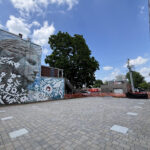
This empty lot at N. 6th and Reily streets is part of the area that would be rezoned.

A Harrisburg builder is a step closer to developing in a Midtown neighborhood, as the city Planning Commission has approved a zoning change that would allow a denser, more mixed-use neighborhood.

Seven Bridges Development received approval on Wednesday night to rezone about 14 city blocks just north of the Broad Street Market. The zoning change from “residential medium neighborhood” to “commercial neighborhood” would permit greater height, density and mix of uses in the Marketplace townhouse neighborhood.

“We’ve been working on this for over a year,” said Seven Bridges attorney Christopher Rice of the Carlisle-based Martson Law Offices. “The idea is take vacant parcels and give Midtown more opportunities for residential and commercial.”

In late 2005, the Harrisburg Redevelopment Authority sold 71 individual lots to State College-based S&A Homes for $1 apiece. S&A built a handful of houses then stopped, causing the authority recently to buy back the undeveloped parcels.

In late April, the authority designated Seven Bridges as the potential developer of the remaining 60  lots in the Marketplace neighborhood, and, last week, the company held a community meeting on the proposed zoning change, which attracted about 20 city residents.

At that meeting, Ian Wewer, director of development and operations for Seven Bridges, said his company would only build in the area if it received the zoning change.

“Currently, we have a proposal to change zoning more conducive to development,” he told planning commission members on Wednesday night.

An outline of the area that would be re-zoned.

A handful of Midtown residents attended the meeting, and they seemed split over the proposal.

Diana Grannison, who lives on N. 5th Street, said that she supports the zoning change if it will help her neighborhood develop, with fewer empty lots.

“I’ve been waiting 30 years for this happen,” she said. “All around me, the city has redeveloped.”

However, several residents said they were concerned about such potential impacts as tougher parking, higher taxes and rising housing costs.

Cate Rowe, representing the community group Midtown Action Council, and said that she would feel more comfortable with the proposed zoning change if Seven Bridges would release information about what it intended to do. It’s hard to know the potential effect on such areas as schools and parks without a better understanding of what the company is planning, she said.

“We really need to know more about what the impact of the zoning change will be,” she said.

Wewer said previously that his company has not finalized plans for the area.

City Planning Director Geoffrey Knight said that Seven Bridges would need to return to the planning commission to get its land use plans approved for individual projects, regardless of whether the zoning change is made.

“What’s being proposed is a zoning map amendment. It’s not an application for a development,” he said. “It will allow more development to occur by right. But it won’t exempt any new project from going through the land development process.”

In the end, the planning commission voted 4-2 in favor of the change, with commissioners Anne Marek and Ausha Green dissenting.

The proposed zoning amendment now must be approved by Harrisburg City Council, which is slated to hold a hearing on the issue during its Nov. 5 work session.

On Wednesday night, the commission also approved the land use plan for a proposed medical marijuana dispensary on Allison Hill.

By a 5-1 vote, with Green again dissenting, the commission approved an application for a new, 3,000-square-foot dispensary at 137 S. 17th St. Last year, the state granted a dispensary license to Lehigh Valley-based Local Dispensaries LLC, which wants to build its facility on an empty lot across from Hamilton Health Center. That land use plan also must be approved by City Council.

Continue Reading

Bob’s Art Blog: Spectacular “Mamacha Carmen” opens at Paper Lion Gallery

The sun rises in Paucartambo.

For art lovers, the destination often provides the thrill—the gallery or museum that is the repository of wondrous works of world-class paintings sculpture, photographs and the gamut of art.

But in those rare instances, the exception to the rule is the journey. When that path is 13 years in the making, it is all the more remarkable.

A new exhibit at Paper Lion Gallery offers the payoff—an extensive collection of photographs by Dilmar Mauricio Gamero Santos entitled, “Mamacha Carmen,” the festival of the Lady of Mount Carmel.

Here, the sun’s spectacular rise out of the night sky foretells the events to unfold over the coming five days in a ritualistic festival that has gone on for over 300 years. Out of the jungle is where the sun rises at 13,000 feet while the townspeople of Paucartambo awaken. Far below, at just 2,000 feet above sea level, the appearance looking up at the sun seems as though it’s “dancing” and thus starts the festivities of Mamacha Carmen.

At this juncture, the townspeople start their pilgrimage through town signifying the start of the tradition that has endured three centuries. This perfect picture of the sun “jumping for joy” is to honor the Blessed Lady of the Virgin Mary. It captures the mood and spirit of the entire procession as it makes its way through the town as night turns into day. The sky at the top of the world is scintillatingly surreal in that majestic moment.

The festival in Paucartambo, Peru, blends tradition, ritual and customs into a morality play of sorts. It pits an entire town of people portraying two different sides, good and evil. “The Ones on High” reside in the highlands and struggle against the low-lying townspeople over the domain for the statue of the Blessed Virgin Lady. They fight for possession of the statue to reside safely in its church sanctuary. The weeklong event unfolds in a highly orchestrated manner, paying strict attention to detail and execution.

The origin of the festival dates to the Incas and mysteries that surround their lost civilization. The Incas were the indigenous people who lived in what today is Cuzco, which is 2½ hours away from Paucartambo. The statue of Our Lady of Mount Carmel is the outward sign of the relationship between the Virgin Mary and her faithful townspeople who pledge to protect her at all costs. What ensues from July 15 through July 19 each year is worthy of a two-hour documentary film at Sundance and if artist, photographer Dilmar Mauricio Gamero Santos, native of Peru, has anything to do with it, that dream someday may come true.

Masked revelers dancing around the fire.

Gallery owner Chuck Schulz had the good fortune of meeting Gamero Santos while he pursued his graduate degree at Temple University in Philadelphia. Fellow gallery owners Bill Grace and Jim Hadfield were equally astounded by the level of ritual and traditions witnessed at the July 2018 festival and equally effusive about the extensive lengths the artist had gone to in capturing the essence of commitment and passion that the entire town brings anew every summer to its reenactment.

From the full participation in creating each elaborate costume to the dance routines, the festival draws its energy from the townspeople’s investment of time and love, which adds up to memories for the participants and viewers alike. They fully commit to historical accuracy in handing down the customs to future generations.

The festival’s customs rely on intricate choreography as 19 groups of costumed dancers representing various professions (bakers, doctors and nurses, etc.) all weave their way to engage with the others dressed as devils and jokers. Even yellow-faced masked dancers represent illness contracted from yellow fever; the power of the nurse is symbolic of the power of the Virgin Mary. The 30 funerary towers that dot the landscape are remarkable structures and provide the portals between the living and the dead. The culmination of the festival takes place with a symbolic killing of a bull. The festival plays out on such a grand scale that the population of the town, which normally boasts just 3,000 residents, swells to over 20,000 for the five-day celebration.

Gamero Santos incorporated all facets of documented materials into a multimedia format. He created a tribute to preserving the secular sense of community to the sacred aspects of identity, which marries Andean ritual to Catholic traditions. The color photograph of the white masked dancers performing Qonoy, dancing around the circle of fire, provide a colorful glimpse of what life down under may entail if the statute is captured by the other side.

Gamero Santos literally wraps up his 13-year journey in a collection of five individual spiritual boxes that are called “demandas,” which contain the sacred figure of the Mamacha Carmen in one box and four groups of her dancers in each of the others. In being true to his vision, Gamero Santos hand-wrought the five boxes as an articulated metaphor for the demandas.

Perhaps the most interesting facet of Gamero Santo’s photographic process is the transfer of the image from black and white to form the frontispiece of the handmade wooden “demandas” boxes. Its appearance is almost like a phantasma, which only adds to the allure of the festival’s charm. His life’s work is a tribute to the Incan people and to Mamacha Carmen, resulting in an unsurpassed collection of curatorial craftsmanship that needs to be seen by all the tribes of the world.

The languages may vary from place to place. The way we present ourselves to the world may be uniquely different. For, in the end, we are all one tribe, universal—the people who inhabit Earth, whether in the jungle, the highlands or down in the valley. We are all works of art, and art makes the world go round no matter what corner of the world we call home.

“Mamacha Carmen: the Festival of the Lady of Mount Carmel” runs through Nov. 2 at the Paper Lion Gallery, 1217 Hummel Ave., Lemoyne. For more information, visit www.harrisburgframers.com or the Facebook page.

Continue Reading

Weekend Roundup with Sara Bozich

Happy Weekend!

What a week. I spent the first half of it tending to sick kiddo. I’ll spend morning weekends helping take care of my dad’s geriatric cat. Andy’s out of town. SAVE ME WITH WINE PLEASE. But first: Beer! I’m honored to moderate a #beerchat with Alison Feeney, author of For the Love of Beer: Pennsylvania’s Breweries, ZerØday’s Hannah Ison, and The Millworks’ Jeff Musselman TONIGHT at Midtown Scholar. We’re kicking off the Harrisburg Book (seriously almost just typed “beer” – whoops) Festival, which is a must-stop for anyone this weekend. On Saturday, I’m thinking of taking Bo over to the Open Farm Day at Arcona Alpacas, OH, AND I HAVE A FRIEND IN TOWN TOO. And on Sunday, we football.

What are you doing this weekend?

(more…)
Continue Reading

Turn On Your Heartshine: Pay-what-you-can restaurant, community space headed for Harrisburg.

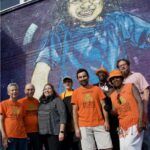
Heartshine founders and volunteers stand in front of their building in Midtown Harrisburg, following a recent organizational meeting.

Kim is concerned about homeless veterans.

Yolimar seeks to empower and support immigrant women.

Veronica wants to make sure that no one goes hungry.

These three people—and about 10 others—gathered on a recent Saturday morning in Midtown Scholar Bookstore to continue a months-long discussion about a new, ambitious project in Harrisburg.

It’s called Heartshine—part community space, part support network, with a pay-what-you-can restaurant at its core.

“There are a lot of people who are just punching the time card of their life,” said Kali Tennis, co-founder and board president of the nonprofit. “They think they’re alone, but they’re not.”

Kali arrived in Harrisburg several years ago when her husband, Gary, took a job with the state government. They came from Philadelphia, thinking they’d return there one day, but quickly fell in love with the quirky capital city.

“Harrisburg just lodged itself in our hearts—how sweet and small it is,” she said. “People notice when you’re gone, and they know your names.”

In her new city, Kali wanted to do something meaningful with her life. She and her husband already were familiar with a donation-based restaurant called EAT Café on the campus of Drexel University. Maybe that could work in Harrisburg, they thought.

“I was finding myself in homogenous spaces,” Kali said. “In Harrisburg, places can be fairly homogenous. I like it more when you bring folks together.”

A rendering of the renovated Heartshine complex, looking from N. 3rd Street.

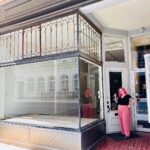
Some Harrisburg residents may already be familiar with the future home of Heartshine, an 8,000-square-foot series of three connected buildings smack-dab in the middle of the 1100-block of N. 3rd Street.

For many years, the building housed Mode magazine and several apartments, and, since February, has sported a brightly painted entryway, with colorful writing on the windows welcoming the community to monthly organizational meetings at Midtown Scholar.

Those meetings have attracted dozens of people, many interested in lending their unique talents to the cause—whether to help out in the kitchen, teach a class or assist in any other way.

Janet and Doug Shenk were Kali and Gary’s first recruits.

Years ago, Janet had heard about pay-what-you-can restaurants, which have opened in many cities, and the concept always intrigued her. So, when Kali proposed the idea, she was “ready to jump off the cliff,” she said.

Actually, husband Doug, the executive chef at the now-closed Camp Hill restaurant Fraiche, was the person in their sights. Janet had been a pastry chef there, as well.

“We thought we were trying to recruit Doug, and we recruited Janet,” Kali said.

They actually recruited them both. Janet is now executive director of Heartshine, and Doug will be the chef in the kitchen. In fact, they are in Fort Worth, Texas, right now embedding with the Taste Project, a successful nonprofit eatery there.

An aerial rendering of the fully renovated Heartshine complex

“It’s going to be ever-changing and interesting food,” said Janet, who stressed that meals will be healthy, with lots of soups, fresh breads and pizza right out of wood-fired oven. “I’m very excited about the menu.”

Kali wanted to make certain that one thing is clear—the food and service will be first-rate.

“Our model is a full-service restaurant—a sit-down meal,” she said. “The experience won’t be any different from a traditional restaurant.”

With one exception, of course—payment will be donation-based.

But, indeed, the entire approach is unique, as the restaurant will serve just one aspect of a greater whole. The first phase of the project includes the restaurant, a large community studio, a courtyard entrance and an office. A second phase will include a cooperative care team room, a community room and two apartments for transitional housing for women.

The first phase is set to open on Feb. 14, a year-to-the-day since the public launch and not coincidentally on Valentine’s Day.

The yearlong planning process not only allowed the core group to organize, prepare and learn, but has permitted them to hold monthly meetings and recruit staff and volunteers.

“In our model, volunteering will be in fair exchange for your meal,” Kali said. “We can make an accommodation for everybody. We can always find something for someone to do.”

Heartshine is slated to open Feb. 14 at 1120 N. 3rd St., Harrisburg. The group will hold a “Friendraiser Cookout” on Oct. 12, 11 a.m. to 2 p.m., in the courtyard of the Broad Street Market in Harrisburg. For more information, to volunteer and to purchase tickets, visit www.heartshine.org.

Continue Reading

Harrisburg Council hears that finances steady; major lead abatement grant received; leaf collection starts

Harrisburg City Council during Tuesday’s work session

The first six months of Harrisburg’s financials are in the books, and what’s the verdict?

Steady as she goes, according to the city’s finance and budget officials, who gave an update on Tuesday night to City Council.

At a council work session, city Budget Manager Erika Regalado said that, for the first two quarters of 2019, revenues came in about on budget. Property tax revenue was flat, but local income taxes came in stronger than expected, indicating a robust local employment picture.

“The economy is steady and it’s growing, and unemployment is low,” she said.

Her presentation echoed the one that Bruce Weber, director of the city’s Bureau of Financial Management, offered last week to the Intergovernmental Cooperation Authority, a state-appointed body tasked with approving a five-year financial plan for the city.

On Tuesday night, Weber said that he expected current trends to continue through the rest of the year.

“There aren’t any surprises, hopefully,” he told council members.

The city’s 2019 budget totals nearly $110 million, which includes a $70.8 million general fund, a $20.6 million neighborhood services fund and a $9.8 million debt service fund.

In other city news, Harrisburg announced late on Tuesday that it received a $5.6 million federal grant to continue the city’s lead abatement program.

“That’s more than we’ve ever received before,” said Mayor Eric Papenfuse. “It’s good news for the city. It means we’ll be able to continue our lead efforts into future years.”

Specifically, Harrisburg will receive $5 million from the federal Department of Housing and Urban Development’s Lead Based Paint Hazard Reduction grant program and $600,000 from its Healthy Homes Supplemental program. The money will allow the city’s Department of Building and Housing Development to provide lead prevention and healthy homes activities on 480 units within Harrisburg’s Opportunity Zones.

Harrisburg also announced that its leaf collection began on Tuesday and will continue through Dec. 1.

To have their leaves collected, residents should put leaves in brown paper bags and leave them curbside the night before street sweeping. Alternatively, residents can pile leaves into streets the night before street sweeping, but should be careful not to block storm drains, the city said.

Continue Reading

HU’s Darr leads list of Catalyst award winners as Harrisburg Chamber announces 2019 selections

Dr. Eric Darr, center, leads the groundbreaking in July for Harrisburg University’s new tower.

Dr. Eric Darr has been named the 2019 Catalyst Award winner, as the Harrisburg Regional Chamber & CREDC today announced its most recent list of people and organizations that serve as positive and influential forces for our area.

Darr, president of Harrisburg University, has spearheaded the rapid growth of the university and accelerated the redevelopment of downtown Harrisburg, according to the chamber.

“President Darr has led the university through an explosive period of growth and prosperity within the last year, helping to build the university into a powerful economic driver for the city of Harrisburg and the region as a whole,” stated the chamber, in a press release.

In its latest growth spurt, HU is currently constructing a 17-story mixed-used building at S. 3rd and Chestnut streets that will house academic space, a hotel and a restaurant.

Last year, TheBurg received the Catalyst Award.

In addition, to the Catalyst Award itself, the chamber and CREDC announced the winners of additional awards under the Catalyst framework, to honor other movers in the Harrisburg area.

  • Athena Award: Claudia Williams of The Human Zone, honoring her “leadership and mentorship” in her business and volunteer activities.
  • Business Diversity Champion Award: Todd Snovel of the PA Commission on LGBTQ+ Affairs for his “commitment to the ideals of diversity and inclusion through his 15-year career.”
  • Corporate Citizen of the Year Award: UGI Utilities for “reliable service” to its customers and “positively impacting the lives of its employees and the communities it serves.”
  • Emerging Business Leader of the Year Award: Blake Lynch, community liaison for the Harrisburg Police Bureau, for helping to “facilitate communication and cooperation between Harrisburg’s police officers, its citizens and community partners.”
  • Government Leader of the Year Award: Rep. Sheryl Delozier for her work as a legislator and volunteer, especially in the realm of criminal justice reform.
  • Small Business of the Year Award: Triscari for its creative services work over 45 years.
  • Volunteer of the Year Award: Sylvia Hepler of Launching Lives for helping to “develop and sustain women’s mentorship programming at the Harrisburg Regional Chamber, such as the Chamber Business Women speaker series and the CBW Lean In Circles.”

“We are incredibly proud to honor this group of businesses and individuals for their dedication to growing our community,” said David Black, president and CEO of the Harrisburg Regional Chamber & CREDC. “We’ve had more nominations this year than our past years, and we credit our Catalyst Awards committee with making difficult decisions on who to honor when we have so many impactful organizations in our region.”

The annual Catalyst Awards ceremony will take place on Dec. 4 at the Hilton Harrisburg, starting at 5:30 p.m. For more information and tickets, visit www.HarrisburgRegionalChamber.org.

Continue Reading