New downtown Harrisburg salad, sandwich shop to fix up healthy options

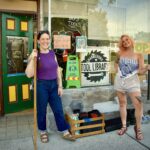
LettUsKnow is coming to this space on N. 2nd Street in Harrisburg.

Chef Trae Grabosch didn’t really like salads. Then, about six years ago, he found himself opening a restaurant specializing in just that.

LettUsKnow, a soup, salad and sandwich shop in York, will be open for business at a second location in downtown Harrisburg early next month, in the snug space recently vacated by Tiki T’s Mini Donuts and More.

“Everybody always likes something healthy,” said co-owner Joseph Yank. “This gives people that healthy option.”

The menu will include homemade soups, sandwiches and make-your-own salads with homemade dressings. For those not feeling creative, featured salads such as the Caribbean, California Surfer or Greek Goddess can be ordered.

Gyros, fresh fruit smoothies and breakfast items will be offered as well. The most popular items, according to Yank, are the Santa Fe salad, chicken Caesar wrap and chili.

“LettUsKnow is always fresh,” he said.

As for the name, Yank explained it came from both owners’ desire to help out customers in deciding what to order.

LettUsKnow opened six years ago in the York Central Market. Grabosch, having seen limited healthy lunch options and no other salad shops in the downtown York area, filled the gap. Two years later, he opened their shop on S. George Street.

Yank explained that, because about 85 percent of their business in York is carry-out, downtown Harrisburg will be a good location for that service, as well. The 2nd Street building has an ordering window but no seating, so customers will have takeout and delivery options.

“Everything is always nice and fresh, and he makes it right in front of you,” said Joanne Bennett who has been eating at LettUsKnow for five years.

She first met Grabosch at his stand in the market; she loved the food and began coming back about twice a week.

They also cater events and have a food truck that travels to York, Harrisburg and Lancaster on the weekends.

Bennett explained how LettUsKnow’s salads are a staple of her church’s functions now, ever since the first time they catered and everyone enjoyed the food.

Customers can also order LettUsKnow through Uber Eats and Grubhub.

“Trae makes sure he serves the best food, and he prides himself on high quality food,” Bennett said.

LettUsKnow is coming to 221 N. 2nd St., Harrisburg, with a planned opening on Jan. 2. They are currently located at 22 S. George St., York. For more information, visit https://www.facebook.com/lettusknow/.

Continue Reading

Harrisburg, AutoZone continue long disagreement over proposed retail store

Harrisburg City Council on Tuesday evening.

Harrisburg city and a national auto parts chain continued a long deadlock on Tuesday night over a plan to build a retail store on an empty patch of land in Uptown Harrisburg.

Attorney David Tshudy asked City Council to drop several conditions imposed by the city on AutoZone’s development plan for a lot at N. 7th and Maclay streets, property currently owned by the Vartan Group.

Tshudy said that Memphis-based AutoZone disagreed with Planning Commission conditions to change the project design that would reorient the 6,816-square-foot building to bring it closer to Maclay Street.

“The building is within the building envelope as required,” he said. “It is perfectly legal and should be allowed to remain there.”

A second condition, which would remove a proposed access point off of busy N. 7th Street, dominated much of the discussion.

Tshudy repeated what he told Planning Commission members previously. He said that AutoZone and the city met in April to iron out differences and that he left that meeting thinking that the city had agreed to a 7th Street driveway, but only for right-in, right-out access.

By a 3-1 vote, the commission approved the land development plan in July, but without permitting the 7th Street access.

On Tuesday, several council members asserted that entry and exit from 7th Street would create safety issues.

“We’ve had several major accidents there,” said council President Wanda Williams.

Williams added that, with more development planned for the area, safety concerns would only grow over time.

“You have continuous construction in that area,” she said. “You have a new commonwealth building on 7th St. It’s going to be very congested. I wish you would reconsider coming in from the 7th Street corridor.”

Council member Shamaine Daniels took issue with what she perceived to be AutoZone’s reluctance to change their plan to meet community concerns.

“You guys didn’t even consider some of these alternatives because you didn’t have to,” she said. “You’re moving into a residential area.”

Several council members said that they welcomed economic development projects like the AutoZone store, but that they also had to take into account community concerns.

“I’d like to see the development of an AutoZone there, but I also would like it to be safe,” Williams said.

Council member Dave Madsen said that the discussion would continue at council’s next legislative session on Dec. 17, followed by a possible vote on the land use plan. AutoZone needs an affirmative council vote before it can break ground on the project, which was first proposed about 16 months ago.

Continue Reading

Harrisburg council to delay action on proposed Allison Hill dispensary

An artist’s rendering of the current vacant lot (left) and the proposed dispensary (right).

Harrisburg City Council took a second look on Tuesday night at a proposed medical marijuana dispensary for Allison Hill, opting to delay approval of the building plan.

This was the second council workshop examining the proposed facility for 137 S. 17th St. At the first meeting in late October, council members urged dispensary officials to engage the community before moving forward.

Peter Bio, CEO of Local Dispensaries LLC, described the subsequent Nov. 13 community meeting at Hamilton Health Center as productive and informative.

“The main feedback was that we would have liked to have heard about it earlier,” Bio said. “There were a lot of questions over how we would impact the community. I didn’t hear anything that couldn’t be overcome.”

Bio estimated that 30 to 40 people attended the November meeting, asking questions ranging widely from employment to security to crime.

A related company, WH RE LLC, wants to build a 3,000-square-foot retail dispensary directly across the street from Hamilton Health on what now is an empty lot.

About a year ago, the state Department of Health awarded a dispensary license to Local Dispensaries. City Council has no authority over licensing but must approve the land use plan for the proposed building.

WH RE LLC hopes to break ground on the facility in spring and estimates a four-month-long construction process, opening next autumn.

During the council meeting, Bio admitted that his company’s outreach efforts had been lackluster and that they should have held community meetings earlier, before the urging of council members.

“We didn’t think about going immediately into the community at that time,” he said. “The meeting where you suggested that was extremely helpful.”

Bio vowed that his company would continue to reach out to residents, perhaps through fliers or pamphlets, and that he would seek first to hire employees from the immediate Allison Hill neighborhood.

“There were a lot of questions about jobs—would you bring jobs or just bring someone in from the outside,” Bio said. “I said, ‘You’ll just have to trust us. We did it before and will do it again.’”

He also said that his company might make changes to the building design or the grounds based on community feedback.

Council instructed Bio to continue his outreach efforts but did not set a date for a final vote on the land development plan. Councilman Dave Madsen said that he planned to keep the resolution in his community and economic development committee for the time being pending clarification over the proposed dispensary’s compliance with state Department of Health regulations.

“You can see the passion in the community,” Madsen said. “They want to know what’s going on.”

Continue Reading

Coming Soon to HBG: Young the Giant

Young the Giant

Another major musical act is headed for Harrisburg, as Young the Giant has confirmed an early April date at the Forum.

Harrisburg University today announced that the California-based rockers will swing into Harrisburg as part of an upcoming tour in support of their recent album, “Mirror Master.”

Young the Giant dates its formation to 2004, with a band called the Jakes. A few years later, they changed their name and have released several critically acclaimed records since, including “Mind Over Matter” and “Home of the Strange.”

The band is fronted by Sameer Gadhia and features Jacob Tilley on guitar, Eric Cannata on guitar and vocals, Payam Doostzadeh on bass and Francois Comtois on drums. Their music has been lauded for its depth, substance and originality, especially in an industry often perceived as offering a homogenized product.

The Harrisburg University music series continues to bring big names to the city. Death Cab for Cutie played in in June, Jason Isbell is slated for later this month, and the Revivalists are scheduled for March 4.

Tickets for Young the Giant go on sale on Dec. 5. To purchase tickets for HU’s concert series, visit www.concertseries.harrisburgu.edu.

Continue Reading

The Week that Was: News and features around Harrisburg

A company called The Bridge has big plans for the former Bishop McDevitt High School.

The Thanksgiving holiday took a bite out of our usual five days of daily news coverage. However, we made the most of the remaining days with several popular and important stories. If a turkey coma has prevented you from reading it all, we have it nicely recapped below for whenever you wake up from a well-deserved nap.

3rd Street in Harrisburg continues its transformation, a project now focused on the downtown area. Read our online story to find out what changes that have been implemented and what is still planned for the area around the state Capitol.

Autumn leaves seemed to fall later this year, so Harrisburg extended its leaf collection by a few weeks. Read our online story to find out what the new schedule is.

Harrisburg released its preliminary 2020 budget this past week, with a proposed pay hike for police and no tax increase. In our online story, read what the mayor has introduced and what City Council will consider in December.

A homeless camp near the Mulberry Street Bridge was disbanded a couple of months ago. Our writer returned to the area recently. Read our online feature story to find out what happened to some of the people she had met, in a follow-up from one of our most-read stories of the year.

Michael Boyd is one of the best-known men’s fashion retailers in the Harrisburg area. On this shopping-focused weekend, read our story and pay him a visit. And don’t toss out your November issue just yet, as it’s packed full of stories and gift ideas for local shopping.

Open Stage debuted its annual staging of “A Christmas Carol,” a tradition that dates back 20 years. Our theater critic was there to tell you what’s new and what’s exciting about the 2019 production.

Sara Bozich got an early start to her weekly blog, listing various Thanksgiving-related events on Wednesday. But there’s so much more to this long weekend, so scan her long list of events then go do something fun.

Theatre Harrisburg this week announced the winners of its 2020 Awards for Distinguished Service to the Arts in the Capital Region—with TheBurg and Jeff Woodruff the two recipients. The Burg is honored to receive an “Arts Award,” and we can think of no more distinguished company than Woodruff, the long-time executive director of the Harrisburg Symphony. Click here to read our story.

The Bridge announced its arrival in the Harrisburg area in a big way—with major plans for the old Bishop McDevitt High School and a story in TheBurg. Read what this new eco-friendly development company has in mind.

TheBurg’s December issue dropped on Friday, packed full of holiday-themed stories. But you’ll also find the usual assortment of community features, news, opinion, culture and events. Pick up the hard copy at your favorite spot or click here to read the issue online.

Do you receive TheBurg Daily, our daily email of news and events delivered right to your inbox? If not, subscribe here!

Continue Reading

Institutions for Sale: Your childhood school, your family church–going once, going twice.

William Penn High School

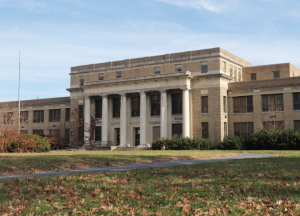
The neoclassical lintel carved “INDVSTRY” guards a door covered in peeling plywood. Inside, “AMOS” spray-painted his name on an unbroken windowpane. Outside, “L,” “D” and “M” painted their initials on the columns. The fire extinguisher lying in the grass adds a touch of irony, given the Harrisburg Fire Bureau’s growing familiarity with the vacant hulk once known as William Penn High School.

Harrisburg isn’t the only city struggling with obsolete institutional properties for sale, but a sudden flood of churches has further saturated the market. Can outdated people-gathering places be revived? Proponents hope the right alignment of creative ideas and hefty funding brings new life to old icons.


History Spared

Once, they anchored neighborhoods and hummed with activity. Now, William Penn High School is covered in vines. Choirs aren’t singing at Camp Curtin Memorial-Mitchell United Methodist Church and others closed by the Susquehanna United Methodist Conference. Zembo Shrine is active but back on the market after a sale fell through. Bishop McDevitt High School has a new owner, but its status is unclear. [Ed. note: after this story went to press, a development group announced a proposal for the Bishop McDevitt site.]

Bill Gladstone of the Bill Gladstone Group of NAI CIR is marketing six of the Methodist churches, among the many faith-based buildings crowding the real estate listings. Smaller churches tend to sell quickly, he said.

“Everybody’s starting new congregations,” Gladstone said. “They want to move out of the Holiday Inn.”

But not selling are “the bigger churches with no parking.” Many suffer from long-deferred maintenance. Inquiries trickle in, only to confront zoning and parking issues. One woman wanted to paint a church white and “attract thousands of people to come to arts events.”

Some ideas “will work,” said Gladstone, “and some won’t.”

The vast, ornate, non-ADA compliant Zembo Shrine attracted investors who saw an ideal entertainment venue—until they uncovered challenges in booking shows, Gladstone said.

“We’ve had activity,” he said. “We haven’t found quite the right buyer for it yet.”

Historic Harrisburg Association helped keep the doors open at historic Grace Church on State Street and is “trying to help find sympathetic buyers, at least for the churches that have history and architectural attributes,” says Executive Director David Morrison.

Gamut Theatre in the former First Church of God and State Street Academy of Music in the former St. Lawrence Chapel demonstrate that repurposing historic churches “becomes such a win-win, because it’s good for the building,” Morrison said. “It’s good for the organization that’s going to inhabit the building. A lot of expenses were spared, and history was spared.”

Success starts with a realistic—translation, “low”—selling price, to make up for the buyer’s upgrades, Morrison said. With institutional landmarks, “their economic value is one thing, and their community value is another thing. If you make the numbers work, there are investors and developers interested.”

Also required: time and creativity. Midtown Harrisburg’s COBA apartments sat empty for three decades before a developer acquired the building for $1, assembled the financing, reconfigured the layout and built a new elevator shaft. The result: 27 apartments in walkable Midtown.

“Thirty years went by before anybody figured that out,” Morrison said.


Offers of Interest

An old school—all those classrooms panting for conversion into lofts. What could be better? Just pay no attention to the 1,200-seat auditorium. And the gymnasium. And the cafeteria.

Philadelphia-based, multi-state developer Pennrose has made it work at Steelton’s Felton Lofts, converted from the historic Steelton High School (albeit after stepping in when the original developer backed out).

Nearly half of Pennrose’s 250 communities are the products of adaptive reuse—buildings that had “become rundown, dilapidated, an eyesore and deterrent to the values of the community,” said President Mark Dambly. “You want to make sure you have community support, because you’re going to have challenges and obstacles to overcome in order to be successful.”

Collaboration opens doors to resources and such municipal considerations as free property acquisition, waived fees, access to state and federal grants and financing, or relief from zoning and parking restrictions, Dambly said.

As for those spaces that held generations of kids staging “Oklahoma” or eating tater tots, “you want to make them generate something economically if you can, and if not, socially,” Dambly said. The Felton Lofts auditorium leans toward social, hosting community events and support services as amenities for residents.

On the revenue-generating side, look to Scranton, where the state-of-the-art Theater at North hosts such shows as an Elton John tribute tour and Judy Collins live in concert—all in a jazz-era junior high school converted in 2015 to senior-living apartments. Remarkably, the developer was Goodwill Industries of Northeastern Pennsylvania.

As for William Penn High School, now about 10 years on the market, owner Harrisburg School District “renegotiated” the listing with Landmark Commercial Realty in October, said Assistant Superintendent Christopher Celmer. Agent Seymour Barget is accepting and vetting offers.

By early 2020, the district hopes to “have a few serious offers of interest on the property that we’ll be able to sit down and evaluate,” said Celmer. “It could be a sale. It could be someone that would want to do a lease to purchase. There could be a multitude of options.”

With an active school, Camp Curtin Academy, adjoining the site, the district must also “make sure there’s a clear understanding” of boundary lines on the 25-acre property.

“If there’s an ability (for the buyer) to keep some of that history of the building, we would love to see that memorialized—what that building meant for generations that came through,” he said.


Mixed Uses

Re-imagination is hard, but it can zero in on filling community needs, said Harrisburg Economic Development Director Amma Johnson.

“Number one is mixed-use,” she said—those fashionable combos of retail and residential. Farther from the downtown-Midtown core, though, conversions could be “way more residential” until vendors dream up creative approaches to doing business.

The appetite for large institutions is primarily among “developers who have deep pockets and are creative in utilizing mixed-use space for residents—live-work, live-work-play,” added Harrisburg Historic Preservation Specialist and Archivist Frank Grumbine.

He knows, though, that those visions stumble at the sight of Gothic churches. Pittsburgh’s awesome Church Brew Works showcases potential, but “a really cool use for a big space like that is really difficult.”

“Their long-term preservation and maintenance are concerns for anybody who would purchase them,” he said.

Methodist Conference Harrisburg Superintendent Rev. Barry Robinson agrees with the primary challenges of selling large churches—“selling the buildings at a fair price over the cost of keeping them,” plus barriers due to size and condition.

“We would like for the buildings to continue to be used for houses of worship or faith-based ministries,” he said. “However, we would not deter anyone from buying the buildings for other uses.”

The city is “very flexible” about changing permitted uses while being “sensitive to the neighborhoods in which these properties reside,” Grumbine said.

Talks with developers are happening, but specifics are “still being formulated.”

“The most I can say is that the uses are mixed,” he said. “We’d like to see those buildings used as residential, commercial, even urban agriculture—a self-sustaining community within the city.”

Harrisburg Redevelopment Authority Executive Director Bryan Davis notes that developers are accustomed to relatively straightforward warehouse conversions, but repurposing unique spaces demands closer attention to the bottom line.

“It’s always nice if you’re able to find a buyer that also has a passion for historic preservation, so they have an appetite for this kind of investment,” he said. “They acknowledge the value. What that does is narrow the field of candidate buyers, which is not insurmountable.”

Neighborhoods “shudder” when beloved institutions close their doors, but Harrisburg’s monumental icons have potential, said Grumbine. William Penn is “so pretty.” And Zembo Shrine could “have a whole city within just that building.”

“There’s tons of opportunity,” he said. “It’s just who has the creativity and the money to figure it out.”


Continue Reading

Tune In, Turn Out: Last month, Harrisburg engaged.

Illustration by Rich Hauck.

If you’re a Harrisburg voter, last month’s municipal election may have seemed like a snoozer.

The city had some big races this year, but all the action was in the primary back in May. By the time November’s general election rolled around, the contests for school board and City Council were all but decided, since the Democrats had no Republican opposition.

Then there was the county.

Dauphin County had numerous seats up for grabs this year, and they proved to be surprisingly competitive.

Sure, in the end, it was more like Groundhog Day than Election Day, as, once again, Republicans swept every row office—from treasurer to register of wills to recorder of deeds. But it was only the last batch of results on election eve, flowing in after 11 p.m., that put several GOP incumbents over the top.

Indeed, for much of the night, it appeared that the Democrats just might break the Republican Party’s stranglehold on the county’s elected positions. And, to the extent that it was nip and tuck for the first few hours after the polls closed, much of the credit goes to the city of Harrisburg.

For some reason, Harrisburg precincts tend to be among the first to report their results. Sure, there are some laggards but, often, the first half-dozen or so precincts to report are all from the city.

In overwhelmingly Democratic Harrisburg, these early results offered some hope for the challengers, as the city turnout in this election was stronger than expected—at least as expected by me.

Going into Election Day, I wasn’t optimistic at all about turnout.

First of all, it was, for Harrisburg, an “off-off year” election. Not only were there no presidential, congressional or legislative contests to juice turnout, but there also was no mayoral election—the worst of all possible worlds to get city dwellers to the polls.

Yes, there were important races for school board and City Council, but, as I said above, there was little hanging in the balance as those outcomes had basically been decided during the May primary.

Then there was the fact that the county announced, rather late in the cycle, that it had to move several polling locations to comply with the federal Americans with Disabilities Act. I expected that move to depress turnout in several precincts, since the new locations tended to be far less convenient for most voters and, in a few cases, were actually outside the voting districts.

But I was wrong.

Turnout was not only significantly higher than the comparable voting period of 2015, but was also higher than in 2017, when the city’s incumbent mayor was on the ballot.

Every district reported higher turnout in Harrisburg, and, digging down into the data, several wards stood out. Riverside’s Ward 14 and Midtown’s Ward 5 and Ward 12 each jumped by more than 100 votes from 2015 to 2019. But there were gains nearly everywhere, from the river wards to Allison Hill to Uptown.

In 2019 overall, Harrisburg’s turnout citywide increased by about 35 percent compared to 2015. In Dauphin County as a whole, turnout was up by 26 percent. Having said that—Harrisburg still has work to do to pull even with the county overall, as its 20-percent overall turnout lagged the county’s 30-percent showing.

So then what’s the takeaway? Why did things improve in the city?

First of all, Democrats made it a race, aggressively challenging several of the Republican incumbents. For instance, in 2015, Clerk of Courts Dale Klein was unopposed in the general. This year, she faced former city Councilman Brad Koplinski, who, for a time on election night, looked like he might pull off an upset. As I’ve said before in this column, campaigns matter, and they matter even more when trying to unseat a long-time incumbent.

Secondly, city Democrats may be fired up to vote given the national political climate. If so, the 2019 election may be just an appetizer for 2020. If that’s true, buckle up, as turnout could be impressive indeed next year not only for the presidential but for the legislative and congressional races.

Third, I can’t help but be impressed with the volume of votes that came out of certain wards in Harrisburg. Turnout in several wards, particularly in Midtown and Uptown, was up by more than 40 percent in 2019 compared to 2015. Something is going on here. Most likely, this is due to additional population, with the new residents more inclined to engage politically. And, in fact, county data show increases in voter registration in every river ward except one (10-1).

I’d like to wrap up this wonky election column with a deep bow to the hyper-engaged residents of Harrisburg’s Ward 14—Riverside and far Uptown. They turned out to the tune of 41 percent of registered voters in this low-stakes, off-off year affair. I’ve been told that, if you’re looking for community in the Harrisburg area, Riverside is the place to be, and these numbers back that up. My reporter’s fedora is off to them.

Lawrance Binda is the editor-in-chief of TheBurg.


Continue Reading

Conversations on Screen: Sankofa Film Festival aims to build relationships, understanding.

Michael Kenneth Williams

Sharia Benn has been planting seeds through conversation since she was a girl growing up in Baltimore.

Back then, one of the only African American children in her class, she didn’t invite those conversations, but she engaged because she was often the focal point.

Now, as the cofounder of Sankofa African American Theatre Company in Harrisburg, Benn is the one intentionally facilitating those conversations. She has decided to stand in the spotlight and pull onto the stage topics like veiled and overt racism, police brutality and other issues that some might want to keep hidden.

On Dec. 27, she hopes to start another robust community conversation, as Sankofa hosts the region’s first African American film festival. The event will bring Emmy-nominated actor Michael Kenneth Williams to Harrisburg to discuss his film, “Raised in the System,” which focuses on youth in the criminal justice system. That film, along with “The Hate U Give,” another film that explores themes of family, white privilege, police brutality and love, will be shown during the film festival, to be held in late December at the State Museum.

“Everything in my life has led up to this,” Benn said of her work with Sankofa and its continued growth through events like the film festival.

She recalled how her white classmates and peers back in Baltimore saw her as “just this strange being,” and how her fellow Girl Scouts wanted to touch her hair when she went on camping trips with them.

As an adult, those feelings of being different from many of the people around her have continued.

Now living in Harrisburg, Benn still finds herself in the middle of occasionally awkward conversations, as she is one of the few African Americans in management in the insurance industry, she said.

Some of the things she hears would cause people less practiced in such conversations to turn away—racially insensitive opinions and assumptions. When Benn has those encounters, she embraces them. They’re teachable moments.

When she chooses to engage, to teach, she has often found that people truly don’t realize what they’re doing, and they have an interest in learning, in getting better.

“I believe that a lot of the tension, the pain, is because people on both sides, African Americans (and) whites, don’t know, don’t understand the other perspective,” she said. “And when you do understand it, when you’re exposed to it, what you do after, that’s a choice.”

Sankofa is all about exposing its audiences to themes that open the door to understanding.

Johntrae Williams, 39, a graduate of Harrisburg High School and the University of The Arts in Philadelphia, and the vice president of Sankofa African American Theatre Company, said one of the missions of Sankofa is to give African Americans more exposure to the theater world.

“There’s not enough trained African Americans in the field,” he said.

And, he added, most theatergoers are white.

“One of our goals was to get African Americans as theatergoers,” Williams said.

He added that Sankofa is not about creating an experience exclusive to African Americans, but to create an experience for everyone, where African Americans are driving the message of their own stories and their perspectives, to welcome everyone to be part of the conversation.

“When you create a safe space, you don’t want to preach to the choir,” Williams said. “You want all parties involved to come and talk about the issues.”

Hosting a film festival to draw attention to the theater company and to hopefully draw in financial support for it—it’s a nonprofit that was incorporated in June 2017—came about through another connection. The Sankofa 21 Institute in Harrisburg, which is an entirely separate organization, is partnering with the theater company for the event.

Williams got to talking with Paul Carey, president of Sankofa 21 Institute, and realized they both wanted to bring a film festival to Harrisburg that was focused on African American themes. Carey is the brother of Michael Kenneth Williams—most famous for his roles in “The Wire,” “Boardwalk Empire” and “12 Years A Slave”—and made the connection with him possible.

“This (film festival) is an opportunity … to be a voice,” Johntrae Williams said. “It’s an opportunity to cultivate change. But it’s really an opportunity to bring the community together, to bring two Sankofas together.”

Benn said she hopes to sell out the State Museum auditorium.

“We want to fill all of the seats there with people who want to know and who want to live better,” she said.

She added that it’s about more than just entertainment.

“It’s about opening minds and hearts to these human experiences,” she said. “For 300 years, African Americans were not even thought of as human.… When you can wrap your head around those things from a historical perspective and a sociological perspective and even an economic perspective, then maybe you can start to see in the present why things are the way they are, and decide and understand what we have to do differently so we can all coexist harmoniously.”

The Sankofa Film Festival takes place on Dec. 27, with doors opening at 6:30 p.m., at the State Museum of Pennsylvania, 300 North St., Harrisburg. General admission tickets can be purchased online or at the door. VIP tickets are also available. For more information and to purchase tickets, visit www.sankofatheatrehbg.com.

Continue Reading

When a Truck Becomes a Home: One church takes homeless ministry on the road–to the local truck stop.

Ben* became homeless when his Carlisle landlord kicked the family out of their rental home. As a result, the family of seven—Ben, his wife and their five children—lived out of their minivan for six months.

“It’s hard to find a rental home with more than two bedrooms,” he said.

But they moved into another rental, and, within two months, the same thing happened. Once again, they were homeless for a period of six months.

It might surprise you to learn that, through it all, Ben worked full-time as a truck driver.

Like many of the area’s homeless, he knew where his family could get a good night’s sleep—inside their vehicle, parked at an area truck stop. Open 24/7, truck stops also offer restrooms, showers and laundry facilities.

And it was at Carlisle’s Flying J Truckstop that Ben connected with a group of community volunteers from New Kingstown’s St. Stephen Evangelical Lutheran Church simply called “The Flying J Ministry.”

Twice a month, church members, including Pastor Matthew Best, help the homeless with the most basic of human needs. There’s a welcoming time for conversation. The volunteers pay for laundry ($2.50 per washer or dryer load) and meals at the attached Denny’s.

While dinner orders are placed, Best reads from the Bible then offers his thoughts and communion. Everyone around the table—23 on the night I visited—is asked to share something for which they are thankful, followed by a prayer. Conversation, including lots of laughter, happens during dinner.

Then church members assess and help the homeless apply for services they may need, aided by representatives from Community Cares or Sadler Health Center. The night concludes with hot showers (normally $12 each). Many return to their temporary homes—their vehicles— overnight.

“Usually people living in their cars have not been homeless for the long-term, and their car is the one thing they have left,” said Christina Kapp, coordinated entry system manager for the Cumberland County Housing and Redevelopment Authorities. “It has doors that lock, a heater, and people feel safe in their car.”

Kapp said that the Flying J Ministry is a one-of-a-kind program.

“They’re meeting people where they are, connecting with people who might not even know there’s a system to navigate much less how to navigate it, providing stop-gap assistance and helping with immediate physical needs,” she said. “And they keep a pulse on where they are emotionally in other ways.”

Her figures on Cumberland County’s homeless (see infographic) are beginning to incorporate some of the homeless population living out of their cars and entering the “system,” she said, thanks to bonds established by the Flying J Ministry.

What are the factors causing homelessness in Cumberland County?

“Rents in Cumberland County continue to skyrocket, and the amount of affordable housing has not grown proportionally with the population—neither have wages,” Kapp said. “So people are working in lower-wage jobs because that’s where the jobs are.”


It Spirals

Most of the “regulars” who show up on St. Stephen’s Flying J Ministry nights are employed, said Pastor Best.

“The challenge they face is usually one thing—a health incident for example—and if you don’t work, you can’t get paid, and it spirals. You have to make decisions about what bills you’re going to pay,” he said. “Being homeless is really about being out of control.”

Speaking of bills, the typical Denny’s dinner bill that they cover ranges from $175 to $300. Twice, an anonymous diner picked up the tab. Otherwise, the church’s program is funded by two grants, plus the church collects and distributes personal care products and sleeping bags.

The group, perhaps surprisingly, has no formal training.

“Jesus had 12 guys, and every single one, he called out and said, ‘Come, follow me,’ and there was no training, no plan, just a call,” Best said. “They were crazy enough to follow, and it changed their lives, and look at the impact it had on their lives and the world.”

Rebeacca*, 19, lives with her dad, but attends Flying J Ministry to visit with four homeless family members, including her grandparents. She said that the best thing about the program is, “you can say you need prayer, and no one is going to judge you here.”

Her grandparents fled their Harrisburg home about two years ago due to “safety issues,” she said. They moved into a rental but discovered it was previously condemned by the city, which left them homeless.

“It’s sad to see—they deserve a home,” Rebeacca said. “It hurts, especially during the holidays because I wish my nana had a place to cook.”

Leslie Blumenaurer arranges her work schedule as a Denny’s server to coincide with Flying J Ministry nights. Why does she request their tables, strung together in the back of the restaurant?

“They all make me feel like family,” she said. “I like to go the extra mile for them. I think everybody deserves respect, and I’ve been homeless myself.”

Crystal Houser is a member of St. Stephen’s who helped found the ministry with Pastor Best about two years ago. A state worker by day, she’s met and helped dozens of the homeless during Flying J Ministry nights. She recalls a homeless family with two young boys.

“The older brother was telling the younger brother how to use the showers,” Houser said. “It broke my heart because no child should have to take a shower at a truck stop.”

The ministry and people are on her mind, “24/7,” she said.

“We’re giving them a burger at Denny’s, but that’s not really what’s feeding them,” she said. “We’re building community.”


*Last names withheld for privacy.

St. Stephen Evangelical Lutheran Church is located at 30 W. Main St., New Kingstown. For more information, visit www.ststephenlc.org/home.

Continue Reading

Open Stage, Re-Made: An expansion, a new look for Harrisburg’s venerable downtown theater.

“We’ve come a long way from our place at Jonestown Road,” said Anne Alsedek, co-founder of Open Stage of Harrisburg and the Alsedek Theatre School.

Some 34 years ago, Open Stage began as a kitchen table idea and turned into a theater school on Jonestown Road. It eventually situated itself as a 100-seat theater tucked beneath a parking garage in downtown Harrisburg. You may remember its humble façade across from the austere lobby, leading to the garage’s elevator.

Today, Open Stage’s new expansion impressively lights up the outside alley on Court Street, its revamped “Open Your Mind” logo sign glowing like an encouraging dare.

“We wanted a space that would be comfortable for audiences and engaging for artists,” said Producing Artistic Director Stuart Landon. “Our artists are our family.”

The outside walls facing the alley hold one of the city’s many murals—an abstract arrangement of multi-colored bubbles, triangles and paint strokes.

Harrisburg mixed media artist Ryan Spahr designed the mural. Combining Russian constructivism and Fauvism with an element of whimsy, Spahr strove to channel an abstract representation along with a free flow of thoughts and ideas.

“The color palette mirrors the re-branding of the theater,” he said. “I also wanted to play off of the shapes of the new logo and go with a more sleek, industrial design.”

Rep. Patty Kim, one of many VIPs to attend the ribbon-cutting, seemed astounded by the transformation.

“Who would’ve guessed that the deep bowels of a city garage could be so beautiful?” she said.

Just inside the main entry is a proper ticket window, replacing the former space’s small podium. A lobby sculpture features all the donors’ names from the 30/30 campaign’s fundraiser, etched into a 3-D wall hanging with pottery discs designed by Laura Ryan as the main medium.

Inside the next set of doors is St. Hilaire Lounge, which will be open six days a week and will serve as the venue for some of Open Stage’s more intimate performances. The black-and-white lounge’s bar is decorated with oversized bowls of citrus fruit, sending out a hipster vibe. Just beyond the ceiling’s track lighting are the leftover remnants of parking garage columns.

Regulars to Open Stage will still recognize one of the theaters, although the path to get there has changed. And just on the other side is a second stage—a black box theater with 60 seats. The new theater has the same theater-in-the-round format, complete with black folding chairs and walls, accented with industrial vents and cables overhead.

Board President Chris Baldrige cited the upcoming 35th anniversary as the driver for Open Stage’s transformation, as well as the decision to remain downtown.

“With the new black box and theatrical library, this is such a different experience from the prior space,” he said. “It’s all about breaking down walls.”

More spacious dressing rooms mean a more professional presentation for the actors, with enough room for 24 artists, bubble light mirrors and a plethora of hat and wig stands. Down the corridor is the Alexander Library, which is lined with books about theater, open for taking along or flopping into a chair to read right there.

Stepping into each backstage room feels like stepping into a box of crayons with its bold color choices. Navigating through each room—from the break room to the wardrobe room to the workshop—seems like a circular meander, which makes sense when you remember there are cars parking above your head.

“There aren’t too many theaters under a parking garage,” quipped architect Rich Gribble.

Although the space and logo have changed, Harrisburg can still rely on Open Stage to deliver quality performances, such as its two decades of “The Diary of Anne Frank” and “A Christmas Carol,” plus theater education and training.

At the opening, Harrisburg Mayor Eric Papenfuse thanked Open Stage for its role in “powering the revitalization in our city, bringing out our potential, and for providing excitement in the growing population in our community.”

“There’s no need to travel to New York City,” he said. “We have a little bit of Broadway right here.”

Open Stage is located at 25 N. Court St., Harrisburg. For more information, including ticket information, call 717-232-6736 or visit www.openstagehbg.com.

Continue Reading