Burg Blog: End of an Era

For anyone who cares about local news, today is a sad day indeed.

The final edition of the Press & Journal, the Middletown area’s venerable weekly newspaper, rolled off the printing press, ending a publishing tradition that dates back more than 160 years.

The P&J traces its roots to before the Civil War, its  stories telling of countless council meetings, bake sales, football games, pet contests and political dust-ups.

It survived the Civil War, the Great Depression, a couple of world wars and a partial nuclear meltdown, among other events and afflictions. But it couldn’t overcome the twin plagues of today—digital advertising and the coronavirus pandemic.

As the publishers, Joe and Louise Sukle, wrote so tellingly in their parting column, the P&J’s finances were devastated after advertisers increasingly sent their money to Facebook, Google, et al, instead of spending it locally with them. The pandemic further broke the bank, drying up the business that remained.

It’s a familiar story. Nearly 1,800 local newspapers, mostly small weeklies, closed between 2004 and 2018, according to a 2018 study, “The Expanding News Desert.” As of today, we can add the Press & Journal to the long list of dearly departed.

The digital economy can be unforgiving, even destructive. It has taken out many businesses that once were pillars of the community—record stores, bookshops, retailers, etc. Money that stayed within a community, circulating in a virtuous cycle among local businesses and people, now is shunted thousands of miles away, swept into the bank accounts of Silicon Valley or even foreign companies.

When the local newspaper goes belly up, it’s a double hit. Yes, the community loses a business, along with those jobs. But the losses stretch far beyond that to knowledge, information and accountability, along with a sense of shared identity and communal responsibility, all fostered by the local paper.

The Press & Journal was an old-time weekly, dedicated to the ins and outs of small-town life in and around Middletown. The few remaining players in the local news business may pick up some of that coverage, but much will be lost forever. If only we could quantify the stories that won’t be told, the knowledge that won’t be gained and shared.

At TheBurg, we grieve the loss, just as we wish Joe and Louise, as well as their staff, all the best as they start their own new chapters. Thank you for dedicating so much of your lives to the news industry—impoverished, beset, attacked—yet still so vital.


Lawrance Binda is co-publisher/editor-in-chief of TheBurg.

TheBurg suffers from many of the same industrywide issues that afflict papers like the Press & Journal. If you would like to contribute to our community journalism, please join our new membership program, Friends of TheBurg.

Pictured above: A screen shot of the Press & Journal’s final edition.

Continue Reading

The Senators make it official, announce cancellation of 2020 season

The Harrisburg Senators last year at FNB Field.

There will be no baseball on City Island this year.

Today, Minor League Baseball officially cancelled its 2020 season, ending any lingering hope that the Harrisburg Senators still could squeeze out a small part of their season.

In a statement, the Senators confirmed that they would not play this year, saying that the COVID-19 pandemic “created too many impediments.”

“In the end, there were just too many obstacles to overcome,” said Kevin Kulp, team president.

The Senators, who play at FNB Field on City Island, are the AA-class affiliate of the Washington Nationals. Only Major League teams are planning to play this year in a shortened, 60-game season that starts later in July.

Kulp said that the Senators are now looking forward to the 2021 baseball season.

“We’re very sad about this news, and there will be many hurdles to overcome between now and opening day 2021 in April,” he said. “However, I assure you, the Harrisburg Senators will persevere and be ready for next season. We are proud of the role we play in the central Pennsylvania community, and, from this day forward, we will be working to make the 2021 season very special.”

Continue Reading

Harrisburg’s city offices to re-open next week, with caution

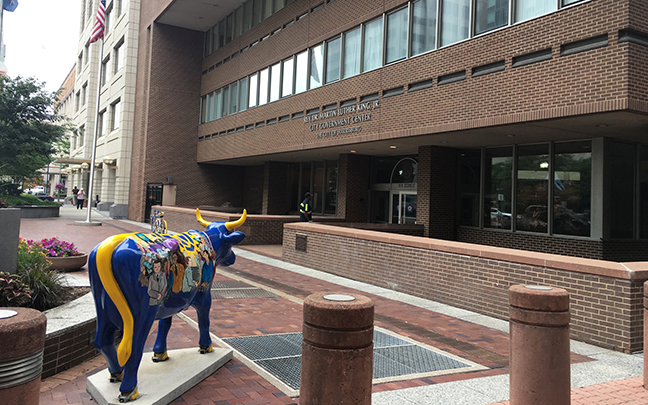
Harrisburg’s MLK City Government Center

Harrisburg announced this afternoon that all of its offices will re-open to the public next week.

With Dauphin County now in the “green phase”of reopening, the city will open its doors on July 6, but will employ numerous safety measures for visitors.

“As we carefully reopen city offices in the green phase, the safety of employees and the public is our top priority,” Mayor Eric Papenfuse said, in a statement. “It is important that everyone follow the new procedures when they come to the buildings.”

Harrisburg’s city hall has been closed to visitors since March 17, when Papenfuse shut public access due to the mounting coronavirus pandemic.

When the building reopens on Monday, a thermal imaging camera will screen temperatures of visitors in the reception area. Papenfuse also expects guests to use hand sanitizer, wear a mask at all times and maintain social distancing in the building.

The MLK City Government Center will be open Monday to Friday, 8:30 a.m. to 2:30 p.m. The treasurer’s office will be open on Wednesdays only. All visitors must enter the building from the front door at 10 N. 2nd St.

The drop box at the back of city hall may still be used for residents to drop off payments.

The Public Works Building, 1820 Paxton St., will be open Monday to Friday, 8:30 a.m. to 2 p.m. The Public Records Center, on the 2nd floor of the Public Safety Building at 123 Walnut St., will continue its weekday hours of 8 a.m. to 4 p.m.

If possible, visitors should schedule appointments and meetings before coming to city offices.

The MLK City Government Center is located at 10 N. 2nd St., Harrisburg. For more information, visit https://harrisburgpa.gov/.


Continue Reading

“Saturday Nights in the City” extended through the end of August

Diners chow down in downtown Harrisburg during a recent “Saturday Nights in the City.”

Harrisburg is setting the table for more al fresco dining this summer.

“Saturday Nights in the City,” the outdoor dining experience, is being extended through the end of August, the city announced this morning.

“We are pleased with the success of this weekly event,” Mayor Eric Papenfuse said in a statement. “This program is a great way for us to support our city restaurants, and I encourage residents to come out throughout the summer.”

“Saturday Nights in the City” continues even as restaurants begin to open for indoor seating with Dauphin County now in the “green phase” of reopening. The event gained popularity among residents and visitors to the city, breathing life into the downtown district that looked like a ghost town during the early days of the coronavirus crisis.

The city and the Downtown Improvement District will close the following streets for dining:

  • 2nd Street, from Market to Pine streets
  • State Street, from Church to N. 2nd streets, westbound
  • North Street, from Susquehanna to 3rd streets, westbound, and from 2nd to Buttonwood streets
  • Conoy St (Shipoke)
  • 3rd Street, from Market to Chestnut streets

Participating restaurants for the upcoming week include:

  • El Sol
  • Stock’s on Second
  • Carley’s Ristorante and Piano Bar
  • Café Fresco
  • Taco Solo
  • Ad Lib Craft Kitchen and Bar
  • Sawyer’s
  • Bourbon Street Saloon
  • Zembie’s
  • McGrath’s
  • Arooga’s
  • Taste Buffalo
  • Cork & Fork
  • Federal Taphouse
  • Rubicon
  • Mangia Qui
  • BurgerIM
  • Bollywood
  • The Brick Haus
  • Los Tres Cubanos
  • Second Street Shawarma
  • JB Lovedraft’s
  • Bacco
  • The Vegetable Hunter

“Saturday Nights in the City” lasts from 5 to 10 p.m. Street closures begin at 3:30 p.m.

Originally planned as to last only through the beginning of July, the event will now see the end of summer. The Fourth of July “Food Trucks and Fireworks” festival will coincide with “Saturday Nights in the City,” as well.

Continue Reading

The Show Must Go On(line): This year, the Jewish Film Festival will be streamed

A still from “Saul & Ruby–To Life”

Saul Dreier and Ruby Sosnowicz view the world with love and joy—even though the nonagenarians went through the terrible years of World War II and lost many of their family members.

Relocated to Florida and devoted to music, the two best friends—a drummer and accordion player, respectively—formed the first (and maybe only) Holocaust survivors band in the world.

Their story, with its highs and lows, is told in “Saul & Ruby: To Life” by award-winning documentarian Tod Lending. It is one of the films featured in the 26th annual Edward S. Finkelstein Harrisburg Jewish Film Festival.

This year, viewers will experience something very different, as they’ll be home, not in a seat at Midtown Cinema. Due to the COVID-19 pandemic, the festival is streaming for audiences over a full month, from June 28 to July 30.

Lending brought a great deal of passion to his documentary.

“I saw a short, four-minute piece on Saul and Ruby in the New York Times ‘Op-Docs’ series and completely fell in love with these two remarkable men,” he said. “When I heard other production companies were pursuing the story, I immediately jumped on a flight to Ft. Lauderdale from my home in Chicago and met them.”

The filmmaker spent four years creating the 80-minute documentary—showing the band performing in synagogues and community centers, even at the Millennium Stage of Kennedy Center. They go on to fulfill a dream—to perform in Poland, where they experienced such horrors. In Warsaw, they draw a huge audience, including many Poles who rescued Jews during the war.

Julie Sherman, JFF chair, calls “Saul & Ruby” “triumphant and quirky.”

“The Jewish Film Festival always wants to make sure there’s Holocaust content, especially as more and more survivors pass on,” she said.

Other films will also address the time of the Holocaust.

“Those Who Remained,” “My Name Is Sara” and “When Hitler Stole Pink Rabbit” explore different aspects of the European Jewish experience, particularly those of children. They represent stories of those who survived the camps but lost their whole families; children left on their own who survived by denying their Judaism, taking on Christian identities and hiding in plain sight; and those who became refugees when they fled in the lead-up to the war and had to learn new languages and embrace new cultures, finding the resilience to survive.

“Picture of His Life”

In addition, “Prosecuting Evil: The Extraordinary World of Ben Ferencz” profiles the man who, after witnessing Nazi concentration camps shortly after the liberation, became the lead prosecutor in the last of the Nuremberg trials. Now 98, he went on to advocate for restitution for Jewish Holocaust victims and, later, the establishment of the International Criminal Court in The Hague.

The festival, as always, includes a good dose of humor.

“It’s often difficult to find a comedy,” Sherman said. “This year, we found three, and we’re showing two of them.”

One is “Mossad!” a film of broad humor directed by Alon Gur Arye, about a not-so-bright intelligence agent trying to rescue a kidnapped billionaire. The consultant on the film, Israel’s highest grossing last summer, was David Zucker, creator of the comedies “Airplane!” and “The Naked Gun.”

The other comedy is the farcical “Douze Points,” in which a man chosen to represent France in Tel Aviv at Europe’s biggest song contest is thrown together with his one-time best friend, who is now a terrorist.

“If it doesn’t sound funny, it is,” Sherman said.

Another documentary in the series is “Golda,” based on a TV interview with the only female prime minister in Israeli history shortly before her death. Also included are testimonies by supporters and opponents.

Ten films will be presented altogether—two per week. Each will have a 24-hour screening period starting at 6 p.m., beginning on Sunday and Wednesday evenings.

“People can come and go as they please,” Sherman said.

On the evening that a film ends, there will be either a special event or what the Harrisburg JCC, the festival organizer, is calling a ‘virtual office cooler”—or Zoom discussion—for anyone who watched it.

“This is the only way to have so much of the communal aspect of the festival,” Sherman explained.

The JCC is not asking for money this year, but people can donate to the Midtown Cinema Staff Emergency Relief Fund on the website. They can also donate to the Jewish Federation Annual Campaign. Because the series is free and there will no accompanying brochure, JFF is not giving credit to sponsors. It will have sponsors again next year.

Lending, founder and director of Nomadic Pictures, a documentary production company, is among the Zoom speakers at the festival.

“Before meeting Saul and Ruby, I couldn’t imagine making a film that touched on the Holocaust because so many important works have already been produced on the subject in films, books, music paintings, theater, etc.,” he said. “But I think the film we made does provide a new perspective and experience to this remarkably important and tragic part of human history.”

Next year, Sherman said, she hopes the film festival will be in the traditional movie-going format at Midtown Cinema.

“Midtown and the JCC are really a good team,” she said.

The Edward S. Finkelstein Harrisburg Jewish Film Festival runs June 28 to July 30. The festival is free, but viewers must register for their “season’s pass” on the JFF website at www.hbgjff.com. After registering, they will receive the film link. All information and instructions are on the website.


Schedule at a Glance

Sunday, June 28 – Fiddler: A Miracle of Miracles
June 29 – ”water cooler” conversation

Wednesday, July 1 – Picture of His Life
July 2 – Zoom Guest Speaker event

Sunday, July 5 – When Hitler Stole Pink Rabbit
July 6 – “water cooler” conversation

Wednesday, July 8 – Those Who Remained
July 9 – “water cooler” conversation

Sunday, July 12 – Golda
July 13 – “water cooler” conversation

Wednesday, July 15 – Mossad!
July 16 – Zoom Guest Speaker event

Sunday, July 19 – My Name is Sara
July 20 – “water cooler” conversation

Wednesday, July 22 – Douze Points
July 23 – “water cooler” conversation

Sunday, July 26 – Prosecuting Evil
July 27 – “water cooler” conversation

Wednesday, July 29 – Saul & Ruby: To Life!
July 30 – Zoom Guest Speaker event


Continue Reading

July Editor’s Note

We’re green!

Well, most of us are anyway.

As I write this introductory note, nearly the entire Harrisburg area has entered the “green phase” of reopening, which means that most businesses can open back up, though, in many cases, under certain restrictions and at reduced capacity.

So, where were we when all this started anyway?

Oh, yes, I remember now. It seems like such a long time ago, in another reality, though it actually was just a few months back, in early March.

At that time, many of us were planning for a blockbuster year full of events, new projects and full-speed-ahead momentum. That, obviously, didn’t happen, but we are trying to oil the gears and get back to some sense of normalcy.

For us at TheBurg, this means a few things.

First of all, we’re returning to near-full distribution of our print magazine. For the past few months, we’ve had to scale back as most of our pickup spots closed, leaving some of you desperately searching for a hard copy. Most have now reopened, so we’re restarting the old printing press.

Secondly, we expect to revive our event sections, probably with the next issue. That said—these sections may be relatively slim until events around the area begin to get scheduled again.

Thirdly, we’re revving 3rd in the Burg back up. Each month, we organize and promote the monthly evening of arts, culture and nightlife. However, it is up to each venue to plan and run their individual events. So, please check with them to learn what they’re up to and to understand their restrictions and limitations.

I saved the best for last.

For nearly a year, we’ve been holding open a reporting position so that our summer intern from last year could fill it. So, please welcome Maddie Conley to our staff full-time. Maddie is local, a Messiah College graduate who grew up in Lancaster County. With Maddie on board, we hope to do a better job covering this community.

We want to thank the greater Harrisburg area for supporting us over the past few months. Like so many small businesses, it’s been an extremely difficult time for TheBurg. Our ad revenue dropped enormously, while the demands on our tiny staff were stressed like never before. Truly, we are here today only because of our community publishers and our sponsors—and because more than 200 of you joined our new membership program, Friends of TheBurg.

Thank you, Harrisburg!

Lawrance Binda
Co-Publisher/Editor-in-Chief

Continue Reading

Artist in Focus: Tristan Bond

If you’ve had a meal or drink in the HMAC courtyard, you’ve probably seen Tristan Bond’s work.

He’s the creator of the circular mural of the surrealist deer, a work mounted during the 2017 Harrisburg Mural Festival. Or perhaps you’ve seen his work at the HBG Flea or the Odd Ones Bizarre at the Millworks.

If you have, you’ll probably see certain threads running through his work, as his style is inspired by a combination of Japanese culture, anime, retro wave, Afro punk and pop culture.

“I believe my work shows the power that we all hold within ourselves,” Tristan says. “There are layers to us all, vulnerability and also strength, and I like to capture that by creating empowering pieces with strong female and male characters depicted as warriors and dressed in geometric armors.”

We’re delighted to share images of Tristan’s work on this page. To see more, follow him on Instagram at @bond_of_art.

Continue Reading

The New Developers: In Harrisburg, African American builders are revitalizing neighborhoods, cultivating community

Corey Dupree. Photo by Dani Fresh.

Ask Corey Dupree what African Americans can bring to city development, and he says, “I love this question.”

African-American developers “bring perspective” on the power of development to serve comprehensive needs.

“Our objective is to make sure these communities rise from, quote-unquote, ‘the rubble,’ because the phoenix does rise from the ashes,” said Dupree, a partner in the planned transformation of the former Bishop McDevitt High School into an eco-friendly complex.

African Americans comprise about half of Harrisburg residents, but they have traditionally “limited ourselves to a minority stake in projects,” said developer Ryan Sanders. But now, behind the plans for several high-profile projects are African Americans with ties to the city and commitments to community.

In the wake of nationwide protests demanding racial justice—and by extension, equal opportunity—these developers envision impact that goes beyond bricks and mortar.

The Pulse

In Harrisburg’s Allison Hill, Tarik Casteel is building TLC Cornerstone Renewal, with 50 affordable apartments and townhouses and a community center near N. 15th and Walnut streets.

“I picked that area because it’s one of the worst areas in the city,” said Casteel. “I’m from the community, born and raised in Harrisburg, and I wanted to show that this can happen if you want it to.”

Casteel is president of TLC Construction & Renovations, and its nonprofit arm, TLC Work-Based Training Program. The nonprofit trains such hard-to-place people as veterans and the formerly incarcerated, hiring them for projects on the construction side.

“When you’re using these same people in the community, it gives them a sense of pride because they helped build where they live,” said Casteel. “When people take pride in where they live and pay taxes, they’re not going to tear up where they live because they’ve got skin in the game.”

In 2018, Casteel and his aunt, Juanita Edrington-Grant, imprinted the city landscape with the Harrisburg Uptown Building (HUB) with apartments for homeless veterans, plus the adjacent HUB Veteran Housing Campus. It’s about taking the reins and ensuring that the builders who build and the people who benefit “look like me,” he said.

Down in Midtown, Sanders is part of the team behind the planned creation of Jackson Square on N. 6th Street. The partnership, which includes NFL veterans and brothers LeRon and LeSean McCoy, looked at that row of deteriorating buildings with deep roots in Harrisburg’s African-American history—including Jackson House, a Green Book-listed rooming house that hosted legends of jazz and sports—and saw “a great opportunity to preserve culture and history.”

And then back at the top of Allison Hill, Garry Gilliam, Jr., is a partner with Corey Dupree, DeZwaan Dubois and Jordan Hill in The Bridge, a venture planning inner-city eco-villages, starting with the McDevitt campus. The idea emerged, in part, from the time Gilliam, Dupree and Dubois spent as students on the comprehensive Milton Hershey School campus, where they knew that the basics of housing, food, education and security were assured.

When those necessities are met—and The Bridge expects to encompass greenhouses, classrooms, workspace and recreational options—then people see hope, said Gilliam.

“I don’t believe you need to leave Harrisburg for that,” he said. “It can be done with mixed-use development, providing resources for those in those communities, and in a way creating a microcosm of Milton Hershey to break generational curses.”

As the new federal courthouse and state archives accelerate development pressures, the city is working with developers to “make sure that the first thought in new development addresses long-term concerns of the community,” said city Planning Director Geoffrey Knight.

Diversity among developers brings a fresh perspective to those conversations, Knight said. Many African-American developers have told him they’re striving for impact.

“It’s less of a focus on things that are financially viable,” he said. “It’s more of a focus on, ‘This is my community. This is a project that means more to me than just dollars.’”

Gilliam agreed.

“We’re of the community,” he said. “We’ve got the pulse of the community.”
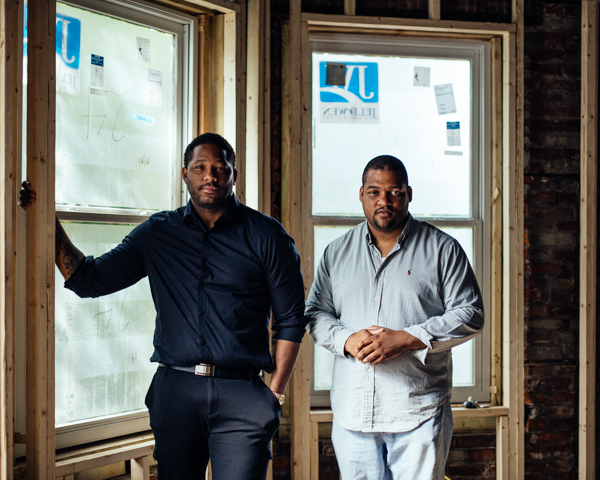
LeRon McCoy & Ryan Sanders. Photo by Dani Fresh.

Never Leaves You

Development that expands opportunity in a traditionally neglected or oppressed community kickstarts change from within, Sanders said. African Americans in development also offer role models for younger generations.

“If we want them to do more, we have to show them more,” Sanders said.

Too often, Black youth see only athletics or entertainment as their way out of inner-city neighborhoods, said Gilliam. Seeing adults succeed in other fields, including real estate and development, presents pathways to the full scope of careers.

Casteel positions his projects to create economic opportunities and to stand as showcases of possibilities.

“People need the opportunity to show what they can do,” he said.

To him, the HUB demonstrated that “African Americans can develop and build a good project and can work together to build their own community,” he said.

Indeed, the city “wants to hear from different people,” said Economic Development Director Nona Watson. Diversity brings people who have experienced discrimination firsthand—something that “never leaves you.”

“You want to give back in a way that will help keep other people from experiencing what you experienced,” she said.

Diversity “creates additional opportunities for individuals who may not have had opportunities to necessarily get into that field,” added city Business Development Director Jamal Jones.

“When you’re working with people who are the decision makers that are from diverse backgrounds, it provides opportunity to other people because there’s a certain level of understanding that there may have been—traditionally, historically—disparity in regard to opportunities. It levels the playing field,” he said.

Tarik Casteel. Photo by Dani Fresh.

From Within

African Americans in Harrisburg development aren’t a novelty, Jones pointed out. Today’s big-project developers are standing on the shoulders of those who have made smaller contributions over the years.

“We should be at a point where this is more of the norm, as opposed to the unicorn,” he said.

When more citizens have access to education and jobs with livable wages, “you’ll see the byproduct in leaps and bounds, from more citizens that can contribute to your tax base, to bringing more people into Harrisburg,” he said.

Barriers remain. Closed doors to the banks and networks that control the money and jobs. Decades of redlining that depress the value of black-owned properties and curtails generational wealth. State contracts awarded to far fewer minority- and women-owned businesses than available, according to the Pennsylvania 2018 Disparity Study.

African-American developers say they are working around and through those obstacles. Casteel has built a strong network of relationships with trusted partners. Sanders’ funding sources include community-impact financial institutions.

“Economic development is one of the building blocks we need to address some of the systematic issues we have,” said Sanders. “I’m always for doing all community first, so you have enough individuals who are looking to do for our own community, and we’ll have the village that is needed to help produce the next generation of leaders.”

Dupree sees stereotypical views of Black men as intimidating or not knowledgeable. But when people realize they are savvy men who know what they want and understand what systematically oppressed people need, “that’s what is meant by ‘by the community, for the community.’”

“We’ve come so far, but we still have a ways to go to be able to have that equal access seat at the table,” he said. “I say it all the time. I’m proud of Harrisburg. When we say that Harrisburg is going to look a lot different in five years, we genuinely mean that.”

Failure to cultivate diversity among developers keeps a city from moving forward and prevents attention from reaching blighted neighborhoods, Watson said.

“Yeah, you have a thriving downtown area, but what happens with the schools, what happens to the neighborhoods?” she said.

At the direction of Mayor Eric Papenfuse, Watson is researching “gap financing” to help developers improve return on investment for less remunerative projects.

In large part, African-American developers “don’t just do development,” said Casteel.

“We do community development,” he said. “We work with the community as a whole. Development isn’t just about building a house. You’ve got to build community.”


Continue Reading

Tough Times, Green Times: Harrisburg Urban Growers helps people discover their inner farmer

If you’ve driven around Harrisburg recently, you may have noticed that, in some places, things appear a bit greener.

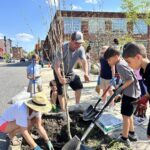
Urban gardens have begun blooming all over the city thanks to a local group whose mission is to offer gardening kits to encourage a source of healthy and sustainable food.

Harrisburg Urban Growers, an initiative of Tri-County Community Action, hosts an annual “Seed and Plant Giveaway” each year, offering gardening kits for residents. This year, the organization put social distancing procedures in place, and volunteers safely delivered the kits directly to residents over several weekends.

Donnel Brown, Tri-County’s neighborhood revitalization coordinator, said that they believe that growing natural, healthy and clean fruits and vegetables is empowering and is essential toward a sustainable and local food system in Harrisburg and the surrounding area.

“Although one of our goals is to bring people together in order to increase social cohesion, gardening is usually a meditative and solitary activity, even when it is done in small groups like a family unit or larger groups like volunteers from an organization,” Brown said, noting that they are putting up signage and adhering to PA Department of Agriculture guidelines for community gardens.

Each kit offers a variety of seeds, including lettuce, apples, strawberries, asparagus, peppers, potatoes, mint, basil, figs, raspberries, red berries, blackberries and blueberries. It’s truly a community effort. Stony Creek Valley Farm donated all the plants, the seeds came from various seed companies, and the seed pods came from the Central Pennsylvania Food Bank.

HUG then works to give families access to the tools, skills and space needed to plant a garden. There are 14 community gardens located throughout the greater Harrisburg area.

HUG believes in the creation of an urban agricultural resource hub in Harrisburg to help build social ties, to produce food to distribute to the food insecure and to form a greater sense of community, according to Tri-County Community Action.

Christa Mummau, a HUG volunteer, said that the boxes include a website that gives step-by-step instructions, as well as a postcard for those who don’t have access to the internet.

“We have resources for people and a number for them to call so a volunteer can talk to them through the instructions on implementing the kit,” Mummau said.

There’s also a Facebook page with links to videos, DIY tips and wisdom from some community members who’ve had over 30 years experience in urban gardening.

Not only is gardening good for the body, it’s also good for the mind, Brown said. It’s a way to care for something and gives people a sense of purpose and pride.

“The mental health benefits of gardening are well documented, and for many, it’s unparalleled to other mental health practices,” he said. “Gardening makes us feel good because it is both a physical exercise, which releases endorphins, and a creative outlet that allows us to express ourselves.”

Anita Hall of Uptown Harrisburg said that the kit not only helped her get started with an urban garden, but also provided a new way to socialize with other residents in her apartment complex.

“As a disabled veteran, I’ve had anxiety and PTSD for a long time,” she said. “During the pandemic, I’ve struggled with being so isolated. Receiving the kit and working to create an outdoor space allowed me to connect with my neighbors.”

In the kit, Hall received basil, lettuce, tomatoes, onions, turnips, squash, cherry tomatoes, eggplant, fennel, broccoli, kale, bell peppers in grow pods and much more.

Thrilled that HUG was able to deliver the kit, Hall has created a space to enjoy the labors of her new urban garden in front of the complex.

“Even if I don’t get one tomato, this has helped me with my anxiety and PTSD by allowing me to connect with my neighbors in a way we hadn’t been connecting in the past,” she said.

As a thank you, Hall had something to give back. She offered the volunteers homemade masks that she’s been sewing.

To learn more about Harrisburg Urban Growers, visit their Facebook page: HBG Urban Growers.


Continue Reading

Say Cheese!: Cheddar Paws brings pets from portrait to adoption

Hank’s painted portrait captures his handsome face and gentle spirit. There’s that goofy grin. The bright eyes. The perked-up ears and drooping tongue.

“It’s a good likeness,” said Jason Viscount, new dog-dad to Hank, a 5- or 6-year-old pit bull. “He’s a lot prettier dog than the photos.”

An artist with Cheddar Paws Dog Art painted Hank’s likeness, which Viscount prefers much more than the pictures he saw.

“I don’t think the photos did him justice,” Viscount said. “His head looked so much bigger than his body. It looked like he was going to topple over.”

Members of this unique consortium put brush to canvas, or mouse to monitor, to help find homes for hard-to-place dogs, and the occasional cat. The portraits hang in local businesses, go on fliers distributed by pizza shops, and circulate on social media, reaching potential adopters who might not be looking for a dog until that perfect face finds them.

Cheddar Paws launched in summer 2019 after Karen Spidle and Natahnee Miller, both involved in local animal rescues, discovered their shared interest in art. Miller painted a shelter dog, and they saw a new avenue for promoting adoption.

The two now lead a loose affiliation of eight local artists. Shelters submit photos of those dogs that just can’t find their forever homes. One of the artists will volunteer to turn the photo into a painting or graphic rendering that starts making the rounds.

Shelter dogs “don’t get much choice in life,” said Miller. “We make all the decisions as far as where they end up. If I can help them end up in a better situation or have a better life, I gladly will, because they don’t have the ability to change their own destiny.”

In Awe

To date, Cheddar Paws artists have painted 76 dogs. Spidle, it seems, can name each one. Butterscotch. Coors. Susie. A cat named Leo. If an artist can paint their eyes, she said, “You have captured their soul.”

One sweet pit bull named Tempest lingered in foster care through Pitties Love Peace for more than 18 months. Timid, ill and unsuitable for kids, she received not one adoption application.

Then a Cheddar Paws painting began circulating. Suddenly, 11 applications flooded in, and PLP Vice President Jessica Blouch says there’s “no way” they could all be due to the shutdown-fueled surge in adoptions and fostering.

“This poor dog, she is so sweet, but she hasn’t had any attention, and all of a sudden, she gets more apps than any dog we had during the shutdown,” said Blouch. “Cheddar Paws is a great organization.”

Adoption, Blouch adds, moves a dog from the limbo of foster care or shelter life to “getting to start the rest of their life.”

The artists paint dogs that are lingering “to help give them that little extra push of exposure,” Miller said. “Why is this dog still sitting here? It’s almost like his perfect person or her perfect person is somehow missing them.”

Zella Smith Anderson, founder and executive director of Central PA Animal Alliance, admitted to being  “in awe at the talent of these people and the willingness to help in such a special way.”

“Not everybody’s on Facebook,” said Anderson, whose alliance operates HOPE, the Hounds Of Prison Education program pairing state prison inmates with shelter dogs to train. “Not everybody is going to go to Petfinder or the rescue websites to find these dogs.”

Spidle and Miller cultivated local businesses and shelters where the paintings hang. Two pizza shops distribute fliers. Some businesses created galleries. At the artist-friendly Tiger Eye coffee shop in Paxtang, “the dogs on the wall sure do get a lot of attention,” said owner Makayla Burton.

While customers wait for their coffee, Burton hears them naming the dogs depicted in colorful, imaginative portraits.

“Everyone’s reading about Prince Naveen and Ida and Iggy,” she said.

A painting of an overlooked shelter dog plants thoughts of adoption by making it feel much more personal, she said.

“The dogs are real,” Burton said. “They’re there. People have put time into them already. Why wouldn’t I do that?”

The Cheddar Paws’ social media strategy regularly gives those businesses a shout-out. The portraits, posted to great acclaim, draw from 900 to 1,700 views.

“To me, that’s a lot more than just a regular post on (a shelter) website of a dog,” Spidle said. “It’s shared and shared and shared.”

Love Connections

Spidle doesn’t know for sure if any Cheddar Paws paintings led directly to adoption, but 33 of the dogs painted now have homes.

When the dog is adopted—when Jaxx or Bella finds a home—the new owner gets the painting.

Hank, the sociable gray pit bull, found his home with Viscount, well-known chef and owner of Greystone Public House. From their woodsy enclave in the Boiling Springs area, Hank can sit on the patio for hours, enjoying the breeze and the scents, although he might bolt after the occasional deer.

“He definitely likes to play, but he’s kind of a couch potato,” Viscount said, while Hank sprawled contentedly on the driveway. Hank’s portrait will go to Morgantown with Viscount’s daughter, a West Virginia University senior who bonded with Hank.

The Dogs’ Den has a portrait of Unique hanging at Ted’s Bar in Annville, said Denise Durkay, founder and president of the Grantville-based rescue.

“When you get more than just, quote, ‘dog people’ looking at a picture, sometimes they finally realize, ‘Maybe I can do this. Maybe I can adopt a dog,’” she said. And her adopters are “tickled to death” to learn that their new four-legged family member comes with a portrait.

Spidle wants to keep Cheddar Paws fun, so there are no plans to turn it into anything formal.

“Art, dogs and fun,” she says. “What’s not to love?”

When Miller paints a dog, she sees a beautiful creature whose home is out there somewhere. The right person just isn’t seeing it, she says.

“I guess we just hope we’re making some love connections.”

Follow Cheddar Paws Dog Art on Facebook. Find portraits at Doglicious Spa & Wellness Center, Abrams & Weakley, Keystone K9, Boneshire Brew Works, Pet Authority, Doggie Delights, The Tiger Eye and Ted’s Bar and Grill in Annville.

Continue Reading