Voices of the Past: New book tells the stories of Harrisburg’s historic African American community

In August, a new monument celebrating African American history was erected on the Pennsylvania state Capitol grounds.

The Commonwealth Monument Project came out of a desire to pay tribute to Harrisburg’s Old 8th Ward, a historic African American and immigrant neighborhood that was demolished to expand the Capitol grounds.

The best way that Lenwood Sloan, executive director of the project, could think to honor the memory was by introducing people to the families that once lived in the neighborhood.

On the monument, 100 names were inscribed. But that wasn’t enough. He wanted people to know their stories.

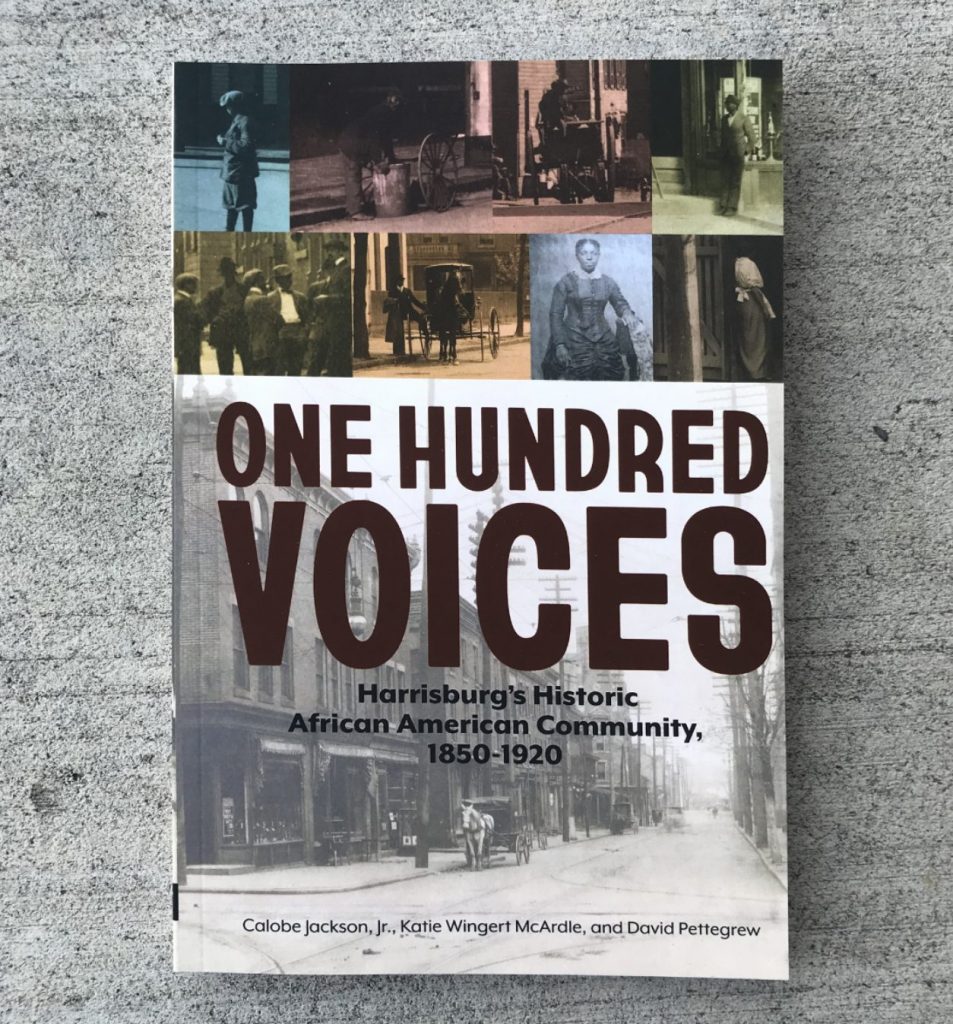
Now, each bronze-inscribed name comes to life in a new book entitled “One Hundred Voices: Harrisburg’s Historic African American Community 1850-1920.”

“We came to the revelation that we couldn’t just write their names,” Sloan said. “They are not merely names in a census, but stories that were lost to us. We need to tell the story about these people.”

Brought to Light

“Through my research in Harrisburg, I know quite a few people that were prominent in the community,” said Calobe Jackson Jr., a local historian and co-editor of the book.

Jackson has a well-earned reputation around the city as the history guy. If you need information on an old building, a historic figure or a memorable event, he’s your man. Lenwood Sloan knew this when he reached out to Jackson for a favor.

He needed a list of 100 names of African American figures from the 1850s to 1920s for the monument’s pedestal, names that would later become stories for the book. Jackson put together a file including freedom seekers, abolitionists, activists, police officers, doctors, preachers, janitors and many more. All had ties to Harrisburg and most had ties to the 8th Ward, Jackson said.

“A lot of people didn’t know about or forgot about these people,” Jackson said. “A lot of these people were Harrisburg High School graduates and teachers in the district. I’m proud that we can show students now what these past students did.”

Sloan remembers someone asking him why he was making such a big deal out of the names, especially with many of them being widely unknown.

But these jobs that seem unimportant in modern days, such as street sweeper or housekeeper, were important back then, Sloan said.

“We need to lift them up out of obscurity,” he said.

Through a grant from the Council of Independent Colleges, Messiah University was able to help with the Commonwealth Monument Project and the “One Hundred Voices” book.

Thirty Messiah students researched the historic figures and wrote excerpts on their stories for the book.

“The process of researching these individuals was pretty challenging,” said David Pettegrew, a history professor at Messiah and an editor of the book.

With some of the 100 people being less prominent, Pettegrew said they had to really look deep into archival material—a process he believes was worth the result.

“We need to do more local African American history,” he said. “This book contributes to a broader story about this resilient community who lived through change at the local level. This is Black Lives Matter historically. This is Black Lives Matter locally.”

Beginning of Discovery

Finding the stories behind the names on the list was only the start of something much bigger. Messiah students sent out graphics on social media looking for descendants of the 100 names they had learned so much about.

“Believe it or not, descendants began to contact us,” Pettegrew said.

Around 100 people with ties to the 100 names reached out to the university. Some even assisted in writing the chapters for the book.

“Getting to connect with the descendants has been the most rewarding thing,” Pettegrew said.

Even for those who may not be direct descendants of people in the “One Hundred Voices” book, Sloan believes there is a way for everyone to connect to it.

“The book helps you map your personal narrative in relation to the 100 names,” he said.

Not only is the book about individual education, but Pettegrew hopes that it will engage people in Harrisburg’s history—one that isn’t always told.

“We are hoping this is just the beginning of discovery,” he said. “We want it to inspire people to think about Harrisburg in a new way and the rich African American history.”

“One Hundred Voices: Harrisburg’s Historic African American Community 1850-1920” is free to download on the Digital Harrisburg website. Physical copies are available for purchase at the Midtown Scholar Bookstore or on Amazon. For more information, visit www.digitalharrisburg.com.  

The Commonwealth Monument is located at 4th and Walnut streets.

Support quality local journalism. Join Friends of TheBurg today!
 

Continue Reading

Artist in Focus: “Art of the State”


“Art of the State” is among the most anticipated exhibits each year at the State Museum of Pennsylvania.

For 2020, though, like with so many things, you can only visit through your computer screen.

“Art of the State” has gone virtual, but that’s not stopping us from highlighting the annual juried exhibit, which includes some of the most noteworthy works by PA artists over the past year.

We’re especially proud that two of our contributing artists, Ryan Spahr and Andrew Guth, both of Harrisburg, had works accepted to be part of the exhibit. Their artwork was among the 108 finalists from 1,901 total entries.

If you like the art featured on this page, we encourage you to go online and take the virtual 360-degree tour to see the other works that comprise this year’s “Art of the State.”

“Art of the State: Pennsylvania 2020” runs virtually through Jan. 3 at www.statemuseumpa.org/aos2020.

Support quality local journalism. Join Friends of TheBurg today!
James Erikson

Ellen Silberlicht

Nancy Middlebrook

Andrew Guth

Travis Prince

Ryan Spahr

Continue Reading

Heading Home: HSO’s Matthew Herren returns to his central PA roots

Matthew Herren

Novelist Thomas Wolfe’s declaration that “you can’t go home again” has its exceptions.

Matthew Herren has come home successfully—with a twist. He left as a musician playing for an orchestra and returned as an orchestra administrator.

A native of Lancaster and a graduate of McCaskey High School, Herren had music performance ambitions as a young man, later obtaining bachelor and master’s degrees in cello performance from the prestigious Juilliard School in New York. In the mid-1990s, he played that instrument, which he had first embraced in sixth grade, in the Harrisburg Symphony Orchestra.

Then “love beckoned,” taking him away from the orchestra and central PA. He played music professionally before entering the world of arts administration. Until recently, he was the executive director of the Symphony of Northwest Arkansas.

But then he saw a notice about—and applied for—the parallel position at HSO. He was accepted, starting as the orchestra’s new executive director in June.

“I wasn’t looking for a new job in a certain sense,” he said. “I was curious and looked at weekly listings at orchestras. The opening at Harrisburg Symphony Orchestra leapt off the page. I had a lot of good memories here.”

Herren’s homecoming, said Stuart Malina, the symphony’s music director, is a “testament to the artistic quality of our orchestra, that we were able to bring someone of Matthew’s caliber and experience back to the region.”

In turn, Herren said that he was pleased to see the “tremendous growth” that had occurred in the area he was coming home to.

The executive director is responsible for the human and financial resources of the HSO. Herren, who manages a team of eight full-time and eight part-time staff, said he is grateful for following the successful 17-year tenure of his predecessor, Jeff Woodruff.

“He left good systems in place,” Herren said.

People Need Music

Overall, things are bright at the HSO, which this year marks its 90th anniversary, just as Malina enters his 21st year as music director.

The orchestra aims to do additional outreach to the community and to reach younger and more diverse audiences. Meanwhile, audiences are very loyal, Herren said. Many continued to support the orchestra when the pandemic set in, even though performances were suspended.

The orchestra’s devotion to the community is strong, as well, Herren said. The HSO reaches some 40,000 people annually through its Masterworks and Pops concerts and educational and other programs.

Like other organizations across the country, HSO is watching to see how the coronavirus affects its 2020-21 season. It had put many programs on hold and instituted public health measures in keeping with government regulations regarding the size of gatherings and other restrictions.

What might be possible for other arts organizations would not be so for the orchestra, which has few filmed productions that can be live-streamed. And by their nature, orchestras play music written for a large number of instruments, unlike chamber groups.

One way of adapting is through offering “evergreen” programming. Concerts and other programs are announced only shortly before they’re due to take place, so people don’t make plans in advance that may fall through.

Despite the worries, Herren likes to quote Malina, who “speaks of a big bump, not an existential threat” from the pandemic.

“We will be here,” he said. “People need live music in their lives. There’s nothing like walking into a hall and hearing it live.”

Herren noted that there’s a non-pandemic concern that often plagues performing arts groups—the perception that audiences are “graying.” In other words, since younger people seem to have less interest in the arts—an assumption based on buying habits—eventually there will be no audience left.

The 49-year-old Herren dismisses that fear, asserting that younger people, especially those with children and jobs, may not have the time or disposable income to buy tickets to concerts and other artistic events.

“There will come a time the children will be grown, and the parents will have the income,” he said.

He also believes that the three youth orchestras that HSO sponsors are another step in the right direction.

“They may not necessarily train professional players, but will help the students understand music and come to appreciate it,” Herren said.

Music appreciation remains strong in him, even though he plays cello now only for his own enjoyment. He actually prefers to listen to soprano instruments and voices. And he remains convinced that, pandemic or not, “It’s a wonderful time to turn to the arts.”

For more information about the Harrisburg Symphony Orchestra, visit www.harrisburgsymphony.org.

Support quality local journalism. Join Friends of TheBurg today!
Continue Reading

It’s a Go: Market Square Concerts plans a fall season, properly distanced

Cuarteto Latinoamericano

Timing is everything, whether in life or in music.

No one knows that better than Peter Sirotin, co-director of Market Square Concerts in Harrisburg, who proclaims that this season’s programming “was meant to explore how music can transport us through time and space.”

“This might be our most geographically and historically far-reaching season yet,” he said. “I believe that a concept of using arts to expand one’s horizons by connecting to different cultures and eras is now more meaningful than ever, given how stationary all of us have been for most of 2020.”

But life has arts organizations locally and worldwide impacted by the pandemic, so one must address that proverbial elephant in the room. How will Market Square Concerts journey down that pandemic path during its upcoming 39th season, particularly given the domestic and international travel restrictions their performers might face? What about the audiences who flock to the various local venues to enjoy its concerts at Whitaker Center, Temple Ohev Sholom and Market Square Presbyterian Church?

Sirotin already has had to reschedule a piano recital and masterclass by British pianist Steven Hough to the 2021-22 season after Hough’s entire U.S. tour was cancelled. Fortunately, Sirotin was able to find a replacement for October, but the juggling required a lot of work to make it happen.

“When we had to cancel performances at the end of our previous season, the overwhelming majority of patrons chose to donate the cost of their tickets to MSC instead of requesting refunds,” he said. “As we go forward, we hope that the generous community support will continue because our season will be impacted by having to limit our audience in order to socially distance.”

Sirotin made sure that MSC kept connecting with its audiences despite the interruption by emailing video and audio recordings of performances accumulated over the last decade. As far as this coming season, it’s a go.

“We are passionate about the unique, spiritually nourishing quality of great live performances, but we also are planning to comply with all state and local government guidelines on face coverings and social distancing in order to present these events as safely as possible,” he said. “To accommodate those who may be reluctant to join us, we are planning to offer high quality recordings of concerts, contingent on artists’ permission, of course.”

With that said, MSC’s 2020-21 varied concert season incorporates music from Shakespearean England, the Italian Baroque era, 20th century Latin America and Eastern Europe, and even from the great American songbook.

The season opens on Oct. 6 at Whitaker Center with renowned pianist Mark Markham, whose “Dances and Improvisations” celebrates the freedom of expression by composers from Bach and Chopin to Ravel, Poulenc and others. For 20 years, Markham was the recital partner of the late Jessye Norman, one of the greatest sopranos of the 20th century. A few years ago, he had also performed as a soloist with the Harrisburg Symphony, where he performed the Ravel Piano Concerto.

The Nov. 15 concert at Temple Ohev Sholom showcases the vitality of music from Argentina, Brazil, Spain and Italy. It presents a collaboration between Cuarteto Latinoamericano, winner of the two Latin Grammy awards for best classical recording, and Jiji, a Korean guitarist who won Concert Artists Guild’s international competition.

“This offers a spectacular range of virtuosity and unique style,” Sirotin says. “I am personally looking forward to this concert because one of my favorite string quartet CDs is the Cuarteto Latinoamericano recording of the Ginastera Quartets.”

More Music

When the calendar turns, Market Square Concert’s season will continue, exploring music throughout the world, along with a bit of romance.

On Jan. 13 at Market Square Presbyterian Church, MSC presents Tabea Debus, an award-winning German recorder virtuoso, and American lutenist Paul Morton.

Feb. 17 at Temple Ohev Sholom features the award-winning Sinta Quartet performing works by Schubert, Ligeti and others.

March 14, also at the temple, will feature performances by the Verona Quartet presenting Dvorak’s romantic “Cypresses.”

Finally, on April 28, at the church, “Stuart and Friends” will feature maestro Stuart Malina at the piano joined by Sirotin on violin, among others. Sirotin will perform Korngold’s Piano Quintet with the symphony.

For more details and tickets, call 717-221-9599, visit www.marketsquareconcerts.org/tickets or email [email protected].

Support quality local journalism. Join Friends of TheBurg today!
 

Continue Reading

Island Flair: Dania’s Kitchen spices up 2nd Street. Sometimes, out of tragedy, opportunity arises

Damiana Lopez and Suleyka Martinez

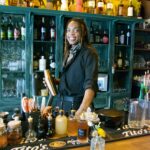
The COVID-19 pandemic caused chef Damiana Lopez to lose her job when the restaurant where she worked shut down. She then teamed with her friend, Suleyka Martinez, to open a new place, Dania’s Kitchen, bringing their passion for Dominican and Puerto Rican cooking to downtown Harrisburg.

Lopez came from impoverished beginnings and recalls slaughtering chickens and cooking them in the backyard with extended family before stepping into the healthcare field.

“I was a nurse in Puerto Rico, then when I was pregnant with my first baby, his father went to jail and I thought, ‘I’m going to be alone for this,’” Lopez said.

With her 1-week-old, she found a job working in a bakery that allowed her to care for her child.

“I started cooking bread and made sandwiches first,” she said. “Then they wanted to make pastelitos and, after the cook left, she showed me how I had to make it.”

Lopez was only 19 years old and had never even cooked rice, she said.

As her talents grew, she moved to Florida and Massachusetts, working different restaurant jobs before returning to Puerto Rico to work as a nurse again. However, her inclination for the food industry took hold.

“I like to be a nurse, but I love to be a cook,” she said.

Five years ago, Lopez moved to Harrisburg for its low rent and proximity to family.

“When I came here, I didn’t like it,” she said. “Everything looked depressed, but now it looks a lot better.”

As the city bettered itself, Lopez said that she also did, and, over time, learned to love her surroundings.

“I can say I’m a different person, maybe a business person,” she said.

Learning to live more sustainably, Lopez focused on her cooking and worked at various restaurants before coming to Cidra’s Cabana on Allison Hill as head chef.

Martinez said that, when the pandemic forced that restaurant to close, Lopez kept doing what she loved.

“She would make these fancy dinners for us and would make cooking videos on Facebook showing everyone, and we got a lot of feedback saying, ‘Hey, can I get a plate?’ and ‘You should sell that,’” said Martinez.

With her strong reputation already established, Lopez began taking orders for catering.

“Honestly, she gave me a lot of pushback—she didn’t want to do it,” Martinez said. “When she started doing it, it went way better than we expected.”

The pair discovered their current downtown location when they came to buy a refrigerator. They saw a “for lease” sign and a chance to open their own place in the former home of 2nd Street Shawarma, which had moved down the block.

“We couldn’t keep up with the orders from home,” Martinez said. “The demand called for it.”

Dania’s Restaurant opened in August to a mix of neighborhood patrons and the area’s growing Latino population seeking a taste from their childhood memories. Some customers are willing to drive more than 45 minutes to find a meal, sometimes three to four times a week, Martinez said.

Due to COVID-19 restrictions, Lopez is learning to specialize in made-to-order takeout.

“Normally, when you get Spanish food, you go, and you see all the food is already cooked,” said Martinez.

Lopez, though, prides herself on fresh food, made to fill the niche of the individual customer, from locally sourced ingredients.

Latin food is typically sautéed at low heat for an extended period as other ingredients are added like garlic, peppers, onions with a variety of spices, which works to trap in the flavor, she said.

Lopez’s favorite dish is the garlic shrimp due to its popularity, but, as the flavors filled her mind, she back-tracked to say that each recipe was her favorite.

From where she’s been to where she’s going, Martinez said she values Lopez’ strength and resiliency.

“It’s so brave of her to put out her menu, her flavor, and she’s putting it out for everyone to critique and taste — that’s big,” said Martinez. “I’m so proud of her.”

Dania’s Kitchen is located at 316 N. 2nd St., Harrisburg. For more information, call 717-695-0006 or visit their Facebook page.

Support quality local journalism. Join Friends of TheBurg today!


Continue Reading

Monumental Concern: Central PA company has carved out a business from sculpture

Commonwealth Monument Project

As the late afternoon sun set across Harrisburg on a hot summer day, a ribbon-cutting ceremony took place on the state Capitol grounds for the Commonwealth Monument Project.

What is that? It’s a glinting set of cast sculptures, “A Gathering At The Crossroads: For Such A Time As This,” created as a testament to Harrisburg’s rich African American history and commemorating the 150th and 100th anniversaries of passage of the 15th and 19th amendments to the U.S. Constitution.

It also stands as the pinnacle of a year’s worth of impassioned labor and sweat by its creator, ART Research Enterprises of Lancaster.

ART Research Enterprises is a company specializing in art casting and fabrication, as well as the conservation and restoration of art and architectural objects. Artists Becky Ault and Mike Cunningham founded the company some 40 years ago in Cunningham’s garage before moving to its present location outside of Lancaster.

Today, the company runs between 10 and 30 employees, depending on which projects are underway. Its repertoire includes sculptures, memorials, architectural sculptures and restoration work.

“We do everything from 60-foot sculptures to coffee tables,” Ault said. “We’ve also done work for the Franklin Mint, but mostly, we work for ourselves.”

The company averages 200 to 500 projects each year and has shipped castings around the world—to clients in Germany, England, France, Puerto Rico and many other locations.

The Commonwealth Monument, set at 4th and Walnut streets in Harrisburg, was forged in bronze and sculpted as five elements, Ault said. The project’s initial casting was its 4½-foot base, the “Orator’s Pedestal,” featuring 100 names of families from the city’s Old 8th Ward on its sides, along with homages to businesses and churches that once served as community mainstays.

Topping the pedestal is a relief map of the historic neighborhood that was demolished to make way for the Capitol complex through eminent domain.

On Nov. 14, two historic castings, also by ART Research Enterprises, will join two other figures created by the firm that now surround the pedestal. Cast figures include William Howard Day, an educational reformer and civil rights pioneer; Frances Harper, poet, abolitionist and suffragette; Jacob T. Compton, a sergeant in Company D of the 24th U.S. Colored Infantry and local musician; and T. Morris Chester, Civil War correspondent and recruiter.

All figures related to the project have a Harrisburg connection from the late 1800s, as well as connections either to the 15th Amendment, which granted African American men the right to vote, and/or to the 19th amendment, which guaranteed American women the right to vote. The overall work was created as part of the IIPT Harrisburg Peace Promenade.

“The key factors to anything we do is that we try to envision what you feel it should be,” Cunningham said. “My favorite part about doing this sort of work is the creative aspect. It’s a field that’s constantly changing.”

Lenwood Sloan, the project’s executive director, said that a state search committee selected ART Research Enterprises for the project from a field of 20 candidates. Nominees were invited to apply for the project by the PA Department of General Services, which sought recommendations from “various government agencies” that had commissioned the firms for similar projects, Sloan said.

“They came as highly recommended and were highly engaged during their presentation to us,” he said.

Additionally, the search committee was seeking “a woman-owned business” for the project that, in part, acknowledges the passage of women’s right to vote. ART Research Enterprises stands as the only foundry arts partnership in the mid-Atlantic region headed by a woman, Sloan said.

The company also brought plenty of experience to the project. In all, they’ve completed 20 to 30 monuments across the commonwealth, Sloan said, including castings of Pennsylvania state troopers, the Reading Police Memorial and the Cumberland County Memorial.

“We were all just so impressed by ART Research Enterprises and their willingness to collaborate with the community,” Sloan said.

ART Research Enterprises is located at 3050 Industry Dr., Lancaster. For more information, visit www.thinksculpture.com.

Support quality local journalism. Join Friends of TheBurg today!


Continue Reading

Comfy, Clean, Arty: Dustin Taylor elevates his Airbnb with a curated, rotating collection of local art

Local art hangs on the walls of Dustin Taylor’s Airbnb.

Bread gets stale. Relationships can become boring. Even home décor has a shelf life.

That’s why Dustin Taylor, who works in technical sales for Microsoft but is a recreational real estate investor in his off-hours, decided he needed something different to keep one of his Midtown Harrisburg Airbnbs fresh.

Inspiration came just a block away when he walked into Little Amps at Green and Muench streets. While waiting, he was drawn to the local artwork for sale on the walls of the coffee shop. It was a “eureka” moment.

“I thought, ‘I can do that,’” he said. “There’s got to be plenty of local artists looking for places to exhibit their stuff.”

Taylor continued to ponder the idea.

“Traveling, your spirits are elevated because you’re traveling, and you’re more open to seeing things like artwork,” he said. “You might think, ‘I might like to buy that.’”

He contacted several arts organizations before the Susquehanna Art Museum put him in touch with its director of exhibitions, Lauren Nye, who is also a freelance art consultant, to help find artists and curate their work at his Delaware Street Airbnb.

Taylor asked Nye to put together work by 12 local artists for the first exhibition at his Airbnb. They are thinking of rotating artwork every six months.

“So many artists responded positively saying, ‘I have so much work sitting around’—about 30 to 50 artists,” Nye said. “I told them this is sort of an experiment.”

Artists were eager to help prove the hypothesis.

“When Lauren invited me to participate, I was immediately enthusiastic,” said Gail Coleman of Mechanicsburg. “It is important to be open to new and creative ways to exhibit visual art. The idea that original local art can be an attraction to potential Airbnb visitors makes so much sense.”

After selecting the pieces, Nye writes a label to describe the art and the artist, how they’re connected locally, artists’ websites, the cost of the work and shipping information.

“It’s a little bit like an integrated gallery experience,” she said.

She hangs the pieces and handles sales, if any guests request to buy the art.

“The person who is going to plunk down $100 [some pieces go for more than $500] on a piece of artwork isn’t everyone,” Taylor said. “I don’t know what I should expect.”

As of this writing, no pieces had sold in the five months since the art was hung, but that isn’t their only goal.

“Even if their work doesn’t sell, the artists get a little self-promotion,” Nye said, adding that the experience of “living” with art is much different than viewing it in a gallery.

For that reason, Coleman said that she usually looks for “art” Airbnbs when she travels, as does photographer Deb Schell of Harrisburg, another artist whose work is exhibited. She recalled an artist’s small house where she stayed outside of Denver, Colo., last year that featured work by the artist, her daughter, lots of plants and light that was just “so unique and interesting.”

“So, when I saw the call for artists for this, I thought that would be cool,” Schell said.

Taylor and Nye both note that artists are protected by Airbnb’s insurance, so they don’t have to worry about damage or loss. Additionally, Taylor said he priced his property to attract “pretty responsible” guests.

Nye’s typical freelance work as an art contractor includes installing art in people’s homes and offices and helping facilitate art sales, but she’s never done something like a whole house.

“I think there’s lots of types of spaces that would benefit from original artwork,” Nye said. “People often default to inexpensive things when dealing with a space.”

Cheap, commercial pieces become “background noise,” Nye said, little more than something to fill an empty wall.

“Having original artwork that is eye-catching enriches your space,” she said. “You’re actually experiencing something that someone has put a lot of time and love into.”

That Taylor was the visionary for an arty Airbnb makes him chuckle a little.

“I have an appreciation for the general arts community as a whole, and I’m certainly glad to foster that,” he said. “This is my first foray into art.”

His Midtown Airbnb is promoted as an “Airbnb Plus,” which means he has a checklist to ensure that guests get a top-of-the-line experience. He stocks the kitchen with food and drinks—including alcohol—has a computer and printer, bicycles and other amenities not always found in your average Airbnb.

Even with COVID cutting into travel, Taylor’s two units (he has another around the corner on Susquehanna Street) are booked.

“The house is decorated with local art, has all the amenities you could think of (bikes were a huge plus), and is extremely clean,” wrote a guest named Christine, who stayed at the Delaware Street house in May. “We… are so grateful to have had such a beautiful home to stay in during our time in Harrisburg.”

Taylor recently considered that, along with local art, he could add local charm by stocking Little Amps coffee, alcohol from Midstate Distillery, Hershey bars and other local products to really give his guests a “taste” of the region.

“The only problem now is I wish people would buy it,” Taylor said of the art on the walls of his Airbnb. “I was thinking I should buy some for myself.”

Dustin Taylor’s Airbnb is located at 266 Delaware St., Harrisburg. To find out more, visit www.airbnb.com.

Support quality local journalism. Join Friends of TheBurg today!


Continue Reading

The Painted Word: SAM’s Alice Anne Schwab—the best is yet to come

Alice Anne Schwab

The English traditional poem, “Monday’s Child,” attributes, through verse, personality traits that children may possess based on the day of the week they were born, often foretelling the future.

In the poem, “Thursday” shares that the child born on this day “has far to go.” It can be interpreted to mean that a long, successful life lies ahead or that the life destined for them will be a long and fruitful journey. As a Thursday’s child, I can attest to a never-ending road of great adventure.

Little did anyone know on a Thursday in February, in the late 1950s, a little girl was born on Feb. 21, to be exact. The date marked her arrival in Harrisburg. She grew up with a genuine love for art and cooking, among other things. Later, she grew to serve her community as an advisor and advocate. In between, she worked tirelessly as a wife and mother and a friend to many. She holds within her a gift that only a rare few possess, the ability to make the person she is talking to feel like they are the only one in the room.

Alice Anne Schwab, currently the executive director of the Susquehanna Art Museum at the Marty in Midtown Harrisburg, is that person. In high school as a summer intern at the State Museum of Pennsylvania, she realized, by looking through the lens of art, that that perspective would provide her with the knowledge of various cultures in forming a global view.

If art is a thread that has been one of continuity in Alice Anne’s life, the art of cooking runs a close second. In a professional career that has spanned four decades, she has worn many different hats in the private sector. She always embraces the next challenge as a natural progression—an evolutionary step in the process of living.

Adept at learning the art world as a graduate from Bucknell University, Alice Anne assisted John Szoke at his prestigious New York gallery. She then worked in hotel management for hoteliers like Ian Schrager and Steve Rubell of Studio 54 fame, proving to be a quick study. She next received her culinary certificate from the New York Restaurant School and returned to her hometown of Harrisburg in 1990 with the bug to cook and create. However, raising small children was her primary focus for a number of years while she dabbled in catering out of her home. In the ensuing years, as a member of Market Square Presbyterian Church, she was asked to become the director of education, a post she held while taking graduate courses in religion. In the wake of 9/11, Alice Anne’s epiphany came to her “that life is short and to live your dream and give it the best you have.”

That realization led to opening Alice Anne’s Kitchen, which combined a restaurant and catering business, which she ran for two years. As anyone in the food industry would agree, it is an all-consuming line of work. After that chapter, the position of director of education for the Harrisburg Symphony Orchestra (HSO) opened up, a role she assumed for the next seven years. This became a great joy in her life as she worked with then-Executive Director Jeff Woodruff.

Accomplishing what she set out to do at the HSO, she acted on the advice of a friend and applied to be executive director of the Susquehanna Art Museum, which was about to enter a new chapter in its freshly minted Midtown locale. It is a position she holds to this day. As the public face to the only dedicated art museum in the area, Alice Anne’s impact on the regional art scene extends well beyond the museum’s doors and within the community at large.

When asked to reveal the three artists that have changed her view of art, she responded without hesitation and with great insight. Frida Kahlo as a woman artist, bold in her persona and paintings; Leonardo da Vinci as a visionary across many disciplines (science, math and art); and lastly, Paul Cezanne, for the beauty and deeper meaning that he brings to the canvas. Alice Anne feels strongly that her mission as the overseer of art at SAM provides the public with the opportunity to have a Cezanne moment.

“If people, who may or may not have any prior interest or training in the visual arts, can gain perspective when they stand in the presence of great art and have clarity where something about life is revealed to them anew, we’ve achieved our goal.”

In a career that has included working for the presidential re-election campaign of Jimmy Carter, Alice Anne Schwab has led an adventure-filled life that has taken her far and wide. Trying to arrive at the essence of Alice Anne is like reaching the final page of a great book. You don’t want it to end. You want it to go on to the next chapter knowing the story will only get better. That is as close as I got, and so is it any wonder that she wrote the next sentence for me with her usual flourish?

“I believe the best is yet to come.”

To be continued…after all, she is a Thursday’s child.

The Susquehanna Art Museum is located at 1401 N. 3rd St., Harrisburg. For more information, visit www.susquehannaartmuseum.org.

Support quality local journalism. Join Friends of TheBurg today!


Continue Reading

Let’s Keep It: Pandemic life stinks, but our vast social experiment has yielded a few good ideas

Illustration by Rich Hauck.

My last few columns have been, in technical journalism jargon, a bummer.

Over the past few months, I’ve written about COVID this and COVID that—how the virus has harmed Harrisburg’s small businesses and restaurants, as well as the awful effect it’s had on our collective well-being.

Like many of you, I’m now looking beyond this year, which soon will come to its merciful end. And, with that, I’m hoping that 2021 will be a year of recovery as we gradually regain some sense of normalcy.

Having said that—our communal COVID experience hasn’t been entirely worthless. As a country and a community, we’ve experimented with new ways of doing things, which we never would have considered absent this pandemic.

Sure, I’d like to feed most of the “new ways” straight into the shredder. I will dance gleefully around the bonfire watching my collection of facemasks burn, and nothing will make me happier than deleting my Zoom app. But a few of our experiments and adaptations have genuine merit, and I hope we retain them even after we’re again granted the high honor of sitting at a bar.

To maybe no reader’s surprise, street dining is the No. 1 item on my “let’s keep doing this” list.

Harrisburg began shutting down downtown streets for al fresco dining in June, extending it three times as “Saturday Nights in the City,” born out of desperation for our struggling restaurants, proved to be popular.

I expected plenty of pushback from the auto-addicted and maybe even traffic jams on surrounding blocks, but there was actually little of either. Instead, the traffic-free streets turned into one big, happy party, with humans gathering to talk, laugh and chow down, taking back the city from our motorized masters.

Last month, TheBurg featured a painting of outdoors dining at Mangia Qui/Rubicon, showing North Street closed down. Seeing the cover, several people told me that this made Harrisburg look less like, well, Harrisburg, and more like a European street or square.

I think it’s fair to say that, without the pandemic, this radical social experiment never would have happened. Shut down Harrisburg streets? Surely, you’ve lost your damn mind, man!

Likewise, I believe that Harrisburg should take some of its neglected, forlorn alleys, lay down pavers, put in plants and turn them into attractive pedestrian walkways. Many cities have done this successfully and, let’s face it, almost anything would be an improvement over how those alleys look now—and what they’re often used for.

The second item on my “let’s keep it” list also touches upon the good old automobile. The pandemic demonstrated that many of us are able to work remotely—perhaps even more efficiently sometimes.

One-hundred-percent remote work may not be possible or desirable. But 50%, 25%? A white-collar city like Harrisburg, thick with office workers, would seem a perfect fit for a more mixed work environment.

This flexibility might offer greater work/life balance to our daily army of suburban commuters, but it would also help return the city to its residents. With less traffic, we could narrow State Street, narrow Forster Street and scratch the ridiculous I-83 widening—maybe even reduce the downtown portions of 2nd and Front streets to two lanes. I’m getting all flustered just thinking about it.

But then what happens to Harrisburg’s office buildings? Many would still be in use, since they’re largely state-owned or leased. But others could be transformed to apartments, a trend that Harristown already has pioneered. Even before COVID hit, residential, not office, space was the hot commodity downtown. And less traffic and more green space would make the center city an even more desirable place to live.

Indeed, for much of human history, there was little distinction between living space and workspace. Then the automobile came along, and suddenly we had discrete places to live, work and play, with the car shuffling us between them.

Due to COVID, we seem to be returning to the old way of doing things.

I immediately can think of two friends—one in Midtown, the other in Shipoke—who both used to commute to jobs in Hershey. Since the pandemic hit, they’ve telecommuted from their Harrisburg homes and love their new, car-free lifestyles. Neither expects to ever return to the commuting grind.

I’ve read that rural areas might emerge as winners when people can live wherever they want, remote from their jobs. Perhaps. But a small, inexpensive city like Harrisburg might also have a competitive advantage, especially among people who also value walkability and easy access to urban amenities

To the COVID-weary, I say—take heart! All year long, we’ve endured one massive dump of lemons. It’s nearly time to make the mother of all lemonades.

Lawrance Binda is co-publisher/editor-in-chief of TheBurg.

Support quality local journalism. Become a Friend of TheBurg today!

Continue Reading

Pick It, Stuff It: All hail the humble zucchini

Summer has finally slipped into autumn and taken with her many of the wonderful fruits and vegetables of the season.

Summer is my favorite season for cooking. All year long, I think of sweet corn that tastes like sugar, ripe red tomatoes for pasta, jumbo red peppers to roast, and the scent of my little basil garden in the afternoon sun.

But one vegetable seems to hang on a lot longer than others. It’s the humble zucchini. During the summer, I look for small ones to sauté or put in casseroles, but, by now, many of them are the size of baseball bats. I think many people accuse zucchini of having a bland taste. Perhaps they do, but that is what makes them one of the most versatile veggies around.

Sliced zucchini, cherry tomatoes, breadcrumbs and Parmesan cheese make a great casserole that’s a perfect accompaniment to roast chicken, grilled steaks or pork chops. Zucchini lends unexpected moistness to a “quick bread” made with chocolate, and, for a special treat, try zucchini spears, dipped in batter and fried in olive oil for a very different appetizer. No green bean is as versatile as that!

But my favorite way to serve zucchini is to stuff them. (A good Italian cook will stuff any vegetable, from tomatoes and eggplant to mushrooms and peppers.) The recipe that follows, from the original “Grass Roots Cookbook,” is one I have held on to for over 40 years. It works as a main dish or on a buffet table and is so good with a simple tomato and cucumber salad. It does call for medium-sized zucchini, so you must leave the “baseball bats” at the market.

Sausage Stuffed Zucchini

Ingredients

  • 6 medium zucchini, scrubbed with stems trimmed
  • ½ pound sweet Italian sausage, casings removed (you can use hot sausage, if you prefer)
  • 1 medium onion, finely chopped
  • ½ cup chopped fresh basil
  • ¼ cup chopped fresh parsley
  • ¼ teaspoon dried oregano
  • ½ cup freshly grated Parmesan cheese
  • ¼ cup plain dried breadcrumbs
  • 1 large egg, beaten
  • ½ teaspoon salt and a pinch of pepper

Directions

  • Halve the zucchini lengthwise and then parboil in lightly salted water until just barely tender. This will take about 10 to 12 minutes. It is important not to overcook them, or they will fall apart.
  • When the zucchini halves are crisp-tender, drain them well on paper towels.
  • When they are cool, scrape out the centers with a teaspoon, leaving “walls” about ¼ inch thick.
  • Chop the scooped-out zucchini centers, dab away any remaining moisture, and reserve.
  • Brown the sausage meat in a large, preferably non-stick, skillet or sauté pan over medium heat until no traces of pink remain. Use a wooden spoon to break up the meat into small, uniform pieces.
  • Add the onion, basil, parsley and oregano to the sausage mixture and stir well. Turn the heat to medium low, cover the pan, and let simmer for about 8 minutes or until the onion is tender.
  • Remove the pan from the heat and mix in the reserved chopped zucchini, Parmesan cheese, breadcrumbs, beaten egg and salt and pepper.
  • Fill zucchini shells with the sausage mixture, dividing it evenly and mounding it slightly in the center of each of the 12 shells.
  • Place the filled zucchini in an oiled baking dish that will hold the shells firmly together. Sprinkle extra cheese on the tops if you wish.
  • Bake in a 350-degree oven about 30 minutes. The filling should be hot and slightly browned.

This recipe makes six servings (two zucchini halves each), but save leftovers for another day. The filled zucchini re-heat beautifully and are even good for lunch. If you are making these zucchini for company, place them on a large serving bowl of linguine dressed with olive oil and Parmesan, garnish with sprigs of fresh basil, and you will be hailed as a cooking pro. (Even by those who don’t like zucchini).

Support quality local journalism. Join Friends of TheBurg today!

Continue Reading