How Green Is My Grocer?: At Radish & Rye—very green. Very local, too

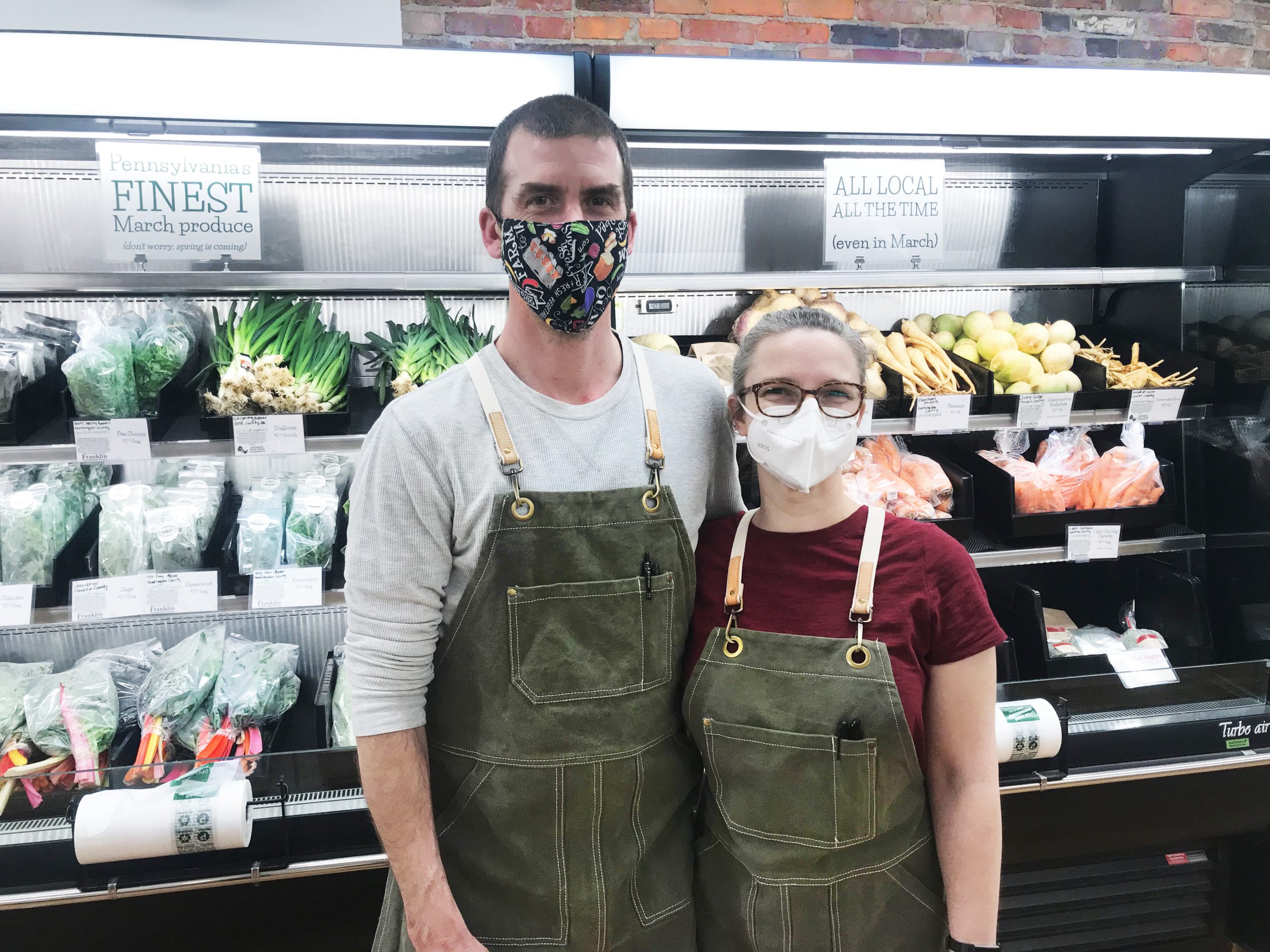
Dusty and Julia James

Lately, it seems as if every time I walk along 3rd Street in Harrisburg, a new business, restaurant or shop has opened.

It’s thrilling to see and carries with it a feeling of momentum and hope. From a historical perspective, too, it feels more than fitting, given that many decades ago this street was home to a vibrant shopping district.

Amid the last days of February, Radish & Rye Food Hub became a welcome addition to this streetscape of entrepreneurial spirit and community pride. The shop, located on the 1300-block of N. 3rd, is an all-local grocer that exclusively carries foods from producers and farmers within a 150-mile radius of Harrisburg.

The business is a labor of love for Midtown residents Dusty and Julia James, who opened their store five years ago in the Broad Street Market before migrating across the street into their own brick-and-mortar.

“We’re not a supermarket, but more of a green grocer,” explained Dusty, of their approach.

There are numerous reasons behind Radish and Rye’s all-local focus, but environmental, economic and culinary get top billing.

When you step inside the store, you find yourself in a bright, welcoming space. Shelves full of pantry items stand at the ready, and sleek cases line the walls, filled with milk, artisanal cheeses, meats and fresh vegetables. Baskets of fresh bread sit atop a table, and the aroma of locally roasted coffee floats subtly in the air.

Thanks to a fully equipped commercial kitchen, prepared foods are an exciting addition to Radish & Rye’s offerings in the new space. Currently, they offer housemade stocks, soups and hummus, but have plans to expand this to include prepared meals.

“One of our goals is to offer food in every state of preparedness,” Dusty noted. “We want to help address the fallacy that only people who can cook from scratch every night can shop at a store like Radish & Rye.”


The Pivot

So, why the decision to scale up from a market stand to a brick-and-mortar store?

As Radish & Rye’s market stand grew, so did demand.

“Eventually, it felt like an obvious thing to do,” Julia said. “One of the things we have always loved most about the business is being part of the community. We loved what we were doing. We had energy around it, there was a clear need in the community, and the farmers and producers had the product.”

So in 2017, the couple purchased the property that now houses their store. They developed a plan and gathered funding, but a few, rather significant bumps extended their timeline—namely, unexpected construction issues coupled with, well, a global pandemic.

In March 2020, instead of planning for a grand opening, Dusty and Julia executed a rather masterful pivot to online fulfillment, contactless pickup, and seven-day-a-week hours of operation. Eventually, they dialed it back to a modest six—Tuesday through Sunday.

“It went pretty suddenly from ‘maybe this is something we should be considering’ to ‘this is something we have to do,’ and so we just did it,” Julia said, explaining their quick transition to creating an online ordering platform. “It took about a week straight of no sleep.”


 All the Boxes

This journey from market stand to storefront typifies the kind of people behind Radish & Rye.

Dusty and Julia have long been committed to providing an extensive, reliable, humane and nutritious food source for the community. Even amid a pandemic and numerous business challenges, they proved themselves to be people who do not run from a challenge or resist creating a solution when they can provide one.

For another perspective, I spoke with Gary and Kali Tennis, Radish & Rye customers and Midtown Harrisburg residents who moved here in 2012. The couple spoke about their deep appreciation for Radish & Rye and the role it plays in their adopted hometown.

“If you care about climate change, responsible, sustainable agriculture and healthy eating, Radish & Rye checks all the boxes,” Gary explained. “I often describe them as a local grocer, and they really are.”

Kali emphasized their community focus.

“You get so much more than just food there,” she said.  “It really is a community-binding force.”

So what does it mean to have gotten to this point?

“I feel really proud, in a lot of ways, for what we’ve been able to accomplish, but also so grateful,” Dusty said. “From grant money to the sweat equity and financial support of friends and family—the support from every part of our community and our customers has been amazing and kept us going when things were really hard.”

Julia also emphasized that the opening of the store went beyond just the two of them.

“Our team deserves a huge shout-out, too,” she said. “As much as Dusty and I have been working on this, there’s still so much that they do to keep things running. They’re doing such a great job.”

When people talk about what makes Harrisburg special, Radish & Rye is an example of how a community is a reflection of the people who inhabit it.

Radish & Rye Food Hub is located at 1308 N. 3rd St., Harrisburg. For more information and online ordering, visit www.radishandryehbg.com.

Support quality local journalism. Become a Friend of TheBurg!

Continue Reading

From Despair, Victory: Amid a pandemic, the Steel-High Rollers season resulted in a championship—and more


Six people closely linked to the program died, during and around the season. But they didn’t endure a single loss on the field.

They had captured two similar titles. But this was the first one won during a pandemic.

The community was already tight. But it brought them even closer together.

In high school sports in Pennsylvania, winning a state championship is the ultimate accomplishment. But for the Steelton-Highspire Rollers, not only was 2020 an epic season. It was one for the record books—and one for the storybooks.

Now, a few months removed from the state title, what the Rollers really accomplished is beginning to sink in.

When they do allow themselves the luxury of looking back, they don’t think about the trophies, the school records and the accolades. They remember the people and the relationships and the life lessons.

“For us, COVID-19 turned out to be a blessing in disguise,” said Andrew Erby, who’s been Steel-High’s head coach for seven years. “What it did for us is make us embrace the opportunity. It made us appreciate our loved ones. We hugged a little tighter. It really gave us a reality check. It made us realize that life is real, and made us thankful for what we have, because life is not promised to you. A lot of bad came from COVID-19, but it made us closer as a family.”

Core Values

On a cloudy Friday afternoon, last Nov. 27 at Hersheypark Stadium, Steel-High defeated Jeannette 32-20 to claim the PIAA Class A title. After starting a COVID-19-delayed and shortened season with a 43-6 victory at Upper Dauphin on Sept. 26, the Rollers followed with 11 straight wins, some convincing blowouts and others nail-biters.

The year’s squad finished the season as one of the highest scoring teams in the illustrious history of Steel-High football. But as the special season was unfolding, Steel-High resisted the temptation to take a step back and view the big picture.

“Coming into the season, once we were able to get back to our workouts, our goal was to embrace every single game and every single opportunity,” said Erby. “We wanted to have fun every single day and enjoy it. I wasn’t a real ‘big-picture’ guy. It made us realize that this opportunity was special. I wanted to make it a good time. I didn’t want there to be any pressure.”

Before the year started, there were lingering doubts as to whether the PIAA would even conduct a fall season in 2020. But the Rollers doubled down on that uncertainty and turned it into desire, chemistry and intestinal fortitude, originating from the top and trickling down to all 30 young men on the roster.

“I think the key to our success was the leadership academy that we implemented at the beginning of the season,” said Erby. “We (the coaches) wanted to step back and implement core values on how to handle things. That allowed us to lean on each other. We talked about Roller pride. We talked about tradition. It prepared us to handle anything we might face.”

A Village

Steel-High has been playing high school football for more than 125 years, and the Rollers have fostered a proud tradition, one that has made them one of the most successful programs in Pennsylvania. Before this year, Steel-High had captured nine other state championships, the most recent being back-to-back titles in 2007 and 2008.

The neighboring communities of Steelton and Highspire have long been linked by the school district and the success of the high school’s athletic programs. In staying true to themselves, the members of this year’s football team were very much playing for each other and their hometown.

“This state championship separates itself from the others, just because of all of the circumstances leading up to it,” said Erby. “There were so many things out of control around us. But from week to week, we found a way to get it done, at practices and at games. It wasn’t easy for grown men, and it wasn’t easy for young men. It was special because we made it through it.”

Every scholastic season in every high school sport is filled with adversity. This concept of “a perfect season” simply does not exist.

But what separates state champions from the pack is how they face adversity, how that adversity is handled. As time passes, that may be how the 2020 Steel-High Roller football team will be best remembered.

“I think what sticks out in my mind is how a group of kids were committed to ‘The Room,’” said Erby. “What that means is putting the team first and the community first. We had a special group of men who worked very hard. We were trying to do our best to stay safe, to make sure families were OK. We didn’t have one single case of COVID-19, and that just showed our kids did what they needed to do. It really did take a village.”

Certainly, Steel-High’s state championship will serve every member associated with the team well, moving forward. Overcoming adversity at an early age has a special way of preparing young men for the inevitable life challenges that the future holds.

“We look at ourselves as life coaches, not just football coaches,” concluded Erby. “I’m more than a football coach. These kids need us off the field. I thought my coaching staff did a great job of mentoring this season. A state championship was a bonus.”

Support quality local journalism. Become a Friend of TheBurg!
 

Continue Reading

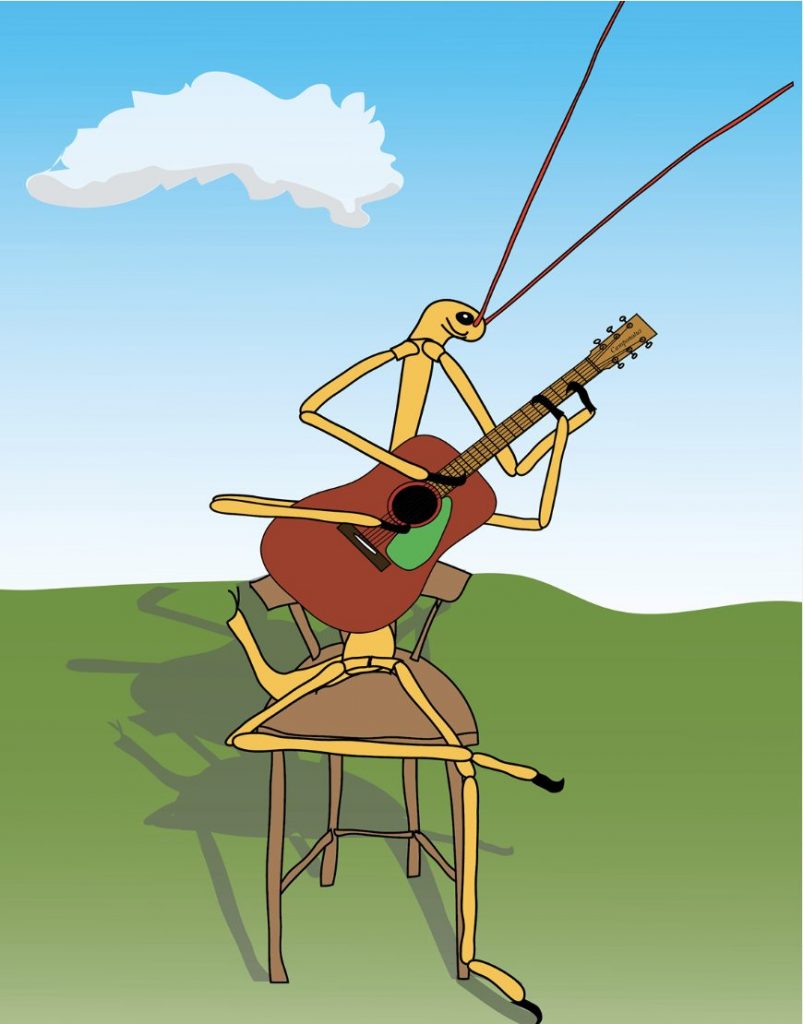
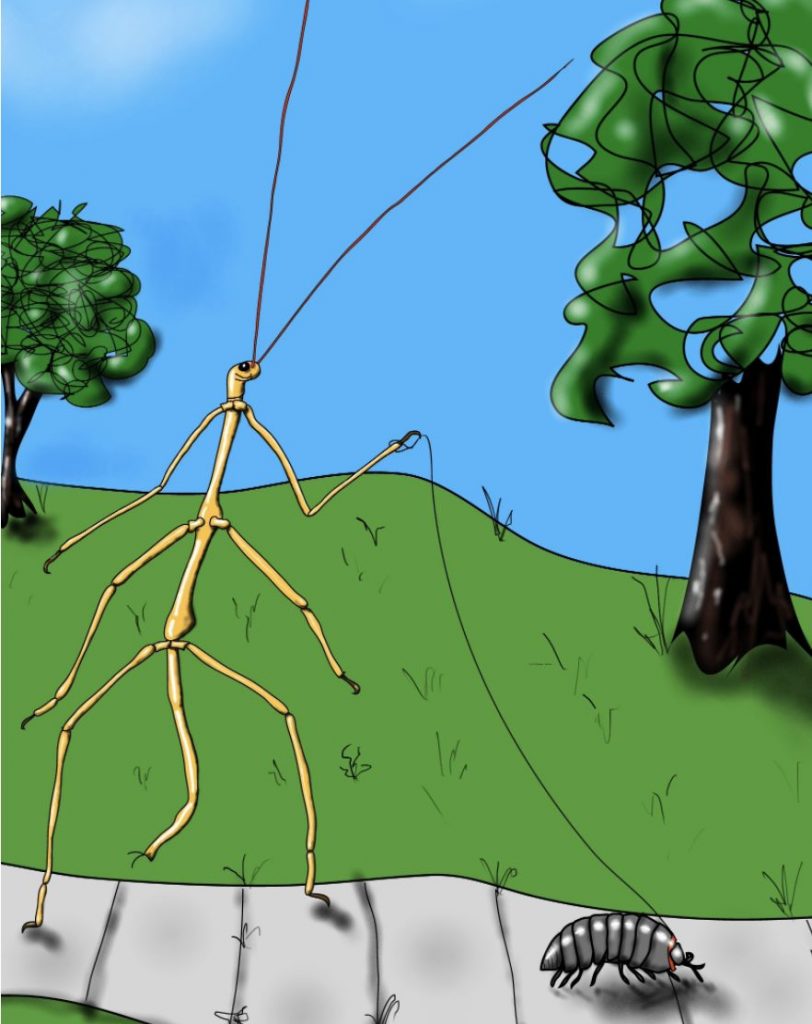
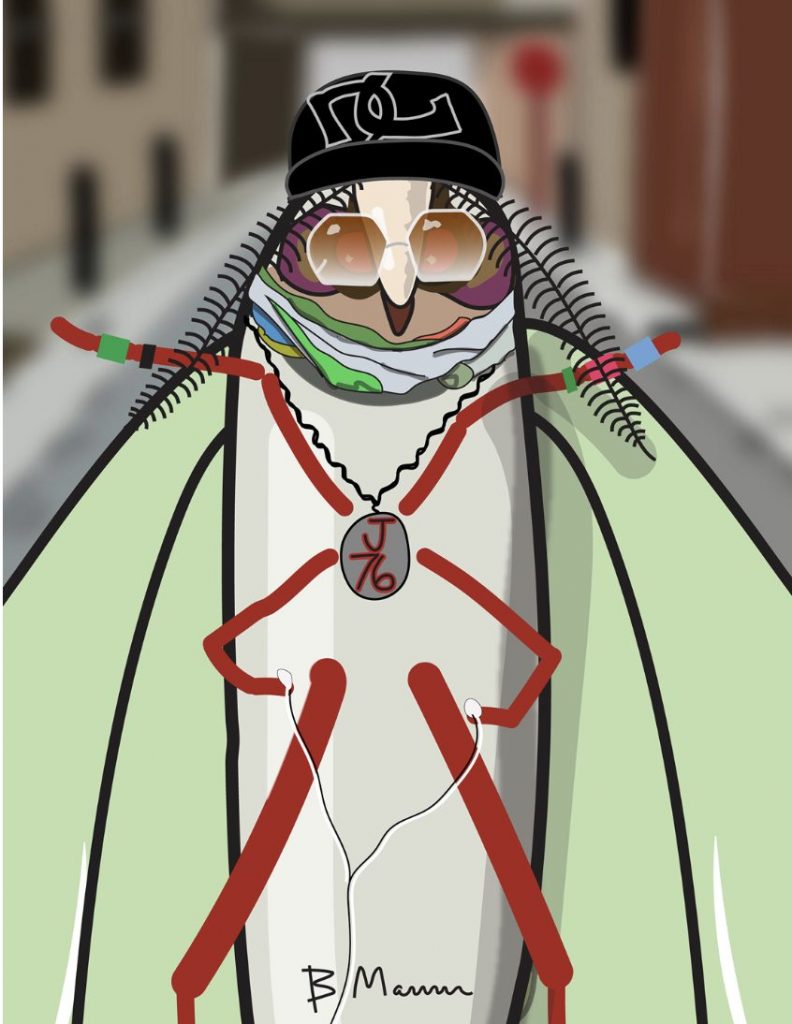
Artist in Focus: Brad Maurer

Brad Maurer describes getting an engineering degree as “taking a bad turn in life.”

That’s because Brad is, at heart, an illustrator and cartoonist who studied art before breaking bad with an engineering career.

Now retired, he has happily returned to first love, creating art full-time. But Brad doesn’t dream that his work will hang in the great salons of Europe. Instead, he dreams of bugs—and sometimes those bugs say things and act in ways that only can be described as “human.”

On this page, we feature some of this Harrisburg resident’s delightful, whimsical illustrations. We hope they lighten your day, as they did ours. If you’d like to see more of the artist’s work, or contact him, visit his website at www.thecercus.com.


Support quality local journalism. Become a Friend of TheBurg!

 

Continue Reading

More Plants, Please: Thoughts, advice and tales from an accidental “Plant Lady”

Like a vining philodendron, my path to becoming a “Plant Lady” was long and sometimes twisting.

My mother has a certifiable green thumb. Our home always had plants of one kind or another. I mostly ignored them, occasionally to her chagrin. Even today, she boasts one of the largest crotons I’ve seen in real life (she used it as a makeshift Christmas tree last year!), and she has managed to not only keep alive the key lime tree I gifted her some years ago, but she has produced fruit from it.

When I moved into Midtown Harrisburg in the early 2000s just after college, my mom showed up with three plants—a golden pothos, a heartleaf philodendron and an umbrella (or Schefflera) tree.

Though I didn’t know much about plants (I rejected most of my mother’s hobbies as a child only to go all-in as an older adult. See also: gardening, cooking), these were seemingly simple enough to keep alive.

All three made the move to my second apartment, about five years later, where the umbrella plant made its demise after my roommate’s cat used it as a litterbox.

Fast-forward another four or so years, we moved to our current home, and the pothos and philodendron came along, albeit as afterthoughts. The philodendron was placed on a high shelf and promptly forgotten about. RIP.

However, the golden pothos thrived, even when my manner of care was, “occasionally toss in the remnants of last night’s water glass as you pass by.”

That golden pothos is now more than 20 years old and has fostered many offspring, as they are notoriously easy to propagate—even for a novice.

Somewhere along the way, as the transition to embodying my mother continued, I accumulated a few more houseplants here and there. Mom was always good for a plant birthday gift—like a colorful croton, my beloved zebra plant (which I’m propagating for my sister’s birthday this year), and random succulents. This year, she replaced my Schefflera tree, which I’m thrilled to have back a decade-plus later.

I started buying them for myself, too. First, it was just picking up something interesting during our annual garden-get at Ashcombe. Then, I discovered Hilton Carter, a now three-time plant book author, and his fondness for the fiddle leaf fig. I wanted one, too. I now have three.

Today, I have somewhere around 50 plants, give or take, depending on who’s cooperating. I’ve saved plants from the brink, but I’ve also lost many to pests, root rot and just plain neglect.

Do not let plant death dissuade you from owning a houseplant or 10. Every plant parent has killed their fair share of plants.


 Benefits

Experts extoll the virtues of plant ownership. Join a plant-focused Facebook group, and you’ll read inspiring tales of lives transformed, perhaps not solely by simply owning and caring for a plant, but its role as a purposeful and rewarding hobby.

Last year around this time, my anxiety was sky-high so I took a day “off,” disconnected, and repotted my plants. It was both relaxing and productive. Much like working in my outdoor garden, houseplant-tending forces me to take a break and rewards me for the time with new growth and cuttings I can share with friends.


Houseplant care

At its base, caring for houseplants, like any plant, can be simple. Consider light, water and food. It helps to know what kind of plant you have, so ask (too often the tag at the store simply says “foliage”—not helpful), or snap a photo and upload to Google or any of the many plant apps that now exist.

Plants need light and water most, but you have to figure out how much and how often. Overwatering tends to be more problematic than underwatering, and thirsty plants will give you notice. They can be dramatic that way. Only use pots with a drainage hole, or drill your own. Most plants want a decent amount of light, but direct light can also burn leaves. Sheer curtains are a friend.

Misting helps tropical houseplants feel more at home. Group them together to increase humidity and temperature. Have succulents? They prefer dry air, bright light, and let them get very dry between watering. When it’s time (leaves will often pucker slightly), give them a nice drink, then let them drain. Bottom watering (putting the pot into a tray of water and letting the roots suck up what they need) is also a convenient way to make sure these get all the water they need—and not too much. Just be sure not to leave them in the tray for longer than 30 minutes or so.

Houseplants are prone to pests, unfortunately. I personally find fungus gnats to be the devil. Neem oil, sticky traps and Katchy, a little indoor-safe infrared fan/zapper, can work together to eliminate them.

Be careful of potting soil—let it dry out for a few days before using (some people bake it in the oven, but I am not qualified to endorse that!).


 Resources

Thanks to the upward trend in houseplants over the last few years, there are endless online resources, too. Shop any number of online plant shops, and you can join an email list or read blog posts about individual plant care, shop tools and more.

There also are countless online communities, like Facebook groups, dedicated to plant parenthood, or specific types of plants, like Monsteras (also known as the split-leaf philodendron). A friend of mine is in a “rare plant” group, where members often sell off cuttings of hard-to-find exotic plants for hundreds of dollars.


Where to Buy

I’ve purchased plants from Amazon, from Aldi, and a friend gifted me a “houseplant of the month” subscription, which ensures I am always flush with green plants. You can find houseplants nearly everywhere these days, including warehouse clubs, big box home improvement stores, grocery stores and hardware stores.

The best places to buy, however, are local, where the on-site plant experts can share their knowledge and recommendations. I do most of my plant shopping from Ashcombe Farm & Greenhouses in Mechanicsburg, Highland Gardens in Camp Hill, Floral Bouquet at the Broad Street Market in Harrisburg and Midtown Harrisburg pop-up shop, The Vintage Vine HBG.

Support quality local journalism. Become a Friend of TheBurg!

Continue Reading

Dreams Don’t Wait: Despite a year of the pandemic, many small businesses chose to open up shop

For Shawn Durborow-Bowersox, opening a business this past year wasn’t all sunshine and roses—even if it was a flower shop he was opening.

Paper Moon Flowers, Durborow-Bowersox’s flower and décor shop in Midtown Harrisburg, was set to open in March 2020. He had the shop decked out for Easter with coolers stuffed with brightly colored fresh flowers for the holiday.

Little did he know he’d have to keep his doors shut as the pandemic grew and state shutdowns began.

Not long after all the Easter décor went up in the shop, it all came down. Durborow-Bowersox estimated that he lost at least $2,000 worth of flowers.

But he bounced back, again filling the shop with fresh flowers and decorating his huge storefront windows with flowers, plants and giant papier mâché mushrooms straight out of a fairy tale. Ready for summer, Paper Moon Flowers’ doors were finally open in June.

The commonly told story of small businesses during the pandemic has included reduced foot traffic, financial loss and even permanent closures. It’s a true story, one that Harrisburg has seen play out for itself. But there’s another story in the capital city—one where many new small businesses have opened despite the pandemic.

Paper Moon Flowers was one of those businesses, and Durborow-Bowersox had to navigate each unique challenge the pandemic brought, since day one, literally.

“I remember the first day. I sat there and nothing happened,” he recalled. “I thought, ‘Is this what the rest of my life will be like?’”

But by the next month, more and more people came in. He started hearing from customers who wanted to shop small and shop local, a movement that took hold nationally, as cities encouraged customers to support struggling local businesses.

Through Christmas and Valentine’s Day this year, Durborow-Bowersox said Paper Moon Flowers was doing great.

“I feel like I’m in a good place now heading into this Easter,” he said.


Different Story

According to Jamal Jones, director of business development for Harrisburg, there are a significant number of new businesses that opened in the city during 2020.

In 2018, 501 businesses applied for licenses and, in 2019, 520 did. Last year, there were 537, he said.

These numbers include existing businesses that were required to renew their business licenses, he said. Additionally, he noted that there may have been some businesses that weren’t licensed and completed the paperwork in order to become eligible for COVID relief grants.

But overall, Jones said there has been an increase in new businesses. From conversations he’s had with business owners, he believes that some are opening because they’ve had more free time during the pandemic to pursue a business idea. Others may be opening out of necessity, due to a job loss.

During a year when the story has been about businesses closing, many, like Paper Moon, were actually opening.

About a month after Paper Moon Flowers opened, another business opened in Midtown, but with a different first day experience.

At House of Vegans restaurant, a line formed down the block on opening day. People had caught word of the unique vegan soul food joint and showed up to support owners Stefan Hawkins and Laquana Barber, who were already known in the community for cooking for neighbors out of their house.

Hawkins said that COVID wasn’t much of a concern for him when he opened. He wasn’t seeing an end date in sight for the pandemic, and he wasn’t going to put the opportunity on hold. Plus, he had already signed the lease.

For the first few months, business was great—so good that Hawkins decided to lease another shop across the street and begin planning for a second business—Good Brotha’s Book Café.

But as the winter months rolled in, and Gov. Tom Wolf enacted a second shutdown, business started to freeze up.

“I didn’t think the hype was going to end, and that was my problem,” Hawkins said. “Eventually, people just weren’t as excited as they were before about vegan soul food.”

House of Vegans ended up closing in February, becoming another fatality during COVID.

“I stretched myself too thin,” Hawkins said.

He hopes to re-open House of Vegans in the future, but for now, he can focus all of his efforts on the success of Good Brotha’s, a café focused on promoting African American literature and art. So far, business is going well.

“It’s been great,” he said. “People see the vision and have been supportive.”


New Beginnings

According to Jones, businesses that are more pandemic-friendly, ones with online sales or delivery services, have seen more demand during COVID and have fared better. This includes small restaurants that rely on takeout.

This is exactly what Callie Alvanitakis decided to do with her new café, Deco Grab & Go.

“I saw restaurants closing around me,” she said. “That created a space for me to focus on COVID-safe dining.”

Deco Grab & Go, located in downtown Harrisburg, caters to those looking to grab lunch or one of Alvanitakis’ popular “cinnie buns” and continue on their way.

The restaurateur had 20 years of experience working at Harrisburg restaurants before opening Deco, so she knew what she was getting herself into. Alvanitakis tailored her business plan around a growing trend she saw that favored fast, casual dining, which fit perfectly within COVID restrictions and the small storefront she was in.

Alvanitakis is an optimist. She tries to see the silver lining in situations, but balance it with reality.

“My mother taught me to always hope for the best and prepare for the worst,” she said.

So far, business has been good, not booming by any means, but it’s what she expected.

“I obviously didn’t start this business to get rich,” Alvanitakis said. “I’m pretty adaptable. I think that’s why I will continue to succeed.”

Paper Moon Flowers is located at 916 N. 3rd St., Harrisburg. For more information, visit their Facebook page.

Good Brotha’s Book Café is located at 1419 N. 3rd St., Harrisburg. For more information, visit their Facebook page.

Deco Grab & Go is located at 240 N. 3rd St., Harrisburg. For more information, visit their Facebook page.

Support quality local journalism. Become a Friend of TheBurg!


Continue Reading

Home Is Where Her Heart Is: Lillie Williams helps Harrisburg-area residents with a safe place to stay

In the aftermath of Hurricane Maria, which tore through Puerto Rico in 2017, Lillie Williams met a family who had lost everything to the storm. Social security cards, birth certificates, anything important was gone.

When the family made it to Harrisburg, Williams was working in property management. She was tasked with getting them an interpreter and helping them find shelter.

“Seeing the smile on their faces just to have a home again, that was a reward, to me,” Williams said. “It made me feel like I was in the right place at the right time.”

For over 20 years, Williams has dedicated her career to helping Harrisburg-area residents feel at home. It’s her passion, because she was once in the shoes of many of her clients.

Williams works as the interim director of the city’s Department of Building and Housing Development and is also the project director of asset management. In other words, she’s busy. Much of her time is spent working directly with the U.S. Department of Housing and Urban Development (HUD), budgeting and distributing city and federal funds to the community and local organizations.

In the past, she worked for a few property management and real estate investment groups, as well as the Cumberland County Housing Authority. Much of her career was spent managing affordable housing properties and assisting low-income clients.

“There were some families that didn’t have any hope,” she said. “They didn’t have hope that they could get a place or could afford it. They were overwhelmed.”


Passion Project

As a young girl, Williams grew up in Harrisburg’s Uptown and Allison Hill neighborhoods and moved just outside of the city as she got older. She remembers a time when her family lived in affordable housing.

When I asked her, over a Zoom call, if that experience had an impact on her career choice, it was like a light bulb went off.

“You know, I never thought about that until you just said that, but you’re right,” she said. “Wow, I guess you’re right because I’ve always been a helper. That (affordable housing) helped my mom, and that’s what I saw, so that’s what I did.”

It was like these two pieces of her life just clicked.

She went on to tell me that it wasn’t her only experience with affordable housing. At 18 years old, as a young, single mother, Williams moved out on her own. She remembers a time when she paid $23 in monthly rent.

“When I moved out, I was paying over $1,000 rent, and I bought my own home,” she said. “I set goals for myself, and anybody can do it.”

Williams’ story helps her relate to many of the people she now serves in her role with the city. She said that 70% of Harrisburg residents are low-to-moderate income, the population that DBHD generally serves.

In addition to working with HUD and providing financial help to residents, Williams’ team also oversees the “Lead Safe” abatement program and Housing Rehabilitation Program.

“This department is very important, and I’m very proud of it,” she said. “We try to help the community as much as possible.”

According to Dennise Hill, deputy director of DBHD, Williams leads by example.

Hill is Williams’ right-hand-woman. Their offices are connected by a door that often remains open, so they can talk about work or even chat about their kids. Over the few months Hill has worked for the city, the pair has become friends, she said.

“It’s amazing—we complement each other really well,” she said.

Like Williams, Hill’s passion is housing. Growing up in Steelton, her parents always welcomed into their home kids who needed a place to stay. Her parents’ values stuck with her and shaped what would become her life’s work.

Before coming to the city, Hill worked in a women’s shelter—a job she loved. She was nervous about switching careers, but working with Williams and the team has affirmed her decision.


More Work to Do

The 11-person DBHD team is more like a family than co-workers, Hill explained. Some, like Hill, are newer adoptees; others are longtime members.

During the pandemic, they’ve worked hard, pivoting to focus on distributing federal CARES Act funding to renters, food pantries and shelters, among others.

Williams has been busier than ever.

With a national and local crisis of people struggling to pay rent during the pandemic, Harrisburg’s rental relief program has been one of Williams’ main focuses. For months now, she has gone through hundreds of applications, distributing money to tenants in need. By March, about 100 households had received money. She estimated that, by the time the total of $500,000 is used up, around 200 families will benefit.

It can be stressful and includes a lot of guidelines and paperwork, she said, but she’s happy to do it.

“This is so important, and it affects so many people’s lives,” she said.

Williams credited her team, saying they’ve handled this “to a tee.”

In December, COVID-19 hit the team hard, she said. Four staff had family members who died from the virus. Everyone else had to step up, and Williams did what she always did—lead by example.

“There’s no task she wasn’t willing to help with,” Hill said. “She was consistently checking in on everyone. Keeping us in a good place mentally was important.”

Even with all the work the pandemic has put in Williams’ lap, she still takes time to pause, greet Hill in the morning, and ask her about her daughter.

During our Zoom call, I could see the many files pinned to Williams’ corkboard in the background of her office. I heard a few pings from her computer, email notifications, as we talked. I knew she probably had a hundred things to do that day, but she paused to talk and laugh with me.

As much as Williams is doing now, she said she still has a lot to do for Harrisburg.

“I see myself being able to help more people,” she said. “From where I came from to where I am now, I’m very proud of myself, and I still have more work to do.”

For more information about the Harrisburg Department of Building and Housing Development, visit www.harrisburgpa.gov/office-of-building-housing.

Support quality local journalism. Become a Friend of TheBurg!

 

Continue Reading

Turning the Page: Harrisburg Symphony Orchestra notes 90th birthday, sets optimistic tone for future

The original Harrisburg Symphony Orchestra in 1931

On one of his first trips to Harrisburg, Andreas Oeste learned a lot about the community’s love of the arts by stepping inside Neato Burrito.

“I was clearly not from town, and they sort of asked what I was doing in town,” he recalled. “I said I was playing with the Harrisburg Symphony Orchestra (HSO), and they said, ‘Oh—we love the symphony.’”

Oeste, now 29, began playing oboe with the HSO at the age of 25.

As one of the youngest musicians within the 70-member orchestra, what are his thoughts on the sustainability of a career in the arts today?

It basically boils down to one thing—location, location. And the Harrisburg community, well beyond Neato Burrito, values the arts, Oeste said.

“I feel constantly supported by our regular and wonderful patrons,” he said.

Additionally, the HSO’s musicians are financially fortunate to call Harrisburg home, because many orchestras around the country haven’t issued pandemic paychecks.

“Most famously [New York’s] MET Orchestra musicians have not been paid at all, and yet here in Harrisburg, the HSO is still paying musicians,” Oeste said.


Striking a Chord

The HSO marked its 90th anniversary in late March. Like many pandemic milestones, the celebration was “different,” via a live-streamed, pre-recorded, socially distanced performance—the HSO’s seventh of 10 ticketed virtual performances comprising “A Season Like No Other” that opened in October.

Although virtual performances have been a hot ticket, “the largest single element of the HSO’s budget is not ticket sales, but development money,” said Steve MacDonald, HSO board president.

This fiscal year—a year when live performances have been impossible—the HSO raised 93% of its annual goal by January. That’s $200,000 ahead of the previous year’s financials.

He calls it a “great tribute” to development staff and patrons, “who mostly give modest amounts of money” toward the HSO’s annual $3 million budget. It tells him “this community wants us to stay intact and thrive.”

What is it about the HSO that strikes such a chord among its patrons?

“I can’t read or play music, but I love it,” said MacDonald. “It moves me deeply. I think it’s one of the greatest things human beings have created. It’s my honor and duty to support the HSO.”


Movements, Online

Not a pandemic day has gone by without phone calls from “patrons who are like family,” said Gloria Giambalvo, HSO marketing director.

“Daily, from March 2020—I kid you not—in some way, I’ve been on the phone with our patrons who miss us dearly, love us and are concerned,” Giambalvo said. “They want to make sure we’ll be back.”

Many of those calls are also calls for help—asking how to access online audio or video performances. It’s a process that almost always ends with what Giambalvo describes as “a gasp I wish I could bottle” as the sound of music begins.

Not only did the HSO retain a large percentage of its audience via online performances, but it’s expanded its reach—no small feat for an organization that embraces primarily gray-haired patrons who often admit they’re not computer-savvy.

“For us, and arts organizations across the world, taking this step into the digital world has always been on our to-do list,” Giambalvo said. “So, if I had to find a silver lining in the pandemic, this would be it.”

Online performances have allowed musicians’ friends and family, as well as music lovers around the globe, to discover the HSO.

“The creativity we applied to this season will take us forward into more normal seasons with enhanced offerings,” said Maestro Stuart Malina, HSO music director and conductor. “We intend to continue streaming some of our concerts.”

Still, musicians and audiences alike are anxious to get back to live performances at Harrisburg’s Forum.

“Streaming concerts is innately problematic because you’re no longer creating a one-time experience—that innately changes the nature of what it is,” Malina said. “That’s why live performance is the greatest way to experience music, because it’s a moment in time, and that makes it magical.”

And that is also his rebuttal to the age-old criticism that classical music is dead.

“Great works of art are forever,” Malina said. “Through live performance, you’re actually bringing a work of art to life anew.”

Another classic question: How do you cultivate new audiences?

Critics have noted “gray-haired audiences” since the 1930s and ‘40s, Malina said, yet they “miraculously” continue to regenerate. HSO audiences have remained consistent under Malina’s baton the past 20 years, and HSO youth orchestras and family ticket programs—called “Musical Chairs”—are strong.


Setting the Stage

The fate of the HSO’s live outdoor concerts—summer staples—as well as next fall’s season, have not yet been announced.

“My hope is that we’ll have a season in the Forum this October to May,” said Matthew Herren, HSO executive director. “A lot depends on the vaccine rollout … but I’m optimistically tentative.”

He said that the need for music has never been greater.

“On a good day, I think the arts seek to explain or answer the great questions,” Herren said. “Who do you know during this past year who has not sought comfort in a book, been online binge-watching? We need [the arts] now more than ever.”

Music may indeed hold the key to post-pandemic healing, depolarization and perspective, said Peter Sirotin, who’s played violin with the HSO since 1996.

“I think having the opportunity to unplug and connect to a different space mentally and emotionally… is going to become more important as a form of physical self-preservation and wellbeing,” said Sirotin. “Music has a role to play, particularly music without words.”

For more information on the Harrisburg Symphony Orchestra, visit www.harrisburgsymphony.org.

Support quality local journalism. Become a Friend of TheBurg!
 

Continue Reading

Good News: How a story printed in TheBurg produced the ripple effect of 50 gifts

What happens after our stories are published in TheBurg?

As writers, we don’t always know. I, for one, hope that readers are inspired, moved or changed in some way. And if readers take action as a result, that’s even better.

I like to imagine ripple effects in the wake of every story—in readers’ heads, hearts or actions. But nothing prepared me for the tsunami-like ripple effect from a recent story.

Quoting Larry Binda, editor of TheBurg: “We’ve heard about things happening as a result of stories in TheBurg, but never anything like this.” And that’s why he asked me to turn this ripple effect into the story you’re about to read.


New Friends, News Friends

So let’s start at the beginning by introducing my friend, Bill Blando. We met several years ago, appropriately enough, while I was covering a story for TheBurg, and we became friends instantly. You know how you meet someone and feel like you’ve known them your whole life?

Our friendship is forged on journalism, truth and the love of a good story. You see, Bill is a retired newspaperman who worked for the Patriot-News for 27 years—and before that, for various mid-Atlantic newspapers, including several near his native New York City. On the night we met, we must have spent at least an hour talking about the news biz. I remember returning home from my assignment and telling my husband all about my new friend Bill—and very little about the actual story I was writing.

I must have passed muster because in a month, when that story published, Bill emailed, “You wrote one hell of a story,” and my heart about burst. To have this man’s approval, as kind of my own personal dean of all things journalism, meant the world.

Ever since, we’ve gathered over cups of coffee about once a month. And more than once, the baristas have asked—with a certain amount of jealousy, “Is that dear man your grandfather?” After all, Bill is 86 years young.

We mostly swap stories—our takes on the latest news. But some of the best stories are his life stories, and those, I treasure. His perspectives give me perspective—on issues such as civil rights, which we recently noted, morphed into Black Lives Matter.

“I thought 1968 was every bit as volatile as 2016, but I think the violence we’re experiencing now will surpass it,” Bill told me recently, as he reflected on his three-year news stint in another capital city—Albany, N.Y.

He’s my link to a bygone era of journalism that overlapped with my career. Similarly, I might be his connection to the current and future news industry.

But as Bill might say, “Let’s get to the story at hand.”


50 Gifts

Last fall, I wrote one of the most challenging stories ever—because it was personal, first-person. “Inspired Miles: Reflections on running 50 races for 50 causes while I was 50,” was published in the November issue of TheBurg.

One of the first readers I heard from was Bill—via a package that arrived in the mail. He had, of course, known about my races and causes. But after reading my story, he wrote, “This old curmudgeon found himself choked up—that hasn’t happened in a long time.”

As I read on and saw what he enclosed, it was my turn to get choked up. This kind man had enclosed five checks, each for $50, and he proposed a project. He wanted me to make the checks out to the five charities most important to me, from my list of 50, and forward them on.

But that wasn’t all. Five at a time, he wanted to donate an additional $50 to all 50 of the charities for which I had run. I called him right away, incredulous, and asked if he was serious.

“Karen, I’m 86 years old—I don’t do anything these days unless I’m serious,” he replied.

To date, we’ve sent 20 of the 50 checks. I enclose a letter, explaining the ripple effect that produced Bill’s gift. And, sometimes, we hear back from recipients, like Susan Cann of Harrisburg’s Downtown Daily Bread, who emailed her appreciation for our “heartwarming” story and gift.

“I was thrilled that you gave the background of this gift and how it came it about—it brought a smile to my face,” said Cann, when I called her. “Our mission is possible—we’re able to have our programs to serve the homeless and hungry residents—because of donations.”

Downtown Daily Bread’s soup kitchen currently serves breakfast for 30 people and lunch for 70 every day, while their day shelter—amid COVID-19’s social distancing—serves 40 people, and the night shelter houses 25.

I think about the tiny role our bonus gift played in these life-changing programs. I don’t think we should ever underestimate the value of touching one person’s life.


The Power of One

And speaking of “one person,” this story wouldn’t be good journalism without explaining the real motive behind Bill’s charitable giving—his wife Betty.

“She’s my inspiration to help others,” Bill said simply.

Betty, who devoted much of her life to volunteer work, died of cancer in 2011. The Blandos were married for 47 years, and, in many ways, Betty is still by Bill’s side.

“I could have very easily become depressed or bitter—I started to go that way,” Bill said. “But I knew Betty would not have wanted that, so I decided to support good causes, especially cancer-related charities, in her memory.”

Good people give our lives purpose. Good stories create good memories. And good stories are the backbone of good journalism.

“Each and every story we write will almost assuredly be based on some extraordinary person,” Bill recently told me, dispensing his grandfatherly journalism wisdom. In this case, Bill, you are that extraordinary person.

And now, readers, as another newsman once said, you know the rest of the story.

You can read Karen Hendricks’ original story, “Inspired Miles: Reflections on running 50 miles for 50 causes while I was 50,” which prompted Bill Blando’s donations, in the November issue of TheBurg.

Support quality local journalism. Become a Friend of TheBurg!

Continue Reading

People, Get Ready: Our post-pandemic life lies ahead

Illustration by Rich Hauck.

Empty.

In last month’s column, I used that word to sum up my life during our year of COVID. More than any other, “empty” seemed an appropriate description to me.

I’d now like to look ahead, not back.

As I write this column, vaccinations are proceeding, case numbers continue to fall, and spring is in the air. I think that’s fair cause for optimism, don’t you?

I believe it’s time to begin considering our post-COVID lives in Harrisburg. Normalcy won’t return all at once, but I can sense the pandemic beginning to loosen its grip on our lives and our city.

First, let’s take a look at where we are. How did Harrisburg make it through this profoundly challenging time?

I would say—better than I expected. If, in March 2020, someone told me that the pandemic would last for over a year, I would have predicted profound disaster. In fact, when COVID arrived here, even the initial, two-week lockdown seemed like more than most businesses, schools, governments and people could handle.

Now, for some, the worst did happen. People got sick; some died. Small businesses lost money and closed. I don’t want to minimize the suffering wrought by this horrible scourge.

But, as I look around town now, the overall landscape doesn’t look too terrible. Are we scarred? Absolutely. But I think we’ve also shown remarkable resilience.

Most restaurants and small businesses adapted, survived and appear poised to bounce back strongly. Some even opened during the past year. The real estate market has proven to be remarkably robust.

I think, over the past year, we may even have learned a thing or two about this city and where it’s headed. Gazing into my crystal ball, I see a few things up ahead, trends that I expect may have legs over the long term.

First, Harrisburg’s future as a place for people to live, as opposed to just work, seems strong. A friend recently forwarded me a list of some 30 building projects in the city, most residential. There are small projects, medium-sized projects, large projects—most market-rate, some affordable. Many are in Midtown, but there are proposals for Uptown, downtown and Allison Hill, as well. Harrisburg has not experienced this kind of residential development in 100 years. Yes, it’s that historic. People seem to be choosing smaller cities over large ones, and charming, well-located Harrisburg appears to be benefitting.

In my opinion, the city should lean into this trend, making it as easy as possible to get quality residential projects off the ground, finally putting people back into a city that lost half its population since the 1950s. Hey, there are numerous large, empty lots downtown and Uptown just begging to be developed. Let’s put some nice apartment buildings on them.

This development, in turn, will spur the neighborhood shops that so many city residents seem to want, which brings me to my second thought. Small, independently owned business is where it’s at, and will continue to be, in Harrisburg.

Now, I’m not hating on large companies or chains. However, I believe in swimming with the tide. Sure, we can always hope that a Google or Apple or whatever finds religion and locates to, say, the old state hospital grounds. However, I find that unlikely, especially as many large companies are downsizing their offices. Instead of a single behemoth, we’re far more likely to see dozens of small businesses—shops, restaurants, start-ups—locate throughout the city, employing and serving the growing local population.

And, speaking of behemoths, I suspect that the commonwealth’s influence on Harrisburg will wane over time, which is my final post-pandemic thought.

For decades, government has been about the only growth industry in Harrisburg, but it’s been a mixed blessing. The Capitol Complex may be nestled in the middle of the city, but it’s an uneasy fit. Sometimes, Harrisburg feels like two opposing sides—commuters and residents—staring at each other from across the asphalt canyon of Forster Street.

Now, state workers have learned that they can do some of their jobs without the daily trudge across the Taylor Bridge. Perhaps that’s for the best. As an employer myself, I’m a fan of workplace flexibility. As long-term readers of this column may know, I’m also a big fan of rescaling the city to serve the people who want to be here, as opposed to a workforce that often does not—and behaves accordingly by segregating itself on its hill.

Having said that: the state will remain a huge presence in this city for a long time. So, it’s vital that these two governmental entities learn how to cooperate and collaborate for the long-term good of the shared capital city.

Over a year ago, when the pandemic horror began, I recall people saying, maybe a little tongue-in-cheek, “See you on the other side.” Finally, that “other” side may be in view. So, let’s take a moment to reflect and take stock of where we’ve been—then head like hell to where we’re going next.

Lawrance Binda is co-publisher and editor-in-chief of TheBurg.

Illustration by Rich Hauck.

Support quality local journalism. Become a Friend of TheBurg!
Continue Reading

How Does Your Urban Garden Grow?: You may not need to leave the city to get what you need

Allison Hill Farmer’s Market

Harrisburg’s suburbs have some excellent garden stores and greenhouses, places that certainly will be packed this month with people claiming their spring plants and supplies.

But what if you’re a city resident looking to fill your (often) small backyard with some greenery and color? You also have options—and you may not even need to strap yourself into your car for a trip across the river.

First stop: the Broad Street Market, which has several ways to slake your gardening thirst.

In the brick building, Mel and Barb Glick of Floral Bouquet and Peach Ridge Produce sell a wide range of herbs, fruits, vegetables and fresh-cut flowers. For nearly a decade, the Glicks have provided the city with locally sourced crops from their 40-acre farm in Perry County.

Barb Glick has especially enjoyed sharing advice with city-goers who do not have the space for large gardens but still have a passion for sustainable living. She says that gardens do not have to be in the ground—planters, window boxes and small yards can all grow beautiful and edible goods.

“Now is the time to pick up seeds at your local hardware store and decide what you want to plant and where you’d like to plant them,” Glick said.

Starting this month, Peach Ridge will sell herb plants such as rosemary, thyme, cilantro, parsley, chives, lavender and sage, as well as, tomatoes, lettuce, cabbage and pepper plants.

Growing a garden does not need to be a complicated endeavor. Herbs provide easy, flavorful additions to any meal and can help lower regular grocery bills. Simply buying a small pot, picking a few herbs, and giving it daily attention can start you on the journey to sustainable living.

“In April, before the last spring frost [April 12], I plant peas, spinach, lettuces, radishes, carrots and my favorite, flowers,” Glick said. “After the frost, I plant tomatoes, cucumbers and peppers.”

In addition to perusing goods from several vendors inside the market, gardeners should pass through on a Saturday or two, when, on nice days, pop-up vendors often fill the courtyard with greenhouse blossoms.

A few blocks down 3rd Street, florist Shawn Durborow-Bowersox has set up several wooden stands outside of his new retail space, Paper Moon Flowers and Events. There, you can find a variety of plants for sale, perfect for a window box, container garden or small flower or shade garden.

Step inside to discover a number of decorative items for your garden, such as statuary, wind chimes and homemade birdhouses, all lovingly curated by the owner.

“In the city, it’s really all about courtyard gardening,” Durborow-Bowersox said. “You can get more real estate, so to speak, by using containers for your plants.”

Up on Derry Street, you’ll discover the Allison Hill Farmers Market, which returns for a second year thanks to sponsor and organizer Tri-County Community Action. There, amidst the farm-grown food for sale, you also may find items that you can grow yourself, as well as informative classes on growing and maintaining an urban garden.

Speaking of urban gardens, Green Urban Initiative is gearing up for another year of community gardening in Harrisburg. Those interested in one of their plots can find them on Facebook.

If you’re after garden supplies, Hornungs True Value is the city’s tried-and-true hardware store, carrying an array of gardening tools and seeds to get your project started.

“From soil and fertilizer to seeds, pots and gardening tools, we want to be a one-stop shop for our community,” said David Arnold, Hornungs store manager. “We even deliver locally for those who do not have the transportation or the ability.”

Hornungs is preparing for the summer months by filling their shelves with indoor and outdoor plants. Arnold shared that “their store, often times, has more of a variety and provides more products than the large retailers.”

Then, once you’ve gathered all your supplies, Barb Glick from the Broad Street Market has one final piece of advice for folks ready to earn their green thumbs.

“When prepping for your garden, remember, plant with a purpose,” she said. “Think about what your family eats on a regular basis and what will add value.”

The Broad Street Market is located at N. 3rd and Verbeke streets, Harrisburg. For more information, visit www.broadstreetmarket.org.

Paper Moon Flowers and Events is located at 916 N. 3rd St., Harrisburg. For more information, visit their Facebook page.

Hornung’s True Value is located at 223 N. 2nd St., Harrisburg.

For more information about Green Urban Initiative, visit their Facebook page.

For more information about the Allison Hill Farmers Market, visit www.cactricounty.org.

Support quality local journalism. Become a Friend of TheBurg!
 

Continue Reading