Artist in Focus: Sharnee Burnett

You may know Sharnee Burnett, aka “Artzbeat,” as part of the team that painted the now-iconic “Harrisburg” mural on the side of Midtown Cinema.

That was back in 2016—and a lot has happened since.

She transferred from HACC to the Pennsylvania College of Art and Design in Lancaster and just graduated with a BFA in fine art.

So, it’s the perfect time for us to showcase her work on this page.

Her artwork also has been displayed in the CORE gallery at PCAD for their Black History Month and Women’s History Month exhibitions. Upon graduating, she plans to use her painting skills in courtroom art, tattoos, galleries and mural arts.

We hope you enjoy this selection of her work as much as we enjoyed sharing it with you.

For more information and to see more of her art, visit www.artzbeat.net.

Support quality local journalism. Become a Friend of TheBurg!

Continue Reading

Behind the Murals: Volunteers keep Sprocket Mural Works painting, beautifying Harrisburg

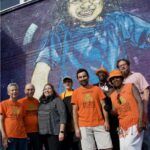
Volunteers paint a mural on Harrisburg’s lower river walk.

Gerry Regan is some kind of a super-volunteer.

If they gave out awards for volunteering, Gerry would probably get a lot of them. But it’s doubtful that he would accept them, plus, that would kind of defeat the whole giving-without-receiving principle of volunteering.

He listed off the Susquehanna Art Museum, the Central Pennsylvania Animal Alliance, Whitaker Center, Harrisburg Symphony Orchestra, and the list goes on.

Regan likes art, a lot. This shows in the many arts-centered organizations he chooses to work with.

When he saw murals popping up around Harrisburg some years ago, he knew he wanted to get involved with whoever was behind them. Regan found Sprocket Mural Works and instantly connected with their mission of beautifying the city. He dove into their work, helping wherever he could, cleaning up sticks and overgrown brush around mural walls, setting up scaffolding and priming walls.

“It’s all about helping people and making it easier on them,” Regan said.

According to Sprocket co-founder Megan Caruso, the organization relies on volunteers like Regan. While Sprocket pays artists for their work, the organization is 100% volunteer run.

It’s the larger-than-life, brightly colored paintings that you see when driving or walking through the city. Over the years, Sprocket has created over 40 of them across Harrisburg. This summer, they will add to that number as part of their 2021 Mural Festival, which will include new paintings around the city, a pocket park in Midtown and painted planter boxes in Allison Hill.

But what you don’t see when you look at the artwork is what’s underneath, the hours that Sprocket board members and over 450 volunteers worked to prepare each artist’s canvas.

“Sprocket is more work than any small group of people can accomplish,” Caruso said. “We wouldn’t exist if we didn’t have people volunteering their time.”


Prime Time

Zac Monnier has volunteered with Sprocket since their first mural festival in 2017. That year, artists painted 13 murals around the city. Monnier wasn’t involved in any of the art itself, but had his hands on a lot of the behind-the-scenes projects.

He explained the process of priming a wall, which he’s done multiple times for the organization. This isn’t your typical painting experience. It involves at least a 20-foot paint roller, which gets dipped in primer and flung up to the wall. If you’re doing it right, you may wake up with a stiff neck the next morning, like Monnier has.

But that hasn’t bothered the volunteers, many of which described priming as a fun experience. Some said it’s their favorite part.

“Our volunteers aren’t afraid to get down and dirty,” said Meghan Weaver, Sprocket’s volunteer coordinator.

Regan’s known for showing up with his pickup truck to haul sticks and garbage. He’ll climb up on scaffolding, which some people are afraid to do, he said. He will even show up on days when artists are painting, to grab them a soda or watch their supplies while they take a bathroom break.

It’s not glamorous work. Volunteers don’t get their signatures on the walls they prime, but that doesn’t matter to them.

“Even though I didn’t do the artwork, I was behind the scenes,” Regan said. “I get to meet people, and I have fun doing it.”

Community organizations have stepped up, as well, Caruso said. Recycle Bicycle hosted a mural bike tour that drew 150 people. The Harrisburg Area Road Runners Club held a similar event on feet instead of wheels. Midtown Cinema set up a Q&A with Sprocket. Recently, people have donated plants for an upcoming pocket park project that is part of the 2021 Mural Festival.

“It’s so helpful to have people volunteer their skills and knowledge and time,” Caruso said.


 Paint & Pride

Sprocket’s mission is to “increase community pride and civic engagement in Harrisburg through creative action.”

That’s what Caruso has hoped for since starting the arts organization in 2014. Weaver feels the same way. She’s found a community of like-minded artists who are passionate about making the community a better place.

“I get to contribute to the city that I love,” she said. “I love the idea of public art.”

Volunteer Hannah Witwer moved to Harrisburg from Philadelphia in 2016. In Philly, there was a huge arts scene—it was one of her favorite things about the city. When she moved to Harrisburg, she was excited to see murals in her new hometown, as well.

“I love art, but I never considered myself artistic,” she said. “While I couldn’t help paint a beautiful picture, I could help prime a wall.”

Witwer spent hours flinging her giant paint roller onto the wall on the side of the Capital Joe Coffee shop on Forster Street during the 2019 Mural Festival. Eventually, her work was covered with a swirling, galactic painting of a young astronaut by artist Arthur Haywood. Still, when Witwer drives by the mural, she points it out to her friends.

“I love telling people I helped prime that wall,” she said. “Being a part of that kind of helped me feel a part of the city.”

That rang true for Regan, Monnier and Weaver, too. They all talked about how they felt like their work meant something to the community, like it was more than just murals, but creating city pride. That’s all Caruso could ask for.

“It’s humbling,” she said. “I feel like we’ve found our people, and I feel grateful for that.”

To volunteer with Sprocket Mural Works or to learn more about what they do, visit www.sprocketmuralworks.com.  

Support quality local journalism. Become a Friend of TheBurg!


Continue Reading

Staging a Comeback: Gamut’s “Shakespeare in the Park” returns with the classic “Hamlet”

To perform or not to perform?

That was the question Gamut Theatre staff asked following a long hibernation due to the COVID-19 pandemic. I don’t think Hamlet ever got a straight answer to his question, but Gamut is giving an emphatic “yes” to performing Shakespeare in the Park this summer.

For the event’s 27th year, Gamut will treat Harrisburg with free performances of Shakespeare’s royal soap-opera tragedy “Hamlet,” promising a show even more dramatic than what England’s royal family can conjure today.

“This is an opportunity to see a professional Shakespeare play in one of Harrisburg’s most beautiful outdoor venues,” said Melissa Nicholson, Gamut’s executive director.

Technical Director Ross Carmichael feels there’s something special about performing Shakespeare under the stars, among all the natural elements.

“So many of Shakespeare’s plays involve nature in some way,” he said. “Being able to reference outdoor elements, while out in nature under an open sky, creates a different feeling than you will ever get inside. I think the productions there really elevate how nice it is in Reservoir Park.”

Gamut’s interpretation of “Hamlet” won’t feature the traditional Danish prince as you may remember him. Sure, Hamlet will be characteristically broody and cursed, but, according to Gamut’s Founding Artistic Director Clark Nicholson, the backdrop will be retro-contemporary, corporate and even a little Gothic. That’s as much of a sneak-peek that he would offer without the slippery slope of spoilers.

On the tail end of this pandemic, it’s fitting that we watch something darkly funny, a little gritty, peppered with puns and dirty jokes.

“The modern rendition of this play falls in line with Gamut Theatre’s mission to tell classic stories in new and exciting ways,” Carmichael said.

Pre-COVID, “Hamlet” was Gamut’s educational engagement production for its 2020 school tour, featuring 10 actors and a full set. The show for 2021 is scaled back to six actors and uses the backdrop from the school shows, as well as many of the same actors who were ready to perform before the pandemic.

“We had to find something with a small cast for COVID safety and minimal expenses coming out of financial recovery, so [‘Hamlet’] was a good fit for the company,” Melissa Nicholson said.

With its spacious outdoor venue and gorgeous scenery at the highest point in Harrisburg, Levitt Pavilion in Reservoir Park supports Shakespeare’s assertion that all the world’s a stage.

“We’re taking back the band shell—reviving it, reinvigorating it,” Clark Nicholson said. “It’s an excellent place to gather communities together.”

Carmichael and crew will transform the look and feel of the venue’s iconic band shell with a blend of the established gravitas of an old estate castle with a more modern, present-day setting.

“The band shell itself is such a marvel because it’s been around as long as it has, and it has amazing amplification vocally,” Carmichael said. “Considering that the audience is 50 to 100 yards away, they are still able to experience the play.”

Clark Nicholson assures us that the cast and crew will have the “all-clear” on vaccinations by the time the proverbial curtain rises. Depending on the weather, 2,500 to 5,000 people attend every year, with lawn chairs, blankets and flashlights. Gamut asks its audience members to observe COVID protocols and sit at least six feet from other groups.

If you can, stick around afterwards for the post-show interactive conversations with the audience.

“It’s always so rewarding to hear how people perceived the show, whether we intended [certain things] or not,” Carmichael said. “Everyone’s life experiences—getting all those viewpoints—is what drives me.”

“Hamlet” runs June 4 to 19, Wednesdays through Saturdays, at 7:30 p.m., weather permitting, at the band shell in Reservoir Park in Harrisburg. The event is free, but donations are appreciated. Gamut Theatre also is collecting monetary donations and canned goods for Bethesda Mission. The play is sponsored by Dauphin County and the Foundation for Enhancing Communities. For more information, visit www.gamuttheatre.org/fsip or call 717-238-4111.

Support quality local journalism. Become a Friend of TheBurg!

Continue Reading

Peak Purpose: Harrisburg-area woman nears a rare achievement—mounting the “Seven Summits”

Julie McKelvey climbing Lobuche Peak in Nepal

Fewer than 100 women have climbed the Seven Summits, the highest peaks in each of the seven continents. Julie McKelvey, of Lemoyne, is attempting to count herself among this elite group.

McKelvey, who described herself as “not a super-athletic kid,” began climbing at the invitation of her father, a long-time extreme sports enthusiast.

“He said, ‘I think I have one more in me, I want you to do it with me,’” said McKelvey, recalling that day in 2016.

So, she and her son, Jacob, then 12 years old, traveled to Japan to climb the 12,388-foot Mount Fuji.

Even though they trained little, and had the wrong gear, and the “wrong everything,” the trip was her gateway into more climbing.

“So, we go outside, and I see the sunrise above the clouds for the first time with Jacob, and I fell apart,” McKelvey said. “I had this spiritual experience around it. I was like, ‘I’m totally disconnected from all the other crazy pieces of my life and totally present in the moment.’”

Wanting to share this mountaintop experience, she convinced some friends to climb Mount Kilimanjaro with her. They had a great experience on the Tanzanian peak, though her friends were “once and done,” said McKelvey.

Then one of her guides asked if she had thought about climbing The Seven Summits.  McKelvey thought, “The what?”

She researched and connected with a company that specialized in helping adventurers climb these formidable peaks, then headed to Mount Elbrus in Russia.

“That was really the trip that changed everything,” McKelvey said.

Huge Sacrifice

Such a commitment to climbing takes time.

McKelvey trains six days a week, 25 to 30 hours total. This includes the drive time to peaks like Hawk Mountain, about an hour northeast of Harrisburg, pack prep, stretching before and after, and trekking multiple times up and down the mountain with a 60-pound pack. Closer to home, there’s strength training in Dillsburg with Kevin Keefer Personal Training.

The hardest part?

“It’s the mental pace to have to keep going at this pace with the training,” said McKelvey. “There are just days when I don’t want to do it.”

Part of the mental challenge is leaving behind her husband Bobby and sons, Jacob and Jackson.

“It’s a huge sacrifice for them,” she said. “I am away a lot, and they worry about me, as they should.”

Part of that worry comes from her experience of altitude sickness on Aconcagua in South America.

Hit with blurred vision and dizziness, McKelvey was roped to a porter, received oxygen, and a shot of Dexamethasone. After repeatedly falling, she reminded the porter that she had evacuation insurance, which covers a helicopter rescue. He informed her that helicopters can’t fly at that altitude and said to her, “Get your ass up and walk.” And she did.

The dangers and challenges of her remaining four climbs aren’t far from her mind, but she knows that proper planning and training go a long way. She said that she finds the best climbing company she can to guide her. Often, climbers get into trouble when they don’t take a guide or try to go “on the cheap,” she said.

For her June trip to Denali in Alaska, McKelvey had to be interviewed and accepted by the climbing company. Denali is considered by many to be the most difficult of The Seven Summits, mostly because it’s self-supporting. This means that climbers have to carry their own heavy pack and pull a sled with 60 pounds of food and gear. Unlike supported climbs, climbers must pitch their own tents, boil snow for water, and make their own food.

Even with all the work, summiting is never guaranteed. Climbers fail to summit Denali more than half the time. The weather can change on a dime and “25% of the time, you can’t get to the summit because of the weather. And it doesn’t matter how fit you are, just the mountain says ‘no,’” McKelvey said.

She doesn’t dismiss the idea that she might not reach her goal.

“I’ll be disappointed, right,” she said. “But it’s not going to crush me.”

Summit for Sound

This same driven attitude has propelled McKelvey as the owner and CEO of two Miracle Ear franchises with 34 offices. Though her climbing experiences, she said, have mellowed her.

“Every time I come home from one of these, I’ve changed a little bit more, and I don’t sweat the small stuff and the things that used to get to me,” she said. “It’s just not a big deal.”

Climbing has also created Summit for Sound, a foundation that provides hearing aids to adults and children who otherwise couldn’t afford them. All money raised through the climbs goes to the foundation. The Kilimanjaro climb raised $50,000.

“My whole idea is anybody that comes in [to Miracle Ear], we need to be able to help them, whether they can afford it or not,” McKelvey said.

McKelvey will be especially busy in the next six months as she plans to climb three peaks: Denali in Alaska, Carstensz Pyramid in Indonesia, and Mount Vinson in Antarctica.  She will wait a year and recover, as well as enjoy her eldest son’s senior year, before attempting the tallest peak in the world, Mount Everest.

Joining the historic ranks of the women who’ve conquered The Seven Summits or not, McKelvey will continue her demanding life with her business and appreciate her family. She’ll follow the motto that keeps her focused—“Be where your feet are.”

To learn more about Summit for Sound, visit www.pledge.giftofsound.org/summitforsounddenali.

Support quality local journalism. Become a Friend of TheBurg!

Continue Reading

History of Hospitality: Jean Bonnet Tavern has greeted visitors since Colonial times

Samuel Johnson, author and writer of “A Dictionary of the English Language,” once said, “There is nothing, which has been contrived by man, by which so much happiness is produced as by a good tavern.”

Today’s taverns may still be sites of much merriment, but few can lay claim to being an incubator of insurrection and fewer still are standing to tell the tale, which is what makes the Jean Bonnet Tavern in Bedford so special. If you’re a history lover who is aching to take a road trip, you can visit the Jean Bonnet on less than a tank of gas.

Whiskey Rebels

Built in the 1760s and situated along the Lincoln Highway, the historic structure of cut fieldstone welcomes guests with a marker detailing its rich history. The earliest, official property records show a transfer of 690 acres from the William Penn family to a land speculator by the name of Hans Ireland. In 1762, Ireland transferred the property to a trader named Robert Callender. Callender, a Carlisle native, served as a scout for Gen. George Washington.

The structure was a welcome respite for settlers who made their way west in wooden wagons. Early on, it served as a French fort and trading post. In 1779, Jean Bonnet and his wife Dorothy purchased the property, which was issued a license as a public house shortly thereafter.

After the Revolutionary War, a notable uprising occurred that would cement the tavern’s place in history.

An attempt by the new federal government to impose an excise tax on whiskey was met with resistance. The tax was part of Alexander Hamilton’s plan to help pay down the large national debt caused by the Revolutionary War. The move to implement the first tax on a domestic product enraged farmers, who often distilled their surplus grain and corn into whiskey, which they then used for bartering purposes.

To show their displeasure, a disgruntled group congregated at the tavern and hoisted a “liberty pole,” which was known as a common form of protest during Colonial days. George Washington, in an effort to quell the rebellion, gathered together a group of militiamen. He set up his headquarters at the nearby David Espy House (located in modern-day downtown Bedford), and his troops camped outside of town at the Jean Bonnet on their way to Pittsburgh in 1794.

Since then, the property has changed hands many times. Although records show that it’s most often been maintained as a tavern and inn, it’s also on record as having been used as a private residence. In 1979, the structure was added to the National Register of Historic Places.


Candles & Ghosts

Many of the features you see today, from the tavern’s 2-foot-thick stone walls to its impressive fireplaces and chestnut beams, were constructed while Callender owned the property. Brandon Callihan, a Bedford native and Culinary Institute of America graduate, worked at the Jean Bonnet before assuming ownership in June 2017.

Little has changed in recent years, and that’s by design, according to Callihan. Guests still dine by candlelight in a Colonial atmosphere where the food is served on pewter plates and homemade quilts adorn the walls. During the winter, roaring fires are lit in each dining area to keep guests warm and cozy as they dine.

Customers who prefer a more casual atmosphere can climb the steps to the spacious dining area on the second floor, which features an oversized bar, an additional fireplace and roomy wooden booths.

Craig Nye of Mechanicsburg has stopped a few times for lunch at the tavern while visiting the area and has enjoyed sandwiches, burgers, onion rings and their popular onion soup.

“The food is good, and the candles on each table are a nice touch,” he said.

Nye said that he found the history of the tavern and its role in the Whiskey Rebellion intriguing, not to mention the tales of resident ghosts.

“The place is said to be haunted,” he said. “I hear that ghosts appear in the bar overnight.”

Located just a few steps from the tavern is an authentic log cabin crafted in the 1700s, which now operates as “The Cabin Shoppe.” The structure was moved from Fayette County to its current site in 2005 and features items made by local artisans and other unique gifts.

The Jean Bonnet Tavern also features overnight accommodations. All four rooms have access to the commodious balcony porch, replete with rocking chairs to relax and take in the view of the Allegheny Mountains.

Callihan said that he enjoys seeing the smiles on the faces of guests who visit and is proud to play a part in the history of hospitality that has been a tradition throughout the ages.

The Jean Bonnet Tavern is located at 6048 Lincoln Highway, Bedford. For more information, visit www.jeanbonnettavern.com.

Support quality local journalism. Become a Friend of TheBurg!

 

Continue Reading

Italy, Outdoors: Turn your backyard into a trattoria this summer

When one thinks of Italian cooking, grilled foods may not come to mind. But Italians do love their grilled food, often cooked over a wood fire.

A favorite memory of mine is the grilled lamb I had in a little trattoria in the hills of Umbria, Italy. We sat outside on a cool spring evening, the scent of woodsmoke hanging in the air. It was not my little deck at home.

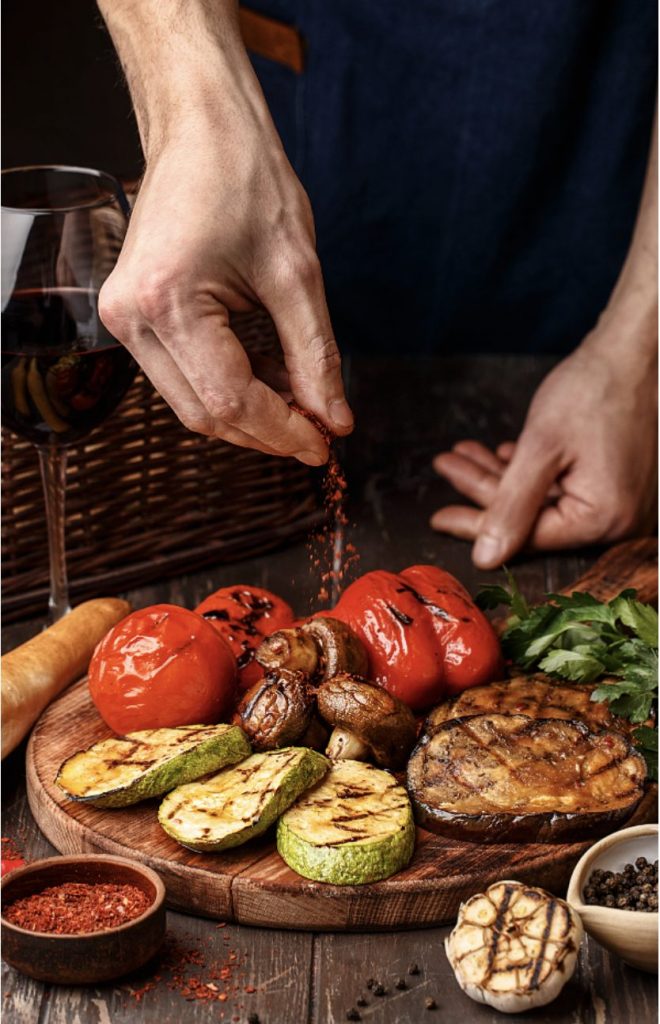
The Italians have a term for a cookout.  It’s grigliata or “grill out,” with each region in Italy having its own specialty. The classic star of Italian grilling is bistecca alla Fiorentina, the beautiful, thick T-bone steak cut from chianina cattle in Tuscany. But other foods shine on the Italian grill: fresh fish and shellfish, brightly colored summer vegetables like zucchini and eggplant, and spiedini, the Italian version of “shish kabobs.” Tomatoes are grilled for a quick pasta sauce, and pizzas take on a wonderfully smokey taste when cooked over a wood fire. What matters is that all the food is fresh, simply prepared, and dressed with high quality olive oil and sea salt.

So, June is here, and Father’s Day will be coming soon. In our family, we celebrate three birthdays in June, as well. So, it will be a perfect time for us to have a “grill party,” and steaks are always a great choice. I gave this recipe a trial run and found it to be simple to make and easy to tweak.

  • Choose the type of steak you like best (I used New York strip).
  • Either red or white wine works for the marinade.
  • Serve the grilled vegetables in large sections instead of cutting them into smaller pieces with the tomato as the recipe suggests.
  • Add whole mushrooms and/or halved sweet onions.
  • Definitely serve potatoes alongside (roasted with rosemary, garlic mashed or simply baked).
  • Double the marinade for extra to pour over the finished dish.

In his book, “The Italian Grill,” the well-known chef Mario Batali advises that, when grilling, one shouldn’t interfere with the flavor of the primary ingredient. That is why this simple preparation is so good. There is no overpowering barbecue sauce or spicy rub that steals the taste of the vegetables and meat. No sticky sweet teriyaki sauce here. But the ingredients must be fresh and high quality.


Italian Marinated Steak and Grilled Vegetables

Ingredients for the marinade

  • ½ cup olive oil
  • ½ cup dry white or red wine
  • 3 tablespoons fresh lemon juice
  • 4 cloves garlic, minced
  • ½ teaspoon salt
  • ¼ teaspoon black pepper
  • 4 steaks (rib eye, New York strip, T-bone, porterhouse)

Ingredients for the vegetables

  • 1 small eggplant
  • 2 large red or yellow peppers, cut lengthwise into quarters
  • 1 medium zucchini, cut lengthwise in half
  • 1 medium yellow squash, cut lengthwise in half
  • 1½ cups chopped fresh tomatoes
  • 1/3 cup lightly packed chopped fresh basil leaves
  • Salt and pepper to taste

Directions

  • Combine marinade ingredients in a small bowl.
  • Pour ½ cup of the marinade in a zip-top plastic bag and place the steaks inside. Turn to coat. Marinate for 6 hours or overnight (better) in the refrigerator.
  • Refrigerate the remaining marinade.
  • When ready to grill, brush the vegetables with a little of the remaining marinade.

Grilling

  • Remove steak from the plastic bag and discard the marinade.
  • Grill the vegetables over medium heat until softened and lightly charred. Watch them carefully and do not overcook.
  • When the vegetables are cooked, remove them to a platter, and place the steaks on the grill. If using a gas grill, grill the steaks covered to a temperature of 145 degrees for medium rare. Baste them occasionally with the remaining marinade.
  • Cut the vegetables into 1-inch pieces and combine with the tomatoes, basil and the reserved marinade in a medium bowl. (It becomes almost like a salsa or relish.)
  • Season the steaks and vegetables with good sea salt and black pepper.

Lay the steaks along an oval platter, and arrange the vegetables along either side. Garnish with a few extra sprigs of fresh basil. Grab a bottle of your favorite red wine (Chianti Classico is a perfect choice.)

This is such an easy summer meal. If red wine isn’t your favorite, mix up some icy gin and tonics, negronis or margaritas. They are great accompaniments, too.

Happy Father’s Day to all. And happy summer. Hopefully, warm weather is here to stay.

Support quality local journalism. Become a Friend of TheBurg!

 

Continue Reading

Outdoors, with a Glass: Sip the summer away with these Italian wines

Summertime in central Pennsylvania is a wonderful mix of long days, cookouts and lightning bugs.

Weather can run the gamut of sweaty humidity to warm, sunny perfection. When you think that, if it were always like this, everyone would want to live here.

For wine lovers, it can sometimes be a confusing season to find the perfect quaff. We have our go-to wines, but with the quality and selection available, it’s time for something new. All one has to do is head straight to the Italian section of your local wine purveyor. White wines perfect for summer abound on the “boot” and its island neighbors, Sicily and Sardinia.

On the eastern part of Sicily is the sub-region of Etna and the volcano that shares its name. The vineyards are some of the highest in altitude on the island, planted on the slopes of a still-active peak. Blends dominate here, and most are Carricante and Greciano, which together produce dry, white wines with good acidity and minerality and notes of green apple. They’re a great match for salads and anything containing anchovies.

Other grapes that make good table wines are the indigenous Inzolia, either blended or bottled individually, and Grillo, the base for Marsala, which makes full-bodied quaffs for traditional Sicilian meals.

There are also good, fruity wines of light weight and slight sweetness. These are Moscato from the city of Noto and the Moscato of Alexandria, brought to the island by the Greeks. The latter is known famously as Zibibbo, a wine to look for in either sweet or dry versions.

The western coastal region of Campania is home to historic grapes that can trace their origins back to the ancient Greeks.

Falanghina is a workhorse grape that can be used for wines that can be dry and crisp, sparkling and refreshing, or late-harvested and sweet. All of these versions are worth searching out.

Another grape is Fiano, which reaches its zenith in the sub-region of Avellino. This quaff has nutty notes and is known as the pesto wine, as it is an obvious match for the green sauce. In my opinion, the best from this region is the grapey Greco di Tufo. Tufa is the name for a volcanic rock that the vineyards are planted on, which makes for a fruity, mouth-coating wine that seems like a grape-flavored oil. It’s a unique and wonderful libation.

The island of Sardinia has a history that can be traced back to the seafaring Phoenicians, who introduced winemaking to the region. However, it was really during the Spanish period, from the 14th to 18th centuries, that it became part of the culture. The main white grape is Vermentino, which can be traced back to Spain. The wine is very aromatic with scents of herbs and crisp, tangy notes.

On the Adriatic coast, the region of Marches gives us the Verdicchio grape, a relative of Greco, which gives us acidy wines with notes of green fruits and almonds.

All of these wines make great “summer sippers” and are worth seeking out to match the warm weather ahead.

Keep sipping,
Steve


Selections:

Marotti Campi Verdicchio dei Castelli di Jesi Classico Superiore 2019

$9.99

Ripe apple, pear and apricot notes mingle with details of mineral and a lovely almond edge. The pure palate has beautifully integrated acidity and good midpalate tension, finishing long and floral. A vibrant and complex Marche white from a great producer at an incredible price!

— Josh Hull, Chairman’s Selection® wine buyer


Planeta La Segreta Grillo Sicilia 2019

$12.99

Clear yellow colour with green reflections; on the nose after a first dash of a sea breeze the primary varietal aromas of citrus, pears and oregano flowers are arriving. Fresh and smooth on the palate with fresh and elegant taste of lemon tart and pulp. As a fresh aperitif; ideal with fried vegetables and fish, pasta with sea urchins or mozzarella.

— Winemaker’s notes


Support quality local journalism. Become a Friend of TheBurg!

Continue Reading

Live Longer and Prosper: Men’s Health Month focuses on closing the longevity gap

The COVID-19 pandemic added yet another dark footnote to our lives recently.

Average life expectancy in the United States dropped by a full year—from 78.8 to 77.8 years—in the first six months of 2020, according to provisional data from the National Center for Health Statistics (NCHS), and the life expectancy gap between the sexes widened.

Women now outlive men by an average of 5.4 years versus the 5.1-year average in 2019, the NCHS reported.

For a variety of reasons, females historically outlive males. For example, research shows that men take more risks and face more work hazards. But men also have shorter lifespans because they often fail to tend to their own health.

Statistics show men skip routine health screenings and doctor visits more often than women do. As a result, warning signs for heart disease, cancer, respiratory illness and other problems can go untreated and undetected, according to the U.S. Centers for Disease Control and Prevention.

Men’s Health Month, observed each June, is a good time to remind male friends, relatives, coworkers and employees that it is possible to lower health risks, and that early screenings can prevent little health problems from becoming big, expensive and deadly ones.

Consider this list of healthy behaviors:

  • Don’t smoke. Smoking cessation programs and medications used together are highly effective.
  • Eat healthy. Choose vegetables, fruits, whole grains, high-fiber foods and lean sources of protein. Eliminate or reduce intake of sugar and saturated fats.
  • Drink alcohol in moderation.
  • Watch your weight. Excess pounds can increase risk for heart disease, diabetes and some cancers.
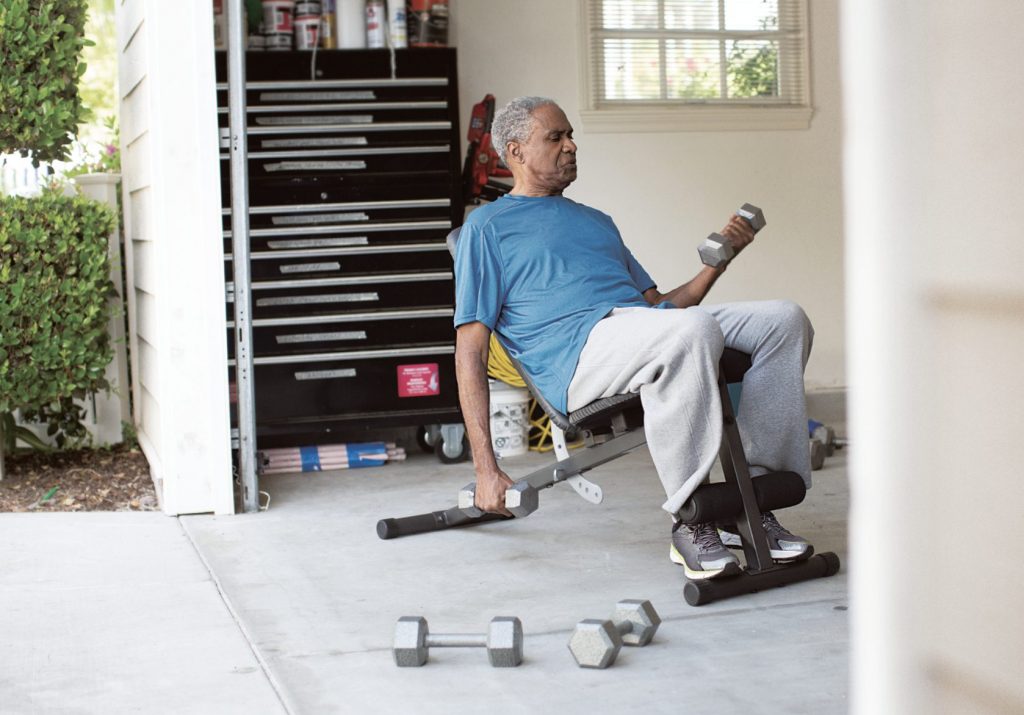
  • Moving helps control weight and can reduce risk of heart disease and stroke.
  • Manage stress. Take steps to reduce stress or learn to deal with stress in healthy ways.
  • Wear your seat belt. Men are 10% less likely to wear seat belts than women are, according to the National Highway Traffic Safety Administration (NHTSA).

Mental health is another area of concern for men. Men are more likely to die by suicide than women. They also are less likely than women to discuss or seek treatment for mental health concerns such as depression and anxiety.

Patients experiencing depression, sadness, feelings of worthlessness or suicidal thoughts should reach out to mental health providers. The growth of telehealth services during the pandemic, including virtual mental wellness visits, has shown promise in relieving some of the worries expressed by those in need of mental wellness counseling, experts say.

Ultimately, the best offense is a good defense in the healthcare game. Health screenings for blood pressure, cholesterol and blood sugar levels are vital, especially as we age.

Colorectal cancer screening, which is both simple and inexpensive, could cut colorectal cancer deaths by 60%, according to the American Cancer Society. Over 50,000 people die from the disease each year.

Prostate cancer strikes about 1 in 8 men in the United States. Older men, Black males and men with a family history of the disease face the highest risk. The American Cancer Society recommends that most men discuss prostate cancer screening with their doctors at age 50. That organization recommends that men at high risk, especially those with relatives who developed prostate cancer at an early age, begin those discussions at age 40.

For more information, visit www.CapitalBlueCross.com.

Support quality local journalism. Become a Friend of TheBurg!

Continue Reading

From Mouse to Lion: Movies are back at Midtown Cinema, and “The Perfect Candidate” is a great film to return to

Haifaa Al-Mansour, director of “Wadjda” in 2012, became the first female filmmaker in Saudi Arabia. And now, she brings us “The Perfect Candidate,” a story about a woman who strives to be the first of her kind.

It’s a man’s world out there. Working as a doctor in a Saudi hospital, Dr. Maryam Alsafan (Mila Al Zahrani) faces prejudice on a daily basis, as patients often prefer the male nurses to her doctorial care. And when Maryam tries to take a flight to a conference that might give her better job opportunities, she finds herself unable to because her father, a member of a touring musical band, hasn’t signed her travel ID papers. When she tries to rectify this by going to her cousin, the only other person who can sign the papers, the secretary at his office will not let anyone through except those applying for council in the local city elections.

In exasperation—and to the chagrin of many, including her family—she decides to run for council. But soon, the desire to better her own life is engulfed by the realization that she might actually be able to accomplish something with her candidacy. She focuses the platform for her campaign around paving the dirt road that leads to the hospital entrance, which makes it nearly impossible to safely admit patients when it rains.

Maryam solicits the help of her sisters (Selma and Sara, played by Dae Al Hilali and Nora Al Awad) to help with her campaign, though they and their father are worried that it will only bring the wrath of the neighbors. No woman has ever run for city council before, and everyone is sure to gossip about and criticize her. But perhaps Maryam has finally decided to take after her late mother and show some tenacity.

“The Perfect Candidate” is an inspirational story, to say the least. We see Maryam transform from a mouse into a lion, reaching for goals that she knows will benefit everyone, while pushing for more respect and equality as a woman in Saudi Arabia. The politics of the film are tense, but the story deals with it in a gentle, compelling way.

Even past its story, the film is gorgeous. Patrick Orth does a beautiful job with the cinematography, and the musical score carries the film, guiding you through every scene (after all, Maryam’s family is a musical family). The entire cast does a phenomenal job of pulling us into their world, but Al Zahrani absolutely steals the show.

Haifaa Al-Mansour has given us a gem, once again. Make sure to see this film while it plays at Midtown Cinema in June.

Midtown Cinema is located at 250 Reily St., Harrisburg. For more information, visit www.midtowncinema.com.

Support quality local journalism. Become a Friend of TheBurg!

Continue Reading

Driving the Future of Women’s Health

UPMC Magee-Womens Hospital, a world-class center for both women’s health and comprehensive medical-surgical care, is bringing enhanced, comprehensive, life-changing medicine to central PA. All women’s health services and facilities within the central PA region footprint now will assume the UPMC Magee-Womens brand. The partnership delivers more than a name change, however.

“As one of the nation’s top hospitals specializing in care for women, UPMC Magee combines a wealth of specialty services with a traditional focus on gynecologic and obstetric services,” says Kenneth Oken, MD, chairman ob-gyn department, UPMC. “Women now have access to even more expertise closer to home, while providers have access to specialists for consultations at other UMPC Magee-Womens facilities across the system.”

Nationally ranked in gynecology by U.S. News & World Report, UPMC Magee partners closely with UPMC Children’s Hospital of Pittsburgh to provide the highest level of care in areas such as high-risk pregnancy care, fetal diagnosis and intervention, and genetics. UPMC Children’s Hospital of Pittsburgh is also ranked by U.S. News as one of the top 10 best children’s hospitals in the nation.

Physicians use an array of diagnostic, therapeutic, and surgical services to diagnose, monitor, and treat conditions during pregnancy. Easier and earlier access to UPMC Magee-Womens maternal fetal medicine specialists, for example, can help prevent the progression of obstetrical complications during pregnancy and increase the likelihood of delivering at a patient’s local hospital with their primary ob-gyn. Multidisciplinary teams are prepared to support mothers and their infants through their programs and services across 17 ob-gyn women’s specialty offices and labor and delivery units in Harrisburg, Carlisle, Hanover, Lititz and York.

“This partnership aligns us with a facility that does so much. When you combine all the hospitals and markets, we’re talking about caring for over 20,000 babies—bigger than anywhere in the state. The numbers alone are exciting,” says Dr. Oken.

Guided by the principles established in its model of care, UPMC Magee-Womens focuses on the unique attributes and needs of each woman. That focus, along with the vision of personal and inclusive health care, brings a comprehensive approach on every level—from research and routine medicine to surgical intervention and reproductive health—across every community.

Finding a provider who has the skill, expertise, and understanding to help identify a problem, develop a plan for treatment, or successfully help patients achieve a goal is not always easy. For those living in central PA, however, their options have increased significantly.

“I feel very proud of what we’ve accomplished over the years, but now we’re adding new technology and innovation, which will benefit patients in a new way. UPMC is impressive with its robust training and fellowship programs across all areas of ob/gyn and their maternal fetal medicine program is one of the strongest in the country,” says Dr. Oken.

With these extensive subspeciality networks, providers now have a direct line to discuss complex patients and complicated conditions. Using either in-person consultations or telemedicine, collaborative care is within reach.

“We have the ability to tap into the resources and expertise of the entire system. Clinical integration is one way we ensure our patients get the best care regardless of where they live,” says Dr. Oken, adding, “Our multidisciplinary teams and coordinated approach in providing care for women, their partners, and infants make UPMC Magee-Womens a standout in this region.”

UPMC Magee-Womens is the destination for women’s health services ranging from simple to complex. For more information about all the services and locations, visit www.UPMC.com/CentralPa.


RECOGNITIONS AND FIRSTS

  • UPMC Magee-Womens Research Institute (MWRI) is the largest research institute in the U.S. dedicated to women’s health and reproductive biology.
  • Magee is recognized by the United States Department of Health and Human Services as a National Center of Excellence in Women’s Health.
  • Our neonatal intensive care unit (NICU), the largest in Pennsylvania and one of the largest in the country.
  • Magee and UPMC Children’s performed western Pennsylvania’s first in utero surgery.
  • UPMC Children’s is ranked 9th in the nation on the S. News & World Report annual Honor Roll of America’s Best Children’s Hospitals (2020-21).
  • Magee pioneered the use of digital mammography in 2000 when it became one of the first hospitals in the United States to install a clinical digital system.

This column is sponsored content.

Support quality local journalism. Become a Friend of TheBurg!

 

Continue Reading