Good Brotha’s Book Café to open in Harrisburg library, close Midtown location

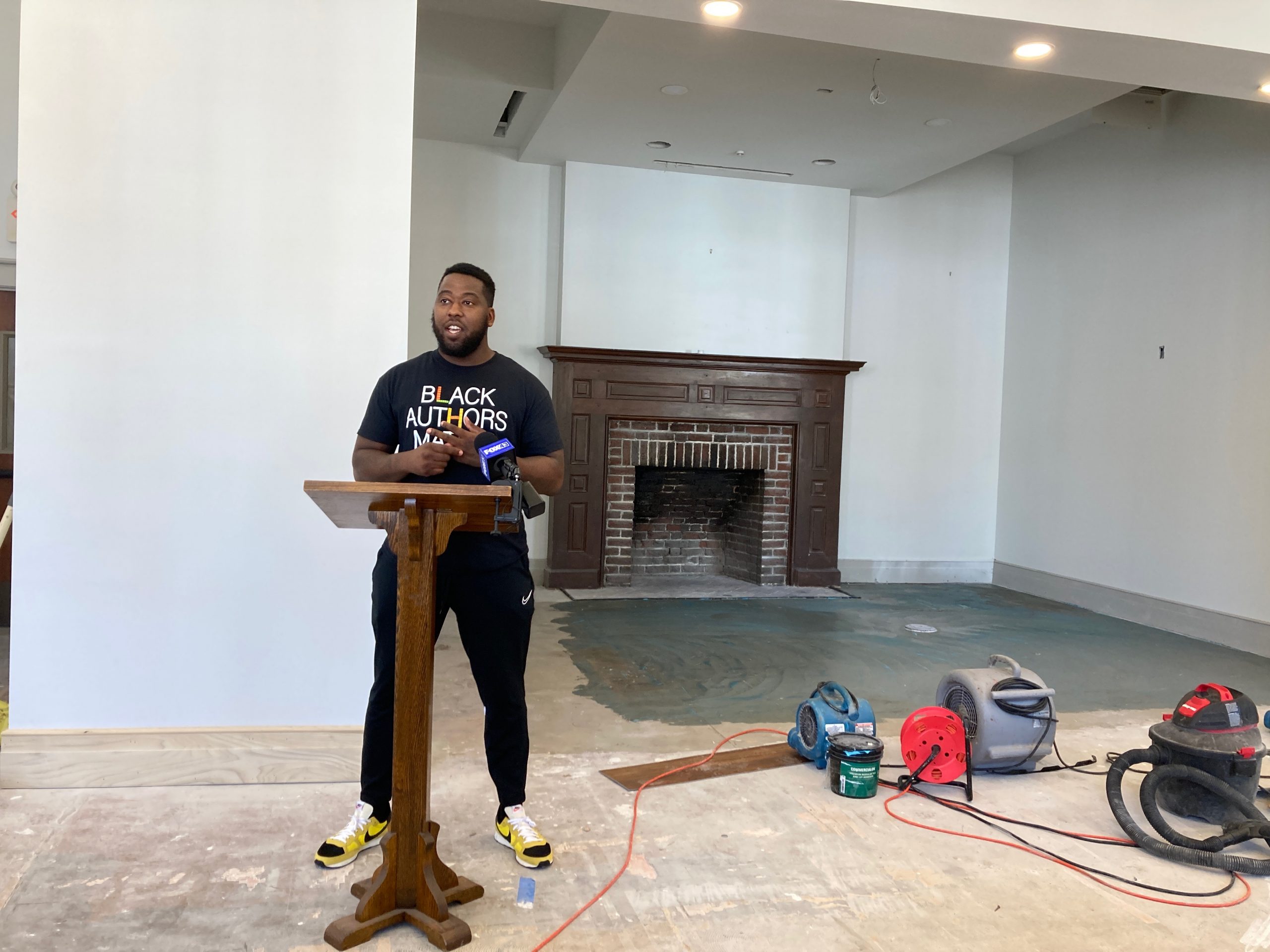
Good Brotha’s Book Café owner Stefan Hawkins in front of the business’ future location in the McCormick Riverfront Library.

Harrisburg community members soon will be able to browse a local library while sipping a good cup of coffee.

Good Brotha’s Book Café announced on Friday that it plans to move its current operations from its N. 3rd Street shop to inside the under-construction McCormick Riverfront Library.

“There’s nothing like enjoying a good book and a good cup of coffee,” said Karen Cullings, executive director of the Dauphin County Library System (DCLS).

Good Brotha’s plans to move into a small café inside the downtown library at the same time that the library opens its new facilities. According to Cullings, the expansion and renovation project, which broke ground last year, will be finished in mid-October.

The coffee shop’s current location at 1419 N. 3rd St. will be open for the last time on Sept. 10.

Owner Stefan Hawkins said that he wants to focus his resources on the new location.

“The Midtown location was the baby and the starting point,” Hawkins said. “Having to close that is bittersweet, but we are looking forward to the future.”

The café in the library will offer the same coffee, latte and other beverage items that Good Brotha’s in Midtown offered. They will serve limited food items, as well, such as bagels and pastries. They also will have books for sale, keeping with their current shop’s promotion of Black authors and literature. There will be a small seating area in the café with seating around the library, as well.

Hawkins said that he plans to be open the same hours as the library. The café will be located on the upper level of the building.

“It’ll still be the same great tasting coffee from the same great shop,” he said.

According to Cullings, this is the first location within the county library system to house a café.

“We really wanted to work with a local coffee shop for this,” Cullings said. “Our focus for the whole project has been community partnerships.”

The library’s “Your Place to Belong” project to renovate the current property and connect it to the neighboring Haldeman Haly House is nearing completion. In addition, the library is around $128,000 from its fundraising goal of $3.5 million for the project, according to DCLS.

According to Hawkins, Good Brotha’s is still considering an expansion into Steelton in the future as part of the Steel Works Revitalization project by Wormleysburg-based Integrated Development Partners. But for now, the focus is on the library café.

“We are trying to bring the focus down here to Walnut Street,” Hawkins said. “We think having the Dauphin County library location will be better for us and will help everybody all around.”

The McCormick Riverfront Library is located at 101 Walnut St., Harrisburg. For more information, visit their website.


If you like what we do, please support our work. Become a Friend of TheBurg!


Continue Reading

East Shore Diner spends last day with customers before closing, with plans to relocate

East Shore Diner owner Bill Katsifis talks to customers on the business’ last day.

After 22 years of coming to the East Shore Diner for six days a week, Randy Baratucci visited it for the last time.

For 38 years, the diner served hungry Harrisburg customers, but on Thursday, the owners prepared to close their doors, surrounded by family and loyal customers like Baratucci.

“I’m planning on handcuffing myself to the door,” he said.

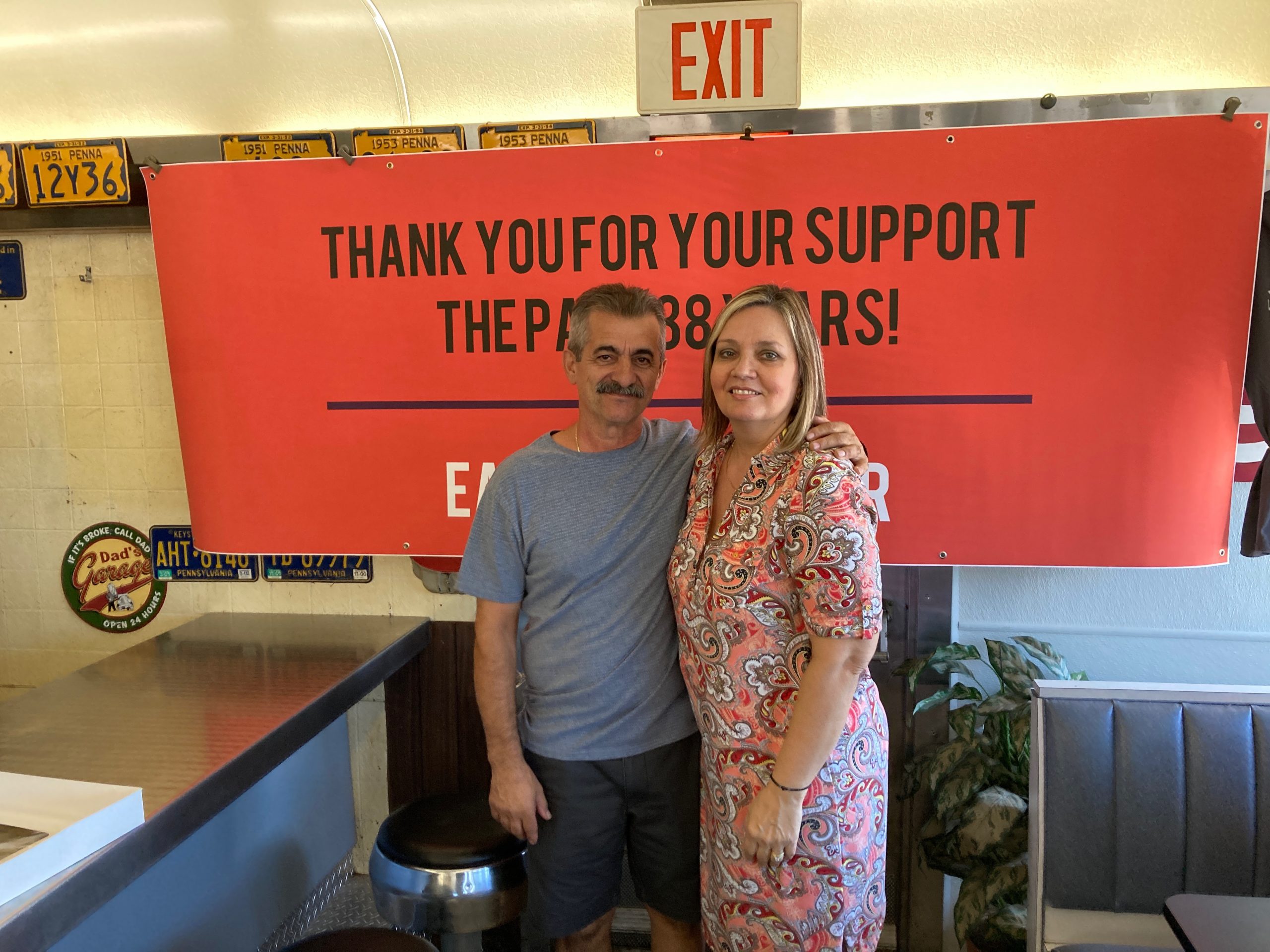
The East Shore Diner currently sits on S. Cameron Street, right in the path of PennDOT’s Capital Beltway expansion plan. Since late last year, owners Bill and Dorothy Katsifis have known that eventually they’d have to shut down the business and move, due to eminent domain. But for Bill and many of the customers on closing day, it still didn’t feel real.

“Right now, I feel great because it didn’t sink in yet,” Bill said around noon on Thursday. “I think it’ll hit me when I lock the door for the last time.”

Bill and his late father purchased the classic chrome diner in 1985. Since then, his kids have grown up there, and many customers have become family. The interaction with customers is what he’s loved the most over the years.

According to Bill’s son, Stavoros, the diner plans to pick up and move to a new location—literally. The family is preparing to move to Mechanicsburg and take the diner with them. However, the menu may look a little different as the family still is deciding what kind of restaurant they will open.

“It’s the end of the East Shore Diner era, but it’s the beginning of whatever is next,” Bill said.

East Shore Diner owners Bill and Dorothy Katsifis

The plan is to move the diner by November to its new location and, hopefully, open by May.

Currently, they are trying to figure out how PennDOT will to reimburse them for their relocation expenses. According to Stavoros, communication with PennDOT hasn’t been smooth.

“We are in limbo,” he said. “We hope they will work with us. We’ve closed today voluntarily. We hope our cooperation turns into their cooperation.”

Even with the diner’s move, customers like Baratucci plan to remain loyal.

“As soon as [Bill] told me, I said ‘wherever you go, I will be there,’” he said.

For 15 years Joe Kreiner has worked as a dishwasher for the East Shore Diner. His kids grew up while he worked there. He even remembers the day his first-born child was delivered and he got the call, while on the clock. There are a lot of memories, he said.

“Bill told me I’m part of the family,” he said. “It’s like, wow, this is the last time I’ll see the customers.”

The move hasn’t been easy for Bill, but he counts the year as a good one. His son got married, and his granddaughter was born this year. He’s sad to close his business, one that’s become a Harrisburg establishment, but he’s looking ahead to the next chapter.

“There’s no goodbyes,” he said. “It’s see you later, see you soon.”


If you like what we do, please support our work. Become a Friend of TheBurg!


Continue Reading

Weekend Roundup with Sara Bozich

Plan your weekend with my weekly list of things to do around Harrisburg and central PA! Scroll down or use the menu links to find ideas for your weekend.

For something new: (or not) Haar’s Drive-In has quite the weekend lineup for those of us of a certain age; Fresh Market Hershey opens today; and of course, Kipona runs Saturday through Labor Day Monday.

Worth noting: BIG changes are coming in this space! Check out my private Facebook community, Cheers Harrisburg to get the first peeks.

Things on my agenda this weekend: Maybe a pool party, maybe some Kipona

Don’t forget to support your local brewery! Click here to find one near you.

For your weekend planning

Below are options for your weekend.


Be in the know.
Sign up to receive news and updates from Sara Bozich.
Nicely done. ??
 

Top Weekend Recs

  1. Save the dates for September in SoMa Harrisburg
  2. Check out what’s next in HU’s Summer Concert Series
  3. Make travel plans (with a discount + perks)
  4. Submit your events for the Weekend Roundup

Thursday

Friday

Saturday

Sunday

Labor Day


What are you doing this weekend around Harrisburg? Let us know on Facebook, Twitter, or Instagram.

Like this content?

If you like what we do, please support our work. Become a Friend of TheBurg!

Continue Reading

Harrisburg coffee, arts festival to highlight local businesses this weekend

Coffee from Elementary Coffee Co. File photo.

Calling all coffee lovers—a caffeine-packed event is headed your way.

Capital Rebirth Inc. and Friends of Midtown will host “Star City Coffee and Arts Festival” to showcase local coffee shops, artists and yoga studios on Sept. 3 in Midtown, Harrisburg.

“Our hope is that people really come out and engage,” said Madeline Williams of nonprofit Capital Rebirth. “It’s a great way to support art and to support local businesses.”

The event will take place from 9 a.m. to 12 p.m. at 4th and Reily streets. Harrisburg-based Elementary Coffee Co., Good Brotha’s Book Café and Little Amps plan to participate, along with Elizabethtown’s mobile coffee shop Hitch Coffee.

Harrisburg artists Bryan “King Prolifik” Hickman and artist Vivian Sterste will lead paint sessions. Three yoga sessions will be led by Lisa Oplinger of Evolution Power Yoga, April Ashe of Unbottled Expressionz and Erika Malorzo of CommUNITY Yoga Space. Art and yoga sessions are pay-what-you-can and will be filled on a first-come-first-served basis.

Other local vendors will be on site, selling food and art, among other products.

Admission to the event is free.

“The purpose of Star City Coffee and Arts Festival is to celebrate the diverse and exciting coffee and art cultures throughout the central PA region,” Williams said. “It is also an opportunity to engage residents with local businesses they might not have known about otherwise.”

For more information on the “Star City Coffee and Arts Festival,” visit Capital Rebirth’s Facebook page.


If you like what we do, please support our work. Become a Friend of TheBurg!

Continue Reading

The Menaker apartment building celebrates completion of renovation, historic preservation

Harristown Enterprises, local officials and community members cut the ribbon on The Menaker apartment building in Market Square.

Developers cut the ribbon on Wednesday on an apartment building with a rich history in Harrisburg.

The Menaker in downtown is officially complete with 28 apartment units and a first-floor retail space. The historic building in Market Square was completely renovated and restored over the course of this past year.

“This project took a lot of vision, a lot of creativity and determination,” said Julien Gaudion, vice president of Harristown Enterprises, the developer of the project.

Developers completely gutted the six-story, 33,809-square-foot building and renovated it, opting for an art deco style.

The building was originally constructed in 1906, built for the Johnston Paper Co., a Harrisburg-based paper products manufacturer. According to David Morrison of the Historic Harrisburg Association, President Theodore Roosevelt visited the building after it was constructed. The building was originally only four floors, but two more stories were added in 1912. Later, the building housed Beckley College and, most recently, Skarlatos Zonarich, a law firm, which moved its offices to Strawberry Square.

The Menaker was named after Mortimer Menaker, former chairman of the Harrisburg Redevelopment Authority, who oversaw a previous renovation in 1977.

“We have to credit Harristown for ushering in the 21st century with a wave of historic preservation projects in downtown Harrisburg, of which this is just the latest example,” Morrison said.

The Menaker offers both one- and two-bedroom apartment units. There is also a 2,000-square-foot retail space on the first floor, and according to Harristown President Brad Jones, they have a prospective tenant.

Camp Hill-based ByDesign Consultants was the architect for the project and Mechanicsburg-based Mowery Construction was the general contractor.

“We need more housing units,” said Ryan Unger, Harrisburg Chamber of Commerce and CREDC CEO. “We are appreciative and excited.”

The Menaker Apartments is located at 17 S. 2nd St., Harrisburg. For leasing information, visit www.hbgrealty.net.


Continue Reading

Peaceful Eve: Harrisburg Muslims invite community to “Stop WW3” event, set for eve of 9/11

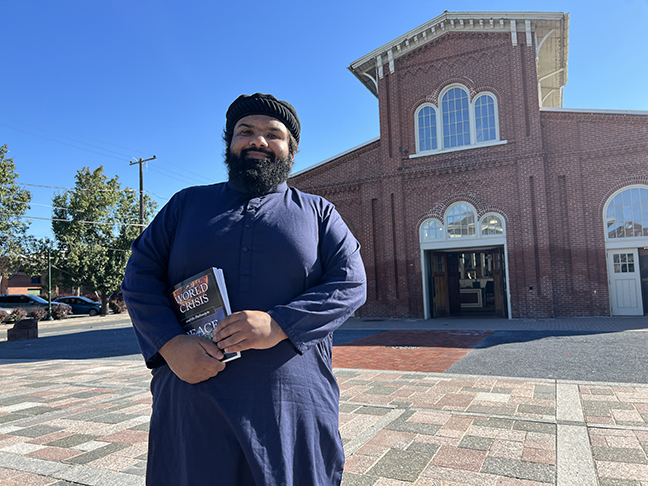
Imam Daanyal Ahmad Qureshi

A Harrisburg-area congregation wants to put a little more peace into the world—and world peace, the congregation believes, begins at the community level.

“In our current world crisis, we see war and turmoil around the world, and if world war three were to break out, it would be the innocent—those who are most powerless—who would suffer the most. So we’re trying to end it, before it can begin,” said Daanyal Ahmad Qureshi of the Ahmadiyya Muslim Community, Central PA Branch.

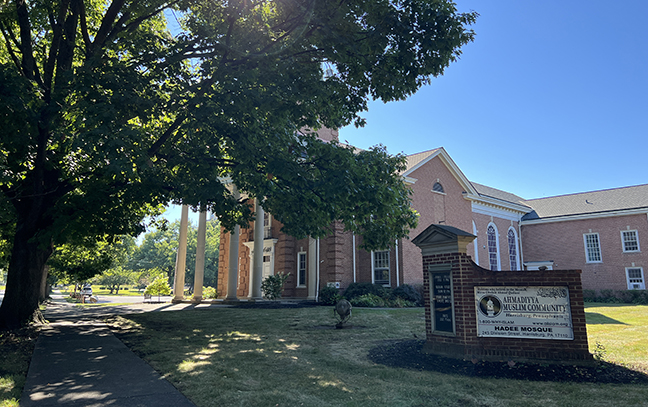
That’s why the congregation, based in Harrisburg’s Italian Lake neighborhood, is planning an event open to the public and designed to foster peace. Called “Stop WW3,” the event will be held at the Hadee Mosque, 245 Division St., on Saturday, Sept. 10—the eve of the 9/11 anniversary.

“We understand the history of 9/11 and there unfortunately are a number of Muslims who commit acts that cause harm and destruction,” said Qureshi, who noted that throughout history, there have been people who “twist” religious beliefs with ill intent. “But the word ‘Islam’ itself means peace, and a Muslim adheres to peace.”

Qureshi, 26, serves as the congregation’s imam—a worship leader similar to a pastor or priest. He was born and raised in central Pennsylvania, so, Qureshi said, it’s especially meaningful to have the opportunity to promote peace within his hometown community.

“Peace means tolerance and acceptance. Tolerating means living side-by-side, but accepting means inviting people to your home—and acceptance and love of neighbors is one of the most important things [in the Islam religion],” Qureshi said.

The heart of the Sept. 10 event will be based upon a book by the congregation’s international imam, Mirza Masroor Ahmad. Titled “World Crisis and the Pathway to Peace,” the book is a collection of letters and speeches Ahmad has presented or sent to world leaders across the globe to promote peaceful relationships.

“The book gives an Islamic perspective on the current world crisis,” said Qureshi, who notes that attendees shouldn’t worry about reading the book beforehand. “The book seeks to find a solution that is relevant to everyone—you don’t have to be a Muslim—with basic human elements of kindness, tolerance and acceptance.”

Hadee Mosque in Uptown Harrisburg

Although the event is free and open to all members of the public, Qureshi said he’s been reaching out to numerous congregations of other faiths, with the hope of starting a meaningful dialogue and understanding within Harrisburg’s faith-based community.

“The event is purely to get to know us better, to spread the message of peace, and to work with our neighbors in getting to that goal—we can’t do it alone,” Qureshi said. “Even though we’re a small community [at Hadee Mosque], there are so many people who have so much to offer in terms of friendship and neighborly love.”

The Sept. 10 event begins with a reception at 5:30 p.m., followed by the program, Q&A session, and dinner comprised of butter chicken, curried rice and naan bread. It marks the congregation’s first public outreach since the pandemic hit.

“We’ve had peace-inspired events before—interfaith events with other churches such as interfaith walks. But it’s been a couple years due to the pandemic,” said Qureshi.

Although he’s personally never felt hatred, or been attacked in any way for his religious beliefs in central Pennsylvania, Qureshi acknowledges there are misconceptions and stereotypes his congregation will be attempting to erase for years, following the events of 9/11.

“9/11 happened when I was 6 or 7 years old, but I was quick to understand the events were a very big deal for Muslims,” Qureshi said. “It caused hardships, but we understand it’s not a purposeful hate. Anytime we’re oppressed or attacked, we’re taught that we don’t hold any malice.”

Another core concept of the Islamic faith is loyalty to country.

“We see it as our duty to give back to the country that has given us so much—it’s our obligation,” Qureshi said. “We ourselves are Americans as well—we are accepted here, so why wouldn’t we want to give back [by promoting peace]?”


For more information on the Sept. 10 event or to RSVP, see
“Stop WW3” on Eventbrite.

The event is free and open to the public. RSVPs are encouraged on Eventbrite, although Qureshi said, “no one will be turned away” the evening of the event. To reach Qureshi directly, email messages to [email protected].


If you like what we do, please support our work.
Become a Friend of TheBurg!

Continue Reading

Joined at the HIP: Harrisburg Independent Press covered major city events in the ‘70s, built a community lasting 50 years

Anita Harris, 1970

Over the past few years, staffers for a long-defunct Harrisburg newspaper began documenting their history online. A few former reporters made it their mission to create a digital archive of all the papers, which were printed between October 1971 and August 1980.

It’s been 42 years since the Harrisburg Independent Press (HIP) ceased publication, but those who were a part of the alternative paper haven’t let go. They haven’t been able to, nor do they want to. For many of them, their time with HIP launched their careers, shaped their character, and offered lifelong friendships.

“It’s such a community that has stayed around all these years,” said Anita Harris, a former reporter for HIP. “Maybe it’s something about being a part of a small paper and community.”

Around the same time that Bill Keisling and Jim Zimmerman, former HIP reporters, were creating the online archive, Harris was writing a book about her experience from 51 years ago. She published “The View from Third Street: Ani and the Harrisburg Independent Press” in June, explaining that she felt the need to “understand what had happened all those years ago, and why.” Harris only spent about a year in Harrisburg writing for HIP, but it was one that, she said, impacted the rest of her life.

Harris remembers her first meeting with the founding members of HIP. Fred Solowey was the driving force behind the paper, recruiting his Cornell University buddy Ed Zuckerman and then Harris, who also attended Cornell.

Originally, HIP was started to cover the anti-Vietnam War movement. More specifically, the founders were interested in the almost-too-crazy-to-be-true national news story that was taking place locally—the Trial of the Harrisburg 7.

In this case, the FBI accused a group of anti-war activists, including nuns and priests, of plotting to kidnap then-National Security Advisor Henry Kissinger and blow up underground heating tunnels in Washington, D.C. The National Defense Committee for the Harrisburg 8 (there were originally eight defendants before one was moved to a separate trial) was formed, and Solowey led its local activities, which included starting HIP. Zuckerman would take on most of the reporting for the trial.

Reporting on the anti-war movement was crucial to young activists like Zuckerman and other HIP staffers.

“Back then, if you were a young man, you could be drafted,” he said. “That fueled the anti-war movement. It was personal. You could die.”

Starting HIP was a way to get involved in the movement, while also launching Zuckerman’s career as a journalist.

Like Zuckerman, Harris wanted to make a difference. Growing up, she had faced sexism and gender role expectations from a family that assumed she wouldn’t have a career. But when she started at HIP, she faced a completely different environment amongst her colleagues.

“Everyone was accepted and could play the role that he or she wanted,” she said. “There was no sexism, which was very unusual in my world. It showed me I could do it. It gave me the opportunity. It gave me the courage.”


Brought to Light

HIP’s office was located at 1004 N. 3rd St., now the site of the Urban Churn scoop shop. The stretch of a few blocks in Midtown “passed as that town’s sleepy bohemia,” said former HIP member Jim Wiggins in his write-up on the paper’s website/archive. Wiggins remembers a “hippie” woodworking shop, a pornographic movie theater and former Harrisburg artist Toni Truesdale’s art studio.

HIP’s modest office was “a chaotic place full of life and laughter,” as Wiggins described it. It housed several typewriters, desks and “stuff tacked up everywhere.” There was a light table, which the staff used to lay out each issue of the weekly paper—cutting and pasting sections and articles together to create each page. Staffers came and went at all hours of the day and night.

At the time, the Harrisburg Center for Peace and Justice also was housed in the building. Activist and director of the center, Kay Pickering, worked closely with HIP for years. The paper gave voice and publicity to the issues Pickering and other activists advocated for. When the center moved to a new office at 315 Peffer St., HIP moved with them.

“Our common mission has always been one of truth and justice,” Pickering said.

Beyond reporting on the Vietnam War, which Wiggins described as the “defining issue” that motivated HIP, the paper covered issues of racial injustice, poverty, criminal justice reform, women’s rights and gay rights. The team tackled subjects that other papers often wouldn’t touch at the time.

“I think we brought certain issues to light that wouldn’t have been covered,” Wiggins said.

In 1972, HIP reported on Hurricane Agnes and the devastating flood it caused in Harrisburg. Harris remembered surveying the city with Wiggins after the disaster struck. In their “Special Flood Issue,” headlines read, “The Quick Brown Flood and Its Aftermath,” “Man Vs. Aberrant Nature,” and “What to do with a Drowned Car.”

Three Mile Island was another hot topic in the paper, as many at HIP were firmly opposed to the nuclear power plant. By 1978, the paper had transitioned to a monthly magazine format and, in August, the front page read, “Tomorrow’s Disaster at T.M.I.: Meltdown.” It was a scenario piece, Keisling, the son of the founder of Harristown Enterprises, explained. Less than a year later, the power plant suffered a partial meltdown, and some credited HIP for predicting the future.

“HIP was really important in fighting TMI,” Keisling said.

Harris saw her chance to make a difference with her reporting—her goal from the start—when she interviewed several migrant workers who were held as slave laborers at a farm in Schuylkill County. After Harris visited the camp and saw the awful conditions, HIP published her story. Eight months later, the Pennsylvania Department of Employment Security told her that they shut down the camp.

“Because we were an alternative newspaper, we were able to cover some of the most amazing stories,” she said. “You could really make a difference.”


End of the Beginning

Finances were always a struggle for the small paper.

HIP relied heavily on advertising revenue from the city’s adult movie theaters, which created its own controversy. Some saw the ads as demeaning to women, while others regarded it as a free speech issue. In the end, HIP continued printing the ads, not sure they could survive without the funds, Wiggins explained on the paper’s website. Eventually, HIP was met with financial decline caused by unpaid ads and accrued debt and was forced to become a monthly publication in 1977. Three years later, HIP shut down entirely.

It may have been the end of the road for HIP, but many staffers went on to further the careers that they had started in journalism.

After the Harrisburg 7 trial ended, Zuckerman went on to cover the 1972 Republican and Democratic conventions for the Village Voice in New York and The Real Paper in Boston. Later, Zuckerman wrote the first episode of the TV show “Law and Order,” and many following episodes over the next 20 to 30 years.

Harris reported for Newsday, WRFM Radio and MacNeil Lehrer (now the NewsHour) of PBS. She taught journalism at Harvard, Yale and Simmons universities and authored two nonfiction books before serving as managing director of the Harris Communications Group in Cambridge, Mass. Keisling later authored many books, and Wiggins became a press spokesman in the administration of Gov. Richard Thornburgh. He then became a corporate communications executive for Merrill Lynch and Morgan Stanley.

While most reporters only spent a fraction of their careers at HIP, these short tenures left a tremendous impact.

During his time reporting on the Harrisburg 7 trial, Zuckerman made connections that would later help him in his reporting and TV writing career.

“My whole life goes back to Harrisburg,” he said.

For Keisling, HIP helped develop his sense of ethics as a writer.

“Wiggins drilled on me to be fair and accurate—to really get it right,” he said. “That stayed with me my entire life.”

But ultimately, it’s the community that has stayed with them all these years. There was something that bonded many of the staffers for life. Zuckerman is the best at keeping up with everyone, Harris said, and she acts as a “den mother” of sorts.

It seems like that bond was destined from the start.

When Zuckerman hired Wiggins to take his place as editor of HIP in 1972, he remembers saying something to the effect of, “The paper’s yours, goodbye. I’m out of here. Good luck.”

Ten years later, Zuckerman was living in New York City when a former HIP colleague wrote him.

“Are you aware that Jim Wiggins is living across the street from you?” the letter said.

“I went over, rang the doorbell, and there he was,” Zuckerman said.

Another 40 years later, Wiggins and Zuckerman are still good friends.

“If you’re lucky, you look back on your youth with great fondness and memories,” Wiggins said. “I felt lucky to be part of [HIP]. It gave voice and form to a vibrant minority at the time.”

To learn more about the Harrisburg Independent Press and to view its archives, visit www.harrisburgindependentpress.com.


If you like what we do, please support our work. Become a Friend of TheBurg!

Continue Reading

A Lifetime in Healthcare: A Q&A with Phil Guarneschelli, the retiring president of UPMC in Central Pa.

Phil Guarneschelli

Let’s call it a career.

This month, President Phil Guarneschelli retires after nearly 38 years with UPMC of Central Pa. and its predecessors, as Lou Baverso assumes the reins of the rapidly growing, regional healthcare provider.

We decided to use this occasion to ask Guarneschelli a few questions, both reflecting back on his long career and offering a glimpse of what comes next.

TheBurg: Please introduce yourself to our readers with some background information. For instance, where did you grow up, and how did you get into the healthcare field?

Guarneschelli: I’ve spent my whole career in healthcare and with various entities of UPMC now, Pinnacle before. I grew up in Harrisburg; I spent my childhood in the suburbs of Harrisburg. My whole family, we all are literally a mile apart on Linglestown Road. So, we’ve all stayed local, which is strange, and we’re all in healthcare, which is probably even stranger.

My dad influenced my decision on healthcare at the time. He was chairman of the Blue Cross board. His advice was: do what you love and it’ll all come. And don’t worry about what your pay is initially—pick something you like. I always liked helping people—that was my M.O. So, my parents thought that would be a good route for me to go.

I got my first job with the Capital Health System, or it might have been the Harrisburg Health Foundation at the time. I was in the planning department. I went in as a facilities-type planner. It was when we were starting to expand the primary care network 38 years ago. So, I started there and then I really enjoyed it and moved through the progression. I think it was 13 promotions up to now being the CEO.

TheBurg: Please highlight a few milestones of your career.

Guarneschelli: At one time, John Cramer was the CEO of Capital Health System and was responsible for forming Pinnacle. That was when we merged with Polyclinic Medical Center and later on with Community General Osteopathic. Prior to that, we were basically Harrisburg Hospital and Seidle Memorial Hospital. John created Pinnacle and assigned me basically the project of bringing two rivals together. At the time, Polyclinic was a 500-bed acute care hospital literally 2.8 miles down the street, and there was fierce competition between us. So, we had to form the Pinnacle Health System, bringing those two entities together. That was definitely a milestone of my career. It was a humungous project, probably one of the largest projects in Harrisburg at the time.

My second biggest milestone wasn’t that long ago, and it was when I got the assignment from our board to merge with UPMC. We had gone through several attempted mergers that we were not successful. The first one was with WellSpan, and that did not work out for various reasons. The second one was with Hershey Medical Center. We took that right up to the end when we were challenged, and we ultimately lost the challenge to merge, because of the competition. Then our board, after many iterations of planning, decided that we would search for a partner, and the partner that we landed on was UPMC. As you know, UPMC has a health plan, a very large, well-run health system. We felt we would do best with them.

My role was to integrate the two systems over the next five years. So, that was 2017, and we are today on the milestone of our fifth year of coming together. I believe we accomplished it. I would give it “A’s.” The management team is incredible at both places. We worked very well with Pittsburgh and UPMC, and our team here did a stellar job at bringing the two organizations together. So, those are my two milestones.

TheBurg: During your long career, the healthcare landscape has changed significantly in central PA. Could you describe some of those changes?

Guarneschelli: For the longest time, to win in healthcare, you had to differentiate yourself. We differentiated ourselves on quality. If you run a high-quality organization, financials will follow, everything will follow. Scale became very important. What you saw happening in this area was a lot of mergers and acquisitions. It was basically growing, but growing with thought, not just growing for growth’s sake.

At that time, there were five or six hospitals for sale. At the same time that we were merging with UPMC, we were acquiring five hospitals. And history will show that we ended up meeting the commitment of the York community by building a new hospital, which has been an absolute home run success. Prior to our growth and expansion, we built the West Shore Hospital. Prior to that, we had no inpatient presence on the west shore. So, we built the West Shore Hospital, which subsequently has grown in size because of its success. We added onto that a year ago. Through the acquisition of the CHS hospitals, we got Carlisle, which, at the time, was a sleepy, little hospital running at 30 beds. Today, it’s a 100-bed hospital, thriving, and a really nice success story.

In the Lancaster market, we bought two hospitals. We bought the Heart of Lancaster, which was in Lititz, and we bought the downtown hospital, which was the old St. Joe’s. We knew we’d have to consolidate, so we made the decision to close the downtown hospital and consolidated everything at Lititz. You can see the markets that we’re in. It’s truly a central Pennsylvania footprint.

So, that change has been a lot of mergers and acquisitions, a lot of scale building and really developed into, I’d say, three competitive health systems in the area. This community, let’s face it, is blessed with incredible health care. I don’t know many communities that you can say there are three health systems, the quality, the size of the three that we have here in central Pennsylvania.


TheBurg: Could you touch more upon the Pinnacle/UPMC merger, specifically why it happened and how it’s going?

Guarneschelli: In choosing a partner, it was very well thought out. UPMC happened to be in the growing mode, and we knew that, and we knew it was a very well run organization. They were very quality-focused and quality-driven, as well. And we felt their culture was the closest to ours. We wanted the health plan component, and we got all that from them. We felt this was the right choice, and it turned out to be that it was the right choice.

Bringing a large health system into an even larger health system is very difficult to do. Everybody worked very hard. We had the normal issues—you know, “Oh, we’re being taken over by UPMC.” All those things occurred, but, because we had so much experience at doing this prior, we went through that stuff relatively well. We let people grieve. We let people do what they need to do and, now, you just don’t hear it anymore. It’s just—we’re UPMC, that’s what we are. We’re happy to be UPMC, and we’re happy to spread the UPMC differentiation in the market, which is very high quality, life-changing medicine, on the cutting edge of things and really what the community needs and will need going forward.

TheBurg: Looking ahead, how do you see healthcare changing for our area over the next five or 10 years?

Guarneschelli: I personally believe that you’ll see a slow change in technology. So, we all learned from the COVID pandemic that there are other ways to deliver medicine that are probably more efficient, and the outcomes are just as good. So, during the pandemic, we ramped up from having about 10 physicians doing telemedicine to having over 600 physicians doing telemedicine, from maybe 50 visits a week to thousands of visits a week. From that, we learned that, first, it can be done, and, second, it can be done in a quality way that we will only deliver quality care, and the outcomes are great. So, we want to continue that change. The younger population today works from the iPhones and their iPads, and they want convenience. So, I see healthcare really going through a revolution of more technology.

The second thing is the workforce. It is a very competitive workforce. It will continue to be a very competitive workforce. These are highly skilled people, highly skilled physicians, highly skilled nursing, clinical and administrative staff, and they will have options.

So, these are the biggest changes you’re going to see—more technology introduced into healthcare, and you’re going to see a movement again more towards around the patient, the whole circle of continual care around the patient and not around us. The patient is the driver. They want convenience. They come to an appointment when they want to, not us dictating when they come to an appointment, not us dictating where they go. So, it’s a real patient-focused approach.

TheBurg: What’s next for you? What are your personal plans upon retirement?

Guarneschelli: I promised my family and myself that I would retire in decent health, so we could have some fun and do some things. I always had in my head (age) 62. So, I decided months ago that I was going to meet that commitment. You kind of miss the kids’ football games, you miss the cheerleading, because, in this job, you’re 100% with it. But now I’m going to make it up with the grandkids, and I’m going to do a lot of family-oriented activities. I’m still going to do something. I can’t just sit still. So, I will look for something that is rewarding for me to do. I’ll continue to work with the foundation and continue to promote UMPC in Central Pa. I think it is the best, not just because I’m here, but it really is incredible healthcare. And I believe that a community deserves state-of-the-art, A-grade healthcare, and you’re getting that here.

So, bluntly answering the question, up until Christmas, I’m just going to relax. I’m going to do the honey-do list that I have been waiting to do for many years. So, I’ll work on some of those things. And then I’m going to look for something to do that is fun and rewarding. I don’t know what that is yet. I do know that I’m staying here in the community that I’ve lived in my whole life.

This interview was edited for length.

For more information on UPMC in Central Pa., visit www.upmc.com.

If you like what we do, please support our work. Become a Friend of TheBurg!

Continue Reading

Donations for Dignity: Groups help battle “period poverty,” promote health, equity, confidence

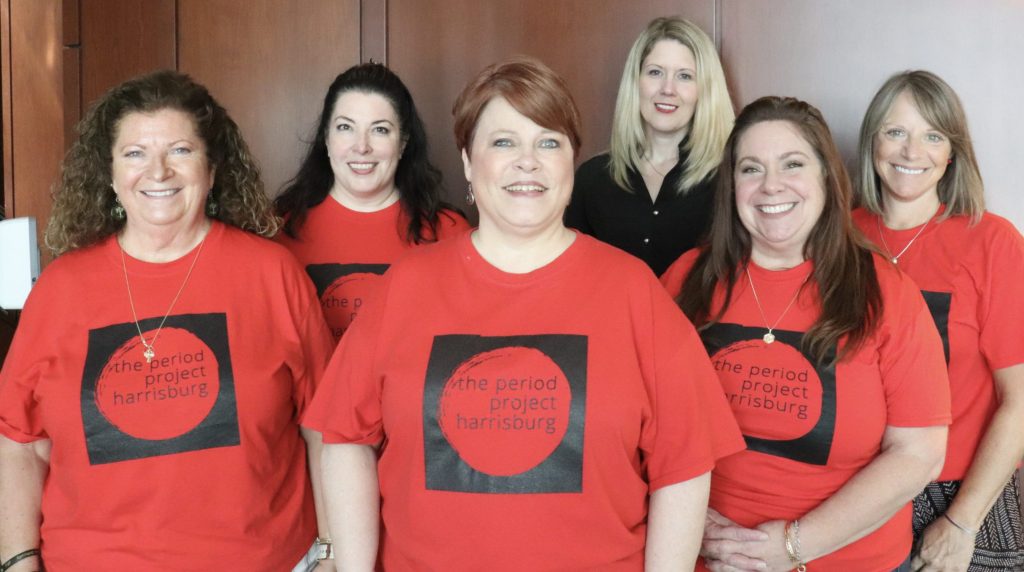
From left: Deb Marks, Tracy Varano-Garrison, Megan Swope, Addeline Alaniz Edwards, Kathleen Frascona, Nicolee Hiltz

In Jessica Deetz’s household, the month’s supply of period products from the Healthy Steps Diaper Bank doesn’t go to waste.

“There’s different sizes in each pack,” said Deetz, of Marysville. “My 13-year-old uses the smaller ones, my 17-year-old uses the next step up, and I get the bigger ones.”

Period poverty can pull a curtain over the lives of women and girls who can’t afford supplies month after month. Now, Harrisburg-area women are joining a movement to distribute period products in the city and throughout the region, all in the name of dignity and empowerment.

“They may miss school,” said Nicolee Hiltz, a backer of The Period Project Harrisburg. “They can’t go to work. All of the things we want to use to empower people can hold them back in a very basic way.”

In the United States, one woman in four has struggled to afford period products. Without proper protection, one low-income woman in three misses work, school or social interaction. One girl in five misses all or part of her school days due to her periods.

“Imagine 25% of your life not being able to be comfortable and go out and have confidence,” said Kathleen Frascona, a board member of the Period Project Harrisburg.

The dope-slap realization that period supplies can’t be taken for granted motivates local volunteers to help get period products to women who need them. Supplies are fundamental to health and well-being, but Medicaid and food assistance don’t cover the costs. In some states—thankfully, not Pennsylvania—sanitary supplies are taxable.

On top of everything, tampon prices have spiked nearly 10% since mid-2021. For Deetz, whose husband works while she stays home with their four kids—ages 3 to 17 and all with special needs—period supplies are “definitely a help. The extra money, we can put towards other bills.”

Feel Safer Now

Megan Swope is a nurse who wrote a paper on period poverty while earning her bachelor’s degree. With a startup grant from Community Health Outreach at her then-employer, Penn State Health Hershey Medical Center, she launched the Period Project Harrisburg in spring 2021.

“It was such a dignity issue,” Swope said. “These are simple things we take for granted, and in the middle of the pandemic, you could see how difficult things had become for people.”

At the first Period Project Harrisburg event, volunteers—“tons of volunteers”—formed assembly lines to compile bulk supplies into individual period packs. Swope saw a movement emerge, and the Period Project now delivers packs to Harrisburg agencies, healthcare providers and shelters for distribution to their clientele—about 5,000 packs in 2021.

Around the same time, the Healthy Steps Diaper Bank, based in Linglestown, added period products to its services. The fit was a natural, surfacing when 78% of the chapter’s diaper recipient families surveyed said they would be interested in receiving period products.

“We believe that every woman and girl menstruator deserves to be able to participate fully in her daily life, and they deserve to be clean, comfortable and healthy,” said Executive Director Amanda Barnes.

Diaper Bank partner agencies can now receive period packs in different configurations of tampons, pads and liners. Packets for teens are assembled in opaque zipper bags—ladies, donate those Clinique freebies!—for discreet tucking into purses and clear backpacks.

The diaper bank also offers postpartum pads for new moms.

Jessica Deetz, three years past the birth of her youngest, prefers the thick pads for managing a monthly flow made constant by blood thinners.

“I can feel safer going out,” she said. “When I have all these doctors’ appointments and meetings I have to go to, I’m not worried those days.”

Since beginning in July 2021, the Healthy Steps Diaper Bank has distributed 29,541 period products in 1,345 packets that went to 442 unique users.

“It’s something we all have to deal with,” said Barnes. “How can we meet everybody where they are?”

There for Them

Education weaves throughout the movement, starting with the health risks associated with improper period care. Use of alternatives such as rags and toilet paper can cause urinary tract and yeast infections. Overextended use of tampons can heighten the risk of toxic shock syndrome—a topic the Period Project addresses with flyers in its period packs.

L.O.O.P. Ministries, based in Harrisburg, was already providing hygiene classes for girls when Swope offered feminine products, said Melisa Burnett, whose husband founded the youth programming provider. The combination of education and available period products helps girls “with feeling comfortable about their bodies, being able to deal with and get rid of that stigma and shame they may have, and knowing someone is there for them,” Burnett said.

For women impacted by sexual exploitation and living in hotels or experiencing homelessness, products from the Period Project Harrisburg is “one way to offer some hope,” said Andrea Myers, executive director of She’s Somebody’s Daughter outreach.

“When you’re in a transient lifestyle, the things for those recurring needs are harder to keep on hand,” Myers said. “It’s humanizing to know that you don’t have to worry about that, and to not have that become a barrier to being out and about and engaging in the community.”

At the Beacon Clinic in Uptown Harrisburg, products from the Period Project Harrisburg are among the clinic’s most highly sought items, said Executive Director Debra McClain.

“If women don’t have access to pads or tampons, then they’ll use other things, and they will get sick,” McClain said.

In Harrisburg’s Allison Hill neighborhood, women living in Brethren Housing Association apartments, as they transition away from homelessness or domestic violence, can pick up essential needs in the BHA donation closet. While shampoo, conditioner and cleaning supplies are donated regularly, getting donors to think of feminine supplies “is a hard one,” said Marilyn Bellesfield, director of program, policy and development. “We can serve 22 women at one time, and that’s a lot of tampons.”

The Period Project Harrisburg helps fill the need, she said.

“The less they have to worry about with their period, the more we can focus and concentrate on things that are in their control, things that they can do to better themselves,” Bellesfield said.

Quality, Value

During a recent Day of Impact at the Hilton Harrisburg, about two-dozen women arrived to assemble packs for the Period Project Harrisburg. Alice Kirchner came from the Zonta Club of Harrisburg-Hershey, whose mission is empowering women and girls.

“The minute you hear about period poverty, you start to think about your own circumstance and how privileged you are, that you don’t have to ask, ‘What don’t I buy this week or this month so I can buy these things that give me the dignity of being a woman who’s menstruating?’” Kirchner said. “It really does impact the dignity and quality and value that people put on themselves.”

The first time 15-year-old Maura Campbell, of Lower Paxton Township, learned about period poverty, she thought, “That’s kind of crazy.” Since then, she and her fellow Girl Scouts from Troop 10235 have volunteered with Healthy Steps Diaper Bank to assemble period packs and run donation drives.

“Nobody likes having their period, and it’s terrible that sanitary products are so expensive in the first place,” said Campbell. “It’s just a basic need. It’s not something fun to buy. It’s something that every girl needs.”

Period poverty is an issue of health and social equity, said McClain.

“Women are the ones who lose the most in life from wages, education and opportunities not only because of their period but because we’re caring for our families,” she said. “We need to do everything we can to give these women who are menstruating an opportunity to continue in the progress of their lives without it being impacted by not having the products they need to care for their monthly cycles.”

For more information on the Period Project Harrisburg and Healthy Steps Diaper Bank, or to volunteer or donate, visit www.theperiodprojectharrisburg.com or www.healthystepsdiaperbank.com. Both also are on Facebook.


If you like what we do, please support our work. Become a Friend of TheBurg!
Continue Reading

50 Years of Feeding Harrisburg: Ecumenical Food Pantry commemorates serving more than 1 million clients

Deidre Lenker packs bags for clients.

In the summer of 1972, Hurricane Agnes flooded the Susquehanna River, destroying many Harrisburg houses and leaving families homeless and hungry.

In response, a group of local church volunteers sprung into action to deliver emergency food to victims. The merging of these faith-based organizations started an ecumenical movement—later founding and naming their organization, the Ecumenical Food Pantry (EFP).

Fifty years later, EFP has served more than 1.2 million people in the greater Harrisburg area. The pantry has expanded from individual donations and grocery store overstock to participating in the State Food Purchase Program within the Central Pennsylvania Food Bank. Each week, EFP estimates that it receives between 4,000 to 6,000 pounds of food from the supplier, which serves more than 27 counties across the region.

“The 11 original volunteers had no idea that their efforts would lead to an organization spanning decades and meeting the needs of 25 households, representing more than 95 individuals, each day,” said Deidre Lenker, EFP executive director. “We have been a reliable resource during devastating natural disasters, crushing inflation, record unemployment and a worldwide pandemic, providing for those facing food insecurity.”

Unlike other food pantries in the area, EFP is open five days a week and every third Saturday. No appointments or vouchers are necessary. The operation sustains its hours through its 175-plus volunteers who stock, bag and distribute food throughout the year.

One volunteer, Lori Knittel, has been with the organization for four years and now sits on the board of directors. As a retired school counselor, Knittel understands the importance of food security to low-income families.

“Today, approximately one out of every three Harrisburg city residents live below the poverty line,” Knittel said. “The need for our services is still very real in our community after 50 years of service. Last month alone, we served nearly 1,900 people at the pantry.”

Clients are typically given a three-day supply of food every 30 days based on the size of their family. Pre-packed bags can include canned and packaged items such as cereal, juice, soup, peanut butter and more. Frozen and refrigerated items are added to the order at the time of pickup and can include fresh produce, meats, cheese, eggs and butter. The organization has recently expanded its offerings to meet dietary and cultural needs by having halal meat available and vegetarian options.

To commemorate their 50th anniversary, EFP plans to hold a celebration in September at its home in Messiah Lutheran Church in Harrisburg with live entertainment, refreshments, games and pantry tours.

“It is an opportunity to let the community know who we are and how they can get involved,” Lenker said. “We want to honor the thousands of volunteers who have donated their time and the community donors who have helped our organization stay afloat.”

Interested in giving back? Donors can make a $50 donation in honor of their anniversary year as part of a “50 for 50” campaign.

“Monetary donations are the best way to support us as we can leverage low-cost options for the essential items we need,” Lenker said. “We also love to get donations of personal care items such as soap, shampoo, deodorant, toothpaste, toothbrushes and toilet paper.”

As EFP looks toward the future, they’re excited to move to a choice-pantry model where clients can shop their shelves for food. This opportunity will further their mission to respond to each client’s needs and maintain sufficient food options for all, including those who are homeless and need special accommodations.

To help overcome language barriers, EFP also is looking for volunteers who are able to offer language services for its diverse client base. To this end, some dedicated volunteers are even taking online language courses.

“The EFP has been privileged to serve Harrisburg for a half-century, becoming one of the largest front-line distributors of emergency food assistance in the midstate,” Lenker said. “However, our volume has doubled, and we need our community’s support now more than ever as food prices increase alongside our clients’ needs.”

The Ecumenical Food Pantry is located at Messiah Lutheran Church, 901 N. 6th St., Harrisburg. For more information or to volunteer, visit www.efoodpantry.org.


If you like what we do, please support our work. Become a Friend of TheBurg!
Continue Reading