Denied a spot on the ballot, Autumn Fair pursues write-in bid for Harrisburg magisterial district judge seat

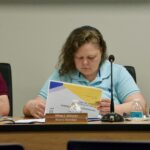
Autumn Fair (Photo courtesy of The Committee to Elect Autumn Fair for MDJ)

Sitting for an interview, Autumn Fair recounted the ways that she’s served her community, a list that now includes her first bid for public office.

Earlier this year, the Harrisburg native decided to run for magisterial district judge for District 12-1-02, serving Midtown and Uptown.

However, Fair was not expecting that, after planning to run and gathering about 200 community signatures on her petition, her name would be taken off the ballot following a court challenge.

But even that didn’t keep her from running, as soon she launched a write-in campaign.

“I’m here, and I’m connected in the community,” she said. “At the end of the day, it’s about the service. It’s about the people.”

Fair, in her write-in campaign, will attempt to defeat Matthew Pianka, who is the only candidate on the ballot, cross-filing for both the Democratic and Republican nominations.

Fair’s name would have appeared next to Pianka’s on the primary election ballot, had it not been for a petition in Dauphin County court to set aside her nomination petition.

Harrisburg resident Josette Pulley, with her attorney Karen Balaban, asked the court to consider striking over half of Fair’s petition signatures, which would bring her count under 100, the required number. The plaintiff claimed that many people who signed were not registered to vote at the address they listed, were not registered in the correct district, or did not fill in each required field on the petition, among other challenges.

In the end, the court ordered that Fair’s name not be placed on the ballot. Fair believes that the family of her opponent was behind the challenge.

“It felt wrong,” Fair said. “It’s a manipulative strategy that they’ve been using, legally, so that they don’t have competition for their candidate.”

If elected, Pianka, chair of Harrisburg’s Zoning Hearing Board, would be the third in his family to hold the district judge’s seat, reaching back decades. His mother, Barbara Pianka, currently holds the seat, but is not running for re-election this year. Before her, James Pianka, her husband, held the office.

Matthew Pianka could not be reached for comment.

Much of Fair’s motivation for launching her write-in bid comes from her belief that voters should have a choice when selecting their new judge, she said.

“The people should have a choice in who they’re electing and what they would like,” she said. “This community deserves a little bit better, and they deserve a choice.”

District 12-1-02 is one of many local districts that only have one candidate on the ballot for magisterial district judge. In Dauphin County, only one of seven races is contested.

Over the years, Fair has gained experience in business, education and community leadership. Currently, she is an educator at Harrisburg High School-John Harris Campus, teaching business classes to students, and owns a consulting business for small businesses and startups. Fair is also pursuing her doctorate in business.

It’s these experiences and skills that she hopes to bring to office. She also explained her desire to see an office that is diverse and reflective of the community.

Fair noted other initiatives she would like to start, like extending office hours and reducing the use of cash bail—two things that she believes will promote accessibility and equity.

With the primary election on May 16 just weeks away, Fair’s campaign plan is to continue what she says she’s always done—spending time in local businesses and neighborhoods, talking to the people that have been her neighbors for years.

She feels confident about her odds come time to vote.

“I feel good,” she said. “I’m qualified and prepared for this. I don’t believe it’ll be that challenging.”

To find out more about Autumn Fair and her campaign, visit her website.

This story will be updated if TheBurg receives a comment from Matthew Pianka.

If you like what we do, please support our work. Become a Friend of TheBurg! 


Continue Reading

HYP Celebrates 25th Anniversary

Harrisburg Young Professionals (HYP) is a group of young, active, civic-minded professionals who clearly envision Harrisburg’s future and are deeply invested in helping to make Harrisburg a great place to live, work and play.

HYP is part of a movement that is breathing new life into urban areas and reducing the negative impact of suburban sprawl while providing volunteer and professional networking opportunities for those living in our community. Their goal is to reduce the migration of educated young professionals to larger cities and encourage those who have left to return to the Central Pennsylvania region. HYP hosts over 100 in-person events annually, providing members with fun, interactive networking opportunities. HYP is known for its broad reach and significant impact in Harrisburg, providing a transformative connection to our city, to local businesses, and each other.

In this milestone year, HYP is excited to host a 25th Anniversary Celebration presented by Enders at the Historic King Mansion in June. Andrew Enders, President and General Counsel of Enders, shared that “HYP has woven itself into the fabric of our shared community, providing opportunities to build robust, resilient relationships to advance the success of our entire region. We are thrilled to celebrate HYP’s first 25 years!”

As HYP returned to gathering in person, the joy of reconnecting reinforced the importance of HYP to its members and volunteers. HYP is proud to serve as a launchpad for the next generation of leaders in the Harrisburg region. For the past century and the next century, Harrisburg Young Professionals is focused on making our community a better place!

2023 HYP Board President Olivia Edwards Rindfuss noted, “HYP is honored to be a bridge between young professionals and our vibrant city. At its core, HYP is committed to training and retaining future leaders—but that merely scratches the surface. Our members are introduced to every facet of civic and social life. We are a catalyst for growth and Harrisburg’s greatest cheerleader.”

If you have a desire to improve Harrisburg, there is a place for you in HYP. They welcome anyone who shares their drive and passion for helping our city be its best. You can learn more about Harrisburg Young Professionals at hyp.org.

This is sponsored content.

Continue Reading

Weekend Roundup with Sara Bozich


Plan your weekend with my weekly list of things to do around Harrisburg and central PA!


What you’ll find:

For something new: You don’t want to miss The Beat Goes On Adventure Race at Roundtop on Saturday! Worth noting: Two HU Presents shows this week: Father John Misty at The Forum tonight (Thurs) and Alec Benjamin at XL Live (Saturday) Things on my agenda this weekend: Might take Bo to the Wetlands Festival after tee ball; family in town for Alec Benjamin; gearing up for a busy next week

For your weekend planning

Below are options for your weekend.

A Look Ahead

  1. Get those tickets! Greystone Derby Day is May 6
  2. The SoMa Block Party Series is announced for 2023!
  3. The Best Farmers Markets around Harrisburg
  4. Submit your events for the Weekend Roundup

Thursday

Friday

Saturday

Sunday

If you like what we do, please support our work. Become a Friend of TheBurg!

Continue Reading

Harrisburg’s Shamaine Daniels announces bid for Congress, hopes for rematch against incumbent Scott Perry

Shamaine Daniels

Getting an early start on campaigning, one local official has thrown her hat into the ring to represent the greater Harrisburg area in Congress.

Harrisburg City Council member Shamaine Daniels announced on Thursday that, in 2024, she would seek the Democratic nomination to represent Pennsylvania’s 10th congressional district in the U.S. House of Representatives.

In 2022, Daniels, a three-term city council member, gained the Democratic nomination for the office, but ran unsuccessfully in the general election against incumbent Republican Scott Perry. In 2024, she hopes for another shot at defeating him.

“I am pleased and proud to announce my candidacy for Congress in PA-10 in 2024,” Daniels said in a statement. “Last year, we shocked everyone with our strong performance against Perry despite the disparity in campaign resources.”

In the 2022 race, Perry defeated Daniels by 24,116 votes, or by a margin of 53.8% to 46.2% of votes cast. The 10th congressional district encompasses all of Dauphin County and parts of Cumberland and York counties.

Daniels’ campaign last year, as well as statements about her new campaign for 2024, have leaned heavily on portraying Perry as an extremist and supporter of former President Donald Trump.

“Perry is out of step with this district, and that is on full display with his plans to jeopardize Social Security and Medicare while putting the entire economy in peril,” Daniels said. “Today, April 27, is the 85th anniversary of the first Social Security check being mailed to an American. We chose this day to announce my campaign to highlight not just Perry’s extremism, but his callous disregard for the people he was elected to represent.”


If you like what we do, please support our work. Become a Friend of TheBurg! 


Continue Reading

See How They Don’t Run: Welcome to non-decision 2023

Illustration by Rich Hauck

Maybe I’m an oddball, but I like to vote.

When I was a kid, my parents would take me along each Election Day, disappearing for a few minutes behind a billowy black curtain in my elementary school gym. It all seemed very mysterious—and gravely important.

I couldn’t wait to turn 18 to become an enfranchised adult so that I could participate in this rite of democracy, selecting my favored candidates from among a list of hopefuls.

Come May 16, I again will wind my way down 2nd Street to city hall, where my election precinct relocated a few years ago. While I support mail-in voting, I decided it wasn’t for me. This oddball enjoys the ritual.

I must admit, though, that I’m rather deflated by this year’s municipal primary.

I eagerly will cast my vote for Harrisburg City Council, as eight candidates are vying for three seats—a nice-sized field to choose from. But, for the rest of the ballot, there’s essentially no choice to be had. For the first time that I can remember, most races are uncontested for a Harrisburg voter.

Several years ago, the race for city school board was red-hot, with a reformist slate positioning itself aggressively against an entrenched crop of incumbents. A dozen candidates competed for five seats, even debating each other in a series of forums attended by hundreds of residents. And this year? The school board race is actually under-subscribed, with just four candidates, all incumbents, “competing” for five seats.

Now, every race, every year, is different, and, back in 2019, many people believed that the very future of the school district hung in the balance. In fact, soon after the election, the commonwealth seized control of the district, severely restricting the power of the elected board, which may explain the disinterest in serving now.

However, that dynamic is specific to the school board and doesn’t explain the lack of competition in other races.

For Dauphin County district attorney, sheriff, controller and register of wills, voters will have no choice as, in each case, incumbents are the only ones running. The same goes for Harrisburg treasurer.

For other Dauphin County row offices, the primary ballot offers just a single option, as the clerk of courts, recorder of deeds and treasurer each has a sole Democrat and a sole Republican running. Likewise, the county commissioner primary lacks any competition.

Perhaps most surprising is the lack of options for the area’s magisterial district judge offices. In Dauphin County, just one of seven MDJ races is contested. Three of these races even lack an incumbent, as several long-serving judges decided to hang up their robes.

These are important positions—the only judges most people will ever encounter—but voters in these uncontested districts will have but one choice, which essentially is no choice at all. If you don’t like your single option, you’re out of luck for the next six years, except for choosing to write in a name (see Editor’s Note below).

In essence, we’re hiring judges based on their ability to get 100 valid signatures on a nominating petition. And, with that low bar, they will attain a powerful, high profile job with an annual salary of $106,254.

To me, the big question then is why—why is there so little competition in the primary and, in many cases, the general election this year?

I don’t have the definitive answer. However, as a long-time reporter and follower of local elections, I’ve come up with a few likely reasons.

First, it’s very difficult to unseat an incumbent, which likely acts as a deterrent in attracting candidates for seats like the uncontested county row offices and the incumbent judgeships.

Secondly, the two parties have had trouble finding success on the other’s turf. In the county, Republicans tend to prevail and, in the city, Democrats dominate. This has led to the virtual absence of Republicans in city races and, like this year, Democrats vying for just some of the county contests.

Thirdly, PA’s municipal primary is often a rather sleepy affair here, especially without a high-profile contest to juice turnout, such as a city mayor’s race. This year, it’s even sleepier than usual. So perhaps it’s more a matter of degree than a substantive change in the electoral environment.

In any case, none of this will change my behavior on primary day. I still will get a small thrill entering city hall to cast my ballot, even if my only real choice will be to mark a few boxes for city council. And, despite the limited field for most local races, I hope you’ll do the same.

Lawrance Binda is publisher and editor of TheBurg.

Editor’s Note. After this column was written, we learned that Autumn Fair is mounting a write-in campaign for MDJ District 12-1-02. She had originally submitted petitions for the seat, but was knocked off the ballot after a successful court challenge to signatures on her nominating petitions.

If you like what we do, please support our work. Become a Friend of TheBurg! 

Continue Reading

Rail Fail Ready: After Ohio disaster, area first responders stress derailment preparedness

In the United States, train derailments are fairly common, including this December derailment in Harrisburg. Within a few hours, this train was
placed back on its track, and there were no injuries. Photo by George Drees.

Harrisburg is a railroad town. Railroad towns have wrecks.

Railcars have tumbled from the Rockville Bridge into the Susquehanna River. A double-stacked car jumped off the track last December. Horrific passenger train wrecks in 1962 and 1905 left dozens dead. In that infamous 1905 collision, windows shattered a mile away from the explosion of a boxcar full of dynamite—the kind of explosives that shippers used to hide behind innocuous labels.

In a region honeycombed with rail lines, today’s emergency responders don’t plan for “if” derailments happen. They plan for “when,” including the very real possibility of an East Palestine, Ohio-style hazmat incident.

“We are prepared but never prepared enough,” said Susquehanna Township Fire Marshal George Drees. “We have history here in central PA.”

Local fire companies are the first line of defense.

“Everything starts and ends at the local level,” said Chris Fisher, manager of Dauphin County’s emergency management office.

As an incident escalates, the Dauphin County Emergency Operations Center calls in and coordinates more and more stakeholders to manage the situation.

But who’s in charge? At that local level, there is the “incident commander”—likely a local fire chief—who makes the decisions. If the incident commander doesn’t have the expertise to address a particular situation, county resources can fill in the gaps and offer solutions.

“Ultimately, the incident commander signs off on it,” Fisher said.

Many decisions are best made at the local level, with support from higher-level agencies on such factors as population density and weather models, said David “Randy” Padfield, director of the Pennsylvania Emergency Management Agency. The greater the risk, the likelier that the model flips, as locals provide input, but higher-level agencies call the shots.

In East Palestine and similar disasters, the issue of unified command comes into play. According to the National Incident Management System, unified command is triggered when no single agency can manage an incident on its own. Without an individual commander, joint decision-making sets aside overlapping and competing jurisdictions.

Unified command minimizes miscommunications when multiple agencies and jurisdictions descend on a scene, Padfield said.

“Everyone has awareness of everyone’s tactics and plans, and you have a consistent planning process that involves everyone,” he said. “No one is caught off guard, and everybody has a common understanding of the situation and what the tactics are going to be.”


Courses of Action

In the case of an incident, rail companies have “pretty broad authority to operate legally within the right of the rail,” but the dialog and information sharing of unified command are meant, in part, to balance business concerns with public safety, Padfield said.

Advance discussion raises awareness and allows agencies on the scene to prepare for responding to tactical decisions—perhaps picking the moment when atmospheric conditions are right for an evacuation.

In East Palestine, a decision to vent and burn one unstable railcar morphed within 12 hours into the vent-and-burn of five cars, Padfield said. That left other agencies in a “compressed time environment” for planning, he said. At a state Senate Veterans Affairs and Emergency Preparedness Committee hearing, Norfolk Southern CEO Alan Shaw repeatedly said that unified command made the decision.

“Trying to understand what changed—that’s information we didn’t have,” Padfield told TheBurg. “What other courses of action did you investigate, and why did you choose this course of action versus the other ones? There was no dialog associated with any of that to try to figure out what other courses were actually explored to be able to mitigate that situation.”

Days after the East Palestine incident, Pennsylvania Gov. Josh Shapiro asked the same questions in a letter accusing Norfolk Southern of failing to implement unified command, acting unilaterally, giving inaccurate information and conflicting modeling about the impact of a controlled release, and limiting state and local response by failing to “explore or articulate courses of action.”

Norfolk Southern did not answer TheBurg’s request for a response to those particular charges. Through an email, spokesperson Connor Spielmaker said the rail company was on the Ohio scene immediately “and began working directly with local, state and federal officials as they arrived at the unified command established in East Palestine by local officials, including those from Pennsylvania.”

As for what’s in the railcars rumbling through town, rail lines must provide counties with the information needed for a “commodity flow” study showing materials that have been carried through a county. The study equips county emergency managers to prepare according to the laws of probability, but it doesn’t show what’s coming through on a given day. When an incident occurs, responders cross-check railcar identification numbers with an app called AskRail, which details what the car is carrying.

“It’s no secret to us that the largest quantity of hazardous materials that comes through our area by train is propane,” Fisher said. “From a planning perspective, let’s concentrate on those things that statistically have a higher chance of happening in our area and base our training exercises off that.”

And while federal law allows you, member of the public, to read county reports on the hazardous chemicals that businesses use and store, you can’t read the commodity flow study. That’s protected by nondisclosure agreements the county signs with Norfolk Southern.


Worst Case

Coincidentally, long before East Palestine, planning was underway for a coordination exercise testing county and municipal response capabilities to a fictional train derailment and propane release. The exercise explored the human impact across various settings—city center, a hospital and nursing home, a one-road rural town where the only evacuation route is by river.

“What is the worst case?” Fisher said. “If we can come up with ideas to manage the worst-case scenario, then the rest of the stuff falls into place.”

PEMA develops standards and certifies the hazmat response teams mandated for every Pennsylvania county. PEMA also distributes grants, funded by fees paid by businesses that store certain chemicals, for training and equipment, determined by local emergency planning committees based on community needs and threats.

In general, fire company first responders are trained and equipped for hazmat defense—monitoring air quality in the immediate area, keeping contamination from spreading, avoiding environmental damage, rescuing or evacuating affected residents.

The people in the hazmat suits are trained in offense—going in to stop leaks, close valves and make repairs. Those hazmat team members can also be trained as tank car specialists, building expertise on assessing damage and dealing with specific railcar types.

Norfolk Southern has announced creation of a new, dedicated training facility for first responders to be sited near East Palestine, but has no details yet about how trainees will be selected and whether the free training will include reimbursement for travel expenses and lost wages.

The company continues its Operation Awareness and Response program, staffed by hazardous materials experts for free first-responder training and education in Norfolk Southern communities, Spielmaker said. The program’s “safety train,” including specially equipped boxcars and tank cars for hands-on training, travels the Norfolk Southern lines. Norfolk Southern also participates in the multilateral TRANSCAER program that trains first responders and supports community planning nationwide.

“Our experts can travel to local fire houses to perform a variety of classroom, technical and tabletop trainings,” he said. “Our safety train also travels our network annually to a number of stops, this year including Harrisburg.”

As Drees said, planning is always underway, but there’s no such thing as full preparedness. If you live in the 21st century, a disaster is on its way, whether by rail or from the clouds, so visit www.ready.pa.gov to learn how to make an evacuation plan and pack up your emergency supplies.

If you like what we do, please support our work. Become a Friend of TheBurg!  

Continue Reading

May Publisher’s Note

I have a brother-in-law who considers himself something of a foodie.

Steve lives in Florida, but his job frequently takes him to this area. He jokes that he likes visiting Harrisburg not so much for my company but because he’s guaranteed a great meal.

At least, I think he’s joking.

Anyway, in his years visiting, I’ve taken him to Suba, Mangia Qui, the Millworks, Note, Pastorante, El Sol, Café Fresco, Zeroday, Home 231 and Cork & Fork, to name a few. Several years ago, he ordered the “Cast Iron Chocolate Chunk Cookie” dessert at Ad Lib and hasn’t shut up about it since.

He can hardly believe that this culinary bounty is all within a 10-minute walk of my house. A 10-minute walk from his house gets him, as he says, 10 minutes away from his house. But there are palm trees.

Indeed, we are very fortunate to have such great places to dine in Harrisburg. In my years here, I’ve found that the suburbs also have stepped up their game, and farther afield, Lancaster and York boast more fabulous restaurants all the time.

I bring this up here, in my monthly introduction, because our May issue is focused on restaurants, cooking and the folks who feed us. In these pages, you’ll also find our annual, special dining section, which we call “Midstate Table.”

Each May, ever since the pandemic hit, I’ve urged our readers to support our local restaurants robustly. This still applies, even as COVID recedes from our every-waking thought. Many restaurants are still suffering, especially those that once relied on office workers for a huge chunk of their business. So, please, pay them a special visit, be extra kind, tip generously—make sure that they stay open for us.

Well, my brother-in-law is due for another visit soon. So, if you happen to be in the Hilton Harrisburg and see a very happy middle-aged guy who vaguely resembles Groucho Marx, his face covered in chocolate, don’t worry. It’s only Steve.

Lawrance Binda
Publisher/Editor

Click here to read the digital version of our May issue.

If you like what we do, please support our work. Become a Friend of TheBurg! 

Continue Reading

One Soul at a Time: For Midland Cemetery, National Register designation marks another milestone in long preservation effort

Elizabeth Jefferies & Barbara Barksdale

Barbara Barksdale recounted the time that she reassured a volunteer that they would find graves in the tangled vines, brush and tight trees of the hillside at Midland Cemetery.

“We know they’re down there, and we’ll pull them out one soul at a time,” she recalled saying to a member of Team Rubicon, a military veteran volunteer organization that was helping at the cemetery.

The graves of this historic Black cemetery are in the trees because of decades of neglect and forgotten history. But after 32 years of recovering this hallowed place, protection is available in the form of the National Register of Historic Places to keep it from being lost to the generations again.

“When I first started this project, I had no clue what the State Historic Preservation program or National Register was,” Barksdale said. “I started because of my grandfather. I started because I wanted to do something for him.”

Now, Midland Cemetery, founded in 1795, has been nominated to the National Register of Historic Places, much to the relief and elation of Barksdale.

“To me, it meant nobody could destroy it anymore,” she said.

While a listing in the register doesn’t guarantee the cemetery’s existence in perpetuity, it does offer some security.

“It validates that it’s not just special to us or to the community, but something of national significance,” said historian Steven Burg, a professor at Shippensburg University.

Burg serves on the board of the Pennsylvania Hallowed Grounds project (PAHG), which aims to preserve African American burial sites across Pennsylvania, of which 150 have been found.

Burg said that a National Register listing protects the cemetery against any kind of project funded with state or federal money and that any development would include more review.

“It forces builders to stop and consider what they are doing before moving forward,” Burg said.

Barksdale pointed out why this is important. Down the hill from the cemetery runs Kelker Street. Across Kelker is a cemetery sign and Steelton-Highspire High School.

“You see that billboard over there? That’s the beginning of the cemetery,” Barksdale said. “Most people have no idea and even that man just drove over it. They didn’t realize they drove over the bodies, because the bodies are under the street.”

The bodies in the cemetery are friends and family of the community who served as Buffalo Soldiers, U.S. Colored Troops, Montford Point Marines and World War I and World War II veterans. These bodies were people who formed churches, like the Monumental AME Church in Steelton, and served as civic leaders and steel workers, foundational to the community.

Barksdale said that, when she first began cleaning up the cemetery, she used these souls as reasons why local officials should allow her to do her work. She was told that she was trespassing and would be jailed if she continued. Continue she did, but that history exemplifies why it’s important to look to future preservation.

“We’re not going to be here forever, and we want to preserve what we’ve gone through to get here,” said Elizabeth Jefferies, Friends of Midland Cemetery board member.


The Long View

Allowing cemeteries into the National Register of Historic Places is a new phenomenon.

Burg explained that the National Preservation Act of 1966 did not include cemeteries because there were just so many. But, in 2020, the State Historic Preservation Office in collaboration with PAHG, created a process to allow their inclusion, which the National Park Service approved in 2021. Now, the goal is to increase the number of African American cemeteries on the list.

“We’re taking the long view,” Burg said.

For Barksdale, the long view includes educating students about the cemetery. She works with teachers at the high school to provide a holistic learning experience via the cemetery.

She explained that they begin with Civil War history. The lessons also include science (examining the ground), art (tombstone designs), math (the numbers included on the grave markers), and, finally, English.

“We want you to write a little thing about what you discovered, what you found, who did you bring to mind here,” Barksdale said.

Barksdale, a local historian herself, talks about the people in the cemetery and recounts the local and national history of the time for context. As she speaks, she pulls listeners into the people’s lives with great enthusiasm, so that a person is enraptured by the story.

“This woman has so much knowledge,” Jefferies said. “She speaks from her spirit.”

Barksdale’s spirit and tenacity show as she continues her work at Midland. In April, a group of archeologists visited the cemetery with ground-penetrating radar to find additional gravesites, as headstones often descend straight down into the earth.

Barksdale discovered one of these graves accidentally when she tried to remove a stone from the ground for safer mowing. It was a headstone of an infant boy, whom she realized, after some research, was born on that very day, 100 years prior.

“[He] just wanted to be known,” Barksdale said.

Team Rubicon volunteers discovered the long-forgotten grave of Bert H. Rouzee, a World War I veteran who served as a medic. This full-circle moment was not lost on Barksdale. These modern soldiers resurrected the grave of a brother-in-arms whom history had forgotten.

Barksdale’s preservation work has included collaborations with many different individuals and groups—board members, scout troops, incarcerated people, volunteers, college students and historians like Burg.

“Barb and a lot of people around the country do their incredible work,” Burg said. “For me to support that and help with long term preservation, I couldn’t think of a better thing to do with my skills as a historian.”

Midland Cemetery is located at Kelker and Cole streets, Steelton (Swatara Township). For more information, visit www.midlandcemetery.com.


If you like what we do, please support our work. Become a Friend of TheBurg! 


Continue Reading

May News Digest

Harrisburg Registers Fewer “Stuck Trucks”

Harrisburg may have found a way to curb its stuck truck problem.

Last month, city officials explained that, since they installed new signage along N. Front Street last summer, the number of trucks ending up wedged under the railroad bridge has significantly decreased.

In August 2022, city Communications Director Matt Maisel reported that trucks getting stuck under the bridge had become a near daily occurrence. To address the issue, the city and PennDOT hung two new signs at N. Front and Chestnut streets warning vehicles over 12-feet, 6-inches tall that traveling any further is prohibited.

According to Harrisburg Project Manager Percy Bullock, the signs seem to have succeeded in reducing the problem.

“I’ve gotten a whole lot less calls,” he said.

Over the fall and winter, calls to the police about stuck trucks decreased. For the month after the signs were posted, from the end of July 26 to Aug. 25, 23 calls about trucks were received. The following month, that number dropped to 19, and the next month it dropped to 10. The next two months, the number would rise slightly, jumping to 17 in December. But January only counted six and both February and March, only five each.

The signs themselves may have contributed to that decline, but the added ability to fine drivers who ignore them may have played a role as well, explained Chris Flad, PennDOT District 8 traffic engineer.

In the transportation world, different signs mean different things, and, according to Flad, the new signs give the city greater legal standing to fine drivers. And for the past several months, Harrisburg police have regularly handed out those fines to drivers who decide to take their chances with the bridge. Under state law, drivers can be fined up to $500.

Ultimately, it’s going to take time to see if the signs have made a lasting difference or if the dip in sticky situations is just an anomaly, Flad said.

“You’ve got to give it time to see if it’s truly working or not,” he said.

Both Bullock and Flad agreed that the issue has created a huge headache for the city and drivers over the years. Each call can require a handful of police officers, along with traffic personnel, to respond, Bullock said. The situations also often force the city to shut down at least two lanes of traffic.

If the signs don’t do enough to decrease the issue long term, PennDOT has “a couple of other tricks up our sleeves,” Flad said.

PennDOT is currently considering placing a sign at the end of the Market Street Bridge, warning drivers not to turn right, towards the railroad bridge, Flad said. That sign would be installed in the coming months.


School District Outlines Budget Plan

The Harrisburg School District has started crafting its spending plan for the upcoming year.

At a school board meeting last month, district officials presented a preliminary 2023-24 balanced budget of $216.5 million.

The proposal does not include a property tax increase.

The proposed spending plan would be a decrease from the current year’s budget of $227.4 million, as federal Elementary and Secondary School Emergency Relief (ESSER) funding used in last year’s budget comes to an end, according to Dr. Marcia Stokes, chief financial officer for the district.

The budget would include funding for new pre-K classrooms, which the district plans to start, dependent on receiving Pennsylvania Department of Education Pre-K Counts grant funding.

Stokes also noted the potential elimination of certain vacant job positions within the budget and the addition of positions, such as increasing the number of ESL teachers, school psychologists, special education staff and career counselors.

In total, the budget proposes spending $58 million, the largest allocation, on salaries, and another $41 million on staff benefits. About $29 million would fund purchased property services, which includes money for the renovation project at Steele Elementary School, which is slated to reopen in August 2024. Another $38.6 million would support other purchased services, which includes funds the district pays to area charter schools.

Stokes explained that the budget is still in its early stages and may change, as collective bargaining agreements with unions are finalized and state funding is announced.

District Receiver Dr. Lori Suski is expected to act on the proposed budget on May 23 and on the final budget on June 27.


Harrisburg Ponders Short-Term Rentals

It’s been over six years since Airbnb rentals started popping up in Harrisburg, but city officials are still pondering what to do about them.

At a recent special session, City Council weighed possible options for regulating, registering and taxing short-term rentals, such as Airbnb.

According to Michael Hughes, Harrisburg’s tax and enforcement administrator, this type of rental currently falls in a “gray, unregulated area” within city code. Because of that, not all rentals pay hotel taxes, sales and mercantile taxes or are officially registered within the city, all standard practices for traditional B&Bs.

The city also hopes to address concerns from residents about certain short-term rentals causing noise, parking and traffic issues, as well as building code violations.

In 2017, Harrisburg held its first meeting on the topic, attracting a full house of local residents who voiced support for and against Airbnbs. However, no new legislation came forth. Now, officials are again considering how to move forward.

“The most important thing to start with is for the council and the mayor to have a clear objective of what they’re trying to accomplish,” said Neil Grover, city solicitor. “Because there are lots of ways to do this.”

As the city weighs a decision, short-term rentals in Harrisburg have only continued to increase.

Currently, there are about 256 short-term rental units operating in the city. That number grew by 33% from last year’s number and is expected to continue to tick up at the same rate, according to research done by Granicus, a software company serving as a consultant to the city.

During the meeting, officials brainstormed options like limiting Airbnbs to certain city zones or geographic locations or requiring that they be owner-occupied. Other options, such as requiring registration with the city, charging permitting fees or mandating yearly inspections, also were discussed.

Council President Danielle Bowers said that the next step will be to establish a task force to develop a plan moving forward.


HACC Approves Budget, Tuition Hike

HACC officials last month approved a spending plan for the coming academic year.

The college adopted a $116 million budget for the 2023-24 school year, which includes a tuition increase, but no layoffs or furloughs.

“This budget reflects careful consideration of a projected decline of 8% in HACC’s enrollment, the growing national dialogue questioning the value of a college education, and the impact inflation will have on college operations,” said HACC President and CEO John Sygielski, in a statement.

For the next academic year, HACC will hike tuition by 5% for non-sponsored, sponsored and “College in the High School” students. Out-of-state tuition will increase to $325 per student per credit and dual enrollment tuition will increase to $175 per credit. There will be no increase in other college fees.

As a majority of HACC students are non-sponsored, part-time students, tuition will increase by about $11.75 per credit for the average student, according to HACC.

Also as part of the budget, the college will employ several cost-saving measures to offset a projected $400,000 deficit. For instance, HACC will offer retirement incentives to full-time employees who meet the requirements. Currently, over 200 staff members would be eligible, which could possibly save the college up to $5 million.

HACC also plans to freeze or eliminate 23 open positions, reduce overtime and consolidate courses with low enrollment, according to the college.


Homes Sales Down, Prices Up

Home sales fell but prices inched higher in the latest report on previously owned houses in the Harrisburg area.

For the three-county region, March sales totaled 454 houses compared to 576 in March 2022, while the median sales price rose to $246,500 from 238,900, according to the Greater Harrisburg Association of Realtors (GHAR).

In Dauphin County, 227 homes sold, a decline from 309 in the year-ago period, as the median price increased to $222,500 from $205,750, GHAR said.

Cumberland County had 192 home sales versus 245 the prior March, and the median sales price rose slightly to $287,450 from $280,000 last year, according to GHAR.

In Perry County, 35 homes sold, an increase of 12 compared to last year, as the median price increased to $230,000 versus $216,000 in March 2022, stated GHAR.

The pace of sales slowed, as GHAR reported that “average days on market” totaled 33 days, compared to 23 days in the year-ago period.


So Noted

Dr. Bennett Chotiner has been awarded Harrisburg University’s 2023 Impact Award, which was presented last month at HU’s annual gala. The Impact Award honors people who have made invaluable contributions to the building and establishment of the university.

Hamilton Health Center has broken ground on a planned facility in Steelton, its fourth satellite location in the area. The 20,000-square-foot healthcare facility is part of a 102,000-square-foot, mixed-use development called The Steel Works Revitalization, developed by Wormleysburg-based Integrated Development Partners.

Harrisburg University and UPMC last month announced a 10-year partnership that includes naming HU’s new academic building, the “UPMC Health Sciences Tower at Harrisburg University.” The 12-story building, slated to open this fall at S. 3rd and Chestnut streets, will house the UPMC Shadyside School of Nursing, in addition to several HU programs and services.

Jessica Knapp will assume the role of state president and CEO of Communities in Schools of Pennsylvania on July 1, succeeding Jenna Lewis, who served the organization for six years. CISPA serves 24 schools across 11 school districts, supporting students and empowering them to stay in school.

Susquecycle has returned for the season, offering rental bikes at six locations in downtown, Midtown and City Island in Harrisburg. The organizer, Tri-County Regional Planning Commission, hopes to expand the program, now in its second year, to more locations in Harrisburg and into the suburbs.

Sylvia H. Rambo U.S. Courthouse officially opened last month, capping a decades-long effort to relocate the courthouse from downtown Harrisburg’s federal building. The 243,000-square-foot building serves as the new location of the U.S. District Court for the Middle District of Pennsylvania, the Pennsylvania 3rd Circuit Court, U.S. Courts, U.S. Marshal Service, U.S. Attorneys, U.S. Trustees, Homeland Security and Federal Public Defender.

The LAN Center opened last month in downtown Harrisburg, offering a place for state-of-the-art e-sports gaming. The 2,000-square-foot space, located at 19 S. 3rd St., is home to the Soniqs, a professional e-sports team, and is also available for clubs and groups.

Zeroday Brewing Co. last month debuted its new restaurant at its flagship taproom at 925 N. 3rd St., Harrisburg. It took over from La Catrina, which had operated the food portion of the house since the space opened two years ago. Zeroday also changed the cuisine from a Mexican-themed menu to one focused on American fare, such as salads, sandwiches and “mac & cheese options.”

Changing Hands

Bailey St., 1216: D. Boyle to D. Peroza, $40,000

Bailey St., 1220: C. Johnson to Builders Property Management & Marketing Group LLC, $60,000

Balm St., 23: Northeast Investors Alliance LLC to D. Fernandez & H. Valverde, $68,000

Bartine St., 1323: J. Herr to R. Harris, $114,900

Berryhill St., 1307: Anpat LLC to TKO Rental LLC, $63,000

Berryhill St., 1507: Top Shelf Solutions LLC to M. Vazquez, $59,900

Camp St., 533: Integrity First Home Buyers LLC to MHG PA1 LLC, $159,995

Derry St., 1216: S. Ledgister to J. & B. Ortiz, $125,000

Derry St., 1927 & 1929: S. Fang to T. Webb, $174,000

Derry St., 2341: M&D Express LLC to S. Johnson, $159,000

Emerald St., 313: M&T Bank to G&W Rentals LLC, $64,900

Forster St., 1835: C. Woods to C. Banks & E. Ingrassia, $106,000

Girard St., 740: O. Caban to M. Woodard, $160,000

Green St., 1619: G. Hoffner to Saint Adam Property Management LLC, $235,000

Green St., 1710: B. & B. Hinnenkamp to P. & S. Wright, $255,000

Green St., 1836: WCI Partners LP to Little Amps Coffee LLC, $275,000

Green St., 2017, 2019; 2001, 2003, 2005, 2007, 2009 Penn St.; 1922, 1924, 1926 N. 3rd St.; 1923 Susquehanna St.: WCI Partners LP to Harrisburg Redevelopment Group LLC, $777,000

Green St., 2122: KMM Development LLC to S. Laroc, $130,000

Green St., 2136: Great Row LLC to J. Yingling, $77,500

Green St., 2810: Christian Insight Ministry to T. & Alvise Banks, $110,000

Green St., 3101: T. & L. Reese to M. Biboso, $272,100

Hamilton St., 428: M. & S. Imler to M. Dagan, $73,500

Harris St., 202: L. Craig to I. Sloan, $178,000

Herr St., 1849: Ultra Renovations & Investments Inc. to F. Payano & F. Almonte, $55,000

Jefferson St., 2261: A. Williams to SNB Real Estate Solutions LLC, $59,995

Lexington St., 2625: Bridger Investments LLC to E. Rivera, $133,000

Logan St., 2242: RRMMM Real Estate LLC to D. Boyle, $52,000

Muench St., 412: Integrity First Home Buyers LLC to R. Cange, $145,000

Naudain St., 1604: Paxton Properties LLC to C. Perez, $55,000

N. 2nd St., 928: D. Galluci to R. & S. Katsifis, $60,000

N. 2nd St., 2007: P. & L. Klemunes to A&W Homes LLC, $150,000

N. 2nd St., 3012: J. McLaughlin to D. Yount & N. Holt, $215,000

N. 3rd St., 1606: J. Merrill & D. Wilburne to A. Matarazzi & C. McClelland, $282,500

N. 3rd St., 1912: N. Peterson to E. Monteros & T. Peszynski, $93,000

N. 3rd St., 2028: Youth Advocate Program Inc. to SJL Rentals LLC, $175,000

N. 3rd St., 2451: F. Clark to Safe Hands Real Estate Ltd., $205,000

N. 4th St., 2609: D. Markel to S. Rector, $120,000

N. 4th St., 3010: Eruv Development 1 LLC to J. Jah, $200,000

N. 4th St., 3013: D&A Homes LLC to J. Filpo & Y. Bartolo, $140,000

N. 5th St., 1618: J. Blackburn to A&W Homes LLC, $125,000

N. 5th St., 2411: Stoute Housing Inc. to J. Cabrera, $150,000

N. 6th St., 2231: Elevation Properties LLC to TKO Property Holdings LLC, $91,000

N. 6th St., 3103: J. & S. Santana to K. Malinoski, $152,000

N. 15th St., 1435: S. Sary to N. Gutkovskaya, $116,000

N. 15th St., 1607: N. Lewis & I. Davenport to E. Davenport, $50,000

N. 18th St., 33: D. Boyle to M. Paulino, $45,000

N. 18th St., 67: Eden Bridge Foundation Inc. to D. Boyle, $62,500

N. 18th St., 806: J. Johnson to E. & E. Ramirez, $65,000

Paxton St., 1717: B. Do to B. & V. Doan, $80,000

Penn St., 1606: J. Simpson to D. Hoffman, $110,000

Penn St., 1615: B. Waltz to L. & M. Collett, $197,000

Penn St., 2151: R. Estrella to Equitable Rentals LLC, $67,000

Penn St., 2153: R. Rammouni to Equitable Rentals LLC, $66,000

Radnor St., 102: DelGiorno Investments LLC to Angdupe2011 LLC, $155,000

Reel St., 2746: R. & L. Goldberg to EJB Rentals LLC, $47,500

Regina St., 1414: JP Investment Holding LLC to 717 Apartments LLC, $302,000

Regina St., 1827: D. Boyle to M. Perez, $55,000

Reservoir St., 72: Gilligan Realty LLC to Horizon Trust FBO Kathy L. Watson 401K, $63,000

Rolleston St., 1249: Paul Winka Trust to F. Ashennafi $105,000

Rudy Rd., 2454: J. Howard to L. & K. Grant, $100,000

Rumson Dr., 330: G. Di Bosco to K. Weldeghebrial, $127,500

Showers St., 622: M. Garland to J. Ellis & Waterstone Mortgage Corp., $133,900

S. 12th St., 1443: L. & A. Prather to F. Hills & S. Colon, $110,000

S. 17th St., 37, 39 & 41: R2 Property Group LLC to T. Howard, $88,000

S. 20th St., 624: M. Ortiz to S. Gardner, $111,500

S. 25th St., 707: R. Richardson to L. & J. Soto, $142,000

S. 26th St., 708: P. Negron to T. Mercedes, $145,000

S. Front t., 625: J. Chumley to K. Romero, $170,000

State St., 200: 200 State Street LLC to Capitol View LLC, $300,000

State St., 227: Vinculum Inc. to Sierra Real Estate LLC, $330,000

State St., 231, Unit 301: D. Scott to J. Fernandez, $203,000

State St., 231, Unit 603: Kreit Group LLC to Lefkas Odyssey Corp., $175,000

State St., 1520: G. Zehr to A. Antonio, $80,000

Vernon St., 1348: G. Vargas to D. Boyle, $55,000

Vernon St., 1354: SU Hogar LLC to Urban Lighthouse Ministries, $95,000

Waldo St., 2610: D. Boyle to L. Bonilla, $58,000

Zarker St., 1833: M. Galvez to M. Pabana, $53,000

Zarker St., 1949: M. & D. Goldberg to B. Oliver, $69,500

Harrisburg property sales, March 2023, greater than $40,000. Source: Dauphin County. Data is assumed to be accurate.

If you like what we do, please support our work. Become a Friend of TheBurg! 

Continue Reading

Speaking My Language: Melissa Mesones-Ortiz helps Harrisburg connect with Spanish-speaking residents, supports Latino community

Melissa Mesones-Ortiz

For one of her first work assignments, Melissa Mesones-Ortiz was asked to interpret a Harrisburg city meeting from English to Spanish.

Interpretation takes mental focus and sharp, quick thinking, but she had done it many times before. However, she wasn’t expecting how long the meeting would take—over three hours.

“Interpretation is live, so you cannot make a mistake,” she said. “They were talking so fast, but I was trying to process and take my time. Some people don’t understand—it’s a very difficult world, translation and interpretation.”

But that was just the beginning of the countless hours that Mesones-Ortiz would dedicate to making the city more accessible to Spanish-speaking residents. As Harrisburg’s deputy director of communications, she almost single-handedly oversees communications with Latino residents who often face language and cultural barriers in engaging with and accessing local government.

Mesones-Ortiz admits that she’s a perfectionist, especially when it comes to grammar and spelling. Her family has joked about it too—her intense attention to detail. But in her line of work, one mistake could mean anything from getting measurements wrong in a zoning document to confusing the sport pickleball with a ball that doubles as a savory snack.

Her services are vital to the 20.5% of Harrisburg residents who speak a language other than English at home, according to the most recent U.S. Census data.

However, her work goes beyond just helping Spanish-speaking residents understand what they’re reading or hearing; she’s building relationships. Her efforts ultimately show them that local government is there to serve them too—that they’re not outsiders, but valuable community members.

“Little by little, every time I help them with services, they get more involved with issues in the city that they know are important,” she said.


Miss Understanding

Mesones-Ortiz can relate to many of the residents she helps because she knows what it’s like to be in a new country without English as your first language.

She first came to Harrisburg from her native country, Peru, as a study abroad student, staying at the International House, a former student exchange program downtown. She remembers some of her first weeks in the city, getting lost in the train station and being amazed by Strawberry Square. She loved that there was a “mall” within walking distance.

But it also was a difficult adjustment.

“It was my first introduction to American life,” she said. “I was in shock. I was really afraid to speak English. It was difficult at the beginning because people were not familiar with my accent, so I had to repeat things multiple times.”

After college, Mesones-Ortiz decided to live in Harrisburg, working at Penn State as a research supervisor and at the Latino Hispanic American Community Center in Allison Hill. She started her position with the city in 2021 with a goal of community service and a specific passion for helping Harrisburg’s Latino senior citizens.

“I really wanted to provide information to them,” she said. “It’s a community that sometimes they are forgotten.”

When Mesones-Ortiz started, the city was lacking in formal translation and interpretation services, which is crucial for non-English speakers, she said. Processes like getting a building permit, paying a parking ticket, or even just calling into the city with a question can be challenging for someone with language or cultural barriers.

These barriers can cause misunderstandings and fear and can even get residents into trouble if they unknowingly violate a city code or statute.

“I was one of them when I was learning English, so I know the difficulty that is not knowing a language,” Mesones-Ortiz said.


Opportunity for Community

Mesones-Ortiz’s fourth-floor office is decorated with artwork, mostly crayon drawings by her 9-year-old daughter. It’s small, but has become a welcoming place for the many Harrisburg residents she’s built relationships with over the past two years.

She believes that, if she can be an understanding, friendly face to one Spanish-speaking resident, that person will pass on word to a neighbor, and the community’s view of the city will slowly change for the better. City officials aren’t out to stick you with fines, but are trying to assist and keep you safe, she explains.

She also spends a lot of time informing residents about which services the city does and doesn’t provide, as their cultural background may be different. Outside of translating documents, she has put together informational resources for Spanish-speaking residents and hopes to eventually host topical workshops.

Mesones-Ortiz sees her work paying off as residents are more confident in engaging with the city and understanding its role better.

“They really believe that they can trust in the municipality and the city and that they’re going to find help,” she said. “It’s no more that, ‘I got a ticket, I’m in trouble.’ It’s more like, ‘they’re going to help me out.’ I don’t see any more of that fear.”

The inclusivity isn’t just beneficial for non-English speakers, Mesones-Ortiz explained, but for the entire Harrisburg community. When Latinos receive assistance tailored to their needs, they’ll be more engaged in city happenings. And isn’t a more diverse, vibrant, united city better for everyone?

“We just want opportunities to show what we can bring to the country,” Mesones-Ortiz said. “If people can get more opportunities, we can be a more connected community.” 

Harrisburg’s MLK City Government Center is located at 10 N. 2nd St., Harrisburg. To contact Melissa Mesones-Ortiz, email her at [email protected].


This article is available in Spanish on our website. Certified translation by Latino Connection.


If you like what we do, please support our work. Become a Friend of TheBurg! 



Continue Reading