The Week that Was: News and features around Harrisburg

The Tri-County Association for the Blind building, bought by WebFX for possible future use

Read more about WebFX’s expansion into another mansion on Front Street, a new fare system coming to Harrisburg’s public transit this summer and more—all compiled for you below:

April’s happenings at local museums, parks, art galleries and more are all listed for you here, as seen in our monthly magazine.

Chavis Law Firm’s owner emphasizes the importance of creating a will for your family, in our April magazine story.

Dauphin County commissioners declined to approve a list of annual gaming grants, citing concerns about allocation and alleged misuse. Read more here.

Dauphin County is seeing turnover in top economic positions, according to our online story.

Harrisburg Catholic Worker hosted a press conference to call for the release of Omar Viadurre Luis, a Harrisburg asylum seeker, from an ICE detention center. Read more in our online story.

Our “Musical Notes” columnist has compiled all the best bands coming to the area this month. Click here to see the lineup, as seen in our April magazine

Our publisher paid tribute to his late neighbor in his editorial this month—a quirky, community-minded man, who loved his leafblower. Read more, as seen in our April issue, here

Rabbittransit plans to roll out a new, account-based fare system this summer that will allow riders to tap to pay with cards or phones, our online story reported.

Sara Bozich has compiled the best events of the weekend in her Weekend Roundup, including Plants + Pints at Strawberry Square. Check out the full list.

WebFX got almost $1 million in state money this week and plans to expand its campus into another Front Street mansion; it also purchased another building on N. 2nd Street for possible future use, our online story reports.

If you like what we do, please support our work. Become a Friend of TheBurg!

Continue Reading

Pennsylvania’s Regulated iGaming Market Demonstrates Long-Term Stability

Pennsylvania’s Regulated iGaming Market Demonstrates Long-Term Stability

Pennsylvania’s iGaming market shows sustained growth into 2026. Here’s what steady revenue trends reveal about long-term stability.

Pennsylvania’s online gambling sector has reached a point that many newer markets are still dreaming about. It is no longer defined by rapid expansion alone, but by something far more valuable: consistency.

Over the past two years, the state has moved beyond early-stage growth into a phase where performance is measured not just by record highs, but by how reliably those highs are maintained. That distinction matters. It signals a market that is settling into long-term stability rather than chasing short-term gains.

Why the PA Online Casino Model Works

Pennsylvania’s regulated gaming environment, overseen by the Pennsylvania Gaming Control Board, has now delivered five consecutive years of overall gaming revenue growth. The strength of the PA online casino sector lies in its design. From the outset, Pennsylvania adopted a highly structured regulatory approach. Licensing requirements are strict, and tax rates are among the highest in the United States. Online slots are taxed at 54%, while table games and poker sit at 16%.

This has had a filtering effect. Only well-capitalized operators with long-term strategies have entered the market. That reduces the risk of instability caused by aggressive short-term competition.

At the same time, players benefit from a broad and regulated ecosystem. Platforms offer a wide selection of online real money games, from high-frequency slot play to slower, strategy-driven table games and poker. The result is a well balanced product mix where slots generate the bulk of revenue, but table games and poker provide consistency. This diversity helps smooth out fluctuations in player behavior.

Sustained Revenue Growth Reflects Structural Strength

The headline figures are difficult to ignore. Pennsylvania reported approximately $2.77 billion in iGaming revenue for 2025, representing a year-on-year increase of more than 27%, according to the Pennsylvania Gaming Control Board. Monthly performance has followed a similarly steady trajectory, with December 2025 reaching nearly $260 million, continuing a sequence of record-setting months.

Crucially, these gains have not been driven by isolated events or seasonal spikes. Instead, they reflect a gradual expansion of player participation and spending over time. Early 2026 data continues this trend, with double-digit growth recorded across the broader gaming sector, thanks to online casino activity.

Digital Channels Are Rebalancing the Gaming Economy

One of the most recent developments in Pennsylvania is the shifting balance between land-based and digital gaming.

While physical casinos still remain significant contributors, online platforms are taking the a larger share of total revenue each passing year. In several reporting periods throughout 2025, iGaming outperformed retail segments in terms of growth rates, reinforcing its position as a core driver of the state’s gaming economy.

The success of the online model has important implications in the market. Digital platforms are scalable because they are less exposed to geographical constraints and seasonal footfall. For policymakers, it translates into a steadier stream of tax income, supported by continuous player engagement rather than episodic visitation.

Regulation as a Stabilizing Force

The numbers are promising but the durability of Pennsylvania’s market is closely tied to its regulatory architecture. The state’s framework imposes clear standards on licensing, consumer protection, and operational transparency. Operators are required to adhere to uniform compliance measures, while games are subject to verification processes that ensure fairness.

This level of oversight has two immediate effects. First, it reduces the likelihood of market distortion caused by aggressive or unsustainable practices. Second, it creates a degree of trust that encourages long-term participation.

Players are more inclined to remain within regulated environments when outcomes are predictable and protections are strict. Operators, in turn, compete on product quality

A Market Defined by Predictability 

Perhaps the most telling feature of Pennsylvania’s iGaming sector is what it lacks.

There are a few signs of the volatility often associated with emerging markets. Promotional intensity remains controlled. Revenue growth, while robust, is incremental rather than erratic.

This predictability is not accidental. It is the product of deliberate policy choices, measured operator expansion, and continuous product refinement.

New entrants have been integrated without destabilising existing operators. Technological innovation has been absorbed into the market without creating fragmentation. Growth has been paced.

For investors and policymakers alike, this creates a more reliable environment. Forecasting becomes more straightforward. Risk becomes more manageable.

Implications for the Wider U.S. Market

Pennsylvania is viewed as a reference point for other jurisdictions considering or expanding iGaming legislation.

Its experience demonstrates that regulation and innovation are not mutually exclusive. A well-structured framework can support both, provided it allows sufficient flexibility for product evolution.

States that have yet to fully embrace online casino gaming may find in Pennsylvania a model for balancing competing priorities: consumer protection, fiscal benefit, and market growth.

The key lesson is not simply that iGaming can generate revenue, but that it can do so in a stable and repeatable manner.

Growth That Holds Its Ground

Pennsylvania’s iGaming sector is no longer defined by rapid expansion alone. It is defined by its ability to hold onto that growth.

The combination of strict regulation, diversified products, and consistent player engagement has created a market that behaves more like a mature financial asset than a speculative one.

Revenue rises, but it also settles at higher levels. Monthly peaks are followed by stable baselines rather than declines. Tax income remains predictable.

For operators, this offers a level of clarity that is rare in digital markets. For policymakers, it provides a dependable source of funding. For players, it delivers a regulated and accessible environment.

In short, Pennsylvania has built a system that does not rely on momentum to succeed. It relies on structure.

And that is what makes its stability convincing.

Sponsored Content

Continue Reading

Rabbittransit to roll out new bus fare payment system for Harrisburg this summer

RabbitPay card (Image courtest of Rabbittransit)

Your morning bus ride may soon get a little easier.

This summer, Rabbittransit is planning to roll out a new fare collection system for its Harrisburg fleet. 

The system will offer users the ability to pay for rides with either physical “RabbitPay”cards or their phone, by using a new mobile app. They will be able to tap either at orange terminals—located at the fare station just inside buses—to pay.

According to the public transportation provider’s executive director, Richard Farr, the new system will be account-based, allowing riders to purchase fares or fare passes online as well as at ticket vending machines.

The account-based system also will offer riders more security, in that if they lose their physical RabbitPay card, or cash reserved for their fare, they will still be able to pay for a ticket through their phone.

“Very rarely does someone lose their phone,” said Farr.

Farr acknowledged that Rabbittransit’s current mobile app has deficiencies that the new system seeks to improve upon—like having to launch the app before the bus comes because it takes a while to load. Plus, he added, “if you decide not to ride after you activated it, you’ve lost the ride.”

By comparison, the new system will only take fares off of users’ accounts if they touch the orange payment terminal inside the bus.

The new system seeks to improve upon Rabbittransit’s current card system, wherein if users bend or lose their card, they lose their fare. 

“With the account-based system, if you lose your card, you don’t lose your rides,” Farr said.

Users will still be able to buy any pass packs they’ve become accustomed to on this system. It will also feature “fare capping”—a system allowing riders to pay as they go through single-ride fares until they reach the price of a larger pass.

Farr said Rabbittransit plans to send street teams out across Harrisburg in mid-July to help its users sign up for and learn to use the new system.

All riders will get a free RabbitPay card once, he said. If they lose it, they will have to pay $3.50 to replace it.

Farr emphasized Rabbittransit is looking to move away from cash fare payments, although it will always accept them.

If you like what we do, please support our work. Become a Friend of TheBurg!

Continue Reading

WebFX set to expand into nearby mansion with state support; purchases another building for possible future use

WebFX CEO Bill Craig and local and state officials at a press conference Thursday.

One of Harrisburg’s biggest tech companies received state support as it continues to expand.

State officials joined WebFX at its Front Street headquarters Thursday to announce plans for expansion, as well as a nearly $1 million grant.

“It’s a big milestone,” said WebFX founder and CEO Bill Craig.

WebFX was awarded $900,000 in PA First and WEDnet grants for the renovation and expansion into the Tracy Mansion, just up the street at 1829 N. Front St.

The company purchased the building several years ago, but construction was put on hold during the pandemic and as WebFX secured funding, according to Craig. Total estimated construction on the building will cost over $10 million.

The Tracy Mansion has sat vacant for several years, but previously housed Char’s Restaurant in part of it.

Tracy Mansion

The new building, which Craig said is slated to be completed in October, will house additional office space, allowing them to add over 100 more employees to their almost 400.

Former Tri-County Association for the Blind building.

Craig also confirmed with TheBurg that WebFX has purchased the former Tri-County Association for the Blind building at 1800 N. 2nd St. Craig said that the company’s goal would be to renovate and expand into that building in several years as well.

Tracy Mansion will mark WebFX’s fifth building, adding 23,000 square feet of space to the company’s footprint. Craig emphasized his passion for renovating historic city buildings, rather than building new.

“Sometimes, that takes a little extra dollars and extra muscle and things like that to make it happen, but that’s how we try to live our lives here at WebFX,” Craig said.

Construction inside Tracy Mansion.

PA Department of Community and Economic Development Secretary Rick Siger said that the investment in WebFX is part of the larger commitment to revitalizing Harrisburg.

“This is exactly the kind of project Gov. Shapiro and this administration want to throw our weight behind,” Siger said. “It doesn’t just help the company grow, it helps lift up the local economy, it helps grow this great city, and helps the people that call Harrisburg home.”

If you like what we do, please support our work. Become a Friend of TheBurg!  

Continue Reading

What Are the Top-Rated Credit Unions? 4 Options in PA

When choosing a credit union in Central Pennsylvania, you want fair fees, solid digital banking and responsive customer service.

Discover four top-rated picks across PA, so you can make an informed choice.

What Are the Top-Rated Credit Unions In PA?

With today’s financial landscape, there are many credit unions to choose from. These are some of the top picks for anyone looking for reliable options in PA.

1.     Members 1st Federal Credit Union

Members 1st Federal Credit Union is a strong pick if you want a Central PA credit union that feels practical day to day, with solid branch access and digital banking that holds up. The team focuses on everyday usability, not flashy extras. You can handle routine money tasks easily, get support when questions pop up and still keep that local footprint.

Members 1st is best if you want a Central PA-first option with a balanced online and in-person experience. The company says it’s “here to help members thrive and better the communities [it] serves.”

Key Features:

  • MyConcierge™ guided support for common financial decisions
  • Digital banking tools with mobile and online access for daily account management
  • Member-first approach that shows up in service and support

2.     Police and Fire Federal Credit Union

Police and Fire Federal Credit Union can be a good fit if you want a larger-scale credit union experience while still keeping the member-owned model. This credit union offers a broader footprint and a familiar service style for members who like established systems. Eligibility and location convenience can vary, so it’s worth confirming that part early.

Clients can easily “speak with a live Member Service Representative during [its] call Center hours of operation.” Police and Fire Federal Credit Union is best if you want scale and structure, and you’re fine with checking eligibility up front.

Key Features:

  • Digital banking tools for everyday account management
  • Standard lending options that cover common needs
  • Member support channels for questions and account help

3.     Citadel Credit Union

Citadel Credit Union is often a stronger match for people who live or work in eastern Pennsylvania and want a regional option with modern digital banking. “Citadel is a not-for-profit member-owned credit union built on the unshakeable promise to serve those who work every day.” Its value tends to come from its regional footprint and steady account access tools.

Citadel Credit Union is best for you if you’re based closer to eastern PA and want branch convenience and digital tools.

Key Features:

  • Mobile and online banking, including core features for daily use
  • In-person support options and branch access in its primary area
  • Standard accounts and loans

4.     New Cumberland Federal Credit Union

New Cumberland Federal Credit Union offers a smaller local feel, keeping your financial life closer to home. Smaller credit unions often appeal to members who want straightforward service and a community-rooted footprint. The trade-off is usually fewer locations, so convenience depends on where you spend your time.

New Cumberland Federal Credit Union is best for you if you want a central PA option with a smaller footprint and a simpler experience. According to the company, “Once a member, always a member!”

Key Features:

  • Checking and savings basic accounts
  • Digital banking basics for routine tasks
  • Local service style for community-focused support

Comparing the Top-Rated Credit Unions

Taking a look at each side-by-side might help make the overall decision easier.

Credit Union Footprint in PA Digital Banking Member Perks and Tools
Members 1st Federal Credit Union Strong presence in Central PA Robust mobile and online banking MyConcierge™ and budgeting support content
Police and Fire Federal Credit Union Strong PA footprint Full digital suite Common lending and deposit options
Citadel Credit Union Strong in SE PA Full mobile access Member-focused services
New Cumberland Federal Credit Union Central PA area Practical digital basics Community-rooted service

How These Credit Unions Were Chosen

“Top-rated” can mean many things, from a review score on an awards list to a personal recommendation from a colleague. A blend of factors was used to evaluate the top-rated credit unions in Pennsylvania.

Third-party recognition, including statewide or regional lists and reputable rankings, was considered. Branch reach in Central PA, digital banking that feels steady and account options that cover the basics were all prioritized.

Frequently Asked Questions

Learn more about top-rated credit unions.

Q: Are credit unions insured like other financial institutions?

A: Many credit unions are federally insured through the NCUA. That coverage is similar in purpose to other deposit insurance models. Always confirm insurance details on the credit union’s side.

Q: How do membership requirements work?

A: Most credit unions use eligibility rules tied to where you live, where you work, your employer or family membership. It’s usually quick to confirm online.

Q: Should you prioritize branches or digital banking?

A: If you rarely visit a branch, prioritize the mobile app and support options. If you like face-to-face help, prioritize locations and hours.

Convenient Banking in Central PA

Start with a credit union that suits your daily routine. Check eligibility, branch access and digital banking tools. Then, select the credit union that most suits your needs.

Sponsored Content

Continue Reading

Weekend Roundup with Sara Bozich


Plan your weekend with my weekly list of things to do around Harrisburg and central PA!

What you’ll find below:

For something new: Senators Baseball is back! PUCHOG Beef & Brew at Chambers Hill Fire Co. on Saturday

Worth noting: Camp Hill’s Spring Fling is Saturday; Plants + Pints is Sunday! Get your tickets now for fastest entry!

Things on my agenda this weekend: Quick overnight to Lanc for some R&R&R, family movie night Fri, then a wild Saturday – Red Land Youth Baseball Opening Day, Spring Fling, more baseball, and Cub Scout Night at BAPS. Sunday, find me at Plants + Pints (but you knew that already).

Thursday

Friday

Saturday

Sunday

If you like what we do, please support our work. Become a Friend of TheBurg!

Continue Reading

Dauphin County to see turnover in top economic development positions

Dauphin County commissioners

Two top economic development officials will soon be replaced by the Dauphin County commissioners.

According to documents obtained by TheBurg, George Connor, the long-time executive director for the county’s Department of Community and Economic Development, will retire next Wednesday. 

Connor’s deputy director of resources and planning, Daniel Robinson, was fired at the end of March, according to the documents.

These officials sat at the top of a department that spearheads programs to encourage business and industry growth in Dauphin County.

The commissioners voted 2-1 last week to approve Robinson’s termination. Commission Chair Justin Douglas voted “no” for what he said was “the termination of a valuable employee with no disciplinary record.”

“I adamantly oppose,” he said at the April 1 meeting.

The chair said that he was not consulted when Robinson was fired, and that he did not receive an explanation surrounding the personnel move.

“This individual works in the department of which I have oversight. Yet, to reiterate, my colleagues terminated him without consulting or including me and without cause,” Douglas said.

Connor’s retirement was unanimously approved by the commissioners in last week’s meeting, as was the posting of both positions to allow the county to seek replacements.

Connor’s last day is listed as April 15.

If you like what we do, please support our work. Become a Friend of TheBurg!

Continue Reading

Dauphin County tables award of gaming grants, citing concerns about allocation, alleged misuse

Dauphin County commissioners meeting

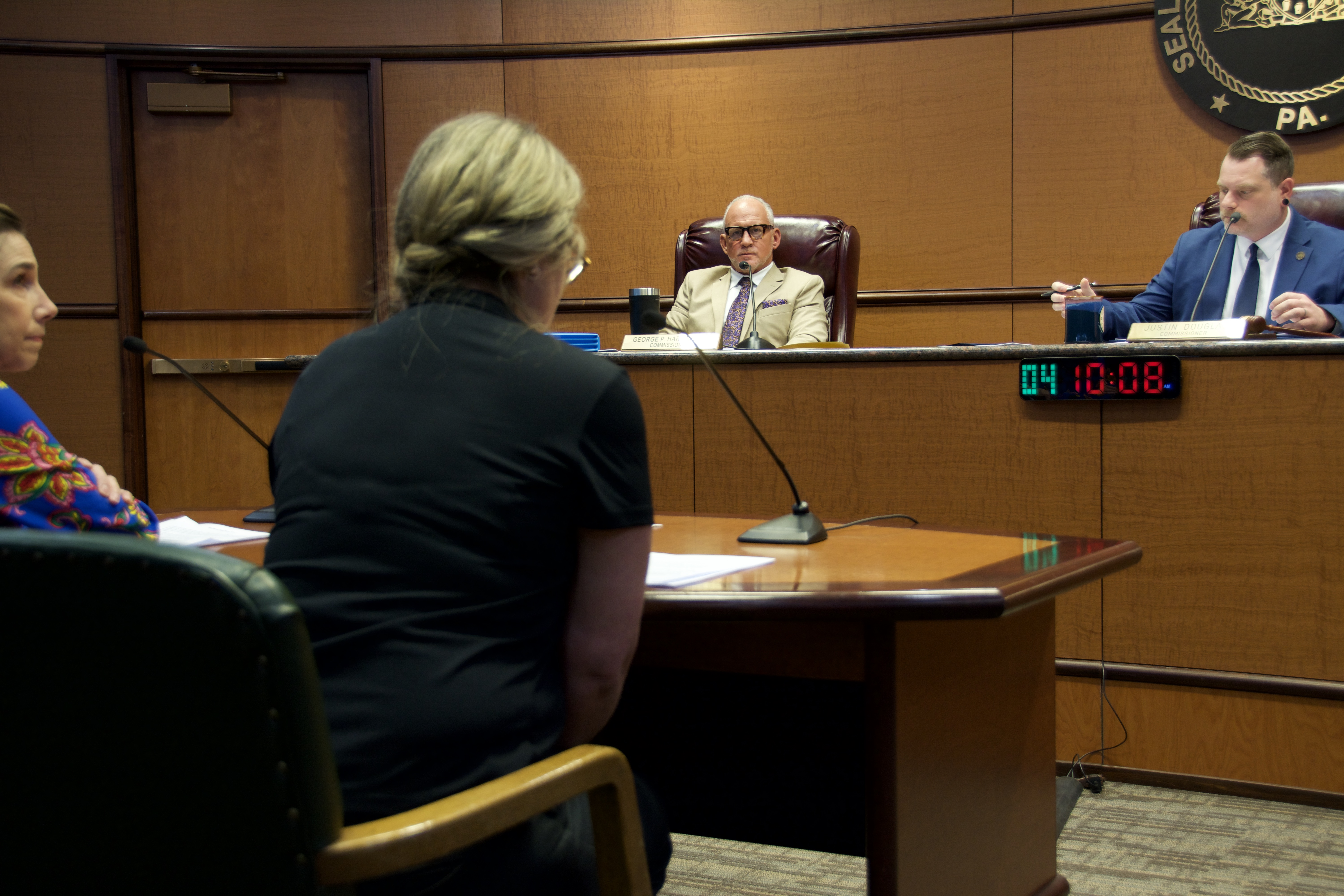
The Dauphin County commissioners has moved to table its annual award of gaming grant recipients, which were up for approval on Wednesday.

While Commissioner Mike Pries moved to approve $11.1 million for 159 gaming grants, as recommended by the Gaming Advisory Board, fellow commissioners George Hartwick and Justin Douglas declined to second. The commissioners then tabled the vote.

Gaming grants distribute millions of dollars taken from gaming revenue from the Hollywood Casino at Penn National. 

Of the $11.1 million worth of projects presented by the board Wednesday, only $10.8 million would be covered by restricted gaming funds, leaving a funding gap of $266,000 for which the Gaming Board asked commissioners to use unrestricted gaming funds.

Restricted gaming funds are specifically earmarked for Dauphin County nonprofits, municipalities and businesses to use for specific projects following an application and approval process.

“We should not be approving spending that exceeds what is available,” Hartwick expressed to the Gaming Board’s solicitor, LaToya Winfield Bellamy. 

Hartwick said doing so would have “real financial consequences to taxpayers.” According to the Dauphin County Commissioner, these unrestricted funds make up a “significant portion of our fund balance.”

“Every dollar we spend from that pool directly impacts our financial stability and our ability to avoid future tax increases,” Hartwick said. 

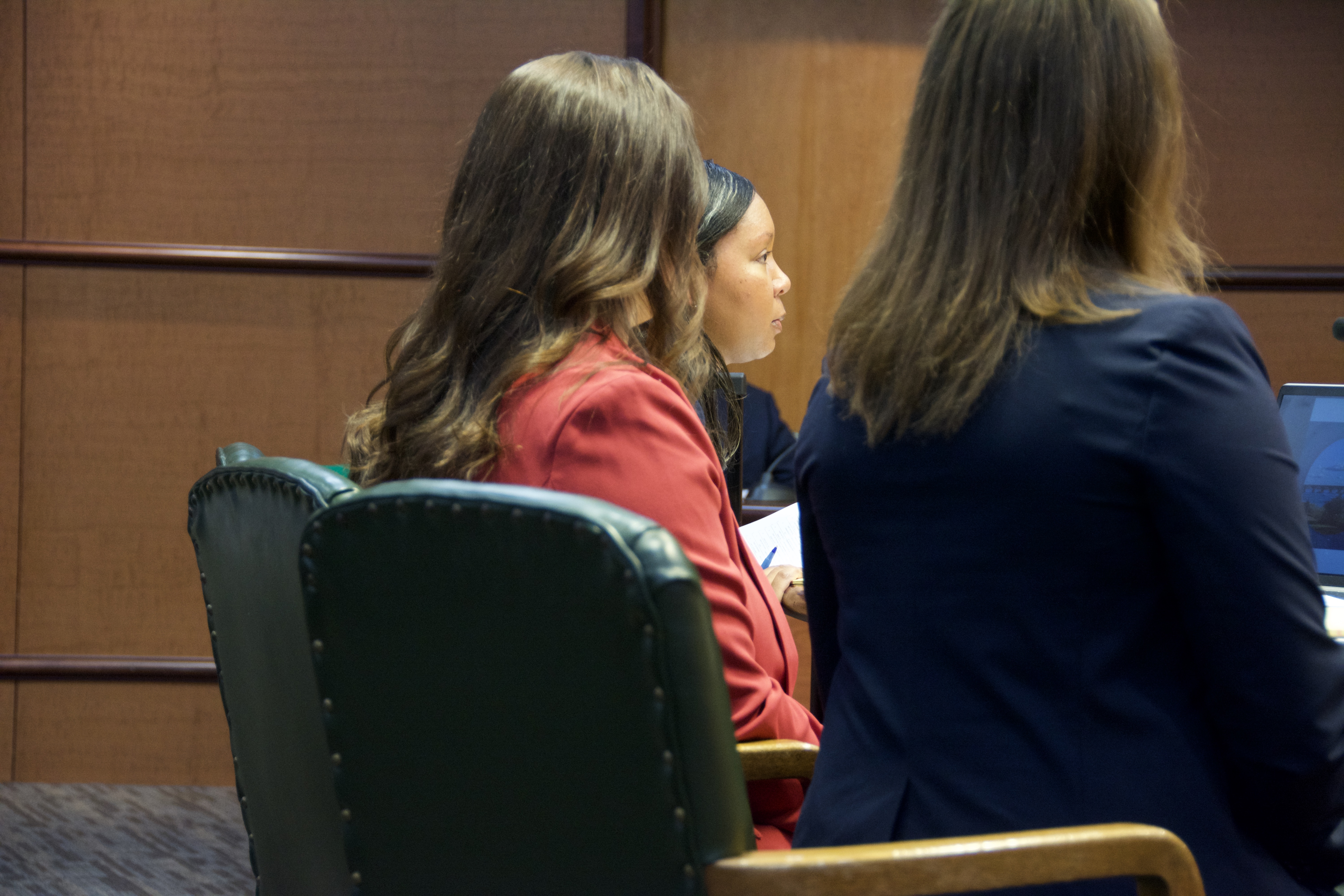
Gaming Board Solicitor LaToya Winfield Bellamy presents to the commissioners

Commission Chair Justin Douglas said he planned to abstain from voting on gaming grant allocations due to concerns about the program—dealing with both how grant recipients are selected and how grant dollars are ultimately spent.

“It has become increasingly clear that the system has significant shortcomings, including instances where award funds have been misused,” Douglas said.

The commissioner asked for more oversight structures to be implemented in the program, saying the county does not have a proper auditing process to ensure grant funds are used for what they’ve been awarded for.

“I cannot, in good conscience, continue to support this program in its current form,” he said. 

Douglas noted that the organizations applying to receive these grants are doing important work and would benefit from a more transparent grant process. 

The Gaming Advisory Board is appointed by the Dauphin County Commissioners. The board makes recommendations for grant awards. 

Pries, a commissioner since 2010, said at the meeting that he doesn’t recall the board of commissioners questioning the Gaming Advisory Board in years past.

“I do know this was the first year that I, as one commissioner, was not asked to meet with anyone and give my input in advance, but that’s the job of the Gaming Advisory Board,” he said. “That’s what we selected them to do. That’s what we appointed them to do.”

In 2025, all new members were appointed to the gaming advisory board. They served through the 2025-26 grant cycle, reviewing applications, hearing presentations, and ultimately developing recommendations.

A full list of proposed gaming grant awardees can be found on the Dauphin County Commissioners’ Wednesday meeting agenda.

If you like what we do, please support our work. Become a Friend of TheBurg!

Continue Reading

Harrisburg wife, clergy plead for release of asylum seeker detained by ICE

Omar Viadurre Luis’ wife Laura, community members and clergy spoke during a press conference on Tuesday.

A Harrisburg wife and mother on Tuesday pleaded for her husband to be returned home.

Harrisburg Catholic Worker hosted a press conference to call for the release of Omar Viadurre Luis, a Harrisburg asylum seeker, from an ICE detention center.

“He’s a fellow Catholic of ours in the Diocese of Harrisburg, and Omar, like Christ, has been unjustly detained,” said Renee Roden of the Catholic Worker, standing outside St. Patrick’s Cathedral on State Street.

Omar’s wife Laura told the story of how her family fled danger in their home country, Peru, with their 5-year-old son in 2022. The family did “everything the American government has told us to do,” Laura said, including registering at the U.S. border and applying for asylum. Both adults also paid for work permits, got jobs and paid taxes. Omar has no criminal record, Roden said.

According to Laura, Omar received a letter in the mail last summer that ordered him to appear in court, accusing him of a misdemeanor that he did not commit. When he arrived to plead his case, U.S. Immigration and Customs Enforcement officers were waiting.

Since then, the district attorney dropped the charges against Omar, but he has remained in detention for over five months.

“Our family came to the United States for safety, but now it’s more difficult,” Laura said. “My husband is not here with me. My son cries every day for his dad to come home. My husband missed our 10th anniversary, my birthday, and Christmas and Easter with our family.”

According to Roden, Omar has pleaded for a habeas petition, which has been granted, but an immigration judge has denied bail twice. Omar was originally detained in Moshannon Valley Processing Center, but was later moved to FCI Lewisburg prison, which recently began housing ICE detainees. She added that he has an order to be deported to a “dangerous country he’s never been to.”

His wife also noted that Omar had a doctor’s appointment scheduled for the day after he was detained by ICE that was to screen him for cancer in his bones.

“He is in pain right now and needs urgent medical care,” Laura said.

Several area pastors and clergy offered prayers for Omar and other refugees and migrants like him. Omar’s lawyers provided statements as well.

“Mr. Vidaurre Luis is detained as the result of over-broad laws and unlawful policies,” said attorney Kadijah Turay-Sengova of Best & Associates, LLP. “He is a good person, who has been a peaceful and productive member of his local community.”

Roden said that Omar’s story is not unique, as many other non-criminal immigrants are detained nationally and even locally.

“Among Catholics, our neighbors in Allison Hill, we know many who’ve been detained in Moshannon for months. We know of a woman in our community who’s had a husband in Moshannon for over a year,” she said. “We know many of our neighbors have been able to be released on bond though, and we hope that for Omar as well.”

Officials urged residents to pray for the family, contact local representatives and lawmakers and to donate to Omar’s family through a GoFundMe.

So far, donations have totaled over $15,000.

“We can’t pay our bills without his job—friends and neighbors have had to help us,” Laura said. “We need my husband back home.”

If you like what we do, please support our work. Become a Friend of TheBurg!  

Continue Reading

The Week that Was: News and features around Harrisburg

Mayor Wanda Williams announces Small Business Accelerator program

We published our April issue this week! Make sure to pick one up for a great read. It was a pretty sleepy local news week in Harrisburg, but we did cover several online stories, too—all of which are compiled for you below.

Beahive Affordable Housing Outreach rehabs blighted properties and offers them for affordable rent. Read more about the organization in our magazine story.

Happenings around Harrisburg this month are compiled here for you, as seen in our April issue.

Harrisburg artists showcased their most personal galleries of all—their homes—to our managing editor Maddie Gittens. Click here for a look at the whimsy, history and treasure inside.

Harrisburg School District officials held a public hearing Tuesday on the planned closure of Rowland Academy, our online story reported, alongside another middle school program. The school board plans to formally vote on the closures in June.

Harrisburg University, M&T Bank and the city opened applications this week for a Harrisburg small business accelerator program that will give away a total of $10,000 to local entrepreneurs. Read more in our online story.

Mah jongg has reached new heights of popularity with Harrisburg-area players. Read the full story here, as seen in our April issue.

Live music venues are generating millions of dollars of revenue for Harrisburg-area eateries, hotels and more, according to this story published in our April issue

Our publisher has been compiling stories on property sales in Harrisburg for more than 17 years. He notes a few trends he’s noticed in his April publisher’s note.

Sara Bozich has compiled the best events of the weekend in her Weekend Roundup, including Free Pup Cup Day at Agape Elixir Bar. Check out the full list.

WOW Windowboxes is a locally-owned company offering commercial and residential clients a way to add more color to their properties. Read more about it in our April magazine story.

If you like what we do, please support our work. Become a Friend of TheBurg!

Continue Reading