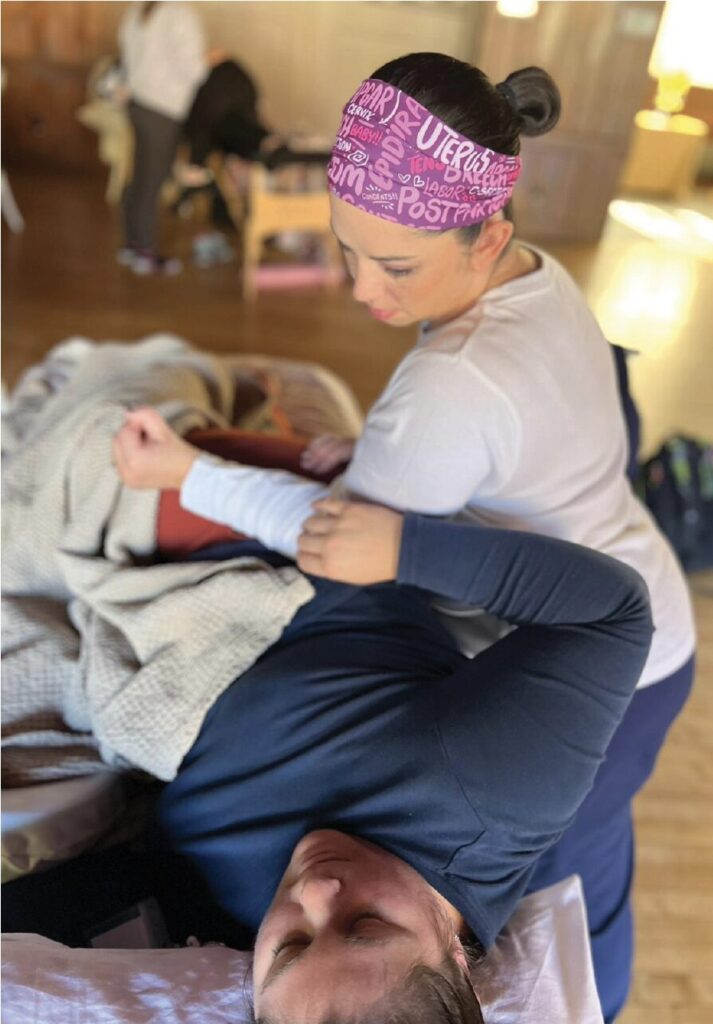
Amy Wilt working with a patient. Photo courtesy of Amy Wilt.
Despite tremendous advances in care that have made birth safer, more comfortable and less traumatizing over time, the medical care team—doctors, nurses and even midwives—are often not enough.
The United States has a relatively high maternal mortality rate of 23.8 deaths per 100,000 live births when compared to other high-income countries, according to research from the National Institutes of Health. Complications increase for mothers of lower socioeconomic status, and other issues like preterm birth, low birth weight and postpartum depression remain a concern.
So, increasingly, families are seeking out additional support in the form of doulas, with the popularity of their services steadily on the rise since the 1980s. That’s true in and around Harrisburg, too. New doula programs are popping up to bolster existing organizations that have served the area for years.
A doula is “a trained professional who provides continuous physical, emotional and informational support to their client before, during and shortly after childbirth to help them achieve the healthiest, most satisfying experience possible,” according to the world’s leading doula training and certification organization, DONA International.
Doulas are specifically non-medical professionals, said Nancy Cupps, MSN, RNC-OB, regional director of women’s health services at UPMC, but that doesn’t take away from their importance.
UPMC is in the early days of its own doula program, which Cupps said will be unique to other doula providers because it’s already part of a formed organization that offers the service at no cost to patients.
“When you come in through UPMC, you have the resources,” Cupps said.
Doulas working for UPMC go to outpatient offices where people get their prenatal care and find folks who might be a good candidate based on support needs. This could include someone who doesn’t have family to support them or has been through a traumatic birth, for example.
Starting at UPMC Magee-Womens, Cupps said that the organization hopes to eventually expand the program to other markets, including Carlisle, Hanover and Memorial in York.
Every Option
Studies show that birth doulas reduce instances of cesarean birth and pain medication, increase the likelihood of spontaneous birth and promote a shorter labor, all of which can increase birthing experience satisfaction.
Cupps said that they’ve also found there’s an increased rate of breastfeeding and a decreased rate of postpartum depression when doulas are a part of the birthing process. And research shows doulas are a tool to reduce racial disparities in health outcomes associated with labor and delivery.
A lot of this boils down to being informed.
“I’m a big fan of people knowing their rights,” said Amy Wilt, LPN, certified birth and postpartum doula and owner of Dauphin County Doulas.
Wilt, who has been a practicing doula for nearly eight years, said that informed consent means enabling the mother to know the risks associated with every option the medical team presents. Only then can they make an educated decision on how best to proceed.
Wilt has a background in nursing and continues to teach nursing but ventured into the world of doula work because she wanted to find a way to support labor and delivery patients without being under the direct influence of the hospital system.
“We really take a look at where baby is at in the pelvis, what is mom feeling, and then use that information to give mom suggestions on movements and positioning to help the baby get through the pelvis easier,” Wilt said.
Cupps added that doulas use pain management techniques like counter pressure and massage, which can reduce the need for medications.
Nearly all the births her agency works are in the hospital, with just a few home births every year.
“We are not tree-hugging hippies,” she reminds people. “We are in hospitals. We do the work alongside the providers. We are really a bridge from the patient to their provider to help facilitate the needs of the patient.”
Same Team
At Dauphin County Doulas, every person gets two doulas who share an on-call schedule and back each other up. Should those two doulas not be available at the time of birth, they work as a team to ensure someone is there.
UPMC is focusing on hiring doulas with flexible schedules so they can try to create a relationship with patients over the course of their pregnancy and be there for them during the birthing process.
While UPMC conducts their education in-house with the help of a certified lead doula, Wilt requires trained experience for anyone joining her agency. If necessary, Wilt will help trained doulas get their certifications by connecting them with clients for their certifying births. Both organizations include ongoing training for staff.
For patients selecting a doula, Wilt said that it’s important to know that not all certifications are created equal.
“In any state right now, doulas are not regulated,” she said, adding that DONA International is the most valued and is most likely to be covered by health insurance. “Insurance companies are starting to recognize doulas as an important part of the healthcare team.”
Third-party payers like Carrot, which offers global fertility benefits for employers, are also becoming increasingly popular.
Wilt has been a professional doula for nearly eight years and has figured out some ways that medical professionals, doulas and mothers can optimize their relationship.
“The more communication [mothers] have with us, the better the experience is overall,” Wilt said.
In the end, everyone must work together for the best result.
“We are all here on the same team for the same purpose,” Wilt said. “I think if everybody in the room realizes that we’re going to have a much better birth.”
If you like what we do, please support our work. Become a Friend of TheBurg!