Tag Archives: Whitaker Center

Musical Notes: In spring, heartfelt performances peak in the Burg.

It’s springtime in Harrisburg, which means that our hearts warm and our passions reignite. This applies equally in our musical lives. This month, I’ve selected bands that, while differing in genres, share a depth and a passion that show in their music. Be sure to check them out, returning some of the love they offer so abundantly.

JON MCLAUGHLIN, 4/6, 7:30PM, WHITAKER CENTER, $25-35
Pop music is a genre I don’t recommend all that often, but this show promises to be a treat. Jon McLaughlin is an Indiana native who is currently based out of Nashville, the home of some of the nation’s best songwriters. He released his first album, “Indiana,” in 2007, has performed with acts such as Billy Joel and Adele, collaborated and co-written with Sara Bareilles and Demi Lovato, and even performed at the Academy Awards in 2008. His piano playing and singing have evolved over the years, in a career he continues passionately today. This is an artist with a lot of soul to share with his audiences in an intimate setting. If you want to listen to something before the performance, check out his single “Summer is Over” featuring Sara Bareilles on vocals and piano. You can’t deny that it’s catchy.

COLEBROOK ROAD, 4/7, 7:30PM, HARRISBURG SCOTTISH RITE, $15
I first saw Colebrook Road years ago at a bar just outside of Harrisburg with my bluegrass-loving dorm floormates, back before I had moved to Harrisburg. I was initially hesitant to go since I had decided beforehand that I didn’t enjoy bluegrass music. Much to my surprise and pleasure, these guys had an infectious sound that had me dancing by the evening’s end. Even if you think that bluegrass isn’t your thing, Colebrook Road will delight you with their upbeat traditional style and lively performances. Over the years, this band has won “best-of” awards at numerous bluegrass festivals and contests all around the mid-Atlantic region. Or just take it from me—you won’t be disappointed if you attend this show.

SEMPRE DOLCE: A NIGHT OF CHAMBER MUSIC, 4/28, 7:30PM, H*MAC STAGE ON HERR, $10
Back in the day, I used to play flute. I enjoyed playing with an ensemble and creating meaningful and beautiful music with them. So, I’m looking forward to a night of chamber music at H*MAC with Sempre Dolce. This five-piece out of Harrisburg is still relatively new, but, in a short time, they’ve performed widely, creating a buzz. Those who have seen Sempre Dolce speak of their sweet music and passionate, poignant performances. I recently discovered their cover of the opening music for the television show “Game of Thrones,” and, as a fan of the show, I loved the soulful strings and their unique interpretation of the theme. Before the concert, check out their music on Bandcamp, and you may discover the classical sounds you’ve been missing in your life.

Mentionables:
Nashville Unplugged, April 5, Whitaker Center
Mountain Road, April 7, H*MAC Stage on Herr
Frenchy and the Punk, April 11, The Abbey Bar
Sweet Maple Singers, April 13, H*MAC Stage on Herr
And The Kids, April 19, H*MAC Stage on Herr
Dr. Slothclaw & Goose, April 20, The Abbey Bar
Bubba Sparxxx, April 27, H*MAC Capitol Room

Continue Reading

Community Comment: TheBurg unfairly overlooks Steve Reed’s many accomplishments.

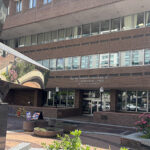
Whitaker Center in downtown Harrisburg, cited by the letter-writer as one of former Mayor Steve Reed’s many achievements.

I enjoy The Burg and appreciate both your professional standards and ethics, and the constructive intentions underlying your work with it.

That being said, I must ask you to consider more thoroughly your statements re: Steve Reed’s tenure as mayor and its aftermath noted in your February article, “The Next Phase.” (“The Next Phase: Harrisburg Breaks with ‘City Discontented,'” February 2018). I have no horse in this race–I don’t really know him and have nothing to gain or lose by sending you this. It’s just a matter of fairness.

Your comments were the latest of many proclamations of the kind–i.e. writing off his 28-year tenure in condemnation. It is not fair. I’ve seen few balanced views of this subject in the rolling bandwagon, not to say stampede, of criticism of him and his tenure.

This inertial chorus completely overlooks the tremendous transformation of the city that he accomplished, as well as the incredible devotion to the city exhibited in his 16-hour days, seven days a week for 28 years.  And it must be said that there is no possible rational contention that he was doing it for personal gain.

Yes, there are very legitimate questions about financial management, especially the mystifying incinerator deal, but it is a disservice not only to him but to history, the truth and balanced reporting to ignore his accomplishments.

I don’t know if you were around in 1980, but I would consider that, not 2011-13 cited in your article, as the city’s nadir. I grew up in Allison Hill in the 50s and early 60s near Reservoir Park, a fantastic time and place to grow up in.  I left town and moved elsewhere in the world for many years, coming back in 1980 to find a city that not a soul in the region considered anything but a hopeless basket case.  Into this miasma of despair Reed walked.

His vision was astonishing (yes, even while not batting 1.000) and his more visible accomplishments equally so, considering the starting point. The Hilton, City Island, Harrisburg University, the Whitaker Center, Restaurant Row and development of Second Street from a dangerous gauntlet to a thriving commercial district, and no doubt others I am missing were beyond unthinkable when he started.  And yes, these all do involve the central commercial district. I am less knowledgeable about changes elsewhere in the city, like Allison Hill and Uptown.

But much more important than these was the psychological transformation of the city that he affected, from a universal perception of a lost cause to a place of energy, progress, potential and investment where people, suburban families even!, came for enjoyment.

The city is paying a price now for the financial “mismanagement.” I put that in quotes because, while it is technically correct, I sometimes wonder if it was deliberate, a considered decision in often no-good-choices circumstances, that it would be worth the future cost if it could lift the city out of its grave.

In short, despite the errors (not bad faith intentions) and seemingly counterproductive decisions visible in retrospect, the very arguable view is that he began and, in fact, assured Harrisburg’s resurrection, and the city now has a chance–the “Next Phase”  in your article–because of him. The pejorative commentary also chooses not to recognize the selfless and total dedication to the city that more than anything defines his tenure.

Please consider this a letter to the editor for printing in The Burg. I believe it is more in accordance with the laudable standards of your magazine than the unbalanced commentary on this subject so often seen in the region’s media.

Thank you for your good work in advancing our community.

Jim Heckman
Wayne Township (Halifax area)

Continue Reading

Musical Notes: Joyous January–New music for a new year.

It’s another year, and, with it, I believe, should come new experiences. Therefore, I’m here to help you catch some fresh music in the city.

As the year begins, I enter it with hopes that the Harrisburg music scene will continue to grow and thrive, with new artists and venues for you to enjoy. So, I offer some classic venues, some new spots, and some familiar corners to check out this month. Stay warm out there and Happy New Year!

MINSHARA, 1/13, 8PM, H*MAC CAPITOL ROOM, FREE
As you may know, I love local bands, and I love highlighting the talent that lives here in our community. Minshara is an electronic pop group from Harrisburg made up of Aaron Miller on vocals and guitar, Tom Hand on bass and vocals, Evan Kirkley on drums and Liam Shatzer on guitar and vocals. They’ve been featured on TV and radio programs, including “Warped Tour,” and their music has been spreading. Check out their high-energy performance at the Capitol Room or watch them on YouTube for their song “The Void.” Their genre-defying sound, paired with catchy melodies, are definitely worth a night out at H*MAC.

HENRY ROLLINS, 1/18, 8PM, WHITAKER CENTER, $30-35
I’m pumped to share this show with all of you, and it’s not even a music event. You might know Henry Rollins from his career as Black Flag’s frontman or maybe from his show, “The Henry Rollins Show.” His contributions to music throughout his life are significant, and he’s bringing some new material to Whitaker Center for one night only. While traveling around the world, Rollins has documented his journey through photography. Throughout the evening, Rollins will present a unique performance incorporating his photographs and experiences abroad in the Middle East, Africa, Central Asia, South America and Antarctica. This truly unique evening of storytelling is bound to be a captivating experience.

JELLI, 1/26, 7PM, THE VEGETABLE HUNTER, FREE
The Vegetable Hunter is a snug vegetarian restaurant that has made waves not only with its cooking but with its support for the local art scene. Performing at the restaurant for the evening is the acoustic/electric trio known as Jelli, and they’re bringing some fresh originals for your dining pleasure. This self-styled “acoustic hodge-podge” is comprised of Shelli Merrifield on world percussion and vocals, Jarrett Sumner on guitar, kazoo and lead vocals and Jeff Burfield on bass, guitar and vocals. This relatively new group has been making their way around the local circuit, spreading their refreshing and eclectic style. Their funky and energetic stylings in this colorful venue will bring some energy into your new year.

Mentionables:

Giddy Hop & Leeyuh Neptune, Jan. 5, River City Blues Club

Tragedy: All Metal Tribute to the Bee Gees and Beyond, Jan. 6, H*MAC Stage on Herr

Kool-Aid Kids, Jan. 13, The Abbey Bar

Suzi Brown, Jan. 19, Little Amps Downtown

Jarrad Briggs, Jan. 27, River City Blues Club

Ramona Córdova & Sarah M., Jan. 28, Little Amps Uptown

Continue Reading

More Art, Music: H*MAC gets state grant to help complete Midtown facility.

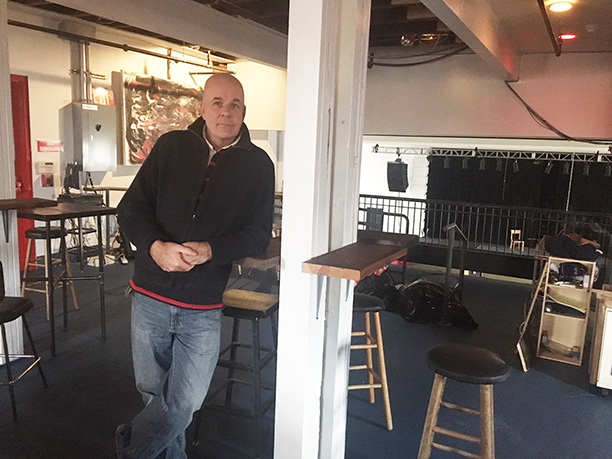
H*MAC partner John Traynor stands on the restored balcony overlooking the Capitol Room.

A major Harrisburg arts venue is the big winner locally in the annual competition for state redevelopment funds.

The House of Music, Arts & Culture (H*MAC) will receive $1 million from the Redevelopment Assistance Capital Program (RACP), a state program that provides grants for the acquisition and construction of projects deemed important for their cultural, economic, civic and historical significance.

John Traynor, a founding partner, said that the money will help H*MAC (formerly known as the Harrisburg Midtown Arts Center) complete the restoration of its building at N. 3rd and Herr streets in Harrisburg.

“I’m very, very pleased,” he said. “This grant is more than a grant to us. It’s a stamp of approval to all the hard work that’s gone into finishing this project.”

A decade ago, Traynor and two partners bought the dilapidated building at 1110 N. 3rd St., formerly the home of the Harrisburg Jewish Community Center and, later, the Harrisburg Police Athletic League.

They initially built out a small performance space and bar on the lower level and opened it as Stage on Herr. They later completed a restaurant and larger bar, the Kitchen at H*MAC, on the main level and then a larger performance space on the upper level now called the Capitol Room.

Traynor said that the RACP grant will allow them to finish restoration of the 10,000-square-foot basement level, turning it into a music school, studio and production facility that he likens to a “School of Rock” concept. It also would permit H*MAC to build a semi-enclosed bar and restaurant area on the roof of the building and complete patio and façade improvements.

“We believe this will be the gem in the crown of Harrisburg, “ he said, adding that this next phase of work would proceed through 2018.

H*MAC received only about one-third of the $3.3 million it applied for, though few projects that are awarded funding receive the full amount. Traynor said that he believed the grant could be leveraged to give him access to additional funds so that the center would be functionally complete.

When H*MAC is finished, Traynor expects to employ more than 80 people, compared to about 30 currently, he said.

In Dauphin County, only two other projects were selected in this round of RACP funding.

Hershey Towne Square received $750,000 for a three-story parking garage. It had requested $2.5 million for the project.

The Salvation Army, Harrisburg Capital City Region, was given $500,000 for its new 39,000-square-foot facility at 29th Street and Rudy Road. It had requested $4.5 million.

“It wasn’t our full request, but we’re very happy to receive this grant,” said Kathy Anderson-Martin, director of resource development.

The grant also may help the Salvation Army leverage other matching funds, she said, raising more money.

Anderson-Martin said her organization has raised about $8 million of a total construction cost of $11 to $12 million. This should allow them to break ground on the facility in the spring or summer of 2018. Already, the site has been cleared and most design work completed, she said.

In all, there were 10 applicants in Dauphin County in this round. The eight applicants denied funding so far are:

  • The City of Harrisburg, $14.3 million for a bridge over the railroad tracks at Division Street
  • Harrisburg City Islanders, $5 million for a new stadium in Lower Swatara Township
  • Harristown Enterprises, $3 million to construct a six-story building at 21 S. 2nd St. in Harrisburg
  • Christian Recovery Aftercare Ministries, $650,000 for renovation of its Uptown Harrisburg building
  • Tri-County Housing Development, $1 million for Hummel Street redevelopment
  • Mulberry Street Properties, $322,311 for Allison Hill revitalization
  • Hawthorne SPE, $5 million for its Progress and Linglestown Traditional Neighborhood District project in Susquehanna Township
  • Whitaker Center, $5.5 million for a major renovation of its building in downtown Harrisburg

In Cumberland County, the Carlisle Family YMCA was the only successful applicant among five total, receiving $1.5 million, half of its request, for an addition to its facility.

Projects denied funding in the initial round sometimes receive funding in a later round or reapply for the following year.

In all, the state funded 149 projects for almost $188 million in this round, compared to requests for 399 projects worth $1.7 billion.

Continue Reading

For the Arts: Bill Lehr’s style may be soft, but his impact raises the roof.

“Here’s the thing about Bill Lehr.”

With that introduction, Alice Anne Schwab begins to explain how the Susquehanna Art Museum has benefited from William Lehr Jr.’s long-time leadership.

“He generally says little in a meeting or assembled group, so when he does speak, it is almost always going to be profound and vital to the cause,” said Schwab, SAM’s executive director. “I listen very carefully because that’s when he’s going to utter the brilliance.  And then he’s out the door!”

For years, Lehr may have been best known locally as a top Hershey executive and then as president and CEO of Capital BlueCross. But since his retirement a few years ago, he’s increased his already substantial involvement in the arts, now serving as president of SAM’s board and in several other key positions.

“He is highly respected in the business community as well as the arts community, and that respect translates to many positives for us,” Schwab said. “He contributes financially, which is obviously hugely important to the success of nonprofit arts organizations, but he is also tremendously generous with his time. He’s truly the busiest retired guy I know.”

Americans for the Arts, a national network of arts organizations, supporters and activists, has now recognized Lehr’s contributions, recently presenting him with its annual Legacy Award.

“We’re excited to be honoring Mr. Lehr,” said Inga Vitols, the group’s spokesperson. “He shines a light on what has been possible with the dedication of leaders who believe passionately in the cause.”

Indeed, Lehr is very passionate about the arts.

“In all permutations,” he said, “not only because I learn from them and enjoy them myself, but because they are an essential element in the development and maintenance of a vibrant community.”

What couldn’t he live without?

“Thank goodness I don’t have to choose just one, but, if I did, it would be music,” Lehr said. “We attend Central Pennsylvania Friends of Jazz and Harrisburg Symphony Orchestra concerts. We also attend shows at Theatre Harrisburg, Hershey Theatre, Gamut Theatre Group and Open Stage.”

Lehr’s stint at SAM is actually his second. He also served on the board in the early 2000s, aiding its move to a new building, said Schwab.

“His presence as a dedicated helper in the museum’s time of great need was a catalyst for several other great community leaders to come on board,” she said. “Bill came back to the board at the end of 2015 and was elected board president soon after. In September, he was reelected for another year.”

Despite Lehr’s quiet demeanor, he is one of those people who, “behind the scenes of any preforming arts or cultural organization, makes it happen,” said Jeff Woodruff, executive director of the Harrisburg Symphony Orchestra.

Lehr came on the board of HSO in 2006 and stepped down 10 years later because of term limits. He spent the last four as chairman.

“Bill continued to be a soft-spoken man, playing behind the scenes, but in his own giving way, he leads by example,” said Woodruff. “He has been very generous offering funds out of his pocket and encouraging others to give.”

Harrisburg-area arts are so important to Lehr that he retired early to have ample time to contribute the most he could. Over the years, he’s been a board member for dozens of organizations, including Whitaker Center, Harrisburg Symphony Association, the Cultural Enrichment Fund and Metro Arts of the Capital Region (now Jump Street).

“Bill was a model board member, a strong advocate for HSO who knows how to run a meeting and someone who attended every concert and event,” Woodruff said.

Lehr has seen many changes in the local arts scene over the years. Some organizations have come and gone, though many others have taken root and become successful. One notable change has been the prominence of women, who head many nonprofits today.

Among the women Lehr says he admires globally is Mother Theresa. Locally, he points to the leadership of Janice Black, president and CEO of the Foundation for Enhancing Communities, and Kathleen Pavelko, president and CEO of WITF.

When he’s not busy with advocacy, Lehr enjoys being with his three children and five grandchildren. He and his wife Beverlee, an artist herself, are also tireless travelers, having visited 70 different countries so far.

“We’re working on several others to go on our list,” Lehr laughed.

But being home in the Harrisburg area keeps him plenty busy, as well. After all, there’s always one more concert to attend; one more play to go to; one more exhibit to see; and, of course, one more organization that needs his advice and assistance.

Continue Reading

5 Girls, 75 Boys: How culture reacts to women in programming.

Earlier this semester, I walked into my intermediate programming class for the first time, eager to learn more about the C++ language and the algorithms I could create with it. I got to class early enough that few other students were there, so I was able to watch my peers filter into the classroom. While I waited for the class to start, I kept track of how many other girls walked in. By the beginning of the class, I had counted five girls. I later found out that the total number of students in that class was 80.

I began to notice this gender ratio pattern during my STEM courses in high school, and it has continued into my undergraduate career; the further I got in my mathematics and science courses, the fewer girls there were. This has especially proven true for my programming classes, and unfortunately, my experiences are not unique.

According to “The Current State of Women in Computer Science,” an article from ComputerScience.org, the percentage of female computer science majors in the United States dropped from 37 percent to 17.6 percent between the 1984-85 and the 2010-11 school years. During the last 15 years, the percentage of women working in computer science-related fields has dropped from 35 percent to 25 percent, and although more than half of all AP test takers are girls, the ratio of male to female AP computer science test takers is 4-to-1.

This disparity between male and female interest in computer science is staggering, and its effects are far-reaching. A computer science workforce that is overwhelmingly male leads to homogeneous discussions and solutions that could be greatly improved by female voices. Furthermore, an increase in women programmers could easily take care of the increasing need for computer science majors in the workforce.

Increased gender diversity in programming would undoubtedly further academic discussion and technological advances with the creativity and ideas of new minds with different experiences. One way to accomplish this is to make introductory computer science classes mandatory in primary school. By requiring programming education at a young age, we may spark scientific interest in the minds of young girls before they learn deleterious stereotypes that weaken their interest so dramatically.

Invisible
While studying computer science myself, I have often noticed the paucity of women in my courses. In order to discern why there is such a disparity in gender in my classes, I began to research women’s historical relationship with computer science.

First, I found an article from the IEEE Annals of the History of Computing called “Lovelace & Babbage and the Creation of the 1843 ‘notes’,” which discussed the work of Augusta Ada, a female mathematician in the 1800s now credited as the first computer programmer. In 1843, a mathematician named Charles Babbage asked Ada to translate his ideas for a steam-powered calculating machine into French. What resulted was a set of notes three times the length of Babbage’s original transcript. Ada had added her own notes and suggestions, as she recognized the machine’s potential as a general-purpose machine far better than did Babbage. Ada realized that such a machine could do more than just work with numbers; it could perform operations on symbols according to rules. This realization caused the transition from pure quantitative calculation to multi-purpose computation.

Next, I found “The Women of ENIAC,” another article in the IEEE Annals of the History of Computing, which details the experiences of the programmers of the ENIAC. In 1946, six highly educated women, Kathleen McNulty, Frances Bilas, Betty Jean Jennings, Elizabeth Snyder, Ruth Lichterman and Marlyn Wescoff, programmed the ENIAC, the first general purpose electronic digital computer successfully made and used. They accomplished this without the help of programming languages, compilers or manuals to help them. Unfortunately, when the ENIAC was unveiled, its programmers remained invisible.

Finally, I found an article on the Yale University website titled “Grace Murray Hopper.” Grace Hopper, a Navy admiral and computer scientist, realized that computers could become much more programmer-friendly, and therefore be useful to a much wider audience, by allowing programmers to write in a language closer to English and then translating this to machine code. In 1949, Hopper and her team created the first compiler, the A-O. She then went forward to create the B-O, also known as FLOW-MATIC, which was a compiler used for business tasks. When she recommended that entire programming languages be written in English words, she was told that this was impossible. Three years later, she published her first paper on compilers, and her idea was finally accepted.

“Not a Man”
So, it is clear women have historically been greatly influential in the field of computer science. However, their numbers are decreasing in the present day. The reason for this lies in how American culture reacted to the accomplishments of these women.

In the time of the ENIAC girls, computing was seen as a feminine occupation. According to “When Women Were Computers,” an article published in Technology and Culture, it was cheaper to hire women to perform mathematical calculations and to become “operators” (now called programmers) than it was to hire men to perform the same work. However, the fact that women performed these jobs allowed both the jobs and the women doing them to be ignored. In the words of Jennifer Light, a professor of science, technology and society at MIT, “occupational feminization in the sciences fostered long-term invisibility.”

Women’s participation in science at this time was seen as a temporary measure. According to a 1943 manager’s guide entitled “You’re Going to Hire Women,” “Women can be trained to do any job you’ve got—but remember ‘a woman is not a man;’ A woman is a substitute—like plastic instead of metal.” So, after the war, the women who had been hired to work as “computers” were advised to go home. Although this did not stop some women from remaining in technological fields, it certainly did not inspire many more women to join them.

This is how computer science became masculinized—the work of women computers and operators was erased, and women’s further interest in the sciences was discouraged.

Unfortunately, these fallacious and historically inaccurate beliefs about women led to the masculinization of computer science. Several studies show the effects of this cycle of belief:

1. As stated in “Anatomy of an Enduring Gender Gap: The Evolution of Women’s Participation in Computer Science,” an article from The Journal of Higher Education, this gendered disparity in socialization has a significant negative effect on women’s participation in STEM fields, including computer science. Also, women’s awareness of computer science as heavily male seriously deters women from studying programming. For example, the cultural myth of the antisocial male hacker is much more discouraging to women than it is to men in terms of pursuing a computer science degree.

2. In 2009, four different studies published as “Ambient Belonging: How Stereotypical Cues Impact Gender Participation in Computer Science” in the Journal of Personality and Social Psychology showed that “the gender difference in interest in computer science is influenced by exposure to environments associated with computer scientists,” concluding that “masculine stereotype[s] [prevent] women’s interest from developing even in environments entirely populated by other women.”

Because the dearth of women in computer science was caused by a cultural misconception, the solution must also be cultural. That is, we must change cultural beliefs about women and programming. To do this, we must give children the opportunity to explore computer science before they have learned sexist stereotypes.


Stage of Life

Many organizations, such as Girls Who Code and Girl Develop It, have begun to advocate for programming education for young girls. However, these groups focus on recruiting high school girls.

Although the groups set fantastic examples for how our country should be inspiring girls to program, their efforts might cause a higher rate of success if they expanded their focus to primary school. According to “Math-Gender Stereotypes in Elementary School Children,” published in Child Development, math-gender stereotypes arise around grades 1 to 2. It is therefore imperative that young girls be allowed to explore their relationship with computer science around this stage of life.

The implementation of programming education in primary school could take many forms, but one way to ensure the appropriateness of subject matter based on age may be to begin with visual programming languages around ages 6 to 7 and then to transition to textual programming languages around fourth grade.

The existence of visual programming languages (VPLs) such as Scratch, Squeak Etoys and Allice, whose purpose is to make programming understandable for beginners, shows that even text is inessential for learning the basics of programming. These VPLs allow users to manipulate elements of a program graphically instead of using textual commands. For example, they may write commands by moving blocks around on a screen. These languages possess many features that make them developmentally appropriate for children.

A 2013 study called “Problem solving by 5–6 years old kindergarten children in a computer programming environment: A case study,” concentrating on the ability of 5 to 6 year olds to use visual programming languages, “supports the view that children enjoyed the engaging learning activities and had opportunities to develop mathematical concepts, problem-solving and social skills.”

A study conducted in Japan titled “Programming Education for Primary Schoolchildren Using a Textual Programming Language” concluded that textual programming languages (TPLs) are appropriate as early as fourth grade. A switch to more formal programming languages would be appropriate for children of this age.

Requiring computer science classes in primary school, specifically around ages 6 to 7, may prove highly effective in increasing female participation in programming later in life. Implementing these simple, developmentally appropriate courses would help girls to develop interest in computer science at the same moment that they are beginning to understand gender-math stereotypes, possibly negating their harmful effects.

This change in understanding of their abilities would help to get girls whose talent might have been obscured by sexism into programming, which, in turn, will guarantee a supply of computer science students that the workforce currently needs, as well as ensuring that that workforce grows in diversity and creativity.

Anna Smith is a sophomore computer science major at Penn State Harrisburg.


Get Coding

Got a girl who wants to learn to code? Check out these local opportunities.

Penn State Harrisburg
STEM Summer Enrichment Program
Set for June 11 to 22, this intense summer camp for high school students will include a programming/coding option. Email [email protected] for more information. The application deadline for the free program is Feb. 18.

Coder Kids Meetup in Camp Hill
The major focus is on learning and exploring computer science and programming through play. Beginners use Scratch 2.0 from MIT. Advanced students use JavaScript, HTML, CSS and more. Taught by volunteers, the program is free. Contact them at www.meetup.com.

Harrisburg Brethren in Christ Church
Girls Who Code Club
This is a free programming club for girls, ages 10 to 17, to build computer literacy and problem solving and communication skills. Girls learn how to program their own games and websites and learn about career opportunities in computer programming and information technology. Participants are encouraged to bring their laptops, although a laptop is provided for girls who do not have one. The club meets weekly on Mondays from 6 to 7:30 pm. Register at www.harrisburgbic.org.

Harrisburg University
Summer Exploration Camp
Web App Course
Harrisburg University offered a programming course in apps during its summer 2017 session. Contact [email protected] for details about the summer 2018 STEM camps.

Whitaker Center
Girls in STEM program
Whitaker Center offers summer discovery courses in a variety of fields intersecting science, technology, engineering and math, including a specific program for girls. Check the website for updates about their summer 2018 offerings.


Continue Reading

Prattle Battle: Storytellers throw down at Hilton Harrisburg.

Everyone has a story to tell.

Some do it in the pages of a notebook, keeping it obscure and hidden. Some do it in front of a camera, making movies they later upload to a YouTube account. Still others fall in love with the written word and use this to detail their experiences.

For much of this year, Whitaker Center has been organizing the Harrisburg Story Slam, the events taking place at the Hilton Harrisburg, with the monthly winners slated to compete in a final slam-down in November.

Whitaker Center describes it as being “like ‘Celebrity Deathmatch,’ but with real people and zero violence,” which, in my experience, was spot on.

On the night I attended, the theme was “Declaring My Independence.” As the event took place shortly after Independence Day, the subject was, appropriately, freedom. The contestants all had their own unique variations on the theme.

One constant I noticed in all the stories was that, even if the plots involved strange, outlandish events, the audience could relate to the subject. Not a single piece went by without at least a snicker or two.

Who hasn’t experienced moments of dissatisfaction with their body? Who hasn’t been curious about what the hippies in the Volkswagen van are really like?

Keeping with the idea of America, the contestants were a melting pot: youthful, older, of varying races, ethnicities and body types.

Phil Broder was the opening storyteller, kicking off the event with a humorous story about environmentalism and graduating from college. In listening to him offer his singular take on the theme, I already knew that humor and quirkiness were the keys to a potential win.

Linda Silberman was the third performer, and her cautionary tale of travelling on a bus with hippies resulted in riotous uproar from the audience. Indeed, her misadventures sat well with the judges and the audience alike—she was the night’s winner.

As the evening went on, I learned just how crucial the use of humor can be, how it can take the darkest of subject matter and transform it into something enjoyable and relatable. The subjects of the next two pieces—getting robbed and body-confidence issues—demonstrated this with deftness.

The fourth contestant and runner up, Carol Karl, detailed going to Europe for eight months, which led her to discover her independence. She gripped the audience with an impassioned narrative about getting pickpocketed in the Czech Republic, a cultural misunderstanding to blame.

Orchid Adams, the fifth contestant, imbued her entry with a very calm sort of confidence. She discussed her attempts at weight loss and how she learned the power of self-acceptance. It spoke to me on a personal level, as I’ve had my own issues with self-acceptance throughout the course of my almost-30 years.

“I was looking at the mirror of other people,” she explained.

Gina Napoli, the second performer after a short intermission, talked about her father using a brand of lip balm called “Raspberry Beret,” because, as she explained, “It was 1982.” Yet again, this was an average subject elevated to another level through humor.

The stage presence of the second-to-last storyteller, Gina Federico, was phenomenal. She delivered an entry about joining the school football team as a down marker, all to purchase koosh earrings “in every color ever made.”

Thomas Wenger, the last performer, discussed high school—the second most-common theme behind motherhood—and how he ended up working in the mining industry before confessing to his parents, “I wanna go to college.”

Following this was another short break, this time to give the judges a few minutes to determine who would go on to compete in the second round. It was clear they knew who the right picks were, and, although I may not have agreed with them, there were no “bad” choices.

To watch the contestants in action, visit Whitaker Center’s YouTube channel. For more information, go to www.whitakercenter.org/story-slam. The next slams are slated for Sept. 13 and Oct. 5, and the monthly winners will compete in the finale on Nov. 8 at the Hilton Harrisburg.

Author: Trey Knarr

Continue Reading

Like Maestro, Like Son: Zev Malina is already an accomplished pianist and composer—and he’s just 15 years old.

Zev Mailina

 I’ve had a long-lasting musical love affair with Schubert’s “Trout Quintet” for piano and strings.

So, I snatched up tickets when I saw this piece on the program for a concert last winter at Whitaker Center. But what I remember most from that evening was the opening act—a spirited, nearly flawless solo piano performance of Chopin’s technically demanding Scherzo No. 2 by high school freshman Zev Malina.

“Wow, this kid’s got talent!” I thought to myself.

And I wasn’t alone. The audience gave the young man a standing ovation—quite an accomplishment for a musician making his professional debut and who felt nervous walking onto the stage.

 If the surname Malina rings a bell, it should. Zev is the son of Harrisburg Symphony Orchestra Music Director Stuart Malina. Stuart recognized Zev’s talent at an early age, when he realized his son had “perfect pitch”—a rare ability to identify a single note without any reference tones.

“He was always a very good music student,” said Stuart. “He learned things really fast. His ear and memory are remarkable. After playing through a piece of music once, he would know it by memory.”

 Zev started playing the piano around the age of 4. He enjoys the feeling of touching the keys, and he relishes the piano’s sound and its wide range of capabilities for melody, harmony and expression. He is fond of many composers, but said that, “anything Chopin wrote is great to listen to and to play.”

 Zev balances life as a Central Dauphin High School student with his musical exploits. He tries to practice piano 30 to 45 minutes a day, but certain times of year are busier than others. He’s currently learning works by Bach, Beethoven and Copland, along with Shostakovich’s Second Piano Concerto, which Zev describes as “a monstrous piece.” 

When approaching a new piece, Zev starts off by following the composer’s intentions as closely as possible. But, as he gets to know the work better, he starts adding his own unique flair.

“I stick to the composer’s directions until I feel I have the right to elaborate,” he said. 

More Gifted

Zev has been studying the piano for about five years under the tutelage of Ya-Ting Chang, who co-directs Market Square Concerts with her husband, violinist Peter Sirotin.

“Right from the first time I heard him play, I remember telling myself that this is one of those rare, talented kids who I don’t want to micromanage,” said Chang.

 Zev sings in his high school choir, but he particularly enjoys playing bassoon in the band. He remembers hearing the bassoon solo that opens Stravinsky’s “The Rite of Spring,” which sparked his interest in the woodwind instrument.

“The world needs more bassoon players,” Zev said. It’s kind of a dying art, which is a shame.”

And if being a precocious instrumentalist were not enough, Zev may be more gifted as a composer.

“Zev’s mind works much more creatively than mine does,” said Stuart, who studied composition in college. “You’d be hard-pressed to find many 15 year olds who are writing music of this sophistication.”

 Zev recently submitted a five-minute orchestral piece titled Dreamscape to the National Young Composers Challenge. More than 100 composers aged 13 to 18 from all over the country submitted entries, and Zev was one of the three winners in the Full Orchestral category. The other two were three years older than he is.

 What Comes Next

Zev started composing around age 9 by writing a waltz for solo piano, a piece his father describes as “very advanced” for a child who had no formal training in composition. He since has expanded his repertoire, and professional musicians have performed several of his compositions publicly. 

His best-known work is a 20-minute musical accompaniment to a narration of Robert McCloskey’s 1948 illustrated children’s book Blueberries for Sal. The book’s pictures and story inspired Zev as he was growing up, and he wrote the piece when he was 13. Violin, piano, clarinet, bass and drums accompany the narration. The piece was performed publicly at the Forum in 2015, with Zev as narrator and his father on piano.

Zev intends to write pieces for the bassoon, the double bass and other underserved instruments. For example, at age 11, he composed a quartet for double basses, which was performed by the Shenandoah Conservatory Bass Ensemble.

Besides music, Zev enjoys reading, writing and acting. He still has not chosen a career path, but most of his interests involve the arts.

“Nowadays, it’s hard to find a stable career in the arts, which is unfortunate since those fields are such an important part of culture and society, he said.

It would be natural to assume that Zev’s father is pushing him toward a musical career. But Stuart has refrained from steering his son in any particular direction, and emphasized that Zev’s interest in music is entirely self-motivated.

“I think he’s going to do great things no matter what he ends up doing,” said Stuart. “I know that music will be some part of his life. But I’m incredibly proud of what he has accomplished already at this young age, and I just can’t wait to see what comes next.”

For samples of Zev Malina’s works mentioned in this story, visit www.youtube.com/watch?v=uE9zVOjJbPI www.youtube.com/watch?v=6LjPt53vwe4 and www.youtube.com/watch?v=2KtI_JSna5k. For more on classical music in the Harrisburg area, visit www.harrisburgsymphony.org and www.marketsquareconcerts.org.

Author: Robert Naeye

Continue Reading

Heat & Energy: Hot bands for warm nights

Hank & Cupcakes

Summer may be growing short, but there are still plenty of long nights to get some good music in. This month, I’ve found a few groups that promise to bring feel-good vibes with their own unique styles. If you’re a fan of indie rock, classic rock, blues/roots, funk and dance music, these acts are for you. If you’ve ever wanted to get into something new, what better time than now? End your sleepy summer right with these killer shows.

HANK & CUPCAKES, 8/5, 9PM, H*MAC STAGE ON HERR, $8

Making a return to H*MAC in early August, Hank & Cupcakes will bring the party with them. The dynamic duo of vocalist/drummer Cupcakes and bassist Hank originally hailed from Tel Aviv, Israel. After coming to New York in 2008, the group became known as a “must see” act in the local music scene, eventually signing to BMG’s label. After their first release,Aint No Love,” in 2012, the two decided to walk away from the label and produce their music more independently. Their latest album, “Cheap Thrill,” was recorded in Hank and Cupcakes’ Atlanta home in a custom setup where microphones were set up all over the inside and outside of the house to create “an array of sonic chambers and an ambient live record.” Brooklyn producer Van Goose is set to join them for the evening, and he is credited with helping them produce “Cheap Thrill.” This is going to be a unique and energetic live show that you won’t want to miss.

MARK DEROSE & THE DREADNOUGHT BRIGADE, 8/13, 6PM, ITALIAN LAKE, FREE

I hate to break it to everyone, but this is, unfortunately, the last free Italian Lake concert this year. The good news is it looks like it’s going to be a good one. Mark DeRose and his band, The Dreadnought Brigade, will bring a blues roots and classic rock sound to close out the summer. If you like Van Morrison, Counting Crows or The Band, this group’s for you. Their music has been called “thoughtful and provocative, laden with metaphors of hope and celebration for life” by Fly magazine, a Lancaster publication. Grab a friend, bring a lawn chair, and get ready for some feel-good summer vibes while the sun’s still hot.

STARSHIP MANTIS, 8/19, 8PM, THE ABBEY BAR, $10

The Abbey Bar is coming at you with some fresh funk out of Pittsburgh. Starship Mantis was founded by bassist Beni Rossman and strives to defy single genre stereotypes,embodying influences from hip-hop, funk, jazz-fusion, pop, rock, electronic and dance, to name a few. Creating an all-encompassing genre they call “Unity Music,” they say that their groovy style is “designed to cross the barrier of feel-good music and intellectual music, so as to make your mind and body communicate as one cohesive unit.” Far out, right? Joining them for the evening is Dr. Slothclaw, the Abbey Bar’s “favorite doctor of funk.”

Mentionables: Electric Love Machine, Aug. 11, H*MAC Stage on Herr; Yarn, Aug. 17, The Abbey Bar; Lara Hope and The Arktones, Aug. 17, JB Lovedraft’s Micro Pub; Taylor Perry, Aug. 18, Spring Gate Vineyard; Kenny Wayne Shepherd Band, Aug. 25, Whitaker Center

Author: Kait Gibboney

Continue Reading

Musical Notes: Jammin’ July–Don’t forget your shades.

Wow, there’s a lot going on in July.

Spring Gate is hosting a few food and drink festivals with local and touring artists. Tribute bands for AC/DC and the Grateful Dead are in town playing a few rad shows. 717 Entertainment is celebrating its 100th show at the Abbey Bar, with several bands lined up. There’s even a band that will be playing on the Pride of the Susquehanna. Summer is great, y’all. Here are a few shows I chose of the many happening around Harrisburg that you lovely readers have to look forward to this month.

HOMELESS GOSPEL CHOIR, 7/7, 7PM, THE UNDERGROUND BIKE SHOP, $7
Ever since the Underground Bike Shop opened up a few months ago, Ian Morrison, owner and operator, has been hosting a few shows through the Makespace, Little Amps and others. It’s my new favorite place to hear some great music, and, this time, Homeless Gospel Choir will be headlining with some local and touring bands mixed in. HGC is from Pittsburgh and specializes in a folky mix of punk and gospel. If you want to get a sense of their sound, the EP “Normal” is available on bandcamp.com. This is definitely summer jam music that feels fresh yet nostalgic. Joining them on the bill are locals Small Pollen and Apes of the State with touring band Early Riser from Brooklyn.

GINGER COYLE, 7/9, 6PM, ITALIAN LAKE, FREE
I haven’t lived in Harrisburg for too long, but I’ve often heard how fun the concerts are at Italian Lake. Something just seems so right about sitting in a lawn chair with friends, family and neighbors and enjoying great live music together. It’s the perfect summer activity, and it’s free. Can’t beat that. This year, Ginger Coyle graces the stage with her “soul music for conscious souls.” Coyle has been performing since she was 14 and hasn’t slowed down since. After cultivating a mainstream music career, she left the industry to pursue her own authentic, unique sound. Today, this indie singer-songwriter produces music that is uplifting, edgy and intimate. Pull up a lawn chair or lay down a blanket for the best experience possible.

ARC IRIS, 7/14, 8PM, GAMUT THEATRE, $12
Typically a destination for stage performances, Gamut Theatre is opening its doors for a unique performance by Arc Iris. This indie rock group from Providence, R.I., has been touring for three years, releasing two albums during this time. Now, they’re ready to share their newest project. A huge musical influence for band members has always been Joni Mitchell, especially for Jocie Adams, the band’s lead singer, songwriter and multi-instrumentalist. For this performance, Arc Iris will perform their re-imagination of Joni Mitchell’s iconic album “Blue.” If you’re a huge Joni Mitchell fan like my mum or if you’re in the mood for a modern take on a classic album, don’t sleep on this.

Mentionables: Back in Black, July 8, H*MAC Capitol Room; Hydroponic Philharmonic, July 22, Pride of the Susquehanna; Jeffrey Lewis, July 25, Little Amps Uptown; Plain White T’s, July 29, Whitaker Center; 717 Entertainment 100th Show Celebration, July 29, Abbey Bar

Author: Kait Gibboney

Continue Reading