Tag Archives: Whitaker Center

The Week that Was: News and features around Harrisburg

Hope you’re all enjoying the cloudy day as we gear up for Harrisburg’s annual Ice & Fire Festival this weekend. We’re excited to participate ourselves. In front of our N. 3rd Street office, you’ll find an interactive ice sculpture that will allow you to pose as if you’re on the cover of TheBurg!

This week, we’ve been hard at work solidifying stories for next month’s print issue. On the daily news front, we’ve also been covering the latest stories around town—including an update on how City Council will treat “acting” director appointments moving forward, after settling a lawsuit with the mayor over disputed interim positions.

All weekly coverage is compiled for you below:

Art Association of Harrisburg is turning 100 this year. The organization reflects on its last century in our March magazine story.

City Council discussed new legislation that would stop the mayor from appointing department heads without their approval and clarify how long acting department heads can serve without its approval, our online story reported.

Gamut Theatre’s “King Lear” opens this weekend. Find the behind-the-scenes story of how the theater company put the play together in our March magazine story.

Harrisburg events, including a scavenger hunt celebrating Dr. Seuss’s birthday and St. Patty’s Parade downtown, around the area this March are all available for your viewing here, as seen in our March issue.

Harrisburg happenings at local arts organizations, public libraries, gardens and more are compiled here for your perusal, as seen in our March issue.

Ice & Fire Festival will return this weekend, bringing ice sculptures, food and music to Harrisburg. Read more here.

QTPOC Collective, an LGBT Center program for queer and trans people of color, is fostering community with regular meetups. See more March magazine story.

Sara Bozich has compiled the best events of the weekend in her Weekend Roundup, including PA Home & Garden Show and the Friends of New Cumberland Public Library Book & Media Sale. Check out the full list.

Whitaker Center offers weekend programming for Girl Scouts and Boy Scouts to earn badges. Read more in our March magazine story.

If you like what we do, please support our work. Become a Friend of TheBurg!

Continue Reading

The Week that Was: News and features around Harrisburg

Damien Randell of Damien’s Fried Chicken

It’s starting to look a little like spring, isn’t it? The sunshine is melting away the last of our snow here and (today at least!) you could probably even get away with going outside without a jacket.

Speaking of jackets, you’ll see the new cover of our March issue around town this week. The issue focuses largely on local nonprofits that are making a difference in our region.

On the daily news front, we’ve been covering stories around Harrisburg all week online, too. See below for the latest headlines, which include updates on what will happen to William Penn, City Council’s latest ICE-related legislation and the story of the Broad Street Market’s new fried chicken vendor.

Our weekly coverage is compiled for you here:

Black authors in the Harrisburg area are bringing their perspectives to fiction and nonfiction alike. Read more in our February magazine story.

Bob’s Art Blog highlighted creative leaders of color across Harrisburg this past month. Read more in our February magazine story.

City Council passed legislation to limit the Harrisburg police’s ability to work with U.S. Immigration and Customs Enforcement on Tuesday, our online story reported.

Damien’s Fried Chicken, a new Broad Street Market stand, is now open for business. Find out more in our online story.

Harrisburg officials, from the school district and Intergovernmental Cooperation Authority, discussed the unique challenges facing Harrisburg’s city and schools Wednesday, our online story reported.

Harrisburg police said homicides were down in 2025 in their annual report, which was released this week. See more trends in our online story.

Harrisburg school board voted Tuesday night to demolish William Penn, a century-old school building that has sat vacant for 15 years. Read more here.

Our Adventure Together columnist explores fungi with her kiddo. For more, see our February magazine story.

Our publisher Lawrance Binda wonders in his latest column: now that Gov. Josh Shapiro has signed on to help revitalize Harrisburg’s struggling downtown, can we look forward to change? Read his March magazine column.

Sara Bozich has compiled the best events of the weekend in her Weekend Roundup, including 2026 Capital Area Polar Plunge at Gifford Pinchot State Park. Check out the full list.

Whitaker Center has opened a new live-animal exhibit, featuring sloths and more. “Survival of the Slowest” explores the world’s slowest-moving species, our online story reports.

If you like what we do, please support our work.
Continue Reading

With sloths and other slow movers, live animal exhibit opens at Whitaker Center this week

A chameleon

A new exhibit featuring live animals opens at Whitaker Center on Friday.

“Survival of the Slowest: Counterintuitive Adaptations” will teach visitors how some of the world’s slowest-moving species have adapted to survive using defenses that make speed irrelevant.

Like how rattlesnakes use venom to kill prey so they can eat at their leisure. Or how sloths’ slowness and nocturnal nature sets them up to avoid their main daytime-hunting predator, harpy eagles.

The exhibit boasts 19 habitats containing live animals and plants—this includes the two-toed sloth, green iguana and chameleon alongside dozens of other slow species.

“We know our community is hungry for programming that challenges and inspires,” Mary Oliveira, president & CEO of the center, said. “This exhibition delivers that, and we’re proud to bring it to Harrisburg.”

Oliveira added that the program is sure to spark curiosity and deepen visitors’ connections to the natural world. 

Hands-on encounters and live educator-led presentations will run in line with the exhibit to show visitors how slowness, camouflage, venom, energy conservation and other traits enable entire species to survive.

Produced by Canada’s largest exotic animal rescue organization, Little Ray’s Nature Centres, the exhibit runs Feb. 27 to May 24. The Whitaker Center is open Friday to Monday from 10 a.m. to 5 p.m.

For more information on the exhibit, visit the Whitaker Center’s website.

If you like what we do, please support our work. Become a Friend of TheBurg!

Continue Reading

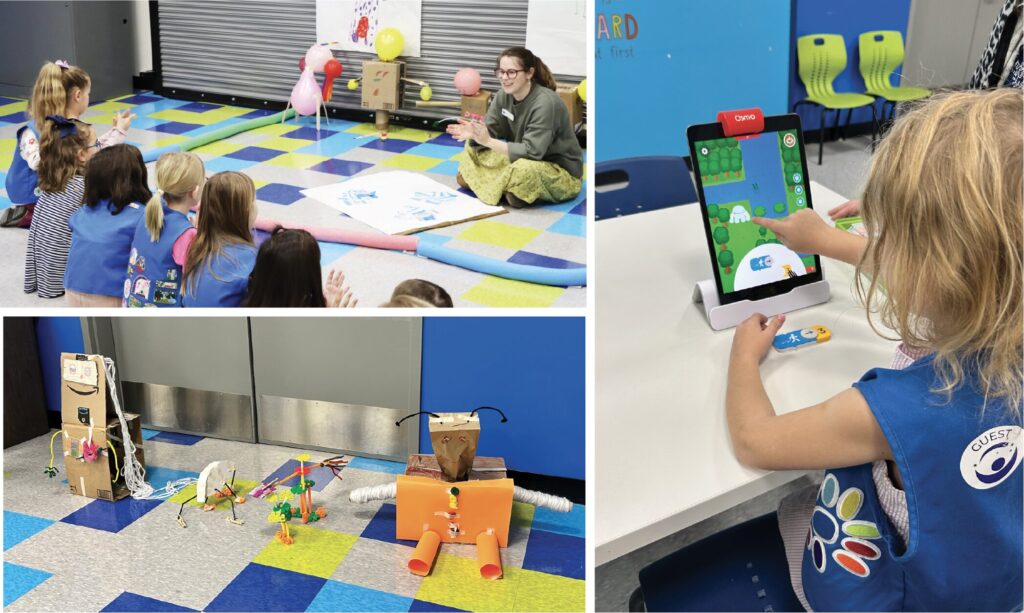
Scouting Outing: Whitaker Center offers one-stop workshops for Girl Scouts, Boy Scouts

Scenes from Scout Sundays

On select Sundays, Meghan Weible often brings her Girl Scouts to Whitaker Center in downtown Harrisburg.

Weible, of Biglerville, is a troop leader, and she takes the girls, including her own three daughters, to Scout Sundays, which, she said, is a vital resource for local troops.

Scout Sundays are designed for different ages and skill levels, with well-designed programs offered at a reasonable price. Young people enrolled in a Girl Scout or Cub Scout troop can earn badges in a variety of skills and experiences, from art to outdoors to leadership.

“Some of the STEM badges are really in-depth, and it’s really difficult to hit all of the requirements that are necessary,” Weible said. “It’s not a specialty that we have at a troop level. So, it’s really nice to go to Whitaker Center, where they have all of the resources there.”

Science, technology, engineering and math (STEM) fields are emphasized in the scouting curriculum, and local Girl Scout and Cub Scout troops can explore and earn a variety of badges in STEM fields through Scout Sundays.

This specialized series of hands-on workshops is offered from October through May, developed using guiding principles and badge requirements from the national scouting organizations.

Scout Sundays has been a part of Whitaker Centers offerings for years, but the current leaders are “breathing new life” into the program post-pandemic, said Aris Hudson, director of marketing and communications for the center.

“Our mission is to create spaces in our communities by offering educational, creative and cultural experiences that turn moments into memories—and that’s exactly what happens during these programs,” she said.

The hands-on workshops cover a wide variety of STEM fields, including robotics, forensics, coding, engineering and scientific principles and experiments. Educator Katie Brittingham leads the Scout Sundays workshops, along with occasional guest speakers and presenters.

Participants can attend individually or as a full troop and can take advantage of discounted admission to Whitaker Center’s other exhibits before or after the workshops.

“Our team of educators are brilliant. They have their own specialties and their own lanes, and the scout leaders are also so engaged,” Hudson said. “This program has outlasted many others here, even through organizational changes and instructors, and it is still popular. I think it will be here for a long time, and I think it is at the very heart of what we do.”

Whitaker Center’s programs are unique in central Pennsylvania, Weible said. The closest location offering similar programs for scouts is in Baltimore, and those offerings are more expensive and do not include the physical badges, she said.

“The kids absolutely love the hands-on part of it,” she said. “As a parent and as a scout leader, there are a lot of win-wins. The staff is amazing, absolutely amazing. It’s not just the resources, not just the cost, it’s the staff.”

To Weible, Whitaker Center is “a hidden gem.”

“We like to say that Whitaker Center is where discovery happens, and with Scout Sundays, we’re proving that discovery doesn’t require traveling to a distant science museum or waiting for a special field trip,” Hudson said. “It’s happening right here, every month, in the heart of downtown Harrisburg, open to every scout who’s ready to explore, create and grow.”

Scout Sundays workshops are offered on Sunday afternoons from October through May at Whitaker Center in Harrisburg. For a full schedule or to register, visit whitakercenter.org/learn-with-us/scouts or email [email protected].

If you like what we do, please support our work. Become a Friend of TheBurg!          

Continue Reading

Wanda Williams sworn in for second term as Harrisburg mayor; council, mayor argue on who is to blame for fired city officials

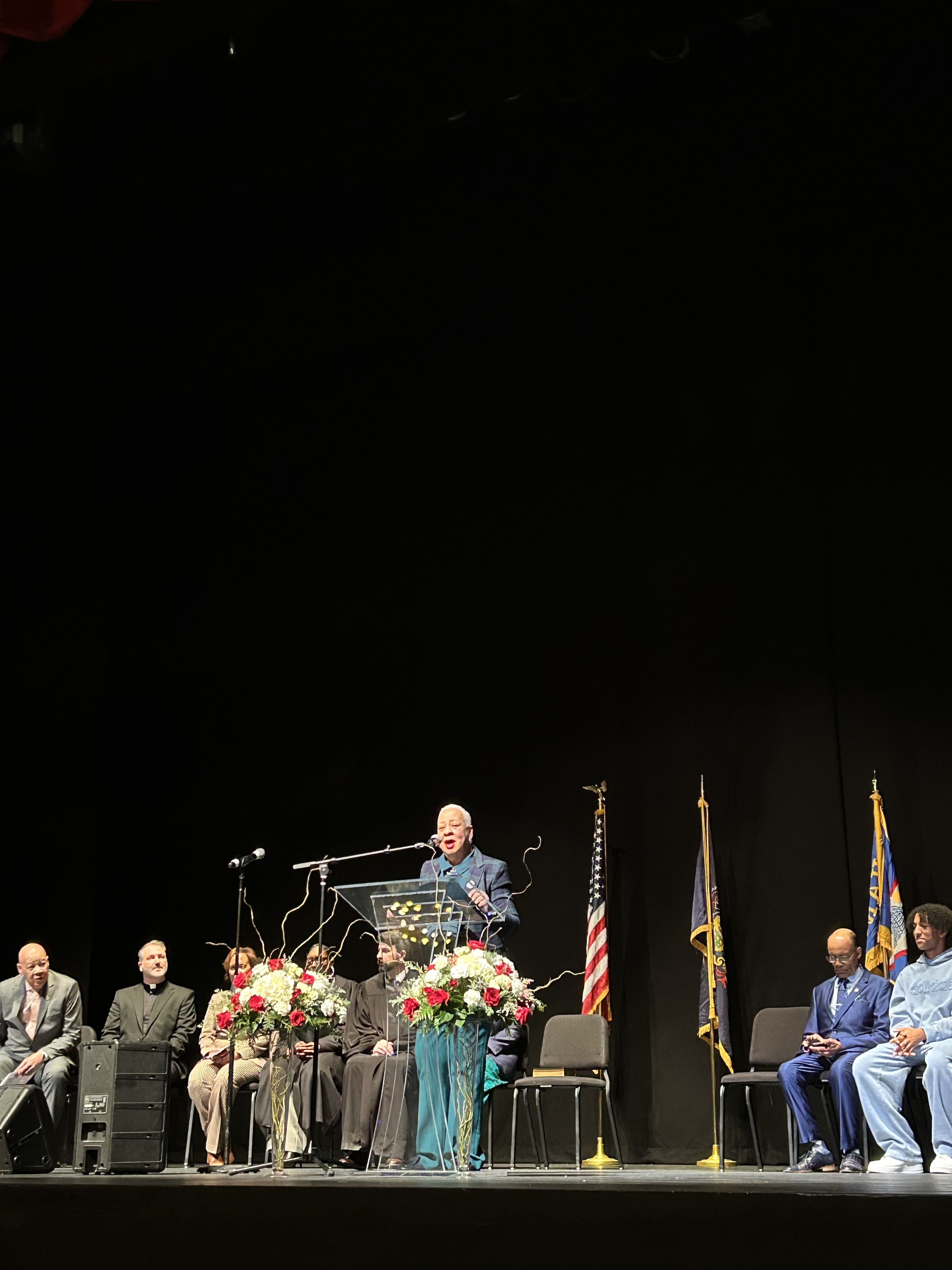
Mayor Wanda Williams spoke during her swearing-in ceremony on Monday at Whitaker Center.

Harrisburg Mayor Wanda Williams has begun her second term in office, pledging “discipline, direction and renewed commitment to infrastructure.”

At a ceremony on Monday morning, Williams issued a call for unity among city officials, following Magisterial District Judge Marian Urrutia swearing her into office for another four-year term.

“My administration has a vision for the next four years,” Williams said on stage at Whitaker Center on Monday. “Harrisburg is ready for a new era of responsible growth, a new era of stability and a new era of long-term planning—an era where our children inherit a city that is stronger than the one we inherited.”

Williams won the mayoral election in November, beating her opponent Dan Miller, a Democrat who received the Republican nomination during the primary election, by  5,096 to 3,837 votes.

Williams’ speech, which included her priorities for the new term, spoke to mutual respect between City Council and her administration. The sentiments come at a time when the mayor has been meeting with outside legal counsel to potentially sue council over its 2026 budget amendments, which slashed salaries for several top city positions.

“We will stand firm against the disrespect, misinformation and unnecessary conflict,” Williams said. “Our residents deserve a government that behaves with maturity and professionalism. They deserve decisions that are rooted in facts and certainly not theatrics.”

During her speech, Williams repeatedly praised her staff for their hard work in the city.

When asked by TheBurg, Williams said that, due to council’s budget cuts, three higher-level employees were terminated last week because there was no longer money allocated for their salaries. Those positions include Harrisburg’s business administrator, project director for business administration/LERTA and the police bureau’s director of community engagement and relations. Council also zeroed out the city’s portion of funding for the interim director of building and housing development, which supplements the portion of the salary funded through the U.S. Department of Housing and Urban Development. Gloria Martin-Roberts, the interim director, is still serving in this role.

During Williams’ swearing-in ceremony, TheBurg received an email from council president Danielle Hill with a statement about council’s budget changes. Council put the blame for the staff firings on the mayor, saying that council only removed the positions’ funding.

“Harrisburg City Council did not fire anyone. Mayor Williams fired the interim business director, project director for business development and LERTA administrator, and the director of community engagement and relations,” council’s statement said.

Council initially passed the 2026 budget in mid-December, with Williams vetoing council’s budget amendments soon after. At a special legislative session last week, council overrode the veto.

“If you defunded them, you’re firing them. There’s no money there to have them in place so they’re lying,” Williams told TheBurg in response to council’s statement.

Williams said that she intends to bring a lawsuit against city council over all the budget items that she vetoed, which included the defunded salaries.

“I’m available. There’s no excuse for them,” Williams said. “If they want to sit down and try to work things out, I’m willing. I’ve always been willing.”

In addition to her Monday morning comments about unity in city hall, Williams stressed that infrastructure would be one of her top priorities during her next term in office. She also said that promoting homeownership, battling blight and encouraging workforce development were important to her.

Williams said that her administration has a vision for the city and that her lifelong residence and service in the city make her fit to do the job.

“Progress is not accidental. Progress is built through hard choices, honest conversations and a willingness to see beyond short-term interests to a future that all our children deserve,” Williams said.

If you like what we do, please support our work. Become a Friend of TheBurg!          

Continue Reading

Whitaker Center to Host First Annual “The Art of Science Benefit” Gala on September 20

Whitaker Center for Science and the Arts invites the community to attend the inaugural Art of Science Benefit, a signature gala experience set for Saturday, September 20, 2025. This unique evening of innovation, entertainment, and celebration will support the Center’s mission-driven programs and serve as the capstone event for its milestone 25th anniversary year.

UPMC is proud to serve as the Title Sponsor of this special evening, demonstrating its continued commitment to community health, education, and cultural enrichment.

Guests will enjoy full access to all three levels of the Whitaker Center, featuring interactive exhibits, gourmet food and drink from local caterers, and an open bar. The night’s entertainment will include a special live performance by iLuminate, the electrifying dance group best known from America’s Got Talent, followed by a dance party with a live DJ and decadent dessert offerings to close out the evening in style.

“This event truly captures the spirit of Whitaker Center, where creativity, science, and community come together in powerful ways,” said Mary Oliveira, President and CEO of Whitaker Center. “The Art of Science Benefit is more than just a celebration of the past 25 years. It’s a bold step forward as we continue expanding access to STEM education, the arts, and transformative cultural experiences.”

“Over the past year, UPMC and the Whitaker Center have partnered on several initiatives to educate students and visitors about health careers, including Surgery Live!, which gives local high school students the opportunity to watch a live surgical procedure taking place at a local UPMC hospital,” said Elizabeth Ritter, president of UPMC Harrisburg, UPMC Community Osteopathic, and UPMC West Shore. “We’re excited to be part of this benefit gala that will further highlight the Whitaker Center’s contributions to our community and ensure these vital educational exhibits and activities continue for years to come.”

Whether you’re planning a one-of-a-kind date night or a memorable evening out with friends or colleagues, The Art of Science Benefit is not to be missed. Proceeds from the event support Whitaker Center’s educational programming, scholarships, and ongoing community impact initiatives.

Tickets and sponsorships are available now at www.whitakercenter.org.

Sponsored Content

Continue Reading

A Century of Community: Theatre Harrisburg opens its 100th season with reflection, dedication

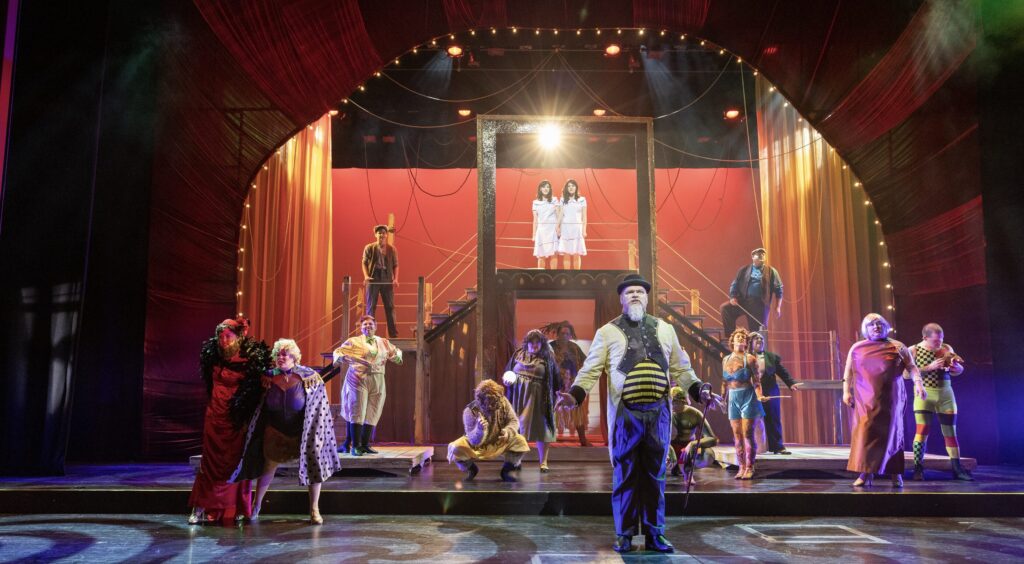
“Side Show” 2022-23

The first live theater production Michael Greenwald saw was a student preview of Harrisburg Community Theatre’s “Witness for the Prosecution” in 1957. He was 16, and he was “transported.”

“It transformed my life, and I’ve never stopped being involved,” he says now. “The role of the Harrisburg Community Theatre, as well as for other theaters that came later, was an opportunity for people who wanted to engage their creative side to do that.”

Whether people worked onstage, backstage or saw shows at reasonable prices without having to travel out of town, “it was opportunity all around.”

Theatre Harrisburg, once known as Harrisburg Community Theatre (HCT), launches its 100th season this month. Founded in 1926, the theater was part of a national movement for hyperlocal productions, made by the community, for the community.

The theater’s history is Harrisburg’s history, said Executive Director Lorien Reese Mahay.

She remembers reading a news story about a smallpox outbreak at HCT, “but they went out, and they burned all of the costumes, and the show went on,” she said. “Whatever was happening outside these walls was happening in the walls, and they were just doing theater through all of it. Through the wars. Through the health crises.”


Try Out

“Sex plays.” My goodness. Couldn’t Broadway and Hollywood produce anything wholesome?

The Little Theatre Movement began around World War I, when Americans, tired of racy theatrical fare and sad-sack touring companies, decided they could do better. It was also an era of college-educated women, blocked from careers, who channeled their considerable talents and organizational skills into civic betterment and creating impactful institutions.

The Women’s University Club of Harrisburg announced in 1925 that it would focus on “the drama,” bringing the Little Theatre Movement to a city that was thriving economically and equally thriving with wayward youth, speakeasies and corrupt political machines.

On Jan. 19, 1926, 18 performers, educators and civic leaders met to launch the Community Players. Their first play would be “The Dover Road,” staged the coming May.

“A try-out for the play will be held next Tuesday evening at 7:30 in the Conservatory of Music,” said a newspaper announcement. “Everyone is invited to ‘try.’”

With confidence built from the success of “The Dover Road,” the Community Players changed its name to Harrisburg Community Theatre. In 1927, perhaps spooked by movies grabbing entertainment dollars, HCT merged with an upstart rival, the Garret Players. By hiring Adele Eichler as director, the model was created of professional staff supporting volunteer onstage and backstage talent.

Greenwald believes that HCT, the Art Association of Harrisburg and Harrisburg Symphony Orchestra—all products of 1920s Harrisburg—emerged from the earlier City Beautiful movement’s effort to “make cities healthier, more livable.”

“Quality of life was associated with arts and culture in the minds of people who were instrumental in city life and who were the civic leaders,” he said.

After Greenwald’s first HCT encounter, he pitched in “wherever I thought I could be helpful” —usher, concessions salesman, follow spot operator (he and a good friend were “crack follow spot operators—we could find somebody in the dark”), actor and longtime board member.

For all the magic onstage, theater production can bring tempers to a boil. Greenwald will never forget when something went wrong in that “Witness for the Prosecution” dress rehearsal, and the director screamed from the back of the house, “What happened to the damn lights?”

Audiences have equated some shows with Broadway quality, but there have been stereotypical community theater moments. Old-timers used to recall Peter Pan “flying” in on a wire unspooling so slowly over the audience that it creaked.

Still, said Greenwald, although a reliance on volunteers can create up-and-down moments, “it was the professional consistency that established the reputation that Theatre Harrisburg has had these 100 years.”

In 1999, the theater split its performance venues into straight shows at the circa-1951 Hurlock Street facility—now the Jay and Nancy Krevsky Production Center—and musicals at the new Whitaker Center for the Performing Arts in downtown Harrisburg.

While Whitaker Center “remains an asset,” said Greenwald, consequences linger. Aging audiences stayed away from downtown. Many people interpreted the simultaneous name change from HCT to Theatre Harrisburg to mean that the company was folding into Whitaker Center operations.

As recently as the early 2000s, Theatre Harrisburg sometimes came close to shuttering, but Reese Mahay, taking her post at the end of the pandemic, saw resilience.

“Here’s this theater that is almost 100 years old, and it is coming back from COVID, and if it could stand that period of time—not to mention depressions, recessions, floods, etc.—and still manage to come back, I thought, ‘I want to be part of it,’” she said.

As arts administrations are eviscerated and nonprofits in every sector compete for dwindling grants and donor dollars, “there’s going to have to be a shift in the way that things are done,” she said. “The museums and libraries and theaters are all going to have to figure out how to do this together.”


Breaking Barriers

Thomas G. Hostetter didn’t get the job of director until his third try, but, once hired in early 1981, he stayed until retiring as artistic director in March 2008. He is “very happy” to return to direct the 100th season’s opening show, the gleefully manic, “A Gentleman’s Guide to Love and Murder.”

“I’m just happy to be at the forefront of the season after all the years I spent there,” he said. “I have an emotional connection to the place.”

Except for a couple of original shows, the theater he joined offered “conventional community-theater fare,” he said.

Hostetter strove “to crack that barrier and do some newer works,” sprinkling seasons with “the safe and the adventurous.” Scheduling musicals from Broadway’s hottest composer, Stephen Sondheim, attracted exceptional talent to auditions “because young people of the time wanted to do Sondheim.”

The Sondheim shows of the 1980s became the theater’s drawing cards—“Company,” “Follies,” “A Little Night Music,” “Sweeney Todd.” For the massive undertaking of “Sweeney Todd,” Hostetter knew days before opening night “that the show was going to reach levels that we had seldom been able to attain, because the cast was ready, the crew was ready. Everybody was devoted to it, committed to it. Everybody was 100% in.”

Challenges materialized in the mid-1990s, as new theater companies opened in the area, entertainment options grew, season-subscription purchases declined nationally, and elaborate Broadway hits, such as “Phantom of the Opera,” were less doable on local stages.

But as Hostetter has kept his hand in directing shows, he sees positive trends. His “Gentleman’s Guide” cast mixes acting veterans and “very gifted” new talent.

“They’re young,” he said. “They’re really solid in the singing department as well as the acting department.”


Theater Hub

Harrisburg’s thriving theater scene today emerged from Theatre Harrisburg, many say.

Donald and Anne Alsedek were HCT veterans—she played Mrs. Lovett for the landmark “Sweeney Todd”—when Don felt called to do more substantial shows than the “just fluff” he was directing there.

Former HCT Director Peter Carnahan, then serving on the Pennsylvania Council of the Arts, advised Alsedek to build a board and business plan, and HCT sent students to the theater school of Open Stage, the company that the Alsedeks founded with Marianne Fischer.

This year, Open Stage celebrates its 40th season.

“If HCT wouldn’t have been there, I might be selling pencils now,” Alsedek said. “The fact that they were there and accepting of lots of young talent over the years—I’m glad I was part of the 100 years.”

Open Stage was also instrumental in creation of Sankofa African American Theatre Company in 2017. Sankofa was founded as “a space for Black folks to tell our stories and handle them in the way that we want to and care for them and really understand them,” said Executive Artistic Director Sharia Benn.

For the 2023-24 season, Reese Mahay approached Benn about a Sankofa-Theatre Harrisburg collaboration of “Intimate Apparel,” Lynn Nottage’s exploration of African American and immigrant life in turn-of-the-20th-century America.

“The things that are important to Sankofa, Theatre Harrisburg respected,” Benn said.

Sankofa brought its audience base, its capacity to contribute half of the resources and organizational tasks needed, and—new to Theatre Harrisburg audiences—the post-performance talkbacks for critical dialogue that are core to Sankofa’s purpose.

Both companies needed each other’s resources to stage the intricate “Intimate Apparel,” Reese Mahay said. “It was a true collaboration in the sense that it was two companies acknowledging that we can’t do this unless we band together.”

While Theatre Harrisburg is trying to choose scripts with parts open to people of all backgrounds, it is also cultivating partnerships with diverse organizations, because “it’s short-sighted to think that, if you open up an audition, then everything changes,” she added. “It doesn’t change. It takes years of actually going to the community and saying, ‘we’ve changed, we’ve adapted, we’re listening, and we’re willing to do what we need to do in order to serve the community.’”


Season of Celebration

Immediate past Chair Rebecca Mease is proudest of helping to hire Reese Mahay as executive director.

“I really think she’s taking us to a new level with her dedication to seeing the community, serving the community,” Mease said. “She has grown our patron base so much by being able to connect with different communities that maybe were not even aware that we exist. While we are a community theater that puts on professional productions, community is the whole key. That’s who we are.”

The 100th season features a mix of shows consequential to the theater’s history, including the oft-performed “Guys and Dolls,” and some new to the repertoire, such as “The Last Five Years,” coming by popular demand.

A staged reading on Oct. 4 of “The Dover Road” honors the first HCT production, at McCormick Riverfront Library, where the founders first met. On May 30 and 31, Theatre Harrisburg and Harrisburg Symphony Orchestra will present a concert version of “Follies,” recognizing two legacy institutions from the 1920s and the theater’s achievement in staging two past productions of Sondheim’s complex saga.

Theatre Harrisburg will hold a 100th anniversary gala at The Willows at Ashcombe Mansion on May 31. A Gatsby-themed New Year’s Eve gala will kick off 2026 at the opulent King Mansion, opened in 1926.

“It’s a great way of bringing us into not only our hundredth season but our hundredth year in grand style,” she said.

Mease, a veteran performer, now in her 28th production with “Gentleman’s Guide,” sees a decline in corporate sponsorships nudging the theater toward more service-oriented projects that deliver a community good, such as the Penguin Project, which stages shows performed by children with disabilities.

While the Penguin Project provides an avenue for children to perform, it also provides a conduit for those who “want to be involved,” she said. “They want to help such a program.”

From the vision of a few people in the 1920s, Theatre Harrisburg remains standing in the 2020s, said Greenwald.

“The soul of our community is intrinsic in those things which bring us joy and which move us, and that’s theater, and that’s art, and that’s music,” he said.

Theatre Harrisburg’s 100th season concludes with “Disney’s Dare to Dream JR,” the summer 2026 Penguin Project show. Reese Mahay sees correlations.

“It felt very fun and appropriate when you think that the entire thing began with a bunch of people dreaming about what it might look like to have a theater in Harrisburg,” she said. “It began with a dream, and now here we are, looking into the future. Always looking into the future.”

For more information on Theatre Harrisburg, including their 100th anniversary season and events, visit www.theatreharrisburg.com.

If you like what we do, please support our work. Become a Friend of TheBurg!    

Continue Reading

Whitaker Center Announces New Mind-Bending Exhibit: Mazes & Brain Games Presented by UPMC


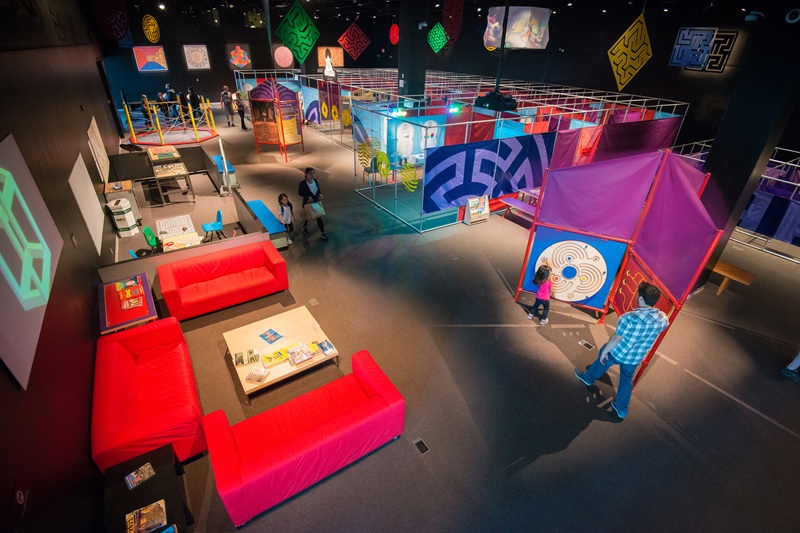
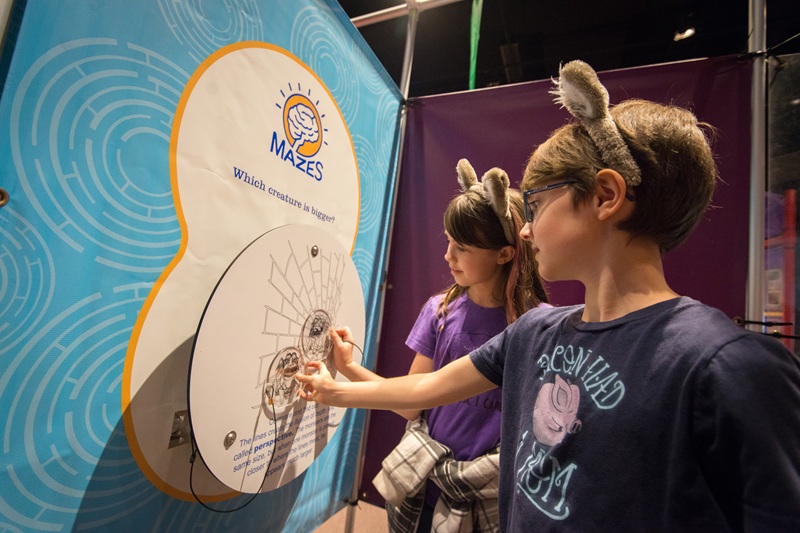
Whitaker Center for Science and the Arts is excited to unveil its newest featured exhibit, Mazes & Brain Games, opening to the public on Saturday, June 7. Sponsored by UPMC and created by Minotaur Mazes, this immersive experience will challenge visitors of all ages to think differently, move creatively, and get lost on purpose in a world of puzzles, illusions, and full-body games.

Mazes & Brain Games transforms the UPMC Science Center into a labyrinth of brain-teasing adventures. Problem-solving, logic, and hands-on exploration lead the way. Each uniquely themed maze, ranging from the visually confounding Maze of Illusions to the musically interactive Music Maze, offers dynamic challenges designed to stimulate the mind and engage the senses. Other highlights include the Web Maze, Puzzle Maze, Finger Maze, and a vibrant Color Maze that will keep guests guessing at every turn.

“Our mission at Whitaker Center is to ignite curiosity and inspire learning through experiences that are both educational and entertaining,” said Mary Oliveira, President & CEO of Whitaker Center. “Mazes & Brain Games does exactly that. It is a thrilling, family-friendly adventure that brings STEM concepts to life through movement, creativity, and critical thinking.”

This exhibit marks the latest installment in Whitaker Center’s 25th Anniversary celebration. It reflects the Center’s continued commitment to presenting world-class, interactive science experiences that spark wonder and exploration.

The exhibit is open during regular Science Center hours, Fridays through Mondays from 10:00 AM to 5:00 PM. Tickets are available online or at the door. For details, visit WhitakerCenter.org.

About Minotaur Mazes: Based in Seattle, Minotaur Mazes creates interactive, educational traveling exhibits that foster curiosity, empathy, and global awareness. Their work inspires both children and adults to learn by doing. Each exhibit transforms the way we engage with science and the world around us.

Continue Reading

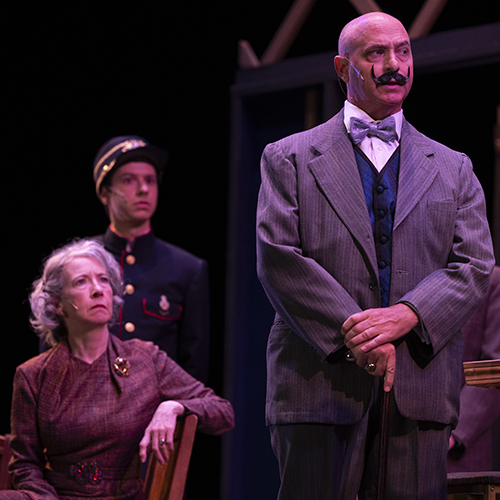
Burg Review: Theatre Harrisburg knocks ’em dead with classic whodunnit, “Murder on the Orient Express”

A scene from “Murder on the Orient Express”

In the grand tradition of the intricately crafted “whodunnit?” detective novels, Theatre Harrisburg both brings audiences’ imaginations to life while knocking ’em dead with Ken Ludwig’s adaptation of Agatha Christie’s “Murder on the Orient Express.” Its author’s signature paragon brings the perfect balance of cozy mystery and thriller, broken free from its time capsule planted almost a century ago.

Even before we meet any of the passengers aboard the Orient Express, we meet the stage’s setting as its own character in the story. The antique elements ground the audience, surrounding us in the story in much the same way we might devour one of Christie’s novels in a café while sipping a favorite beverage, or waiting for our own train.

It’s 1934, and an old-timey radio blares the news that a killer is at large. The night air, thick with haze, carries a sense of moody mystery looming in the shadows. Women wearing houndstooth, furs and cloaks carry suitcases with handles to a train platform. Men bustle about in their overcoats, unfolding and re-folding crisp newspapers. The platform is faded brown and yellow, like old parchment.

Costume designer (Paul Foltz), props designer (Kalina Barrett) and scenic designer (Lea Pick) artfully bring together upper-class touches. Also a special kudos to the lighting designer (Matthew Mitra), whose perfect lighting cues and shadowing made certain plot points come alive, even if not all Christie’s characters made it to the end that way. Director Matt Spencer applies a similar sense of continuity and cohesion to dynamics between cast members, the great majority of whom are seasoned Theatre Harrisburg veterans.

Belgian detective Hercule Poirot (Darren Riddle) is aboard the luxurious Orient Express in Istanbul, along with a manifest of fellow first-class passengers so diverse that their varied countries of origin alone would tip off border patrol. On the very first night, Samuel Ratchett (Toby Bradbury) is murdered in his sleeping chambers. With a killer at large on this opulent train that becomes stranded in a snowstorm, and persuaded by friend and train owner, Monsieur Bouc (Gordon Einhorn), Poirot pauses his vacation to figure out whodunnit.

Riddle brings to the impeccably presented Poirot character a measured rhythm, a methodical delivery, haughty mannerisms, and Poirot’s ability to make everyone around him nervous. With assumed authority, Poirot could teach a masterclass in deductive reasoning, keenly collecting and analyzing every detail as the investigation progresses. It’s amazing what conclusions he can pull together with clues of the time, such as a handkerchief, a pocket watch or a hatbox.

…the latter of which Countess Andrenyi (Becky Mease) can easily produce from her own chamber, because who doesn’t travel with a hatbox? Mease reveals an initially cool character, with a range of heightened emotions she taps in concentrated spurts throughout the play. With paralleled energy, Michel the Conductor (Quentin West) rides moderate emotional rails under scrutiny, planting just the right amount of believability and doubt, then surges at an opportune moment. Joel Colvin, as the slightly quirkier and stalkerish Hector MacQueen, reveals his character’s anger under Poirot’s interview spotlight in a relatable way. Anger is also the leading emotion for Mary Debenham (Christine Tompkins) and Colonel Arbuthnot (Bradbury), both delivering convincing outbursts that reveal just enough of the plot to keep the story moving.

As the over-the-top Helen Hubbard, TheBurg’s own M. Diane McCormick commands the stage through her pistol of a character. Although literally afraid of pistols, she doesn’t shy away from conflict, either by throwing the first punch or by defending herself. (McCormick also shows onstage what this writer knows to be uncharacteristic restraint while taking a small swig of bourbon.) Hubbard’s oversharing and attention-seeking make everyone uncomfortable, including the prissy Princess Dragomiroff (Beth McIntosh). McIntosh does a smashing job of hobbling around the train, looking down her snoot at everyone. This includes her overly anxious companion, Greta Ohlsson (Alison Whipple), who was just backwards enough to simultaneously evoke sympathy and inject comedy, with her performance peaking during her outburst scenes.

Right up until Poirot’s big reveal ending that ties up all loose ends in the story, questions linger about everyone’s motivations, making it difficult to pinpoint just one suspect. It’s a mysterious and emotionally jarring ride from Istanbul to London. And when you learn whodunnit and why, you might find yourself speculating if you would do it, too.

Agatha Christie’s Murder on the Orient Express” has already pulled into the station at Whitaker Center for Science and Arts, 222 Market St., Harrisburg. But you’d better hustle to the platform and be all aboard, because they reach the end of the line May 11. To see the online conductor for show times and tickets, visit https://theatreharrisburg.com/shows/murder-on-the-orient-express/.

If you like what we do, please support our work. Become a Friend of TheBurg!

Continue Reading

Community Comment: Investing in Harrisburg’s Future–The Transformative Power of Whitaker Center

Mary Oliveira

When I was a little girl, I couldn’t wait to start any school project that let me tap into my creative side. Each assignment felt like its own universe, brimming with endless possibilities of colors, techniques, and ideas. These projects not only fed my curiosity but challenged me to think critically and boldly explore my craziest ideas. Over time, they became more than self-expression; they were catalysts for growth, building my resilience, creativity, and understanding of the world around me.

Today, I have the honor and privilege of leading Whitaker Center for Science and the Arts, where I witness the transformative power of creativity, arts, and science every day. Whitaker Center is more than a place for cultural enrichment and education. It’s a vital cornerstone of the greater Harrisburg region, a hub that fuels innovation, inspires young minds, and drives economic growth. It’s a space where possibilities come alive and ripple out to impact our entire community.

As I reflect on my role here, I’m struck by how many reasons there are to support institutions like Whitaker Center. These reasons guide our work and serve as a reminder of why investing in arts, science, and education is so critical. Here are some of the most compelling:

We drive economic growth. The nonprofit arts and culture industry generates billions in economic activity annually across the United States, and Whitaker Center contributes significantly to our local economy. Each event we host, from science exhibits to live performances, creates a ripple effect. Visitors dine in local restaurants, shop at nearby businesses, and often return to explore more of what Harrisburg has to offer. In 2024 alone, we welcomed more than 45 thousand unique visitors, many of whom traveled from outside the area, boosting local spending and sustaining jobs in hospitality, retail, and other industries. Our operations also directly support hundreds of jobs, from our dedicated staff to the local contractors and vendors we rely on to bring our programs to life.

We bring people together. Whitaker Center is a gathering place for families, artists, and organizations, both local and regional. Whether it’s a school group exploring STEM activities, a community enjoying a film screening, or an audience captivated by a live performance, our mission is to connect people through shared experiences. These moments strengthen the fabric of our community and foster a sense of belonging that’s vital for any region to thrive.

We inspire the next generation. Every year, thousands of children come through our doors, hungry for hands-on learning that sparks their curiosity and prepares them for careers in science, technology, engineering, arts, and math (STEAM). Whitaker Center is a hub for innovation and education, offering programs that foster equity and inclusivity. We empower children of all backgrounds to imagine, create, and lead, ensuring the next generation of thinkers, doers, and creators has a strong foundation to build on.

We elevate our community’s potential. A vibrant cultural and educational scene is a magnet for businesses, talent, and families. Employers are drawn to cities with thriving arts and science institutions because they signal innovation and opportunity. Families settle in places where their children can access enriching experiences. By supporting institutions like Whitaker Center, we’re not just enhancing the quality of life, we’re creating a competitive advantage for the greater Harrisburg region.

We are deeply grateful for our supporters. None of this would be possible without the generosity of our donors and the community that embraces our mission. As a nonprofit, we rely on these vital contributions to fulfill our vision of cultural and educational growth. Every donation, no matter the size, fuels meaningful change and helps us continue making a lasting difference.

As we look to the future, the potential for growth is immense. Imagine Harrisburg as a state or national model, a community where arts and science drive innovation, inclusivity, and transformation. I believe this vision is within reach, but it requires more than imagination. It demands courage, commitment, and most importantly – investment.

With February upon us and local leaders preparing to allocate resources to meet our community’s needs, I urge them to recognize that supporting cultural and educational institutions is far from a luxury. It is a vital investment in ensuring Harrisburg remains a place where culture and innovation thrive, enriching lives and driving economic prosperity for generations to come.

Let’s make this vision a reality. Together, we can ensure that Whitaker Center, and institutions like it, continue to be a beacon of inspiration, growth, and possibility for our community. The future of Harrisburg depends on it.

Mary Oliveira, President and CEO of Whitaker Center for Science and the Arts

If you like what we do, please support our work. Become a Friend of TheBurg!

Continue Reading