Tag Archives: Tom Wolf

Acting superintendent condemns school voucher proposal for Harrisburg school district

Dr. John George, the district’s acting superintendent (right), with district Receiver Dr. Janet Samuels

A top official of the Harrisburg school district has come out strongly against a proposal that would allow city students to use public money to attend private schools.

On Wednesday afternoon, the district’s acting superintendent, Dr. John George, called a proposed bill by House Speaker Mike Turzai (R-Allegheny) “ill-timed” and said it would “harm the majority of children in the Harrisburg school district.”

Turzai currently is seeking co-sponsors for a proposed bill that would establish a “pilot voucher program” specifically targeted at the Harrisburg school district. It would award “scholarships” of $4,100, which city children could use to attend private or other public schools.

The proposal also calls on the state to contribute another $3,000 in a “tuition grant,” bringing the total to $7,100 per student.

“Speaker Turzai’s proposal is ill-timed and undermines the Financial Recovery Act of 2012, the very legislation for which he advocated,” George said, in a statement. “By removing additional monies from the school district that is already financially distressed, the proposal seriously disrupts the recovery process and wrecks additional havoc, virtually guaranteeing that the district will forever remain in financial distress.”

George further stated that Turzai’s proposal “requires parents to pay a portion of the tuition,” which “may help a few, but it comes at the expense of harming the vast majority.”

“It also only further widens the economic disparity between those who can afford to pay tuition and the poorest of the poor,” he stated.

In June, Dr. Janet Samuels was appointed receiver of the Harrisburg school district, and she immediately fired the district’s top administration, including long-serving Superintendent Sybil Knight-Burney. Last week, she appointed George, the executive director of the Montgomery County Intermediate Unit, as interim superintendent.

Turzai began circulating his proposal among lawmakers yesterday, a day after the school year began in the 6,700-student school district. He said that such action was needed given the poor performance among students on state test scores and the fourth-lowest high school graduation rate in the state.

“By allowing Harrisburg families to choose the right education environment for each student, we can finally resolve the decades-long failure to provide an adequate education to Harrisburg children,” Turzai wrote in his memorandum to House members seeking for co-sponsors. “Please join me in co-sponsoring this vital legislation.”

George isn’t the only state official to object to the proposal. The Pennsylvania Capital-Star has reported that state Rep. Patty Kim (D-Harrisburg) and Gov. Tom Wolf, through his spokesman, both condemned the proposal.

State Rep. John DiSanto (R-Dauphin County) was more welcoming, calling Turzai’s proposal “worthy of further consideration,” according to the Capital-Star.

“The Harrisburg school district applauds the Speaker’s particular interest in the Harrisburg school district and welcomes his willingness to assist the district,” George concluded in his statement. “His proposal, however, is not helpful and only exasperates the recovery process that is already underway.”

This story was corrected to attribute the school district’s position to Acting Superintendent Dr. John George, not Receiver Janet Samuels.
Continue Reading

Sweet Dreams: Wolf, Fetterman drop in for a scoop, promote ice cream trail

Urban Churn owner Adam Brackbill (center) shares a word and a scoop of his craft ice cream with PA Lt. Gov. John Fetterman and Gov. Tom Wolf.

There are certain things you expect to see on a Thursday afternoon in Midtown Harrisburg: customers at Midtown Scholar, state workers eating lunch at the Broad Street Market.

Our state’s two top elected officials chomping down on ice cream cones might not be one of them. Yet that’s exactly what surprised customers saw today at Urban Churn’s new ice cream shop on N. 3rd Street.

Gov. Tom Wolf and Lt. Gov. John Fetterman joined Urban Churn owner Adam Brackbill in grabbing some cones to help bring awareness to Pennsylvania’s “Pursue Your Scoops” ice cream trail. Sponsored by the PA departments of Agriculture and Community and Economic Development, the trail offers participants prizes for visiting select creameries.

“[The trail] has brought in a lot of folks from out of town. We have people from Reading, from Lancaster, people who otherwise wouldn’t have heard about us,” Brackbill said. “Especially since we’re new, it’s helped our new retail shop to grow because of it.”

From now until Sept. 2, if you visit five creameries on any of the three trails, you’ll win a “Pursue Your Scoops” T-shirt. If you visit all of the shops on the list, you’ll receive a T-shirt and a “Pursue Your Scoops” ice cream bowl.

This is the second year that the departments are hosting the trail. According to VisitPA, the trail offers a variety of ice cream experiences, from “an urban to true cow-to-cone farm experience.” The trail is broken down into three regions: western, eastern and south central. This is the first year the trail will include creameries located off of a farm.

“We found that the way to impact our farmers isn’t just having someone visit the farm,” said Ashlee Dugan, coordinator of PA Preferred. “It’s also through companies like Urban Churn and Betsy’s Ice Cream in Pittsburgh that are still working really closely with farmers.”

Not only does the trail bring people a fun treat, but it helps promote small businesses in Pennsylvania and economic growth in those areas.

“Urban Churn buys locally so that helps create a demand for the dairy products,” Wolf said. “It’s just one small part of what the commonwealth is trying to do to really support, by some accounts, our biggest industry in Pennsylvania. Part of this is really serious [as far as] strong economic implications. Part of it is that it’s really fun to just eat good ice cream.”

For more information on the Pursue Your Scoops ice cream trail, visit visitpa.com/scoops.

Continue Reading

A 1-Hour Tour: Harrisburg briefs ICA members on the city’s financial crisis, recovery.

Members of the Intergovernmental Cooperation Authority, who met today at Temple University in Strawberry Square.

Members of Harrisburg’s state-appointed oversight board jumped into the deep end on Tuesday afternoon, as the city took them on a thorough tour of its recent financial history.

Bruce Weber, the city’s budget and finance director, gave the seven-member Intergovernmental Cooperation Authority (ICA) a presentation that explained in detail how the city suffered a historic financial collapse and the numerous subsequent measures taken to restore it to solvency.

“It’s hard to absorb all the recent past with the city in one sitting,” said Weber, a non-voting member of the board. “This has to be an ongoing learning process for everyone involved.”

Nonetheless, Weber offered a blow-by-blow review that stretched back to the city’s post-war deindustrialization and population loss. His presentation dug into the details of the past decade, including the incinerator crisis, state receivership, the Harrisburg Strong recovery plan, the numerous sources of debt, and the complex lease of the city’s parking system.

“This was a period of survival,” he said at the meeting at Temple University in Strawberry Square. “The city’s survival as we knew it was at stake.”

He also reviewed how, under the current administration, Harrisburg balanced its budget and stabilized its finances. However, the city now faces the loss of 18 percent of its operating budget in 2024, once its extra taxation authority expires.

The state legislature mandated the ICA as a condition for allowing Harrisburg to exit the state’s Act 47 program for distressed municipalities but retain its extra taxing authority for five more years. The ICA is now tasked with developing a five-year financial plan for the city.

“Fixing an 18-percent hole in the budget is very, very hard,” said meeting attendee Dan Connelly, senior advisor at Marathon Capital Strategies, a Haddonfield, N.J.-based financial advisory firm retained by Harrisburg.

Weber was only able to get through about half of his presentation before the hour-long public portion of the meeting abruptly ended. He will continue it at the ICA’s next meeting, slated for April 24.

“We’re so new, we have a huge learning curve ahead of us,” said ICA Chairman David Schankweiler as the meeting wrapped up.

Otherwise, the ICA approved three requests for proposals (RFPs): one for an executive director, one an auditor and one for a website designer.

The ICA also reviewed the timeline for what it needs to do over the next year. Importantly, the city and the ICA must develop a five-year financial plan by May 27 and send an initial report of recommendations to Gov. Tom Wolf and the state General Assembly by Aug. 25.

Continue Reading

Proposed STEAM charter school launches petition drive to reverse school board denial

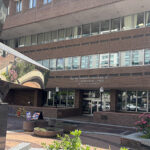
The proposed PA STEAM Academy would move into this building, Midtown 2, in Harrisburg.

A group denied permission to open a new public charter school has begun a petition drive to overturn the decision of the Harrisburg school board.

The board of the proposed PA STEAM Academy needs to gather valid signatures from 1,000 city residents, 18 years and older, to force the matter to the Dauphin County Court of Common Pleas.

“The bottom line is—what’s in the best interest of the kids?” said Susan Kegerise, a former Susquehanna Township school district superintendent and now a member of the proposed charter school’s board. “We’re going to keep going because it’s in the best interest of the kids.”

PA STEAM Academy has until mid-April—60 days following the city school board’s unanimous denial of its charter application on Feb. 19—to gather the signatures for its appeal. If the court validates the petitions and issues a decree, the matter goes to the state Department of Education’s seven-member Charter School Appeal Board, which will make a final decision to affirm or overturn the school board’s decision.

To coordinate the petition drive, PA STEAM has contracted with Maverick Strategies, a Harrisburg-based consultant and lobbying shop. Over the next six weeks, Maverick will lead the effort to gather signatures during city festivals, on 3rd in the Burg nights, in Strawberry Square and at the Broad Street Market, among other places, according to PA STEAM board members.

Canvassers will also go door-to-door to gather signatures, with the goal of substantially exceeding the 1,000-signature mark, they said.

In the meantime, PA STEAM is still moving forward with a planned opening for the fall semester, said Carolyn Dumaresq, president of the charter school board and a former state secretary of education.

To do so, board members will need to hire a principal, six teachers and support staff, in addition to accepting the first round of students.

PA STEAM plans to open with 120 students, grades K-2, in Midtown 2 at N. 3rd and Reily streets in Harrisburg. The 115,000-square-foot building is currently occupied by HACC, but the college’s lease expires in 2022, and it is slated to begin moving programs out of the building later this year.

PA STEAM plans to expand on an annual basis, adding a grade level each year until it becomes a K-8 school. It also expects to grow horizontally, so that each grade level eventually would have 80 students.

Kegerise said that the PA STEAM Academy would feature small class sizes of 20 students, with a teacher and an aide per classroom, along with a strong creative component, community involvement, alignment among curriculum areas, skills integration and an emphasis on the use of technology. STEAM itself stands for science, technology, engineering, arts and math.

Doug Neidich, another board member, said that he believes it’s vital to offer educational options to young parents, many of whom leave the city when their children reach school age. He said that he envisions PA STEAM Academy as a possible feeder school for the city’s well-regarded SciTech High and for the arts-focused CASA charter school.

“We spent a ton of time getting this right, and we look forward to launching it,” said Neidich, CEO of GreenWorks Development, which owns the Midtown 2 building.

Dumaresq served for about 18 months as the state’s education secretary under former Gov. Tom Corbett. However, she said she doesn’t believe that her tenure necessarily will give the PA STEAM Academy an edge if the matter does go before the Charter School Appeal Board.

“It might seem like an advantage, but they’re very independent thinkers,” Dumaresq told TheBurg.

Elizabeth Hardison of the Pennsylvania Capital-Star reported today the Appeal Board remains populated with holdovers from the Corbett administration, as Gov. Tom Wolf has not made his own appointments.


For more information on the charter school appeals process, visit https://www.education.pa.gov/K-12/Charter%20Schools/Pages/Charter-Appeals.aspx.

For more information on the petition drive, contact Amanda Boris at [email protected].

Continue Reading

State grants medical marijuana permits to two new Harrisburg dispensaries.

Harvest of SouthCentral PA LLC was granted a permit to open a medical marijuana dispensary at 2500 N. 6th Street in Uptown Harrisburg, the site of the historic Camp Curtin fire station. (Image courtesy of Creative Commons.)

Two medical marijuana facilities have been approved to open their doors in Harrisburg in 2019, thanks to permits granted today by the state Department of Health.

Harvest of South Central PA, LLC and Local Dispensaries, LLC received permits to operate sales facilities in uptown Harrisburg and South Allison Hill, according to a press release issued by Gov. Tom Wolf’s office this morning.

In all, the state granted 23 permits to dispensaries across the state as part of the second phase of its medical marijuana program, which was signed into law in April 2016. The new facilities will bring the total number of dispensaries in Pennsylvania to 79.

Once they’re fully operational, the dispensaries can sell state-approved products to card-carrying medical marijuana patients. Pennsylvania dispensaries are currently allowed to stock marijuana oils, pills, topical creams and tinctures, as well dried flower and other plant forms that patients can smoke or vaporize.

The Arizona-based Harvest listed the address of its new dispensary as 2500-2504 N. 6th Street in Uptown Harrisburg, the site of the historic Camp Curtin fire station.

That property is currently occupied by Camp Curtin BBQ. The restaurant’s owners could not be reached for comment today.

Ben Kimbro, director of public and strategic affairs for Harvest LLC, could not confirm any real estate transactions taking place ahead of the dispensary’s arrival.

Kimbro said his company must consider local zoning and permitting regulations when evaluating sites for their dispensaries, as well as proximity to potential patients.

He said the facility will open in 2019, once Harvest has obtained local permits and completed site design plans, and could create up to 20 new jobs.

Harvest employees manage product inventory and consult with patients, Kimbro said. All “patient specialists” receive an intensive education in physiology and marijuana terminology so they can help patients find the best products for their ailments.

Harvest was also granted permits for facilities in Reading, Scranton, Shamokin, Johnstown and New Castle, Pa.

“We see Pennsylvania writ large as a great market,” Kimbro said. “Its population centers, the ages of its population and the patients Pennsylvania has chosen for the program — all of it appeals to us a lot.”

The Lehigh Valley-based Local Dispensaries LLC proposed a location at 137 S. 17th Street in South Allison Hill, an undeveloped lot across from the Hamilton Health Center.

Harrisburg mayor Eric Papenfuse said that city officials have met with representatives from both organizations, and welcomed the news that they would open for business in underdeveloped corners of Harrisburg.

“Their business plans are solid, and both projects will create much-needed jobs while spurring economic development in corridors of the city that need it,” Papenfuse said.

Local Dispensaries could be immediately reached for comment today.

A third applicant from the south-central region, GTI Pennsylvania LLC, was also granted a permit for a new facility in Mechanicsburg.

GTI currently operates RISE Steelton, the closest dispensary to Harrisburg. Dispensaries in Enola and Carlisle opened last year under Phase I of the medical marijuana rollout.

“The permitting of these locations as part of Phase II of the medical marijuana program will ensure more people have access to medical marijuana close to home,” Secretary of Health Dr. Rachel Levine said today. “This step continues the growth of our scientific, medically-based medical marijuana program.”

The Department of Health received 180 applications for its Phase II permits, which it evaluated using a scorecard with more than a dozen criteria.

In addition to business and facility plans, dispensary permit applicants must explain how they will transport, store and secure their product inventory. They must also submit diversity plans and show that their facility will have a positive impact on its community.

Applicants must also pay a non-refundable application fee of $5,000, as well as $30,000 permitting fee and proof of $150,000 in start-up capital.

Pennsylvania’s medical marijuana program allows patients suffering from 21 serious medical conditions – including glaucoma, HIV/AIDS, Huntington’s disease, Crohn’s disease and multiple sclerosis – to purchase marijuana products at licensed dispensaries.

Patients must obtain a medical marijuana identification card from one of 945 approved physicians. About 66,000 Pennsylvanians have active identification cards, according to the Department of Health.

This story was updated at 5 p.m. on Tuesday, Dec. 18 to include comments from Ben Kimbro.

Continue Reading

Local attorney, non-profit executives appointed to Harrisburg’s financial oversight board.

Democratic state lawmakers have appointed three members of Harrisburg’s newly created Intergovernmental Cooperation Authority (ICA), which is charged with overseeing the city’s finances beginning in 2019.

Audry Carter, Kathy Speaker MacNett and Tina Nixon were all appointed to the five-member oversight board this month, according to government spokespeople.

As members of the ICA, they will control a $100,000 annual budget, approve a five-year financial plan for Harrisburg, and review annual budgets and quarterly financial reports for the city through 2023.

Appointing power to the ICA lies with five members of state government: the governor, president pro tempore of the Senate, minority leader of the Senate, speaker of the House and minority leader of the House.

President Pro Tempore Joe Scarnati and House Speaker Mike Turzai are expected to make their appointments in the new year.

The ICA was a requirement of House Bill 2557, which allowed Harrisburg to retain its taxing authority for five years after exiting Act 47, a state oversight program for financially distressed cities. The ICA will dissolve when Harrisburg’s taxing authority expires in 2023.

Appointees must live or own a business in the city and must have financial management experience. They cannot work for state government, which significantly limits the number of eligible residents in Harrisburg.

Italian Lake resident Audry Carter was appointed by Gov. Tom Wolf, his spokesman confirmed on Monday. Carter’s resume lists her as the principal of her own consulting firm, which provides management and fundraising guidance in the nonprofit, educational and healthcare fields. She has also managed fundraising campaigns and donor relations programs at hospitals and universities.

She currently serves as the vice chair of the Pennsylvania College of Art and Design and as the president of TheBurg Foundation, which provides marketing grants to nonprofits and acts as a fiduciary agent for several community organizations.

Speaker MacNett, a labor relations attorney at Harrisburg-based Skarlatos-Zonarich law firm, was appointed by House Minority Leader Frank Dermody. A resident of downtown Harrisburg, Speaker MacNett sits on the steering committee of Capital Area Neighbors and is on the board of the Harrisburg Catholic Elementary School.

Senate Minority Leader Jay Costa appointed Tina Nixon, vice president of mission effectiveness and chief diversity officer at UPMC Pinnacle in Harrisburg. Before she joined Pinnacle in 2015, Nixon was the CEO of the YWCA of Greater Harrisburg. Her resume touts more than 25 years of experience in fundraising, marketing and communications in the nonprofit sector.

Nixon was appointed by Gov. Tom Wolf to serve on the Pennsylvania Commission on Women and also sits on the board of the Pennsylvania STEAM Academy, a charter school that has applied to open in the Harrisburg school district in 2019.

ICA members are appointed to serve five-year terms, but they can be replaced if there is electoral turnover among appointing authorities.

The state secretary of the budget and Harrisburg’s finance director will also sit on the ICA as non-voting members.

Once it’s fully populated, the ICA must hire an executive director, who will earn up to a $100,000 salary. The director has 60 days to draft a formal agreement between the ICA and Harrisburg, granting board members broad access to the city’s financial data.

When the ICA and the city enter their agreement, Harrisburg can petition the state Department of Community and Economic Development to release it from Act 47.

Harrisburg officials expect that day will come in spring 2019.

Continue Reading

Get Out the Vote: Joe Biden campaigns for congressional hopeful George Scott in Harrisburg.

Joe Biden, center, appeared with Gov. Tom Wolf and Democratic congressional candidate George Scott at the Pennsylvania Farm Show Complex on Sunday afternoon.

Former Vice President Joe Biden stumped for congressional candidate George Scott at the Farm Show Complex in Harrisburg on Sunday, where he and Democratic politicians from across the state tried to drum up voter turnout just two days before the midterm elections.

In a 20-minute speech, the Scranton native cast the race in Pennsylvania’s 10th congressional district as a referendum on national politics, including threats to the Affordable Care Act and the rise of nationalism from the right.

“The character of our nation is on the ballot this Tuesday,” Biden said. “We have to reset the moral compass of this nation, and choose hope over fears, unity over division, and truth over lies.”

Biden says that a Democratic takeover of the House of Representatives will be key to preserving Social Security and Medicare, which he fears will be on the chopping block in the next budget cycle.

Scott is campaigning to unseat Republican incumbent Scott Perry and represent Pennsylvania’s newly redrawn 10th district in Congress.

If he succeeds, he’ll be Harrisburg’s first Democratic member of Congress since 2011, when redistricting efforts by a Republican-controlled legislature took the city out of Rep. Tim Holden’s district and split it between two districts controlled by Republicans.

This year’s race is the first one under Pennsylvania’s new congressional map, which was redrawn this year after the State Supreme Court ruled that the 2011 districts were gerrymandered to favor Republicans.

The new map, which was unveiled in February, has led to more energetic and highly contested races across the state. As many as seven districts across in Pennsylvania could flip, according to political observers.

Pennsylvania’s 10th district is one of them. Perry was reelected by landslide margins in his last three re-election bids, but recent polls put Scott and Perry in a statistical tie.

“At the beginning of this race, few people thought we could win,” Scott said. “That has changed.”

State Rep. Patty Kim, who is up for re-election on Tuesday, also recognized the role of the new map in reenergizing Pennsylvania’s congressional races. She was one of eight Democrats who preceded Biden to the stage during today’s two-hour rally.

Gov. Tom Wolf and his running mate, John Fetterman, who are favored to beat their Republican opponents on Tuesday, also gave remarks before Scott himself took the stage.

A Lutheran minister who completed a 20-year career in the U.S. Army, Scott took a leave from his congregation in East Berlin, Pa., to run for Congress on a staunch Democratic platform.

Scott does not have political experience, but his opponent’s voting record has given him plenty of fodder for the campaign trail.

Perry, who has one of the most conservative voting records in Congress, supports most policy proposals from the Trump administration. He’s voted to repeal the Affordable Care Act, supports building a wall along the U.S.-Mexico border, and opposes federal minimum wage hikes.

Scott has called out Perry’s vote against the ACA on the campaign trail, casting it as a vote to repeal protections for patients with pre-existing conditions. Perry has since come out in support of legislation to preserve the pre-existing conditions mandate.

Polls across Harrisburg open at 7 a.m. on Tuesday and close at 8 p.m. Voters can find their polling places here.

Continue Reading

To Benefit Harrisburg: Bi-partisan cooperation leads to continued city success.

Just a few weeks ago, the residents of our city and region were witness to a remarkable display of bi-partisan cooperation and compromise among local and state officials. It was an example of putting aside the destructive politics of personal grievances and ideological commitments in the service of crafting a solution that makes a real difference to the people and the place our officials were elected to represent. It was an example of politics at its best—so often missing at the national level—that has made the residents of our city and region much better off.

Led by the bi-partisan efforts of state Reps. Greg Rothman (R), Patty Kim (D) and Tom Mehaffie (R), as well as state Sens. John DiSanto (R) and Jake Corman (R), and bolstered by the tireless advocacy of Mayor Eric Papenfuse (D), the state House and Senate passed, with overwhelming support, legislation that allows the city of Harrisburg to exit its distressed municipal status (known as “Act 47”) and retain its expanded taxing authority of a 2-percent earned income tax (EIT) and a $156 annual local services tax (LST) for five more years. Gov. Tom Wolf (D) also supported the effort and indicated he would immediately sign the legislation.

Combined, these two taxes provide about $12 million a year in annual operating revenues to the city’s budget (nearly 20 percent) and are crucial to enabling it to continue on a path of fiscal sustainability. Without the continued LST and EIT in place, the city would have been forced to exit Act 47 within three years and face the prospect of drastically cutting services, spending down its surplus reserves, canceling capital improvement projects, and raising property taxes by nearly 100 percent, as proposed by the original Act 47 Exit Plan.

Needless to say, such dire fiscal circumstances would have had devastating effects on residents and businesses—not just within the city but within our entire region. Thankfully, our local and state officials—urban and suburban, liberal and conservative, Democrat and Republican alike—recognized that what happens here in the city doesn’t stay here, and that our region and state are stronger and more prosperous when our capital city is stronger and more prosperous, as well.

This is the logic behind the local services tax. It broadens the tax base while the keeping the burden low (to just 43 cents a day) on a wide swath of users who enjoy the benefits and value that our capital creates every day for the region and state. In many ways, the LST is the embodiment of what economists refer to as an “efficient” (read “ideal”) tax that delivers large, important benefits such as fire and police protection and funds for infrastructure maintenance, while imposing a relatively small burden on a large population that benefits directly from those services.

This is why a large coalition of civic and business leaders, including the Harrisburg Regional Chamber and CREDC, the Greater Harrisburg Association of Realtors and the Downtown Improvement District (DID), stood together in support of the Rothman-Kim bill. They recognize that all residents, business owners and political and civic leaders throughout the region have a deep, vested interest in maintaining a vibrant and fiscally strong capital city.

There has been a lot of good news recently in Harrisburg, as readers of TheBurg know well. The city has made great strides in attracting many new residents and businesses, and it is poised to receive large amounts of new investment (upwards of $750 million, according to estimates) from various private and public projects over the next several years. By supporting and passing this legislation, our local and state officials have enabled the city to harness these positive trends and continue on a strong upward trajectory.

To be sure, much more work needs to be done in building the city’s tax base and shoring up its finances over the coming years, particularly with more permanent sources of revenue. This is why, as part of the legislation, an Intergovernmental Cooperation Authority (ICA) was created. Its five-member, bi-partisan-appointed board and executive director will assist the city in managing its budget and building long-term solutions for continued fiscal success.

With this legislation passed and the ICA in place, we can be confident that our local and state officials will continue to work together across the partisan divide to achieve long-term solutions for the city in the same cooperative spirit that got us to this point. Thanks to their efforts so far, the city will continue to grow and prosper, serve as a beacon of urban recovery and further strengthen our region and state.

Alex Hartzler is publisher of TheBurg.
Dave Butcher is president of WCI Partners LP.

Continue Reading

Hundreds attend Harrisburg vigil honoring Pittsburgh shooting victims.

More than 200 people gathered on Monday evening at the Jewish Community Center in Harrisburg.

As the sun set over the Susquehanna River this evening, more than 200 people at the Harrisburg Jewish Community Center mourned the lives lost in a weekend shooting at a Pittsburgh synagogue, where a gunman killed 11 congregants in what federal prosecutors are calling a hate crime.

The vigil was held two days after a 46-year old gunman burst into the Tree of Life synagogue in the Squirrel Hill neighborhood of Pittsburgh, where he reportedly shouted anti-Semitic rhetoric before shooting congregants at Shabbat services. Eleven of the victims perished, and another six were wounded, including four police officers.

In the days since the event, communities across the country have held vigils in solidarity with the Jewish community in Pittsburgh. A ceremony in Squirrel Hill on Sunday night drew thousands of attendees, according to reports.

Gov. Tom Wolf was scheduled to attend a vigil for the victims in York on Monday. On Thursday, Harrisburg mayor Eric Papenfuse’s Interfaith Advisory Council will hold a memorial service at 5:30 p.m. at the Pine Street Presbyterian Church.

Monday’s impromptu vigil was organized by Abby Smith, a member of the Jewish Federation of Greater Harrisburg, and employees of the Jewish Community Center, who decided this afternoon to hold a public event. They publicized it on social media and by word of mouth.

The candlelight vigil was held in a field outside the Jewish Community Center, located on Front Street near Susquehanna Township. Two officers from the Harrisburg Police Bureau provided security from the back of the crowd.

JCC employee Andrea Weikart said the turnout far surpassed their expectations.

“It’s overwhelming to see this support from the community,” Weikart said.

Smith opened the ceremony with a moment of silence and then a prayer for the 11 victims. Rev. Russell Goodman of the Riverside United Methodist Church also offered a benediction, before Rabbi Eric Cytryn, leader of Beth El Temple, led the audience in Hebrew hymns and prayers.

Harrisburg resident Allen Fernandez, who is a Christian, attended the event to show support for the Jewish community.

“They’re hurting from a tragedy that no religious group should ever experience,” Fernandez said. “The Jewish community here has helped a lot of people I care about, and this is a moment to stand in solidarity and mourning with them.”

Fernandez said the vigil also offered an opportunity to reflect on the seemingly endless episodes of gun violence in the country.

“We’ve had shootings in schools, synagogues, churches, grocery stores – is there a place in this country where I won’t get shot?” Fernandez said. “Events like this bring me back from feeling numb about them.”

Federal prosecutors are investigating the Pittsburgh shooting as a hate crime. The alleged shooter, Robert Bowers, appeared in federal court today, where he faced 29 civil and criminal charges, including 11 counts of obstruction of exercise of religious belief resulting in death.

State prosecutors have also charged Bowers with 11 counts of homicide and six counts of attempted homicide.

The U.S. Attorney’s office in Pittsburgh announced on Sunday it would seek the federal death penalty for Bowers if he is convicted.

Continue Reading

Harrisburg convinced lawmakers to let it leave Act 47. What’s next?

It’s been one week since the state lawmakers passed a bill that will let Harrisburg exit Act 47, but a lot has to happen before the city can shed its status as a distressed city.

The Municipal Financial Recovery Act, which will allow Harrisburg to keep its augmented taxing power for five years after it exits state oversight, was signed into law by Gov. Tom Wolf this afternoon, one week after state Senators approved it on a 48-1 margin.

Wolf’s signature will trigger a series of actions designed to lead Harrisburg to financial stability, starting with the formation of a five-member appointed body that will oversee the city’s finances. The Intergovernmental Cooperation Authority (ICA) will stand until Harrisburg’s taxing authority expires in December 2023.

The duties of the ICA are spelled out in the legislation Wolf signed today: its members will approve a five-year financial plan for the city and review its annual budgets and quarterly financial reports through 2023.

But who will serve on the board is still a mystery.

Harrisburg solicitor Neil Grover said on Tuesday night that the appointees must live or own a business in the city and must have financial management experience. The authority members cannot work for state government, which significantly limits the number of eligible residents, Grover said.

Grover said that appointees will likely be experienced lawyers, accountants or retired government officials.

A review of the five-member ICA board in Philadelphia, which was created in 1991, suggests he’s right. Its members include a former mayoral aide, an attorney, a professor of public health and an investment broker.

“It’s anyone’s guess who they’ll be,” Grover said. “But I’m sure phones started ringing before the [Senate voted.]”

The power to appoint the board lies with five members of state government. The governor, president pro tempore of the Senate, minority leader of the Senate, speaker of the House and minority leader of the House will each appoint one member of the authority. They have 30 days to choose appointees after Wolf signs the Recovery Act into law.

The state secretary of the budget and Harrisburg’s finance director will also sit on the board as non-voting members.

The appointees will serve five-year terms, but can be replaced if there’s electoral turnover among the appointing authorities, Grover said. They will also control a $100,000 budget, which they will use to hire an executive director.

Once hired, the executive director has 60 days to draft a formal agreement between the ICA and the city.

Mayor Eric Papenfuse said that he doesn’t yet know exactly what that agreement will say. At the very least, it will give the authority members broad access to Harrisburg’s financial data.

Philadelphia and Pittsburgh have both entered ICA agreements, which gave their boards some of the same duties as Harrisburg’s proposed authority – including the approval of budgets and of quarterly financial reports.

But they also had some broader powers. The agreement that Philadelphia entered, for example, allowed its board to issue bonds for capital improvement projects.

The scope of Harrisburg’s agreement will be more limited, Grover said, given the city’s smaller population.

Once the ICA board and the city sign an agreement, Harrisburg can petition the state Department of Community and Economic Development to release it from Act 47.

That day likely won’t come until the spring, Grover said.

Even if DCED allows Harrisburg to exit Act 47, the terms of the ICA agreement mean Harrisburg will effectively trade one form of oversight for another.

The city will still submit yearly budgets and quarterly financial reports to the ICA board, as it did to its DCED coordinator. And, just as Harrisburg entered a five-year recovery plan under Act 47, it must now hatch a new one dictating its long-term budget priorities through 2023.

Papenfuse is optimistic about the new system and says the ICA’s imprint won’t be any greater than the state’s was under Act 47.

“There’s a lot to work on, but I’m very positive,” Papenfuse said.

Continue Reading