Tag Archives: Tarik Casteel

Harrisburg awards money to affordable housing projects, made possible by federal COVID dollars

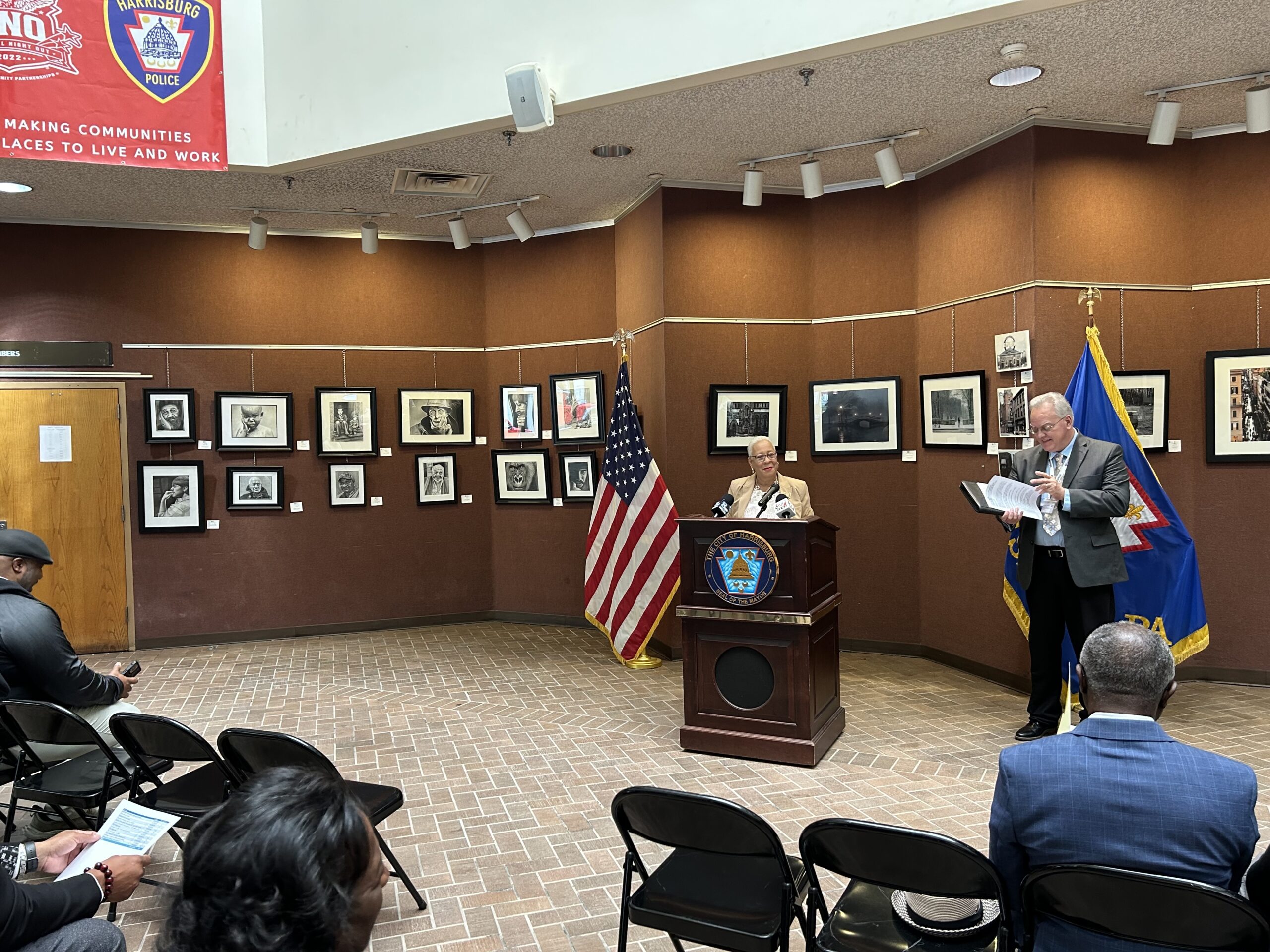
Mayor Wanda Williams and Business Administrator Sam Sulkosky announced recipients of affordable housing funds at city hall.

Over a dozen local projects will get a boost of cash to create housing.

Harrisburg officials on Wednesday announced the 13 affordable housing projects that will receive a total of almost $8 million in grants, money that was made available to the city through federal COVID-relief funds.

“I am proud to continue fulfilling one of my original campaign promises to make Harrisburg a city where everyone has access to a safe affordable place to call home,” Mayor Wanda Williams said at a morning press conference.

The money for the initiative was made possible through the federal American Rescue Plan Act (ARPA) program. Harrisburg received a total of $47 million in ARPA money.

City Council, in 2023, approved putting $31.4 million into the city’s general fund to replace revenue lost during the pandemic. That money then went to pay for regular budget items, freeing up money for special projects. Council designated certain projects that the money should fund, such as the $8 million for affordable housing, in addition to other projects.

Recipients of the Affordable Housing Development Fund grants are as follows:

  • Beahive Affordable Housing Outreach, 4 units-$400,000
  • Breneman Group, 14 units-$650,000
  • Habitat for Humanity, 4 units-$400,000
  • Handles Helping Hand Foundation, 4 units-$900,000
  • Latino Connection Foundation LLC-Sycamore Homes, 23 units-$800,000
  • Latino Connection Foundation LLC-Woodward Lofts, 48 units-$700,000
  • PSV Properties, 3 units-$73,000
  • Scholars Inc. dba Thrive Housing Services, 3 units-$300,000
  • TLC Capstone, 34 units-$600,000
  • TLC Cornerstone Renewal, 50 units-$750,000
  • Vice Capital LLC and Savoy Harrisburg LLC, 10 units-$1,300,000
  • Wildheart International Ministries Gateway, 9 units-$377,000
  • Williams and Williams Properties LLC, 14 units-$500,000

The amount awarded totals $7,750,000. According to Williams, the remaining $250,000 is being saved in case of needed adjustments during the projects’ construction processes.

A total of 26 applications were submitted to Harrisburg, and 13 were awarded.

According to city officials, all of the awarded projects are fully affordable, except for one, Vice Capital’s Savoy project, which includes 10 affordable units out of 48.

Applications for the money opened on Aug. 11 and were due Sept. 5. A two-person, independent committee, made up of Doug Hill, retired director of the County Commissioners Association of Pennsylvania and Eric Jenkins, retired Harrisburg Fire Bureau firefighter, scored each application and made a recommendation to the mayor and several members of her cabinet.

Applicants were required to have experience developing affordable housing, and the projects could include constructing or renovating units. Williams said that the projects were also scored based on their readiness, impact and community engagement.

According to city Business Administrator Sam Sulkosky, the list of recipients includes some projects that have been completed and some that have yet to break ground.

Tarik Casteel, of Harrisburg-based TLC Construction, received money for his already completed Cornerstone Renewal project, which they cut the ribbon on in Nov. 2024, as well as for his second phase of the project that will add 34 more units to the development at N. 16th and Walnut streets.

“It helps tremendously,” Casteel said of his award. “I’m happy with what I got.”

Casteel said that he received exactly the amount of money that he requested from the city.

When asked how the amount of funding was chosen for each awardee, Sulkosky said that it differed for each project, depending on factors like their total project cost, their requested amount and their other funding sources.

Several other developers told TheBurg that they also received the exact amount that they requested and were satisfied with it.

Harrisburg-based Wildheart Ministries will receive $377,000 from the city for its $4 million project to construct nine units in an empty lot at 1260-1270 Market St. The project is shovel-ready, according to Tannon and Cristina Herman, and the units will be for sale at affordable prices.

“This is huge,” Cristina said. “It’s huge that the city is doing this, because that’s what all the other funders want to see. Their buy-in will help us get the others to the finish line.”

Wildheart plans to break ground in the spring.

For more information on the Affordable Housing Development Fund, visit Harrisburg’s website.

If you like what we do, please support our work. Become a Friend of TheBurg!   

Continue Reading

Officials cut the ribbon on new affordable housing development in Allison Hill

TLC owner Tarik Casteel, along with local officials and community members, cut the ribbon on “The TLC Cornerstone Renewal.”

On Friday, developer Tarik Casteel stood on a once-blighted Allison Hill block that’s in the midst of a radical transformation.

Casteel, owner of Harrisburg-based TLC Construction and Renovations, cut the ribbon on his new affordable housing development, a years-long project in the making.

“Today is a day for new beginnings, a day where we take a step forward in building something that goes beyond just bricks and mortar,” he said. “We are building hope, opportunity and a future for so many people.”

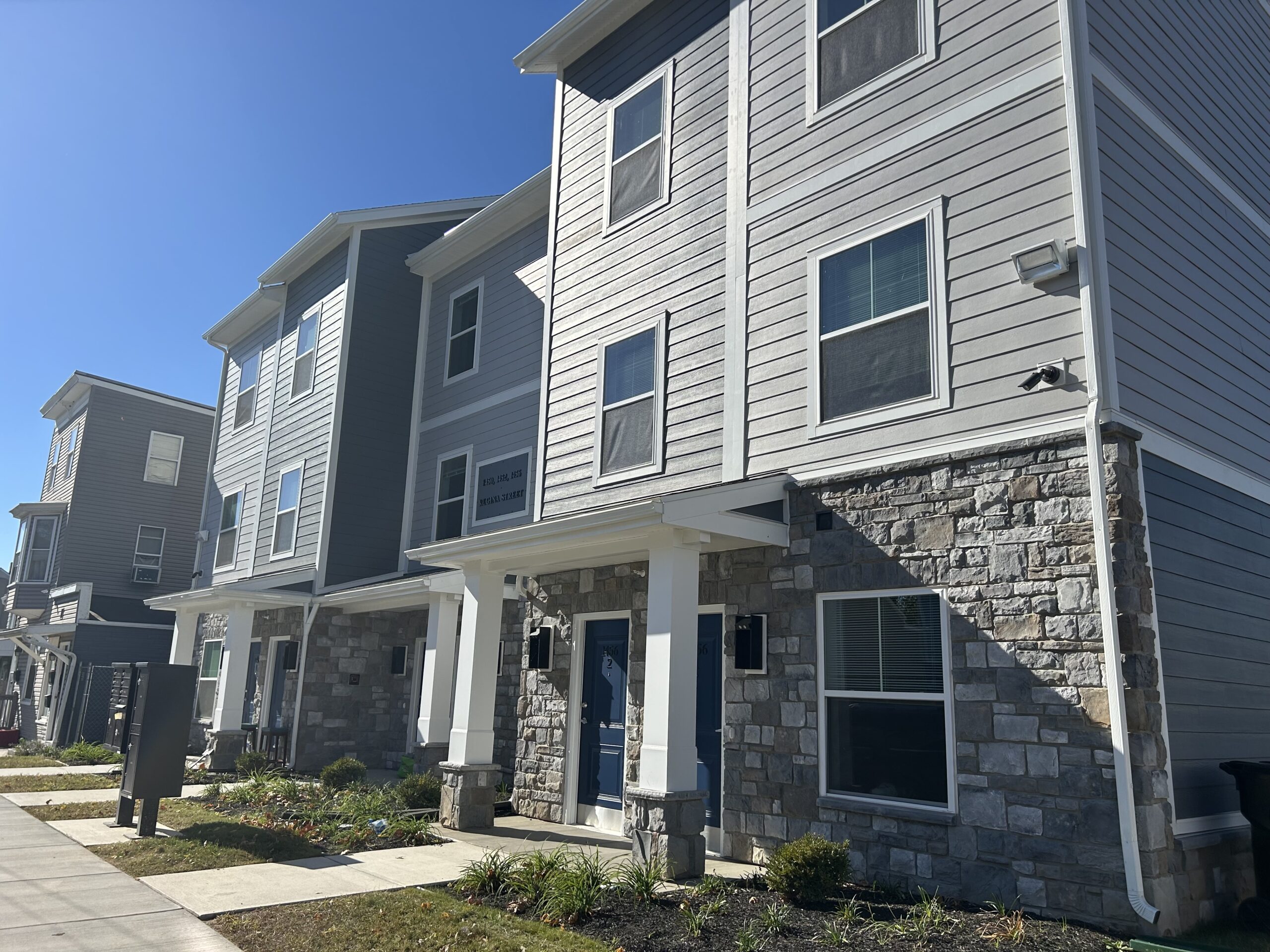
“The TLC Cornerstone Renewal” project, located near N. 15th and Walnut streets, features 50 one-, two- and three-bedroom units for lower-income residents. Several of the units are fully ADA-accessible and eight units are reserved for formerly incarcerated renters to assist them in re-entering society.

Casteel’s project is one of several affordable housing developments that have recently finished or are close to completion in Harrisburg.

The TLC Cornerstone Renewal

Harrisburg City Council initially approved the project plan in 2020, however, the pandemic and construction costs delayed the groundbreaking until 2023.

Casteel also purchased the Allison Hill Community Center as part of his development in the neighborhood and plans to continue updates there.

“My aim is to transform this neighborhood one block at a time,” Casteel said.

He shared that he plans to complete additional phases of this project in the future.

“These homes are a wonderful addition to the city of Harrisburg as we understand and prioritize the fact that everyone deserves a comfortable, functional and safe place to live,” Mayor Wanda Williams said.

For more information on TLC Construction and Renovations, visit their website.


If you like what we do, please support our work. Become a Friend of TheBurg!  

Continue Reading

New Digs: Developers finish up long-awaited, much-needed affordable housing in Harrisburg

Jessica Meyers & Ryan Sanders

Tarik Casteel has a vision for his city.

His vision includes quality, but accessible housing, and neighborhoods that are vibrant with clean and safe streets for families. He wants all of this to be affordable for Harrisburg families.

“I’m born and raised in Harrisburg,” he said. “At the end of the day, I believe you should fix your home before you go elsewhere. I think Harrisburg is one of the most needed areas in this region, and it was neglected for a long time.”

In September, Casteel’s company, TLC Construction & Renovations, finished an apartment project near N. 15th and Walnut streets in Allison Hill. “The Cornerstone” now provides housing in the form of 50 affordable one-, two- and three-bedroom units for lower-income families.

This is one of several affordable housing projects in the city that recently have been completed or are close to a ribbon cutting. In the years right before and during the pandemic, several developers proposed plans for apartments to help fill a need for lower-income families.

At the federal level, “affordable housing” is usually defined as housing that costs no more than 30% of a household’s gross income. In addition, about 28% of Harrisburg households fall below the poverty line, according to the most recent U.S. census data.

Harrisburg Mayor Wanda Williams has made affordable housing one of her primary policy goals, as have several City Council members. At public meetings, council President Danielle Bowers has often questioned developers about the inclusion of affordable housing in their proposed apartment projects, sometimes even voting against projects that didn’t incorporate units for lower-income tenants.

Bowers told TheBurg that she’s happy to see several projects coming online that she believes will be more affordable for her constituents.

“They’re all affordable for our residents—that’s always my number one priority,” she said. “It’s really exciting.”


Deserve It

Casteel’s project is just one of many affordable projects finishing up in Harrisburg.

“Sycamore Homes,” a 23-unit apartment building in south Harrisburg, is slated to finish construction by the end of the year. “Bethel Village” will provide 49 units for lower-income seniors on N. 6th Street in Midtown, also with an estimated completion in December. On the same street, “JMB Gardens,” a project by Harrisburg native and former NFL player LeSean McCoy’s company, Vice Capital, will offer 41 affordable units in Uptown, expected to finish in January.

Most of these projects faced pandemic-related delays, including supply shortages, which prolonged their timelines. However, they all are finally getting close to move-in dates, while The Cornerstone has already welcomed tenants.

“I’m just hoping that, once we get these tenants in, we can get phase two going right away because I’ve seen the list of people that are not going to be able to move in. So, it’s like, we need to keep on going,” Casteel said. “It was eye-opening once I saw how many people were waiting.”

Casteel said that, in the months leading up to project completion, his company had a waiting list of hundreds of people, displaying the city’s dire housing need.

During the lengthy design and construction process, Casteel, who grew up living in affordable housing himself, said that he didn’t “cut corners,” as he wanted to break the stigma that lower-income housing is lower-quality.

“A lot of times, they got the reputation or people think that they don’t want to work, and it’s not the case,” he said. “A lot of people work, but they just don’t make enough. They want good housing, and they deserve it. I gave them what they should be having—the best of the best.”

Casteel pointed out that, as neighbors have seen the revitalization, many have even made improvements to their own properties.

“The residents over there were welcoming because they loved to see that it was local people, but they also loved to see that their neighborhood wasn’t being neglected,” he said. “People thought we were gentrifying and didn’t know it was a Black developer and that they’re affordable [units] because they don’t look affordable.”


Challenging Stereotypes

George Fernandez has quickly found out how challenging development can be, especially when it comes to affordable housing and the requirements that come with utilizing low-income housing tax credits (LIHTC), awarded by the Pennsylvania Housing Finance Agency (PHFA).

Fernandez, founder of Latino Connection and CEO of Color & Culture and Fernandez Realty Group, said that his first affordable development project, Sycamore Homes, likely will be completed in December.

“There really have been a lot of lessons learned for me as a young, minority developer,” he said. “No wonder a lot of other minority developers aren’t doing this type of work because of how hard the work is, to be honest with you.”

Fernandez explained how much personal investment has gone into this project as well, as he also grew up in a lower-income family and is striving to make sure Sycamore Homes provides quality living. He was proud to share that the units feature oversized fridges, washers and dryers and nice countertops and cabinetry.

“We really want to give people a sense of belonging and a sense of pride and dignity,” Fernandez said.

He hopes that minority developers, in particular, are given more opportunities to receive financial support, along with technical assistance and training, so that the pathway to becoming a developer can become more accessible.

“It is now time that those people that want to be doing this type of work be given the right seat at the table—so that the people that are building the homes look like the people that are going to be served in those homes,” Fernandez said.


Building On

Ryan Sanders of RB Development, the group behind Bethel Village on the 1000-block of N. 6th Street, is also a local and has spoken on the importance of diverse representation in the real estate field.

The plan for Bethel Village was first proposed in 2021 to help revitalize a block with significant local African American history. The new development now sits on the former site of the historic Bethel AME Church, which burned down in 1995.

Initially, the project faced pushback from neighbors who were concerned that there wouldn’t be enough parking in an already congested neighborhood. However, Sanders and his team worked to find additional off-street parking and pushed forward with plans, knowing that this housing was needed.

Sanders said that affordable housing projects often can’t offer the same financial return as market rate projects. In addition, it takes a lot of planning and technical knowledge to participate in the LIHTC program, he said.

“You’ve got to be crazy, and you’ve got to really want to do something for the community,” he said.

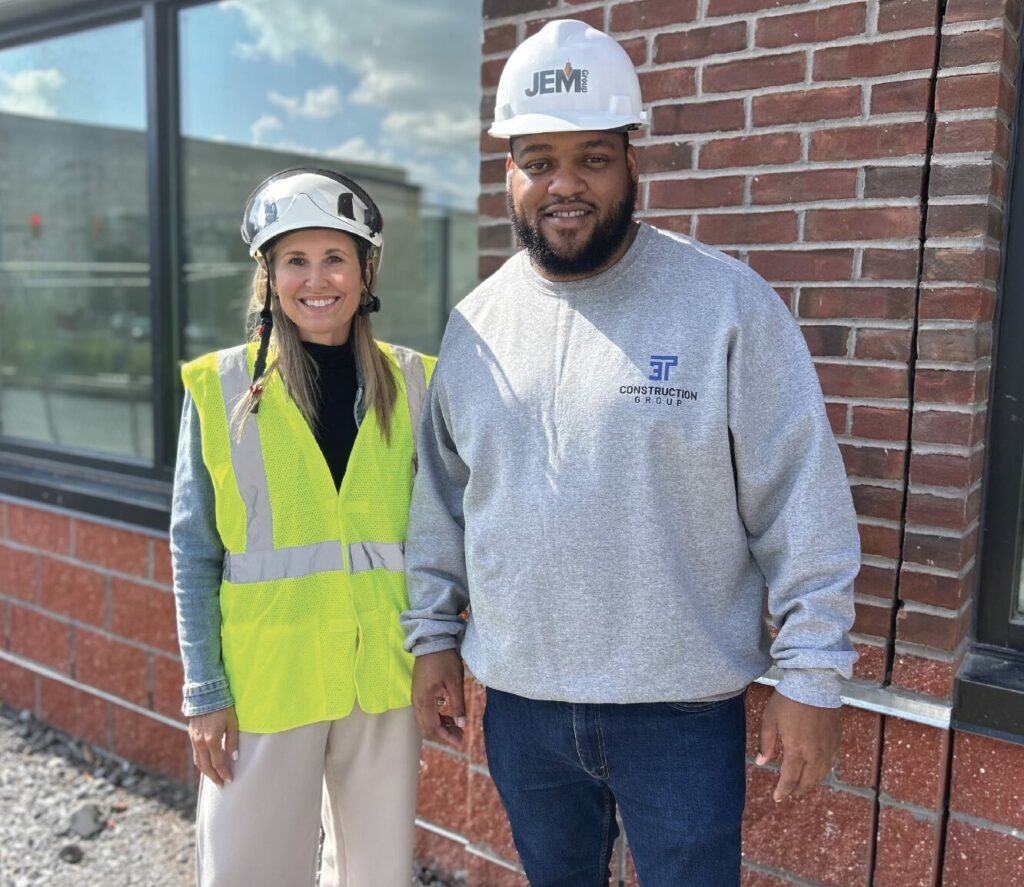
Sanders is working with general contractor JEM Group on the project. CEO Jessica Meyers said that Camp Hill-based JEM first dipped its toe into affordable housing construction about seven years ago and has come to understand its importance

“It really opened our eyes to what this market is and continues to be, and it’s an opportunity to give people a nice place to live,” she said. “No matter what your income level is, everybody deserves a safe, nice place to live.”

With many Harrisburg residents in search of affordable housing, these projects won’t solve the total need. But local officials and developers are encouraged by the investments. Several of these developers even have additional affordable and market-rate projects on the horizon.

Sanders has plans to build next door to Bethel at the site of the former Jackson Hotel, which collapsed in 2021. McCoy broke ground on another partially affordable apartment building on 6th Street in 2023. Fernandez has proposed affordable housing for seniors at the site of the former Woodward School, and Casteel has additional development phases planned for Allison Hill.

“That’s going to help out a lot of people,” Casteel said. “If everyone can go in and do another round or two then break out and do market rate, I think the city would be coming back real strong at that rate.”

For more information about TLC Construction and Renovations, visit www.tlchbg.com.

To find out more about Fernandez Realty Group, visit www.fernandezrealtygroup.com.

To learn more about RB Development, visit www.rbdevllc.com.

For more information about Vice Capital, visit www.vicecapitalgrp.com.

To find out more about JEM Group, visit www.jemgroup.net.


If you like what we do, please support our work. Become a Friend of TheBurg! 

Continue Reading

Eight apartments coming to Uptown Harrisburg, TLC Construction providing much needed housing

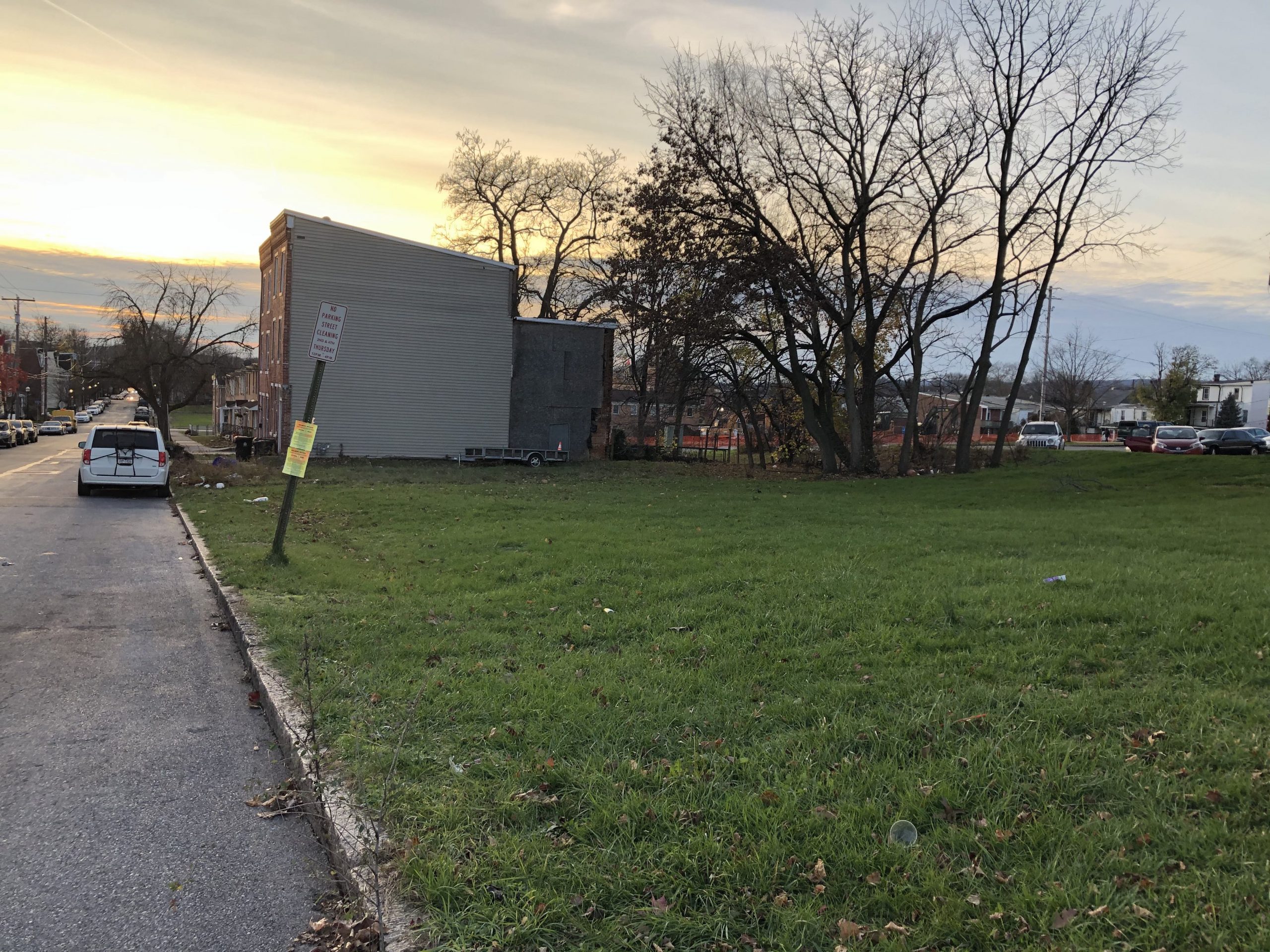
TLC Construction & Renovations plans to build on these empty lots on Kelker Street.

Coming in the spring, a few vacant lots in Uptown Harrisburg will get a little “TLC.”

On Tuesday night, City Council approved a land development plan for the consolidation of three vacant lots on Kelker Street and the construction of eight residential apartments submitted by Tarik Casteel of TLC Construction & Renovations.

“This will bring more stability to the area,” Casteel said during a phone call. “We still have people looking for housing in the area—it’s still a need.”

The apartment building will sit at 440 Kelker St., near other TLC projects including The Harrisburg Uptown Building (HUB) and HUB Veterans Housing.

The three-story building will contain four one-bedroom apartments, about 900 square feet each, and four two-bedroom apartments, about 1,200 square feet each.

In addition, the complex will provide affordable housing to the area. Two units will be for low-income individuals with a price point around $700 per month, while the others will be market value, Casteel said.

“The Planning Bureau feels this is a good project, said Geoffrey Knight, director of the bureau, at a council work session on Nov. 17. “It will bring affordable housing to the neighborhood and it will develop vacant lots.”

In the way of parking, Casteel said he will provide eight spots for residents in his adjacent parking lot at the HUB building.

He plans to extend the existing sidewalk on Kelker to the front of the building’s property, as well. There will also be some landscaping done on the 10,214-square-foot property and two new street trees added.

Also on Tuesday, council approved the vacation and striking from the city’s map a portion of Kent Alley that intersected Casteel’s property on the map. Kent Alley used to be a grocer’s alley between N. 5th, Fulton and Kelker streets, but became a “paper street,” meaning it only existed on the map. Since it was still considered a public right of way, Casteel needed it to be vacated in order to develop there.

The apartment building project will cost an estimated $1 million to construct, Casteel said. Daniel Wise of RJ Fisher Engineering is the site plan designer.

Casteel said he hopes to use local and minority-owned businesses as contractors for the building project. However, before construction begins, Casteel is waiting for construction material costs to go down. He said due to COVID, they are “through the roof.”

The pandemic already delayed TLC’s progress on the apartment building, but Casteel said they will likely break ground in March. Once they get started, it should take around eight months to build, he said.

To learn more about TLC Constructions & Renovations, visit https://tlchbg.com/.

Support quality local journalism. Become a Friend of TheBurg!

Continue Reading

The New Developers: In Harrisburg, African American builders are revitalizing neighborhoods, cultivating community

Corey Dupree. Photo by Dani Fresh.

Ask Corey Dupree what African Americans can bring to city development, and he says, “I love this question.”

African-American developers “bring perspective” on the power of development to serve comprehensive needs.

“Our objective is to make sure these communities rise from, quote-unquote, ‘the rubble,’ because the phoenix does rise from the ashes,” said Dupree, a partner in the planned transformation of the former Bishop McDevitt High School into an eco-friendly complex.

African Americans comprise about half of Harrisburg residents, but they have traditionally “limited ourselves to a minority stake in projects,” said developer Ryan Sanders. But now, behind the plans for several high-profile projects are African Americans with ties to the city and commitments to community.

In the wake of nationwide protests demanding racial justice—and by extension, equal opportunity—these developers envision impact that goes beyond bricks and mortar.

The Pulse

In Harrisburg’s Allison Hill, Tarik Casteel is building TLC Cornerstone Renewal, with 50 affordable apartments and townhouses and a community center near N. 15th and Walnut streets.

“I picked that area because it’s one of the worst areas in the city,” said Casteel. “I’m from the community, born and raised in Harrisburg, and I wanted to show that this can happen if you want it to.”

Casteel is president of TLC Construction & Renovations, and its nonprofit arm, TLC Work-Based Training Program. The nonprofit trains such hard-to-place people as veterans and the formerly incarcerated, hiring them for projects on the construction side.

“When you’re using these same people in the community, it gives them a sense of pride because they helped build where they live,” said Casteel. “When people take pride in where they live and pay taxes, they’re not going to tear up where they live because they’ve got skin in the game.”

In 2018, Casteel and his aunt, Juanita Edrington-Grant, imprinted the city landscape with the Harrisburg Uptown Building (HUB) with apartments for homeless veterans, plus the adjacent HUB Veteran Housing Campus. It’s about taking the reins and ensuring that the builders who build and the people who benefit “look like me,” he said.

Down in Midtown, Sanders is part of the team behind the planned creation of Jackson Square on N. 6th Street. The partnership, which includes NFL veterans and brothers LeRon and LeSean McCoy, looked at that row of deteriorating buildings with deep roots in Harrisburg’s African-American history—including Jackson House, a Green Book-listed rooming house that hosted legends of jazz and sports—and saw “a great opportunity to preserve culture and history.”

And then back at the top of Allison Hill, Garry Gilliam, Jr., is a partner with Corey Dupree, DeZwaan Dubois and Jordan Hill in The Bridge, a venture planning inner-city eco-villages, starting with the McDevitt campus. The idea emerged, in part, from the time Gilliam, Dupree and Dubois spent as students on the comprehensive Milton Hershey School campus, where they knew that the basics of housing, food, education and security were assured.

When those necessities are met—and The Bridge expects to encompass greenhouses, classrooms, workspace and recreational options—then people see hope, said Gilliam.

“I don’t believe you need to leave Harrisburg for that,” he said. “It can be done with mixed-use development, providing resources for those in those communities, and in a way creating a microcosm of Milton Hershey to break generational curses.”

As the new federal courthouse and state archives accelerate development pressures, the city is working with developers to “make sure that the first thought in new development addresses long-term concerns of the community,” said city Planning Director Geoffrey Knight.

Diversity among developers brings a fresh perspective to those conversations, Knight said. Many African-American developers have told him they’re striving for impact.

“It’s less of a focus on things that are financially viable,” he said. “It’s more of a focus on, ‘This is my community. This is a project that means more to me than just dollars.’”

Gilliam agreed.

“We’re of the community,” he said. “We’ve got the pulse of the community.”

LeRon McCoy & Ryan Sanders. Photo by Dani Fresh.

Never Leaves You

Development that expands opportunity in a traditionally neglected or oppressed community kickstarts change from within, Sanders said. African Americans in development also offer role models for younger generations.

“If we want them to do more, we have to show them more,” Sanders said.

Too often, Black youth see only athletics or entertainment as their way out of inner-city neighborhoods, said Gilliam. Seeing adults succeed in other fields, including real estate and development, presents pathways to the full scope of careers.

Casteel positions his projects to create economic opportunities and to stand as showcases of possibilities.

“People need the opportunity to show what they can do,” he said.

To him, the HUB demonstrated that “African Americans can develop and build a good project and can work together to build their own community,” he said.

Indeed, the city “wants to hear from different people,” said Economic Development Director Nona Watson. Diversity brings people who have experienced discrimination firsthand—something that “never leaves you.”

“You want to give back in a way that will help keep other people from experiencing what you experienced,” she said.

Diversity “creates additional opportunities for individuals who may not have had opportunities to necessarily get into that field,” added city Business Development Director Jamal Jones.

“When you’re working with people who are the decision makers that are from diverse backgrounds, it provides opportunity to other people because there’s a certain level of understanding that there may have been—traditionally, historically—disparity in regard to opportunities. It levels the playing field,” he said.

Tarik Casteel. Photo by Dani Fresh.

From Within

African Americans in Harrisburg development aren’t a novelty, Jones pointed out. Today’s big-project developers are standing on the shoulders of those who have made smaller contributions over the years.

“We should be at a point where this is more of the norm, as opposed to the unicorn,” he said.

When more citizens have access to education and jobs with livable wages, “you’ll see the byproduct in leaps and bounds, from more citizens that can contribute to your tax base, to bringing more people into Harrisburg,” he said.

Barriers remain. Closed doors to the banks and networks that control the money and jobs. Decades of redlining that depress the value of black-owned properties and curtails generational wealth. State contracts awarded to far fewer minority- and women-owned businesses than available, according to the Pennsylvania 2018 Disparity Study.

African-American developers say they are working around and through those obstacles. Casteel has built a strong network of relationships with trusted partners. Sanders’ funding sources include community-impact financial institutions.

“Economic development is one of the building blocks we need to address some of the systematic issues we have,” said Sanders. “I’m always for doing all community first, so you have enough individuals who are looking to do for our own community, and we’ll have the village that is needed to help produce the next generation of leaders.”

Dupree sees stereotypical views of Black men as intimidating or not knowledgeable. But when people realize they are savvy men who know what they want and understand what systematically oppressed people need, “that’s what is meant by ‘by the community, for the community.’”

“We’ve come so far, but we still have a ways to go to be able to have that equal access seat at the table,” he said. “I say it all the time. I’m proud of Harrisburg. When we say that Harrisburg is going to look a lot different in five years, we genuinely mean that.”

Failure to cultivate diversity among developers keeps a city from moving forward and prevents attention from reaching blighted neighborhoods, Watson said.

“Yeah, you have a thriving downtown area, but what happens with the schools, what happens to the neighborhoods?” she said.

At the direction of Mayor Eric Papenfuse, Watson is researching “gap financing” to help developers improve return on investment for less remunerative projects.

In large part, African-American developers “don’t just do development,” said Casteel.

“We do community development,” he said. “We work with the community as a whole. Development isn’t just about building a house. You’ve got to build community.”

Continue Reading

May News Digest

Businesses Receive Stabilization Grants

More than 300 Harrisburg-licensed businesses last month received $5,000 grants to help them survive the economic fallout from the coronavirus pandemic.

The city and Impact Harrisburg announced the awards from a pool of money funded by both entities.

“We wanted to fund as many businesses as we possibly could across the broad spectrum,” said Sheila Dow-Ford, executive director of Impact Harrisburg, a nonprofit set up following the city’s financial crisis to help spur economic development. “So we are hoping we hit the mark in that regard.”

The program allowed businesses to request up to $10,000, but, given the large number of applicants, Impact Harrisburg decided to give $5,000 grants to all qualified applicants.

Initially, both the city and Impact Harrisburg were to contribute $500,000 to a $1 million fund, with the city’s portion originating from its dormant “revolving loan fund.”

However, qualified applications exceeded the initial funding, so Impact Harrisburg kicked in another $750,000. The city now is considering adding money for a second round of funding.

“Our goal is to keep these businesses afloat so, when it is time to reopen, they have a fighting chance of surviving and bouncing back, hopefully stronger than ever,” said Mayor Eric Papenfuse.

Recipient Angel Fox of Fox’s Wash and Go said that the grant will allow her to repair washing machines in her Allison Hill laundromat, as customers have been “over-stuffing” the machines to try to stretch their own limited financial resources.

Elementary Coffee Co.’s Andrea Grove said that, beyond the money, she appreciated that care was taken to distribute the grants to all deserving, qualified applicants.

“We desperately need this money, but so many other people need it as well,” she said. “That is a beautiful testament to the care that this community has for each individual business and the position that they are in.”

For recipient Lori Reese, the money will help her sustain her personal organizing business, Consider It Done LLC, and it will help offset additional costs brought on by the crisis. Like many companies, she’s been forced to do more business online, which has meant extra, unanticipated costs to expand her virtual presence, capabilities and security.

Reese also mentioned a non-financial benefit of the program. Much like Grove, she said that she appreciates the effort, caring and the creativity that her city and Impact Harrisburg showed for the small business community here.

“I feel valued as a city business and a city resident,” she said. “Because it’s local, it means more to me.”


Harrisburg Area Enters Yellow Phase

Most of the Harrisburg area last month entered the less-restrictive “yellow” phase of the state’s phased reopening plan.

In south-central PA, Cumberland, York, Perry and Adams counties were the first to transition from the red phase to the yellow phase in late May. A week later, Dauphin and Lebanon counties joined them.

On June 5, Lancaster County, along with the remainder of “red” counties in the commonwealth, will transition to yellow, Gov. Tom Wolf announced.

Wolf credited the policies of the state government for helping to cut the number of new cases of COVID-19 in the commonwealth. Cases peaked in early April at almost 2,000 new cases a day and gradually fell to fewer than 1,000 new cases a day.

“We know not only that we succeeded in slowing case growth, but that our actions, our collective decisions to stay at home and avoid social contact—we know that saved lives,” Wolf said. “My stay-at-home order did exactly what it was intended to do. It saved lives, and it bought us valuable time.”

The state government uses a tri-color red/yellow/green system to guide re-openings in the commonwealth.

Under the red phase, people are supposed to observe strict “stay-at-home” orders, and “non life-sustaining” businesses cannot operate from their physical locations. Under yellow, these restrictions are eased, but limits remain in place. For instance, schools must remain closed, bars and restaurants are stilled banned from offering sit-down dining, and gatherings of more than 25 people are prohibited.

Under the green phase, most restrictions are lifted, though large crowds remain prohibited. Late last month, 17 mostly rural counties in the northwest and north-central parts of the state entered the green phase.


Allison Hill Project Gets Go-Ahead

One of the largest housing developments on Allison Hill in recent years is slated to move forward, as Harrisburg City Council last month approved a plan for a multi-building project just off of Market Street.

Council unanimously approved the land use plan by TLC Cornerstone Renewal to construct 26 townhouses, a 24-unit apartment building and a community center in a five-block area bounded by N. 15th Street, Walnut Street and Crabapple Street.

“This is such a blighted area,” council President Wanda Williams said during a council work session. “It certainly will enhance this area.”

At that work session, developer Tarik Casteel, president of TLC, told council members that he hopes to break ground in the early fall on the $14.7 million affordable housing project on the 2.1-acre site.

“This project will be big in this community,” he said. “It’s definitely needed, not just in this community but in several areas of the city of Harrisburg.”

Nearly two years ago, TLC cut the ribbon on its first big project, the 20-unit Harrisburg Uptown Building (HUB) and the HUB Veteran Housing Campus.

Casteel told council that the new Allison Hill project would be just the first phase of a three-phase project for the area. He expects a 16-month construction period for the first phase.

“In Allison Hill, there is definitely a need,” he said. “This was one of the worst areas of the city. That’s why we wanted to come into this area, because it is the worst.”


Council Approves CDBG Disbursement

Harrisburg City Council last month approved the disbursement of annual federal housing funds.

The city set aside money from its share of Community Development Block Grants (CDBG) for use by nonprofit “sub-recipients.” These included: 

  • A Miracle for Sure: $13,810
  • Center for Employment Opportunities: $13,810
  • Communities in Schools: $13,810
  • Heinz Menaker Senior Center: $14,000
  • Latino Hispanic American Community Center (LHACC): $13,810
  • Neighborhood Dispute Settlement: $13,810
  • Pennsylvania Immigrant and Refugee Women’s Network: $13,810
  • The Salvation Army Harrisburg Capital City Region: $25,000

The city also distributed federal Emergency Solutions Grant (ESG) funding to the following organizations:

  • Capital Area Coalition on Homelessness: $24,000
  • Christian Churches United of the Tri-County Area: $63,000
  • Shalom House: $43,100
  • YWCA Greater Harrisburg: $50,000

These funds originate from the federal Department of Housing and Urban Development, and, every year, the city sets aside some of the money for use by community nonprofits.


Harrisburg Plans Cyber School

Come fall, Harrisburg school district students will have another way to learn, as district officials have announced a new, full-time cyber school.

Last month, officials unveiled the Harrisburg Virtual Learning Academy, which is meant to broaden educational options and offer an alternative to cyber charter schools.

“Early on, we asked our teachers to make calls to get feedback from our families. This was way back in March,” said Susan Sneath, chief academic officer for the district. “They were already telling us there was no way they were going to send their children back to [the brick-and-mortar] school.”

Sneath knew the district needed to have another option for students. Thus, the Harrisburg Virtual Learning Academy (HVLA) was established.

According to the district, the HVLA will be full-time and free to Harrisburg students. The program offers K-to-12th grade enrollment, in which each student is provided a Chromebook.

This differs from the district’s existing Cougar Academy, which is a “blended” cyber program that requires that students also spend time inside the classroom. In contrast, HVLA is fully remote.

Students will receive recorded instruction from teachers with additional meetings as needed. While the school is primarily online, there are face-to-face tutoring options, including English language arts and math. Special education teachers, English as a second language teachers and reading specialists will be available to provide support.

Sneath explained that students will continue to receive academic advising through an assigned counselor and can expect outreach from a social worker to aid with social and emotional needs. Technology support will be readily available, as well, during school hours.

The school district plans to use trained educators from the Montgomery County Intermediate Unit, an entity that supports local school districts. Additional faculty, such as counselors and academic advisors, will come from Harrisburg staff.

Students in HVLA can participate in academic advancement such as Advanced Placement courses and “gifted” programs. They will also be tied to their neighborhood’s school, which will allow access to all special events and extracurricular activities such as picture day, athletics and prom.

All HVLA students are considered Harrisburg Cougars, and they will receive a diploma from the Harrisburg school district.

In the past, students in the district seeking online education have often looked to cyber charter schools, but Sneath hopes that this option curbs that.

“We want to keep our kids, and we want to provide the very best for our kids,” she said. “We developed HVLA with that in mind.”

HVLA will not take the place of the district’s remote learning plan for students in the case that students can’t return to school buildings in the fall. The cyber-school is only for those who enroll.

“The intent for the people who enroll in HVLA is that they are going to stay in HVLA,” Sneath said.


Development Projects Approved

Two significant development projects in Harrisburg should soon break ground after receiving final approval by the city.

City Council last month unanimously approved a land development plan by the Hudson Companies to build a 130,000-square-foot office building on the 2500-block of N. 7th Street, the site of the former headquarters of D&H Distributing.

The Hermitage, Pa.-based company plans to demolish D&H’s low-slung building and construct a new, three-story, brick-and-glass building on the site. Hudson then will enter into a long-term lease with the commonwealth, which plans to locate about 850 Department of Human Services and Office of Administration workers there. Most will move from the former Harrisburg State Hospital grounds, which the state is trying to sell.

Hudson hopes to break ground on the project in several months, with completion in late 2021.

City Council also approved a land development plan for the construction of four new townhouses on the 600-block of Woodbine Street. The nearby Camp Curtin YMCA plans to undertake the $1 million affordable housing project on vacant land currently owned by the Harrisburg Redevelopment Authority.

Jamien Harvey, the Camp Curtin YMCA executive director, said he hoped that this project would just be the first phase of building more affordable housing in the area.

Harvey said that the houses, which will cost about $175,000 apiece to build, will sell for $70,000 to $80,000.

“We are looking to change the look of our neighborhood,” he said. “We’re looking to eliminate blight. We’re looking to cut down on the drugs and the violence in our neighborhood, and we’re looking to building a community with pride. This is one of many projects to come.”


Preliminary School Budget Approved

The Harrisburg school district last month approved a preliminary budget for next school year, using federal aid to close a substantial budget gap.

District Receiver Janet Samuels accepted the $157.6 million spending plan, which does not raise school taxes for the 2020-21 year.

The district took a $4.2 million hit due to the COVID-19 pandemic and resulting economic crisis. Unexpectedly, the district had to lower anticipated revenue from earned income taxes, PILOT tax payments, real estate taxes and increases in the state’s basic and special education subsidies.

To help close the deficit, the district was awarded a $4.7 million grant from the federal Coronavirus Aid, Relief and Economic Security (CARES) Act. However, those funds expire Sept. 30, according to Acting Superintendent Chris Celmer.

“It’s going to take time to work through logistics of how we are able to spend that,” he said.

Celmer said that, if additional state funding doesn’t eliminate the deficit, a staff realignment may help, along with the CARES Act funding.

The 2020-21 budget is $8.6 million higher than the current, 2019-20 school year’s projected final budget. Employee salaries and benefits, along with other higher expenses, are causing the increased spending, according to the district.

Another virtual budget workshop is scheduled for June 15. A final decision on a 2020-21 spending plan is expected on June 22.

The proposed completed budget will be available to the public on the district’s website for 30 days before the last meeting in June.


School Board Appointment

The Harrisburg school district has named Nora Carreras to its board of directors, filling an open seat following the death of Gerald Welch.

District Receiver Janet Samuels last month appointed Carreras, who works for the PA Department of Human Services, due to her “long history as a public servant along with her wealth of knowledge of resources that support children, families and the broader Harrisburg community.”

Under state code, Samuels had 30 days to fill the seat, which was left open after Welch died of COVID-19 complications on April 15.  Welch was elected last year to the nine-member board and was in the first year of a four-year term. Carreras’ appointment runs through next year.

“It is a pleasure to welcome Ms. Nora Carreras to the Harrisburg school board of directors,” said Acting Superintendent Chris Celmer. “Ms. Carreras has a proven track record of providing advocacy and support for at-risk families through the commonwealth of Pennsylvania.”

Carreras expressed excitement for the opportunity.

“I am honored to join and support the district’s effort to bring increased educational quality and fiscal accountability,” she said. “Every student in the city of Harrisburg deserves the opportunity to thrive, to learn in a supportive environment and reach their full potential.”


Home Sales Down, Prices Up

Sales dropped but prices rose in the Harrisburg area, as the realtor’s association released its first report during a full month of COVID-19 restrictions.

In April, 455 homes sold in the three-county area, compared to 619 in April 2019, but the median price increased to $200,000 compared to $180,000 a year ago, according to the Greater Harrisburg Association of Realtors (GHAR).

In Dauphin County, 212 houses sold at a median price of $173,000, versus 294 houses at a median price of $167,000 in the year-ago period, GHAR said.

Cumberland County saw 222 houses change hands compared to 296 a year ago, while the median price rose to $235,000 from $202,500. Perry County bucked the trend, with 21 houses selling for a median price of $173,000 compared to 29 houses for $200,000 a year ago.

For the three-county region, days on the market dropped to an average of 50 days versus 53 days the previous April, according to GHAR.


So Noted

TheBurg received 16 individual and group 2020 Keystone Media Awards in the annual peer-reviewed contest sponsored by the Pennsylvania NewsMedia Association Foundation. These awards cover a wide range of categories, including for reporting, editorial writing, column writing, illustration, photography and design. TheBurg also won the coveted “Sweepstakes” award for best performance in its category statewide.


Changing Hands

Benton St., 607: D. Thomas to Neidlinger Enterprises LLC, $60,000

Brookwood St., 2462: K. Boyer to CR Property Group LLC, $47,000

Calder St., 321: R. & F. Armetta to 1037 Maclay St. LLC, $70,000

Chestnut St., 1810: CR Property Group LLC to C. Blodgett, $91,500

Derry St., 2531: J. Hocker to J. Einzig, $72,500

Edgewood Rd., 2315: I. & A. MacFarlane to E. Shaner, $214,000

Edward St., 260: J. Dudick to Realm Properties LLC, $97,000

Fulton St., 1707: K. Herbe to A. Murray, $124,900

Fulton St., 1714: N. Smith to N. Pachella & M. Pickup, $127,500

Grand St., 920: M. & A. Bukowski to E. Fisher, $115,000

Green St., 1710: M. Della Porta to B. & B. Hinnenkamp, $210,000

Green St., 1931: N. Condon to S. Agbaw, $204,900

Green St., 2003: S. Biray to B. Maurer & M. Zia, $194,500

Green St., 2043: R. Shokes Jr. to D. & T. Schutt, $214,900

Green St., 2328: J. & L. Leahy to Moxie Properties LLC, $41,000

Holly St., 1815: CR Property Group LLC to B. Nevid, $105,000

Kelker St., 317: Wilmington Trust NA to BDS Property Group LLC, $62,000

Lexington St., 2619: CR Property Group LLC to A. Bertschmann, $105,000

Logan St., 2247: CR Property Group LLC to J. & A. Oates, $101,000

Logan St., 2305: B. & K. Saltzgiver to C. & R. Herr, $42,000

North St., 242: J. & S. Wesley to J. Lucia, $105,000

N. 2nd St., 2525: P. & A. Ramos to A. Arturet, $205,000

N. 3rd St., 1604: C. Overbaugh to A., P. & T. Bair, $124,000

N. 3rd St., 2435: D. & G. Laninga to D. & M. Lambert, $149,900

N. 4th St., 1336: R. & F. Armetta to 1037 Maclay St. LLC, $80,900

N. 4th St., 2442: M. & N. Godfrey to Graevel Holdings LLC, $50,000

N. 4th St., 3111: B. Redman to D. Miller & M. Strouse, $138,000

N. 6th St., 2446: J. Urena to R. Contreras & Y. Vargas, $230,000

N. 14th St., 226: W. Cruz to J. Bowen, $66,000

N. 15th St., 1336: M. Smith to J. Valverde, $50,000

N. 16th St., 814: D. Boyle to E. Reyes, $30,000

N. 16th St., 1105: K. Drayton to N. Gutierrez, $50,000

N. 16th St., 1219: L. Wolf to J. Cruz, $42,000

N. Front St., 2509: Pennsylvania Builders Association to Morning Star Pregnancy Services, $475,000

Parkway Blvd., 2509: A. & L. Smith to J. & M. Torres, $135,000

Penn St., 1208: R. Christ & D. Cole to Wheatland Restore LLC, $88,501

Pennwood St., 3202: CR Property Group LLC to A. Bertschmann, $110,000

Revere St., 1720: Atlantic NorthStar Properties LLC to N. de los Santos, $49,000

Race St., 542: N. Fenstermacher to A. Dullebawn & A. Ditzler, $140,000

Reily St., 206: D. Burnham to Fratelli Property Investments, $135,439

Rudy Rd., 2339: W. MacMichael to L. Kurutz, $169,900

Seneca St., 623: Atlantic NorthStar Properties LLC to J. Thieu, $44,000

S. 18th St., 1033: Secretary of Housing & Urban Development to F. Ramos, $30,100

S. 25th St., 448: K. & M. Stone to G. Bedasa, $115,000

S. 25th St., 616: P. & L. Brown to R. Reyes & F. Nunez, $65,000

S. Front St., 601: R. & L. Firestone to J. Shen, $184,900

Swatara St., 1913: G. Amador & C. Vargas to J. Tejada, $62,000

Sycamore St., 1726: Ocwen Loan Servicing LLC to D&F Realty Holdings LP, $30,000

Harrisburg property sales for April 2020, greater than $30,000. Source: Dauphin County. Data is assumed to be accurate.


Continue Reading

Harrisburg Council approves major Allison Hill project; mayor says city will follow state mandates in reopening

A screen grab of Harrisburg City Council’s virtual legislative session on Tuesday

One of the largest housing developments on Allison Hill in recent years is slated to move forward, as Harrisburg City Council approved a plan for a multi-building project just off of Market Street.

On Tuesday evening, council unanimously approved the land use plan by TLC Cornerstone Renewal to construct 26 townhouses, a 24-unit apartment building and a community center in a five-block area bounded by N. 15th Street, Walnut Street and Crabapple Street.

“This is such a blighted area,” council President Wanda Williams said during last week’s council work session, when the project was discussed. “It certainly will enhance this area.”

At that work session, developer Tarik Casteel, president of TLC, told council members that he hopes to break ground in the early fall on the $14.7 million affordable housing project on the 2.1-acre site.

“This project will be big in this community,” he said. “It’s definitely needed, not just in this community but in several areas of the city of Harrisburg.”

A rendering of TLC’s planned project for Allison Hill

Nearly two years ago, TLC cut the ribbon on its first big project, the 20-unit Harrisburg Uptown Building (HUB) and the HUB Veteran Housing Campus.

Casteel told council that the new Allison Hill project would be just the first phase of a three-phase project for the area. He expects a 16-month construction period for the first phase.

“In Allison Hill, there is definitely a need,” he said. “This was one of the worst areas of the city. That’s why we wanted to come into this area, because it is the worst.”

In other action, council approved the distribution of federal housing funds to city-based nonprofits. Recipients of Community Development Block Grant (CDBG) funding include:

  • A Miracle for Sure: $13,810
  • Center for Employment Opportunities: $13,810
  • Communities in Schools: $13,810
  • Heinz Menaker Senior Center: $14,000
  • Latino Hispanic American Community Center (LHACC): $13,810
  • Neighborhood Dispute Settlement: $13,810
  • Pennsylvania Immigrant and Refugee Women’s Network: $13,810
  • The Salvation Army Harrisburg Capital City Region: $25,000

The city also distributed federal Emergency Solutions Grant (ESG) funding to the following organizations:

  • Capital Area Coalition on Homelessness: $24,000
  • Christian Churches United of the Tri-County Area: $63,000
  • Shalom House: $43,100
  • YWCA Greater Harrisburg: $50,000

Also at the meeting, Harrisburg Mayor Eric Papenfuse made an opening statement, telling council members that the city would follow state mandates regarding business closures and stay-at-home orders, not the Dauphin County commissioners.

“I know I speak for all of us when I say we believe in the governor’s decision-making power, we believe in the Department of Health, and we believe in following those guidelines,” he said.

Several commissioners in central PA have threatened to unilaterally move their counties from the most restrictive “red” category to the less restrictive “yellow” category, which allows for greater freedom of movement and business operations. Locally, Dauphin County commission Chairman Jeff Haste issued a letter recently criticizing Gov. Tom Wolf and urging him to begin relaxing restrictions in the commonwealth and the county.

“I know that everyone is eager to get back to work and have the city reopen, but we have to let science guide us, we have to go slow, and we have to work collectively on this issue to make sure that we don’t have a relapse that ends up having us backslide even further and causing additional loss of life and harm,” Papenfuse said.

He added that, if the commissioners defy the state and move Dauphin County to the yellow phase, “we will not recognize that, the governor will not recognize that, and the city will remain in the red phase.”

Continue Reading

July News Digest

Report: Tax Hike Possible

Real estate taxes in Harrisburg could increase by 105 percent over the next three years, if suggestions in a financial recovery plan submitted to city officials come to pass.

The state Department of Community and Economic Development (DCED) last month released Harrisburg’s Act 47 exit plan, a report intended to guide the city through the next three years in the state financial oversight program.

The plan, which was prepared by Harrisburg’s Act 47 coordinator Marita Kelley, calls for Harrisburg to restructure its revenue sources to align with tax rates set forth in the state code.

Act 47 has granted Harrisburg extraordinary taxing power that generates $11 million in revenue each year. The city doubled its earned income tax (EIT) rate in 2012 and tripled its local services tax (LST) in 2016.

Unless state laws change, Harrisburg would lose that revenue when it exits Act 47 in 2022.

To avoid a fiscal cliff, Kelley suggested that the city gradually surrender its extraordinary taxing authority and replace its EIT and LST revenue with real estate tax revenue over the next three years.

The exit plan calls for a complete reversal of the LST and EIT hikes by 2021. Simultaneously, Harrisburg would levy 20-percent real estate tax hikes for two consecutive years, followed by a 42 percent raise in 2021.

Harrisburg property owners pay taxes to three separate taxing jurisdictions: the city, the school district and Dauphin County. The hikes would only affect the city property tax.

Meanwhile, under the plan, bills for the city’s EIT and LST would decrease. Kelley recommends reducing the EIT by .5 percent in 2019 and 2020, offsetting the 1 percent hike that City Council levied in 2015. The plan also calls for the city to reduce its LST by $52 for the next two years, bringing it down to a $52 annual, flat rate by 2022.

The astronomical real estate tax hikes still wouldn’t bring in as much revenue as the current LST and EIT rates. Budget projections in the exit plan call on the city to spend more than $13 million from its fund balance to mitigate annual deficits.

The plan makes clear that Harrisburg can’t afford any new expenditures. Kelley outlined initiatives the city could make to curb spending, such as paying down debt obligations, renegotiating existing loans, adopting financial management policies to improve the city’s credit rating, and developing a five-year capital improvement plan to prioritize its infrastructure improvement projects.

Harrisburg does have two paths to avoid the real estate tax hikes. It could adopt a Home Rule charter, which would allow it to write its own tax code, though Mayor Eric Papenfuse last month seemed to reject that path.

The city also can ask the legislature to let it levy its current LST and EIT tax rates in perpetuity. City officials have been lobbying lawmakers for months in hopes of securing legislative change.

If the legislature does pass special tax provisions for Harrisburg when it reconvenes in September, the city could exit Act 47 and maintain its current taxing authority.

If the state fails to act, the city would enter its 2019 budget cycle under the assumptions set forth in DCED’s recovery plan.

Papenfuse denounced the report’s findings, calling them “state-assisted suicide.” Local officials vowed to fight any move to significantly raise Harrisburg’s property tax.

For its part, DCED later clarified that it sees real estate hikes as a last resort.

“The recovery coordinator believes the significant property tax proposed in the Act 47 Exit Plan should be considered as a last option,” according to a statement from the department. “As stated in the Exit Plan, the city should first explore reducing costs and renegotiating deals, entering into a home rule charter and negotiating with the state legislature to extend the deadline for collecting the LST and EIT.”

Council Passes Sanitation, Funding Measures

Harrisburg City Council passed new sanitation laws and disbursed more than $2 million in federal grant funds last month before adjourning for summer recess.

Over the course of a four-hour meeting, council made sweeping changes to laws governing trash and recycling collection violations in the city. The city’s new sanitation code establishes harsher fines and new enforcement powers.

Despite the lobbying of the city treasurer, council members rejected a provision that would have inaugurated annual trash billing. The city will continue to send homeowners and businesses monthly bills for trash services.

Under the new ordinance, owners of vacant properties will no longer be billed for trash services at those parcels. Council added an amendment requiring all vacant property owners to apply for a vacant property exemption.

The hallmark of the new sanitation code is a new fine and enforcement structure, aimed at curbing illegal trash disposal across the city.

Under the new ordinance, serious offenses—including illegal dumping, accumulation of trash exceeding 1,000 pounds, improper waste disposal and failure to register as a private trash hauler—are considered category 1 violations, punishable by a $1,000 fine or up to 90 days in jail.

Category 2 violations include failure to bag waste, obstruction of streets and sidewalks or interference with enforcement and will be met with fines starting at $100. Fines will increase up to $500 for each subsequent offense.

The ordinance also permits Public Works to designate enforcement officers to patrol public streets for violations, and it authorizes police officers to issue citations and enforce the ordinance.

Council last month also voted to disburse $2 million in funds from the Community Development Block Grant. More than a dozen local nonprofits and city departments will receive grants ranging from $5,000 to $300,000. These include:

  • Christian Recovery Aftercare Ministries (C.R.A.M.): $40,000
  • TLC Work Based Training: $45,000
  • A Miracle 4 Sure: $50,000
  • Latino Hispanic Community Center: $25,000
  • Fair Housing Council: $25,000
  • PPL/IN HOUSE: $20,000
  • Shades of Greatness: $15,000
  • Heinz-Menaker Senior Center: $25,000
  • Neighborhood Dispute Settlement: $5,000
  • TriCounty HDC: $250,000
  • Habitat for Humanity: $100,000
  • Housing Rehabilitation Programs (city-run): $321,642

In addition, more than $600,000 of the $2 million grant will go to debt service, and $400,000 will reimburse the city for CDBG administration.

Council also approved a new, five-year labor contract with the city’s firefighters, which will lock in 2-percent annual wage increases and establish a new policy to increase retention. Lastly, council passed a resolution reestablishing Harrisburg’s Environmental Advocacy Council, a seven-member body that will be filled by appointments by council and the mayor’s office.


City OKs 2 Buildings for Demo

Another slice of historic Harrisburg seems fated for the wrecking ball, as a long-time property owner has received permission to raze two small downtown buildings.

By a 4-1 count, the Harrisburg Architectural Review Board (HARB) last month voted to allow retired area attorney Gilbert Petrina to demolish 512 and 514 N. 2nd St., buildings that he has owned for at least 35 years.

Petrina’s son, Gilbert Petrina Jr., attended the meeting, saying that his father was too ill to attend.

“My goal is to get these down as quickly as possible,” the younger Petrina said. “They’re a blight. They’re a hazard.”

Several board members pointed out that the properties were blighted only because they had been neglected for so long by the owner.

“I’m disappointed the properties have reached this point,” said member Jeremiah Chamberlin. “Ten years ago, they would have been restorable.”

Petrina said that, someday, he’d like to build a new structure on the site. Until then, he proposed using the lots for parking, hoping that revenue would help offset the cost of the demolition.

However, Assistant City Solicitor Tiffanie Baldock said the city could not allow additional commercial parking because doing so would violate its agreement with Park Harrisburg/SP+, which runs the parking system under a long-term lease with the city.

Petrina, who lives in Virginia, said he still would proceed with the demolition and reiterated that, someday, he hoped to build on the site, though he currently lacked a plan to do so.


So Noted

Mark Kropilak was named last month as the new chief executive officer of Capital Region Water, which provides water and sewer service to much of the Harrisburg area. Kropilak, who has worked both for private water technology companies and in a regulated utility, replaces Shannon Gority, who resigned the post late last year.

Patricia Whitehead-Myers was appointed to the Harrisburg school board last month. Myers, who served previously on the board, replaced Percel Eiland, who resigned his two-year board seat. In other school district news, Director Tyrell Spradley resigned his seat after just five months on the board.

Penn State Health has announced that it plans to build a new, 108-bed, acute-care hospital on 44 acres in the Wentworth Corporate Center in Hampden Township. Construction of the 300,000-square-foot, three-story building is slated to begin in early 2019, according to Penn State Health. It will be located directly across I-81 from UPMC Pinnacle’s West Shore Hospital.

Rob Lesher resigned last month after more than two years as the executive director of the Dauphin County Library System. Karen Cullings, the library’s director of community relations, will assume the position of interim executive director while a national search is conducted to find a replacement, according to DCLS.

TLC Work-Based Training last month held a groundbreaking for a 20-unit affordable apartment complex, the Harrisburg Uptown Building (HUB) and the HUB Veteran Housing Complex. The project at 5th and Kelker streets is TLC’s first major undertaking as a property developer.

Changing Hands

Adrian St., 2425: M. Washington & J. Holmes to S. & V. Heckman, $61,000

Adrian St., 2436: PA Deals LLC to R. Buehner, $63,900

Allison Ct., 7: Flipside Home Renewal LLC to D. Wallace, $92,500

Berryhill St., 1143: FEI Company to Vich Development LLC, $1,250,000

Boas St., 235: Weichert Workforce Mobility Inc. to D. Kergick & A. McHugh, $177,000

Carlisle St., 308 & 318: R. Jackson to Pop’s House Inc., $285,000

Chestnut St., 1621: R. & L. Ravenel to B. & L. Young, $30,000

Delaware St., 263: M. Dupree to Wells Fargo Bank NA, $76,747

Derry St., 1152: J. Vogelsong to M. Pena & T. Edison, $40,000

Derry St., 2712: D. Diehl to A. Lorenzo, $102,000

Emerald Ct., 2447: Z. Akbar to S. Waheed to D. Ritter, $83,000

Emerald St., 311: J. Yeatter to H. Santiago Andino, $73,500

Grand St., 912: Summerhill Partners LP to D. & M. MacIntyre, $65,000

Green St., 1003: E. & J. Ireland to M. & C. Kwolek, $96,500

Green St., 1632: C. Frater & R. Valentine to F. & C. DiPeri, $130,000

Green St., 3216: P. Wong to M. Zeeshan & S. Patel, $67,000

Harris St., 416: T. Woodyard to M. Riegel, $104,500

Herr St., 112: C. Chandler to K. Kundratic, $118,500

Hillside Rd., 301: J. Harget to R. & L. Wood, $199,500

Hoffman St., 3114: W. & D. Kersey to R. Pereira Chakka, $95,000

Kensington St., 2101: HT Properties LLC to R. Ramos, $68,000

Kensington St., 2138: 2014 LIMG Real Estate Fund LLC to T. Pitts, $64,000

Logan St., 1719: C. Leman to D. Hemperly, $126,500

Maclay St., 248: D. Bowermaster to S. Melville, $53,500

Manada St., 1914: W. Fischer to T. Pitts, $55,000

Mercer St., 2442: P. & B. Huepenbecker to Lynn & Ryan Investment Properties LLC, $34,000

North St., 262: TJC East Properties LLC to Spuntina LLC, $235,000

N. Front St., 325 & 327: Pars Real Estate LLC to Askay Properties LLC, $505,000

N. Front St., 1007, 1115: Industries for Pennsylvania to WCI Partners LP, $452,000

N. Front St., 1525, Unit 411: A. Hoffman to J. & E. Badeaux, $195,000

N. Front St., 1525, Unit 507: T. & P. Avant to S. Kolesar, $100,000

N. 2nd St., 815: Bricker Boys Partnership to J. Ehring, $120,000

N. 2nd St., 1208: T. Chang to A. Calvano, $110,000

N. 2nd St., 1301: J. Schlegel to H. Rothrock, $99,800

N. 2nd St., 1915: C. Benkovic to Apple Tree Community Development Co., $110,000

N. 2nd St., 2241: K. Shubert & L. Christopher to E. & S. Lawrence, $179,900

N. 2nd St., 2719: W. & C. Gosnell to J. MacDonald, $212,000

N. 2nd St., 3225: A. Dillon & C. & D. Kenes to M. Letterman, $104,000

N. 4th St., 2545: P. Roebuck to C. Plaines, $56,970

N. 5th St., 3000: J. & E. MacDonald to M. Evans, $120,000

N. 5th St., 3205: D. Schade to J. Rodriguez & I. Ramos, $105,000

Paxton St., 1630: S. Selimovic to C. Bruno, $33,000

Penn St., 1701: J. Allen to J. Chrisemer, $130,400

Penn St., 1927: WCI Partners LP to A. Griffith, $135,000

Pennwood Rd., 3120: J. Mohler & J. Suter to C. Brubaker, $133,000

Pine St., 116: Metro Bank Property Management Inc. to River and Pine LLC, $1,200,000

Pine St., 124 and 111 Barbara St.: Keystone Service Systems to River and Pine LLC, $1,000,000

Reily St., 209: J. Pamula to E. Fry, $137,000

Rudy Rd., 2459: J. Archie to A. Burno, $46,500

Rumson Rd., 2920: W. Quezada & M. Cedeno to W. & D. Illanes, $30,000

S. 13th St., 348: R. Eisner & T. Lippi to M. Ortega, $47,500

S. 16th St., 340: B. & R. Van Wyk to C. Okegue, $94,900

S. 24th St., 608: R. Lawson to D. & A. Hoyt, $145,000

S. Cameron St., 1058: JWM Associates LP to MSJC Inc., $268,000

S. Front St., 711 & Hanna St., L2A, L3A: P. Moore to S. & D. Moffett, $193,000

State St., 1342: M. Lamereaux to R. Miles, $43,000

State St., 1410: R. & A. Sharp to S. Kochis, $78,000

State St., 1626: Deutsche Bank National Trust Co. Trustee to Harrisburg Homes Investment LLC, $34,344

State St., 1800 & 1802: CNC Realty Group LLC to Harrisburg Electricians Joint Apprenticeship & Training Trust Fund, $400,000

Swatara St., 1947: N. Williams to M. & T. Price & J. Seigle, $99,900

Verbeke St., 202: D. Michael to B. Hamilton, $96,000

Verbeke St., 234: J. Dixon to M. & M. Mumper, $178,000

Woodbine St., 226: Bank of New York Mellon Trustee to Axxess Creations LLC, $41,900

Continue Reading

HUB Is Home: Affordable housing for homeless veterans opens in Harrisburg

The ribbon is cut at the new HUB Veteran Housing Campus.

There’s a lot to like about Harrisburg’s newest apartment complex, which opened on Tuesday with 20 affordable units exclusively for homeless veterans.

Not only did the project rehabilitate vacant and blighted buildings at 5th and Kelker streets, but much of it was built by ex-offenders re-entering the workforce after incarceration.

Tarik Casteel, the president of TLC Work-Based Training, said that the completion of the Harrisburg Uptown Building (HUB) and the HUB Veteran Housing Campus represents a huge success for the city’s minority trades workforce, its veterans and its re-entrant population.

“I’m so overwhelmed today,” said an emotional Casteel, who spearheaded the project with his aunt, Juanita Edrington-Grant, director of the nonprofit Christian Recovery Aftercare Ministry (CRAM). “This is the first veteran housing complex in Harrisburg that I know of that’s built by minorities and ex-offenders.”

A construction contractor and Harrisburg High School graduate, Casteel himself was incarcerated on three occasions. He founded TLC Construction and Renovations and its nonprofit arm, TLC Work-Based Training, after serving time in the state penitentiary.

The nonprofit runs a certified trades apprenticeship program for former prisoners.

The HUB complex marks TLC’s first major undertaking as a property developer. The $5.3 million project was made possible by tax credits from the Pennsylvania Housing and Finance Agency (PHFA), one of the first-ever grants in its minority developer tax credit awards program.

PHFA Executive Director and CEO Brian Hudson said it’s unusual for a project to receive a tax credit award on its first application, as HUB did. But the veteran housing project hit all of PHFA’s award criteria, such as targeting an underserved population and investing in a low-income location.

In addition to creating 20 one-bedroom apartments for veterans, the project also razed a blighted structure to build the HUB office building on an adjacent lot. Many of the suites in the HUB will be occupied by minority-owned businesses and nonprofits, including TLC, CRAM and the Pennsylvania Diversity Coalition.

Casteel also touted the high level of minority business participation in the project. He said that 33 percent of the labor on the apartment building was from the local labor force, and 25 percent was from minority contractors.

At the adjacent office building, minority participation rose to 82 percent, he said.

State and local officials appeared at HUB’s ribbon cutting today, where many hailed it as a model for inclusive, responsible development.

“If we keep supporting our ex-offender population and breaking down stereotypes, look what can happen,” said Harrisburg’s state Rep. Patty Kim.

Harrisburg Mayor Eric Papenfuse said that the new campus “turned an eyesore into a source of community pride.” He heaped praise on Casteel, Edrington-Grant and Hudson, but also issued a warning.

The mayor said that development in the city will be stifled if the state legislature does not grant Harrisburg special tax provisions and allow it to exit Act 47, a state-run financial oversight program.

A recent report from the Pennsylvania Department of Community and Economic Development proposes doubling property taxes in the city over three years if the legislature does not act.

Papenfuse and Kim both agree that the proposal would devastate developers and property owners in the city.

The mayor’s comments were followed by a jubilant ribbon cutting. Homeless veterans began moving into the HUB apartments at 1 p.m. today.

Continue Reading