Tag Archives: Pennsylvania Department of Education

State files petition to place Harrisburg school district into receivership

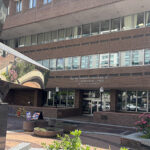
The Harrisburg school district Administration Building

The state Department of Education today took a first step towards putting the Harrisburg school district into receivership, meaning the district soon could come under the direct control of a state-appointed receiver.

Secretary of Education Pedro Rivera petitioned the Dauphin County Court of Common Pleas to place the troubled district into receivership, recommending appointing Dr. Janet Samuels as receiver, according to Rivera.

Samuels is currently the district’s state-appointed chief recovery officer (CRO), a position she assumed last year.

“When a receiver is appointed, the individual takes operational control of the district, assuming all the power and duties of the CRO and the board of school directors, except the power to levy and raise taxes,” Rivera said.

Judge William Tully has scheduled a hearing on Friday at 1:30 p.m. He then has 10 days to grant or deny receivership. The judge can either accept the department’s recommendation of a receiver or name an alternative.

The district has been in “financial recovery” since December 2012, and Samuels is one of a succession of CROs over that time.

The CRO, the school administration and the school board were supposed to work together to improve the district academically and forge a financial recovery plan. However, school taxes are now about to rise for two consecutive years, and the district has not shown substantial academic improvement.

Moreover, the district administration increasingly has been under fire for over-hiring faculty, for controversial appointments and for shuffling around principals, among other issues.

In a primary election two weeks ago, Harrisburg voters rejected every incumbent on the ballot, instead nominating five challengers for seats on the city school board, all of whom promised substantial oversight and reform of the district.

Local officials expressed a range of reactions to the news of a possible receivership for the district.

Current board Director Carrie Fowler said that she was “highly disappointed” by the move.

“I can honestly say that I am not surprised by their decision, but was hoping for a different outcome,” she said. “Losing local control of our public school system is silencing the community that clearly stated loud and clear on May 21 they wanted a change.”

Director Judd Pittman described the state’s decision to seek receivership as “a bit of a mixed bag.”

“We’re talking about removing local control, especially after the last election. However, a lot can happen between now and December,” he said, referencing the fact that the new board won’t be seated for six months, meaning that the existing school board would make decisions until then.

For instance, the board would need to approve a contract for newly hired district solicitor James Ellison. The board is also awaiting the results of a state-mandated financial audit of the district.

For the state, the final straw may have come last week, when the administration terminated the contract of the district’s interim human resources director, leaving that crucial department without leadership just days before a major faculty recruiting event, Pittman said.

“She was putting necessary processes into place, and we got rid of her,” he said.

Mayor Eric Papenfuse was fully supportive of the state’s move.

“I want to thank Gov. Wolf and Secretary Rivera for making this difficult but necessary decision,” he said. “I believe receivership will allow the Harrisburg school district to address its many systemic problems and provide brighter futures for the next generation of city youth.”

If the court grants the petition, this would not be the first time the Harrisburg district found itself in a form of receivership. In 2000, the state placed the district under the control of former Mayor Steve Reed and an appointed Board of Control. That arrangement ended in 2010, leading to the hiring of current Superintendent Sybil Knight-Burney.

Currently, only two districts in the state are under receivership–the Duquesne city and Chester-Upland school districts, according to the state DOE.

This story has been updated with comments from local officials.

Continue Reading

Harrisburg school district vows “full compliance” with state audit

The Harrisburg school district’s Lincoln administration building

The intergovernmental dispute that has rocked the Harrisburg school district may be coming to close, as the district on Friday night vowed to “fully comply” with a state-mandated financial audit.

James Ellison, the district’s newly appointed solicitor, sent a letter to state Secretary of Education Pedro Rivera vowing to offer “read only access” to the district’s eFinance financial system.

“To be clear, the District understands its statutory and regulatory obligations to fully comply with the audit process,” stated the letter from Ellison. “Indeed, we respectfully submit that compliance to date with 99% (313 of 314) of the auditor’s information requests evidences the District’s commitment to fulfilling those obligations faithfully.”

The audit was prompted by several recent incidents, including questions about the use of federal funds, the district’s unbudgeted hiring of 37 teachers and the continuation of health care coverage for 54 former employees. Moreover, the state’s less rigorous annual audit for 2017 identified numerous issues and deficiencies, including a budget forecast that was incorrect by some $4 million.

Earlier in the week, Rivera had threatened to cut off the district from $10.9 million in federal funds unless the district fully complied with Johnstown-based Wessel & Co., the department’s outside auditors, which wants remote access to the financial system.

The district had balked at the request, claiming that doing so would expose sensitive employee information. Later, union representatives said that they supported a full audit of the system, which, according to the letter, relieved the district of liability.

The letter, attached below, also laid out the district’s version of events, in which Ellison claims that school administrators have always tried to comply with the department’s demands. Nonetheless, a majority of the school board recently refused to endorse a resolution requiring district compliance.

The dispute has led some community and government leaders to call for state receivership, in which the state would take direct control of the district. Meanwhile, the issue has become the latest hot topic in the race for school board. In that race, eight challengers and four incumbents are vying for five seats in the Democratic primary, which is slated for May 21.

Letter to Secretary Pedro Rivera dated April 26, 2019

Continue Reading

PA STEAM Academy files court petition in effort to overturn rejection by Harrisburg school board

The Midtown 2 building in Harrisburg

The board of a proposed charter school in Midtown filed a court petition on Friday to try to overturn the Harrisburg school board’s denial of its application.

The filing by the Pennsylvania STEAM Academy contains 1,844 signatures, far exceeding the 1,000 signatures required to appeal the denial, said Carolyn Dumaresq, president of the charter school board.

“We feel very confident that we have the sufficient numbers,” she said. “We are very pleased with the outreach and the response from the community.”

If the Dauphin County Court of Common Appeals validates the signatures and issues a decree, the matter will go to the state Department of Education’s seven-member Charter School Appeal Board, which will make a decision to affirm or overturn the school board’s decision.

Dumaresq said that she hopes that PA STEAM (science, technology, engineering, art and math) will get on the state appeal board agenda in June or, at the latest, July. At the hearing, representatives from both the proposed charter school and the Harrisburg school district will get a chance to make their cases for and against, respectively, the PA STEAM application.

“I’m confident that we have a strong application and will get a fair hearing,” said Dumaresq, who served as state education secretary under former Gov. Tom Corbett.

In February, the Harrisburg school board voted down PA STEAM’s charter school application. So, for almost two months, school supporters have been gathering signatures at city events, the Broad Street Market and other gathering places.

One thousand valid signatures of city residents, 18 and older, were required to show sufficient community interest in the public charter school.

PA STEAM hopes to open in time for the fall semester with 120 students, grades K-2, in Midtown 2 at N. 3rd and Reily streets in Harrisburg. The 115,000-square-foot building is currently occupied by HACC, but the college’s lease expires in 2022, and it is slated to begin moving programs out of the building.

If they’re able to open, PA STEAM plans to expand on an annual basis, adding a grade level each year until it becomes a K-8 school. It also expects to grow horizontally, so that each grade level eventually would have 80 students.

Dumaresq said that the charter school plans to hold informational meetings in June and July for parents of prospective students. It also will begin to recruit faculty and staff, in the expectation that the state appeal board will rule in its favor.

“We’re proceeding as if we’ll get approved because the clock is running,” she said.


Continue Reading

Burg Blog: Time Has Come

The scene at a recent Harrisburg school board meeting

“The state must be getting pretty tired of Harrisburg.”

So said a friend after I bumped into him yesterday downtown on 2nd Street, as our conversation turned to the Harrisburg school district.

I couldn’t disagree with him.

In 2000, the state placed the district into a type of receivership, and, a dozen years later, did the same with the city government. And now, like a recurring nightmare, it may be the school district’s turn again.

Our conversation happened in the midst of the latest escalation in the month-long battle between the school administration and the state Department of Education over a financial audit of the district. School administrators claim they’re cooperating with the audit; the state says they’re not.

On Monday, state Auditor General Eugene DePasquale threw down hard, threatening an undefined “new course of action” unless the district complied. Then, according to PennLive, state Sen. John DiSanto and Rep. Patty Kim came out in favor of receivership. And, yesterday, the state education department sent a letter to the school district, saying it was withholding nearly $11 million in grants until the district fully complies with the audit.

So, do we residents now face a massive property tax hike to cover for the cast of characters roaming around the Lincoln Administration Building?

Not surprisingly, then, support seems to be growing around town for another round of receivership.

About that.

First, be careful what you wish for. Back in 2000, the state turned the district over to former Mayor Steve Reed, who promptly did what he always did—lustily eyed all the beautiful new money he controlled, planned a few “special projects” and piled on the debt.

Moreover, the district has been in “receivership light” for years now, in the form of the state-appointed chief recovery officer, who was supposed to stop the incompetence and shenanigans. Then where was she when the district hired 37 teachers it hadn’t budgeted for or when an employee embezzled a boatload of public money? Meanwhile, student academic performance remains, on average, abysmal.

So, yeah, the state doesn’t have a commendable history when it comes to oversight of the Harrisburg school district.

Having said that—the current situation is ridiculous and unsustainable.

Monday’s appointment of James Ellison as solicitor was the proverbial final nail. For months, it’s been clear that the administration, and the school board majority in its thrall, have been hell-bent on hiring Ellison, perhaps the most controversial pick they could make. By doing so, they knew they were courting disaster, and yet they plowed ahead and did it anyway.

To me, the question has been—why? Why do something so provocative when you already have the state, the city and so many residents hot down your neck? Why do this when your very actions have served as a recruiting tool for a slate of fired-up school board candidates?

This obsession with hiring Ellison makes no logical sense, except in one way—another link in the chain of enablers. Maybe it’s as simple as that.

At some point, there comes a time when you have to change course, when the status quo has become intolerable. Whether through state action or through the ballot box, that time has come.

Lawrance Binda is editor-in-chief of TheBurg.

Continue Reading

The Last Lesson: Why do employees leave the Harrisburg school system? Exit interviews shed some light.

Pop quiz: What do high truancy rates and low test scores have in common in the Harrisburg school district?

According to administrators, both are caused by high rates of teacher turnover.

Resignations in Harrisburg’s school district reached a five-year high during the 2017-18 school year, when 136 classroom teachers, principals, aides, librarians and other school building employees quit their jobs, according to district data. (At a given point, the district employs about 580 union-represented teachers and aides across its 13 school campuses.)

In the past year, officials have said that this churn of teachers undermines student performance in the city’s struggling schools. And while administrators have designed programs to boost teacher retention, records obtained by TheBurg suggest they’re not informed by much data.

Records obtained under Pennsylvania’s Right to Know law reveal that, for at least five years, fewer than 2 percent of departing employees chose to submit exit interviews to the district. These voluntary surveys allow employees to explain why they resigned and what the district could have done to keep them employed.

Of more than 550 employees who resigned from the district between August 2013 and December 2018, only 11 submitted exit interviews to the district. Of those who did, only nine offered substantive, qualitative reflections and feedback to administrators.

With such a paltry response rate, the exit interviews hardly constitute a sample size from which to draw conclusions about workplace conditions in Harrisburg schools.

But the survey responses, which came from assistant principals, teachers and safety monitors, do constitute the most official data that administrators have as they try to stem the flow of employees out of the district. And that mission has high stakes.


Matter of Pay

The leaders of the Harrisburg Education Association (HEA), the union representing teachers and classroom aides, have long acknowledged that pay in Harrisburg is lower than in surrounding districts.

The average teacher salary in Pennsylvania is $67,535, according to data from the state Department of Education. But the average pay in Harrisburg is almost $10,000 lower, coming in at just $58,257 a year.

The median salary in 2018 was $56,852, according to data obtained by TheBurg. 

It may come as no surprise, then, that five employees—45 percent of all respondents—who submitted exit interviews to the district between 2013 and 2018 said they were dissatisfied with their pay.

One employee, a school nurse working at SciTech High School, said she resigned to take a better paying job in a different district.

“The salary has not kept up with cost of living and with the pension program,” the employee said. “I will miss people here, but I felt I need to move on for this reason and expand my horizons.”

Another employee, who said she was overall satisfied with her workload, resources and even her salary in Harrisburg, still said that “pay/compensation” and “job security” led her to pursue a new job closer to her home.

The reason for Harrisburg’s relatively low teacher salaries dates back to the financial crisis the city experienced throughout the early 2000s, when the district was still under mayoral control. Until 2011, a board of control appointed by Harrisburg’s mayor ran the district, and its finances were intermingled with the city’s.

That arrangement allowed for a number of questionable transfers of money from the school district’s coffers, particularly under former Mayor Steve Reed, who diverted more than $8 million in district funds to Harrisburg University in the early 2000s, according to a PennLive report.

At the same time, the district was borrowing money to pay for its own expenses, a 2008 report from Pennsylvania’s Auditor General found.

The transfers and borrowing exacerbated the district’s already-tight finances. Like the city government, the school district’s revenue streams are constrained by Harrisburg’s stagnant tax base and its large swaths of tax-exempt real estate.

Between 2011 and 2013, the district furloughed teachers, closed school buildings and eliminated educational offerings to wipe out a budget deficit. HEA members took a 5 percent salary cut in 2013.

The pay cut was later rescinded and teacher salaries restored, but union members remain frozen on the salary “step” ladder that would award raises based on longevity.

As a result, pay in the district has lagged behind that of neighboring school systems.

HEA President Jody Barksdale could not comment on the salary freezes, due to ongoing bargaining negotiations between the union and the district.

However, she confirmed that low pay and stagnant wages are tough pills for teachers to swallow. That makes it all the more important, she said, that the district find other ways to support and retain its educators. 

“Obviously, we want to give our teachers support. We want them to feel like they can stay and have a career here and still be able to support their family,” Barksdale said. “We would like to be able to increase pay, but under circumstances of the [recovery] plan… it’s very difficult to get teachers and to keep teachers.”


Support, Counseling

Not all survey respondents cited financial concerns as a reason they left the district. As some responses show, an employee can be perfectly satisfied with pay but remain unfulfilled in other aspects of a job.

For example, one teacher who said she was “satisfied” with her benefits, pay and compensation, said she left the district due to “unsafe medical practices.”  

In her undated exit interview, she said that the district would be a better place to work if it “hired licensed LPNs [licensed practical nurses] to staff the health room.”

A 2015 report by Pennsylvania’s auditor general found that none of Harrisburg’s school nurses had valid licenses between 2010 and 2014. They were subsequently replaced with licensed professionals.

District administrators said in January that the teacher’s concern had been investigated, and that current medical practices in the district are up to standard.

Other teachers said the district lacked resources to help students and staff respond to unruly students.

Three survey respondents told district administrators that they wanted more consistent discipline practices or more resources to support students who misbehaved in class.

“Working in HSD is hard when student behaviors are not addressed,” said one respondent, who completed an exit interview upon her retirement. “It takes too long to get students placed into special ed. settings, even students who qualify for services are not moved to the correct room for sometimes months on end. Additional behavioral support facilities are needed for students with chronic behavior problems.”

Another teacher said that offering a wider array of student services would make the district a better place to work.

“Students being held accountable for negative behaviors, mental health supports for students and families, alternative education opportunities for students facing challenges with learning in a regular educational setting,” she wrote.

She added that “professional development opportunities focusing on behavior interventions” could have prevented her from leaving the district.

These critiques echo remarks made by HEA members in 2016 and 2017, when teachers asked the Harrisburg school board for more mental health support and counseling for disruptive students.

At a school board meeting in November 2017, Barksdale said that violent outbursts among students were on the rise in elementary schools and that normal training did not prepare teachers for the mental health needs of students.

“This is serious behavior, and we’re not trained in how to deal with it,” Barksdale said. “The tools we have now are not enough.”

Barksdale said that HEA members, including union building representatives appointed in each school campus, try to debrief departing teachers one-on-one to learn why they are leaving the district.

“Ninety percent of responses are that they feel unsupported with difficult student behaviors,” Barksdale said.

Barksdale and other teachers have been careful not to ascribe motives or malice to students who misbehave. In 2017, Barksdale and others told the school board that many disruptive students experienced trauma at home and acted out in school as a “cry for help.”

In a statement issued in late January, district administrators said that mental health services have long been lacking in Harrisburg and Dauphin County. The district contracts with Pennsylvania Counseling Services and Pressley Ridge to provide school-based outpatient mental health services. Additional support and resources are available through state and county agencies, they said.

Administrators also pointed out that parental involvement plays an important role in treating child mental health issues. If a student’s needs are greater than what the district can provide, a school counselor can refer him or her to the Dauphin County Case Management Unit.

But not all students who are referred ultimately get the services they need.

“Due to factors beyond the District’s control, this is a very long and time-consuming process, and as a result, many of our parents grow weary and lack the follow through with the lengthy process,” administrators said in a statement issued through a spokeswoman. “Sometimes, once services are in place, many times the agency will ‘drop’ the child from services due to parental non-compliance with appointments.”

According to Barksdale, teachers in the district do not believe that the district’s current systems are sufficient. She also pointed out that the district cut counselors in 2018 to resolve a budget deficit, despite repeated calls by teachers to increase counseling resources in schools.

The cuts have left fewer trained professionals to make referrals or assist teachers in school buildings, she said.

“This is where the lack of support and appreciation comes into play,” Barksdale said. “There’s limited tools we have as teachers to help with [student behavior], and a lot of that is, unfortunately, why people leave.”


Facility Issues

Three survey respondents told the district that they were unsatisfied with their physical working environment. Others said that better facilities in another district made a new job more attractive.

Barksdale said that cleanliness is a problem in some district buildings, due to a shoestring staff of janitors and facility staff.

“When you are understaffed, the buildings aren’t as clean as they could be,” Barksdale said. “I know the people working there are working as hard as they can, but it’s very hard to replace people who are out sick or on leave.”

Teachers have also complained to union representatives about heating and air conditioning, Barksdale said.

District administrators responded only that, “Facility improvements are continuous and ongoing.”


Retention

In a joint statement, district officials said that employee exit surveys are reviewed by “designated members” of the administration and the Human Resources Department.

But they declined to say who in the district is ultimately responsible for improving teacher retention.

Administrators said only that they have in place “administrative collaboration to support teachers.” They also touted current initiatives—such as a yearlong induction and mentoring program for all new teachers, professional development seminars, and the elective Teacher Leadership Academy—that are designed to retain educators.

They also said that administrators are “working diligently” to improve the return rate on the surveys.

“The collected exit interviews have provided the District with invaluable data and insight into the processes and procedures that are working well in the District, as well as areas for improvement,” they said.

The district is currently contracting with an interim human resources director, since former HR Director Curtis Tribue resigned in January after being put on administrative leave last summer.

Interim HR Director Barbara Richards told the school board in January that she personally contacts each teacher who tenders a resignation letter to invite them to submit an exit interview. The practice has already yielded a much higher return rate on exit interviews, she said.

Nonetheless, the rate of employee resignations in Harrisburg shows no signs of slowing. School board documents show that 80 teachers, principals, administrators and other staff members have resigned just since August.


Continue Reading

Veteran superintendent appointed as Chief Recovery Officer for Harrisburg schools.

A retired Philadelphia-area superintendent will serve as the new state oversight officer for the Harrisburg School District.

The Pennsylvania Department of Education has appointed Dr. Janet Samuels as the district’s new chief recovery officer, spokesperson Eric Levis confirmed on Friday. She will oversee the implementation of a new, long-term recovery plan aimed at raising the district’s academic performance and financial health.

PDE put the school district under a financial recovery designation in 2012. State law requires every district in recovery to have a state-appointed recovery officer.

Samuels replaces Audrey Utley, who retired in June after serving as Harrisburg’s CRO for three years.

Her salary is capped at $144,000 annually and will be paid by PDE.

This June, Samuels retired as the superintendent of Norristown Area School District, where she oversaw a $150 million annual budget and nine schools enrolling 7,400 students. She previously served as a regional superintendent for the Philadelphia Area School District. Her career in public education spans 35 years, according to Levis, and includes experience as a principal and classroom teacher.

Samuels has been a member of the National Staff Development Council, where she served as National Conference Co-Chair, Levis said. She holds degrees from Millersville University, the Pennsylvania State University, the University of Pennsylvania and Drexel University.

Continue Reading

State set to appoint new chief recovery officer for Harrisburg school district

Harrisburg school district administration building

After a year marked by administrative fumbles and tension among board members, the Harrisburg school district soon will get a new state-appointed oversight officer.

The Pennsylvania Department of Education plans to select a new chief recovery officer (CRO) for Harrisburg schools in the next two weeks, according to spokesman Eric Levis. The CRO will oversee the implementation of a new, long-term recovery plan aimed at raising the district’s academic performance and financial health.

The appointment suggests that Harrisburg has, for now, dodged receivership – an arrangement in which a state administrator takes control of the district.

A state-appointed receiver has broader authority than a CRO and assumes many of the powers of the elected school board.

Board directors retain all taxing authority, but the receiver can approve contracts, charter school applications and personnel actions without their input.

Levis said today that receivership “remains an option,” even as PDE appoints a new recovery officer.

The district has been under a financial recovery designation since 2012. State law requires any recovering district to have a CRO, but Harrisburg has operated without one since July, when Audrey Utley retired after three years in the role.

Utley oversaw an overhaul of the district’s five-year recovery plan, which expired in June with 80 percent of its initiatives in place.

State Education Secretary Pedro Rivera is charged with appointing Utley’s replacement. He sought input from state Sen. John DiSanto, Rep. Patty Kim, district Superintendent Sybil Knight-Burney and Harrisburg Mayor Eric Papenfuse while making his decision, Levis said.

When approached by PDE, Papenfuse said he emphasized his belief that the district should be under the control of a receiver.

“Under the power of the law, only a receiver would produce the level of transparency and administrative changes necessary to solve the district’s clear dysfunction,” Papenfuse said. “PDE has chosen to go in another direction, but I do appreciate their seeking my input on behalf of the residents of Harrisburg.”

The district has beat back a steady stream of scandals in the past year, including a grading investigation that led to the reassignment of a high school principal, a hiring mistake that allowed 37 unbudgeted teaching positions to be filled, and criminal charges against an administrator who allegedly embezzled $180,000 from the district.

District administrators drew fresh criticism in August, when they asked 65 teachers that they hired at the wrong salary step to pay back wages.

That request was enough to make Jody Barksdale, president of Harrisburg’s teachers union, consider the merits of receivership – an arrangement she ultimately decided she could not support.

Barksdale has also been critical of the school board this year and once pleaded publicly with board members to act more professionally.

“The way you talk to each other is unacceptable,” Barksdale said at an August meeting. “You guys are the talk of the town, and it makes me embarrassed.”

Friction among board members was on high display this year, as they debated whether to retain or replace Knight-Burney, whose contract expired in June. The nine-member body frequently split on slim margins on decisions related to district personnel.

A vote on Knight-Burney’s new contract devolved into a shouting match between board members at a June meeting, leading President Judd Pittman to issue a public apology the following month.

Three board members have also resigned their seats this year, one amid allegations that he lied about his residence in the city.

This week, the board published its annual superintendent evaluation. Knight-Burney received “exemplary” ratings across nine performance standards, even though three members rated her overall performance “unsatisfactory” or “in need of improvement.”

Knight-Burney will serve in the district for at least three more years. She’ll work closely with the CRO the entire time.

PDE has not disclosed any of the candidates it’s considering for the CRO role. Gene Veno, who served as CRO from 2012 until 2015, inquired about resuming his old position but said he did not receive any response from Rivera.

Kenneth Medina, a former business manager who was demoted and later laid off, also told TheBurg he submitted his name for PDE’s consideration. Medina is currently petitioning the district to get his job in the business office back.

Continue Reading

Harrisburg School Board must reconsider action on former business manager, judge says.

The Court of Common Pleas in the Dauphin County Courthouse. (File photo)

A former administrator who appealed to the Harrisburg School District to get his job back received an assist this week from a Court of Common Pleas judge, who overturned a prior ruling in his case.

Following the judge’s decision, the Harrisburg school board will have to rehear the case of former Business Manager Kenneth Medina, who says that his abrupt reassignment and pay cut in August 2017 violated school district policy and Pennsylvania law.

The school board approved Medina’s reassignment in an October 2017 hearing. He appealed the decision to the court this May.

Following a hearing in July, Judge John Cherry vacated the board’s vote, remanding it back to the board for rehearing.

Sean Fields, the attorney representing Medina, said he has contacted school district officials to initiate next proceedings, but has not yet received a reply.

If the district wishes to avoid another hearing, it could appeal Cherry’s decision to the Commonwealth Court, Fields said. But he hopes the administration will reinstate Medina to his former role instead.

“Mr. Medina is ready and willing to return to work,” Fields said. “He’s been clear that he has wanted to remain as the business manager, and that’s the primary reason he pursued his rights under the law.”

Under the school district’s new budget, Medina’s reinstatement as business manager could save him from potential unemployment. His current role, program grants administrator, was one of the 52 positions that the district eliminated in June while trying to bridge an $8 million budget gap.

Medina received a termination of benefits notice in July, but says it was addressed to another district employee. He does not know if he has a job with the district.

District Solicitor Samuel Cooper declined to comment on the case this morning. A district spokesperson did not respond to an inquiry about Medina’s employment status.

According to the petitioner’s brief, Medina was hired as business manager in April 2016 at a salary of $120,000. He received a satisfactory performance review in February 2017 and a got a raise to $121,898 that June.

But just 10 days later, according to the brief, Superintendent Sybil Knight-Burney placed Medina on administrative leave due to allegations of professional misconduct. According to Knight-Burney, Medina had failed to notify the district of a vehicle loss, submitted budgets to the Pennsylvania Department of Education (PDE) with incorrect figures, failed to schedule building inspections at John Harris High School, and failed to make arrangements for mail service at district properties.

A district lawyer questioned Medina at a due process hearing in August 2017 and found the allegations against him credible. He was reassigned to the role of program grants manager at a salary of $60,000 per year.

Medina then requested a personnel hearing before the school board. Five members of the board voted to support Medina’s reassignment and three abstained according to the brief. One member was absent.

Medina petitioned the Common Pleas court to review the board’s decision in December.

Medina’s case argues that his reassignment constituted a removal from his old position, and that the district administration did not follow the procedure for removing a business manager as set forth in the Pennsylvania School Code.

School code requires administrators to present the business manager with a formal list of charges ahead of any personnel action, according to the brief. Fields says that the district’s initial allegations do not constitute a list of charges.

“Because Medina was never presented with a statement of charges, the school district did not meet the burden of proof required for the removal of a business manager under local agency law,” the brief states. “The administration also presented evidence [in hearings] that differed considerably from the original allegations.”

Fields also argues that his client’s salary cut is void under state law. Medina did not receive any evidence that the board voted to reduce his salary – only that it had voted to reassign him. State law requires a majority affirmative vote by the board to change an employee salary, according to the brief.

Furthermore, the district business manager is a statutorily recognized position that carries specific job protections, Fields said. He claims that the district did not account for these safeguards when reassigning Medina.

“Under the school district’s interpretation of [School Code,] it would have unlimited power to reassign Medina to a custodial staff position at a salary of $10 per hour,” the brief states, calling such logic “absurd.”

Fields also says that the lack of a performance evaluation prior to Medina’s reassignment violates district policy. Medina never received any warnings or progressive discipline before being placed on leave, according to Fields. He also did not receive a performance review at the end of the district’s fiscal year.

Fields cited a policy that sets standards for employee evaluations, but does not stipulate how often they must take place. Knight-Burney testified that Medina received a formal mid-year evaluation, but no end-of-year performance review.

Assistant business manager Bilal Hasan replaced Medina as acting business manager in February 2018. A June 2018 letter from PDE Secretary Pedro Rivera asked the district to find a new, more qualified candidate for the role.

Rivera said that Hasan did not have the professional certifications or experience mandated in the district’s five-year recovery plan. He also asked the district to replace part-time CFO James Snell with a full-time employee.

Continue Reading

Mandate or Suggestion? State calls on Harrisburg school district to seek new financial managers

Members of the district’s business office, from left: acting assistant business manager Regis Barwin, interim CFO James Snell and acting business manager Bilal Hasan.

Soon after wrapping up a protracted debate over its superintendent, the Harrisburg school district may find itself in another personnel battle.

The state Department of Education is asking the district to search for new leadership for its business office, which oversees budgets and financial management.

In a letter to the district on Monday, department Secretary Pedro Rivera said that the district’s chief financial officer and business manager do not meet the criteria set forth in its five-year recovery plan, which calls for full-time, permanent, highly qualified employees to fill both positions.

The school board has final say on all district personnel actions. But board members, who diverged for the past six months over whether to replace or retain Superintendent Sybil Knight-Burney, once again disagree on the need to seek new hires.

Board President Judd Pittman interprets the letter as a directive from the state, giving the district no choice but to replace interim, part-time CFO James Snell and acting Business Manager Bilal Hasan. But board Vice President Danielle Robinson thinks the district should keep the current team.

“It’s not a directive, it’s a suggestion,” Robinson said. “The team we have in place is giving us what we need.”

The business manager and CFO are responsible for developing and managing the district’s $156 million budget. This year, the district faces a shortfall of almost $9 million. The business office has proposed bridging it with a $5 million transfer from its fund balance, $4 million in staff cuts, and a 3.6 percent tax hike.

“The people we had in [the business office] before are the reason we’re in the situation we’re in now,” said Robinson. “Hasan and Snell have helped us come out of it.”

The district’s business office has seen a revolving door of interim and acting managers in the past five years. The office had permanent leadership during the 2016-17 school year, when William Gretton served as CFO and Kenneth Medina as business manager.

Gretton resigned last July to take a superintendent position near Philadelphia, and Medina was reassigned to a grants management role in August.

Pittman called the lack of consistent leadership in the business office “a cancer.” He said that, while he appreciates Snell and Hasan’s hard work over the past year, he’s been frustrated with the district’s administration – including the superintendent – during this year’s budget talks.

“I haven’t gotten answers to the questions I’ve been asking this budget cycle,” Pittman said. “I haven’t seen any creativity.”

Pittman said that the administration has lagged on actions that would generate more revenue, such as selling its vacant properties or seeking out payments from tax exempt entities in the city.

Since the state could put the district in receivership once its five-year recovery plan ends on June 30, Pittman thinks it’s imperative that the board act now on PDE’s directive.

Knight-Burney declined to comment on the letter today, but Chief Recovery Officer Audrey Utley said that the district would need to seek new personnel.

“[Hasan] does not have the required experience,” Utley said. “PDE is saying that we need to do a search now.”

Utley was referring to the criteria set forth in the recovery plan, which calls for a business manager with “substantial prior experience and… a successful, documented track record” overseeing a business office in a similar-sized district.

Hasan also lacks certifications from the Pennsylvania Association of School Business Officials. He was serving as assistant business manager in February when he was promoted to acting business manager at a salary of $113,000.

He was floated as a potential business manager in 2016, according to school board minutes, but passed over in favor of a more experienced candidate (the job ultimately went to Medina.)

Robinson said that she would support Hasan seeking coursework and certifications to become a full-time, permanent business manager.

Separately, the school district announced today the resignation of Percel Eiland as a school board director. The district now must find and appoint a replacement for Eiland, who served just six months of his two-year term.

Continue Reading

Harrisburg school board continues budget talks, but changes to preliminary budget unlikely, CFO says

After five years of state-imposed austerity, the Harrisburg school district doesn’t have many programs left to cut.

That was the message of district administrators to the school board budget committee tonight, as they presented cost-cutting alternatives that could help the district close a $9 million deficit.

The board has already approved a preliminary budget for the 2018-2019 school year, which calls for eliminating 51 positions across the district – most of them teachers. Combined with a 3.6 percent tax hike, the cuts will narrow the district’s deficit to $4.7 million.

Board president Judd Pittman voted to approve the preliminary budget in May. But he also asked the business office to identify other expenditures that the district could trim.

Administrators responded tonight by listing the costs of all the district’s non-mandated programs, which are the only general fund expenditures it can legally eliminate. Those include the $1.2 million full-day kindergarten program, $600,000 of athletics programs and the $8.3 million Sci-Tech Campus of Harrisburg High School.

The business office did not recommend that the board cut any of those programs. The preliminary budget that the board approved in May represents the administration’s official budget recommendations, said chief financial officer Jim Snell.

But at tonight’s committee meeting, many district residents and employees continued to protest the preliminary budget, saying it will strain teachers and worsen learning conditions for students.

The district’s former business manager also accused the administration of obfuscating budget details before the public and the Pennsylvania Department of Education (PDE.)

State law requires school districts to post their proposed budgets online for 30 days prior to final approval. The revenues and expenditures must be formatted according to a PDE template.

Kenneth Medina, the district’s former business manager, said that the administration had omitted critical information from its budget page, putting it out of compliance with PDE requirements.

“The information the public is working with has been obscured,” Medina said. “It is not correct or validated… and I would like to do my part to make sure the budget we’ve presented is as accurate as possible.”

In past years, the forms the district has presented under the PDE template have been at least 25 pages. This year’s document is only 12 pages and does not include the same detailed revenue and expenditure breakdowns as the budgets posted for past years.

Neighboring school districts – including Central Dauphin and Cumberland Valley – have all posted PDE budget forms that run over 20 pages.

The district’s current business manager said that the omission of the detailed report was an error that will be corrected as soon as possible.

“It wasn’t done on purpose,” said business manager Bilal Hasan. “I’m sure it will be up on the site tonight.”

The school board will hold its monthly meeting on Monday, June 18 in the Lincoln Administration Building. It will vote on its final 2018-19 budget in a special meeting to be scheduled later this month.

Continue Reading