Tag Archives: housing

Harrisburg area home sales, prices climb

Newly built houses on Allison Hill in Harrisburg

Both home sales and prices swung up in August in the Harrisburg area, largely due to falling interest rates.

The Greater Harrisburg Association of Realtors (GHAR) credited declining mortgage rates for sales that rose 5.3 percent to 720 units compared to the year-ago period. Median sales prices increased by 10.5 percent to $199,500 over the same period, GHAR said.

In Dauphin County, sales totaled 346 units, an increase of 16 units, while the median sales price rose 12.1 percent to $184,900 compared to August 2018, according to GHAR. Cumberland County saw sales go up by 9.7 percent to 350 units, with the median price up by 9.3 percent to $218,500.

Perry County had a decrease in volume, with sales down by 11 units to 24 units compared to the year-ago period, GHAR said. The median sales price also dropped, down 9.5 percent to $153,750.

Continue Reading

The Week that Was: News and features around Harrisburg

Harrisburg school district receiver Dr. Janet Samuels with Dr. John George of the Montgomery County Intermediate Unit

It may have been a holiday-shortened week, but it was still long on news around Harrisburg. Here are some local stories and features that you may have missed amidst the barbecues and big booms.

Harrisburg City Council members expected a long summer break, but now they’ll need to return to city hall next week because of delays in the annual process of doling out federal housing grant money. What’s the holdup? Click here to find out.

Harrisburg’s affordable housing crunch is a problem that won’t be fixed overnight. However, our editor has some thoughts on what may help.

Harrisburg school district receiver Dr. Janet Samuels introduced Dr. John George, who will head up her recovery team for the next three years. Oh, and a bunch of computers and essential data have gone missing. Click here for all the details.

Independence Day fireworks went off with a bang, despite the threat of rain. Read our feature story on the best place to witness them in Harrisburg.

Pennsylvania Department of Education consultants completed their financial audit of the Harrisburg school district, issuing a damning report that prompted responses both from the school receiver and from our editor.

Sara Bozich looked beyond the July 4 holiday to offer up some great ideas for going out and having fun for the entire long(ish) weekend.

TheBurg’s music columnist has fests and folkies in focus this month. Check out all her recommendations for July.

Two-way 2nd Street is a step closer to reality, as Harrisburg plans to offer two design plans at a public meeting on July 18. Click here for the details.

“Where I Live,” a book by Harrisburg writer and educator Debra Hervitz, teaches local children exactly where they stand in the state, the country, the universe.

Do you receive TheBurg Daily, our daily digest of news and events? If not, subscribe here!

Continue Reading

Housing Study: Harrisburg faces shortage of rental housing now, expected to get worse

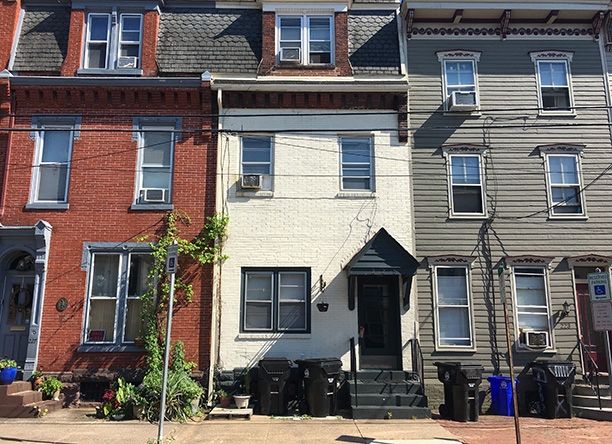
A set of typical Harrisburg rowhomes

The results of Harrisburg’s first citywide housing study are in, and they predict a shortfall of more than 200 rental units at all price points over the next three years.

Representatives from the consulting firm that prepared the study presented their main findings to City Council tonight. The authors said demand for rental housing in Harrisburg will outpace supply through 2020, even as development projects put new units on the market.

As a result, Harrisburg will face a shortage of approximately 244 rental units across the city – a figure that accounts for the city’s existing housing stock, new units coming onto the market and old units becoming uninhabitable. The study also considers population projections, which anticipate that Harrisburg will gain 300 households in the next three years, mostly in Allison Hill and Uptown Harrisburg.

The study didn’t offer any policy recommendations, but city hall officials intend to use its findings to develop long-term development strategies and housing policy proposals. Here are five of the main takeaways from the 100-page study:


Affordable housing and subsidized housing aren’t the same thing.

Developers and policymakers use three standard terms to describe different types of rental housing. Market rate properties are those where tenants pay rent in full, without any public subsidies or rental assistance. Rent is set by a landlord based on location, amenities and demand in the local market.

If a property has restricted rents, or is only open to renters making a certain income, it’s an affordable property. Some affordable housing properties are owned by local governments or nonprofits, but cities can also put zoning restrictions on private projects to make them affordable.

The final category, subsidized properties, offer rental assistance programs based on a renter’s income. This category includes public housing projects, such as Harrisburg’s Hall Manor.


Harrisburg is a low-rent city, but it’s also a low-income city.

The average apartment rents for $831 in Harrisburg. That’s low compared to other parts of Dauphin County, but it’s high for most Harrisburg residents. Nearly half of renter households in Harrisburg have incomes under $25,000. The median renter income is just $22,000 a year.

Housing affordability isn’t defined by the market value of rent, but by how much housing costs consume a person’s overall income. Affordability guidelines, which are set by the federal Department of Housing and Urban Development, say no household should spend more than 30 percent of its income on rent. By that standard, 40 percent of renter households in Harrisburg are cost-burdened. Data show a need for more rental units in the “very low” and “extremely low” income bands.


Demand for rental units will be highest in the Allison Hill and Uptown neighborhoods.

Population growth in Allison Hill and Uptown is expected to exceed other neighborhoods in the city over the next three years. But there’s only one apartment project planned in Allison Hill, which will add 48 units, and there are no upcoming projects slated for Uptown.

Without new housing supply, the scarcity of affordable units in those neighborhoods is expected to worsen. Only one-third of families in Allison Hill who qualify for affordable housing assistance currently receive it, the study says. Demand is even higher in Uptown Harrisburg, where 22 percent of income-qualified rental households get assistance.

“There’s great opportunity for development in both neighborhoods, not just for affordable housing but all rental housing,” said Robert Lenfeld of Real Property Research Group, the Columbia, Md.-based firm that authored the study.


The rental market is tight across Harrisburg, but particularly in Allison Hill.

Harrisburg has more than 4,000 vacant houses and commercial buildings. Abandoned, blighted buildings create eyesores and pose public safety risks, but when it comes to rental units – those that are part of the active housing market – some vacancy is a good thing, said Lenfeld. Fewer than 3 percent of Harrisburg’s rental units are currently vacant. Any figure below 5 percent indicates a tight housing market where renters have limited housing choice and landlords hold a large share of power.

“You want to have some vacancy in a market to ensure elasticity so people can move around and landlords don’t increase rents,” Lenfeld said.

Vacancy rates across the city range from .5 percent in Allison Hill to 4.3 percent in Midtown. South Harrisburg had no vacant units, but it also has the city’s largest share of subsidized rentals. Those rentals aren’t included in vacancy figures, Lenfeld said, since “you never run out of demand for subsidized units.”


Harrisburg’s rental population is aging.

The city’s population of senior citizens is expected to increase 2.4 percent each year through 2020. Seniors can choose to live in any rental unit on the market, but many elect to live in age-restricted properties that offer elevators, common spaces and other amenities that meet their needs. Not all age-restricted properties are affordable—in Harrisburg, only 165 units meet both classifications.

In Harrisburg, the distribution of age-restricted properties limits the housing choice of senior citizens. There are no age-restricted properties in South Harrisburg, whereas downtown has two high-rise towers that contain all of the city’s affordable, age-restricted housing stock. The Paxton Place development will add 37 new, affordable apartments for senior citizens when it’s completed next year. That’s good news for seniors in Allison Hill, but those who wish to find affordable housing in Midtown, Uptown or South Harrisburg will have to keep waiting.

Continue Reading

Cost of Doing Business: For many Harrisburg businesses, the BPT is a tough tax to swallow.

Ryan Colquhoun, a broker and partner of Harrisburg Property Management Group, dreamt of a view of the Susquehanna River from his office.

Logistical factors, such as ease of access to his Harrisburg properties and anticipated taxes, were also under consideration during his real estate search. Colquhoun and his team manage 700 to 800 units in the city alone, and that number is growing, with additional properties in the surrounding suburbs.

“We wanted to be on Front Street,” he said. “We loved being along the river, but the property and real estate taxes in Harrisburg are very, very high.”

Eventually, they decided to locate upriver in Susquehanna Township. But that didn’t free them of all Harrisburg taxes. Because they still did business in the city, they remained subject to another tax, one that many new companies are surprised to learn about—the business privilege tax (BPT).

Back in 1965, Pennsylvania passed the Local Tax Enabling Act (LTEA) to raise additional revenue for local government services. This granted second- and third-class cities, boroughs and other municipalities the power to tax for general revenue purposes, including levying taxes on gross receipts for the “privilege” of doing business within a locality—making Pennsylvania one of only a handful of states to have such a tax.

Out of about 2,900 entities that have the power to tax in Pennsylvania, only about 350 levy a mercantile tax or a BPT. Historically, a mercantile tax has been levied on retailers and wholesalers, while businesses that provide services, such as consulting, are responsible for the BPT. Colquhoun happens to do business in two of the municipalities (Harrisburg and Swatara Township) in central Pennsylvania that levy such a tax. Others locally include Paxtang, Penbrook and jurisdictions within York and Adams counties.

“Primarily, it’s a lot of the old third-class cities that still retain a BPT—obviously because we’re all hurting for different revenue sources,” said Michael Hughes, tax and enforcement administrator for Harrisburg. “We’re in a worse spot than a lot of municipalities because the Capitol is here—they don’t pay property taxes on those properties. And we have an array of nonprofits based here because it is the capital city. We have to try and maintain every revenue source we can.”\

In 2018, the BPT is projected to account for 10 percent of the city’s general fund revenue, about the same amount as last year.

“For every new business coming in, another one probably had left,” Hughes said. “There’s really a balance. The market is only going to bear so many restaurants downtown.”

For those providing a service in Harrisburg, the total rate imposed by the BPT is 3 mills or $3 per $1,000 of gross volume of business, up to gross receipts of $3.3 million. For gross receipts in excess of that, the rate imposed is 1 mill or $1 per $1,000.

For retailers, the rate of the similar mercantile tax is 1½ mills or $1.50 per $1,000, up to gross receipts of $3.3 million. For gross receipts above that, the rate is ¼-mill, or 25 cents per $1,000.

“It is a nefarious tax because townships are very aggressive,” said Vito Cosmo, managing director of state and local taxes at accounting firm Grant Thornton in Philadelphia. “The bedroom communities of the 1960s and 1970s are now thriving mini-metropolises of their own.”

Cosmo estimates that, in the past few years, one-third of his clients have sought help due to confusion around LTEA taxes.

Since 1965, the guidelines around the tax have been adjusted multiple times. Some of these adjustments have clarified the law, while others have caused further ambiguity.

“I think smaller- and medium-sized companies get very surprised,” Cosmo said. “Companies are getting whipsawed all over the place.”

For instance, each jurisdiction has its own rules.

“It’s not homogenous,” he said. “Businesses, unless they have a really good CPA, or a large accounting firm like Grant Thornton, they’re going to have a lot of difficulty handling this.”


Additional Cost

Hughes and his team realize that the BPT, and taxes in general, can be confusing.

He said that they welcome the opportunity to educate business owners, event organizers and residents on the tax code and do so frequently. He suggests calling the municipality before starting a business, hosting an event, or doing business within that municipality to ensure compliance.

For businesses that operate in more than one of these localities, things can get complicated—and expensive.

For instance, Colquhoun doesn’t pay a BPT in Susquehanna Township, as it doesn’t levy the tax, but he is liable for paying it in Harrisburg and Swatara Township.

“I understand taxes and fees have a purpose,” Colquhoun said. “If the municipality needs funding, they need to get it from somewhere, and businesses are a way to move on that. When you look at it, it can become quite substantial when you’re doing any volume of business. I talk to other business owners, and taxes in the city are certainly something that should be looked at when determining a location.”

Businesses that rely on foot traffic have a different perspective. They need to be where the action is.

Timishia Goodson, co-owner of Raising the Bar in the Broad Street Market, does not find such taxes to be burdensome, viewing them as necessary for calling Harrisburg home for her full-service bakery.

“It’s just a cost of doing business in Harrisburg,” she said. “Anytime in the market, there are probably 300 or 400 people roaming around. So, we definitely rely on foot traffic.”

For professional services that do not rely on foot traffic, is the cost of doing business in Harrisburg too high?

“I definitely think it’s discouraging for businesses, and it’s certainly regressive for those that are purchasing the services of those businesses,” Colquhoun said. “If there’s an additional tax that’s on the business, that’s an additional cost to the end user or consumer.”


Bottom Line

Brittany Holtz, founder of Studio B Power Yoga, owns three studios—in Lower Paxton, Derry and Annville townships. These studios are not in places that levy a mercantile or business privilege tax.

She has dreams of one day opening a studio in Harrisburg proper, but said that taxes would need to be taken into consideration. She also questioned if such taxes discourage businesses from setting up in Harrisburg.

“I’m born and raised in this area, and I always found it interesting that we don’t have more progressive businesses here,” she said. “We’re close to big cities, we have great restaurants, and we are the capital. But it seems like people and businesses are moving out of Harrisburg. I want to see them move in.”

Hughes said that he understands that large businesses with substantial gross receipts may need to take the tax and necessary business licenses into consideration.

“A $50 license fee and potentially a couple thousand dollars in taxes, it’s not putting people out of business,” Hughes said. “With a bigger company, sure, sometimes you need to make a financial decision.”

However, Hughes pointed out, moving out of the city may not mean complete alleviation of the BPT, as Harrisburg Property Management Group discovered. For example, attorneys or contractors who are based in the surrounding suburbs are still responsible for Harrisburg’s BPT when completing construction projects in the city or doing business within the city’s courthouses.

“It’s a very labor-intensive tax to collect,” Hughes said. “That’s why no one really wants it.”

Looking ahead, Hughes believes that, with large construction projects on deck, such as the new federal courthouse and Harrisburg University’s high-rise, the city may experience an uptick in BPT revenue.

As far as the future of the BPT itself, Hughes doesn’t see it being removed from the general fund revenue budget anytime soon.

“The legislature attempted to make changes, but got pushback from a lot of third-class cities,” Hughes said.

Without a replacement revenue source, municipalities that levy the tax were unhappy with the idea.

“We can’t afford to take a hit of 10 percent of the budget,” he said. “That’s the bottom line. I don’t see it going away.”

Continue Reading

Take 2: HBG mayor issues CDBG veto, council to reconsider allocation

Habitat for Humanity and TriCounty HDC, which together sponsored a “building blitz” last week on Allison Hill, are proposed recipients of CDBG funds this year. Photo: Diane McNaughton.

For the second time in his administration, Harrisburg Mayor Eric Papenfuse has vetoed City Council’s allocation of federal housing grants.

Papenfuse overturned a bill disbursing $2 million in grants to more than a dozen nonprofit organizations and city programs. The source of the money was the Community and Development Block Grant (CDBG), a program from the federal Department of Housing and Urban Development.

Papenfuse today said his veto was due to council’s decision to award a $15,000 grant to Breaking the Chainz, a mentorship program that works with at-risk youth. Council granted the organization money even though it submitted an incomplete grant application.

Fifteen organizations applied for funding this year, according to Dave Madsen, chairman of council’s Community and Economic Development Committee. Last week, council passed a bill awarding grants ranging from $5,000 to $320,000 to 13 of those applicants, including Breaking the Chainz.

The city’s Department of Community and Economic Development screens and ranks grant applications according to a formal system every year. They did not recommend Breaking the Chainz for any funding. Even though the program met CDBG eligibility guidelines, its incomplete application meant that it ranked below other eligible organizations.

But council voted last week to reduce a proposed grant to TLC Work Based Training from $45,000 to $30,000, freeing up $15,000 for Breaking the Chainz.

Some council members expressed concern about veering from the ranking system, but the amended bill passed 4-3.

Papenfuse said the decision took money away from a deserving applicant and set bad precedent by breaking with the accepted grant-screening procedures.

“Their actions raise questions of fairness and transparency,” he said. “We have gone out of our way to establish an independent and trustworthy scoring process.”

Papenfuse has used his veto power once before, when he overturned CDBG allocations in 2016.

On Monday, Madsen said that both TLC and Breaking the Chainz provided valuable services in helping to keep residents out of the criminal justice system. TLC provides workplace training for formerly incarcerated people entering the workforce, while Breaking the Chainz reaches at-risk youth through mentoring, he said.

“Something we’re currently struggling with in the city is a high population that ends up in the criminal justice system,” Madsen said. “We wanted to do a full-court press in addressing the issue.”

Council is set to vote on a veto override at a legislative session tomorrow, according to a meeting agenda. But Madsen said that council members don’t plan to award any money to Breaking the Chainz anyway.

In the week since council passed its CDBG funding bill, Madsen learned that the organization may have trouble fulfilling administrative requirements tied to the federal funds.

Barring any last-minute amendments from council members, the body will likely revert back to the allocations recommended by the city Department of Community and Economic Development.

According to city Solicitor Neil Grover, council doesn’t have to override the mayor’s veto – it could simply vote to amend the bill it passed last week.

If the override vote does not pass, the entire CDBG bill dies, Grover said. Council members would have to introduce a new bill and publicly advertise it before voting to allocate funds.

Council adjourns for summer recess after its July 3 legislative session. But Madsen said that the break won’t start until council finishes its CDBG business.

“We have to get this done before we go anywhere to meet federal requirements,” he said.

Continue Reading

June News Digest

HUD Grants Proposed

The annual process of disbursing federal housing funds began last month, as Harrisburg City Council introduced an ordinance that would provide money to nearly a dozen nonprofit groups.

Mayor Eric Papenfuse said that the city used the same process in selecting award recipients as last year, using a point-based merit system to judge applications.

“It’s a number of small grants,” Papenfuse said. “It’s not as much as anyone wanted.”

In all, the city will distribute $2.04 million in Community Development Block Grant (CDBG) money, a program of the federal Department of Housing and Urban Development. This amount includes almost $1.9 million from the 2018 allocation, plus a small supplemental amount tied to unallocated funds from a prior year.

Like last year, the greatest single amount of money, $593,423, will go to repay federal loans the city backed during the Reed administration for several development projects, including the disastrous Capitol View Commerce Center project, which went bankrupt before being completed years later by a new owner.

“If we didn’t have an exorbitant debt service, we’d have a lot more money for housing,” Papenfuse said.

Most of the nonprofits proposed to receive funds have gotten some money from previous CDBG allocations. The proposed recipients include:

  • TriCounty HDC: $250,000
  • Habitat for Humanity: $100,000
  • A Miracle 4 Sure: $50,000
  • TLC Work Based Training: $45,000
  • Christian Recovery Aftercare Ministries (C.R.A.M.): $40,000
  • Latino Hispanic Community Center: $25,000
  • Heinz-Menaker Senior Center: $25,000
  • Fair Housing Council: $25,000
  • PPL/IN HOUSE: $20,000
  • Shades of Greatness: $15,000
  • Neighborhood Dispute Settlement: $5,000

Like last year, Tina Nixon, an executive with UPMC Pinnacle, scored the applications, Papenfuse said. While most nonprofits that applied received some funding, several did not make the cut, he said.

In addition, the city is proposing to allocate $321,642 for its housing rehabilitation programs and another $408,765 to CDBG administration.


QOZ Tracts Approved

The federal government last month approved all of the census tracts nominated for a new program aimed at spurring development in low-income communities.

Six of those tracts are in Harrisburg.

“Approval of our nominated tracts is an important step in the process of bringing critical investment and development to these areas,” Gov. Tom Wolf said. “Designation as an opportunity zone is one piece of the puzzle that can help many of our distressed communities across the commonwealth.”

In April, Wolf nominated 300 low-income census tracts across the state as Qualified Opportunity Zones (QOZ), a status created under the 2017 federal tax reform bill. All were accepted.

Six of Harrisburg’s 14 census tracts were included in Wolf’s submission. The potential investment zones encompass the city’s downtown area south of Forster Street, South Harrisburg, South and Central Allison Hill and the neighborhoods along the city’s Cameron Street industrial corridor.

The QOZ program aims to stimulate investment in low-income communities by providing tax breaks to private investors. It’s expected to defer or reduce capital gains taxes to anyone who invests in funds supporting businesses, real estate and other ventures in the zones.

The U.S. Department of the Treasury is still in the process of developing the program, and the IRS is expected to provide further information regarding opportunities for investment in zones in the coming months, according to Wolf’s office.

Harrisburg Mayor Eric Papenfuse has said that the recommended zones aligned with the city’s current development efforts, including the MulDer Square revitalization project and the Paxton Creek reclamation in the industrial corridor.

To qualify for QOZ status, a census tract had to have at least a 20-percent poverty rate or a median family income less than 80 percent of the statewide or regional median income.


State Urges Changes to School District

Soon after wrapping up a protracted battle over its superintendent, the Harrisburg school district may find itself in another personnel battle.

The state Department of Education is asking the district to search for new leadership for its business office, which oversees budgets and financial management.

In a letter to the district last month, department Secretary Pedro Rivera said that the district’s chief financial officer and business manager do not meet the criteria set forth in its five-year recovery plan, which calls for full-time, permanent, highly qualified employees to fill both positions.

The school board has final say on all district personnel actions. But board members, who diverged for the past six months over whether to replace or retain Superintendent Sybil Knight-Burney, once again disagree on the need to seek new hires.

Board President Judd Pittman interprets the letter as a directive from the state, giving the district no choice but to replace interim, part-time CFO James Snell and acting Business Manager Bilal Hasan. But board Vice President Danielle Robinson thinks the district should keep the current team.

“It’s not a directive, it’s a suggestion,” Robinson said. “The team we have in place is giving us what we need.”

The business manager and CFO are responsible for developing and managing the district’s $156 million budget. This year, the district faces a shortfall of almost $9 million. The business office has proposed bridging it with a $5 million transfer from its fund balance, $4 million in staff cuts, and a 3.6 percent tax hike.


New Monument to Honor Prominent African Americans

Harrisburg’s Riverfront Park is dotted with historical monuments, but none of them honor African Americans.

A group of citizens hopes to change that.

Members of the Peace Promenade Project are asking city hall to green-light Harrisburg’s first monument to African Americans, which they hope to erect near the corner of Forster and Front Streets by June 2019.

Their proposal calls for a life-size tableau of four Pennsylvania abolitionists and voting-rights advocates: Thomas Chester, a Harrisburg-born journalist and attorney; William Howard Day, the first black school board director in Pennsylvania; Jacob Compton, a pastor who drove Abraham Lincoln’s carriage during his visit to Harrisburg; and Frances Harper, a poet and women’s rights activist.

All except Harper lived in Harrisburg and are buried in Lincoln Cemetery in Penbrook.

“This is an American monument that represents the continuing struggle for the full fulfillment of the 15th amendment,” said Lenwood Sloan, leader of the Peace Promenade Project, which aims to rededicate Harrisburg’s public monuments through a yearlong event series.

Kelly Summerford, another project leader, said that the monument would also offer local students an opportunity to learn about abolition and voting rights.

Mayor Eric Papenfuse said he met with the project leaders and enthusiastically supports the project. He also offered to help the group pursue a gaming grant from Dauphin County.

The Peace Promenade group, which counts more than 200 members and 40 supporting organizations, plans to fund the monument through public support, corporate donations and individual giving. They did not announce an anticipated budget.

According to Summerford, the group plans to follow a process used by the Pennsylvania Council of the Arts to commission an artist and develop a design.

They hope to install the monument by “Juneteenth” 2019—the anniversary of June 19, 1865, the official announcement of the end of slavery in the former Confederacy.

At press time, council had not yet affirmed the final allocations.


Harristown Eyes Another Project

Chalk up another apartment conversion for Harristown Enterprises.

The Harrisburg-based company already has converted several rundown office buildings downtown to higher-end apartment buildings. Last month, it announced another—this one at 116 Pine St.

“We feel very good about the rental market,” said Harristown CEO Brad Jones. “We’re trying to create more of a neighborhood downtown.”

The bank-owned, 54,600-square-foot building is on the market for $1.3 million. If Harristown completes the purchase, it plans to convert the circa-1946 building to 44 apartment units, its largest residential project to date.

The five-story building currently houses several different entities, which would be relocated. The longstanding first-floor tenant, Alicia’s Deli, is likely to remain in the building, Jones said.

The building is directly next door to another office building at 124 Pine St. that Harristown currently has under contract from seller Keystone Human Services. City Council approved that project, which includes 25 apartment units and 19 parking spaces, in April.

“Our intent is to build them together and have economies of scale,” Jones said, adding that Harristown expects to invest some $12 million in the projects.

Harristown has long been known as a commercial developer. However, it began to move into the multi-family residential market several years ago, focusing on rehabilitating old, often dilapidated and vacant office buildings, converting them to apartments.


New Owner for Old Waterworks

A Harrisburg-based design and engineering company has purchased the historic Old Waterworks building on the Susquehanna River, with plans to turn it into its new headquarters.

Andculture will relocate from its downtown offices following the full renovation of the 22,000-square-foot building, said co-owner David Hickethier.

The Waterworks is one of only two structures remaining within the confines of Riverfront Park. Portions of the Front Street building date to 1841.

The building served as a pumping station for Harrisburg until 1972, when that use ended following severe flooding caused by Tropical Storm Agnes. The city later converted it into an office building.

In 2002, Mann Realty, a real estate firm, bought the building. Andculture acquired the property from Mann Realty, which is in Chapter 7 bankruptcy, for $1.25 million, according to the Dauphin County property database.

“It’s a very unique building,” Hickethier said. “There are only two on that side of Front Street, right on the river.”

Hickethier expects Andculture, a company he co-owns with partners Josh Benton and Evan Keller, to occupy the majority of the building for its main offices and for its business accelerator, Catamaran.

The company may lease out some of the remaining space, especially to complementary businesses, and would like to reserve a portion for public use, possibly for meetings and receptions, Hickethier said.

Since the major city renovation 30 years ago, the building has suffered a few floods and has not undergone a major update. So, Hickethier and his partners plan to mount a complete restoration. The work includes removing drop ceilings, restoring floors, opening up spaces and making substantial repairs.


New Sanitation App

Sanitation and recycling services in Harrisburg are about to get a little more user-friendly.

The city last month announced a new app called Recycle Coach, which allows residents to get the latest information on sanitation services, schedules, what and where to recycle, collection requirements and more.

“[The app provides] details people need to understand, like the way food could potentially contaminate recyclables,” said Mayor Eric Papenfuse. “The app addresses all this, and it’s really interesting, easy to use and fun.”

Already used in other states and countries, Recycle Coach is now available for Harrisburg residents. The app is personalized via language, building type (apartment or home) and address. Using that information, six tabs on the home screen offer users various types of functionality, information and additional options.

John Rarig, Harrisburg’s recycling coordinator, said that the Recycle Coach app will help the city get sanitation information out to the public quicker.

“This app will allow us to update information as things change [such as] weather problems and things that we can notify the populous about,” he said. “[Recycle Coach] is very easy to work with, and we think this is a great thing for Harrisburg.”

Harrisburg residents can access Recycle Coach not only from their smartphones, but also via computers and voice assistants such as Alexa.


So Noted

Harrisburg Beer Week last month presented a check for $40,000 to Harrisburg River Rescue and Emergency Services, the beneficiary of the 10-day-long celebration of local craft beer. For the past several years, the River Rescue has used the funds to continue the renovation of its headquarters.

Homeland Center last month dedicated its 6th Street entrance in memory of the late John Crain Kunkel, a U.S. congressman, and his wife Katherine, who served on the board of managers and established what is believed to be the first-ever beauty shop in a long-term care facility, according to the Harrisburg-based care facility. More recently, the Kunkel family made possible Homeland’s 71-bed skilled care nursing pavilion, and their foundation sponsored Homeland’s 150th Gala, said Homeland.

Percel Eiland resigned last month as a member of the Harrisburg school board, having only served about six months. The board will now take steps to find a candidate to fill the remainder of Eiland’s term, which runs until the end of next year.

In Memoriam

Nick Laus, renowned Harrisburg restaurateur, died last month at age 59. Laus founded many restaurants in the area, including Café Fresco, Cork & Fork, Home 231 and Burger Yum, as well as the nightclub, Level 2.


Changing Hands

Adrian St., 2441: G. & T. Spiese to H. Le, $64,000

Bartine St., 1323: E. & G. Solomon to J. Herr, $82,000

Bellevue Rd., 1963: M. Mack to R. Lewis, $54,900

Berryhill St., 2034: D. Smith to S. Griffin, $33,000

Berryhill St., 2400: L. Rich to E. Alcantra, $40,001

Boas St., 304: Calder Street Development LLC to RC Herr, $35,000

Calder St., 264: J. Hummel to L. Boenzli, $127,000

Capitol St., 1218: M. Wickwire to K. Knapp, $118,000

Chestnut St., 2032: W. Noss & R. Maynard to M. Jackson & J. Fulton, $124,900

Delaware St., 259: K. Dyrli to R. Goodfriend, $142,500

Delaware St., 261: C. Hartman to T. Harris & B. Barto, $117,500

Green St., 918: S. Brennan & L. Sterkenberg to S. Lacey, $144,900

Green St., 1328: D. Misner to A. Koser, $116,540

Green St., 1412: J. Kibler to J. Ehring, $70,000

Green St., 1612: H. Task to B. Brubaker, $149,900

Green St., 1946: C. Smith & T. Chickey to P. Sosik, $174,900

Green St., 2321: Willowscott Investment LLC to J. Hofman, $80,000

Green St., 2412: R. Lawson to B. Vargas, $219,500

Hillside Rd., 214: R. & T. Winder to R. Bateman & C. McDonough, $164,900

Hoffman St., 3010: Duetsche Bank National Trust Co. Trustee to Innovative Devices Inc., $41,300

Hoffman St., 3229: Federal Home Loan Mortgage Corp. to B. Foor, $59,000

Industrial Rd., 3900: Supervalue Penn LLC to CF Grocery Distribution & Propco LLC, $85,535,256

Jefferson St., 2645: M. Watson to D. Solomon, $60,400

Kensington St., 2004: JCB Associates & State House Group to A. Ryabukha, $39,000

Kensington St., 2324: A. & M. Oliphant to C. Austin, $59,900

Market St., 1713: LAGR Properties LLC to J. & L. Hendricks, $65,000

Mercer St., 2470: A. Hankerson to A. & M. Allen, $49,137

Muench St., 429: Dobson Family Partnership to Y. & K. Han, $50,000

N. 2nd St., 1521: W. Glover to E&S Properties, $107,000

N. 2nd St., 1803: S. & S. Cooper to Z. Gause, $122,500

N. 2nd St., 1916: C. Bashore to G. Crone, $155,000

N. 2nd St., 2602: K. & K. Fischer to K. Kennedy, $105,000

N. 2nd St., 2953: D. Alvey to PI Capital LLC, $144,401

N. 2nd St., 3209: S. Kumarasingam to Benchmarq Holdings LLC, $65,361

N. 3rd St., 1004, 1006, 1008 & 1010 Susquehanna St.: T. & E. Buda to Maki Developments LLC, $695,000

N. 3rd St., 1010: T. Buda to Maki Developments LLC, $225,000

N. 3rd St., 1725: K. & L. Helm to I. Kazar, $81,000

N. 3rd St., 3004: N. Ernst to K. & A. Brady, $77,000

N. 4th St., 2143: 690 Market Street LLC to R. Joline, $33,000

N. 4th St., 2641: Y. Borras to J. Santiago, $59,000

N. 4th St., 2731: R. Rickabaugh to M. Martinez & M. Price, $111,700

N. 6th St., 1346: J. MacDonald to A. Blank & A. Edwards, $114,900

N. 6th St., 2212: L. Ware Jr. to J. Strain, $60,000

N. 7th St., 1501: AT&T Communications to 1501 Harrisburg Partners LLC, $425,000

N. 15th St., 1431: M. Clark & J. Payton to X. Nguyen, $55,000

N. Front St., 614: Mann Realty Associates Inc. to Granma LLC, $1,250,000

Norwood St., 914: A. Wilhelm to I. Rodriguez, $35,000

Penn St., 1614: M. Smith to J. Napora & S. Bassler, $144,900

Penn St., 1809: K. Hyp to J. Francescangeli & D. Rocklein, $165,000

Penn St., 1931: WCI Partners LP to R. & B. Precourt, $134,900

Penn St., 2327: A. & D. Wilhelm to I. Rodriguez, $35,000

Pennwood Rd., 3139: T. Bendrick to L. Ciambotti, $40,000

Sassafras St., 269: Major League Properties LLC to J. Wenger & J. Noel, $130,000

Shamokin St., 110: M. & K. Patterson to E. & L. Match, $165,000

Showers St., 589: T. Fullam & J. Nugent to M. Albizu, $116,000

S. 13th St., 1510: New Heights South LLC to W. Powell Sr., $49,000

S. 14th St., 1437: W. & G. Powell to City of Harrisburg, $50,000

S. 24th St., 535: S. Leibich to PA Double Dels LLC, $178,500

S. Cameron St., 50, 90 & 112: PA Self Storage One LLC to Amerco Real Estate Co., $1,450,000

S. Cameron St., 1058: M. Tice & APR Supply Co. to JWM Associates LP, $343,700

State St., 120: C. & K. Kokoski to O’Hagan Philadelphia LLC, $190,000

State St., 231, Unit 206: LUX 1 LP to F. Clark, $65,000

State St., 1414: G. Dutan to A. & M. Collins, $113,000

Susquehanna St., 3117: J. Fustine to K. O’Neill & M. Delucia, $197,500

Swatara St., 1517: Tri County HDC Ltd. to V. Miller, $99,000

Wendy St., 1126: 147 N. Cameron Partners LP to Keystone K9 LLC, $415,000

Continue Reading

Habitat for Humanity nabs volunteer partnership, plans affordable housing building spree.

Habitat for Humanity volunteers raise a house frame. (Creative Commons.)

Seven days, three houses, and 160 volunteers.

That sums up an upcoming building blitz by Habitat for Humanity of Greater Harrisburg, which plans to construct new affordable housing units with a sought-after volunteer corps in June.

Habitat for Humanity has won a competitive partnership with WoodsWork, a youth-led mission group from Maryland. The faith-based group partners with one Habitat for Humanity affiliate each year to assist on a large-scale building project.

This year, they decided to send their services to Harrisburg, where 160 teen volunteers will construct three affordable housing units on Swatara Street over the course of five work days. They’ll spend two additional days exploring the city.

The trained volunteers will arrive in Harrisburg in June with their own food and medical crew in tow.

“They’re essentially like an army,” said Yinka Adesubokan, executive director of Habitat for Humanity, at tonight’s City Council legislative session.

Habitat for Humanity is partnering with Tri-County Housing Development for the June project. The three housing units will be part of HDC’s Mount Pleasant development, which comprises 10 new houses in a blighted area near Swatara and N. 16th streets.

Tri-county HDC hopes to build three more homes after the June construction, bringing the total number of affordable units in the development to 16.

In addition to construction, volunteers will also assist local neighborhood groups with beautification projects.

The WoodsWork volunteers will stay at West Shore Christian Academy in Camp Hill and travel to their construction sites each day. HDC Director Gary Lenker explained that the nonprofits had to arrange accommodations for the WoodsWork volunteers. He said that schools in Harrisburg could not meet the needs of the volunteer corps, which include sleeping space, showers and a cafeteria.

Lenker said that the free labor provided by WoodsWork would generate significant cost savings for the local nonprofits. Tri-County HDC has previously paid as much as $160,000 per unit to construct the homes in its Mount Pleasant development, which all have four bedrooms and 3.5 baths.

By reducing the amount of paid labor, Lenker estimates that construction costs will clock in at just under $100,000 per unit—much closer to the homes’ selling price.

The teen volunteers will complete most of the construction on the new homes, but local volunteers will add mechanical components and interior finishes later in the summer, Lenker said.

The nonprofit leaders touted the fact that the projects will be completed without any financial assistance from the city. But they did have some requests of council and the administration, including street closures surrounding the work sites and security fencing to protect equipment left out overnight.

“It would also be nice not to have to pay for building permits,” Lenker said.

Leaders from Habitat and HDC will meet with city hall officials tomorrow to go over some of their requests.

In its legislative session tonight, council also approved a building project by Bethesda Mission, which plans to raze and rebuild its women’s shelter on 20th Street. The project is expected to double its capacity for its recovery programs.

Council also approved a grant agreement with PennDOT that will finance $1.5 million in repairs to the city’s crumbling river walk.

Council will reconvene for a work session on May 1 at 5:30 p.m. Councilmembers will hear a presentation from the Harrisburg Police Bureau about public safety issues, including speeding vehicles and pedestrian safety. The Public Works Department will also give a presentation about proposed revisions to the city’s sanitation ordinance.

Continue Reading

TheBurg Podcast: Zombie Edition

On this week’s episode of TheBurg Podcast, Larry and Lizzy cover three topics that, for better or worse, just won’t die: DBE participation in city contracts, affordable housing in downtown Harrisburg, and shakeups in the city’s comprehensive planning process. Stay tuned until the end to hear about new, encouraging research on violent crime in cities.

You can stream the episode on Soundcloud, or subscribe to TheBurg Podcast in the Apple or Android podcast apps.

Read about the topics in this podcast on TheBurgNews.com:

Does Harrisburg need to increase minority participation in public contracts? Council says ‘yes.’

Open for Business: As Harrisburg prepares to spend millions on capital projects, it seeks to re-engage 
with minority and women-owned business.

Apartments OK’d: Harrisburg council approves Harristown, other projects.

Planning Commission “has not served citizens well” and needs to be replaced, Mayor says.

TheBurg Podcast is released semi-monthly by TheBurg Magazine. It is recorded in the offices of Startup Harrisburg and produced by Lizzy Hardison. Special thanks to Paul Cooley, who wrote our theme music.

Continue Reading

The People in My Neighborhood: Harrisburg finally gets some decent housing—and quickly turns it into a problem.

Recently, early one morning, bright flashes lit up my bedroom, the light filtering through the curtains into my downtown Harrisburg house from the street below.

At first, I figured it was just the usual car headlight, maybe someone stopped at the intersection. But, it persisted, so I got up to see what the problem was.

From my window, I witnessed a raid on the rundown building across the street. U.S. marshals and city police simultaneously smashed through two windows and a door to a first-floor apartment, put someone in cuffs and hauled him away.

Four days later, I attended, as I regularly do, a meeting of the Harrisburg City Council.

At that meeting, council considered its own downtown issue.

A developer was seeking approval for two projects: construction of a small office building on one site and, on another, the renovation of a long-vacant office building into 12 higher-end apartments.

So, now, a quiz.

Which of these two is a bigger problem?

1. Downtown Harrisburg, despite progress over the past decade, remains saddled with numerous dilapidated buildings, which attract drugs and crime.

2. A developer wishes to spend nearly $9 million on projects that will bring new office and residential tenants into downtown Harrisburg.

There’s an old saying about finding only thorns in a bushel of roses, and that’s how I felt after I heard council President Wanda Williams deliver a tongue-lashing to city developers. Before voting “yes” on the projects at issue, she read a lengthy statement warning developers, going forward, to include more affordable housing in their downtown projects.

“I certainly will be watching,” she told them.

Like Williams, I would love to see more quality affordable housing in Harrisburg. However, as a downtown resident, I can say, with great confidence, that the problem in the neighborhood is not that a few developers have built a smattering of higher-end units over the past few years. It’s that downtown remains plagued with shabby housing, owned by negligent landlords, which adversely affects the quality of life for those who of us live and work there.

The real problem, in other words, is not too much investment, but a lack of investment, especially in the existing housing stock.

Let’s examine some data.

According to the city, Harrisburg has about 13,500 total rental units, which constitute around two-thirds of the city’s housing stock. Of these units, about 2,300 are located downtown.

The downtown apartments are a mix. Two 1960s-era high rises contribute a few hundred market-rate units. Several hundred more apartments are in high rises for low-income seniors and the disabled.

Much of the rest are scattered in small apartment buildings, in row houses carved up into apartments and in units over commercial buildings. Much of that housing is in terrible shape and, thus, rented relatively cheaply. Some buildings are little more than rooming houses, and several are notorious for drug activity.

Against that unpromising backdrop, a few developers, over the past few years, have taken huge risks to try to create a class of multi-family housing that practically didn’t exist before in downtown Harrisburg—I’ll call it “professional-grade.”

Harristown, WCI and Vartan all have acquired empty or nearly empty structures, mostly rundown, historic office buildings, and invested millions to bring them back to life as residences. The projects have been small—from three to a few dozen units each.

Most (though not all) have higher-quality finishes, such as granite countertops and stainless steel appliances. Some are small in size; others are spacious. They rent in the range of about $850 to $1,300 a month depending on size, quality, location and number of bedrooms and baths.

The idea is to appeal to the small army of professionals who go to work each day in and around the Capitol complex but who otherwise would commute in. If we offer them decent housing, the theory goes, maybe some will stay, frequenting downtown businesses and restaurants instead dashing out of town as quickly as possible and spending all their money—earned in Harrisburg—in the suburbs. Their tax dollars would stay here, too.

And if you’re looking for a solution to the problem of high parking rates that keep away suburban customers—this is a good one.

Now, I might be less sanguine if people were being displaced en masse, as has occurred in some other cities. But, in downtown Harrisburg, that’s not happening. In total, the three developers have added about 100 units to the downtown, about 4 percent of downtown’s total apartment stock and far less than 1 percent of the city’s. And, again, these are additions to the housing stock, not replacements, since nearly all of these buildings previously were low-end office space or just empty.

As I walk around my downtown neighborhood, I see some wonderful historic buildings and caring people. But I also see far too much blight, neglect and trash. I see dozens of rundown buildings owned by exploitative landlords who don’t care a damn about the neighborhood or even their own tenants and who refuse to put a penny into their derelict properties.

That’s the real problem in downtown Harrisburg. When will that be addressed?

Lawrance Binda is editor in chief of TheBurg.

Disclosure: Alex Hartzler, TheBurg’s publisher, is a principal with WCI Partners.

Continue Reading

February News Digest

CRW Releases Infrastructure, Rate Plan

Capital Region Water last month announced plans to spend more than $315 million over the next 20 years upgrading the city’s antiquated sewer system, which will bring Harrisburg into compliance with federal guidelines and carry a cumulative 150 percent increase to water and sewer rates.

Known collectively as the City Beautiful H2O plan, the improvements come following years of deferred maintenance to Harrisburg’s centuries-old combined sewer system. CRW says the updates will reduce sewer discharge into natural waterways, enhance sewer efficiency, and improve neighborhoods through the implementation of green storm water management systems.

The improvements also will significantly raise the rate burden for city households. The draft plan includes an extensive affordability assessment that helped CRW set rate projections for the duration of the project. The analysis concluded that many CRW ratepayers have significant financial limitations that preclude aggressive rate hikes.

As a result, CRW decided to seek the lengthiest improvement schedule permitted by federal environmental agencies, giving the authority 20 years to complete the projects. Water and sewage rates are set to increase by a cumulative 150 percent over that time period.

The rate increases will be most dramatic in the next decade, with annual 10 percent hikes projected from 2019 to 2022. After reaching a 106-percent cumulative increase in 2027, rate hikes will level off to just 2 percent a year from 2027 to 2038.

CRW set rates so that an average household will not spend more than 2 percent of its annual income on water, but households earning less than the median income could face significant burdens

“It is anticipated that there will still be affordability issues for some customers within the City, with some customers experiencing wastewater and storm water costs as a percentage of income exceeding 3.0 percent,” the report says.

The draft plan is part of CRW’s response to a partial consent decree it negotiated with the U.S. Department of Environmental Protection in late 2014. Earlier that year, the EPA alleged that sewage runoff in Harrisburg violated the federal Clean Water Act and PA Clean Streams Law.

Like many old cities, Harrisburg has a combined sewer system, in which storm drains connect to the same sewer system as toilets and showers.

When it’s not raining, all the contents of the sewer system flow to a treatment plant on Cameron Street, where they are cleaned and then discharged into the Susquehanna River. But heavy rain can cause the system to overflow, sending untreated water into the river and Paxton Creek.

Under state and federal environmental laws, Harrisburg would have faced financial penalties for those runoff incidents. After a year of negotiations, the EPA agreed to spare the city financial penalties as long as CRW agreed to update its long-term plan for the city’s sewer system.

A public meeting on the proposal is slated for March 1, 6 to 8 p.m., at the Camp Curtin YMCA.


Fight Against Dogfighting

Citing concerns over animal welfare and illegal gambling, Harrisburg is asking its residents to help stop a scourge of illegal dogfighting.

City communications Director Joyce Davis announced last month that Harrisburg obtained a $20,000 grant from the Pennsylvania Gaming Control Board to launch a public information campaign about dogfighting. So far, city officials have purchased ads on Facebook that explain the warning signs of dogfighting and ways to report it to law enforcement.

Davis said that the campaign did not arise as a response to a single incident or spate of reports. Rather, it seeks to curb an on-going animal abuse problem that also enables illegal gambling.

“We want to stamp this out,” she said.

The issue of dogfighting came to the fore locally in June 2017, when Harrisburg police officers staged a raid on a dogfighting ring on S. 14th Street. Since then, the bureau has issued charges on three counts of illegal dogfighting in the past year, as well as one count of possession of dogfighting paraphernalia, according to animal control officer William Sandstrom.

If city residents suspect dogfighting, they can call 311 from within city limits to report it. Reports that result in charges are eligible for a $5,000 reward from the Humane Society of the United States.


Zembo Shrine to Sell

The historic Zembo Mosque and Shrine is set to sell after almost one year on the market.

The 65,000-square-foot property at Division and N. 3rd streets will be sold to Arkansas-based TempleLive LLC, which plans to operate the building as a meeting, gathering and performing arts venue, said city communications Director Joyce Davis.

“The goal is to make it a more culturally active space,” Davis said

TempleLive currently owns two Masonic temples similar to Zembo, one in Cleveland and one in Fort Smith, Ark. The company runs both properties as multi-purpose event spaces, according to the venues’ websites.

Mike Brown, vice president of acquisitions for Beaty Capital Group, TempleLive’s parent company, expects the sale to close at the end of March or beginning of April. He hopes the site will be operational by the fall.

Zembo went on the market in February 2017 with a $950,000 asking price. Davis could not confirm the property’s final sale price, which was reportedly reached at a special meeting on Jan. 11.

The deal includes 396 parking spaces adjacent to the building.

Since its opening, Zembo has been home to the Shriners, a fraternal organization affiliated with the Freemasons. The Shriners continue to meet there, but the group’s declining membership, coupled with the building’s high operating costs, forced them to sell the historic property.

Zembo was constructed in 1930 in a Moorish Revival architectural style. The building features interior arches, hand-painted motifs and ornate stone detailing. It houses large meeting rooms and a theater with a 2,500-seat capacity.

Youth Center Approved

The Harrisburg City Council last month approved the expansion of a teen center in North Allison Hill, which will double the facility in size.

Bethesda Mission plans to renovate an old printing plant on Herr Street adjacent to its current Youth Center, adding a full-size gymnasium, classrooms, office space and an event hall with a full-service kitchen.

The result will be a full-service community center with classes and amenities for all age groups, said Cindy Mallow, director of development at Bethesda Mission. The current youth center only serves children and teens.

“We’re hoping to involve families and expand out into the community even more,” Mallow said.

Bethesda Mission hopes to break ground on the $2.8 million project this summer and finish it by the end of 2018, Mallow said.

Bethesda Mission has operated its teen center from a former fire station at 1428 Herr St. since 1990. It purchased the former Kurzenkabe Press facility at 1424 Herr for $275,000 in 2015, according to Dauphin County property records.

The 10,000-square-foot space needs extensive renovations, Mallow said, including an overhaul of its HVAC, plumbing and electrical systems. Contractors will also raise the ceilings to accommodate the gymnasium and construct a connection between the print facility and the youth center.

Since Bethesda Mission announced its plan to renovate the printing facility back in 2015, it has raised more than $1.5 million from the community and private foundations, including $600,000 from the York-based Stabler Foundation.

The expansion will also allow the mission to double or triple the enrollment in its after-school program and summer programs for youth, Mallow said.

“There’s just a need for a place for the kids to go,” she said. “Our center gives them the opportunity to be with other kids and have a mentor.”


Grant Input Sought

Is there a nonprofit that’s doing good in your neighborhood?

That’s one of the questions that city administrators will pose at a public meeting this month, as Harrisburg begins to chart its priorities for Community Development Block Grant (CDBG) money over the next five years.

CDBG funds are allocated annually to organizations that help build community and stabilize neighborhoods in low- and moderate-income areas. The city received $1.9 million last year and expects the same this year, according to city communications Director Joyce Davis.

The federal Department of Housing and Urban Development (HUD), which disburses CDBG money, requires each municipality receiving grants to have a “consolidated plan” describing its development priorities and goals.

Harrisburg’s current three-year plan is set to expire in September. Roy Christ, Harrisburg’s director of Building and Housing, said that development projects started during Mayor Eric Papenfuse’s first term require a new plan with a longer duration.

In past years, CDBG funds have supported organizations such as the Heinz-Menaker Senior Center, Habitat for Humanity of Greater Harrisburg, the Latino Hispanic American Community Center and MidPenn Legal Services.

City departments can also apply for grants. Last year, the Harrisburg Police Bureau received $90,000, which paid for a community policing van and helped launch the police cadet program.

For this planning cycle, Christ said Harrisburg hopes to target projects in “tipping point” neighborhoods.

“These are neighborhoods that need a bit of help to bounce back and become self-sustaining,” he said.

City residents can contribute input at the public meeting or through an online survey. The meeting will be held on March 5 at Jackson-Lick Tower at 5:30 p.m.

Strawberry Square Apartments

Harrisburg City Council last month gave the green light to another set of apartments inside Strawberry Square.

Council unanimously approved a land development plan submitted by Brad Jones, CEO of Harristown Enterprises, which will convert vacant office space in Strawberry Square into 13 apartment units. The project will add to the 24 apartments already inside Strawberry Square, the result of a 2016 office-to-residential conversion by Harristown.

It’s also the third project that Jones has put before council just this year, as, in January, council approved two other downtown projects proposed by Harristown: a new office building on S. 2nd Street just off Market Square and a small office-to-residential conversion at 221 N. 2nd St.

Approval came despite recent statements from some council members that they are concerned about affordable housing in the downtown district.

Earlier in the month, Jones defended his pricing structure, telling council that 15 percent of Harristown’s apartment units could be rented by someone with an annual income of just $25,000 to $40,000 a year, while another 40 percent could be afforded by someone with an average income of $60,000 a year.

Council has not proposed any plans to regulate rents in Harrisburg. In January, however, council President Wanda Williams said that she would continue to monitor housing development and advocate for affordable options.

Comp Plan Chugs Forward

The Harrisburg Planning Commission last month made plans to advance the city’s comprehensive plan towards completion, a process that could last into the summer.

City officials and business developers excoriated the plan at a meeting in January, saying it limited the discretion of private property owners. Mayor Eric Papenfuse called the document “unsalvageable” and urged the commission to reject it in favor of a plan proposed by the city.

Last month, though, commissioners hardly mentioned the planning document submitted by the city, except to ask if and when it had been published online.

“We’re moving ahead with our product,” said commissioner Vern McKissick, referring to the document that the commission developed with local architect Bret Peters and his assistants at the Harrisburg-based Office for Planning and Architecture.

The commission will host monthly workshop meetings for the next three months to incorporate public feedback and professional advice into the draft document, which is published online at BeHBG.org. They hope to reengage some of the consultants that Peters hired while drafting the plan in 2015 and 2016.

To do that, however, they’ll need to secure additional funding. They already have $10,000 allotted by City Council in the 2018 city budget, but McKissick said they will likely need more to consult with subcontractors and see the plan to completion. Commissioners will evaluate grants and other funding opportunities at a workshop later this month.

Spradley Chosen for School Board

The Harrisburg school board last month selected Tyrell Spradley, a tax consultant and former city treasurer, to serve an appointed term until 2019.

Spradley replaced Matt Krupp, a board director who resigned in January to serve as Dauphin County prothonotary.

After two rounds of voting, the board picked Spradley over three other candidates: newcomer Mariah Rodriguez and board veterans James Thompson and Kia Hansard.

In his interview before the board, Spradley touted his financial background and his two years of experience working in the district’s accounting department. He said he thinks many of the issues facing the district can be resolved, given the improved fiscal health he has seen since he worked as a district accountant.

“A lot of the issues I see are administrative issues, communication,” Spradley said. “Money isn’t a problem like it was before. We’re stronger now and have a stronger administration.”

Spradley joins the board as it braces for a number of contentious discussions, including the annual budget process and the expiration of Superintendent Sybil Knight-Burney’s contract this June. The board must decide soon whether it will renew Knight-Burney’s contract or open an application process in which she may participate.

So Noted

AAA Central Penn
last month named Jodie Daubert as its new president and CEO. In this position, Daubert will lead the nine-county club composed of 290 employees serving 11 offices. She succeeds David Meckley, who served as interim CEO. 

Brandalynn Armstrong, co-owner of Harrisburg-based Zeroday Brewing Co., has been elected to the Brewers of Pennsylvania board of directors. The trade association works to protect and promote the brewing industry in the state.

Excel Interior Concepts & Construction last month announced two new hires. Thomas Fogie joined the Lemoyne-based company as project coordinator, and Alicia Mirando came on as designer.

The Harrisburg Senators last month signed a two-year extension with the Washington Nationals, their player development agreement now extending through 2020. The Senators are the Nationals’ AA-affiliate Minor League baseball team. Separately, the Senators announced that Dan and Michael Schwab, co-presidents of Harrisburg-based D&H Distributing, along with their sister, Amy Silfen, have joined the team’s ownership group as minority owners.

S&T Bank has named Jeffrey Scoutelas as vice president, private banker for central Pennsylvania region. Scoutelas, a graduate of Lynchburg College, has 12 years of private banking and management experience in the area, said the company.

Changing Hands

Berryhill St., 2155: L. & D. Sandoe to M. Macas & C. Pulla, $55,500

Boas St., 1826: Z. Weist to S. Henry, $59,900

Brookwood St., 2448: Wilmington Savings Fund Society to HT Properties LLC, $35,500

Capital St., 907: A. Sheaf to E. Ashenfelder, $148,000

Capital St., 1200: 8219 Ventures to R. & C. Steele, $76,000

Croyden Rd., 2951: K. & M. Zinn to A. Smith, $70,000

Derry St., 1433: A. Vaughn to Aum Investments LP, $32,000

Derry St., 1901: L. Nguyen to T. Nguyen, $150,000

Derry St., 2022: M. Khatoon to A. Saeed, $30,000

Emerald St., 226: C. Shokes to HBG Rents LLC, $210,000

Forster St., 1815: Blackscotch LLC to C. Burke, $50,000

Green St., 914: P. Vanitem to C. Williams, $138,900

Green St., 1401½: C. & C. Kellar to R. & F. Armetta, $80,000

Green St., 1623: S. Vemula & M. Chada to B. Golper & J. Wu, $132,000

Green St., 3118: US Bank NA Trustee & PA Housing Finance Agency to Hawk Vesta LLC, $65,750

Hale Ave., 436: M. Davis to J. Sayed & S. Sherin, $40,000

Hanna St., 103: S. Brown to DLK Properties LLC, $63,500

Harris St., 434: Alta Reo LLC to B. Parfitt, $83,000

Herr St., 1001: Harsco Corp. to Capital Region Economic Development Corp., $505,000

Hanover St., 1312 and 1283 & 1285 S. 13th St.: Y. & C. Lee to D&F Realty Holdings LP, $50,000

Hoffman St., 3131: G. Hanslovan to O. Perry, $63,000

James St., 1315: J. Brinks & C. Wise to S., J. & N. Kindler, $95,000

Kensington St., 2101: Nationstar Mortgage LLC to HT Properties LLC, $48,500

Kensington St., 2103: PA Deals LLC to L. Myers, $65,900

Lawton St., 1416: M. Maloney to J. Foote & R. Tompkins, $429,500

Luce St., 2365: T. Nguyen & H. Truong to M. Phan, $30,000

Maclay St., 332: S. Hite & L. Ware Jr. to JTA Consulting Group LLC, $51,000

North St., 1836 & 1838: Reyart Properties to B. & R. Lomax, $72,000

N. 2nd St., 1404: Tang Liu Realty LLC to C. Albers, $121,000

N. 2nd St., 2323: M. Horgan & CR Services Inc. to A. & A. Mathew, $147,500

N. 2nd St., 3118: P. & M. Rowan to D. Inghilterra, $203,000

N. 2nd St., 3303: C. Myers to J. Myers, $90,000

N. 4th St., 2735: S. Patrick to T. & L. Lydell, $107,900

N. 6th St., 3111: R. & S. Hopkins to C. Morel, $62,000

N. 13th St., 142: J. Forsyth LLC to 37 Estate LLC, $41,000

N. Front St., 1125: D. & J. McEnany to RMK Management Group LLC, $233,000

N. Front St., 1525, Unit 301: W. Cohen to W. Krenz & P. Meehan, $135,000

N. Front St., 3029: Pumphouse Partners LP to BXF Real Estate LLC, $450,000

Penn St., 1324: D. Stridacchio to S. Olsen, $117,000

Penn St., 1715: BencMarq Holdings LLC to Fratelli Property Investments LLC, $116,000

Race St., 568: R. Hunter to E. Fultz, $157,968

Rolleston St., 1239: G. Neff to J. McCloud, $45,000

Seneca St., 330: J. Runion to M. Saldana & R. Zavala, $87,500

S. 14th St., 1418: R. Scott to City of Harrisburg, $52,000

S. 14th St., 1422: G. Neff to City of Harrisburg, $48,500

S. 14th St., 1424: C. Gamble to City of Harrisburg, $45,000

S. 14th St., 1433: Z. Owens to City of Harrisburg, $51,000

S. 14th St., 1440: G. Neff to City of Harrisburg, $51,000

S. 19th St., 850: S. & N. Fulginiti to City of Harrisburg, $60,000

S. 23rd St., 616: R. Bowers to D. & N. Gonzalez, $89,900

S. Front St., 601: A. Poindexter to R. & L. Firestone, $174,900

State St., 1504: A. Sandoval to 77 Estate LLC, $37,000

Susquehanna St., 1612: K. O’Neill & PA Housing Finance Agency to T. Weaver, $146,500

Susquehanna St., 1723: G. Neff to J. Hirt, $104,000

Valley Rd., 2308: L. & N. Eikenberry to Bean GST Trust II, $218,000

Washington St., 103: R. Bray to Q. Tran, $32,000

Continue Reading