Tag Archives: housing

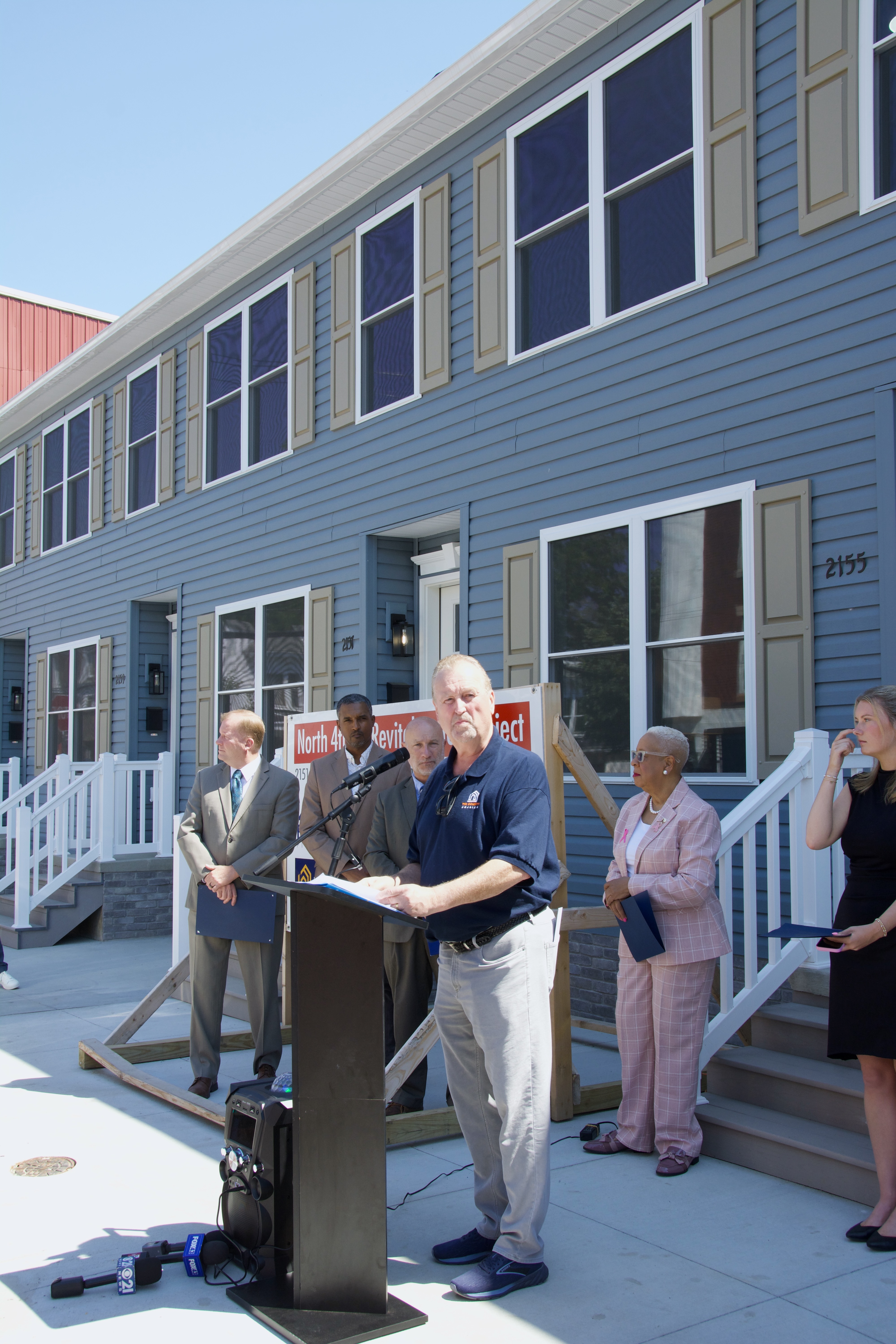
Tri-County Housing celebrates completion of Uptown affordable housing project

Gary Lenker, executive director of Tri-County Housing

Gary Lenker, executive director of Tri-County Housing in front of the Uptown project

Harrisburg is celebrating the addition of five new affordable housing units Uptown.

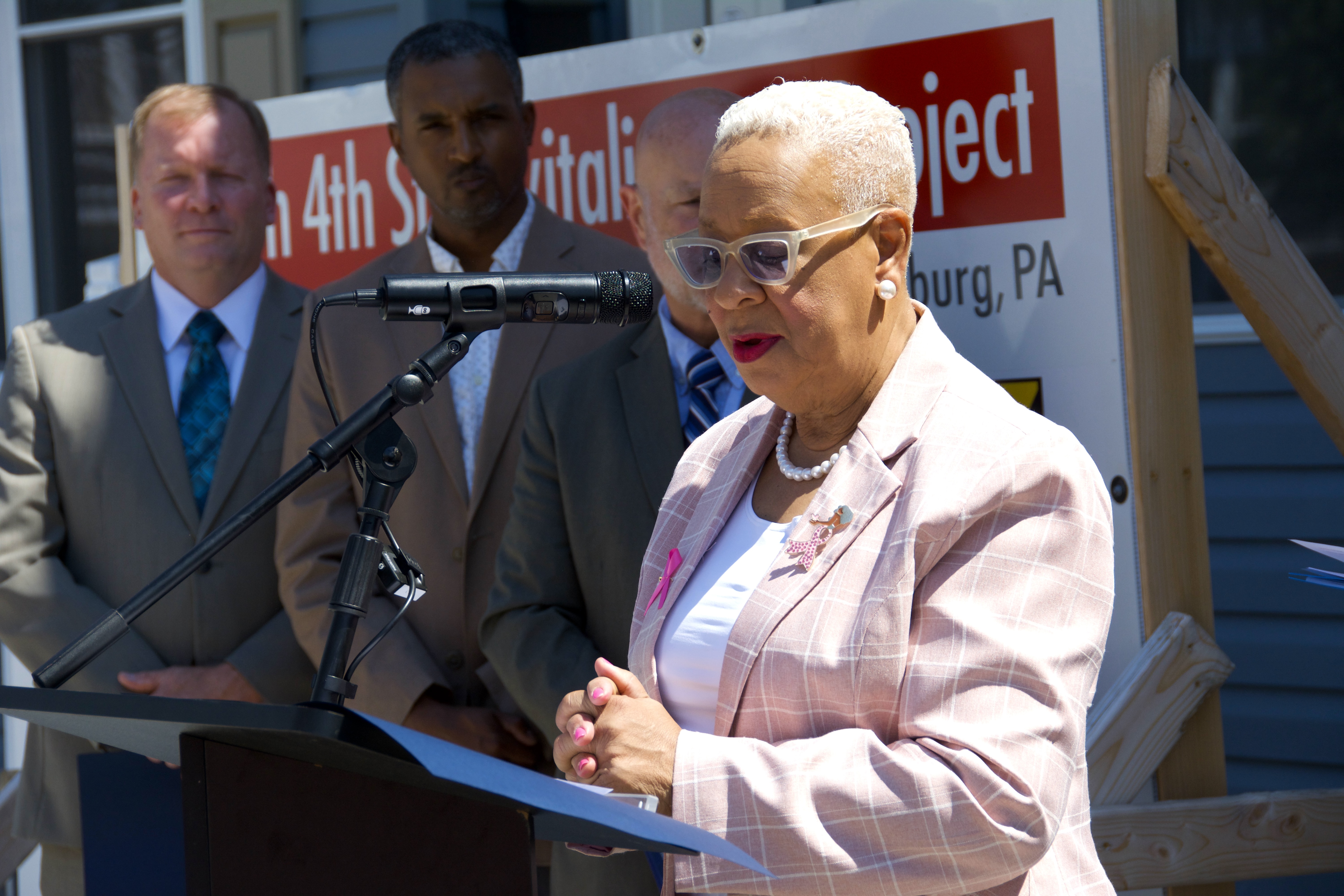
The nonprofit developer Tri-County Housing joined state, city and county representatives to cut the ribbon on five new affordable townhouses along the 2100 block of N. 4th Street Monday.

Gary Lenker, executive director of Tri-County Housing, the owner/developer of the project, thanked Mayor Wanda Williams for encouraging his organization to pursue affordable housing projects in Uptown. 

“This is our living proof we have delivered,” he said, of Tri-County’s first city project outside of South Allison Hill.       

The townhomes were built on vacant lots acquired from the Harrisburg Redevelopment Authority. Each has three bedrooms and one-and-a-half bathrooms. They will be sold to eligible low- to moderate-income homeowners, giving veterans a preference.

Williams spoke to the importance of such projects at the event.

“What we are celebrating may look like five town homes, but for five families, this represents something much greater,” she said. “It represents stability, dignity, and the opportunity to build a future here in the city of Harrisburg.”

Mayor Wanda Williams

Mayor Wanda Williams

Williams emphasized that housing remains one of her top priorities as mayor because she believes safe and affordable homeownership changes lives.

“It strengthens families, it stabilizes neighborhoods, and creates long-term investment in our communities,” Williams said.

The Federal Home Loan Bank (FHLB) Pittsburgh AHP Program provided a $750,000 grant for the project, which also received $400,000 in Pennsylvania Housing Affordability and Rehabilitation Enhancement funds from the PA Housing Finance Agency. 

The Pennsylvania Department of Community and Economic Development provided funds from the Neighborhood Assistance Program and a Keystone Communities Program Grant.

If you like what we do, please support our work. Become a Friend of TheBurg!

Continue Reading

Planning commission approves office-to-residential projects that would create over 100 new housing units in Harrisburg

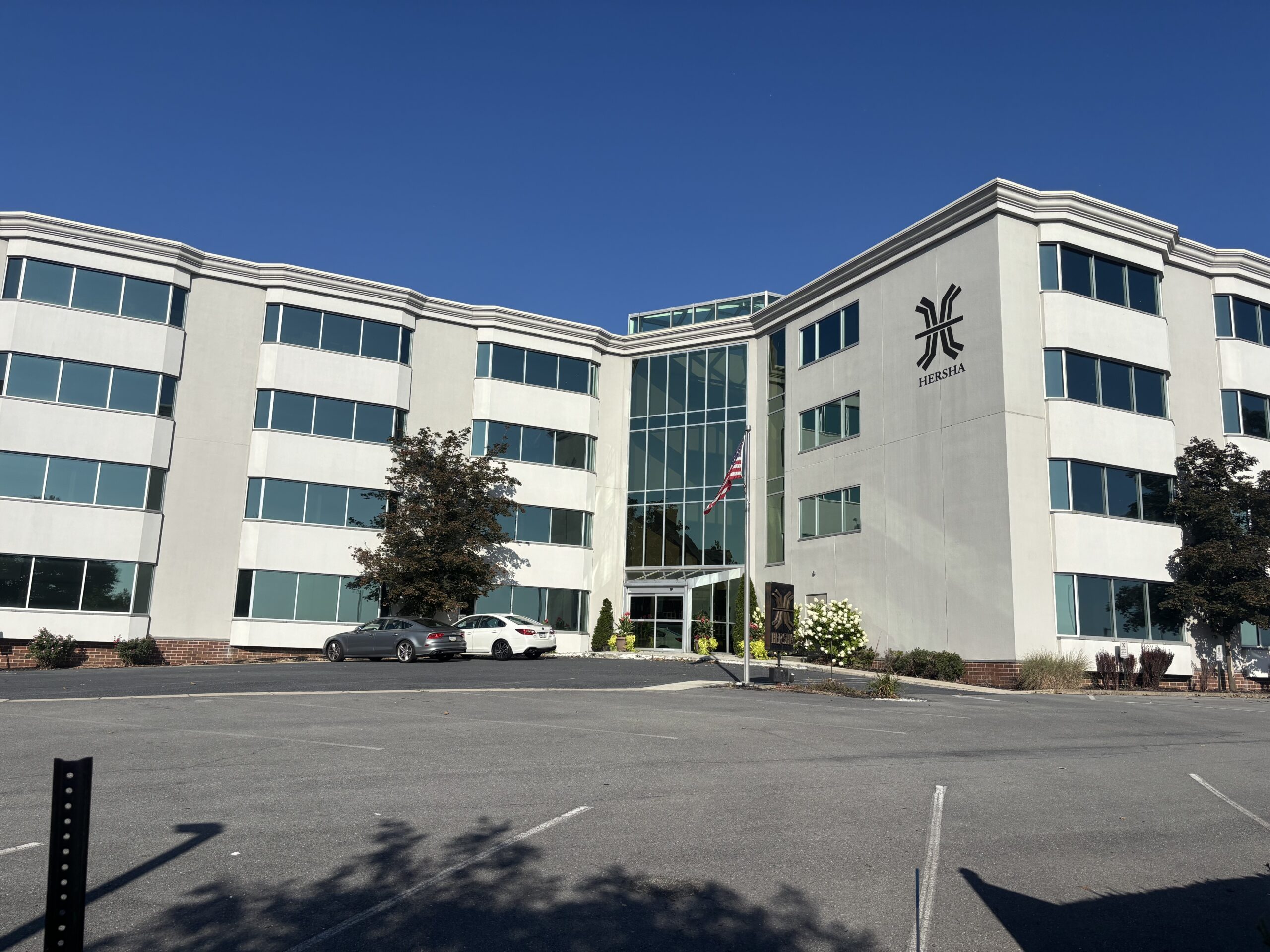
1909 N. Front St., the proposed site of an office-to-residential conversion.

Several new proposed projects would add around 150 apartment units to Harrisburg’s housing stock.

At a Harrisburg Planning Commission meeting on Wednesday, local developers presented proposals to repurpose former office buildings and a funeral home, as well as construct new housing.

Starting along the riverfront, Harrisburg-based WCI Partners proposed converting an office building at 1909 N. Front St. into 60 apartments. The building is currently occupied by Hersha Hospitality, but according to WCI, the company is downsizing and moving locations.

Under the proposal, WCI would create all one-bedroom units in the four-story, 58,832-square-foot building. There are also 71 off-street parking spaces.

The planning commission voted to recommend approval of the land development plan, as well as a special exception to allow a multifamily dwelling in the Riverfront zoning district.

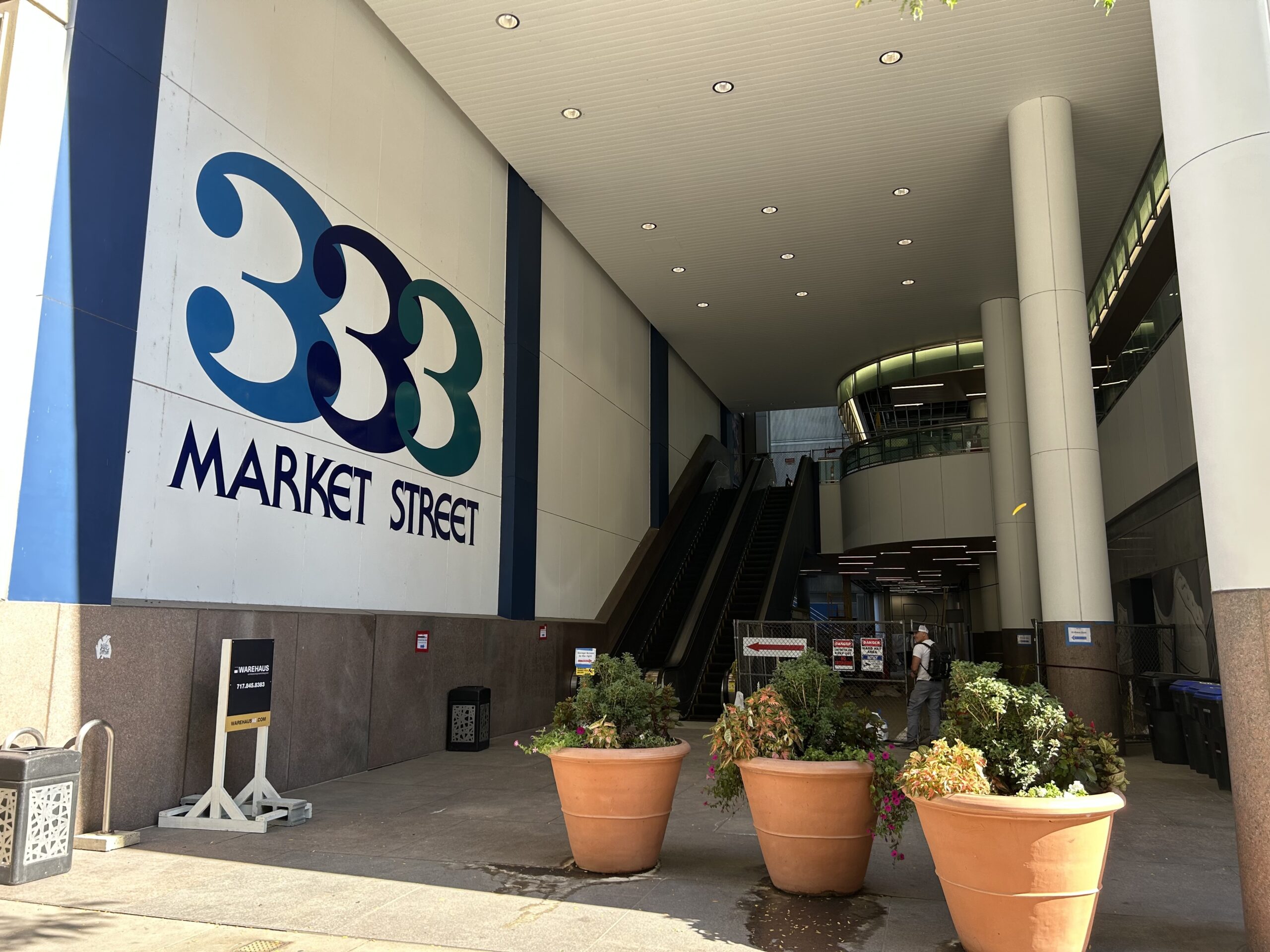
333 Market Street, the site of a proposed office-to-residential conversion.

In downtown Harrisburg, Harristown Development Corp. has proposed another office-to-residential conversion at 333 Market Street.

The 22-story building is the tallest in Harrisburg, according to the city, and, for years, has housed state government offices and commercial spaces. Currently, apparel store DTLR occupies ground level space on Market Street and a WGAL News 8 studio has a space at the corner of N. 4th Street and Blackberry Street.

The proposal includes renovating floors 11 through 19 of the building, currently vacant offices, into 81 apartments. Units would be one- and two-bedrooms ranging from 828 to 1,225 square feet.

The project would not include off-street parking, but the building is attached to the Chestnut Street Garage.

Approval for the project was granted by the commission.

On a smaller scale, developer Breneman Properties has proposed adding apartments to the building at 1332 N. 2nd St. The building currently includes five apartments and previously housed Neumyer Funeral Home on the first floor. Breneman would convert the former funeral space into eight additional apartments.

The planning commission recommended approval of a variance to allow the existing parking lot to be used commercially and spaces rented out, and a special exception to allow for more units than permitted by right, for the project.

Lastly, Handles Helping Hand Foundation has proposed consolidating five parcels at 1605 to 1613 Market St. and subdividing the land into four lots. The developer would then construct a three-story affordable townhome on each lot.

The project site is currently owned by the Harrisburg Redevelopment Authority. A small community garden used to operate onsite, but the lot has since become blighted.

The planning commission recommended approval of the land development plan, lot consolidation and subdivision. They also recommended approval of a variance and special exception for relief from lot width and off-street parking requirements.

All of the zoning issues mentioned above will now move to the Harrisburg Zoning Hearing Board for approval. The land development plans will head to City Council for final approval before the projects can start.

If you like what we do, please support our work. Become a Friend of TheBurg!   

Continue Reading

News Reviews: So, what happened in Harrisburg in 2024?

The herons flew in and out, riverfront festivals came and went, and another year passed by in Harrisburg, Pa.

Per tradition, January is the month for me to reflect on the biggest news stories in our fair city over the past calendar year. At first blush, 2024 seems like a quieter news year than most since I started this column, but let’s see what I can come up with.

10. Great Start
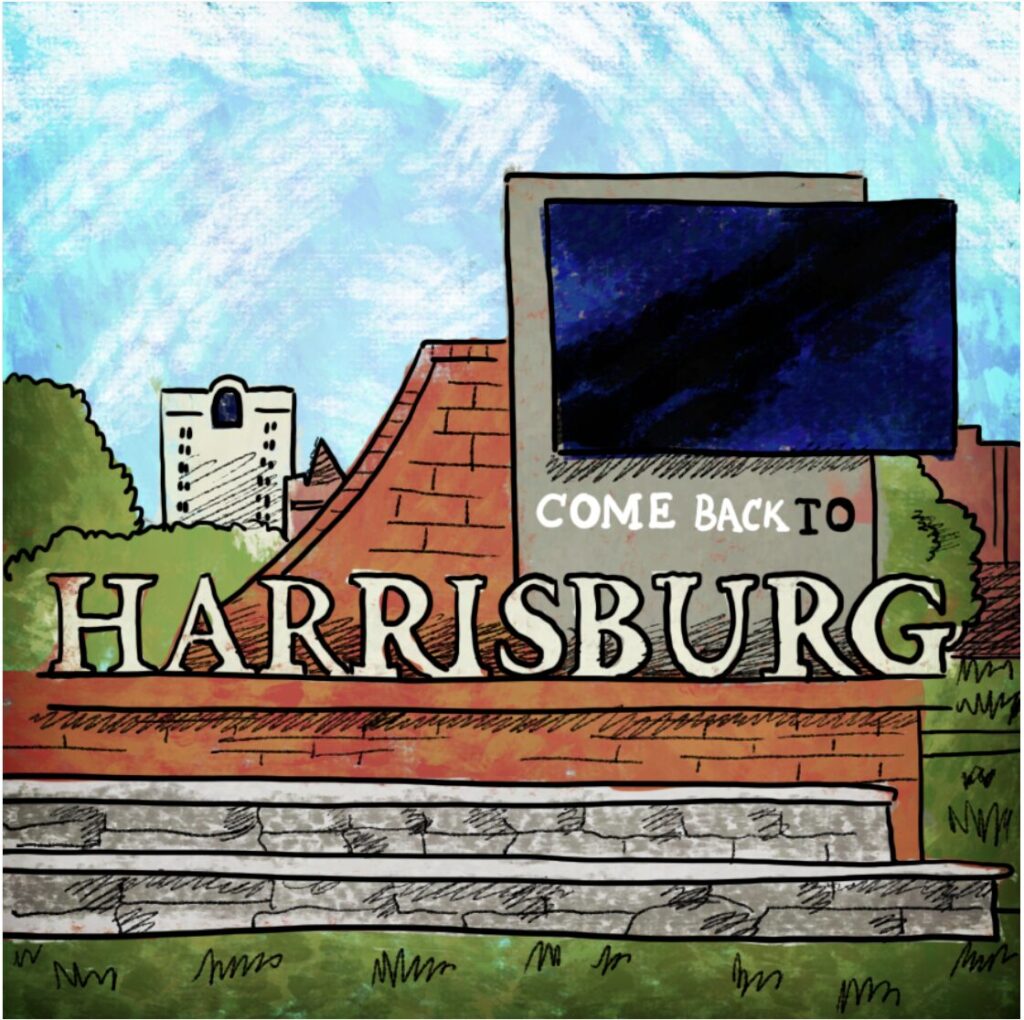
As in prior years, I like to begin this annual column with some good news before lowering the boom on readers. The debut of the Catherine Hershey School for Early Learning qualifies as very good news indeed. In September, the 47,000-square-foot school on N. 6th Street officially opened, providing city families with free childcare and instruction for preschoolers. The impressive facility also stands out among several new buildings helping to revitalize the long-empty N. 6th Street corridor into the city.

9. District Deals
In 2024, the Harrisburg School District made as much real estate as education news. Early in the year, the district’s receiver made a final decision to retain the shuttered, beloved William Penn High School, ending, at least for now, that dispute. A few months later, the district bought the former Eastgate Center for its new admin building. It also reconfigured several school buildings, sold land that once held the Woodward School, and restored and reopened Steele Elementary, capping a busy year for school properties.

8. Out the In Door
For over two years, the city’s top staff seemed pretty stable—until it wasn’t. In 2024, the city’s business administrator, finance director, engineer, communications director and building and housing director all left, most within a matter of weeks. Maybe this was a big deal, maybe it wasn’t, but it did leave residents scratching their heads. In October, the city announced it had hired a new business admin, ending a four-month vacancy for that critical post. However, as of early December, some of the other departments remained without permanent leadership.

7. Out with a Bang
Seemingly forever, fireworks have been a highlight of Harrisburg’s summertime riverfront festivals. Most passed peaceably, until recently. In July, for the second time in three years, word quickly spread of guns and gunshots amid the rockets’ boom and glare, leading people to flee mid-show. In both cases, police reported no actual shootings, but the public panic was quite real. In response, the mayor canceled the fireworks display planned for the Kipona festival, and, now, we’ll have to wait and see if the tradition revives for 2025.

6. Home Front
Harrisburg’s new housing is a tale of two markets. In recent years, many market-rate projects have been proposed, but little has been built, largely due to rising costs. In contrast, in 2024, numerous affordable housing projects, often aided by subsidies, credits and favorable terms, broke ground or cut ribbons. In my view, Harrisburg needs both quality market-rate and affordable housing—and lots of it. To serve everyone, the city should make new housing of all types a priority, helping to repeople a place that lost nearly half its population since the 1950s.

5. Help for Unhoused
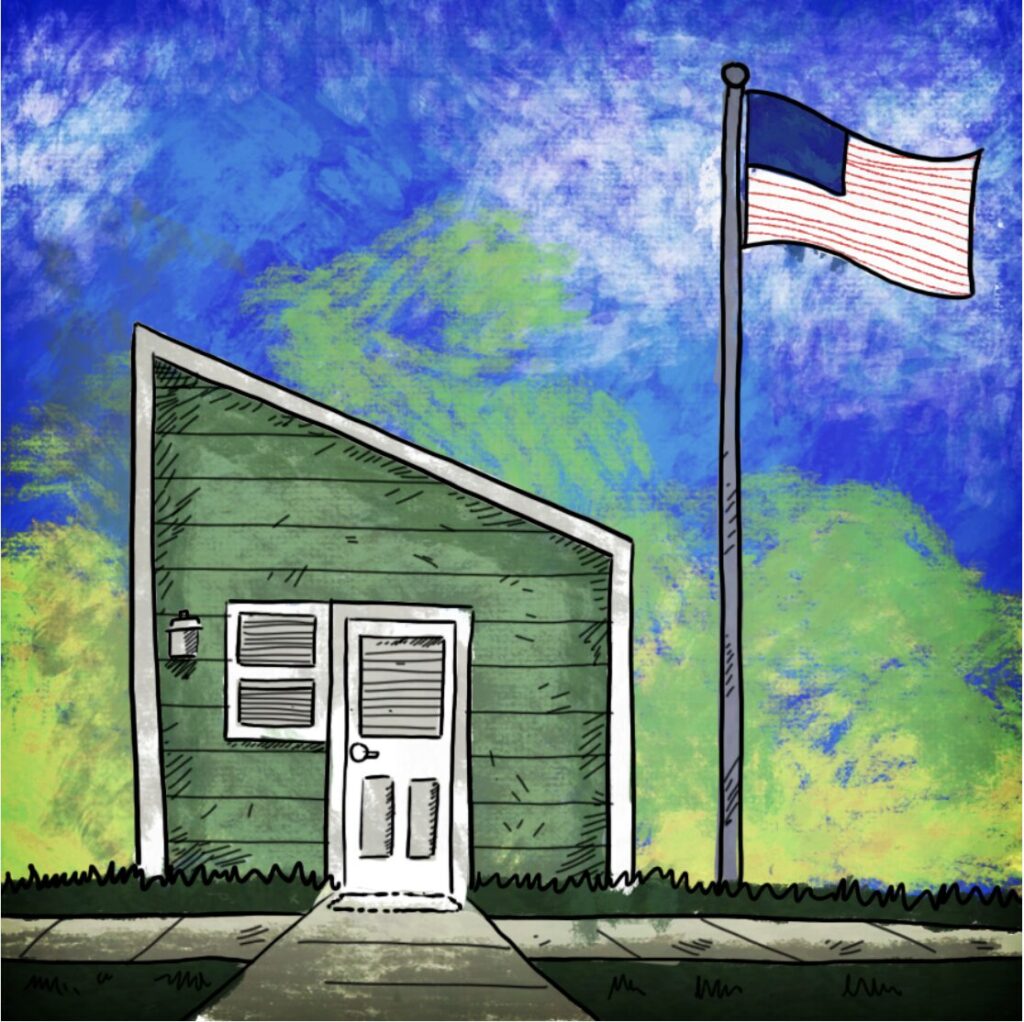
Harrisburg’s years-long homelessness crisis continued to make headlines in 2024, as the city cracked down on camping in public parks and then used federal funds to help expand capacity and services at two shelters. Meanwhile, in south Harrisburg, the long-anticipated Veterans Outreach of Pa.’s “tiny house” project opened its doors to homeless vets in the spring. Two other proposals, one for homeless veterans and the other for the general population, are planned for adjacent lots.

4. Governor’s Slog
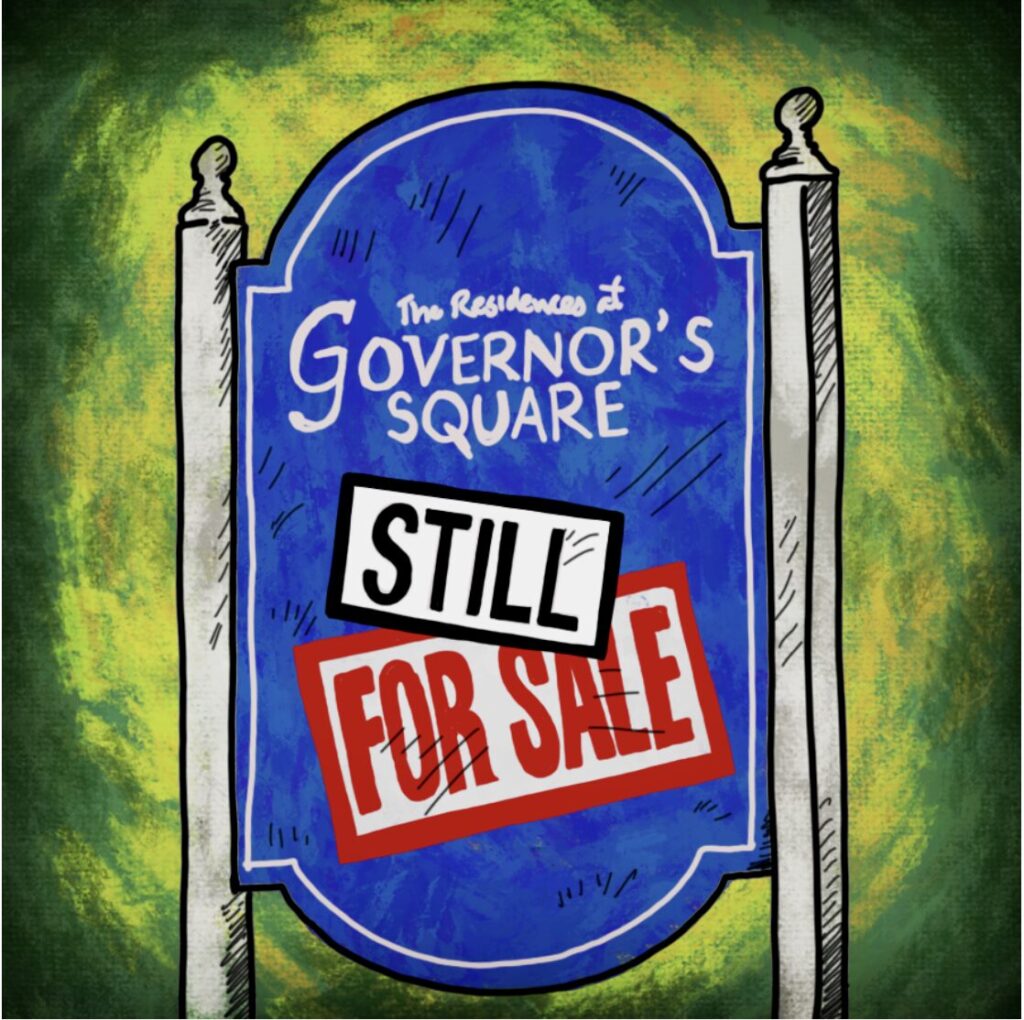
Speaking of housing, Governor’s Square slogged through another year with only scant signs of progress. The beleaguered, 200-unit affordable housing project continued to fall apart and empty out as lawyers butted heads in bankruptcy court. I won’t detail all the excruciating, frustrating legalities of the past year except to say that, as of this writing, the sprawling complex seems headed for receivership. A court-appointed receiver then would try to do what the parties have failed to do: oversee what’s left of Governor’s Square and ultimately find a buyer.

3. Trail Nix
In recent years, three different nonprofits have proposed housing projects for homeless individuals, especially veterans, in south Harrisburg. That land, though, long has had another use, accommodating a portion of the Capital Area Greenbelt, Harrisburg’s popular biking/hiking/running trail. Following a prolonged dispute among the city, developers and the landowner, the Greenbelt Association agreed to try to reroute the trail, estimating the effort could take three years and cost $3 million. In the meantime, the trail segment has been diverted onto busy city streets.

2. State Fate
Some news stories break suddenly, others creep up on you. The fate of Harrisburg, post-pandemic, falls into the latter category. In 2024, folks finally seemed willing to admit the painfully obvious—that the vast state workforce would never return to pre-COVID levels, with predictably harsh impacts on downtown businesses, commercial real estate and the city budget. Downtown, especially, needs to begin moving onto whatever comes next, helped, I hope, by some bold leadership and a plan from city hall.

1. Market Matters
In 2023, the Broad Street Market fire was, without question, the No. 1 news story on my annual list. For 2024, the market again notches the top spot. This time, it wasn’t the fire itself, but the continuing fallout—from the painfully slow tent opening to the painfully slow market restoration. Along the way, we were subjected to a political fight over the construction manager, a political fight over the emergency declaration, and the arrest of the market’s former director. Good times. Like last year, I give the most credit to the Harrisburg community for its support, advocacy and unity in saving our beloved, historic market.

So, there you have it—my top 10 city news stories of 2024. Here, I’ll insert my usual disclaimer that this is just one man’s view, along with my usual lament that another year has passed with little sign of our elusive Harrisburg beaver. Sigh.

Looking ahead, what might be in store for 2025? Well, we have a new, unpredictable administration in D.C., mayor/council elections in Harrisburg and likely more fallout from the commonwealth’s pullback from its capital city.

As they say, buckle up—it’s going to be a bumpy ride.

Lawrance Binda is publisher/editor of TheBurg.
Illustrations by Rich Hauck. 

If you like what we do, please support our work. Become a Friend of TheBurg!

Continue Reading

Harrisburg Housing Authority recognizes demand for housing as it prepares to open Section 8 waiting list

The Harrisburg Housing Authority leasing office

For those with housing needs, the Harrisburg Housing Authority (HHA) will soon reopen its financial assistance program.

The authority announced that on March 29 and 30, it will accept new applicants to the waiting list for its housing choice voucher, or Section 8, program for the first time in about two years.

According to Oche Bridgeford, director of communications and compliance for HHA, it has taken that long to work through the entire previous waiting list, as the agency typically receives thousands of applicants during each application period.

It’s hard to know how many people will apply this time around, but Bridgeford expects the need will meet or exceed last year’s demand, especially considering the effects of COVID and a hot housing market.

“The hunger for housing is as intense as it’s ever been,” he said.

According to Bridgeford, the authority will select 1,500 applicants to enter the waiting list. From there, vouchers will be awarded to applicants using a lottery system. Those who apply quickly and are eligible may receive a voucher within several weeks, but others may wait up to two years.

“We are working to make sure the process is smooth and to make sure as many people that are in need can apply,” Bridgeford said.

The authority has 1,500 vouchers in total, including those that are already assigned. Currently, the authority has 1,240 residents housed with vouchers.

With a voucher, a tenant is responsible to pay up to 30% of their income for rent and utilities.

Once a resident receives a voucher, they have 60 days to find housing before it expires. They may request a 30-day extension. However, if housing isn’t found, their voucher will be withdrawn.

While the authority helps to point residents in the right direction when it comes to finding housing, Bridgeford described a rental market lacking in affordable housing options and landlords willing to accept vouchers.

“There is a limited amount of affordable housing, especially for the Section 8 program,” he said. “Someone could get a voucher and not be able to find housing.”

The authority recently launched a program to address this issue, offering sign-on and retention bonuses for landlords who decide to accept vouchers.

The program is still too new for the authority to tell if it’s getting more landlords on board, but Bridgeford is hopeful.

“One of our biggest issues is finding quality properties and partners,” he said. “We are always trying to increase that.”

HHA will accept applications for its Housing Choice Voucher program beginning on Wednesday at 8 a.m. and closing on Thursday at 3 p.m. Applications must be submitted via the authority’s website. Paper applications will not be accepted.

For those without internet access, the following nonprofit partners will provide access to computers and assistance:

  • Tri County Community Action, 1514 Derry St., Harrisburg, bilingual assistance available, 10 a.m. to 3 p.m. each day
  • Latino Hispanic American Community Center (LHACC), 1319 Derry St., Harrisburg, bilingual assistance available, 9 a.m. to 3 p.m. each day
  • YWCA of Greater of Harrisburg, 1101 Market St., Harrisburg, 9 a.m. to 3 p.m. each day

The Harrisburg Housing Authority’s leasing office is located at 916 S. 14th St., Harrisburg. For more information on the Housing Choice Voucher Program, visit their website.


If you like what we do, please support our work. Become a Friend of TheBurg! 


Continue Reading

Harrisburg City Council weighs possible recipients of federal housing, social service funds

Harrisburg City Council at a work session on Tuesday

Numerous local nonprofits may receive federal funds to help support their efforts to house and provide services to residents.

Harrisburg City Council on Tuesday night discussed the allocation and possible recipients of annual federal funds from the U.S. Department of Housing and Urban Development.

The city heard from over 20 applicants for Emergency Solutions Grant (ESG) funds and Community Development Block Grant (CDBG) program funds for the 2022 fiscal year.

Possible recipients for the ESG funds include:

  • Capital Area Coalition on Homelessness- $25,000
  • Salvation Army- $25,416
  • Christian Churches United of the Tri County Area- $29,642
  • Shalom House- $25,416
  • YWCA Greater Harrisburg- $25,416
  • Tears for Tarina- $25,416

An additional $12,673 would go towards grant administration.

The CDBG funds include two categories of projects—public service activities and housing and community development activities.

Possible recipients of the CDBG funds for public service activities include:

  • Harrisburg Fair Housing- $10,000
  • LHACC- $25,000
  • LGBT Center of Central PA- $40,000
  • Amiracle4sure- $20,000
  • CEO- $25,000
  • Habitat for Humanity- $20,000
  • PAIRWN- $20,000
  • Evolve Trades Academy- $40,000
  • The Worship Academy- $19,000
  • Trinity Church- $40,000
  • AJB Drug & Alcohol- $28,004

Possible recipients of the CDBG funds for housing and community development activities include:

  • Boys & Girls Club- $26,517
  • Planned Parenthood- $26,517
  • The Program, It’s About Change
  • Salvation Army- $26,517
  • Wildheart Ministries- $26,517
  • Brethren Housing Association- $26,517
  • Tears for Tarina- $26,517

Additionally, $250,002 in CDBG funds would be allocated to the city for public improvement/public facilities, $359,066 would go to the city’s housing programs and $224,000 would be used for demolition. Another $382,672 would be used for CDBG administration and $240,000 would go towards debt service.

For years, Harrisburg has been allocating CDBG funds to service debt on a federal loan that the city guaranteed many years ago, under former Mayor Steve Reed, for the failed Capitol View Commerce Center project on Cameron Street. The city is currently on track to pay off the remaining debt by August 2026.

Council will likely vote on the allocations at their next legislative session.


If you like what we do, please support our work. Become a Friend of TheBurg! 

Continue Reading

Haze Phase: Harrisburg, I’m ready to get defogged

From where I sit, this young year looks hazy.

I suppose that it’s always tough to forecast the future, at least this side of Madam Marie (a bone tossed to you Springsteen fans).

But, in Harrisburg, 2023 seems hazier than usual, with several major matters in flux. These are important issues that I expect will develop over the course of the year, so that we should, I hope, have greater clarity come year-end.

First of all, I expect that we’ll have a better understanding of the commonwealth’s back-to-the-office plan. As we all know, “normal” life got tossed to the winds with the onset of the pandemic and, three years later, still hasn’t settled completely.

For Harrisburg, that’s meant two opposing things.

On the positive side, some people have migrated in, often choosing the city as a lower-cost option for urban living for their new work-from-home lifestyles. On the flip side, the same trend has bitten the city hard, as the state’s small army of office workers has largely toiled from home, which, more often than not, has meant staying in the suburbs.

Former Gov. Tom Wolf left this important issue hanging as he left office and, as of this writing, it’s remained unresolved. To me, it’s clear that state workers will never again return to five-days-a-week in the office—but just how many days, how many hours?

With this knowledge, Harrisburg can begin to plan. The ultimate answer may be acceptable or it may be awful, but, at the very least, city government, businesses, developers, residents, etc., will know where they stand and, with that knowledge, be able to forge ahead. I hold the opinion that the city’s future will look quite different from its recent past.

Building on that theme, my second “hazy” issue involves the city’s housing situation. As I write this column, both affordable and market-rate housing proposals are in flux.

On the affordable side, we await details of the city’s plan, as it has pledged to deploy a large chunk of American Rescue Plan Act money to the cause. On the market-rate side, we wait to see if any of the many proposals for new apartments and townhomes will break ground in 2023.

The former is an easy call. We almost certainly will learn the city’s vision for providing much-needed affordable housing this year. I’m eager to see how the administration and City Council approach it, as there are numerous possible paths forward.

The latter is much tougher. Building proposals, many already approved, dot the city, touching almost every neighborhood. The Reily Street corridor, in particular, is thick with them, with developers apparently understanding that there’s demand for quality rental housing in Harrisburg.

Few of these projects, though, have broken ground, mostly due to rising interest rates and escalating construction costs. Several seem to be in jeopardy of not happening at all.

In the financial world, there’s an old saying, credited to super-investor Warren Buffet, which says, “Only when the tide goes out do you discover who was swimming naked.”

By year-end, I anticipate that we’ll have a much better understanding of who was prepared for tougher times and who was wearing nothing but a smile.

Lastly, by the end of 2023, I hope we’ll have a better understanding of how serious the city and the state are in addressing Harrisburg’s dangerous road system. The city’s street network was built out in the 19th century for pedestrians, horses and the occasional streetcar. It then was widened and expanded to accommodate cars and trucks, to the exclusion of other methods of mobility.

Like many cities, Harrisburg has now entered a new stage, a multimodal one.

In this phase, vehicles aren’t the only things on the city’s streets. They compete for space with pedestrians, pedal bicycles, e-bikes, scooters and however else we’ll move around for the next century or so.

We’re already witnessing a clash of modalities, as we sit (and drive and walk and ride) stuck between the old and the new.

We’re at an inflection point, where the old ways have begun to fade but the new ways haven’t been fully embraced—or even realized by some. For evidence, look no further than the shocking rate of pedestrian and bicycle accidents and fatalities on city streets.

To their credit, PennDOT and the city have taken some measures to address our changing transportation needs, such as the 2nd Street project and improvements on some state-owned roads, but there’s much more work to do.

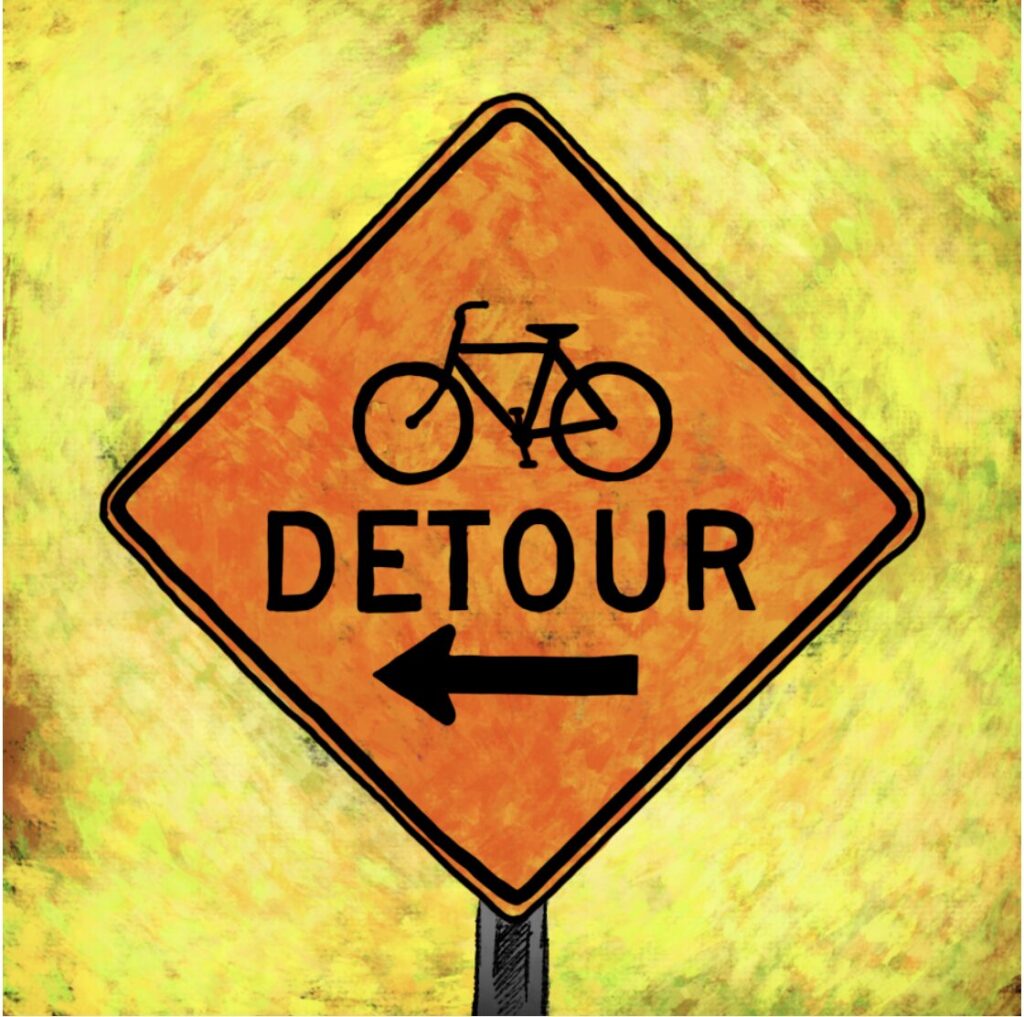
To me, there is some low-hanging fruit: slimming down Forster, slowing down Front and fixing the rest of 2nd. And in retrospect, removing bike lanes from the State Street project seems shortsighted. In fact, we need more bike lanes, not fewer, on more roads in Harrisburg.

Eleven months from now, will I be un-hazed? Will these three issues seem any clearer to me? My bet is “yes,” though my total defogging is likely to extend far beyond 2023.

Lawrance Binda is publisher/editor of TheBurg.

If you like what we do, please support our work. Become a Friend of TheBurg!

Continue Reading

Unfair Housing: Affordable, decent housing comes at great cost to Governor’s Square residents caught in a maintenance, ownership struggle

Britni Lowe walks into her condemned apartment in Governor’s Square. Photo by Dani Fresh.

Three-year-old Stevie bounces around his great grandmother’s small apartment. A kid’s show plays on the television in the living room, but he has no attention for it. Instead, Stevie reaches for the light switch, his small finger flicking it off-on-off-on.

“Stop it, Stevie!” his great grandmother scolds, her phone pressed to her ear. She continues her conversation.

Stevie wanders the apartment and climbs onto an armchair.

Britni Lowe, Stevie’s mom, is unfazed by the distractions. She calmly attends to her son while recounting the recent housing trouble she’s faced.

For six years, Lowe has lived in her one-bedroom apartment on Forrest Street in Harrisburg, only a quick walk from her grandmother Faith’s apartment.

Her apartment is one of over 200 rental units within Governor’s Square Apartments, which includes affordable multi- and single-family properties in the Camp Curtin neighborhood.

While Lowe was happy to have a place of her own, problems with her unit began early on, she said. Over the years, she’s had issues with rodents, leaky windows and cracking along the walls. She’s found mold in the vents, holes in the ceiling caused by nosy squirrels and bricks coming loose on the exterior of the building. Lowe has done whatever maintenance she could on her own, setting out mousetraps and spraying for bugs. But, on the whole, she explained, most of her maintenance requests to the property management went unanswered.

“You become unhappy when your home doesn’t feel happy,” she said. “It makes you feel like you don’t matter here. This has taken a toll on my mental health.”

The trouble with her home reached a peak in August when Lowe came home to a “Condemned” notice affixed to her door. It stated that her building, which includes her apartment and one other, was “found to be unsafe due to damage, decay, dilapidation.” The city’s evaluation form also said that it was “a blight to the neighborhood, a hazard to public health and safety.” She had 60 days to leave the property, it stated.

“I’m in there with my baby,” Lowe said. “I felt hopeless.”

Later that month, Lowe attended a town hall event for residents of Governor’s Square, put on by the Camp Curtin Neighborhoods United group. She stood in the back, Stevie in tow, and voiced her concerns over her living conditions with a room full of other residents with stories like hers.
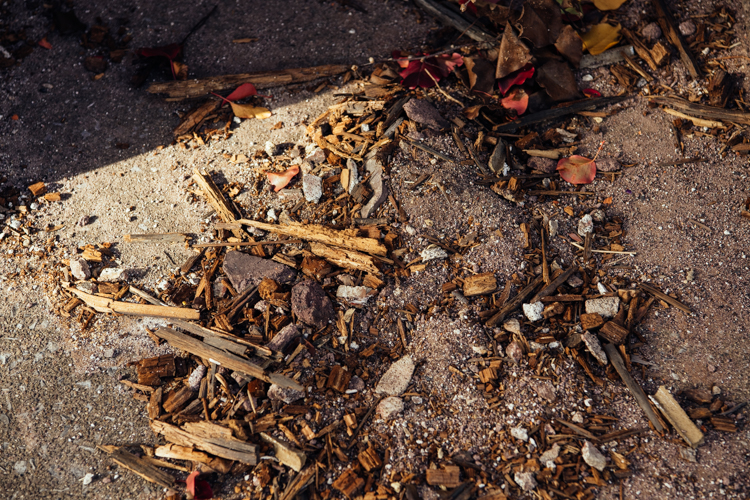
One of many piles of debris found outside a condemned apartment. Photo by Dani Fresh.

The Meetings

On a Wednesday and subsequent Thursday night, residents of Governor’s Square Apartments filed into the lobby of the PA Fair Housing Council on the corner of N. 5th and Maclay streets. Camp Curtin Neighborhoods United President Laura Harding opened the meeting from a podium, stressing the importance of a solutions-based discussion.

Not only had the meeting drawn the attention of tenants, but of several local officials who joined, including Harrisburg Mayor Wanda Williams, City Council President Danielle Bowers and other members of council, state Rep. Patty Kim (D-103) and Magisterial District Judge Sonya McKnight. Representatives from the Pennsylvania Housing Finance Agency (PHFA) and Dauphin County attended, as well.

Comments from residents moved from specific complaints about their apartments to questions about how to withhold rent until issues are addressed. In Lowe’s case, she had urgent questions about where she was supposed to go now. With a shaky, yet firm, voice, she made her case.

However, there was a general air of confusion at the meetings. How did things get to this point? Whose responsibility was it to fix these problems? What’s going to happen next? Questions like these went unanswered, or at least, were left unclear. Even many of the officials in the room were uncertain of the details.

But what wasn’t foggy was that code citations on the properties were stacking up against Governor’s Square. According to Anne Montgomery, director of Harrisburg’s Bureau of Codes, the city has been to court with Governor’s Square “many times” over code citations that weren’t brought into compliance. At the time, Williams said that there were over 100 code citations for the properties. As of late September, the city also had condemned seven Governor’s Square properties, meaning they are structurally unsound, and placarded another 17, which means they are deemed non-habitable.

According to Williams, she’s been hearing of the issues at Governor’s Square for around two years, though some residents say their problems started even earlier.

Early this past summer, Rhonda Mays of the Fair Housing Council of the Capital Region started noticing an uptick in people requesting assistance with issues at Governor’s Square.

“They had a terrible problem with their units being habitable,” she said. “It wasn’t just little things. It was big things.”

When the organization starts seeing a pattern like this, they keep a file to document the complaints. From there, they try to advise tenants on things that could help, such as putting their complaints in writing and making sure property management gets them. Withholding a portion of their rent is another option—although an unpopular one—for tenants. But according to Mays, there’s not a lot that can be done.

“There’s not a whole lot that we can tell the tenants,” Mays admitted. “It’s a matter of waiting out the process.”

There were all those officials and agencies in the Fair Housing lobby during the tenant meetings, but there wasn’t much they could do.

The entity that certainly could do something—the owner—wasn’t there.

Photo by Dani Fresh

Intervention

In the late 1990s, the U.S. Department of Housing and Urban Development (HUD) foreclosed on a large swath of apartments that it held mortgages on, formerly the Maclay Street Apartments. Instead of auctioning the properties off, they were transferred to the city in 2003, and the Harrisburg Redevelopment Authority (HRA) took the title.

Harrisburg then issued a request for proposals and selected Maryland-based Landex Development to obtain and renovate the 222 rental units known as the “Residences.” The company also would later construct and obtain dozens more properties, call the “Towns.” Landex formed Uptown Partners LP to be the managing limited partner.

To help offset the cost of building affordable housing, HUD awarded the project an “Upfront” federal grant of about $10 million for renovations. Additional funding was obtained through PHFA low income housing tax credits, among other contributions. Landex completed the project in 2012.

Along with the funds came restrictive covenants, requiring the property to remain affordable for 30 years, until 2034.

“They were excited to work with us and built a high-quality project,” said Bryan Davis, director of the Harrisburg Redevelopment Authority. “It was such a huge, positive impact.”

But, these days, Davis was feeling differently about how things were going at Governor’s Square, saying that HRA is “very disappointed in the existing owner.”

In a statement, Uptown Partners acknowledged the issue, saying that they “understand and appreciate the concerns about maintenance issues and the need for capital improvements at the property.”

“We are prioritizing the most important needs and working hard to resolve them as soon as possible,” the company stated.

However, in its statement, the company added that the cost of services, such as water, trash pickup and maintenance, has far outweighed the revenue received in rent. The company claimed that, due to the pandemic, residents “suffered severe financial hardship” and therefore still owe a significant amount of back rent. The statement also noted unexpected costs from chronic illegal trash dumping on the property, among other issues.

“This property is more than 50 years old and was last renovated 15 years ago,” Uptown Partners said in its statement. “We recognize that a significant intervention and a sizable investment are needed to address the residents’ needs.”

Also in the statement, the company noted trying to work with the city regarding the sale of the property. According to Davis, during the pandemic, Uptown Partners put Governor’s Square up for sale, but received no interest from buyers.

Stephen Schuback. Photo by Dani Fresh.

However, within the past year, one interested party has come forth.

Stephen Schuback is a Harrisburg native who has had his eye on Governor’s Square, and he will tell you frankly that he saw it as a good business investment. It was the potential for money-making that brought him back to the city from his home in South Carolina. But as he began interacting with residents, he knew he wanted to help them, he said.

“You’re all important to me,” Schuback assured residents at the first of the two Governor’s Square tenant meetings. “I have the experience to pull this off. Nobody’s going to want to leave if I take over.”

Uptown Partners said that they have an agreement to sell the property to a private group, but would not confirm that Schuback is that “private group.” However, Schuback told TheBurg multiple times that he has a contract with the owner to take over the 222 rental units. Additionally, Davis of the Harrisburg Redevelopment Authority confirmed that they have not had any other serious interest in the property.

Schuback’s resume notes his experience in affordable and market-rate housing development, including a renovation project for an affordable housing development in Akron, Ohio. That one was similar to what’s happening at Governor’s Square, he said.

But returning to Harrisburg holds a different meaning for him.

While his younger years in the city were fraught with drug dealing and other criminal behavior, landing him prison time, Schuback said that, with this project, he hopes to change the way his name is remembered.

“I’d like people to remember me for something more than what I did as a kid,” he said. “I want them to know my family cared about the community.”


When Someone Cares

Debbie M. Taylor, is another tenant who, like Britni Lowe, has struggled with maintenance issues for several years.

Taylor, a 67-year-old Harrisburg native, is known as “Gigi” or “the gorgeous granny” around her Governor’s Square neighborhood. She’s friends with her neighbors, especially the ladies in her apartment building, which includes another Debbie Taylor who lives above her. She makes brownies and finger Jello for the neighborhood kids and is friendly with the maintenance men who walk by, calling one “Papa Smurf” for his white beard and asking another if he likes her red-painted toenails.

Taylor loves the people she lives near, but, when it comes to the condition of her apartment, she said that the past two years have “sucked.”

Her screen window was broken for almost a year, and the hallway in her building was never clean. She and the other ladies would regularly scrub it themselves. The grass and landscaping weren’t maintained, and the playground across the parking lot used to look like a jungle, she said.

But recently, things have started to improve, she explained.

Schuback, while still pursuing purchasing Governor’s Square, has, in the meantime, taken to fixing up residents’ units. He has a contract with the owners, he said, to repair and answer maintenance requests on the property. Many residents who had long-unaddressed maintenance issues started to see change.
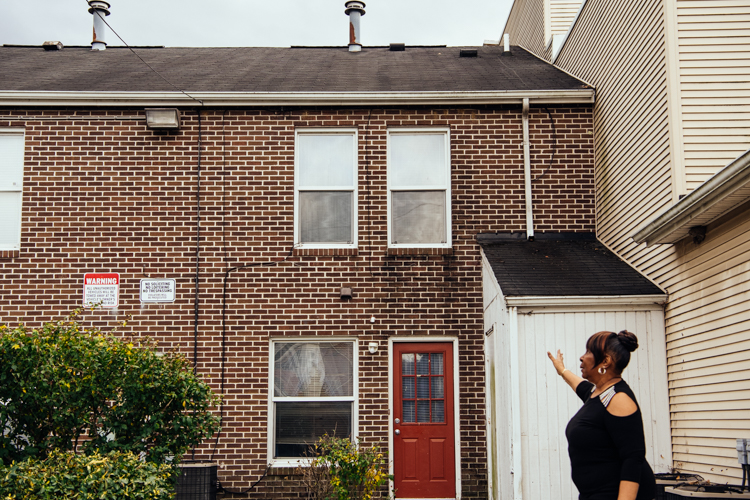
Linda Manigualt gestures up to her gutters that have been cleaned and repaired recently. Photo by Dani Fresh.

While Uptown Partners wouldn’t confirm that they contracted Schuback to do the work, they said in a statement that, “a number of resources have been engaged to make repairs at the property. We’re pleased with the progress that’s being made. The health and safety of the residents are our top priorities.”

“Since Steve’s been here, everything’s getting better,” Taylor said. “He cares. It’s a different feeling when someone cares.”

According to Schuback, he’s doing the work for free, while the owners pay for supplies.

He has also helped Lowe, who soon will move into another Governor’s Square apartment and out of the condemned building, he said. She’s excited that Stevie will have his own room in the new place.

“I’ll be happy to get us out of here,” Lowe said.

Schuback is confident that the work he is doing will show the city that he is capable of and serious about taking over and renovating Governor’s Square.

While Schuback said that he already has an agreement to purchase Governor’s Square from Uptown Partners, there are approvals he must get to actually obtain the properties.

Because of the HUD Upfront grant that was given to the owners to develop the property back in the earlier 2000s, Uptown Partners and Schuback must get approval of the sale from HUD.

According to the HRA’s Davis, this grant functions more like a loan, which eventually will need to be paid back or forgiven by HUD. If someone wants to purchase Governor’s Square, however, that grant/loan needs HUD approval to be transferred to a new owner. In order to request that transfer, Schuback was required to submit a financial, construction and management plan, among other details, about his proposal for Governor’s Square. He sent that plan in August to HRA, which functions as a conduit for the loan between HUD and Governor’s Square.

If approved by HUD, Schuback would take on $8.8 million in debt from the HUD grant for the majority of Governor’s Square properties—the 222 units.

Davis said that Schuback’s plan is still under review.

Although Harrisburg officials have repeatedly said that the city doesn’t have authority over what happens with the property, the administration has had things to say about the project.

According to Harrisburg Communications Director Matt Maisel, “[Schuback] is nowhere near where he needs to be financially to acquire the property.”

Schuback has proposed a $12 million renovation, estimating that each unit will require about a $56,000 upgrade. However, that budget is a little under half of what the city and HRA claim is needed. A building assessment report ordered by the Harrisburg Housing Authority in 2021 found that $22.5 million was needed to renovate Governor’s Square.

“Whether or not he truly wants to do good by the residents there is entirely separate of whether he can,” Maisel added.

He said that Schuback would not be acquiring the property any time in the near future.

On the other hand, Schuback feels confident in his estimated renovation costs.

“I’m good at what I do; it shows in my work,” he said. “I didn’t think I was going to get this resistance. At the end of the day, I’m going to get what I want.”

HUD Regional Public Affairs representative Sean Callahan said that the department has not received a package with information about a proposed sale from Uptown Partners, something that is required for HUD review. To be approved for the acquisition, a new owner would need to show that they have the capacity to manage the property, Callahan said.

“It does not appear the prospective owner has demonstrated capacity,” he said.

In October, Schuback received notice from the city that he was missing building permits for work he was doing on properties at Governor’s Square. He refuted that he needed them for the repairs he was doing.

“I’m used to getting what I want,” Schuback said. “But I’m starting to lose my patience. At some point, I’ve got to realize that this is futile.”

Schuback said that he has tried to meet with city officials to discuss issues like these, to no avail. Maisel said the city has reached out to him to meet, also unsuccessfully.

Linda Manigault stands out front of her home. Photo by Dani Fresh.

Waiting Game

Back over on Forrest Street, Governor’s Square resident Linda Manigault has accrued a list of maintenance requests sitting largely untouched for two years. Trash piled up behind her apartment, duct tape covered the gaps in her back door frame, area rugs hid the stained, aging carpet and, most recently, a mouse in her kitchen had her running for higher ground upstairs.

She’s thought about moving, but the low rent price has kept her around for years. There’s no way she could find something this cheap, she said.

Manigault’s dream is to move to Georgia. She’s been saving her money. But she knows the housing market isn’t in her favor right now—especially not for affordable housing.

“If I have to wait, at least I want to be comfortable here,” she said.

That’s the unfortunate reality that many low-income residents are living in. Affordable housing is in short supply, and demand for it is high. It’s a reality that’s left residents like Manigault stuck, without options.

“It’s not good,” said Leah Eppinger, executive director of Dauphin County’s housing authority. “There is a large shortage of units and a large population in need.”

The county’s housing authority doesn’t do work in Harrisburg city, which falls to the Harrisburg Housing Authority, which didn’t return calls for comment. But Eppinger’s outlook on the state of the market applies widely, as housing shortages are a nationwide problem.

According to Eppinger, around 3,000 households are on their waiting list for public housing, and their Section 8 housing choice voucher program has been closed to new applicants since 2009 while they’ve worked through that list.

For a family trying to find affordable housing right now, “it’s probably impossible,” she said.

Like many residents, Britni Lowe has thought about moving out of Governor’s Square. She has searched online for other apartments, but has struggled to find affordable options. When she has, they’re often owned by out-of-town landlords, which makes her nervous. Like others who have come to the same conclusions, Lowe has stayed put.

The sentiment around Governor’s Square has improved as Schuback has made upgrades to apartments, cut the grass and cleaned up illegal dumping hotspots, giving residents a sense of hope. But as discussions continue in the offices of city and state officials, the question of what happens next remains.

In the meantime, Governor’s Square families are left stuck in the middle, waiting on an answer.

It’s mid-October, and it’s been over 60 days since the condemnation notice. But Governor’s Square still hasn’t moved Lowe, although Schuback has made some repairs to her building and said he plans to move her to the new apartment soon.

Lowe’s hope is tempered with realism, because she knows that things could change on a whim.

“I’m gonna roll with whatever comes my way because I don’t have no other choice,” Lowe said. “Life is unpredictable.”


If you like what we do, please support our work. Become a Friend of TheBurg!

 

Continue Reading

Harrisburg nears end of rent relief program, has funds for a few more applicants

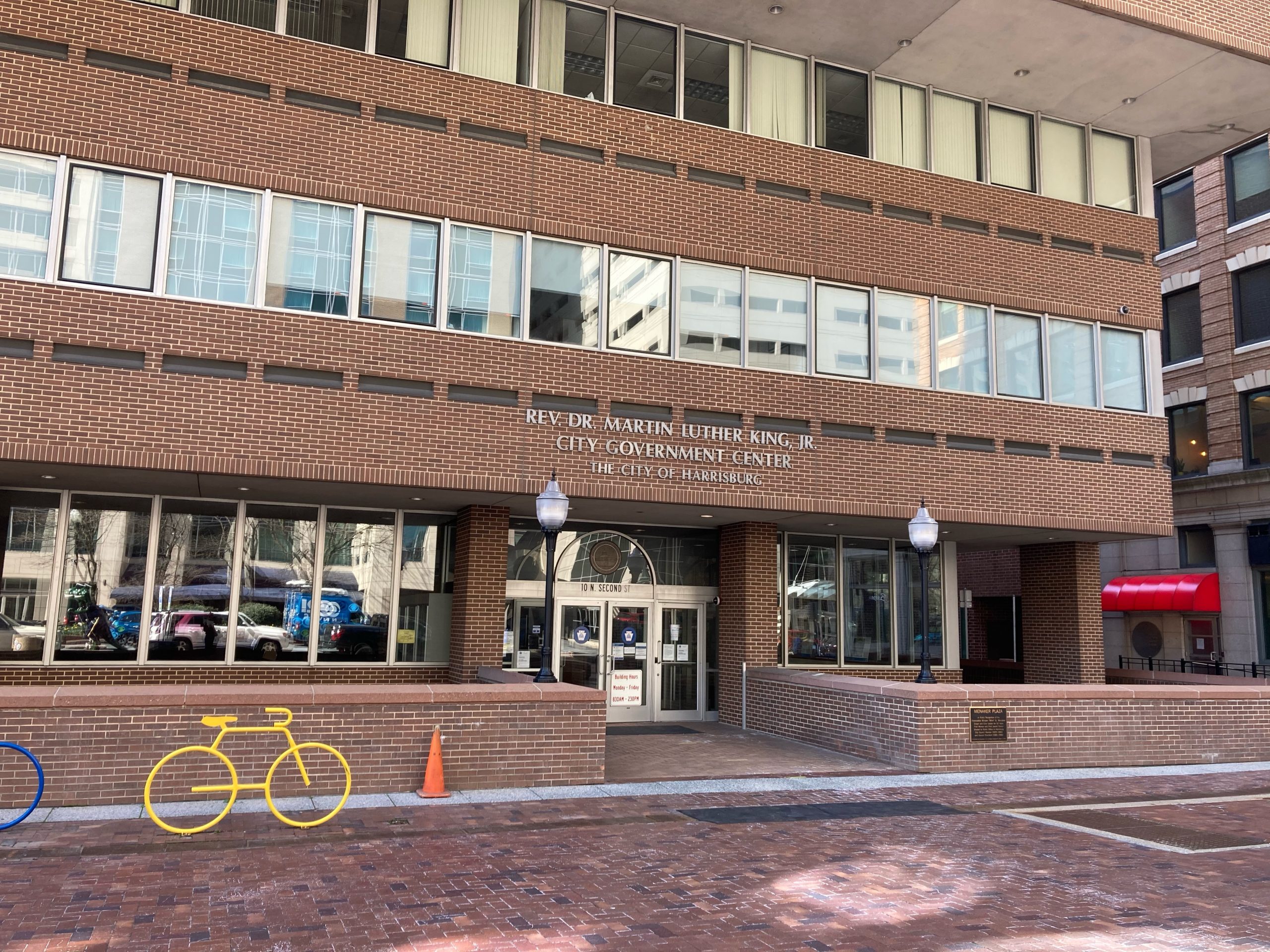
Harrisburg’s MLK City Government Center

During the pandemic, Harrisburg offered financial assistance to those behind on rent and utilities due to COVID.

The city’s rent relief program is finally nearing the end of its funding, but still has enough for a few more applicants.

According to Dennise Hill, director of the city’s Department of Building and Housing Development, Harrisburg has $60,000 left of its original $500,000 in federal funds. She encouraged those who may still be in need of financial assistance to apply. They have enough to help about 10 more applicants, she said.

“Now would be the time to apply,” Hill said. “We are here to help.”

Since Harrisburg first announced the rent relief program in Nov. 2020, about 175 applicants have received assistance, according to the city.

Dauphin County also disbursed rent relief funds for much of the pandemic, but has paused that program as much of the money has now been spent.

To apply for the rent relief program, contact Dennise Hill at (717)-255-6411.

If you like what we do, please support our work. Become a Friend of TheBurg!


Continue Reading

News at the Top: What were the top Harrisburg news stories of 2021? Our editor is back with his annual list

Is it January already?

Each year, I find myself surprised that, once again, it’s time for my annual review of the top 10 Harrisburg news stories. This year marks a decade for this self-imposed punishment—um, I mean, tradition—an exercise that I share with my long-suffering illustrator, who is the real hero here (sorry, Rich).

So, without further delay, here’s my totally subjective ranking of 10 Harrisburg news stories of 2021. You may agree; you may disagree; you may decide to move out of town. OK, I hope you don’t move out of town.

10. Mega Murals

Each year, I try to start this list out on a positive note—before I lower the boom. It’s a custom that I’m happy to continue this year. Back in May, Sprocket Mural Works launched its third Harrisburg Mural Festival with a planter-painting project on Allison Hill then just kept on painting the town. By fall, Sprocket had marked its 50th Harrisburg-area mural over the past seven years, including its largest project to date—a vibrant linear painting lining the Mulberry Street Bridge. Thanks to Sprocket, our little city on the Susquehanna is now so mural-rich that it’s tough to fling a hand-knotted pretzel without hitting a beautiful piece of public art.


9. Housing Is Hot

The residential market has been red-hot all year, both in the city and the suburbs. In recent months, our regular market updates have shown that sales have dipped, but prices continue to climb, indicating that supply may be constrained. As I wrote in a column last year, Harrisburg needs more housing at every price point. In May, City Council took action to help address this need, passing the city’s first-ever affordable housing statute. This legislation attempts to walk a fine line, urging builders to include affordable housing in their projects without making it a mandate. Since then, some developers have said they would comply while others seemed reluctant. The coming year may test the gentle balance between encouraging affordable housing while not discouraging new development.


8. 2nd Time Around

Back in the 1950s, cities around the country engaged in a bizarre form of self-destruction, undertaking major road projects that wrecked their own urban fabrics and quality of life to benefit the suburbs. Harrisburg was no exception. As the city emptied out, leaders soon realized that they had made a big mistake, and, by the 1970s, already began contemplating how to undo the damage, especially to the main thoroughfare of 2nd Street. Well, it took decades, but it finally is happening. In the spring, the city embarked on a project that will remake much of N. 2nd Street into a more pedestrian-friendly, two-way neighborhood road, as opposed to the high-speed hellscape it’s been for 60-plus years. In this writer’s opinion—one big Harrisburg street down, several more to go.


7. Bond Battle

Municipal bonds—boring, right? On the surface, sure, but Harrisburg, of course, managed to turn the mundane into the dramatic. This salvo in the years-long council v. mayor wars began in May with an administration plan to retire a chunk of debt and refinance the remaining bonds. Council members introduced the plan, but then quickly turned against it. Fair enough—disagreements happen. But the conflict soon spiraled into another he said/she said fight, like so many other feuds over the past eight years. The result ended up positive enough anyway. Council basically got its way, with the city accepting two-thirds of a deal that the administration had reached with its bond insurer. Mayor Eric Papenfuse didn’t get the refinancing he wanted, but Harrisburg shed a big hunk of debt and set itself up for possibly retiring its remaining bonds over the next few years.


6. Class Act

After last year’s virtual experiment, Harrisburg school district students returned to the classroom in August. Masks were mandatory, but there was no real organized opposition to the requirement. Thus, Harrisburg was spared the nasty “school board wars” that have engulfed so many districts nationwide. Otherwise, the district set itself up for casting aside three years of state oversight by appointing a new superintendent, Eric Turman, and a new chief recovery officer, Dr. Lori Suski. Unless the court renews the receivership, which seems unlikely, the Harrisburg district should be self-governing again by June.


5. Deaths Decline

In 2020, Harrisburg’s homicide rate surged, as it did all over the country, hitting a multi-decade high. Last year, the rate returned to near its historical average for the past decade or two, substantially lower than the pandemic-fueled spike. Within this data, of course, were many personal and family tragedies, including several unintended and innocent victims. These include the late-year shooting of Jamie Bey, who was a bystander to a bar fight, and of 14-year-old Malachi John, who police believe was shot accidentally.


4. Developmental Delay

On last year’s list, I mentioned how remarkable it was to have so many new building proposals in the midst of a pandemic. I may have been premature. A few smaller projects, such as the expansion of the McCormick Riverfront Library, did begin, but most of the big boys, like the large residential proposals along the Reily Street corridor, spent 2021 stuck in the planning and approval phases. For 2022, I expect another active year on the development front. Several large projects, including the new federal courthouse, will be completed or nearing completion, as will some historic renovations and residential conversions. However, it remains to be seen if dirt will get turned between 3rd and 6th streets or, if a year from now, the area will retain the same vast surface parking lots and weed-strewn fields that have marred the corridor for so many decades.


3. Delta Doom

Last year, one story faced no competition for first place on my annual list, as the coronavirus pandemic impacted nearly every aspect of our lives. This year, it fell to number three. So, that’s progress, right? After a deadly mid-winter spike, the case count dropped like a stone, especially as vaccinations ramped up in the spring. We ripped off our masks, breathed deep of the fresh air and prepped for a hot vax summer. Or so we thought. Something called the “delta variant” stopped our progress cold, making us unsure exactly what to do. Travel or don’t? Mask or not? Locally, perhaps the greatest impact was the on-again, off-again plan of the commonwealth to return its people to their offices. Many local businesses took yet another hit as state workers dribbled in, then dribbled back out again. We now enter pandemic year No. 3 with renewed hope that the current plan to repopulate the Capital Complex won’t be another head fake.


2. Semi Normal

Some news stories are complex beasts, and the COVID-19 pandemic may be the most layered and nuanced of my long career. So, while the delta variant prolonged our collective nightmare, life in 2021 returned to quasi-normal for many, and that could be seen locally. Most businesses dropped their mask mandates, people began to dine indoors again, folks attended concerts, and students returned to their classrooms. Over the course of the year, we made some sort of peace with the virus, but it was an uneasy peace. I personally know more people who got sick, often very sick, than the year before, and our hospitals’ COVID wards remained crowded. Yet on a beautiful day, strolling through Riverfront Park or dining al fresco, you could almost touch life from the before times, and, wow, did it feel good.


1. Who’s Your Mayor?

I’ve created this annual list for a decade and, some years, have struggled with what should be the number-one Harrisburg news story. Not this year. The Harrisburg mayor’s race wins going away. Five candidates sought the Democratic nomination in May, including strong campaigns from relatively new faces in city politics. The crowded field resulted in a split electorate, with four of the five finishing with more than 20% of the vote. In the end, City Council President Wanda Williams squeaked by incumbent Mayor Eric Papenfuse by 46 votes. With that settled, we could all relax and move on with our lives, right? Nope. Papenfuse disappeared from view for a few months only to re-emerge in mid-September to declare a long-shot write-in campaign for the general election. He ran vigorously, but this sudden burst of energy, which might have put him over the top in the primary, made no difference in the general, except to delay the transition. Williams trounced Papenfuse and, therefore, will be sworn in this month as Harrisburg’s new mayor.

So, Harrisburg begins 2022 with new leadership and, given all the recent high-level departures from city hall, with almost an entirely new team in place. I wish them the best and feel confident that a few issues they’ll deal with will wind up on this list a year from now.

I’d like to leave my annual top-10 list with a dose of unsolicited advice for future city politicians. Our recent election marked the third straight Harrisburg mayor’s race in which a leading Democratic candidate lost the primary but then refused to accept the result, running again in the general—and losing again.

These efforts served no productive purpose. They prolonged the city’s angst, exacerbated its divisions and heightened the turmoil inside city hall. In other words, they were harmful to the city, not helpful. Thus, my advice: If you lose in the primary, please graciously accept your defeat. There’s always next time.


Lawrance Binda is co-publisher/editor-in-chief of TheBurg.


Illustrations by Rich Hauck.

If you like what we do, please support our work. Become a Friend of TheBurg!
 

Continue Reading

Home Is Where Her Heart Is: Lillie Williams helps Harrisburg-area residents with a safe place to stay

In the aftermath of Hurricane Maria, which tore through Puerto Rico in 2017, Lillie Williams met a family who had lost everything to the storm. Social security cards, birth certificates, anything important was gone.

When the family made it to Harrisburg, Williams was working in property management. She was tasked with getting them an interpreter and helping them find shelter.

“Seeing the smile on their faces just to have a home again, that was a reward, to me,” Williams said. “It made me feel like I was in the right place at the right time.”

For over 20 years, Williams has dedicated her career to helping Harrisburg-area residents feel at home. It’s her passion, because she was once in the shoes of many of her clients.

Williams works as the interim director of the city’s Department of Building and Housing Development and is also the project director of asset management. In other words, she’s busy. Much of her time is spent working directly with the U.S. Department of Housing and Urban Development (HUD), budgeting and distributing city and federal funds to the community and local organizations.

In the past, she worked for a few property management and real estate investment groups, as well as the Cumberland County Housing Authority. Much of her career was spent managing affordable housing properties and assisting low-income clients.

“There were some families that didn’t have any hope,” she said. “They didn’t have hope that they could get a place or could afford it. They were overwhelmed.”


Passion Project

As a young girl, Williams grew up in Harrisburg’s Uptown and Allison Hill neighborhoods and moved just outside of the city as she got older. She remembers a time when her family lived in affordable housing.

When I asked her, over a Zoom call, if that experience had an impact on her career choice, it was like a light bulb went off.

“You know, I never thought about that until you just said that, but you’re right,” she said. “Wow, I guess you’re right because I’ve always been a helper. That (affordable housing) helped my mom, and that’s what I saw, so that’s what I did.”

It was like these two pieces of her life just clicked.

She went on to tell me that it wasn’t her only experience with affordable housing. At 18 years old, as a young, single mother, Williams moved out on her own. She remembers a time when she paid $23 in monthly rent.

“When I moved out, I was paying over $1,000 rent, and I bought my own home,” she said. “I set goals for myself, and anybody can do it.”

Williams’ story helps her relate to many of the people she now serves in her role with the city. She said that 70% of Harrisburg residents are low-to-moderate income, the population that DBHD generally serves.

In addition to working with HUD and providing financial help to residents, Williams’ team also oversees the “Lead Safe” abatement program and Housing Rehabilitation Program.

“This department is very important, and I’m very proud of it,” she said. “We try to help the community as much as possible.”

According to Dennise Hill, deputy director of DBHD, Williams leads by example.

Hill is Williams’ right-hand-woman. Their offices are connected by a door that often remains open, so they can talk about work or even chat about their kids. Over the few months Hill has worked for the city, the pair has become friends, she said.

“It’s amazing—we complement each other really well,” she said.

Like Williams, Hill’s passion is housing. Growing up in Steelton, her parents always welcomed into their home kids who needed a place to stay. Her parents’ values stuck with her and shaped what would become her life’s work.

Before coming to the city, Hill worked in a women’s shelter—a job she loved. She was nervous about switching careers, but working with Williams and the team has affirmed her decision.


More Work to Do

The 11-person DBHD team is more like a family than co-workers, Hill explained. Some, like Hill, are newer adoptees; others are longtime members.

During the pandemic, they’ve worked hard, pivoting to focus on distributing federal CARES Act funding to renters, food pantries and shelters, among others.

Williams has been busier than ever.

With a national and local crisis of people struggling to pay rent during the pandemic, Harrisburg’s rental relief program has been one of Williams’ main focuses. For months now, she has gone through hundreds of applications, distributing money to tenants in need. By March, about 100 households had received money. She estimated that, by the time the total of $500,000 is used up, around 200 families will benefit.

It can be stressful and includes a lot of guidelines and paperwork, she said, but she’s happy to do it.

“This is so important, and it affects so many people’s lives,” she said.

Williams credited her team, saying they’ve handled this “to a tee.”

In December, COVID-19 hit the team hard, she said. Four staff had family members who died from the virus. Everyone else had to step up, and Williams did what she always did—lead by example.

“There’s no task she wasn’t willing to help with,” Hill said. “She was consistently checking in on everyone. Keeping us in a good place mentally was important.”

Even with all the work the pandemic has put in Williams’ lap, she still takes time to pause, greet Hill in the morning, and ask her about her daughter.

During our Zoom call, I could see the many files pinned to Williams’ corkboard in the background of her office. I heard a few pings from her computer, email notifications, as we talked. I knew she probably had a hundred things to do that day, but she paused to talk and laugh with me.

As much as Williams is doing now, she said she still has a lot to do for Harrisburg.

“I see myself being able to help more people,” she said. “From where I came from to where I am now, I’m very proud of myself, and I still have more work to do.”

For more information about the Harrisburg Department of Building and Housing Development, visit www.harrisburgpa.gov/office-of-building-housing.

Support quality local journalism. Become a Friend of TheBurg!
 

Continue Reading