Tag Archives: housing

TheBurg Podcast: Onward and Upward Edition

We cover all things infrastructure and development on this week’s episode of TheBurg Podcast. First, why is Capital Region Water going to spend more than $300 million updating Harrisburg’s sewer system, and what will it mean for ratepayers? Then we dip back into the debate playing out in city council about affordable housing downtown. We wrap up with (yet another) update on the city’s comprehensive plan — is there an end in sight?

Stream the episode here via Soundcloud, or subscribe to TheBurg Podcast in the Apple or Android podcast apps.

Read more about this week’s topics at TheBurgNews.com, and look for our new magazine when it hits newsstands next Wednesday:

Move In Day: First MulDer Square house sold, ready for new owners.

Moving Ahead: Despite criticism, HBG Planning Commission sticks with comprehensive plan draft.

2 for 2: Council considers, approves development projects in Harrisburg.

Water, Sewer Plan: Massive improvements, major rate hikes proposed over next 2 decades.

TheBurg Podcast is released twice a month by TheBurg Magazine. It is recorded in the offices of StartUp Harrisburg and produced by Lizzy Hardison. Special thanks to Paul Cooley, who wrote our theme music.

Continue Reading

Rate Debate: More apartments, more talk of rental rates at Harrisburg council.

Thirteen more apartments have been proposed for Strawberry Square in Harrisburg.

Affordable housing was back in the spotlight tonight, as the Harrisburg City Council listened to plans for another downtown apartment conversion.

At their biweekly work session, council members heard from Harristown Enterprises CEO Brad Jones about plans to convert empty office space inside of Strawberry Square into 13 apartments—10 one-bedroom and three two-bedroom units.

Jones’ presentation of the project rekindled a discussion from the prior council meeting two weeks ago, when council President Wanda Williams read a lengthy statement saying that she expected downtown developers to include affordable housing in their plans going forward.

“I certainly will be watching,” she said at the time.

Williams was absent from tonight’s work session, but Councilman Dave Madsen picked up the thread, saying that he had spoken with Williams about their concerns over rental rates for newly renovated, higher-end units in downtown Harrisburg.

“We discussed that pricing has been a concern with these projects,” said Madsen. “But, as I understand with Wanda Williams, we’d like to move this project along, but with future projects, that you consider throwing in a few affordable housing units.”

Madsen said that he’s heard from constituents recently who said that they’re troubled over the issue of affordable housing in Harrisburg given recent higher-end projects downtown. Perhaps paradoxically, he also said that constituents seem to desire the high-quality housing being built by downtown developers like Harristown.

“We’ve seen everything downtown,”said Madsen, relating what residents have told him. “Why aren’t we seeing it in our neighborhood?”

Over the past two years, Harristown has brought about a half-dozen projects to council for approval. Nearly all have been conversions from empty, even dilapidated office space, to higher-end residential units. In all, the company has constructed about 60 apartment units from these projects, Jones said tonight.

Just two weeks ago, council approved a Harristown project at N. 2nd and Cranberry streets, which will convert a long-empty, historic office building to an apartment building with 12 one- and two-bedroom units.

And Harristown now has another downtown project on the boards—the conversion of a six-story office building at 124 Pine St. into a mixed-use project consisting of 25 apartments with retail space on the first floor. That project, which requires a variance, is slated to go before the city’s Planning Commission and Zoning Hearing Board this month.

Jones came to tonight’s meeting armed with data, as he tried to counter the narrative that his company’s apartments are too pricey. He said that about 15 percent of Harristown’s existing units could be rented by someone with an annual income of just $25,000 to $40,000 a year, while another 40 percent could be afforded by someone with an average income of $60,000 a year.

He also emphasized that his projects—and, in fact, most apartment projects in the city over the last decade—rehabilitated existing empty and blighted housing stock and did not lead to displacement.

“The point I want to make tonight is that that has not occurred to this point,” he said. “Could it happen in the future? Sure. We’ve seen it happen in other places.”

Several council members said that they should not single out individual projects or developers in a pursuit of affordable housing. Instead, the city, they said, needs to develop a clearer policy on what it expects from all builders as Harrisburg continues to redevelop.

“This governing body needs to figure out what our policies are going to be,” said Councilwoman Shamaine Daniels. “We just can’t have one investor or one developer solve the affordable housing issue in the city.”

Madsen concurred.

“This has long been a concern,” he said. “It should require legislation on our part or our side.”

Council is expected to take a final vote on the Harristown residential conversion in Strawberry Square at its legislative session next week.

Continue Reading

She Builds: A social champion is in the house.

Crystal Brown

“I remember standing on the corner watching my house burn in my ‘New Kids on the Block’ nightie.”

That memory is one of Crystal Brown’s earliest and most formative ones, as a 5-year-old living in Ohio, forced to face a hate crime sparked by her parents’ interracial marriage.

“We were very fortunate that we were able to stay with family until my parents were able to find another home,” Brown recalled. “Actually, a person from the community let us stay with them since all of our family was in Pennsylvania.”

Thus, Brown understood from a young age that having a support system is important to maintaining stability.

“If it would not have been for family and those kind neighbors, we would have been homeless,” she said. “That is why I believe in the work we do at BHA.”

BHA stands for Brethren Housing Association, a nonprofit, interdenominational organization that owns more than 10 properties in South Allison Hill, serving about 85 adults and children a year. Their red-doored headquarters is situated in the shadow of the Capitol, on Hummel Street, across from the Mulberry Street Bridge.

Named executive director in 2011, Brown helps Harrisburg residents obtain housing and the skills they need to keep that housing. BHA is probably best known for its “Transitions” program, in which women with children who are homeless are given transitional housing. Families live in BHA-owned housing, obtaining their own apartment without being forced to share common spaces. BHA also works to secure permanent housing for people with disabilities and offers an aftercare program for families once served by their programs.

Brown said she and her staff give clients both “encouragement and accountability.” Many came to BHA from an emergency shelter or were couch-surfing, she explained, “doubling up” with another family temporarily.

The reasons for homelessness vary, she said.

“Every family is different, but there is usually the need to supplement their income,” she said.

Most are in need of a job, an education, and, often, basic money management skills.

“They need skills to keep their apartment neat, pay their bills on time, live successfully with their neighbors,” she said.


Love and Support

A 2004 graduate of Susquehanna Township High School, Brown began volunteering at the Interfaith Shelter, which operates under the auspices of Catholic Charities in Lower Paxton Township, while earning a degree in social work from West Chester University. The Shelter offered her a job soon after, and she went on to earn a master’s degree from Temple-Harrisburg.

The desire to serve families in need is in her genes. Her father, the Rev. Wayne Baxter, served a congregation in Edgemont, and her grandfather also was a minister.

Brown said that, unlike the Interfaith Shelter, where families usually stay only 30 days, her goal is about permanence, opportunity and access. Families can stay as long as two years. With more time, she can better help clients acquire the skills they need and connect them with more resources for long-term stability.

“I feel like housing is a right,” she said. “People deserve to have a roof over their head.”

That sentiment is reflected in many of the plaques bearing motivational quotes in her busy first-floor office, which straddles a large open meeting room where clients gather. One of them reads: “You have to be taught to be second class. You’re not born that way.”

She notes that homelessness is part of a larger problem. Low-cost housing leads to housing segregation, which leads to educational segregation—which “leads to a perfect storm, and our families live with the aftermath,” she said. She pointed out that rent for a two-bedroom apartment in Dauphin County costs about $886.

“I can’t change federal policies, but I can give love and support and encouragement,” she said.


Tag Out

Brown sees a lack of affordable housing as a serious problem in every American city, but especially Harrisburg.

So many restrictions are often imposed upon prospective tenants, such as criminal background checks and credit checks. The homeless with criminal records often can’t get housing, which leads to not just homelessness, but hopelessness. Many have paid their debt to society, but cannot break out of homelessness because of their past.

“People make mistakes,” Brown said matter-of-factly.

Although memories of her childhood house fire remain, other, more recent memories lift her spirits. She recalls a single mother, frazzled after dealing with a boisterous 3-year-old all day, with no one around to give her a break. Brown came home with the mom and calmed the child by singing “Itsy Bitsy Spider.” That child is now 6 and doing well in school.

“I got to be that tag out” for that mom, Brown said.

The community is a vital partner in BHA’s efforts. One of their most popular programs is “Adopt an Apartment.” Caring donors can buy pots, pans, lamps and more for a family moving into a new apartment. She said UPMC Pinnacle and its employees are frequent sponsors.

She is often asked if she ever feels afraid, working where she does. She replies that she is no more scared than she would be in a parking lot at Wal-Mart or camping.

And, while she may have little experience camping or living in a rustic environment, she clearly knows what she is doing in an urban setting.

“I have a healthy level of fear,” she said.


Such Transformation

One of Brown’s mentors is Lisa Peck, program director at Interfaith Shelter. Peck returns the respect.

“Crystal is very open, very honest, and she very much believes in her work,” Peck said.

Peck and Brown often brainstorm about how they can make things better for others.

“She is very, very dynamic,” Peck said. “She does everything with enthusiasm and nothing is too small to take on. She is always up to challenges and will stop at nothing to help the less fortunate.”

When families arrive, Brown is “always warm and welcoming,” Peck said.

“I really enjoy working with the women,” Brown said. “Every day, I learn and grow. It continues to humble me. It is a constant reminder to not pass judgement.”

Still, amidst the triumphs are tragedies. One of BHA’s most ardent supporters, Ray Diener, was brutally murdered several years ago, and one of the rehabbed houses on Hummel Street was named in his honor.

That experience forces a reflection on another plaque on her wall: “Pray about everything. Worry about nothing.”

“We are here to serve—to love God and love our neighbor,” Brown said.

One of Brown’s greatest sources of pride is that they are a “trauma-informed organization.”

Many homeless people are victims of physical and sexual abuse, she explained, and that trauma hinders their growth and stability. Homelessness then becomes an additional trauma. BHA partners with Pressley Ridge to offer counseling.

“Instead of asking, ‘Why did you spend that $100 on that?’ we try to understand their story and put it in context,” she said.

BHA also works with Dauphin County’s Office of Children and Youth, since many of the children in the child welfare system are there due to homelessness.

In the mid-winter cold, Brown gave a short tour of snow-topped Hummel Street. The townhouses across the street from her office are new construction. BHA demolished old buildings and built new with the help of UPMC Pinnacle. A playground, pavilion and garden are also part of the tidy block. A state grant helped with streetscaping.

“There is such transformation on this block,” she said.

The growth in their properties is among the accomplishments she is most proud of.

She lists many other housing construction and renovation projects going up around her, including 50 affordable housing units slated for 13th and Mulberry and Crescent and Mulberry, in conjunction with the Harrisburg Housing Authority.

Her end goal is more housing, less hate.

“We just need to be nice to each other and share in our abundance,” she said.

The mean-spiritedness she witnesses is rooted in fear, she believes. People are afraid that, if someone else gets an opportunity, it subtracts opportunity from them.

But she knows it is not a zero-sum game.

She pointed to her favorite quote on her wall, uttered by Frederick Douglass: “It is easier to build strong children than to repair broken men.” And so she builds.


Brethren Housing Association is located at 219 Hummel St., Harrisburg. For more information, call 717-233-6016 or visit www.bha-pa.org.


Continue Reading

Big Idea–Small House: Harrisburg students compete to design a tiny house–and you can buy it.

Teacher Sheri Kutz and students from Marshall Math Science Academy show cardboard models of their tiny houses.

The room hummed with the collective energy from the four educators and community leaders around the table. They had a big dream to build something small—a tiny house.

Sheri Kutz, STEM (science, technology, engineering, math) teacher at Harrisburg’s Marshall Math Science Academy, said that she recently began wondering about homelessness and alternative housing after buying, fixing and flipping her first house.

She delved into information about projects like one in Seattle, which housed the homeless in tiny houses.

“I thought about my eighth-grade curriculum, thought about my eighth-grade students,” she said. “I know they are very capable and thought, if a city can do that, why can’t my kids?”

This project fits right in with Marshall’s “service through science” philosophy, said Principal Ryan Jones.

“What makes us a little different is we do a lot of service learning tied to our mission of STEAM,” he said, adding “art and design” to the traditional STEM curriculum.

All of Marshall’s 88 eighth-graders participated in the project, which began last fall. The students worked in teams of four, with each student creating his or her own tiny house design. They had three constraints. Houses had to cost no more than $2,200 with $600 off the top for framing; they had to be 720 square feet; and they had to be accessible.

Students researched items for building the homes, like kitchen cabinets, dining tables and appliances. Everything in the design had to be proportional. After design drawings were complete, students made a cardboard prototype of their houses, submitted financial statements and drew their houses in SketchUp, a 3D modeling program.

“I was really nervous, but excited because I had so many ideas in my head,” said Marshall student Jayleigh King. “When I found out it was a tiny house, I started stressing because you have to compact so many things into a little space.”

King said she liked the group aspect of the work. It was especially helpful in figuring out how to fit everything into the house. Working in a group brought the students’ strengths together.

Designing was only one aspect of the project. Students had to write daily reflections on what they learned and the challenges of the day. They were also learning about homelessness, alternative housing and urban planning. But just talking about all of this wouldn’t do.

“What brings about education for a child is when something comes to fruition,” Kutz said. “So, I didn’t just want to talk about alternative housing or just understand it. I want what they did to become a reality. I didn’t know how to do that on my own.”

Therefore, Kutz reached out to Habitat for Humanity of Greater Harrisburg. Executive Director Yinka Adesubokan liked the idea right away, especially from a workforce development aspect.

“It’s one thing to build a house in a community,” he said. “But if you aren’t educating that next generation of people, you are always going to have the same problem.”

Adesubokan spoke to Kutz’s classes about city planning, zoning and history. But Habitat’s involvement went beyond instruction—they actually will build one of these tiny houses.

Each of Kutz’s five classes will pick a winning house, which will be 3D printed. The groups then will present their designs to a panel of judges from the community, which will choose the ultimate winner. The selected house design will be auctioned at Habitat’s 13th Annual “Art Builds Homes” art auction, March 23, at the Hershey Country Club. Habitat then will build the house wherever the high bidder wants it.

King’s group won the design for her class. It was tough deciding which of her group’s projects should be represented to the class competition. She said that each group member wanted theirs to be the one to win, but, in the end, the right design was entered.

“We all knew whose was better,” she said. “We did the right thing.”

The house project also offers Marshall students who have known displacement themselves the opportunity to be a part of a solution. There are 350 to 500 displaced students in the Harrisburg school district, said Kirsten Keys, the district’s public relations coordinator.

Moreover, the students have been spending time with each other throughout the project—meeting, sharing ideas and encouraging one another. They’ve created synergy.

According to Kutz, this relationship-building has been hugely beneficial in itself, leading to mutual understanding and support among students who otherwise would have little reason to interact and cooperate. And that’s a lesson with a far deeper impact than just learning how to design a tiny house.

The annual Habitat for Humanity of the Greater Harrisburg Area’s “Art Builds Homes” art auction takes place March 23, starting at 6 p.m., at the Hershey Country Club, 1000 E. Derry Rd., Hershey. For tickets and information, visit harrisburghabitat.org or the Facebook page.

Continue Reading

Comprehensive Jam: Harrisburg spent $200k on a planning project that the Mayor now recommends trashing. What went wrong, and what could the plan mean for the city?

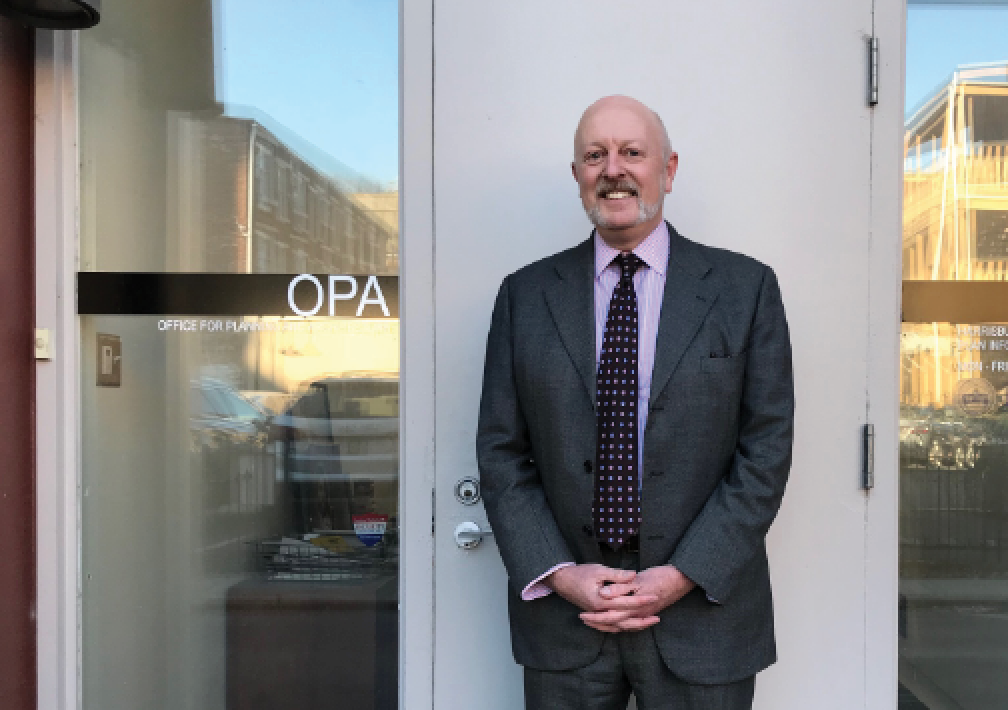
Print may be dead in the news industry, but it lives on in the offices of Bret Peters.

In a small suite of the Office of Planning and Architecture, Peters’ design firm on Willow Street in downtown Harrisburg, every surface is covered in paper: spreadsheets, mockups and “idea slips,” square cards on which Harrisburg residents wrote their desires for the city.

The print detritus shows what was left on the cutting room floor during the 18-month process of drafting a comprehensive plan for Harrisburg. That process recently culminated in the release of a 199-page draft document, which aims to articulate a shared vision of an historically factious and geographically fragmented city. The plan is part audit, offering an inventory of the city’s material and economic resources, and part wish list, enumerating the actions that the city can take to improve its housing stock, traffic patterns, waterways, business development and more.

“It’s an aspirational document,” Peters said on a recent afternoon in the planning room.

He estimated that the cost of implementing the comprehensive plan in full would range in the billions of dollars. But he also claimed that the plan as a whole would pay for itself over time by raising the aggregate value of the city’s real estate market, which would lead to more business development and higher tax revenue.

Many city officials, though, have another opinion of Peters’ draft plan. They regard the plan and the process as so flawed that they vow to fight its approval, much less its implementation.

“Something for the city”

Peters grew up in Lower Allen Township and lives today in Uptown Harrisburg. He founded OPA in 1999 and has taught design and architecture at Penn State and HACC. He also travels nationally for invited speaking engagements. In early November, he delivered a talk at Iowa State University School of Design titled “Corrupt Designs,” where he described “the challenges associated with comprehensive planning in a city well-known for economic and political difficulties,” according to an event listing.

Peters has said that the great potential he sees in Harrisburg led him to prepare a last-minute bid for the comprehensive plan project, which was announced by the city in late 2014. He promised to assemble a team of expert consultants from across the country and was awarded the project in a unanimous vote by a 23-person steering committee.

That vote may have been the first and last harmonious moment in the comprehensive planning process. The next 24 months saw disputes between the city and Peters about Peters’ alleged failure to pay subcontractors and meet deadlines, as well as ideological disagreements about policy proposals within the plan. The acrimony between Peters and city hall has reached such heights that the two parties don’t even agree on Peters’ employment status.

Mayor Eric Papenfuse and city Solicitor Neil Grover insist that Peters was fired after submitting material behind deadline last year. Peters says he assiduously followed the terms of his contract. He claims he suspended the contract in 2016, after city administrators allegedly failed to provide timely feedback on drafts and asked him to change content.

After their communication dissolved in 2016, city administrators and Peters began preparing individual draft plans. In summer 2017, the six-member, volunteer Planning Commission invited both parties to present their material separately. The commission voted unanimously to adopt Peters’ draft. He subsequently published it online at BeHbg.com.

As Peters began promoting the draft in public meetings and soliciting final feedback from residents, members of the city’s administration have been publicly denouncing it.

“The Comprehensive Plan that you are seeing on a website, is not the city’s plan,” Jackie Parker, the city’s director of Community and Economic Development, told members of the Harrisburg Parks Foundation in a Dec. 11 email. “It is a plan written by a consultant who has hijacked the process. It does not include what the public has indicated they would like to see.”

Mayor Papenfuse also claims that Peters “hijacked” the planning process. He said in December that he will recommend that City Council vote to reject the plan.

“[Peters] clearly wanted to impose his vision onto Harrisburg without sufficiently incorporating public input,” Papenfuse charged. “Now you have a fired architect putting forth a plan that the city had nothing to do with.”

The mayor also alleged that Peters undertook the project as a way to extort money from the city.

But people outside of the city administration who have worked with Peters offer a somewhat different account. Tara Leo Auchey led a community outreach effort with Peters for 10 months in 2015. Along with city planning director Geoff Knight, who declined to be interviewed for this story, the team gathered public input data to inform comprehensive plan proposals. Auchey said that Peters was reluctant to undertake the ambitious outreach agenda because of constraints on time and money and because he thought his professional expertise could guide the process. But Auchey said that he was receptive to the data as it came in.

“Bret’s message was that we were all doing something for the city, and I truly believe he came from that place,” she said.

Auchey did threaten to quit the project in October 2015 after a series of her paychecks were delayed. Though she questioned Peters’ management skills, she did not think he pursued the project to extort money from the city, as Papenfuse alleged. Auchey has since been paid for her work in full.

Auchey also emphasized that Peters wasn’t the only professional drafting the plan. A team of international consultants, with specialties from park design to housing policy, helped Peters analyze data and recommend planning strategies. Auchey thinks that Peters’ personality may have invited heightened scrutiny of his leadership abilities.

“Bret pontificates, he’s very highbrow and thinks highly of himself,” Auchey said. “But the biggest fault I see is in editing and time management.”

For his part, Peters insists that OPA upheld its contractual obligations, assiduously managed its resources and acted with good intent towards the city. He believes that officials are trying to discredit his work because they object to some of his
policy proposals.

In the chapter of his plan devoted to housing, Peters does not advocate for homeownership incentive programs, and he discourages the demolition of dilapidated properties. Both of those proposals, which are critical to Peters’ strategy to raise home values and, subsequently, increase tax revenue and business development in the city, are in direct conflict with city initiatives.

Harrisburg’s Department of Community and Economic Development has proposed its own comprehensive housing strategy that it hopes will bring homeownership in the city to 50 percent in the next decade. In December, City Council voted in to double the Code Bureau’s demolition budget
for 2018.

Peters’ comprehensive plan is currently published online for public input, and the Planning Commission will host a public hearing to discuss it on Jan. 10. After that, the commission can ammend the draft and vote to send it to City Council. Council, in turn, will vote to adopt or reject Peters’ draft as the city’s new comprehensive plan. The decision could be vitally important for how Harrisburg develops in the next 20 years.

What is a Comp Plan?

The last time Harrisburg undertook a comprehensive planning effort was in 1974, the same year that the Watergate investigation dominated the American news cycle. The city was recovering from the devastation of Hurricane Agnes, which, according to then-mayor Harold Swenson, dealt the city “a near fatal punch” two years earlier.

Flood waters from Agnes swirled into 6,000 Harrisburg homes and decimated at least 600 small businesses in June 1972. In his history of Harrisburg, “City Contented, City Discontented,” journalist Paul Beers wrote that the storm wrought more than $3 million in damage to city property and caused $5 million in private property loss. By the time the waters receded, landmark buildings and entire neighborhoods had been wiped off the map. Mayor Swenson, along with his seven-member, Republican-controlled City Council, decided to undertake a full update to the city’s master plan, which had last been updated
in 1961.

“The urgency of setting the direction for the future has plainly never been more real,” the 1974 plan begins. “The Harrisburg community is ready and willing to take the necessary hard look of self-reappraisal, to evaluate the future alternatives which face the City, and to determine to proceed by plan on a chosen course of action.”

For all its ambition, the 1974 plan languished after its publication. Some of the objectives of that plan, such as the construction of a bridge on Division Street for pedestrians to access Wildwood Park, are still being considered by the city today. Harrisburg leaders did not commission another update until 2014, the first year of the Papenfuse administration.

In recent years, urban comprehensive plans have shifted from general guides on community objectives to strategic documents that focus on implementation and action, affirmed Tom Daniels, a professor at University of Pennsylvania School of Design. Daniels, who teaches urban comprehensive planning, called comprehensive plans a blueprint of where a city wants to see itself in 20 years, based on professional expertise and public input.

“The clear challenge of a comprehensive plan is how do you set priorities,” Daniels said, noting that planners often have to reconcile competing needs in housing, transportation, land use and economic development.

How they set those priorities depends on what the public wants to see.

“The art of it is blending the more professional planning side with the desires of residents,” he said.

Peters’ team collected public input during a 10-month community engagement campaign in 2015. The effort was led by Auchey and Knight with help from graduate interns at Peters’ firm. Over the course of 10 months, the team held more than 100 meetings with residents and stakeholder groups, gathering input from hundreds of residents across the city. Peters then used that data to determine planning objectives and recommend actions to achieve them.

Peters’ draft document is organized into eight chapters. Each one outlines broad goals, more specific “objectives” and action items to achieve them. In the housing chapter, for example, the objective “stabilize and preserve existing buildings” entails four action items, including the “identification and mapping of problem properties” and “establishment of a troubled buildings initiative.” Each action comes with a detailed list of steps to realize it.

“We have followed an assiduously rational process based on math and fact,” Peters said. He added that, while analyzing the outreach findings, he found that public opinion perfectly aligned with trends and expertise in the professional design community.

In a conversation in early December, Papenfuse criticized Peters’ draft as too prescriptive and ideological. He reiterated the charge that Peters disregarded public input and imposed his own vision for Harrisburg’s future.

“The imperative language of this plan is unlike any other I’ve ever read,” Papenfuse said.

He added that he would have preferred broad objectives with a “panoply” of options for city officials to consider.

According to Daniels, however, the authors of comprehensive plans are supposed to be specific in their recommended objectives and actions.

“One of the things planners are supposed to do with help of the public is weigh alternatives,” Daniels said. “To have just an array of options is a little loose.”

Daniels also said that comprehensive plans should include cogent strategies for economic development and housing. Papenfuse had also objected to those chapters in Peters’ plan, claiming there was an argument over whether they should be included in the project at all.

A House Divided

For all the discord surrounding the contents of Peters’ draft, city administrators agree with him on at least one point: the city needs to rehabilitate dilapidated buildings and hold absentee owners accountable for blight. The problem, however, it that Peters and city hall have radically different ideas for how to do that.

The long-held stance of the city Department of Community and Economic Development is that increasing homeownership in the city will improve neighborhoods. When someone buys a home, they make an economic investment in the property and the neighborhood around it. Conventional wisdom says they will work to maintain both.

Harrisburg’s Department of Community and Economic Development sent Peters its own draft of a comprehensive plan housing strategy in April 2016, which Papenfuse said they completed with help from a subcontractor. That document details the city’s goals to increase resident homeownership in the city to 50 percent within the next 10 years and incentivize the construction of new market-rate homes. Currently, 40 percent of Harrisburg residents are homeowners and 60 percent are renters.

Peters acknowledges that neighborhoods with a higher share of homeowners are safer and better maintained than those dominated by renters. But he also argues that, with a median income of $34,000, Harrisburg’s population cannot sustain widespread homeownership. Even with the help of government subsidies and incentives to finance a house, Peters said, maintaining Harrisburg’s historical housing stock is expensive.

“Many people can’t afford to maintain the asset,” Peters said. “When someone is close to the edge on a payment program, one job loss or medical bill puts them into a foreclosure process in three months. Homeownership isn’t just the purchasing of a house.”

Peters said he didn’t prioritize home ownership in his own housing strategy because Harrisburg’s residents didn’t demand it. Only 14 percent of residents polled during the public outreach period said they wanted more incentives for home ownership. Sixty-five percent said their main housing concern was the rehabilitation of vacant properties. Peters thinks the city can mitigate blight by localizing property ownership, which doesn’t necessarily require owners to occupy their dwellings. In short, he wants Harrisburg residents to have myriad paths to build equity in their neighborhoods.

Peters details some of those paths in a concept he and his team developed in 2015. The concept proposes a “city wide investment area” that would expand property ownership opportunities for people who already live in the city. The resident-owner housing strategy might create favorable financing for a homeowner to buy and manage a neighboring rental property, or a tiered taxing structure where resident-owners would pay different rates than out-of-town landlords. Some of the methods he proposes elsewhere in the housing strategy, such as encouraging collective purchasing of property, also appear in the city’s DCED strategy.

The central goal of Peters’ housing strategy, he said, is to separate houses from the people who live in them. He envisions neighborhoods where rental properties are maintained to the same standard as owner-occupied properties, since the manager of the rental property may live down the street and see it every day. He also wants to incentivize trade education and apprenticeships so that the city has a robust corps of maintenance professionals. Harrisburg’s greatest material asset is its housing stock, he says, and it will become a more lucrative one if it receives proper care.

“The city is functionally a cultural landscape, and we have to treat it like a landscape we value, not a bunch of properties where we can make money off of trades,” he said.

Auchey and Vern McKissick, a local architect who serves on the Planning Commission, confirmed that Peters clashed with city officials on housing strategy proposals. Peters said that disagreements over housing precipitated the breakdown of cordial relations between his firm and the city. Papenfuse maintains that the project devolved after Peters submitted substandard work product and failed to complete the project by deadline.

“Unsalvageable”

In a public hearing last month on Harrisburg’s 2018 budget, Ausha Green, City Council’s newest member, pressed the city administration on its role in developing the comprehensive plan.

Green serves on the city Planning Commission and supported Peters’  draft over the city’s. She criticized the lack of clearly delineated responsibilities among all the planning entities, but her main concern was how the Planning Commission would incorporate public feedback into Peters’ draft document.

“Once the Planning Commission decides what edits it wants to see, we will do those at your direction in-house,” Papenfuse said.

“You mean what edits the public wants to see,” Green shot back. She then called on the city to withdraw from the process. “I recommend someone from outside do it because some people from the public have the perception that the plan was hijacked by the administration.”

In an interview the next day, Green said that city administrators instructed the Planning Commission to edit and rewrite parts of the comprehensive plan draft in 2016 and 2017. The commission knew that the city Planning Bureau would contribute feedback to the draft materials they received from Peters, but Green said the commission did not think they would be so extensive.

“I didn’t expect the city would have such a hands-on role in the writing of the comprehensive plan,” Green said. “Some people might see them as overstepping their role, but that depends on what they thought their role was.”

Green acknowledged that Harrisburg had not commissioned a comprehensive plan in 40 years, which left scant precedent for how to assign roles and responsibilities. Robert Shoaff, a Midtown resident who is trained as an urban planner, offered a similar theory of the discordant planning process.

“We have 43 years of not doing this, so the residents and city don’t know the right interaction.” Shoaff said. “We have to build this back up.”

Members of the public are invited to comment on the draft plan online and discuss it at a public hearing on Jan. 10. After that, the Planning Commission and City Council will vote on whether or not to adopt the plan. Papenfuse is not sure whether he has veto power, but he has said he does not think the plan will be approved.

“It’s unsalvageable,” he said. “Unfortunately, we’ll have to start over at some point.”

He pointed out that the plan does not include any references to Harrisburg University, which earlier this year announced it will invest more than $100 million in a 36-story building in downtown Harrisburg. He also said that some of Peters’ concepts, such as creating a southern gateway entrance for traffic entering Harrisburg from I-83, have already been considered and rejected by
the city.

Green said she’s heard mixed reviews of the plan from constituents. But after almost two years  of political and personal strife, she wants to let the public guide the planning process to its end.

“We’re going to continue to work through the process and are looking to have as much public input as possible,” Green said. “It’s a community issue at the end of the day.”

To read the draft comprehensive plan, visit behbg.com. A public hearing on the plan is scheduled for Jan. 10.

Continue Reading

Shelter on South Street: Local soup kitchen will offer beds to homeless this winter

Downtown Daily Bread will open an overnight shelter at its location at 234 South Street.

Following a change in policy at Harrisburg’s largest rescue mission, a downtown soup kitchen plans to open an emergency overnight shelter for 30 homeless men.

Downtown Daily Bread, a soup kitchen and daytime shelter operated by Pine Street Presbyterian Church on N. 3rd Street, got approval from the city Planning Commission to operate a 30-bed men’s shelter from Dec. 1 to March 31 at its facility at 234 South St.

The organization expects to get a stamp of approval from the Zoning Hearing Board later this month, the final step in the permitting process, according to Anne Guenin, director of Downtown Daily Bread.

Downtown Daily Bread currently runs a daily drop-in shelter where people can nap, shower, receive meals and pick up mail. It serves between 70 and 90 people on an average day, Guenin said.

The night shelter will be in the same facility as the daytime shelter, which operates from 8 a.m. to 4 p.m. The nighttime shelter will open at 7:30 p.m., giving crews time to clean and convert the gymnasium to a dormitory with cots, and close at 6 a.m.

Guenin said that the shelter originated in response to an operational change at Bethesda Mission, which this year decided to open its emergency shelter only in extreme weather conditions. Bill Christian, director of the Bethesda Mission men’s shelter, said that his organization made this choice to better serve its neediest clients.

Christian and Guenin both explained that some patrons of overnight shelters have sources of income, but surrender their housing arrangements when winter shelters open.

Bethesda Mission served as many as 160 people every night in its shelter last year, far exceeding its 120-person capacity, Christian said. He estimated that a third of that population had sources of income and could afford housing.

But since Bethesda Mission ran a shelter from Dec. 1 to March 31, some low-income clients knew they could rely on the shelter for a place to stay and save money, Christian said.

This year, the emergency shelter at Bethesda Mission will provide 120 beds when temperatures dip below 20 degrees or when there is freezing precipitation. It will continue to operate its year-round temporary shelter, which offers initial stays of 20 days along with food, clothing and counseling services.

When the emergency shelter opened on a weather-dependent basis in the past, it never had as many clients as it did last year, Christian said.

“If a person knows that certain weather conditions have to be met, he won’t give up his boarding room,” Christian said.

Guenin and Christian and their staffs have told patrons about the changes and encouraged them to retain their housing if they have it.

Between this outreach effort and the 30 additional beds opening at Downtown Daily Bread, they hope—but are not certain—that anyone seeking shelter in Harrisburg will find it. Both said that some homeless people do not seek shelter, possibly because of zero-tolerance drug and alcohol policies in effect at most missions.

While both the Downtown Daily Bread and Bethesda Mission shelters only serve men, the YWCA of Harrisburg operates a shelter for women and children at 1101 Market St. Guenin said that most of the homeless population Daily Bread serves is male.

To be eligible for a bed at Downtown Daily Bread’s overnight shelter, a patron must not have a source of income. Shelter staff will try to determine a patron’s eligibility during the nightly intake period, but Guenin expects that during their daytime services will help with recruitment.

“We’re starting that process now and already making a roster of who might be eligible,” she said.

Equipment and operating costs for the four-month shelter period will amount to roughly $50,000, Guenin said. Downtown Daily Bread plans to hire four additional staff to manage the shelter and provide overnight security, and will also buy a new washer and dryer to launder bed linens.

To learn about Downtown Daily Bread or donate to the shelter fund, visit https://pinestreet.org/ministries/downtown-daily-bread.

Continue Reading

“Light at the End of the Tunnel:” city to buy first sinkhole homes next week

Homes on South 14th street have been uninhabitable since a sinkhole erupted in March 2014.


It’s been years coming, but homeowners along a sinkhole-ravaged street in south Harrisburg are about to be relieved of their damaged and destroyed properties.

The city is preparing to purchase 52 homes on the 1400 block of S. 14th Street that were rendered uninhabitable when a sinkhole erupted there in 2014. The first closings are tentatively scheduled for next week, according to Jackie Parker, director of Community and Economic Development, and the city hopes to conclude all the sales by the end of the year.

Parker said that the homes are being appraised at their “pre-event” value, meaning the appraisers will not take the sinkhole into consideration. Certified appraisers hired by the city have assessed home values ranging from $32,000 to $59,000 since they began appraisals 18 months ago, she said.

According to Parker, homeowners have the right to bring in a certified appraiser to challenge the value suggested by the city; to her knowledge, however, no homeowner has done so.

The city has obtained $4.7 million in funding from a variety of sources, including FEMA (though the Pennsylvania Emergency Management Agency), HUD’s Department of Community and Economic Development, and state Community Development Block Grant funding. Dauphin County contributed an additional $1 million.

All of the money that the city has obtained so far will cover acquisitions and relocations for tenants. Though the city is required to provide benefits to those tenants under state rental law, Parker said that it cannot reimburse homeowners for costs they incurred for emergency or short-term housing. Twenty-six of the properties slated for purchase are rentals.

A small amount of funding will be used to help with demolition. The city plans to turn the area into a green space, but still must secure funding for debris removal and landscaping.

The sinkhole on 14th street ravaged road pavement, sidewalks and lawns when it opened in March 2014, likely due to heavy rains during Hurricane Lee.

Ten homes were condemned, forcing residents to relocate immediately, and other residents moved out gradually as they secured temporary housing.

The city, county and school board have waived property taxes for all of the lots going back to 2014. Since the parcels are virtually worthless, selling to the city is the only path of recourse for most owners. But Parker said that participating in the program is strictly voluntary.

“Right up until the closing, the homeowner can say they do not want to participate,” Parker said. “They do not have to sell.”

The city had to negotiate individual deals with every property owner, and Parker said that each one is accompanied by a lengthy paper trail.
The city must abide by federal guidelines for buying damaged property, conduct title searches for each lot, and take into consideration any problems with deeds, mortgages or outstanding liens.

Parker said that city officials and homeowners alike are happy to see the long process nearing its end.

“Residents have been very patient and great to work with,” Parker said. “Hopefully they see light at the end of the tunnel.”

Continue Reading

August News Digest

Councilman Baltimore Resigns

Harrisburg City Councilman Jeffrey Baltimore resigned last month from Harrisburg’s seven-member City Council.

In his resignation letter, Baltimore said he made a “difficult” decision after “person reflection” and “deliberation with his family,” according to Joyce Davis, the city’s communications director. He further said that he was “proud” to have served with “a creative, talented, caring and enthusiastic team” on council, Davis stated.

Baltimore was appointed to his council seat in 2014 following the death of Councilwoman Eugenia Smith. The next year, he was elected to a four-year term.

Baltimore has chaired both the Public Safety Committee and the Community & Economic Development Committee.

“Councilman Baltimore was a great asset to Harrisburg City Council,” said Council President Wanda Williams. “He is very passionate about public service, community development and an outstanding role model to the youth of our city. On behalf of City Council, we wish him the best in his future endeavors.”

Council now must pick a replacement for Baltimore. Council members have begun accepting applications to fill the vacant seat. The person selected will serve until January, and an election for a two-year council term will take place in November.


Security Camera for Midtown

A wireless security camera will be coming soon to Harrisburg’s Midtown neighborhood, as a community group last month received a grant to extend the city’s video surveillance system.

Midtown Action Council (MAC) announced it received a $15,000 grant from the Pennsylvania Commission on Crime and Delinquency to help fund the extension of Harrisburg’s wireless security infrastructure to N. 2nd and Forster streets. Currently, the system’s downtown component ends at 2nd and Pine streets.

“Safety is our No. 1 priority as a community group, and it’s on the mind of every resident in Harrisburg,” said MAC President Jonathan Hendrickson. “This grant will help us access the infrastructure we need to eventually place wireless security cameras in the neighborhood.”

Before the system can be installed, MAC must raise $4,120 in matching funds. However, the organization is confident it can secure the funding for deployment this fall, said Dan Fulton, MAC’s secretary/treasurer.

In 2013, Harrisburg began deployment of a wireless security infrastructure, including 10 cameras downtown, Uptown and on Allison Hill, which allow city police and Dauphin County to conduct real-time surveillance. The $425,000 system was funded by Dauphin County’s Crime Task Force.

In Midtown, the first wireless camera will be installed facing north on 2nd Street, from the intersection with Forster Street.

Fulton said this project “sets the stage” for future wireless cameras to be installed strategically through Midtown.

“This is just a first step, but it’s arguably the most important step because it gives us a foundation to build on,” Fulton said.


Airbnb Confab

Proponents and opponents gathered last month in Harrisburg’s Government Center at a city-sponsored meeting on all things Airbnb.

Harrisburg officials hosted the gathering to hear from a select group of business owners, as to how—or if—the city should regulate the run-your-own hospitality service.

“We’re here tonight to take information from you, the current operators,” said Michael Hughes, Harrisburg’s tax and enforcement administrator.

Over 90 minutes, Hughes and other officials, including Fire Chief Brian Enterline, Planner Geoffrey Knight and Solicitor Neil Grover, heard arguments for and against so-called short-term rentals, which include Airbnb and other Internet-based room reservation services. The wide-ranging discussion included such issues as zoning, taxation and safety.

Dee Fegan, chair of the board of the PA Association of Bed & Breakfast Inns, was the first to speak up, objecting that Airbnb hosts do not currently pay the Dauphin County hotel tax or, in many cases, other taxes, such as sales and mercantile taxes, which apply to traditional B&Bs.

“I just want to point out that rules are already in place,” she said. “It’s just up to people to follow them.”

Ted Hanson, who owns a short-term rental on Boas Street, said that he long has leased out his two-bedroom Airbnb house, which is next door to his own home, on an annual basis, but now is just renting it in a different way. Besides, he said, he’s helping to stimulate the local economy.

“I feel like I’m doing a service for the city,” he said. “I send people to businesses all over Midtown.”

Following the meeting, Hughes said the city now needs to ponder what changes, if any, to make to laws and regulations to accommodate short-term rentals. He’d like any changes to take effect on Jan. 1.

“Airbnbs were never contemplated when the rules were passed,” Grover said. “Now, we have to answer the question—do those rules apply or not?”


Home Sales Flat

The region’s hot real estate market took a breather in July, with sales nearly flat compared to last year.

Residential sales totaled 936 units, two fewer than in July 2016, according to the Greater Harrisburg Association of Realtors. The median price rose to $180,000 from $175,500, GHAR said.

In Dauphin County, sales actually increased to 317 units in July versus 308 the year earlier, with the median price jumping to $164,900 compared to $155,900 in July 2016. Notably, average days on the market fell markedly to 44 days from 72.

Cumberland County sales decreased to 323 units versus 374, though the median price rose to $199,900 compared to $190,000 in the year-ago period. In Perry County, sales totaled 52 units, a rise from 34 units, with the median price falling to $164,000 versus $187,400 in July 2016.

GHAR covers all of Dauphin, Cumberland and Perry counties and parts of York, Lebanon and Juniata counties.
 

So Noted

BI Solutions has received the 2016 Admiral Stanley R. Arthur Award for Logistics Excellence for its work on behalf of the U.S. Navy. The Harrisburg-based company is the prime contractor of the LOGCELL project, which supports the P08A Poseidon, the Navy’s maritime, patrol and reconnaissance aircraft.

Harrisburg International Airport announced last month that it will receive a $10.9 million grant from the Federal Aviation Administration. HIA said it will use the funds to rehabilitate the airport’s primary runway, prolonging the life of the pavement, replacing centerline lights, upgrading lead-on lights, reconfiguring the Surface Movement Guidance and Control System and upgrading runway surface monitoring equipment.

Mecum Auctions reported $20 million in sales last month from its fourth trip to the PA Farm Show Complex. The company said the highest bid came in at $415,000 for a 1970 Plymouth Hemi Superbird. More than 20,000 people, including spectators, bidders and consignors, attended the show.

Penwell Bowman + Curran LLC, a newly formed law firm, opened last month at 215 Pine St. in Harrisburg. Scott Penwell, Brandt Bowman and Matthew Curran are the founding partners of the firm, which specializes in business law.

PinnacleHealth plans to open a primary care doctor’s office inside Strawberry Square in downtown Harrisburg, according to the company. The 3,000-square-foot office, located next to Rite Aid, will have six exam rooms, a community/conference room, a patient check-in and waiting area, a laboratory area and several offices. It is expected to open in mid-November.

S&T Bancorp this month will complete the final stage of its acquisition of Integrity Bank. As of Sept. 5, all Integrity Bank branches will make the name change to S&T Bank.

Sara K. Weiser, PSECU financial education manager, was recently honored by Junior Achievement USA with a 2016-17 Bronze Leadership Award. This award recognizes people in the community who have demonstrated a sincere commitment to JA’s mission of inspiring and preparing young people to succeed in a global economy.

Visit Hershey & Harrisburg is the new name of the Hershey Harrisburg Regional Visitor’s Bureau. The organization changed its name to offer better and more consistent brand identity, said President Mary Smith.

Wildwood Park is seeking applications for its 2018 “Art In The Wild” environmental art exhibit, with the theme of “Natural Abstraction.” Most of the materials used for the installation should be natural. Exhibit applications and information can be found at wildwoodlake.org.


Changing Hands

Barkley Lane, 2505: E. & I. Gonzales to Y. White, $71,000

Berryhill St., 1944: G. Domon to E. Cruz, $72,900

Berryhill St., 2334: S. Kemble to W., J. & J. Morrow, $35,000

Caledonia St., 1921: M. Schreck to Cardinal Investments LLC, $32,000

Conoy St., 108: P. Marks to D. Noll, $114,000

Cumberland St., 272: M. Walsh to B. Hall & K. Humen, $128,000

Derry St., 2426: S. Rimal to P. & C. Ambrose, $38,000

Edgewood Rd., 2301: D. Butler to New Holland Enterprise Management LP, $144,000

Ellersie St., 2350: B. Fuhrman to PA Double Deals LLC, $44,000

Elm St., 1707, 1709 & 1711; and 1706 & 1708 Walnut St.: I. Cox to Q. Webster & N. Brunner, $45,000

Emerald St., 248: M. Chapman to C., A. K. & K. Thompson, $80,000

Forster St., 216: Thomas Mark Mustio Trust to F. Farry & K. Erway, $115,900

Green St., 1730: A.J. Fedore and Co. Inc. to T. Zingman, $199,000

Green St., 1816: G. Brown to D. Leaman, $92,500

Green St., 1938 & 1940: I. Brea & O. Sanchez to D. & C. Varno, $212,000

Green St., 2011: M. & E. Hunter to E. & S. Orndorff, $225,000

Green St., 2022: Cartus Financial Corp. to M. Crider, $224,000

Green St., 2152: Kusic Financial Services LLC to J. Barker, $54,308

Green St., 2438: Federal National Mortgage Assoc. to R. Diggs Jr., $60,500

Harris St., 240 & 242: David Kaminski IRA to Heinly Homes LLC, $215,000

James St., 1315: W. Cropper to J. Brinks & C. Wise, $40,000

Kelker St., 425: Wells Fargo Bank NA to D. & K. Steiner, $95,000

Maclay St., 330: A. Clay to Keystone Properties Group LLC, $35,000

Mercer St., 2430: M. Janos to PA Deals LLC, $40,000

Midland Rd., 2316: J. & S. Kalnasy to S. Agyeman, $280,000

Muench St., 276: K. Lannon to S. Garraty, $122,000

N. 2nd St., 607: Bricker Boys Partnership to DelPenn Partners LLC, $335,000

N. 2nd St., 2241: D. Kray to K. Shubert & L. Christopher, $165,000

N. 2nd St., 2345: L. Whitcomb & M. Quinn to L. Vaughan & M. Henry, $193,000

N. 2nd St., 2410: C. Bennet to M. Sheaffer, $167,000

N. 2nd St., 2534: J. Erb to M. Tuck, $149,900

N. 3rd St., 1308 & 1310; 1313 & 1315 Green St.; and 1318 Susquehanna St.: P. & M. Navarro to James Family Holdings, $415,000

N. 3rd St., 1615: Joshua Group to Heinly Homes LLC, $75,000

N. 3rd St., 1623½: G. Neff & J. Shopf to Heinly Homes LLC, $75,000

N. 3rd St., 1625: Gary Neff Inc. to Heinly Homes LLC, $75,000

N. 3rd St., 2116: Katamin Properties LP to N&R Group LLC, $47,500

N. 4th St., 1644: 1515 Associates to Z. & L. Engle, $57,500

N. 4th St., 2452: V. Burkholtz & D. Cooper to Lifeline 1 LLC, $47,000

N. 5th St., 1702A: V. Dincher to S. Kent, $82,000

N. 6th St., 3001: R. Vogel to B. Yanez, $75,000

N. 7th St., 2632: P. Chacon to T. Krone, $62,000

N. 18th St., 714: C. Frey to E. Sanchez & R. Hidalgo, $36,900

N. Cameron St., 1914: J. Pagliaro to E. Maher, $98,500

N. Front St., 1525, Unit 212: T. Grumbine to D. Taylor, $142,000

N. Front St., 1525, Unit 213: L. Mundy to B. Esworthy, $85,000

Penn St., 1928: LSF9 Master Participation Trust to S. Burgin, $125,000

Race St., 554: N. Batholomaei to T. Corl, $125,000

Reily St., 210: P. & H. Jackson to J. Manzella, $103,000

Rudy Rd., 2017: A. Meppurathu to A. Saldana, $177,900

Rudy Rd., 2307: C. & E. Kerns to J. & K. Klein, $162,000

South St., 110: E. Comp to M. O’Neill, $110,000

S. 13th St., 445: RWM Properties LLC to H. Yap, $59,900

S. 13th St., 30; and 401 & 403 S. 14th St.: San Pef Inc. to Round Rock Investments LLC, $226,000

S. 18th St., 1304: S. Lee to H. Noh, $120,000

S. 19th St., 1215: F. & B. Matjasic to C. Turner, $102,300

S. Front St., 573: T. & C. Hinkson to B. & K. Crews, $144,900

S. Front St., 577: E. Taylor to M. Kuhns, $139,900

S. Front St., 633: T. Imswiler & H. Jones to S. & P. Benjestorf, $90,000

S. Front St., 635: T. Imswiler & H. Jones to S. & P. Benjestorf, $90,000

S. Front St., 705½: J. Foreman to J. & A. Juratovic, $125,000

Susquehanna St., 1610: S. Uhrinek to D. Lawyer & S. Flagle, $156,000

Susquehanna St., 1839: J. Cremo to S. Conover, $104,000

Tuscarora St., 104: J. Jones to S. Muniz, $189,900


Author: Lawrance Binda

Continue Reading

A House Divided: Battle begins for housing funds in Harrisburg.

Seniors raised their hands tonight at the Harrisburg City Council meeting to show their support for funding the Heinz-Menaker Senior Center.

The annual tug of war over federal housing dollars began tonight in Harrisburg, as City Council introduced an ordinance to fund a handful of social service groups.

Immediately, several residents criticized the administration’s proposed allocation of Community Development Block Grant (CDBG) funds, as it does not include any money for the Heinz-Menaker Senior Center in Midtown.

“We went over this same ground last year and the year before that and the year before that,” center Director Les Ford told council, referencing past heated battles to help fund the center through CDBG, a U.S. Department of Housing and Urban Development grant program.

Senior citizens packed the meeting in a show of force to demonstrate support for the center. They’ll have at least two more opportunities to make their case. A committee hearing on the proposal is slated for June 20, and a final vote will follow at a subsequent legislative session.

“I’m asking council to look at this proposal,” Ford said. “We will be back. We are vigilant.”

Following the meeting, Mayor Eric Papenfuse explained that his administration made its recommendations based upon a scoring system that ranked funding applications. Heinz-Menaker’s application, he said, did not make the cut.

“Heinz-Menaker was not funded because its ranking is lower than the ones that were funded,” he said.

The agencies that made the funding cut include:

  • Green Space Clean Up: $53,110
  • Christian Aftercare Recovery Ministries: $25,000
  • A Miracle 4 Sure: $25,000
  • Latino Hispanic American Community Center: $25,000
  • Fair Housing Council: $25,000
  • Mid Penn Legal Services: $15,000
  • Neighborhood Dispute Settlement: $3,900

Like last year, the largest sum is earmarked for debt service to repay a federal loan that the city backed during the tenure of former Mayor Steve Reed for the failed Capitol View Commerce Center, as well to repay another community development loan. These obligations, which total $562,248 this year, prevent the city from offering more money to social service groups, Papenfuse said.

Last year, the administration proposed eliminating funding entirely for service groups due to these debt obligations and to fund the city’s own needs. This year, however, the city refinanced its debt service, saving $80,000, which is helping to fund the groups, Papenfuse said.

In addition to funding these nonprofits, the administration is proposing $381,504 for CDBG administration and $105,000 for the city’s Police Bureau for a police cadet program and a community policing van. Other proposed funding includes:

  • City Housing Rehabilitation Programs: $330,000
  • Tri-County HDC: $150,000
  • City Emergency Demolition: $120,000
  • City Bureau of Fire: $51,686
  • Habitat for Humanity Greater Harrisburg Area: $30,000
  • Rebuilding Together: $15,000

Papenfuse added that he expects HUD to fund the CDBG program for the federal fiscal year that starts in October. However, the Trump administration has proposed eliminating the program after that.

“All of our CDBG funding is in jeopardy for next year,” he said.

Author: Lawrance Binda

Continue Reading

City Council Update: More Broad Street Market parking; codes inspection fee increased

BroadStreetMarketBroad Street Market patrons can expect more free parking after a City Council vote tonight to change the designation of several surrounding streets.

Council voted unanimously to make James Street, William Street and N. 4th Street free, two-hour market parking from Verbeke to Sayford streets.

Previously, those streets were residential permit parking for the Marketplace neighborhood, though most of the effected blocks are lightly developed. 

Council’s action capped an active few months for Harrisburg’s historic farmers market. In December council gave the all-clear for the market to transition to a nonprofit entity by approving a lease and management agreement with the newly formed Broad Street Market Alliance.

In other news tonight, City Council approved a measure to rename a city code inspection program, calling it the “Residential Rental Unit Registration Program,” and increasing the fee for landlords requesting code enforcers to inspect rental units.

This fee increase covers the cost of a code enforcer to visit the unit, a process that takes about three hours, said Council Vice President Shamaine Daniels.

Daniels said that the city and council need to be aggressive on blight and take steps to create habitable housing, especially considering the recent fatal fall from a balcony by a man leaning on a railing.

“He’s not the only one,” she said, adding that homes with mold, structural or other blight-related issues negatively impact resident’s overall health and day-to-day lives.

“It’s a huge problem if the city doesn’t intervene and tenants are at the mercy of the power of the landlord,” she said.  

Though the railing that caused Mike Clark Bowers, 59, to fall from the third story of a downtown home did not violate Harrisburg codes, it did violate federal standards, Daniels said. 

City Council President Wanda Williams sent nine measures, including a resolution on the Central Pennsylvania Transportation Authority, which would further regionalize bus transit to committees for further discussion.

Author: Danielle Roth

Continue Reading