Tag Archives: harrisburg

Winterizing Fluffy: Like your car, your pet needs seasonal attention.

Winter is here, and we all know it’s time to stock up on eggs, bread and milk, right?

But as the temperature falls, we cannot forget about our four-legged friends. Pets need extra care and attention in winter time despite the fact that they have a built-in fur coat. The following is a guideline for how to combat winter weather and keep your furry companion safe and happy.

  • Prior Planning (food, supplies and medications): Before the first flake falls, it is important to plan for snow days. Make sure you have at least one week’s worth of food and supplies for your pet in case you are unable to leave the house. Is your pet on medication or a special diet? It is imperative that you have enough on hand so that your pet’s health doesn’t suffer because of some winter weather. Likewise, if you are traveling by car with your dog, make sure you packed extra food, water, blankets and anything else your dog needs in case  you experience travel delays. Always keep a copy of your dog’s current vaccination records (ie, rabies, distemper and bordetella) with you in cause you have to board your pup unexpectly.
  • Fur and Skin Care: As the days get shorter and the temperature drops, a dog tends to sed its light summer undercoat and, in its place, grows the heavier winter undercoat. This thicker undercoat helps trap warm air generated by the body close to the skin, and keeps the dog warm. So, what does this mean for you as the pet owner? More brushing!

Tangles and mats are more likely to occur with the thicker undercoat, so it requires more time on your part to brush your dog more often. Can you still have your dog trimmed during winter months? Absolutely! Indoor dogs don’t require the extra undercoat as much as an outdoor pet does, but that doesn’t mean it is OK to have them completely shaved.

For smaller dogs or dogs with short coats, a sweater or coat can help give that extra insulation as long as he or she will let you put one on! However, if you have a longer-coated dog and he/she does wear a coat, just keep an eye on matting in the underarm area. Regular combing will help avoid mats.

Also, colder weather means dry, itchy skin. So, if you bathe your dog, make sure you use a moisturizing shampoo and conditioner. If you have your dog groomed regularly by a professional, it is good idea to make sure your dog has received the bordetella vaccination to help prevent the fatal strain of canine cough (aka, kennel cough). If you board your dog, this vaccine is a must, but most people don’t think about it in terms of grooming. However, it makes perfect sense. Your dog will be in contact with several dogs in a small, confined space. This nasty virus is airborne so better to be safe than sorry.

  • Paw Care: Freezing temperatures mean icy conditions. Salt on roadways and sidewalks is corrosive, so imagine what that means for your dog’s paws.

If your budget allows, I suggest investing in pet-friendly de-icers for your driveways and sidewalks. These products are non-toxic, biodegradable and can be purchased at local pet stores. However if your dog goes come in contact with standard de-icers, make sure your dog either wears boots or you do a thorough job of wiping its paws every time you come in from a walk. Organic coconut oil is another fantastic product for paw care. Rub it directly on your dog’s paws. It helps lock in moisture and creates a natural barrier against the elements.

Pet care in the winter months is all about planning for the unexpected. Man’s best friend depends on us for everything–so be prepared. Thinking ahead will ensure that tails will be wagging come spring!
 

Continue Reading

From Artists to Owners: Well-known painters team at new gallery.

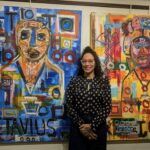
Brath & Hughes Fine Art, the new art gallery that opened in downtown Mechanicsburg last fall, has a name that is simple, yet distinguished.

“We kept playing around with these cutesy type names and decided we just wanted it to be professional,” said Mary Beth Brath, the co-owner.

Brath and business partner Brownyn Jean Hughes are artists in their own right. Two years ago, Brath started the Daily Painters of Pennsylvania, which has grown to a group of more than 40 professional artists from across the state who show their works annually in the state Capitol. After the Daily Painters exhibit this coming June in the Capitol’s East Wing Rotunda, their works will show for the month of July at Brath & Hughes.

For both women, this is their first business venture they had been selling out of another gallery in town for a couple of years, but decided to go out on their own.

Fitting to their name, Brath & Hughes occupies a distinguished, late 19th- century space, the 1,500-square-foot first floor of the Mechanicsburg Bank Building that has sat vacant at 41 W. Main St. for four years. The spacious lobby has tall windows that allow plenty of light.

“It’s really a perfect space for an art gallery,” Brath said. “It has a character all its own.”

The building’s interior appears pretty much unchanged, with its original white marble wainscoting and floor, black marble teller counters, varnished woodwork and walk-in vault.

The vault is reserved for special exhibits, such as the current “Tears of the World,” a series of abstract paintings by Hughes–ranging from $40 to $600– of which 100 percent of the proceeds will go to the Red Cross.

Brath & Hughes also carry artwork by local, regional and nationally known artists such as Patricia Griffin and Linda Benton McCloskey. A list of thier artists is on their blog site www.brathandhughesfineart.blogspot.com.

The gallery also sells hand-made jewelry and offers service that include select corporate art installations, social media workshops and fine art event consulting and planning.

While Brath and Hughes are serious-minded artists, they enjoy a asense of humor. Added to the name of their gallery is this phrase: “Galerie de la Muse.”

“Our husbands think of us as muses,” Brath said. “So we put that little catch phrase there.”


Continue Reading

Vegetarian Victory: Jayyid Harvest mixes veggies with family.

When Tanya Shariyf decided for health reasons to change her diet and come a vegetarian, she and husband Abdullah and their six children became frustrated in their search for a restaurant that served vegetarian dishes, let alone good vegetarian dishes.

That compelled this former military dietician and federal police officer and her husband, a youth counselor, to open Jayyid Harvest, one of the few, if any, authentic vegetarian restaurants in the Harrisburg area.

“other than having to go to Philadelphia or New York, there are no vegetarian restaurants around,” said Tanya, a gentle, soft-spoken woman. Before opening the restaurant–its name means “good harvest”–in the corner building  at 1530 N. 2nd St., where Flow Buffet and several other restaurants had once served food, Tanya and Abdullah spent time researching vegetarian and vegan foods.

They visited various restaurants in Philadelphia and New York and toured Vegan Treats, a vegetarian bakery in Bethlehem.

“Vegan Treats let us talk to some of their customers and that’s how we got into this,” Tanya said. “Meat-eaters like Vegan Treats, too.”

Realizing that a good vegetarian restaurant could serve dishes that would satisfy even skeptical meat-eaters, Tanya and Abdullah decided, “Ok, we can give it a try. We love to cook for people.”

The menu offers steak and chicken sandwiches made of soy that surprisingly and delightfully taste like steak and chicken. They serve breakfast, lunch and dinner.

“This vegetarian restaurant will put a smile on mean-eater’s face,” Tanya said.

A vegetarian couple, traveling from Tallahassee, Fla., to New York was driving on Interstate 81 and found Jayyid Harvest from one of the restaurant apps on their phone.

“This is the best one we’ve found so far,” said Jessica Evans Brady. “It’s awesome.”

“Yup,” agreed her husband, Jason, “It’s really good.”

Since opening in late October, the restaurant has had a growing clientele, many from the Midtown neighborhood. It’s a family-run operation. Tanya’s and Abdullah’s six children-five daughters and one son, their ages range from 8 to 19–help out.

“They’re all learning the business,” Tanya said. “Only my older daughter is cooking and baking.”

Since the restaurant opened, Tanya has been pleased by the reception.

“I want everybody to feel welcome in here,” she said. “That’s our goal: to bring people together with food and bring people back to enjoying the taste of their food.”

Even meat-eaters, who first came warily, are returning for more, Tanya said.  “They come in skeptical, but they leave here with the biggest smile on their faces.”

Continue Reading

Rooming House Denied:Ordinance sinks plan for student exchange housing.

Years ago, to stop slum lords and curtail parking problems in neighborhoods of limited spaces, Harrisburg adopted an ordinance that banned the conversion of single-family homes into multi-family dwellings.

The purpose was to build and maintain strong neighborhoods where residents have a stake. Harrisburg Planning commission members grappled with an unitended consequence of the law at their meeting last month.

Before them was lvaylo Yolov, who bought single-family homes at 413 and 417 Hale Ave. with the intention of turning each into a rooming house to accommodate one of the city’s many U.S. State Department- sponsored foreign student exhange programs.

Yolov came prepared with a presentation that included two students from Argentina and Brazil. HE promised to provide periodic documentation to show he participated in the federal program, and he promised to cooperate with the city.

Unfortunately, the commission was bound by Zoning Code’s “7-309(b), no single family dwelling unit shall be converted into two (2) or more units.”

“This is the hardest case I’ve had to write because it’s a good program,” he said.

The commission agreed with the recommendation. They explained to Yolov, who is European and unfamiliar with city zoning, that, while they trusted he would properly maintain his properties, the ordinance’s purpose was to build stable neighborhoods.

“We love the program,” commission Chairman Joseph Alsberry told him. “But we have to abide by the law.”

Two weeks later, Yolov went before the Zoning Hearing Board with his lawyer and was again turned down on the same basis. In other action, the commission approved:

  • A request by Delta Housing Inc., a social services firm, to convert its building at 2041 N. 2nd St. from two apartment units to a multifamily building containing six apartment units.
  • A request by Neil Katx, owner of 106 State St., to convert a first-floor office space to a residential dwelling unit. The building already contains two apartments.
  • A request by Char Magaro to convert her former restaurant, the now-closed Char’s BElla Mundo at 540 Race St., to a retail space for a professional office.
  • A request for relief of 16 inches of the 10-foot side yard setback requirement for 1409 S. Cameron St., filed by Martha Camacho for the purpose of building a 1,068-square-foot building for an automotive sales business.
Continue Reading

Kunkel Conversion a Go: Developer expects to start work in months.

Work to convert downtown’s nine-story Kunkel Building at 301 Market St. into one- and two-bedroom apartments is anticipated to start sometime this winter, possibly as early as February, said Daniel Deitchman, the developer.

Deitchman, who restored Front Street’s Riverview Manor and is now restoring the Furlow Building in Midtown, won approval last month from the Harrisburg Zoning Hearing Board to build between 40 and 50 market-rate apartments in 38,676-square-foot commercial office building.

In November, the Harrisburg Planning Commission gave its unanimous approval for the project, one of many such conversions of office space in the city recently–but not at the scale Deitchman is proposing–because the commercial market downtown is saturated and is expected to remain so for the foreseeable future, Deitchman and other realtors said.

Deitchman cited nearly 100 percent occupancy in his city buildings, including the recently renovated old Governor’s Hotel down the street at 4th and Market that he converted into student housing for Harrisburg University of Science and Technology.

“On the residential side, there’s substantial demand and substantial use,” he said, noting some of his as well as other properties have waiting lists.

The developer also received a special exception request to waive the off-street parking requirement. He has secured a lease for as many as 50 parking spaces in Harrisburg University’s 4th Street parking garage.

Like the planning commission, the zoning board required Deitchman to leave the first floor for retail space, possibly a restaurant, even though he wanted to include some residential units, possibly townhouses, on that level. He said that he will proceed with project regardless.

The Kunkel Building, built in 1913 and expanded to double its size in 1925, spent many years as a bank and a clothing store. Most recently, it housed the Susquehanna Art Museum, which is preparing to break ground on a new home in Midtown Harrisburg.

The building currently is owned by Select Capital Corp. and is listed on the National Register of Historic Places.

Continue Reading

Restaurants Possible: New Eateries, changes abound around Harrisburg.

November was an especially active month in the never-dull restaurant scene in Harrisburg.

The heart-of-downtown corner of N. 2nd and Locust has seen numerous bars and eateries come and go over the years. The latest “go” was Spice, an American-style bistro. In its stead, Arooga’s will open its fourth location and first within Harrisburg proper.

The new Arooga’s Draft House and Sports Bar will be designed specifically for an urban location, with more drafts and a sleeker look, according to Arooga’s. It’s expected to debut early next year.

On the other side of Forster Street, the long-rumored sale of Garrason’s Tavern finally went beyond rumor, as owner Rob Fogleman said he will relinquish his decade-long reign behind the bar this month. Garrason’s is under contract to be bought by an experienced Harrisburg tavern manager. The new owner, who asked not to be named until the sale is final, said he plans significant changes for the re-named Sturges Speakeasy.

Roxy’s Café owner Richard Hanna has been on something of a tear lately, announcing last month that he will take ground-floor space for a new restaurant in The 1500 Project, a condominium complex at N. 6th and Reily streets.

Café at 1500 will feature an American-style diner and deli food and is expected to open in early spring with the completion of the 43-unit building. This is the second restaurant Hanna has announced recently. Last month, he took over the former Confit Bistro space in Camp Hill, turning it into a Mediterranean-style eatery called Layel Bistro.

In addition to Layel Bistro, several new restaurants opened their kitchens last month, including Jayyid Harvest and Pho Cali.

Broad Street Market Names New Manager

Elissa Feinstein has been named the new market manager for the Broad Street Market and Nicole Sheaffer the facilities manager.

Feinstein was founder and editor of Harrisburg’s CityBeat Magazine, which published between 1990 and 2002. She replaces Jennifer Sim.

“I have been involved in the advertising, journalism, public relations industry since 1989,” Feinstein said.

She said she also owned a six-location produce- and street-vending business in Boston. She moved to Harrisburg from Boston in 1980.

Annual Perohi Sale for Christmastime

Perohi, a popular eastern European-style dumpling with various fillings from cheese to meat to prune, are being sold through Dec. 21 by St. Ann Byzantine Catholic Church, 5408 Locust Lane, Harrisburg, as part of a pre-Christmas fast.

Sales of perohi (also known as pierogi) are Wednesdays, noon to 1 p.m., and Saturdays, 9 a.m. to noon, in the parish hall.

Proceeds benefit parish educational activities. Call 717-652-1415 or visit www.stannbyz.org for more information.

Continue Reading

City Muddled: Harrisburg history enters a new phase.

Last month, I attended a forum at Midtown Scholar Bookstore honoring the work of Paul Beers, the popular Patriot-News columnist who died recently.

The forum was held along with the release of a book compiling Beers’ columns called “City Contented, City Discontented: A History of Modern Harrisburg.”

Sitting there, listening to the panelists, I thought (and I’m sure I wasn’t alone) that, if Beers had continued to write, he would need to find another adjective to describe Harrisburg today.

City Frustrated? Angry? Exhausted? All would apply.

November was a particularly troubling month in a particularly troubling year for Harrisburg.

The state effectively denuded the city of its autonomy and now will force it to sell its most valuable assets to pay creditors complicit in the incinerator upgrade debacle and the resulting, crippling debt load.

The takeover came after more than a year of contentious meetings, as Harrisburg’s elected officials groped futilely for a solution, only to show a city so deeply at odds with the county, the state, itself.

A city discontented indeed.

The Beers’ book divides Harrisburg history into two large chunks: its glory days beginning with the City Beautiful movement at the turn of the 20th century and its post-war decline, the result of de-industrialization, white flight, race riots, the 1972 flood and inept attempts to deal with all the above.

Each time Harrisburg seemed to make a little progress, another blow would beat it back down.

Which leads us to today.

Harrisburg is about to enter a new period, a time it’s never before experienced. The state takeover is unlike the city’s previous downs. In this down, Harrisburg is almost completely at the mercy of outsiders who, most certainly, will not have the interests of the people who live here as a first priority.

The state receiver’s highest priority will be to see that the bills get paid, more than $310 million worth just from the incinerator disaster. The legislation that led to the state takeover is clear that creditors stand first in line.

So, anything that can be turned into cash probably will–starting with the parking garages but possibly extending to everything from City Island to municipally owned buildings. Protecting the interests of suburbanites, as made clear by both state Sen. Jeff Piccola and Rep. Glen Grell, is another priority.

For what it’s worth, I believe that bankruptcy is the best of bad choices for Harrisburg, offering it the greatest potential to protect its assets while allowing the pain to be shared with the state, the county, Wall Street and anyone else who deserves it.

That option, however, was taken off the table last month by U.S. Bankruptcy Judge Mary France, who ruled that the filing was made improperly, hurried through one night by City Council, contrary to state law and without the review and consent of the administration.

France’s decision was expected and, from a procedural standpoint, correct. Given existing rules, the rushed petition never stood a chance.

So, what will Harrisburg look like when it emerges from receivership?

Some bankruptcy advocates have painted a dire picture of the city once stripped of its parking garages, one with empty storefronts, empty houses and empty streets.

I doubt something so drastic will come to pass.

Over time, Harrisburg will heal. Apart from its dysfunctional political culture, the city has many strengths to build upon, from a relatively stable workforce to a dynamic small business community to emerging, vibrant districts for nightlife and the arts.

The issue then becomes how long it will take to heal.

The receiver must draft a recovery plan within 30 days of his confirmation, which would seem to put Harrisburg on a very rapid path to recovery. However, the receiver’s inevitable solution–a fire sale of city assets–is likely to have unintended consequences that will linger for years.

Well after the receiver has packed his bags, Harrisburg probably still will be socked with high debt levels, but will have few options for generating income, leaving it to struggle to deliver services, balance its budget and keep taxes reasonable. Like most Act 47 cities, it may remain stuck in the program for years, if not decades.

Moreover, the city’s nearly 50,000 residents will endure all the pain of the exhausting return to fiscal health. Tragically, those most dedicated to the city–people who live, work and own property here–will bear the greatest burden.

Progress will come, but it will come very slowly.

So perhaps we can call the next phase of Harrisburg’s history, “City Muddled, City Unmuddled.” It’s mostly a matter of how long it takes for us to muddle through.

Lawrance Binda is co-publisher/co-editor of TheBurg.

Continue Reading

Serving Harrisburg, Family Style: The Cribaris will greet you, feed you like family.

For more than two decades, Ernie Cribari has had his living and his love.

His living was law enforcement, slapping handcuffs on criminals and fugitives as a state constable in Midtown Harrisburg and as a member of the PA Task Force for fugitive recovery.

His love, though, was always food, an affection gained at an early age by watching his grandmother Concetta and his mother Luisa, both from Calabria, Italy, work magic in the kitchen while he grew up on Allison Hill.

Now, his living and his love have become one as last month he opened his namesake trattoria, Cribari’s Ristorante, on Reily Street, in the space last occupied by Nonna’s Deli-Sioso.

“I always loved to cook,” said Cribari, a Bishop McDeviitt graduate who recently turned 50. “I saw an opportunity to get away from the handcuffs and guns and pursue my passion.”

Cribari, a 32nd-degree master Mason, actually had years of experience in the kitchen, as he’s long volunteered as the executive chef for Cedars Grove, the Mason-affiliated catering hall on Jonestown Road east of Harrisburg. So, after Nonna’s closed, he phoned owner Ray Diaz and asked about the space. And not only did he acquire the restaurant, but bought the entire building, moving into the spacious, beautifully renovated apartment upstairs.

Upon walking in, the restaurant looks much like the old Nonna’s, as Cribari acquired the place lock, stock and barrel. Beyond the decor, though, the differences are substantial.

The menu is streamlined and the prices substantially lower. Cribari starts with a core of traditional Italian dishes such as chicken parmigiana, rigatoni with a hearty, homemade tomato sauce and penne with a vodka sauce (with real Grey Goose vodka). Around those items, he wraps lunch favorites, such as hot and cold sandwiches, and even a few uniquely American dishes, like the pulled pork barbeque, of which Cribari is rightly proud.

He’s also not hesitant to get creative. Cribari’s offers specials each day, often a pasta dish, such as, on one recent evening, homemade lobster ravioli and, on another, penne and sausage in a savory marinara sauce.

At $17.95, the New York strip steak–center cut Angus beef served with a baked potato and vegetable–is, by far, the most expensive dish on the regular menu. Nearly every other item is less than $10, a price-point that, Cribari said, other area restaurateurs told him was too low.

“I’m not trying to get rich,” he said. “I just want to pay my bills and make my customers happy.”

Along the way, he’d like to give something special to the community that he’s called home all of his life.

He’s pledged to use as many locally sourced products as possible. And when he says local, he means local–produce from the Broad Street Market, a soup offering from the Soup Spot, perhaps some items from Garden Fresh Market & Deli, all located in Midtown Harrisburg. And, like Nonna’s did, he plans to start “dinner and movie” specials with the Midtown Cinema across the street.

But, mostly, he wants to give the neighborhood an affordable place to catch a nice meal, a restaurant that is friendly and comfortable and treats its patrons like one large, extended Italian family. In a way, he wants to re-create the feeling he had during his youth on Chestnut Street on Allison Hill, where food and family and friends all blended so warmly together.

“Having my own restaurant has always been my dream,” he said. “It’s even more special to be able to serve my neighborhood and community.”

Cribari’s Ristorante, 263 Reily St., Harrisburg. Open Monday to Thursday, 11 a.m. to 8 p.m.; Friday and Saturday, 11 a.m. to 10 p.m. BYOB. 717-412-0550.

Continue Reading

Family, with Eggs and Toast: For 54 years, the Mallioses have nourished Harrisburg.

In 1957, when James Mallios began frying eggs and making sandwiches at the Keystone Restaurant in Midtown Harrisburg, he couldn’t have known that he was starting something much greater–a restaurant dynasty.

But that’s exactly what happened. The Keystone, a diner at the corner of N. 3rd and Boas streets, has spawned three generations of restaurateurs, each adding a new angle and update to the Harrisburg dining scene.

From the Keystone came the Paradise Hotel, now called the Colony House, in Mechanicsburg, founded by sons John and Tom. Then, last year, John’s daughter, Jacquie, and her husband Steve started Brick City Bar & Grille, just a few blocks from the Keystone.

“After all these years, I can say I accomplished something,” joked James, who started his business not long after emigrating from his native Greece. “I didn’t waste my time.”

Now 77, James still begins his day at the Keystone at 5 a.m., working until 3, making his signature soups and from-scratch pot pies. And, as she has for five decades, wife Evdokia (known to all customers as Yia Yia–“grandmother” in Greek), labors beside him, preparing pastries and Greek specialty dishes, such as moussaka.

For the past decade, son John has actually owned and run the business, taking the position at the grill where he watched his father spend countless hours.

“We grew up in this restaurant,” said John. “Starting at age 9, we were cleaning and stacking dishes, peeling potatoes.”

The Keystone actually began diagonally across the street, where Mercado’s Pizza is now, and moved to its current location in 1984, when James bought the building at 1000 N. 3rd St., which was, for many years, the Senate Drugstore.

For 54 years, from that intersection, James has been witness to the sometimes-good, sometimes-troubled history of Harrisburg. Indeed, it’s a unique corner, where races and classes come together, where the people who live in the neighborhood meet the people who work there.

John, 48, remembers a time from his childhood when the 3rd Street corridor was lined with storefronts and small businesses, before many buildings were razed and turned into surface parking for state workers. His father recalls the good times, but also the bad, when floods ravaged the city, people fled and crime increased.

“It’s a lot better now,” James said. “The area has come back, and it’s a big improvement.”

Through all the ups and downs, the Keystone has been the one constant in the neighborhood. In the late 1950s, you could go there for coffee and eggs and local chit-chat–and you still can today.

John said that gabbing with his regulars is a big part of his day, making the long hours behind the grill go faster. They come in, talk local politics, kid each other about their favorite sports teams (the Indianapolis Colts for John, the Nittany Lions, Eagles and Steelers for most others).

“I know my customers personally,” he said. “I know what they’ll order and get the food started the minute they walk in.”

Recently, Buddy Winters sat at the counter enjoying a mid-morning breakfast, as he does every day.

“The food is very good,” said Winters, who makes the daily trip from his home near John Harris High School. “But I really come here because they treat me like family. They do that for everyone who comes in through the door.”

So, where does the Mallios family go from here?

Recently, Jacquie gave birth to a baby girl, who, in a year or two, will probably be running in the aisles and climbing onto the booths–just like John and his siblings did and Jacquie and her sisters did.

“We’ve all raised our kids in the Keystone,” John said.

And the dynasty continues … .

Keystone Restaurant, 1000 N. 3rd St., Harrisburg. Open Monday to Friday, 6 a.m. to 3 p.m.; Saturday and Sunday, 7 a.m. to 1 p.m. 717-236-3273. The Mallios family would like to thank all its customers for supporting the Keystone during its many years in business.

Continue Reading

From Rocker to Roaster: Little Amps set to crank up the coffee quality to 11.

So what happens when you reach 30 or so and put your guitar-thrashing, garage punk/acoustic freak folk youth behind you?

Well, different indie psychedelic jam guitarists make different choices, but, for Aaron Carlson, the path soon became clear–coffee roasting.

On Oct. 1, Carlson opens Little Amps Coffee Roasters, a roastery and café in a newly restored building at the corner of Green and Muench streets in Harrisburg. There, he will roast beans on site and brew coffee the old-fashioned way–with a hand pump espresso machine, French presses and slow pours into individual filter cups.

“I will continue the process that started when the coffee was planted,” Carlson said. “I’m very process- and detail- oriented. When you line up everything right–the time, the temperature, all the details–you really have a great cup of coffee.”

Carlson’s shop marks the end of a long journey that began in Dauphin Borough, where he grew up, and wound its way through Washington, D.C., and California. Along the way, he fronted two well-received rock bands before settling into the more adult business of coffee.

“I developed a love of coffee when I was a musician,” he said. “We’d roll into a town and end up at a coffee shop before a show. We would always ask where the best places to go were.”

He later learned the trade at a San Francisco roastery called Ritual Coffee Roasters, which let him watch and listen in exchange for work. Two years ago, he returned to Harrisburg, settling in Bellevue Park, and decided to give this coffee roasting thing a try.

His Little Amps Coffee (the name is a nod to his rock guitarist past) quickly gained an audience from local coffee buffs, and, for the past year, he’s operated a roastery out of borrowed space at Hi Voltage Productions, located in a converted power substation on Maclay Street.

Carlson wasn’t even considering a shop when approached by WCI Partners, which was seeking an operator for a café they planned to open after fully restoring a rundown corner store they had acquired in the heart of Olde Uptown.

After meeting Carlson and hearing his thoughts on community, coffee and creating a great neighborhood space, Little Amps emerged as the perfect fit, said WCI President David Butcher.

“We think this is going to be a great match for this community,” said Butcher. “I know that the residents are very excited that Little Amps is opening here.”

Carlson had hoped, one day, to open his own place–it just came a little earlier than he had thought. And, even though his life already was hectic (he and wife Kara just had a baby boy), he jumped at the opportunity.

In the final days before his shop’s debut, he was making sure all the last details were in place. The space is beautiful, with a poured concrete bar, lots of exposed brick and Carlson’s coffee roaster (in which he will actually roast coffee) as a centerpiece.

Not that he will completely leave behind his rock’n roll past. He plans to have a select group of albums for sale (vinyl only!) and expose patrons to his tastes in music. He might even bring in some of his old band buddies to play a live gig.

“The atmosphere will be wonderful, but the most important thing is the coffee,” he said. “I try to roast perfectly, so that I respect all the stages that have already taken place in the process. I want to get the right roast for the right bean so that it tastes like its origins.”

Little Amps Coffee Roasters, 1836 Green St., Harrisburg. Open Monday to Saturday, 7 a.m. to 2 p.m. Contact: [email protected], www.littleampscoffee.com.

Continue Reading