Tag Archives: harrisburg

New Owner, New Look: Rehab starts at Cumberland Court.

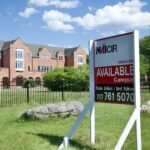
Construction began last month on a large-scale rehabilitation of Cumberland Court, the sprawling apartment complex next to the Broad Street Market in Harrisburg.

Nick Bouquet, development associate for Maine-based Evergreen Housing Partners, said the company is investing an average of $40,000 in each of the complex’s 108 units.

Interior improvements will include new kitchens, bathrooms, flooring, heating/cooling systems, windows and lighting in each unit. The complex’s exterior will receive new outside lighting and improved security system and a new roof.

Bouquet said the company also plans to build a community center, which will include community space, a policing center, a computer center and new management offices.

“We are undertaking a substantial interior and exterior renovation that will modernize the units so that everything the tenants see and touch will be new to the unit,” said Bouquet, who added that privately held Evergreen will be long-term holder of the property, which will continue to serve lower-income residents.

Renovations on the complex, built in 1975, should be complete by year-end, he said.

Evergreen brought the brick, garden-style complex in December for $3 million from long-time owner Cumberland Court Associates.

The company specializes in acquiring, improving and managing properties for low- and moderate-income residents. Locally, it owns the Rutherford Park Townhouses in Hummelstown and the Garden Court Apartments in Lancaster.

Cumberland Court is bordered by Capital, Verbeke, Herr and N. 6th streets.

N. 7th Street Project Begins with Detours

The long-promised upgrade of N. 7th Street in Harrisburg has begun, according to the city.

On Feb. 28, crews closed the southbound lane of N. 7th Street between Reily and Maclay streets for a major project that includes widening the street from two to four lanes.

The project also will add sidewalks, upgrade sewer and water lines and install antique-style lighting and benches. The intersection at N. 7th and Maclay streets also will be upgraded.

Construction is expected to take about a year. Until then, N. 7th Street traffic will be detoured onto N. 6th Street.

The $5.5 million road project is funded mostly with state and federal funds, allowing easier access to the Capitol complex and the proposed federal courthouse at N. 6th and Reily streets.

First National Takes Space on State & 2nd

The regional headquarters of a major bank will occupy most of the remaining available space in the prominent new office building under construction at N. 2nd and State streets in Harrisburg.

First National Bank of Pennsylvania, the largest affiliate of F.N.B. Corp., will take up the entire first floor of the building, as well as much of the second floor, said project developer WCI Partners. The first floor will be a full-service bank branch, while the second floor will become the bank’s regional headquarters, which is re-locating from Susquehanna Township. About 40 employees will work in the bank’s new Harrisburg location.

“We are excited to establish our regional headquarters in what we consider to be the number one new location in downtown Harrisburg,” said Lloyd Lamm, regional banking executive for the bank’s 15-county Capital Region.

WCI has already signed up the law firm of Buchanan Ingersoll & Rooney as anchor tenant for the building. The firm will occupy the upper three floors of the five-story building upon its completion, expected in July.

Including the law firm and the bank, about 110 employees are expected to work in the building.

“Anytime we can bring companies into downtown, it’s good for our business and good for the city because it generates revenue as well as solid employment opportunities,” said J. Alex Hartzler, WCI managing partner.


Continue Reading

N.J.-Style, Pa.-Sited: Capitol Diner serves everyone from pols to prols.

With its sleek stainless-steel exterior and well-appointed interior filled with the warm smells of cooking and brewed coffee, the Capitol Diner sits atop Eisenhower Boulevard, shining like one of its pre-fabricated brothers in New Jersey or New York.

That’s what Dimitrious “Jimmy” Hronis, who owns the diner with his brother, Gus, intended when they bought the old 70s restaurant with its faux stone exterior a decade ago and began to transform it into a stylish, 24-hour restaurant with a counter.

“This is very typical for New Jersey,” Hronis said, relaxing one morning in a booth near the long granite counter. “It’s the old way diners used to be, but modernized.”

The Swatara Township diner, which the brothers bought 10 years ago, was recently approved for a liquor license and should soon offer beer and wine with meals – very New Jersey/New York like, but Hronis doesn’t anticipate ever having a bar as many diners do in those states.

To Hronis, who has an information technology degree from George Washington University, appearance is everything in running a restaurant. He and his brother grew up working in their father’s Northampton diner, where they learned the business – from cooking to waiting tables.

Hronis found his niche in managing the front of the house while Gus took the kitchen, which is how they operate their 180-seat diner with a trained staff that numbers as many as 10 workers on a shift, depending upon the time of day.

Since those first years cleaning, remodeling and refurbishing the interior and re-fabricating the exterior, Capitol Diner has become a popular spot, attracting even governors and U.S. Senators as well as celebrities performing in Harrisburg.

One of the biggest to dine there was Hilary Clinton, when she was a candidate for president in 2008. Her staff chose the diner for a campaign event that drew crowds of voters as well as media.

“We had reporters coming in from all over the world here,” Hronis recalled, noting television trucks were parked everywhere. “It was a very busy day.”

The keys to running a successful diner, said Hronis, are “Good food, good service and clean atmosphere,” something his Greek-immigrant father always stressed during the 33 years he ran his diner. “Those were the words from Pop.”

“We strive here on being clean, very clean,” Hronis said. A short while later, He pointed at a busboy who worked nearby with a broom, “He’s doing sweeping, see?”

Hronis believes success requires a willingness to make changes. That, he said, is why he rebuilt the diner – it was closed for four months after he bought it in 2002 – and why he continues to add to the menu.

“People want a change,” he said. “They don’t want the same thing all the time.”

Hronis, who makes a point to know his customers, said that’s just as important as a clean restaurant, and food that not only tastes good, but looks good.

“People believe with their eyes,” he said. “The eyes are the key to people’s stomachs.”

Capitol Diner, 800 Eisenhower Blvd., Harrisburg, 717-939-2279 or fax 717-939-4119.

Continue Reading

Giving a Smile: Just 2 years old, Hbg4Kids impacting young lives.

You can’t help but hear a child’s laughter or see a baby’s smile and feel happier. Their joy is contagious, and I’ve often said that they are the best remedy for a bad day.

Truth be told, I was having a hard week when Hbg4Kids got its start. It wasn’t until I closely examined my situation that I realized how insignificant my problems were in comparison with those around me. I think it was God’s gentle way of reminding me to be thankful for what I do have and to concentrate on how I could help others. From that point forward, I was determined to give back.

Hbg4Kids started very small two years ago. I reached out to a few close friends and asked them to join me in giving back to others during the holidays. I quickly realized however that there is a large group of young professionals and community members who want to help others, but they just need an organization, cause or channel through which to give. We quickly found that our true passion is helping children in our community who are facing some of life’s biggest obstacles but deserve bright futures. In what has become our theme, we wanted to “Give a Smile … Harrisburg Style.”

For our first campaign, we helped raise support for The Four Diamonds Fund at Penn State Hershey Children’s Hospital, as they work to provide invaluable care to children and their families. Our team’s efforts were well received, and at our inaugural event we were thrilled to present a $10,000 donation to the organization and help local children smile. From that night forward, our passion only grew stronger.

This year, we set our sights on reaching children in Harrisburg and around the world. We partnered with TOMS, a shoe company that donates one pair of shoes to an underprivileged child for every pair purchased through its “One for One” program. Through the community’s generosity, we are thrilled to have donated more than 200 pairs through our “Heel Your Sole” campaign.

We then turned our attention to Allison Hill. Children living in this neighborhood face some of Harrisburg’s most challenging conditions including the city’s highest violent crime, unemployment and poverty rates – but many are striving for bright futures through educational mentoring provided by The Joshua Group. Our goal was to raise support for the nonprofit’s after-school tutoring program, J-Crew, which assists students in achieving academic success.

On February 4, we held our 2nd Annual Give Them a Smile, Harrisburg Style Charity Event at Dragonfly Club with title corporate sponsor HealthAmerica. Continuing to gather generous donations throughout the evening, we were thrilled to present a check to The Joshua Group for $12,000.

Despite a tough economy and the challenges it brings, the Harrisburg community continues to demonstrate its commitment to our youth.

What began as a small group of friends wanting to lend a hand, Hbg4Kids has evolved into a powerful catalyst, joining young professionals, adults, businesses, organizations and the community together to make a difference in the lives of local youth. Comprised of nearly 20 young professionals from the greater-Harrisburg area, we are working collaboratively to improve the lives of children and, of course, “Give a Smile … Harrisburg Style.”

Traci Fatula is a lifelong Harrisburg resident and president of Hbg4Kids. For more information on the group, call 717-903-7307 e-mail [email protected].

Continue Reading

20 Years, on Watch: The torch is passed at Riverside Crime Watch.

A flea market raising funds since 1993. A daily tally of stolen bicycles tacked to a telephone poll during a rash of thefts. A head count of students playing hooky. An annual Halloween parade. A chatty, informative newsletter dropped in 800 mail slots every month.

Not unusual, perhaps, for 20 years’ of work by one crime watch, but notable because one person initiated it all – Riverside Crime Watch Chairman Virginia Pianka. After 20 years of hands-on leadership and shepherding volunteers in the Harrisburg neighborhoods north of Division Street, Pianka announced her retirement in January.

“It’s time for the younger generation to step up and take over, and I hope that the new group comes forward to build on what the present members have accomplished,” Pianka wrote in the monthly newsletter.

The change underscores the importance of strong leadership and resident input to maintain a viable crime watch, say those involved in the transition.

“An effective crime watch has a leader like Virginia was,” said Harrisburg City Police Capt. Annette Oates. “Someone who can spearhead the whole watch and give it a backbone. If it’s not a strong crime watch, it’s not going to be helpful for the neighborhood and the police.”

At a special Feb. 9 meeting, about 40 Riverside residents and city officials presented Pianka with gifts, plaques, and proclamations. When someone suggested seizing the opportunity to maintain momentum, an election for officers broke out.

A new interim president and vice president, Pat Waller and Claire Powers, replaced the single chairman, and longtime treasurer Brenda Lawrence retained her post. The team will face re-election, if they choose to run, after a three-month trial period. Individual committees will organize the May flea market, Halloween parade, and National Night Out block party – three major functions that Pianka oversaw with the help of volunteers.

“They say it takes a village,” said Waller a few days later. “Well, it’s gonna take a village to fill Virginia’s shoes.”

Pianka said she’s glad to let new leadership “find out what is workable and offer new ideas.” Waller hopes to spotlight Riverside’s architectural diversity and fill in gaps left by the cash-strapped city. At the top of the list: Scheduling a concert or two to fill Italian Lake with music on summer nights, in the tradition of the canceled city concert series.

“We have such a beautiful natural asset down there, and the community itself has a lot of pride, and it’s time again to show off what we have,” Waller said.

Riverside resident Tom Leonard, a veteran of neighborhood involvement, said that each community group or crime watch needs structure for formal planning and communicating, but each must also plot its own course based on priorities. As a result, residents watch out not just for the lurking stranger but for the neighbors’ well-being, even “if it’s something like the newspapers accumulating on the stoop.”

“You can’t say enough about having just one more way to communicate with each other, because we benefit from contact,” he said. Crime watches “really act as an extra set of eyes on the street looking out for each other.”

Continue Reading

Poles, Pick-up & Problems: Director Hoch sheds light on challenges at DPW.

Bill Fritz can count at least four light poles that are down near his home in Midtown Harrisburg.

It’s not that the light bulbs are out–the poles themselves are actually missing, the victim of car crashes or storms or whatever caused them to tumble over.

“One of the poles just rusted off at 3rd and Cumberland streets,” he said. “Nothing is being done, and it’s a breeding ground for people committing crime.”

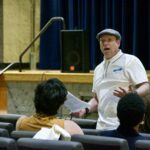
Ernie Hoch, the city’s director of the Department of Public Works, listened with concern as Fritz and more than a dozen other Midtown residents gathered recently to ask questions and get some answers.

Does Hoch know about the downed poles? Yes. In fact, he knows exactly how many there are (39 city-wide) and where they are.

Does he know the locations of scores of lights that are out? Yes again. Does he know that many streets need to be striped, where illegal dumping is occurring and where sinkholes are about to pop up?

Yes, yes and yes.

Hoch said that his employees and residents keep him well-informed of the many critical infrastructure, maintenance and sanitation issues that need to be addressed in Harrisburg. He’s just asking for a bit more time, patience and, fingers crossed, resources.

Hoch’s been in his position more than a year and has spent much of that time trying to undo the damage of the previous administration, which delayed critical projects, such as street striping and repair, again and again, he said.

“When I see what was going on around here for the past 30 years, I almost can’t believe it,” he said.

Moreover, he’s had to deal with what he calls “crazy contracts.”

The Reed administration, for instance, bought the city’s lighting system from PPL Electric around 2000, then turned around and gave the company a 10-year maintenance contract that, with escalation clauses, was costing the city $400,000 a year for bulb replacement and pole repair, he said

Hoch said he’s now taken those functions in-house, which has significantly cut the cost.

“Every deal I look at and unravel, it’s like an onion, with so many layers,” he said. “It makes no sense.”

In addition, the department’s utility funds were constantly raided to make up for shortfalls in the city’s general fund.

“It was a shell game, moving things from here to here to here.”

To make matters worse, a series of severe storms have knocked down many old trees, destroyed light fixtures and diverted resources. Then there’s the city’s financial crisis, which has taken a toll on his budget.

The residents, assembled by Friends of Midtown, were generally sympathetic. They know that Hoch is under sever constraints, but they still want their lights fixed.

“There are four lights out just on my block,” said Don Barnett, Friends of Midtown president.

Hoch said that his department “has been catching up quite a bit” with light outages, which have been unusually severe because, a few years back, the bulbs were all replaced and are now blinking out simultaneously.

As for pole replacement–the 2012 city budget should be sufficient, he said. His department is ordering new fixtures, which will be installed over the next few months.

Otherwise, Hoch hopes that the city receiver’s financial plan, due for release this month, will provide more resources for his department.

Manpower is desperately needed, as Hoch constantly has to divert employees just to pick up the trash. He estimates that, due to vacation, sick and personal time, only 70 percent of his sanitation staff shows up for work on any particular day.

Asked how residents could help, Hoch said that people can ensure their blocks are kept tidy and community groups could “adopt an area.”

“It does help a lot if we are working together,” he said.

Continue Reading

The Great Divide: Forster Street: a road that splits Harrisburg.

In 1891, Harrisburg’s Mulberry Street Bridge opened, linking Allison Hill with downtown and the rest of the city. The bridge was hailed as a unifier, pulling people closer to each other.

When another bridge, the M. Harvey Taylor Memorial Bridge opened in 1951, requiring tree-lined Forster Street to be widened into a highway, there was no such accolade. Even today, there is dismay with what happened to Forster Street, which now has four through lanes and multiple turning lanes.

“It cut the heart out of the city,” said Ken Frew, city historian and librarian for the Dauphin County Historical Society.

The decline of Forster Street began in the 1940s, when state and local governments began pushing for another span across the Susquehanna.

Originally, the bridge was to be built farther uptown, but Harrisburg political boss Harvey Taylor wanted his namesake bridge in a more prominent location, closer to the Capitol and downtown, according to Jackson Taylor, author of the historical novel set in Harrisburg, “The Blue Orchard.”

So, in the early 1950s, a long line of houses, shops and other buildings was leveled, from Riverfront Park to N. 7th Street.

While benefiting suburban developers and commuters, the widening did damage to the city itself. It made a once-quaint, residential Forster Street into an asphalt wasteland–a congested, noisy street that no one wanted to live on any longer. Soon, the street took on the look of desolation and even danger.

To save as many buildings as possible on the south side of the street, sidewalks were narrowed, making walking in some areas nearly impossible. And then entire swaths of houses were razed for parking lots, while billboards sprung up.

The ugly, harsh state buildings that rose near the Capitol, several built in the stark concrete “brutalist” style common in the 1950s through the ’70s, furthered Forster’s transformation from quaint to forbidding.

Then there was the effect on Midtown.

Before the Forster Street expansion, downtown and Midtown flowed together as an integrated urban community. Afterwards, the residential portion of downtown, accessible to the Capitol and the business district, remained vibrant, while Midtown began to fall apart.

“I think that was one of the most divisive things things that ever happened to this city,” said Frew.

In the early ’90s, there were various city improvement groups that looked at ways to re-connect Midtown to downtown, with ideas such as building pedestrian walkways under and over Forster Street.

“How do we bridge the divide?” said David Morrison, president of Historic Harrisburg Association, who has long been involved in city improvement efforts.

No idea, through, seemed satisfactory. Meanwhile, a renaissance of sorts brought a flourish of new restaurants downtown, particularly along N. 2nd Street, further deepening the divide between Midtown and downtown, Morrison said.

Morrison and Frew are not alone in their assessment. Many, if not most, of the city’s residents and visitors share a critical opinion of Forster Street.

In 1998, Harrisburg Young Professionals, working with PennDOT, took the first steps to try to improve the road. It adopted Forster, planting trees and landscaping the median strip, an effort that continues today.

Bradley Jones, an HYP member at the time who helped initiate the tree-planting, said the sense among the membership was that something needed to be done to make the street less “a harsh sort of roadway barrier between Midtown and downtown.”

The HYP efforts have helped, as Forster, softened up by plantings and regular maintenance, is more pleasant today.

“Now when you come into the city, it’s an attractive boulevard,” said Jones, vice president of community development for Harristown Enterprises.

Landscaping, though, can only do so much. It can’t eliminate the cars whizzing by at high speed that make the street difficult to cross or the abandoned, industrial feel that permeates the entire stretch of road.

Today, there is no plan for Forster Street other than to maintain its surface and HYP’s landscaping. The roadway continues to interrupt the flow of the city.

At the time of the Harvey Taylor/Forster Street project, local and state officials praised it for connecting downtown with the West Shore, allowing commuter traffic fast, easy access to and from the Capitol complex.

However, it had the unintended consequence of dividing the city itself, a division that many believe Harrisburg has never recovered from.

Continue Reading

They Plow by Night: Our intrepid reporter braves a snowless night.

It’s 11:35 p.m., Wednesday, December 7, and I haven’t left home at this odd of a weekday hour since Black Friday. I bend over my steering wheel and crane my neck toward the sky: still no snow. Front Street is as clear as a country road, a sleek, damp ribbon studded with lamp posts. The black jogging path runs beside a silver Susquehanna. It’s a picturesque scene, but the weather forecast has been clear: snow advisory for central Pennsylvania from 7 p.m. to 7 a.m. Thursday.

When snow is in the forecast, most of us slide into a familiar routine: check the quantity of milk in the fridge, the level of gas in the tank. The routine typically stops there, except for the occasional glance at the sky. This is not the case of Harrisburg’s Department of Public Works, for whom the term “snow day” has an entirely different meaning.

Tonight, four men—Dave Spiroff of Enola, Rodney Keller of Hummelstown, Randy Sauder of Harrisburg and David Jordan of Susquehanna Township—have just arrived for work. I join them in a utility building on S. 19th Street, which is backlit by fog and orange light. Director Ernie Hoch sips coffee and shakes my hand, and the men greet me with a nod. “This is my ‘A’ team,” said Hoch, by way of an introduction. “These are the guys that I call first.”

During heavy snow, as many as 45 men, CDL-licensed or otherwise, can be called upon by the department to help clear the streets, rotating over 12-hour shifts. Most snow removal strategies are systematic, including prioritizing primary and secondary streets and mapping out the city into eight sections to focus the work. However, trying to determine where to push the snow, or struggling to fit a snowplow down narrow Penn Street, can make for white-knuckle work.

“There’s always that one street you’re driving down with your heart pumping Kool-Aid,” said Spiroff, who has worked with the city for 16 years.

Tonight, expectations are minimal. The 1- and 5-ton salt trucks have already been loaded, the goal being to salt ramps and bridges and to keep a close eye on the roads near the river, where it’s colder. The crew scatters, taking places among the city.

Hoch and I duck into a pick-up truck and drive up Cameron Street. We’ve barely driven five minutes before Hoch checks the weather on his phone. “I actually think the snow’s passed over us,” he said suddenly. There is no regret in his voice. “I’m not disappointed. It’s better to be proactive. The streets will be clear by rush hour.”

I will be awake again by 6:30 a.m. and part of that rush hour traffic that will move swiftly through a bitter cold sunrise. The students that I teach will be disappointed to have not had a delay, and I will secretly regret that I can’t sleep in, either. However, it’s clear that this privilege of safe driving has everything to do with the four trucks that are out on the streets right now, circulating like quiet watchmen, tracing the city silently beneath a snow-less sky.

Continue Reading

Something to Celebrate: Amid crisis, a surge of citizen activism.

Picking through the mess that is Harrisburg’s financial calamity, it may seem hard to find anything that could be called a positive.

And yet there it is—and it’s no small thing.

Dauphin County commissioner Mike Pries made note of it during a recent community forum.

The forum, held early last month, featured Pries, state Sen. Jeff Piccola and City Council attorney Mark Schwartz and was most notable for the nasty barbs hurled between Piccola and Schwartz as they argued over Harrisburg’s sorry situation, which has led to a state takeover of the city.

But amid the name-calling on the stage and the cat-calling from the audience, Pries rightly applauded several Harrisburg residents for their activism, which has been spawned, in no small part, by the city’s financial crisis and political paralysis.

He praised Alan Kennedy Shaffer of Harrisburg Hope; Tara Leo Auchey of Today’s the Day Harrisburg; James Roxbury of Roxbury News; and Eric Papenfuse of Midtown Scholar Bookstore.

To that list, I would add Neil Grover and his group, Debt Watch Harrisburg, as well as a number of publicly minded individuals, including Bill Cluck, Nevin Mindlin, Les Ford and Brian Ostella.

All have carved out roles for themselves, using their particular expertise and talents to fill in policy and procedural gaps, disperse information and shine light on public actions. And, over time, they’ve stuck with it, committing vast amounts of time in the public interest for little if any, compensation.

Kennedy-Shaffer urges civility as he brings together officials for debate and discussion. Auchey’s Today’s the Day website is a virtual archive of the city’s financial calamity and political turmoil. Roxbury points his camera into the dustiest corners of government. Papenfuse has turned his bookstore into a center for public activity and discourse. Grover uses his skills as a lawyer to act as a citizen advocate.

At City Council meetings, you often see these people in attendance, speaking at the microphone, taking notes, tweeting to the world. Pries said he gets first word of what’s happening in city government by following Auchey’s real-time tweets.

For years under Mayor Stephen Reed, some council members complained of citizen apathy and inaction. Not anymore.

Today, council meetings often are well-attended, with more residents following on Twitter, which, despite its limitations, gives people their first opportunity to follow events remotely as they happen. Over at Midtown Scholar, Harrisburg Hope forums have been standing-room-only.

On daily basis, as I travel through Harrisburg, I get an earful as people complain about crime, city, services, the state of government.

There’s plenty to criticize, but some people are doing more than complaining. They’re taking it upon themselves, at their own expense, to try to make a difference.

Do I always agree with what they tweet, blog, broadcast, file, argue and their dedication to the community.

Harrisburg is in crisis right now, and our future, in the hands of others, is unknown. Yet there is something to celebrate—a group of mindful, concerned, active citizens, residents committed to finding out what has happened to their city then trying to influence what will happen next.

Continue Reading

Receiver, on the Receiving End: At forum, Unkovic expresses sympathy for Harrisburg’s plight.

Hearing him speak, Harrisburg receiver David Unkovic doesn’t appear to be the big, bad overlord that many had feared.

He seems thoughtful, considerate, even well-intentioned—a man who says he truly wishes to do right by the people of Harrisburg.

Can he really be the product of SB1151, the legislation that led to direct state control of the city, a law that Mayor Linda Thompson has called “punitive” and that many others have said is simply mean-spirited? Can he be the person stereotyped at first as a lackey of the financial industry and city’s creditors?

As the cliché goes, the proof is in the pudding—and the pudding will be Unkovic’s financial recovery plan for the city, due to be unveiled on Feb. 6.

But, so far, and particularly at a Harrisburg Hope community forum last month, Unkovic has impressed many with his concern for the city and its beleaguered residents.

“As receiver, I’m going to do what’s best for the citizens of Harrisburg and the commonwealth,” he said.

Unkovic spoke for about 90 minutes to an overflow crowd gathered at Midtown Scholar Bookstore. For most of that time, he answered audience questions, which ranged from his background as a bond attorney to his negotiations with creditors who hold more than $310 million in bonds due to repeated refinancing for numerous upgrades to the city incinerator.

Much time was spent on his opinion that the city’s creditors may have to accept less than 100 percent repayment as part of a negotiated settlement.

“It will require sacrifices by many entities with interests in the city,” he said. “In order for the plan to work, everyone will have to contribute.”

Unkovic said he has learned much since he was nominated by Gov. Tom Corbett for the post of receiver.

Notably, he learned of the details of various financings and refinancing of incinerator debt, deals that he described as having “unusual actions in them,” including the lack of a performance bond that should have guaranteed work on a botched incinerator retrofit by Barlow Projects, as well as the complex structuring of the 2007 incinerator financing.

Unkovic said he also has learned that Harrisburg residents feel victimized by forces beyond their control, such as failed political leadership, the actions of financiers and a lack of sympathy from others in the region.

“This is also a political situation, not just a financial situation, and it involves the lives of the people in this city—all 49,500 people,” he said.

“It’s important to look at it from a community perspective,” he said. “How did a city of this size, not a large city, end up with so much debt?”

Unkovic did not shy away from the fact that the city owes about six times its annual budget just in incinerator debt, which will require it to sell or lease municipal assets, beginning with its valuable parking garages. In addition, Harrisburg faces large and growing deficits in its annual operating budget which has made it increasingly tough to meet payroll.

Still, he believes that a return to solvency is possible.

“My goal is that, five years from now, the city will be in good financial condition, not just kicking the can down the road,” he said.

Unkovic last month set up a website so residents can review documents and make comments online. The website is www.pa.gov/harrisburgreceiver.

Continue Reading

Harrisburg, Meet the World: Financial woes put little city in global spotlight.

How does Harrisburg look to the rest of the world?

Until recently, that question might have seemed silly, as the city, despite its status as Pennsylvania’s capital, is a place that normally gets little attention from outsiders.

But these aren’t normal times.

Due to its financial crisis, Harrisburg has been visited by news crews from many nations–French, German, and British journalists all have been seen walking N.2nd Street. The Arabic language network, al-Jazeera, stopped by in October.

Just last month, a three-person television news crew from Japan spent several days in Harrisburg–going to places even most Harrisburgers don’t.

So, to repeat the question: How does Harrisburg look to the rest of the world?

The city came as a surprise to the visiting Japanese crew– for both good and bad.

The good first: Harrisburg is far more than a financial crisis and a failed incinerator, a one-dimensional view that people may glean from news accounts.

They found a place that is vibrant, interesting and, in places, very beautiful.

“I was surprised to see that the city is still working despite the financial condition,” said Ayuko Hirano, a reporter with Tokyo-based NTV international, a major Japanese broadcasting company. “Even though the city (government) isn’t able to help very much, people are still investing here.”

That view was fostered by J. Alex Hartzler, who took the visitors to see the work that his company WCI Partners, has done to rapidly transform Olde Uptown from blighted neighborhood to charming community of restored homes.

He also showed them the revival of downtown, including the new office building that WCI is constructing on the prominent block of 2nd and State streets.

“I wanted them to see what it’s really like here– that people like it here and feel safe here,” Hartzler said.

Hartzler explained the history of the city– that Harrisburg, like most American cities following World War II, suffered from de-industrialization, loss of jobs and toxic race relations. That today, despite its finances, the city is far more dynamic and has much better prospects than it did 30 or 40 years ago.

Still, there was no hiding the bad, such as the poverty in some neighborhoods. The journalists were particularly saddened by the many empty lots and fields where houses and businesses once stood, especially in the Uptown and South Allison Hill neighborhoods.

“The abandoned areas here were really surprising to me,” said Hirano. “Nobody’s there.”

The news crew is typically stationed in Washington D.C., which has its own problems with poverty and race relations.

Producer Tomoko Horie cited a difference. In Harrisburg, she said, the classes and races seem to interact more.

“In D.C., there’s an invisible fence between the well-to-do areas and the abandoned areas,” she said. “Here, you don’t have that fence.”

As such, they were easily able to find and interview homeless people, in addition to the well-off, the power, the working class and even the young activists of Occupy Harrisburg. The result will be a 5-minute segment on their news station in early January.

“We often focus on the American financial and economic situation,” said Hirano. “With this piece, we want to show Japanese viewers an example of one American city.”

Continue Reading