Tag Archives: harrisburg

Playing from the Soul: More than a competition, cricket is a game of friendships, a reminder of home.

Screen Shot 2013-08-30 at 11.58.24 AMOn a warm day, you may see them as you drive up N. Cameron Street: a group of men playing an unfamiliar game on the fields across from the state Farm Show Complex.

The game is cricket, and it’s a special experience to those who play it in Harrisburg. 

From May until August, cricket is played in the early mornings, on soft green grass, wickets twisted into the ground, flat wooden bats cracking re-purposed tennis balls into the distance. 

As cars press along busy Cameron Street, the sounds of elation escape the grounds and into the air. “FOUR!” “SIX!” 

The non-profit Pennsylvania United Cricket Association (PAUCA), which incorporated in 2004, has been orchestrating games for more than 10 years now. It has 14 teams of nearly 40 players, and its members also volunteer and give back to the community, said Nilesh Patel, the vice president and CEO of PAUCA. 

And as far as the game itself, the organization brings together a smorgasbord of ethnicities, from Indians to Pakistanis to Australians, Americans and British. 

That camaraderie is built every year, from team to team. When an off-the-field tragic incident occurred in 2006—a cricket player named Hitender Thakur was killed in a robbery attempt at the convenience store where he worked in Harrisburg—the cricket community banded together to show support, going as far as to help a family they barely knew in India. They flew Thakur back home to have a proper burial. 

“It’s players and families getting together, bringing connectedness,” Patel said. “There’s different languages and religions, but we’ve become more close.” 

Some travel great distances just to play every week. 

“You can directly compare this game and Indian people to the NFL,” Patel said. “This is second only to golf. And for some people, it’s their primary sport. It’s the only thing we grew up with.” 

Cricket, like baseball, is played with a bat and a ball. But, unlike our national pasttime, cricket doesn’t have innings. There are overs, and for every over, there are six pitches. Games usually last 20 overs, with one team batting until their overs are extinguished. The next tries to break that number, and if they do, they win and the game ends. 

Pitchers are called bowlers. The field isn’t played on a diamond, but on a circle. There are no bases to run, just wickets. 

The game hasn’t caught up in America for that reason alone. It can be confusing. But like soccer, the game is played across the globe, and in India, it’s a national treasure, played by individuals who become celebrities and quasi-deity figures. 

One player on the team Desiboyz, Saurabh Singh, who works for Deloitte, says an athlete like Sachin Tendulkar—a famous cricket player—is like LeBron James or David Beckham. He’s considered a superstar by his country and adored by fans. 

In Harrisburg, players are simply happy to be playing the game, to have a space to take up their hobby. Some arrive at the grounds wearing cricket shirts and pants. Others wear jeans and t-shirts. The dichotomy somehow comes together, in part because of the sport. 

Many of the players grew up playing the game, Patel said, on sidewalks and dirt roads nearest to their homes and hearts. It’s become their passion, their love. 

It’s a game that will remain close to them for many reasons. In the four months this league maintains play in the Harrisburg area, there are countless matches earned, friendships borne and championships won. 

Still, there’s time for a celebration afterward. 

PAUCA makes a concerted effort to reward its players each season for a job well done, putting nearly 40 percent of its meager budget into the year-end bash, which takes place this month.

“The main reason we do it is for the families,” said Nilesh Patel. “The league runs the entire summer, but only a few families show up on the grounds. So, we started holding the banquet at the end of the year so we could cherish the game and have an award ceremony and have family togetherness.” 

The ceremony recognizes the more than 500 players in PAUCA with awards and a celebratory dinner at the Embers Convention Center in Carlisle. 

“It’s a life,“ Patel said of the culture of the game. “Personally, I like cricket because I do follow it religiously. I can’t wait to start the game. It’s a love for the sport, that’s the simplest reason I can say.”

And if that’s not enough, Patel adds, there’s this:

“Cricket is something that brings out the child, if you will, from their soul.”

Learn more about PAUCA and cricket in the Harrisburg area by visiting www.pauca.com.

Continue Reading

Comedy (and Tragedy) Tonight! Local theaters raise the curtain on a new season.

Screen Shot 2013-08-30 at 11.57.22 AMRomans, revenge, love, hate. Drama, comedy, weird doctors, pies made of dubious ingredients. Harrisburg theaters are alive this season with a rollercoaster of emotions and a smorgasbord of shows that will please any taste.

Gamut Theatre Group

Gamut Theatre, located on the 3rd floor of Strawberry Square in downtown Harrisburg, has an exciting roster of classical fare beginning in November with William Shakespeare’s “Coriolanus,” considered one of the Bard’s greatest tragedies and one of his more provocative plays.

“It’s an amazing story,” says J. Clark Nicholson, Gamut’s artistic director and co-founder. “It’s a play that’s not done often enough, but it ought to be.”

“Coriolanus” might well reflect on modern times considering its political themes of war, power and vengeance. It tells the story of a Roman general whose arrogance leads to his own downfall.

“It proves that unmitigated bravery might not be the best quality in your leaders if not tempered with judgment,” Nicholson adds.

Gamut follows that up in February with “The Dresser,” in which an elderly actor is about to take to the stage as King Lear. Backstage reflects the action on stage in this heartfelt story about the relationship between the dresser and the actor determined to latch on to fading glory.

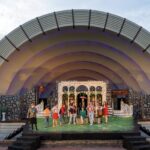
“Antony and Cleopatra” is Gamut’s pick for the 21st annual Free Shakespeare in the Park, May 30 to June 14, at the band shell in Reservoir Park. Bring chairs, a blanket and some light refreshments, and watch theater under the stars.

Gamut Theatre Group: www.gamutplays.org or 717-238-4111.

Open Stage of Harrisburg

Only steps away from Court Street, Open Stage of Harrisburg’s offerings include three regional premiers: “Gidion’s Knot,” “A Christmas Memory” and “Clybourne Park,” as well as its fifth production of an August Wilson Century Cycle play, “Fences.”

Open Stage’s opener in October, “Gidion’s Knot,” incorporates themes from today’s headlines. A child, possibly bullied, is suspended from school, allegedly for writing an inappropriate story. He goes home and commits suicide. The play takes in the aftermath of that event: a parent-teacher conference filled with accusations and grief.

For the holiday season, the musical, “A Christmas Memory,” takes place in the year 1933 in rural Alabama, where we find a young boy being raised by three eccentric cousins. It is a musical memoir for the entire family based on a short story by Truman Capote. In February, August Wilson’s “Fences” opens. This Pulitzer Prize-winning play tackles the issues of race and family through a former baseball star who tries to come to terms with his life and his son in 1957 Pittsburgh.

The final show in April is “Clybourne Park,” a play that also touches on race, acceptance and real estate as we view the years 1959 against 2009.

Open Stage of Harrisburg: www.openstagehbg.com or 717-232-OPEN.

Theatre Harrisburg

Whether Uptown or downtown, Theatre Harrisburg has a way of making sure that community takes center stage. The upcoming season will have three productions at the Krevsky Center on Hurlock Street and two musicals at Whitaker Center.

The season—or should I say baseball season—begins in September with the comedy “Bleacher Bums,” which showcases a gathering of Cubs fans who sometimes actually watch the game when they’re not watching each other. The Uptown space also will feature “Lend Me A Tenor” in February and the Neil Simon classic, “The Last of the Red Hot Lovers,” in June.

If it’s a creepy musical you’re after, Theatre Harrisburg will present “The Rocky Horror Show” in October/November with an 11:30 p.m. show on Halloween night and Stephen Sondheim’s musical masterpiece “Sweeney Todd” in April, a show last produced by this theater in 1985. It was a production, says Executive Director Sam Kuba, which people are still talking about today.

“With the technical resources now available to us at Whitaker Center, this should be an intense, powerful and spectacular theatrical experience,” says Kuba. “Anyone who has only seen the recent movie is going to be surprised at how much more actually takes place on stage.”

Theatre Harrisburg: www.theatreharrisburg.com or 717-232-5501.

Continue Reading

What’s a Tomato Pie? Hint: It’s not a pizza.

Screen Shot 2013-08-30 at 11.56.12 AMAs Lancaster locals, Karen and Chris Fisher always regarded Pennsylvania Dutch dishes as the perfect comfort food. But, inspired by their travels across the United States, they wanted to open a restaurant to experiment outside their comfort zone.

“I’m a creative person. So for me to have to limit it to Pennsylvania Dutch foods would be constraining. I always wanted to have just a little place where I could just have whatever I wanted, no boundaries,” said owner Karen Fisher.

The Fisher family saw this dream realized three years ago with the opening of the first Tomato Pie Café in Lititz, and again, in October 2012, with the debut of their Harrisburg location in Swatara Township.

Their dishes bring a bit of worldliness while still staying local. Moving to Florida in her teens opened Fisher’s eyes to Southern dishes, including the tomato pie. This pie is not the pizza that New York and New Jersey natives recognize. Her pie is a blend of fresh tomatoes seasoned with herbs and baked into a pie shell with a cheesy topping.

Although she was unaware of other versions of the tomato pie when she named the shop, she has now learned that some varieties are, as she puts it, “not round.”  

“Does not a pie refer to something that’s round? [Their tomato pie] is not round,” she asked. “So, I don’t think that they should be able to call that tomato pie anymore! I have tomato pie. They do not have tomato pie.”

The rest of the café’s dishes, however, won’t be mistaken for anything controversial. The artful combinations—like a sweet potato used as a spread with mascarpone cheese on brioche bread or the peanut butter, banana and Nutella panini—are originals with the fingerprint of the creative culinary mind of Fisher. Even the basics, like grilled cheese or the TPC house salad, have a unique style to them.

“I try my best to create dishes that you can’t find anywhere else. I take things and add a little twist to it, add a little wow to it, put some more love into it,” she said.

The coffee shop half of the café also reflects this creative sentiment. For example, a drink highly recommended by the head barista, the Raw Cap, is a traditional cappuccino topped with honey and raw sugar.

Although the dishes are inspired from traveling, the food is made with only local ingredients, even as local as right outside the door. The outdoor dining area—the tomato patch—has tomatoes, basil, mint, dill and rosemary growing in pots lining the patio, all of which get used in the cooking process. “On nice days, the tomato patch fills up more than the inside,” said Fisher.

The atmosphere, inspired by the Lititz location’s early 1900s-era building, feels urban and creative. The old building was built during the swing era, which gave Fisher the idea for the staff’s uniform of muted colors, a hat and the choice of a bow tie, vest or suspenders.

“My goal is always to seamlessly blend the old with the new,” said Fisher. The furnishings also give a nod to the past, while staying fashionable. The coffee bar is from an old apothecary in Phoenixville, and some wall coverings are reclaimed barn boards from a Lebanon farm.

The Fisher family brought a Lancaster tradition to the Harrisburg area: the barista throwdown. At this event, hosted by the Harrisburg Tomato Pie Café in May, different baristas competed for the title of best barista. “It is just a way to pull all the local coffee shops together,” said Fisher.

Barista throwdowns have happened for years with the Lititz shop and its surrounding coffee shops. However, only the Tomato Pie Café’s baristas were representing an area coffee shop this time. Fisher looks to change that. “We’re going to continue to do it on a regular basis in hopes to accomplish that same thing: just bring coffee shops together,” said Fisher. “We’re hoping to bring some positive energy to businesses.”

The owners had opportunities to move to other locations, but they chose Harrisburg, in part, to join what they hoped was an emerging economic recovery. “Our desire is to see the economy in Harrisburg turn around. Harrisburg is beautiful. I personally just believe that it’s one business at a time,” she said.


Tomato Pie Café

3950 TecPort Dr., Harrisburg

717-836-7051

https://tomatopiecafe.net

Hours: Tuesday to Friday, 7 a.m to 9 p.m.; Saturday: 8 a.m. to 9 p.m.; Sunday, 8 a.m. to 3 p.m.

Continue Reading

Art Smart: CASA creates a new future as a charter school.

Screen Shot 2013-08-30 at 11.56.54 AMThe application was more than 1,900 pages long and contained questions related to core philosophy, underlying purpose and measurable academic goals.

At the February school board meeting, agenda item 9.14 was the approval/denial of the Capital Area School for the Arts Charter School application. School board member James Thompson made a motion to approve the charter and Danielle Robinson seconded it. Then it came to a vote. With one member absent, two votes in favor and six opposed, the motion failed.

Then a week later, the school board reversed course, and the CASA charter application was approved. According to Jennifer Smallwood, president of the school board, confusion and miscommunication over terminology led to the application’s initial rejection. But, upon further review, “We didn’t have any criteria to deny the charter,” she says.

The school’s principal, Cheryl Giles-Rudawski, believes that perhaps none of the school board members wanted to be the first to say “yes” to the charter, sending a message that the school’s application was of poor quality.

“Our application was strong, so they really had no grounds to deny it,” says Giles-Rudawski. “This was our first application, and, I’ll tell you, it is grueling.”

In a Quandary

Harrisburg’s first arts magnet school was formed in the 1970s, located near N. 3rd and Forster streets, but it eventually had to close its doors due to funding issues, leaving some in the community disappointed.

“Many people, like Lois Lehrman Grass and others, tried to re-surge this arts magnet concept where students, who are gifted and talented in the arts and wanted to continue to be educated through the arts, had an opportunity,” says Giles-Rudawski.

That concept came to fruition in 2001 when Education Director Anne Alsedek from Open Stage of Harrisburg joined forces with Dr. Glenn Zehner, executive director of the Capital Area Intermediate Unit. The partnership brought together the Intermediate Unit’s educational expertise and Open Stage’s arts know-how for a new magnet school for the area.

For nearly 12 years, CASA operated a half-day program of intensive instruction in visual arts, dance, music, film and video and theater. At the time, with the help of former Mayor Stephen Reed, the school found classroom space at Temple University’s Harrisburg campus, as well as at Open Stage. It also rented space from a local church on Chestnut Street.

At first, not everyone in the community fully appreciated what the school was trying to accomplish. “I think there was some confusion, initially, in the first years that it was not really an educational program and it was more like an arts class,” says Giles-Rudawski.

She came onto the scene in 2004 after the principal retired. “They brought me down, and I came kicking and screaming, I wanted nothing to do with this school in a church, but I was here like a week, and I realized that really great things were happening,” she says.

In 2009, CASA moved to its current space at Strawberry Square in downtown Harrisburg. As the country’s recession deepened, the school began to feel the effects, and its fundraising tanked. “So we were in this quandary,” says Giles-Rudawski.

School administrators worked to find scholarship money and did whatever they could to locate funds for students who could not afford to pay the tuition fees.

“I can’t live like that forever, pounding the pavement for scholarships when, in fact, I do need money to feed into the program,” says Giles-Rudawski. “I need better instruments. I need more technology.”

Gradually, as school districts chose not to pay the tuition fees, it fell to the parents to pay, often resulting in students not enrolling at CASA.

“Last year, school districts’ budgets got totally whacked and school districts were cutting their own arts programs, so it was really hard for me to go and ask superintendents and say, ‘Support your kids at CASA when you yourself are cutting your own arts program,’” says Giles-Rudawski. “So we made the decision to go charter.”

Is It a Fit?

CASA Charter School is unique because it educates through the arts. Academic classes are infused by the arts and vice versa. Acceptance is still based on an audition.

“We do that because, if you’ve never picked up an instrument, it wouldn’t be the class for you. It’s really not about exclusion, it’s about making sure it’s a good instructional fit,” says Giles-Rudawski.

Once accepted, students will commit to one of the six different areas of art: creative writing, visual art, dance, music, film and video or theater. Each year, students will be required to have two credits in the art area they successfully audition for.

By mid-June, more than 110 students had come to the school to audition, and that didn’t include any of the returning students from last year. “We’re just really excited. It’s a little bit out of the traditional format for a public school. Not all kids fit at CASA. I always tell parents: bring your son or daughter here, meet the school, meet the students, meet the staff and you’ll know if it’s a fit or not—and usually it is,” says Giles-Rudawski.

CASA Charter School offers a full curriculum for grades 9 through 12, as well as a school counselor and nurse. During its first year, the school will enroll some 160 students and will offer some of the courses online and in hybrid models until it is able to hire a full complement of teachers. “As we expand, those teachers will be hired,” says Giles-Rudawski.

In the past, 94 percent of students who attended CASA went on to college. “Most of our kids here are motivated to go on,” says Giles-Rudawski. “I think you come here, and you get validated by your abilities, and so I think that gives you the confidence to pursue higher education.”

Charter schools remain a topic of debate. As an educator, Giles-Rudawski supports public education, yet she’s not much of a fan of charter schools. Though she does think, if there’s an opportunity to create a school that can be successful to a population of students, then it should be done. “I do think some students can be better educated outside of the traditional public school environment whether that’s a cyber or charter school model,” says Giles-Rudawski.

Not everyone agrees with her. School board member Brendan Murray, who began his two-year term in 2012, decided to run because he wanted to give back to the community that he loves so much. “I absolutely could help this district get to a better place than where it is now, and I believed that the only way to do that is to be on the board,” says Murray.

During his tenure, seven or eight charter school applications have come before the board. Sifting through the binder-sized amount of information can be difficult. “I’ve learned so much in the time that I’ve been on the board that I’ve been able to pick out the good applications from the bad pretty easily now,” he says.

Some of the charter school applications that came before the board were not on par academically with what the state Department of Education requires. “I couldn’t vote for any charter school that didn’t know what the standards were going to be for the state coming up in the near future,” says Murray.

Paramount to a charter school’s success is its ability to predict the number of students who will enroll, he says. Should the school fail to meet its enrollment goal, a hole will exist in the budget, making it a challenge to sustain the school for the period of its charter. In addition to enrollment, a school’s financial operations play a large role in its success.

“The number one thing that ruins a charter school after five years is not their academics, but their actual fiscal setup, who is doing the actual money handling,” says Murray.

With regard to CASA’s charter school application, identifying grounds to deny it proved difficult. “It wasn’t the academics, it wasn’t anything other than I don’t believe in taking money out from the students as a whole to help certain other students out. I don’t think that’s the best way that academics can be done,” says Murray. “That’s just a principle of mine.”

While Murray did vote against approving CASA’s charter, he does want the school to succeed. But he worries about the larger population of students in the district.

“I love what CASA is going to offer and, now that that it is part of our district, I will make sure, from now on, that anything that we can do to make sure it thrives, it will get that from me,” says Murray. “But, as a principled person, I don’t believe that you give a golden ticket to anyone, like Willy Wonka in the Chocolate Factory, and help one or two people out when the rest are suffering, especially with the economics of our district and the financial problems that we have.”

With the beginning of the new school year, the City of Harrisburg has made a statement about its support of young people and the arts.

“We have totally gone into this, primarily for the students of Harrisburg and the Harrisburg area to be educated through the arts,” says Giles-Rudawski. “There’s just something about young people in the arts. I don’t have bullying. I don’t have cliques. I just have people who are very tolerant, collaborative and respectful of different opinions.”


Continue Reading

August News Digest


Judge Tosses Mindlin, Curtis Candidacies

A Dauphin County judge last month upheld challenges to the independent candidacies of Nevin Mindlin and Nate Curtis, throwing both men off the Nov. 5 general election ballot for Harrisburg mayor.

Judge Bernard Coates Jr. ruled Mindlin’s candidacy invalid because he failed to fill out a mandatory section of his nominating petition. He rejected Curtis’ petition for failing to meet the city’s residency requirement.

The decision came after both Mindlin and Curtis defended their candidacies in court before Coates.

Mindlin said that he did not fill out a section of the petition because it seemed to pertain only to political parties, and he was running as an independent.  He said that advice he received from the Dauphin County Bureau of Elections backed up his belief.

Nonetheless, Coates, citing legal precedent, rejected that argument, asserting that filling out that section was a requirement under law. Curtis also failed to fill out that section, but Coates rejected his petition first for not complying with the mandatory one-year residency requirement for candidates.

Mindlin said that he would appeal the ruling, which was not decided at press time.


Miller Back in Race

City Controller Dan Miller last month re-entered the race for Harrisburg mayor, days after saying he would not run again.

Miller lost the Democratic primary in May, but gained a slot on the November ballot by earning 196 write-in votes as a Republican.

Since his primary loss to Eric Papenfuse, Miller had not publicly stated if he’d run on the GOP side. At a press conference, he finally publicly declined the opportunity, only to change his mind four days later following petition challenges to independent candidates Nevin Mindlin and Nate Curtis.

Mindlin and Curtis eventually lost their challenges and were thrown off the ballot.

Miller, who is a Democratic state committeeman, will now run as the Republican against Democrat Papenfuse during the Nov. 5 general election.


Carter Named Police Chief

Twenty-five-year force veteran Thomas Carter was named acting chief of police last month following the retirement of former Chief Pierre Ritter.

Carter, who was promoted to captain just three months ago, was selected from among the department’s three captains, who all were interviewed for the post, said Mayor Linda Thompson. Most recently, he had headed up the department’s criminal investigation division.

Thompson said she has no plans to nominate Carter for full chief, so he will remain “acting” chief until the end of her mayoral term. The next mayor, she said, should be granted the opportunity to appoint his own police chief.

“I’m here to do a job here and now,” said an emotional Carter as he was introduced as the new acting chief. “The only thing I care about is serving the people of this city.”

Ritter, another long-time Harrisburg police officer, retired from the force unexpectedly after three-and-a-half years as chief.


Recovery Plan Set to Hit Court

The Commonwealth Court this month is expected to begin consideration of elements of Harrisburg’s financial recovery plan.

Receiver William Lynch said last month he expected to bring some—or all—of the plan to the court for approval.

The court must OK all changes to the original proposal approved last year. These include the details of deals involving the incinerator, the parking system and the water/sewer system. Other key elements of the plan include renegotiation of contracts with the city’s three labor unions and possible concessions from the city’s numerous creditors.

City Council also must pass enabling legislation to enact many elements of the recovery plan. It had planned to start that process at a special legislative session in mid-August, but that meeting was cancelled.


July Property Sales

Bellevue Rd., 2101: First National Bank of Pa. to J. & E. Lewis, $100,000

Benton St., 509: C. Morrow to J. Washington & J. Barksdale, $89,900

Brookwood St., 2108: Trusted Source Capital LLC to Herlason LLC, $39,000

Chestnut St., 2223: T. & B. Johnson to T. Jeffers & C. & M. Bauer, $32,700

Edward St., 501: E. Marino to A. Telford, $123,000

Fulton St., 1732: LT65 Sunrise LP & C. Michael to PA Deals LLC, $46,500

Fulton St., 1732: PA Deals LLC to B. & M. Weaver, $62,500

Green St., 1328: D. Wong to D. Misner, $69,900

Hamilton St., 312: A. Clionsky to M. & E. Gillespie, $45,000

Hanna St., 103: T. Craig to S. Brown, $64,000

Holly St., 1940: D. Williams to H. Terry, $54,910

Hudson St., 1148: Bank of New York Mellon to PA Deals LLC, $38,600

Hummel St., 219: Bank of Landisburg to Brethren Housing Assoc., $90,000

Kelker St., 245: J. Stumpf to A. Peragine, $36,000

Logan St., 2331: T. Cunningham to M. Daniel, $39,713

Market St., 1604: J. Carchidi Jr. to James Goodfellow LLC, $38,000

N. 2nd St., 1530: Clark Resources Inc. to MGRP Holdings Ltd., $225,000

N. 2nd St., 2525: F. Vicknair to S. Barry, $193,500

N. 3rd St., 1401, 1405, 1407, 1409, 1411; 300 & 302A Calder St.; 1405, 1410 & 1412 James St.: Third Street Development to Susquehanna Art Museum, $808,455

N. 4th St., 2320A: Trusted Source Capital LLC to K. Lee & Y. Su, $36,000

N. 4th St., 3310: E. Powden to B. Yonkin, $125,000

Parkside Lane, 2910: P. & C. DiMartile to W. & B. Hoover, $233,153

Penn St., 1314: Fannie Mae to E. Jones, $75,000

Pennwood Rd., 3135: PNMAC Mortgage Opportunity Fund LLC to PA Deals LLC, $58,000

Race St., 608: D. & C. Smith to Shipoke LLC, $140,000

Rumson Dr., 2983: S. Carbaugh & M. Dutton to PI Capital LLC, $31,855

Sayford St., 121: M. & R. Plaut to G. Nebinger, $80,000

Showers St., 609: A. Beam to R. Leiphart, $137,500

S. 26th St., 655: L. Kramer & T. Starr to Twenty Ninth Street United Methodist Church, $120,000

S. 27th St., 655: G. & A. Havrilla to S. Sullivan, $59,900

S. Front St., 557: D. Yarkin & C. Carlson to K. Stennett, $125,000

Swatara St., 1323: E. Molina to J. Ortiz to D. Millar, $35,800

Waldo St., 2616: Gary Neff Inc. & City Limits Realty to J. Palmer, $32,900

Source: Dauphin County, for sales exceeding $30,000. Data is assumed to be accurate.


Continue Reading

Out with the Old 8th: A teeming neighborhood once stood on the grounds of the Capitol complex.

Screen Shot 2013-08-30 at 11.54.36 AMThe Pennsylvania Capitol complex occupies approximately 45 acres of ground, mainly to the south and east of the main Capitol building. The sheer size of the buildings and scope of the plan took almost three-quarters of a century to fully develop, but, prior to 1917, the area east of the Capitol was Harrisburg’s 8th Ward, a densely populated neighborhood.

During the course of the later 19th century, the 8th Ward had gained a reputation as one of the “seedier” areas of Harrisburg, full of saloons, gambling dens and houses of prostitution.

But the crowded, narrow alleys and maze of streets also housed thousands of people and many businesses, including the State Street Market and numerous shops, hotels, small manufacturers and synagogues. It consisted of a largely poor, multi-ethnic population that became increasingly African American over time. After the Capitol’s completion in 1906, the “old 8th” must have looked, to some civic-minded residents, even more squalid by comparison.

So, in 1911, the commonwealth and the city came to an agreement in which the state would gradually buy up the houses, stores, churches and properties within the 8th ward and raze them to make room for future government buildings. This, it was argued, would serve both Harrisburg in eliminating a vast portion of outdated, often cramped tenements, while allowing architect Arnold W. Brunner to develop an overall plan for a campus of state buildings. By 1917, most of the buying and demolition were complete and, aside from a few homes and churches, barren lots and weeds were all that remained of the “old 8th.”

The South Office Building was built first in the early 1920s, along with four barrack-like temporary buildings for other state agencies. The North Office was completed in 1929, the Forum (or Education Building) in 1931 and the Finance Building in 1940. The Soldiers’ and Sailors’ Memorial Bridge was planned in honor of all Pennsylvania’s veterans in 1919, but was not completed until 1930.

Arnold Brunner passed away in 1925, well before most of the complex buildings were even begun, and William Gehron and Sydney Ross completed his design. In the 1930s, Fisher Plaza and Soldiers’ and Sailors’ Grove were laid out, but the final piece of Brunner’s plan came in the mid-1980s, when a large, open parking lot was replaced with the Capitol’s East Wing.

The Capitol complex is one of the largest and most successful campaigns of governmental civic building in the United States and a National Historic Landmark, but the history and photographs of the 8th Ward are equally as important—a view of what is lost, for better or worse, in favor of progress.

Jason Wilson is a historian for the Capitol Preservation Committee.

The lighter photographs show the dense neighborhood shortly before its destruction, with the Capitol dome looming over it. The darker shots depict the “old 8th” after most of it had been razed to make way for the expansion of the Capitol complex. Photos supplied by the Historic Harrisburg Association and the Capitol Preservation Committee.

Continue Reading

A Caring, Sharing Place: Highmark Caring Place marks a decade of helping grieving children.

Screen Shot 2013-08-30 at 11.54.18 AMTerri Bowling, child grief specialist, tells a story of a macho football captain playing a heated game of air hockey with a 4-year-old girl.

“Both were having fun,” she said. “All the children are going through the same things; no one is the odd one out.”

Bowling serves as outreach and education coordinator for Caring Place, a safe space where grieving children and families come together to form a support group for one another. It is kids helping kids. The Caring Place is an essential resource and has been offering free support services for the Harrisburg community for a decade now, this year marking its 10-year anniversary.

The Harrisburg location is one of four Caring Place centers, all located in Pennsylvania. The initial Caring Place began in 1988 in downtown Pittsburgh, “giving grieving children a place to go,” explained John Kajic, child grief specialist and manager of Caring Place.

Within Caring Place, each child’s experience is created by his or her effort and participation. The program is designed in group sessions spanning about five months.  These groups are made up of children and families who eventually become the foundation of peer support for each other. There is no guiding curriculum, only that each group forms its own goals and guidelines, recalling the exception paradox, “the only rule is no rules.”

One teen who had gone through the Caring Place program after a loss of her brother and father described the process.

“If you don’t want to say anything, don’t say anything. If you want to listen to music, listen to music. We talk about it sometimes, and other times we put it aside and we just talk about what’s going on in our lives.”

Each peer support group functions differently from one another, but all are consistent with the idea of a communal bond, a safe place for one another. “How we define a family is how they define themselves,” explained Kajic, who manages four other staff members and roughly 180 volunteers.

“The success of the group is where they can feel safe with each other,” said 10-year volunteer Tony Lobato.  “A lot of time folks tiptoe around them. Within their groups, there is the opportunity where they are not the only ones going through this.”

Lobato continued to explain the therapeutic process of simply sharing experiences.

“I’ll say to the kids, this is after they are comfortable sharing and everything else, I’ll say, ‘How many hear a special song or a special something and tears come to your eyes because you remember?’ Their hands go up. They’ll say, ‘Mom loved this.’ ‘Dad liked to have a beer and watch Jeopardy.’ It gives them some outlet. Sometimes, you can see the calm come over them because they’re sharing.”

The group sessions include various activities created to aid in the grieving process.  An example is the specially designated activities room with air hockey tables decorated with group quilts along the walls. The quilts are a part of a therapeutic remembrance activity where the child or family celebrates the life of a deceased loved one on a square piece of fabric, which is then compiled into a large quilt.

Lobato explained the quilt-making. “It gives them something to come together…it’s so personalized and makes it so special.” Once the quilt-making process is finished, there is a ceremony, a celebration of the past, presenting the group’s finished quilt.

“It’s a beautiful ceremony where they unveil it, and they bring their families…it’s very impressive,” said Lobato.

At the conclusion of the five-month cycle, the names of each group member are added to the Tree of Growth. Each name is on a single leaf, and the leaves are organized in bunches representing each individual group. The names make up a full lush tree of leaves with the names of everyone who has gone through the program.

Lobato explained, “In the very last session, after everything’s done, we tell the kids their names are up on the Tree of Growth. They love it.”

This constant support is impossible without the work of the roughly 180 volunteers. They are the heart of the community resource.

“As long as there is a child affected by death, there is a volunteer to tend to them,” said Kajic.

“We are facilitators,” explained Lobato, a retired accountant. “You just have to care and be sincere. I truly care about these kids.”

To learn how to volunteer at Caring Place, contact Val Fletcher, volunteer coordinator, at [email protected].  To become a volunteer, no special experience is required, only the care and willingness to support grieving children and families.

If you or a family member is seeking support after the death of a loved one, stop by the Caring Place, 3 Walnut St., Lemoyne, and find support and shared experiences.

Continue Reading

Market in the Middle: Riddled with bureaucracy, Broad Street Market strives to move forward.

Screen Shot 2013-08-30 at 11.54.04 AM

Broad Street Market is a study in contrasts. Signs of hope coexist with signs of neglect. Posters announce “Coming soon: Cornerstone Eatery” at a prime spot in the stone building on N. 3rd Street. A pergola-style booth houses the new, pristine Harvest organic foods stand in the brick building that backs onto N. 6th Street.

But inside the stone building, the space is dim—maybe because so many lights aren’t working. Plywood is tacked over worn doors leading into the brick building.

The Broad Street Market is an old-fashioned market looking for new everything. New roof. New doors. New manager. New customers.

Renewal, say market officials and vendors, is around the corner. Envisioned changes in ownership and management, it is hoped, will restore stability, attract vendors and lure new customers.

Scrutiny of the 150-year-old Broad Street Market has intensified as the farm-to-table movement goes mainstream and Midtown Harrisburg cultivates its artsy identity. The Market once thrived, but recent troubles—two shutdowns for pest violations, manager churn, vendor turnover and vacant stands—have tarnished its reputation.

“It’s one thing for a city resident to say, ‘I don’t go there,’” said Broad Street Market board chairman Jonathan Bowser. “It’s another for them to say, ‘I didn’t know they were still open.’”

Still, the market has its assets and charms.

“I’ve seen a lot of improvement,” said vendor Joy Gillette, of Simply Soup & Beyond Café. “A lot of foot traffic is starting to come back. This market is different. You really have to gain the customer’s trust.”

Some of the turmoil can be attributed to the market’s convoluted ownership and management structure. In short: Historic Harrisburg Association owns the Market entity. The city of Harrisburg owns and is responsible for maintaining the buildings, at least on the outside. The for-profit Broad Street Market Corp. board oversees operations and internal maintenance. A manager and facilities manager, hired by the board, run daily operations.

Got that?

“It’s like four carts trying to move along and pull things forward,” said Assistant City Solicitor Carlesha Halkias. “You look to the right, you look to the left, and you’re not really sure where the other is. We’ve worked hard the last several months to make sure that communication is flowing. I think that was a barrier before.”

Coming Soon

Anticipated changes could finally untangle the Gordian knot. HHA has removed its authority to amend the Market board’s by-laws and hopes to dissolve its ownership and become “a friend of the market,” said HHA Executive Director John Campbell. The city’s management lease expires at the end of 2013, and Halkias and Bowser say they’re working together on refinements that clarify responsibilities.

“We still want to have a very strong relationship and partnership with the city but a little more flexibility to manage the way we see best,” said Bowser. For instance, the ability to access funds more quickly would streamline daily operations, he said.

After the contract is finalized—Halkias said the mayor “has not advised me yet” on timing—the board expects an “internal conversation of what we want to look like as an organization,” said Bowser. One strong possibility is restructuring as a nonprofit or community development corporation, capable of seeking federal, state and local grants directly, without having to partner with the city.

Financially, the Broad Street Market earns just enough to pay the bills for its annual $350,000 budget, said Bowser and Campbell. But the market owes NRG an unspecified amount—Bowser said the details are confidential—for past steam bills that, due to an undetected leak, soared as high as $20,000 a month. Today, a gas system, funded by state grants, heats the buildings.

About $220,000 in grant money has been accumulated toward a “cooling mechanism” to remove hot air from the buildings, and Halkias said the city is consulting with contractors to determine the scope of a cooling project.

Vendor Energy

Bowser hopes that board transparency and stronger communications will improve vendor relations, and consistent enforcement of rules and regulations should simplify the manager’s job. Board member Amy Hill sees social media as a “gigantic untapped opportunity” to replicate, in electronic-age style, the word of mouth that once brought customers to the stands.

“It’s still that same sense of community that kept this market alive for 150 years,” she said.

Matthew Hickey co-owns the new Harvest organic foods stand. His co-owner, Joshua Kesler, is developing Stokes Millworks, located just across Verbeke Street, into a farm-to-fork restaurant.

“We know that there’s great potential in the Market, and we know there’s a need for good, healthy fresh food in the city,” Hickey said amid tidy displays of just-picked peaches and tomatoes. “It seems like there’s energy happening within the board, and everyone involved is very progressive. We all have the same vision.”

Vendor Leon Glick, of Two Brothers BBQ, racked up pans heavy with marinated beef and then meticulously cleaned the stainless steel counter while explaining that he invested in stand upgrades to be “courthouse compatible” for the day when a federal courthouse is built at N. 6th and Reily streets.

Some vendors don’t think appearances matter, Glick said, but “just because we have low- to middle-income customers, that doesn’t mean we have to look low class.” Besides, he said, the Market is attracting “a totally different, new clientele here. More people means more business.”

Glick and other vendors have bought joint advertisements, but the market “has not spent anywhere close enough of our rent dollars on advertising,” he said. The motorists zooming past must be convinced to stop.

“I think we’re going to have to spend a lot of money to make money,” Glick said.

###

Addition to the print story: On Aug. 30, the Market announced the exit of HHA as part of its management. The press release follows:

THE BROAD STREET MARKET’S BRIGHT FUTURE

New Governing Structure Announced

HARRISBURG (Aug. 30) – “Fresh start” and “new beginnings” are not words typically associated with an organization with a history more than 150-years old, but that is how leaders of Harrisburg’s Broad Street Market described its new governing structure. The City of Harrisburg owns the landmark brick and stone buildings that make up the Broad Street Market at 3rd and Verbeke Streets in Midtown, but since 1996 the Historic Harrisburg Association has overseen the property and delegated the routine operations to a volunteer board of directors. The new agreement, announced today, simplifies the governing structure. HHA will step aside and a newly formed corporation run by community volunteers will assume direct control of the operational decision making. The city will remain the landlord.

“The change is one step forward in the very long process of revitalizing this community treasure,” said Jonathan Bowser, chairman of the Broad Street Market Board of Directors and Director of Economic Development, Corporate VP for Cumberland Area Economic Development Corporation. “HHA has been a great partner, but the new structure is more efficient. We will be better prepared to leverage funding and other investments to improve the Market when needed.”

HHA’s executive director, John Campbell is equally encouraged by the change. “Historic Harrisburg is proud to continue as an advocate and neighbor to the Broad Street Market; but the time has come for the teenager to leave home and go out on his own,” he joked. “We do not need to be in the managerial position anymore.” Both Bowser and Campbell stressed that the reigns of the Market are not being handed over to a typical private corporation. The Market will be governed by people from the community committed to maintaining its benefit to the neighborhood. Both agreed that change was not getting rid of something that does not work. The mutual decision to restructure will allow the Broad Street Market to focus on meeting the community’s need for a thriving farmer’s market in the city and to free up HHA to pursue its mission of historic preservation and building a sustainable community for the City of Harrisburg.

The Broad Street Market boasts 34 vendors providing fresh fruits, vegetables, meat, cheeses, baked goods and other grocery items as well as diverse, ethnic and fresh prepared foods. It is located at 1233 North Third Street, Harrisburg, PA 17102 and hours of operation are Wednesday: 7a.m. – 2 p.m. (limited vendors); Thursday – Friday: 7 a.m. – 5 p.m.; and Saturday: 7 a.m. – 4 p.m. There is ample free parking surrounding the market. For more information, visit www.broadstreetmarket.org.

# # #

NOTE: Jonathon Bowser and John Campbell are available for individual interviews and guided tours of the market. Contact Amy Hill at [email protected] or 717-343-9475 to arrange.

For more information, contact:

Amy B. Hill, APR

717-343-9475

[email protected]

Continue Reading

Officials React to “Harrisburg Strong”

Receiver William Lynch’s financial recovery plan, which he calls the “Harrisburg Strong Plan,” has garnered official comment from many politicians and government officials over the past day. Here’s a sample of reactions to the plan.

Mayor Linda Thompson:

The sale of the incinerator, and lease of parking assets for 40 years are the major pieces of the Harrisburg Recovery Plan submitted to the Commonwealth Court of Pennsylvania this afternoon. The revenue generated from the Recovery Plan, will allow for funds to bring the city current on vendor payments, close the structural deficit balancing the budget while simultaneously meeting creditor obligations and preserving Harrisburg’s economic future.

“If confirmed by Commonwealth Court,” Mayor Thompson said, “we believe Harrisburg will become a model for other financially distressed municipalities in Pennsylvania and across the county.”

The mayor added that “this plan shows that a consensual path is preferable to an on going dispute that brings protracted delays, substantial costs and uncertain results.”

The mayor reiterated that the core of the plan provides Pennsylvania’s capital city with:

1. A balanced budget through 2016.
2. Elimination of the incinerator debt.
3. $5 Million to bring the City current on vendor payments
and close the City’s shortfall for this year.
4. $10 Million over the next few years to foster economic development.
5. $10 Million in funding to upgrade and repair infrastructure and public safety.
6. A task force consisting of a diverse group of elected officials, civic, business, academic and community groups that will create an economic development and infrastructure improvement plan for no fewer than five years.
7. The creation of a health care trust fund that will help address rising costs for public employees with an initial $6 Million investment.
8. A meaningful reduction of labor costs through cooperative agreements with Harrisburg’s public
unions with contracts through 2016.
9. A reworking of the City’s general obligation debts allowing for repayment over a greater period of time and creating an environment where the City will have market access sooner and under more favorable borrowing terms as part of normal operations.
10. As soon as possible, return the City’s financial future to its elected officials, bringing the Receivership to a conclusion.

The $16 million in funding in the plan produces a health care trust; economic development and improvement of infrastructure that will provide Harrisburg the opportunity for a viable economic future and true economic recovery.


City Council:

Today, after years of fighting for a fair & justifiable solution for the citizens of Harrisburg, our City takes a big step forward with a detailed Recovery Plan being filed with the Commonwealth Court of Pennsylvania. If approved, this plan crafted by Receiver William Lynch & his team, would take the necessary steps that pave the way to achieving fiscal stability for Harrisburg. It aims to reorganize debts, leverage assets, balance the budget, and most importantly, release the city from the crushing debt of the incinerator.

In many ways, the proposed plan accomplishes the many things we have fought so hard for, such as: shared pain and responsibility for the fiscal burdens of the incinerator; a robust process to identify and value our city’s assets and liabilities; a debt solution that brings all major stakeholders to the table; and most importantly, a plan to realistically deal with Harrisburg’s chronic structural deficit.

City Council has stood firm on various issues and fought for a fair solution for our city; one where the taxpayers would not be alone in shouldering the enormous costs of past mistakes. In that respect, today’s plan goes further than any prior plan that has come before this body.

In the coming weeks, through the legislative process, City Council will be addressing many aspects of the complex plan, including: issues related to the incinerator; parking, water and sewer services; and union agreements, among others. Our ultimate goal is to fulfill the responsibilities entrusted to us by the voters of this city.  We hope and expect the public to be actively involved, rightfully questioning whether the plan fairly and adequately addresses their needs. To help in the process, Council has asked to employ the services of a financial advisor to review and advise on the economic aspects of the Plan and the contracts that follow.

Council recognizes the hard truth that by its very nature, a Recovery Plan cannot be expected to satisfy everyone completely. We respectfully ask others to do the same. Every stakeholder can and will find things to like and dislike about the plan; it’s the nature of the beast.

In the course of searching for solutions to the vexing issues facing our city, this Council has strived to keep an open mind and has been willing to work with those who also have wanted to find real resolutions to our problems. Now, as we work together with other stakeholders to move Harrisburg past this fiscal crisis, we will continue to work diligently for the betterment of the citizens of Harrisburg, as is our duty, entrusted upon us taking the oath of office during these challenging and troubling times.


Democratic candidate for mayor Eric Papenfuse:

Eric Papenfuse, Democratic Candidate for Mayor of Harrisburg, said Tuesday the economic recovery plan announced late Monday provides significant hope that Pennsylvania’s capital will overcome its financial crisis and avoid the scourge of bankruptcy.

“The plan that Receiver William Lynch has announced gives Harrisburg residents a second chance to rebuild our city and provide a brighter future for our children,” Papenfuse said. “It is a positive step and shows that Harrisburg will once again be a great capital. We thank city leaders who decided to work through Harrisburg’s problems and not cave in to bankruptcy and defeat.”

Papenfuse cautioned that the plan is not perfect and there are further steps that need to be taken before it is implemented. “But these developments show what can be done when people work together in a spirit of compromise, sacrifice and service.”

Harrisburg now needs committed leadership that can make the most of the fresh start that Harrisburg has been given, Papenfuse said. “We need a mayor who will seize this opportunity, work to attract business and investment in the city, fight to improve our schools and make our city beautiful and prosperous again. This is my platform and I’m ready to lead Harrisburg into a new era of pride and prosperity.”


Republican candidate for mayor and City Controller Dan Miller (in a letter addressed to City Council):

I applaud Harrisburg City Council’s decision to seek help from competent financial advisors to help review the receiver’s plan. The decisions this Council is being asked to make will affect the City for decades to come. So, it’s critical that there is a full understanding of the short and long term impact of the plan and all the fine points it entails. There is no need to rush to judgment!  A careful and deliberative process is required and I am both hopeful and confident that Council will pursue one.

The plan is complex and comprehensive. I intend to make further comments and observations over the course of time to help inform and protect the interests of the citizens of Harrisburg.


Continue Reading

Harrisburg Stronger? Lynch’s plan might just succeed.

So, it’s done.

More than 19 months after former receiver David Unkovic filed his financial recovery plan for Harrisburg, his successor, retired Gen. William Lynch, today announced a series of agreements to implement it.

All the loose ends aren’t quite tied up. However, to Lynch’s credit, the “Harrisburg Strong” plan, at first read, sounds impressive in both its completeness and its possibility.

In sum, the plan:

  • sells the incinerator to the Lancaster County Solid Waste Management Authority for net proceeds of $126 million to $132 million.
  • leases the city’s parking facilities for around $260 million.
  • wipes out virtually all the city’s long-term debt, as well as its structural deficit.
  • provides the city with ongoing revenue from the leased parking assets.
  • funds the creation of three not-for-profit entities that would pay for infrastructure improvements, economic development initiatives and retired city worker healthcare.
  • settles most litigation and claims against the city, particularly claims pertaining to the incinerator, with several creditors accepting much less than what they were seeking.

There are some negatives, too. The city’s 2 percent earned income tax would be retained, and the cost of street parking, already expensive, would increase further to $3 per hour.

Earlier today, I wrote a blog post criticizing Lynch for seeking to extend the “one-year” hike in the earned income tax credit by four more years. To me, this remains the greatest negative of the plan. Harrisburg residents have taken, by far, the brunt of the pain, with multiple increases in taxes and fees, which many simply cannot afford. I also buckle at the insincerity of selling the hike as a single-year event when it likely will be permanent.

Nonetheless, this plan appears comprehensive, creative and, at least at this point, workable. In sum, the plan offers Harrisburg a way out — a way out of misery, a way out from beneath a future of little hope. Will it all work out perfectly? Probably not, but it’s likely the best that we could expect. If, following Commonwealth Court approval, implementation goes reasonably well, the plan might just bring about a new era of confidence and investment in the city.

Notably, in his report, Lynch states that he will use “every measure available” to seek redress for possible wrongdoing in the incinerator debacle. He said that he believes that grounds may exist to pursue civil action against certain firms and people named in the Harrisburg Authority’s forensic audit, which examined in detail how the incinerator upgrade went awry — and who benefited from it.

Perhaps Harrisburg, eventually, will recover some money from this effort. Perhaps it won’t. It almost doesn’t matter. The people here will derive tremendous satisfaction just to see the self-dealers finally called to account for their actions, actions that effectively bankrupted this city, bringing it to the edge of calamity.

Continue Reading