Tag Archives: harrisburg

Receivership in Rearview: Why did it turn out so differently than expected?

Screenshot 2014-02-28 08.34.09In December 2011, just as Harrisburg was beginning life under a state-appointed receiver, I wrote the following:

“Harrisburg is about to enter a new period, a time it’s never before experienced. The state takeover is unlike the city’s previous downs. In this down, Harrisburg is almost completely at the mercy of outsiders, who, most certainly, will not have the interest of the people who live here as a first priority.”

In other writings, I described receivership as an attempt to force the thrice-rejected Act 47 plan down the city’s throat, which would lead to a fire sale of city assets so creditors complicit in its financial crisis would be paid in full.

And so it seemed.

The receivership legislation appeared designed to punish Harrisburg more than help it, to ensure that creditors would get all their money, to protect suburban commuters, to stick it to defiant members of City Council.

Why else would bankruptcy be banned, would a commuter tax be forbidden, would a regional sales tax be off the table? What else could explain the ridiculous timeframe that gave the receiver just 30 days to draft a recovery plan, with the expectation that he’d have six months to implement it? Clearly, the fix was in.

Fast-forward two years.

In late January, the state announced that it expected the receivership to end on March 1, which caused me to think back on my initial impressions, thoughts and writings. For the most part, I think my analysis at the time was correct. The enabling legislation, SB1151, was intended to force city residents to bear this burden. Why, then, did the receivership turn out so differently?

Last month, our columnist, Tara Leo Auchey, credited the people of Harrisburg for influencing and inspiring the first receiver, David Unkovic, who, moved by their plight, drafted a recovery plan that treated residents as fairly as possible.

Indeed, Unkovic repeatedly made himself available to the public and, during his short but critical tenure, seemed far more concerned with the predicament of residents than I ever would have imagined on that cold day in November 2011, when, with great skepticism, I watched him being introduced at a press conference in the state Capitol.

At his core, however, Unkovic is a finance guy, a bond attorney. While he showed remarkable cause with the people of Harrisburg, he showed even more outrage over how his passion, the thing he had dedicated his life to—municipal finance—had been perverted by the Reed administration and its many enablers.

“It stunk like a kettle of rotten fish,” Unkovic said of the incinerator financings in testimony before a state Senate committee hearing. “This is the worst set of financings I’ve ever seen.”

Once he unraveled the nonsense behind the incinerator, the museum artifacts, the deceptive city budgets, Unkovic felt compelled to right the situation as best he could. Yes, Harrisburg had to pay down its debt by shedding some valuable assets, but that, he believed, could be done in a fiscally responsible way that also didn’t punish the people, who largely had been left in the dark during the Reed years and then left holding the bag.

In late March 2012, Unkovic resigned abruptly, citing unyielding pressure from creditors unhappy with his focus on fairness. That turn of events had an “Empire Strikes Back” quality to it, and many residents, myself included, again feared that the state would enforce the payback of creditors with little concern for the consequences to the city.

But that didn’t happen either.

The new receiver, Air Force Maj. Gen. William Lynch, couldn’t have been more different from Unkovic. He had no municipal finance experience, did not readily engage the public and had a direct, taciturn style. However, he sustained the focus on fairness, and his final recovery plan boldly built upon his predecessor’s already-creative approach to solving Harrisburg’s financial crisis.

Just as importantly, the receiver’s main consultants and advisers were finance people, ones who shared Unkovic’s affront over the financial games that had buried this city in debt. So, an impressive, experienced team of professionals bridged the two tenures, despite turmoil at the top.

I’ve written previously that I believe the receivership is ending too quickly, that it would have been better to wind it down over the course of this year. I continue to think this. However, I am glad that Harrisburg’s experience with state intervention ended up so much better than I had expected and, I believe, very differently than its architects had envisioned.

With the backing of Gov. Tom Corbett, Unkovic, Lynch and their “geniuses” (as Lynch liked to call his main staffers) crafted a plan that tried to do right by the city, its residents and the principles of good municipal finance, while completing their assigned job of settling Harrisburg’s mind-blowing debt.

As we wave good-bye to the receiver, I am thankful that Harrisburg has a chance to build a brighter future, something unimaginable until recently. And, looking back at the language of SB1151, I’m also thankful that the law of unintended consequences finally seemed to favor this long-luckless city.

 Lawrance Binda is editor-in-chief of TheBurg.


Continue Reading

The First Capitol: Harrisburg’s original statehouse had a very different look.

Screenshot 2014-02-28 08.37.50From 1682 until the late 1700s, Philadelphia had served as the commonwealth’s capital city. By 1799, the center of population had shifted and, after citing disease and the unfair influence of city and national politics, the legislature voted to move the seat of government to Lancaster.


State government first met in Lancaster in April of 1799. Because Pennsylvania contained 30-some counties, many of them to the west of the Susquehanna, almost immediately the debate began about when and where to again move the government seat.

In 1801, there were calls to move to the Susquehanna Valley, but the measure failed to get the necessary votes. In 1809, the citizens of Northumberland County sent a surprise petition to the Senate, asking that the capital be transferred there. This petition seemed to open a wide-ranging debate with Philadelphia, Lancaster, Pittsburgh, Harrisburg and Middletown all vying to be the new capital city.

By 1810, the House and Senate seemed to come to an agreement that the new and, hopefully, final capital should remain somewhere in the central portion of the state. Harrisburg was eventually selected, voted and agreed upon, but only after Northumberland, Lancaster, Bellefonte, Carlisle, Columbia, Reading and Sunbury had all been rejected. It may be that John Harris Jr.’s 1785 gift of four acres of land for the commonwealth’s use prompted the legislature to select Harrisburg. In any event, on Feb. 21, 1810, Gov. Simon Snyder signed the act moving the seat of government to Harrisburg, on or before October 1812.

As part of this 1810 act, Robert Harris, George Hoyer and George Zeigler were appointed as commissioners to supervise the removal of all state documents to Harrisburg and to find suitable lodging and accommodations for the legislature. The cost of the move was estimated at $2,000. The commissioners also hired master builder Stephen Hills to build two “fireproof” buildings on Harris’ tract and arranged with Dauphin County to use the courthouse, which Hills also renovated, for legislative sessions. The legislature would meet in the old court house from December 1812 until the completion of the Hills Capitol in 1822.

In 1816, the legislature, partly through the sale of Independence Hall to the city of Philadelphia, began funding the construction of a new Capitol building in Harrisburg. Hills began stockpiling materials on the site and, after winning the design competition of 1819, started building the structure.

Work progressed fairly rapidly for the size and scale of the project and was completed in less than two-and-a-half years. The Hills Capitol measured 180 feet along its front and was 80-feet deep. The front portico had 56-foot-high Ionic columns measuring 4 feet in diameter. The red-brick, Federal-style building was dedicated on Jan. 2, 1822 and served the commonwealth for 71 years before it was consumed by fire, creating the need for a new Capitol, which was completed in 1906.

Jason Wilson is an historian for the Capitol Preservation Committee. 

Continue Reading

Over the River: Messiah College graduates are streaming into Harrisburg, bringing youth, creativity & change to the city.

Screenshot 2014-02-28 08.36.31 Screenshot 2014-02-28 08.36.42 Screenshot 2014-02-28 08.36.21 Screenshot 2014-02-28 08.36.10 Screenshot 2014-02-28 08.36.03 Screenshot 2014-02-28 08.35.52 Screenshot 2014-02-28 08.35.44 Screenshot 2014-02-28 08.35.35Louie Marven, executive director of the LGBT Center of Central PA, is tired of hearing the phrase, “What’s in the water at Messiah?”
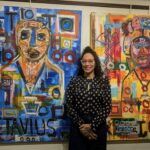
“Oh my god,” he mimics sarcastically while sipping on a Nugget Nectar ale, “another gay person that went to Messiah and lives in Harrisburg?”

But the question, “What’s in the water at Messiah College?” can be applied to more groups than just the gay community. There are lots of us settling down here.

Marven, ’07, is one of countless graduates who moved to the Sycamore House, an intentional Christian service corps, after graduation. While he hesitates to categorize himself as a “Messiah shill,” Marven admits that it was attractive to stay local, with friends who were staying local, to live and work in community together—one of Messiah’s big thrusts.

Nearly six years later, Marven says he finally feels like a Harrisburg citizen who happened to go to Messiah rather than a Messiah grad living in Harrisburg. “I think it can feel very forceful that we’re this sort of army,” he says, “and I don’t want to be a part of that.”

On the other hand, Marven thinks that Messiah’s supposed “city takeover” is overstated. “It’s a local college, and it’s the closest city. It’s not that weird.”

Indeed, Messiah students long have moved into Harrisburg after graduation. (An amusing confirmation of this came when two of my interviewees bonded over annoyances about their respective Messiah-bred landlords). And in a small city like Harrisburg, we can’t help but cross paths.

But for many fresh graduates, Harrisburg—especially in Midtown and Uptown—is starting to feel like campus, minus the hanging baskets. There are a couple of caffeine hubs where everyone does their homework (job searching), a few small restaurants where they spend their flex dollars (savings), taverns within biking distance that serve adult fountain drinks, and places like the Sycamore House and The MakeSpace, where give-or-take 20-somethings can dine potluck style or catch a live performance.

So, were these hotspots mapped out on diploma backs? Or is there something else going on here?

Growing Network

While Messiah-gration isn’t new, it’s clear that we are connecting and clustering much more visibly than before.

Take Hana Grosh, ’12, who moved to the city seven months ago after feeling a bit nostalgic for her college life and a bit stymied in Lancaster, where her family lives. I see her working her barista magic at Little Amps on Green and State streets. She’ll see my boyfriend, ’09, at band practice and my good friend Liz Laribee, ’07, at the back shop table most days of the week. Laribee is an artist who led the founding of The MakeSpace, a studio, gallery and concert venue situated in Olde Uptown.

A table or three away from Laribee sits Dave Robertson, ’00, who operates a web design business called Factory 44. For years, he was very involved with the civic organization Friends of Midtown. “I was here before it was cool,” he volunteers proudly for a laugh.

“You’re the reason we started The MakeSpace,” says Laribee. “I had about eight ideas brewing at once, and you encouraged me to focus on one at a time, starting with an art center.”

This sort of rap session isn’t unique to certain personalities or to environments with psychedelic tables (we were at Ted’s Bar & Grill; rest in peace, Brick City). Instead, it demonstrates how a growing alumni network has been functioning well in the city.

“Even if I hadn’t known people before moving,” says Marven, “there were mechanisms for meeting them.” Something as simple as a free darts and pool night at Appalachian Brewing Co., advertised through the grapevine, made newcomers feel connected.

“I don’t know how I would have tried to make friends without knowing what previous Messiah people did,” he says.

For example, almost every Messiah student I’ve run into has at least heard of the Sycamore House, if not attended an event or actually lived there for a year. (As a sophomore, I remember sitting on the creaky floor for some benefit concert wondering if this is what a rockin’ house party looked like in the real world.)

Laribee, who helped start the Sycamore House and who lived there between her junior and senior years, saw how easy it was to get involved in the city, thanks to a friend she met through juggling club. She began volunteering at the Center for Champions and moved back into the Sycamore House with Marven after graduation.

While some Sycamore alumni have communicated their frustrations with the program’s growing pains, it continues to offer free housing in exchange for community service pursuits, which is a pretty excellent deal. And for someone like Marven who was helping to write the rules and form the board early on, the program was an invaluable way to find a job in Harrisburg and assist in the formation of the LGBT Center.

Inevitable Intimacy

For Marven and Laribee, the city has certainly provided great resources for growth and creativity, but it can also get tiring after awhile. “Harrisburg is a fascinating, enriching, endless blank canvass for me to figure out how I like to pursue development, creativity and grassroots projects,” says Laribee. “But being so involved here means that there’s a lot to do. As easy as it is to feel you’re in community here, you can also feel trapped.”

Paul Boyed, ’13, who lives within snowball-throwing distance of Laribee, Grosh and me, has started to feel a bit trapped by this inevitable intimacy. “The world that Messiah students live in in Harrisburg is kind of like the activities in college,” he says. He points to the coffee shops and alternative music scenes occupied by local young people.

Boyed lived in Harrisburg his senior year because it was much more affordable than living on campus. Now as a Children’s Targeted Case Manager for Dauphin County, a position he heard about through the Messiah grapevine, Boyed says he’s becoming more frustrated with Harrisburg’s dichotomy of socioeconomic experiences.

“I hear the complaints of people who live here—there are bigger problems,” he says. “But then, when I’m in my own life, it’s peppy, fun. The bigger picture of Harrisburg is the school district. It’s exhausting.”

Henok Begashaw, ’11, works with Boyed as a targeted case manager, and, like Boyed, wrestles with the positives and negatives of the conspicuous Messiah bubble. “The whole point of the city is to attract young people, [but] I hope that people come in and that they’re very aware of the people and space that were here,” he says. “A lot of Messiah alums move to Harrisburg with a missionary mentality. That can be a good thing; that can also be a bad thing.”

Begashaw lived at Messiah’s Harrisburg Institute his senior year and then at the Sycamore House after graduation. Institute/SALT Program Director Ashley Sheaffer, ’06, who remembers Begashaw causing an appropriate amount of mischief during his time there, sees a trend for many students who spend a semester in the city. “They deepen their understanding of the forces at play in a city and become acutely aware of their privilege, while genuinely developing a heart for Harrisburg,” she says. “Most students,” she clarifies, “not all.”

Marven himself remembers that aha moment of discovering the city with friends, and it seemed “a little bit imperialistic for a lot of people,” he admits. Except, then again, Harrisburg was where students, particularly LGBT students, knew to seek community because it was more open, he says.

Project opportunities and left-wing safe spaces aside, students seem to like Harrisburg for its “platform city” feel. Fewer amenities aren’t always a bad thing, and many transplants eventually want to call what was once a platform for better prospects “home.”

“Philly was so big I couldn’t take a bite out of it,” says Katie Manzullo-Thomas, ’10, who moved to Philadelphia after graduation, but is now living in Olde Uptown. “I would rather live in a city with two Little Amps instead of 15 amazing coffee houses. You couldn’t show up somewhere [in Philly] and see someone you know—unlike here.”

And, for Grosh, whose Ethiopian heritage has always inspired her to work with coffee, a part-time barista income can go a long way in Harrisburg. It nearly covers her rent, and she’s able to use her downtime for projects that she cares about—writing and playing music, modeling for Stash Collective, baking for Little Amps, auditioning at Carley’s.

She acknowledges, though, that working part-time isn’t by choice, and that living this way doesn’t facilitate any savings, an ever-increasing problem facing Millennials. Nevertheless, Grosh is grateful to be in a city that is accessible and artistically minded.

“I think Harrisburg has a lot to offer if you really want it to,” she says. “I needed it to be a platform for something bigger [at first], but I don’t want to be waiting on the next best thing. It’s not like you’re biding your time here—you’re making the best of it.”

Samantha Moore, a 2010 Messiah grad, lives in Olde Uptown.

Continue Reading

Reform the Formula: Gov. candidates should consider impact of school funding on local economy.

When the snow finally begins to melt this spring, the race for governor of Pennsylvania will begin to heat up. By last count, not less than four or five major Democratic candidates have lined up to face incumbent Republican Gov. Tom Corbett, who is seeking election to a second term. The May primary will also help shape the races for the state House and Senate, which will go a long way in determining the balance of political power in Pennsylvania.

Now that Harrisburg has adopted the state-supported fiscal recovery plan, local and state attention should turn to pro-growth policies that will encourage our capital city to realize its full potential. The city’s population peaked at nearly 100,000 people in the 1950s before bottoming out at less than 48,000 at the turn of the century. The slight but important increase in population of about 600 people over the last decade shows promise for further growth and prosperity if the right conditions can be put into place.

 There are many local pro-growth policies that are effective, such as crime-prevention, urban transportation, improved sanitation and water, efficient and operating streetlights, and other civic infrastructure like parks and green space, which the city can and should work on and implement. However, other important economic policy issues can only be handled at the state level. One of those is education funding.

The topic of public education is sure to predominate the governor’s race, particularly the proper state support for local school districts and the ability of students and parents to access educational alternatives. There are few issues more powerful than how we educate our children and the level and fairness in state funding (perhaps a topic for a future column). However, a related issue, which typically receives less attention on either side, is the methodology for funding our school districts via real estate taxes and, importantly, the impact that those policies have on the local economies of those districts.

As a whole, Pennsylvania relies far more heavily on local real estate taxes to pay for public education than most other states in the country. A 2006 study showed that the commonwealth ranked fourth in the nation in that regard. Other states use a broader mix of income, sales and other taxes, along with real estate taxes, to make up total funding for education.

Take Harrisburg, for example. The total millage rate paid on real estate in Harrisburg is around 45 mills. That means, for every $1,000 in taxable real estate, the owner must pay about $45 in annual taxes. On a $100,000 home, that is $4,500 in annual taxes. Fully two-thirds ($3,000) of that bill is payable to the school district, with the county and city dividing the remaining one-third, or $1,500. (The figures are an estimated average as the city has a two-tier system, with a higher rate on land than on improvements, making each parcel somewhat different.)

This tax burden, which is far higher than in surrounding communities, is a powerful disincentive to anyone considering buying a home in the city, regardless of the quality of education provided or available alternatives. New homes that would be assessed at the full cost of building could face tax bills of $5,000, $7,000 or even higher annually. Knowing this, builders have simply not built new homes in Harrisburg at any scale—and none without outside subsidy—over the past several decades, thereby contributing to the decline in population. (The burden on renovated homes is a more complicated story, but the disincentive is also significant, if not as strong as against new home construction.) In contrast, surrounding communities with lower real estate tax burdens have grown their housing supply along with their populations.

The true problem, however, is that cities like Harrisburg have little to no choice or control over the matter. The poorer urban districts have been forced to crank up their millage rates to try to keep up with falling populations, making their real estate even less competitive with surrounding communities. Meanwhile, regional growth has pushed up real estate values in lower-tax suburban communities, making the properties more valuable with greater revenue overall and lower individual rates. 

In other words, cities, like Harrisburg, have small tax bases with high tax rates, while suburban municipalities generally have large tax bases with low tax rates. As a result, the suburban tax structure enables and promotes growth, while the urban tax structure almost completely prohibits it. Once in place, these conditions are nearly impossible to break absent extraordinary measures like tax abatement, as successfully implemented in Philadelphia (which only abates taxes on improvements that otherwise would not happen), or other policies like Keystone Opportunity Zones (KOZs). 

Beyond these local fixes, true reform at the state level would re-examine not only the funding formula that the state contributes to local districts, but alternatives to the excessive local real estate tax burdens. Some states, like Michigan, have tried to address these burdens by shifting taxes away from real estate to income, sales taxes and even cigarette taxes. Interestingly, the burden in Michigan prior to its reform in 1993-‘94 was 34 mills, which ended up causing a taxpayer revolt (it is now about half that). Harrisburg citizens face a 45-mill burden, but have no way to “revolt” without help from the state legislature and governor. 

Whether you are a Harrisburg resident or a resident of the region who wishes Harrisburg well—and you’re concerned about fairness and the ability of our capital to fully recover—this is an issue that should be high on your agenda when thinking about voting this spring.

A real solution would be for this governor or the next to consider comprehensive reform of the funding source for our Pennsylvania schools, changing the mix of taxes away from real estate toward other sources, without raising overall tax revenues. Any candidate who brings this issue to fore deserves consideration and support.   

 J. Alex Hartzler is publisher of TheBurg.


Continue Reading

Verse across Cultures: In his work, Poet Laureate Rick Kearns reveals his passions, his whimsy.

Rick Kearns

Rick Kearns

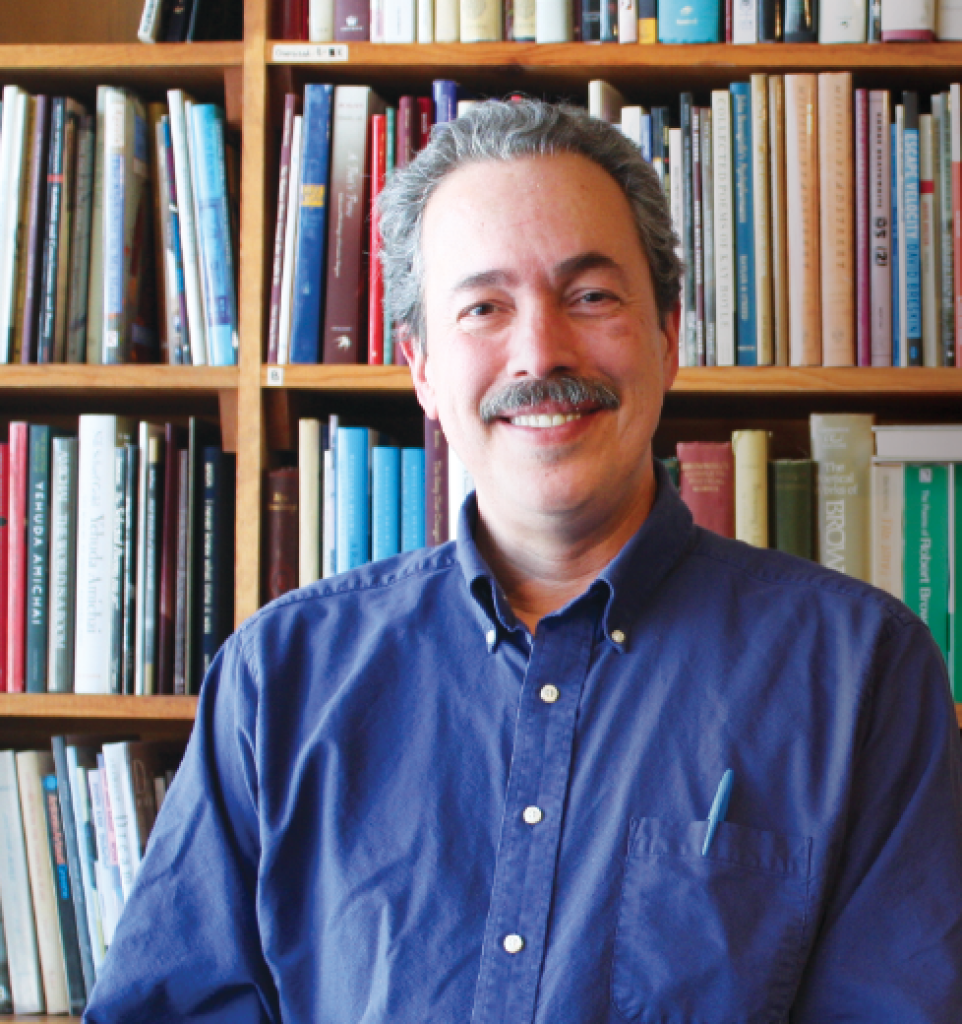
Last month, Mayor Eric Papenfuse named Harrisburg native Rick Kearns as the city’s new poet laureate, the first Latino to be so honored. Amidst his busy schedule, Kearns, a professor and tutor at HACC, made some time to tell us about his craft, his culture and his new position.

TheBurg: How did you get involved in writing poetry and where did you initially find success doing it?

Kearns: I was drawn to poetry when I was still very young. I was a kid, maybe 8, 9 years old. I enjoyed what I heard because of the music in the language. That was the first thing that attracted me. The second thing was the ideas. But the format attracted me, and I was always attracted to music. I’ve been a part-time jammer since I was a little kid. So, that was where it began, and I was writing off and on from maybe age 12 to forever from that point on.

As I grew older and came to know a bit more about the Puerto Rican side of my family and the situation of Puerto Ricans here, it sort of politicized me. I began to see poetry as a way of telling that story. For instance, when I was, remember now, I’m 56, so in the late ‘60s, early ‘70s, as I was coming of age, the only Puerto Ricans I saw on movies or TV or anything, they were either criminals or just foolish, negative characters. And I wasn’t seeing any of the people I was relating to on the screen. That’s how I got to know about racism in general, and I got to know about racism against other people of color because a bunch of my friends were African American. So, I was sort of politicized, and I was using poetry to express myself in that direction.

For instance, my mother was a professor. She spoke six languages. My grandfather was a hardware salesman who loved his job so much that we had to fight with him to get him to stop working when he was in his mid-70s. I didn’t see that reflected in the media, and I rarely see it today. It’s not as bad as it was, but it was pretty bad.

So, that was part of what drew me in. But, as I got to know the art form more, I began to study it more, and I was influenced by all of the great U.S. poets as well as some of the English poets. When I started to study Spanish, I began learning about the Spanish poets and Puerto Rican poets and then poets of color in this country, meaning African American, Native American and Puerto Rican and Latino. So, all of that stuff together was influencing me, and I think it’s been reflected in my work.

TheBurg: What language do you primarily write in?

Kearns: I write in English. I was raised in English in an English-speaking household, but I grew up knowing Spanish. But I didn’t have to write it, and I didn’t have to speak it that often. So, when I got to college, I decided to study it so that I could read about, for instance, Puerto Rican history, Puerto Rican literature, in Spanish, because the only place you could find any information was in texts in Spanish. So, it was through studying Spanish that I got to know that world better. I became fluent enough that I’ve been able to do some basic translating and interpreting. And, along the way, I learned some French and Italian, and I’m married to a Brazilian, so I’ve learned some Portuguese.

So, I love language, and I really have enjoyed learning these other languages. And I’ve also found that it’s given me a better appreciation of the relationship between language and meaning and feeling, in that I can tell you that I’ve read certain poems in Spanish, then seen translations of them, and I know the translations are missing something—and vice versa. I’ve read, for instance, American poets translated into Spanish, and I can see some things missing there. So, that was another thing that emphasized to me that power of language. And it’s been fun; I’ve really enjoyed it. And I’ve also found that the poetry that I’ve been writing has been somewhat educational to various folks who’ve heard my work. So, I’ve read my poems in rural settings, where nobody has seen hardly any people of color. Or I’ve read in some suburban settings, too, where the folks haven’t been exposed to or know about Puerto Rican writers, for instance. And, like I said before, things are a bit better now, but, in other ways, we’re having similar battles right now. There are a whole lot of Latino kids going to school in Harrisburg High School. There’s little or nothing in their literature courses talking about writers of Puerto Rican or Dominican or Mexican heritage writing in this country or writing from their countries. So, the battle isn’t over. These are some of the things that I’ve been engaged with, aside from just trying to be a better writer, trying to develop my craft and pay attention to that.

TheBurg: What do you find yourself writing about frequently?

Kearns: If I were to generalize, I would say it’s just people’s stories, stories of the lives of not-so-famous people. I found myself, aside from writing about famous situations or people, writing a number of stories about people who are on the margins, or who just aren’t famous, just so-called regular folks. I think, if I was to generalize, that’s what I’d say. I write about everybody, and I’m drawn to stories, personal stories. And, every once in awhile, I go off on these little themes. In the last three years, I’ve written maybe 10 or 11 poems that all involve crows. So, I’ve written about crows, also using crows as a symbol of other things. I’ve also written pieces that are sort of dedicated to certain people. I wrote a poem to my mom, which was really a very emotional thing. She was an amazing person. It was about nine or 10 years ago when I wrote it. It was around the time that these friends of hers had put together a little testimonial dinner for her. So, I wrote a poem for her. But, before that, I already had written a poem for my grandfather. I had written a poem to certain famous people, where I just sort of addressed them and tried to ask them questions. For instance, this guy, who was fairly famous in Puerto Rico a long time ago was a guy named Pedro (something) Campos. I wrote a poem to him that got published in a few places. The poem that the mayor read was a poem that I wrote to Dr. Martin Luther King. I was addressing him, in a sense. So, some of the poems I write are sort of dedicated or directed. So, those are some of the different themes.

TheBurg: How did it come about that you were named poet laureate of Harrisburg by Mayor Papenfuse?

Kearns: I got to know Joyce Davis [Papenfuse’s communications director] a few years ago. I met Joyce, and she was telling me about her organization—the World Affairs Council. Eventually, she told me that the upcoming Martin Luther King Day celebration involved the winners of a poetry contest, and would I like to read a poem there? And that was last year, in 2013. And I said, “You know what, Joyce, I’ve been meaning to write a poem to Dr. King, so yeah, I’m going to do that.”

So I wrote a poem for that event, and I came and I read that poem, and I read the mom poem. I read the poem for my mom. At that point, she was very ill, and it was this past year that she passed. I was also grieving at the time. So, I read those poems. They were very well-received by Joyce and those folks. And then it was a couple months ago, maybe a month or so ago, that Joyce wrote to me and was telling me about the inaugural and that there would be a poet laureate and that she wanted to nominate me. And I said, “Well, thanks, Joyce.” I had no idea what my chances were or anything like that. And, honestly, I really didn’t think it was going to happen. But she said, “OK, send me your information and send me a poem.” So, I sent her this thing that’s like a poet’s CV, it’s called a literary bio. I sent her my bio, and I sent her the King poem. And, a few weeks after that, I got an email from her saying, “OK, tomorrow, I’m sending you the letter signed by Mayor Papenfuse, saying you’re going to be announced.” Apparently, he really liked that poem. And I had no idea—I mean no idea—that he would want to read it. At the event, as he’s about to introduce me, he looks and says, “Rick, by the way, could I read this poem?” I said, “Of course.” You know what, he did a really good job. He did a fine job. So, it was a very nice surprise. I didn’t expect the honor, and I especially did not expect that the mayor would like the poem enough that he was going to read it. So, yeah, it was very nice, and I got a lot of reaction from a variety of friends, people in school and other writer-friends of mine in various parts of the country.

TheBurg: So, what types of responsibilities come with that title?

Kearns: Well, I was kind of hoping for a cape, but there’s no cape [laughs].

No, it’s very vague. I was told that I would be asked to represent the city at some literary events. And sometime in the future, at some arts-related events, I will probably be asked to participate. But, at that ceremony where the mayor handed me the proclamation and so forth, I did say that I would like to help develop creative writing or poetry workshops in the barrio and in city neighborhoods. So, one of the things I’m hoping to do with this new platform is to promote the idea of creative writing and other arts programming for kids in this city. And I have done some of that in the past, but unfortunately keeping arts programming going almost anywhere is tricky, especially in poor neighborhoods. Funding and everything else is very iffy. But I taught at least four writing workshops in the Latino neighborhood and one or two others in other parts of the city in the early ‘90s. And, as a result of those experiences, I know that they can have a really good effect, a long-term effect, on the kids who participate and, to a certain degree, their families. And I’ve also taught creative writing at the college level. I’ve taught at HACC. I taught many years ago at the Pennsylvania School of Art and Design in Lancaster. And I taught a really neat seminar course at Rutgers, back in the mid-‘90s. And it’s a wonderful job when you can get it, to teach creative writing. But, right now, a lot of people are looking at this time in the city as a time where, OK, let’s start over, let’s try something new. And I think, in that environment, it’s going to be easier, in a sense, to get people’s attention, at least, to the idea of this arts-focused programming. So, I’m hoping that, aside from maybe reading at events in the next four years, I can get one or two of these workshops going. That’s what I really would want to do.

TheBurg: What do think of the state of the writing arts in Harrisburg? What do you think we might need?

Kearns: Starting in the early ‘90s, and up until today, there have been reading series and poetry in the city almost continuously. And, right now, there are one or two others right on the West Shore. So, I’d say that the state of poetry in the city, in that sense, is healthy. It’s very healthy. There’s a nice scene here, and there has been a nice scene. Some talented folks have come and gone, and some are staying. So, that part of it is really good.

But the problem is that the art of poetry, in general, has not been supported financially. This is the old story of the arts, that very talented people can go throughout a whole career without getting compensated or recognized. And that problem still exists. It’s getting funding for arts; it’s getting funding for poetry, for music, for dance. On the one hand, there is a vibrant scene, but it’s still very tenuous because of getting funding to develop a series to pay writers, to perform, to cultivate their art. That’s what’s missing. There a saying we used to have back in the day, which I still throw around a lot, which is $2 and a great poem will buy you a small order of fries. It’s basically still true, but, I think, with myself promoting the arts when I can, and more folks hearing about these reading series and about these local poets, I have some hope that that will result in encouraging political leaders to reinvest in the arts because, without going into too much detail, this has always been a problem in this country, especially around poetry. But, starting with the mid-to-late ‘80s, there was an attack on arts funding at the federal level. Federal funding took a huge hit. It was replaced in part in the 1990s, but then it got chewed away again. I think, for instance, the NEA budget was something like $80 or $90 million. The city of Paris spends $1 billion. The city of Paris spends $1 billion on the arts. The United States total has a federal allotment of $90 million. The city of Munich spends close to $1 billion. And they know the results. The arts bring in tourists. It generates income. It helps other businesses. And it’s healthy for the culture. It’s healthy for the intellectual life of the country. And I guess I’m hoping that that message gets through, that the arts are good in and of themselves, but that they have these other benefits. If we can get enough people to understand that, things will improve, at least a little bit.


The Moon Rides a Black Horse  (for Lorca)

The moon is

riding along

the shore

thinking violins

and howling wolves,

the moon is

riding a black horse,

looking for a widow

who sings

the deep song

llanto of

the unforgiving sea,

buleria of

smokestacks and

isotopes.

The moon

wants a good

red wine

and a woman

who can dance.


Crow Dish TV

Crow is speaking to me

but I can’t understand what he’s saying.


Crow sits on top of

chain-link fence of

my back yard he’s

flown down from

neighbor’s roof where

he and 10 more large

pitch black crows sit on and

around Mr. Moody’s

6-foot diameter TV dish.

Hitchcock would love this

but it’s making me nervous.


Crow is screeching now, louder

and I’m getting the idea that

he’s found a way to

intercept TV waves he’s

pissed off at what we’ve done

to, well, everything and so

he and his family are

addling us through the eyes

lucky for them, doesn’t take much

to make us stupid

but Crow

is still pissed off

he wants more of a challenge

this is too damn easy

is what I think

he’s saying now

or maybe he’s telling me

something else that will

re-appear in one of my

animal dreams

again


I ask him to please

do something other than

Reality TV and he screeches

And flies off, back to the

gang by the dish, they

commence to caw in a

raucous fashion

I’m guessing they’re

laughing at me

again.


I go inside

turn on the box.

Nothing has changed.

I say out loud

to no one in particular

‘Damn, we’re screwed.’


Crow’s Midtown Battalion

They swoop in from the south.

Targeting the cars of

state workers and

apartment dwellers

on a side street

near the capitol.

Multi-colored splatter.


Crow has a new hobby


He and his

Midtown Battalion

align themselves on the

telephone wire that runs

just above the unlucky vehicles.

At the same time of day

just before dusk and

maybe there’s another pattern.

It does happen in sequence


probably follows a melody.

No one interested in

transcribing this one.


Crow has a new hobby


He’s tired of banking.


People in Small Rooms

 “5. Something that you feel will find its own form”  J. Kerouac


I knew it was there

Connection

Kid wearing tie and fancy shirt

normally dressed in jeans

I asked,

“Court date?”

He looked at me blankly.

You smiled and said

“Wow, haven’t heard that one

  for a long, long time.”

We were

the only ones laughing at this

and became friends

allies from a place

where ties used to mean

Police

DA’s

Bikers in court

people in tight places

and small rooms.


Missing You, As Usual, In the Wintertime

Hidden in the trunk of the Ausubo

floating through the house in Las Lomas

riding the blood blossoms of

the flamboyan inside the

guitar

Boricua

Puerto Rican

Latino

Hisss-panic


All these words

don’t catch the smell

or spark or the

goose bump charge volt

rumbling up my spine

and through my head

when I think of you

Borinquen,

Puerto Rico

and I think of you

Puerto Rico


As I sit in front of

this computer screen

wrestling articles out

of actions, statistics

subtle assaults and the

sulfurous vapor coming

out of politicians’ mouths,

I dream of you

my beautiful

brilliant

deranged country.

I make do

trying to

help my young

cousins deal with

the language of

industrial consonants

the language of

Shakespeare, Updike

and of Espada and Soto,

of Martin Luther King

and of

English-only paranoia


the language of lynching.


I remember sea breezes

when I shop the bodega

for cafe puro, bacalao

candles with San Lazaro

and enormous plastic dolls

wrapped in clear sheets

enormous Indian chief

figures designed as if

there were still Tainos in

Puerto Rico

and the secret is,

there are.

There in Vega’s

“Spanish American Grocery”

There in my

mother’s house

There on the

street in front of

the church on Market St.


Inside the yautia

in the air above the

cinammon colored girls

laughing in the doorway,

in the roar of the

engines gunning down

Derry Street,

I see you

Borinquen.


I cry for you

and my blood that

has returned to

your earth Puerto Rico

I cry for Abuelo

my Mom

for Tio Raul

for the people

and the things not

here not now not

within

reach

Puerto Rico

I’ll be looking for you

again

tonight.


Continue Reading

Good Cop: To Robert Martin, community policing means cops are in the “human being business,” an approach he now is trying to share with Harrisburg’s force.

Robert Martin

Robert Martin

Robert Martin, the public safety director of Susquehanna Township, has always been a reader.

Growing up in Prospect Park, a borough just south of Philadelphia, he owned a copy of the 54-volume Great Books of the Western World, which he read constantly, along with the encyclopedia. As an adult, he keeps up the habit, consuming studies, usually related to law enforcement, and books, usually dealing with more cosmic themes. Last month, after finishing “Man’s Search for Meaning,” by the psychiatrist and Holocaust survivor Victor Frankl, he picked up “Biocentrism,” a monograph on the ascendancy of the biological sciences.

“When I watch TV, if I’m not watching sports, it’s the book channels, where they’re interviewing authors,” he told me, during a visit to his office, in a squat municipal building on Linglestown Road, one morning in early February. “That’s what I watch. My wife will come down and be like, ‘Are you kidding me?’ And I’m like, ‘That’s what I watch!’”

Martin is tall, with round cheeks and a friendly, wholesome manner—he greets acquaintances as “buddy,” he says “oh my gosh.” The day of my visit, he wore a suit with a purple patterned tie, black-framed glasses and a class ring from one of his alma maters, Valley Forge Military Academy & College in Wayne, Pa. He started serving Susquehanna Township in 1988 and retired this year as chief of police, a position he held for 16 years. Upon his retirement, the township appointed him to his new position, where he will continue to oversee the department, as well as the fire services.

In January, during his first press conference as mayor, Eric Papenfuse announced that he would be tapping Martin as a public safety consultant through the first six months of his term. Two days a week, Martin will advise Harrisburg’s own police chief on ways to strengthen the department. The arrangement will cost the city nothing—Susquehanna is underwriting one of the days, while Martin is donating the other one. In addition to any organizational recommendations, Martin will also focus on developing a strategy for community policing.

At first hearing, community policing can sound like a bit of public-relations pablum. It seems to take something that ought to be implied—what other kind of policing is there?—and dress it up to convey an impression of change. “Community Policing Defined,” a pamphlet distributed by COPS, an office of the U. S. Department of Justice, offers a snapshot whose opacity rivals David Brent, the master of “management speak” from the BBC series “The Office”: “Community policing is a philosophy that promotes organizational strategies, which support the systematic use of partnerships and problem-solving techniques, to proactively address the immediate conditions that give rise to public safety issues such as crime, social disorder and fear of crime.”

Nonetheless, at the mayor’s press conference in City Hall, everyone invoked the phrase with enthusiasm. Martin called Harrisburg’s chief, Thomas Carter, a “walking textbook of community policing”; Papenfuse announced a companion initiative, the appointment of a full-time “community policing coordinator,” whose job is to “revitalize citizen involvement in fighting crime.”

This is largely because the concept of community policing, however nebulous, has defined Martin’s tenure in Susquehanna Township—one that has been marked by a growth in the police force, a drop in crime, and a spike in citizen involvement. By his own accounting, the concept of community policing has motivated the design of his department’s website, has informed how he trains and promotes his officers, and has guided his interactions with the public, who seem to have responded, by and large, with grateful affection. Clearly the term means something. But what?

Well, for starters, it seems to be the sort of policing where being a voracious reader plays a role. Years ago, someone remarked to Martin, who holds two college degrees and certificates from Harvard and Princeton, that being a college graduate wouldn’t make him a better police officer.

“Well, it may not make me a better cop in terms of the nomenclature of writing a police report or making an arrest,” he told me. “But it will broaden my perspective of human beings. And I have a feeling, in some way, that’s gonna make me a better cop.”

Though Martin’s reading habits, as he puts it, make him “a little different from most police officers,” they’re also central to how he thinks of his profession, which, for him, is about much more than handcuffs and tickets. Nowadays, when he interviews officers being considered for promotion, he concludes by asking which book they’re reading. “I want my officers to be readers,” he said. “I want them to expand who they are.”

The Department of Justice’s COPS (Community Oriented Policing Services) office was formed by the Violent Crime Control and Law Enforcement Act of 1994, the Clinton administration’s omnibus crime bill and the largest law-enforcement act in the nation’s history. Among the law’s provisions were the Violence Against Women Act, the federal assault-weapons ban, now expired, and a boost to prison funding. The law also provided for close to $10 billion in grant money to be disbursed to law-enforcement offices around the country in support of “community-oriented policing.” The funds, though aimed mostly at hiring and retaining officers, could also be used for crime-prevention programs and for training in skills like conflict solving and mediation.

In addition to distributing grant money, the COPS office also serves as a repository for advice about best practices. One of the standbys of the COPS website is “The Beat,” a podcast featuring interviews with officers and other experts about developments in community policing. In February, “The Beat” released a series of interviews about a program called “Coffee with a Cop.” The program, which follows a national template, involves partnerships between local police departments and restaurants, which provide pots of coffee and seating space for officers to interact with the public.

“When you really look at how we communicate with the public, we are always answering emergency calls and never really have a chance to sit down and have a cup of coffee with somebody,” an officer tells the interviewer in one episode. “So, this is an opportunity to really just sit down and focus on some of the questions that might not be a 911 question.”

One of the tenets of community policing is the idea that citizens should have an open, even cordial, relationship with officers. The most dangerous invention in modern police work, Martin likes to say, is the climate-controlled patrol car—keeping officers from interacting with members of the public except in the event of a crime. An early recommendation he made to Harrisburg’s Chief Carter, which has already been adopted, is the institution of mandatory foot patrols, requiring officers to leave their vehicles for some part of each shift. Another initiative, which he implemented in Susquehanna Township under the name Operation Vigilant Protector, instructs officers to alert citizens of conditions that might invite criminal activity.

“I wanted one more kind of block in our system that got the officers out of the car and sent a message to our citizens that we’re not just driving around,” Martin told me. His department supplies officers with salmon-colored cards to be placed as a cautionary note at the scene of the crime-in-embryo: on the windshield of an unlocked car, say, or on top of unsecured property in someone’s yard.

“They come out for work in the morning, and they see that vigilant protector card on their windshield, their first thought might be, ‘Oh my God, it’s a parking ticket,’” Martin said. “No, it’s a little warning card saying, ‘Hey, you left your doors unlocked, and it’s probably a good thing to lock your doors before you go to bed.’ Then they know, ‘Wow, what a nice gesture from the police department. I appreciate that.’”

This service-oriented approach can even extend to circumstances that might customarily be adversarial. Another hallmark of Martin’s tenure is the judicious use of warnings in place of citations. “I think that one of the greatest tools a police officer has in the Commonwealth of Pennsylvania is a written warning,” he told me. He sees the routine traffic stop as an instrument with “exponential value.” For the drivers pulled over, it’s both an “opportunity to educate” and a chance to make a positive impression by engaging them politely and not saddling them (at least, not the first time) with a fine. And, “if you’re on that traffic stop for 10 to 15 minutes on Union Deposit Road, and 30 to 50 cars drive by, they’ve been impacted as well.“

“I’m a believer in presence,” he said.

Of course, a corollary of constant presence is the feeling of constant scrutiny of our daily lives. You don’t have to have criminal intentions to be wary of increased engagement from the men in blue. What about people who just want to be left alone? When I put this question to Martin, he thought for a moment, then replied, “I think that’s gonna be a small minority. I think folks want to feel protected, and they want to feel secure.” The website of the Susquehanna Township police department has an online form for submitting complaints and also one for complimenting his officers. Martin encourages citizens to use both. “I get an officer compliment online once a week,” he said. “It’s great.”

One reason that community policing might elude easy definition is the slipperiness of that initial qualifier—“community.” The sort of folks who will show up for a meet-and-greet with cops over a coffee pot are probably not the sort who have had, historically, the most troubled relationship with the law. How should police go about engaging those portions of the community that, for one reason or another, have learned to distrust them?

Another initiative of Martin’s, which he began implementing around six years ago, is called Operation Honorable Endeavor. It encourages officers on patrol to approach young people they see and, basically, try to get a conversation going. He acknowledges that some aren’t responsive, but his response to officers is, “Keep trying.” “It’s incumbent on us to continue to extend the olive branch,” he said. As he likes to remind his officers, “You never know as a police officer when you have an opportunity to uplift a young person, who maybe does not have anything positive in their household. If you say something uplifting to them, maybe you’re the only person that week that said something uplifting to that young person. Think of that. Think of the power you have.”

As part of his professional development, Martin attended executive-training programs at Harvard and Princeton, where he learned, as he put it, to take “a bit more of a private sector view” of law enforcement. “As a police department, we’re not profit-driven, certainly, but we do have customers,” he said. “And our customers are the citizens we serve.” A concept often attached to community policing is that of “procedural justice”—the idea that the transactional parts of enforcement, like how officers treat offenders and how transparent their rules and procedures are, are essential to the perception of justice being served, and perhaps to justice itself. Some of the principles of community policing look less like principles of law and more like principles of good customer service.

This can apply not only to minor offenders, like speeding drivers, but also to more serious ones. Last year, a Susquehanna Township detective, Aaron Osman, helped solve a serial vehicle-theft case that concluded with an on-foot chase through the snow in the neighborhood of Bellevue Park, in Harrisburg. The perpetrator, an unusually short high school student, whom the officers nicknamed “Peewee,” evaded police for nearly an hour, at one point hiding under a car. After Peewee was apprehended, Osman told me, the two of them discussed the chase, almost comparing notes: “I told him, I give you some credit. I run three or four miles every day… ‘Dude,’ he’s like, ‘I slid underneath this truck and I hid underneath it. You ran by me, but you were about three houses up, when you looked down and you realized there weren’t footprints in the snow anymore.’”

I recounted this later to Martin, expressing my surprise at what it suggested about the relationship between criminals and police—how it could sometimes border on the friendly, or even the fraternal. “That doesn’t surprise me at all,” he said. “And that’s the mark of a really good detective. It really is.”

I asked him to elaborate. “Well, because, who’s to say that, five years from now, Det. Osman may have an opportunity where he needs that person as a source of information? Everybody remembers how they’re treated by law enforcement. Everybody remembers how they’re treated.”

Part of why Martin encourages his officers to read, he said, is that reading helps them understand others. And understanding others, in his view, is the key to good police work. “I look at our profession as, we’re in the human being business,” he said. “I mean, that’s what we’re in. The human being business. Human beings that need help. And as human beings, we’re a very complex thing.”


Continue Reading

February News Digest


Council Cuts Salaries

City Council last month cut the proposed salaries of top members of the Papenfuse administration, redirecting that money to a diversity officer position.

Council voted 6-1 to OK a new spending plan that replaced the one passed in December under then-Mayor Linda Thompson.

Mayor Eric Papenfuse hoped to increase the salaries of his senior managers, providing raises that ranged from about $5,000 to $9,500 compared to similar positions under Thompson. With cuts to other areas of the budget, Papenfuse made the raises revenue-neutral.

Nonetheless, council voiced objections, saying it needed to hold the line on spending, just like it did under Thompson. It then reduced the salaries back to Thompson-era levels.

“We must make concessions,” said Council President Wanda Williams.

Council members, though, then took the savings to fund the new position of diversity officer. Papenfuse objected, arguing futilely that the responsibility was not a full-time job and already was covered by another position, meaning that council essentially had created a second diversity officer.

Moreover, council nixed the new position of sustainability officer, who would have overseen Harrisburg’s environmental initiatives and recycling efforts. That position would have been funded by the city’s “host fee,” more than $200,000 it receives each year because the incinerator sits within the city and accepts trash from outside its borders.


Firefighters OK Concessions

The Harrisburg chapter of the International Association of Firefighters agreed last month to a new labor agreement.

The agreement, which the union approved by a 38 to 15 vote, includes reductions in scheduled salary increases, an increase in employee health care contributions and salary cuts for new hires. It also represents the final concession from the city’s labor unions required as part of the state-appointed receiver’s recovery plan.

“I think the important thing to note here today is that a tremendous number of sacrifices are being made by the members of the firefighters’ union in an effort to allow this city to move forward,” Mayor Eric Papenfuse said.

In meetings with the firefighters, he said that he had tried to convey that, without contract modifications, “the budget would not be balanced and the city would stay mired in the financial difficulties that had gotten us first into Act 47 and then into receivership.”

The mayor’s proposed budget for 2014 already included the expected savings under the new agreement, projected to be around $1.6 million or around $20,000 for each of the 79 bargaining-unit positions in the fire department.

Some of the savings are achieved through the elimination of scheduled pay raises, previously set under a contract extension signed by former Mayor Stephen Reed. The raises, which had been set at 3 percent per year beginning in 2013, will be zeroed out in 2013 and 2014 and replaced with a 1-percent raise in 2015.

A sizeable portion of the projected savings—around $485,000 per year, according to Susan B. Friedman, a lawyer for the receiver—will come from a change in firefighters’ health care plans. Formerly, the majority of firefighters contributed nothing to the cost of coverage beyond their co-pays. Under the new agreement, their health care plans will now include partial contributions from each paycheck, at a rate of $40 for individuals and $90 for family care, as well as deductibles, out-of-pocket maximums and a change in co-payments for prescriptions.

The largest chunk of the savings, around $520,000, is expected to come from a reduction in numbers manning each shift, from 16 to 14 firefighters.


Rehab to Close Mulberry Street Bridge

The historic Mulberry Street Bridge will close later this month or in early April to start a major rehabilitation of the century-old structure.

The state Department of Transportation expects the bridge to be closed to traffic for about one year after work begins. In January, PENNDOT announced that Neshaminy Constructors of Feasterville, Pa., had submitted the lowest construction bid of $12.2 million.

The project involves placing a new deck over the original one; substructure and superstructure repairs; a new concrete barrier between the roadway and the sidewalk; new pedestrian railing; new railroad protective fence; and new bridge lighting and drainage.

Work will continue throughout much of 2015, even after the bridge re-opens to traffic. The bridge connects Allison Hill with downtown, spanning Cameron Street, Paxton Creek and several railroad tracks.

The 1,600-foot-long concrete arch bridge was originally built in 1909 and was rehabbed in both 1957 and 1982.  Netting was placed beneath the bridge in 2008 to catch falling concrete from the deteriorating structure.  


County Awards Gaming Grants

Dauphin County last month announced the recipients of $7.5 million in gaming grants, the county’s share of revenue from Hollywood Casino.

County commissioners approved grants for 66 projects, including: 

  • $545,841 to Harrisburg for a new fire tower engine and police records management.
  • $250,000 to Susquehanna Township for expansion of the public safety building.
  • $100,000 to Steelton for Adams Street storm water improvements.
  • $182,479 to Swatara Township for bridge replacement and fire apparatus debt reduction.
  • $250,000 to Middletown for a streetscape and improvement project.
  • $270,000 to Hummelstown for a new municipal complex.
  • $156,138 to Highspire for road improvements.
  • $126,329 to Lower Swatara Township for a new fire boat, trailer and truck.
  • $89,000 to PinnacleHealth System for a new ambulance.
  • $250,000 to the Greenbelt/Dauphin County Parks & Recreation for a Wildwood to Fort Hunter extension.
  • $60,000 to Capital Area Transit for Market Square improvements.
  • $55,000 to the Community Action Commission for an Allison Hill parking lot project.
  • $100,000 to Whitaker Center for facility improvements.
  • $100,000 to the Boys & Girls Club for lighting of a public field.
  • $25,000 to State Street Improvement Association for streetscape improvements.
  • $185,000 to Dauphin County Parks & Recreation for capital improvement projects.
  • $50,000 for the Harrisburg Stampede.

The grant amount was substantially less than the $9.8 million available last year due to lower gaming revenue at the casino.


Changing Hands

Adrian St., 2430: PA Deals LLC to S. Hill, $68,400

Barkley Ln., 2517: PA Deals LLC to S. Hill, $85,000

Benton St., 609: M. Jones to J. Gillespie, $70,000

Berryhill St., 2247: S. Newsome to S. Burner, $32,000

Cameron St., 600, 1000: Cameron Real Estate LP to Cameron Street Investments LLC, $250,000

Croyden Rd., 2870: R. Hanna to A. Menghesha & S. Abebe, $57,000

Cumberland St., 1322: Fannie Mae to D. & D. Oswandel, $51,000

Derry St., 2020: Tang & Perkins PR to S. Mohammed, $84,000

Duke St., 2452: U.S. Bank National Assoc. Trustee & Ocwen Loan Servicing LLC to PA Deals LLC, $38,299

Green St., 1703: PA Deals LLC to G. & J. Modi, $147,000

Hale Ave., 420: S. & H. Walter to V. Ly, $45,000

Herr St., 308: J. Wierman to M. Woodring, $89,900

Hudson St., 1152: C. Pietzsch to PA Deals LLC, $32,500

Hudson St., 1256: Lemoyne Land Corp. Inc. to M. Shatto, $86,500

Kensington St., 2028: P. Parise Jr. to Kerlason LLC, $36,000

Kensington St., 2437: G., J. & T. Keller to V. Osorno, $73,000

Magnolia Dr., 2319: D. Shue to J. & E. High, $132,750

Market St., 2464: Bayview Loan Servicing LLC to G. & J. Trump, $95,000

North St., 2022: T. & C. Rine to FBTB Group LLC, $57,500

N. 2nd St., 803: T., J. & J. Harbilas to McClellan Development Group LLC, $200,000

N. 2nd St., 3307: J. Hole to C. Myers, $216,500

N. 3rd St., 608: PNL Penn Properties LP & T. Trite to P. & S. Kumar, $95,000

N. 5th St., 1901; 1929, 1941, 1943 & 1945 N. 6th St.; 601A, 603, 605, 607 & 609 Peffer St.: Buonarroti Trust to Home for the Friendless, $221,464

N. 5th St., 2515: Welcome Home Rentals LLC to 2013 M&M Real Estate Fund LLC, $50,000

N. 6th St., 1919 & 1923; 1920 & 1922 Wallace St.: Buonarroti Trust to Home for the Friendless, $56,048

N. 6th St., 2647: S. O’Hara to D. & D. Silbaugh, $100,000

N. 7th St., 2300: Pennsylvania Bronze & Co. & C.O. Lacy Foundries to McNelis Gutter Cleaning Inc., $86,000

N. 16th St., 1306: J. & S. Taylor to M. Bailey, $85,900

N. Front St., 1525, Unit 504: R. Davis Jr. to J. Brown, $215,000

Penn St., 1510: S. Boshinakov to M. Staub & S. Hyser, $129,000

Penwood Rd., 3214: J. & D. Wells to 360 Home Services LLC, $78,000

Radnor St., 408: Harrisburg Rentals LLC & Norman’s Realty Services to H. Lee, $75,000

S. 13th St., 932: 932 South 13th Street Assoc. & Brimmer’s License Service Inc. to South 13th Street Properties LLC, $545,000

S. 19th St., 9: Freddie Mac to Wofford Enterprises Ltd., $39,000

S. 19th St., 11: Freddie Mac to F. Wofford, $34,000

S. 19th St., 1238: D. & S. Pinci to A. Sierra, $49,900

State St., 106: 106 St. St. LP & N. Katz to J. Dorbian, $209,000

Swatara St., 2249: P. & F. Corbin to J. Hill, $89,000

Vineyard Rd., 214: M. Bower to V. Grodner, $140,000

Walnut St., 210: Walnut Court Associates to 210 Walnut LLC, $325,000

Yale St., 229: J. & J. Rosa to W. Arevalo & Y. Russ, $60,000

Harrisburg property sales for January 2014, greater than $30,000. Source: Dauphin County. Data is assumed to be accurate.

Changing Hands is sponsored by RE/MAX Realtor Ray Davis.

Continue Reading

Not Convenient

Store2FB

The currently unoccupied corner store at Green and Kelker streets in Harrisburg.


When I was a kid, my family had a set of clothbound encyclopedias that sat on a large, metal, industrial-looking bookshelf in our basement.

This was pre-Internet, before the accumulated knowledge of human beings could be accessed in mere seconds via a Web browser. So, I sat for untold hours on the cold, concrete floor, leafing through the many volumes, even after the cellar’s constant dampness began to mold and eat away at the covers and pages.

I don’t remember much detail of the entries I read on topics as diverse as ancient Rome and dog breeds, but I do clearly recall the phrase imprinted on the spine of each book–the ancient proverb, “Knowledge Is Power.”

That phrase rang through my brain on Monday night as I stood (yes, stood, as all the seats were taken by the time I got there) in the meeting room of the Harrisburg Zoning Hearing Board in City Hall. There were only two items on the agenda, and nearly everyone who had packed into the room was there for the first case: a petition to locate a convenience store at the corner of Green and Kelker streets in Midtown.

Some residents had been agitated for weeks, ever since the city’s Bureau of Planning had posted a yellow cardboard placard on the front door of the building announcing that Mohamed Ahmed Ahrar had filed for two special exceptions (one to waive parking requirements, the other to allow his planned business) so he could open a convenience store at the site. Dozens of neighbors felt so strongly that they signed a petition objecting to the plan, saying they feared litter, noise and parking problems amidst the mostly residential area.

Less spoken, but palpably felt, was the even greater concern that the convenience store would create a nuisance, a place where people would congregate, hang out and possibly engage in illegal activity. In fact, the building’s previous tenant, a barbershop, lost its lease after years of neighborhood complaints.

Conversely, as expressed on TheBurg’s Facebook page, was an opinion that opposing the convenience store was racist or classist, that it was the latest effort to gentrify the neighborhood, that the would-be entrepreneur should be able to open a business of his choosing, as long as it was legitimate.

I respect and see value in both points of view, but I find them almost beside the point. To me, the most significant factor in the dust-up over the convenience store did not come down to menace or crime or lottery tickets or sugary drinks or race or class but to the simple matter of knowledge.

Several weeks ago, after the convenience store plan became public–and it was clear that opposition was organizing against it–I was asked whether I felt the store would get city permission to locate there. I quickly responded, “No, I don’t.”

I felt confident to make this prediction not because I’m a good guesser or because I had some inside information. I made it because I’ve sat inside that hearing room many times and have seen how and why the powerful zoning board rules as it does.

The board, rightly, believes that a new development or business profoundly impacts the people who live near it. So, it will do everything it can to approve a project if it feels it will serve the community and is supported by it. The opposite also is true. If a project may negatively impact a community and, especially, if it has significant opposition, the board will find a reason to deny it. End of story.

The petitioner–and, most of all, the property manager (who did most of the talking at the hearing)–should have known this.

They should have better understood the neighborhood where they hoped to locate.

They should have known that the zoning board would look skeptically on a convenience store, run by a guy from Mechanicsburg who, by his own testimony, planned to make a buck peddling yet more chips, soda and cigarettes in the city.

They should have considered that there are similar places one block and three blocks and four blocks away.

They should have known that, just months ago, the zoning board had denied another application for a convenience store just a couple streets up.

They should have known that the neighbors were relieved to be rid of the barbershop, as well as a particularly notorious convenience store a block in the other direction that closed down a few years ago.

They should have expected opposition, tried to get the neighborhood on board and even made adjustments to their plan based on feedback from the community.

At Monday night’s hearing, Terry Lawson, the property manager, increasingly frustrated, said that Ahrar’s convenience store was the best of several proposed businesses that wanted to move into the snug, 650-square-foot space. To prove his point, he said, with a slight laugh, that he had rejected both a skateboard shop and a tattoo parlor.

That comment set the crowded room abuzz, and several people blurted out, “We would support that!” when he mentioned the skate shop. Even the tattoo parlor had some supporters. Several residents said they would enthusiastically welcome a business owned by responsible people who truly wanted to serve and be a part of the Engleton/Olde Uptown community, increasingly populated by middle-class professionals.

Lawson and Ahrar would have known all this had they engaged the community instead of trying to jam in yet another unpopular corner store.

But they didn’t–and I wondered whether the thought had even occurred to them. And so, after about an hour of testimony, Zoning Hearing Board Chairwoman Marian Frankston banged the gavel and declared, “Your application has been denied.”

One can hope, as I do, that this decision–along with several others like it recently–will serve as a signal to property and business owners that they need to consider the impact of their proposals on the community. In fact, with a little thought, creativity and engagement, potential shop owners may discover an unfilled need that the community will support and patronize, as opposed to the same old, tired concept. Harrisburg is changing, and the business community must change with it, not immediately default to the lowest-common denominator, the dismal stereotype of a dark, crowded store packed with soda, chips and cigarettes, overseen by a weary, unhappy, suspicious owner.

Likewise, I hope that Harrisburg residents in other neighborhoods understand that they have a powerful tool in their hands. It’s called organization and involvement, and they should use it.

If they do, there is at least one public body that will listen. In cases that come before it, the zoning hearing board has shown again and again that it takes community concerns very seriously, often placing the impact on the neighborhood above the wishes of an individual property or business owner. Harrisburg residents who want to improve the quality of their lives and their communities have an ally, assuming they’re willing to track what’s going on around them, gain some knowledge and then show up in force to a meeting on a cold Monday night.


Continue Reading

Convenience Store Application Denied

CornerStoreFB

A convenience store will not locate in Midtown Harrisburg after its application was struck down tonight by the city’s Zoning Hearing Board.

About two dozen neighbors packed into the hearing room to object to an application filed by Mohamed Ahmed Ahrar of Mechanicsburg, who wanted to open a store at the corner of Green and Kelker streets.

“I’m not at all convinced that another place to buy prepackaged food, if you want to call it that, will help our neighborhood in any way,” said Mike Banks, one of numerous area residents and property owners to testify against the plan.

The hearing began when Zoning Hearing Board Chairwoman Marian Frankston asked Ahrar what he expected to sell from the snug, 650-square-foot space. He responded by saying “soda, chips,” with Frankston adding that his application also mentioned cigarette sales.

Ahrar then said little, as Terry Lawson, manager for property owner Michael Goldberg Properties, testified on his behalf. Lawson mentioned that, over more than a century, the property has housed many businesses, including a tea shop, drugstores and several “cut-rate” or convenience stores. 

A few nearby residents testified that that the neighborhood breathed a sigh of relief after the most recent tenant, a barbershop, closed last April, saying that it had attracted loitering and alleged drug activity. Banks said he had called the police many times due to possible criminal activity in front of the shop.

“We finally have gotten some sense of safety and quiet after a decade,” he said. “We finally got it. I’m not sure my neighbors want to roll the dice again.”

In denying the application, the zoning board went against the vote of the city’s Planning Commission, which last week recommended approving the application, which sought a special exception from parking requirements and another to allow a convenience store to operate at the site.

About half-a-dozen other residents voiced objections to the application on such grounds as noise, parking and littering concerns. No residents spoke in support of the application.

Lawson said that the store would add to, not subtract from, the renaissance of the area, which sits at the border of the Engleton and Olde Uptown neighborhoods in Midtown. He added that the convenience store was the best use for the property compared to other applications his company had received, including for a skate shop and a tattoo parlor.

“We’re not being out of line with what we want to put there,” he said. “We’re being in line.”

Nonetheless, several residents said they feared a repeat of the disruption caused both by the barbershop and by a former convenience store long located at the corner of Green and Muench streets. Others said the neighborhood already has several other convenience stores within blocks of the site.

“I personally do not think it’s needed in the area,” said David Alexander of Kelker Street.

This is the second proposed convenience store in Midtown shot down recently by the zoning board. Several months ago, the board denied a store proposed for the corner of N. 3rd and Hamilton streets following similar objections by neighbors. 

Continue Reading

Residents Vent Fears, Frustrations at Parking Advisory Meeting

Ashia Richardson, owner of Hair at the Square salon in downtown Harrisburg, has started keeping a "notation system" in a notebook to keep track of when her clients need to feed the meter.

Ashia Richardson, owner of Hair at the Square salon in downtown Harrisburg, has started keeping a “notation system” in a notebook to keep track of when her clients need to feed the meter.

The hardship on low-income residents and the fear that visitors will be driven away by higher rates were among the concerns expressed at the first meeting of Harrisburg’s parking advisory committee, which took place Thursday morning at the Crowne Plaza hotel downtown.

While committee members sat around tables in the second-floor ballroom, supplied with microphones, pitchers of ice water and bowls of mints, a total of 16 members of the public stepped forward to voice their concerns about what the parking changes would do to the city. Among their number were a pastor, a deacon, a City Council member, a salon owner, a hardware store owner, the director of a theater group, numerous residents, property owners and landlords, and a disabled man.

Their comments struck a universal theme: that the expansion of meter hours and the increased meter prices and fines will hurt an already fragile economy and prevent people from shopping or locating in Harrisburg.

But each speaker added his or her own variation. Church representatives, for example, were particularly concerned about parking for funerals and weddings on Saturdays, and about the possibility that reduced parishioner contributions would impede their ability to provide services for the needy. Walter David Prediger, a deacon at Salem United Church of Christ, on the corner of Chestnut and S. 3rd Street, worried about the volunteers who drive in to help with a Saturday clothing giveaway, and park from 8 a.m. to 1 p.m. “That’d be $15 for one car,” Prediger said.

Business owners feared that the prices would simply drive customers away. Ashia Richardson, who opened her salon, Hair at the Square, across from Strawberry Square last year, said her clientele was “really taking a hit” since the introduction of the new rates. “The cost of service now includes $15 to park,” she said. “Our clients aren’t coming because they simply can’t afford parking.”

Residents expressed a variety of concerns, from how the rates would affect their own ability to park to what an exodus of frustrated drivers might mean for their city. John Mank, who lives in the Grayco apartment building downtown, said he found charging Saturday visitors “inexcusable.” “These people make this city live,” he said. “You’re doing more harm than good.” Mank, who had started with a quip that got a big laugh—“I’m gonna make this short, I’m at the meter right now”—concluded on the same note. “I gotta go and feed the meter so I’ll see you all later.”

The parking advisory committee was formed as part of the long-term lease of the city’s parking assets, a deal that closed on Dec. 24 and was a major component of the state-appointed receiver’s recovery plan for Harrisburg. Though it has no power to adjust rates or hours, the nine-member committee can approve recommendations to management, and its meetings provide a public forum for updates on the system’s operations.

The advisory committee includes representatives from just about every entity involved in the ongoing management of the lease—including the asset manager, PK Harris Advisors, Inc., an affiliate of Trimont Real Estate; the new operator, Standard Parking; the Dauphin County commissioners and Assured Guaranty Municipal, who both provided security for the $294 million bond issue associated with the lease; and the Pennsylvania Economic Development Financing Authority, or PEDFA, which issued the tax-exempt bonds.

The committee also includes a representative from the mayor’s office and a representative from council, though, for now, it includes no direct representative for downtown residents or for downtown businesses. Bruce Weber, the city’s budget and finance director and the mayor’s representative on the committee, tried to change that Thursday morning with a motion to add two seats to the table. But no one seconded the motion, and the proposal did not come to a vote.

During public comment, committee members listened without responding. “Public comment is not a question-and-answer session,” John Gass, the representative for PK Harris Advisors, had reminded members before he opened the floor. Instead, he said, the committee would take note of public concerns and address them later.

Before concluding the meeting, however, Gass did offer a few remarks about the “perspective from the working end.” “I don’t know one issue brought up today that hasn’t been discussed by our working group,” he said. He explained that the 60 days since the parking transaction closed had seen a “tremendous amount of activity” on a “very challenging project.” “We’d appreciate if you could give us the ability to try to work on your comments,” he concluded. “We’re dealing with many issues.”

Among those issues is the parking system’s tight budget this year, with projected revenues only just covering the many obligations under the parking lease, including debt payments, operating expenses and payments to the city. (To see TheBurg’s visual breakdown of the system’s financial obligations in 2014, click here.) That budget includes combined revenues from on-street meters and enforcement of around $5.5 million—a much smaller figure than the $16.6 million expected from garages, but an amount still critical to the system’s bottom line.

In the meantime, business owners like Richardson are feeling the pinch. Clients who once came to her salon every other week, she later explained, have reduced their appointments to once a month. Others have started coming after 7 p.m., when on-street parking is free, forcing her to work late into the evening.

“I had to walk one client to her car at 11:30 at night,” she said. To help customers avoid getting tickets, Richardson has even started a parking “notation system” in her salon, to keep track of when clients need to feed the meter. Nonetheless, three have already been ticketed, including Richardson herself.

“When I went to the office to pay the ticket, it was so dysfunctional,” she said. “They didn’t have receipt paper or cash for change. I had to wait 25 minutes in line while this woman wrote on a piece of scratch paper.”

For the parking system’s 2014 operating budget, or to see a visual breakdown of the sytem’s financial obligations this year, please click on the links below.

Park Harrisburg 2014 Operating Budget

Park Harrisburg 2014: Where the Money Goes

Continue Reading