Tag Archives: harrisburg

Oasis of Peace: Amidst the bustle of downtown, St. Patrick’s serves as calm place to take shelter, find solace.

Screenshot 2015-11-23 16.15.17 Screenshot 2015-11-23 16.15.27At noon on any given weekday, dozens of business-suited men and women stream from the Capitol building, destined for grub—especially on flawless fall days, when the sun still shines and a small breeze rustles the fallen leaves.

But some don’t head straight to lunch. Instead, they walk 75 yards out the door and make a sharp right, into another building on State Street, one slightly less noticeable—the Cathedral of St. Patrick, where the Rev. Joshua Brommer holds daily noon Mass.

The cathedral itself has historical ties to the city. The parish began as a congregation of Irish laborers who moved to Harrisburg to work along the increasingly industrialized Susquehanna in the 1800s. What started as a small chapel on Allison Hill in 1813 moved in 1824 to the lot where the cathedral now stands, and the present-day building was erected in 1907. Since then, several renovations have been made, including the most recent in 2006, which brightened and beautified the interior sanctuary.

From the outside of the building, you’d never know the intricacy of what lies within. The façade is made of simple blocks of stone, and its main doors are plain and wooden. No statues adorn it; no complex carvings are etched into the outer walls.

Inside, the cathedral is an expansive space, where colossal marble columns hold up a high, elaborate ceiling. Stained glass windows—designed by an artisan in Munich more than 100 years ago—blaze forth in stunning color and precise detail.Paintings of saints brighten the domed ceiling, and the virtues and fruits of the Holy Spirit are written in an elegant font on maroon, blue and golden walls. The building arguably contains some of the greatest artwork in the city.

While Brommer, the 35-year-old pastor of the parish, is proud of the building’s significance for Harrisburg, he points out that it’s not just its exquisite design that makes the parish special—but its people.

“This is not a gigantic parish,” he explained, “but it is filled with people who have gigantic hearts.”

Brommer would know, having just come to Harrisburg this past June. Though he had never been placed in a city before, the people made him feel welcomed. He has grown to love Harrisburg and what it has to offer—strolling over to City Island, local eats, the unpredictability of city life, the diversity within the parish and within the city at large.

“And,” he added with a laugh, “being awakened in the middle of the night on a weekend when everyone’s leaving the bars on 2nd Street.”

Indeed, in only a few months, Brommer has seen all sides of city living.

We’ll Give It
Upon entering the parish offices, you immediately see that the cathedral serves all. Small signs posted around the office invite anyone who needs food, shelter or spiritual guidance to come inside and get the help they need.

Along with free Saturday morning and Sunday evening meals, the parish also sponsors the Shining Light Thrift Shop in Midtown, a charity that’s been operating for 23 years. It has especially helped people who have lost everything, whether in house fires or because they have recently been released from prison. The thrift shop enhances what Brommer sees as the parish’s mission to help Harrisburg’s “transient, struggling population,” not just spiritually but tangibly as well.

“We’ve been able to completely help people rebuild their lives,” he said. “If we’ve got it, we’ll give it.”

As for spiritual needs, Brommer hopes that the community sees the cathedral as an “oasis of peace,” a place where people can go in the midst of their busy days. This is why the doors to the cathedral are almost always unlocked, so that visitors can enter for brief moments of peace and prayer at any time.

The cathedral also attracts many tourists, as people come to see the art and history contained within its walls.

Riches and Beauty
The cathedral is part of Harrisburg’s current-day culture, as well. On Dec. 8, the cathedral will become a pilgrimage site for all Catholic churches in the area, as that day begins what Pope Francis has deemed a “Year of Mercy.” In Catholicism, pilgrimages involve people moving together to a designated destination, in order to refresh and rededicate the spiritual self.

The first day of the Year of Mercy will kick off with the decoration of one of the large, main doors into the cathedral. A ceremony will be held allowing people to walk through the door, as they pray that God will enable them to be a beacon of mercy to those they meet in the following year.

Brommer smiled as he recounted an earlier meeting. Over the Kipona festival last summer, he and other volunteers handed out free hot dogs and water to those passing by, but some of the pedestrians thought it was a scam.

“It was kind of funny because people said, ‘What’s the gist here? Do we have to sign up or something?’”

He laughed and shook his head.

“We were like, ‘No, we’re just trying to give you a hot dog, man,’” he said.

Outside of the cathedral on that day, two gaunt-looking men sat huddled on the sunlit steps. One had a suitcase, the other an old, floppy hat that shaded his face.

“He looks very gentlemanish doesn’t he? Nice lookin’ collar!” yelled out the man with the hat.

Brommer approached and engaged in conversation with them, as though they had an appointment for his time.

“When you’re outside, it’s an impressive building, but it’s not ornate,” he later said. “Then you walk in here, and it explodes with color and richness. And I think that’s a symbol of what we’re supposed to be—modest and sturdy on the outside, you know? Sort of solid, and then our heart is supposed to be filled with all the riches and the beauty.”

The Cathedral of St. Patrick is located at 212 State St., Harrisburg. For more information, visit www.stpatrickcathedral.com or call 717-232-2169.

 

Continue Reading

First Steps, Next Steps: It’s not good-bye. It’s about what comes next.

Screenshot 2015-11-23 16.13.17When I moved to this city 10 years ago, I had no idea of the path before me.

For me, moving to the city meant moving to a place of energy, vibrancy and diversity, which is precisely what I craved from my very steady and standardized West Shore residence.

I wanted the unpredictable. I wanted chic spots and lively public spaces. I wanted to walk down a busy street and hear the hum of talk and the swift footsteps of intention. Every day, I wanted there to be another option, different people and something else to see.

However, once I lived here, I realized Harrisburg stopped being that type of city a long time ago. It had atrophied to a different kind of place, regressing to its provincial origin in many aspects.

There wasn’t the hustle and bustle of much beyond private corner conversations and political machinations. The broken streets were mostly empty, especially at night. The sense of community was primarily based on longstanding associations and family ties.

For a newbie such as myself, it wasn’t easy to be part of this city except in one particular realm—the realm of information.

In that dimension of Harrisburg city living, the arena was vast and open. Few people treaded there and even fewer took what they knew outside of it. Actual facts, truths and reports were not widespread or mass distributed.

So, I set up a blog and began writing about it.

I started going to community gatherings and government meetings. I talked to people and had conversations. I assembled stories, points-of-view and knowledge. I compiled it all and passed it on.

That’s what I’ve been doing for the better part of the past decade in a variety of ways.

Instead of getting easier, it’s gotten harder. It’s more challenging to synthesize the cacophony of viewpoints. It’s trickier to pass them on and spread the word. The multitude channels of communication are disharmonious. Too many people don’t engage and won’t engage. The distrust present after years of neglect is interwoven into the weakened threads that make up the city whole and attach it to the region.

As such, it’s difficult to navigate this place and establish a united sense of pride and purpose.

I’m not the only one feeling this. The most prominent inquiry I get lately is a frustrated plea of, “How do I get heard and make a difference around here?”

Right now my answer is, “I don’t know,” because, as a new year approaches, I’m asking myself this very question, too.

That path I ventured upon all those years ago has brought me to this moment of contemplation, and, like so much of my time living here, my journey seems to align with the city’s. I’m at a crossroads and, I think, so is Harrisburg.

One of the most liberating aspects of the end of a year and the start of another is the time in between to reflect and refresh.

It’s a chance to adjust the journey.

Which direction do we want to go? What are the options and how do we get to a shared understanding of what this city is? What are the practical and feasible means to do this?

Most significantly, how do more people connect with one another and strengthen the bonds that bring together more aspects and parts of this place?

I don’t think we know the answers to these questions right now. Some people may say that they do, and yes, I hear them loud and clear when they prescriptively talk and talk about what should be done. Yet, I see too little evidence of successful implementation in any collectively effective way.

Of course, if you’ve been reading me here in TheBurg for the last three years I’ve had this column, you know I’ve posed similar questions before. I’ve confessed dismay and called for action. I’ve tried to remind all of us that this is a city, a real city. I’ve discussed the fragmented network. I’ve pointed out Harrisburg’s potential. I’ve encouraged us to work together to reach it.

I’ve valued this opportunity to have a voice here, to be able to ask such questions and highlight the issues and merits of this capital city along the river. Part of switching up the journey, though, is switching up the ways I approach my undertaking of helping Harrisburg thrive. Therefore, this is my last recurring article for this publication.

I’m not going away. You’ll be able to find me in the new year still doing what I started all those years ago when I took my first steps into the city and realized I had to do what I could to make this place better.

I’ll just be doing it in new ways.

 
Tara Leo Auchey is the creator and editor of today’s the day, Harrisburg. www.todaysthedayhbg.com.

Continue Reading

November News Digest


New Council Members
 
Harrisburg City Council will have a fresh look next year, as voters last month elected three newcomers to the city’s seven-member legislative body.

Cornelius Johnson tallied 3,383 votes, while Westburn Majors took 3,343. Jeffrey Baltimore, the only incumbent running, earned 3,563 votes.

All three were running unopposed for the three, four-year seats after topping a crowded Democratic field during the May primary. No Republicans ran.

Destini Hodges tallied 3,514 votes running unopposed for the lone, two-year council seat.

Three council seats were open after councilwomen Susan Brown-Wilson and Sandra Reid decided not to run and Councilman Brad Koplinski lost in the primary.

For city treasurer, Tyrell Spradley earned his first full term, taking 3,545 votes in the general election.

School Board Shakeup

Harrisburg voters last month elected several new members to the district school board last month.

Meanwhile, newly re-elected board President Jennifer Smallwood announced her resignation from the body.

Ellis R. Roy, Lionel Gonzalez, Matthew Krupp and Melvin Wilson Jr. each earned four-year seats, as did Smallwood. Judd Pittman, who recently was appointed to the board to fill an opening, took the lone two-year seat.

The candidates all ran unopposed for their seats after emerging victorious in the May primary. Krupp was the only candidate on the Republican ballot, having been nominated by both parties.

The board now must appoint a replacement for Smallwood. That person will serve until the next school board election in 2017.

County Commissioners Re-Elected
 
The makeup of the Board of Commissioners will be unchanged as Dauphin County voters last month retained the three incumbents.
 
Voters returned Republicans Jeff Haste and Mike Pries, as well as Democrat George Hartwick, to office. Democrat Tom Connolly lost his challenge.

In other competitive county races, Republican Nick Chimienti beat Democrat Tim Carter for county sheriff, and Republican Timothy DeFoor defeated Democrat Eric Gutshall for county controller.

Several incumbents won re-election running unopposed, including District Attorney Ed Marsico, Clerk of Courts Dale Klein and Treasurer Janis Creason.

Water Rate Hiked
 
Customers of Capital Region Water will pay 9.7 percent more next year for drinking water, as the board last month passed a rate increase.

The new water rate will be $7.88 per 1,000 gallons, as opposed to $7.18 in 2015. The “ready to serve” charge also will increase 9.7 percent

“We don’t take rate increases lightly, and our board of directors is sensitive to the burdens already placed on the people and places we serve, but the systems that our customers rely on to deliver safe drinking water every day and to clean wastewater before it reaches the Susquehanna River were long ignored,” said Capital Region Water CEO Shannon Williams.

Sewer rates will remain unchanged at $6.05 per 1,000 gallons.

“After years of deferred maintenance and lack of investment into our drinking water, wastewater and stormwater systems, we continue to build up to necessary staffing levels and to make long overdue improvements to our aging infrastructure to prevent the even higher costs of failure,” Williams said.

 
County Taxes Steady

For the 11th straight year, Dauphin County property taxes are expected to be unchanged, the county commissioners said last month.

The county portion of the property tax should remain at 6.876 mills for 2016, according to a statement by the commissioners.

The county commissioners are expected to pass a 2016 budget this month, which will affirm their tax plan.

Managers Get Payouts
 
Five Harrisburg department managers will receive payouts for unused off-time following approval last month by City Council.

Council authorized the city administration to spend almost $29,000 to compensate these managers for unused sick and vacation time from 2013. It was about $7,000 more than the administration was requesting.

Mayor Eric Papenfuse said that, following negotiations, the managers had agreed to take 75 percent of the amount owed them for the unused time. Council, however, authorized Papenfuse to reimburse them for up to 100 percent of that time.

 
Sinkhole Relief Denied
 
Harrisburg received disappointing news last month, as the Federal Emergency Management Agency rejected its application for sinkhole relief funds.

FEMA notified Harrisburg that it had turned down a request for $4.1 million to buy out homeowners in a sinkhole-ravaged area of S. 14th Street.

In the competition for funds, the Pennsylvania Emergency Management Agency had ranked Harrisburg’s request first in the state, but, instead, FEMA approved a $2.1 million application from Palmyra, which was ranked second.

PEMA appealed the decision, and Mayor Eric Papenfuse also wrote a letter asking FEMA to reconsider.

Housing Data Strong

Home sales showed continued strength in October, sustaining a yearlong trend in the Harrisburg area.

For the month, 791 housing units sold, compared to 671 in October 2014, with the median price increasing to $162,900 from $156,500, according to the Greater Harrisburg Association of Realtors.

In Dauphin County, sales totaled 245 units versus 229 units in the year-ago period, with the median price inching up to $139,000 from $138,000, GHAR reported.

Cumberland County sales actually dropped slightly, to 297 units from 303, but the median price increased to $185,000 from $175,000, said GHAR. Perry County followed a similar trend, with sales decreasing to 28 units from 43, but the median price rising to $129,250 from $115,000, GHAR reported.

In addition to all of Dauphin, Cumberland and Perry counties, GHAR’s coverage area includes parts of York, Juniata and Lebanon counties.

 
So Noted
 
Little Amps Coffee Roasters last month opened its third location, a kiosk on the main floor of Strawberry Square in Harrisburg. Little Amps was founded in 2011 at a location on Green Street in Olde Uptown and later opened a downtown café at N. 2nd and State streets.

Allen Distribution has signed a 321,333-square-foot lease at 100 Capital Lane, part of the newly renovated Capital Logistics Center in Middletown. The logistics company has leased the entire building, one of six comprising the 1.55-million-square foot industrial complex.

Level 2 is making changes going into 2016. The popular Latin Night will move to Friday and combine with the monthly Latin Fuzion party to create Fuzion Fridayz. Level 2 also is responding to increased demand for private events, with the space available for fundraisers, rehearsals, receptions and more. For information and updates, visit www.level2.us or their Facebook page.

 
Changing Hands

Alricks St., 638 & 651: Central Dauphin Realty Co. to Coho Spawning Industries & Meridian Recycling LLC, $650,000

Boas St., 235: L. Dempsey & B. Hartlage to C. Guy, $171,500

Calder St., 115: L. Paige to A. & M. Anselmo, $42,500

Derry St., 2436: M. Miranda to M. & I. Collins, $63,000

Forster St., 416 & 418: Pennsylvania Psychological to ITSM Specialties LLC, $145,000

Forster St., 1844: D. & D. Hall to S. Martin, $75,000

Fulton St., 1400: C. Krobath to PA Deals LLC, $90,000

Green St., 1617: A. Doherty to A. Calvano, $124,000

Green St., 3214: M. Traxler to D. Bartels, $105,000

Hale Ave., 397: J. & G. McCarchey to J. Gonzalez, $62,000

Hamilton St., 235: R. Swartz to G. Huggens, $168,900

Hamilton St., 238: LSF8 Master Participation Trust to J. Manzella, $63,900

Hamilton St., 326: K. Stratton to R. Hadrick, $110,000

Hanover St., 1701: C. Cheam to S. Chen, $400,000

Hoffman St., 3206: Skynet Property Management LP to J. Ostrander, $75,000

Kelker St., 315: N. Schock to C. Clymire, $109,900

Kensington St., 2313: Skye Holding LLC to J. Meas, $45,000

Locust St., 110 & 112: Pennsylvania Housing Finance Agency to Locust Company LLC, $140,000

Market St., 1811: B. Vorndran to HE Pressley Properties LLC, $33,000

N. 2nd St., 717: M. Hilden & S. Farzin to BCRA Realty LLC, $150,000

N. 2nd St., 806: Pennsylvania Council of Republican Women to H. Fang & K. Zhu, $77,000

N. 2nd St., 1200: W. Moyer to Harrisburg Second Street Apartments LLC, $65,000

N. 2nd St., 2403: CNC Realty Group LLC to AON LLC, $470,000

N. 2nd St., 2517: 8219 Ventures LLC to AXL Realty Group Inc., $42,000

N. 2nd St., 3002: B. & K. Elgart to E. Stailey, $152,000

N. 3rd St., 1100 & 268 Herr St.: Triple Ace LP to AON LLC, $352,000

N. 3rd St., 2248: M. Coleman to N. Hartwig, $85,000

N. 4th St., 2737: T. Murphy to Mountaincrash Investments LLC, $37,000

N. 5th St., 3208: W. & R. Bragunier to K. & D. Roberts, $61,760

N. 6th St., 2610: S. Wright to J. Shutter, $34,650

N. 18th St., 120: G. Neff to D. Geiger, $35,000

N. Front St., 2233: Mancke and Wagner Real Estate to J.A. Hartzler & K. Werley, $300,000

Penn St., 1110: G. Latasha to A. St. John & R. Wagoner, $180,000

Penn St., 1111: D. Cooper to H. Landenberger, $114,000

Rolleston St., 1013: R. & A. Showers to W. & J. Wirfel, $30,000

S. 13th St., 240: NJR Group LLC & Touch of Color to A. Radon, $460,000

S. 19th St., 1111: Secretary of Housing & Urban Development to K. Saqib, $31,500

S. Front St., 315: JGPA Realty LLC to S. Eicher, $146,650

S. Front St., 605: B. Glazier & E. Tsumura to J. & C. Fabian, $152,000

Valley Rd., 2313: Secretary of Housing & Urban Development to K. & E. High, $78,000

Waldo St., 2708: Freddie Mac to Tassia Corp., $30,000

Wilson Parkway, 2734: PA Deals LLC to G. & C. Rodda, $80,000

Wiconisco St., 611 & 2641 Agate St.: Thompson LLP to Stop & Store Inc., $175,000

Wyeth St., 1417: Secretary of Housing & Urban Development to D. Drabik, $71,000


Continue Reading

Hallmark to Close, Among Many Changes in Strawberry Square

StrawberrySquare

Part of Strawberry Square in Harrisburg.

A retail era is coming to a close in Harrisburg, as the Strawberry Patch Hallmark store is slated to close in January.

Owners Ed and Linda Baer have informed Harristown Enterprises that they plan to retire and so will not renew their lease after 36 years in business. The couple have operated their store in Strawberry Square since 1979, said Brad Jones, CEO of Harristown, which owns and manages the downtown, mixed-use complex.

“We are sorry to see them go, but understand that they wish to retire after all these years,” said Jones.

Jones acknowledged that retail has become increasingly challenging for brick-and-mortar stores, which must compete with online vendors. Nonetheless, he said that Harristown is seeking, but has not yet found, a new tenant for the large, prominent space on the main floor.

He also characterized the store’s departure as part of the ongoing evolution of Strawberry Square.

Built in the 1970s, Strawberry Square was designed as office and retail space to better compete with suburban malls, which then were in vogue. However, as that style of shopping has gone out of fashion, it has tried to change with the times, responding to new types of demand, he said.

For instance, Best Friends Day Care recently moved into another large retail space, one long occupied by apparel retailer Dressbarn. Also, a large swath of Strawberry Square along Market and 3rd streets is being converted from offices to 22 high-end apartments, the first residential units in the complex as interest in downtown living has grown. In addition, a Little Amps Coffee Roasters kiosk opened last week on the main floor, responding to the influx of 900 state workers into the former Verizon Tower building.

Harristown also said that about 200 employees with Deloitte Consulting and Deloitte Advisory soon will move into about 20,000 square feet of space at 30 N. 3rd St. And, recently, RGS Associates and Sellers Dorsey announced their intention to take space in Strawberry Square.

“We continue to adapt to the changes in the market,” said Jones.

The Hallmark store owners plan a retirement sale, said Jones, so shoppers should look for that in January.

Click here for more information about Strawberry Square.


Continue Reading

Harrisburg Announces New Rules for “Woody Waste”

TreeTruck

Sanitation workers remove leaves along N. 2nd Street in Harrisburg.

Harrisburg today issued new rules and guidelines for “woody waste,” which includes brush, bark and limbs.

Until Jan. 1, the city will collect this waste on street-cleaning days. It must be picked up separately from the regular trash because it has been banned from the incinerator, said the city.

Earlier in the fall, the city administration asked residents to put out leaf waste separate from the regular trash. On street cleaning days, Harrisburg now collects leaves that has been placed in compostable bags, which is then sent to Swatara Township’s composting facility.

The city also announced that it will pick up Christmas trees left at curbside from Jan. 1 to Jan. 30.

The city’s full press release, with more detailed guidelines, follows:


CITY ANNOUNCES NEW GUIDELINES FOR BRUSH AND WOODY WASTE COLLECTIONS

Harrisburg, PA – The City of Harrisburg’s Public Works Department is notifying residents of immediate changes in collection of brush and woody waste.

“The Pennsylvania Department of Environmental Protection has notified the City that we can no longer bring brush and branches to the former Harrisburg incinerator for disposal,” said Mayor Eric Papenfuse. “This means we must institute new procedures for collecting brush, branches, limbs and other woody waste that was usually collected with trash.”

From Nov. 21, 2015 until Jan. 1, 2016, residents should set out their branches, limbs and woody waste separately from trash on street cleaning day, which now occurs twice each month during street cleaning seasons.

Branches are to be cut in lengths not to exceed four (4) feet, and tied securely in bundles not to exceed two (2) feet thick.

A City truck will collect the branches, limbs and woody waste and deliver them to the City’s Public Works yard at 1820 Paxton Street, Harrisburg. There, the City will grind the materials into wood chips, place the wood chips in a truck and deliver the materials to the compost site located in Swatara Township.

The City is investigating plans to site its own yard waste composting and management facility. Once the new City compost site is up and running, these materials may be delivered directly to the new composting site for storage and processing.

Processing is expected to include chipping or grinding of the materials, with potential recycling/use of the mulch end-product by the City.

Residents will be able to set out branches, limbs and woody waste during street cleaning days until January 1, when scheduled street cleaning stops for the snow/plowing season.

According to the new guidelines:

From January 1 of each year, until street cleaning again recommences (typically in Spring/Summer), residents may drop off bundles of branches, limbs and woody waste to the Public Works Yard at 1820 Paxton St.

Public Works staff will receive the materials, grind them, and truck them to the Swatara Township composting site (until the new compost site is in operation, when trucks may deliver these materials directly to the new compost site for processing).

Seasonal Christmas tree collection and handling will continue to occur under the current program, as follows:

From January 1 through January 30, the City Highway Department will collect Christmas trees set out at the curb by residents and will take them to the Swatara Township compost site for storage/processing.

Continue Reading

Conflict and Interests: Is confrontation an effective governing strategy?

Illustration by Rich Hauck

Illustration by Rich Hauck

A few years back, then-ordinary citizen Eric Papenfuse introduced me to the works of Paul Beers.

Papenfuse had selected a series of essays by the former Patriot-News columnist as the inaugural title for his just-formed Midtown Scholar Press, and, to celebrate the book’s publication, held a series of events at his bookstore.

At the time, I had scant knowledge of Beers, who had recently died, having left the newspaper business some years earlier. The book, “City Contented, City Discontented,” reprinted a series of columns that he had penned for the Patriot, each one transformed into a short, punchy book chapter that offered a tutorial (with Beers’ cynical slant) of the city’s history over about 100 years.

It’s all there: the rapid rise, the concentrated wealth, the struggles, the flood, the fall. But, to me, the most fascinating chapters were near the end, the ones that focused on former Mayor Steve Reed.

Reed had been mayor for just two years when Beers wrote his last column, but he captured perfectly both the promise and the peril of the man who eventually would reign for seven terms.

“This columnist has heard hundreds of curbstone and barroom opinions that place Reed anywhere between Herod and St. John the Divine, but never a satisfactory explanation of who the man is,” Beers wrote.

He went on to point out what he considered to be Reed’s virtues—a quick mind, an unfettered optimism, confidence, creativity and a commitment to hard work—as well as his perceived faults—an all-knowing attitude, a stubbornness, a Machiavellian streak and a predilection for conflict over compromise.

Beers described a man of extremes, one who possessed both great strengths and tremendous weaknesses. So, Reed was a whirlwind of action, but was given to impetuousness and lack of preparation. He was pragmatic, yet “mulish.” He had sound ideas, but possessed an “irritating all-knowingness.” He wasn’t taken by flattery, but always insisted on asserting himself as the smartest man in the room.

Beers would not be the last journalist to analyze (psychoanalyze?) Steve Reed, but I think it’s fair to say that, over time, Reed allowed his weaknesses to overwhelm his strengths. By the end, he was left fighting a rearguard action to keep the city from financial collapse, his most evident traits no longer his optimism or his ability to get things done, but his arrogance, pugnaciousness and tendency to blame anyone but himself.

We’re now almost two years into the tenure of Mayor Papenfuse, the man who encouraged me to read “City Contented, City Discontented.” In other words, we’re at about the same place in his mayoralty as when Beers wrote about Reed.

I have stated in the past that Papenfuse and Reed are very different men, and, indeed, they are. Whereas Reed was condescending and didactic, Papenfuse is more frank, straightforward and accessible. Whereas Reed was obsessed with a pharaonic vision of great projects at tremendous cost, Papenfuse believes that putting the city on a sustainable financial course is about the best thing he can do.

I find, however, that these two different men (and, let’s face it, bitter enemies) do have some things in common. Both are whip-smart and are willing to take big risks; both can be obstinate and perhaps too quick to make enemies.

“The mayor can be divisive, accusatory and possessive, an infighter who often prefers confrontation to conciliation,” Beers wrote of Reed.

More than 30 years later, largely the same can be said of Papenfuse.

In his columns, Beers tells of an early (now largely forgotten) battle over a new convention-grade hotel for Harrisburg. The circa-1983 brawl pitted Reed against two of the city’s most important actors and power centers, Harristown Enterprises and City Council, in a struggle over how to construct and finance what would become the Hilton Harrisburg.

That skirmish reminded me of the current contretemps over the National Civil War Museum. Papenfuse believes deeply that the museum is a liability—that it takes money from the city and gives little in return. He’s even called the museum “a monument to corruption” and said it should be shut down entirely.

His fight against the museum, however, has not gone over well with other powerful players, including the county commissioners, the regional visitor’s bureau and some key business leaders. The heat was turned up further last month when the visitor’s bureau said it would use its share of hotel tax money to implement, without the administration’s involvement, a marketing plan for the city, leading Papenfuse to denounce both the bureau and the Harrisburg Regional Chamber & CREDC.

While I respect Papenfuse’s position on the museum, I don’t believe that this issue (and the use of hotel tax money in general) is worth going to the mat for, poisoning relationships with people and entities that the city needs as its allies.

His relationships with certain City Council members have become similarly fraught. Papenfuse and council President Wanda Williams can hardly hide their mutual contempt, and his rapport with the school board is also bad.

When Papenfuse first became mayor, he went on something of a goodwill tour, saying he wanted to have friendly relationships with everyone.

At the time, I told my colleague: “Don’t be fooled. That old firebrand is still in there.” And, increasingly, Papenfuse has shown little patience for those he believes cooperated too much with Reed, facilitating the city’s demise, or for those he believes stand in the way of his initiatives now.

“This Harrisburger should be honored for having some of the enemies he has,” Beers said of Reed.

Papenfuse is making enemies quickly. Should he be honored, as Beers suggested with Reed? Is embracing conflict a sustainable strategy for getting things done?

If there is a lesson to be learned from the Steve Reed years, it may be this: Build upon your strengths, minimize your weaknesses and don’t let your flaws come to define you.

Lawrance Binda is editor-in-chief of TheBurg.

Continue Reading

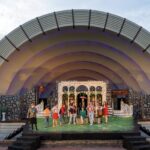
Raise the Curtain: This month, Gamut will debut its new theater.

Screenshot 2015-10-30 12.36.52It takes a village, so the saying goes.

But in the case of Gamut Theatre, it took a village and volunteers and craftsmen and cash, as Harrisburg’s classic theater this month debuts its new, permanent home in the historic, former First Church of God, moving out of long-time rental space in downtown Strawberry Square right across the street.

The new theater will open with one main stage, but eventually will be home to two performance venues and more classrooms as it continues to expand both in show offerings and education programs.

“In addition, there will be a small stage in the reception lobby for poetry, singer/songwriter events and other smaller presentations,” said Melissa Nicholson, executive director of Gamut Theatre Group. “We are proud to preserve much of the original architecture and be caretakers for the rich history that accompanies it. It is, in my opinion, the perfect place to perform classic stories.”

Gamut relied on more than 150 volunteers (many with day jobs) who donated some 5,700 hours designing and constructing. The core company of actors worked nights and weekends since August to assure the theater will open on Nov. 5 for a private preview party for donors. On Nov. 6, there will be a ribbon cutting with Mayor Eric Papenfuse and an open house for the community. The next evening is the grand opening of the theater’s production of Shakespeare’s “Twelfth Night.”

To date, the theater has raised more than $1.3 million of the $2.5 million needed to complete the project—all of this without the aid of a professional fundraiser.

“We currently have an ask into the PA Redevelopment Assistance Capital Program to cover the Phase I gap in fundraising and to fund Phase II,” Nicholson said. “Phase II will develop the second stage/education center part of the building.”

“All the world’s a stage,” wrote Shakespeare. And, for Gamut, a new stage means a whole new world ahead.

 
The new Gamut Theatre is located at 15 N. 4th St., Harrisburg. For more information, including how to make donations and buy tickets, call 717-238-4111 or visit www.gamuttheatre.org.


Continue Reading

A Mission to Serve: The work of Tabernacle Baptist fills the belly–and the soul.

Screenshot 2015-10-30 12.31.12The peanut butter jar tumbled off the overflowing grocery bag, flipped on to the floor and bounced past Pastor Brown. With a duck and a scoop, he snagged it and returned it to the man holding the bag. The man acknowledged its return with a nod and a hearty “thank you.”

Tabernacle Baptist Church, located in the Fox Ridge Historic District not far from the Broad Street Market, has been serving the hungry in Harrisburg for 40 years. Each Thursday, the church helps feed about 70 people through its food pantry.

The congregation has a mission—to serve the community.

“God has called all of us to be servants, and we have a mission to serve others,” said Rev. Arthur Brown, church pastor for 10 years. “That is what I live and breathe for.”

Brown added that the church sees itself as a “community of servants, not just a community of church-goers.”

The food pantry distributes typical foodstuffs: canned goods, peanut butter and fresh produce. During distribution, volunteers help participants find low-cost health insurance, nursing students from HACC take blood pressures, and folks assist guests in finding heating cost assistance and affordable cell phones.

Along with these services, Tabernacle dishes out a healthy serving of love.

James, a pantry visitor, said that Tabernacle was “just so friendly, nice and helpful… they are open to everybody.” His partner nodded in agreement.

Pantry regulars who don’t show up for a while can expect a phone call, and anyone in the hospital can expect a visit.

“It turned more into a holistic ministry, more than providing very basic essentials,” said Brown, who refers to those who come to the food pantry as the “Thursday family.”


Fostering Relationships

Tabernacle doesn’t just distribute food, but cooks it.

For 12 years, congregation members have served about 300 home-cooked, traditional Thanksgiving meals to folks in the community, which they will do again this month.

Many of the meals are eaten at the church, but volunteers also deliver meals to people who are ill or shut in and to first responders, who must work on Thanksgiving. Deacon Gonzales Washington described the day like this: “Come in just like at home, enjoy yourself!” He said that guests can watch football on the television, eat and chat, just like in a family atmosphere.

Tabernacle leaders believe in fostering relationships among both worshippers and those within the community. The Fishers of Men Ministry works to connect men on a deeper level.

“Men have very superficial relationships, and men are hurting, suffering in silence,” said Brown.

Here, the men share what’s going on in their lives in a place of non-judgment. The group recently donated more than $1,000 to Bethesda Mission.


Past & Present

All of these services and all of this love happen in Tabernacle’s 1886 church building and attached 1897 parsonage, listed in the National Register of Historic Places.

A German Lutheran congregation built the original 1863 frame church. In 1967, a group of 89 people bought the building from the German congregation, forming the Tabernacle Baptist Mission, then the church.

The modified, Gothic-style brick building holds a three-story square bell tower, stone tracery arches and large, pointed arch windows.

Inside, the sanctuary contains an elaborately carved wooden altar, with a wooden screen, inside a shallow chancel arch. Ornamental gold imposts support the arch. The altar is flanked by lit stained glass windows depicting Jesus in the Garden of Gethsemane and Jesus knocking at the door, a biblical reference to Revelation 3:20. The German inscription under this window says, “Gestiftet von ibren kindern,” which translates to “Donated by the children.” The heavy, dark, wooden pulpit sits centrally in front of the altar, because the word of God is central, explains Brown.

More evidence of the church’s German history exists in the original exterior stained glass windows, which contain German inscriptions acknowledging family sponsorships. Those families included the Henry Neideich Family, the Schaeffer family and Mr. & Mrs. Jacob Kehr. Some members of the former German congregation joined Tabernacle for worship when it celebrated its 150th anniversary two years ago.

The congregation appreciates the history and architecture of the church, but, in some ways, the building limits its ministries. The fellowship hall, where the food pantry is located, is small with low ceilings; the parsonage rooms used for Sunday school and Vacation Bible School are tiny; staircases to the upstairs are steep and narrow. A chair lift provides the only access to the second-story sanctuary for physically challenged parishioners. This layout makes providing programs challenging. Brown said that the congregation finds itself “dialing back [its programs] to meet the space.”

The church recently received a grant to evaluate how it could update the building to better suit the needs of the community, while still maintaining the church’s historic nature. The plan, created by Harrisburg-based McKissick Associates, involves keeping the present building but reconfiguring and opening up the space.

Pastor Brown said a renovation would allow the church to “dream bigger because we have a bigger space.” It could develop new programs, expand programs and make existing programs more efficient, he said. And renovating, rather than moving, would allow the church to maintain its commitment to stay in the city. For now, the renovation plans in Brown’s office remain only a dream because the congregation lacks the funds to make it happen.

Renovation or not, Tabernacle will continue to do what it does. This congregation worships within a historic structure but lives very much in the present. Church members use an old building to feed, guide and comfort—compelled to serve—and endeavor to make a more positive present and future for those they encounter.

Tabernacle Baptist Church is located at 1106 Capital St., Harrisburg. To learn more, visit www.tabernaclebaptist.net.

Continue Reading

Waste Not This Opportunity: Together, we can beautify our city while building our community.

Of late, there has been considerable attention on the subject of waste in Harrisburg.

From revisiting past transgressions about the mismanagement of a waste incinerator, to the perpetual trouble of illegal dumping that continues to plague local neighborhoods, to the ongoing debate on how best to facilitate the city’s sanitation program, waste has been on the minds and tongues of many.

When reported in the news, opined in magazines and blogs or peppered among daily conversations, much of the dialogue positions waste in a negative context. And in some cases, rightly so.

Still, what if waste itself wasn’t the issue? Rather, that these assumed problems derive from how we think about waste and how then we act upon those thoughts.

Consider, for a moment, that waste can actually provide an opportunity to make great things happen in our community. That it can bring people together to connect, collaborate and create—all with the aim of keeping our city clean and beautiful. That it can represent the hope of Harrisburg transformed. This is possible if we change the way we think about waste.

Two valuable, local initiatives come to mind that exemplify this view in action: 2Minute Tuesday and The Great Harrisburg Litter Cleanup.

Many of us are familiar with the 2Minute Tuesday call to action, which asks residents and businesses to invest two minutes each Tuesday to clean up their outside space. This movement demonstrates an important philosophical position: We all create waste, and as such, we all bear a responsibility for its end. The 2Minute Tuesday mantra also illustrates how individual action contributes to greater community pride. The effort of one person, one business or one organization may not appear to make much headway. But, in concert with others, the results can be remarkable.

Then consider The Great Harrisburg Litter Cleanup, a collaborative event where hundreds of volunteers converge on one day, each year, to clean up city streets, sidewalks and other public green spaces. Literally, tons of trash and other littered items are collected by passionate, inspired and committed people who believe in honoring the past, present and future vitality of the capital city. They represent the optimism and action that propel this community forward.

In both examples, waste was not the problem, per se. Rather, it was the consequence of intentional action by people. Where one group viewed something as no longer holding value and indecorously discarded the item to the detriment of their community, others saw the opportunity to make their neighborhood better. Still, there is a silent number who act simply by their non-participation, viewing the “problem” of litter and trash as not their own.

How different are these multifarious perspectives on waste from other challenges we face in Harrisburg? Where one sees waste, the other sees value. Where one perceives hardships, the other envisions opportunities. And some choose to turn a blind eye. All act—one group detracts from progress, another transforms and the third disregards the situation altogether.

The question then remains, how do you think about waste? When you see a piece of trash on the street or sidewalk, will you pick it up or ignore it? When you see an illegal dumpsite, will you continue to pass by or will you collaborate with various stakeholders to plan a cleanup event and empower others in the neighborhood to keep it clean and beautiful?

How do you think about other challenges that Harrisburg faces? And how will you act? This is a principled question we must all ask ourselves.

The following quote by novelist and screenwriter Eric Knight so poignantly frames this perspective: “Waste not the smallest thing created, for grains of sand make mountains, and atomies infinity.”

Knight’s words challenge us to think differently about the world, about our community, about the way we think and about how we act. In the context of waste, how many opportunities do we let slip by because we think of waste as a problem, rather than a resource? Whether it’s repurposed for a new use, recycled into a new product or converted into renewable energy that provides green power to the local community, waste is a resource for our community. It’s about perspective.

So together…

Let us waste not time ruminating on things long past, but create, plan and work together towards a brighter future for Harrisburg.

Let us waste not energy on pointing out all that’s deficient, but invest our time and resources into the continued revitalization of this capital city.

Let us waste not the chance to make a difference in our neighborhoods. Where we see a need, let us each be the solution.

Harrisburg, let us waste not the smallest thing. For these sands of opportunity and progress will be the future mountains of change and transformation in this amazing town.

Kathryn J. Sandoe is communications manager for the Lancaster County Solid Waste Management Authority, a community publisher of TheBurg.

Continue Reading

Independent Minded: In a tough business, local indie bookstores have survived through a mix of expertise, service and community.

“The reports of my death have been greatly exaggerated.”

That famous quote, attributed to Mark Twain, kept flashing through my mind as I interviewed the owners of six independent bookstores throughout central Pennsylvania. After all, these bookshops were, by now, supposed to be gone, kaput, dumped into the ash heap of history, right?

That’s been the common wisdom as e-books increasingly have caught on with readers. But, today, a handful of indie booksellers in our area have not only survived, but thrived.

How did they do it? What’s their secret? I wanted to find out.

 
Mechanicsburg Mystery Bookshop

In the book world, Debbie Beamer is the definition of a survivor as, on Nov. 9, her Mystery Bookshop in Mechanicsburg will celebrate 25 years in business.

“Members of my core group of customers still want to hold a book,” said Beamer, citing one of the factors in her success.

Beamer is always thinking of ways to add value to her shop and, earlier this year, added a lecture series—talks on Native Americans, the Revolutionary War and John Wilkes Booth, among other topics. She even threw in a class on psychokinesis.

As a specialty bookseller, Beamer may have an advantage over more general stores, as mystery book readers tend to be loyal and exacting. They appreciate her selection and knowledge, as well as the environment she’s created.

“The indies provide a community for their customers,” said Beamer. “Bookstores are a gathering place where readers can meet authors, listen to lectures and so much more.”

Sam Marcus

Sam Marcus

The Bookworm Bookstore
 
As I sat across the table from Sam Marcus at the Bookworm Bookstore in Lemoyne, I saw the glint in his eye when he talked about books and found it easy to visualize the college professor he once was.

But it takes more than a love for the written word to survive these days in such a difficult business. Like Beamer, Marcus has a specialty. In his case, it’s classics, literature and history.

“So, the type of books I sell aren’t conducive to e-books,” he said.

Marcus doesn’t shy away from the Internet, as about half of his sales are online, supplementing his brick-and-mortar shop. But he offers things you just can’t get from Amazon or even the large chains—knowledge and quality.

“I couple this approach with individual services for my customers,” he said. “It’s paramount to learn their likes and dislikes and be able to offer suggestions of books they might enjoy reading.”

Marcus is so confident in his shop that he’s even setting the stage for his retirement.

“My children are playing a larger role in the store management,” he said.

 
Canaday’s Book Barn
 
Ted Canaday is another area bookseller who has thrived due to that special formula of knowledge, customer service and quality, as well as having a niche.

“I specialize in out-of-print books, as well as historic maps and charts, so my customers aren’t after the latest bestseller,” said Canaday, owner of the Book Barn in Carlisle. “The market for me is distant and diffuse, my customers coming from as far away as 100 miles.”

Canaday does much of his business on the Internet, so the e-book craze was not a problem, he said. He usually finds his books at estate sales or has customers bring the books to him.

For Canaday, the key is having what his customers want when they arrive, then turning them into repeat customers.With more than 70,000 books, maps and charts, the Book Barn is indeed a fascinating place to shop, attracting people who want a different kind of buying experience.

“I’m actually more like an antique shop than your average bookstore,” he said.
 
 
Aaron’s Books

Ten years ago, Todd Dickinson and his wife, Sam, opened Aaron’s Books, naming it for their son. They wanted to have a business together and do something that Aaron would learn to love.

Soon afterwards, e-books went from afterthought to mass market, but the Dickinsons rose to the challenge, leveraging their strength as an integral part of the community in Lititz.

“The rise of e-books was arguably harder on chain stores,” said Todd. “So, that created an opportunity for independent bookstores to grow because of our closeness to the community.”

The Dickinsons didn’t let e-books change the kind of store they wanted to be. As independents, they’re highly responsive to their customers and stock new and used books that you simply won’t find inside grocery or box stores.

“We enjoy helping people find that book they’re going to love,” said Todd. “We just celebrated our 10th anniversary and look forward to many more in downtown Lititz.”

Michelle Haring

Michelle Haring

Cupboard Maker Books

Michelle and Jason Haring opened a custom-built furniture and bookstore in February 1998. In the spring of 2002, Michelle left her teaching job and made the decision to sell books exclusively.

Over the years, the couple adapted to the market, selling books over the Internet, as well as inside their Enola shop. But what’s really kept them going has been their loyal customer base for genre fiction.

“We carry all types of books, including history, religion, science, military, cookbooks and children’s books,” said Michelle. “However, our main interest area is genre fiction, especially mystery, science fiction and romance.”

This past year, they have focused more on author- and book-centered events. They currently have several genre fiction book clubs,including mystery, romance, young adult and urban fantasy. This past fall, they started “Book Mingles,” which provides a place for book lovers to talkto other book lovers.

“We see continued growth,” said Michelle. “The personal touch is what our customers are looking for.”


Catherine Lawrence

Catherine Lawrence

Midtown Scholar Bookstore
 
When you walk into Midtown Scholar Bookstore in Harrisburg, you immediately see the ornate coffee bar and watch people gathered around tables drinking lattes and socializing.

You then realize that diversification and community are essential parts of the story at Midtown Scholar, owned by Catherine Lawrence and her husband Eric Papenfuse, who now doubles up as the city’s mayor.

“We are honored to be one of the leaders in our neighborhood’s resurgence,” said Lawrence.

In fact, the brick-and-mortar location is the physical manifestation of the store’s main business, selling academic books online.

“We’re the largest scholarly used bookstore in the country,” said Lawrence. “That continues to be our special niche.”

Looking at the shelves and shelves of books in the store, it’s hard to visualize the beginning.

“I can remember sitting in our walk-up book store in the old post office, a block from the Midtown Cinema, with my foot rocking my infant son in his carrier,” said Lawrence. “Below me, our Internet staff was logging the latest tractor-trailer load of books from scholastic publishers into our computers. At that time, we already had seven public storage units stacked floor to ceiling with books we were selling online, as well as an annex in Allison Hill.”

As the Internet division outgrew its first-floor space, the retail operation took over that area with books, as well. That gave them the ability to hold concerts, author talks and public forums. They needed an even larger space for literary activities when people came from as far as Baltimore and New York to participate, and that’s when they bought the larger building across from the Broad Street Market.

Today, Midtown Scholar is an important community asset, hosting a myriad of events each month, including author talks, book clubs, concerts and children’s activities, none of which can be replicated well in a virtual way.

The couple plans a further expansion into another annex to make way for more books. The main store then will be able to offer an even broader range of new, used and rare titles to customers, including more children and young adult offerings.

So, as you begin to do your Christmas shopping this year, stop in at one of these independent bookstores. Who knows—you may just make a life-long book friend. After all, community is the secret of what makes these stores go.

If You Go
 
Aaron’s Books, 35 E. Main St., Lititz, 717-627-1990, www.aaronsbooks.com

The Bookworm Bookstore, 900 Market St. (West Shore Farmer’s Market), Lemoyne, 717-657-8563, www.bookwormhbg.com

Canaday’s Book Barn, 2269 Newville Rd, Carlisle, PA, 717-574-0092, www.canadaysbookbarn.com

Cupboard Maker Books, 157 N. Enola Rd., Route 11/15, Enola, 717-732-7288, www.cupboardmaker.com

Mechanicsburg Mystery Bookshop, 6 Clouser Rd., Mechanicsburg, 717-795-7470,
www.mysterybooksonline.com

Midtown Scholar Bookstore, 1302 N. 3rd St., Harrisburg, 717-236-1680, www.midtownscholar.com

Don Helin published his first thriller, “Thy Kingdom Come,” in 2009. His novel, “Devil’s Den,” was selected as a finalist in the 2013 Indie Book Awards. His latest thriller, “Secret Assault,” was selected as the best suspense/thriller at the 2015 Indie Book Awards. Contact Don on his website, www.donhelin.com.


Continue Reading