Tag Archives: harrisburg

Community Starts at Hello: A simple resolution for 2016–engage with those around you.

At the start of each new year, society pauses to reflect on the prior year while also outlining an agenda of resolutions for the year ahead. Somewhere in that shuffle of review and soon-to-be broken promises, we often lose sight of the simple course corrections that could make a meaningful impact on the year to come. We have a tendency to make things too complicated.

Our community should embrace one simple, meaningful change in behavior. Start with a “hello.”

Make a resolution to acknowledge and engage those around you. Stop being a stranger within your own neighborhood, whether you live in the city or visit daily for work. Put down your phone. Take off your headphones. When you are among others in public, make the conscious decision to be actively open within your environment. If you don’t make the effort to get to know the people around you, no discussion can reach a meaningful depth. It would be a substantial, yet simple way to start the process of uniting our community through conversation.

The exchange of ideas requires time and energy. Ideas need time to gestate. If we are consistently avoiding conversation and rushing through a discussion merely to get it done, we are not taking advantage of the opportunity to refresh our city.

Could it start with genuine, personal interaction that revolves around the thesis that Harrisburg is a place conversation is embraced? Conversation could be the key to an expansion of positive action. I know that we have a critical mass of individuals who believe vibrant discussion is a good thing for society.

This is happening in Harrisburg every day. It is the spontaneous conversation that erupts in laughter at the corner table at Little Amps. Perhaps it is an economic debate that is considered among friends at the Dauphin County Library System’s McCormick Riverfront Library. Or could it start with a quick greeting exchanged between two runners along the trail? We have no shortage of venues in which to engage in spirited debate.

Harrisburg is a place that we should all proudly identify with, even if there remains room for improvement. In many settings, I have been engaged in conversation on how to make Harrisburg better. I am sure that you have, too. What if we stop merely indulging problems that continue to create discord and shift the conversation to a focus on actionable solutions?

Launch Harrisburg forward with dynamic discourse. This won’t happen unless you are open to the notion of engaging others. The presumption must become that others are open to listening. It also means that we must refrain from pontificating or yelling our message without direction.

Be actively inclusive in your discussion, do it reasonably and without embellishment or vitriol. Limiting dialogue only to ideas that you agree with can be more damaging than it is positive. If there is one area of this process that could be challenging, it is that we will all need to engage in uncomfortable conversations. Listen more. Be thoughtful of your word choice and inflection when you do speak.

Harrisburg, like most good conversation, is a work in progress that ebbs and flows with the energy of its participants. Success is measured by the process as much as the outcome. Finding commonality in purpose is one approach that should be employed to guide our dialogue. We have plenty to disagree about, but finding that one shared vision is way more meaningful (and usually a lot more fun).

If the opportunity for substantial and vibrant conversation is one reason that Harrisburg is already a great place, then its continued success rests squarely with us, its inhabitants. Insightful discourse guides us to make decisions that will provide the most significant impact on our community.

But, in order to have relevant and productive discussion, a baseline understanding of the issues is critical. This means taking time every day to investigate current events and to spend time immersing yourself in history. Be quick to ask for additional information. Be slow to ignore those facts that you don’t immediately recognize as important. History is not important just because we memorize dates and people. Historical facts characterize our sentiments and provide context to our arguments. History gives our present day conversations meaning.

We have a societal obligation to address the issues that impact a community. Issues like safety, taxes and our infrastructure must be actively debated. At the same time, we should not ignore critical elements like the arts and city beautification—engagement is one key component to making sure that these values are woven into the fabric of Harrisburg. Achieving this balance can only be achieved by challenging one another to reflect and talk about what matters.

Find your outlet for discussion. Discussion without activity is wasted energy. Our community has vibrant professional organizations to propel forward unique and critical dialogue. Robust non-profit organizations help to sustain missions that might otherwise not be given the attention they need. Identify something of substance and then share your message.

Make civility the norm and make it routine. Who knows what path a shift to situational awareness and conversation might lead us. When you walk down one of Harrisburg’s streets, make it a point to share a meaningful “hello” with a stranger. We should unite in the concept that Harrisburg is already great and build sustainable success through meaningful discussion.


Andrew M. Enders, Esq. is a third generation insurance professional with Enders Insurance Associates, one of TheBurg’s Community Publishers. He also is the 2016 president of Harrisburg Young Professional

Continue Reading

What’s the Plan? After scores of meetings and tons of input, Harrisburg’s comprehensive plan process enters the final stretch.

Comprehensive plan leaders Bret Peters and Geoffrey Knight.

Comprehensive plan leaders Bret Peters and Geoffrey Knight.

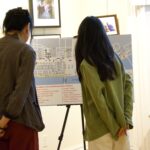
The handwritten suggestions on 5×7 notepaper are posted for all to see at a beHBG comprehensive plan public meeting. Some of them make sense, expressing decades of frustration.

“More PARK renovations in the inner city. Harrisburg has to work for the kids.”

Others? Well, one of the submissions is nothing but a tot’s scribble in red marker. And there’s this, in a child’s handwriting: “I would like to see NFL team & stadium.”

Sorry, kid. Harrisburg will never work that well for city youth. But the Harrisburg comprehensive plan process is giving voice to dreams that have been silenced for years. Whether those dreams come true is another matter, but planners hope the process creates a new normal for transparency and dialog that bridges the festering trust gap among city leaders and residents.

Harrisburg City Council kicked off the comp plan process in early 2015 for a simple reason—because the state requires it. Also because the city’s previous plan is 41 years old. Remember 1974? If you wanted to watch M*A*S*H, your butt had to be on the sofa at precisely 9 p.m. on Tuesday. Meanwhile, your new AMC Gremlin sucked back 13.2 miles per gallon in gas.

At that time, 68,061 people lived in the city of Harrisburg, down from historic highs in the 100,000 range. Today, 49,082 residents rattle around among neighborhoods livable and not-so-livable, navigating streets that flow one way or split for reasons that might have made sense in another era but today only serve to divide.

Real Value

First, a note on what the comp plan is and isn’t.

It isn’t a tool for improving schools, bringing down taxes or whitening teeth. It may have some of those effects, but it’s focused on improving the physical environment and, therefore, projecting a stronger, healthier city to the world.

The theory goes like this: When people can navigate easily from one section to the other, social and geographic divides fall. When run-down lots turn into neighborhood gathering places, connections are made. When vacant buildings are reused, jobs are created.

“What points of the city have real value for the future?” asks Bret Peters, partner with Office for Planning and Architecture, the Harrisburg firm selected by a steering committee that launched the process. “Where there are structures with potential, you have redevelopment and reinvestment.”

It’s about integrating existing city elements, says Peters. Build a bridge from Division Street to Industrial Road, and Uptown connects easily with HACC and Wildwood Park. Make Market Street two lanes its full length, studded with redevelopment projects, and Allison Hill flows easily into downtown.

The plan envisions a city that’s easy to bicycle and walk, has transportation hubs, and offers a green waterway not just at the riverfront but also along a pristine, flood-free Paxton Creek.

Generational Opportunity

In Peters’ office behind St. Patrick’s Cathedral, there is a war room of sorts, where posters lining the walls display more than 40 transformative concepts—parks and greenways, fresh-food markets and rehabbed housing, repurposed schools and reinvigorated warehouses.

There is also, in this room, a giant map of the city pinned with more than 120 red, blue and yellow pushpins. Each pin represents a forum, neighborhood gathering or community meeting where planners solicited ideas and presented the comp plan as it took shape. Residents of all ages—including that tot who couldn’t write letters yet—submitted ideas on notepaper. Planners pureed those initial ideas into concepts that residents could vote on, in person or at behbg.com.

Community outreach and transparency are hallmarks of the process, says city Planning Director Geoffrey Knight, “hopefully insuring that we were in as many places and in front of the community in as many different ways as we possibly could have been.”

Some residents have been skeptical, assuming that planners are “supposed to have X number of meetings” and then craft the plan to their liking, Knight says. His team is “trying to disabuse the public of that notion.”

“We’re trying to find organizations and individuals and entities that traditionally haven’t interacted with the city all that much,” says Knight. “We do realize that over the last 40 or 50 years, there’s been a lot of apathy and mistrust built up. That’s been well-earned, because governments at the time just didn’t feel that public outreach was as necessary as we realize now, today, that it is.”

Of course, the ideas that rise to the top are no surprise. How many decades have city residents cried out for less crime, less blight, more greenery, fewer divides between the Hill and downtown, and for God’s sake, more grocery stores?

The next steps put comp plan ideas into practice, say planners. To prevent dust from piling up on the final document, the community must be vigilant and “continue pushing to say we want to start getting these in,” says Knight.

And for the funding that must, in nearly every case, materialize to turn ideas into reality? Knight sees three ways around that hurdle. First, grant funding spigots open more easily when projects are part of a comprehensive, well-thought-out, current plan, not a yellowed document that conjures Gerald Ford wearing wide ties.

Second, prioritize existing funds. “We are a fairly resource-constrained municipality, but we do have money to pave roads or do demolitions,” says Knight.

Instead of following an ad-hoc basis, allocate funds according to their fit with the plan. When an underground utility is replaced, paint bicycle lanes during resurfacing, and the task is done with “marginal costs.”

Third, use the plan to guide developers, urging them to build and invest in the areas where their interests intersect with the plans.

Same goes for integration among governments, says Peters. One of the plan’s more ambitious concepts is a revitalized industrial park on South Allison Hill, the area between 17th and 19th streets where that faded beauty, the Coca-Cola plant, and other industrial remnants now stand vacant.

That area is also at a prime location with direct access to I-83—the same stretch that PennDOT just happens to be widening and dramatically revamping in coming years, says Peters. It’s a “generational opportunity” to tell PennDOT “this is the community and the kind of area we’d like to see, and this is how we need roads to be designed coming in and out of the highway.”

“What we’re trying to do is create an export economy in this neighborhood where people are exporting goods and services, where people are coming in off the highway, buying things, and leaving,” says Peters. “Nobody views this neighborhood as a destination at the moment, but we want to turn it into one.”

Optimistic Exercise

But is any of this realistic or just Jetsons-style dreams?

Knight says much of implementation is simply “on-the-ground stuff in deferred maintenance that there’s money out there for.”

“Some of these concepts aren’t pie in the sky,” he says. “They might be a water taxi or splash park or skate park.”

And even though decades of mistrust prompt some to say that the city has more pressing needs, Knight paints the comprehensive plan as, “by nature, an optimistic exercise.”

“It’s meant to work on the premise that, if we do fix things up in five years, 10 years, where are we as a community?” he says. “You have to have those ideas and projects that think a little bit more long-term. We have addressed immediate needs that people care about, and where will we go from there?”


Milestones Ahead

Harrisburg’s Comprehensive Plan process should be wrapped up later this year, according to the following timeframe:

  • March 1: Final document is completed and issued for public comment. It’s also sent to Dauphin County and adjacent municipalities for review.
  • Mid-April: Harrisburg Planning Commission reviews the plan and votes to recommend its adoption or not.
  • June: Harrisburg City Council votes on whether to adopt the plan.


Continue Reading

Harrisburg on the Wall: “The Burg 2” will give the gift of art by selling it.

Screenshot 2015-12-27 12.33.29Step into Gallery@Second, and it seems like Harrisburg is breathing through the art displayed on the walls.

That’s certainly how owner Ted Walke wants people to feel when they experience “The Burg 2” art exhibit, slated for Jan. 14 to March 12.

“The city has so much to tell,” Walke said, as he prepared his gallery for the exhibit. “There’s a level of pride in being part of Harrisburg. When art can showcase that, it can be the wave that the community rises on.”

Walke and his wife, Linda, hosted their first “The Burg” exhibit in 2010, with the intention of featuring local artists who could showcase everything from abstract to contemporary pieces that represented a slice of Harrisburg.

Many people who visited the first show recognized their homes or favorite hangout spots captured on canvas, film or paper.

Walke remembers the reaction to the initial exhibit, people grabbing framed art straight off the wall and bringing it to the front counter for purchase. Whatever was behind the frame spoke so deeply to them that they had to have it, he said.

He hopes for the same response this time around, especially since the gallery’s share of the sale will go back into the arts through Sprocket Mural Works, a group dedicated to creating vibrant community murals throughout Harrisburg.

“There’s a really good feeling we have about doing this,” Walke said. “We know that art can impact the community, and, if we can help that progress in Harrisburg, then we feel we’re on the right path.”


Lasting, Inspiring

Community donations are what keep Sprocket Mural Works running, said its co-founder, Jeff Copus, who’s also the art education director with Jump Street.

Formed about two years ago, Sprocket has completed about 10 different murals throughout the city, ranging from a geometric-inspired mural at the Kindergarten Academy on Filbert Street to a colorful tree celebrating diversity along Kittatinny Street in Allison Hill.

The organization uses every cent to place art throughout the city, the donations off-setting costs that range from paying artists to buying high-quality paint supplies, Copus said.

“Funding is one of the largest things we have to overcome right now,” he said. “The more money we have, the more projects we can do, and we’ve often been in a place where a lack of funds has kept us from doing more. When we have someone from the community recognize our efforts and choose to support us, it really means a lot.”

Any money raised through the Gallery@Second exhibit will be applied to 2016 projects, he said. This includes a large mural planned for April on the west wall of Midtown Cinema.

Painting a mural on the broadside of a two- to three-story row home can cost about $12,000, or about $10 per square foot, Copus said. A few factors play into that, including whether the wall is in good condition and what the artist charges for his or her work. The paint used for the murals is also expensive but is a high-quality, high-pigment paint meant to last about 30 years. Most exterior paint grades found at the hardware store will start to degrade after about five years.

“We want to go into these neighborhoods and offer more than a Band-Aid on their buildings,” Copus said. “We want to provide something lasting, something inspiring.”


All Around Us

Artist Karen Commings is delighted that her contribution to the exhibit will not only bring art into someone’s home, but will help provide art to entire neighborhoods through the gallery’s donation, she said.

No matter how many times she’s photographed Harrisburg, there is a new scene, a different angle or a change in the light that gets her to look at the city differently, she said.

The photograph she submitted for “The Burg 2” captures a scene down North Street taken from the steps of the Pennsylvania Capitol. After adjusting the highlights to bring out the white in the image, it looks more like a watercolor than a photograph, she said.

“I’d like for people to see the photo and look at that scene as they never have before,” she said. “How many times do we pass certain things and not pay attention to them? As an artist, I try to find beauty in the things people often do not even notice. There is beauty in the everyday and mundane.”

For Walke, the hope is that each person who visits “The Burg 2” walks away with that same sense of awe. He hopes a passion for the city is rekindled through the framed art that hangs on the walls of his gallery.

“If we can get that pride to flow through the streets of Harrisburg, into the lives of each and every person who lives here, then I think we’ve accomplished something great,” he said. “Art is all around us in Harrisburg. Sometimes, we just need someone to show it to us.”

Gallery@Second, 608 N. 2nd St. in Harrisburg, will host “The Burg 2” from Jan. 14 to March 12. For more information, visit www.galleryatsecond.com or email [email protected]. More information on Sprocket Mural Works can be found at www.sprocketmuralworks.com.


Continue Reading

Harrisburg as Capital: Backwater town becomes government center.

Screenshot 2015-12-27 12.17.03Judging by the solid, stone- and marble-structures of the Capitol complex, it might seem as if the state government has been in Harrisburg forever, since the very beginning of Pennsylvania. However, that’s not the case. Several cities preceded Harrisburg as the state capital.

From 1682 until 1799, Philadelphia served as the seat of government and, from its humble beginnings, rose to be the largest city in the colonies by the time of the American Revolution. By the end of the 18th century, people were moving westward, across the Susquehanna, down the Shenandoah and Ohio River valleys. As a result, the General Assembly began, in 1789, to search for a more centrally located site for a new capital city.

In 1785, John Harris Jr. offered the commonwealth four acres of “publick ground,” free of charge, so long as his town (initially called Louisburg but quickly changed to Harrisburg) was selected as the capital city. Throughout the 1790s, the debate of when and where to move the capital raged, but it was fear prompted by several yellow fever epidemics in Philadelphia that finally motivated the Assembly to move the seat of government to Lancaster in 1799. On December 3, 1799, state legislators met for the first time in the Lancaster County Courthouse.

The move, however, did not settle the issue. Lancaster, though a better choice than Philadelphia, did not satisfy many legislators, and the debate over moving the seat of government ensued nearly every time the Assembly met. Lancaster’s citizens attempted to offer free land, as John Harris had done, to keep the capital in their city, but this was never fully accomplished.

As a result, in 1809, a full-scale debate occurred, and every city and town that had ever entertained thoughts of becoming the capital city made a proposal, perhaps sensing that this was the last time a permanent change in the seat of government would occur.

In the end, Philadelphia, Lancaster, Pittsburgh, Harrisburg, Middletown, Northumberland, Bellefonte, Carlisle, Reading, Sunbury and Columbia were locations that were proposed and voted upon. On Feb. 21, 1810, Gov. Simon Snyder signed the act moving the seat of government, and, in October 1812, the General Assembly met in Harrisburg for the first time.

The Assembly soon purchased another 10 acres of ground north of Harris’ tract, from U.S. Sen. William Maclay. (The Harris tract is now Capitol Park, while Maclay’s tract, a low rising hill, is where the Capitol is located.) Commissioners were appointed to supervise the movement of books, desks and other items from Lancaster to the old Dauphin County Courthouse, which served as the temporary Capitol.

The Assembly contracted the services of master builder Stephen Hills for two state office buildings and a brick, federal-style Capitol between them, which was completed in 1822. That building burned to the ground in 1897, replaced, nine years later, by the current, magnificent Beaux Arts-style Capitol building, as Harrisburg completed its long transformation from muddy backwater to modern capital city.

Continue Reading

December News Digest


2016 Budget Passed

Harrisburg City Council last month passed the city’s 2016 spending plan, a $60.7 million budget crafted by the city administration

Council voted 5-2 in favor of the budget, though council President Wanda Williams said the spending plan would be reopened and reconsidered in January, once three new council members take their seats.

Two public hearings will precede a vote on a revised budget, she said.

As passed last month, the budget adds 36 new positions, half in a newly created Neighborhood Services division, which would be funded out of city trash bills. Besides sanitation, the new division absorbs many functions previously funded by taxes, including some road and parks maintenance.

The administration also has proposed tripling the local services tax (LST) to $3 per week per worker. The Commonwealth Court must first approve the hike, which then must be sanctioned by council.

The LST is a tax on people who have jobs in the city and earn more than an annual threshold income, which is proposed to be about $24,000. While it does affect some city residents, most of the burden falls on commuters, a point made repeatedly last month by Mayor Eric Papenfuse.

Council members Brad Koplinski and Sandra Reid were the lone votes against the spending plan. Both said they believed the budget contained excess spending and objected to any increase in the LST.

It was the final meeting for Koplinski and Reid, as well as for three-term Councilwoman Susan Brown-Wilson. Reid and Brown-Wilson did not seek re-election last year, while Koplinski lost his seat in the Democratic primary.

This month, three new council members will be sworn into office: Cornelius Johnson, Westburn Majors and Destini Hodges.


TRAN OK’d

For a third straight year, Harrisburg is issuing a tax and revenue anticipation note, a form of short-term borrowing meant to cover a potential budget shortfall.

City Council voted unanimously last month to enter into an agreement with M&T Bank for the $4.5 million TRAN, which carries an interest rate of 2.53 percent and includes a $5,000 nonrefundable fee. Any drawdown on the loan must be repaid by June 30.

Municipal finances are typically tight for the first three months of the year, until the city begins to receive property tax revenue in March. Harrisburg entered into similar loan agreements in 2014 and 2015, but never had to tap them for funds.

City officials, however, said they were more concerned this year due to the state budget deadlock. At press time, the legislature still had not passed a budget, meaning that the state’s $5 million annual contribution to the city for emergency services had not been agreed to or paid.


Streetlight Project Launched

Harrisburg last month officially launched its citywide streetlight project, which will replace all 6,100 existing streetlights with new LED bulbs.

The $3.7 million project, the largest of its kind in Pennsylvania, should be completed by April.

Officials said the project would cut the city’s electric bill by two-thirds, saving more than $500,000 per year, and that the project would pay for itself in about six years. The savings are guaranteed under a contract with The Efficiency Network, a Pittsburgh-based company managing the upgrade.

The bulk of the project cost is being paid with a $3.2 million loan from M&T Bank. The city is seeking a grant from Impact Harrisburg, a nascent nonprofit promoting infrastructure improvement and economic development, which would allow it to pay off the bank loan early if awarded.

Part of the cost is also being paid by a $500,000 grant from the Pennsylvania Energy Development Authority and a $30,000 donation from Lighten Up Harrisburg, an organization that raises money to improve city lighting through an annual 5K run.


State Rebukes Fraud Charge

The state agency overseeing Harrisburg’s financial recovery has sharply critiqued public accusations of fraud by Mayor Eric Papenfuse in a private letter, calling them “unsubstantiated” and “categorically untrue.”

Dennis M. Davin, secretary of the Department of Community and Economic Development, wrote that his agency was “distressed” by Papenfuse’s claims that consultants had intentionally misrepresented how much money the city would get from its parking system.

“The team dedicated to supporting the City of Harrisburg’s recovery efforts is committed to providing the highest level of professional assistance,” Davin wrote in the letter, which TheBurg obtained through an open records request. “Given this fact, we take any allegations of fraud very seriously.”

Davin signed the letter in his role as chairman of the Pennsylvania Economic Development Financing Authority, a funding arm of his department that issued $286 million in bonds to finance the 2013 lease of the city’s parking system.

Papenfuse made his remarks at the authority’s Oct. 21 board meeting, when he addressed shortfalls in the so-called “waterfall” payments that provide critical money to the city out of overall parking revenues. The mayor suggested that professionals working on the lease had knowingly misrepresented the amount of money the system would produce.

“Frankly, I believe that these numbers of waterfall payments were inflated simply to make the numbers work for the Strong Plan, which means that essentially a fraud was perpetrated on you and us and the residents of the city,” Papenfuse said.

Papenfuse told the board that annual parking revenues to the city were around $1 million short. He said that as a result the city would have to raise taxes, and he urged the board to “hold somebody accountable” for the incorrect projections.


New School Board President

A divided Harrisburg school board last month elected Danielle Robinson as its new president.

Robinson was elected by a 4-3 vote, eking past James Thompson, who will remain vice president.

The board needed to seat a new president after the sudden resignation of former President Jennifer Smallwood, who was just re-elected in November. At press time, the board had not yet selected a replacement for Smallwood.


HDID Reauthorized

The Harrisburg Downtown Improvement District has been reauthorized for another two years.

The Harrisburg City Council voted to reauthorize the nonprofit through Dec. 31, 2017, countering the wishes of HDID officials, who had sought a five-year extension.

Since forming in 2000, the HDID has had three, five-year renewals. However, the city administration supported just a two-year extension this time so that it could more quickly assess HDID’s progress in making downtown cleaner, more attractive and more supportive of businesses.

Most of HDID’s $780,000 annual budget derives from a tax on commercial properties within the district, which covers a 25-block area of downtown Harrisburg from State Street to just south of Harrisburg Hospital.

In a public hearing in October, HDID officials staunchly defended their record of helping to keep downtown attractive and safe, even though some business owners said it should expand its mission to include areas like parking and promotion.

“Two years, five years, 10 years—it doesn’t matter,” said HDID Executive Director Todd VanderWoude following the council vote. “We’ll just keep on rolling.”


Jackson Hotel Sells

The historic Jackson Hotel has new ownership, as former City Council candidate Jeremiah Chamberlin last month bought the dilapidated property with plans to restore it.

Chamberlin purchased the three-story building on the 1000-block of N. 6th Street in Harrisburg for $4,000 from Kerry and Lessa Helm, who had bought it earlier in the year from Dave and Diana Kegris.

For many years, German Jackson operated a hotel from the property, catering primarily to African-American visitors who were shut out of the city’s whites-only establishments.

Jackson willed the property to Kegris, who opened the Jackson House restaurant next door. Kegris, though, could not find funds to restore the large, Gothic-style main building, which became increasingly run down.


So Noted

GK Visual soon will move into a new home in the Old Fox Ridge neighborhood of Midtown Harrisburg, allowing the visual production company to grow and expand capacity. Owner Nate Kresge said his company bought the 7,000-square-foot building at 933 Rose St. last month. The building triples the company’s space from its current location in Uptown Harrisburg.

Harristown Enterprises has purchased the building housing one of Harrisburg’s oldest businesses, Walker’s Art & Framing. Under its acquisition wing, Dewberry LLC, Harristown bought the building for $350,000 from the Walker family, who will continue to run the 58-year-old business at 25 S. 3rd St., said Harristown President and CEO Brad Jones. Harristown needed the building to complete its acquisition of a five-townhouse row, which will now be renovated with commercial space on the ground floors and apartments above, Jones said. Harristown also is renovating a six-story brick building across the street, converting the long-time office space to 15 high-end, one-bedroom apartments.

Amma Jo LLC opened a showroom location last month in Strawberry Square at 320 Market St. Run by Amma Johnson, Ammo Jo focuses on designer handbags and accessories. It serves as a fulfillment center and also features special in-store retail events. For more information, visit www.shopammajo.com.

Keystone K9, a “one-stop pet service,” debuted last month at 931 N. 7th St. in Harrisburg. In addition to a doggie daycare, Keystone K9 offers training, grooming and boarding. More information can be found at www.keystone-k9.com.

Phyllo Greek Cuisine opened last month in the stone building of the Broad Street Market. Run by mother Anna Ntzanis and her daughter, Katerina, the stand offers a menu of Greek food staples, such as pastitsio, moussaka and spanakopita. The Ntzanis family has long run Harrisburg’s Midtown Tavern.

Capital Area Transit last month began new bus service between Harrisburg/Steelton and the Allen Road warehouses in Carlisle. The new Route C allows workers to connect to jobs in the growing warehouse complex, which houses several major employers.


Changing Hands

Calder St., 122 & 1332 N. 2nd St.: R. & C. Horst to Bitner Rentals LLC, $600,000

Conoy St., 117: N. Woods to Mannjeim LLC, $40,000

Edward St., 240: E. Pappas to C. Messinger, $205,000

Fulton St., 1400: PA Deals LLC to Heller Investments LLC, $110,000

Green St., 1928: M. & S. Young to J. Hardie & T. Craven, $207,000

Green St., 1935: N. Williams to R. Holder, $212,000

Hale Ave., 375: M. & V. Cecka to RDR Property Management LLC, $50,000

Kensington St., 2318: M. & V. Cecka to RDR Property Management LLC, $45,000

Lewis St., 245: Secretary of Housing & Urban Development & Michaelson, Connor & Boul to M. Sheehan, $47,011

Market St., 1435: K. Quenzer to J. & M. Fitzgibbon, $33,000

North St., 239: K. Sheetz to D. McClellan, $225,000

N. 2nd St., 935: C. Group to Zecharya International Inc., $50,000

N. 2nd St., 2135: PA Deals LLC to Heller Investments LLC, $96,400

N. 2nd St., 2743: US Bank National Association to A. McGinley, $60,000

N. 2nd St., 3107: S. Howell & F. Nedermeyer to P. Bernd, $114,900

N. 3rd St., 3221: PA Deals LLC to G. & J. Modi, $145,000

N. 4th St., 1629: GWD Capitol Heights LP to E. Harrington, $97,000

N. 5th St., 1628, L159: M. Saavedra to Braemar Properties LLC, $111,387

N. 5th St., 2552: M. Haubert to D. Mallek & W. Sarris, $99,900

N. 15th St., 183 & 185: N. Gorzynski to S. & D. Fenton & Exit Realty Capital Area Property Management, $56,935

N. Front St., 1525, Unit 313: K. Schiebel to M. Hadginske, M. Pasick & A. Steel, $89,000

N. Summit St., 28: JSD Properties LLC to L. Pitts, $32,318

Rudy Rd., 2323: O. Saleh to S. Oberlin & R. Delumen, $145,000

Rumson Dr., 310: R. & P. Giordano to E. Allen, $79,000

S. 2nd St., 304: K. Harrison to R. & C. Trimnell, $49,000

S. 3rd St., 25: D. & J. Walker to Dewberry LLC, $350,000

S. 17th St., 1038: C. & S. Vazquez to C. Nguyen, $66,000

S. 19th St., 21; 2042 N. 4th St.; 228 Boas St.; & 1901 Forster St.: R. Shokes & Shokes Enterprises LLC to JDP 2014 LLC, $327,000

S. 25th St., 602: M. & V. Cecka to RDR Property Management LLC, $50,000

S. 27th St., 737: N. Shrawder to R. Reyes, $80,000

S. Front St., 801: Wells Fargo Bank NA to M. Boyer, $66,000

Susquehanna St., 1606: F. Cadmus to S. Christ, $95,000

Harrisburg property sales for November 2015, greater than $30,000. Source: Dauphin County. Data is assumed to be accurate.

Continue Reading

Harrisburg Man Accused of Aiding ISIS Pleads Not Guilty

A Harrisburg man pled not guilty on Wednesday to charges of providing material support to the terrorist organization the Islamic State, the day after a federal grand jury in Scranton approved the criminal complaint against him.

Jalil Ibn Ameer Aziz, 19, faces two counts for allegedly aiding the Islamic State, also known as ISIS or ISIL, primarily through the use of dozens of Twitter accounts and other digital media over a one-and-a-half-year period beginning in July 2014.

The charges carry a combined maximum penalty of 40 years in prison, $500,000 in fines and three years of supervised release at the end of any prison term.

Aziz, appearing for the second time before Chief Magistrate Judge Martin C. Carlson of the Pennsylvania Middle District, wore a white-and-orange jumpsuit and black flip-flops. As he entered the courtroom he exchanged a brief glance with family members, giving a slight smile before being directed to sit with his attorneys.

He told the judge he understood the charges against him and accepted the assistance of the two public defenders, Lori Ulrich and Heidi Freese, assigned to him.

Wednesday’s court appearance was brief, consisting of Aziz’s arraignment and a hearing on his detention until trial. Advocating for Aziz’s detention, U.S. Attorney Daryl F. Bloom told the court the state’s evidence was “extremely strong,” saying the government’s case was supported by Aziz’s own words.

Aziz’s attorneys did not oppose his detention Wednesday, but they asked the court for permission to revisit the matter in the future. Ulrich challenged the state’s case by saying Aziz was a young man with no criminal history who was advocating for a cause as an individual, not providing material support to terrorists.

Bloom also said Aziz posed a flight risk, pointing to a desire he expressed online of traveling to the Islamic State and alleging he had aided others trying to do so. Ulrich countered that Aziz had no passport and no money and posed no risk of fleeing.

The government alleges Aziz used at least 57 Twitter accounts to disseminate Islamic State propaganda and that he posted a link to information with the names and addresses of 100 members of the U.S. military, calling for violence against them.

The criminal complaint claims he used social media “to spread ISIL propaganda and to seek support for the terrorist group” and conspired with others to send travelers to Syria to “become ISIL fighters.”

It also claims Aziz may have been planning an attack in the U.S., after a November search of his home produced what Bloom called a “go-bag” containing high-capacity weapons magazines, ammunition, a modified knife, a thumb drive, a head wrap and various over-the-counter medications.

Aziz’s attorneys challenged the state’s characterization of those materials Wednesday, saying the container was not a “go-bag” but a standard backpack and that it was not illegal for Aziz to possess any of the items inside.

Aziz also had no gun that could fire the ammunition in the bag, they said.

Carlson, in ordering Aziz’s detention, said he agreed that the state’s case was strong and noted that a grand jury had found the evidence sufficient to return an indictment. He set jury selection for Aziz’s trial for Feb. 2 at 9:30 a.m.

Continue Reading

Harrisburg Resident Charged With Aiding Terrorists

A 19-year-old Harrisburg resident appeared in federal court Thursday on charges of conspiring and attempting to provide material support to the jihadist militant group the Islamic State.

Jalil Ibn Ameer Aziz, a U.S. citizen, is alleged to have used social media “to spread ISIL propaganda and to seek support for the terrorist group” and to have conspired with others to send travelers to Syria to “become ISIL fighters,” the complaint said, using an acronym for the Islamic State.

The two-count complaint against Aziz was unsealed Thursday before his appearance before Magistrate Judge Martin C. Carlson of the Pennsylvania Middle District at 4:30 p.m. in the federal building downtown.

The government believes Aziz may have been planning an attack in the U.S., after a Nov. 27 search of his residence, in the 1700-block of Fulton Street, produced a backpack containing “numerous high-capacity weapons magazines, ammunition, a knife, and other survival items,” the complaint says.

The complaint alleges Aziz used at least 57 Twitter accounts to disseminate Islamic State propaganda and posted a link to the names and addresses of 100 members of the U.S. military, calling for violence against them.

It also claims Aziz used his Twitter accounts and other electronic communication on “at least three occasions” to assist people seeking to travel to join the Islamic State as fighters.

Aziz told the judge he understood the charges and accepted the appointment of two assistant federal public defenders, Lori Ulrich and Heidi Freese, to represent him.

He wore a long-sleeved gray T-shirt, flip-flops, and loose pajama-style pants that were cut off at mid-calf, revealing the cuffs locked around his ankles. He spoke softly, at one point prompting Judge Carlson to ask him to be louder so the court reporter could hear him.

Carlson scheduled a combined preliminary and detention hearing for next Wednesday, Dec. 23, at 3 p.m. The government said a grand jury that meets each Wednesday may hear the complaint that day and determine whether to issue an indictment, in which case there would be no preliminary hearing.

The judge said that the case was “international in scope” and involves an “array of complexities” for Aziz’s lawyers, who reviewed the felony charges against their client for the first time Thursday.

The charges carry a sentence of up to 15 years, a fine up to $250,000 and a three-year probationary period, Carlson said.

“These charges are a testament to the perseverance and dedication of those who stand watch over our nation and a clear message that those who support terrorism—will face justice,” U.S. Attorney Peter Smith said in a statement.

Continue Reading

Inconsistent Testimony Helped Accused Braxton Killer Beat Knifing Charge

Messages left by friends on the entrance to Braxton Hall, on the 300-block of Carlisle Street.

Messages left by friends at the entrance to Braxton Hall, in the 300-block of Carlisle Street.

The man accused in the murder of Rayon Braxton confessed to a knife attack in Susquehanna Township, but walked free earlier this year after contradictory testimony from witnesses, court records show.

Jerren Keith Stuckey, 26, admitted to jurors during a trial this past January that he slashed the face of a 17-year-old girl in September 2013, opening a wound that was 3 to 5 centimeters deep and possibly causing nerve damage, according to court filings.

But the stories he and the girl told contradicted each other, and there were inconsistencies between the stories of other witnesses. Stuckey was ultimately found not guilty on all counts by a Dauphin County jury.

Stuckey was arrested Wednesday night around 9:20 p.m. on charges that he fatally shot Braxton Nov. 27, in an Allison Hill warehouse space that Braxton had been operating as a community center and dance hall.

Stuckey has a history of involvement in other crimes, including a robbery conviction in 2007, according to records. PennLive has reported that he assaulted a school police officer as a juvenile in 2005 while the officer was trying to arrest his brother.

But the knife attack that went to trial earlier this year was an ambiguous case. Court transcripts show that myriad issues clouded the trial, including key witnesses who reversed their original statements to police, unresolved claims that Stuckey feared for his own safety, and a surveillance video compromised by technical problems.

The incident was apparently provoked by a comment the girl, a student at Susquehanna Township High School, had made about Stuckey at a school carnival, according to court records.

Stuckey had reportedly fallen while attempting to climb a rope ladder as part of a carnival game. The girl made a remark that she testified was innocuous, but which others said included a reference to a gang that angered Stuckey.

Two weeks later, on Sept. 8, Stuckey was in the passenger seat of a car his girlfriend was driving when they encountered the girl and four male friends at a Turkey Hill, where she was filling up her SUV with gas.

Witnesses disputed what happened next. A gas station surveillance video showed that Stuckey and his girlfriend’s car left first, followed by the girl’s SUV. But technical problems prevented the video from being shown at trial.

In any case, both cars left the Turkey Hill and drove a ways down the road before stopping. Stuckey then got out and approached the girl’s car, and according to the girl and her friends, they exchanged words before he slashed at her face.

The state initially sought a lesser form of an aggravated assault charge against Stuckey, records show. But after seeing photos of the girl’s face, Michael Rozman, the lead county prosecutor on the case, sought an elevated charge that alleged Stuckey intended to cause serious bodily injury.

Stuckey claimed in court that he had only swung his weapon, a Gerber multitool with a knife component, in his own defense. He said the girl had left her car and come at him swinging a crowbar, while one of her friends brandished a blade.

Initially, Stuckey told police he knew nothing about the incident, Rozman said. But by trial he no longer disputed that he had cut the girl. His girlfriend testified that he told her what had happened hours later, after they had fled the scene.

“He just really kept apologizing, said that’s why he don’t like being around kids,” she testified. “He told me what he had done. He told me he cut her.”

Police have released scant details so far about the homicide case against Stuckey. In a statement after his arrest, they said that he and Braxton knew each other, but withheld further information “due to the sensitivity and integrity of the case.”

Braxton’s murder sparked a vocal response from friends and neighbors, who have called for an end to the violence that has plagued their city and claimed the life of someone they saw as a leader with a vision to better his community.

The venue Braxton operated off Derry Street, in a vast facility known as the Big Ugly Warehouse, was not licensed with the city, nor did the dance parties hosted there conform to the city’s zoning regulations.

But friends say that Braxton Hall, as the venue was known, was a force for good in its community, providing a hangout for young people and an incubator for the artists, singers, dancers and fashion designers who worked and performed there.

“The cops knew we were here,” said Rich Robin, a close friend of Braxton’s who worked with him at Braxton Hall. He said the space offered a positive outlet to city youth with too much time on their hands.

“When you’re not occupying yourself with something, that basic human nature to be destructive, to just be stupid, is just more prevalent,” he said.

In a statement the week after his death, police called Braxton a “popular organizer” in Harrisburg and asked for the public’s help in solving the crime.


Continue Reading

Back to the FutureBurg: 20 years hence, alternate visions of Harrisburg.

Illustration by Rich Hauck


Awhile back, I wrote a short column called “FutureBurg,” in which I tried to imagine what Harrisburg could look like some years from now.

It wasn’t an overly ambitious vision, just a hope that things might change for the better with a few new businesses, some more customers and maybe a paint job or two. Writing it, I was concerned that readers would take me as a silly naïf for even suggesting that Midtown, in particular, could become more of a destination—or at least have fewer weedy fields and more pedestrian traffic.

Little did I know that, a year and a half later, my fellow Harrisburgers would go all Marty McFly on me.

Recently, the city’s Planning Bureau unveiled 40 concepts based on resident input that it might incorporate into the city’s new comprehensive plan.

No, there aren’t any “Back to the Future”-style hover boards or self-tying sneakers, but there is a splash park in Allison Hill, an urban mews in Midtown, skate and bike parks throughout the city, and a “Northern Gateway” Uptown consisting of blocks of high-density development along what is now a long stretch of nothing.

That made my earlier vision look like—let’s just say, total garbage.

By design, the comprehensive plan is supposed to be a planning document for the next 20 years, so these projects hardly have to happen overnight. However, standing in City Hall during the unveiling, viewing the concepts, I couldn’t help but think, “How the heck is this stuff ever going to happen?”

Sure, a few concepts seem doable. Improving the Market Street underpass is a must just for safety reasons, and I can foresee a couple more two-way streets and a friendlier, more accessible Market Square.

But five new roundabouts; saving Shipoke from floods; multiple conservation areas; a summer dock on the Susquehanna River; a water taxi; maker space on Allison Hill; a vast, interconnected biking network; and local transit loops citywide?

That’s the stuff dreams are made of (with apologies to Bogart).

I’m all for dreaming—we have to dream. But the pragmatist in me screams out for a path to make these dreams a reality. Without that, these concepts will remain stuck in the sci-fi world of flying cars and robot waitresses.

Do I believe that, in 20 years time, Harrisburg will have an “iconic” eastern gateway, a play-way along Curtin Street, “progressive growth areas” citywide and a series of pedestrian-only streets? It seems unlikely.

I understand that these concepts are goals in the broadest sense, so a detailed, step-by-step plan is not really what this exercise is about. In fact, the city’s planning bureau (and its team of consultants) should be applauded for taking the musings of hundreds of Harrisburg residents and turning them into coherent concepts.

But, as a practical guy, the word “funding” kept popping into my head, as these projects combined would cost untold millions. Even individually, many of the projects are massive endeavors, far beyond the current reach of a poor, cash-strapped city.

Circa 2035, from my future room in the Homeland Center, I’m likely to view this vision of Harrisburg about the same way that we now look at McFly’s Hill Valley of 2015. Yeah, residents got some things about the future sort of right, but, for the most part, their prescience rates a “D+” at best.

So, Harrisburg, dream on. If you really want that splash park, go for it—make it happen. But please know that most change comes in small steps. It’s incremental, not revolutionary: a building rehab here, a small improvement project there, a new shop where there once was blight. In American cities, transformation is usually a grinding, block-by-block process driven not by the government, but by the accumulated efforts, over many years, of private citizens, homeowners, businesses and developers.

I will wager that, over the next 20 years, the sum of these small, disparate steps will have a far greater impact than what, soon enough, will become a largely forgotten HTML file (wait, it’s 2035—what’s HTML?).

If we want a better Harrisburg, we have to work hard for it, not fantasize about it. We each have to own the responsibility for our city and its future. As Doc Brown could tell you, our actions today will have ramifications, for ill or good, decades down the road.

If, collectively, we’re good caretakers of our city, we might end up with that splash park, but, much more importantly, we’ll have less crime, more shops, better streets, an improved quality of life—the basics of a healthy, thriving community. If not—if we’re neglectful or offload our responsibility to the government—future Harrisburg may look less like the city we want and more like the diabolical creation of that dastardly Biff.

Lawrance Binda is editor-in-chief of TheBurg.

To learn more about the city’s Comprehensive Plan and the concept alternatives, visit www.behbg.com.

Illustration by Rich Hauck

Continue Reading

Drummer’s Delight: A rap pioneer, B-Luv has experienced great highs and tremendous lows. He now shares his joy of music with Harrisburg.

Screenshot 2015-11-23 16.29.11It’s a mild evening in mid-October.

Inside Crawdaddy’s, Bryan “B-Luv” Horton belts out songs and tickles the keys on his Yamaha YPG-235 keyboard. Patrons listen from a bar in a dimly lit room while fire crackles in a fire pit outside on the deck.

When he performs indoors or busks in downtown Harrisburg, his music is well received to some. To others, he’s a nonentity, hardly allowing his presence to impact their day.

But what some onlookers don’t realize is they’re witnessing a musical pioneer. Horton, 53, of Susquehanna Township, helped to weave a song into the fabric of American history. He played drums for “Rapper’s Delight”—a gargantuan single that introduced rap to the mainstream. The new genre would soon sweep the world.

Now, Horton has come full circle.


The Highs
Horton first came to Harrisburg as a child, moving from his hometown of Lenoir, N.C. He says his drum set kept him occupied during that period.

“When I saw a drum set, it blew my mind,” he recalls.

As a teen, Horton played in his high school’s marching band.

“I used to carry my drum set on foot,” he says. “Older people thought I was crazy.”

As a young man, Horton became the drummer for an eight-piece funk/soul group called Positive Force, which eventually was signed by Sugar Hill Records, owned by Sylvia and Joe Robinson.

Later on, the Robinsons asked Positive Force to provide the background for “Rapper’s Delight,” which is how Horton came to play a part on one of the most influential rap anthems of all time.

Upon its release in 1979, the song rocketed up the charts, peaking at No. 36 on the U.S. Billboard Hot 100, the highest any rap song had made it up the pop charts until that time.

“It was new to me,” he says about the birth of rap. “I’m happy to be part of that.”

Horton credits another Harrisburg native, Nate Edmonds, for much of his early success. The late organist/pianist/writer/arranger recruited Horton for Positive Force.

“When I got with Nate, that’s when I became a beast,” B-Luv says, referring to how he improved as a musician.

Outside of “Rapper’s Delight,” Positive Force had some success all its own.

The band’s song, “We Got the Funk” (not to be confused with Parliament’s better known “Give up the Funk (Tear the Roof off the Sucker)”) hit the airwaves in 1979, the same year as “Rapper’s Delight.”

“We Got the Funk” is a party anthem drenched with funky strings. Towards the end of the song, singer Brenda Reynolds does a roll call, calling out Horton’s name first after seeing him going to town on the drums.

Singer Diane Wilson of Harrisburg also joined Positive Force.

“We were like family,” Wilson declares about being in a group with her friend Horton. “We had a lot of fun. It opened up doors for me. I’ve been truly blessed.”

“We Got the Funk” was more of a hit in the United Kingdom than it was in the United States. Although band members in Positive Force started changing by 1980, Horton stayed in the group until 1984. Around that period, he became part of the local jazz collective called Stevenson Twins.

Unfortunately, Positive Force wasn’t Wilson and Horton’s only common thread.

Both members had bouts with drugs. Wilson used them, but has been drug-free for 33 years and now sings in church and performs with her group Vinyl Groov.

Horton sold drugs to support his family. Unfortunately, money earned from playing with the Stevenson Twins and cleaning cars wasn’t enough, he says. By 1989, he had served some jail time for dealing. Horton, who read the Bible in jail, says his faith in God kept him focused.

“I tried not to mingle with the riff-raffs [in jail],” he explains.

The Turn
By 2005, Horton got into church. Despite his missteps in life, he says he’s always been a man of God.

Nowadays, a reformed Horton runs B-Luv Entertainment. Through his business, he performs everything from R&B to jazz to gospel. He can be found performing throughout Harrisburg, including the People’s Community Baptist Church, which he attends.

You also might hear him on the streets. He’s been known to set up his keyboard in various downtown Harrisburg locations, including in front of Hornung’s True Value Hardware on N. 2nd Street. This area could benefit from more buskers like Horton, according to the hardware store’s proprietor, Pat Hornung-Davis.

“He’s a kind person,” she says. “He wants to play all the time. He loves the Lord. Ninety-eight percent of the customers walk in and say, ‘he has made my day.’ I think that’s what Harrisburg needs.”

During his set at Crawdaddy’s, Horton sang a wide variety of songs, such as Stevie Wonder’s “Sir Duke,” Boyz II Men’s “I’ll Make Love to You” and Teddy Pendergrass’ “Close the Door.” When B-Luv performed George Michael’s “Careless Whisper,” he sped up the tempo and gave the song a jazzy twist.

Crawdaddy’s sits on N. 6th and Reily streets in Harrisburg. Coincidentally, B-Luv lived on Reily St. when he was younger.

“It ain’t about being famous,” Horton says as he reflects on his career. “It’s about the music. Learn your craft. I’m still taking lessons. Bruce Lee never stopped learning.”

To book Horton at your event, call him at 717-317-8621, or visit his Facebook page. Photo by Leon Laing.

Continue Reading