Tag Archives: harrisburg

City More Beautiful: Images of the HBG Mural Fest

It was an event like central PA had never seen before.

Over the course of 10 days last month, more than a dozen murals were created as part of the Harrisburg Mural Fest. Sprocket Mural Works asked local, national and even international artists to paint murals in Shipoke, downtown and Midtown Harrisburg, supplementing the projects with several mural-themed social and educational events. It all ended with a tremendous block party on State Street.

In this photo feature, photographer Dani Fresh shows us some of these stunning works of art, captured during and soon after their creation.

From Dani Fresh:
There are probably thousands of images of these newly painted, beautiful walls. And hot dog, they are wildly beautiful walls and wonderful perspectives. But the most striking thing about the Harrisburg Mural Fest was the profound willingness of artists to invite an entire city to be a part of the process of creating art. It is brave, vulnerable, and sweet—and it is one thing to say that murals are tools for civic engagement; it is another to witness it on such a grand scale.

These images are a collection of gestures and moments that exist between working diligently, talking to and engaging with people passing by, teaching and guiding students and eager community volunteers, and eventually, the triumphant finish of a long project.

Continue Reading

Going Home: Harrisburg has a unique opportunity to chart its own course.

How many terms should a Harrisburg mayor serve?

Council President Wanda Williams believes that the city would be better off if the mayor could only serve two terms. She has a point.

As the old saying goes, “absolute power corrupts absolutely,” and a person who serves term after term after term in a powerful position like the mayor of Harrisburg is bound to accumulate tremendous power.

Of course, city residents don’t have to look back too far to find an example. Former Mayor Steve Reed, in office for 28 years, took Harrisburg’s “strong mayor” form of government to the literal extreme, consolidating power to such an extent that few checks and balances remained to stop his most reckless actions, which plunged the city into a profound financial crisis.

According to Williams, her legislation would prevent a recurrence, and the ordinance language, which cites Reed’s tenure, makes it clear that Harrisburg’s past continues to weigh heavily on its present.

Current Mayor Eric Papenfuse, who stands for election next month for a second term, partly agrees with Williams. He does not oppose term limits, he said, as long they also apply to council.

But, to the mayor, debating term limits is a bit like dousing a raging house fire with a garden hose. It might help a little, but, in the end, your house still burns down.

Therefore, says Papenfuse, the city should address term limits, but in the context of a Home Rule charter, a way to fix the many problems that have seeped into the governing system over the years.

Papenfuse’s primary aim is to retain the city’s extra taxing authority once, a few years hence, it is forced out of Act 47, a state program for financially distressed municipalities. But, along the way, other tweaks could be made.

And that’s exactly what concerns Williams.

If Harrisburg goes the Home Rule route, almost everything is on the table. The charter commission, for instance, could decide to strip power away from a future mayor or even a council president. Harrisburg might end up being run by a city manager—i.e., someone not “from here.” Then who knows what horrible things could happen?

However, as they say, all that is commentary. Most importantly, Home Rule would allow the city to retain increases in its earned income tax and local services tax (LST), which acts as a form of commuter tax. Does it really matter if Harrisburg has a council/mayor or council/manager form of government if it can’t afford to pick up its trash or police its streets? Are you ready to defend your strong mayor at the cost of skyrocketing property taxes or a return to state receivership?

Philosophically, what I most like about Home Rule is that it gives Harrisburg a chance to take charge of its own destiny. Freed from many of the structural requirements imposed by the legislature, the people can decide for themselves what works best for their city.

In my opinion, that’s a far better option that the current plan of hiring a lobbyist to beg the commonwealth for more money or to maintain the LST. First of all, the cash-strapped, GOP-controlled legislature is unlikely to comply with the Democratic city’s wishes. But, secondly, supplication only deepens residents’ dependence on a dysfunctional, fickle and politically motivated state government—the exact opposite of what needs to happen.

Home Rule also gives the city a chance to reboot. A system of government is a bit like a piece of complex software. Over time, small errors are introduced and imperfections accumulate. The governing system may even become outdated and obsolete. Over decades, as times change, it may need to be rethought and replaced.

So, yes, Home Rule offers Harrisburg an opportunity to remain fiscally sound, to maintain the remarkable progress it’s made in recent years to balance its books and provide services to its people. But it also gives the city an opportunity to sit back, think about what has worked and what hasn’t worked and make corrections.

Therefore, term limits could be on the table, as Williams wants, but so could the way Harrisburg elects council members or collects its taxes or drafts its budget or involves its citizens, among dozens of other things. If the city does decide to go the Home Rule route, it would have plenty of company, as voters in more than 70 municipalities statewide have approved Home Rule charters.

In this space, I don’t typically advocate as much as describe and critique. However, more than a year has been lost since the idea of Home Rule was first suggested. Time now is running short before Harrisburg is booted out of Act 47, losing the extra taxing authority that comes with the designation.

But, besides that, Home Rule is a once-in-lifetime chance to decide for ourselves what we want to be, how we want to govern ourselves. The strong-mayor form of government, creaky at nearly five decades old, hasn’t worked too well for us. So, now, we have a chance to decide what might.

Lawrance Binda is editor in chief of TheBurg.

Continue Reading

Roma on the Susquehanna: Great stories, food behind 2 of central PA’s finest Italian restaurants.

Recently, I decided to visit two of the most highly regarded Italian restaurants in central Pennsylvania. They were a long way from one another geographically, but not in quality. Both, in fact, are perennial winners of local restaurant awards.

First, I stopped into Mangia Qui, located in a historic townhouse near the state Capitol in Harrisburg.

About 17 years ago, Rosemarie “Qui Qui” Musarra and her business partners, Staci Basore and Elide Hower, took over the Paper Moon Restaurant space on North Street. Over time, they changed it from a brunch and lunch focus to a lunch and full-course dinner restaurant. They also opened two co-located restaurants, Suba and Rubicon.

“Every day in the restaurant business, challenges present themselves,” Musarra said. “Supervising a restaurant with three active kitchens running simultaneously can be a bit tricky.”

As you go into Mangia Qui, you’ll enter a cozy and relaxing atmosphere. Modern, abstract paintings line the colorful walls and combine with soothing background music. There is a small outdoor patio out front, but, because of the warm summer day, my wife and I decided to eat indoors.

Colleen, a cheerful and knowledgeable server, greeted us and helped us to select our meals. My wife had the “Market Plate,” which included grilled and marinated eggplant and roasted red peppers with mozzarella on top, along with Swiss chard with raisins to add sweetness. I decided on the chicken cacciatore.

To restaurant operators, there are a million moving parts and personalities, and all must be dealt with simultaneously, Basore told me. We could tell they had it down to a science.

As we sat at the table enjoying our raspberry-pomegranate iced tea and listening to the music, I checked out the dinner menu. Choices included “Pasta Nero” (squid ink pasta with cold water lobster tail, shrimp, clams, scallops and mussels), “Spaghetti all’ Ubriaco” (“drunken” spaghetti), “Spezzatin di Vitello” (creamy Parmigiano risotto with julienned veal), and “Saltato alla Puttanesca” (marinated and grilled Mediterranean octopus). Many of their fresh vegetables are locally grown, some even in their own garden.

For dessert, I ordered the double-crusted peach pie with whipped cream, a fantastic choice.

“The restaurant business is one of total dedication,” Basore said. “Many people have a glamorous notion of what a restaurant owner is. I’ve got to say successful people in this business may give the impression of ease, but it takes a heck of a lot of work behind the scenes to make it go. You have to love it. And we all do.”

Country Setting
About an hour north of Harrisburg along Route 11/15 is the bustling college town of Selinsgrove. Founded in 1787 by Capt. Anthony Selin, who fought with George Washington during the American Revolution, you will find Isabella Ristorante, located between several quaint shops, all surrounded by the scenic countryside of central Pennsylvania.

“Our family has been in the restaurant business for years,” said owner Domenico Napoli. “My mother’s family came from Venice, so our heritage and family recipes are all brought from Italy. We hold to that tradition and expertise in preparing our authentic Italian dishes.”

They opened in 2011, selecting Selinsgrove because it’s a unique community nestled in the central part of the Susquehanna Valley, easily accessible to customers from surrounding communities.

Isabella Ristorante is located in an antique bank building that dates back to 1861, offering a bit of historical elegance. Three balconies overlook the space, and the 20-foot-high walls are filled with gold-framed portraits. Linen tablecloths and comfortable chairs complement the beige walls and provide a warm, spacious feeling for diners. The bar is located in the old bank teller’s cage in one corner of the restaurant under a sign that says, “Savings and Loan Department”—the bars are still on the windows.

I decided to try the lobster bisque, a great selection that complemented the homemade rolls and garlic butter. My linguine with clams in a garlic and oil sauce was tasty. For dessert, I bit into a creamy cannoli with whipped cream and chocolate chips.

Soft background music played as we ate, and, at 6 o’clock, a piano player arrived, a regular on Saturday nights. We found he could play almost any song and loved requests.

“For the most part, our challenges have been minimal,” Napoli said. “We are lucky to have excellent suppliers who can provide farm fresh products. We employ experienced staff and ensure the restaurant is pleasing with a comfortable atmosphere. I only wish we had more space for seating.”

Some of Napoli’s favorite dishes are “Fettuccine al Rocco” (homemade fettuccine pasta with mussels, clams, calamari and shrimp in a red sauce), veal piccata (fresh veal cut to order in a lemon and wine sauce with artichoke hearts and capers) and Chilean seabass (blackened seabass over a bed of fresh homemade pasta in a red sauce).

“I believe what sets Isabella apart is our attention to detail, quality of food, creativity of our chefs, and an atmosphere of big city dining in a country setting,” Napoli said. “This brings our customers back.”

Manqia Qui is located at 272 North St., Harrisburg. For more information, call 717-233-7358 or visit www.mangiaqui.com.

Isabella Ristorante is located at 23 S. Market St., Selinsgrove. For more information, call 570-374-0255 or visit their Facebook page.

Continue Reading

Your Own Ark: What can we learn from the recent active hurricane season?

Subway Cafe, exterior, and interior showing the high-water maek from 1972.

Recently, we’ve all seen pictures and videos of the terrible flooding in Texas, Florida and the Caribbean due to hurricanes Harvey and Irma.

Neither hurricane affected the Harrisburg area, but many of us were probably reminded of times when tropical storms led to severe flooding in Pennsylvania. .

As recently as 2011, Tropical Storm Lee inundated large swaths of central Pennsylvania, and no one who lived through Tropical Storm Agnes in 1972 will ever forget it. If you weren’t alive then, just pop into Subway Café on Herr Street, and you will see the flood line above the front door.

With extreme natural disasters comes the opportunity for growth and learning. Many people are on high alert, and our office has been deluged with inquiries regarding flood insurance. Many assume that they have flood insurance with their homeowners’ insurance, but that isn’t the case.

Most standard homeowner’s policies cover damages incurred when winds blow off your roof, a tree falls on your house or flying debris breaks your windows. Most policies also provide protection from fire, lightning, hail, vandalism, explosions and theft. However, homeowner’s policies typically do not cover flooding.

U.S. law requires people to purchase basic flood insurance if they buy a home in a designated high-risk flood area with a federally backed mortgage. But Hurricane Harvey showed that flooding also can damage properties outside the highest-risk zones and affect homeowners who weren’t required to buy the additional coverage.

Homeowners can buy a flood policy from the National Flood Insurance Program or through private companies that provide a conduit to purchase the coverage through a local insurance representative. This provides coverage of up to $250,000 to repair your home and $100,000 for personal possessions. If you are not in a high-flood hazard area, the full amount can be purchased for less than $500 a year with lower limits available. It is important to understand that you have a 30-day waiting period before the flood policy takes effect, except if you are closing on a mortgage.

What else should you know? Well, the saying “a picture is worth a thousand words” is especially true for home insurance. Before a disaster strikes, take pictures of your property and valuables. This is the best way to show the condition your items were in prior to a loss. Some companies, such as ours, have a free home inventory app that you can download, which allows you to upload pictures of your items, attach receipts and more.

Having flood insurance in times of disaster, such as hurricanes Harvey and Irma, helps everyone by reducing the reliance on the federal government and our tax burden of those who are affected and don’t have coverage. Working in the insurance industry, we are often reminded by the quote from the late economist Howard Ruff—“It wasn’t raining when Noah built the ark.”

By learning from past events and being proactive, you are building your own ark.

Jamie Mowery Lewis is marketing executive for Gunn-Mowery LLC, a community publisher for TheBurg. The people of Gunn-Mowery would like to extend their thoughts and best wishes to everyone affected by this year’s hurricanes.

Continue Reading

Everything New Again: Seniors start the move into the renovated Jackson Towers.

A newly transfigured, 13-story high-rise, vacant for 13 years, now bears two signature “JT” monograms on its beige and brown façade.

Inside, the building has the aroma of newness, the look of a chic hotel, and the grateful smiles of dozens of senior citizens.

After years of waiting and work, the 159 like-new units of Jackson Towers are filling with residents aged 62 and older, who were eagerly waiting to call 1315 N. 6th St. “home.”

First built in 1960, just blocks from the Capitol Complex, Jackson Towers has stood lifeless and languishing since being vacated in 2004. After a 2011-12 gutting and a long bidding process, renovations began in earnest in September 2013.

Fast-forward four years. After the Labor Day weekend faded into the rear-view mirror, the moving vans started pulling up to the covered portico. Seniors began sitting on the outdoor benches, and a lonely, tranquil building sprang to life.

After the total makeover, many residents are moving from its next-door neighbor, Lick Apartments. Both towers are located across from the Broad Street Market, adjacent to Ben Franklin School, near the Bethesda Mission and the proposed site of the new federal courthouse.

Among those moving in is 80-year-old Arthur Jefferson, who sat outside Lick Apartments in a wheelchair on a sun-soaked August afternoon. Fred Banuelos, vice president of the Harrisburg Housing Authority, called “Jeff” the unofficial “mayor” of Lick Apartments, a man who knows everybody by name and is a friend to all.

Jefferson reached into his back pants pocket to produce his folded white paper bearing his room assignment in Jackson Tower. It was his ticket to a brighter future.

He confessed that a stroke often interferes with his ability to express his thoughts easily, but his eyes and face told the tale. While health complications will prevent him from using the library and gym, he is looking forward to the conversation rooms and group areas.

“I like it,” he said enthusiastically about his new home.


Live in Dignity
When visitors walk beneath the covered entranceway of Jackson Towers, past the benches and precise landscaping, they enter an open, airy two-story lobby. The color palette is a sea of taupe, terra cotta, russet and chocolate brown. The lobby has a security station, open steps and three elevators, one of which is handicapped accessible.

Plush new carpets, tile floors and faux stone walls give the structure a look of sophistication. The first floor, which still had slipcovers protecting the carpet in late August, is non-living space, loaded with amenities. Rounding out the first floor are a library, game room for board and card games, community room with rich, faux cherry cabinets, group dining room, fitness room and resident relations office, where people can get help with medical issues, transportation and employment. Hamilton Health Center has a presence, as well, complete with examining rooms and a spacious waiting room.

“It has the appearance of high-end, but it was done at an economical rate,” Banuelos said.

Room keys work on a high-tech fob system to avoid lost keys and lockouts.

The renovation, which cost $25 million, reduced the building’s units from 240 to 159, so they’re fewer but bigger.

“This is how housing could and should be,” Banuelos said. “If you are low-income, you don’t have to live in an institutionalized setting. They deserve to live in dignity and in something nice as well.”


Great Support

Jackson Towers is part of a vast public housing spectrum.

Banuelos said that there are 1,641 public housing units in Harrisburg, and, of those, 420 are for seniors. In addition to Jackson Tower, Morrison Tower has 120 and Lick has 144. The balance is for families, including Hall Manor, Hoverter Homes and William Howard Day Homes.

At JT, every resident is age- and income-qualified, Banuelos said.

Resident income must fall at 50 percent or below the median income in metropolitan Harrisburg to qualify. A waiting list for housing continues, but the authority is working to shorten it, both in terms of names and waiting times, he said.

He added that residents are charged 30 percent of their income for rent, so it is always affordable.

Banuelos said that he gets the same reaction from virtually everyone who tours JT: “It looks like a hotel!”

Family members of residents are especially thrilled. “I’m so happy my mom can live in such a nice place,” is a common refrain, he said.

“We knocked down walls and made new configurations,” Banuelos said. “We got great support throughout the community. That makes us want to come to work every day.”

The building has four styles of apartments. There are nine efficiencies, which have no private bedroom for “very simple living.” The second style is a one-bedroom apartment, with a galley-style kitchen and long countertops. Pocket doors allow for added space, and walk-in showers and closets offer ample storage and easy movement.

The third style is an L-shaped kitchen, with almond-colored walls. The fourth is handicapped-accessible. Floor-to-ceiling heights are tight. New Energy Star windows help with the energy retrofit of the building.

Banuelos said the intent was to move seniors from Lick to JT, but “the funding environment is making it prohibitive.”

Many residents had their hopes up and were disappointed, he said. The housing authority decided to make the move voluntary, leading about 80 to 85 of Lick residents to move.

Admittedly, coordinating the logistics of the move for many frail residents was tough. It was also like fitting together a jigsaw puzzle—some wanted the top floor, others the first. Some wanted the front and some the back, Banuelos said.

He said almost every preference was accommodated.

Moves began Sept. 5 in the morning, then two waves in the afternoon. Twenty moves each week are expected, until all are resettled.

“It’s a Herculean effort,” he said, even though the residents are only moving about 100 feet.


Much Potential
Jackson Towers and Lick Apartments have a long, proud history in Harrisburg.

Lick was named for Alton Lick, a former commissioner on the Housing Authority. Jackson Tower was named for C. Sylvester Jackson, a community activist and member of the Harrisburg Authority. The old plaques from the original, nondescript brick buildings and timeworn renderings are framed behind glass in the second floor administrative offices.

Lick Tower is being redeveloped also, but at a much slower rate, Banuelos said. Renovations will be done while residents continue to live there.

Denny Shelley served as the project manager with Dillsburg-based eciConstruction for the Jackson Tower overhaul. Involved in all three phases of the project, he said it took longer than expected, which is typical for projects of this magnitude, but it was done within the original construction budget.

He thinks the best part of the building is the architectural design, the lobby area and the Exterior Insulation Finishing System. This water-resistant surface is designed to be more durable and better at thermal and moisture control than traditional brick, stucco or siding.

He said the old building looked like “the public housing of old,” but, with this “new aesthetic,” JT “looks like market-rate apartments.”

Shelley saluted KD3 Design Studio of Lemoyne, led by Dale Hair and Kurt Oravecz, for the architecture and interior design services.

Beyond the project are the residents. Banuelos knows his people well.

“I have 144 grandmothers who are always asking me how my day is going,” he jokes.

But then he turns more serious.

“The city of Harrisburg has so much potential,” Banuelos said. “This is proof.”

When Shelley drinks in an aerial view of the downtown region, his eyes naturally gravitate to Jackson Towers.

“I believe this building stands out in the view of the cityscape,” he said.

Jackson Towers is located at 1315 N. 6th St., Harrisburg. For more information on the Harrisburg Housing Authority, visit www.harrisburghousing.org.


Continue Reading

Student Scribes: “Palace of Art”

“This is the handsomest building I have ever saw.” – Theodore Roosevelt, at the 1906 Dedication of the Pennsylvania State Capitol Building


I have been deemed the handsomest

building that the President

has ever seen. My walls carry the history

of this great Commonwealth,

but they also bare the struggles

of former years. I am a palace

of art and culture. The gardens

that surround me are ordained

with sculptures of the people

who allowed us to grow and prosper.

I am proud to have 377 mosaics

plastered around my rotunda

representing what it means to be

from Pennsylvania.

I am a palace of art and culture,

and I am the handsomest building

you will ever see.

Austin Shay is a graduate student in humanities at Penn State Harrisburg.

 

Continue Reading

Slate Set: Harrisburg ballot firm for November general election.

A polling station on State Street in Harrisburg.

Harrisburg voters will face an almost entirely Democratic field in the upcoming municipal election, as the final slate is firm for the Nov. 7 ballot.

Incumbent Mayor Eric Papenfuse appears to be a shoo-in for a second term, as activist Chris Siennick, who insisted earlier in the year that he would run as an independent and even asked to be included in the primary election debates, never filed for the general election. So, his name won’t appear on the ballot.

Siennick confirmed last night that he failed to turn in nominating petitions for an independent run and added that he might consider a write-in candidacy.

Papenfuse, a Democrat, also will appear on the Republican side of the ballot, as he gained that nomination by getting enough Republican write-in votes in the primary.

For Harrisburg City Council, Councilman Dave Madsen will run unopposed, as the Dauphin County Republican Committee failed to nominate a candidate for the two-year seat, which opened up after the unexpected resignation of former Councilman Jeffrey Baltimore in August. County Democrats nominated Madsen earlier this month.

Incumbents Wanda Williams, Shamaine Daniels and Ben Allatt and newcomer Ausha Green all won their Democratic primary contests in May for four, four-year council seats. They face no Republican opposition.

Harrisburg school board is the only municipal body with a contested election. In that race, voters will choose among Democratic nominees Danielle Robinson, Judd Pittman, Carrie Fowler and Brian Carter and Republican nominee James Thompson for four, four-year seats. In the primary, Thompson, an incumbent, cross-filed as both a Democrat and a Republican, but lost the Democratic race. Democrat Percel Eiland is running unopposed for a single, two-year seat on school board.

Other unopposed candidates in Harrisburg include Democratic incumbents Dan Miller for city treasurer and Charlie DeBrunner for city controller.

For magisterial district justice in Harrisburg, incumbent Barbara Pianka is running unopposed in District 12-1-02, as is David O’Leary in District 12-1-04. In District 12-1-05, Democrat Hanif Johnson will face off against Republican nominee Claude Phipps, who cross-filed in the primary.

In Dauphin County, the open seat for prothonotary pits Democrat Diane Bowman against Republican Matthew Krupp. For coroner, incumbent Graham Hetrick is running unopposed, having gained the nominations of both major parties.

For Dauphin County judge, voters will have a choice of four candidates for three seats. Judge Lori Serratelli will be on the Democratic side and Republican attorney John McNally on the Republican side of the ballot. County District Attorney Ed Marsico and attorney Royce Morris will be listed on both the Democratic and Republican ballots.


Continue Reading

Burg Blog: So Go Downtown

A view of the 300-block of N. 2nd Street, where some of the trouble took place early Sunday morning.

On Saturday night at about 8 p.m., I drove up 2nd Street in downtown Harrisburg, and I saw many happy people eating and drinking al fresco on the unusually warm, early-autumn evening.

The night began so peacefully, with such good cheer, but, unfortunately, it didn’t end that way.

According to the Harrisburg police, a virtual free-for-all ensued at about 2:40 a.m. as the bars and late-night eateries disgorged their remaining patrons, some likely more than a little tipsy.

Of course, a rowdy post-2 a.m. crowd is nothing new for the Harrisburg police, who are old hands at trying to control the young and drunk. But Saturday night was remarkable even by downtown Harrisburg standards.

A statement by police describes a chaotic scene in which multiple fights broke out around 2nd and Locust, outside of Arooga’s and Niko’s.

“Due to the overwhelming amount of people committing violence, officers had to use pepper spray foggers to subdue the crowd,” said the police.

Harrisburg called other jurisdictions for assistance, including the state police. As they were trying to calm down the “unruly crowd,” more fights broke out around 2nd and Pine streets, followed by several gunshots. In the end, two people, evidently bystanders, were discovered shot in the leg. As of this writing, the shooter had not been identified nor detained.

There’s no doubt that most people who went out on a warm Saturday night in Harrisburg had a grand time. Thousands came and departed after a nice dinner and maybe a couple of drinks at 7 p.m. and 8 p.m. and 9 p.m., all the way up to 2 a.m. It was a wonderful night to sit outside and socialize—until closing time, that is, when clubs turned their lights back on and shooed out the late-night partiers, flooding the sidewalks and streets with more than 1,000 people.

This is not a new problem for Harrisburg or for center cities in general. An almost-20-year-old study called “Policing Entertainment Districts” from California State University describes the chaotic scene common to downtowns as Los Angeles tried to find solutions to its problems in the late 1990s. But it equally could apply to Harrisburg today:

“Nightclubs and bars create further problems where they are concentrated in geographic areas. At closing time, intoxicated patrons exit onto the sidewalk and create a crowd-control problem that can severely strain a department’s entire night shift. In many cities, fights, altercations and the potential for collective behavior and rioting are very predictable at closing time, particularly where several nightclubs catering to incompatible crowds are located in close proximity.”

“Closing-hour nightclub crowds are often in no particular hurry to go home and may linger on the sidewalk for a considerable period, extending the demand on police resources and the potential for large disturbances. Crowd dispersal is further slowed by valet parking, taxis, an absence of public transportation, sidewalk seating and late-night restaurants.”

Sound familiar? So then what can be done?

Over the years, Harrisburg has tried to boost its police presence downtown, but that has diverted scarce resources from other parts of the city, where late-night violence also is often an issue. In addition, restaurant and bar owner Ron Kamionka has funded several security personnel, though they stay mainly around his places. The Harrisburg Downtown Improvement District also pays for two off-duty police officers, but they only serve during dinnertime, from 6 to 10 p.m.

Clearly, these measures have not been sufficient. Nor is it acceptable any longer just to send a few more cops downtown and hope for the best.

Mostly, the city needs to find the money for extra security, to make sure there are enough police (10? a dozen?) manning the sidewalk in a two- or three-block area downtown for an hour or so a couple of nights a week.

Mayor Eric Papenfuse said that he plans to meet with downtown business owners this week to begin to find a solution. The tab, perhaps in the form of an extra fee, should probably fall on the owners themselves (maybe passed through the Harrisburg Downtown Improvement District) as they are both direct contributors to the current problems and the clearest beneficiaries of a downtown perceived to be a safer place to visit.

Longer term, Pennsylvania might consider repealing its 2 a.m. cut-off time for on-premises drinking, which seems to create as many problems as it attempts to solve, and let localities decide for themselves what works best for their own towns and cities.

Absent that, Harrisburg has to play the hand it’s dealt. The city is fortunate to have a thriving entertainment district. But, with success come responsibility and costs. If the city desires such a concentrated area of restaurants and bars, it needs to deal effectively with the consequences.

Over the decades, cities have tried various strategies to handle late-night crowds in entertainment districts—from adjusting closing times to beefing up security. A recent story in CityLab discusses how some cities have hired a “night mayor,” a person centrally responsible for managing, coordinating and promoting life after dark in urban entertainment zones.

As they chart a way forward, Harrisburg officials, business owners and other stakeholders should consider this and all other good ideas. A happy balance needs to be found between good cheer and good security, between a prosperous, lively downtown and a safe place to visit and, increasingly, to live.

Continue Reading

Securing Downtown: Mayor pledges to find solution to late-night turmoil.

A view of Harrisburg’s 2nd Street entertainment district.

Harrisburg officials plan to meet with business owners in the city’s downtown entertainment district to help prevent a recurrence of the turmoil that resulted in numerous fights and left two people with gunshot wounds early Sunday morning.

Mayor Eric Papenfuse said he is arranging meetings with bar, club and restaurant owners along 2nd Street to share ideas on how to improve safety, especially following late-night closing time.

“It’s going to require the cooperation of the bar and restaurant owners,” he said. “There may be things they can do to make the downtown safer.”

At about 2:40 a.m. on Sunday, Harrisburg police put out a call for assistance after they found they could not control a crowd estimated at more than 1,000 people along a two-block stretch of N. 2nd Street. According to police, fistfights broke out near Locust Street, followed by more fights at Pine Street that resulted in two people shot being shot in the leg. The crowd in the street was so large that officers had trouble getting to the area of the shooting, police said.

According to Harrisburg Police Chief Thomas Carter, no arrests have yet been made in the shooting.

Papenfuse said he would be willing to consider numerous options, from realigning police resources to collecting a fee from business owners to pay for extra security.

Currently, Harrisburg police deploy several officers to the downtown from other parts of the city around the 2 a.m. to 2:30 a.m. closing time. In addition, some club owners—notably Ron Kamionka, who runs several bars and clubs there—employ off-duty police to assist around their establishments.

However, the crowd overwhelmed those resources on Sunday, causing state police and officers from surrounding municipalities to rush to the aid of Harrisburg’s force. Police also used pepper spray to disperse the crowd.

“Due to the overwhelming amount of people committing violence, officers had to use pepper spray foggers to subdue the crowd,” police said in a statement.

The Harrisburg Downtown Improvement District employs two off-duty officers on Friday and Saturday nights, but they only serve during the 6 p.m. to 10 p.m. dinner hours, said Executive Director Todd Vander Woude. Papenfuse said that an expanded role for the district might be an option, perhaps funded by an additional fee on business owners to pay for the security.

Papenfuse and Carter spoke to the press following the city’s annual promotional and awards ceremony in city hall. In that ceremony, many officers were cited for bravery and achievements over the past year.

Both Papenfuse and Carter described Saturday night’s violence as unusual, the result of one-time events at several bars, notably at the Capital Gastropub. Moreover, Papenfuse said, large numbers of minors often flock downtown as bars close, mixing it up with departing club-goers and contributing to the instability on the sidewalks and streets.

“We’re going to sit down with the various stakeholders and come up with a plan,” he said.

Continue Reading

Roundabouts to Rain Gardens: MulDer Square designs eyed, debated.

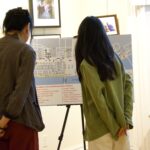
Attendees pondered designs for MulDer Square at tonight’s meeting on Allison Hill.

Residents from Allison Hill mulled over bike lanes, roundabouts and rain gardens at an open house on Thursday, as the city displayed plans to improve transportation in the area known as MulDer Square.

The purpose of the open house was to solicit public opinion on design proposals for a redevelopment project on Derry and Mulberry Streets in Allison Hill. The intersection of these streets is called MulDer square, and Harrisburg officials and residents hope that they can spur economic development there, in part, by improving pedestrian access and calming traffic.

The event, which was also attended by city officials and project consultants, was held at Harrisburg First Church of the Brethren on Hummel Street.

The city has proposed designs that include creating a linear park with bike lanes on Derry Street and a public gathering space at the intersection of Derry and Mulberry. The project managers are also considering two options for improving walkability at that intersection: a traffic roundabout or a traditionally signalized intersection with green space and large sidewalks.

Deborah Rodriguez, a resident on Sylvan Terrace in Allison Hill, was happy to see plans targeting pedestrians in her neighborhood.

“You see a lot of people walking over the bridge to work in the city, so I’m glad to see attention drawn to this area,” she said.

Rodriguez called the proposed projects “wonderful” but expressed concerns about their long-term upkeep.

“I want to know whose responsibility it will be to maintain it,” she said.

She suggested that school children or community organizations could have a stake in keeping the spaces clean and functional.

“These plans are beautiful as long as they have organized maintenance,” echoed Shirley Blanton, president of the South Allison Hill Homeowners Association.

Chris Eby, a software engineer who lives on Market Street in Allison Hill, comes into the MulDer Square area every week to volunteer at the church. He hopes that the city will look beyond its target area to maximize pedestrian and cyclist safety.

Eby pointed out that the areas receiving pedestrian improvements and bike lanes are not necessarily connected to other areas with the same amenities. For example, Mulberry Street meets Cameron Street at a busy intersection that is a frequent site of pedestrian accidents. And though the city is proposing a bike lane for Derry Street, it would not intersect with any other bike lanes in the area.

“We need to think about where pedestrians will go when they leave this area and where cyclists are coming from,” Eby said.

Residents who attended the open house were invited to complete comment sheets for the project planners. City Engineer Wayne Martin, who is the project manager, said that one quickly emerging theme was the neighborhood’s desire for public art.

“They want us to include art and murals,” Martin said.

He plans to provide a new mock-up of the Derry Street project that will include the Mulberry Bridge Mural, which was dismantled and put into storage when PennDOT renovated that bridge in 2014.

Martin remarked that the event turnout exceeded expectations and generated valuable input for his team. He expects that at least one more round of designs and public meetings will take place this year.

The city hopes to begin construction on the projects in March 2019, Martin said, and complete them by that fall.

Continue Reading