Tag Archives: Bellevue Park

Deck the City: House tour puts Harrisburg history on display

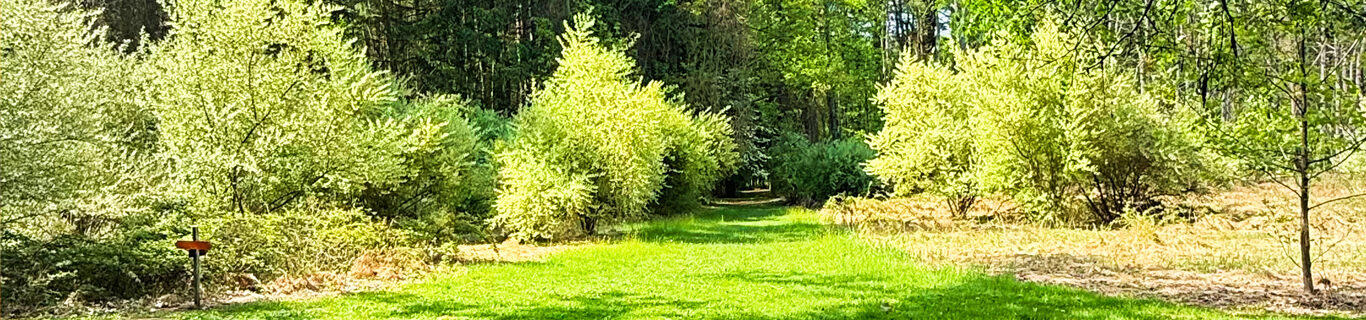
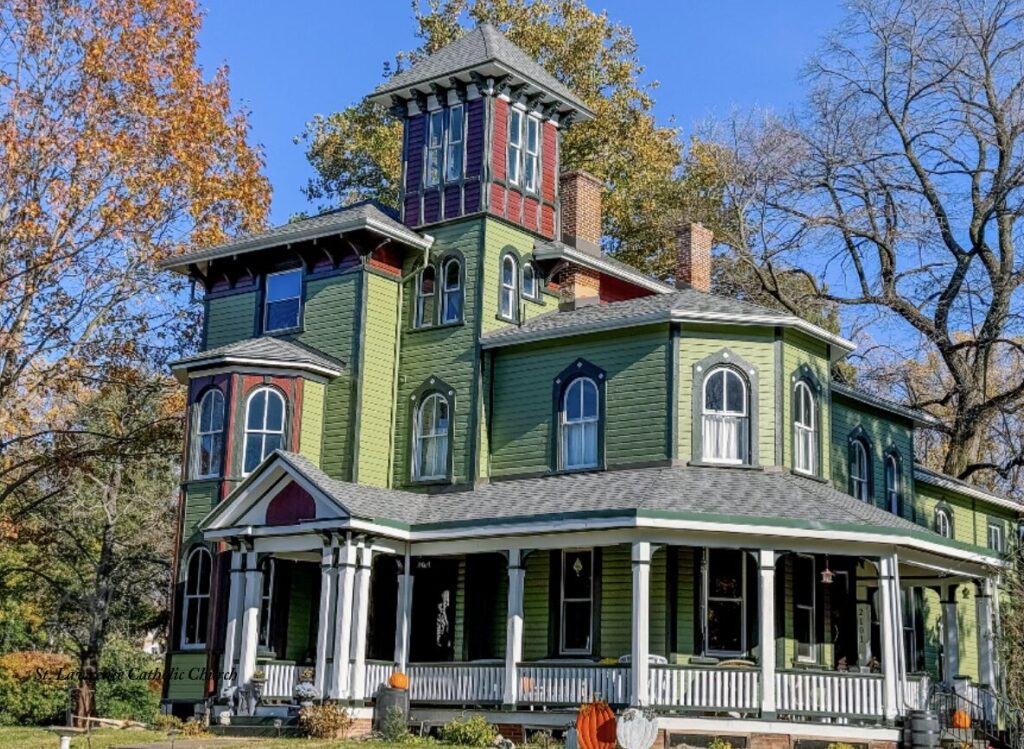
Breeze Hill in Bellevue Park

In August, an EF-1 tornado ripped through parts of Harrisburg’s heavily wooded Bellevue Park community.

Unfortunately, it damaged several homes slated to be featured in Historic Harrisburg Association’s annual Candlelight House Tour.

David Morrison, HHA’s executive director, gave the owners the opportunity to opt out, but they insisted that their homes would be ready, even decorated for the season, come Dec. 8.

“Every homeowner wanted the community to see they were recovering, and Bellevue is still a great neighborhood,” Morrison said.

Coincidentally, the house tour arose from another natural disaster.

The tour started in 1973, shortly after HHA’s founding, following the devastation caused by flooding from Hurricane Agnes, which prompted residents to focus on preserving the city’s history.

This year’s self-guided tour, the 51st, focuses on three clusters of Harrisburg: Bellevue Park, Uptown and in the Capitol district. Bellevue Park, Morrison said, features a unique history dating back to the early 1900s.

J. Horace McFarland, a local Harrisburg businessman and civic leader, partnered with landscape designer Warren H. Manning of Boston to create Pennsylvania’s first landscaped suburb. McFarland and Manning outlined the streets by following the land’s natural contours instead of the more typical grid design.

“In 1909, designing a neighborhood that respected the environment was pretty radical,” Morrison said.

He said that many of the properties on the tour are usually closed to the public.

Near the Capitol, tour attendees can view modern dwellings housed inside historic buildings. Their exteriors look the same as they did when first built, but their interiors have been remodeled to accommodate modern design schemes and comforts.

“The public has become far more sophisticated when it comes to historic preservation,” Morrison said. “I always marvel at the creativity.”

House Curious

Morrison said the buildings’ inclusion on the tour reflects a recent trend to renovate former commercial spaces for residential dwellings.

“People like and want old buildings,” he said.

Louisa Eyler is one of those people. Eyler’s affinity for old houses began in her childhood home in Dillsburg, which was built in 1731.

A few years ago, she purchased 511 N. 2nd St. and a property in the rear of the lot, rehabbed them, and began a short-term rental business. Eyler said that most of her guests are families looking for a central gathering place.

Eyler said that she focuses on what the house needs when decorating it. She kept the original stained radiators but added custom heat covers for safety.

A friend’s home was on last year’s tour, and Eyler was impressed with the guests’ sincere interest in Harrisburg’s history.

“The people on the tour were curious,” she said. “It wasn’t a parade of trespassers.”

Eyler hopes that the tour sparks others’ interest in preserving old properties.

“If you take care of it, it will take care of you,” she said.

Other spots, such as St. Lawrence Catholic Church and Grace United Methodist Church on State Street, are largely the same since they were founded in 1918 and 1871, respectively.

The Pennsylvania Governor’s Residence on Front Street, built in 1968, is one of the tour’s mainstays.

Tour attendees will receive a program book that serves as their ticket. It contains information on each property and a map of their locations. Participants can visit the sites in any order they wish. Some attempt to view them all, Morrison said, while others choose their personal must-sees. A few of the locations are walkable from one another, while some require a vehicle.

Morrison is pleased that the city has shifted from preservationists being viewed as adversaries to partners. Harrisburg consists of seven municipal historic districts and four national historic districts, so there are many stories within the city’s boundaries.

“It’s quite possible that someone may go on the tour, be inspired by what owners have done with their property, and take on a project of their own,” Morrison said. 

Historic Harrisburg Association’s 51st annual Candlelight House Tour takes place Dec. 8, 1 to 6 p.m. Tickets are available at the HHA Resource Center, 1230 N. 3rd St., and at www.historicharrisburg.org.

If you like what we do, please support our work. Become a Friend of TheBurg! 

Continue Reading

Allison Hill street paving project kicks off in Bellevue Park

Street paving in Bellevue Park on Thursday

On a quiet neighborhood street Thursday morning in Harrisburg, trucks slowly laid hot asphalt.

Just before that, city officials ceremoniously broke ground on the “Allison Hill paving project” in the Bellevue Park community, which includes patching and paving many worn streets.

The $1.1 million project includes resurfacing on portions of 15th Street, Midland Street, Rudy Road, Bellevue Road and Magnolia Road.

ADA-accessible ramps will also be constructed on sidewalks along the roads, explained Mayor Eric Papenfuse. Additionally, stormwater inlets will be evaluated to make sure they are functioning.

Much of the road patching will be completed in the next few days, while major paving and other improvements will take place in the spring, according to City Engineer Wayne Martin.

Earlier this year, ADA-compliant bus stops were installed on Market Street, Martin said. He added that York-based Shiloh Paving and Excavating will complete the road work.

If the road maintenance had been delayed for just a few more years, the damage would have been significantly more, costing the city up to 10 times as much as the current project, Martin said.

According to Papenfuse, the Allison Hill paving project is part of the administration’s goal to repave identified streets across the city in a $100 million initiative.

“This is due to years of deferred maintenance under the city’s compromised financial situation,” he said. “We are finally in a position where we can address that $100 million in streets and roads.”

While many of the recent road construction projects have focused on main streets in the city, such as N. 6th Street or 2nd Street, Martin said that many neighborhood street projects are in the works.

“It’s an astounding amount of streets and roads that need to be paved,” Papenfuse said.

If you like what we do, please support our work. Become a Friend of TheBurg!

Continue Reading

My City Was Gone: How redlining helped segregate, blight Harrisburg.

Growing up on Harrisburg’s 6th Street in the 1930s and ‘40s, Calobe Jackson Jr.’s favorite sandwich was capicola on rye bread. He’d procure the meat, a spicy, cured pork sausage, from Nick’s Italian American store on 6th and Herr—just a block from his family home on Cumberland. The bread came from Strohman’s Jewish Deli, just a block north.

“It was a busy, multi-ethnic neighborhood,” said Jackson, an African-American man who was born in 1930. Though he was a child of the Great Depression, Jackson recalls a neighborhood bustling with small businesses, including Jack’s Hotel, which his father, Calobe Jackson Sr., opened in 1946.

Today, the blocks of 6th Street where Jackson grew up show little of the vibrancy he knew as a boy. Only one neighborhood institution, Jackson House restaurant, still stands. City directories show that businesses started closing in the 1950s, and the number of vacant storefronts and housing units rose steadily through the 1970s and ‘80s. The neighborhood’s proximity to the Capitol Complex and the Broad Street Market likely saved it from the same fate as the northern stretch of 6th Street, where entire blocks languish as patches of grass and concrete.

Ken Frew, a lifelong Harrisburg resident and local historian, grew up hearing stories of 6th Street from his mother. He summarized the changing fortunes of Harrisburg’s longest corridor.

“It was a jumping place,” he said. “Now, it’s been decimated.”

Many factors contributed to divestment in Harrisburg and the flight of wealth to the suburbs after World War II. Among them was a federal effort that segregated neighborhoods in the name of rebuilding the national housing market. Engineered by the federal government and enforced by local realtors, banks and government officials, these policies cut urban neighborhoods off from access to capital, initiating a cycle of divestment and decay that remains visible to this day.

Today, the practice of government agencies denying service to certain neighborhoods is called redlining—a term first coined by community groups in Chicago, referring literally to the red lines that lenders and insurance providers drew around areas they would not service. Redlined neighborhoods—those occupied by African Americans or by integrated, multi-ethnic populations—became unsuitable sites for home loans or business financing. Residents who could afford to leave these areas often did; those who stayed saw once-thriving areas falter around them. According to the National Community Reinvestment Coalition, 74 percent of neighborhoods that were redlined eight decades ago are considered low-to-moderate income today.

The 6th Street corridor from Forster to Maclay streets, which was redlined by appraisers in the 1930s, is a prime example. Jackson’s father was denied a mortgage there in 1945 for Jack’s Hotel, even though he already owned a home and a small business. The neighborhood today has a 33-percent poverty rate, according to census data. Almost half its families make less than $35,000 per year.


Best to Worst

The federal agency that pioneered redlining was the Home Owners Loan Corporation (HOLC), one of the dozens of “alphabet soup” organizations created under President Franklin D. Roosevelt’s New Deal program. When HOLC was founded in 1933, the country was facing unprecedented levels of home foreclosures on top of a paltry homeownership rate. A previous federal campaign, begun almost two decades earlier to promote home buying among the working and middle class, had accomplished little by the time Roosevelt took office. Few families could scrape together the 50-percent down payment required on most homes or commit to the standard five- to seven-year loan repayment schedule.

The nation’s housing crisis worsened during the Great Depression. Many families that owned property could no longer make loan payments, and those that aspired to homeownership now had fewer assets. It was in this climate that the federal government created HOLC, which aimed to stabilize the nation’s housing market by issuing low-interest, long-term loans to homeowners in danger of defaulting. At the same time, the Federal Housing Agency (FHA), another New Deal organization, began granting loans to first-time homebuyers.

The FHA adopted lending guidelines that were explicitly racist. Its appraisal standards included a white-only requirement, and its 1935 “Underwriting Manual” warned that allowing races to mix in neighborhoods led to “instability and a reduction in home value.” But the most infamous relics of racial home policy we have today come from HOLC, which created America’s first formal system for assessing lending risk.

With help from local real estate agents and insurance brokers, HOLC representatives dispersed across the country to rank neighborhoods on a scale of best to worst. Their “City Survey” program produced detailed reports for 239 American cities, along with security maps that assigned each neighborhood a grade on a four-letter scale. Neighborhoods that had high concentrations of African Americans were deemed “hazardous” lending zones and got a “D” rating. On security maps, these neighborhoods were colored red. “Definitely declining” neighborhoods got a “C” grade and were shaded yellow; “static,” B-rate neighborhoods were colored blue, and the “best,” A-grade areas, were colored green. The resulting maps are a striking, visual manifestation of a racist national policy agenda.

Legal historian Richard Rothstein writes in his book, “The Color of Law,” that risk designations had nothing to do with social class or credit-worthiness and everything to do with segregation. A neighborhood with African-American residents, for instance, couldn’t escape redlining “even if it was a solid, middle-class neighborhood of single-family homes.” But they weren’t the only ones who suffered under HOLC’s appraisals. Since the federal government hoped to jumpstart the construction industry with new homebuilding, neighborhoods with old, densely zoned housing also got “hazardous” ratings. Areas with multi-ethnic populations—like the one where Jackson grew up—or large numbers of recent immigrants, particularly European Jews, were also redlined.

Redlining maps have resurfaced in recent years as scholars, urban planners and policy makers place new scrutiny on segregation patterns in American cities. More than 100 HOLC maps, including those for Philadelphia and Pittsburgh, are available in an online database hosted by the University of Richmond. Last year, Bernardo Michael, a professor of history at Messiah College, set out to find one for Harrisburg.

An Old Suspicion

Michael, whose scholarship centers on South Asian history, developed an interest in American social history while leading a civil rights tour for Messiah’s Office of Diversity Affairs. The project made Michael wonder about the more prosaic, lived realities of minority communities in central Pennsylvania. With help from Messiah students, he began plumbing local archives to learn how segregation limited mobility and residential choices for people of color.

“One of the things that became clear to me talking to residents in Harrisburg was that racial segregation was very strong and communities were divided on the grounds of color,” Michael said. “Communities of color lived in anxiety-ridden environments and were anxious about many things—where would they eat as they traveled, what neighborhoods were welcoming and open.”

Michael knew that the nation’s redlining practices must have left an imprint in Harrisburg. Unable to find a HOLC security map for the city, he made an inquiry at the National Archives in College Park, Md. It yielded a scan of a 1930s-era map of Harrisburg, rendered in a patchwork of green, blue, red and yellow.

According to Michael, the map “was confirming an old suspicion.”

“Local authorities and the federal government were heavily involved in setting up structures that limited the movements of communities of color,” he said.

He added that, as a result, people of color “found themselves confined to what we now call the inner city not by choice, but by circumstance.”

One crucial circumstance was the inability of black homebuyers to secure FHA mortgages in highly rated suburban areas. The exclusion of African Americans from the national housing market was a frequent topic of derision in the black press. No digital archives of Harrisburg’s historic black papers exist, but a 1954 wire report from the Pittsburgh Courier illustrates the injustice of “the serious housing problem confronting American Negroes which, in effect, hems them into the least desirable areas of our cities.” Lamenting increased congestion and crime in many cities, the writer contends that “white people seeking to escape such an environment find few obstacles and desert such areas in large numbers, leaving them to those unable to escape: Negroes, Mexicans, Puerto Ricans and the like, who would in equal proportion prefer to move, if they could rent or buy in the new FHA-financed suburban settlements.” The FHA did not reform its racist lending policies until passage of the Fair Housing Act in 1968.

Urban renewal movements that began in the 1970s and intensified in the 2000s did save some redlined neighborhoods from abject ruin. Harrisburg’s downtown business district was redlined in the 1930s, but now boasts restaurants, retail and a growing number of new, upscale apartments. HOLC appraisers warned that Front Street was “definitely declining;” recent years have seen new commercial and residential tenants move into many of its historic mansions. Shipoke, which got a “D” rating from HOLC, today is home to some of Harrisburg’s most expensive, historic properties.

But the same housing policies that devalued cities across the country insulated Harrisburg from meaningful investment for decades. Only two areas in the whole city—Bellevue Park and Riverside, an Uptown neighborhood bordering Susquehanna Township—were considered a lender’s “best” bet for investments. Every other corner of the city was deemed stagnant, declining or outright dangerous territory for those in the mortgage business.

Today, Harrisburg has a 31-percent poverty rate, and some neighborhoods with the highest rates of poverty—Uptown north of Maclay, South Allison Hill and the corner of Harrisburg south of 1-83—were all redlined starting in the 1930s. When the federal government announced, in 2017, a new program to spur development in low-income census tracts, it anointed six tracts in Harrisburg as “qualified opportunity zones.” They align almost perfectly with neighborhoods that were redlined by HOLC.

As many scholars have pointed out, these D-rated areas also became convenient locations for the infrastructure that suburban, white homeowners didn’t want in their own backyards. Harrisburg’s low-income and public housing complexes, including Hall Manor and the Howard Day Homes, sit today in areas that were redlined. The Harrisburg incinerator, once a major emitter of pollutants, found its home in a “hazardous” neighborhood in 1969.

Long, Hard Look

Even though the federal government didn’t have a hand in every home loan that was made in Harrisburg, their segregationist policies shaped the national lending economy. According to Frew and Jackson, the risk assessments in Harrisburg reflect a long-term, local planning agenda that sought to accelerate movement into suburbs.

Take, for instance, HOLC’s redlining of many of Harrisburg’s commercial corridors. In addition to 6th Street, which was a bustling business district, Derry Street and Market Street in Allison Hill were outlined in red on HOLC’s security map, even though Derry Street cuts through desirable neighborhoods shaded in blue. The area between South and Chestnut streets—what is now the downtown business district—is striped red and yellow. These business areas buzzed with grocers, record stores, tailors and laundromats in the 1930s, but they represented a model of commercial retail that was on the decline across America.

Starting in the 1950s, American retail shifted from downtown streets to suburban malls. Harrisburg’s first mall, Kline Village, was built in 1951. As Jackson said, the appraisers drawing Harrisburg’s security map “probably anticipated the fact that people were going to stop shopping downtown.”

Compounding the retail migration to the suburbs was the movement, starting in the 1950s, to reroute major city streets with one-way traffic patterns. Under the pressure of political boss Harvey Taylor, city officials launched an all-out war on traffic congestion. They reduced parking lanes and converted 2nd and Front streets to one-way, multilane thoroughfares. It became easier than ever for drivers to pass through Harrisburg without ever exiting their automobiles.

“The plan was to get people out of the city as quickly as possible,” Jackson said. “When people got off from work, they went out of the city, stopped shopping. When they made Market Street one way, that was the end of downtown. The one-way streets made it difficult for people to maneuver.”

Reading the map as a portend of urban planning trends that came to pass in Harrisburg shows how government policy directly influenced local development, subsidizing suburbs at the expense of city neighborhoods and the people who inhabited them.

Another project looming over Harrisburg at that time was the Capitol Complex expansion. This began in the 1900s with the demolition of the Old Eighth Ward, an African-American and immigrant neighborhood that came to be known as Harrisburg’s “tenderloin” district. The Capitol Complex expansion continued into the 1930s and ‘40s, consuming even more property along Forster and 7th streets.

HOLC redlined those areas, possibly because local leaders had already earmarked them for a state expansion, Frew and Jackson said. It’s just one example of how appraisers with colored pencils helped ensure the planning agendas of Harrisburg’s political class.

“The people who made this had to look far ahead to see what’s going on,” Frew said. “It’s like somebody looked into the future at the city of Harrisburg and came up with these areas because they knew they would have a Capitol expansion, and they knew the downtown area was going to change because of street patterns and malls.”

Today, urban renewal efforts aim to redress some of the deprivations in Harrisburg’s most struggling neighborhoods. City Council doubled Harrisburg’s budget to demolish blighted buildings this year. Vacant storefronts in Allison Hill, Midtown and downtown Harrisburg are finding new lives as brewpubs, retail outlets and restaurants. Some redlined neighborhoods, such as the MulDer Square improvement district in South Allison Hill, are the site of targeted, city-led revitalization efforts.

But there’s work yet to be done. And Michael, the professor, thinks it should start with a long, hard look at Harrisburg’s history. The research project at Messiah called “Spaces of Fear” led to a partnership with Harrisburg University. Their collaborative project, “Digital Harrisburg,” aims to digitize historical census data and create interactive, historical maps of the city. Student researchers also continue to find prime materials, such as racially restrictive covenants, that testify to the history of discriminatory housing in the region. The goal, Michael said, is to create an archival database with policy implications.

“Most of the planning by my generation was clueless about the past,” Michael said. “We are not just going to the past for the past itself, but for how the past informs the present and tells us what we need to do to think about the future. And equality and inclusion are going to play an important role in that.”

Explore more about redlining in Harrisburg and other online historical resources at www.digitalharrisburg.com.

Continue Reading

Tour Beautiful: HYP Home Tour ventures to leafy Bellevue Park.

One of the many lovely homes that will be featured this month during the HYP Home Tour in Bellevue Park.

In Harrisburg, there are a few annual events that you can mark your calendar by: the holiday parade, the summer festivals and, each May, the HYP Annual Home Tour, organized by Harrisburg Young Professionals.

This year, the Home Tour, for the first time, travels up to Bellevue Park, a leafy, rustic enclave of large homes and beautiful gardens that outsiders rarely get to see.

If you’re unfamiliar with this neighborhood, Bellevue Park was laid out in 1910 at the height of the “City Beautiful” movement. Renowned landscape architect Warren Manning designed the neighborhood’s layout, including the “reservations” (common green areas) and ponds that fill in the spaces between home lots and along roads. The area features winding lanes, wooded streets and many natural elements.

For this year’s event, guests will get to tour 17 homes, each with a one-of-a-kind story. Each home will be partnered with a unique food and drink sponsor from the local area. There also will be an after-party, with food and live music, held at the Bellevue Park Community Center.

Proceeds from Home Tour benefit the HYP “Home in the City” program, which provides $1,000 grants to qualified HYP members who are purchasing a home in Harrisburg. In 2016, the organization provided $9,000 to HYP members through the program.

“This has been one of our longest-running events, and, by far, the most impactful in the Harrisburg community,” said Joe Tertel, 2017 HYP president. “We have the opportunity to bring hundreds of individuals to an area in the city that they may not be aware of. From these types of events, we hope to bring awareness to the uniqueness of architecture and history that our city provides.”

The 2017 HYP Home Tour takes place on Saturday, May 13, noon to 5 p.m., in Bellevue Park. For more information, including how to purchase tickets, visit www.hyp.org.

Author: Lawrance Binda

Continue Reading

Take a Slow Ride: Bellevue Park neighbors join forces for safety, community.

Screenshot 2016-06-23 14.44.59Bellevue Park is technically a part of Harrisburg, but driving on its winding, narrow lanes lined with greenery, it seems worlds away.

Just blocks from the densely packed row homes more characteristic to Harrisburg, many of the historic and stylish homes of Bellevue Park date back nearly a century. Part of the neighborhood’s story includes the vintage-style “Please Drive Slowly” signs scattered throughout.

Featuring an original design dating back to 1938, they’re not big or bright or flashy; rather, the signs are dainty and artful. Until this past May, only two of the original signs with iron lettering remained, and they were in poor condition.

“They had letters missing,” said Bellevue Park resident Vickie Bucher. “Every year, [they] seemed to deteriorate more and more.”

Retired and looking for a project over the winter, Bucher took on the task of restoring the two signs.

First, she researched if the signs could be repaired and what it would cost to do so. Next, she asked the Bellevue Park Association board of directors for permission to raise the money through donations from residents. Over the course of the next six weeks, Bucher received an unexpected $5,000, enough to commission six new reproduction signs from local artist and metalworker Sephi Itzhaki to accompany the originals.

“Everybody said to me, ‘Oh, we’ve been wanting to do that for years.’ ‘Oh, we wish we would’ve done this,’” Bucher said. “So, it really has generated some excitement in the neighborhood.”

The sense of identity and activism among Bellevue Park residents isn’t exclusive to Bucher’s project.

“We’re very involved with lots of community events, not only in our own neighborhood but in the city as a whole,” said Carl Marshall, a long-time Bellevue Park resident. “For us to do something like this, it’s not a rare thing for us to do. We’re very civically oriented.”


Intentional Design

Bellevue Park was originally created as a planned residential community in the early 20th century, unofficial neighborhood historian Dan Deibler said. He and his wife Elizabeth have lived in the “Park,” as it’s more colloquially called, since 1982.

According to a timeline Deibler compiled in 2007, the Union Real Estate Investment Co. was formed in 1905 and, in 1907, purchased the 97 acres that would become Bellevue Park. Renowned landscape architect Warren Manning designed the neighborhood’s layout, including the “reservations” (common green areas) and ponds that fill in the space between home lots and along roads.

Deed restrictions established around the time of the neighborhood’s founding remain in place today. For instance, plans for any proposed new homes must be approved by the board of directors, in keeping with the original vision of an intentionally designed neighborhood, Deibler said.

“[The real estate company’s] goal was to sell lots for people to build houses,” Deibler said during a breezy afternoon chat on his back porch. “They would review the plans of the houses so they had some control over what they looked like. The first houses tended to be those that were the larger lots, the more interesting kinds of lots.”

The Deiblers’ home was built in the 1930s, as were his neighbors’ houses, visible today but still partially obstructed by thick tree trunks and shrubbery.

Even during the Depression, building continued, both by individuals and real estate companies. By the latter half of the 20th century, development had slowed.

Despite tumult in the rest of Harrisburg over the past several decades, Bellevue Park has maintained its status as a secluded, even secret, haven.

“It always sort of had this slight mystique,” Deibler said.

Older generations in Harrisburg are more familiar with Bellevue Park, he said, while younger generations may not be aware of it.


Eager to Help

The “Please Drive Slowly” signs are part of residents’ efforts to preserve the neighborhood’s mystique.

“I don’t think any of us really think anybody is going to drive much slower, but they were historical, and they’re special to our neighborhood,” Bucher said. “That’s why we did it.”

In mid-May, volunteers installed the eight signs throughout the neighborhood, mostly on common property, on more heavily used roads. The decision to keep them off the main thoroughfares, like Market Street and Hale Avenue, was in the interest of preventing vandalism.

Despite rain and unplanned mishaps, volunteers were eager to help. When the delivery of an auger to dig holes for the signposts was behind schedule, Bucher’s husband and a few others began digging by hand.

Residents pay dues to the Bellevue Park Association for maintenance of outdoor common areas and for the community building, which Deibler helps run. Like Bucher, others raise money for different causes throughout the Park. As more young families move there, they’ve begun raising money for a playground, Bucher said.

Bellevue Park may be secluded, but its residents still appreciate engaging with the rest of Harrisburg. Bucher and Marshall enjoy the convenience of being close to the city’s amenities.

So, escape the city without ever having to leave it. Spend a leisurely afternoon admiring the homes along Bellevue Road, but remember to “Please Drive Slowly.”

To learn more about Bellevue Park, visit www.bellevuepark.org.


Continue Reading

Mansions & Memories: Historic Harrisburg’s Candlelight Tour to showcase Front Street’s finest.

Screenshot 2015-11-23 16.22.41

Grab your warmest sweater, a steaming thermos of coffee and a comfortable pair of walking shoes. It’s time for Historic Harrisburg’s 42nd annual Candlelight House Tour.

“Grand Impressions” is the event’s theme, a fitting name as this year’s treasure hunt will focus on Front Street’s finest homes, businesses and other historic structures—all dressed up for the holidays—that have been transformed in recent years.

The Candlelight House Tour began in 1973, the year that Historic Harrisburg was founded. At the time, the city was emerging from the devastating flood brought on by Tropical Storm Agnes that sparked conversations about demolishing the entire Shipoke neighborhood.

Each year since has featured a geographical theme, focusing on certain neighborhoods that continue to be revitalized and loved.

“This seemed like the year for Front Street,” said David Morrison, acting executive director of the Historic Harrisburg Association.


Something Special

In recent years, Front Street has enjoyed a mini-renaissance.

Once the favored address of the city’s magnates, the street’s grand houses and mansions went into prolonged decline starting with the Great Depression. By the 1970s, many had been turned into hospitals, group homes and unkempt office buildings, the street itself becoming a three-lane commuter highway.

But things are changing quickly. Increasingly, these landmarks are being renovated and repurposed, some even reverting to single-family homes. This year, the road itself was returned to two lanes, for the first time since the 1950s.

The tour includes a variety of Front Street buildings, including the DuChant Mansion, Temple Beth El, City House Bed and Breakfast and the Dauphin County Courthouse. It also features some private homes, including the former “Teen Challenge” building that is now the private residence of J. Marc Kurowski.

Kurowski explained that, a few years back, several men bought the property from Teen Challenge to turn it into apartments. Partway through the demolition, they decided to sell it instead. That’s when it caught his eye.

“I love the idea of residential properties on Front Street,” Kurowski said.

After living in Midtown for 15 years, he started looking for a waterfront property, but it took some time before anything grabbed his attention. While he originally planned to live in half of the house and rent the other, he quickly fell in love with the architecture of the 1890s home.

While the inside features many modern conveniences, Kurowski tried to maintain the historic feel of the home on the outside. Perhaps his favorite addition is the roof deck that provides him with space to host parties and fundraisers. It’s also a great escape. Sitting so high up blocks out most of the street noise and gives him beautiful views of the Susquehanna River.

Kurowski noted that a friend suggested he showcase it in the Historic Harrisburg tour.

“I tried my best to create something a little special so that other people could see it and enjoy it,” he said. “I want people to see this and know they can do it, too.”


Great Place

Robin Schuldenfrei, a co-chair of this year’s tour, opened up her home in Bellevue Park last year.

“People were just lovely,” Schuldenfrei said of the experience. “They were respectful and polite. And I think they appreciated that, as a Jewish family, we decorated our home for Hanukkah rather than Christmas. It made it a little different for them.”

More than 500 people walked through the house that day, but perhaps the most unexpected guest arrived long before the tour was set to start. One of the former owners heard about the tour but was unable to make it later in the day. Schuldenfrei and her husband gave them a quick tour and learned much of the family’s sentimental history, including the fact that two daughters who grew up there also had their weddings in the home.

“We met neighbors we didn’t know, we made new friends, and we learned more than ever expected,” Schuldenfrei said. “It was exhausting, but it was worth every moment.”

Jeb Stuart, another tour co-chair, has participated for the past 35 years, both as a volunteer with Historic Harrisburg and a homeowner. He first showed a Green Street home he bought straight out of college. His current Front Street home was on the tour in 2009.

“We really want to showcase how livable Harrisburg can be,” Stuart said. “We’ve featured scattered homes on Front Street before but never the street as a whole. There’s so much going on here that it seemed like the time to do it.”

Whether people are wandering into a place of worship, school, home or office space, Front Street has become a diverse place with a lot to offer, he said. The tour not only gives residents and visitors a chance to see these buildings up close, but it offers a chance to understand the city’s history and its future.

“There are tremendous improvements being made in this city nearly every day,” Stuart said. “We want to celebrate that and thank the people who have helped make Harrisburg such a great place to live.”


Historic Harrisburg’s “Grand Impressions: A Tour of Front Street” is set for 1 to 6 p.m., Sunday, Dec. 13. Tickets are $20 in advance or $25 the day of the tour. More information about where to buy tickets can be found at www.historicharrisburg.com or by calling 717-233-4646. Tickets can be picked up the day of the tour at the Troup Mansion, 3511 N. Front St.

Photo by Robin B Schuldenfrei | CAVU Creative

Continue Reading

Unfavorable Comments: City leaders, residents must stop trafficking in us vs. them.

Screenshot 2015-09-28 10.01.15Lately, I’ve been spending a lot of my time traveling all over the city talking and listening to people.

In my conversations, I hear a variety of things. I hear stories of life in Harrisburg. I hear about what the city used to be. I hear about what the city is and isn’t. I hear about what people think the city could be.

I’m enlightened, inspired, motivated and saddened by what I hear. I’m saddened because I know there are many people who have become cynical and doubtful of the potential of this capital city along the river. This particularly hits hard when I’m conversing with youth who have no pride or faith in this place.

The eternal optimist that I am, though, I continue to take in everything to reinforce my resolve that this city will be better.

However, there is one prominent theme that troubles me the most and plagues my strategies to collaborate with fellow residents to succeed in the goal of reconstructing Harrisburg as a model of urban renewal.

It’s the notion that “some parts” of the city get things “other parts” don’t get. It’s the accusation that “those people and neighborhoods” are the favored and “these people and neighborhoods” aren’t.

Yes, I’ve often written about the “us” and “them” dynamics that challenge our city, but this theme I’m referring to is much more insidious than that. It’s more nuanced and dangerous, I think.

First off, it’s more overt. It’s being said in community meetings, quoted in media and posted on public forums.

Secondly, it’s being stated by city leaders, not just the elected but by community activists, block captains and personalities of prominence.

While I do not refute that our distinct neighborhoods have distinct problems, the claims I keep primarily hearing can actually be proved to be false.

These proclamations include, “The administration gives Midtown whatever they want.”

“City Councilors only listen to the people who voted for them.”

“Bellevue Park and Shipoke get their potholes and storm drains fixed faster than other neighborhoods.”

“Allison Hill is always getting more enforcement and services than Uptown.”

In some cases, I can understand where there are issues of perception versus reality, but that’s where I’m severely troubled by the irresponsibility of the proclaimers for not checking reality.

Through inquiry, onsite visits, informal investigation and my own experiences, I know many of these claims aren’t true and can’t be true.

When I look into it—which is not that difficult to do in this small city—reality is not substantiating the statements nor are the statements sufficiently backed by evidence.

Instead, when I ask, “How do you know?” I typically get, “Oh, I know. I know how it is around here. I know how things are done.”

Yes, but where’s the proof?

I’m not necessarily seeing it. And, fortunately, I’m not alone. Once in awhile, when these claims are made in a crowd, someone else steps up to offer an alternative point-of-view or some information otherwise.

Yet, what worries me the most is that there isn’t always someone around willing to step up and question the accuracy or dispute the claims.

So, then the claims become the narratives that are believed, passed around, built upon and established.

They become “facts,” although, like I said above, “facts” without sufficient evidence.

Please understand that I’m not denying the existence of some very real social challenges we face in this city. Nor am I denying that some parts are more redeveloped or that there are more concentrated areas of disintegration.

But here are the simple truths.

Every single neighborhood in this city has disinvestment.

Every single neighborhood in this city has neglect and dumps.

Every single neighborhood in this city has poverty.

Every single neighborhood in this city has potholes, broken streetlights, clogged drains, faded crosswalks, overgrown lots, overflowing trashcans, bad neighbors, good neighbors, engaged residents and value.

I wince every time I hear someone say, “Well, you know that would never happen in Midtown,” or “All of Allison Hill is a burnt-out mess.”

The people, leaders especially, who are saying these things are being reckless in their claims.

They are perpetuating myths that reinforce the fragmentation that becomes the ultimate deteriorating factor of our urban fabric—the “us” and “them” mentality.
Instead of working together to fix this city as a whole, we’re continually pitting neighborhoods against each other. The one basic fact we should all remember is that this city is broken.

In total, it’s broken, and, in total, we can fix it.

Only, though, if we start rising above our perceived differences and share in the reality of Harrisburg’s current state together.

 
Tara Leo Auchey is the creator and editor of today’s the day, Harrisburg. www.todaysthedayhbg.com.


Continue Reading

Return of the Native: Master Gardeners want to create an arboretum in Harrisburg Cemetery, but find they’re up against centuries of damage.

Screen Shot 2013-08-30 at 11.53.24 AMNot long ago, Jane Lawrence of the Dauphin County Master Gardeners was at the entrance to Harrisburg Cemetery, looking for the right plant for a low limestone wall across from the caretaker’s cottage.

The difference between the right plant and the almost right plant, to adapt a line of Twain’s, is the difference between a fox and a foxglove, and the right plant for Lawrence would have to meet several demands. For one, the view over the limestone wall, of the Capitol dome, had to be preserved. So whatever variety she picked would have to be small—under 3 feet if possible.

It would also have to be interesting to look at for more than one season of the year. Every plant has seasonal offerings. Some, like the crabapples on a nearby plot, have spectacular spring blooms and ornamental fruit in autumn, but are dull in winter. Others, like the Kentucky coffee trees just up the road, are scrappy most of the year. The ideal plant for the prominent entrance spot would have something to show every season: flowers in spring and summer, leaf color in fall and berries in winter.

Lawrence decided, provisionally, to plant hydrangeas. But there were further considerations. Price mattered, as did ease of propagation. Her selection had to be limestone-friendly and had to tolerate being exposed. And the question of height remained. Most hydrangeas grow to 3 or 4 feet. There are dwarf varieties, but only in a narrow range of colors. One has pink blossoms, the other blue.

“But I wanted white,” Lawrence told me later, when we met in town. “So I’m still holding off on that one.”

Lawrence grew up in Detroit Lakes. Her grandmother, an avid gardener, gave her a plot to tend in her backyard. She later moved to Muncy, Pa., and raised chickens, rabbits, fruits and vegetables on an 11-acre farm. At the same time, she taught social work in the graduate school at Temple. “I liked people. I also liked growing things,” she said. When a position opened at Temple’s Harrisburg campus, she moved. She eventually settled in Bellevue Park, a bosky, undulating neighborhood to the city’s east, near John Harris High School.

Lawrence is short, with a sandy pixie cut and a sweet demeanor. She expressed a concern for animals and insects that “can’t feed their babies.” A few years after she moved to Bellevue Park, a series of heavy storms struck the region. A wooded area in the neighborhood lost several large trees, and the resulting hole in the canopy allowed plants closer to the ground to thrive. “I began really watching the woods,” Lawrence said. Soon, the floor was overrun with honeysuckle, privet and other invasive species. She became interested in the challenge of repopulating hollowed-out woods.

In the fall of 2008, Lawrence joined the Dauphin County Master Gardeners. Master Gardeners are unpaid volunteers who apply for certification by the Penn State Cooperative Extension. The certification process is rigorous. They must pass an exam and complete 40 hours of training, plus eight hours of update training each subsequent year. They volunteer time and expertise in their communities, answering hotlines, maintaining demonstration gardens and offering public workshops and lectures. According to Penn State guidelines, their role is to disseminate “unbiased, research-based information” to home gardeners. They are not to attach themselves to commercial products, nor can they charge a fee.

They also frequently involve themselves in civic beautification. Lawrence got involved with a group of Master Gardeners who had started working at the Harrisburg Cemetery, cleaning up overgrown patches and identifying trees. Eventually, seeing that some of the oldest canopy trees were in decline, they started thinking about planting saplings. They noticed that the cemetery was missing a “middle story”—that is, trees between the canopy and the low ornamentals. In late 2010, they developed a list of preferred trees for new planting, with an emphasis on native species, including mid-height trees like sourwoods and yellowwoods.

“We decided on a focus on native plants because these seem to be outnumbered in most private and public gardens,” Lawrence told me. “We are very concerned about promoting native wildlife, and the best way to do so is by providing them the food sources they evolved with.”

In 2011, one of the Master Gardeners, inspired by a visit to Morris Arboretum in Philadelphia, suggested the group pursue the creation of an arboretum in Harrisburg. Lawrence did some research and came up with a list of goals. When it came to choosing an appropriate site, the group did not look far. “We were all so fond of the cemetery plantings no one considered looking elsewhere for an arboretum, feeling we had the makings of one where we were,” Lawrence said.

Through this effort, the Master Gardeners will be adding to the appeal of one of Harrisburg’s most remarkable, and yet least-known, historical landmarks. They’ll also be waging a local battle in what might be described, with only modest exaggeration, as a nationwide horticultural war.

Feel of a Park

Harrisburg Cemetery is the largest and oldest cemetery in the city. It sits on a bluff at one end of the State Street Bridge, overlooking the railroad and the Capitol dome. Chartered in 1845, its grounds were carved from the city’s largely rural outskirts, and they gradually filled as church graveyards in town were relocated to make room. In time, it became the resting place of prominent local families. The headstones now feel like a survey of Harrisburg street signs: Verbeke, Calder, Cameron, Reily, Boas, Herr and Forster are there, among others.

The cemetery is also home to an astonishing variety of trees. There are flowering dogwoods, cherry trees, cedars, ashes, oaks and maples. They have a global pedigree: not far from the entrance is a towering European beech, whose gray trunk looks like a swollen elephant leg, and nearby is a bald cypress, native to the United States, with a thin coat of feathery needles. There’s a dawn redwood from China, several Korean dogwoods and at least one English Hawthorn that, despite its name, is believed to hail from Africa.

The trees, combined with the grounds’ crisscrossing avenues, lend the cemetery the feel of a park. The effect is deliberate and reflects a taste in the mid-19th century for cemeteries one could visit and walk around. Nowadays, visiting a grave with a purpose other than to mourn can seem like a form of trespassing or disrespect, but, in the last century or two, it was nothing unusual. (In Woodlawn, a historic cemetery in the Bronx, N.Y., where I once gave tours, some mausoleums had rooms where relatives could sit, read and even picnic.)

In May, on the first day of spring landscaping, I took a tour of the Harrisburg Cemetery with David Via, the resident caretaker. I found him halfway down a row of headstones, next to a plume of blue-white smoke. Via and two colleagues were clearing some graves of stiltgrass, a tenacious invasive weed, and had resorted to lighting clumps of it on fire.

Via apprenticed at an art conservation shop in Watertown, Mass., the area of the shootout after the marathon bombing, a little over a week before we met. “Actually, the diner we used to go to was in the news, because of those two idiots from Boston,” he told me. He travelled often, mostly restoring bronze. “But then the economy tanked, and there was no money for public art.”

He now works at the cemetery full time, addressing whatever needs addressing, which is usually some combination of overgrowth, fallen trees and damaged markers. In the winter, when he can’t do landscaping, he works in the cottage. “I have paperwork going back to 1843,” he said.

We headed for the cemetery’s western edge, past patches of grass dotted with flowers. “Traditionally, it was the time to start mowing when the violets started dying,” Via said. He pointed out a toppled headstone. Vandalism is a recurrent issue, and cutting back foliage often comes with the tradeoff of making for easier trespassing through the woods.

As we approached the cemetery’s boundary, we came upon a massive tower built into the hillside, like the last remaining turret of a ruined castle. This was the monument to Marlin Edgar Olmsted, a statesman who drafted Puerto Rico’s constitution and served as a member of Congress for 16 years.

A few steps away, on a stout square pedestal, stood John Geary, the only bronze statue on the grounds. The inscription notes that Geary, who died at the age of 57, was a colonel in the Mexican War and major general in the Civil War, as well as San Francisco’s last alcalde (a Spanish municipal official) and first mayor, governor of Kansas and, later, of Pennsylvania. “He packed a lot of life in,” Via said.

As we walked, Via plucked up the occasional weed. He held up some garlic mustard, a European herb that is currently invasive across much of North America. “The funny thing is, you can actually eat this stuff,” he said.

Tastes in burial, like tastes in cemetery styles, have changed over the years, and, as we walked, we passed a diverse assortment of markers. Some graves are ornate and imposing, while others are humble and spare. Some convey the presence—or rather, absence—of a singular individual; others present a collective, identities lost among the closely packed stones.

Via pointed out the Lutherans: several crammed rows of headstones, their lettering faded. They were dug up and relocated from a churchyard in town to make space for the railroad station. Not all were identifiable, and an obelisk now marks a single large plot where unknown remains were piled. Further along, we came to some shining white headstones. They marked the graves of Civil War soldiers who died at Camp Curtin, the major Union camp in Harrisburg. A year ago, for his Eagle project, a Boy Scout replaced the old graves with new, legible markers.

We circled back to the lot with the burning stiltgrass. Terri, a part-time employee, was working with a handsaw, cutting at weeds growing between the stones. “I disturbed an ant colony and now they’re biting,” she said.

Via lit a cigarette. With one hand on his hip, in a straw hat, his leg cocked at the knee, he looked not a little like the statue of Geary. Though he laments the lack of money for conservation across the state, Via is pleased that the cemetery, at least, faces no imminent threat of a funding shortage. Harrisburg Cemetery has an endowment that pays for its upkeep, and it requires no outside grants. It is also, so to speak, still open for business.

“It pays to keep the cemetery running,” Via said. There are plenty of available plots, and, with current tastes tending towards cremation, the number of potential internments per plot is high. Unlike some cemeteries, Harrisburg has virtually no restrictions on the number or type of burials. “If you can fit ‘em in there, go for it,” Via told me. “We just buried a gentlemen in a fishing tackle box.”

The Perfect Earth

Gardening, with its bent towards trading and collecting, has not always had benign effects on ecosystems. American horticulturalists, seeking plants that were both hardy and aesthetically interesting, historically transplanted species from abroad, especially from Europe and East Asia, where temperate climates harbor varieties that easily can flourish here. But the feature that makes non-natives desirable for gardens—their resistance to native fauna and disease—also makes them dangerously resilient in forests, where the lack of local predators gives them a competitive edge.

Eric Burkhart, the program director at Shaver’s Creek, a nature center connected to Penn State, has fought the spread of invasive species for years. Burkhart, who holds a Ph.D. in forest resources, teaches courses on plant identification and invasive forest plants. He explained that Pennsylvania, like many states, has witnessed an increase in invasive populations over the last few decades.

“Most of our native stands have seen slow change happening,” he said. “In a state like Pennsylvania, it’s mostly been due to fragmentation.”

Fragmentation refers to the division of intact woodlands that comes with urbanization—the paving of highways, for instance, or the clearing of power-line valleys. Fragmentation creates exposed edges, where invasive species tend to flourish. “When you create a zone of disturbance, you set up for a species adapted for disturbance to make its way in,” Burkhart said.

“Invasive” is not a straightforward distinction. It describes a tendency or pattern of growth rather than an inherent quality. Not all non-natives are invasive: hostas, native to northeast Asia, are popular in the United States, but deer love to eat them, which keeps them from outgrowing other species. And many plants that are native here have invasive tendencies abroad. An American species of black cherry, for instance, is becoming invasive across Europe; red maple, native to the Northeast, is invasive in Hawaii. “Generally, what defines an invasive is that it will spread to an adjacent ecosystem,” Burkhart said. “It’s not the non-native wildflower in your garden, but what spreads from your garden to the state park down the street.”

Invasives not only spread quickly, but also are often difficult to eradicate. Take garlic mustard, the edible herb Via pulled up in the cemetery, which is a tall weed with floppy green leaves and clustered white buds. In certain months, it’s easy to remove manually. But an individual plant produces 1,500 seeds each year, and the seeds can sit in the soil for seven or eight years, waiting for a chance to grow.

Coupled with the non-natives’ resilience is their relative uselessness to the rest of the ecosystem. I met with Steve Kidd, the owner of Perennial Gardens, a nursery in New Bloomfield that specializes in native trees and shrubs. Kidd sells plants out of a tent in the Farm Show Complex parking lot on Friday mornings, and the Dauphin County Master Gardeners are among his regular customers. Like Lawrence, he is keen to emphasize the importance of natives to local wildlife.

“You have to think back to the perfect Earth, before the white man showed up,” Kidd said. “Why do birds and bees migrate? They have certain plants that they need to eat.” He offered the example of the monarch butterfly, which depends on milkweed. “It can’t complete its lifecycle without it.”

At the same time, though, non-natives can be easier to maintain, and they offer characteristics a gardener can’t get from a native plant. “We’ve historically always moved plants around,” Burkhart said. Watermelon, for example, is originally from Africa—the Spanish introduced it through Mexico. Lawrence and some of the other Master Gardeners have created a list of natives with similar traits to popular non-native species; they distribute it to other gardeners to encourage substitution. But even their plans for the cemetery include non-native varieties. (At the time of this writing, Lawrence’s plan for the limestone wall was deutzia, a genus of flowering shrubs whose species are mostly the right color and height—and mostly from China.)

Kidd also sells non-native plants. In the back of his truck was a miniature nursery, and among green weeds was a flower that stood out for its bright red blossoms. “That’s not a native,” Kidd said. “I also have to attract the American woman. It is a business. People will say to me, ‘You’re not a native plant vendor! You’re someone who sells some native plants!’ Well, yeah.”

Burkhart’s outlook is not apocalyptic. He discusses the problem with an academic’s tranquil tone. “Many of these plants, they’re not bad plants—they’re just plants,” he said. “They have many positives, like medicinal uses and removing carbon.” He worries, however, about the virulence of invasives, particularly when it comes to out-competing native sources of food.

“People say, ‘Things change in the world,’” Burkhart said. “While that’s true, it doesn’t mean there isn’t a negative impact. We’re creating areas where there’s nothing to eat.”

Call It a Pin

On a Wednesday in June, the Master Gardeners met for their monthly meeting on the Harrisburg Cemetery grounds. Lawrence arrived early, her middle finger wrapped in a ball of bandages. It had been a difficult couple of months. After recovering from successive bouts of illness, she had snipped off the tip of her finger with pruning shears.

A clunking sound came from the lock on the cottage door. Via emerged with a cigarette and a cup of coffee in a Ball jar. “How you feeling, Jane?”

“My one problem’s over, but I’ve had other problems since then,” she replied. “It’s just gonna be a year of agony.” She laughed.

As the gardeners arrived, they crowded around a table in a front room of the cottage. Above the lintel of the open door was a trio of papery flags on thin wooden stems. Birds chirped in the trees.

For the arboretum project—as for anything involving the growth of trees—the gardeners have had to take a long view. They’ve started some saplings in a nursery, but, in the meantime, they must also keep up with basic maintenance. Lawrence mentioned the rhododendrons planted on either side of the entrance gate.

“They’re facing south in the sun all day. It’s not their natural habitat,” Lawrence said. “They’re sick and they’ll never make it.”

The group discussed possible replacements. “Since we’re Master Gardeners, maybe we should put in demonstration gardens,” someone suggested.

“I would just say, something like that is high maintenance,” another gardener replied. “With all the maintenance already…”

“Could it demonstrate maintenance-free?”

“There’s no such thing!”

The group knocked around several options. Someone had seen a variety of Indian grass bearing pink and blue blossoms. Woodland sedum, a perennial herb, was considered but passed over because it would require too much shade. Then someone brought up epimedium, a genus of low-growing perennials. It began to gain traction.

A newer member piped up. “For those of us not fully indoctrinated—epimedium? Help me out.”

“Barrenwort,” another gardener replied. (Epimedium has been bestowed with a number of colorful names, including barrenwort, bishop’s hat, fairy wings and horny goat weed.)

“It has a thin, wiry stem and little heart-shaped leaves,” said Lawrence, “and yellow, white and red flowers.”

“And there’s a native variety,” someone added.

“So, if we had that with some shrubs…” said Lawrence. The group settled, for the moment, on an evergreen shrub with native epimedium beneath.

The next order of business was finding a rose bush to plant by the grave of Horace McFarland, a proponent of the City Beautiful movement, who was the first president of the American Rose Society. There was discussion of his favorite rose.

“I still think, if he had lived long enough, he’d have loved the Knock Outs,” someone said. The room erupted into laughter. “Knock Out” is a disease-resistant variety of rose, bred in the late 1980s. It was a gardening joke.

The group walked out to a huge bush of pink roses growing by a nearby grave. They tried to determine how old it was, based on the burial dates on the marker—1910 or 1936 or later. No one knew. They looked it over and decided it was worth taking a few cuttings. “We already know it can live in this space. It likes the cemetery,” someone said.

“I do like it,” said Lawrence. “It’s a very pretty color. Who else will take a cutting? That way we’ll hedge our bets.” Four gardeners agreed to pot a piece of the bush at home, in the hopes that one would take.

The final task was tree identification. For the arboretum, in addition to rearing and planting new trees, the gardeners must label what’s already there. The gardeners divvied up the plots among identification teams.

Lawrence set out with two other gardeners, Alicia Mercik and Marie James. James, a newly minted Master Gardener, admired Mercik’s official pin. “It’s a mixed blessing,” said Mercik. “You show up at a public function, and people think you know everything.”

Identifying trees can be painstaking work, and Lawrence is constantly looking for volunteers. Some species are common, but others in the cemetery are over a century old, and knowledge about them has departed with the people who planted them.

“We had a couple of professors come in, and even they were having trouble,” Mercik told me. The variety is also an asset, however. “They said it was a teacher’s dream in here.”

The group headed for a plot just south of the cottage. A row of Norway maples, a non-native, highly invasive breed that can be found all over the city, stood on the side of the road. The Norways, the gardeners told me, are insidious; they shoot up anywhere their seeds drop and excrete a chemical that suppresses other growth. Via hopes to scrape together funds to have them all removed.

We gathered beneath a towering oak whose leaves were far out of reach. Lawrence peered at them. “They’re pointed, so it’s a red oak,” she said. “But the leaves are small. So it could be a scarlet oak.” She sat in the grass and opened a guidebook, a sizable, hardback tome. Mercik and James scoured the grass for fallen acorns or leaves.

The tree, despite its imposing size, was dying. Half of its branches were bare, and bark had fallen off in patches. “Oaks are in serious decline because of warming,” Lawrence said. “It’s just too warm for them to survive.”

Mercik found a leaf, and, with a bit of reading, they confirmed their initial guess. Lawrence took out a pen and wrote the scarlet oak’s Latin name, quercus coccinea, on a long white tag. She nailed the tag to the trunk.

Nearby, another huge oak stretched towards the sky. Its leaves, too, were high above the ground, but Mercik found a fallen branch loaded with dried-out, caramel-colored leaves. They noted their narrow shape and deep, U-shaped lobes. Lawrence opened her book to a set of pin oak drawings. Just like the sample sketches, a twig on their specimen had spots, as well as a pair of forked buds at its tip, like the upturned hoof of a deer. They cross-checked the entry for red oak, just to be sure.

“I’m ready to call it a pin,” said Mercik.

“We’ll call it a pin,” said Lawrence.

“Call it a pin,” echoed James.

Lawrence scrawled with her marker—quercus palustris, “swampy oak”—and hammered the label in.

Continue Reading

One Man’s Legacy: We’re still benefiting from the work of J. Horace McFarland.

At the dawn of the 20th century, Harrisburg was a city much in need of improvement. Sewage littered the unpaved streets and drained into the Susquehanna, which was also the source of the city’s unfiltered drinking water. Paxton Creek, which ran along Cameron, was a dumping ground for all types of personal and industrial waste. As a result, disease prior to 1900 was prevalent and at times, endemic.

Something needed to be done, and J. Horace McFarland was uniquely qualified to do it.

McFarland moved his family to Harrisburg and began a printing company and later, a plant nursery. The younger McFarland learned much from his father and, at age 19, became owner of the printing company, which he renamed Mount Pleasant Press.

Under McFarland’s leadership, Mount Pleasant Press was a leading seed catalog and horticultural publishing company, printing magazines such as “American Gardening” and the “Encyclopedia of American Horticulture.”

In 1901, he joined forces with like-minded civic activist and Harrisburg resident Mira Lloyd Dock. Together, they helped lead the local City Beautiful movement, garnering the support of local businessmen to fund and carry out a series of projects that provided parks and open spaces, established a city-wide sewage system and cleaned up the waterfront, among many other improvements aimed at urban beautification and public health and safety.

In 1904, McFarland was appointed head of American Civic Association, a position he held for the next 20 years. In this role, McFarland took his ideas of civic beauty to a national stage, supporting not only urban parks and planning, but also the conservation of millions of acres of federal land.

McFarland, with other notable figures such as Federick Law Olmsted and John Muir, was an avid supporter of the establishment of the National Park Service in 1916. He also supported the defense of Niagara Falls against development by power companies, joined John Muir in trying to defend Yosemite Park from the Hetch Hetchy Dam project and was an opponent of development in Yellowstone National Park. McFarland served on the Pennsylvania State Art Commission for many years, as well as the National Municipal League and the National Park Trust Board, to which he was appointed by President Franklin D. Roosevelt in 1935.

J. Horace McFarland passed away on Oct. 2, 1948, at his Breeze Hill mansion in Harrisburg’s Bellevue Park, a planned community that he helped create. As a publisher and advocate for city beautification, urban planning, the conservation movement, the National Park Service and aesthetic preservation of the natural environment, McFarland still ranks as one of Harrisburg’s most remarkable citizens.

Continue Reading