Tag Archives: Appalachian Brewing Co.

Beer Pioneer: This month, Appalachian Brewing Co. marks 20 years making craft suds.

It was the mid-1990s, and Harrisburg residents Jack Sproch and Shawn Gallagher were two local guys interested in starting a microbrewery.

At the time, this was a far-fetched idea, since Harrisburg restaurants were closing faster than they were opening, and nobody was really drinking anything but Miller and Bud.

So, Sproch booked a ski trip to Colorado for some respite and research, as the state was home to an emerging brewing culture. That’s where he met Artie Tafoya, owner of Heavenly Daze Brewery & Grill in Steamboat Springs. Tafoya was a restaurant veteran and self-taught microbrewer, so Sproch asked for advice and guidance for his idea.

Tafoya had started his brewery in 1988, a business borne out of a homebrewing hobby. But with a new idea on the table, he boldly uprooted himself from his home state of Colorado and relocated his entire family to Pennsylvania to help Sproch and Gallagher with their startup.

Regional Flare

The partners’ first objective was finding a building to house the business, a monumental task considering the amount of space large-scale brewing equipment requires.

The three discovered an abandoned warehouse, one of a string of forlorn industrial buildings along Cameron Street. At more than 100 years old, the Harrisburg Trolley Corp. building used to store parts for trolley repairs. It was next to a building, no longer standing, where the actual repairs took place. That the warehouse was still standing was itself a small miracle.

“The roof on this building had failed six or seven times, and it was in such disrepair,” Tafoya said. “But I told them it could work. They saw that vision, and I’m still amazed at all the work they did.”

That vision ultimately became the first location of the Appalachian Brewing Co., known locally and affectionately today as ABC.

It wasn’t without hard work. The 50,000-square-foot structure was a labor of love, taking nearly two years to rehabilitate. But in 1997, ABC finally opened its doors and gave the public here its first taste of local brews. At first, only the bottom portion of the building opened, serving beer and a limited menu that included salads and pizza. By time the building was renovated, the partners had limited resources, so there wasn’t much left for the restaurant portion, Tafoya said. But they managed to buy a pizza oven and make it work.

“People in the community gathered around us and carried us those first few years,” Tafoya said. “We were on the cutting edge, and we were investing in Harrisburg when so many weren’t.”

ABC’s Water Gap Wheat and Jolly Scot Scottish Ale are two of the original beer recipes and remain crowd favorites today. These beers also are a toast to the process that helped build the ABC menu of flagship and seasonal brews.

“I always tried to develop beers for the places I was consulting,” said Tafoya. “You are never going to have the same tasting beer wherever you go because of the water, so you don’t always use the same ingredients. I always try to give the beer some regional flare when I am helping somebody out.”

Be Different

ABC may be celebrating two decades in Harrisburg, but it takes more than time to become an institution. It’s also about paying attention to customers as times change.

“The consumer has become so smart,” Tafoya said. “Beer drinkers are very educated. I can’t make something and just call it this or that. They know that a pilsner should be this way or an IPA should be that way. You have to be true to the customer and provide them with something different and interesting all the time.”

Since opening on Cameron Street, ABC has grown at that location and expanded to offer more eclectic beers, as well as music in the upstairs Abbey Bar. The flagship location also has numerous spaces for event bookings and an outdoor patio for enjoyment during milder weather—all of it a long way from that dilapidated warehouse. ABC has opened five additional locations throughout central Pennsylvania—in Mechanicsburg, Gettysburg Gateway, Gettysburg Battlefield, Collegeville and Lititz—with each offering visitors a unique experience tailored to the space.

To mark the brewery’s 20th anniversary month in May, ABC will host a number of events, beginning May 2, when there will specials every day. Among the features are old menu items at 1997 prices, buy-one-get-one burgers and free root beer floats. The month-long celebration pays homage to ABC’s endurance as the first brewpub of its kind in the Harrisburg area.

With two decades down, what do the next 20 years bring? The group has a plan.

“Soda has been our biggest venture, and its growth is limitless,” Tafoya said. “We have moved our (soda) manufacturing operation to our Mechanicsburg location to expand.”

The greater philosophy, though, remains unchanged from those early days, when, to most people, the term “craft beer” might just refer to drinking Coors Light on a boat.

“We always want to be different,” Tafoya said. “We never want to get stagnant.”
Appalachian Brewing Co. is located at 50 N. Cameron St., Harrisburg. For more information about the brewpub and details about the 20th anniversary celebration, visit www.abcbrew.com.

Author: Ann Beth Knaus
Continue Reading

Knead a Slice? A pizza passion fires up at the Broad Street Market.

Baseball legend Yogi Berra once said, “You better cut the pizza in four pieces because I’m not hungry enough to eat six.”
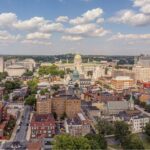
Knead could have changed his mind. The new craft-made, hearth-fired pizza shop is the latest business to open in the Broad Street Market’s stone building, filling a noticeable void with hand-tossed pies and locally sourced ingredients.

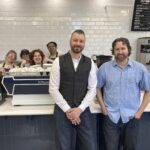
The brainchild of Harrisburg native Jennie O’Neill and her husband Terry Hanley, Knead was borne out of the couple’s passion for pizza, one that took them on a winding path until they settled down in O’Neill’s hometown.

The two met while attending Fordham University in New York City. With O’Neill majoring in economics and Hanley in accounting, they were not exactly a traditional recipe for prospective pizza stand owners. But they shared mutual interests, including an appreciation for good food.

“I fell in love with Italian-American food while living in the Bronx,” said O’Neill, who grew up on N. 2nd Street. Added Hanley, a Staten Island transplant, “The Bronx is the true Little Italy of New York.”

O’Neill has spent years in and around the restaurant industry, including her most recent stint as general manager for Appalachian Brewing Co.’s Cameron Street location. She also worked in Philadelphia’s oldest restaurant as Hanley pursued a law degree in the city. And it’s there where she really found her inspiration and passion.

After stints living in both Philadelphia and, most recently, Queens, both agreed it was time to leave. They chose Harrisburg because O’Neill’s parents still live here, and the couple loved the area. They decided to put down roots and set up shop—a pizza shop.

The three-year experiment, as they describe it, has been trying different recipes to arrive at the perfect dough for their pies. And because practice makes perfect, they installed a pizza oven in their yard to help them hone the craft. From there, the jump to Broad Street made sense.

“The market didn’t have pizza, and we happened to have been working on pizza recipes for a long time,” Hanley said.

The pizza they make is fresh and simple, with a deep focus on quality ingredients.

“The dough is everything,” said Hanley. “We tried 40 different flours before we arrived at the one we use today.”

The flour is imported from Italy, a super-high protein, finely milled flour that makes a tremendous difference in the taste. Unlike most traditional pizza shops that make their dough in the mornings, O’Neill and Hanley cold ferment their dough in the refrigerator for two days. The process gives it a better flavor. They make their sauce—a mix of plum tomatoes, salt and olive oil—ahead of time to allow for quick preparation on site. The brick oven heats to 900 degrees and can cook a pizza in two minutes, the perfect convenience for customers in a hurry.

Knead offers patrons two options: Sicilian by the slice and 12-inch pies. Customers can pick their own toppings, which run the gamut. Even vegans have a choice, as Knead makes pizzas with vegan cheese. The couple currently is looking for gluten-free flour to make dough for customers with special dietary needs.

Both O’Neill and Hanley emphasize the warm reception they’ve received since setting up in the market and the customer base that continues to grow, including little ones with special cravings.

“Little kids are adorable,” O’Neill said. “We have a little girl who is into mushrooms and will eat an entire mushroom pie. And a little boy who just loves Kalamata olives. It has exceeded our expectations.”

The added benefit, said Hanley, the native New Yorker, is being in an environment where you can say hello to people and then actually get to know them.

O’Neill and Hanley are thinking about Knead’s future, but, for now, they’re just enjoying doing what they’re doing, which is filling a hole in the market’s offerings and serving up fresh pizza. From the outset, their mission has been about keeping things simple.

“Everybody loves pizza; don’t mess it up,” Hanley said.

Knead is located in the stone building of the Broad Street Market, N. 3rd and Verbeke streets, Harrisburg. For more information, visit their Facebook page: Knead HBG.

Author: Ann Beth Knaus 

Continue Reading

Musical Notes: Shake It Off (The Cold, That Is)

Finally!

Winter is almost over, and spring is starting to spread around the city. It’s time to banish seasonal depression, and what better way to do it than with some music? This time, I’ve picked a few bands that are upbeat and lively to help you brush off the snowflakes and embrace the sunshine. For those of you soured by the cold and seeking sunnier days, warm up to the new season with these upbeat tunes.

SCYTHIAN, 3/3, 9PM, ABBEY BAR, $15

There’s bound to be at least one Irish group in this month’s column with St. Patty’s Day coming up, and here’s one sure to lift the spirits. Scythian (pronounced sith-ee-yin), named after Ukrainian nomads, is a self-described “Immigrant Rock/Celtic-Gypsy-Americana”
group from Washington, D.C. Music critics from sources such as The Bluegrass Situation, iHeart Radio and Nashville’s Music City Roots affirm that Scythian brings a high-energy fiddle fest to each memorable performance. Near the end of this year, the band starts a tour across Ireland after traveling around the United States. If you decide to come to one of their performances, it’s highly advisable to bring some dancing shoes along with you.

AORTIC VALVE, 3/17, 9PM, RIVER CITY BLUES CLUB, $5

This local-ish favorite band knows just how to lure you out of hibernation mode. You may know Aortic Valve from their longtime stint at H*MAC, but River City also hosts these audio/visual artists. If you’ve never seen them, you’ll be wowed by their experimental style, which blends with vivid imagery set up on several screens. Sometimes, they create their own mixes from current songs, and sometimes they blow you away with their uniquely styled originals. Dancing shoes also recommended for this one, folks.

THE JIGSAW SEEN, 3/24, 9PM, H*MAC STAGE ON HERR, $10

All the way from Los Angeles, H*MAC is luring The Jigsaw Seen to the east coast for some feel-good Indie rock. This band’s been around since 1989 and has seen some serious action in their day. No stranger to television, The Jigsaw Seen’s music has been featured on shows such as “Futurama,” “Wilfred” and “Shameless.” The group is also known as a seasoned touring band, opening for acts such as The Smashing Pumpkins and Kara’s Flowers, also known as early Maroon 5. Reintroducing themselves to the touring scene, this band is perfect for newcomers or for longtime fans searching for some good vibes.

Mentionables: Sons of an Illustrious Father, March 2, The Underground Bike Shop; Shea Quinn’s The Band Who Sold the World, March 10, H*MAC at the Capitol Room; Low Lily, March 11, Fort Hunter Mansion and Park; Animal Logic, March 17, Little Amps downtown; Larry Keel Experience, March 24, The Abbey Bar; Babel Map, March 24, Little Amps downtown

Author: Kait Gibboney


Continue Reading

Pow! Smash! Dance! Superheroes fly in to support the arts in Harrisburg.

Illustration by Brad Gebhart.

Illustration by Brad Gebhart.

Do you have a secret desire to be Superman? How about Spiderman, Wonder Woman or even the Green Hornet?

Then gather up that cape, tiara or mask and fly, swing or take the Batmobile next month to the Art Association of Harrisburg’s annual Bal Masque, which is calling on all “Superheroes of the Susquehanna.”

“We want this to be like Harrisburg’s own Comic-Con,” said Amy Huck, Bal Masque committee chair. “If you’re a superhero nut, a sidekick, if you have an alter ego, we invite you to come play with us. At the Bal Masque, we allow for play. It’s not stuffy.”

It used to be, though.

When the Bal Masque debuted at the West Shore Country Club in 1941, it was a haughty affair. It then was held for years at the Penn-Harris Hotel, where Strawberry Square now stands.

“It was the social event of the year”—much documented by the press, said association President Carrie Wissler-Thomas.

Over time, the Bal has become more casual. ABC’s Abbey Bar hosted the event in recent years before it returned to the Penn-Harris, this time at its location at the Radisson Hotel in Camp Hill.

Each year, the party takes on a different theme.

From “The Wonderful World of Outer Space” to Broadway, from “Love Fest” to Las Vegas, the Bal Masque explores something new and fantastical every time. One Bal theme, “Blast from the Past,” “had the most elaborate decorations that I can recall,” said Wissler-Thomas.

“The decorating committee built a pyramid and a kind of caveman area, and there was a pagoda,” she said. “We had one called ‘Blues in the Night’ at the Whitaker Center, when the Whitaker Center first opened. People came down the grand staircase all in costumes with a blue theme.”

A Hollywood-themed Bal Masque featured a large group arriving in a dune buggy.

“It was ‘Mad Max: Thunderdome,’” said Wissler-Thomas. “They came pouring out of the freight elevator.”

Now that the Bal Masque has settled into the Radisson, the Art Association is hoping to inject theatrics back into the affair. But it remains committed to keeping the event accessible for those whose idea of a great night out is not necessarily a charity fundraiser. A tiered ticketing system is in place for people who cannot afford full-price tickets.

“We welcome everyone,” Wissler-Thomas said.

Huck added that the Bal Masque also is an occasion for drag. It’s for those looking to be somebody else, or for those looking to be more themselves—the more fabulous, the better.

Huck, for one, is hoping to bring some large-scale Comic-Con nerdery to the Bal Masque. The superhero theme will be an occasion for cosplay (costume play), channeling enthusiasm and fandom, and the Art Association is aiming for an atmosphere of immersive theatricality, like that of a Renaissance Faire. There will be food, music, a silent auction, a theatrical number, a costume parade and no judgment.

The superhero-ing actually will begin well before the event. Brad Gebhart, who teaches at the Art Association, is meeting with the event’s honorary chairs—learning where their passion for their fields or causes comes from—and then will create superheroes based on them that will be rendered as life-sized standup figures that will appear around Harrisburg to promote the Bal Masque.

Also in the works from Gebhart—a comic book based on these superheroes. They begin as regular citizens who recognize issues in Harrisburg and then gain superpowers in order to save the city. Bal-goers get copies of the comic book—and they also keep the Art Association’s lights on. Proceeds from the Bal Masque support the Art Association of Harrisburg at its core: classes for kids and adults, 10 annual in-house exhibitions, the gallery and other needs and events.

Fortunately, on this one night, the important work of the Art Association can be sustained by that small act of heroism that is going out and having fun.

The Art Association of Harrisburg’s Bal Masque takes place March 11, 6 to 11 p.m., at the Radisson Hotel in Camp Hill. For more information, visit www.artassocofhbg.com.

Author: Kari Larsen

Continue Reading

Musical Resolutions: It’s the time of year to try something new

Mountain Road. Photograph by Wendy Adams.

Mountain Road. Photograph by Wendy Adams.

Ah, January.

A time of new beginnings. A time to redefine and expand ourselves in the new year. A time for something fresh. Maybe a change in your weekend routine. Try going to a venue you haven’t gone to yet. Try listening to a band you haven’t heard yet. Better yet, try listening to a new genre of music. Well, that’s the resolution I present to you, lovely readers. Are you up for the challenge? Here are some great acts to diversify your sound and get the year rolling.

MOUNTAIN ROAD CD RELEASE PARTY, 1/7, 8PM, ABBEY BAR, $8

If you need more country music in your life, this band may be for you. Specializing in what they call “the perfect blend of current meets classic,” this southern rock band is returning to its roots in Harrisburg. Mountain Road’s four members have toured locally, regionally and nationally, playing their collection of traditional and contemporary country music. Their recognizable sound will be sure to draw newcomers in. Also, Kevin Cole, the lead singer, advanced two rounds on “The Voice.” If that’s not impressive, I don’t know what is.

WEDNESDAY 13 & BOURBON CROW, 1/19, 8PM, H*MAC STAGE ON HERR, $10

This act is for people looking to discover two genres at the same time, so get ready. Wednesday 13 is known as a well-established metal band that features some ghoulish theatrics. However, this show will be a little different. Instead of their regular routine, Wednesday 13 has decided to strip down to an acoustic guitar and adjust their vocals for a different feel. This is part of their “Winter 2017 Acoustic” tour, and the act will feature a Q&A with fans. So, if there’s anything you want to know about playing in a metal band, now’s your time to ask.

FIERCE & LOVERS OF MUSIC (HALFWAY TO PRIDE), 1/28, 7PM, H*MAC STAGE ON HERR, $10

I don’t know about you, but I’m always in need of more strong women in my music selection. From Harrisburg, Lovers of Music features female lead and backup vocals, and Fierce is an all-girl band from Lancaster. Lovers of Music identify as a blend of R&B, jazz and funk, while Fierce is a rock-pop combo. Both acts invite you to feel the music and have a heartfelt time. They’ll come together for the “Halfway to Pride” event, sponsored by the Pride Festival of Central PA. Food and drink specials will be going on, and a drag show is also scheduled for the night. When’s the last time you’ve been to a drag show? Everyone should experience at least one.

Mentionables: Clark’s Secret Identity, Jan. 13, River City Blues Club; Jo Dee Messina, Jan. 20, The Forum; Don Johnson Project, Jan. 21, River City Blues Club; The Highballers, Jan. 21, H*MAC; SPIEL-BURG’s Saturday Solution: First Dose, Jan. 21, J.B. Lovedraft’s Micropub; Anthony Haubert (show tunes), Jan. 22, Carley’s Ristorante & Piano Bar.

Author: Kait Gibboney

Continue Reading

What We Did Last Summer: While you were away, Harrisburg was busy rebuilding.

Illustration by Rich Hauck.

Illustration by Rich Hauck.

September is here, and, yes, that means we have to kiss summer good-bye.

Like many others, you may be adjusting to the grim reality that it’s time to put away the beach ball and pick up the time sheet.

Your editor also had some time away this summer, and we’ll get to that in a bit. But, first, I thought that we should catch up on some important local news—things that flew a bit under the radar or may have been forgotten somewhere in the middle of that second margarita.


Two-Way 2nd

“Multimodal Collaborative Project.” Have I already put you to sleep? I hope not because behind this dense phrase lies a series of infrastructure projects with the potential to truly transform Harrisburg.

In July, the nonprofit called Impact Harrisburg released nearly $5.5 million, half to the city and half to Capital Region Water. Combined with a match from PennDOT, this money is slated for road (and utility) improvements that could undo some of the tremendous damage wrought in the 1950s, when the state turned charming neighborhood streets into forbidding freeways—making Harrisburg both less livable for residents and easier to flee for workers.

Most importantly, the money allows the city to begin the process of returning N. 2nd Street, from Forster to Division streets, to two-way traffic. Mayor Eric Papenfuse told me that preliminary work would begin next year, followed by actual construction, he hopes, in 2018.

The money would fund related improvements to N. 6th, N. 7th and Division streets, both to handle additional traffic and to make those roads more pleasant and pedestrian-friendly. A chunk of the money also would go to repaving much of N. 3rd Street, a project slated for next year once the utility work is done, and towards making a dangerous section of Berryhill Street safer for pedestrians.

TheBurg has long advocated making 2nd Street in Midtown/Uptown two-way as a vital step in revitalizing Harrisburg, reintegrating neighborhoods and returning this major thoroughfare from commuters back to residents.

Papenfuse wasn’t all smiles over the actions of Impact Harrisburg. He wanted the money that went to Capital Region Water to pay off the city’s loan for the recently completed streetlight project, with the savings then used for repaving neighborhood streets. In his opinion (though not CRW’s), opportunity lost.


Bar Stays Open

Papenfuse also wasn’t wild about county Judge Andrew Dowling’s order that forced the city to issue a business license to the Third Street Café, a Midtown bar that the administration has targeted for closure. Dowling found the city’s argument against the bar (that it attracts crime) to be weak and said, in any case, that state regulation trumps city restrictions for businesses that hold liquor licenses.

So be it. I’ve previously argued that the Third Street Café has a detrimental impact on the quality of life, the redevelopment and potential safety in the heart of Midtown. In my view, those things remain true. However, I can’t disagree with Dowling that city did not present a strong case for closure.

Dowling’s decision, though, is not stopping the redevelopment of one of the most forlorn commercial streets in Harrisburg, one with tremendous potential. Last winter, Zachary Nitzan purchased the block’s two largest historic buildings—the former home of Midtown Paint & Hardware and the former Volunteers of America building—and he spent much of the summer restoring them. One will house his high-end, custom-design rug business, and the other will be divided into two renovated storefronts, returning the building to its original format. Pass by, have a look and smile.

It seems that 3rd Street will have to rise on its own, without the help of the heavy hand of government (that is, unless the city’s long-shot appeal works). In other words, it will have to come back in the way that forsaken blocks in many other cities have—slowly, by risk-tolerant people with vision and patience.


Cut the Tape

Fortunately, Harrisburg has a number of such risk-tolerant people, as this past summer saw the completion (or near completion) of several important projects.

Downtown, Harristown began signing leases for the Flats at Strawberry Square, the first of its three apartment projects in the immediate area. Several blocks away, a few intrepid European investors brought a couple of desolate blocks of N. 2nd Street back to life, opening expansive restaurants called Capital Gastropub (the old Ceoltas) and the Bridge’s Social Club (the old Quarter).

Across Forster Street, WCI put the finishing touches on its renovation of the historic Harrisburg Moose Lodge at N. 3rd and Boas streets. The ground floor is the new home of the co-working outfit, Startup, and the upper levels feature high-end apartments.

Speaking of redevelopment: I spent part of my summer in Portland, Maine, which (like vacations I’ve written about before) provided me with no end of inspiration for things we could do here.

Like Harrisburg, Portland is a small, historic city that had to remake itself following industrial decline. It’s further along in the process, having succeeded in playing to its natural strengths: charm, walkability, waterfront, seafood, tourism and all-things craft.

I was especially struck by a former industrial area, which has been rezoned and repurposed. Where there once were warehouses full of boxes and forklifts, you’ll now find tourists sampling craft beer, sipping small-batch spirits, eating gourmet food truck fare (I had something called “Japanese street food”) and listening to musicians. And I thought to myself—Cameron Street!

The transformation of Cameron has already begun, pioneered by Appalachian Brewing Co., now joined by Midstate Distillery. With their open spaces, high ceilings and rock-solid build, the structures there are ideal for the new urban industry—craft, artisanal, hand-crafted anything—with a little concrete, noise and ductwork no deterrent to foodies, beer snobs, wine geeks and bespoke fans (in fact, it may be an attraction).

Lucky for us, Cameron Street—from the Farm Show complex to the incinerator—is loaded with exactly this type of building. Any takers?

Lawrance Binda is editor-in-chief of TheBurg.

Continue Reading

Measuring Up: Can Harrisburg Put Itself Back Together?

James Fallows wrote a fascinating and insightful article for the March edition of The Atlantic titled “How America is Putting Itself Back Together.” Fallows’ essay provides a powerful and persuasive counter-argument to the prevailing political and media-driven narrative of America as a country in decline.

Over the past three years, Fallows and his family visited numerous small- and medium-sized cities throughout the country (i.e., not NYC, SF, LA and DC). The real story, he writes, is not that of a country in decline, but one of rebirth and resurgence. (He cites Pittsburgh and Allentown as two examples from Pennsylvania.) While some point to problems the country as a whole is said to have, most people he talked to refuse to acknowledge that those “other people’s problems” affect where they actually live and work.

Taken as a whole, America is still the land of invention, renewal, talent, assimilation, creativity and opportunity. While many are led to believe we are on the wrong track nationally, that story runs contrary to what is actually happening, according to Fallows. This may not be convenient for politicians running for office or media outlets that believe that only bad news sells, but it is a truth that is out there for those who spend the time to look, as he did.

I found Fallows’ observations to be exactly right, both from my travels around the country and here in our small city of Harrisburg. As I’ve often said in this column, don’t believe the bad news you read. Ninety-five or even 99 percent of what happens here every day tends to be positive, even it you have to wait monthly for TheBurg to read about it.

Fallows also suggests a way to evaluate the health of small cities and towns in the United States. His “Eleven Signs A City Will Succeed” is an instructive way of looking at the issue. So, I thought it would be a good exercise to take those 11 criteria and grade Harrisburg on the “Fallows scale.” Below is my attempt. No doubt your grades will be different based on your perspective. I find just thinking about these criteria and how we are doing in them can help determine how to move our city forward.

  • Divisive national politics seem a distant concern. Grade: B+. If this were “state” instead of “national” politics, the grade would go down, but, in general, I find that the many folks who hold strong views on national issues are quite willing to work together to make the local area, particularly the city, a better place. Many people who will never vote for the same presidential or gubernatorial candidate routinely work together on civic matters like the Downtown Improvement District, Harrisburg Chamber, Harrisburg Young Professionals and the like. The recent dust-ups between city and county leaders, however, prevent this category from being a solid A.
  • You can pick out the local patriots. Grade A. This one is easy. Harrisburg has both a broad-based group of civic leaders and a deep pool of talent that work daily to make the city better. It also has young talent rising through its ranks. Just look at the list of emerging leaders in HYP or the three newest members of City Council.
  • “Public-private partnerships” are real. Grade C. This item is hard to grade. On the one hand, a number of successful initiatives fall into this category: Whitaker Center, Harrisburg University, Harristown Development Corp. and Senators Baseball being a few. On the other hand, some of our biggest disasters do too: the former Harrisburg incinerator (now properly run by LCSWMA), the initially failed project at Cameron and Herr streets and the Wild West Museum, among others. The Civil War Museum may fall into either category, depending whom you talk to. Clearly, we have room for improvement here.
  • People know the civic story. Grade C. This category also highlights the strength of our city and a great weakness. For all the efforts of the Central Penn Business Journal, Harrisburg Magazine, Historic Harrisburg Association and, yes, TheBurg, to tell the real—and very encouraging—civic story about our city, the paper of record across the river runs a fairly constant drumbeat of doom and despair. Venture into the comment section of PennLive on nearly any article about the city (not that I recommend it), and you will see what giving public forum to a tiny minority of the disaffected will do to your civic psyche. Until PennLive vastly changes its ways, which are driven primarily by the motive to garner clicks for advertiser ratings rather than promote responsible discussion, it will continue to impede a healthy civic story about Harrisburg.
  • They have a downtown. Grade B+. From great restaurants, coffee shops and bars, a lively arts scene, 3rd in the Burg and new apartments and condos, downtown is alive and well. However, many people correctly associate retail with a healthy downtown and, in this area, Harrisburg lags. Retail is tough, however, and it mostly follows residents, not leads them. As more people move downtown, more amenities and retail will follow.
  • They are near a research university. Grade D. I have often wondered what Harrisburg would look like if Penn State Harrisburg (the largest Penn State campus outside of State College) were actually in Harrisburg, instead of Middletown. There is no substitute for having a major research university physically located in your city as anyone from Madison, Columbus or Austin can tell you. But the good news is that, after 10 years, Harrisburg University has found its footing and is on its way to becoming a major institutional anchor and economic generator for the city.
  • They have, and care about, a community college. Grade B+. For what we lack in #6, we make up a lot of ground with this one. Both HACC and now Harrisburg University are important community educators in Harrisburg. Both are committed to the city and improving its overall health and reputation. Other area colleges like Messiah and Temple have also taken a welcome interest in the city by sending their students downtown during and after college, providing a bit of the college-town vibe.
  • They have unusual schools (K-12 level). Grade C. Harrisburg’s public schools are undeniably troubled, but this criterion involves “distinctive” schools. Harrisburg has several, led by the Capital Area School for the Arts Charter School, SciTech High and Math Science Academy, as well as several excellent parochial schools. My grade may have been higher, but Fallows adds that the average resident should be able to list these schools quickly as a source of pride. Unfortunately, the district’s general poor performance casts a shadow over other schools in the city.
  • They make themselves open. Grade B. Harrisburg is a diverse city on many levels, a source of both strength and strain from time to time. We welcome a variety of immigrants and visitors, whether to our colleges or for housing. We have been supporters of various religions and lifestyles long before those things were acceptable elsewhere. Some may argue that we have a long way to go, and I would not disagree, but we are no doubt ahead of many other parts of the country.
  • They have big plans. Grade A. Fallows means this as a government-led category, but, in Harrisburg, we tried that once, and it came crashing down around us. Today, city leadership is focused on basic competence, as it should be. The big plans come from the city’s entrepreneurial class. Witness St@rtup, WebpageFX, The Laus Group restaurants, Urban Churn, Stash, Char’s, AndCulture, Mangia Qui, Midtown Scholar, The Millworks, HMAC, The MakeSpace and many others with big plans that are happening today. One civic item Fallows also referenced is urban infrastructure. When 2nd Street is returned to two-way traffic, Harrisburg will take a major step toward putting that part of the city back together again.
  • They have craft breweries (and small distilleries). Grade A. Harrisburg boasts Zeroday Brewing, Appalachian Brewing Company, Midstate Distillery and Troegs (a legacy Harrisburg company, so we still claim them). A few other breweries are slated to open this year. Let me add Little Amps coffee shop, which gives the same vibe. All fantastic.

Overall grade: solid B. On the items city residents can actually control, things are improving and have a very bright future. On those we cannot (schools, research universities and suburban media), we suffer. As an artist acquaintance of mine, who recently moved to Harrisburg from Chicago, told me, “There are few places around the country where you can have so much, for so little.” We need more people (and attitudes) like him to come help us grow.

J. Alex Hartzler is publisher of TheBurg.

Continue Reading

Bending Sound: Carlisle-based Rivers dives into the local indie scene.

Screenshot 2015-06-01 08.31.45Rivers is a smattering of genre-bending sounds—tapping into folk rock, pop, funk, blues, chamber pop, Americana, roots rock and alternative—that make up a fluid and dynamic indie folk style.

But, when you think you can put a finger on their overall sound, Rivers keeps you guessing. That’s the beauty of their music.

After just two short years of playing together, Joe Schaefer, 25, Matt Sinkovitz, 31, and Vincent Yarnell, 25, are eagerly working to get their distinctive folk amalgamation into the eardrums of as many people as possible.

“People really love our music,” said Sinkovitz, the percussionist. “It’s amazing to share what you’ve created with people and get such a positive response. It makes you feel like you are doing something right. We have kids sitting around us at farmers markets, and we play senior homes. We can hold it down for most audiences.”

They regularly play at some favorite local spots—Appalachian Brewing Co., Little Amps, Suba and The MakeSpace in Harrisburg, as well as the fourth Monday of every month at Andalusia Tapas Bar in their hometown of Carlisle. They’re also picking up gigs at bars, restaurants, markets and festivals in places like Philadelphia, Maryland and Washington, D.C.

Influences and Sounds

Yarnell leads the vocals and plays guitar and banjo with acoustic grit and smoky soul, drawing inspiration from musicians like James Taylor, the Wood Brothers and Gorillaz.

Schaefer’s voice and upright bass are smooth and easy going, yet fearless. Drawing from his classical training and love of bassist Edgar Meyer, he lends classical sounds, but can rock out fiercely.

“Joe just bashes the bass. He plays it like a 12-piece drum set,” said Yarnell, who added that his bandmate is “super funky.”

Sinkovitz is the rhythmic heartbeat of Rivers as the percussionist, bringing a love of many genres to the table—jazz, classical and hip-hop—from Simon and Garfunkel to The Notorious B.I.G.

Drawing from wide-ranging influences and sounds, the seven-track “Rivers (EP)” is a pleasing, multifaceted experience.

Pop folk ballad “Heartland” is an inviting, smooth listen that has potential for commercial appeal. “Halymorpha Halys Blues” channels gritty alternative rock and moody blues, cleverly relaying the plight of a brown marmorated stink bug—its scientific name serving as the song’s namesake. “Photographic Memories” weaves the swing and coolness of jazz with the plucking cadence of bluegrass.

The EP’s cover, a collage crafted by Carlisle artist Aron Rook, seamlessly joins Rivers’ folk rock sound with its indie image.

“We just asked her to use a piece from a collage series she had recently created,” Sinkovitz said. “Aron is our favorite artist and has done several poster designs for us as well.”

By the end of the summer, Rivers plans to release a second EP, and, as 2015 wraps up, they hope to record a full album of more original material.

Open Mic Magic

Rivers formed thanks to the area’s active open mic circuit.

Sinkovitz and Yarnell met each other first at the Alibis open mic in Carlisle and started playing together.

“I was drawn to Vince because I could immediately see that he was a great guitar player and a strong, original songwriter,” said Sinkovitz. “Once we started playing together, we discussed trying to find a bass player.”

Shortly thereafter, they saw Schaefer perform at the Courthouse Common open mic.

“His skill level and ‘sick-nastiness’ on the bass is what encouraged us to reach out to him,” said Sinkovitz.

You could say that the three musicians were at the right open mics at the right time.

“We were there just to perform and play music. Our meeting was serendipitous,” said Sinkovitz.

After just a year of playing together, the young folk musicians made a momentous decision. They hung up their hats at their day jobs and embarked on the life of a full-time band.

This year, they have set a goal of playing 200 dates and, counting June bookings, were almost halfway there.

“It feels good to make a goal and see the goal in action working for you,” said Yarnell. “This is the best job you could ever ask for. If we have a day off [from playing], we are writing more songs.We are paying the bills getting to play music from our hearts.”

To find Rivers shows in the area and to download “Rivers (EP),” visit www.theriversband.com.

June Concert Dates

  • June 6, 9-11 p.m.—Suba Mangia Qui, Harrisburg
  • June 10, 3-7 p.m.—Farmers on the Square, Carlisle
  • June 19, 9 p.m.- 12 a.m.—Yardz Bar and Grill, Enola
  • June 20, 11 a.m.-2 p.m.—Broad Street Market, Harrisburg
  • June 22, 6-9 p.m.—Andalusia, Carlisle
  • June 27, 4-8 p.m.—Music in the Garden, Carlisle
Continue Reading

Student Scribes: Letter from Harrisburg

Screenshot 2015-06-01 08.33.02I heard nothing about the Baltimore riots until the following day, when I walked into work and noticed the television tuned to the news. Being at the tail end of my undergrad career, while also working four to five days a week, leaves little time for keeping up to date. I knew about the death of Freddie Gray, but not the escalating situation. The first images that crossed my vision were of fire and chaos. I worry that it could happen here, in Harrisburg, right down the road from where I live.

My neighborhood, Allison Hill, has a face only a mother could love. Empty plastic bags tumble down the streets, and scraggly weeds grow out of the cracked sidewalks. A pothole on my side street takes up so much of the road that my car can only drive down the wrong half. My car might easily be dragged into the black hole of rubble, ripping out the undercarriage and leaving a gutted shell behind. The street remains mostly unchanged since I purchased my house and moved in five years ago. Though they did throw in some cold patch a few years back that lasted until the following winter, when it began to cave in on itself again. Like the burnt-out street lamp on my block, I doubt the city will ever fix it.

And I adore it. I adore the Dominican salon across the street, the Spanish-American restaurant on the corner, the deli that sits diagonal from my house that reminds me of Brooklyn. I love the joy of the two young girls who live in the house across from me, who giggle and chase each other down the stairs and up the ramp of their home, over and over. I wave to my neighbors across the street and smile at the passersby on my way to the store. I love the kids on roller blades navigating the jutting sidewalks; the folks walking back from the supermarket pushing wheeled personal carts around the broken landscape; the souped-up dirt bikes that rip and roar up the street on any given Saturday night, or Tuesday afternoon for that matter. But in the same breath, learning to discern the difference between bullets and fireworks factored into the education of living on the tattered edge of Allison Hill. I actually reside two blocks past the technical edge of Allison Hill, but bullets aren’t concerned with invisible boundary lines.

I understand the anger of Baltimore and Ferguson, of Eric Garner, Amadou Diallo and Rodney King. There is a systemic racism in this country, and it has gone on far too long. But how do we channel that anger into change? How do we become a country that values each and every life? My neighborhood could very easily descend into violence. The buildings in this city could burn alongside police cars. Walk down Derry Street, and you will see abandoned houses, chipped and peeling paint, broken and boarded up windows. The Rite Aid down the street has been robbed so often they employ a security guard. How are the people who live in this neighborhood supposed to hope for a better future when their environment falls apart around them? Martin Luther King Jr. stated that, “A riot is the language of the unheard.” Who will hear the cries of my neighbors if chaos erupts? More importantly, is anyone listening now?

My friend “Jersey Mike” Van Jura moved here from New Jersey, and adopted Harrisburg as his home. He loved it here. I never asked him why he came; I missed that opportunity. He saw possibility on the streets of this city. He wanted to create a scene that encouraged art, music and theater, that encouraged political activism, that fostered involvement. He wanted a better future for everyone. His heart and soul loved and believed that Harrisburg could be a place where people wanted to live, a city where bands wanted to come because a space conducive to the arts existed. He believed that, by creating a scene where positivity reigned, the whole city could benefit.

The first few years after I moved here, I hated Harrisburg. The only thing to do in the city involved drinking on 2nd Street. Yes, there were some fabulous restaurants, and a couple fantastic little theaters, The Gamut and Theatre Harrisburg, but once you attended their productions, weeks passed before a new show opened. I regretted ever moving here to be near my family. I’d lived in Brooklyn, traveled to Chicago several times, and spent a couple months in Austin. I’d resided for a decade in Kalamazoo, Mich., a town loaded with theaters and music venues, art galleries and opportunities. Here, I felt adrift on a disappointing wave lapping at the shore of a life I used to live.

Ranting one day to Jersey Mike about the lack of culture in the city, he surprised me. I thought he’d commiserate with me. Instead, he told me I needed to be part of the creation of something bigger than an angry diatribe. He put himself out there all the time. He held tweet-ups at Appalachian Brewing Co. that encouraged people to become an active participant in the change they wanted to see in the city. He blogged about the best diners and attended City Council meetings; he wanted his voice to be heard. The last day I saw him, he wore a crisp white shirt and black vest. His smile showed his excitement at lending his voice to the politics of the city. Three days before, he’d officially submitted his name to run for City Council. He never had the opportunity make good on his promise. When Harrisburg lost Jersey Mike, it lost a beacon of light in a city immersed in darkness.

At one time, my neighborhood must have been gorgeous with its beautiful old houses. When I started looking to purchase my first home, I spent much of the time perusing cookie-cutter townhomes that appeared as carbon copies of one another. There came a point where I almost gave up hope. Then I stumbled upon an ad on one of the real estate websites showing photos of the home I would come to call my own. Boasting high ceilings, beautiful woodwork, a hardwood staircase and a claw foot bathtub, I knew I wanted to look at it. My real estate agent, a sweet, older, balding man tried to talk me out of it because of the neighborhood. He insinuated that as a tiny, single, white girl intent on living alone, that area of the city might not be in my best interest.

I knew the dangers of living in a poverty-stricken area. I’d lived in Trenton, Cleveland and Pittsburgh. My neighborhood in Kalamazoo acquired the name “The Student Ghetto.” For years, it had been dangerous, but the students stayed and bought homes, fixing them up in the process. The neighbors there looked out for one another. So, I didn’t care about the surface appearance of Allison Hill. The requisite postage stamp-sized backyard and the sloped-ceiling attic where my books could live sealed the deal. On August 31, 2009, I signed the paperwork and became a homeowner. The girl who never lived in one house longer than two years finally put down roots.

The following summer, a drive-by shooting occurred right in front of my house. In that moment, I remember thinking that gunshots sound nothing like fireworks when they happen 15 feet from your bedroom window at 2:30 a.m. I watched as a crime scene unit placed tiny, numbered placards on the sidewalk for each bullet that lay abandoned on the street. There were no casualties, but I wondered if I’d made a mistake. Who was I to live alone in such a dangerous place? I talked to friends. They advised me to consider purchasing a weapon. A black-ops military man I know, more than 6 foot tall and very imposing, suggested a rifle with buckshot. The sound of the cocking gun would become a deterrent, and, even if I couldn’t aim, the buckshot would likely spray enough that I’d hit whoever was in the process of breaking in. As a hippie, I recoiled from this whole idea. I’d never held a weapon, let alone considered firing one. Could I shoot someone even in defense of my life? I’d been advised that once I shot, I must empty the chamber into whoever stood before me. Otherwise, the police would not believe that I felt truly threatened.

Walking around Allison Hill, if you learn to look past the roll-down gates and the graffiti, you’ll see backyard gardens bristling with sunflowers. You’ll see the young trees we planted a few years ago and an anti-violence mural the community created with the words, “Live the Conversation” on the side of a building. When I walk anywhere, the people almost always smile back at me. In the five years since I moved into the neighborhood, I’ve never had a problem. But summertime approaches, and I will once again fall asleep to gunshots and sirens. After 5½ years of hard work at HACC and Penn State Harrisburg, I wonder what my bachelors of arts offers my community.

In Jersey Mike’s office hung a whiteboard. On it, in varying shades of dry erase markers, were listed the names of bands he wanted to bring to the city. I often wrote my own suggestions. Some were unattainable: Flogging Molly, Mumford & Sons, Bruce Springsteen. One late night, while sitting on the deck, we planned how we might attract Springsteen to play at the Abbey Bar. I still think about that complicated and impossible dream that involved a lot of luck. Everyone we mentioned it to enjoyed a good chuckle. But Jersey’s magnetic charm brought plenty of other bands, and I’m not sure he didn’t actually believe he could get Bruce Springsteen to play here. I’m not sure I didn’t believe he could do it. Especially considering I once wrote the name of one of my favorite bands, Lucero, on the board on a whim. I’m fairly certain I squealed the day he told me he’d booked them.

As I watched the news of Baltimore the day after the riots occurred, I listened to stories of community members calling for calm. I turned it to sports when my bar started to fill up, but the images lingered. That evening, I turned the news on at home and waited for the curfew to take effect. Riots cops lined the streets, the protestors facing them. Someone lobbed a bottle at the police, and they retaliated. But somewhere amidst the rising tension, the community chose peace and silence came over the neighborhood as people slipped back to their homes. Did the people calm because they felt that their voices had been heard?

It’s easy to imagine Allison Hill as Baltimore, easy to see potential fires where stores grace corners. I hope, if the worst happened, that someone would give voice to the unheard cries of the people who live here. But maybe Jersey Mike was right. Maybe life needs to be more than waiting around for someone else to make a change, to take a chance. I love the pockets of beauty hidden in my neighborhood, but I’ve never really claimed it as home.

I explain patiently to those who look at me quizzically when I reveal where I live that the scariest man in my neighborhood is the man who lives in the duplex on the other side of my house. I have a kiddie pool I set up in my backyard every summer. I like reading in the sunshine, a beer on the side table, XPN playing over the radio on the porch. Creepy old man neighbor insists on leaning over the fence to ask me what I’m doing, as if the swimsuit, pool and book weren’t enough of an indication. As I hastily try to cover my body from his lecherous eyes, I know now why the previous owners grew morning glories on the trellis. I’ve been forced to listen to his family scream obscenities at each other more often than not. I worry more about them than I do about coming home at 4 a.m. after closing up at my job. Yes, there are arguments at all hours that waft in off the streets, and I’ve been woken up more than once by the sound of a vehicle crashing on the block in front of my house, but I’ve never felt threatened in my neighborhood. Catcalled, yes, but I’m a woman, so there’s nothing unusual in that.

Allison Hill is quiet tonight. No siren’s lullabies seep in through my open window. My cat’s head rests on his paws as I sit in my worn blue recliner and contemplate what comes next. My eyes fall on the stacks of books, the piles of mail, the sci-fi posters that adorn my living room and hide the holes I’ve made trying to hang pictures on the horsehair plaster walls, and I wonder if I want to leave. Grad school looms on the horizon. Ten years ago, when I first moved to Harrisburg, five years before I bought my house, when asked if I planned on leaving, I always answered with a resounding yes! I’d always planned to leave. Now I’m not so sure.

Today, the dappled sun flickered over me through the branches of the oak tree, and my neighbors waved from across the street. I walked over to Rite-Aid and jokingly gave Alex, one of the employees there, a hard time, as I always do; I know most everyone who works there by name. I passed a man walking with his daughter on my way back home, and they both smiled at me. These people hold voices worthy of listening to, if only someone cared to do so.

Last summer, 13 years after I left, I drove through the “Student Ghetto” back home in Kalamazoo. I noticed the vibrant colors of repainted houses, the streets free of debris, the hippies still playing guitar on the porches. It is beautiful today, because the residents graduated and decided to stay. I think about Allison Hill, and the people who live here. Hardworking, decent people who deserve more than vacant overgrown lots and potholes. It’s days like these I ask myself what Jersey Mike would do. What made him stay here despite the odds stacked against the city? I wish I could envision the city he imagined. At a crossroads, the decision of whether to stay or to leave waits in front of me. When the sun shines down and children’s voices echo on the streets, I want to stay. I want to make it better. But when the silence of the night breaks with the ricochet of gunshots, I want to sell and get as far away from the danger as possible. Then I wonder how the media would characterize my kind, smiling neighbors, and my troubled neighborhood, if chalk outlines left ghostly imprints on the streets.

Dawn Saylor was a senior English major at Penn State Harrisburg. She graduated in May.


Continue Reading

April News Digest


Cameron Street Land Transferred
 
Harrisburg last month ridded itself of several blighted, city-owned lots, transferring ownership to the Harrisburg Redevelopment Authority.

By a 6-1 tally, City Council agreed to transfer 28-36 and 38-40 N. Cameron Street to the authority, which is expected to try to raise funds to raze the run-down buildings on the lots and perform site remediation.

The structures were built in the 1920s as automobile-related businesses and later were part of the expansive Keystone Building Products complex, which occupied most of the unit block of N. Cameron Street.

The city took possession of the properties in 1990 and has owned them since. Over the years, several re-development plans were proposed but fell through, leaving the buildings increasingly dilapidated. Two years ago, the city put 38-40 N. Cameron on the market for $150,000, but no buyers stepped forward.

Mayor Eric Papenfuse has said that the properties have “negative value,” as the city estimates that it will cost at least $600,000 just to return the land to a buildable empty lot.

Appalachian Brewing Co. abuts 38-40 N. Cameron and has expressed interest in the property. However, CEO Jack Sproch has said that the brewery will not buy the land if it also needs to absorb the expense of demolishing the buildings and performing ground remediation.

City Seeks to Revoke Business Licenses

Harrisburg has notified three bars—the Taproom and the Third Street Café, located next door to one another in Midtown, and the Royal Pub in Uptown—that it intends to revoke their mercantile licenses.

“We’re revoking their business licenses on grounds that they violated their agreement to operate in an acceptable manner,” said Mayor Eric Papenfuse. “We consider a business license a privilege, not a right.”

Papenfuse said city police have documented repeated incidents of criminal activity in and around the bars, such as drug activity, though he would not state the exact claims against the bars.

Dave Larche, who has operated the Taproom for 23 years, said he would appeal the decision to the city’s Mercantile Licensing and Tax Appeals Board. Third Street Café’s owner Tony Paliometros said he also might appeal.

Recycling Program Changed

Major changes are coming to Harrisburg’s recycling program, the city announced last month.

The city no longer will accept glass in regular recycling, but will accept all paper products, which previously were not included. In addition, both residents and businesses will receive new trash and recycling containers.

Trash and recycling containers will be distributed to residents in June, while businesses will receive new containers in May.

Historic Homes May Be Saved

A pair of historic downtown homes may avoid the wrecking ball, as the Pennsylvania Housing Finance Agency, which proposed tearing them down in a bid for more office space, has lowered the asking price.

Following opposition to the demolition proposal, PHFA agreed to offer the attached clapboard homes on the 100-block of Locust Street for $150,000, a bit below the $175,000 figure Brian Hudson, PHFA’s executive director, had cited at a previous planning commission hearing.

PHFA, which says it has outgrown the eight-story office building it has occupied at Front and Locust streets since 2004, sought to demolish the homes to clear the way for a new, 12-story, 160-foot office tower adjoining its existing structure.

Playground Grant Sought

Harrisburg last month applied for a state grant to improve five playgrounds, after City Council authorized the application.

The city is seeking $175,000 from the state Department of Conservation and Natural Resources to begin the first phase of a project to rehabilitate the Norwood and Holly, 4th and Dauphin, Penn and Sayford, Cloverly Heights and Royal Terrace playgrounds.

This grant would match a $175,000 grant already received from the state Department of Community and Economic Development, for a total of $350,000 for the first phase.

Most of the work would help shore up the playgrounds’ infrastructure in areas like drainage, green space, accessibility and signage. If the grant is received, the city expects most of the work to take place this fall.

The project’s second phase would cost another $350,000, which the administration also hopes to fund with grants.
 
 
Water, Trash Bills Separated
 
This month, Harrisburg residents will begin to receive separate bills for their water/sewer and trash.

The city last month announced that, beginning with this billing cycle, residents no longer will receive a combined utility bill. Instead, the city will mail a bill for sanitation services, while Capital Region Water will send a separate bill for water and sewer.

For decades, residents have received just a single bill. However, in late 2013, Capital Region Water was set up as a separate entity as part of the city’s financial recovery plan, necessitating separating billing and collections.

In addition to checks through the mail, Capital Region Water announced a number of ways for customers to pay:

  • Online through a secure customer portal at www.capitalregionwater.com
  • By calling the utility’s customer service number (888-510-0606)
  • In person, during regular office hours

“While some of our customers may consider the separation of bills to be an inconvenience, we see it as an opportunity,” said Capital Region Water CEO Shannon Williams. “We listened to our customers at town hall meetings, at our Customer Service Center and at community events. The number one request we heard: make paying bills easier. And that’s what we did.”

Residents can pay the city for sanitation services either in person or by mail.

 
Trail Improvement Planned
 
The Capital Area Greenbelt Association last month received city permission to raise money to improve a section of the Capital Area Greenbelt trail that runs through Harrisburg.

City Council voted unanimously to designate about six-tenths of a mile of city-owned property along South Cameron Street as public open space for recreation and part of the city’s public parklands.

The vote also authorized Harrisburg to enter into a cooperative agreement with Dauphin County and the Greenbelt Association to seek funding for construction of a permanent, all-weather trail surface on the property. The association also would be responsible for maintenance.
 
 
Oil Train Resolution Passes

Harrisburg City Council last month gave its unanimous consent to a resolution urging the federal government to reduce the risk to the city of oil trains.

The resolution urges Congress and the U.S. Department of Transportation to review and update specifications and regulations for tank car design to reduce the risk of derailments. It also urges greater communication between local emergency management officials and the Pennsylvania Emergency Management Agency.

About 25 trains pass through Harrisburg each week carrying crude oil from the Bakken fields in the upper Great Plains and Canada, said Councilman Brad Koplinski.

Changing Hands

Benton St., 607: L. Luis to D. Thomas, $66,000
Caledonia St., 1909: F. Arzuaga Sr. to L. & S. Torres, $112,900
Derry St., 1161 & 1163: Myers Home LLC to Able Property Management, $52,500
Edward St., 505: Freddie Mac to M. Brower, $94,900
Fillmore St., 610: Nationstar Mortgage LLC to Lucky Lan Properties LLC, $30,000
Fulton St., 1719: PA Deals LLC to M. Biscoe, $99,400
Green St., 1007: Secretary of Housing & Urban Development to N. Sinclair, $37,235
Green St., 1912: T. Wadlinger to B. Ostella & A. Fortino, $190,000
Green St., 2131: K. & K. Martin to E. Haggans, $54,000
Green St., 2931: D. & N. Korn to R. Christ & D. Cole, $220,000
Green St., 2960: A. & R. Emerick to D. & C. Graeff, $321,500
Industrial Rd., 3500 & 3500A: Keystone Central Storage LP et al to Northeast Northwest LLC et al, $35,357,681
Logan St., 1733: Secretary of Housing & Urban Development et al to PA Deals LLC, $50,250
Kensington St., 2408: Fern Lane LLC to PA Deals LLC, $32,000
Kensington St., 2439: Fannie Mae to C. & A. Dellmuth, $30,000
Logan St., 2446: PA Deals LLC to M. & J. Sather, $104,300
Mulberry St., 1808: T. Ruth to J. Ramos & M. Gonzalez, $50,000
North St., 228: N. Landis to N. Andrejack, $112,500
N. 4th St., 2627: D. Travers to M. Hochstetler, $35,000
N. 7th St., 931: Sera Tec Properties LLP to 7th Street HLW LLC, $340,000
N. 16th St., 912: B. & V. Fields to C. Van Den Hazenkamp, $79,900
Penn St., 2334: A. Yates to N. Symons, $79,000
Pennwood Rd., 3224: C. Mondorff to L. Rowland, $60,000
S. 16th St., 902: N. Holmes to B. Owens, $72,000
S 16th St., 935: K. Prophet & K. Ortiz to K. Fiavi, $55,000
S. 17th St., 629: F. Bramande et al to RPM Holdings LLC, $262,500
S. 18th St., 1122: A. & S. Tolos to R. Muhamad: $50,000
S. 24th St., 618: P. Sowers-Alton to R. Spence, $100,000
Susquehanna St., 1426: S. Nickliss to R. Walton Jr., $93,500
Susquehanna St., 1730: Bank of New York Mellon to V. Graham & Signature Rehab Services LLC, $51,000
Verbeke St., 112: J. Snare to J. Staloski, $105,500
Verbeke St., 233: S. Livingston & C. Morris to D. Varno & C. Johnson, $113,000

Harrisburg property sales for March 2015, greater than $30,000. Source: Dauphin County. Data is assumed to be accurate.


Continue Reading