Under Fire, Undaunted: Harrisburg Hope refuses to be silenced.

Three hundred-sixty-eight days after I requested permission from the state to lead grassroots community group Harrisburg Hope, the Governor’s Office of Administration and the Pennsylvania Liquor Control Board suddenly decided that my after-hours volunteering implicated an irrelevant executive order prohibiting partisan activities on state time, and ordered me to immediately “cease all involvement in Harrisburg Hope.”  Two days earlier, I and others had criticized Gen. William Lynch, the state-appointed receiver, for refusing to participate in free community forums.  A week later, Harrisburg Hope was scheduled to host the forum “Will there be justice for Harrisburg?”  As the Patriot-News editorialized, “the state crackdown on Harrisburg Hope has ‘suspicious timing’ written all over it.”

The unanswered question is why the Governor’s Office of Administration – or anyone else – would want to silence Harrisburg Hope, a nonpartisan, grassroots community group that “urges civility as [we] bring together officials for debate and discussion,” as TheBurg put it in January.  With a mission of bringing the community together, we have hosted a series of forums to give citizens a chance to question Democratic and Republican officials alike.  Panelists have included Mayor Linda Thompson, Sen. Jeffrey Piccola, former receiver David Unkovic, Dauphin County Commissioner Mike Pries, City Controller Dan Miller, and nearly every member of city council.  We also hosted the first public debate between senate candidates John McNally and Rob Teplitz.

When questioned by reporters, the Governor’s Office of Administration denied being involved in trying to silence Harrisburg Hope, even though the letter I received Oct. 3 suggested otherwise.  Although I immediately appealed and had yet to receive a response at press time, the controversy has me wondering what it is about Harrisburg Hope that has the state in a tizzy.  Is it the hard work of our volunteer team led by school board member Destini Hodges and Broad Street Market chair Jennifer Kyung?  Is it the passion of the citizens who regularly pack the Midtown Scholar Bookstore to discuss city issues?  Or is it the questions about creditor concessions, indictments, and solutions for a city saddled with $330 million in debt from a botched incinerator retrofit?

Because the success of our community is so critical, Harrisburg Hope forums have been seen on every local channel and statewide on PCN, heard nationally on NPR, and mentioned in Business Week.  In a larger sense, we will know that the mission has been accomplished when there is no longer a need for Harrisburg Hope.  When those we elect engage the community without being invited, when citizens from 2nd street to 22nd street, from Woodbine to Walnut, and from Hall Manor to City Hall are heard, and when leaders welcome debate, only then will Harrisburg Hope have fully engaged our community in the way it was designed to do.

Following Mr. Unkovic’s abrupt resignation, I wrote here that “what Harrisburg needs most right now is a commitment to civility and community empowerment.”  Harrisburg Hope encourages citizens to ask the tough questions, demand accountability, and put aside our differences long enough to find common ground so that our city would have a fighting chance of achieving fiscal stability and good government.  Harrisburg faces incredible challenges but also has enormous potential.  We live and work in the hub of a region that is growing rapidly.  From the ashes of Harrisburg’s “house of cards” must come the foundation for a brighter future.

Harrisburg Hope remains committed to encouraging civility and empowering our community.  We will not allow actions by the state to prevent Harrisburg Hope from helping citizens ask the tough questions.  We refuse to give up on Harrisburg.  As Gen. Lynch recently said at a State of the City event, getting this river city out of debt is going to take concessions from creditors, sacrifices from residents, and a serious willingness to come together.  Bickering and factionalism has cost Harrisburg good will and millions of dollars in interest.  As Harrisburg moves beyond bankruptcy to regionalization and rebirth, there will be opportunities to open government to more voices, dialogue, and accountability than our community has ever known.  Perhaps that is the real reason why some political leaders want to silence Harrisburg Hope.

Alan Kennedy-Shaffer is president of Harrisburg Hope.

Continue Reading

Books, with a Local Twist: Midstate authors tackle politics, scandal, relationships.

On The Front Lines of Pennsylvania Politics: Twenty-Five Years of Keystone Reporting

By John M. Baer

The History Press, 156 pp. $19.99 (softcover)

In 2002, the National Journal described John Baer, a Philadelphia Daily News columnist based in Harrisburg, as having “the ability to take the skin off a politician without making it hurt too much.” Readers of his experience as a newspaperman and, for a brief period, campaign press secretary, will find just how exceptional an observer he is of the political class, the voters and the media. No one has been spared his honest examination, not even himself; he writes humorously and candidly about his own professional fumbles as well as those of elected officials and journalists. On the campaign trail in 1986, as press secretary to governor hopeful William Scranton III, Baer recalled the power of the name:  “Once, before a taped TV interview in Altoona, a local reporter asked him off-camera where he was from. “Scranton,” he said. “Oh,” she said, “just like your name.” As a journalist who covered former Gov. Dick Thornburgh and the late U.S. Sen. Arlen Specter, he provides this assessment: “Thornburgh is one of the steadiest, stablest politicians I’ve met; Specter one of the most entertaining.” Baer has fused politics and journalism into an enjoyable read of Pennsylvania’s recent history. It’s funny, serious and particularly sobering as he shows how needed political reforms could make this a far better state for everyone.

The Stories of Andrea T.A.H. Rossi

By E.M. Albano

Authorhouse, 424 pp. $33.50 (softcover)

Like William Faulkner and his fictional Yoknapatawpha County, Harrisburg writer Eugenio Albano has created a somewhat semi-autobiographical group of characters who live, love and struggle in their relationships and lives. His five novels (among them, “Bashful Lucy,” “The Letters of Peter Mitchell,” and “Martin’s Story”) have a breadth and depth to them that peels back the ordinary to find the unordinary. His latest work, “Letters to Andrea,” is the sequel to his first novel, “The Widow’s Web,” the story of a young woman, Andrea, widowed three times by uncommon circumstances and in that process inherits wealth and three last names. In the sequel, Andrea decided to leave her comfortable New Jersey home for India to help victims of human trafficking and social intolerance, where she encounters danger and learns about herself. Albano has chosen to publish a revised version of the original (he wanted to strengthen the writing) and its sequel in a single edition.

Kids for Cash: Two Judges, Thousands of Children, and a $2.6 Million Kickback Scheme

By William Ecenbarger

The New Press, 304 pp. $26.95 (hardcover)

Thirteen-year-old Matthew, at 82 pounds, small compared to other boys his age, was stepping out of an elevator in the Luzerne County Courthouse after serving 48 days in a lock-up for juveniles, PA Child Care, for a hearing on whether he should be released for the crime of throwing a steak in a heated argument at his mother’s 210-pound boyfriend. “Look at that little kid!” a woman exclaimed in amazement. “What could he have done?” Nothing, but for Judges Mark A. Ciavarella and Michael T. Conahan, that was enough to get sent to PA Child Care, a private, for-profit juvenile detention center in northeast Pennsylvania. The judges sent thousands of children there for non-criminal behaviors because they were getting millions of dollars in kickbacks. In “Kids for Cash,” William Ecenbarger writes a compelling book about the breakdown in Pennsylvania’s judicial system and the money that corrupts it mercilessly, and our society’s “lock ‘em up” mentality in which prosecutors, public defenders and school officials watched silently as thousands of children get shackled and lose fundamental constitutional rights.

Continue Reading

Luck of the Irish Pub: The Scotts find good fortune at McGrath’s.

Of all the things that Tom Scott has learned owning McGrath’s Pub, this lesson may be the most pertinent: you never know how life will turn out.

Tom and his wife Amy had been running the upscale steakhouse, Scott’s when the narrow building two doors down Locust Street in downtown Harrisburg came up for sale.

Wanting to own a place–instead of just renting like at Scott’s–they bought it and opened McGrath’s, named for Tom’s mother. It changed their lives.

“It was a success from the minute we opened,” said Tom. “It just clicked.”

McGrath’s recently celebrated 10 years in business with a block party outside the restaurant. The party and pig roast was a small way to say “thanks” to the people who, each day, crowd the bar and pack the tables, eager to tuck into fare a step above other Irish pubs, washed down with a constantly changing selection of American microbrews and European beers on tap.

Tom and Amy understand their good fortune.

Their first restaurant, Scott’s, had been a struggle since the moment the couple opened it in 1992. They persevered, but each day was difficult, said Tom.

McGrath’s was exactly the opposite.

The couple fixed up what had been the Pub at 202 Locust and created a menu very distinct from Scott’s–casual, inexpensive. But, otherwise, they pretty much just unlocked the doors and declared themselves open for business.

“Right from the beginning, this was easier than Scott’s ever was,” said Amy.

A year after opening, they sold Scott’s, which the new owners closed for good several years back.

McGrath’s is a favorite haunt of Brian Polensky, who, living downtown, has many other options within easy walking distance.

He often chooses McGrath’s for its simple, but proven formula: good food and good beer in a relaxed atmosphere.

He especially enjoys the upstairs space, which features several sofas where he and his friends can gather and chat as if they’re sitting in someone’s living room.

“I really like the multi-level concept,” said Polensky. “First, there’s a bar area in the front. Then you can dine in the back in a separate area or go to the second floor just to relax.”

For Tom and Amy, McGrath’s has worked well for several reasons. Yes, the pub has been a business success, but it also has given them the time and space they needed to raise their now-grown children.

In addition, it has taught them that, in business, sometimes the magic happens–and sometimes it doesn’t.

For instance, trying to build upon their success, Tom and Amy opened McGrath’s Emerald Grille at the Capital City Mall. Despite good reviews, the venture didn’t pan out, and the restaurant closed after a couple of years.

Tom thinks that a mall location probably wasn’t the right fit for what is, at its heart, a neighborhood pub.

Indeed, it’s difficult to re-create the warm, authentic atmosphere of McGrath’s cozy space in a Civil War-era building in downtown Harrisburg.

In addition to the high-quality food and drink, the look and feel and sounds and smells of McGrath’s are a large part of its appeal, drawing in a large crowd of regulars, whom Tom and Amy have gotten to know as friends over the years.

“At the end of the day, a business is about the relationships you build,” said Amy. “For me, that’s been the nicest thing.”

McGrath’s Pub, 202 Locust St., Harrisburg; Open Monday to Friday, 11:30 a.m. to 2 a.m.; Saturday, noon to 2 a.m.; closed Sunday; 717-232-9914; www.mcgrathspub.net.

Continue Reading

Blameless in Harrisburg: Fiscal calamity has no owners.

Harrisburg is a poster child for fiscal disaster.

It has more debt per capita than any city in the country. It’s been taken over by the state, which is forcing it to sell its most valuable assets to pay down creditors. Few doubt it eventually will have to file for bankruptcy.

So, who’s responsible for this complete train wreck?

Evidently, no one.

Not Stephen Reed, the mayor who controlled the city for 28 years.

Not Fred Clark, Reed’s principal ally on the Harrisburg Authority.

Not Dan Lispi, who oversaw the incinerator retrofit, the main cause of Harrisburg’s fiscal nightmare.

Not officials with the state Department of Community and Economic Development, which signed off on a long series of incinerator financings over many years.

Just ask them.

Last month, a state Senate committee did exactly that, giving the public a rare chance to hear from the players who originated, managed and plowed through one scheme after another to salvage a foundering trash burner.

That incinerator now has the city, which backed most of its debt, in hoc for some $340 million, more than twice what the facility is worth.

Indeed, it was a galling spectacle to witness the people who led the charge into Harrisburg’s financial crater dodge responsibility for it.

Adding to the surrealism of the event–Reed spent much of his appearance schooling senators on how to change state law to provide greater oversight of municipal bond issues.

He had a multi-point plan to strengthen the weak oversight that allowed his administration to drown Harrisburg in debt.

And he’d be happy to write it all up and act as an adviser, as well, he cheerfully told the Senate committee.

So, in the world of Steve Reed, who was to blame?

Well, the former mayor and his people got some really bad advice from people they trusted.

Numerous engineering reviews of the proposed design by Barlow Projects Inc. supported its ultimately flawed technology, Reed said.

Numerous reviews of the project’s finances by certified professionals affirmed that project costs were solid and that the incinerator’s revenues would pay for its debt, testified the former mayor.

Sure, Barlow never secured a performance bond to back the quality of its work, but nobody realized that at the time. If his administration had any flaws, it was to be too trusting, Reed implied.

And how about the many damning allegations in the Harrisburg Authority’s forensic audit of the incinerator mess?

Charges that numbers were cooked so debt would appear self-liquidating; bonds were issued so that fees could plug holes in the city budget; fees were diverted to buy artifacts; political allies were rewarded financially; City Council was lured into supporting more debt.

None of that happened–or it happened without the key players knowing. In some cases, important issues weren’t addressed at all, as Reed and his allies artfully dodged several of the senators’ tougher questions.

At the tail end of October, the Senate committee was slated to reconvene, with a new group of witnesses testifying.

Maybe they’re to blame.

Continue Reading

Midtown, with a View: Historic building reborn after total renovation.

For nearly 30 years, the tallest building in Midtown, a majestic-looking early 20th century Beaux-Arts structure towering six stories above the skyline, stood vacant, slowly deteriorating from neglect, weather and vandalism. Parts of two floors were collapsing.

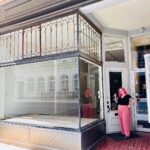
This month, the 1908 Commercial Bank and Trust Co. building at 1222 N. 3rd St., known as the Furlow Building, opens as 24 apartments – 20 one-bedroom and four two-bedroom. It follows more than six months of demolition and renovation work.

“Nothing in the building was salvageable except the copper façade and the brick exterior,” said developer Dan Deitchman, giving a tour of one of the modern, upscale apartments with a view of Broad Street Market across the way.

The entire interior was demolished, including the floors, and rebuilt. The badly damaged granite fluted column façade on the ground level was replaced with a handsome concrete block façade.

“This was the most challenging of all the buildings we’ve renovated and we’ve renovated dozens,” he said.

Along with partner GreenWorks Development, Deitchman spent $5 million – half of which was a $2.5 million grant from the state’s Redevelopment Capital Assistance Program – to restore the 21,500-square-foot building.

Deitchman specializes in restoring historic buildings around the region. His biggest project, restoration of the 1927 Gothic-style Riverview Manor on North Front Street, sold every one of its 76 condo units shortly after it opened three years ago.

COBA, the new name of the Furlow building (using the first two letters from its original name, Commercial Bank), is a welcome relief to Midtown residents and historic preservationists who worried it would one day go the way of the wrecking ball.

“That building was severely deteriorated due to neglect,” said David Morrison, president of Historic Harrisburg Association. “It’s Midtown’s most prominent architectural landmark.”

Morrison and HHA had long sought to see the building saved after the city’s redevelopment authority acquired it 15 years ago when the last owner abandoned it. Just cleaning debris from three decades of neglect was a monumental task, Deitchman said.

HHA is encouraged by the restoration of the building because its resource center, also formerly a bank built in 1893 and next door to COBA, is going through the process of seeking funds for restoration and renovation.

Morrison praised the developer’s work on COBA. He said Deitchman found clever ways to reconstruct an interior that once had 10 luxury apartments with limited views to units that have views of the Susquehanna River, the Capitol Dome, Midtown and Uptown, depending on what quadrant of the building the unit is located.

“As a piece of architecture, it was always conspicuous by its abandonment,” Morrison said. “Now it will contribute to the life and the economy.”

COBA’s ribbon cutting is Nov. 1, the same day the building gets its first tenant, said Deitchman. And once again, like the restored Riverview Manor, there is significant interest in COBA from potential residents.

“Some people are already reserving certain units without ever seeing them,” he said.

Continue Reading

Uptown Featured in Candlelight Tour

This year’s 39th annual Candlelight House Tour, organized by Historic Harrisburg Association and scheduled for Sunday, Dec. 9, includes 14 historic residences and public properties in the Academy Manor neighborhood.

The tour, “Academy Manor: Degrees of Design,” offers an exclusive look into properties in the northern tier of Harrisburg, where tour-goers will find amazing historic architecture and beauty as they explore the decades of design throughout Academy Manor and Italian Lake.

A stunning display of city residences along the 2nd Street corridor will showcase the homeowner’s personal style and character. Sponsored by Mid Penn Bank, the annual tour highlights the best-of-the-best properties in Harrisburg, all decorated for the holiday and winter seasons.

“You can stop by home of John Reitz and Jo Anne Ross and the McCormick House, which today serves as the Chancellor’s Home for Dixon Univeristy,” said John Campbell, executive director of HHA. “Also the Zembo Shine will be sure to amaze attendees with its Moroccan motifs and stately architecture.”

While not official stops on the tour, the Harris Tower and John Harris Simon Cameron Mansion will be open for visitors to explore. This is a self-guided walking tour and may require individual transportation

The tour is 1 p.m. to 6 p.m., Sunday, Dec. 9. Tickets are $15 in advance and $20 the day of the event at the Historic Harrisburg Resource Center, 1230 N. 3rd St. Purchase tickets online at www.historicharrisburg.com or at various locations throughout Harrisburg. For additional ticket and tour information, call 717-233-4646 or visit www.historicharrisburg.com.

Continue Reading

Battling Blindness: Tri-County works to mitigate growing problem.

A report from Prevent Blindness America shows a sharp increase in eye disease prevalence.According to the 2012 study released by PBA and the National Eye Institute, the number of those ages 40 and older with vision impairment and blindness has increased 23 percent since the year 2000.

“It’s no surprise that the numbers of those affected by eye disease are continuing to climb, especially due to the aging Baby Boomer population,” according to Hugh R. Parry, president and CEO of PBA.

What is especially concerning is the dramatic spike in diabetic retinopathy cases, an 89 percent increase; a consequence of the growing diabetes epidemic that this country is experiencing. This disease occurs when diabetes damages the tiny blood cells in the retina. It can cause blind spots, blurring, and vision loss.

Early detection, appropriate and ongoing treatment, and the availability of specialized low-vision and vision rehabilitation services can help those with diabetic retinopathy live productive and satisfying lives.

Central Pennsylvania’s Tri-County Association for the Blind, located at 1130 S. 19th St. in Harrisburg, is a local non-profit with a mission to support and promote the interests of people who are blind, visually impaired or otherwise disabled, and to provide blindness prevention services.

Our 91-year-old organization remains vibrant by adapting to change and meeting the needs of our customers. The most recent example is the new Vision Rehab Center opened in June, providing professional comprehensive low vision care for all ages.

Tri-County’s vision is to be the premiere resource for blindness prevention services, and to maximize opportunities for individuals who are blind and visually impaired to maintain independence.

Tri-County remains a vital community asset thanks to the support of generous donors, corporate contributions, foundation grants, and, in large part, because of the revenue generated by our Business to Business Division. In the last fiscal year these funding sources helped to provide Radio Reading Services, Tri-County’s eye clinic, computer training, Braille production, case workers with one-on-one support, prevention services that conducted more than 3,500 pre-school vision screenings, and employment opportunities for persons of all disabilities. Tri-County serves more than 19,600 people in the community.

Chances are you know a friend or family member that is either blind or suffers from a visual impairment. You can raise the quality of life for these individuals by participating to promote awareness, contributing to Tri-County or volunteering. All acts of kindness are appreciated.

For more information and to support Tri-County Association for the Blind please call 717-238-2531, visit at www.tricountyblind.org, or see us on Facebook.

Paul Zavinsky, Director of Development, Tri-County Association for the Blind

Continue Reading

A Matter of Justice: Will Harrisburg ever see its day?

Will the people of Harrisburg ever see justice done?

Last month, a group of panelists convened at Midtown Scholar Bookstore to discuss the issue, with their answers widely ranging from “doubtful” to “highly likely.”

At the Harrisburg Hope forum, Neil Grover, founder of the taxpayer group Debt Watch Harrisburg, said he is encouraged after last month’s state Senate committee hearing on the city’s incinerator fiasco.

“We’re moving towards justice on a lot of parallel tracks,” said Grover. “I sat through that whole hearing, and I am optimistic about what I heard, partly because there were two very different stories, and they are compelled to go forward and find out who’s telling the truth.”

Tara Leo Auchey, editor of Today’s the Day Harrisburg, agreed that recent events are reason for optimism.

“The Senate Local Government Committee hearings have me very encouraged,” she said. “As Neil said, we’re starting to hear public contradictions.”

Nearly 200 people packed Midtown Scholar to hear from the panel, which included Bishop A.E. Sullivan Jr., the president of Harrisburg’s Interdenominational Ministers Conference, firefighter union leader Eric Jenkins and mayoral spokesman Robert Philbin.

Of the group, Jenkins was arguably the most pessimistic.

He said that the receiver’s office has barely communicated with his union since March, which is troubling as re-negotiation of union contracts is a key element of Harrisburg’s financial recovery plan.

In addition, he is suspicious of the state’s role in driving the recovery process, as it played a key part in allowing Harrisburg to amass such a large debt level to begin with.

“I find it difficult to believe that justice will be achieved when the people who are conducting the task and responsibility of getting justice are the very same people who are culpable for the problem to begin with,” he said.

If nothing else, the forum has showed how far the issue of “justice” has advanced recently.

A year ago, few thought that anyone connected with the incinerator disaster ever would have to answer for their actions.

But, in January, the Harrisburg Authority set the stage for a discussion of responsibility with the release of its forensic audit, a damning analysis of how the incinerator was upgraded and financed.

Both City Council and former receiver David Unkovic then sent letters asking for federal and state investigations and, last month, the state Senate began hearings on the matter.

Grover applied some historical context to Harrisburg’s problems, saying that public malfeasance and corruption date back practically to the founding of the city.

“The cloud over Harrisburg and honesty has been here for a long time,” he said. “I don’t think we’re going to alter that culture.”

In addition, Grover said that the Reed administration constantly wanted to spend more money than the city took in. Therefore, it took irresponsible actions to plug recurrent budget gaps such as diverting utility and bond fees to the general fund.

“Harrisburg was living beyond its means for 30 years,” he said.

Philbin also expressed optimism that, in the long run, Harrisburg would see some type of justice, whether that will take the form of creditor concessions, restitution, or criminal indictments.

In the shorter run, he said that the financial recovery plan, which currently is being implemented, is the first step towards getting the city healthy again.

“At some point down the road, there may be penalties, fines, etc., but we’re talking about a multi-year process to get to that point,” he said. “In the meantime, I think it’s great that we have this [recovery plan] process in place.”

Both Grover and Auchey said they held out hope that those responsible eventually may be forced to make financial restitution to the city or may even see jail time. They further agreed that “justice” most likely would take the form of concessions from creditors–either via negotiations or as part of a bankruptcy process.

“Concessions from creditors are going to happen either voluntarily or by force only because, if you step back and look at the overall picture, there’s not enough money to pay them” said Grover. “There’s just not enough money to put on the table to pay them everything they demand, and you couldn’t tax your way out of this if you tried.”

Auchey added that she hopes for yet another form of justice for Harrisburg–political justice.

“I also have a little “j” justice in my mind in terms of the justice as citizens of this city feeling that we have leadership that we can count on,” she said. “That we feel that we have people in place who will have our best interest in mind–and not just power for power’s sake.”

Continue Reading

A Fight for the 15th: Teplitz, McNally stress differences in state Senate battle.

Education. Family planning. The state’s hand in running Harrisburg.

These are among the issues that divide state Senate candidates Rob Teplitz and John McNally, giving voters a clear choice on Nov. 6.

Teplitz and McNally, competing to replace retiring legislator Jeff Piccola for the 15th Senate district, found few points of agreement during a candidate’s debate held last month at Midtown Scholar Bookstore and sponsored by Harrisburg Hope.

Right from the start, Democrat Teplitz blasted Republican McNally for supporting school vouchers and privately sponsored charter schools, a charge he repeated throughout the hour-long event.

“You’re using [campaign] money from organizations that support privatization of schools then saying the opposite,” said Teplitz. “For you now to begin to Etch-a-Sketch your way through the fall campaign doesn’t do a service to anyone in this community.”

After some prodding, McNally said that he does support vouchers, but denied Teplitz’s claim that he wants to gut public education.

“I am for increasing funding for basic education,” said McNally. “This campaign is about getting to the truth, about integrity. I have not said I will cut education.”

McNally added that he supported other school reforms, including creating a county-wide system of school administration, which he called “the Maryland model.” Teplitz said his educational policy would focus on providing greater funding to reduce class size and boost early education, a hot issue in Harrisburg as kindergarten was nearly eliminated this school year before the state restored some funding cuts.

Moderator Alan Kennedy-Shaffer then turned the debate to Harrisburg issues, asking about the state’s rocky relationship with its capital city.

Teplitz said he opposed repeated moves by Piccola to intervene in city affairs, which led to a 10-year takeover of the city school district and, currently, to state receivership of the city.

“It’s unfortunate that the senator we have now has not played a constructive role,” he said. “My job as senator would be to bring all the parties together. Every option must be on the table.”

McNally was more supportive of the state’s interventions.

“You have to get all the people to the table, and I believe [receiver] Gen. Lynch can do that,” he said.

In a rare moment of agreement, both candidates said they expected creditor concessions and possibly restitution to result from a final deal to resolve Harrisburg’s debt crisis.

Audience questions broadened the scope of the debate, with several members of the large crowd asking about issues that included the state’s troubled voter ID law and women’s reproductive rights.

Teplitz said he opposed voter ID, while McNally said he supported it as long as measures were taken to ensure everyone has the proper identification to vote.

“Let’s all take personal responsibility so that all our neighbors have ID so that they are not disenfranchised,” McNally said.

An audience member questioned the candidates on the subject of funding for Planned Parenthood, providing perhaps the sharpest distinction between the candidates.

McNally called himself “unapologetically pro-life,” saying he would like to ban all abortions, even in the case of rape or incest.

“We have too many abortions already,” he said, adding that he opposed public funding of abortion.

Teplitz accused McNally of purposely confusing the issues of family planning and abortion, as state funding of abortion is already illegal in Pennsylvania.

“We need to support women in this country and women’s ability to make their own reproductive decisions,” said Teplitz.

Continue Reading

Council Votes to Hike EIT: Rate to double to 2 percent for 2013.

The Harrisburg City Council last month reversed course, agreeing to a temporary hike in the resident earned income tax rate.

The council voted 5-2 to raise the EIT by 1 percent for one year after several council members, who previously had opposed the hike, switched positions.

Council President Wanda Williams said she reluctantly changed her mind because the city desperately needs the money.

“Where do the resources come from to continue services, to pay employees?” asked Williams.

The city is expected to run out of cash next month, which may necessitate a bridge loan or sale of delinquent tax liens to make it through the end of the year. The EIT hike, from 1 percent to 2 percent, will take effect Jan. 1.

The council’s change of heart came after three meetings between members and receiver William Lynch. To urge support, Lynch provided members with certain assurances, which remain confidential.

Lynch previously told council members that the increase would show labor unions and creditors that the council is willing to make hard choices to help retire the city’s enormous debts, helping to convince them to do the same. He also said a bankruptcy judge would look favorably upon the move, in case Harrisburg takes that step.

Several council members said the sunset provision would let them, a year from now, judge for themselves if their action helped prompt other stakeholders to make concessions.

Councilwoman Patty Kim said the receiver’s office promised two important items: to not ask for an EIT increase extension after one year and to request no more tax hikes for city residents.

Council members Susan Brown-Wilson and Brad Koplinski voted no to the increase.

Brown-Wilson said she did not trust the receiver’s promises, adding that the estimated $5.1 million raised by the hike would not be enough to balance Harrisburg’s budget, which this year is expected to have a shortfall of more than $12 million.

MID Put on Hold

A planned Midtown Improvement District has been placed on indefinite hold after the cost of hiring off-duty police officers rose excessively.

In September, Harrisburg Mayor Linda Thompson revised a proposed agreement to hire off-duty city police, upping the per-hour cost from $35.45 to $46.27.

The expense was too great to ask Midtown property owners to foot, said MID organizer Eric Papenfuse.

Papenfuse said the concept might be revived after next year’s mayoral primary, once it is clearer who will be the city’s next leader.

In addition, a separate group may be formed early next year to apply for Elm Street designation for Midtown, which would make the area eligible to receive funding for neighborhood improvement and revival.

Finalist Named for Parking System

A New York-based financial company has been selected as the bidder for Harrisburg’s most valuable asset–its parking system.

Receiver William Lynch last month announced that his office will enter into negotiations for a long-term lease of the system with Harrisburg First LLC, an arm of the multinational investment services firm Guggenheim Partners.

Lynch said he expects talks to conclude and a deal to be signed by year-end.

Former receiver David Unkovid put the system up for bid in February, originally receiving interest from a dozen companies. That list was whittled down in several stages until the selection of Harrisburg First.

Proceeds of the long-term lease will go to pay down some of the estimated $340 million that Harrisburg owes after backing bonds used for repeated upgrades, some botched, to the city incinerator.

Another chunk of that debt will be settled with the sale of the incinerator itself. Lynch’s office currently is negotiating with the Lancaster County Solid Waste Management Authority, which was selected as the finalist to purchase the troubled facility.

Harrisburg’s parking system consists of 10 parking garages located downtown and one on City Island with a total of 7,813 spaces. It also includes several surface parking lots.

Continue Reading