We Have Pressers: Mayor Speaks on New COO, Old Sewer Lines (not a Scam)

Even post-election, Mayor Linda Thompson has resumed her flurry of press conferences.

Today’s concerns the appointment of a new COO for the city, which we’ll update after the 11 a.m. event. Ricardo Mendez-Saldivia, who took the COO job just last year declaring he had “bought a one-way ticket,” bought another one-way ticket and left about two weeks ago, one of several recent high-profile departures. The COO position was created as part of the receiver’s financial rescue plan for Harrisburg, tasked with bringing professional administration to the habitually poorly run city.

At yesterday’s press conference, Thompson reminded city residents that a new warranty program for city homeowners’ outside sewer lines is not — we repeat (because she did, repeatedly) not a scam. Over the past month, most property owners have received two letters from the city on behalf of a company called Service Line Warranties of America (SLWA) offering coverage of the line that runs from a house to the city’s main sewer line, which is the responsibility of the homeowner and typically not covered by homeowner’s insurance. SLWA is charging $7.95 per month or $90.40 if paid annually for this coverage. Thompson said replacing a damaged line often costs homeowners $4,000 or more. She said she held the press conference because her office has been flooded with calls from property owners asking if the offer is a scam. Anyone interested in this non-scam can enroll online at www.SLWofA.com. So far, 850 city property owners have done so, said Thompson. Again, not a scam.

Continue Reading

A Tale of Football, Life: Carlisle Indian School’s championship is a century old, but lessons endure.

The past few years have been rough for the game of football, at the collegiate and professional level. With endless coverage of scandals on and off the field at several major powerhouse universities, and with the constant labor strife in the NFL between the players and owners over their share of billion-dollar pies, the negative aspects associated with the game seem to garner more attention than the individual contests these days.

But, I would like to call on fans of the game of football and fans of American history and ask them to pause a moment as we head into the football season. Take a moment and recognize the anniversary of one of the greatest and perhaps purest moments of team glory in the history of football. This year, 2012, marks the 100th anniversary of the Carlisle Indian School winning college football’s national championship title.

What’s that you say, you’ve never heard of the Carlisle Indian School and you most certainly never knew that they won a national championship in football? Well, that would be a shame if you are not familiar with their accomplishments. It’s something all of us should know, whether or not we are football fans. It is one more great story in the tale that is America.

At a time when football has become an endless cash machine for not only owners of professional teams and universities playing in major conferences, as well as for the television networks, advertisers and all those who make their livings from the games at varying levels, we should all pay homage to a truly amazing team from the Carlisle Indian School led by America’s greatest athlete Jim Thorpe, and one of the game’s most famed and innovative early coaches Pop Warner.

This team from a tiny school located in bucolic Cumberland County, Pennsylvania was comprised of numerous players – including Jim Thorpe who had never played organized football before they came to Carlisle. Yet, the team rose to glory defeating all of the traditional powerhouse programs of that day including Harvard and Army, which was led by a young back named Dwight Eisenhower, and claimed the title of National Champions.

Jim Thorpe and his teammates most certainly didn’t enjoy any special privileges as successful football players do today. In fact, they were routinely subjected to discrimination by their own school, where white administrators and instructors were systematically trying to rid them of the Native American customs and heritage.

They were also discriminated against by other teams and students at opposing universities that clearly thought them to be inferior, not just as football players, but as human beings.

These proud young men had no special dorms, individual tutors, first class travel accommodations, private workout facilities or fancy meals before or after their games. They were simply a team who walked out onto the field determined to be better football players than their opponents.

They were not worried about strutting for the cameras or wondering what agents might be watching. The goal of the Carlisle Indian School players to demonstrate through their actions on the field that they were the best team in the game during that 1912 national championship season represented the purest essence of sports, and should serve as a model for all of our athletes of today.

The Carlisle Indian School closed six short years after the football team won their national championship. Today, the grounds and some of the original buildings of the school where Jim Thorpe, his teammates and Pop Warner rose to collegiate football glory, is the site of the U.S. Army War College.

This fact and the passage of time make it easy to forget the accomplishments of these great players on the gridiron. But, I hope that in the coming days as you turn on your television and watch your team run out onto the field to blaring music and smoke machines, you will remember how 100 years ago the mightiest football team in the nation was comprised entirely of a group of proud Native American athletes from Carlisle, Pennsylvania.

James DeBord is a writer and researcher who resides in Lancaster with his wife and three children. He has worked professionally in various executive management positions over the years in the corporate, non-profit and public policy sectors.

Continue Reading

Strongly Anchored: A Dad, His Daughter and a Life Led Honorably

It’s 9:30 p.m. on a warm evening in June, and my father is yawning in the bright circle of light surrounding my parents’ kitchen table. I’m wearing an ill-fitted T-shirt the color of the alfalfa fields behind our house, and I’m staring out the darkened windows and seeing nothing but our reflection: me seated with no make-up, chin cupped in my palm with one elbow on the green farmhouse tablecloth; my father, leaning back across from me, silver-haired and tired.

“Did you milk the cows this morning?” I ask, meaning: “How many hours have you been awake?”

This is a normal question. I’ve long since lost count of which morning is his turn to wake up at 2 a.m. to care for our animals or which morning is my uncle Jeff’s, but the question still is always on my mind, charting the status of the man who, at age 59, still works harder than me.

Dairy farming runs in the blood, he says. Our farm is on the western edge of Shippensburg, roughly midway between Pittsburgh and Philadelphia in the rolling Cumberland Valley, the land having been purchased by my stern great-grandfather Edward sometime around World War I. After that, the farm was bought and run by Edward’s third-youngest

boy Walter and his wife Anna, my grandparents, who gave birth to three daughters and two sons who could run the farm alone by the time Daddy was 16. Today, the farm is still my father’s and Jeff’s, is home to 230 milk cows, one of the first carousel-style milking parlors to be installed in Franklin County, and 425 acres of wheat, barley, alfalfa and corn. I used to sit to Daddy’s left during meals of beef we’d butchered and potatoes we’d raised and hold his hand for the prayer, tracing the 425 acres in his calluses.

“Could I take you out to breakfast tomorrow for Father’s Day?” I ask, and Daddy barely manages a smile.

“Breakfast? Sure, that would be nice.”

The next morning, I drive us to the Shippensburg Select Diner that sits overlooking the town square near the West End Fire Department. I’m wearing my oldest pair of jeans and wish I’d left my earrings at home. Traffic is bright and bustling, and the diner is full of faces I do not recognize. “Let’s sit near the window. I like to see the world moving,” says Daddy, looking slightly rested.

“So do I,” I say. I walk to the red vinyl booth in the front corner where the blind’s pulled all the way up, but Daddy remains standing beside the front door, watching a tractor and discbine being driven up King Street. He waves. “That’s Tom Elliot,” he calls to me. “See, I know people already.”

Breakfasts always make me think of my dad, whether I want to or not: “dippy” eggs with toast and mint tea, pancakes and sugar syrup and crisped bacon. 2 a.m. mornings on the farm have a way of spiking hunger more violently than the sunrise, and we both know my mother’s repertoire of breakfast foods by heart—French toast made from homemade bread, Cream of Wheat with brown sugar and raisins, scrambled eggs stretched with a dash of tap water—sometimes waiting for us when we returned from the barn when the rest of the house was still cool and heavy with the sleep of my brothers and sister. I have been off the farm a decade, but I still cannot smell bacon in the morning without being conscious of whose early-morning labor I butter onto my bread.

The waitress brings us coffee, and we both order omelets, the one breakfast food my mom rarely makes. Daddy begins to talk about the roofs that he and Jeff just replaced due to a 2011 hail storm that also downed a tree one block from my Harrisburg apartment; he explains the adjustments made to the loafing barn to increase air circulation, and he takes a call from someone about a new truck the farm may want to buy.

He’s a solid businessman, keenly aware of circumstance and open to change. I am not. I cling to the familiar as if it were the branches of my favorite maple tree, the first picking of summer sweet corn. The farm taught me the solidness of the seasons, the regularity of milking rhythms that thump through the pumps in the milking parlor, but life, by definition, is different when it hinges on the measure of the rainfall you receive or the storms that do or do not pass you by.

“It sounds like you’ve done a good job at teaching high school,” Daddy says, and I look at him. “Peggy’s told me what your students said when you resigned.” I didn’t exactly intend for this conversation to be about me. He’s chewing on toast slowly and without jelly because we both know it’s inferior to my mom’s strawberry jam. “You’re going to love grad school. It’s everything you’re interested in. You’re curious, you’re interested in new people, new things, new ideas. It’s going to be great for you.”

I notice suddenly that he’s wearing the same worn-blue sweatshirt that he wore when I was in high school. In my Harrisburg apartment, I still have an old pair of sneakers that I threw away then dug back out of the trash and a hoodie that I purchased in 1999 with the threadbare cuffs, and I save these things in case I have a pasture that I need to run through or a flowerbed I need to dig. But, at this point in my life, I have no fields or flowerbeds. I don’t even have a yard. I am ashamed of myself, but my father is not.

“You have to keep trying because you never know what you might be,” Daddy continues. I realize that he’s also talking about himself: the man who left college to plant fields and stoop his back over the family’s land, who joined the board of directors for the local electric cooperative 20 years ago and now is serving as board president. When he was first asked to lead, he was hesitant. He is a man comforted by open fields and by silence, the same silence that was always between us when we milked together or went out for ice cream at Diffy’s Drive-In. But he went forward.

silvia_groveDuring his early years as board president, I helped to edit his annual meeting speeches and applauded for him when he stood on stage, looking crisp and regal in a new suit. I now meet him sometimes in Harrisburg for dinner after his legislative meetings where neither of us smell like fresh air or open spaces, and we talk about his travels with Adams Electric Cooperative to attend meetings in California, Costa Rica, Texas. He listens as I speak about three years spent teaching high school and my work as a freelance journalist, and he asks questions that have nothing to do with milk prices and mastitis. He is my father of the cornfield, but he carries with him the sense that, in each moment, he is where he needs to be. Now, he’s looking at me across the diner table with eyes as blue as cloudless skies, overlooking the fried potatoes that I cannot finish and giving permission to do the same.

And I wonder if he knows all the things I’ve never told him: that, when I wake up early to write, I still think of him, or that, when I was accepted into the University of Pittsburgh, he was the first person I called, or that my curiosity in the world is only possible because of the wide open pastures beyond our farmhouse, strongly anchored yet rolling forward toward the Appalachian mountains.

TheBurg would like to wish all dads a Happy Father’s Day.

Continue Reading

Arrested Development: The Broken Land Investment of Mary K

In 2005, a respected designer unveiled a plan to replace three historic mansions on the riverfront with an unprecedented luxury development. Eight years later, after vigorous public debate, the mansions are still standing, though badly overgrown, and the owner has filed for bankruptcy. Next March, they will go to public auction, and their fate will be in the hands of the highest bidder—unless a last-minute buyer can be found.


A Kind of Limbo

In November of 2004, Mary Knackstedt, an author and interior designer, bought a pair of mansions overlooking the Susquehanna, on Front Street just north of Division.

The mansions, built in the late 1920s as single-family homes, had been subdivided in later years and leased to businesses. Knackstedt’s own enterprise, Knackstedt, Inc., was headquartered at a third mansion on the corner, which she had owned since the 1980s. With her purchase, Knackstedt achieved something of a developer’s dream: possession of an entire city block.
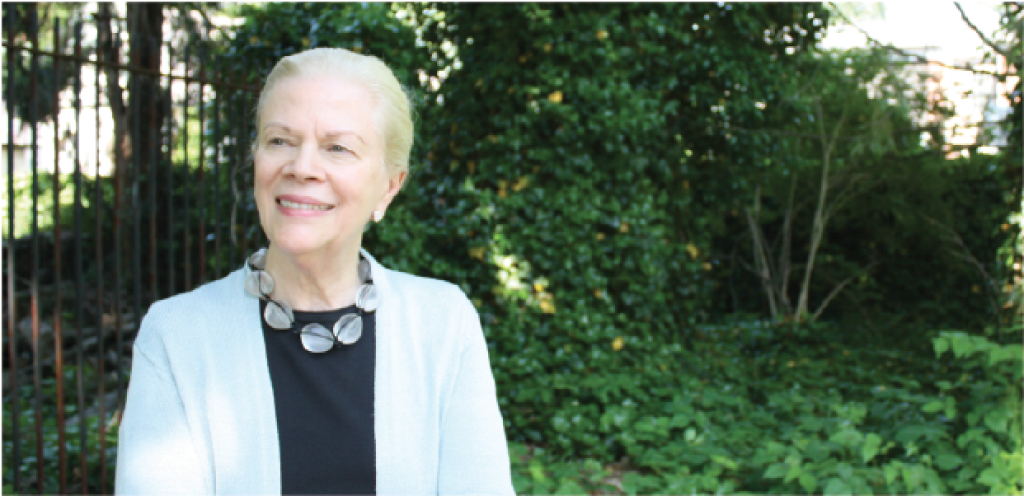
Mary Knackstedt

Mary Knackstedt

In Academy Manor, the neighborhood where the mansions reside, Knackstedt was a friendly presence, if rarely seen. She was instrumental in the restoration of tree-lined Riverfront Park, which runs along the shoreline from Shipoke all the way north to the city line. She was also a longstanding supporter of Historic Harrisburg Association, a non-profit devoted to preserving the city’s historic buildings. It therefore surprised her neighbors when, in 2005, she announced plans to demolish the mansions and replace them with luxury condominiums.

The mansions, like many of the buildings in Academy Manor, have connections to notable figures in Harrisburg history. (Perhaps the best-known is Mary Sachs, who operated a women’s clothing store on N. 3rd Street.) But despite their legacies, the buildings had little to protect them from demolition. The neighborhood was not a historic district, and restrictions governing new construction were tied to individual properties and could be amended. The preservation of existing homes, as well as of Academy Manor’s general aesthetic—stately, rustic, well-landscaped—was mostly a matter of neighborly goodwill.

In 2005, as Knackstedt pushed forward with plans for the apartments, a coalition of neighbors formed to oppose her. Rallying around the slogan “Save Our Mansions,” they picketed the sidewalk outside the properties. The protest, like the slogan, had a genteel quality; at one point Knackstedt sent out someone with cookies and tea. Nonetheless, the neighbors’ opposition was earnest. They built a scale model of the block, to show a “before and after” of Knackstedt’s intended construction, which they unveiled before City Council. Helen Porter, a neighbor who was present at the meeting, said that when the mansions were removed and the condominiums put in, members of council audibly gasped. “It made everyone else’s houses look like matchsticks,” she told me.

Architectural renderings of Knackstedt’s failed condominium proposal along North Front St., just north of Division.

Architectural renderings of Knackstedt’s failed condominium proposal along North Front St., just north of Division.

Throughout the spring and summer of 2005, the neighbors sent letters of opposition to City Council and testified about her proposal at various hearings.

“We all knew Mary and respected her business acumen,” said Andy Giorgione, a resident of Academy Manor and an attorney at Buchanan, Ingersoll & Rooney. “We said, ‘We’ll work with you, just scale it back.’ But she just wasn’t willing to compromise.” In late 2005, after concerted lobbying by the community, City Council passed a resolution denying Knackstedt’s plan.

Since then, the mansions have sat in a kind of limbo. Knackstedt maintains the corner house, but the other two are unoccupied and falling to ruin. In 2011, she filed for bankruptcy, which will force her to sell the houses by the end of this year, or else let them go to public auction in March. John Campbell, president of Historic Harrisburg, is hopeful that this will encourage Knackstedt to sell them to someone capable of preserving all three.

“These properties represent what many cities have gotten right: the preservation of their waterfronts and the architecture that defines it,” he told me.

But they have also deteriorated to such an extent that the costs of repair may prohibit preservation. When I called Kevin Fry, the current realtor for the properties, he declined to give a tour, saying that the trio of homes is not what’s on offer. “It’s essentially a $2½ million land buy,” he said.

We Warned Her

Harrisburg finds itself in a political moment when blight and development—the contrasting outcomes at stake in the Knackstedt saga—are at the front of the public mind.

The mansions are unique to the extent that true blight, the kind that afflicts parts of Camp Curtin, say, or parts of Allison Hill, is unlikely. No one is much worried that a couple of decaying mansions will drag an affluent neighborhood into the gutter. But Knackstedt’s failed development bid is instructive, because it demonstrates the mix of political and economic forces that can determine whether a project flourishes or falters. New developments stake a claim on the actual shape of the city’s future. The story of Knackstedt’s mansions poses the questions raised by redevelopment across Harrisburg: questions about how the city should look and how much it should cost to look that way, as well as who should pay.

Knackstedt first approached former Mayor Stephen Reed with the idea for a development in the spring of 2004. On May 17, in a memo to Daniel Leppo, the deputy director for planning, Reed indicated his support for her proposal and alerted Leppo that an official plan would be submitted in the near future. Citing the “obvious health implications” of recurring mold in her property, as well as the need for additional space for her “growing business purposes,” the memo supports the demolition of the corner mansion and its replacement with a structure “that utilizes essentially the same architectural style and essentially the same exterior appearance.” The memo also asks that an exception be made to a height restriction in the zoning code, which limited all structures to 35 feet. Among a list of reasons for such an exception is the claim that there “is a clear and compelling demand for luxury condominium space in this city.”

Leppo, who left the Planning Commission in 2009 and now works for Community Action Association, a statewide anti-poverty program, told me that the initial proposal was greeted without controversy. But between the date of the memo and the first plans and permits meeting, he said, Knackstedt’s proposal had morphed considerably. She had acquired the two neighboring mansions, and her plan “was now something that didn’t look like any of them.” Instead of one structure with additional floors, Knackstedt planned to construct a single building, four stories tall, that would span the entire block and contain 32 high-end apartments. It would also demolish three mansions instead of just one. Leppo strongly urged Knackstedt to reconsider. “We warned her this wasn’t going to be viewed well by the neighborhood,” he said.

Tide of Opinion

If Knackstedt had been able to choose among neighborhoods to contend with, she would probably have picked somewhere other than Academy Manor, whose residents include a number of attorneys, developers and high-ranking politicians. In addition to sending letters, the neighbors began to scrutinize the city’s zoning laws. They determined that Knackstedt’s proposal violated a section of the municipal planning code, or MPC, which required a developer to exhaust all possible locations for a large-scale building like the one planned before building in a community of single-dwelling homes.

Don Paul Shearer, a veteran real estate appraiser who was Knackstedt’s advisor and spokesman for the project, contested the claim that her proposal in any way violated the MPC. In September of 2005, he wrote a long letter to members of City Council, insisting that her development was a permitted use under the code and alluding to “many misrepresentations and false statements” by Leppo and the city Law Bureau. But, at the same time, he was attending the planning meetings, and he watched the tide of opinion turn against Knackstedt.

“Eric Papenfuse got up and made a speech, saying that all Mary was interested in was money,” Shearer said. “Another guy, he looked like Jesus Christ, with the beard and everything—I’ll never forget it, he stood up and said, ‘God will strike you dead if you tear these buildings down.’”

Shearer, for his part, thought the building’s size was excessive. “She laid this plan on us at a meeting, and I said, ‘Jesus God.’” But he nonetheless fought for the city’s approval and met with Reed and lawyers from the Law Bureau to try to push things forward.

If Reed had ever supported the project, by the time of the neighborhood protests, he had changed his mind. “Reed was suddenly saying, ‘I have no choice. It doesn’t meet the zoning requirements,’” Shearer told me. Without support from the mayor, and with the threat of a strong legal case from the neighbors, the project began to look doomed.

Around this time, the Patriot-News printed a cartoon by Steve Wetzel spoofing the likely failure of Knackstedt’s plans. In it, a figure representing Knackstedt holds up a pair of galoshes, directing an assistant to bring them to “guest services” for the “virtual sight, sound and smell basement.” The assistant, meanwhile, installs a sign for “Mary K’s National Museums of Flood & Water Damage.” The cartoon ran in May of 2005, while Knackstedt was still petitioning City Council to delay its final decision on her plan. As political cartoons go, it was fairly obscure. It was also remarkably prescient.

To Pieces

I visited the mansions one morning early in May, on a warm day when the branches of trees along the river were heavy with pink and white flowers. The buildings, set back from the street behind lawns that are extensively overgrown, are almost invisible from a certain angle, entirely subsumed in green. But the one on the corner, home to Knackstedt, Inc., is still relatively well-kept, its front door framed by stately white columns and a maroon canvas canopy.

Knackstedt greeted me at the door. I was on my way to work and was carrying a sack lunch in a plastic grocery bag, which she locked eyes on after giving me a once-over. “Were you shopping?” she asked. Her follow-up question, as she led me down the hall to her dining room table, was more to the point. “What is your aim, exactly?”

Knackstedt was dressed in somber colors, and she wore her gray hair in a tidy bun. She spoke softly and precisely, and her eyes would occasionally widen with a look of alarm.

She grew up in Penbrook, and later lived in Bellevue Park, a historic landscaped neighborhood on the eastern edge of Harrisburg. For years, she worked with her father, producing fine furniture and restoring antiques. She went on to study interior architecture, focusing on proxemics, a field in anthropology that examines how an individual’s sense of personal space is affected by external factors.

“It’s about how environments affect human behavior,” she told me. “For instance, do you know how to put your husband on edge when he comes home from work?” I did not. “Decorate everything with beige. A person wants to be able to distinguish edges and colors. When they can’t, it creates a level of tension.” She applied proxemics concepts to interior design, and one of her early successes, the interior of a home for orphaned boys in Hershey, garnered attention in the local press.

If Knackstedt is defensive, it’s in part because her project, which the community tended to cast as a rich woman’s vainglorious whim, to her represented a piece of innovative design thoughtfully integrated with its environs. The development plan included an underground parking garage, which meant no cars would be visible at street level. Every unit would have a view of the river, and all entrances would be at the rear of the building, to keep a private park in front clear of activity. The apartments were flood-proofed, and they would be factory built, which would guarantee quality and provide for a 20-year warranty. She spoke of eliminating toxic materials in their construction, and of a designer’s “moral responsibility” to her clients. “I’m a designer,” she said. “That’s all I want to be. I’m not a developer. I wasn’t looking at it from a financial perspective. I was doing what I believe is right, based on the knowledge base that I have.”

In addition to her belief in the building’s design, she also thought the project could be a vital contribution to a nascent urban renaissance. “Harrisburg is in the position to be a wonderful city,” she said.

She considered the city’s needs and concluded that an influx of higher-income, skilled professionals would be critical to any revival. Her development would attract the sort of residents who could “bring the city to a higher level.” When she presented her plan, she included a note projecting more than $1 million in tax revenue per year once all of her units were filled. “When you do something like this,” she said, “everything in its radius will rise in value.”

Whether the apartments would have sold, and whether the city would have profited, is now impossible to say. What is clear is that after City Council denied the plan, Knackstedt’s entire project fell to pieces. Joe Bedard, a realtor at NAI CIR who recently worked unsuccessfully on the sale of the mansions, said that just about every possible factor worked against Knackstedt.

“The market going south was terrible timing, and the neighborhood intervention was well-orchestrated and successful,” he said. “On top of that, the city pulled the tax abatement program.” Tax abatement aims to spur development by forgiving some portion of the taxes on high-end housing, reducing costs for developers and enticing potential homebuyers. When the city’s abatement policy expired in 2010, Knackstedt’s projected carry cost—the cost of holding the property before sale, as improvements are made—became additionally forbidding.

The result, as far as Knackstedt’s personal finances are concerned, has been disastrous. Before this venture, she told me, her credit rating was pristine. “I don’t owe an earthly dollar to anyone beyond this project,” she said. But once the development plan collapsed, the mortgages on the mansions began to overwhelm her. She also started neglecting her legal fees. In April, 2009, as her suit against the city dragged on, her lawyers, Hoffmeyer and Semmelman, petitioned to be withdrawn as counsel. Their motion cited a substantial unpaid debt that Knackstedt had made no arrangements to settle. It also described eight months of unanswered mail in which they had asked her intentions on how to proceed. In 2011, with her bank threatening foreclosure, Knackstedt declared bankruptcy to protect the properties. “I really have made an incredible sacrifice,” she said.

Before I left, I took a tour of the mansions with the groundskeeper, an elderly, amiable man named Jack. The middle property, in the Tudor Revival style, with a distinctive slate-and-mortar exterior, was by far the most overgrown. A vivid green bush or tree sprawled across the front walk. Around the back, in the center of a leaf-strewn patio, the bedstone of a mill peeked out of the weeds. Inside, bits of crumbling plaster lay scattered in piles, acquiring mold. A tendril of ivy had found a gap in a window and was growing into the kitchen.

“It’s a shame about these,” Jack said. We paused in the foyer. The front door, whose red paint and wrought-iron fixtures exude a certain majesty from the yard, had been painted over in white on the indoor side. On the landing of the main staircase, sunlight poured in through a tall bay window, illuminating an odd extant object on the sill. It was a vase of fake flowers, cloaked with a thin film of dust, but otherwise undecayed.

No Simple Facts

One of the things that bedevils city planners is that there is frequently no consensus on what ought to be done. Every development involves competing interests, and fundamental questions can yield a variety of answers, depending on whom you ask. What makes a project right for a city? When is a property historic, and once it’s historic, what makes it worth preserving? When is a proposal in violation of code, and when is it merely bending the rules in pursuit of a greater good?

In matters of real estate, there are no simple facts. Everything is subject to spin. An artist’s rendering of the proposed condominiums still hangs from the wall of Knackstedt’s dining room. The apartments are in the background, obscured by trees, and a manicured park fills up more than half of the picture. Glancing at the sketch, one could get the impression that what is primarily being planned is not a building but a pleasure garden. By the same token, the neighbors’ scale model—the one that elicited gasps from City Council—put every emphasis on the building’s enormous size. (Shearer reported that at the meeting, after the model was unveiled, he walked up to one of the neighbors. “I said, ‘Good job, you little skunks,’” he told me, and laughed.)

The dispute even extends to the proper way to refer to the buildings. For advocates of preservation, they’re historic mansions, but the term in Reed’s memo is “period structure.” Historic Harrisburg’s website calls them “landmarks,” while, for Knackstedt, they’re old, but “not old considering Harrisburg.” For Shearer, they aren’t even technically mansions, according to the real estate definition, though this is a quibble that Leppo dismisses. “For Harrisburg, they’re mansions,” he said.

Officially, what scuttled Knackstedt’s proposal was its violation of a relatively obscure line of municipal code. But codes are open to interpretation, and the city has overlooked technical objections in the past for projects that attracted general support. Other properties on Front Street have been re-purposed for commercial use, even though they sit in residential areas. As Leppo explained to me, the MPC—which was drafted to govern all of Pennsylvania, a largely rural state—tends to be flexibly interpreted in cities, whose governments are much more amenable to mixed-use neighborhoods. In this light, Knackstedt’s real failure was not violating code so much as failing to violate it in a way that the city could come to view favorably.

In any case, once it became clear that City Council opposed her plan, Knackstedt began to fire back with legal objections of her own. In 2005 and 2006, she filed two lawsuits, one against the city and one against the individual members of council, claiming they had wrongfully rejected her proposal. The cases hinged on a technicality. She claimed that she never received written notice of the city’s decision and petitioned the court to interpret this as tacit approval, citing a relevant passage in city law. City Council denied this, saying they gave Knackstedt notice by e-mail and that, furthermore, e-mail was the form of correspondence that an assistant of Knackstedt’s explicitly requested. Knackstedt, in turn, denied these claims. The case languished without resolution for years, until the fall of 2011, when Knackstedt’s bankruptcy filing stayed the proceedings.

As Shearer sees it, Knackstedt fell victim to a change in political fortunes. “People acknowledged she’d been treated unfairly,” he said. At times, Knackstedt seems to believe this, too. She regards the loss of the support of Reed as a crucial factor. “If the mayor was behind a project, you went ahead,” she told me. “If not, no. You didn’t go against him.” Shearer affirmed this, and said that, throughout the proceedings, she clung to the 2004 memo as evidence that her project had once been approved. (This appears to be true to the present day; Knackstedt presented me with a copy on the day we met.)

It’s true that Reed had a reputation for ensuring that the projects he favored got done. But there is something absurd in the notion that a two-page memo about a project that had not yet been fully conceived should serve as an unqualified green light for future plans. Perhaps Knackstedt felt that the support of the mayor would obviate the need for the consent of her neighbors. She certainly seems to have believed that her project was right for Harrisburg and that it was only a matter of time until others came along. “She had a vision that in many places would have been welcome,” Leppo told me. “I don’t know that she ever quite got why the neighbors were opposed.”

“How far do we go for what we believe?” Knackstedt asked me at her dining room table as our conversation was coming to a close. “It’s hard for me to take my background out of what I think should happen.” Knackstedt is an accomplished designer, with a long list of completed projects that have been well-received. But the principles of design are not like the principles of science, though they may have scientific support. Design is also about preference and taste, and there is seldom a single right answer about what should be done. Given that she had angered many of her neighbors, ruined her credit and let two historic buildings succumb to mold and weeds, I asked whether, looking back, she had any regrets.

“In some respects, yes,” she replied. “I’m sorry in the respect of putting so much of an investment in something that has not succeeded.” She spoke calmly, pausing to consider her words.  “Most of my projects have succeeded.”

Continue Reading

Cretaceous Re-Created: “Dino Adventure” Set to Thunder into the Midstate

The Cretaceous period is about to stomp into Whitaker Center this summer. Through life-sized animatronics, interactive simulations and 3D IMAX animations towering over five stories tall, this array of presentations will “give people a real sense of what dinosaurs actually look like,” said Steve Bishop, vice president of Science and IMAX Programs.

As of June 1, the Harsco Science Center will be home to “Dino Adventure,” an exhibit featuring robotic models of the largest animals ever to roam the planet, while the Select Medical IMAX Theater will complement this showcase by presenting “Dinosaurs Alive! 3D” on the mega-screen.

Dino Adventure’s main attraction is 14 meticulously detailed animatronic dinosaurs on display inside Whitaker Center’s Gloria M. Olewine Gallery. “These are replicas of dinosaurs as scientists believed they looked [like],” said Bishop. Smaller species are re-created at their actual size while the largest lizards are scaled to half-size, “so we could get them in through the door,” explained Bishop. That includes the Tyrannosaurus rex, which, at 23 feet long, is the Dino Adventure’s centerpiece.

“I’m sure that the T. rex will be a favorite of a lot of our guests,” noted Bishop, “but we have some more obscure species that are pretty interesting.” The varied collection includes the winged Pteranodon, as well as two aquatic reptiles that exemplify the diversity of dinosaur morphology. “The Elasmosaurus and Mosasaurus are presented in a marine-like setting,” said Bishop. “Visitors will look in through portholes to see them as if they were in a tank at an aquarium.”

The computer-controlled dinosaurs engage in a wide range of movements that demonstrate dinosaur behaviors from feeding to combat. Among the most exciting are the Pachycephalosauruses, “which used their 6-inch thick skulls to engage in ramming behaviors, vying for the attention of females,” said Bishop. Familial bonds are emphasized by “a long-necked dinosaur called the Corythasaurus that protects a nest of her eggs and a 21-foot long adult Triceratops with two juvenile triceratopses that are about 4 ½ feet long.”

iStock_000016010551LargeWhile walking among the enormous animatronics will give visitors a sense of the dinosaurs’ physical presence, the accompanying “Be the Dinosaur” exhibit offers an entirely different perspective of their daily existence. “‘Be the Dinosaur’ allows you to see the world through the eyes of a dinosaur,” said Bishop. 

The exhibit consists of a group of four simulation pods that gives attendees the opportunity to guide their favorite species through an immersive computer-animated ecosystem. “Visitors can choose to be one of several different dinosaurs and control that dinosaur’s actions. They can make the dinosaur walk, run, eat, fight and explore its world.” Younger guests can also take part in “Dino Dig”—a hands-on introduction to the field of paleontology. “Kids can climb in and uncover replica fossils of dinosaur bones buried in the exhibit area,” said Bishop.

Narrated by Academy Award-winner Michael Douglas, “Dinosaurs Alive! 3D” is a 40-minute documentary that follows a team of American Museum of Natural History paleontologists as they travel from New Mexico to Mongolia in search of new species of dinosaurs. The fossilized remains are then brought to life through scientifically accurate computer animation. “‘Dinosaurs Alive!’ uses the “you are there” feel of IMAX to take viewers back to the time of the dinosaurs,” said Bishop. “It’s very realistic, and, because the screen is five stories high, you get to see them full-sized.”

Audiences will learn how the discovery and study of fossils help scientists better understand prehistoric life and witness animated re-creations of Velociraptors, Protoceratops and Seismosaurus as they hunt for food, protect their young and face the catastrophic forces of nature. The film also examines the future of paleontology—a potentially thriving field—since these scientists estimate that less than 2 percent of all the dinosaur species have been discovered.

“Visitors will have the chance to see the full lifecycle of dinosaurs,” concluded Bishop. “This interactive exhibit and IMAX film bring these amazing creatures to life and let us explore their world like never before.”

“Dino Adventure” and “Dinosaurs Alive! 3D” have a limited summer engagement at Whitaker Center for Science and the Arts, 222 Market St., Harrisburg, from June 1 through Sept. 1. Admission to “Dino Adventure” is included in the standard Harsco Science Center ticket price of $16 for adults and $12.50 for juniors. IMAX tickets for “Dinosaurs Alive! 3D” are $9.50 for adults and $8 for juniors, with combination passes available at a discounted rate. To purchase tickets or for more information, visit WhitakerCenter.org or call 717-214-2787.

Continue Reading

News Digest: A Roundup of News Events from the Prior Month


New Leadership for Harrisburg

Businessman Eric Papenfuse bested a field of four candidates last month to claim the Democratic nomination for mayor of Harrisburg.

Papenfuse tallied 2,480 votes versus 2,084 for city Controller Dan Miller, 1816 for incumbent Mayor Linda Thompson and 64 for Lewis Butts Jr.

“I want to thank the voters of Harrisburg for the trust they have placed in me,” said Papenfuse, owner of Midtown Scholar Bookstore in Harrisburg. “I vow to work hard to fulfill that trust.”

Papenfuse will face independent candidate Nevin Mindlin in November’s general election.

City Council also will have a new look next year. Challengers Shamaine Daniels and Ben Allatt earned the Democratic nomination, as did incumbents Wanda Williams and Eugenia Smith. Incumbent Kelly Summerford was one of six candidates who failed to gain enough votes for the four contested seats.

No Republicans ran for council, virtually ensuring victory in November for the winners of the Democratic nomination.

For school board, Danielle Robinson, Patricia Whitehead Myers, James Thompson and Kenneth Mickens appear to have survived the Democratic primary for four, four-year slots. Incumbent Lola Lawson and challenger Lionel Gonzalez trailed the field. However, absentee ballots, not yet counted at press time, could change the final result.

Democrats also nominated Monica Blackston-Bailey, LaTasha Frye and Adara Jackson for three, two-year seats on the school board. No Republicans ran.

In the competitive race for judge of the Court of Common Pleas, Anne Gingrich Cornick bested two opponents to capture the Democratic nomination. In November, she will run against Bill Tully, who came out on top in a field of three Republican candidates.


School Board OKs Recovery Plan

The Harrisburg school board last month gave its approval to a recovery plan for the school district, one that ensures it will receive a $6.4 million no-interest loan from the state.

To receive the money, the district had until May 20 to OK the plan, which was drafted by a team led by Chief Recovery Officer Gene Veno.

The funding will finance numerous short-term goals outlined in the plan, including the hiring of a CEO for the district, promotion of the Cougar Academy online cyber school and upgrading early childhood programs.

Other elements of the recovery plan include:

• Creating financial stability, which is expected to result in a budget surplus for the district by 2017.

• Hiking the school portion of the property tax for 2013-14 by 3.5 percent.

• Selling the former William Penn, Hamilton and Shimmell school buildings.

• Moving the district’s administrative offices from leased space on N. Front Street to the Lincoln School on State Street.

• Implementing a 5 percent wage reduction for staff in 2013-14 and 2014-15, followed by a wage freeze in 2015-16.

• Improving district finances through better revenue collection and grant writing.

• Mandating significant academic improvements; turning educational programs over to outside management if academic goals are not attained after 2015-16 school year.

• Creating a kindergarten center, three middle schools and three elementary schools from the current K-8 system.

Currently, the school district suffers from substantial challenges, including poor academic performance and a debt load of nearly $500 million, largely due to spending undertaken by the district’s former board of control.


Cameras to Help Spotlight Crime

Come this summer, 10 new cameras will peer down onto Harrisburg’s streets, due to funding announced last month by Dauphin County.

The cameras will be installed mainly on utility poles in the Allison Hill and Uptown neighborhoods, as well as downtown, said Mayor Linda Thompson. The cameras, intended to help police solve crimes, will be installed in areas prone to criminal incidents, Thompson said.

The cameras were funded from the county’s Crime Task Force and will be owned by the county.


Artifact Auction Set

Want to own a piece of both old West and recent Harrisburg history? You’ll get your chance this summer, as the city’s historic artifact auction has been scheduled for mid-July.

After numerous delays, New York-based Guernsey’s will conduct the auction July 15-21 on City Island, following a two-day preview at the city’s Public Works warehouse on S. 19th Street.

The artifacts are part of the massive collection compiled by former Mayor Steve Reed, who used more than $8 million in public money over many years to shop for inventory for several museums, including a Wild West museum, that he dreamed of building in Harrisburg.


Harrisburg Incinerator Inspires Legislation

Four state lawmakers last month introduced a bipartisan package of bills that would help provide better state oversight of municipal financing deals.

Standing at the Harrisburg incinerator, Sens. Rob Teplitz, John Eichelberger, John Blake and Mike Folmer introduced several bills that would prevent some of the more notorious practices that allowed the former Reed administration to rack up municipal debt that has pushed Harrisburg to the brink of bankruptcy.

Together, the legislation would limit a local government’s ability to guarantee municipal borrowings, eliminate its ability to charge a fee for borrowings, give the state greater authority to oversee borrowing, give the state the ability to investigate ethical charges by people involved in municipal financial transactions, ban the use of interest rate swaps by most municipalities and improve transparency and accountability.

“Residents across the Harrisburg region are now on the hook to pay for an incinerator project that, despite multiple setbacks, kept moving forward thanks to a tangled web of risky deals that simply went unmonitored,” said Teplitz, who represents Harrisburg. “Municipalities across Pennsylvania can learn a valuable lesson from Harrisburg’s financial fiasco, and this legislative package will help prevent other taxpayers from suffering the same consequences.”


Harrisburg Charged with Fraud by SEC

The federal Securities and Exchange Commission (SEC) last month charged Harrisburg with securities fraud for misleading public statements as its financial condition was deteriorating and financial information available to municipal bond investors was either incomplete or outdated.

An SEC investigation found that the misleading statements were made in the city’s budget report, annual and mid-year financial statements and a “State of the City” address in a period from 2009 to 2011. This marked the first time that the SEC charged a municipality for misleading statements made outside of its securities disclosure documents.

Harrisburg agreed to settle the charges, but no fine was levied against it.

“The historical facts alleged by the SEC regarding the city’s failure to disclose financial information are what they are,” said Mayor Linda Thompson. “But, to prevent such things from happening in the future, and as the SEC is aware, the city has completely revamped its policies and procedures for financial disclosures.”

The SEC found that Harrisburg failed to comply with requirements to provide certain ongoing financial information and audited financial statements for the benefit of investors holding hundreds of millions of dollars in bonds issued or guaranteed by the city.

As a result of Harrisburg’s non-compliance, investors had to seek out Harrisburg’s other public statements to obtain current information about the city’s finances. However, very little information about the city’s fiscal situation was publicly available elsewhere.


State Supreme Court OKs Senate Districts

The state Senate could see major changes following the 2014 legislative elections as the state Supreme Court last month upheld a redistricting plan that had been under challenge.

Locally, Sen. Rob Teplitz, serving his first term, would continue to represent Harrisburg under the revised plan. However, he would lose a small portion of York County and chunks of southern and northern Dauphin County, while gaining all of Perry County.

The plan was the Senate’s second shot at redistricting. The Supreme Court threw out the first plan. Last year’s election then reverted back to the previous districts until the court could rule on the second plan.

Teplitz reacted to the Supreme Court’s decision by calling for the formation of a nonpartisan committee to draft future re-apportionments “in order to avoid gerrymandering districts.”


Used Goods Store to Open in Harrisburg

Once, you could get some of the area’s finest beer here. Now, the site of the former Troegs brewery is set to become Habitat for Humanity’s newest ReStore.

The store at 800 Paxton St. is expected to open by mid-summer, once the facility is cleaned and goods stocked with donated household items like fixtures, furniture, appliances and tools, according to Habitat. The ReStore also will accept donations from companies and individuals of overstocked, discontinued and used building materials and goods.

“We are thrilled being able to sign a lease for the ReStore and really excited about the location,” said Eve Wachhaus, executive director of Habitat for Humanity of the Greater Harrisburg Area.

Income from the store will further Habitat’s mission of expanding and enhancing quality housing for lower-income individuals.

Wachhaus said she was attracted to the site by its abundance of parking and accessibility to both the east and west shores.

The building has been empty since long-time tenant Troegs Brewing Co. left for a larger brewery, bar and restaurant in Hershey almost two years ago.


New President for Harrisburg University

Harrisburg University’s board of trustees last month named Eric Darr as university president.

Darr had served as interim president since July 1, after the departure of the school’s founding president, Mel Schiavelli.

“Eric ran with the post of interim president like he was auditioning for the role of his life,” said Robert Dolan, chair of the board of trustees. “From day one, he set out to prove his capabilities and, more importantly, position this university for growth and innovation. He recruited the largest freshman class in our history,”

Darr has served in various positions for HU since 2005.


Changing Hands

April Property Sales

Berryhill St., 2459: P. & P. Comitz to D. Holloman, $74,900

Briggs St., 216: E. Derricks to M. &. P Parsons, $190,000

Chestnut St., 1928: BG Trucking LLC to N. Doan, $38,000

Derry St., 1153 & 159 S. 18th St.: D. Seymore to J. Vogelsong, $40,000

Duke St., 2441: L. & T. Stone to T. Nguyen & T. Mail, $46,000

Green St., 1936: WCI Partners LP to D. Marquette, $203,000

Green St., 2013: Fannie Mae to WCI Partners LP, $40,000

Hale Ave., 397: Wells Fargo Bank NA Trustee to J. & G. McCarchey, $30,000

Maclay St., 319: R. Witmer to F. Smith, $45,320

Market St., 1459: Metro Bank to Joshua Group, $70,000

N. 2nd St., 1120: M. Weiderman to PA Deals LLC, $32,800

N. 2nd St., 2403: N. Katz & 2403 North 2nd St. LP to CNC Realty Group, $510,000

N. 2nd St., 3220: J. & T. Barringer to M. Rettinger, $116,500

N. 5th St., 2409: Graystone Bank to 2409 N. 5th St. LLC, $35,000

N. 6th St., 3135: PA Deals LLC to H. Lee, $67,000

N. 17th St., 1001: Otter Creek Associates LP to Miracle Group Inc., $131,000

N. Summit St., 130: Integrity Bank to V. Fuller & P. Mills, $30,000

Naudain St., 1422: Integrity Bank to C. Diaz & L. Nieves, $39,900

Parkside Lane, 2908: R. DeLong to E. Hope, $132,000

Rudy Rd., 2133: K. Graham to R. & L. Brackbill, $105,000

S. Front St., 553 & 555: M. Kooistra to Ashbury Foundation Inc., $305,000

S. 18th St., 361: M. Perez to M. & F. Ramirez, $30,000

S. 25th St., 616: S. & G. Gornik to P. & L. Brown, $60,500

S. 29th St., 614: M. Rettinger & R. Holtzman Jr. to L. Rojas

Schuylkill St., 327: R. Ranshaw to H. Salazar, $74,900

Schuylkill St., 526: Members 1st Federal Credit Union to Sangrey Properties LLC, $67,000

Susquehanna St., 1720: B. Campbell & R. Spicer to H. & S. Begashaw, $119,000

Source: Dauphin County. Data is deemed accurate.


Continue Reading

Sea Change: Harrisburg’s Future Just Got Much Brighter

Barring any unforeseen and highly unusual events, Eric Papenfuse—husband, dad, small business owner, property developer, employer, hard-working campaigner for change and winner of the May 21 Democratic primary—will become the next mayor of Harrisburg after the November general election.

Elections matter, particularly on a local level. The proper functioning of ”the government we see”: police, fire, trash pick-up, water, sewer, local roads, schools, building codes, zoning and the like are determined—to a large extent—by the choice of the citizens at the local ballot box. These government functions are important, consequential and worthy of our time and attention.

Eric’s victory is a major one for Harrisburg and signals a sea change in the power structure and direction of our city. This victory and the pending, hoped-for resolution of the municipal debt crisis mark a turning point in the city’s fortunes. This election will be remembered as an inflection point when things began to turn for the better in our local government, when the citizens of Harrisburg voted for change. There is a great deal to do, but we have started on the task.

Eric’s victory means the triumph of a diverse good-government coalition. A look at the results shows Eric won in wards across the city, from north to south and in-between. Perhaps most significantly, he was often the second place vote-getter in wards where Linda Thompson and Dan Miller alternated their victories. That is telling of his broad base of support. His coalition victory marks the coming together of people across various lines of race, class and interest groups. Contrary to the belief in some corners, the victory shows that good government, hopeful government, pro-business and pro-community government can be one in the same. We needed that message, a hopeful, positive one of working together, to make this city strong again. Together, we can change. Together, we will change. Together, we have changed.

Coming on the heels of victories by state Sen. Rob Teplitz and state Rep. Patty Kim last fall, Harrisburg will now have solid good government advocates in important leadership positions in our local and state governments. The fact that these leaders can and will work together for positive change is fantastic news not only for our city, but for our region and our state. Clearly, for our region to reach its full potential, we need a well-run capital city. Clearly, all of Pennsylvania would rather see its capital city in the national news for some reason other than fiscal crisis and SEC violations. We are about to move in that direction to the benefit of all.

We also learned that some critics, mostly in the suburban media, but also in some political corners of the city, have it completely wrong. There is no need to be “skeptical” when business leaders from across the city and region come together to support good government policies that work. Don’t worry: the citizens of Harrisburg get it. It’s not “big money,” as some failed politicians claim; it’s economic development. The citizens get that we need jobs and investment and that we need more people to live and work here. The voters get that we should try policies that work, regardless of labels and misplaced criticism. They get that we need hope over lawsuits, pettiness and cynicism. The citizens of Harrisburg want results, and they want leaders to work together. Their votes have been loudly heard. City Council and the school board will no doubt take note: the time for bickering and delay is over.  The time for positive change has arrived.

Finally, we also learned what it means to be gracious in defeat. Coming in third place is no easy pill to swallow for anyone who loves her job and her city, as Mayor Thompson does. So to you, Mayor Thompson, we say “thank you” for the respect you showed all the citizens of Harrisburg in your concession speech. Thank you for the promise of a smooth transition and for holding your head high. Indeed, we all share your hope that a solution to the debt crisis will be announced in the next several months under your watch and with your help. If a solution is reached, you will have played a helpful and important role in changing the city and starting it down a new path of fiscal recovery that your successor can and will follow.

J. Alex Hartzler is publisher of TheBurg.

Continue Reading

“Capture It”: Tour Some of the Lesser Known Sites along the Gettysburg/Harrisburg Campaign

On June 3, 1863, flush with a number of victories, Gen. Robert E. Lee moved his army toward the Shenandoah Valley, intent on taking the battle to the north.

Lt. Gen. Richard Ewell commanded Lee’s Second Corps. On June 22, Lee sent a letter to Ewell telling him, “If Harrisburg comes within your means, capture it.”

Lee’s northward push, of course, was stopped at Gettysburg, where one of the most famous battles in modern warfare was fought on July 1 to 3. However, Confederates advanced far beyond that crossroads town in Adams County, hoping to lay the ground for an assault on Harrisburg, the state capital and a major logistics hub.

Today, the 36 miles between Gettysburg and Harrisburg are dotted with reminders of the northern reach of Confederate troops. The 150th anniversary of the Battle of Gettysburg offers the perfect time to visit some of these lesser-known sites to gain a deeper understanding of Lee’s invasion of the north.

1-2-1FED-25-Camp Curtin 2

June 24 to 27, 1863: Carlisle Occupied

By June 24, Ewell’s infantry occupied Chambersburg, and, on the afternoon of June 27, Gen. Robert Rodes’ division arrived in Carlisle. Ewell and Rodes established their headquarters at Carlisle Barracks, ironically where Ewell had been assigned years earlier.

The Cumberland County Historical Society, located at 21 N. Pine St. in Carlisle, sponsors an excellent Civil War Walking Tour of Carlisle, highlighting the traumatic days of June 27 to July 1.  Retired history teacher, Dennis Minik, presented our group with a 45-minute summary of events, then escorted us on the two-hour walking tour, telling fascinating stories of the occupation.

Among the interesting things are a number of houses that still contain marks from the Confederate shelling of July 1. “The residents labeled those shell marks ‘July First,’ and that has been handed down over the years almost as a badge of courage,” said Minik.

The guided walking tours will continue throughout the summer, and the Society’s museum is well worth a few hours of your time.

June 27 to 28, 1863: Surrender of Mechanicsburg

Gen. Albert Jenkins, Ewell’s calvary commander, moved forward on June 27 to perform reconnaissance and report back to Ewell if Harrisburg could be taken. On Sunday morning, June 28, Jenkins arrived at Mechanicsburg, which holds the distinction as the northernmost town to surrender to the Confederate army during the campaign.

Gov. Andrew Curtin assigned Maj. Gen. Darius Couch the task of defending Harrisburg. Couch did the best he could with his ill-trained New York and Pennsylvania militias. I suggest you stop at the Civil War and More in Mechanicsburg for an orientation and a map to key sites of the attack.

“To commemorate the 150th anniversary of the invasion, the town of Mechanicsburg will host a reenactment from June 28 to June 30,” said Jim Schmick, owner of the Civil War and More. “Events include an evening gala at the Orris house Inn the evening of June 28, then, on Saturday morning, re-enactors will act out the surrender of the town.” (For more information, visit www.DowntownMechanicsburg.com.)

Hummels Heights, now called Washington Heights, covers about 60 acres on the west shore of the Susquehanna River. Fort Washington was located on this site along what is now Cumberland Road in Lemoyne. It’s fun to just park your car and let your gaze follow the Market Street Bridge toward the state Capitol building. If the Confederate Army had captured this hill, imagine their ability to lob artillery shells directly into the city.

Next, drive along Cumberland Road past Negley Park to Fort Couch. Located on the corner of 8th Street and Indiana Avenue, about 800 yards west of the former site of Fort Washington, you can observe the only remaining breastworks built to support the defense of Fort Washington. On the back of the Fort Couch monument is a sketch showing the proposed defenses of Harrisburg.

June 28 to 29, 1863: Onto Camp Hill

After capturing Mechanicsburg, Jenkins continued his advance toward Harrisburg. He arrived at Oyster Point, approximately three miles west of the Susquehanna River, on June 28. Once called White Hall, we now know this area as Camp Hill.

The skirmish at Oyster Point on June 29 between Confederate soldiers and Union defenders turned out to be the farthest advance of the Confederate army towards Harrisburg. Jenkins’ purpose in this attack was to divert attention from his reconnaissance of Harrisburg from Slate Hill and New Cumberland. A state marker highlighting this event is located at 31st and Market streets in Camp Hill.

Peace Church, located at the corner of St. John’s Church Road and Trindle Road in Camp Hill, was used by the Confederates as an artillery position and outpost during the June 28 and 29 campaign.  After his reconnaissance, Gen. Jenkins returned to Peace Church and dispatched a messenger to Gen. Ewell advising him that Harrisburg could be taken. Not only did Ewell’s Second Corps consist of 21,000 soldiers, but they were battle-tested, highly trained veterans.

Jenkin’s headquarters during the battles of Oyster Point and Sporting Hill was located in the Rupp House at 5115 East Trindle Rd. There, you will find a plaque providing a biography of Jenkins, as well as a listing of the five cavalry regiments and two artillery batteries in his command. The house will be open on Saturday, June 29, from 3 p.m. to 7 p.m.

June 30, 1863: Turning Away from Harrisburg

Jenkins’ calvary engaged the Union forces in the battle of Sporting Hill on June 30. By the time the messenger from Jenkins arrived at Ewell’s headquarters, Ewell had already received orders from Lee to withdraw from Carlisle and move south towards Gettysburg.

I asked Wayne Motts, CEO of the National Civil War Museum, why Lee ordered Ewell back from Carlisle.

“Gen. Lee had dispatched his cavalry commander, Gen. Stuart, to move behind Gen. Hooker’s Army of the Potomac to disrupt Union operations and to report on Hooker’s movements,” said Motts.  “When Lee did not hear from Stuart that Hooker’s force was on the move, Lee assumed it was south of the Potomac River. Thus, Ewell could operate further east as Lee did not need to concentrate his army to face an immediate threat from the Army of the Potomac.”

“Well,” Motts continued, “it was not quite as Lee saw it. When Lee heard from a paid spy that the Army of the Potomac had crossed the Potomac River, headed north, Lee ordered Ewell to stop moving toward Harrisburg and to join Lee’s forces at Gettysburg.”

Role of Camp Curtin

I asked Jim Schmick, the founder and president of the Camp Curtin Historical Society, why Lee chose Harrisburg as a target at all.  “Not only was Harrisburg a state capital and a major rail and road hub,” Schmick replied, “but Camp Curtin, the largest training camp in the Union, provided a steady supply of soldiers for the Union army.”

Located in the general area of N. 6th and Woodbine streets, Camp Curtin consisted of almost 80 acres during the Civil War.

Today, there isn’t that much to see on the site of the old military grounds. A state marker commemorates the fact that, between 1861 and 1865, more military units were organized there than in any other camp in the north, training more than 300,000 soldiers. Nearby, the beautiful old Camp Curtin Memorial-Mitchell United Methodist Church was the first memorial to the Civil War in the nation and now is a national landmark and historical site.

Camp Curtin’s land is divided up into city blocks now. Still, a visit is necessary to fully grasp the Harrisburg campaign, as that’s where Lee wished to end up. Standing at the site at the church and marker, it’s unsettling to imagine the carnage that may have resulted there if Lee had succeeded in his goal of invading the capital city.

“Obviously, Harrisburg’s capture would have struck a severe blow to the Union’s war effort,” Schmick said.

The Camp Curtin Historical Society is planning a Civil War trails program commemorating the various events during the Harrisburg campaign. It begins on June 30 at 3 p.m. with the unveiling of a memorial plaque at 8th and Indiana streets in Lemoyne.


References

There are three excellent references for more information about the Confederate advance toward Harrisburg. These books may be purchased at the Civil War and More in Mechanicsburg, and the map is free.

  • “The Confederate Approach on Harrisburg,” by Cooper H. Wingert.
  • “Civil War Harrisburg,” by James E. Schmick and Lawrence E. Keener-Farley
  • “The Civil War on the West Shore,” by the Cumberland Valley Visitors Bureau

Don Helin published his first thriller, “Thy Kingdom Come,” in 2009.  He recently published his second, “Devil’s Den.” Don lives in central Pennsylvania and is hard at work on his next thriller.  Contact him at www.donhelin.com.


GOING THERE

Civil War and More

10 S. Market St., Mechanicsburg

Hours: Monday to Friday 10:30 a.m. to 6 p.m.; Saturday 10 a.m. to 3:30 p.m.www.civilwarandmore.org


National Civil War Museum

1 Lincoln Circle, Harrisburg

Hours: Monday to Saturday 10 a.m. to 5 p.m. (Wednesday until 8 p.m.); Sunday noon to 5 p.m.

]www.nationalcivilwarmuseum.org


Cumberland County Historical Society

21 N. Pitt St., Carlisle

Hours: Monday 4 p.m. to 8 p.m.; Tuesday to Friday 10 a.m. to 4 p.m.; Saturday 10 a.m. to 2 p.m.

www.historicalsociety.com


Camp Curtin Historical Society and Civil War Roundtable 

www.campcurtin.org


Continue Reading

Lessons from the Outside: To Succeed, City Beautiful 2.0 Will Have to Borrow the Best Ideas from Other Places

In April, TheBurg reported on a cross-section of leaders initiating a re-boot of the early 20th century City Beautiful movement in Harrisburg. This 2.0 version aims to boost civic engagement and coordinate the efforts of individuals and organizations interested in improving the city’s neglected infrastructure and carrying out greening projects. As the group’s efforts are still being formulated, it may be useful to examine what other small American cities are doing to revive their own prospects.

Recently, I traveled down to the Low Country in South Carolina to take a recess from the City of Harrisburg.

As I traversed I-95 into Virginia, past the crawling traffic of D.C., and into the Richmond corridor, I decided to take a pit stop in the Cary neighborhood of the former Confederate capital. A compact retail corridor dubbing itself “A Mile of Style” greeted me: upscale and affordable clothiers; a quaint bookstore with contemporary and relevant books and magazines; open-air cafes serving both common and foodie fare lined both sides of this urban streetscape. Storefronts were well kept, the parking meters were operational, the recycling bins were appropriately located and bikes and cars shared the newly paved roadway. This was the case in another stop a few hours away in Carrboro, N.C., a neighborhood just outside of Chapel Hill.

It was at once incredibly difficult but imperative to put this in perspective. Harrisburg, even in the Midtown neighborhood, is far from the dynamic, pulsing cultural hub the above places represent. Moreover, it was striking, coming from Harrisburg, to witness what a well-maintained, well-functioning and integrated urban place can be.

Now, neither is perfectly analogous to our city according to standard census statistics (Richmond has a larger population and Carrboro has a smaller one). However, a category does exist that we fall into that could provide a blueprint for our future endeavors.

Forgotten Cities

What are “Forgotten Cities?” According to Lorlene Hoyt, assistant professor of urban planning at MIT, “Forgotten Cities are old (more than 5,000 inhabitants by 1880), small (between 15,000 and 150,000 residents as of the 2000 census) and poor (median household income of less than $35,000).”

Harrisburg shares this distinction with 150 other cities, 21 located in Pennsylvania, which houses the most “Forgotten Cities” in America (Carlisle, Chambersburg, Lancaster, Reading and York, to name a few). Hoyt found stunning similarities in their decline, “described by five elements,” all of which apply in some sense to Harrisburg’s own perceived degeneration: shock, slippage, self-destruction, stigmatization and shame.

These terms are clearly relevant and need to be summarized.


  • Shock is often characterized by plant closings and/or rapid demographic change (read: white flight).


  • Slippage occurs when a sustainable tax base exits, resulting in a “decline in public service delivery, with an increase in mismanagement, nepotism and even receivership in some extreme cases,” says Hoyt.


  • Self-destruction is marked by both physical and symbolic disinvestment in the city through rising crime among residents and through corruption, such as payoffs or favor-trading, in municipal offices.


  • Stigmatization refers to the city’s negative image, portrayed in media outlets and in suburban neighborhoods. For example, this could be due to blighted areas or a rise in crime, problems exploited by the media. “Why would anyone live there?” becomes a recurring undercurrent of news coverage, a question the Patriot-News implicitly posits in its new column, “Why Harrisburg?”


  • Shame is the last step, when a majority of citizens feel disconnected and despondent over the future of their home.


All of this may sound jarringly familiar to Harrisburg residents, but Hoyt’s overriding research suggests that cities can shake off their negative auras when they decide to work collectively.

Hoyt named a few cities that honestly have stared down their situation and adopted a new model of revitalization, namely Youngstown, Ohio, Reading, Pa., and Lawrence, Mass. While some of these places were not directly focused on greening initiatives, civic improvement is the concept that all of these “Forgotten Cities” turned to in order to create a sense of renewal.

Small City, Big Results

Youngstown offers a stunning example of city residents and government officials teaming up with a local university (Youngstown State University) to change the conversation. The result was a 1,200-person rally for the city’s strategic vision, Youngstown 2010, a plan that details a major overhaul of this city’s agenda to become “smaller, greener and cleaner.”

On paper, this would seem like an obvious motto for a Rust Belt city, but the enormous work it takes to generate support and advocacy for a new, positive model for an old place is grueling psychological and physical work.

Just imagine trying to get 1,200 Harrisburg leaders and citizens in a room. Then, conceptualize all of them supporting a new, idealistic plan. It’s difficult, but Youngstown proved it can be done in a place that is somewhat larger in population and has a lower estimated household median income than Harrisburg.

The civic commitment spurred a nascent non-profit, the Youngstown Neighborhood Development Corporation (YNDC), to move into action and become a significant hub for transformational change. The organization’s approach is flexible, but all its work falls under the umbrella of boosting neighborhoods in a sustainable manner.

In just four short years, the group has helped return 212 lots (33.92 acres) to productive use with 13 new gardens and with the Iron Roots Urban Farm serving as both an enterprise and an educational facility where 25 market gardeners have been trained to set up their own community gardens. The most recent urban farming project is the renovation of a historic home to serve as a processing and indoor training facility.

Urban farming is just one initiative for this organization, which also provides green job training, owner-occupied rehabs of homes, distribution of recycled paint and thorough conceptual neighborhood studies with Ohio State University and a technical university from Germany. YNDC sees neighborhoods in their entirety, ensuring that both newcomers and Youngstown mainstays work together on the array of problems and opportunities. This is slow work, but, from 2011 to 2012, the group saw a funding increase of 300 percent from foundations, banks and government grants, hopefully a harbinger of more good work to come.

In Our Backyard

Closer to our home soil, there are two “Forgotten Cities” that have made strides in the area of greening and civic engagement—Carlisle and Lancaster.

The Carlisle Road Diet was an organized effort among Dickinson College, the Department of Transportation, residents, local and state politicians, the Keen Transportation trucking company and others to curb air pollution and mediate traffic problems in downtown Carlisle. In 2011, after receiving a $2.8 million grant from the state, the four-lane thoroughfare, High Street, was trimmed to two, bike lanes were installed, lights were synched, more visible pedestrian crosswalks and signals were installed, and signage diverted heavy truck traffic away from Carlisle proper.

According to Matthew Candland, Carlisle’s borough manager, anecdotal evidence suggests the Road Diet is a success. “I would say 75 to 80 percent of the comments I hear from community members are positive,” he said.

The keys to success, Candland said, were to slow down traffic, reduce noise and create a more pedestrian-friendly town. He believes the project has done exactly that and has generally created a calmer feel for visitors, Dickinson students and community members alike. While a contentious move at the time for reserved Carlilians, the enhanced look, completed in late 2011, has received awards from the Clean Air Board of Pennsylvania and the Institute of Transportation Engineers.

Candland also said that the borough now is working with the state and other partners to create a world-class stormwater management plan and that it is in the process of reviewing a community garden ordinance that would benefit the paradigm and practices of this sustainable endeavor.

 *          *          *

Lancaster’s asset lies in its rich soil. Therefore, the city and county are a natural haven for local food restaurants, as well as home to the Lancaster Fresh Food Cooperative that works with 83 farmers in the county and sells to restaurants and grocers in Philadelphia and Baltimore. Lancaster also boasts Central Market, a thriving farmers market and the oldest in the country. Yet, Lancaster is not content to rest on its bounty.

The city, under Mayor Rick Gray, adopted a Green Infrastructure Plan, the first of its kind in Pennsylvania. Strategies are mainly focused on stormwater management to deter runoff into the Chesapeake Bay Watershed via the construction of more green roofs, increasing urban tree canopy and installing permeable pavement.

Jeff McNesby, stormwater program manager for Lancaster, was hired to begin implementing the 25-year strategy. He said that towns and counties he worked for previously were constructing green infrastructure projects like rain gardens and permeable pavement as demonstration projects, but that he was attracted to this position because Lancaster is committed to doing it on a large scale.

“We’ve spent in the millions so far,” he said.

McNesby believes that permeable pavement is one way to battle the problem of stormwater runoff. The pavement is porous, so, when rain enters the concrete, it seeps into a stone reservoir underneath, then eventually into the subsoil.

“What I’m most excited about is the public-private partnerships. It’s a win-win,” he said. “If we install permeable pavement for homeowner’s alleyways, they get an upgraded alleyway, and we save money and prevent stormwater from entering our sewage system.”

Additionally, Lancaster soon will unveil a plan to begin installing green roofs on private residents’ homes, McNesby said.

“I’m proud that, if you drive around town, you can now look at dozens of projects that demonstrate the firm commitment we’ve made to this plan,” he said.

In addition, the city has already spent $18 million on improving its sewage infrastructure.

While this isn’t sexy work, the mayor and his administration realize that expanding sustainable operations fosters collaboration and improves quality of life.

Fritz Schroder, director of LIVE Green Lancaster, partners with the city on the community outreach side—holding public forums, workshops for businesses and community residents and lessons in the school system. He believes the green infrastructure plan complements Lancaster’s desire to become a cultural fulcrum in Pennsylvania and provides “another reason to get involved” to improve the quality of life.

Lancaster’s initiatives are beginning to bear fruit.

In 2011, Gallup’s Well-Being Index, which tracks what constitutes a quality livelihood, ranked Lancaster as the top mid-sized city in this category, besting places like Boulder, Co. and Portland, Maine.

More relevant to Hoyt’s study, statistics confirm Lancaster is on the rise with a 5.9 percent increase in population (est. 2011, 60,058) and an 11 percent increase in median family household income (est. 2011, $33,115) since 2000, drawing it close to exiting the “Forgotten Cities” category.

Losing the “Forgotten” Tag

What can we learn from these examples? For me, memorable stops like Carborro and Carytown are the serum of inspiration, and local leaders and politicians should try to learn from what they’ve done. In addition, they should look to “Forgotten Cities” that are overcoming the odds. These revitalizing places can and should provide a wealth of resources to help Harrisburg and City Beautiful 2.0 plot their next moves for a more sustainable community.

There is no single prescription, no silver bullet or white knight for generating innovative and systemic solutions. Nevertheless, in Harrisburg’s case, our fundamental assets—vast historic architecture, Riverfront Park, the Broad Street Market, access to fresh, local food and a surfeit of nonprofit organizations—position our community to progress substantially in the years to come.

Continue Reading

Past Lives, Present Hopes: Harrisburg’s City Beautiful Movement Dramatized at Open Stage

Life is a journey for actress Lisa Leone Dickerson of Middletown. Her stage life, that is. Dickerson is one of seven cast members going back in time to showcase, honor and perform the women from Harrisburg’s past in the Open Stage production of “Stories from Home: City Beautiful.”

Among the historical figures that Dickerson will portray are Mira Lloyd Dock and Gabriella Gilbert, founder and first president respectively of The Civic Club of Harrisburg. Both of these historical women yearned to improve not only the city’s aesthetics but also the quality of services for its residents. The journey for Dickerson, though, has been the theatrical road she’s traveled to give these women—and Harrisburg’s history—breathe and depth.

“Typically, actors rehearse for about six weeks,” she says. “This has been doubled that because of the creation aspect.”

That aspect started from scratch as each character – sans script – was built by actors from the ground up. Improvisation exercises were used to allow the free flow of ideas, and scenes were put together on the spot that told of the accomplishments of the women being portrayed. After all that, even area actress Linde Stern’s original monologue about Mary Sachs seemed to come from Sachs herself.

Pictured left to right: Tia McMillen, Lydia Jane Graeff, Lisa Leone Dickerson, Louis Bianco, Kara Miller, Linde Stern.

Pictured left to right: Tia McMillen, Lydia Jane Graeff, Lisa Leone Dickerson, Louis Bianco, Kara Miller, Linde Stern.

“We spent a great deal of time talking about ‘our’ women,” Dickerson recalls. “We spoke of who they were, their contributions and how the stories could fit into the whole. When we were five weeks out, a marked transition occurred where we stopped being writers/creators and became actors and director. At that point, the process became like a more traditional rehearsal.”

“Stories from Home: City Beautiful” marks the second installment of this project that embraces the history and culture of the area. Last year’s production focused on the market districts of the city and involved many older members of the community in its audience. June’s performances celebrate the achievements of turn-of-the-20th-century Harrisburg citizens – developers, businessmen, politicians, artists and philanthropists – who had a vision to make their capital city great.

Dickerson has participated in both shows and discovered that this year’s rehearsal was approached with more confidence after breaking new ground last year.

“I remember thinking the first go-round, ‘What the heck are we doing?’ and being unsure, until we opened, if we even had a show,” she says. “This time, though, it was like going through labor after you have already given birth once.”

And whether you’ve lived in Harrisburg all your life or if you’re someone who won’t leave home without your GPS, “Stories from Home: City Beautiful” will make one appreciate all that Harrisburg once was, what it is now and what it could become.

“The audience will see and recognize many of the figures in the piece depending, of course, on their ages and familiarity with Harrisburg’s history,” says director Anne Alsedek. “On the other hand, young people and newcomers to the area will enjoy discovering the rich history and heritage of the town.”

Audiences will not only witness and listen to living history, but will get to discuss issues and ask questions of today’s visionaries through post-performance talk-backs.

On Saturday, June 8, Linda Ries of the PA State Archives will lead the discussion. On Thursday, June 13, it will be Tara Leo Auchey of today’s the day Harrisburg; Sunday, June 16, The Civic Club of Harrisburg; Thursday, June 20, historians David Morrison and Jeb Stuart; Saturday, June 22, The Art Association of Harrisburg; and Saturday, June 29, The Bellevue Park Association.

As an added treat, Open Stage has commissioned an original “City Beautiful” song written and performed by Louis Bianco, in contemporary urban style.

“Stories from Home: City Beautiful” will be performed June 7 to 29. Thursday, Friday and Saturday performances are at 8 p.m.; Sunday matinees are at 2 p.m. www.openstagehbg.com 

Continue Reading