Advocacy and Apple Pie: At Linda’s Pies, you’ll find outstanding food topped with a dose of activism.

Linda Hamilton has two principal aims that, at first blush, may seem an odd match.

First, she wants to make the Harrisburg area’s finest apple pies. Secondly, she wants to make the world a better, more socially aware place.

To Hamilton, these goals fit together perfectly.

“I think of myself as a socially active capitalist,” she said, while making her signature apple pies in Linda’s Pie Shop, a bakery and café she opened a few months back in downtown New Cumberland. “I feel really passionate about our food situation in the world right now. To me, it’s time to take some action.”

On any day, you’ll find Hamilton’s beliefs baked right into her business.

All the meat and produce is organically grown on farms in Perry and Adams counties. On the walls, local art is featured, and the Pie Shop quickly has become a meeting place for politically and socially active groups.

For breakfast on one recent morning, her devoted customers savored a broccoli and cheddar soufflé made with raw milk and eggs from free-range hens.

For lunch, there was chicken salad, chicken pot pie and slow roasted pork. The soup of the day was a thick and tasty ginger carrot, made, more or less, from Hamilton’s grandmother’s recipe.

Then there are the pastries.

A large case displays “Big Brownies” roughly the size of a grown man’s hand and at least as thick, cinnamon popovers and chocolate pecan and caramel apple pies.

“People gravitate toward that apple pie,” said head chef Ben Mason, adding, “We bake everything fresh each day.”

Said Hamilton: “I wanted to have a place where real food was available, but it’s not all sprouts and wheat grass.”

Life of Activism

Hamilton lived her early years with her missionary parents in Hong Kong. When she was 13, the family returned to the United States, first to California and later to New Jersey and south-central Pennsylvania.

In 1984, she married a medical supplies sales representative and became disillusioned by what she termed “the corruption and exploitation of disenfranchised people by large corporations,” becoming a social activist.

She founded a nonprofit organization called Birth Without Boundaries and lived awhile in Costa Rica, advocating for young, especially single, mothers in matters including natural childbirth and breastfeeding, helping them “take power back in their own birth experience rather than forfeit it to expensive doctors and hospitals.”

One day, a friend, who was also an environmental advocate, pointed out Hamilton’s life history—which included owning a baked goods stand in the West Shore Farmers Market, selling homemade desserts to support her children. She then decided to turn her cooking prowess into a restaurant. For start-up money, she opted for crowd-sourcing, seeking 15 people who would contribute $1,000 each, with a promise of repayment within a year.

Linda’s Pie Shop opened March 9. Her goal, she said, is to provide nutritious, great-tasting food to her customers and pay a living wage to her employees.

The minimum wage at Linda’s Pie Shop is $10 an hour, and, if there is no family member willing or able to care for pre-school children, Hamilton helps find—and pay for—daycare so the mother can work.

“Subsidized child care in Cumberland County has a two-year wait,” she noted. “A woman with a pre-school child and low skills and education has no options—none.”

Gather & Talk

The restaurant features widely spaced tables, a bookcase and several armchairs. In the front window is a stage for performances by local musicians, including, for instance, a talent show and an open jam with guitar player John Catalano of Camp Hill.

The walls are decorated with paintings by New Cumberland artist Brian Campbell. Hamilton said she plans to showcase a different area artist every two months. The venue also is available for meetings of area groups.

“Important elements in society need to be addressed, but it’s hard to find a place to gather and talk about issues,” Hamilton said.

In May, Harrisburg-area participants in a national march opposing genetically engineered crops retired to the pie shop to “discuss the issue and have some real food that wasn’t GMO (genetically modified organism),” she said.

Of course, non-activists also eat there.

“We work in Harrisburg and came here for lunch,” said Steve Goldstein, a state employee enjoying a chicken pot pie one recent day.

“This is what brought us here,” said Goldstein’s co-worker, Clint Johnson, speaking of the organic, free range chicken and produce.

“That’s all I talk about is organic food,” Johnson said.

Great, natural foods, stirred in with activism—it’s a recipe that seems to be working.

“So far, we’re looking good,” Hamilton said.


Linda’s Pie Shop, 316 Bridge St., New Cumberland

Hours: 9 a.m. to 9 p.m., Tuesday through Saturday; closed Sunday and Monday.

Phone: 717-836-7397

Internet: www.lindas-pie-shop.com

Facebook: Linda’s Pie Shop

Readers may contact [email protected].

Continue Reading

A Cat Tale: A story in TheBurg inspires memories of a lifetime of office pets.

I enjoyed Barbara Trainin Blank’s article, “Wags & Worksheets” immensely in the May 2013 issue of TheBurg (p. 16). Started smiling about halfway through as the memories started flooding back about the office cat.

It was 1959, and I was just out of Uncle Sam’s Army and working as a reporter/photographer for The Progress, Clearfield, Pa.’s daily newspaper. The boss called me in one day and said he had a problem. The Progress also owned the old (founded in 1827) Centre Democrat weekly newspaper in Bellefonte. They had a young editor there named Don Shoemaker who had muscular dystrophy and had just also developed multiple sclerosis on top of it and needed an extra pair of legs to get around and do stories and take pictures. Would I be willing to go over to Bellefonte and fill in for the rest of the summer before I went back to Penn State?

My answer was “yes,” and, very shortly, I was assigned an old, beat-up desk in what passed as the newsroom.

After being there for a few weeks, I discovered a column called “The Office Cat,” which appeared mysteriously every week in time to be typeset and under a header with a strange-looking black cat. I quizzed editor Don and, with a rye smile, he said, “Don’t you know, every old weekly newspaper had an office cat.” When I asked him why, he simply smiled and said, “Mice eat paper . . . cats eat mice.”

Our Centre Democrat office cat had a strange kind of humor and, each week, he (or she) wrote up some good-natured barbs about prominent people in Bellefonte and Centre County and sprinkled in some of the dirtiest jokes imaginable.

It was during my second summer at the Centre Democrat that I learned it was indeed editor Don who penned the column each week and, once a year, during a trip to New York City, he would go down to a shop in Greenwich Village and get a couple more dirty joke books to keep the office cat current.

Now, you will have to fast-forward with me to June 1, 1970, when my wife Rosemary and I purchased the Hummelstown Sun here in Dauphin County.

We inherited a great staff in the form of three Hartwell brothers, George, Richard and Cliff, one additional compositor and . . . an office cat!

Yes, he was the real thing. He was a big tomcat named (don’t ask me why) Grayco, and he sort of moped around the office most of the time. But, Wednesday night, when we were addressing the papers and bagging them for the post office, he would assume his perch above we mere humans and supervise the entire operation, mewing occasionally when something apparently didn’t suit him.

Grayco was up in age and, about three years later, he went to cat heaven. We weren’t without an office cat for long as, one summer day, a slightly smaller and much younger tomcat walked in the open back door, look around and decided to stay. He was a beauty, and a cat-loving paper salesman told us he was a perfectly marked tabby, and we should show him. That wasn’t in the cards as we had no papers on him. He was definitely a “people cat” and the Cub Scouts and Brownies who toured The Sun office and backshop made him the highlight of their visit.

We named him Grayco II, and he was a fixture for several years until, one year, when we closed for our vacation week, someone stole him. We suspected a neighborhood little old lady, and the kid who swept out the shop every night swore he saw Grayco II looking out her front window.

When people stopping in the office discovered we had lost Grayco II, we soon were presented with a young female cat as a replacement. She was a nearly perfectly marked tiger cat, and our kids, much into “Winnie the Pooh” at the time, named her Tigger. She moved right in, and her favorite place to park was in my “in” box on the front desk.

Tigger was with us for several years, but, one cold winter spell, she just simply disappeared.

We had gotten so used to having a furry friend around that we were in a sort of funk and, in mid-winter, didn’t quite know where to look for a new office cat candidate. This was quickly solved for us when a young lady who ran a dog-boarding kennel came in to place an ad. When she heard Tigger was gone, she left quickly and, just as quickly, returned with a large box from which a lovely snow-white female cat peered out at us. The dog kennel lady informed us she had shown up on her doorstep during the height of the blizzard, and she didn’t know what to do with her, as her dogs didn’t constitute much of a welcoming committee.

We took a quick vote and all agreed she should stay with us and, thus, the lovely and loving snow-white female joined the newspaper staff.

Her name? What better than Blizzard (Bliz for short), and she settled in for a long stay, passing away from a heart attack just a few months before Rosemary and I retired in November 2007.

So, as author Trainin Blank proclaims, pets in the office are now all the rage. However, for those of us who toiled over our career in small weekly newspapers of the land, it’s nothing new.

The “office cat” has been around for more than 200 years.

William S. Jackson is the former owner and publisher of the Hummelstown Sun.

Continue Reading

Starting on a High Note: At the new Camp Hill Light Opera Experience, you’ll find everything from classic stage shows to vampire opera.

Sometimes, anger and frustration become springboards for new beginnings and, in Libby Moyer’s case, a new opera company.

This upper Dauphin County native, who now lives in Mechanicsburg, started her own company, Camp Hill Light Opera Experience (CHLOE), all because another opera company refused to have her participate in the production of a show she had written.

“Most opera companies request to have composers involved, but not this one,” Moyer recalls. “They told me if I didn’t like it, then I should produce my own operas. So, that’s what I decided to do.”

Unlike the company who had refused her help, Moyer’s mission is to instill true collaboration by bringing together composers and singers and making sure that the performers learn the music and dialogue from the one who wrote it.

“Performers love that,” she says. “And it’s a rare treat in opera, as most of the composers are dead.”

But Moyer is very much alive, and CHLOE is her passion. The company presented its inaugural productions in June at Camp Hill’s Grace Milliman Pollock Performing Arts Center with the staging of Moyer’s original comic operetta “Not A Tenor,” followed by Gilbert & Sullivan’s “Patience”—all in one weekend.

The leads in both shows included award-winning performers, many of whom have studied their craft in schools such as Peabody Conservatory, Cincinnati College’s Conservatory of Music and Florida State University and sung nationally and internationally. That is not to say that local artists need not apply. In fact, Moyer says, there is no stipulation that performers couldn’t be local; they just have to be good. This year saw featured roles, actors, chorus and orchestra cast from the midstate.

“In theory, someone from Harrisburg could end up as our principal soprano, for instance,” Moyer says. “We have a couple of high school singers, adults from various backgrounds, and orchestra players from the Harrisburg and York symphonies. Imagine being a local student wanting to pursue a career in opera or theater and being able to stand on stage with professionals. Looks great on the college application.”

CHLOE seeks to offer audiences new shows they haven’t already seen. Its goal is to have one new work by a living composer/librettist and one work from any time period that hasn’t been produced in the region. Fortunately, Moyer has a vast supply of old operas and operettas that she unearthed when she was taking voice lessons. Partner that, she says, with the compact theater in Camp Hill, where microphones aren’t a necessity in order to be heard in the back row—and then fill those seats with a smallish but hungry market for new musical comedy.

“The audiences will hear the natural, wonderful voices of professional singers, backed up by natural, acoustic instruments, not a synthesizer,” she explains. “The operas I like are mostly the ones that make money, so shows I would pick for CHLOE would have broad appeal, easy-to-listen-to music, be fun and fast-moving and appropriate for most age groups. In other words, perhaps a little naughty, but no vulgarity, no foul language, no offensive situations—just fun. “

With no formal musical training on her resume but armed with a love of the art and marketing know-how, Moyer’s plan is to have the same sort of festival weekend featuring two shows—one brand new and one new to central Pennsylvania—for the next couple of years. If there’s enough support, a second weekend might be added. Another possibility is having another musical event during the fall and winter.

“I already have a whole list of possible shows to produce,” she says, “including an old vampire opera that has great music.” 

Continue Reading

To Market: This summer, you can support the growing local food movement by visiting Harrisburg-area farmers’ markets.

With the sun shining and an abundance of food growing, we are in the heart of farmers’ market season in Harrisburg.

Over the next few months, you’ll have many opportunities to get outside in the sun instead of shopping under fluorescent bulbs. You can skip the impersonal, humdrum grocery store aisles and get to know your local farmers and producers, who grow and make wholesome, delicious foods for sale in beautiful and historic market locations. You can trade in the bulky shopping cart and wasteful plastic grocery bags for a sustainable, trendy cloth market bag.

In central Pennsylvania, there’s a great collection of seasonal markets to choose from that offer a little something for everyone. Most of these markets showcase producer-only vendors, who grow or make the majority or all of what they sell. Here they are, your tickets to local, organic and sustainable food; rich community and shopping experiences; and pleasant summertime outings. For you fresh food seekers and enthusiasts out there, check out each of these locations at least once to get the full Harrisburg-area farmers’ market experience.

PA Farmers Open Air Market

Pennsylvania Farm Show Building Parking Lot

N. Cameron Street, Harrisburg

Tuesdays and Fridays, 9 a.m. to 6 p.m.

Probably Harrisburg’s easiest farmers’ market to get to, the PA Farmers Open Air Market is conveniently located in the parking lot of the Farm Show Complex. In its 37th year, this market welcomes vendors that travel from many areas throughout Pennsylvania.

“Anyone statewide is welcome to join our market,” says Dick Habig, market manager. “And the vendors are expected to grow about 75 percent of what they bring.”

Stroll around this farmers’ market to find a variety of produce, herbs, condiments, wine, hummus, guacamole, salsa, bread, prepared foods and baked goods. Probably most impressive is the market’s large selection of flowers and plants. You can take home hanging flower baskets, some annuals and perennials to plant in your garden or berry plants to enjoy homegrown fruit in your yard.

Keep in mind this market is arranged on blacktop with minimal shade. Be sure to dress cool and bring water to help beat the summer heat.

Capital Farmers Market

Soldiers’ Grove, Harrisburg (across from the Capitol building)

Wednesdays, 10 a.m. to 2 p.m.

A relatively new market in Harrisburg, the Capital Farmers’ Market was organized to meet the healthy, local lunchtime needs of city employees. While the idea to hold a farmers’ market in Soldiers’ Grove has been in the works for a few years, the market officially got underway last summer with the go-ahead from the city of Harrisburg. Situated across from the fountain at the Capitol building, the market offers fresh fruits, vegetables, bread and handcrafted items.

“We wanted to give the employees in the city of Harrisburg a chance to get fresh, local items that are actually produced in Pennsylvania,” says Jan Rullo, market manager.

While the market currently has a small number of vendors, Rullo says, “We are working toward being something bigger and better.”

She encourages local farmers and food producers who are interested in satisfying Harrisburg’s local food cravings to get in touch with her. “Like” Capital Farmers’ Market on Facebook for more information.

Farmers on the Square

Northwest corner of High and Hanover Streets, Carlisle

Wednesdays, 3 p.m. to 7 p.m.

www.farmersonthesquare.com

Carlisle’s farmer-run market serves up a variety of fresh, often organic, produce and handmade food items, in the town’s historic downtown square, which was home to a variety of markets from 1751 to 1952. Tucked throughout the walkway of the First Presbyterian Church, Farmers on the Square is an ideal backdrop for a farmers’ market, which preserves a longstanding local foods tradition. All of the vendors at Farmers on the Square live and work within a 50-mile radius of the producer-only market, offering only items grown or made from scratch, says Ann Light, market manager.

According to Light, all of the Farmers on the Square vendors are major draws for market-goers. “It’s kind of amazing, if one vendor is missing one week, people ask about them. They are like, ‘Where is the honey lady?’” says Light.

Not only can you pretty much cross off all of the basic staples on your grocery list at this market—veggies, herbs, fruits, eggs, meat, milk, cheese, bread—but you can also find hummus, guacamole, juice, tomato sauce, canned vegetables, baked goods, ice cream and more.

Farmers on the Square also hosts cooking demonstrations, so adults and children can learn how to prepare a meal with produce at the peak of the season. Kids have their chance to get hands-on too during children’s cooking classes. Dickinson College Farm hosts a composting demonstration and a do-it-yourself project, where you can learn how to sew your old t-shirt into a market bag. Also, be sure to look for Healing Touch Massage throughout the summer for an added treat at this market.

Farmers Market in Hershey

1215 Research Blvd., Hummelstown

Thursdays, 2:30 p.m. to 6:30 p.m.

Summer concert series: 6 p.m. to 8 p.m.

https://farmersmarketinhershey.com

This health-centric farmers’ market was organized three years ago by neighboring Penn State College of Medicine to create healthy food, wellness and community experiences for students and employees, as well as people from neighboring towns.

“Our goal is to be a community-focused market,” says Michelle Wohlfarth, market manager. “We want to get people to our market to appreciate wellness and to support our local vendors.”

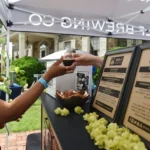
With a beautiful lawn venue in front of the Cocoa Beanery cafe, where Milton Hershey’s cows once enjoyed pastured meals, the Farmers Market in Hershey is charming and deliciously eclectic. The producers-only market offers fresh-grown, organic vegetables, honey, wine, hot sauces, and, sometimes, even opportunities to adopt a pet through the Humane Society, which will be at the market on Sept 12.

Wohlfarth encourages people to attend the farmers’ market to support the local economy and greater Harrisburg communities. “As people support the local economy, it will make us more community-minded,” she explains. “Supporting your local farmer at a farmers’ market brings back a sense of community that I think we lost.”

This market also offers healthy living workshops that sometimes include free healthcare screenings or instructional workshops on gardening—added bonuses of shopping locally. Stick around after the market each week for live music as part of the summer concert series.

Farmers on Walnut

2145 Walnut St., Camp Hill

Thursdays, 3 p.m. to 7 p.m.

www.farmersonwalnut.org

Arranged in the Camp Hill Borough Building’s parking lot, Farmers on Walnut is a producers-only farmers’ market operated by participating farmers and volunteer staff. This market showcases a large, beautiful selection of locally grown produce and greens, as well as meat, charcuterie and dairy, all grown, raised and produced within 50 miles from the market.

“I think the quality of the food that you get locally far surpasses what you can get at the grocery store,” says Monica Rhodes, market manager. “There exists out there beyond the grocery store world a huge variety of heirloom vegetables and fruit that are, in my opinion, far superior to what you buy at grocery stores. [All of the produce] here is picked when it is ripe. And the meat and dairy farmers go to great lengths not to use GMO (genetically modified organism) feeds.”

You will also find delicious breads and fruits at this market. Be sure to check out Farmers on Walnut’s Facebook page to see what days you can purchase flour, cornmeal, rolled oats, baked goods, vinegar, canned goods, soups, maple syrup, honey and shagbark hickory and to get information about its upcoming special events, like a salsa-making demonstration and backyard tomato tasting.

Summer Market Days

Many people find a trip to the local farmers’ market to be an enjoyable outing in itself. There are, however, ways to make it an even richer experience.

Make it a date

Fresh food, vibrant flowers, sweet treats, music and community all make farmers’ markets a great place to go on a not-so-typical date.

Stop in at Farmers on Walnut for some snacks and flowers for your love. You won’t want to miss Roots Cut Flower Farm to pick up gorgeous, vivid floral arrangements. Then, stay in Camp Hill for the evening to enjoy dinner. Be sure to check out Fraiche, a farm-to-table restaurant just in front of the market, whose chefs often stop by for some fresh, local food for their mouth-watering recipes.

Plan a date at Hershey Market where you can sip Cocoa Beanery’s coffee while perusing the wide array of market vendors or people watch from the coffee shop’s porch. Then, stick around to enjoy live music on the lawn during the summer concert series. Bring a cooler with you to keep your market purchases fresh after you shop and be sure to pack chairs or blankets.

For the foodie-loving couple, hang out at Farmers on the Square to catch cooking demonstrations, after which you can often sample what was prepared. As a couple, learn how to cook up that bok choy you are intrigued by, but may be a little intimidated, to purchase.

Look for Mountainside Supper Club at Farmers on the Square and Farmers on Walnut, where you can order artisan, farm-to-table meals for a bite to eat with your casual market stroll, without having to worry about planning dinner later. Be sure to try Executive Chef Steve Dunlap’s variety of chilled soups this summer.

Bring the kids

Farmers’ markets aren’t just fun for adults. The festival-feel of markets provides a perfect atmosphere for kids. All of these markets have plenty of activities and treats that will delight your little ones, while you shop to stock your kitchen.

Be on the lookout for some homemade baked goods and ice cream. A must-try for the kiddos, and ahem, the big kids, is Sunset Valley Farm’s vanilla ice cream. This Ickesburg (Perry County) farm handcrafts its decadent treats with raw milk and does not use any artificial ingredients or preservatives. Grab a scoop at Farmers on the Square and Farmers on Walnut.

Your little ones can have their faces painted at several of the markets, including Farmers on the Square, Farmers on Walnut and the Farmers Market in Hershey.

At Farmers on the Square, children can enjoy cooking demonstrations and hands-on classes, as well as kids’ activities presented by the Carlisle Arts Learning Center.

Save the date of July 11, when the Farmers Market in Hershey will host a smoothie sampling, Hershey Library story time and a concert featuring Mr. Music for kids.

Be sure to check out each market’s website or Facebook page for more kids’ activities.

Eat while you shop

Many vendors offer treats that you can enjoy while perusing each market. Grab a cold drink or cookie at Cool Beans CSA—which also offers micro-greens, eggs, salad greens and vegetable and herb plants for purchase—at Farmers in the Square. Pick up a fresh, crisp treat from Three Springs Fruit Farm, which brings crate-loads of beautiful apples to Farmers on the Square and Farmers on Walnut.

Quite a few of the vendors also offer taste tests of their market treats. One of them is FreshaPeel Hummus!, which makes from-scratch guacamole and hummus in delicious varieties like lemon kale, jalapeno lime and summer pumpkin. Check them out at the PA Farmers Open Air Market, Farmers on the Square and the Farmers Market in Hershey. Be sure to swing by Lark Rise Farm at Farmers on the Square and Farmers on Walnut to sample artisan breads like onion rye and spinach basil pesto ciabatta. Also check out Perry County Land and Cattle’s breads at the PA Farmers Open Air Market, Farmers on the Square and Farmers on Walnut. At these markets, you can sample delightful varieties like kalamata olive, pumpernickel raisin and fig anise.

Keep your eyes peeled at each market for additional goodies that you can sample.

Get connected

A great to way stay up-to-date on what each farmers’ market has to offer every week is to “like” them on Facebook or follow them on Twitter. Special events and vendor information can change just a few days ahead of time. And many of the vendors are not at market every week and instead come every other week or once a month.

Getting connected online also allows market-goers to connect with the farmers and producers themselves to get to know them further and to learn more about their farming practices and handmade techniques. Farmers’ markets and their respective social networks are great venues to network with like-minded local foodies.


 

Continue Reading

Art+Nature, 2 Decades Old: This month, help celebrate the anniversary of the Ned Smith Center.

An artist, naturalist, educator who wrote the column “Gone for the Day” for the Pennsylvania Game Commission? If you answered Jeopardy-style, “Who is Ned Smith,” you’d be correct. This year marks the 20th anniversary of the Ned Smith Center, founded in 1993 to celebrate the life and the legacy of nationally recognized wildlife artist, naturalist and writer, Ned Smith.

“Ned Smith created thousands of drawings and paintings of wildlife based on his long hours exploring and chronicling what he saw in the rivers and creeks and along the back roads and trails of Pennsylvania,” Steve Quigley, the Center’s executive director, explained.

“These adventures led to a storied relationship with the Pennsylvania Game Commission, where Ned served as staff illustrator. His art appeared on more than 120 issues of Pennsylvania Game News magazine, and his column, “Gone for the Day,” became one of the magazine’s most beloved features, and has morphed into a popular book of the same name.”

The Center, the ultimate homage to Smith, is 30 minutes north from the clatter of Harrisburg, but seemingly a world apart, offering a tranquil outdoor experience on more than 500 acres of rustic beauty. With 12 miles of trails and stunning views of the river from the mountaintop, the land is home to the variety of wildlife Ned Smith immortalized—namely, deer, bear, wild turkey, grouse, fox.

To celebrate the anniversary and the legacy of Smith, the Ned Smith Center Nature and Arts Festival will be held on July 27 at MYO Park in Millersburg. It will boast 70-plus programs covering a huge range of topics and an extensive lineup of arts, crafts and food vendors. Best of all, this family-oriented event is free to the public. I asked John D. Laskowski, also known as “The Mothman,” about this year’s highlights.

“Music this year will be provided by Lonesome Meadow, an award-winning bluegrass band out of Ohio,” Laskowski said.  “And we’ll feature programs on owls, honeybees, butterflies, native plants, natural history and some great dog programs, including the nationally recognized disc dogs, the Summit Search and Rescue bloodhounds and the Susquehanna Service Dogs.”

Rita Gahres, a long-time volunteer, coordinates the youth activities at the festival.  “The Youth Pavilion will be in full swing,” Gahres said.  “We’ll have fish print T-shirts, face painting and a visit from Smokey Bear. Also, families can walk among live butterflies fluttering about in an incredible exhibit from Folk’s Family Farm out of Luzerne County.”

But when it comes to family-friendly activities, the Youth Pavilion is really just the beginning.  “Almost all of the programs and activities are great for all ages,” Gahres continued, “giving everyone something to discover. For example, the main stage will feature a kids-friendly presentation by one of the community’s favorites, ZooAmerica.”

During the festival, a free shuttle will be available to transport attendees between the festival site at MYO Park and the Ned Smith Center, said Quigley. Programs at the Center this year will include special hummingbird banding demonstrations by naturalist and author Scott Weidensaul and a free tour of the Center’s two galleries.

If you prefer your transportation more old-timey, two ferries—the Roaring Bull and the Falcon III—will traverse the Susquehanna River between Millersburg and Liverpool, offering passengers a leisurely sojourn across the river. These historic vessels, which operate May through October, are the only all-wooden, double-paddle, stern-wheel ferry boats left in the United States.

“Depending on river depth,” Laskowski said, “the ferries will be operating during the festival and will be home to four festival programs: Scott Weidensaul on ‘Birds of the Susquehanna,’ Terry Neumeyer on ‘Waterfowl of the Susquehanna,’ and live musical performances by The Rough Edges String Band and Sweet Life Music.”

“All of the programs,” Quigley added, “have the goal of bringing our audiences to the intersection of nature and the arts. The diversity of our programming extends the boundless curiosity of our namesake and represents the broad range of our stakeholders’ interests.”


Don Helin published his first thriller, “Thy Kingdom Come,” in 2009.  His second thriller, “Devil’s Den,” has been selected as a finalist in the Indie Book Awards. Don lives in central Pennsylvania. Contact him at www.donhelin.com.

GOING THERE

Ned Smith Center for Nature and Art

176 Water Company Rd., Millersburg

717-692-3699

www.nedsmithcenter.org

Gallery and Gift Shop Hours

Tuesday to Saturday, 10 a.m. to 4 p.m.

Office Hours: Monday to Friday, 8:30 a.m. to 4:30 p.m.


Ned Smith Center Nature and Arts Festival

July 27, 9 a.m. to 4 p.m.

Located at MYO Park, Route 147, Millersburg.

Free admission. Complete list of programs at www.nedsmithcenter.org.


Millersburg Ferry

www.millersburgferry.org

Check website for rates and hours.


Continue Reading

Dinner at Patsy’s: Where the meal is only part of the pleasure.

The next time you walk down the grocery store aisle that houses the familiar jarred spaghetti sauces, take a closer look. Lined up next to the Ragu, Newman’s Own, Emeril’s, Rao and Mario Batali might be jars of various Italian sauces that bear the name of “Patsy’s.” There’s marinara, puttanesca, basil, fra diablo, vodka, Amatriciana and pizzaiola, and they are relative newcomers to the shelves.

Most of you who have read this column over the years know that I value making food from scratch, especially pasta sauces. But a visit to a very famous New York City restaurant has convinced me that maybe (well, once in a while) pasta sauce from a jar may not be too bad.

Patsy’s is an iconic New York restaurant located in a bustling section of West 56th Street just off Broadway. Opened in 1944 by Italian immigrants Pasquale (Patsy) and Concetta Scognamillo, Patsy’s has been a comfortable haven and source of wonderful Italian food for generations of native New Yorkers, visitors to the Big Apple, sports figures, Broadway actors and showbiz celebrities. Patsy’s “Wall of Fame,” located at the front of the restaurant, is a collection of photos of the many celebrities that have visited and cherished Patsy’s over the years. The legendary crooner, Frank Sinatra, had his own table there and is still considered their most beloved patron.

I had the opportunity to eat at Patsy’s for a second time during an April visit to New York. The thought I had when entering the restaurant again was that this is the way an Italian restaurant should be: vibrant with the sound of happy voices, waiters conversing in Italian, beautiful dishes being hoisted high on their way from kitchen to table and, best of all, the delicious aroma of sautéed garlic, tomatoes and olive oil. 

We happened to be with a couple who know the current owner and head chef of Patsy’s, Joe Scognamillo. Joe is the grandson of the original Patsy who, with his brother, aunt, uncle, cousin, mother and father and, hopefully in the future, his two sons, oversees every aspect of the business. Joe is a happy and friendly man who made us feel at home right away. One can feel the love of family in this place.

It isn’t often I feel I could order almost everything on a restaurant menu—but such was the case at Patsy’s.

Seafood dishes abound: Chilean sea bass with eggplant and olives, striped bass with horseradish crust, prosciutto wrapped monkfish, salmon with herbs and shrimp with cognac and Dijon mustard. My husband relished his stuffed calamari, an Apulian dish that is often hard to find on restaurant menus. I had swordfish Arreganata, a sweet and succulent dish made with Sal’s seasoned breadcrumbs, which really make a difference in the recipe. Sal makes his breadcrumbs from leftover Italian bread grated in a food processor. But he says you can also use packaged breadcrumbs (about 2 cups) and add the following ingredients:

  • 2 tablespoons Parmesan cheese
  • ¼ cup minced parsley
  • Pinch of oregano
  • I minced garlic clove
  • 3 tablespoons olive oil
  • Salt and pepper to taste

Leftover breadcrumbs can be stored in the refrigerator for several days and can be used with chicken as well. Sal uses them on delicious baked clams that resemble clams casino. And I think they would be wonderful sprinkled on cooked vegetables like green beans or cauliflower. Whoever thought that one could get excited over breadcrumbs!

Now for the swordfish:

Patsy’s Swordfish Arreganata

  • Pre-heat the oven to 450 degrees.
  • Place 4 swordfish steaks in a shallow baking dish and season them with salt and pepper.
  • Dot the steaks with 1 tablespoon of butter cut into pieces, and then sprinkle with ¼ cup fresh lemon juice and paprika.
  • Add about ¼ cup water to the bottom of the baking dish and roast the fish for 15 to 17 minutes, being careful not to overcook.
  • Remove the fish from the oven and turn on the broiler.
  • Spread 2 tablespoons of the seasoned bread crumbs over each piece of fish and drizzle with olive oil.
  • Broil for 2 or 3 minutes until the crumbs are lightly browned.

Serve the fish with asparagus or broccoli or a fresh tomato salad and a crisp, cold Pinot Grigio.

When our dinner at Patsy’s was nearing its end, Sal presented each couple at the table with an autographed copy of “Patsy’s Cookbook” and a jar of Patsy’s sauce. I will always remember his kind smile and his wish for “happy cooking.”

The real reason I am writing about Patsy’s this month is not about swordfish or tomato sauce. It’s to share with you again what Italian cooking means to so many: love of food, love of life, hospitality and, most importantly, sharing all of this with family and friends.

Here’s to Sal. Buon appetito!

Continue Reading

A Legend Visits: Guitar god Jorma Kaukonen makes a stop in Harrisburg.

Veteran rocker and blues guitarist Jorma Kaukonen has had the kind of career that most musicians only dream about.

He was part of the early ‘60s San Francisco folk and blues music scene where he jammed with the likes of Jerry Garcia and Janis Joplin. He was the lead guitarist for Jefferson Airplane, a rock band best known for the hits “Somebody to Love” and “White Rabbit.” He was inducted into the Rock and Roll Hall of Fame. And he founded the legendary band Hot Tuna—still touring after 40 years.

Now 73 years old, Kaukonen doesn’t show any signs of slowing down. One of his newest projects is a music instruction camp—The Fur Peace Ranch, which he runs along with his wife Vanessa. Situated in beautiful rural Ohio, the camp provides a unique opportunity for aspiring musicians to learn from him as well as a team of prestigious musicians, which this season includes Happy Traum, Patty Larkin, Chris Smither and Rory Block.

During the next couple of months, Kaukonen has a heavy touring schedule, playing 25 gigs in cities along the East Coast as a solo artist or with Hot Tuna. He’ll be making a stop in Harrisburg, where he’ll play a concert with the band at Whitaker Center on July 26.

I had a chance to speak to Jorma Kaukonen recently about the upcoming Whitaker Center concert, his musical influences and the Fur Peace Ranch.

TheBurg: Hot Tuna has been around for so long that I’m sure that many people in our area are familiar with your music, but, for the uninitiated, what would they expect to hear at a Hot Tuna concert?

Kaukonen: Our style is extremely fundamental—roots, Americana music. We’re not a straight blues band. We’re really not a straight anything band, but the blues is an incredibly powerful muse for us. I’m fond of gospel music, so there are some spiritual songs involved, as well as songs that I have written. Our bass player is Jack Casady, of course, who I’ve played with for many years. So, what you’re going to get is a cross-section of stuff that Jack and I have been doing for the better part of our life really. We also have Barry Mitterhoff, who’s a great mandolin player. He plays an electric mandolin, which is a little bit of an odd instrument to begin with, and he’s a master—the best that I know.

I think what Jack and my buddies and I bring to the table is a test of time rather than a specific style of music. We play the music that we love and have loved for a number of years, but it has evolved. We don’t constantly have to re-create ourselves in a moment in time.

TheBurg: You have a lot Hot Tuna music available on your site. Would you recommend that people take a listen to those before attending?

Kaukonen: We have a large body of work, and it’s great if people are familiar with it. I think they’d be happy going in cold—obviously we’d be thrilled if they listened to some of our download or some of our YouTube stuff.

TheBurg: I’ve read that the music of the Rev. Gary Davis has been very influential for you. Who was he, and why was he so significant?

Kaukonen: In my opinion, Rev. Gary Davis is one of the most important figures of 20th century American music for a number of reasons. One of them was as a guitarist. His style was incredibly complete. He was able to re-create on the guitar what you would hear on the left hand and the right hand of the piano. He was also such a lover of life—even when he sang a song like “Death Don’t Have No Mercy,” there is always a hint of redemption at the end of the road. For people who are interested in guitar and songwriting and stuff like that, he’s a “must listen.”

TheBurg: The Fur Peace Ranch sounds like a terrific place to go and immerse oneself in music. What’s it like?

Kaukonen: We have fabulous instructors, great concerts and all that kind of stuff, but almost more important than all that is the atmosphere. The Fur Peace Ranch is on a 123-acre farm surrounded by other farms. You get there on a single lane dirt road. We have our 200-seat theater—we have cabins for people who are staying there—but we’re not hooked up to TV. People are there to create that musical community that is so important to all of us—and it seems to happen every single weekend.

It’s been really important for us to make the learning process unintimidating—people can come and play at any level really. And it’s not just guitar. We have classes in bass, lap steel guitar, you name it. In my opinion, there is no better way to communicate than through music, and that’s what happens at the ranch.

TheBurg: Anything crucial that I missed?

Kaukonen: I’d just like to encourage people to come and hear us play. Hot Tuna is so fortunate. We’ve been around a long time, as you know. But our fans—God bless them—have allowed us to change and encouraged us to expand. It’s been an unbelievable run.

Jorma Kaukonen will play Whitaker Center on Friday, July 26. Tickets are available online at www.whitakercenter.org or by calling 717-214-2787.

To learn more about Hot Tuna, visit www.hottuna.com or www.youtube.com/user/FurPeaceRanch


Continue Reading

Milk Matters: Are “health milk” alternatives good for your young child?

“It does a body good…”

The 1-year well-child visit is typically when parents ask about the transition to cow’s milk. At this point, most children are getting the majority of their calories from table food. They typically have reduced the amount of formula or breast milk they are taking. Breastfeeding is encouraged for as long as mutually desirable by mother and baby. However, even breastfeeding mothers have usually considered the next step in terms of a milk source.

Transitioning to cow’s milk is not as straightforward as it used to be. At the grocery store, one may be faced with a dizzying array of what are termed, “health food milk alternatives.” These include soy milk, almond milk, rice milk and oat milk. In some cases, children with food allergies must utilize these products. However, I have many parents with a personal preference to avoid the use of traditional cow’s milk who inquire about alternate milk options.

Everyone knows that cow’s milk provides calcium. To be more precise, an 8-ounce glass of milk provides 300 milligrams of calcium. Calcium is important for bone health but also for teeth and muscles. It may play a role in maintaining blood pressure and body fat. Current recommendations are for toddlers (1 to 3 years old) to get 700 milligrams per day of calcium. A toddler taking two cups of milk, plus some yogurt or cheese, will easily meet this requirement. Of course, calcium is found in other food sources aside from cow’s milk—for example, broccoli and collard greens. However, a 1-year-old is unlikely to eat the three-plus cups of broccoli required to meet the daily recommended intake.

Cow’s milk is fortified with vitamin D. Vitamin D works with calcium to maintain bone health, but low vitamin D levels have also been linked to cancer, diabetes, asthma and depression. Toddlers should get 600 international units (IU’s) of vitamin D daily, so children keeping under the maximum recommended 24 ounces of milk daily will still need supplementation. However, recent studies demonstrate children consuming milk regularly are less likely to be vitamin D deficient.

As long as they are enriched products, soy, rice, oat and almond milk may have comparable calcium and vitamin D levels to cow’s milk. Brands vary significantly, so it is very important for parents to read product labels to be sure the amount of calcium and vitamin D is adequate.

The major area where health milk alternatives fall short is in protein content. An 8-ounce glass of milk provides 8 grams of protein. Almond and rice milk typically provide only 1 gram of protein per 8-ounce serving.  Oat milk usually has 4 grams of protein per cup. Soy milk comes closest to cow’s milk and usually provides 7 grams of protein per cup.

The American Academy of Pediatrics recommends two 1-ounce servings from the protein group daily for toddlers. This is about the volume of one-half an egg or 2 tablespoons of ground meat. This protein recommendation is in addition to the 2 to 3 daily servings of dairy recommended. Thus, use of an alternate milk source may leave a toddler’s diet poor in protein, especially a picky toddler who is not consistently consuming recommended amounts of protein.

My general advice for parents considering an alternate milk option is to do their research and read product labels. A product labeled “healthy” or “organic” or sold in a health food store is not automatically appropriate for children. Many “health milk” alternatives are marketed as being lower in fat and calories than cow’s milk. Though this may be appealing for adults, it is rare that I restrict calories in a 1-year-old.

Soy milk, in particular, has been used extensively as a cow’s milk alternative. Many enriched soy milk brands are available with nutritional profiles comparable to cow’s milk.

Parents often inquire about “health milk” alternatives as they clearly want to make the best choices for their children among an ever-expanding number of milk options. It may be that, down the line, additional product development will make some of these health milk alternatives more appropriate for younger children, but, at this time, many of them are not ideal for toddlers weaning off formula and breast milk. Milk “does a body good,” but can only do so for our little one’s bodies if it has the necessary vitamins and minerals to best support their continued growth and development.

Dr. Deepa Sekhar is a pediatrician at the Milton S. Hershey Medical Center.

Continue Reading

Coming to HBG: Americana, the Beautiful

Americana ambassadors fill up the calendar for the celebration of our country’s birth month. I’ve decided to extend it beyond the weekend. Joining us in July is Pokey Lafarge’s old-time sensibilities; the Harrisburg Symphony’s annual Negley Park concert that gives proof that our flag is still there; and Glenn Jones’ steel-string guitar picking, which will deliver the ruminative sides of the American folk experience. Each will aim to penetrate the rambling tale of America, albeit in a variety of ways and means.

Glenn Jones, Sanctuary (Second City Church), July 5

Glenn Jones is categorized under the American Primitivism category, a style most easily understood as the solo guitar genre that plays with melding instrumental guitar with blues, country and classical music. John Fahey was its founder and Jones, his favorite son and the successor to his untimely death.

Jones makes Harrisburg a dutiful stop along his show route, and, if you’re into this recipe of experimental, folk, guitar-based music, Jones is like the Phillip Glass of this approach. Meditative, nuanced repetition and a toying with maximalism and minimalism dominate his vocal-less tunes. He’s been highlighted on NPR’s Tiny Desk Concert series and in the Washington Post due to his mindful and moving musical stories that are dense and deliberate—the stuff of real artistry.

The Harrisburg Symphony Orchestra, Negley Park (Lemoyne), July 6

Stuart Malina and the Harrisburg Symphony Orchestra donate their talents and fanfare for the common man by performing a compilation of classical Fourth of July sounds in Negley Park. Bring a blanket, some friends and family and come ready for Copland, Sousa and, of course, our adopted favorite, Tchaikovsky’s “1812 Overture,” a song about Russia’s defense against Napoleon’s army. Don’t forget the sparklers when the latter composition reaches its climax.

Pokey LaFarge, Stage on Herr, July 26

Pokey LaFarge, a St. Louis-based artist, is a multi-genre genius and dips his creative, musical toes across the American roots. Blues, ragtime, early jazz and western swing are all present in his four-album career. Last month, he released his self-entitled album on Third Man Records, Jack White’s label, and recently collaborated with White on his album, “Blunderbluss,” while also being featured on HBO’s acclaimed show, “Boardwalk Empire.” Pokey’s reputation is rising and is a fresh pick if you like music that sounds as if it might be coming from a bygone era.

Mentionables:

July 8, The Mantles, MakeSpace, 8 p.m.

July 25, Joy Ike, Stage on Herr, TBA

July 27, Larry & His Flask, FedLive, 8 p.m.

Continue Reading

Shoo! You can deter critters without harming them.

Many of us go to great lengths to attract wildlife to our backyards. Bird feeders and birdseeds alone account for many millions of retail dollars each year, all so we can enjoy the antics of a variety of colorful birds from our kitchen window, porch or patio. The squirrels that end up figuring out even the most squirrel-proof feeders amuse us with their antics, and, although we end up sharing much of our garden with rabbits and groundhogs, these, too, provide us with a sense of getting back to nature.

On the other hand, if you feel your property is absolutely overrun with wildlife—you’re fed up with losing valuable shrubs, flowers vegetables and have even suffered property damage because of the critters—there is help. The wildlife repellent industry has flourished catering to homeowners, farmers and gardeners who have finally had enough. Whether you live in a city, suburb or small town, you can be sure that there is wildlife nearby. Many species of wildlife are welcome visitors to our properties, but some individuals quickly wear out their welcome. Preventing problems with wildlife is much simpler and less aggravating than dealing with problems after they occur. Fortunately, knowing some basic facts about wildlife and taking a few simple steps can help you prevent many of the most common wildlife-related problems.

The first step is to properly identify the animal that is causing the damage. Many times, the animal in question will be nocturnal, like a skunk or raccoon, and will only leave tracks or scat as clues. If you are still unsure, having a wildlife control professional visit your property might be the answer. He will not only be able to identify the problem, but will tell you how to get rid of it.

Obviously, there is a big difference in how you deal with different animals. Burrowing moles, browsing whitetail deer and marauding black bears require specific tactics. Using the proper deterrent is key to solving the problem.

Perhaps your first tactic should be proper management of attractants in your environment. Bird feeders, for example, attract a lot more than birds. From squirrels, rabbits and groundhogs to deer and bears—few animals will pass up such a backyard smorgasbord. Birdbaths and water features, too, especially during hot, dry periods, will draw all kinds of wildlife.

Plants in your landscape can either attract or discourage wildlife as well. Herbivores like rabbits, groundhogs and deer regularly feed on home landscapes. You can still have lush and colorful gardens, however, by choosing resistant plants. Local garden shops and nurseries will have lists of plants that are unattractive to wildlife, from annuals to perennials to woody plants and trees. Remember, though, that in times of stress or when other food is not available, deer will eat just about anything.

Taste repellents usually cause pain or discomfort in the mouth or intestines and lead wildlife to develop a conditioned aversion to the product. They include products containing hot peppers or ammonia, or bad-tasting chemicals such as Thiram, an extremely bitter-tasting fungicide.

Some repellents use odors to repel wildlife. They produce sulfurous odors like putrefied eggs, blood meal, meat proteins, garlic and predator urine. Homeowners must decide if the foul odors of the repellents are worse than the marauding wildlife. These deterrents will be applied directly to the plants being ingested.

For whitetail deer, especially, you may have to cover a very large area. Repellents can be quite expensive and labor-intensive but can be effective if used properly and according to directions. They cannot be guaranteed due to the weather, time restraints and the application rate. They generally affect several senses—taste, smell and/or touch. Homeowners, orchard owners or commercial landscapers have several things to consider. How many trees or shrubs do I want to protect? Is cost a factor? Do I have the time to apply and re-apply properly? Will I be satisfied with mixed results?

Black bears are much more difficult to dissuade. Especially in the spring, when emerging from the den, they are hungry and will eat anything. Young bears, particularly young males, leave the mother and strike out on their own, often causing trouble with humans. They are looking for a place to live and hunt and, when they find a ready food source, they stick around—whether it’s a farmer’s cornfield, beehives, an orchard or a backyard in a development. Birdfeeders are bear magnets, as are dog or cat food dishes or charcoal or gas grills with a build-up of grease. Keeping food sources out of sight or reach, placing garbage out only on the day of pick-up and keeping dumpsters closed will lessen bear problems.

For any problems, see your local garden shop, Agway or farm center for help. Most have shelves full of deterrents to keep your property free of hungry wildlife, generally without harming or killing them. Follow directions for best results and be sure to reapply when necessary.

Continue Reading