A Call to Oms: After much searching, a couple finds their purpose in Yoga Nature.

TheBurg_yogaMisha Kaschock and Sara Rose Bryant separately point out that Yoga means “yoked” or “union,” a well-suited mantra for the meditative practice they both teach. Yet, the union between the two was not a bond supernaturally formed, rather a joining many years in the making.

Misha is a Camp Hill native, graduating from East Pennsboro. He has long (almost-down-to-his-tush long) salt-and-peppered hair, wears almost a permanent smile and a 5 o’clock shadow and walks with a clear bounce in his step. Everything seems to flow with Misha. When you first look at him, he could be a yogi, an artist or a soccer player. And true to form, he is and was.

He doesn’t come from a family of dancers, but his older sisters and older brother both fell into the performance art, as did he.

“I loved it at as a kid, but, from the ages of 7 to 16, I wanted to quit every other day. I also played soccer.”

He wasn’t sure what he wanted to do after high school, so the natural inclination was to continue with his practiced artistry, enrolling at Ohio State University to study dance.

“The story of the youngest child, sometimes, is chasing everyone’s coattails. But I started to become my own man, and in college, that’s where I took my first yoga class. I started off with ashtanga, a specific form of yoga, that is more set, like dance.”

After graduating from college, Misha moved deeper into the Midwest to Chicago, still dancing, but also picking up the time-honored carpentry trade, first working on sets then in woodshops, even securing a position with the Steppenwolf Theater Company. He got the moving itch again, and packed up his clothes and a bicycle—“all I had”—and flew to Seattle.

There, he continued his work as a professional dancer, working in the Scott/Powell Performance Company, and choreographed his own shows, while also finding work with “a ragtag group of guys” led by an eccentric general contractor who “taught me by not teaching me anything,” said Misha. “He would just say, ‘You’ve seen me do this, go for it.’”

During his stint in Seattle, he practiced at Samadhi Yoga, a place he identified as a second home, his teacher a former dancer, who truly understood how and why the yoga practice was attractive to the ever-externalizing dance professionals. She helped direct Misha to take a 200-hour certification class so that he could teach, a badge that would become quite utilitarian.

***

Sara Rose Bryant is a Seattle native, her grandfather the founder and owner of the touristy and legendary Emmett Watson’s Oyster Bar in Pike Place Market. Sara described her upbringing as “tumultuous,” living with a set of alcoholic parents. It’s also a true survivor story, her best friend, younger brother, mom and dad all passing away by the time she was 24.

Sara was considered a misfit in high school due to her absenteeism, a false designation caused by the troubled familial relationships. Leaving home and living with a friend’s family during these years, she began supporting herself in high school, working at the Oyster Bar, but all along knew she had to finish her degree or would be stuck serving seafood for a long time.

She entered the Running Start program, a reciprocal agreement with the local community college and her high school, whereby college credits counted as two high school classes. She took yoga for her PE credit.

“I felt like it was the first time I breathed…and I could create some sort of toolbox for how to deal with the things that were going on with me,” says Sara.

Like Misha, her yoga teacher influenced her future. For Sara, this yogi also was a massage therapist, a vocational pursuit she was taken by.  It’s also something that she had had experience with, on the receiving end.

“When I was 14 or 15, my boyfriend got me a massage for my birthday. Mike Nelson was a good one,” she chuckled, referring to her adolescent sweetheart

Ultimately, she graduated high school, but was left with a conundrum: finance herself through college or become a massage therapist.

Ever the pragmatist, she went on to study at the Brenneke School of Massage. There she found a lifelong passion of healing, yet massage therapy never truly became her only job. She bounced between jobs as a medical receptionist and in the occupational therapy field, helped managed the wellness center at the well-regarded Washington Athletic Club, what she called, “a country club in the middle of Seattle,” and even went on a European tour with the super-group, Audioslave, acting as their in-house massage therapist. All of these gigs, however, seemed like the perfect convergence of skills for what was to come.

Misha and Sara point to a meditative retreat in the San Juan Islands in Puget Sound as the mystical start to their relationship, but it was a bartering deal, a transaction, that solidified their bond.

“She needed a set of bars to do ashiatsu, which is a form of massage that she does with her feet, and I needed a massage, because I was a carpenter and dancer, so we traded,” said Misha.

The rest was history, until, a few months into their relationship, Misha suffered a back injury during a construction job. Without work and unable to afford rent, he went on a sojourn for a few weeks, inching his way across America until settling into his parents home and finding odd jobs around Harrisburg.

Sara, meanwhile, was ready to make a significant move away from her hometown of Seattle.

“It was L.A., Portland or Hawaii, all considerably more sunny than Seattle,” she says.

“Harrisburg is never a place I knew existed. My great-grandmother lived in St. Louis, but I had never been to Pennsylvania.”

Harrisburg and Misha, however, won out on the location lottery. They both began teaching out of Keystone Yoga, the current location of their studio. At the time, it was owned by Joanne Gallagher. The day Joanne met Sara, she disclosed to both of them that her husband had been diagnosed with terminal cancer.

“For me, it was really hard and brought up my own fears about cancer. But also, I felt really equipped, and that there was a reason for this.”

About five months after Sara’s arrival on the “right coast” and the day after her birthday, Aug. 29, Joanne approached them. She was having difficulty taking care of her very ill husband and keeping her young business afloat.

“I could close the studio and sell it or give it to you two.”

They took two weeks to decide, but, ultimately, this was a dream come true for both of them, even given the circumstances of being recently uprooted and the tragic reason for this conveyance.

***

Linglestown Road is the obvious suburban strip-mall commuter route, the typical specialty doctor’s offices, the grocery stores, the unnamed warehouses. Three miles into the drive, you will come upon one of those nondescript buildings where Yoga Nature, formerly Keystone Yoga, is housed. Inside, however, is a different environment.

After the keys were handed to Sara and Misha, they went right to work, trying to use a family’s micro-loan ever so carefully. A little over a year into the venture, a reception space was created, a wall put up between the studio and foyer, bamboo floors were installed, faux Japanese lanterns grace the rafters and two gorgeous reclaimed wooden logs were stripped, washed and set, a hallmark of Misha’s handiwork.

Yet, they were struggling, financially and in their relationship.

“Joann always told us if the studio were to ever negatively affect our relationship, she doesn’t want us to do it anymore,” Misha said. “The most profound move we ever made as business owners was to ask for help.”

It came in the form of a business consultant in Nicholas Banting, a yoga enthusiast and strategist for Freefall Creative, and a local media/account strategist from JPL, Lara Colestock. Misha and Sara all but called them “angels.” They revamped their branding, moving their name from Keystone Yoga to Yoga Nature, helped them financially plan for the present and future and breathed life into their Web and social media presence. Their plea for assistance has paid off.

“Even with all these expenditures…we’re still in the black,” says Misha. “Yoga sells itself…basically, like 85 to 90 percent of referrals come from word of mouth.”

This kind of steady growth is allowing them to expand classes and workshops methodically and truly grow into a more integrative wellness center.

Down the road, they hope to add on an additional studio to focus on kids, bringing in school and church groups, to effect change at the root buds, said Sara. “I think energetically we have more of a return now,” providing us the enterprising spirit to do even more.

Their Yin and Yang skills are slowly breathing life not only into their students but the business and their relationship, truly living up to the Sanskrit definition of yoga, “union.”


Yoga Nature

4400 Linglestown Rd., Harrisburg

For class times, rates and services, visit www.yoganaturelife.com

Phone: 717-695-7101

Email: [email protected]

A free community class for beginners is held each Saturday, 9 a.m. to 10 a.m.

Continue Reading

Save the Cynicism: Harrisburg needs doers, not critics.

If you read or watch the local and national press, it is hard not to be a cynic. Our public discourse, like our politics, is polarized and often even shrill. On the rare occasion that I turn on Fox News or read the editorials in the Wall Street Journal, I am amazed at what appears to be a different reality from my daily copy of the New York Times or National Public Radio show, let alone my favorites, Lawrence O’Donnell and Rachel Maddow on MSNBC.

The cynic assumes that narrow self-interest drives all discourse. There is no objective “truth” in government, the cynic says, just a policy that helps or hurts my party or interest group or my personal finances. Thus, members of the state legislature or Congress cannot or will not break with leadership to vote for a bill proposed by the leader of the “opposition” party, even though a substantially similar bill supported by their party would gain overwhelming support. The recent failure of important bills on the state and federal level are evidence of this.

We are too often afraid to grant our “adversary” or really anyone who may disagree with us the basic courtesy of believing that their policy view is based on broad good intentions instead of only narrow personal benefit. The problem with distrusting intentions—beyond bad social manners of course—is that it provides an easy excuse to stop listening altogether.

I believe that this cynicism, particularly on a local level, is misplaced. In order to move our community forward, we need the honest and open participation of all stakeholders. Political labels or differences are unimportant to helping our city and region. Urban or suburban, liberal or conservative, we all have the responsibility to help our city move forward and be successful, and we all benefit from or are impacted by such success or failure. The perception and indeed the reality of our capital city is something that affects all of us in the region.

I am aware that my other business interest in real estate through WCI Partners leads some to believe that my political advocacy as chair of the Harrisburg Capital PAC is merely financially motivated and thus unworthy of support, as recent public arguments with the Patriot News have demonstrated.  

This viewpoint is wrong on two levels. First, we need more, not fewer, investors and stakeholders in the city who have a deep financial commitment to improving life here. As a community overall, we should want to attract more investors who want to build their business and real estate holdings in the city instead of somewhere else. Our population decline from almost 100,000 in 1950 to less than 50,000 today shows that we have lost many of those stakeholders and that we need them back. We should welcome any new business owner or resident who wants to join us in Harrisburg, while acknowledging that they are not likely to do so if it is not in their financial self-interest. The costs of municipal government will only continue to increase over time, and, if we don’t grow our economic base to pay for it by incentivizing new investment today through tools like tax abatement (which actually increases municipal revenues), our fiscal problems will continue long into the future.

On another level, however, I know that there are many business and community people who want to build Harrisburg, regardless of their personal financial situation. The co-members of the PAC are a terrific example. For many of them, Harrisburg is a place where they, like me, spend their financial resources, not where they make them. There are numerous successful people from throughout the region who want to see Harrisburg adopt best practices that are successful in other cities.  It is not because of any personal financial stake, but because they know that we all do better if Harrisburg does better.

So, save the cynicism, if you must, for national issues, but put it aside on the local level. Our city needs anyone who is willing to help, for whatever reason, to bring our city back. We need enlightened self-interest and, yes, even plain old self-interest, if we want to rebuild our city. Let’s put in place policies that will attract them.

J. Alex Hartzler is publisher of TheBurg.

Continue Reading

Dropout Warriors: At CISPA, the offices may be new, but the mission remains unchanged.

TheBurg_doing_good“Good space can bring energy to people,” says Nathan Mains.

“It is certainly an improvement,” adds Jane Hess, indicating her understatement with a smile.

They’re talking about the brand new office space for Community in Schools Pennsylvania (CISPA), where Mains serves as president and director and Hess as executive director, Capital Region.

Incorporating repurposed wood, chic urban concrete architectural elements and strategic lighting, the office is a far cry from the cubicles and florescent ceiling lights of the organization’s former downtown home.

We’re in the meeting room of the Front Street building, which has a gorgeous view of the Susquehanna River. Mains and Hess believe the new office, which opened April 29, will help the organization in its mission—reducing the too-high dropout rate of the state’s schoolchildren.

“We want our employees to want to come to work in the morning,” says Mains. “The folks who work here could go anywhere, they are all talented. So, if we are going to retain our quality people, we have to consider the work environment.”

Beyond providing comfortable workspace for the organization, the new office enfolds powerful networking technology that lets Mains easily coordinate with the six service regions across Pennsylvania under his watch. And, as he points out, a working knowledge of network technology allowed him to lower the costs of installation and save money in the long run by limiting the expense of transportation and printing.

Education Is the Key

Mains has spent more than 20 years working in the non-profit sector. The majority of his experience comes from work within the health industry. In his previous positions, Mains worked to fundraise for worthy causes, such as the March of Dimes and the American Lung Association, and increase awareness concerning the importance of such work.

Mains also is committed to Harrisburg. He has called the city home since graduating from Lebanon Valley College. Upon seeing an exciting new opportunity to do important work in his adoptive home, Mains made the natural transition from health to education.

As we talk, I am struck by Mains’ ability to represent the importance of CISPA’s mission while simultaneously being affable. On a number of occasions, our conversation was sidetracked as he asked me about my own experiences within education.

“Education is the key to everything,” says Mains. “We want to bring about change for the kids that we serve. It’s not just the important work that we do in the schools, but we also have to look at policy changes that need to occur, and we have to expand awareness about the importance of keeping kids in school.”

CISPA is part of the larger Community in Schools network, which is the nation’s largest dropout prevention organization. When schools (such as John Harris High School) request assistance from CISPA, a site coordinator is assigned to the school. Tasked with evaluating the diverse needs of at-risk students, coordinators develop an action plan, put together a team and then leverage funds and material support from various sources to provide students with the attention that they need to stay in school.

As Hess states, “it is important to find the gaps, to see how student needs are not being met. For each individual student, these gaps can be different. Some need to be connected with food banks, others English language tutors. Sometimes, we coordinate services for the student’s entire family by setting up parenting classes or organizing transportation. Other times, helping a student is as easy as providing him or her with an alarm clock.”

I met separately with Caryn Watson, state Rep. Patty Kim’s legislative assistant, who formerly served as the site coordinator for John Harris High School.

“Our job was to come up with plans for individuals and for the community,” says Watson.

Watson maintained a caseload of students with whom she worked regularly. This involved developing an “Individualized Service Plan,” which addressed the specific problems that certain students faced. She also coordinated with the school’s faculty and counseling staff to make sure CISPA programming was as effective as possible. Additionally, she helped to develop school-wide programs. Her team offered FAFSA and college application workshops, along with SAT test preparation. Furthermore, Watson oversaw service learning projects.

“We wanted to produce a ‘Survival Guide’ for incoming ninth-graders. We were able to create a pamphlet and a video that focus on what it takes to graduate. Both are still being used by the high school when new students arrive in the fall.”

Love for Their Work

“Every day is different, and I think that’s the appeal,” says Mains. “You can find yourself one day in a school, chatting with some of the kids. The next day, you find yourself in a meeting with high-level donors, business people and government officials, talking about the importance of the issue. Then, the next day, I get the opportunity to talk to a reporter.”

A passion for education is certainly a job requirement for Mains and Hess. Funding is always tight, and the availability of a single grant can determine if CISPA can maintain a presence in a school or not. Such is the case here in Harrisburg. A last-minute funding cut meant that a CISPA program had to be shut down at John Harris. Discouraged but not defeated, Hess is determined to return there.

“We are currently waiting to hear about our most recent grant application,” says Hess. “Hopefully, we can use that funding to re-enter Harrisburg schools.”

Despite the excitement she feels about the opening of the new office, Hess realizes what CISPA’s real purpose is. Without the funding necessary for the implementation of CISPA’s programs, the work that began in the Harrisburg’s schools cannot be resumed. She knows that attractive meeting rooms and networking technology mean little while students in the city continue to drop out.

For Mains, Hess and everyone else at CISPA, getting students to don a cap and gown at graduation is the ultimate prize.


Continue Reading

Community Corner: Area Events in August


Mark Brezler Memorial Auction and Reception

Aug 1: This charity auction will raise money for scholarships at Harrisburg University. Signed sports memorabilia, professional sporting event tickets and gift certificates from businesses and restaurants will be auctioned 5:30 p.m. to 8:30 p.m. at Harrisburg University. More information is at www.harrisburgu.com.


Ned Smith Center Golf Classic Fundraiser

Aug. 1: Support the Ned Smith Center for Nature and Art while playing golf at the Country Club of Harrisburg. Registration is $125 per golfer and $500 per foursome. Lunch and registration is at 11:30 a.m., the shotgun start is at 1 p.m. and the dinner reception and awards presentation is at 6 p.m. More information is at www.nedsmithcenter.org.


Cultural Fest

Aug. 2: The 6th Annual Cultural Fest, a free street festival on 2nd and Market streets, runs from 4:30 to 10 p.m. This festival celebrates the city’s diversity with food, crafts and music, including Central Pennsylvania Friends of Jazz, Rumba Con Son, Be’la Dona Band and Doug E. Fresh. More information is at Dauphin County’s website, dauphincounty.org, under the events tab.


King Center’s Health Fair and Community Day

Aug. 3: From 11 a.m. to 3 p.m., this fair will provide free health care information, education, testing and counseling. Also featured will be free music, food and refreshments. The fair is located at the King Center’s campus on S. 18th and Hanover streets.


AFRAM Celebration

Aug. 3: This fifth annual celebration will showcase African American businesses, entertainers and supporters. This event will be at the Pennsylvania Armory, 1400 Calder St., from noon to 4 p.m. More information at www.aframcelebration.com.


Central Dauphin Classic Car Show

Aug. 3: Enjoy classic cars, trucks and motorcycles at Central Dauphin High School from 10 a.m. to 2 p.m. At 1 p.m., vehicles will be awarded for best paint, best of show car, best of show truck, best of show motorcycle and a people’s choice award. More information, including car registration information, at www.carshowlink.com/August.html.


National Night Out

Aug. 6: Join your neighbors for National Night Out, which will be celebrated throughout Harrisburg beginning in the early evening. For details on your community’s events, check with your local citizens and neighborhood groups.


Fair Entry Fun Day

Aug. 7: Winters Heritage House Museum in Elizabethtown will hold its second annual Fair Entry Fun Day. Participating children, ages 10 through teens, can choose from several different historic crafts to create an item suitable for entry in the Elizabethtown Fair domestic exhibits competition. Winters Heritage House Museum is located at 47 E. High St. in Elizabethtown. More information is at 717-367-4672.


33rd Annual Central PA Jazz Festival

Aug. 8-11: Support local music and the Central PA friends of Jazz by attending one or all four of the events of the JazzFest. On Aug. 8, listen to the Dave Stahl Quintet from 5:30 to 9 p.m. on the Pride of the Susquehanna. Enjoy live music in downtown Harrisburg with Jazzwalk on Aug. 9. The Central PA Friends of Jazz Youth Band and the Dave Stahl Big Band will perform on Aug. 10 at a picnic at City Island from 2 to 7 p.m. On Aug. 11, enjoy the final event of the festival. More information can be found at www.friendsofjazz.org.


Keystone Cluster Dog Show

Aug. 9-11: See about 17,000 dogs compete in three events, Conformation, Obedience and Rally Obedience, in the PA Farm Show Complex. There will also be vendors selling specialty dog products. For more information, go to www.hkc.org.


Volunteer Work Day

Aug. 10: From 10 a.m. to 1 p.m., volunteers will work outside and help Wildwood Park’s continued park and habitat enhancement projects. The workday will be cancelled in case of rain. Pre-registration is required. More information is at www.wildwoodlake.org.


Rose and Push 2nd Annual Music Festival

Aug. 10: Enjoy this free festival’s music, ranging from rock to hip hop, in Reservoir Park from 1 p.m. to 8 p.m. There will also be a school supply give away. For more information, visit www.wegrowroses.org.


“Ugh! It’s Bugs”

Aug 10: Explore the secret world of bugs as Hershey Gardens goes underground to reveal the creepy, crawly residents. Kids will participate in activities that include live bugs from 9:30 a.m. to 12 p.m. in the Hershey Gardens. Admission for the event and the Gardens is $15. Registration is required. More information at www.hersheygardens.org.


Summer Discovery Camp: Blood, Boogers and Burps

Aug. 14: Kids in 1st and 2nd grades will enjoy exploring the body’s nauseating secrets: snot, blood, plaque and spit. Kids will have the opportunity to make their own fake blood and snot. More information is at www.whitakercenter.org.


Destination Midtown

Aug. 15: Big Brothers Big Sisters of the Capital Region will host this food and beer pairing event on the rooftop of Midtown Harrisburg’s 1500 Condominium. VIP ticket-holders ($75) can attend the event from 5:30 to 8:30 p.m. and general admission tickets-holders ($50) can attend from 6:30 to 8:30 p.m. More information is at www.capbigs.org.


After Dark 7K Race

Aug. 16: The Harrisburg Area Road Runners Club (HARRC) will host its third annual evening race at 7 p.m. starting at Kunkel Plaza and ending north of the Harvey Taylor Bridge in Harrisburg. Registration is $30 by Aug. 9 ($35 after). Prizes will be awarded to the top three male and female winners per age group.


Back to School Fair

Aug. 17: Homeschoolers are invited to the 6th Annual Back to School Fair sponsored by the Harrisburg Area Homeschoolers Association. The event is 10 a.m. to 1 p.m. at the Christian Life Assembly, 2645 Lisburn Rd., Camp Hill, and will feature kids’ activities, workshops, curriculum, networking opportunities and more. Visit www.hahaofpa.org for more.


India Day Celebration

Aug. 18: Enjoy the dance extravaganza hosted by the Asian Indian Americans of Central Pennsylvania at the Forum from 3 p.m. to 5:30 p.m. The event is a “tribute to the most special person we’ve ever known, mother.” More information is at www.aiacpa.org.


Ned Smith Center 20th Anniversary

Aug. 20: The Ned Smith Center of Millersburg will have an open house to celebrate its 20th anniversary. Admission to the galleries will be free to the public and refreshments will be served. All visitors will receive a complementary copy of Ned Smith’s “Wildlife Sketchbook.” More at www.nedsmithcenter.org/20thanniversary.


Symphony Stroll

Aug. 24: Stroll through downtown Harrisburg in support of the Harrisburg Symphony’s educational programs. The Symphony Stroll is a “progressive” music event that allows patrons to experience three different restaurant settings and three different ensembles comprised of HSO musicians. Tickets are $45 and include appetizers and a drink at Stock’s on Second, Home 231 and Federal Taphouse, 2 to 5 p.m. More information is at 717-545-5527 or visit HarrisburgSymphony.org.


3rd Annual Chocolate Tour

Aug. 24: Support cancer research at Penn State by walking, running or cycling. Events range from an 8-, 35-, 65- and 100-mile bike ride, 6-mile run and walk and a half relay marathon. More information, including prices for registration, is at www.pennstatehershey.org/web/melanoma/home/fundraising.


Keystone Capital Chorus Annual Dinner and Show

Aug. 24: Enjoy home-baked lasagna followed by an hour-long show featuring the award-winning chorus and its member quartets. Tickets are $25 for adults and $15 for children 10 and younger. The event is at the Scottish Rite Ballroom 2701 N. 3rd St. in Harrisburg. More information is at www.keystonecapitalchorus.org.


Keystone State Triathlon

Aug. 24-25: Challenge yourself with one of four different triathlon courses, including an Olympic course, at Gifford Pinchot State Park in Lewisberry. The top three male and female winners of each age group will win awards. More information, including registration fees, is available at www.trimaxendurancesports.com/KeystoneState.html.


Yorkfest

Aug. 24-25: Celebrate our neighboring city at the Yorkfest Fine Arts Festival, a weekend of 100 fine artists from around the country, a juried exhibition at YorkArts, free family entertainment, hands-on arts activities, a free community jazz concert in the Capitol Theatre, Chalk Walk, youth art and literary awards, walking tours of the York Murals and more. All events are free and open to the public. www.yorkcity.org/yorkfest.


Kipona Wine, Art and Blues Festival

Aug. 31-Sept. 2: Enjoy the Keystone Regional Chili Cook-off, Native American Pow-wow, “Breath of Nature” Karate Tournament, Wine Village and Bassmasters Fishing Tournament. There will also be food, music, rides and games. The festival will be at Riverfront Park from 12 p.m. to 9 p.m. on Saturday and Sunday and until 7 p.m. on Monday.


Continue Reading

Going Private: For Harrisburg-area parents seeking out school options, the choices are many.

TheBurg_Private_schoolAs the new school year approaches, parents must make many decisions over how they want their children to be educated. For some, private schools factor into this decision-making process.

Perhaps they’re not happy with the local public school system or maybe they want their kids’ education to include a religious element. Sometimes, they themselves attended private schools, so want their children to follow suit.

Whatever the reason, Harrisburg-area parents are fortunate to have a wealth of options within easy reach. Below, we provide an overview of some of the more popular choices for private school education in the region.

Centuries of Tradition

Local private school offerings are varied and often steeped in tradition. In this area, it gets no more traditional than the Harrisburg Academy, the 17th oldest non-public school in the country. The school was founded in 1784 by John Harris, Jr., in a room of the Harris-Cameron Mansion, which now houses the Dauphin County Historical Society in Harrisburg.

According to the school’s website, Harris brought in a schoolmaster from Lancaster to teach his and his neighbor’s children. Soon after, he granted “the rent, issues and profits of his ferry for the endowment of an Academy where German and English should be taught.” Two years later, with donations and materials from Harris and more than 80 of his neighbors, “a log cabin school was built on a knoll 300 yards east of the Susquehanna River,” probably behind the Harris mansion near Walnut and N. 3rd streets.

The fast-growing Academy eventually moved Uptown, constructing five large buildings in what now is Dixon University Center and educating generations of Harrisburg’s most prominent citizens. It opened for classes at its current location, a 24-acre campus in Wormleysburg, in 1959. The school enrolls about 400 students annually ranging from preschool through high school, and 34 percent of students represent ethnic or international diversity.

Although not religiously affiliated, Harrisburg Academy holds events with an eye toward a global view of the world. One tradition is the annual holiday concert at the Forum, where students perform what they learn and celebrate about world religion and culture.

“We bring together a global representation of Christian, Jewish, Hindu, African and several other cultures to a family-based celebration highlighting a theme of light,” said Kristina Pae, director of communications for the school. “Light is a common theme of religious and ethnic holidays celebrated during the winter season, which is why it is a focal point of our all-school holiday concert.”

Another tradition, closer to home, is the school’s Fourth Grade State Fair. Ask students what they remember most about that grade, and they will mention the state they represented.

“I was Wisconsin,” said Carter Taliaferro from Harrisburg, who is entering his junior year of high school at the Academy. “That is always a fun time. We research the state and showcase what we learn at the fair. I brought in a variety of cheese from the state. All of the other grades get to come to our fair. It’s great to see what the younger students do year after year.” 

Creating Citizens

The American democratic process is in full bloom at The Circle School in Swatara Township, a private school for preschool through high school.

Jim Rietmulder co-founded the school in 1984 when seeking alternative education for his family. He wanted an atmosphere that echoed the larger society rather than the standard rules that govern most classrooms.

“We focus on democracy and community,” he said. “Students here are essentially citizens in a scaled-down version of the larger world. The school is run democratically, with each student and each staff member having equal rights of voice and vote. Most things are decided by majority vote, including staff hiring and management, budgetary decisions and all school rules. Decisions of our School Meeting—students and staff—are not subject to approval, review or veto by staff or administration.”

A typical day is where students freely associate, often huddling into small groups to share interests, books, knowledge. The curriculum rarely segregates subjects, so that math, reading and other concepts are all learned as an integrated whole.

That is what most interested Laura Owens of Harrisburg, who recently graduated from The Circle School. “I had the freedom to learn with other age groups,” she said. “When I was younger, I looked up to a lot of role models, and then, when I was in the older classes, I gained valuable leadership experience. I enjoyed finding people of all ages who shared my interests.”

The school established a judicial system that closely follows cherished American traditions of due process, civil liberties—yes, for children, too—and rule of school law. A person charged with violating a school law can plead not guilty and is then entitled to a trial by jury of four students and one staff member, again with no review or veto by staff or administration, according to Rietmulder.

Owens, who was a member of the judicial committee and paid close attention to the prosecution and defense processes, said that this experience taught her that it truly is possible to be heard and to prove a point in a fair and democratic atmosphere.

The Circle School enrolls about 75 students at all grade levels. “Enrollment was in the mid-20s until around 2003, when we decided we needed to double in size to at least 50. Over the subsequent five years, we tripled to our current size, which is approximately what we want in our current campus. This year, we began an initiative to relocate to a larger campus with increased capacity,” said Rietmulder.

Sense of Community

Head of School Ruth Graffius at St. Stephen’s Episcopal School, located in downtown Harrisburg, touts the school’s strong tradition and its picturesque setting along the Susquehanna River. It makes the most of the location with regular trips to a wide range of community resources.

“Because it has been a part of the city for 35 years, St. Stephen’s instills a love of the urban environment, a sense of community and an understanding of being part of something bigger than oneself,” she said.

Parents working in Harrisburg, many of them in government, send their children to the school so that they are nearby. Graffius said parents are welcome to join their children at lunchtime for a special break in the day. “We are a close-knit, child-centered community,” she said. Students come from a four-county region and can also participate in a before- and after-school program.

“It’s a wonderful place to be,” said Davin Anderson of Linglestown, who will be entering eighth grade, his final year at St. Stephen’s before high school. Anderson said he loves the small classes and the one-on-one time he gets with his teachers. He enjoys the familiarity of the people, and his kindergarten teacher is now the principal of the school. There are about 135 students. “Outside of school, I recognize 90 percent of the other kids by name,” he said. 

Anderson has attended St. Stephen’s since preschool and said some of his best memories are of the school’s fundraising events, where students are matched with kids in younger grades to create posters for a “Race for Education.” He said the younger kids become their “little buddies.”

Graffius said, “Our downtown Harrisburg school provides a superior, affordable education for children in preschool through eighth grade. The diversity of the students reflects the mission to welcome children of all ethnic and religious heritages.”

Unique Partnership

The Londonderry School, at 1800 Bamberger Rd., deems itself a “wonderful alternative educational opportunity for more than 200 preschool through eighth-grade students from the greater Harrisburg area,” according to its website.

“We’ve been an innovator in education since 1971, when a group of parents initiated the school as an alternative to traditional education. For more than 40 years, the school has thrived as the result of the unique partnership among faculty and parents that has created a learning environment to encourage students to follow their curiosity, creating a pathway for lifelong achievement.” 

What is Wise

Parents desiring another option for their children also led to the founding of Covenant Christian Academy, a pre-kindergarten through 12th grade school founded in 1997. Today, about 245 students from Harrisburg and the surrounding suburban and rural areas attend. In 2009, the school moved to its first campus located on Locust Lane just outside of Harrisburg.

“As a school, we are interested in teaching our students information in a variety of subjects,” said Joseph E. Sanelli, headmaster. “Equally important to us at CCA is our tradition of teaching students how to learn. We do not expect them to learn everything important by the end of twelfth grade; we do expect them to leave CCA prepared to be lifelong learners.”

The school, said Sanelli, employs a “classical” model in both curriculum and teaching.

“Our course of study is challenging and thought-provoking and will teach your child to think and prepare them for a life of learning,” he said. “Furthermore, each student is engaged spiritually as well as intellectually, learning what is wise—not merely smart—and the difference between integrity and expediency.”

 The Whole Person

Big news came in January for a local private high school. 

Bishop McDevitt High School moved from its landmark building at 2200 Market St. in Harrisburg to 1 Crusader Way in Lower Paxton Township. According to the Harrisburg Diocese, the new school, built on an 87-acre campus, is replete with 45 classrooms, a 1,200-seat auditorium, a fine arts center, a 1,000-seat gymnasium, a fully equipped library and a multi-purpose stadium with artificial turf and an eight-lane track.

Established in 1918, Bishop McDevitt was known as Harrisburg Catholic High School until it was renamed in 1957 to honor the founder of the school, the Rev. Philip R. McDevitt. It is a Catholic, college-preparatory, coeducational school within the Diocese of Harrisburg. 

“It encompasses students of diverse intellectual, socio-economic and religious backgrounds. Bishop McDevitt strives to nurture the whole person by promoting a quality education rooted in Gospel values and creating a challenging academic environment. The school community aspires to graduate well-rounded Christian men and women committed to living moral lives of holiness, integrity, justice and responsible citizenship,” reads the school’s homepage.

From traditional to Christian to alternative schools, Harrisburg-area parents have a wealth of options for their children. These private schools, although varied in offerings, help to make up the diverse framework of Harrisburg education.


Continue Reading

Lost in the Flood? Not the Union Canal House, which has re-surfaced stronger than ever.

TheBurg_floodSterl Simmons, owner of the Union Canal House, has seen his share of adversity, having suffered the loss of a wife two decades ago, followed by a loss of a son, then his daughter, right before Tropical Storm Lee roared in and wiped out practically everything in the area.

That could have been the final straw for a man with a weaker constitution, but Simmons doesn’t suffer defeat easily and, evidently, neither does the historic structure, which dates back to 1751.

“I know of at least three really large floods. Back in the 17- or 1800s, there may have been a flood here bigger than Lee. They didn’t record things well back then. In ’72, Hurricane Agnes brought water that came within an inch of the ceiling of the first floor; Lee was worse than Agnes, by about three foot,” said Simmons.

The task to restore the South Hanover Township restaurant was daunting, but Simmons knew, by doing so, that he wasn’t just paying homage to his father “Babe,” who bought the business back in 1971 (and whose picture watches over the establishment from the dining room), but also preserving history.

“It served the soldiers fighting the French and Indian War when there was nothing but wilderness surrounding the area,” he said. “They used the tunnel beneath our building to avoid being attacked by Indians and later used it to hide slaves.”

Although some items like the bar, beams, tables and chairs were salvageable, others were a total loss and, oftentimes, the rebuilding process was emotional for Simmons. “In the beginning, I had a few setbacks, including a bad contractor, which is why it took me a year-and-a-half to reopen,” he said.

Simmons also hired a new chef as part of the restaurant’s rebirth. “His name is Ed Monuteaux, and he comes from Massachusetts, but has worked at a lot of establishments, from the Florida Keys to Atlanta. He worked at Char’s Bella Mundo for years,” said Simmons.

Monuteaux said he collaborated with Simmons to update the menu. “It’s a combination of the old classics and some new dishes, but I’d say our steaks are the most popular. I’ve never sold so much meat in my life, even though we’re not classified as a steakhouse,” he said.  Simmons agreed, adding that the blackened Delmonico is a big fan favorite at the moment and nearly everything is made from scratch.

Customers like Ken Wolfe and his wife Gloria are thrilled to see the restaurant up and running again.

“We think it’s a great dining experience,” said Ken. “The menu offers a wide variety of items from meat to fish. My friends and I have tried a lot of different things and nothing disappoints.”

Harrisburg-area residents Bob Scomak and his wife Cindy, who had been patronizing the restaurant for about four years before it flooded, said they are glad it’s back. “My favorite is the duck and my wife enjoys the crab cakes,” said Bob, adding that his friends just tried the osso buco, and they loved it.

Sally Springer from Hummelstown said she’s very happy for owner Sterl now that things are up and running again. “He works very hard, and we were sad because, at one point, we weren’t sure it was going to make a comeback,” she said.

As for Simmons, he admits it’s been a lot of work and, at times, was frustrating, but today he’s happy with the end result. “I love the changes. It’s better than it was before. The flood forced me to update some things; the kitchen is set up a lot nicer now, and the entire place is brighter,” he said, smiling.


Union Canal House

107 S. Hanover Street, Hershey

717-566-0054

Open Monday to Saturday, 5 p.m. to 10 p.m. Closed Sunday.

https://unioncanalhousehershey.com

Continue Reading

An Al Fresco Favorite: steak Florentine & panzanella salad, the perfect dish for the perfect summer day.

TheBurg_MQI know Harrisburg isn’t Italy.

But every time we drive down and around city streets on summer evenings, I see scores of people dining outside at our many pubs and bistros. Everywhere you look, large and small tables line sidewalks, often in tight spaces or corralled behind fencing and barricades to allow walkers to pass by. And I am always reminded of the small towns of Umbria and Sicily where almost all the trattorias offer al fresco dining.

Harrisburg’s outdoor dining scene seems to lend a sense of vitality and fun to our little city, especially on a beautiful day. From busy 2nd Street with old favorites like Stocks, The Red Door, Café Fresco and the Hilton Courtyard to Bricco’s cozy spot at 3rd and Chestnut, diners enjoy happy hour cocktails, appetizers and dinner. Newcomer, Federal Taphouse, has gotten into the act and added outside tables to its bustling venue. And even tiny Alvaro’s, quietly serving wonderful pasta on Friday and Saturday nights, has placed a few wrought iron tables on their Green Street corner. At Carley’s on Locust Street, the entire front wall opens to the sidewalk, and a piano player croons to evening patrons. Home 231 boasts a backyard dining space canopied with lights where a strawberry Prosecco cocktail tastes sublime.

Al fresco dining is great at home, too. I have a tiny, screened porch at the back of my house, and, this year, I splurged on a table that actually seats more than two people comfortably. There is no wood oven scenting the night air, no jasmine covered arbor and no silvery olive trees in the backyard. Our wine comes from the state store and not from the vineyard over the next rolling hill. But it is a place where I start the day with coffee, end it with a glass of wine and eat meals whenever I can.

The recipes that follow make for wonderful end-of-summer al fresco dinners. Both dishes originate from Florence, or Firenze, the golden jewel of Tuscany. Both epitomize the best of summer foods: simply grilled beef and sun-ripened vegetables in a unique salad. Bistecca Fiorentina (or steak Florentine) is special to Tuscans, who eat beef often. The steak, enough to serve two, must be a large T-bone cut at least an inch or inch-and-a-half thick with a large tenderloin. The salad, called Panzanella, makes perfect use of leftover Italian bread. With a glass of chilled white wine and maybe some sliced sweet peaches, it’s all you need for a perfect dinner.

Steak Florentine and Panzanella Salad

For the steak:

  • In a small bowl, mix a few tablespoons of olive oil, a handful of chopped fresh herbs (use whatever you like such as rosemary, chives, oregano or parsley) and a tablespoon or two of minced garlic. Set aside.
  • With the grill on high heat, sear a large T-bone or Porterhouse steak, cut about 1½-inches thick and weighing about 1¾ pounds. (Order ahead from your favorite butcher.) Cook to desired doneness but know that, in Florence, the steak is served darkly seared on the outside and rare inside. Place the steak on a platter to rest for a few minutes and then top with the garlic and herb mixture.
  • Place the steak on a cutting board, garnish with Rosemary sprigs and serve.

For the panzanella (tomato bread salad)

  • Take a several-day-old Italian baguette and cut it into large cubes. Sprinkle the bread with water until it is thoroughly moistened and let sit for 15 minutes. Drain the bread and squeeze out as much water as possible.
  • Cut 3 ripe, red tomatoes into chunks and place in a second bowl along with a cubed and peeled cucumber and a diced medium red onion.
  • Add the drained bread and a handful of torn fresh basil leaves.
  • Drizzle good virgin olive oil over the mixture to moisten it, add salt and pepper to taste and a little minced garlic if you like.
  • Add several tablespoons of red wine vinegar and toss the salad again.
  • Serve at room temperature along with the steak.

This recipe is best made with the freshest and ripest tomatoes you can find, as well as homegrown, summer cucumbers. It’s also very flexible. You can add chopped celery or black olives or even anchovies.  And, if you add some chopped tuna, it can be a summer lunch.

So head out to your porch or patio with your steak and salad, place a vase of sunflowers on the table and pour a cold white wine. Enjoy the sights and sounds of August and your own Tuscan dinner.

And don’t forget to try Harrisburg’s outdoor eating venues too. The time for al fresco dining will be over far too soon.

Continue Reading

Take Two: Duos rush in for August.

Spirit Family Reunion

Spirit Family Reunion

Ben and Jerry, Michael and Scottie and Simon and Garfunkel all define the “duo” in the traditional sense. They play off one another, they’re successful and, if we’re lucky, they stick it out for more than five years (I’m looking at you Ren and Stimpy).

The following pairs coming to central PA harmonize more in the collaborative sense, bound by an appreciation for their respective crafts (sometimes overlapping) rather than the “with our without you” sense. These artists crisscross genres, some awaken spirits from the old-time twangs or Motown melodies. Other times, these pairings  give us timeless and unique music from the here and now and of yore.

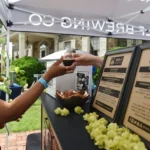
Prairie Empire/Spirit Family Reunion, Appalachian Brewing Co., Aug. 18, doors at 8 p.m.: Spirit Family Reunion embodies the revived tradition of old-timey twang with a fleet of foot-stomping numbers off their debut album, “No Separation.” As Paste Magazine puts it, “It’s the type of music that blurs the line between past and present so thoroughly, and so deftly, that time feels irrelevant.” Amen.

Prairie Empire will be joining them. The group is comprised of three-fifths of the Decembrists clan and features a string band that includes an accordion, a dobro, an upright bass, a fiddle and that good ole six-string. They combine a keen understanding of instrumentation with clear vocals, and their musical clout and sensibilities allow them to break the traditional rules of Americana music. Listen to the folk/klezmer string hybrid in the song, “How Do You Ruin Me?”

Both will have played the internationally acclaimed Newport Folk Festival by the time they touch down at the Abbey Bar. They’re the real deal, and we should “pay” and “heed” their art.

Jay-Z and Justin Timberlake, Hersheypark Stadium, Aug. 4, doors at 8 p.m.: Hova and J.T. will put on their suits and ties for their “Legends of the Summer” tour. Both are riding legacy-cementing albums into the fall (Jay-Z’s  “Magna Carta Holy Grail” and Timberlake’s “20/20 Experience”). Timberlake’s album is seen as status quo lyrically relative to his other albums, if not a bit more cheery (Remember, “Cry Me a River,” circa 2002?). However, he stretches his song structures and genres due to the genius pop production of Timbaland. Jay-Z’s twelfth studio album had a robust and enigmatic ad campaign, his three-minute mini-doc premiering during the NBA Finals in June. Most of it featured spliced interactions of Jay spitting axiomatic phrases at Pharrell and team, and Rick Rubin playing the eccentric hobo on the couch. Odd. The album is again a production masterpiece because of Timbaland, but he’s getting the universal thumbs down on this one. Regardless, if you can fork over the dough for this one, you know they won’t disappoint on the main stage.

Mentionables:

Aug. 1, Beach Arabs, Baby Brains, DJ Garret Price, Gingerbread Man-Harrisburg, 9 p.m.

Aug. 7, CC3-Chris Cawthay Trio, MakeSpace, 8 p.m.

Aug. 9, Timurid, Warrior Rabbit and Good Graeff, Little Amps, 6 p.m.

Continue Reading

Pancakes, Topped with the Golden Rule: Breakfast, friendship dished up at Common Ground Cafe

Noah Sigel, holding a chain of things to be thankful for.

Noah Sigel, holding a chain of things to be thankful for.

Most free meals come with just that—a meal. The Unitarian Church of Harrisburg is dispensing more than just chow these days. At their Common Ground Café at 1508 Market St., members of the Allison Hill community are treated to a restaurant-style breakfast with a side of conversation.

The Unitarian Church bought its Allison Hill church in 2010 from the Shared Ministries Church, which had started the breakfasts in a buffet style. With a larger community and more money, the church transformed the bi-weekly Saturday morning breakfasts into the Common Ground Café (Shared Ministries still funds every second breakfast and provides money for bus vouchers for diners, as well).

Wishing to create a respectful community focused on social action, not charity, the Café serves residents in a traditional and respectful way.

“They get a server just like everyone else would if they were going to Cracker Barrel,” said Clay Lambert, director of the Café since its inception three years ago. “With an affluent church community like ours in such close proximity to such a poor area, it makes no sense for us not to be as involved as possible.”

“In the buffet line, people [used to] just shuffle in line. They didn’t talk to each other. They ate and they left,” said Brian Kahler, a volunteer for four years and church-goer for 23 years. “We tried to apply the Golden Rule: How would you like to be treated if you came to a place like this for breakfast?”

Now, the vibrant community entertains about 350 attendees per breakfast with 20 to 25 volunteers from the Unitarian Church and elsewhere. The church provides funding for the majority of the operational costs and accepts donations of goods (recently, a new stove, toaster and microwave) and services. The Common Ground Café partners with other organizations to provide services to its community, such as a free eye care clinic, STD and diabetes testing, heart screening, blood pressure monitoring and children/adult reading programs.

Nina, an attendee for three years, describes the community as “a multicultural family.” She got her current job because the Common Ground Café gave her a bus voucher to help her get to her interview. Her glasses were from a free eye care clinic at the church.

“They do more for the community than anybody,” she said. “Even though you’re in need, they make you feel like you’re somebody. They uplift you. If you’re missing, they wonder. If you’re in the hospital, they visit. They marry people and have funerals. They open their doors.”

Added Lambert: “I don’t think people are necessarily coming for the food. They come to talk to one another, enjoy each other. Almost all of [the attendees] live in a home of one form or another. They could find another breakfast. It’s more about trying to build a sense of community around the church and trying to bring the members of the church into the [Allison Hill] community as well.”

A woman who chose to go by Queen for this article has been coming to the Saturday morning breakfasts for about three years—never missing a day.

“It’s like family here,” she said. “They take good care of me, and I take good care of them, too.”

A volunteer interrupted our conversation to give Queen pictures she had gotten developed. Queen started a bulletin board of pictures last year. It’s now grown to three boards of the “family” photos.

Katie, Queen’s friend eating breakfast next to her, has been coming to the breakfasts for about three years.

“When I first came, I didn’t know nobody. The second time, it’s like I knew people forever,” she said.

Then she continued, “I’m shy. When I first meet someone, I’m shy.”

The table came alive with shouts of “liar!” led by Queen.

“That ain’t quiet! I’m scared of her quiet voice,” said a gentleman at the table.

Queen taps me on the shoulder and says with a laugh, “Now you see why we come.” 


The Common Ground Café is located at 1508 Market St., Harrisburg, and is open 9 to 11 a.m. every second and last Saturday of the month. Those interested in volunteering or donating services and goods should contact Clay Lambert at [email protected]. More information can be found on their Facebook page or at www.harrisburguu.org.


Continue Reading

Non-Profit Problem: About half the property in Harrisburg is nontaxable. Can anything be done about it?

Non-profits in downtown Harrisburg.

Non-profits in downtown Harrisburg.

Forum Place. Harrisburg Hospital. The Farm Show complex. The state Capitol.

Four places, four very different businesses, one thing in common—all are regarded as nonprofit entities, so pay no property taxes to their host city, Harrisburg.

According to the city treasurer’s office, Harrisburg is home to 716 parcels that are tax-exempt due to their non-profit status. Making the situation even more difficult: more than 75 percent of those parcels belong to either the government or government-related entities, which by law cannot be taxed, according to the Harrisburg receiver’s office.

So, what’s a city to do?

For years, the answer was “not much,” as the state did with Harrisburg pretty much what it wanted. Condemn and raze entire neighborhoods? Sure. Turn local streets into forbidding, perilous highways to accommodate suburban workers? Why not? Expand and take more properties off the tax roles? OK.

During the past century, the city has toggled between actively participating in its own destruction by facilitating the state’s unquenchable thirst for more land and, more recently, lamely complaining in City Council meetings and mayoral press conferences that the state does not pay its fair share for the services it consumes.

Last month, the situation changed somewhat. The state passed a 2013-14 budget that gave Harrisburg $5 million in “fire protection” funds, representing the largest-ever direct infusion of cash from the state as part of a regular budget process.

However, as it stands right now, that level of funding is a one-shot, one-year deal. Meanwhile, there are numerous other issues emerging that could affect the capital city’s relationship with the many nonprofit entities that call Harrisburg home.

State of the State Funding

To say that John Campbell was surprised would be an understatement.

“I’ll be honest with you—I was shocked,” said Campbell, Harrisburg’s treasurer.

Campbell was speaking of the $5 million the state coughed up to the city, double the amount allocated in the 2012-13 budget. His surprise was heightened by the fact that House Republicans, in their budget plan, had already slashed the allocation to $496,000.

Most city officials, including Mayor Linda Thompson, expected the amount to increase once the budget bill was finalized. In the end, however, it surpassed nearly everyone’s expectations.

“It’s a figure we’ve never received before,” Campbell said.

State Sen. Rob Teplitz said he and Rep. Patty Kim had worked hard to get funding restored, hoping to reach $4 million, a figure most city officials had set their eyes on. Receiver William Lynch lobbied Gov. Tom Corbett and Republican legislative leaders for another $1 million, which is how Harrisburg ended up with $5 million for this fiscal year, said Teplitz.

“It really is a windfall,” he said. “But we’re not asking for extra payment. We’re only asking for fair compensation.”

That fair compensation is, technically speaking, for protecting state buildings from fire, thus the money is accounted for in the state budget’s line item for fire protection. In fact, according to Teplitz, the city had to pledge the money would go only for that purpose.

However, it’s a stretch to believe that 60 percent of the city Fire Bureau’s $8.4 million budget goes to safeguarding the 40 buildings that constitute the Capitol complex. The money, in fact, flows to the city’s general fund, which does include the Fire Bureau, but also includes most other parts of the city government. So, money that goes into the Fire Bureau budget simply frees up funds elsewhere for the financially strapped, indebted city.

In the end, the state uses fire protection as a politically expedient way to compensate Harrisburg. It’s simply easier to fund a single, existing line item for a specific use than to transfer money into the general fund of the much-criticized and ostracized city. Besides, firefighters have hero clout lacking in, let’s say, the city’s IT department.

Harrisburg is happy to go along with this process because the state has habitually underfunded the city for services rendered: use of its roads, its emergency services, its public works and sanitation staff. Each weekday, the population of Harrisburg doubles, largely due to the presence of the state government, with the small population of the largely poor city left to pick up the tab of this white-collar invasion.

Until this year, the state has never owned up to its obligation as, by far, the largest employer and landowner in Harrisburg. Exempt from having to pay property taxes, the legislature allocated whatever it wanted, with the amount bouncing around from year to year. So, under the Reed administration, the state often provided just over $1 million. In 2010, that amount was cut to $987,000 and then to $496,000 in 2011. After the city’s financial crisis hit full-on, the state used the line item to assist the city to the tune of $2.5 million for 2012 and now $5 million.

City officials seem satisfied with that level—that $5 million finally compensates the city fairly. The problem, however, is that the funding level is not guaranteed going forward. It’s subject to the legislature’s annual horse-trading extravaganza known as the budget process. So, will the state reduce funding again once the city’s finances stabilize or when Corbett is no longer governor or Lynch is no longer receiver? No one knows.

Teplitz said he’s introducing legislation in the fall that would stabilize Harrisburg’s state funding, ensuring the city fair compensation in the fire protection line item that also would allow it to plan financially from year to year.

“The legislation would require the actual cost to get reimbursed,” he said.

Teplitz acknowledged passing such legislation would be an uphill climb, but vowed to put in a strong effort.

“Then we wouldn’t have to go begging every year,” he said.

PILOT Programs

In Harrisburg, after the state government, the next largest block of tax-exempt properties in the city belongs to PinnacleHealth System, one of the area’s largest healthcare providers, which is listed as a non-profit 501(3), the IRS’s designation for a tax-exempt organization. In the city, healthcare providers alone account for 11 percent of the non-taxable properties. If taxed, the PinnacleHealth parcels alone would bring in more than $1.13 million in property tax revenue, according to the receiver’s report.

But Pinnacle, like many other non-profits, instead makes Payments In Lieu of Taxes (PILOTs) to the city, amounting to more than $120,000 a year. Pinnacle spokeswoman Kelly McCall said in an e-mail that a 1998 court settlement prevented her from discussing specifics.

“Our PILOT was established through the Settlement Agreement, and the Agreement contains a confidentiality provision. We do make PILOT payments to the City of Harrisburg, Harrisburg School District and Dauphin County,” McCall’s e-mail said.

“PinnacleHealth provided more than $14.8 million in community benefits and reached more than 2.1 million people through programs and services, such as free screenings, community health education and chronic disease management in fiscal year 2012.

In addition, PinnacleHealth has supported numerous initiatives within Harrisburg, including increasing access to healthcare for the underserved through the Keystone Continuum, donating to maintain extracurricular activities and athletic programs in the Harrisburg School District and providing nutrition and physical activity education and meals to Harrisburg School District students,” she continued.

Overall, Harrisburg received a total of more than $420,000 in PILOTs in 2009, $410,244 in 2010 and $420,286 in 2011. According to city records, Harrisburg anticipates, in its 2013 budget, receiving about $425,000 in PILOTs. Next to Pinnacle, PHEAA, the Pennsylvania Higher Education Assistance Agency, state is the second biggest PILOT contributor, sending in $107,444.79 each year for properties in the city.

“Under the Purely Public Charities Act, (Act 55), any PILOT payments are totally voluntary on the part of the non-profit,” said Cory Angell, a spokesperson for city receiver Lynch.

While a noteworthy addition to any municipal budget, PILOTs rarely constitute more than 1 percent of any total budget, according to an exhaustive 2010 nationwide study of the issue conducted by the Lincoln Institute for Land Policy. In Harrisburg, PILOTs account for about three-quarters of 1 percent of the budget, a figure largely unchanged for the past decade.

Tony Ross, president of the United Way of Pennsylvania, which has members who partner with more than 5,000 not-for-profit social service agencies statewide, said that standardizing a definition of what is and what is not a non-profit in Pennsylvania would help eliminate the fear that smaller non-profits—which have fewer assets and resources than the healthcare behemoths—end up bearing an undue share of the tax burden if stripped of their tax-exempt statuses. It would also help clear up the issue of just what qualifies as a non-profit from county to county.

“We’re concerned that non-profits are getting lumped into one group,” Ross said.

Ross explained that many of his affiliates, which tend to be smaller, community-based organizations, lack the assets and resources of the healthcare giants. What is a PILOT to PinnacleHealth could be a life or death situation to a smaller organization, he said.

“From what I can tell, those sorts of distinctions aren’t being made,” Ross said.  “Whatever is done, it needs to be uniform across the state.”

“This tension has been going on for a long time,” said Joe Geiger, who until recently was the long-time director of the Pennsylvania Association of Non-Profit Organizations. “It wouldn’t even be close to enough money to offset the deficit. And there are some unintended consequences that could occur where some non-profits who are currently operating in Harrisburg may decide they need to find a more favorable environment in which to operate.” 

“Poor decisions like that are what happened with the incinerator. That’s where the problem is. It’s not the fact that non-profits aren’t paying taxes,” Geiger said. 

“Very few non-profits are property tax-exempt,” Geiger explained.  “Most of them rent their properties and pay their taxes through the rent that they pay. So, when you look at the amount of debt that Harrisburg is in and you look at the amount of money that they could leverage out of charities, it’s not going to come anywhere close to the solution.” 

“Non-profits and the local government ought to be working together to look at solutions, not taking each other to court,” he said.

Baseball & Bathrooms

After the state and PinnacleHealth, a host of smaller nonprofits dot the Harrisburg landscape (see map). In fact, you can walk through much of downtown and Midtown and hit one after another.

Did you know that Metro Bank Park is still owned by the city, so is tax-exempt even though Harrisburg sold the Senators baseball team in 2007? The team now leases the ballpark from the city.

The restrooms at Sunshine Park on Herr Street are also tax exempt, as is the controversial Forum Place building on Walnut Street, even though it’s valued at more than $63 million.

Rep. Patty Kim, a first-year Democrat representing Harrisburg’s 103rd district, said she thinks it’s time for a public hearing as legislators have been getting lots of mail from the public. She also said she thinks that the non-profit designation should be made closer to home.

“I think it should be a municipal decision if it comes to that because, if the state does it, it’s going to be like a cookie-cutter formula that doesn’t fit with everybody’s unique situations in the city,” she said.

Kim said she was working with Rep. Robert L. Freeman, a Democrat from the 136th district representing Easton and Northampton County, as a future co-sponsor of a proposed bill that would ensure additional resources to cities like Harrisburg that have a disproportionate number of tax-exempt properties.

Speaking of legislation, a legislative solution is brewing that could expand the definition of a non-profit in Pennsylvania, which might further impact Harrisburg.

In June, the House Finance Committee stopped short of a vote on a proposed law that would amend the state constitution to give the General Assembly the power to define a tax-exempt non-profit statewide. The House was taking its look at the proposed new standards, known as Senate Bill No. 4, after the Senate approved it in March.

Pinnacle’s McCall said that Pinnacle is also closely watching the progress of the proposed constitutional amendment, which likely would lead to a more liberal definition of what qualifies to be a non-profit.

“PinnacleHealth supports the legislation, as it will provide clarity and uniform treatment of charities throughout Pennsylvania,” she said.

In Pinnacle’s case, its payments are made as a result of a 1998 settlement reached with the Dauphin County Board of Assessment Appeals after the hospital appealed the county’s decision stripping the hospital’s tax exempt status in 1993. The reason the tax board took the hospital off the tax-exempt rolls? The county was not satisfied that the hospital had continued to meet the five-prong “HUP test”—established by a 1985 court decision to help determine what is a non-profit—because it engaged in competitive practices with other local healthcare providers.

Dauphin County Judge Richard A. Lewis later agreed, ruling that Pinnacle’s acquisition of local private physician practices as part of its expansion of an integrated healthcare system evidenced a private profit motive on the part of the hospital.

“The taxing authorities argue that the physician practices compete with private physicians and that such competition is evidence of a private profit motive. This court finds that [Pinnacle] cannot compete while still maintaining its charitable mission and charitable nature,” Lewis wrote.

Eric Montarti, senior policy analyst with the Allegheny Institute for Public Policy, a Pittsburgh-based non-profit taxpayer interest research group, said that hospitals, in a sense, are placed in a vulnerable position since no one wants to be seen as wishing to start taxing churches and schools.

“Take away these things that you’re never going to tax. Take away these things that the politicians are never going to go after, and what are you left with?”

Pittsburgh, like Harrisburg, has an Act 47 problem, the legislative term used to describe when the state appoints an outsider to oversee a city’s finances because the municipality is so far in debt that it has been declared a financially “distressed” city. In 2004, Pittsburgh began grappling with a $34.3 million deficit.

“It obviously didn’t solve the city of Pittsburgh’s issue,” he said.

Harrisburg, a city with a $56.3 million budget, currently faces an operating deficit of about $12 million and a $350 million debt tied to its botched incinerator retrofit, which has pushed the city to the brink of bankruptcy.

Montarti said that trying to, in effect, indirectly tax tax-exempts is the wrong direction to take as nonprofits attract people who, for example, buy properties in the municipalities and therefore later end up paying property taxes. Montarti said that those same people also end up paying taxes on local services while otherwise helping to support the local economy. The city, instead of trying to tax non-profits, should first get its own fiscal house in order, he said.

“Our argument would have been, ‘Well, okay, the city of Pittsburgh really needs to look at what it’s spending and what it’s doing in terms of how many services it provides, how many people it employs, how much cooperation there is between it and the county on similar services,’” he said.

People have made the same point about Harrisburg. Over the past few years, however, Harrisburg has slashed and slashed and slashed. The once-bloated city government now is down to its bare bones, challenged to deliver even basic services.

After years of underfunding its obligations, the state government has finally stepped up—at least for one year. PinnacleHealth also has shown that it’s willing to be civic-minded. Will other nonprofits follow suit? Given the city’s vast financial needs, PILOT payments may never amount to too much. However, Harrisburg does provide these nonprofit organizations with vital services. Given its desperate shape, the city is searching for every penny it can find.

Reggie Sheffield is a freelance reporter in Harrisburg.  He may be reached at [email protected].


Continue Reading