A Selinsgrove Sojourn: Beyond the Speedway, arts, nightlife await in this quaint town.

Screen Shot 2013-08-30 at 11.57.12 AMOn April 30, 1988, the people of Selinsgrove, Pa., gathered 33,000 bananas, 2,500 gallons of ice cream, 6,000 pounds of nuts and, with all of the assorted toppings, created the world’s largest banana split. It measured 7.32 kilometers (4.55 miles) long.

Obviously, the record-setting confection has long since melted/been consumed. But I mention this to show that this historic, riverside community in Snyder County, about 50 miles north of Harrisburg, has a whimsical side, a fun side. (Well, the town is known for being near the Penns Creek Massacre of 1755, but we’ll just let that slide for now).

Today, Selinsgrove is easier to enjoy than it has been in a long time. In recent years, its quaint downtown has been restored to host colorful boutique shops, cafes and family-owned restaurants, making a trip up Route 11/15 worth a day trip from the Harrisburg area.

A Portal to Selinsgrove

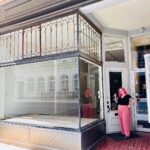
A fine arts gallery, the Post & Lintel’s name comes from an architectural term referring to the construction of a door, the “posts” being the sides or door jams and the “lintel” the crossbeam at the top.

Owner Stacey Martin developed her vision for the gallery by designing each space to maintain the integrity of the works contained therein. “I wanted the gallery to function as an inclusive hub where artists can learn and support each other, hence the term ‘portal into the artist’s world,’” she said.

Before opening The Post & Lintel, Martin taught art in the Harrisburg area for 13 years. She is a professional photographer and charcoal artist who has participated in many top 100 art shows across the country.

In addition to showcasing art in the gallery, Martin offers an array of workshops for people of all ages and experience levels.

“The Post Dance Studio,” Martin continues, “is located on the second floor and features a variety of classes, including classical dance, zumba, the Susquehanna Valley Young Actors Camp and voice and guitar lessons.”

On the top floor is the Urban Post, a modern clothing boutique that provides a constantly changing selection of clothing and jewelry on the cutting edge of fashion. No more than three of the same items are ever available at Urban Post, ensuring customers have a unique shopping experience.

“I’m proud that many of the pieces are hand-crafted by local artisans and offered only at Urban Post,” Martin says.

Each month, the Post & Lintel highlights a different artist as part of the “Artists 4 the Grove” series.  “The receptions are normally scheduled on the fourth Saturday of every month from 6 to 8 p.m.,” Martin says with a chuckle.  “That way, we don’t need to compete with Susquehanna University’s Friday night football games and multitude of activities at the Speedway.”

“The show on Aug. 24 is going to have a little different flavor,” Martin continues. “Rather than featuring a single artist, the gallery will be hosting an exposition on the theme ‘Journey,’ the Post & Lintel’s first-ever literary contest.”

For the contest, writers can submit works of fiction, nonfiction, poetry or a hybrid of these three, she says. Both gallery floors, as well as the Urban Post, will be open that evening.

College & Cars

Just up the hill from Post & Lintel sits Susquehanna University, a liberal arts college founded in 1858.

At the college, activities abound throughout the year to serve more than 2,200 undergraduates from 35 states and 17 countries. Visitors to Selinsgrove might enjoy stopping by the Lore Degenstein Gallery and Degenstein Center Theater, which host exhibits and performances from September through April.

To graduating senior Jamie Beaudoin, Susquehanna University is more than just a school.

“As a first generation college student in my family,” Beaudoin says, “Susquehanna University made it possible for me to attend here through a variety of grants and other programs.  And the professors in the creative writing program styled their instruction in a workshop rather than lecture format, something you normally only see at the graduate level in other universities.  I’m so glad I could go here.”

Located just a few blocks from Susquehanna University is the Selinsgrove Speedway. Billed as the “Fastest Half Mile on the East Coast,” the speedway hosts races from March through October. The roar of the engines and the cheers of the crowds provide for a fun and exciting evening.

Hungry Yet?

Back downtown, Robert Kirkpatrick opened BJ’s Steak and Rib House in 1982. He moved the restaurant to its present location on N. Market Street six years later, gaining a reputation for serving great steaks.

“The secret is that we dry-age our steaks,” said Cathy Oehrig, restaurant manager who has worked at BJ’s for almost 20 years. “The steaks are stored in our cooler for 28 days before they’re cut by our butcher.”

Other items, though, are just as popular.

“I love it here because Robert is innovative and insists on the best,” says Oehrig, who also mentioned she enjoys the sense of community that permeates Selinsgrove. “For example, he opened an Oyster Raw Bar a couple of years ago and was the first to bring barbecue to the area.”

Like Italian? At Isabella Ristorante, owner Domenico Napoli offers an amazing range of food, from lobster ravioli to rigatoni Roma to veal Parmigiana—and everything in between. The meals are filling, tasty and served with fresh Italian bread and vegetables.

Located in an old bank building, Napoli has kept the original details of the bank, including the old-fashioned teller windows, which he’s made into a small bar. It is an elegant restaurant, yet you can dress casually.

A Sleep Over

If you find you’re too full to drive home, you easily can find great in-town accommodations.

A stay at the Selinsgrove Inn on N. Market allows each guest to enjoy downtown or visit Susquehanna University while being pampered in high style. With lush design and great service, the Selinsgrove Inn is a relaxing, sophisticated place to stay.

I had a chance to speak with Maxine Thwaits, the inn’s manager.

“Scott and Melanie Shaffer opened the inn in October 2006,” Thwaits says. “They wanted a place above the norm, someplace they’d enjoy visiting when they traveled, a place where the rooms are furnished with the furniture a visitor might find in their own home.”

As well as being comfortable, each one of the 24 guest rooms at the Selinsgrove Inn is quite functional with phones, high-speed Internet and kitchenettes.

“And best of all,” Thwaits says, “the breakfasts are special. Not just your run-of-the-mill continental breakfast, but real home-cooked meals, the kind you’d hope to find at your mother’s country home.”

As I traveled around Selinsgrove, I heard rumors that it might be time to try for another record-breaking banana split.  If that’s the case, then I suggest you stay tuned and plan your visit accordingly. Oh, and be sure to bring a large spoon.

Don Helin published his first thriller, “Thy Kingdom Come,” in 2009.  His second thriller, “Devil’s Den,” has been selected as a Finalist in the Indie Book Awards.  Don lives in central Pennsylvania.  Contact him at www.donhelin.com.


Isabella Ristorante

23 S. Market St.

Open Monday through Saturday, 4 p.m. to 11 p.m.

Phone:  570-374-0255


Selinsgrove Inn

214 N. Market St.

Phone: 570-374-4100

www.selinsgroveinn.com


Post & Lintel

34 S. Market St.

Open Tuesday and Thursday, 11:15 a.m. to 6 p.m.

Open Friday and Saturday, 11 a.m. to 5 p.m.

Phone: 570-374-0606

www.thepostandlintel.com


Susquehanna University

514 University Ave.

www.susqu.edu


Selinsgrove Speedway

47 Sand Hill Rd.

www.selinsgrovespeedway.com


BJ’s Steak and Rib House

17 N. Market St.

Open Sunday through Thursday, 11 a.m. to midnight

Open Friday and Saturday, 11 a.m. to 2 a.m.

www.bjsribs.com

Phone: 570-374-9841

Continue Reading

What’s a Tomato Pie? Hint: It’s not a pizza.

Screen Shot 2013-08-30 at 11.56.12 AMAs Lancaster locals, Karen and Chris Fisher always regarded Pennsylvania Dutch dishes as the perfect comfort food. But, inspired by their travels across the United States, they wanted to open a restaurant to experiment outside their comfort zone.

“I’m a creative person. So for me to have to limit it to Pennsylvania Dutch foods would be constraining. I always wanted to have just a little place where I could just have whatever I wanted, no boundaries,” said owner Karen Fisher.

The Fisher family saw this dream realized three years ago with the opening of the first Tomato Pie Café in Lititz, and again, in October 2012, with the debut of their Harrisburg location in Swatara Township.

Their dishes bring a bit of worldliness while still staying local. Moving to Florida in her teens opened Fisher’s eyes to Southern dishes, including the tomato pie. This pie is not the pizza that New York and New Jersey natives recognize. Her pie is a blend of fresh tomatoes seasoned with herbs and baked into a pie shell with a cheesy topping.

Although she was unaware of other versions of the tomato pie when she named the shop, she has now learned that some varieties are, as she puts it, “not round.”  

“Does not a pie refer to something that’s round? [Their tomato pie] is not round,” she asked. “So, I don’t think that they should be able to call that tomato pie anymore! I have tomato pie. They do not have tomato pie.”

The rest of the café’s dishes, however, won’t be mistaken for anything controversial. The artful combinations—like a sweet potato used as a spread with mascarpone cheese on brioche bread or the peanut butter, banana and Nutella panini—are originals with the fingerprint of the creative culinary mind of Fisher. Even the basics, like grilled cheese or the TPC house salad, have a unique style to them.

“I try my best to create dishes that you can’t find anywhere else. I take things and add a little twist to it, add a little wow to it, put some more love into it,” she said.

The coffee shop half of the café also reflects this creative sentiment. For example, a drink highly recommended by the head barista, the Raw Cap, is a traditional cappuccino topped with honey and raw sugar.

Although the dishes are inspired from traveling, the food is made with only local ingredients, even as local as right outside the door. The outdoor dining area—the tomato patch—has tomatoes, basil, mint, dill and rosemary growing in pots lining the patio, all of which get used in the cooking process. “On nice days, the tomato patch fills up more than the inside,” said Fisher.

The atmosphere, inspired by the Lititz location’s early 1900s-era building, feels urban and creative. The old building was built during the swing era, which gave Fisher the idea for the staff’s uniform of muted colors, a hat and the choice of a bow tie, vest or suspenders.

“My goal is always to seamlessly blend the old with the new,” said Fisher. The furnishings also give a nod to the past, while staying fashionable. The coffee bar is from an old apothecary in Phoenixville, and some wall coverings are reclaimed barn boards from a Lebanon farm.

The Fisher family brought a Lancaster tradition to the Harrisburg area: the barista throwdown. At this event, hosted by the Harrisburg Tomato Pie Café in May, different baristas competed for the title of best barista. “It is just a way to pull all the local coffee shops together,” said Fisher.

Barista throwdowns have happened for years with the Lititz shop and its surrounding coffee shops. However, only the Tomato Pie Café’s baristas were representing an area coffee shop this time. Fisher looks to change that. “We’re going to continue to do it on a regular basis in hopes to accomplish that same thing: just bring coffee shops together,” said Fisher. “We’re hoping to bring some positive energy to businesses.”

The owners had opportunities to move to other locations, but they chose Harrisburg, in part, to join what they hoped was an emerging economic recovery. “Our desire is to see the economy in Harrisburg turn around. Harrisburg is beautiful. I personally just believe that it’s one business at a time,” she said.


Tomato Pie Café

3950 TecPort Dr., Harrisburg

717-836-7051

https://tomatopiecafe.net

Hours: Tuesday to Friday, 7 a.m to 9 p.m.; Saturday: 8 a.m. to 9 p.m.; Sunday, 8 a.m. to 3 p.m.

Continue Reading

Art Smart: CASA creates a new future as a charter school.

Screen Shot 2013-08-30 at 11.56.54 AMThe application was more than 1,900 pages long and contained questions related to core philosophy, underlying purpose and measurable academic goals.

At the February school board meeting, agenda item 9.14 was the approval/denial of the Capital Area School for the Arts Charter School application. School board member James Thompson made a motion to approve the charter and Danielle Robinson seconded it. Then it came to a vote. With one member absent, two votes in favor and six opposed, the motion failed.

Then a week later, the school board reversed course, and the CASA charter application was approved. According to Jennifer Smallwood, president of the school board, confusion and miscommunication over terminology led to the application’s initial rejection. But, upon further review, “We didn’t have any criteria to deny the charter,” she says.

The school’s principal, Cheryl Giles-Rudawski, believes that perhaps none of the school board members wanted to be the first to say “yes” to the charter, sending a message that the school’s application was of poor quality.

“Our application was strong, so they really had no grounds to deny it,” says Giles-Rudawski. “This was our first application, and, I’ll tell you, it is grueling.”

In a Quandary

Harrisburg’s first arts magnet school was formed in the 1970s, located near N. 3rd and Forster streets, but it eventually had to close its doors due to funding issues, leaving some in the community disappointed.

“Many people, like Lois Lehrman Grass and others, tried to re-surge this arts magnet concept where students, who are gifted and talented in the arts and wanted to continue to be educated through the arts, had an opportunity,” says Giles-Rudawski.

That concept came to fruition in 2001 when Education Director Anne Alsedek from Open Stage of Harrisburg joined forces with Dr. Glenn Zehner, executive director of the Capital Area Intermediate Unit. The partnership brought together the Intermediate Unit’s educational expertise and Open Stage’s arts know-how for a new magnet school for the area.

For nearly 12 years, CASA operated a half-day program of intensive instruction in visual arts, dance, music, film and video and theater. At the time, with the help of former Mayor Stephen Reed, the school found classroom space at Temple University’s Harrisburg campus, as well as at Open Stage. It also rented space from a local church on Chestnut Street.

At first, not everyone in the community fully appreciated what the school was trying to accomplish. “I think there was some confusion, initially, in the first years that it was not really an educational program and it was more like an arts class,” says Giles-Rudawski.

She came onto the scene in 2004 after the principal retired. “They brought me down, and I came kicking and screaming, I wanted nothing to do with this school in a church, but I was here like a week, and I realized that really great things were happening,” she says.

In 2009, CASA moved to its current space at Strawberry Square in downtown Harrisburg. As the country’s recession deepened, the school began to feel the effects, and its fundraising tanked. “So we were in this quandary,” says Giles-Rudawski.

School administrators worked to find scholarship money and did whatever they could to locate funds for students who could not afford to pay the tuition fees.

“I can’t live like that forever, pounding the pavement for scholarships when, in fact, I do need money to feed into the program,” says Giles-Rudawski. “I need better instruments. I need more technology.”

Gradually, as school districts chose not to pay the tuition fees, it fell to the parents to pay, often resulting in students not enrolling at CASA.

“Last year, school districts’ budgets got totally whacked and school districts were cutting their own arts programs, so it was really hard for me to go and ask superintendents and say, ‘Support your kids at CASA when you yourself are cutting your own arts program,’” says Giles-Rudawski. “So we made the decision to go charter.”

Is It a Fit?

CASA Charter School is unique because it educates through the arts. Academic classes are infused by the arts and vice versa. Acceptance is still based on an audition.

“We do that because, if you’ve never picked up an instrument, it wouldn’t be the class for you. It’s really not about exclusion, it’s about making sure it’s a good instructional fit,” says Giles-Rudawski.

Once accepted, students will commit to one of the six different areas of art: creative writing, visual art, dance, music, film and video or theater. Each year, students will be required to have two credits in the art area they successfully audition for.

By mid-June, more than 110 students had come to the school to audition, and that didn’t include any of the returning students from last year. “We’re just really excited. It’s a little bit out of the traditional format for a public school. Not all kids fit at CASA. I always tell parents: bring your son or daughter here, meet the school, meet the students, meet the staff and you’ll know if it’s a fit or not—and usually it is,” says Giles-Rudawski.

CASA Charter School offers a full curriculum for grades 9 through 12, as well as a school counselor and nurse. During its first year, the school will enroll some 160 students and will offer some of the courses online and in hybrid models until it is able to hire a full complement of teachers. “As we expand, those teachers will be hired,” says Giles-Rudawski.

In the past, 94 percent of students who attended CASA went on to college. “Most of our kids here are motivated to go on,” says Giles-Rudawski. “I think you come here, and you get validated by your abilities, and so I think that gives you the confidence to pursue higher education.”

Charter schools remain a topic of debate. As an educator, Giles-Rudawski supports public education, yet she’s not much of a fan of charter schools. Though she does think, if there’s an opportunity to create a school that can be successful to a population of students, then it should be done. “I do think some students can be better educated outside of the traditional public school environment whether that’s a cyber or charter school model,” says Giles-Rudawski.

Not everyone agrees with her. School board member Brendan Murray, who began his two-year term in 2012, decided to run because he wanted to give back to the community that he loves so much. “I absolutely could help this district get to a better place than where it is now, and I believed that the only way to do that is to be on the board,” says Murray.

During his tenure, seven or eight charter school applications have come before the board. Sifting through the binder-sized amount of information can be difficult. “I’ve learned so much in the time that I’ve been on the board that I’ve been able to pick out the good applications from the bad pretty easily now,” he says.

Some of the charter school applications that came before the board were not on par academically with what the state Department of Education requires. “I couldn’t vote for any charter school that didn’t know what the standards were going to be for the state coming up in the near future,” says Murray.

Paramount to a charter school’s success is its ability to predict the number of students who will enroll, he says. Should the school fail to meet its enrollment goal, a hole will exist in the budget, making it a challenge to sustain the school for the period of its charter. In addition to enrollment, a school’s financial operations play a large role in its success.

“The number one thing that ruins a charter school after five years is not their academics, but their actual fiscal setup, who is doing the actual money handling,” says Murray.

With regard to CASA’s charter school application, identifying grounds to deny it proved difficult. “It wasn’t the academics, it wasn’t anything other than I don’t believe in taking money out from the students as a whole to help certain other students out. I don’t think that’s the best way that academics can be done,” says Murray. “That’s just a principle of mine.”

While Murray did vote against approving CASA’s charter, he does want the school to succeed. But he worries about the larger population of students in the district.

“I love what CASA is going to offer and, now that that it is part of our district, I will make sure, from now on, that anything that we can do to make sure it thrives, it will get that from me,” says Murray. “But, as a principled person, I don’t believe that you give a golden ticket to anyone, like Willy Wonka in the Chocolate Factory, and help one or two people out when the rest are suffering, especially with the economics of our district and the financial problems that we have.”

With the beginning of the new school year, the City of Harrisburg has made a statement about its support of young people and the arts.

“We have totally gone into this, primarily for the students of Harrisburg and the Harrisburg area to be educated through the arts,” says Giles-Rudawski. “There’s just something about young people in the arts. I don’t have bullying. I don’t have cliques. I just have people who are very tolerant, collaborative and respectful of different opinions.”


Continue Reading

Opt for Squash: Choices abound for the versatile zucchini.

rosemary_homecookingAs I’ve noted before in this column, I am (or was) a terrible home vegetable gardener.

This is not good for someone who’s 100 percent Italian. Italians are known for loving to garden and, while I certainly gave it my best shot, I wasn’t very successful. The tomatoes got blossom-end rot, my pepper plants were host to swarms of aphids and my arugula went to seed before I could harvest it. So, I have never seen myself taking my last breath in a lush garden of beautiful red tomatoes like Marlon Brando in “The Godfather.”

There was one exception: zucchini. Not only did my zucchini bushes produce prolifically but so did those of my dear departed Aunt May and those of our gardening friends. Coming to dinner? Bring some zucchini for the host. And, if the summer season had seen abundant rainfall, the zucchinis grew to the size of baseball bats. (I suppose they still do and I advise you to avoid these if you can.)

Italians love their vegetables (verdure), and they do wonderful things with them. Zucchini, or courgette in Italian, are no exception. They marinate them for the antipasti table, stew and sauté them and stuff them with everything from mashed potatoes to sausage, cheese and breadcrumbs. But most fascinating of all is the Italian custom of stuffing golden zucchini blossoms with ricotta cheese and deep-frying them for a unique first course.

When I shop for zucchini in the summer months, I always look for those that are small and bright green.  These young specimens have few seeds, are less fibrous and draw out less water when cooked. One of my favorite zucchini dishes is a casserole that layers thinly sliced zucchini rounds that have been lightly dusted with flour and sautéed. They are layered with halved cherry tomatoes, Parmesan cheese, olive oil, chopped basil and dried breadcrumbs. The casserole is baked until bubbling and served hot or at room temperature. It is a great accompaniment to grilled chicken or steak.

You might not think of zucchini as a topping for pasta, but its rather mild flavor combines so well with many other ingredients for a light warm weather “sauce.” A recent dish at Bricco on S. 3rd Street in Harrisburg combined homemade “rope” pasta with small, sliced zucchini, chunks of smoky bacon and lots of olive oil. It was different and delicious.

Spaghetti Carbonara is a familiar and popular Italian pasta dish, but one that is considered quite rich when made with the traditional bacon, eggs and cream. The following recipe, saved from my collection of old Food and Wine magazines, offers a nice twist on an old favorite—and it is easy. The cream is gone, the eggs remain, and zucchini replaces the bacon.

Spaghetti Carbonara with Zucchini

  • Sauté 2 whole garlic cloves and 5 tablespoons of olive oil in a large, heavy skillet over medium heat. Remove the garlic when golden.
  • Cut 1 pound of small to medium-small zucchini into thin rounds. Add the zucchini slices to the oil remaining in the skillet and sauté them until golden brown, about 15 minutes. If the zucchini starts to draw liquid, turn up the heat until it evaporates. (Do not rush this step.) Then remove the skillet from the heat.
  • In a large bowl, whisk together 2 large eggs and ¾ cup freshly grated Parmesan cheese until well blended.
  • Cook 12-16 ounces spaghetti according to package directions and drain.
  • Place the cooked pasta in the bowl with the eggs and toss well. (The heat from the pasta will cook the eggs.)
  • Add the zucchini and a handful of chopped fresh basil. (Zucchini and basil pair beautifully.)
  • Add some salt and pepper if you like and perhaps extra Parmesan, and you are done!

I like to serve a pasta dish like this with a platter of cold, thickly sliced ripe tomatoes drizzled with olive oil and red wine vinegar. Tomatoes and zucchini: there’s no more “Italian” than that.

Now, I must be honest. If one of those “baseball bat zucchini” should make its way to your kitchen, you don’t need to relegate it to the compost pile. Try grating it for spicy zucchini bread, a filling for omelets or perhaps putting it in minestrone soup. Italians are very good at finding a use for everything, even 3-pound zucchini!

Continue Reading

Hershey’s Latino Business Resource Group

Hershey’s marketing strategy includes various ad campaigns for the U.S. Hispanic markets. Over the years the ads have run on popular Hispanic networks including Univision, Telemundo, TeleFutura, Galavision, MTV Tr3s, and mun2.

The U.S. Hispanic consumer segment is an important emerging target and Hershey’s marketers are focused on delivering world-class advertising, media and promotions to drive our brand connections with the Hispanic market segments.

Hershey’s accolades include recognition in the 24th Annual Imagen Awards, an awards program that was established in 1985 to encourage and recognize the positive portrayals of Latinos in the media. Hershey was recognized for our “Best On-Air Advertising” category for the Hershey’s Kisses Mother’s Day vignette that aired on the Telemundo Network.

Internationally, Hershey Mexico launched a promotion to support its flavored milk brand, featuring a partnership with the “Angry Birds” – a popular video game franchise.

HERSHEY: “WINNING WITH OUR TALENT”

At Hershey we strive to achieve a workforce that is representative of our global consumers, markets and customers. We want to truly understand who our consumers are, and be able to resonate with them. To that end, Hershey’s employees Business Resource Groups are structured to create value from a full talent engagement perspective.

Our Latino Business Resource Groups (BRG’s) are leveraged by offering diverse perspectives and experiences with insightful, practical solutions that help to drive business growth and innovations.

“Hershey’s BRGs are “Brand Builders” for the organization. Becoming an employer of choice requires Hershey to show the marketplace that we value Diversity and Inclusion,” says Diane Crawford, Global Manager Diversity & Inclusion.

OUR COMMUNITY PARTNERS:

Hershey is a strong advocate and sponsor of regional and national Hispanic community and professional organizations. Hershey is a founding sponsor of the Hispanic nonprofit organization serving the Harrisburg area: Latino Hispanic American Community Center, we have a long standing partnership with Estamos Unidos providing scholarships to local high school students. On a regional level, Hershey is a strong business partner and supporter of The Greater Philadelphia Hispanic Chamber of Commerce. This year, Hershey has established a partnership with ALFPA, a nationally recognized organization that focuses on the development and advancement of Latino professionals.

Our community partners are a key part of our outreach strategy; it allows us to develop mutually beneficial community partnerships.

Continue Reading

South of the (Harrisburg) Border: Authentic Mexican food is just a short trip away at Herby’s.

Screen Shot 2013-08-30 at 11.55.44 AMOn occasion, good things can come from great tragedy.

Even great things.

A quarter-century ago, Maria Marroquin lost her husband, who died suddenly.

Out of sheer necessity, she started a small grocery in Steelton specializing in the food of her native Mexico. This way, she reasoned, she could support her three young children, while also caring for them when they were out of school.

So, she left her job as a cook for Marriott Corp. and opened Herby’s, which has grown to become one of the Harrisburg area’s favorite destinations for authentic Mexican cuisine.

“People ask me, ‘Why are you called Herby’s?'” said Marroquin. “I chose Herby’s because that was my husband’s name.”

A lot has changed since she first stocked the shelves with bags of tortillas and cans of black beans in her small store on Front Street.

In fact, Marroquin never intended to serve prepared food at all, but her customers, reveling in the odor of dishes she was preparing for her family, asked for a taste. Then they wanted to take some home. Then they wanted to sit there and eat it.

“I was cooking for the kids, and people came in and said, ‘Hey, what are you making?'” she said. “That’s how I got the idea.”

Almost by accident, a restaurant was born.

Soon, Herby’s had outgrown its cramped space with a few tables in the back of a store. So, in 1995, Marroquin moved up the hill, buying an old bar and grill in Bressler, a crossroads village now part of Swatara Township.

After a total renovation, Herby’s El Mexicano was born.

At first, leafy, residential Bressler may seem an unusual spot for a Mexican restaurant, and, approaching the location, one is struck by the sign and the exterior, both boldly, colorfully designed in Mexican style.

The interior decor continues the theme, transporting diners to another land—and then there’s the food.

Herby’s is authentically Mexican, which sets it apart from the many Tex-Mex franchises that have spread like locusts into suburban strip malls.

Marroquin is there every day, all day, supervising each operation and dish. It’s where the area’s large Latino community dines—and the place, increasingly, sought out by people demanding more sophisticated, authentic flavors.

Yes, Herby’s has what you might expect from a Mexican restaurant: burritos, enchiladas and fajitas—all made from scratch every day and superior to what you might find elsewhere.

But Marroquin urges her patrons to try what her Mexican customers like, dishes like sope (a thick tortilla with savory vegetable and meat toppings), carnitas (a heavily seasoned, slow-roasted, succulent pork dish), posole (an ages-old Mexican corn and meat soup) or even tacos made in true Mexican style (soft tortilla, meat, onions, cilantro and salsa).

If you’ve never been there before, you may want to start at Herby’s inexpensive lunch buffet. There, you can sample a variety of dishes—so you’ll know what to order when you return for a full dinner, perhaps over a top-shelf margarita or glass of sangria.

“I have many customers who say to me, ‘Why did it take me so long to try something different?'” said Marroquin. “And then they want that same dish, over and over again.”

Herby’s El Mexicano Restaurant

720 Main St., Harrisburg (Bressler)

717-939-0624

Continue Reading

How Fiber Can Help Fight Diabetes

Diabetes is a life-long disease in which your body cannot properly use food for energy.

Individuals with diabetes experience high levels of sugar in the blood. The disease can be caused by too little insulin (a hormone produced by the pancreas to regulate blood sugar), resistance to insulin or both.  Diabetes—particularly Type 2 and childhood diabetes—is on the rise. This complicated, yet manageable disease often is associated with higher rates of infections and hospitalizations for unrelated illnesses and surgeries. It also can affect pregnancies, cardiovascular health and everyday lifestyles for you or your family.

For people with diabetes, keeping blood glucose as close to normal as possible is the best way to avoid or delay complications of the disease. Preventing these health complications requires not only medications and an ongoing relationship with a healthcare provider, but also day-to-day self management.

Diet is a big part of controlling diabetes. But can you really enjoy what you eat and manage your diabetes successfully? Absolutely—better health doesn’t have to be bland!

Fill Up on Fiber 

Dietary fiber is the indigestible portion of plant foods. Fiber-containing foods include all fruits, vegetables, whole grains, nuts and seeds. The benefits of a high fiber diet are many. These benefits include:

  • Stabilizes blood sugar
  • Improves cholesterol
  • Helps with feeling of fullness
  • Improves blood pressure
  • Improves digestive health
  • Reduces risk of certain cancers

Good sources of fiber include:

  • Fruits and vegetables
  • Breads, crackers, cereals and pastas made with whole grains, such as, whole wheat, whole rye, corn, barley, oatmeal, brown rice, bulgur, amaranth, buckwheat and quinoa
  • Beans such as kidney, black, navy and lima, chickpeas, split peas, lentils; hummus
  • Snacks such as nuts, seeds, popcorn, edamame and toasted soybeans

It is recommended that most adults consume 25 grams of dietary fiber each day. Check the Nutrition Facts on the label for fiber content. Look for foods with at least three or more grams of fiber per serving. Make sure you drink plenty of fluids, 6-8 cups per day.


Sample High Fiber Menus

Breakfast                               Fiber Grams              Breakfast                   Fiber Grams

1/3 cup Fiber One® cereal      12                                1 cup cooked oatmeal     6

1 medium banana                    3                                  ¼ cup raisins                   3

1 cup milk                               0                                  1 cup milk                       0

Lunch                                                                         Lunch

2 slices whole wheat bread     4                                  2 cups lentil soup           3

2 ounces turkey                      0                                  1 whole wheat roll          3

1 teaspoon mayonnaise          0                                  1 teaspoon margarine      0

3 slices tomato                                    1                                  1 medium apple              4

1 small pear                             3                                  water                               0

1 cup milk                               0

Dinner                                                                       Dinner

4 ounces fish                           0                                  4 ounces chicken breast   0

1 medium baked potato          4                                  1 cup corn                        6

1 tablespoon sour cream         0                                  ½ cup green beans            2

½ cup steamed broccoli          3                                  1 cup strawberries           3

¼ cantaloupe                           2                                  1 cup milk                        0

water                                       0


PinnacleHealth System was the first diabetes program in Pennsylvania and one of only 20 nationwide to attain The Joint Commission award for its disease-specific care certification for Advanced Inpatient Diabetes management.

Through education classes, support groups and programs dedicated to all forms of diabetes, as well as established guidelines for administering insulin, PinnacleHealth is helping patients with diabetes improve their health.

PinnacleHealth’s team of physicians, nurses and educators work together to offer specialized education programs addressing areas such as diet, exercise, monitoring bloods sugars and the importance of taking medications.

PinnacleHealth also offers programs specially designed for unique ethnic groups, such as African-Americans, Hispanics and Vietnamese. Diabetes educators develop culture-specific educational materials to help improve diabetic care and decrease emergency visits and hospital admissions rates.

For more information and resources about controlling diabetes, visit pinnaclehealth.org or call the PHoneLine at (717) 231-8900.

SIDEBAR

Could you have diabetes?
Below are some common warning signs:

  • Thirst
  • Excessive urination
  • Extreme fatigue
  • Blurred vision
  • Delayed healing of wounds
  • Skin infections
  • Impotence
  • A change in weight

If you notice any of these symptoms, discuss them with your family doctor.

Continue Reading

Why I Bought TheBurg: A strong community must have an engaged, supportive press.

alex_hartzlerJeff Bezos’ purchase of The Washington Post last month triggered all manner of articles and commentary in media around the country. As I am learning, nothing is more interesting to media types than other media types in the media. Of course, this is perhaps true in other professions, with the small distinction that not everyone gets the opportunity to read or hear about it in quite the same manner.

Print media generally has been in decline for a decade or more as the rise of the Internet has fundamentally altered the production and consumption of “news.” It is  ironic to some that those who have made their fortune as a result of new media, like Bezos and Chris Hughes, a founder of Facebook who bought The New Republic in 2012, among others, are now returning to invest in print.

Some wonder whether these purchases will save the publication in question or hasten its demise. One commentator in the New York Times pointed out that Bezos is spending a very small percentage of his wealth on the Post and cannot possibly be expecting a return. The commentator speculated that it is only proper that one of the people who has most benefited from our current Gilded Age would now pursue the enrichment of society more generally through the pursuit of knowledge and community education more broadly. I suspect that this is exactly what Mr. Bezos has in mind.

Inevitably, a few friends have mentioned to me the parallel between my own prior career in an Internet-based company and my recent purchase of TheBurg. While flattering, there is, of course, no parallel in size, scope, influence or anything else, beyond a possible shared belief in engaged community reporting. I do acknowledge, however, that I have been very lucky in my career and that the “new economy” has treated me exceedingly well, perhaps disproportionately so, and that this fortune has given me the opportunity to encourage community improvement more broadly.  To the extent that Bezos will “save” the Post and allow its staff to continue to do what it does best, for the benefit of the national community, without requiring a financial return or answering to the vagaries of the public financial markets, I congratulate him and hope to emulate his efforts on a local level.

The story also made me think once again about the reasons behind my purchase of TheBurg and about our key operating principles. They are as follows:

1.  The mission of TheBurg is to provide responsible, engaged reporting on the people and places that make up our local community in the Harrisburg area, while setting a high standard for principled and integrative journalism. TheBurg will tell the stories of the 95 percent of what is right about our area, while playing a constructive role in trying to improve the 5 percent that is wrong.

2. The editor-in-chief and staff have complete editorial control, within the confines of our mission. If you ever see mug shots, sensational crime stories, inflammatory political coverage or Jerry Sandusky on the cover, you will immediately know that I am no longer the publisher. Beyond that, however, Larry, Paul and their staff make the story decisions and write what they want so long as it is accurate and fair. I may provide story ideas from time to time, but the stories you see are ones that Larry and his team have decided are newsworthy. Cynics may believe that I unduly influence coverage—as my staff’s community or political views may occasionally align with mine—but that is simply wrong.

3. TheBurg will achieve a break-even business model after a grow-in period. I bought TheBurg because, after four years, Larry and Pete told me that they could not financially sustain the paper. By stepping in and providing new financial resources, TheBurg has been able to grow its number of pages; greatly improve its design, graphics and website; and produce a leading monthly publication. However, it will eventually have to stand on its own to be sustainable long-term. In other words, it will have to break-even from an annual income and expense standpoint. I do not expect or even wish to earn a financial return publishing TheBurg. I also do not expect or wish to lose money on a continual basis. I have already told our staff that, due to our impressive content and business side improvements this year, I will support TheBurg financially through 2014.  However, we continue to have much work to do to reach financial sustainability.

4.  TheBurg will be a force for positive change within the wider community. Unlike other suburban media outlets that consistently tell you what is wrong with Harrisburg, without suggesting ways to improve it, I firmly believe that a community newspaper is an actor in the community, not merely an observer of the community. What we say and what we print do matter to those who live here and those who visit us from outside. The community ethos, if you will, stems in large part from the stories we tell each other, about ourselves. TheBurg will do its part of that storytelling in an engaged, productive and principled manner. The alternative of the disengaged critic leads to cynicism and ultimately despair, which tears down the community. My belief is that this model also rests chiefly on a failed business model built upon the false perception of people’s desire for sensation and controversy over thoughtfulness and consensus-building. I believe that a strong community, like Harrisburg, deserves a positive voice that accurately reflects the great strengths we have to offer, not a forum for the lowest common denominator and for commentators seeking to display their ignorance and grievances.

That is why I bought TheBurg. I hope you have been enjoying our work this year as much as I have.

Continue Reading

August News Digest


Judge Tosses Mindlin, Curtis Candidacies

A Dauphin County judge last month upheld challenges to the independent candidacies of Nevin Mindlin and Nate Curtis, throwing both men off the Nov. 5 general election ballot for Harrisburg mayor.

Judge Bernard Coates Jr. ruled Mindlin’s candidacy invalid because he failed to fill out a mandatory section of his nominating petition. He rejected Curtis’ petition for failing to meet the city’s residency requirement.

The decision came after both Mindlin and Curtis defended their candidacies in court before Coates.

Mindlin said that he did not fill out a section of the petition because it seemed to pertain only to political parties, and he was running as an independent.  He said that advice he received from the Dauphin County Bureau of Elections backed up his belief.

Nonetheless, Coates, citing legal precedent, rejected that argument, asserting that filling out that section was a requirement under law. Curtis also failed to fill out that section, but Coates rejected his petition first for not complying with the mandatory one-year residency requirement for candidates.

Mindlin said that he would appeal the ruling, which was not decided at press time.


Miller Back in Race

City Controller Dan Miller last month re-entered the race for Harrisburg mayor, days after saying he would not run again.

Miller lost the Democratic primary in May, but gained a slot on the November ballot by earning 196 write-in votes as a Republican.

Since his primary loss to Eric Papenfuse, Miller had not publicly stated if he’d run on the GOP side. At a press conference, he finally publicly declined the opportunity, only to change his mind four days later following petition challenges to independent candidates Nevin Mindlin and Nate Curtis.

Mindlin and Curtis eventually lost their challenges and were thrown off the ballot.

Miller, who is a Democratic state committeeman, will now run as the Republican against Democrat Papenfuse during the Nov. 5 general election.


Carter Named Police Chief

Twenty-five-year force veteran Thomas Carter was named acting chief of police last month following the retirement of former Chief Pierre Ritter.

Carter, who was promoted to captain just three months ago, was selected from among the department’s three captains, who all were interviewed for the post, said Mayor Linda Thompson. Most recently, he had headed up the department’s criminal investigation division.

Thompson said she has no plans to nominate Carter for full chief, so he will remain “acting” chief until the end of her mayoral term. The next mayor, she said, should be granted the opportunity to appoint his own police chief.

“I’m here to do a job here and now,” said an emotional Carter as he was introduced as the new acting chief. “The only thing I care about is serving the people of this city.”

Ritter, another long-time Harrisburg police officer, retired from the force unexpectedly after three-and-a-half years as chief.


Recovery Plan Set to Hit Court

The Commonwealth Court this month is expected to begin consideration of elements of Harrisburg’s financial recovery plan.

Receiver William Lynch said last month he expected to bring some—or all—of the plan to the court for approval.

The court must OK all changes to the original proposal approved last year. These include the details of deals involving the incinerator, the parking system and the water/sewer system. Other key elements of the plan include renegotiation of contracts with the city’s three labor unions and possible concessions from the city’s numerous creditors.

City Council also must pass enabling legislation to enact many elements of the recovery plan. It had planned to start that process at a special legislative session in mid-August, but that meeting was cancelled.


July Property Sales

Bellevue Rd., 2101: First National Bank of Pa. to J. & E. Lewis, $100,000

Benton St., 509: C. Morrow to J. Washington & J. Barksdale, $89,900

Brookwood St., 2108: Trusted Source Capital LLC to Herlason LLC, $39,000

Chestnut St., 2223: T. & B. Johnson to T. Jeffers & C. & M. Bauer, $32,700

Edward St., 501: E. Marino to A. Telford, $123,000

Fulton St., 1732: LT65 Sunrise LP & C. Michael to PA Deals LLC, $46,500

Fulton St., 1732: PA Deals LLC to B. & M. Weaver, $62,500

Green St., 1328: D. Wong to D. Misner, $69,900

Hamilton St., 312: A. Clionsky to M. & E. Gillespie, $45,000

Hanna St., 103: T. Craig to S. Brown, $64,000

Holly St., 1940: D. Williams to H. Terry, $54,910

Hudson St., 1148: Bank of New York Mellon to PA Deals LLC, $38,600

Hummel St., 219: Bank of Landisburg to Brethren Housing Assoc., $90,000

Kelker St., 245: J. Stumpf to A. Peragine, $36,000

Logan St., 2331: T. Cunningham to M. Daniel, $39,713

Market St., 1604: J. Carchidi Jr. to James Goodfellow LLC, $38,000

N. 2nd St., 1530: Clark Resources Inc. to MGRP Holdings Ltd., $225,000

N. 2nd St., 2525: F. Vicknair to S. Barry, $193,500

N. 3rd St., 1401, 1405, 1407, 1409, 1411; 300 & 302A Calder St.; 1405, 1410 & 1412 James St.: Third Street Development to Susquehanna Art Museum, $808,455

N. 4th St., 2320A: Trusted Source Capital LLC to K. Lee & Y. Su, $36,000

N. 4th St., 3310: E. Powden to B. Yonkin, $125,000

Parkside Lane, 2910: P. & C. DiMartile to W. & B. Hoover, $233,153

Penn St., 1314: Fannie Mae to E. Jones, $75,000

Pennwood Rd., 3135: PNMAC Mortgage Opportunity Fund LLC to PA Deals LLC, $58,000

Race St., 608: D. & C. Smith to Shipoke LLC, $140,000

Rumson Dr., 2983: S. Carbaugh & M. Dutton to PI Capital LLC, $31,855

Sayford St., 121: M. & R. Plaut to G. Nebinger, $80,000

Showers St., 609: A. Beam to R. Leiphart, $137,500

S. 26th St., 655: L. Kramer & T. Starr to Twenty Ninth Street United Methodist Church, $120,000

S. 27th St., 655: G. & A. Havrilla to S. Sullivan, $59,900

S. Front St., 557: D. Yarkin & C. Carlson to K. Stennett, $125,000

Swatara St., 1323: E. Molina to J. Ortiz to D. Millar, $35,800

Waldo St., 2616: Gary Neff Inc. & City Limits Realty to J. Palmer, $32,900

Source: Dauphin County, for sales exceeding $30,000. Data is assumed to be accurate.


Continue Reading

Taste the Torch: Torchbearer Sauces spread the hot, the mild through the midstate & beyond.

Screen Shot 2013-08-30 at 11.55.16 AMIt all started with the “spicy dinners,” said David “Vid” Lynch, owner of Torchbearer Sauces.

“A few of my friends and I used to host parties in college, and we’d cook spicy foods and people really liked it,” he said.

Spurred on by the popularity of the get-togethers, Vid and his friends took a road trip to Texas to stock up on habaneros. The ambitious bunch came back to Harrisburg with more than 600 pounds of the peppers; then they commenced to chop and freeze. After exhausting that supply, the students decided to grow their own.

Eventually the dinners ended, but the habanero harvest continued unabated.

“We didn’t want them to go to waste, so we made the Sultry sauce as a way to preserve them,” said Lynch, referring to his first foray into the hot sauce business.

Friends loved it. So, bolstered by that feedback, Lynch and his partners, Ben Smith and Tim Wortman, decided to test it out on the general public. “We knew we’d need to have a bit of a product line to begin marketing, so we started out with six varieties,” he said.

Lynch enlisted the help of friend Rich Hauck, owner of Hauck Interactive in Harrisburg, to create colorful, eye-popping label graphics to help them stand out among the competition. Pretty soon, the product took off.

“For the first four years, we outsourced the packing and production, then we started making it ourselves and people liked it better, even though it was the same product. Since then, sales have grown 10-fold,” said Lynch.

Today, the company employs five full-time and 20 part-time workers. Lynch’s parents, Tom and Tricia, are co-owners and also lend a hand turning out more than 20 varieties of Torchbearer Sauces.

The products are marketed at more than 100 festivals, 27 farmers markets and 200 stores around the country, including Wegmans, where the Torchbearer crew will be offering samples in upcoming weeks. Customers who have the temerity to taste the sauces with colorful names like Zombie Apocalypse, Ultimate Annihilation and The Rapture, should come prepared with liquid refreshment, especially those who are brave enough to try The Rapture, which contains two types of Scorpion pepper.

“Scorpion peppers are the hottest in the world, so I stick to The Zombie Apocalypse myself,” he said, referring to the sauce containing ghost chilies, which are mild in comparison. “Rapture is just evil,” he added.

But it’s not all hot and spicy in the Torchbearer world. Barbecue sauces, honey mustard and garlic sauces account for two-thirds of the company’s sales. “The Honey Barbecue on wings and ribs is awesome, and the Carolina Barbecue won an award for best salad dressing in a competition in Texas. It’s great on pulled pork,” said Lynch.

Brandon Sarzynski, a Mechanicsburg resident who has been a fan for years, said Honey Barbecue is his current favorite. “I use it on everything from burgers to mac and cheese. My fall favorite is the Mango Papaya. It goes great on pumpkin pie and ice cream paired with a nice pumpkin ale,” he said.

The current bestseller, however, is a flavor bomb called “Oh My Garlic,” according to Lynch. “People put it on salads, subs, pizza—we haven’t found much it doesn’t work on,” he said.

Later in the year, Torchbearer Sauces will be rolling out six new flavors, including a horseradish sauce, just in time for the holidays, according to Lynch.

The company has faced and overcome challenges throughout the years, most recently adapting to a surge in growth. “We sold about 50,000 bottles last year, and we’re projecting sales of about 90,000 this year, so we’re tweaking efficiency to improve production,” said Lynch, who foresees the company needing more warehouse space in a few years.

“It will have to evolve, no question. We’re approaching the point where we’re going to have to do something different, that’s for sure,” he said.

And that sounds like a tasty problem to have.

To learn more about Torchbearer Sauces, visit www.torchbearersauces.com

Continue Reading