The Fish of Christmas Past: Enjoy a holiday meal in traditional Italian style.

Screenshot 2013-11-29 10.20.20

When I was growing up, Christmas Eve was a relatively quiet day at our house. There were last minute errands to be done, like going to Shell’s on Market Street in Harrisburg for fresh greens (very little decorating was done in November in those days!), watching “A Christmas Carol” on TV (the original one, I think), visiting our family doctor with a gift of fresh oranges and waiting for midnight Mass.

But one thing was a tradition with my father: dinner had to be fried smelts. This was his link to the Feast of the Seven Fishes, a Christmas Eve dinner tradition that he had enjoyed as a child in Italy. There are many explanations for the symbolism of seven fishes. Some say seven represents the last seven days of Advent or the seven Sacraments. Others believe it was seven fishes to ward off the evil of the seven deadly sins. At any rate, Italians ate seafood on Christmas Eve because, in the Roman Catholic Church, eating meat was not allowed on the Vigil of the Birth of Christ (La Vigilia).

My father spoke of the many delicacies his mother made: octopus, eel, calamari, clams, salt cod or baccalà, mussels and his favorite, fried smelts. No doubt, these were all plentiful in his little village on the Adriatic Sea.

Smelts are small, silvery fish that resemble anchovies or sardines. My mother hated preparing them but did so with great love for “Pop” every Christmas Eve (we had the “Feast of One Fish”). They bought fresh smelts at the market and, in those days, these little creatures had to be cleaned. That meant removing the head, scales, fins, as well as the “insides,” a rather unsavory task. The smelts were then coated with flour, salt and pepper and fried in a deep skillet until crisp and brown. A little splash of fresh lemon juice, and my father relished every bite, bones and all.

This month—assuming you’d rather not prepare smelts—I offer a simple, one-pot stew that is wonderful for those who wish to have their own fish feast on Christmas Eve. It is made from seafood easily obtained at the West Shore Farmers Market or a good specialty supermarket such as Wegman’s. It can be kept warm on the stove waiting for your return from Christmas Eve services or visits with family and friends. The recipe is from “Savoring Italy,” a collection of recipes from Williams and Sonoma, but one that likely comes very close to a dish that my grandmother, Victoria Ruggieri, might have made.

Zuppa di Pesce (Fish Soup)

  • In a large saucepan or Dutch oven, sauté 2 chopped garlic cloves and ¼-teaspoon red pepper flakes in 1/3-cup olive oil over medium heat for about 2 minutes. When the garlic is golden, remove and discard. (The goal is to gently flavor the oil).
  • Add 2 pounds of cleaned calamari, cut into rings, and cook until opaque. You can use frozen calamari if fresh aren’t available.
  • Add 1 cup white wine and simmer for 1 minute.
  • Peel and chop 2 fresh tomatoes and add to the pot, along with 2 tablespoons chopped Italian parsley and a pinch of salt. Cook until the tomato juices have evaporated. (If you can’t find good tomatoes, use chopped canned Italian tomatoes that have been drained.)
  • Add 2 cups water and a pound of small hard-shell clams that have been scrubbed.  Also add 1½ pounds of firm, fresh white fish cut into chunks. Use what you like. Halibut, sea bass, haddock and monkfish will work. The key is firm fish.
  • Bring the stew to a simmer and cook for about 5 minutes or until the clams open and the fish turns opaque. Discard any clam that fails to open. Add additional salt and pepper if needed.
  • Place a toasted slice of crusty Italian bread, which has been rubbed with a sliced garlic clove, into each serving bowl and ladle the soup over.
  • The seafood stew would be delicious paired with arugula salad, simply dressed, and maybe some more bread for dunking into the juices. For dessert, try some sweet anise or pignoli (pine nut) cookies and a glass of amaretto.

So, there will be no smelts for us on Christmas Eve, although I do think fondly of my father when I see them in the fish case at the market. But Zuppa di Pesce was one of his favorite dishes, and he would approve.

Buon Natale to all TheBurg readers. May your Christmas be filled with family, friends and, of course, good food.

Continue Reading

Still Life: Newport’s Hannah Dobek throws herself into her art.

Screenshot 2013-11-29 10.24.22

Hannah Dobek stands motionless as people hurry past, many not even noticing her, until someone—maybe a small child—finally stops to take a closer look at the statue that looks remarkably real.

Gracefully poised, Dobek connects with strangers in a way that she feels our quick-paced, over-stimulated lifestyles do not always allow. The mystery and unusualness of her living sculpture art allow people to stop for a minute, step out of their heads and have a real connection with her, even though at first glance she appears to be a permanent fixture.

Dobek’s self-taught live statue performances have been receiving much attention in Newport, where she lives with her two children, 8-year-old Ivy and 6-year-old Johnny. In October, the 35-year-old artist—who goes by the performing moniker “Highway Hannah”—awed attendees of the Little Buffalo Festival, leaving many people wondering what exactly they were looking at. Oftentimes, people do not realize Dobek is a statue until she breaks character to shift her position or perform a friendly gesture upon receiving a tip.

“People’s reactions are the best part,” she explains. “Everyone reacts differently. Some people will be three-quarters of the way past me until they realize I’m a statue. Connecting with strangers in that way is very interesting. It throws people a curve ball, and they usually really like it. It draws people in where they would normally stay away. I especially like connecting with kids because that is a memory they will always have. And you never know who will become inspired to be an artist.”

Dobek entered the statue performance world in 2011, after a friend asked her to take part in the Harrisburg Millennium Music Conference as a living statue. Although she had never performed as a statue, she had been struck by the art form when she was in New Orleans’ French Quarter.

“It was the most amazing thing to see people as artwork while other people were walking around,” she reflects.

She loved the thought of interacting with people in this way and immediately got to work researching techniques online. After that initial gig as a steam punk angel statue, she began perfecting her craft, picking up performances at other events. Highway Hannah has appeared at a wedding, Newport’s Canal Day and a Perry County Council of the Arts’ (PCCA) anniversary party. She also performs at concerts for the Lancaster-based progressive rock band Hiding Scarlet.

Standing still as a statue for a long event is no easy feat, and Dobek seemingly pulls it off with minimal effort. In reality, she puts a good amount of work into a successful performance. To prepare, she spends time clearing her mind, meditating and listening to Philip Glass compositions. She gets into character by entering a somewhat hypnotic state, through steady concentration and Zen meditation.

“At first, it was a little frightening, but I learned how I can relax. I sort of enter a state of hypnosis, where I try not to notice people. A lot of it has to do with being able to relax and elevate your focus to what is going on above everything else. It’s a serious discipline,” she explains.

While life’s social niceties and expectations can create anxiety, Dobek finds sculpture performance to be liberating. “You don’t have to greet people if you don’t want to. You have much more of a say, and your interactions are on your terms,” she says. “I feel that it can be difficult to connect with people, because of social anxieties. It’s probably kind of the same as other performers. People who are extroverted or comfortable on stage can be shy in real life.”

As a one-woman show, Dobek plans every aspect of her performances, first by creating an artistic vision. She finds an arsenal of inspiration through old folk tales and children’s illustrations, Art Nouveau and painters like Salvadore Dali and Rene Magritte.

“I also draw a lot of inspiration from what Björk does,” explains Dobek, referring to the Icelandic musician and performer. “Her husband does a lot of productions in which he uses a lot of white or lack of color. I went through a black stage, or black and red, but I’ve found a lot of space/spiritualness in white, which can also be creepy in its own way.”

Dobek also serves as her own personal costume designer. At last month’s Little Buffalo Festival, Dobek showcased her Four Queens: four different characters wearing white head to toe, interpreting the four seasons. “I am really into symbolism,” she says. “The four seasons are like the seasons of life.”

For each queen, Dobek handcrafted headpieces by adorning crowns with natural materials like branches and leaves, odds and ends from thrift and junk shops, spray paint and glitter.

Also a mixed media and collage artist, Dobek has made a habit of collecting odd items that pique her curiosity, finding these art material treasures at thrift stores, junk shops and even in the trash. Some of her favorite items, like puzzle pieces and dolls, add symbolic emphasis to her surrealist artwork, which was on display last month at Metropolis Collective’s all-woman “Whimsy” exhibition. Even though it may seem daunting to stand still in front of people, Dobek says that she feels much more vulnerable through her other artwork.

“[My sculptures] have become pretty easy, because it’s not really me [performing], it’s an alter ego,” she explains.My visual art is much more personal.”

Dobek has received a lot of attention recently. She has made her rounds as various statue characters at local gigs. She was named the PCCA’s 2012 Breakout Artist of the Year, an honor that was created specifically for her. A handful of local newspapers have featured stories on Dobek’s live sculpture work. And, most recently, she landed a job at Metropolis Collective in Mechanicsburg after previously working at Espresso Yourself Cafe, where she had become a favorite barista with Newport locals. Positive things are happening for Dobek—and quickly.

“[The attention] makes me want to hole up in my apartment,” she laughs. “It makes me more nervous than fulfilled, but that goes along with it.”

For Dobek, her art embodies imagination and enchantment that we don’t often experience in our daily lives. It’s important to her that people enjoy the whimsy in her sculpture work, which she then senses.

 “There’s a wonderment missing from our world. To see someone doing something weird or unconventional gives people a sense of hope. Being fun and whimsical in general is important to get through life,” she explains. “If people are inspired at all in any way to feel something through my art, that is a big deal.”

Continue Reading

Your Neighbor’s Shoes: The well-heeled, well-connected find out what it’s like to struggle.

Screenshot 2013-11-29 10.14.41

Two Januarys back, when the Pennsylvania legislature voted to declare 2012 the Year of the Bible, they intended to recognize a “national need to study and apply the teachings of the holy scriptures.” They were echoing, almost word for word, a resolution of the 97th Congress enjoining President Reagan to make a similar proclamation for the year 1983.

Like their predecessors, the Pennsylvania legislators were strong on the scriptures’ general applicability, but rather light on specifics. Perhaps they got stuck on the thorn of interpretation. When it came to the problem of poverty, for instance, should the commonwealth adopt Jesus’s apparent resignation in Matthew 26 (“Ye have the poor always with you”)? Or should it follow his directive in Luke 10, in the parable about the Samaritan who opened his purse for a needy traveler (“Go, and do thou likewise”)?

On Nov. 6, the Community Action Commission, an anti-poverty organization serving the tri-county area, hosted an event to raise awareness of the plight of being poor. The event, called a “poverty simulation,” took place in the auditorium of Capital Academy, a special-education school in a converted warehouse across from the N. Cameron Street scrapyard.

In Pennsylvania, about 12 percent of the population lives in poverty. In Dauphin County, nearly 32,000 people are poor; around 12,000 of them, or one in three, are under the age of 17. Community Action Commission, whose main office is on Derry Street, serves a small slice of this population, helping them find jobs or get energy assistance, and providing educational programs on things like good parenting and personal finance.

The simulation was one of the commission’s occasional efforts to reach a different audience: corporations, non-profits, the press and, of course, elected officials. State Rep. Patty Kim and state Sen. Rob Teplitz were there, along with representatives of U.S. Reps. Lou Barletta and Scott Perry and U.S. Sen. Bob Casey.

In the auditorium, a perimeter of folding tables, representing various stores and agencies, surrounded several dozen chairs that, grouped in clusters, stood for the families’ apartments and houses. The effect, intentional or not, was claustrophobic: an existence bound on all sides by institutions that may or may not offer aid. When I checked in, I was asked whether I wanted to be a child or a decision-maker. I opted for the former and was assigned the role of Franco Fuentes, age 17, living with his mother and sister. The father had abandoned the family.

Before the start of the first week, there was a presentation by Joe Ostrander, the communications director for CAAP, a statewide association that assists the 43 community action agencies across Pennsylvania. He explained that a sister association, based in Missouri, had developed the simulation 15 years ago, using profiles of actual families they served, but fictionalizing the names and addresses. (That explained my house number, which was in “Realville, MO, 99999.”)

Ostrander laid out some ground rules. Each “week,” lasting 15 minutes, would begin with the blowing of a whistle. If a participant had a job, she had to report to work, represented by an array of chairs in one corner, and sit there a while (seven minutes for a full-time job, four minutes for part-time). Students, likewise, had to park themselves in makeshift classrooms. Any necessary visits—to the grocery store, bank, utility company, social services—had to be made in the remaining time. Whenever a participant went anywhere, she had to fork over a transportation pass. “Transportation is a huge issue,” Ostrander said. “These passes, you’ll come to realize, are far more valuable than any money you’ll make.”

The Fuentes family took stock of its situation. None of us were employed. My sister was in school, but I was a dropout, and our profile said I had gotten a neighbor’s daughter pregnant. We had $10 cash, two transportation passes and about $600 in assets, although most of these assets would be hard to give up: one was a refrigerator; another was an oven. Initially, I thought about applying for a job, but, after some discussion, we concluded we were in too much of an emergency. We couldn’t afford food, and we had no way of getting around. We decided to seek assistance.

The whistle blew. My mother shot off for social services, while I headed to the community action agency, in the hopes of scaring up a few transit passes. When I got there, they asked me my name and age, told me I needed to come back with my mother, and took my transportation pass. I walked over to my mother and told her what had happened. She was waiting in a long line. She gave an exasperated laugh.

“All right,” she said. “Go to the pawn shop and try to sell some things.”

I went home. All of our things had been stolen. The facilitator called out, “Eight minutes.”

The pitfall of any simulation of crisis is that its lessons are only as serious as its participants. Ostrander, in his introduction, urged us to approach the exercise with as much gravity as possible. “This is not Milton Bradley,” he said. “For you, this is a game, but for some people, this is real life.”

You can urge people to be earnest, but can you take the mischief out of a congressional dealmaker, or the perkiness out of a prep-school wonk? As the game progressed, some unappealing traces of hysteria and glee crept into the feverish bustle of the shortened weeks. One week, a man with a fake gun pursued someone, firing and grinning. Another week ended with an announcement: “Did somebody lose this?” The facilitator held up a ridiculous plush animal, which was supposed to symbolize an infant.

Confronted with obvious fiction, the mind begins to search for real-world corollaries. The simulation included a police officer, whom we tried to engage after the looting of our apartment. “Do you have a description of the thief?” he asked kindly. The question seemed to communicate all the hopelessness facing an impoverished victim of crime.

Later, when I went to look for a job, a young desk worker slid an application towards me. It was two-sided, filled with forbidding boxes requesting my educational history, my references, my previous employers—things that Franco Fuentes, like many real people, did not have. I was angry. If they would just hire me, I wanted to say, they would see that I showed up on time and worked hard. But a line of similar stories was piling up behind me. I took the application home.

By the end of the month, our circumstances had improved. My mother—in real life, a math teacher at Capital Academy whose name I never learned—was a force of nature. She managed to wade through the paperwork at social services and come away with vouchers for food and utilities. I got hired as a security guard and earned enough to pay for our rent and an outstanding loan. We even put a few dollars into savings.

The event wrapped up with a group conversation. Participants had taken away different things. “It’s a great simulation,” someone observed, “but it’s not taking into account the emotional stress.”

One woman struck a note of indignation. “People learn how to navigate the system and not only get around it, but make more than I do. And are proud of it.” She mentioned a rumor of a “class in a basement,” where people reportedly learned how to game the aid agencies.

“There’s always fraud, abuse and waste,” Ostrander acknowledged. “My editorial here, though, is that there’s fraud, abuse and waste in every system. Business leaders avoid taxes, for example. Or avoid laws and regulations.”

The problem with a poverty simulation, as Ostrander would doubtless be quick to acknowledge, is that you can’t really simulate poverty. As Tressie McMillan Cottom, a poverty researcher at UC-Davis, wrote in a recent essay, “You have no idea what you would do if you were poor until you are poor.” But the event could still be a testing ground for the suppositions participants brought to the game.

On my first day of work, for example, I found myself next to Rob Teplitz, the freshman state senator from Dauphin County. We’d crossed paths once in the simulation already: he was Mr. Chen, the father of the girl I’d gotten pregnant. (When I tried to visit their home, Teplitz looked up and said, without skipping a beat, “Haven’t you done enough?”) To occupy our time at work, the organizers had provided questionnaires to examine our beliefs about poverty.

As Teplitz worked his way through the prompts, I peered over his shoulder. He had just answered number seven: “Is moving people out of poverty part of your organization’s goals?”

I had interpreted the prompt as a simple identifier—did you work for an aid agency, or not? But for a legislator, the question, I thought, was more philosophical. Under it, in small blue script, Teplitz had written “yes.”

Community Action Commission is located at 1514 Derry St., Harrisburg. CAC always needs volunteers and support. For more information, visit www.cactricounty.org or call 717-232-9757.

Continue Reading

Stop Now! If you have diabetes, you must vow to quit smoking.

Screenshot 2013-11-29 10.25.37

Smoking is bad news.

It is the leading cause of avoidable death in the United States, accounting for nearly half-a-million deaths each year. Smoking also increases your risk of incurring a number of diabetes complications.

Everyone knows smoking causes lung cancer, and more people die of lung cancer each year in this country than of any other type of cancer. But did you know that smoking can affect the health of your heart, kidneys, eyes, nerves, muscles and joints and more?

Those with diabetes are three times more likely to die of cardiovascular disease, such as heart attack or stroke, but, add in smoking, and that risk multiplies. That’s because smoking:

  • Decreases the amount of oxygen reaching tissues
  • Increases cholesterol levels and the levels of some other fats in your blood
  • Damages and constricts blood vessels 
  • Increases blood pressure
  • Increases your blood sugar levels and decreases your body’s ability to use insulin, making it more difficult to control your diabetes 

When blood vessels are constricted, the amount of blood circulating in arteries and veins is limited. This can lead to peripheral vascular disease, which can worsen foot ulcers and contribute to leg and foot infections. In addition, smokers with diabetes are at increased risk of developing nerve damage (diabetic neuropathy), kidney disease (diabetic nephropathy) and eye disease (diabetic retinopathy).

In addition to lung cancer, smoking may also contribute to mouth, throat and bladder cancers. Those who smoke are more susceptible to colds and respiratory infections. Smoking increases muscle and joint pain. Smoking also can cause impotence in men and miscarriage or stillbirth in pregnant women.

If you are a smoker, you know you should quit. The good news is, no matter how long you’ve smoked, your health will improve after you quit. Fortunately, there are many new medications and successful programs out there to help you quit smoking. If you smoke and are ready to quit, ask your friends and family members who have quit for advice or ask your doctor to refer you to a program for help.

Why is it so hard to quit? Simply put, nicotine is among the most addictive drugs. Smoking is not a habit or a lifestyle choice. It’s an addiction that, over time, changes brain chemistry. Nicotine has its effect by attaching to certain receptors in the brain, and, when you become a smoker, these receptors increase in number. If not regularly stimulated with nicotine, the increased receptors begin to make a person feel very unpleasant, a phenomenon known as withdrawal. 


The first critical step is to make the decision to quit. It may help to set a firm, short-term quit date. In the meantime, get as much information as you can from your doctor or pharmacist about options to help you quit, including medications that can increase your chances of success by three to four times.

So, what can help you quit smoking?

Nicotine replacement therapy—The first line of treatment is nicotine replacement therapy, whether in the form of a gum, patch or inhaler, to help ease withdrawal symptoms. Nicotine replacement therapy is now available without a prescription in pharmacies. It is very safe, even for people with heart disease, pregnant women or teenagers, and it’s important when using it to know that you can use as much as is necessary to stem your particular cravings.

Oral medications—There are prescription medications that can help to decrease smoking cravings. Like any prescription drugs, they can have side effects and may not be right for everyone.

Lifestyle changes—Smoking often is associated with strong cues. So, as you move toward a quit date, you should get a sense of where and when you smoke and identify some strategies to bypass those situations. If you typically smoke after dinner, take a walk instead. Just as you may plan to adjust your food intake or insulin dosage, consider in advance how you will handle these situations. Enlist your family and friends in the effort. Make sure they understand how important it is for you to quit smoking and how hard it may be, and ask for their support. For some people, joining a support group, along with others who are also trying to quit, is helpful. Your doctor may have some information on groups or classes in your community.

Making the transition from smoker to nonsmoker is not easy, and you may have a lapse. If you do, give yourself a break. Don’t focus on the one cigarette you just had, but remember the hundreds you haven’t had since you quit. Manage your quitting plan much like you manage your diabetes—take it one day at a time.

Sandra Fowler, MD, practices at PinnacleHealth FamilyCare, Silver Spring.


Continue Reading

The Wright Stuff: A bus trip to Fallingwater may be the perfect break from your routine.

Screenshot 2013-11-29 10.22.37

Day trips come in several varieties. Some are simple, short jaunts over to the next county; others require more planning and a lengthier drive. Still longer trips are possible, but usually go best if the driving is left to the professionals.

That last type describes a day trip I took over the summer to Fallingwater and Kentuck Knob, two of famed architect Frank Lloyd Wright’s masterpieces in southwestern Pennsylvania. Personally, I’d rather not be stuck behind the wheel for six hours, which puts a damper on the entire experience for me. So, a bus trip sponsored by the arts group, Plein Air Camp Hill, seemed like the perfect way to ride. 


Getting Started

Even if you’re not doing the driving yourself, a day trip to Fallingwater does require one sacrifice—you have to get up very early. I boarded the bus about 7:30 a.m., my energy boosted by the large cinnamon chip muffin, bottle of water and juicy red apple that I was handed immediately.

Barbara McGeary, a board member with Plein Air Camp Hill, served as our guide for the trip. I asked her about our sponsors. “We coordinate the Plein Air Festival in Camp Hill each year,” she said. “Also, we’re the same group restoring the former Schaeffer School [in Camp Hill] and turning it into an arts and learning center. It’s been a busy time for all of us.”

Our bus trip was technically to the former homes of Mr. and Mrs. Edgar J. Kaufmann (Fallingwater) and Mr. and Mrs. Isaac Hagan (Kentuck Knob). Though now tourist destinations, Wright originally built the houses on commission from these two prominent Pennsylvania families to serve as their private residences. They are near one another, about a three-hour drive from Harrisburg.


Frank Lloyd Who?

Wisconsin-born Frank Lloyd Wright (1867-1959) was an American architect, interior designer, writer and educator, who designed more than 1,000 structures. He began his professional training as a civil engineer at the University of Wisconsin, but quickly turned to architecture under the tutelage of Louis Sullivan of Chicago.

Our guide at Fallingwater shared with us that Wright had a long but tumultuous life. He had three marriages and seven children, at one point abandoning his family and fleeing to Europe with the wife of one of his clients. The scandal that erupted temporarily destroyed Wright’s reputation as an architect in the United States. Even upon his return, tragedy followed as, in 1914, a male servant murdered his mistress and six other people before setting fire to Taliesin, the home Wright had built for her in Wisconsin.

Through all of this hardship and heartbreak, Wright continued to design buildings. During the last years of his life, Wright designed the Solomon R. Guggenheim Museum in New York City, probably his most recognized masterpiece. Its unique central geometry allows visitors to experience the Guggenheim collection by taking an elevator to the top level, then view the artwork by walking down the slowly descending, central spiral ramp.

Wright also designed many of the interior elements of his buildings, such as the furniture and stained glass. He authored 20 books, many articles, and was a popular lecturer in the United States and Europe. In 1991, the American Institute of Architects recognized Wright as the greatest American architect of all time.


First Stop: Fallingwater

Fallingwater is one of Wright’s most famous and acclaimed works. Edgar Kaufmann, a successful businessman from Pittsburgh, bought 500 acres near Bear Creek Run in the Laurel Highlands and commissioned Wright to build a home near the waterfalls on the property. 

Wright believed in designing structures in harmony with their environment. He called this philosophy “organic architecture,” and we saw it in the design of Fallingwater. Wright wanted the new residents to live with the waterfalls, to make them part of their everyday lives. He didn’t want the Kaufmanns to just look at the falls every now and again.

Constructed over a 30-foot waterfall, the house may look big on the outside, but, inside, it actually is quite small. This surprised me because I nearly banged my head as I entered the front door and had to duck as I walked throughout the house. 

There are three bedrooms and a large combination living room and dining room. Designers of the time included many walled-off rooms, which Wright believed put the residents in a box. Wright’s philosophy was to eliminate visual barriers, which he did at Fallingwater, enabling the family’s life to be integrated with the out-of-doors.

Juniata County native Jean Tuzinski remembers visiting Fallingwater years ago. “After we finished our tour,” she said, “we had so much fun wading in the water downstream from the falls.” Unfortunately, we didn’t get a chance to experience that on this trip.

The construction of Fallingwater was developed through a series of cantilevered balconies and terraces. Constructed of sandstone taken from the property and built by local craftsmen, the house was begun in 1935 and completed in 1939, when a guesthouse and service wing were added. It was the Kaufmanns’ weekend retreat until 1953.  The house cost $155,000, making it one of Wright’s most expensive homes. 

The Western Pennsylvania Conservancy has preserved Fallingwater since 1963, with a major structural repair in 2002, strengthening the cantilevers to repair and prevent structural deflection. This wonderful gift from the Kaufmanns is truly a treasure for future generations.


Next Up: Kentuck Knob

After touring Fallingwater, we stopped for lunch at the Mill Run Grille in Mill Run, Pa. I thoroughly enjoyed my steak salad, complete with homemade rolls, then topped off lunch with a fresh slice of homemade cherry pie and a scoop of ice cream on the top. Feeling refueled, it was off to our second stop on the daylong Wright tour—Kentuck Knob.

The name Kentuck Knob is credited to the late 18th-century settler David Askins, who planned to move from Pennsylvania to Kentucky.  When he settled in western Pennsylvania, he decided to name his property Little Kentuck. Ever since then, the property has been known as Kentuck Knob.

In 1953, Mr. and Mrs. Isaac Hagan purchased 80 acres of mountain land near Fallingwater.  Friends of the Kaufmanns, they commissioned Wright to design their home. As opposed to the more lavish design of Fallingwater, Kentuck Knob is a small, one story “Usonian” house.

Wright felt that a house of moderate cost was not only America’s major architectural problem, but the problem most difficult for major architects to solve. This inspired him to design the Usonian home, the concept of an affordable home to serve the masses, one uniquely American.

Kentuck Knob’s construction materials of native sandstone and tidewater red cypress blend naturally with the surroundings. An open floor plan and great expanses of glass integrate the inside of the house with the outside. Standing on the grounds just behind the back terrace, I was treated to a breathtaking view of the Youghiogheny River Gorge and the Laurel Highlands that surround it.

Our tour of the Kentuck Knob site was enhanced by the chance to see the many sculptures in the gardens and woods around the property. I particularly enjoyed the two sculptures by Andy Goldsworthy, who builds his art in natural surroundings with local materials.

In 1986, Lord Peter Palumbo, a British property developer and art collector, bought the property as a vacation home. He has since moved to a nearby home, providing an opportunity for the public to tour the house.

After seeing Kentuck Knob, I joined the others back on the bus. Our group ended the trip that night with wine and cheese, chocolate chip cookies and, yes, a pleasant and quiet snooze before we arrived back at Camp Hill at about 9 p.m.

So, the next time you think about taking a long day trip, why not seek out a guided bus trip? You can relax, enjoy good food, meet interesting people and, most importantly, sit back, enjoy the trip and as they say, “Leave the driving to us.” I think you’ll find this departure from the typical trip to be refreshing and a lot of fun.

Fallingwater
https://www.fallingwater.org
Kentuck Knob
https://kentuckknob.com
Plein Air Camp Hill
https://pleinaircamphill.org

Don Helin published his first thriller, “Thy Kingdom Come,” in 2009. His second, “Devil’s Den,” has been selected as a finalist in the Indie Book Awards. His third, “Secret Assault,” will be published in Spring 2014. Contact him at www.donhelin.com.

Continue Reading

Stripped Down, Fired Up: Bare Bones Theatre Ensemble goes back to the basics.

Screenshot 2013-11-29 10.23.34

Stripping a show down, staying simple, getting at the core yet remaining true to the author’s intent.

That’s what Caitlin Graci Tran, artistic director and founder of Bare Bones Theatre Ensemble, likes about her latest collaboration of eight entertainers whose motto is “Theater that makes you think.” It may also well be “Have stage. Will travel.” And travel they will, to audiences that are lucky enough to discover Bare Bones’ unique theatrical perspective.

“Don’t get me wrong,” Tran muses. “I love going to see big spectacle shows, but, when I’m directing, I like to make my actors really act instead of relying on all the flash around them.”

Take away the stage lights, sets, costumes and glitter, she insists, and what you have is the ability to get into the characters you are watching and feel their emotions—up close and personal.

“We want to present material that makes our audiences sit back and ponder what they have just experienced,” Tran says.

Tran foresees edgier shows geared to the 20-to-40 age group. These include last year’s “The Rocky Picture Horror Show,” produced by Bare Bones at HMAC’s Stage on Herr in Midtown Harrisburg, and a rock music revue performed downtown at Ceoltas Irish Pub this past summer.

Next is a show planned on Dec. 8 at the Appalachian Brewing Co. in Harrisburg, and Tran and Bare Bones’ music director, Sally Bowman Keaveney, are in the process of expanding the rock revue. Tran plans to present the work of Bare Bones inside bars, clubs, colleges and traditional theaters and promises big things on the horizon in 2014.

A midstate native who now lives in Mechanicsburg, Tran recalls being 5 years old and seeing Central Pennsylvania’s Youth Ballet’s “The Nutcracker” at The Hershey Theatre. Instead of falling asleep as young children tend to do, Tran was mesmerized by it all and screamed out when the toy soldiers tried to kill the mouse king.

She was inspired enough to take ballet classes for many years, learning discipline and dedication. By middle school, her focus shifted from ballet to musical theater. Tran performed in school musicals and at Theatre Harrisburg and, at age 19, left college and moved to New York.

“I loved my time in New York, though it was far from easy,” she recalls. “After living in the Big Apple for several years, I came to realize that my true love was for directing.”

She got in touch with Thomas Hostetter, then Theatre Harrisburg’s artistic director, and he gave the go-ahead for Tran to produce and direct a revue and two full productions at the Hurlock Street space.

“I am very grateful for the doors that Tom opened for me,” Tran says. “Since then, I have worked with several other local theaters, and now I couldn’t be happier with this awesome group of friends in Bare Bones.”  

Those friends include Becky Mease, Jason Whetstone, Tony Barber, Joseph Chubb, Vince Fazzolari and Joey Bartemus, and each will get to try their hand on different aspects of theater—from directing and choreography to producing and marketing. Tran wants Bare Bones to not only provide entertainment but also to be a learning experience for its members.

“We are a young group, ranging in age from early 20s to late 30s, and we want to give everyone a shot at taking the reins in some of these different aspects,” Tran says. “I feel very lucky to be working with each of my fellow ensemble members. We like to laugh and say that, individually, we are a bunch of divas on stage. But, when we are working together, we are all really looking out for the good of the group. It’s pretty awesome.”

To discover what Bare Bones is up to, visit their Facebook page: Bare Bones Theatre Ensemble.

Continue Reading

Off the Chain: Harrisburg leads state in banning dog tethering.

Screenshot 2013-11-29 10.22.01

Harrisburg may not be on the leading edge of too many trends, but it can be proud of this: It is the first city in Pennsylvania to ban round-the-clock dog chaining.

In other words, dog owners can be cited—and lose their pets—if they tether them for extended period of time.

The goal of the ordinance, signed by Mayor Linda Thompson in May, is to alleviate the suffering of animals and boost the quality of life in the community.

“I wanted to have the strongest possible law,” said the bill’s author, City Councilman Brad Koplinski. “It’s another tool to prevent people from not taking care of their dog in extreme ways.”

Life isn’t pretty at the end of a chain. The abuse is no different than beating or starving an animal. It subjects dogs to extreme temperatures, rain and snow and eliminates socialization critical to their psychological health.

Chained dogs are far less likely to get veterinary care and far more likely to attack a passerby who innocently crosses their turf.

Not to mention that shackling a dog to a stake or porch rail can be—and has proved—fatal.

That doesn’t mean residents can’t put dogs on an appropriate tether for a potty break. Under the language, a dog may be tethered for the time it takes to “perform a task.”

“It gives animal control officers a lot of leeway,” said Koplinski. “This isn’t an effort to go after every instance of someone leaving their dog out for an hour, but to go after owners for whom leaving a dog outside is a form of neglect.”

The bill also restricts tethering during periods of inclement weather, including extreme heat (over 90 degrees) and cold (below 32 degrees) and forbids the use of choke collars and thick chains—which are not only cruel, but often the sign of dog-fighting operations, say animal welfare advocates.

In approving the ordinance, Harrisburg did what state lawmakers have failed to do and only a handful of municipalities (in York County) have done in less restrictive ways. Hazleton also bans dog chaining but allows an 8-hour window.

Animal lovers who have lobbied without success for a state law to ban dog chaining rejoiced at the news.

“Tethering is a huge problem,” said Zella Anderson, president of the Central Pennsylvania Animal Alliance, whose volunteers often respond to calls of animals in distress.

Anderson said the ordinance gives law enforcement a tool to remove dogs from an inhumane situation before it becomes life threatening. Tragically, between the time the council heard testimony on the bill and its final passage, a dog tied to a porch was found hanged.

Sarah Speed, state director for the Humane Society of the United States, says multiple chained dogs are often an indication of a dog-fighting ring, and such an ordinance gives humane law enforcement officers a right to enter the property.

Harrisburg animal control officer Fred Lemke said he has issued one citation since the ordinance took effect, a charge that carries a $350 fine and the possibility of losing your dog.  

But he said he also is handing out copies of the ordinance in neighborhoods so residents understand the rules about proper dog-keeping. So far, Lemke said, he hasn’t had to return to houses where he has warned the owners about the new ordinance.

Already, Harrisburg is a model for other municipalities considering similar laws. Doylestown and Erie are considering following suit.

Supporters hope state lawmakers are watching.

Koplinski—who is running for lieutenant governor on a pro-dog platform (among other issues)—and Anderson say a decade of work in the Capitol has so far been for naught.

“Perhaps we can put pressure on the statehouse,” he said. There are bills banning around-the-clock tethering in both the House (HB 41) and Senate (SB 522), but neither has advanced beyond committee.

More than 100 communities in 30 different states have passed laws to regulate the tethering of animals.

Anderson said unchaining dogs benefits the dog and the community. People can rest easy without barking dogs and the potential health risks from unvaccinated animals that may be prone to biting. And, of course, the dog is healthier and happier.

Anderson said the Harrisburg law will help prevent more cases like Peanut, the senior pit bull that spent more than a decade on a chain. Volunteers knew about Peanut’s plight for years, but his owner skirted cruelty charges by complying with the bare minimum required under the law: a crude shelter and access to food and water.

“He was one of many tragic stories, chained outside living a life of hell,” said Anderson. “The laws in Pennsylvania are extremely lax.”

It wasn’t until Peanut developed multiple tumors—a clear indication it had not received veterinary care—that volunteers were able to get him removed from the house.

Unlike the tales of many chained dogs, Peanut’s story has a happy ending.

Thanks to fund-raising by CPAA, he got the surgery he needed and is now enjoying life—and a comfy spot on the sofa—with the family that opened their hearts and home to him.

Continue Reading

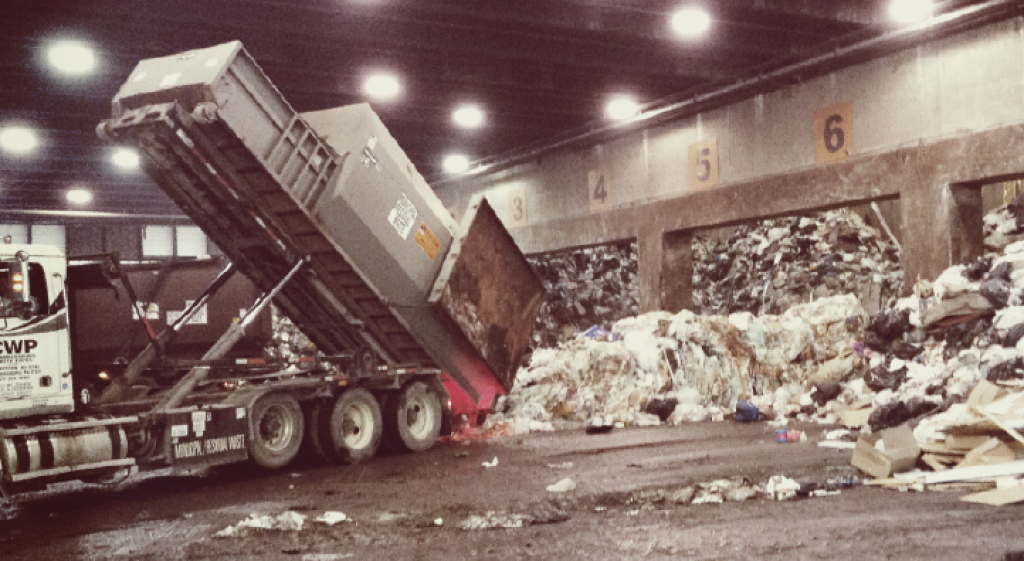
Smell Ya Later! We bid adieu to the Harrisburg incinerator–40 years, many breakdowns, a botched upgrade, dubious financings and a near-city bankruptcy later.

Screenshot 2013-11-29 10.14.23

Later this month, about a week before Christmas, Harrisburg should complete its sale of the facility that the journalist Paul Beers once called the “infernal furnace.”

The Lancaster County Solid Waste Management Authority (LCSWMA) will pony up somewhere between $126 and $132 million for it, helping the facility shed the $350 million or so in debt it accumulated over the years. The purchase will also, it’s hoped, help ditch the adjectives—“troubled,” “ill-fated,” “botched,” not to mention “infernal”—that have historically preceded its name.

In the meantime, though, those adjectives will continue to amuse employees like Guy Lefever, who started working at the incinerator in 2009 and has always known it as a functional facility.

“People come up here, and they’re blown away,” he told me one morning in late September. “They’re thinking it’s just gonna be a run-down building, and trash laying all over the place. And it’s not.”

We were standing a few dozen yards from an ash heap, where the scorched remains of solid waste from households in Pennsylvania and New Jersey arrive fresh from the burners all day. A couple of ravens scavenged for surviving morsels. The land around the incinerator is close to capacity, so a pair of trucks spends most days at this heap, loading ash onto haulers that will take it elsewhere.

Lefever, a solidly built man in a clean, blue dress shirt, with a doughy lower jaw like Bill Murray’s, starts many sentences with, “So basically,” in the manner of someone whose job often involves translating technical terms. “So basically,” he said, as we watched the vehicles work amid a thin cloud of ash, “the truck comes up, dumps it out, they spread it out, stockpile it, and then load these trucks to go out to the different landfills.”

According to Lefever, “troubled” is not the only misnomer attached to his place of work. The incinerator is also not technically an incinerator. Covanta Energy, its operator, prefers the term “EfW,” for “Energy-from-Waste,” although the amount of stock you put into this distinction probably says something about your industry. The Harrisburg incinerator achieves the “E” in “EfW” by using the heat from its burners to produce steam, which, in turn, powers a turbine, producing electricity. Nonetheless, some environmentalists have condemned incineration as a wasteful and hazardous method of dealing with trash.

Reconciling the claims of energy companies and their watchdogs can be an exercise in futility. Covanta’s website refers to EfW electricity as “clean, renewable energy,” relying on a definition of “renewable” as “derived from natural processes that are replenished constantly.” But a fact sheet from GAIA, the Global Alliance for Incinerator Alternatives, contests this pretty much absolutely. “Municipal waste,” GAIA says, “is non-renewable, consisting of discarded materials such as paper, plastic and glass that are derived from finite natural resources such as forests that are being depleted at unsustainable rates.”

Tours of the incinerator start in a squat, brick outbuilding, where a colorful graphic mounted on the wall of a conference room provides an overview of the facility’s moving parts. We stood in front of the graphic for about 40 minutes while I tried to picture the combustion process Lefever was describing within the abstract boundaries of a line drawing. Then we put on hard hats and safety vests and headed for the entrance.

People like Lefever often refer to “feeding” the incinerator, and the first stage in the long meal occurs on what’s known as the tipping floor, where garbage trucks pull up one at a time and “tip” their cargo out onto a cement bay. As we approached, a short line of trucks curled back from the entrance, waiting their turn. Inside, the floor was loud with the grumble of diesel engines and the warning peals of heavy machinery going in reverse. It smelled like wet garbage, but not in an oppressive way. “It gets better over the winter,” Lefever said. We watched as a large hauler backed up and tipped its load. As it drove forward, a block of dripping waste slid out, in the exact shape of its container. Then it settled, its edges melting away, until it was just another pile of trash.

The price the haulers pay to deposit their waste is known as a tipping fee, and it’s the primary source of income for the facility. It’s also the subject of a fair amount of controversy. Different municipalities are charged different rates, for reasons having to do both with volumes of trash and other, more political considerations. Historically, Dauphin County’s fees have been drastically lower than the city’s; last summer, the city’s fee was $200 per ton, while the county’s was $77. Under the terms of the sale to LCSWMA, the fees will gradually become more equitable over the next couple of decades, until both the city and county are paying $115. But, in the short term, the city’s fee will remain much higher.

Preserving the disparity is one of the less savory requirements of the state-appointed receiver’s recovery plan for the city. Higher fees mean more revenue for LCSWMA, which, in turn, translates to a higher sale price for the facility. The receiver’s team viewed the higher sale price as critical, because the proceeds will help pay down the incinerator debt, but many residents are still unhappy about it.

In addition to paying more to dump, the city will also be contractually obliged to deliver 35,000 tons of waste to the incinerator each year. Many residents aren’t particularly happy about this, either. But if trash is the facility’s food, then the burners, like teenagers, need to be constantly eating. If there isn’t sufficient trash to keep the fires burning, they must be restarted with gas, at cost to the owners. The demand for trash is so great, in fact, that Lefever must occasionally bid for waste from outside municipalities. (In the olden days, he said, some incinerators may have even accepted trash for free, because “they were making a god-awful amount on their electric side.”)

From the tipping floor, we headed to the control room, where a shift supervisor named Troy was watching a set of big-screen monitors. “So if this was MTV Cribs, you remember that show?” Lefever said. “Well, this is where the magic happens.”

From this station, Troy could keep an eye on temperature levels, burn rate, flame height, steam output and just about everything that happens to the trash once it enters the burners. Some screens showed color-coded blueprints of the equipment, spotted with lines of data, and some provided live camera feeds from inside the facility. On one feed, lead-colored ash trundled along on a conveyor belt. On others, unbelievably, you could watch the garbage actually burning. Tiny fisheye lenses, cooled by constant air streams, provided the images: ghostly orange-and-black blurs, smoldering at temperatures as high as 2,000 degrees.

Troy, like Lefever, spoke in industrial shorthand. (“So here’s your pit, crane operator feeds grapples in here, trash goes down the chute, and here you got feed rams that are pushing your fuel off, you know…”) They talked about “wet stuff,” meaning moist, slow-burning trash, which produces dark spots in the flames on the video feed. Whoever is manning the control room must monitor the amount of wet stuff in each burner, in order to ensure a well-paced, thorough burn. “If your fuel would be a consistently steady fuel,” Troy said, “you wouldn’t have to do much. But trash is trash. One load comes in, it’s all paper, and the next load comes in, and it’s restaurant waste. You got a constant different waste stream.”

From the control room, we headed out to observe the crane operator, who spends the day plucking up trash from the tipping floor and feeding it to the burner.

He was sitting inside a glass box, manipulating an enormous grappling claw. Essentially, his job is to manipulate a smelly, 70-foot tall teddy picker. He dropped the claw, closed it around a massive clump of trash, and then hoisted it to one of the chutes and let it spill. Occasionally, rather than empty his claw into a chute, he’ll unload it on one of his stockpiles along the edges of the floor. The stockpiles keep the tipping floor clear for incoming trucks, but they also allow for the mixing of wet and dry waste to achieve a more consistent burn.

We passed back along a catwalk between the boilers and stepped outside. Lefever pointed out the baghouses: big, funnel-shaped filters that strip particulates from emissions en route to the smokestack. The effectiveness of these filters is something environmentalists also question, although the state Department of Environmental Protection, which monitors the facility’s emissions, has issued few violations, and the ones it has have been minor. “Really, you don’t see anything coming out of the stack,” he said. “It’s all being captured.”

I looked up. The stack seemed to be emitting nothing more than little white wisps of cloud.

The things that have troubled the incinerator in recent years have afflicted it almost from the beginning. In September 1966, City Council approved a project that, at the time, was projected to cost $4.5 million. By the time the facility came online, five years later, that cost had nearly tripled. After repeated breakdowns, it nearly tripled again.

Then, as now, the incinerator became a measure of the office of the mayor: both the scale of its ambitions and its command of city finances. Paul Beers, surveying the facility’s early history in several columns for the Patriot, recalled that Mayor Al Straub called it “the Rolls-Royce of incinerators” in 1969. But his successor, Harold Swenson, condemned it as “a facility that far exceeds our needs and our ability to pay.”

And then, as now, the trouble came mostly from two quarters: the difficulty of securing a sufficient waste stream and the need for its technology, never quite ready for prime time, to comply with environmental regulations. Beers reported that, in order to pay for itself, the incinerator needed to run at 85 percent of its capacity. It routinely ran at 60 percent. Neighboring municipalities, Beers wrote, could not be cajoled into committing to the city’s project.

In addition, the incinerator was continually plagued with mechanical problems. In 1978, it caught fire. In 1979, there was a cave-in, the aftermath of which, Beers wrote, “epitomized all the comedy and tragedy” of the facility. Its manager, Jack Karper, “hurriedly rescued the garbage reserve so there would be trash to feed the flames and make steam…Explained a jubilant Karper, ‘Thank God we saved the garbage. It represents dollars.’”

In 1984, after years of regulatory violations—mostly over where the city was storing waste after burning it—Mayor Stephen Reed corralled the operation under a newly minted “Department of Incineration and Steam Generation.” Some improvements were made, including the addition of a new steam line, but the compliance issues persisted. In 1985, an inspection revealed the city was burning a greater-than-allowable quantity of sewer sludge. In 1988, a succession of tests on the smokestack discovered emissions violations, and ash repeatedly escaped the site and landed on private property. Eventually, the city reached a consent agreement with the state Department of Environmental Resources and completed major capital repairs in 1990 and 1991.

In 1993, Reed engineered a sale of the facility to the Harrisburg Authority. The deal ushered in what you might charitably call an era of creative financing. The “sale,” to an authority of the city’s own making, drew revenues to the city of around $27 million, and, at the same time, saddled the incinerator with an additional $34 million in debt—the acquisition price, plus $7 million in bonds for capital improvements. In other words, the incinerator acquired substantial debt that had nothing to do with expanding its operations, ensuring its regulatory compliance or improving its equipment. The pattern would be repeated throughout the 1990s, until the debt load had climbed to nearly $100 million.

2003 was something of a watershed year. Dauphin County had pledged its waste stream to the incinerator, promising revenues that might have been sufficient to pay its bills, except that the federal Clean Air Act threatened to sharply limit the facility’s capacity. The city faced a choice. It either could shut down the operation, assuming its debt, or it could borrow once more to retrofit the incinerator and increase its capacity, with the hopes of generating enough revenue to cover the cost. The city opted for the retrofit.

City officials, for several years prior, had been eyeing a potential contractor that could upgrade the facility at the lowest possible price. The contractor, Barlow Projects, had installed a burner in Perham, Minn., using “churn-and-burn” technology that used forced air to circulate the waste, rather than moving grates, which were constantly breaking down in the Harrisburg facility. The Perham installation’s capacity was 50 to 100 tons per day—far short of the 800 tons the city required. Nonetheless, Barlow concluded it could complete the retrofit. The upgraded incinerator, in Barlow’s projection, would produce a cash surplus of $57 million by 2028.

Barlow, though, did not complete the project on time or on budget, and ultimately the firm was fired. The company’s projections of a cash surplus relied on dubious assumptions about electricity prices and interest rates, not to mention its own construction costs. A forensic audit, commissioned by the Harrisburg Authority and completed in 2012, pointedly questioned why Barlow was even allowed to submit a financial analysis of its own project—which, furthermore, was not subject to a public bid. The decision “to allow Barlow to certify the feasibility of its technical approach, to estimate the project’s cost and purported financial benefit, and then to obtain the contracts to actually conduct the work, appears questionable at best,” the audit says. “There are no indications that the City, the Authority or their advisors identified the conflict or potential problems.”

But the city, the authority and its advisors, following the pattern set by the 1993 sale, were far past the point of measuring debt against any future capacity to pay. Like the incinerator, which fed new trash to old trash to produce electricity, they were issuing new debt to pay for old debt. By the time Covanta was hired to finish the project, the facility’s debt totaled $280 million. The authority could no longer service it, and the city, which had promised to pay in its place, was on the hook.

The trick of municipal finance—in a sense, the trick of finance generally—is how to make something out of nothing. A city wants to build an incinerator, but it has no money. What should it do?

If the city were like me, and followed the advice of my old boss (“stay out of debt, kid”), it would sock away a little bit of each year’s revenues until it had enough for an incinerator. The problem with this method is that it would lead to the building of exactly zero incinerators.

An alternative is to borrow now and pay the bill later. The favored tool of municipal borrowing is the bond issue. A bond is a promise to pay, and in the case of a capital project like an incinerator, it comes with a certain built-in elegance: the promise sows the seeds of its own fulfillment. The debt builds the thing that earns the revenue to pay the debt. Between the tipping fees and the electricity sales, the incinerator should be able to pay all of its workers and still have enough left over to pay back what’s been borrowed. The city comes away owing nothing, and, in the meantime, careers have been made, families supported, kids sent to college, and everyone has avoided being drowned in garbage.

The term for debt that can be paid back with user rates is “self-liquidating.” When a local government classifies debt as self-liquidating, it’s essentially reassuring taxpayers that their taxes will never be raised to cover the debt, because the project will pay for itself. It’s important for governments to make this classification, because state law imposes strict limits on how much a municipality can borrow, based on its revenues. Self-liquidating debt doesn’t count against the limit, which frees up the municipality to borrow for other projects.

In Pennsylvania, the entity charged with watching the taxpayers’ back in the municipal borrowing process is the Department of Community and Economic Development (DCED). When a local government wants to issue new debt, it must submit a five-page statement to DCED tallying its various outstanding obligations. The third page of this statement, known as an 8110(b) certificate, requires the government unit to sign off on a one-sentence pledge that says, in essence, that any debt that was classified as self-liquidating in the past is still self-liquidating. A government that gives this assurance is said to have filed a “clean” 8110(b).

On Oct. 4, 2012, the Pennsylvania Senate held the first of two hearings to try to determine what, exactly, had gone wrong in Harrisburg. In a period lasting just under 20 years, the debt load on an incinerator that the city had bought for $27 million had ballooned to nearly $350 million. Huge portions of the borrowings were used to refinance prior debt and generate “working capital,” to cover the costs of operation. A remarkably small portion of the debt went towards actual improvements on the facility, which should have been an indication the project had ceased to pay for itself. Yet each time it borrowed, the city filed a clean 8110(b).

One question for the legislators was how the city was permitted to keep classifying the incinerator debt as self-liquidating. Steve Goldfield, a financial advisor to the state-appointed receiver who contributed to the forensic audit, raised this question during the hearing. In addition, he asked, if the debt didn’t go towards improvements, what was it spent on?

Goldfield’s testimony lasted two hours. After Goldfield, the senators listened to representatives from DCED, to former board members of the Harrisburg Authority, to former Mayor Reed, and to a handful of lawyers and financial advisors, among others. Most of those involved at the time of the borrowings came supplied with reasons why they weren’t to blame. DCED was desperately short-staffed and could rarely give more than a cursory review to the assurances made by local officials. Local officials relied on the advice of professionals, not being qualified themselves to assess technical projects. The professionals, for the most part, fobbed off culpability onto other professionals.

Goldfield, in his testimony, was careful to point out the many factors outside the city’s control. Revenues for an incinerator project were particularly volatile: there was the unpredictability of electricity prices, the unreliable flow of trash, the need to comply with environmental regulations. But Goldfield also described the disturbing pattern that emerged with each new bond issue. Harrisburg wasn’t just borrowing to fix the incinerator; it was using the construction project as a back door to extra debt above its limit.

Each time the Harrisburg Authority issued new debt, it sought guarantees from Harrisburg and from Dauphin County, and in most instances, the guarantees were provided. There’s nothing irregular about guarantees in and of themselves. Municipal bonds, like any other form of debt, have interest rates tied to the amount of risk the bondholder assumes in purchasing them. To reduce the amount of risk, and therefore the interest rate, the borrowing entity can seek a guarantee from a municipality, which pledges to pay bondholders in the event of default.

But the city and the county also charged the authority fees for those guarantees, in the several millions of dollars. In his testimony, Goldfield was quick to note the suspect nature of these charges, especially as applied by the city. In 23 years of working in municipal finance, he said, he had only seen one other instance of a municipality charging its own authority a fee for a bond guarantee.

In addition, there was something peculiar about the way the fee amount was calculated. “The guarantee fee, through serendipity or something else, matched the structural deficit in the city’s budget,” Goldfield said. In short, each time the authority issued new debt, the city sliced off a piece exactly large enough to fill a hole in the general fund.

It has occasionally been said that, under receiver William Lynch’s plan, various creditors and professionals will receive what they’re owed, while the city’s taxpayers receive nothing. Particularly in regards to the incinerator, this interpretation has some intuitive appeal. The facility, the thinking goes, was built with Harrisburg-taxpayer-backed borrowing, but now it will be sold to enrich the coffers of some other municipality.

The problem with this argument is that it skips over everything that taxpayers received under Reed. Tax revenues were insufficient to cover the budget, yet, for years, tax rates stayed low. This was true, in fact, for rates across the board, including water and sewer rates and fees for using public parks. Part of the reason there’s been so much grumbling lately is that prices that ought to have gone up gradually each year are now playing dramatic catch-up.

It’s one thing to be cheated and lied to, of course. The state attorney general has announced an investigation of whether any of Harrisburg’s officials or their advisors cheated or lied, and the receiver’s plan includes a hope for some civil claims from the professionals who escorted the city down a financial hole. But the borrowed money didn’t all just go to a few suits in city hall. Might some part of the deal reflect Harrisburg’s payment for two decades of willful ignorance?

A very small portion of the incinerator’s revenues has nothing to do with burners or electricity. It comes, instead, from scrap metal recovered from the waste. The ash, leaving the boilers on a conveyor belt, passes beneath a big, spinning magnet that sucks metal up from the stream and whisks it onto a mound of salvaged scrap.

Towards the end of my tour, Lefever led me up a ramp, to a point from which I could peer into a large cement box. The magnet, like a giant spool, revolved at the leisurely pace of a paddlewheel. Bed springs, chicken wire, coffee cans and oil pans piled up below, effaced to an identical smoky blue-gray.

We climbed some stairs to the room where the turbine, a dull nest of pipes and dials, sits underneath a high ceiling. It was about as large as a mid-sized Winnebago. I was struck, again, with a sense of disbelief: how could such an extraordinary amount of debt be saddling a facility that was, in physical scope, so comprehensible?

Outside, we pulled out our earplugs and shed our safety jackets and hats. On the perimeter of the facility are a couple of capped landfills. They used to be more of an eyesore (“I think people were calling it ‘Mount Ashmore,’” Lefever said), so they seeded them with temporary grass covers. Now they look like ancient burial mounds—hills too square-shaped to be naturally occurring.

We walked to the active part of the landfill. Between the boilers and the ash heap is a span of city garages and, beside them, a lot that amounts to a graveyard for retired city vehicles. We passed some garbage trucks, still in use, and an outmoded fire truck, long abandoned. At the end of a gravel road, a truck was depositing a load of new ash, water-soaked for cooling purposes, and spreading it out to dry. It will remain there a while, picked at by scavengers. Then haulers will come and take it away, and it will cease to be Harrisburg’s concern.


Continue Reading

A Sweet Tradition: At Matangos Candies, one family has served up handmade delights for 67 years.

Screenshot 2013-11-29 10.19.42

On a recent fall trip into Harrisburg, Lewisburg resident Robert Powell stopped in to Matangos Candies to pick up some sweets for his 92-year-old mother. Shop owner Peter Matangos greeted him by name, asked him how his health was and shared a few laughs with his long-time customer.

“Whenever I come to Harrisburg, I stop in here,” says Powell.

What keeps bringing him back? The family-style rapport he has built with the sweet shop and the handcrafted dark chocolates for which his mother says there is no acceptable comparison.

“They keep mama satisfied with candy,” says Powell, who explains that his mother loves that Matangos uses all-natural ingredients. As Peter packaged an assorted box of dark chocolates, he said, “We hook mama up.”

This is business as usual at the 67-year-old candy shop, where Peter, his mother and previous generations have built a strong sense of community and share the joy that homemade candy brings to the taste buds and the soul.

Their sweet history begins with Peter’s Greek grandfather Christoforos “Pop” Matangos, who, in 1941, immigrated to New York from Turkey, where he had learned his delicious craft and created his signature Venetian Mints that are to this day one of Matangos’ best sellers. After serving many years in the Merchant Marines, he moved to Allentown to start a candy shop and soda fountain, which only survived a brief time during the Great Depression. His failed business forced him to move to Scranton, where he worked for Davis Candy, and later to Harrisburg, laboring in the candy kitchen of the long-gone, legendary Pomeroy’s department store.

In 1947, Christoforos opened Matangos Candies out of his home at S. 15th and Catherine streets in the Allison Hill neighborhood of the city. During the late 1950s through the early 1970s, his family helped develop his business into a thriving enterprise, which quickly became a local favorite.

When Christoforos died in 1977 at the age of 84, Peter, his parents and siblings picked up where he left off. Today, Peter is nearly a one-man show, making the candy, running and cleaning the shop, handling marketing and advertising, keeping financial records, answering the phone and greeting customers with his infectious smile and endearing “Hey! How ya’ doin’?”

Helen, Peter’s 81-year-old mother, with whom he lives in Susquehanna Township, also works at Matangos, most often doing the chocolate dipping.

For the 53-year-old candy maker, the magic happens downstairs in the kitchen, where his grandfather dreamt up his homemade recipes for many years, passed down his techniques and recipes, and told Peter, “Don’t change anything I’ve done, and you’ll be in business for years.” With strong admiration for his grandfather, Peter listened and has helped to round out the family tradition, staying true to “Pop” and their long-time customers.

Back in Time

Walking into Matangos is like taking a trip back in time. With obvious admiration and respect for his grandfather, Peter hasn’t changed a thing. Matangos still offers Christoforos’ signature Venetian mints and ivory (or white) dipped chocolates, something that he was the first in the country to make. The candy shop boasts a wide variety of treats using its patriarch’s exact recipes, which include Wilbur Chocolate (Christoforos’ favorite) and do not contain artificial ingredients. Only the fruit creams contain food coloring to differentiate between the flavors.

“There is no junk in our candy. A 3-year-old could read our ingredients,” Peter quips, and explains that he has had numerous salesmen come to the shop trying to sell him Vanillin (imitation vanilla), which he has always refused.

Peter has even kept his grandfather’s old candy cases, which house Christoforos’ antique stenciled candy signs, and he continues to use all of his grandfather’s chocolate-making equipment, which he swears by. “I have never replaced any equipment,” he says.

This is the magic of Matangos. Peter and Helen have kept family traditions alive, housing antique artifacts at their shop; providing hometown, family-oriented customer service; insisting on using the best ingredients; and only serving the freshest, tastiest candies. While many chains offer cheaper treats at nearly every grocery store in driving distance, Peter says that Matangos boasts freshly made chocolates, which, at any given point in time, have sat in his vintage candy cases for no more than four to six weeks. When you buy a box of chocolate at a large retail store, there is no telling just how old the candy is.

Special Visit

Upon entering Matangos, the aroma of chocolate welcomes you for a special visit, and then, slipping a luscious chocolate into your mouth, you realize why this shop is a well-loved gem in the city. Velvety chocolate caramels melt in your mouth, without the unpleasant side effect of getting the confection stuck in your teeth.

The Figaro, a delightful, three-layered hazelnut chocolate candy, adds a rich, unique flair to Matangos’ offerings. Chocolate-covered toffees offer a quick trip to heaven, with a bold, yet smooth, buttery flavor. And, the Venetian mints—which come in milk, dark and ivory chocolate assortments—elicit audible signs of enjoyment and a nostalgic appreciation for the thoughtfully crafted candy, concocted many years ago. These are a few of the treats that keep customers coming back for more and that influence Peter’s cheerful disposition, loving gratitude and respect for his grandfather’s craft—one that has become his own.

With the holiday season underway, Peter says he will sometimes work 12 to 14-hour days, but the love of candy making keeps him going, without feeling the exhaustion that long workdays can create.

Each year, one of Matangos’ busiest holiday seasons is Christmas—during which time Peter and Helen crank out seasonal favorites like chocolate Santas, classic barley sugar toy lollipops, chocolate straws and red and green Jordan almonds. Easter also proves to be an industrious holiday, when Matangos fulfills orders for chocolate peanut butter eggs and chocolate bunnies, among other favorites. Valentine’s is another big day for the candy shop, which produces close to 500 pounds of chocolate-covered strawberries leading up to the sweet holiday. Matangos offers candy for same-day purchase out of the candy cases, as well as through special orders, in which Peter says he “chocolate-covers anything.”

Handcrafting candy for 35 years, Peter can’t imagine doing anything else. When his grandfather taught him how to make candy during his childhood, he was captivated.

“I knew when I was about 14 that this is what I wanted to do,” he says. “I love it; I can’t help it. I don’t dread coming to work every day. I have never had an angry person in here. I have the sweetest job in Harrisburg.”

Matangos Candies
1501 Catherine St., Harrisburg
717-234-0882
https://www.matangoscandies.com
Hours: Monday to Friday, 9 a.m. to 5 p.m. 

Harrisburg small business articles are proudly sponsored by Select Capital Commercial Properties Inc.

Continue Reading

Tailored to Men: Consignment shop fits male styles, wallets.

Screenshot 2013-11-29 10.19.10

This year, the New York Times made a bold statement, declaring this the “New Age of Sartorial Enlightenment.” According to the article, the average male is now trading “schlumpiness for style.”

For females, who have always been held to a higher fashion standard, it’s an idea whose time has come. Some contend that people in our geographical area are anything but “early adopters,” but spend a night in downtown Harrisburg, and you will witness many a man stepping out in style, so times may be changing.

For those who are curious about what steps they can take to improve their sartorial quotient, David Wise of Top Shelf Menswear in New Cumberland is well dressed and ready to assist. Wise opened his establishment in the spring of 2012 after recognizing a need in the Harrisburg area for an upscale consignment shop “tailored” specifically to men.

According to Wise, one of his biggest challenges is dispelling the notion that his business in any way resembles the traditional “thrift” shop. All it takes to rid oneself of that pre-conceived prejudice is a trip to his immaculate, well-organized establishment. Wise succeeds in creating a space with an upscale feel similar to men’s stores like Jos. A. Banks, where he was a frequent customer. Managers there were so impressed with his good eye, they succeeded in recruiting him to work part-time, while he also worked as a farrier, specializing in equine hoof care. Wise jokes that it’s fitting since he’s known as a “clothes horse.”

Unlike most consignment shops, Wise’s business maintains a roomy feel. Shirts hang, pressed and pristine in one area, suits in another, and a wide array of colorful, lux ties are carefully folded and easily accessible, each given its own little cubby. 

Shoppers can easily view a large expanse of merchandise all at once, then easily hone in on something that catches the eye and survey the article without wrangling with crowded clothing hung on too-close hangers.

In addition to shirts, suits and ties, Wise carries pants, jackets, coats, shoes and accessories like belts, tie tacks and cufflinks, along with new portfolios and even wallets.

Designer brands like Versace, Armani, Hugo Boss, Burberry and Gucci can be found for a fraction of the price customers would pay if purchased new. “Typically, you’ll save about 70 percent off retail,” said Wise.  

Wise uses his customer service skills and keen eye for aesthetics to pair colors and patterns that work together to aid shoppers in looking their best. He even offers beer (hear that guys?) and wine to those who prefer to sip and shop at a leisurely pace.

Customer Carol Page Livingston of Mechanicsburg gives Top Shelf Menswear high marks. “Dave really knows style and is always eager to help a lost soul find his way through the daunting task of clothes shopping. This is our favorite place when it comes to purchasing clothing for my husband,” she said.

Marlin Yohn of Dillsburg also enjoys shopping at Top Shelf. “He carries an unbelievable selection so you can find what you are looking for at reasonable prices you can afford. The clothing is top quality, and their great tailor will make you look your best. Service, too, is top shelf service so you keep coming back.”

Wise also caters to larger customers with a “Big and Tall Room” located in the rear of the store where sizes range from 38 to 58.

Younger folks might want to check out the store as well. For college students seeking jobs, Wise offers assistance in their attempt to dress to impress, along with a 20 percent discount. Active military are encouraged to take advantage of a 20 percent discount too. “I offer the discount as kind of a thank you,” he said.

Wise is also active on social media, offering discounts on “Twitter Tuesdays” and “Facebook Fridays,” so be sure to “follow” and “like” Top Shelf Menswear to keep abreast of the latest tips on acquiring high-end fashion at a major discount.

“You’d be surprised how differently you are treated when wearing a jacket,” said Wise.

Top Shelf Menswear is located at 300 Bridge St., New Cumberland. More information is at www.topshelfmenswear.com.

Continue Reading