December News Digest


2014 Budget Passed

Harrisburg residents will see no tax hike in 2014 as part of a $77.8 million budget that unanimously passed City Council last month.

The 2014 budget process was remarkably smooth following several years of annual conflict between the council and administration over spending priorities, allocations and tax increases.

Council held just a single, 90-minute budget hearing then approved the spending plan with little additional comment.

A direct comparison to last year’s budget is difficult due to the provisions of the Harrisburg Strong plan, which included the sale of the incinerator, the lease of the parking system and the transfer of the water/sewer system.

That said: expenditures from the city’s general fund, which covers most day-to-day operations, will increase about 1.7 percent, from $56.2 million in 2013 to $57.2 million this year.

City Council expects to reopen the budget this month to better reflect the priorities of newly elected Mayor Eric Papenfuse. However, major changes are not expected, as the anticipated amount of revenue will not change, and the current budget already has the blessing of the receiver’s office.


Water/Sewer Rates Going Up

Harrisburg water and sewer customers will see a 27 percent rate hike this year for their service under a budget passed by The Harrisburg Authority.

The rate increase was necessary to pay for long-delayed system improvements, said Executive Director Shannon Williams.

“For too long, necessary investments in Harrisburg’s water infrastructure have been deferred to future generations,” she said. “That ends with the adoption of this budget. It will allow us to deliver service and reliability that our customers deserve and that will sustain the city into the future.”

An average customer who uses 5,000 gallons of water per month will pay about $825 per year, an increase of about $175.

Initially, the Authority had projected a 47 percent rise in rates for 2014. However, that amount was reduced after the board of directors and staff developed strategies to control costs, said Chairman Bill Cluck.


Sanitation Outsourcing on Hold

City Council last month put the brakes on privatizing trash pickup, as it refused to approve an administration-brokered deal with Republic Services.

Councilwoman Sandra Reid said the city would issue a new request for proposals early this year, which would delay the plan to hire an outside waste hauler well into 2014.

Council balked at the Thompson administration’s selection of Republic Services, the nation’s second-largest trash hauler. Council members claimed they were shut out of the selection process and objected to certain requirements of the proposed agreement, including that sanitation workers would have to pick up their equipment each day in York.

Receiver William Lynch has recommended privatizing sanitation services to save the city money. The contract with Republic would have saved Harrisburg about $1.1 million per year, according to a memo to City Council from Chief Operating Officer Robert Philbin.

Separately, the Department of Public Works is relocating its headquarters and operations to the 1600-block of N. Cameron Street, said Director Kevin Hagerich. The move is due to be completed by March 1.

For many years, the department occupied space on the property of the Harrisburg Authority. That land, though, is no longer available due to the sale last month of the incinerator to the Lancaster County Solid Waste Management Authority.


Projects Get Go-Ahead

Harrisburg City Council gave the green light to numerous development plans last month, allowing construction to begin for several critical projects.

Council unanimously approved land use plans for the following:

  • The conversion of the Stokes Millworks building, 340 Verbeke St. in Midtown, to a farm-to-table restaurant and art studio/gallery by Historic Holdings LLC.
  • The conversion of the First Church of God, 15 N. 4th St. downtown, into a new theater and home for Gamut Theatre Group.
  • The construction of four new apartment buildings with 171 units at Brookwood and Melrose streets on South Allison Hill by Brookwood Commons LP.
  • The demolition of small, vacant apartment buildings and their replacement with five townhouses at 222-224 Hummel St. on South Allison Hill by Brethren Housing Association.
  • A 33,000-square-foot expansion of an industrial warehouse at 4000 Industrial Rd., including two parking lots and on-site stormwater infrastructure improvements, by the Sygma Network.

These projects come on the heels of several other recent development initiatives, including the planned completion of the abandoned, half-finished Capitol View Commerce Center on N. Cameron Street by Moran Industries.


No Tax Increase from County

For the ninth straight year, Dauphin County will not raise its property tax, as county commissioners last month passed the 2014 budget.

The county tax will remain at 6.87 mils, in addition to a .35-mil library tax.

For 2014, overall spending is actually expected to fall, as the $230.6 million budget clocks in at about 5.5 percent less than the 2013 budget. The decrease is largely due to the Harrisburg Strong recovery plan, which freed the county from most of its obligation from incinerator bond guarantees.


Swearing In Slated

Harrisburg will ring in new leadership on Jan. 6 with the swearing in of several key municipal officials.

New Mayor Eric Papenfuse will be sworn into office in a ceremony that will begin at 10 a.m. in the lobby of City Hall. In addition, City Controller Charles DeBrunner will take the oath of office, as will newly elected council members Shamaine Daniels and Ben Allatt and incumbent council members Wanda Williams and Eugenia Smith.

After the swearing in, the new administration will begin to move into its offices. City Council will hold its reorganization meeting in council chambers at 3 p.m.


Changing Hands

Barkley Ln., 2509: T. Huynh & L. Lee to C. & S. Moore, $74,900

Boas St., 406: C. DeLorenzo to A. Heisey, $90,000

Brookwood St., 2610: D. Krekstein to Scottsdale Commercial Partners LP, $170,000

Croyden Rd., 2986: PA Deals LLC to N. Peterson, $79,000

Green St., 1608: PA Deals LLC to G. & J. Modi, $137,000

Green St., 1816: J. Tran to G. Brown, $92,945

Green St., 1911: T. & S. Cohen to G.E. Morris III, $159,000

Kensington St., 2252: S. Myers to C. Dell, $52,900

Locust St., 130: D. Bohn et al to WCI Partners LP, $300,000

Market St., 1501 & 1507: Martin Luther King Baptist Church to Eastern PA District Christian & Missionary Alliance, $130,242

N. 2nd St., 1303: U.S. Marshall Service to PA Deals LLC, $30,000

N. 2nd St., 2447: E. & S. Lupyak to M. DePhillip, $57,500

N. 3rd St., 1421: Third Street Development LP & Powers & Assoc. LLC to E. & C. Papenfuse, $60,000.

N. 3rd St., 1912: PA Deals LLC to N. Peterson, $76,000

N. 16th St., 1106: Community First Fund to R.J. Murphy III, $31,500

N. Front St., 111: Front & Locust LLC to J.A. Hartzler, $200,000

N. Front St., 1525, Unit 312: P. Lafferty to R. & C. Chaudhuri, $160,000

N. Front St., 2509: A.L. Schein MD to Pennsylvania Builders Assoc., $575,000

Reily St., 219: J. Williams to PA Deals LLC, $44,450

Rumson Dr., 369: PA Deals LLC to J. Gaidos, $80,700

S. 14th St., 404: D. Boyle to J. Lopez, $30,000

November 2013 property sales for Harrisburg, greater than $30,000. Source: Dauphin County. Data is assumed to be accurate.


Continue Reading

Hark! The Harrisburg Angel Sings

capitolxmas

Hark! the Harrisburg angel sings,
Glory to all strange city things.
Our capital’s had quite a year
For those of us still living here.
At last, it seems receivership
Will wrap up its historic trip:
Our third-of-a-billion in bad debt
We swap for a ten-piece parking set
And an over-leveraged, infernal furnace
Whose burn, we hope, will cease to burn us.

Some still yearn for bankruptcy,
But now, at least, we’ll all be free
From the whims of a federal judge’s will
(plus millions more in legal bills).
Also, the creditors will be made whole! A
Hearty thanks to Jeff Piccola.
We fondly recall the gov’s first pick,
The much-loved David Unkovic,
Even despite his mortal sin
Of talking to actual citizens.

It took Bill Lynch, who came on later,
A cool, tight-lipped negotiator,
To haul his predecessor’s design
All the way to the finish line.
(He may’ve, at some point, had to do
some crazy Air Force jujitsu.)
Whether this plan, though, works at all
Will all come down to City Hall—
And hence we sink to the second layer:
This year’s raucous run for mayor.

In November we voted for—holy crow!
Was it really only two months ago?
We still have mailers on our lawn
Too savage to be viewed straight on.
In May, we sent a sayonara
To the four-year Linda Thompson era,
Which got its share of unfair press
But was, regardless, still a mess.
Anyway, the voters spoke
And chose that Midtown Bookstore bloke.

Whose field, it seemed, was almost cleared,
When over the summer, things got weird.
First Mindlin’s independent light
Proved inadequately bright
To illuminate his signed petition’s
One-inch-long instruction section.
And Curtis, though gentlemanly and driven,
Forgot which town he was supposed to live in.
And so, appalled by a one-man race,
Dan Miller did his about-face.

Decided to give it a second try, and
Joined the party of Paul Ryan.
What happened when these two well-known
Respected, decent men-about-town
Met on the ballot head-to-head?
They tore each other’s names to shreds!
(You may lament it or deplore it,
But the city is probably better for it.
At least it got some of us off our cans
To read the damned recovery plan.)

In any case, Papenfuse won once more:
The man went tirelessly door-to-door,
Held great meetings, took good notes,
And spent a bucketload per vote.
Can he get this fractured town to gel?
We’ll hold our breath, and wish him well.
That brings us to the final piece
Of this brief holiday caprice:
A thought on what it means to be
At home in this community.

Whatever happens in our seat
Of government on Second Street,
Even when officials get it wrong,
The main thing’s that we get along.
The leaves still redden, the snow still falls,
The art still hangs on gallery walls,
The beer still flows in local bars,
The traffic lines still confuse most cars,
And Harrisburg, even amidst alarm,
Still keeps its river-city charm.

With that, we now extend TheBurg’s
Sincerest good wishes to you and yours:
Be well, share meals with family and friends,
And as this fateful annum ends
Let’s enter the next one resolute—
And free from any libel suit.


Continue Reading

Mind the Gap

Dr. Khai Chung Ang.

Dr. Khai Chung Ang.

Some 40,000 years ago, early humans, having migrated from Africa to the Fertile Crescent, and from there to the Central Asian steppes, continued their circuitous route westward into Europe, where they found themselves out of the glare of the African sun.

This wasn’t necessarily a point in the early humans’ favor. The body needs sunlight to manufacture vitamin D, without which it may develop rickets. But some of the humans, by way of a genetic mutation, acquired (or perhaps, brought with them) a selective advantage: a tweak in the gene that codes for pigmentation, expressing itself in lighter skin that could synthesize more vitamin D at higher latitudes.

In 2005, Dr. Keith Cheng, a cancer researcher at Penn State Hershey, chanced upon a gene that affects the pigmentation of stripes in the zebrafish, an inch-and-a-half long minnow popular in genetics and biology labs. His team, extrapolating from that discovery, was able to uncover a single genetic mutation—one letter change out of 3 billion in our DNA—that largely explains the difference in skin tone between Africans and Europeans.

Last Saturday, at the Midtown Scholar bookstore in Harrisburg, Dr. Khai Chung Ang, who joined Cheng’s lab as a postdoc in 2009, talked about his ongoing research into the color of human skin. His inquiry started with a puzzle: although the lab had identified a mutation leading to light skin in Europeans, the mutation causing light skin in East Asians, who had followed a different migration pattern, remains unknown.

Moreover, whatever the mutation was, it left light-skinned Asians with a remarkable advantage. East Asians, despite having nearly the same pigmentation as Europeans, have about one-twentieth the rate of melanoma—about as low a risk as Africans. Identifying the East Asian “light-skin” gene, Ang theorized, could help us understand the genetic factors affecting the disease.

At the foot of the stage, a high table was heaped with cookies, brownies, and three tanks of zebrafish. (A smaller dish held a puddle of zebrafish embryos, some of them dormant, some on the wing.) The presentation was partly for the purposes of edification, but mostly it was a pitch for funding. Ang, along with two teammates, Tiffany Foster and Katherine Reid, needed to raise $15,000 by Dec. 28 in order to fund a sample-collecting trip to Dominica. On the table was also a stack of makeshift greeting cards: “Give the Gift of Science” was printed over a photo of a test tube tied with lacey ribbon.

“We’re down to, like, a 3 percent funding rate for federal grants,” Foster had said a few days earlier. The National Institutes of Health, which provides most of the funding for research like theirs, has increasingly restricted its grants to projects it considers low-risk. A sampling trip, though a relatively small piece of an overall budget, was only a preliminary step in a project that may or may not be going anywhere. “Getting the samples is just part of the research,” Ang said. “It doesn’t prove that your project’s gonna be successful.”

About a year ago, Ang began looking at the possibility of using crowd-funding to finance the trip to Dominica. After weighing a few options, he settled on a site called Microryza, which is a fundraising platform exclusively focused on science. Like Kickstarter, the crowd-funding platform for creative projects, Microryza’s bids are all-or-nothing propositions: either the project reaches its goal and is funded, or it falls short and gets nothing.

Foster began the presentation by saying there was a need to “close the gap between the scientific community and the public.” A slide came up on the projector, mapping the current funding model for scientific research: a line of arrows flowing from the public through taxes and the government, ending in grants. Ang elaborated. “The funding for science should come from the public, the scientists should do it, and then it should benefit the public again,” he said. Crowd-funding was a way for members of the public to give direct support to the research they wanted to see done, and, possibly, to have better access to the results.

“We call ourselves lab rats, we lock ourselves in the lab,” Ang said. “But the part that’s lacking is that we have to go out into the community and share our research.”

The Scholar, for all its charm, can be a tricky place to make a pitch. Ang and his team were competing with the sounds of the coffee bar, and when they opened the floor for questions, someone asked, “Why aren’t you doing crowd-funding?”

“No, we are,” Ang clarified.

Later, they would step down from the stage, and Foster would prompt Ang to talk about the challenges of collecting samples. Over a period of several years, Ang had built trust among the Orang Asli, the indigenous population of Malaysia. Eventually, they permitted him to take blood—the first time, Foster said, the group had ever agreed to such a collection—and the pool of 500 samples would provide a point of comparison in the study. (The indigenous population of Dominica, the Kalinago, have a mix of East Asian and West African ancestry, like the Orang Asli, that is virtually free of mingling with European settlers.)

How had Ang forged a relationship with the tribe? “Farming with them, fishing with them.”

“Eating lizard with them,” Foster added.

“Eating lizard with them,” Ang repeated.

“Raw lizard?”

“Raw monitor lizard,” he said.

One difficulty in getting DNA is the problem of tainted samples. In Malaysia, Ang had resigned to collecting blood, after discovering that cheek swabs were yielding plant DNA—residue from the betel nut, which is ritually chewed in South Asia. In Dominica, he planned for saliva samples, which are easier to bring back into the states than blood, but the team faced a similar problem. To draw members of the population into one place for testing, they were going to host a pig roast. “Everybody loves to eat, right?” Ang said. “But then you get pig DNA.”

Before that, though, the question-and-answer session was dominated by a long exchange with one African-American man, who had approached the foot of the stage to offer what was not so much a question but an impromptu lecture. He felt misled by the event, because he thought it was a chance to learn about science, when really it had been mostly an appeal for funding. He thought they should have focused more on the hope for a cure for melanoma, because that was the project’s “sizzle.”

This irritated at least one spectator, who wanted the man to pipe down so the team could address more substantive questions. This spectator, moreover, thought the man’s comments represented exactly the challenge facing scientific crowd-funders: the public may want the sexy end products of science, but do they have patience for the incremental procedures on which those results are founded?

Ang and his team, however, simply listened to the man politely, and then addressed each point he raised in turn. Perhaps they saw someone interested in the research, who wanted to get involved somehow, but didn’t exactly understand it. Someone who was, in other words, a member of their target audience.

Dr. Ang’s Microryza page, “Exploring an age-old question: can we demystify skin color?”, can be found at www.microryza.com/eascop. Project backers will receive access to an exclusive “Lab Notes” section of the page, which includes the latest updates on the team’s research. Donations, which must be pledged before Jan. 4, are tax-deductible.

Continue Reading

Defining Terms

22ndAmend

Last January, Congressman José Serrano, Democrat of the 15th District of New York, introduced a joint resolution to repeal the 22nd Amendment of the Constitution, thereby removing the two-term limit on the office of President of the United States.

Serrano, who represents a small, densely populated, fiercely Democratic section of the Bronx, encompassing Yankee Stadium and the Bronx Zoo, has introduced his resolution in every term since 1997. But that didn’t prevent certain outlets from stoking the fears of certain readers that a certain incumbent was conspiring to secure a lifetime appointment. (“King Obama?” a Fox Nation editorial warned.)

The controversy, to the extent there was one, was isolated to the fringe. The concept of removing presidential term limits is about as nonpartisan as it is fanciful. Mitch McConnell, the Republican senator from Kentucky, introduced a similar resolution in 1995, during the presidency of Bill Clinton. Harry Reid, the Democratic senator from Nevada, introduced one in 1989, just after the inauguration of George Bush. The idea was never Obama’s, and anyway, the bill, like its predecessors, was going nowhere.

Then, last week, the Washington Post published an op-ed by Jonathan Zimmerman, a history professor at NYU, suggesting that an end to presidential term limits might be a cure for Obama’s second-term woes. After tallying complaints in the President’s own party over the troubled rollout of the Affordable Care Act and the Iran nuclear deal, Zimmerman proposed that the “fervent objections” might be a consequence of the constitutional deadline on Obama’s tenure. If Obama could run again, he wrote, then “Democratic lawmakers would worry about provoking the wrath of a president who could be reelected. Thanks to term limits, though, they’ve got little to fear.”

Like other questions of national interest—unfunded pensions, government borrowing, failing public schools—the question of whether term limits help or hurt democracy has found a local corollary in Harrisburg. Two days before the Zimmerman op-ed, City Council President Wanda Williams offered a bill proposing to limit the office of Harrisburg mayor, which is currently unrestricted, to two terms. The bill cites several motives, including “returning elected officials to the masses to be those governed by their laws,” “ensuring transparency in government,” and encouraging “diversity and inclusion” among candidates for office.

At council’s legislative session, the Tuesday before Thanksgiving, Williams elaborated. She had developed the idea, she said, through conversations with other members of the Pennsylvania Municipal League, a nonprofit group that advocates for sound local government. She believed the term-limit question was “an important discussion” in the wake of the 28-year tenure of former Mayor Stephen Reed. Also, her proposal had nothing to do with the results of November’s election. “I look forward to working with Mr. Papenfuse,” Williams said, “and would like to have Mr. Papenfuse’s input as well.”

Some of the bill’s language, particularly the part about opening the office to “inclusion,” may seem a touch disingenuous, especially in light of Williams’ own election in November to her third four-year term. But council has other checks that the mayor’s office lacks. Council’s meetings are public, and its bills are discussed publicly weeks or months before passage. Its members have careers outside city hall, and they typically make themselves directly available to citizens and the press, while the mayor—with the exception of press conferences—fields inquiries through her chief of operations and conducts business in closed offices.

Williams’ bill was referred to committee, and it will probably not rear its head again til next year. Her mention of the Pennsylvania Municipal League, though, did yield a point of comparison. A spokeswoman for the league said that, while the organization holds meetings and trainings throughout the year, she was not aware of any formal presentation on term-limit legislation. But the day before last week’s council session, Williams did attend a league board meeting at the Harrisburg Hilton, where, in the course of other business, the group bid farewell to two members who were leaving because—you guessed it—they’d reached their term limits.

One of those members was Chuck Christy, a member of the city council of West Chester, a borough outside Philadelphia. Christy, who owns a geothermal drilling business, has served on West Chester’s council for the maximum eight years. He sits next to Williams at the Municipal League’s board meetings but was surprised to learn about her bill.

“I used to think term limits were a great idea,” he said earlier this week. “But then when it affects you…I guess that’s selfish, huh.” He said it took time to learn the ropes of budgeting and working with labor contracts, and added that, at a level where council campaigns cost a couple hundred dollars, term limits are probably “not necessary.” His constituents, under West Chester’s ward system, are 1,800 of his neighbors. If he’d begun to represent them poorly, he said, they’d have thrown him out of office.

There are further checks on government, in West Chester as in Harrisburg, than the lengths of officials’ terms. Among them are a balance of powers, a scrutinizing press, and of course, an engaged populace. Term limits won’t make all the difference, but the desire they express, for more accountable government, might.

Continue Reading

Man in the Middle

Lynch1
Receiver William Lynch’s presence was felt at last night’s budget hearing, even though he wasn’t there.


“We might be here all night, folks.”

So warned Harrisburg Councilwoman Susan Brown-Wilson, who led a line-by-line analysis of the city’s proposed budget, part of a marathon of budget hearings that covered half-a-dozen meetings, several delayed votes and about 24 hours of total time.

It was December 2010. And though there were no all-nighters, some of the sessions did stretch well into the late evening.

Fast forward three years.

Last night, Brown-Wilson rushed into council chambers an hour late as hearings began on the 2014 spending plan, apologizing to the assembled room for her tardiness.

Shortly afterwards, Councilman Brad Koplinski, now the chairman of the council’s Budget and Finance Committee, banged the gavel and declared, “This meeting is adjourned.”

Brown-Wilson had been in her seat for only about 30 minutes before the one and only budget hearing concluded. No marathon, no line-by-line, no barrage of questions directed at the administration, no public displays of acrimony between branches of government.

Just one person testified for much of the hearing. Public Works Director Kevin Hagerich deflected numerous questions about the logistics of relocating his department from Harrisburg Authority property to a site on the 1600-block of N. Cameron Street after the sale of the incinerator closes in about three weeks (the department is expected to relocate to its new home by March 1).

In the process, council members returned to their favorite current topic–the privatization of the city’s sanitation services, with Councilwoman Sandra Reid indicating that the bidding process would be reopened in January, nixing the administration’s selection of Republic Services. That, she said, would delay possible outsourcing for another six months, maybe more.

But why a rather pro forma, 90-minute hearing last night versus the multiple sessions from three years ago that dragged on for weeks? One word: receiver.

In 2010 (and 2011), City Council and the administration were in an undeclared war against each other. Council members picked apart Mayor Linda Thompson’s budget because they didn’t trust the administration’s priorities or the accuracy of its data.

For her part, Thompson denounced the 2011 budget that the council passed at the last minute, just before the Dec. 31 deadline, as a threat to citizens’ health and safety. She outright vetoed the 2012 plan, saying it was illegal, politically motivated and a threat to public welfare.

In contrast, this year’s budget process was almost a non-event. Thompson didn’t even attend her own budget presentation last month, and most council members were missing for this single budget hearing.

The budget almost certainly will be reopened in January, after Mayor-elect Eric Papenfuse is sworn in to office. To his credit, he was among a handful of non-administration and non-media attendees last night, sitting in the audience, taking copious notes.

However, don’t expect many changes to the $78.2 million spending plan. In the words of Councilman Bruce Weber, this budget has been “scrubbed” by receiver William Lynch. It reflects the work of his financial team, as much as the administration, and it’s been given his approval.

As Thompson plays out her final month in office, nothing much has changed in City Hall. Council and the mayor still don’t really trust or like each other, as evidenced by recent controversies over the Comprehensive Plan, bad water meter readings and trash outsourcing.

However, they’ve both come to trust the work of the receiver’s team. This non-controversial budget reflects a belief that the spending priorities and numbers are good ones, that the expectations for revenues and expenses are solid, and that the budget conforms with the precepts of the Harrisburg Strong recovery plan.

It took the financial recovery team–Lynch, former receiver David Unkovic, many others–a long time to get their heads around Harrisburg’s twisted finances. However, after two years, the receiver’s office seems to have tamed the beast, unraveling decades of financial tangles then putting the whole thing back together again. The ease of the budget process demonstrates official confidence in this work.

In the course of his efforts, the receiver has linked the two feuding bodies. They still have little regular contact, but he stands between them, connecting them through common cause. Last night, Lynch wasn’t at the hearing, but his presence was imprinted on the page. He was the man in the middle, the person gluing together the entire budget process.


Continue Reading

A Time for Thanks: Our publisher finds plenty to be grateful for this past year.

Thanksgiving, just past, is perhaps my favorite holiday.

It is a time for being thankful “just because.” Coming every year on a Thursday, it guarantees a short week of work and a long weekend with family and friends. My mom, like her mother before her, makes an amazing turkey with all the many accompanying dishes. I can usually count on leftovers lasting all weekend long. I’ve always loved leftover turkey to go along with two days of college football. All in all, it is a wonderful time of the year.

Thanksgiving also reminds all of us that giving thanks is universal. While not everyone can give or receive the gifts they may want during the coming holiday season, all can have a thankful heart. And a thankful heart is a happy heart for blessings small and large. 

With that in mind, here is my list of “things I am thankful for” in Harrisburg:

  • A terrific year of growth and development at TheBurg
  • Paul’s writing, Megan’s design, Lauren’s sales, Andrea’s support and Larry’s leadership in pulling it all together
  • Our Burg freelancers and photographers who contribute competently and faithfully
  • All of TheBurg’s wonderful advertisers
  • Select Capital Realty Group and John Ortenzio for being the first column sponsor of TheBurg
  • Sutliff Chevrolet for supporting 3rd in The Burg and all its artists
  • The receiver, the mayor, the governor, City Council and Judge Leadbetter for their diligent efforts with the financial recovery plan
  • State Sen. Rob Teplitz and Rep. Patty Kim for the great leadership on behalf of our city and region
  • Mayor-elect Eric Papenfuse and his family for their sacrifice to move Harrisburg forward
  • WCI Partners’ president and operations manager for developing Harrisburg and making it a better place—and for being two of the finest people I know
  • The fabulous designer at Urban Interiors and Smoke, her cat
  • All the many residents of Olde Uptown who believe in OU and Harrisburg
  • Buchanan Ingersoll & Rooney and First National Bank for staying in and moving into the city
  • WebpageFx for believing in Harrisburg and moving 50 employees here next year
  • The Harrisburg Chamber and CREDC for their support of our city and its many projects
  • Harristown Development Corp. and their great leadership team
  • GreenWorks for helping to develop and grow Midtown
  • JEM Group, Trinity Construction and Renovations Co., for helping build our city
  • Brickbox for converting outdated office space to residential living
  • Harrisburg University for their continued commitment to our city
  • HYP for continuing to make Harrisburg a great place to “live, work and play”
  • Creative start-ups, like Stash, The MakeSpace, Yellow Bird Café and St@rtup
  • Community Networking Resources for community development
  • LaTorre Communications for helping Penn State communicate
  • State Street Strategies for—well—great strategy and advice
  • Greenlee Partners for great work for the city
  • Triad Strategies for their consulting and advice
  • City House B&B and their wonderful owners and great friends
  • Michael Hanes’ leadership of Whitaker Center and its excellent programming
  • Messiah College for sending Harrisburg many wonderful graduates
  • The members of the Harrisburg Capital PAC
  • John Norton and Brian Ostella, just for being on Twitter
  • Penn State Harrisburg and their development staff
  • My former partners at Webclients, who helped me get here
  • Bill O’Brien, for leading “our” football team (don’t argue, PSU counts here too)
  • “The Tuscan” at Mangia Qui
  • The fine bartenders, food and ambiance at Café Fresco
  • Fine dining at Char’s along the Susquehanna River
  • The “best latte in the nation” at Little Amps
  • Running in fall on the river or through the tree canopy on Green Street
  • Cheese pizza at Ciervo’s
  • Anyone who takes time to call or email me and say “you left me off your list” (at least you read this far!)
  • And all the other many folks who believe in our city in its time of need. Your faith will be rewarded in the coming years.

Happy Holidays!

J. Alex Hartzler is publisher of TheBurg.

Continue Reading

Widgets, Not Words: Before becoming a government town, Harrisburg was an industrial powerhouse.

Screenshot 2013-11-29 10.16.58

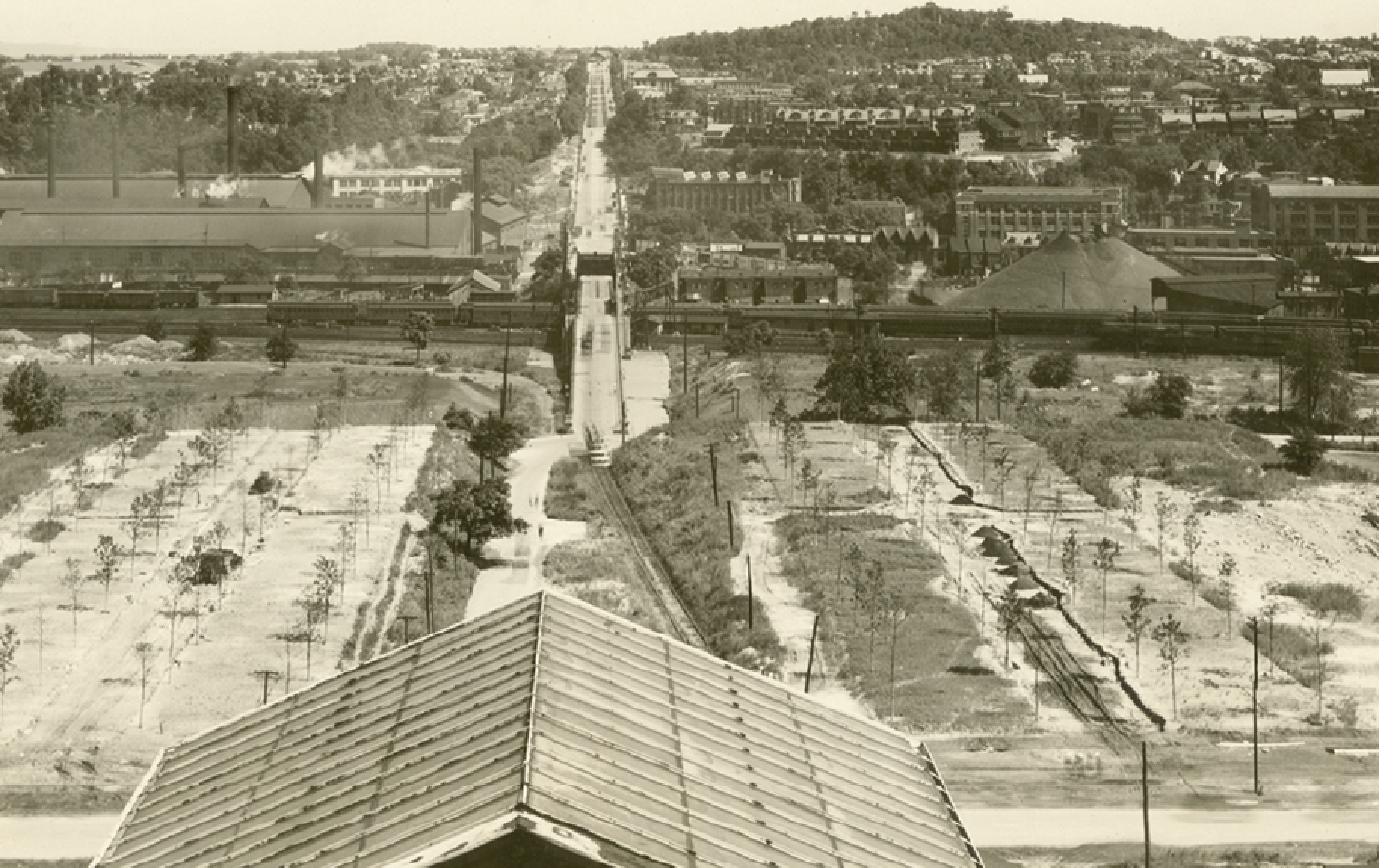
The rise of Harrisburg as an industrial city is linked to its rise as a transportation hub in the earliest years of the 19th century.

After the completion of the Camelback Bridge over the Susquehanna in 1820 and the state canal system, smaller forges, furnaces and foundries began locating in the city. The railroad revolution of the 1840s increased the ability to move raw materials, and larger industries began to locate in the city. In 1850, the Porter Furnace, the first anthracite furnace in the city, was built. In 1852, the Harrisburg Cotton Manufacturing Co. began, followed by the Central Iron Works a year later. The Hickok Eagle Works began printing ruled paper in the 1850s, and the Harrisburg Car Co. produced railroad cars.

The Civil War saw Harrisburg’s industries producing material, mainly iron, for the war effort, including the Lochiel Rolling Mill, Paxton Rolling Mills (1866) and, in 1867, the Pennsylvania Steel Works, located just south of town. By the 1880s, steel and railroads had grown into massive industries in Harrisburg, but other, smaller industries were still present to meet the demands of a growing population.

Throughout much of the 20th century, the steel and iron industries dominated Harrisburg’s landscape, and their owners and financiers contributed to the “City Beautiful” improvements within the city. The Great Depression took its toll on smaller industries, but the steel, railroads and large construction projects helped to lessen the burden somewhat.

In the early 1940s, Harrisburg, like other American cities, had ramped-up production for World War II. By 1950, Harrisburg was just shy of 90,000 people—its largest population to date. As the 1950s wore on, both the railroads and steel mills began to decline across America, and many of Harrisburg’s factories closed down in the 1960s and ‘70s.

Though many of the earlier industries are gone, Harrisburg’s steel heritage is still evident in the works at Steelton, now ArcelorMittal, and Harsco, which evolved from the Harrisburg Steel Corp. to become a global industrial services company, now based in Camp Hill.

Jason Wilson is an historian for the Capitol Preservation Committee.

Continue Reading

A Candlelight Tour of Midtown: For 40 years, HHA has showcased the best of Harrisburg.

Screenshot 2013-11-29 10.16.06Screenshot 2013-11-29 10.16.23

This holiday season, some of the city’s most iconic properties will open their doors to visitors from across the state as Historic Harrisburg Association celebrates four decades of its best-known event: the HHA Candlelight House Tour.

“This is our 40th anniversary, so it’s a pretty big year for us,” said HHA Executive Director John Campbell. “The tour has become a holiday tradition for the organization, and it is now one of the largest in central PA.”

The self-guided tours provide visitors with a chance to enter classic properties that serve as models of city living.

“The first house tour took place in historic Shipoke in 1973, in conjunction with the founding of the organization,” said Campbell. “That was the year after Hurricane Agnes had decimated much of Harrisburg, specifically Shipoke. The event was meant to look at the neighborhood and see what the private homeowners were doing to create urban renewal through a home tour experience.”

Following the initial Shipoke event, there was some question as to whether the tours should continue. HHA founding member Ronn Fink, the owner of Harrisburg’s Bare Wall Gallery who passed away last year, was instrumental in building the tour’s legacy. “The Bare Wall Gallery staged a lot of HHA’s early meetings, and Ronn’s the one that kept the tour together in its early years,” said Campbell.

Fink’s determination to continue offering the Candlelight Tour was based on his dedication to the Historic Harrisburg Association’s mission of creating sustainable communities. “At its core, the Candlelight Tour is about bringing people into the city. It’s about urban renewal, revitalization, historic preservation and city living,” said Campbell. “That’s what Ronn cared about most, and we were very privileged to have him involved. He was the glue that kept the team together.”

With Fink’s guidance, the event continued to thrive, bringing more than 40,000 visitors into various Harrisburg neighborhoods. Past tours have highlighted urban renewal efforts in communities including Academy Manor, Allison Hill, Southside and Bellevue Park.

The 2013 tour, titled “Unique Expressions: Opening Doors for 40 Years,” will take place in Harrisburg’s Midtown neighborhood. “Our offices are in historic Midtown, and we thought that having our anniversary where the heart of our work is would be a great opportunity to showcase what we’ve done over the past 40 years,” said Campbell.

The “Unique Expressions” tour will span 17 properties that incorporate new ideas of urban living and design into historic structures, some of which are over a century old.

“All of the buildings have the consistent theme of revitalization, showcasing how the neighborhood has changed and transformed,” explained Campbell. Colonial, Tudor and Federalist style homes will be open to the public, as well as the Governor’s Mansion and properties designed by renowned architect Charles Howard Lloyd.

Tour-goers will also have access to an exclusive art opening at Studio 919 on Green Street for the exhibit “Expressions of Art.” Curated by Yachiyo Beck, “Expressions of Art” will include pieces by local artists Barbara K. Buer, John Hassler, Sandra G. McKeehan, Joan S. Wolfe and Susan Auchincloss, with a portion of all artwork sold to benefit HHA.

“Visitors will have the opportunity to experience and purchase one-of-a-kind art. Many of the pieces will be displayed for the first time, created by artists who have exhibited around the world,” explained Sloan Auchincloss, who co-owns Studio 919 along with his wife Susan.

The gallery is an addition to the Auchincloss’ home, which will also be featured on the tour, highlighting recent renovations made to the Federalist property, including the addition of a painting studio and handicapped-accessible bathroom. “We hope that visitors can take some of the creative ideas and apply them to their own homes,” said Auchincloss.

The Unique Expressions Candlelight House Tour embodies HHA’s vision of what life in Harrisburg can become.

“When the Historic Harrisburg Association was founded, very few of these buildings were occupied,” concluded Campbell. “You couldn’t even get a mortgage to buy a house in the neighborhood. We want tour-goers to see the revitalization of buildings that were vacant for years and to showcase the transformation that’s happened over the past couple of decades.”

HHA’s 40th Annual Candlelight House Tour will take place Sunday, Dec. 8, 1 p.m. to 6 p.m. Admission is $15 in advance, $20 on the day of the tour, with proceeds benefitting the Historic Harrisburg Association. Tickets are available through HistoricHarrisburg.com, which also lists locations where tickets can be purchased in person. For more information, visit HistoricHarrisburg.com or contact the HHA by phone at 717-233-4646.

Continue Reading

Canopy Count: Harrisburg gets greener, one tree at a time.

Screenshot 2013-11-29 10.15.27

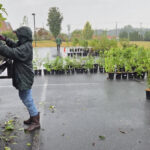
Chris Fegley approached a young London plane tree living in rare conditions for South Allison Hill’s busy Derry Street—broad patch of exposed earth below, open sky with no utility wires above.

“This should be a really happy tree,” said Fegley, neighborhood revitalization manager for the Community Action Commission.

The contented tree is among thousands of Harrisburg’s “street trees” occupying public rights of way between sidewalks and roads. But this youthful tree also represents an unprecedented partnership of state and local entities, residents and nonprofits that all see trees as the shared answer to their distinctive challenges.

Under the canopy of the state Department of Conservation and Natural Resources’ (DCNR’s) public-private TreeVitalize urban tree restoration program, a number of local entities have combined forces to count, plant and maintain trees in the city of Harrisburg.

Penn State is finalizing results of a citywide street tree inventory, conducted in summer 2013 by the Chesapeake Bay Foundation’s Pennsylvania chapter and funded, in part, by the Harrisburg Authority. DCNR is compiling data for a complete “tree canopy” assessment of every public and private tree seen from a bird’s-eye view. The Tri-County Community Action Commission’s ongoing work with South Allison Hill residents to plant and maintain trees kicked off with a tree planting in spring 2013 and will soon reach other neighborhoods.

Mature street trees offer measurable benefits in urban areas. Healthy trees boost property values, filter pollutants and reduce heating and cooling costs, according to the U.S. Forest Service. Tree-filled neighborhoods have less domestic violence. Shoppers in tree-lined commercial districts linger longer and spend more. Trees are so thirsty that 100 mature trees catch 77,000 gallons of rainwater a year.

“When you consider all those things they do, the benefits far outweigh the costs, but that’s not the general attitude,” said Ellen Roane, DCNR’s urban forestry program coordinator. “They’re viewed as a nicety, not a necessity.”

As the U.S. Environmental Protection Agency enforced municipal storm water management plans meant to prevent dirty city rainwater from coursing into rivers and the Chesapeake Bay, the Harrisburg Authority paid close attention to the city of Philadelphia’s “green control plan,” said Engineering Director Dave Stewart. Green control bypasses costly engineering projects in favor of tree plantings, rain barrels, green roofs and other natural water-management methods.

A similar approach in Harrisburg could serve the dual purpose of brightening neighborhoods and serving the authority’s needs, Stewart said. Big tunnels for capturing storm water “could address water quality issues, but the citizens wouldn’t see any benefits,” he said. “If we go this green approach, the city can see a lot of benefits.”

Urban trees don’t have the best reputation—the leaves, the heaving sidewalks, the storm damage—but in South Allison Hill, extensive meetings led by the Chesapeake Bay Foundation and Community Action Commission won enthusiastic converts who requested tree plantings in front of their properties.

In April 2013, the CAC led residents and volunteers in planting 23 trees along the streets of the city’s most diverse, most impoverished neighborhood, with funding help from Covanta Energy. They are London planes, a hybrid of sycamore and American elm. They are honey locust, Japanese tree lilac, red oak and non-fruiting versions of gingko and crab apples.

“Urban foresters stress the right tree for the right spot,” said Andrew Bliss, CBF’s grassroots coordinator. Height matters when utility lines dangle overhead. Sizeable trees need sidewalk openings of 30 square feet to collect adequate water.

Maintenance is so important that Fegley and other CAC staff took eight hours of tree-tending training, mandated for TreeVitalize grant recipients. Young trees, pruned properly, have a better chance of maturing into healthy trees. Regular watering—those green bags wrapped around tree trunks direct water straight to the root system—is crucial in the first two years.

“Getting people invested in helping with that early maintenance helps the trees get off to a good start,” said Roane.

The tree inventory cataloging the health and location of Harrisburg’s street trees—every single one, counted and assessed by Penn State Extension workers and CBF interns in summer 2013—lays the groundwork for planting and maintenance plans.

CAC will use inventory results to guide tree plantings elsewhere, including one planned for Uptown Harrisburg in spring 2014, said Fegley. The authority will overlay the results, expected before the end of 2013, on its storm water management problem areas to help target their greening efforts, said Stewart.

TreeVitalize has prompted initiatives in 150 to 200 Pennsylvania municipalities, said Roane.

“You have to know what you’ve got in order to manage,” she said. “The first step is to identify what’s there. What is the species mix? What are the age and size class? Are they mostly really, really old trees? Are they dying? What you want is a range of age classes and size classes, from young trees to mature trees, so they’re not all dying at once.”

In Harrisburg, the hope is that the city will someday have resources to contribute toward management—maybe hiring an urban forester, said Stewart.

Last spring’s planting could add a total of $260,000 to South Allison Hill property values, said Fegley. He marched to a spot near 13th and Berryhill streets being targeted for the fall tree planting—a massive stump heaved out of the sidewalk, covered in brush and trash, forcing pedestrians onto the busy road. Grinding stumps and smashing concrete are the most grueling tasks in tree plantings, but Fegley seemed to relish the idea of slaying this dragon and planting a fresh, young tree in its place.

“The community would like very much to walk down the sidewalk,” he said. 

Continue Reading

Joy in Mudville: How a group of HYP members legged out one of the world’s toughest obstacle courses.

Screenshot 2013-11-29 10.25.05

The mud was inescapable. It wrapped its thick tentacles around your feet and waist, shoulders and arms, even up to your neck and hair.

It didn’t matter where you ran, the mud found you. It only made sense to accept the mass for what it was: an unavoidable nemesis. 

It didn’t help that Tough Mudder, the fast-growing obstacle series that tests individuals in physical and mental challenges, shuttled in countless gallons of the substance on to the course for good measure, but that’s what this event was all about anyway. 

Getting dirty.

And challenging your preconceived notions of what was physically possible to endure. 

Over the last three years, Tough Mudder has become a vehicle for physical pain. The Tough Mudder company went from just three events in 2010 to 35 just two years later, with stops all across the world. In 2012, 460,000 participants joined in the fun. In the process, the company donated more than $4 million to the Wounded Warriors Project, a foundation that is recognized before each event.

The race, which isn’t timed, has become a vessel for team building and a melting pot for strengthening relationships. Weekend warriors head out the door nearly every Saturday and Sunday of the year to participate in the series, which has individuals run 10 to 12 miles, jump off 15-foot platforms, dart through electroshock wires and climb 15-foot walls. 

It’s also fun to participate in. That’s a big reason why Harrisburg Young Professionals (HYP) stocked an eight-man team in October in West Virginia to take part in the Mid-Atlantic Tough Mudder. 

Organized by HYP running club chairman Luke Sheaffer, the team was comprised of Hannah Walsh, Nadya Chmil, Bryant Siegfried, Adam Drake, Jeremy Gatens, Quyen Dao and this writer. 

The group gathered in West Virginia for the race, which just earlier this year had endured its first tragedy: 28-year-old Avishek Sengupta died after jumping into a 12-foot pool of cold water. 

But the prior distress seemed to inspire those competing. With each member of the group entering the race with varying schedules and fitness levels, finishing the course became a rallying point. 

As the field set off toward its journey, the group organized itself by tagging numerical units to a person and crying out those codes after each obstacle.

“The system of calling off numbers to account for everyone was something we came up with as we did the race,” Sheaffer said. “It gave us peace of mind knowing we had an easy way to keep together.”

We smushed our faces to the ground for the first time at the Kiss of Mud, an obstacle that saw us crawl under barbed wire that progressively lowered. While there, a sense of foreboding overcame me if only because—if this was the beginning of the pain, what would be the end? 

Sheaffer and Gatens, who wore matching, military-style cargo pants and HYP T-shirts, popped up from the obstacle as mud statues, the substance caked onto every part of their body. 

Sheaffer waited for each team member to finish before beginning the chain of command. 

“1,” he called out. 

In progressive fashion, the group followed like a military unit.

“2 … 3 … 4 … 5 … 6 …7 … 8.” 

And on the event went, our feet wading through mud at every corner, before we were met with Arctic Enema, otherwise known as a tub of really, really cold water. 

The day was brisk, nearly 50 degrees with mild gusts of wind. As my feet hit the tub, there was a moment of emptiness before complete shock pulsed through my body. I waded through the water, immersing my head over a partition, before ejecting out of the tub, seemingly frozen to the core. 

This is what Tough Mudder does. It asks you to dive in without warning and forces you to come to terms with fears. But it also teaches you to respond, quickly, without much thought. 

Five miles into the journey, after more endless mud, we were met with the Electric Eel, a watery pool with dangling electrical wires touching the surface. Siegfried snaked through the obstacle as if it were a Slip’N Slide. Gatens muffed and hawed as he slithered through the charged waters. 

Walsh hummed and groaned with every muscle-jarring shock. Sheaffer cackled near inches from the finish as a jarring volt of electricity throttled through his buttocks.  

Less than a quarter-mile later, we were met with the 15-foot Berlin Walls. The only way around was over them. And it was here where teamwork began to make a difference. 

“This obstacle, more than any of the others, told me we could count on everyone for help on whatever the Tough Mudder had in store next,” Sheaffer said.

The captain hopped to the top and proceeded to lend a hand to those below, acting as a booster for those with difficulty reaching the top. 

The group pushed through each mile and each obstacle, using grit and determination to mend off physical duress and mental anguish. The mud—that was simply an annoyance.

In all, the Mid-Atlantic course featured 25 obstacles and 10 miles of draining long distance running. Thousands of competitors layered the course. A team from Virginia Military Institute carried the school flag through the entire course. 

One competitor completed the journey with an artificial leg. Countless others overcame obstacles in one way or another. 

The last hazard, which is the cap to every Tough Mudder, put the team face-to-face with Electroshock Therapy, a 10-yard zone with dangling electrical wires. 

Knowing nothing else stood in our way, we rushed onward, only to find the most pain we had endured all day. Gatens was shocked so hard, he stopped halfway through on a barrel of hay. 

Chmil toppled to the ground with another gigantic jolt. And Walsh face-planted at the finish upon meeting a rush of electricity on the last dangling wire she encountered. 

A few moments later, with just a quarter-mile to the finish line, Sheaffer did one last role call to finish out the day. 

“1,” he panted. “2 … 3 … 4 … 5 … 6 … 7 … 8.” 

Find out more about Tough Mudder, including 2014 events, at https://toughmudder.com.

Continue Reading