The First Hundred

PapenfuseWeb

Papenfuse speaks before the media mob.


What’s in a round number?

Today, Mayor Eric Papenfuse marked his 100th day in office, and, for the occasion, the local media dutifully swarmed in, elbowing into the mayor’s conference room for a briefing alternately self-serving and brutally honest.

The self-serving portion should be no surprise. Politicians are always their own loudest megaphones, and, to be fair, Papenfuse has worked hard and conscientiously during those first 2,400 hours. He has a right to crow over what he perceives to be his accomplishments.

Looking down at his notes, Papenfuse ticked off a list of achievements since Jan. 6, the day he took the oath of office. He made a number of appointments he’s proud of; he convinced the firefighter’s union to agree to a new contract that included significant concessions; he started a promised battle against blight; he located long-lost files in City Hall that have aided a grand jury investigation into the city’s finances.

Many of these achievements, however, have had significant downsides or remain in an unfinished state. Upon questioning, Papenfuse readily admitted that he wished several of his goals were further along.

While he was able to get most of his appointees confirmed, he lost an important battle over the creation of the position of sustainability director and another over securing raises for key staff. 

City Council has not yet approved the firefighter’s contract, insisting on holding a hearing before voting on it, at a cost to the city of about $17,000 a week. The untimely death of Councilwoman Eugenia Smith has delayed the process further.

Papenfuse’s fight against blight took a weird, unwelcome turn when the first person arrested under his get-tough policy happened to be a prominent religious figure, the Bishop Augustus Sullivan, whose church began crumbling down onto neighboring houses.

Papenfuse also is proud that, after stumbles by the previous mayor, he’s revived the effort to update the city’s comprehensive plan. City Council, however, has yet to hold any hearings on it. His appointees to various boards also have been hung up in council.

“I will have to redouble my efforts to give them [City Council members] a sense of urgency,” he said.

Then there’s his escalating feud with the school district’s Chief Recovery Officer Gene Veno. Last month, Papenfuse appealed to state Secretary of Education Carolyn Dumaresq to replace Veno and, two weeks ago, he took his dissatisfaction with Veno to the public. Nonetheless, Veno remains in that office.

One hundred days is far too early to make any real judgments of the Papenfuse administration. At this point, I would expect many ambitious agenda items to be half-finished–or not finished at all–which, in fact, is the case.

However, if you turn on the TV news tonight, or read PennLive right now, you’ll see numerous stories trying to make significance from this random round number. PennLive even has a poll asking readers what they think of Papenfuse’s first 100 days (sample question: “How has dining in Harrisburg changed since Papenfuse took office?”).

It’s silly, really. If I hadn’t received an email informing me that there’d be a press conference today, I wouldn’t even have realized that this “milestone” was upon us. How do you assess a mayoralty based upon a tenure of three months and change?

By the end of the year, I expect many of Papenfuse’s half-done efforts to be done.

When it reconvenes, City Council should ratify the firefighter’s contract pretty quickly. It likely will move with more urgency to approve his nominees and start the comprehensive planning process, too. Papenfuse said he also expects to revive the process of potentially outsourcing trash collection. And the Sullivan matter ultimately won’t make any difference to the fight against blight.

Who knows? Once council and Papenfuse get used to working together, he might even get his sustainability director back.

The media, residents, even Papenfuse himself need to exercise patience. Harrisburg is just emerging from an unprecedented financial crisis and still is adapting to major changes in who holds power, how it’s exercised and what it’s focused upon. Meanwhile, the administration is still wet behind the ears, adjusting to the reality of governing this often-chaotic city.

A hundred days means nothing; an audit of achievements or failures is profoundly premature. Harrisburg, like any city that wants to progress and not just manage crisis, needs to take the long view.

Perhaps, by the end of the year, I’ll have an informed opinion of life in Harrisburg under Mayor Papenfuse. Maybe I’ll even have an opinion of how dining has changed. However, as I sit in one of the half-dozen new restaurants that are set to open by then, I’ll likely judge him more on whether my drive over was a smooth one than how much I enjoyed the meal.  


Continue Reading

State Lawmakers Back Harrisburg Mayor in Dispute over School Recovery Officer

Harrisburg Mayor Eric Papenfuse.

Harrisburg Mayor Eric Papenfuse.

If you’re going to meet about something as contentious as public education, you might want to bring a tape recorder.

That may be the best lesson so far in the saga surrounding Mayor Eric Papenfuse’s call for the removal of Gene Veno, the school district’s state-appointed chief recovery officer.

Two weeks ago, Papenfuse kicked up a small storm by going public with the fact that he had asked the state Secretary of Education to replace Veno, saying Veno did not believe in his own recovery plan for the district.

Papenfuse said his remarks were prompted by a meeting to discuss the state of the district and to get an update on the progress of Veno’s plan. State Rep. Patty Kim, who hosted the meeting in her Capitol office on the morning of Feb. 28, has corroborated the mayor’s account of the meeting. So has state Sen. Rob Teplitz, who also attended.

Almost as soon as the meeting began, Kim said, it turned “personal.”

According to Papenfuse, Veno acted defensive, driving the discussion off course with erratic remarks. At one point, Veno even lobbed a political threat at Teplitz, suggesting that people had encouraged Veno to run for Teplitz’s Senate seat.

Veno acknowledged making this remark, but said that immediately afterwards he added he “wasn’t interested” in running for office.

But what really disturbed him, Papenfuse said, was that Veno, when asked whether his plan would meet its academic benchmarks, “unequivocally” said it would not.

“He absolutely, completely doesn’t think his plan is going to work,” Papenfuse said. “That was where the conversation got frustrating. He blamed everybody else, and then he said that there was nothing he could do about it.”

As Kim describes it, Papenfuse “was trying to pin down Mr. Veno on what his next step of action was going to be with the school district.” Veno, she said, didn’t have one.

Veno, however, continues to deny he ever suggested his plan would fail. He said he “absolutely” believed it would succeed, but that it was “going to take some time.” He also explained that the circumstances leading up to the meeting had made him suspicious of its purpose.

In the weeks before the scheduled meeting, Veno said, he received a call from Sherri Magnuson, the president of the teacher’s union. Magnuson told him about a recent meeting with Papenfuse and his education advisor, Karl Singleton, during which the mayor had asked for the union’s support in calling for Veno’s resignation.

“So I went into that meeting [with the mayor] knowing he had asked for my removal,” Veno said.

Papenfuse said he did not recall expressly asking union leadership to support Veno’s removal, but that he did remember “discussing a lack of confidence in Veno.”

“I encouraged them to think more broadly about their role,” Papenfuse said. “We talked confidentially about the recovery plan, and we asked them to come back and let us know what they were willing to do. I didn’t anticipate they’d go back to Veno.”

Magnuson, the union president, said she clearly remembered the mayor asking if the teachers would join him in calling for Veno to resign. She said she did not reply, because that sort of decision would need to be taken to her membership, and that she later informed Veno because she thought he had a “right to know.”

According to Papenfuse, after the meeting, Veno also spread a rumor among some school officials that Papenfuse, Teplitz and Kim had instructed him to fire the district superintendent, Dr. Sybil Knight-Burney. Jennifer Smallwood, the school board president, said last week that Veno had “directly” told her as much. Papenfuse denied making any such suggestion to Veno, as did Teplitz and Kim.

After the Feb. 28 meeting, Papenfuse and Teplitz met with Acting Secretary of Education Carolyn Dumaresq and urged her to replace Veno. According to Papenfuse, Dumaresq, who was appointed by Gov. Corbett last August, promised a reply within two weeks. Four weeks later, having gotten no response, the Papenfuse administration issued its press release about the request for Veno’s removal.

Tim Eller, the state Department of Education’s press director, said Dumaresq denied providing a timeline for her response to the mayor. Eller declined to discuss the status of the mayor’s request, saying the secretary would not publicly comment on a “personnel matter,” except to say that “Gene Veno is the CRO for Harrisburg and remains the CRO for Harrisburg.”

Teplitz and Kim, both Democrats, and both elected in 2012, represent districts that include the city of Harrisburg. Veno, who lives in Teplitz’s district, said that he brought up the prospect of running for Teplitz’s seat only because people in the community had been asking him about it. “I felt he should know, the community supported what we were doing in the school district.”

Asked which members of the community had made the suggestion, Veno replied it was “people you would see on the street, having a cup of coffee.”

“They see you hard at work, and they ask if you’re running for office,” he said.

Continue Reading

Backfire

Station2Web

“I’m not certain how the city will be served with only three fire stations,” said Harrisburg Councilwoman Susan Brown-Wilson.

It was November 2010, and former Mayor Linda Thompson had just proposed an austere budget for 2011 that included several significant changes to the operations of the city’s Fire Bureau, including the closing of one of the city’s four fire houses, the aged Paxton Fire Co. station in Shipoke.

A furor ensued.

Downtown business owners, apartment residents and Shipoke homeowners all flocked to City Council meetings to complain. The firefighters’ union held a press conference condemning the proposal. Signs popped up in the windows of city homes and businesses asserting that they were with the firefighters (and, by implication, against the mayor).

“I’ve been inundated with phone calls and emails about the closing of [the Paxton] station,” Councilwoman Eugenia Smith said at the time.

By the time council passed its 2011 budget, most funding had been restored to the bureau, and the fire station remained open. Thompson wisely never went there again.

Fast-forward three-plus years.

Late Thursday, somewhere around 5:15 p.m., a press release popped into the email inboxes of the usual gang of City Hall reporters. Mayor Eric Papenfuse, it said, planned to shut down the Paxton station, citing the same reasons that Thompson had back in 2010—the aging fire station needed costly repairs, was in a flood zone and was not essential to ensure the safety of city residents. A press conference Friday afternoon affirmed this plan and these reasons.

The surprise, late-afternoon statement was the second press release that Papenfuse issued that day on a controversial subject. A few hours earlier, he had publicly called for the dismissal of Gene Veno, the school district’s chief recovery officer, as well as the approval of the proposed Key Charter School, which hopes to open in the old Bishop McDevitt site at 2200 Market St.

On that day, he even let leak that he had been called to testify before a grand jury in Pittsburgh that is investigating actions that led to Harrisburg’s financial crisis.

My reaction to these events can be summarized in a single word: why? Or, to be more specific and slightly more verbose: why now?

Since taking office in January, the Papenfuse administration has been trying to find its operational groove. It spent the first month attempting to get acclimated, only to find itself battling with council over budget priorities, raises for key managers and the attempted creation of new cabinet positions. Almost immediately afterwards, it fell into an unexpected controversy over a deteriorating church and, more significantly, the arrest of the man who owns it.

Now this.

What struck me most about the announcements was how unnecessary they seemed. I respect Papenfuse’s commitment to improving the city’s low-performing schools (even though the administration has little power over them). And I further respect his desire to remove the chief recovery officer if he feels that Veno is not the right man for the job.

Papenfuse, however, already had privately urged state Secretary of Education Carolyn Dumaresq to replace Veno. I saw little value in a public statement lambasting him, followed by press interviews that once again placed the city in the midst of conflict in the public eye. Furthermore, Papenfuse has little say in how the city’s schools operate, making his high-profile stance seem like turmoil for no real purpose. 

Likewise, I don’t understand why Papenfuse decided to reignite the firestorm over the Shipoke fire station at this time. I accept his word and and that of Fire Chief Brian Enterline that the station is in need of repair. In addition, closing the station, it seems, will result in substantial savings to the city.

Papenfuse, however, set himself up for exactly the backlash that greeted Thompson. Moreover, the proposal was dropped on Shipoke and downtown residents without preparation or warning, again recalling the former mayor. The completely predictable uproar caused Papenfuse to hastily arrange a public forum late Sunday at the closed restaurant, Char’s Bella Mundo, to try to undo some of the damage from engaging only the press–and not the impacted community–before acting.

As to the grand jury leak–as much as I desire justice for this city, that information isn’t supposed to be public at all in fear that it will affect the investigation.

The Papenfuse administration has a great deal on its plate, foremost continuing to adjust to the business of running an effective government. The Paxton fire station is simply not a high-priority issue and easily could have put off for six months until the administration had a firmer bearing and had addressed more pressing issues. In addition, it should have learned a lesson from the Thompson days, taking the time to engage residents instead of potentially angering them.

Harrisburg needs stability and confidence. Residents need to be assured that there’s a steady hand on the wheel, an administration that does not seek out, manufacture or exacerbate controversy.

Our two previous mayors embraced, even relished, conflict and controversy, offering this city more than its share of unnecessary melodrama. Harrisburg now needs sober, methodical leadership, even if that means feeding less red meat to the 6 o’clock news.

Continue Reading

Fire and Ice


Mayor Eric Papenfuse, left, and acting fire chief Brian Enterline at Friday's press conference in city hall.

Mayor Eric Papenfuse, left, and acting fire chief Brian Enterline at Friday’s press conference in city hall.

In the wake of this week’s news from Harrisburg’s city hall, about the closing of the Paxton fire station downtown, I found myself thinking of a line from Bill McGraw, a columnist with Deadline Detroit, about how it’s “much easier to manage growth than it is to manage loss or blight.”

McGraw was being quoted in a New Yorker profile of L. Brooks Patterson, the chief executive of Oakland County, a suburb of Detroit that is thriving while its urban neighbor struggles to survive. I thought of the quote because it nicely sums up the challenge facing the chief executive of many American cities, Harrisburg included. Elected officials are subject to the whims of public opinion, which never likes to hear bad news. But they are also constrained by the requirements of governance, which—especially in a period of decline—often means having to deliver it.

On Friday, when Mayor Papenfuse discussed the station closure at a press conference in city hall, it produced a pseudo-scandal. The Paxton station, located on S. 2nd Street, just past the entrance to the city off I-83, is the city’s only downtown fire station. When the former Mayor Linda Thompson tried to close it, in 2010, it created an uproar. Residents of Shipoke, the riverside neighborhood at the city’s southern edge, feared a spike in insurance rates and a loss of necessary protection for their closely-packed homes. Despite this, Papenfuse did not bother to contact Shipoke residents this time around. After the conference, Bill Cluck, an environmentalist and Shipoke resident, told the acting fire chief, Brian Enterline, that he and the mayor had “fucked up” in failing to engage the neighborhood.

There was also a problem of timing. The mayor’s office released the news about the station right on the heels of another major announcement endorsing a charter school and calling for the removal of the school district’s state-appointed recovery officer, Gene Veno. That might have been deliberate obfuscation, or it might have been Papenfuse’s tendency (and, in a certain sense, his campaign promise) to tackle everything at once. Regardless, given the controversy that greeted the last mayor’s effort, the predictable response this week was irritation and distrust.

But ultimately this pseudo-scandal misses the point. Harrisburg firefighters knew in February that the labor concessions they had finally made, after years of unsuccessful negotiations, would lead to some kind of consolidation. Nearly a third of the new agreement’s estimated $1.6 million in savings depended on a reduction in minimum staffing levels. Previously, there were a minimum of 17 firefighters on duty across the city at all times—16 firefighters and one commander, an arrangement often referred to as “16-and-1.” Under the concessions, that number would be reduced to 14 firefighters and one commander, or 14-and-1.

To understand why that two-person reduction, from 16-and-1 to 14-and-1, produced savings of half-a-million dollars, you have to understand a bit about how the fire department mans its stations. A fire department, as a unit of emergency responders, is trickier to staff than other offices: you have to fill the positions 24 hours a day, as well as account for vacation and sick leave, without the force ever falling below the established minimum. To achieve this, of course, the city must hire several times more firefighters than the minimum staffing requirement. According to one formula, devised by Novak, the group that has consulted the city since it entered Act 47, the ideal number of firefighters to achieve 16-and-1 should have been around 86.

What happens if the actual force is smaller than recommended? For much of the past few years, the actual number of city firefighters was well below the ideal; before the most recent hiring of 13 new firefighters, it was in the mid-60s. The city couldn’t leave the stations unmanned, so it scheduled existing firefighters on overtime, at an expensive overtime rate. This circumstance is what produced the eye-popping paychecks to firefighters, which received a fair bit of attention in the press. The city’s 2012 payroll, for example, shows several firefighters essentially taking home a double salary: $60,000 in regular earnings, $60,000 in overtime.

In agreeing to the lower staffing minimum, firefighters basically agreed to work less overtime. (To be fair, they also agreed to work under more difficult conditions. In late January, when a row home on N. 4th Street was firebombed, a lieutenant posted a helmet-cam video of the response crew, along with a comment: “This is a great example of how we are routinely forced to work with low manpower to get the job done.”)

But the concession was only half the battle: the management still had to figure out how to distribute the smaller force across the city’s stations.

This is the point that much of the discussion about last week’s station closure, including at the mayor’s own press conference, completely missed. Papenfuse portrayed closing the Paxton station as a way to save money, but, excepting the costs of maintaining the building, that isn’t exactly true—what will save the city money is the labor concession from February. Closing the Paxton fire station was just one of several ways management could put that concession into practice. And, as the mayor well knew, none of those options would be particularly good news.

The real question to ask about the decision to close the station is whether it was the best of the available options—whether, to return to the McGraw quote above, it made the best of the difficult task of managing a loss.

There is no objective way to answer that question. You can follow the lead of Don Gilliland, writing for the Patriot-News, who implied that the mayor’s decision kept the rest of the city safe by sacrificing Shipoke to the flames. You can take the word of Bill Cluck, the Shipoke resident, who said Friday that his neighborhood would not survive the sort of fires that would have destroyed it completely in earlier years, if not for the fire station in close proximity. Or you can take the word of firefighters themselves, some of whom expressed a feeling of betrayal over the closure. According to Glenn Sattizahn, the president of the local firefighters’ union, closing Paxton station was not part of the negotiations earlier this year, contrary to what Mayor Papenfuse said Friday in city hall. “Consolidating others and keeping that one open was also an option,” Sattizahn said.

Or, alternately, you can take the word of Chief Enterline, who on Friday offered a litany of reasons why, in his belief, the station closure would not compromise public safety: the prevalence of sprinkler-equipped high rises in the downtown area, which reduce risk; the relatively low call rate downtown, compared with the “hot spots” for fire calls Uptown and on Allison Hill; the predicted response times to the Shipoke neighborhood from the remaining stations, as well as the actual response times over the past year, which are both well within the national standard of five minutes. (Sattizahn, for his part, contested Enterline’s claim that the high-rise buildings downtown were really low-risk, pointing to the fire that destroyed the high-rise at One Meridian Plaza in Philadelphia in 1991.)

It would be convenient, I suppose, if the controversy around the Paxton station closure in 2010 were exactly the same as the one in 2014. But in this case, the biggest controversy came and went in February, when the firefighters agreed to a new contract. The mayor’s decision is really about managing the consequences of that agreement, which, because it involves managing a loss, will inevitably produce negative reactions. The best you can hope for from management is that, even in the heat of public opinion, cooler heads will prevail.

Continue Reading

Shipoke Fire Station Again Slated to Close

FireStationWeb

Harrisburg plans to shutter the historic Paxton firehouse in Shipoke because the station is in need of significant repairs and is located in a flood zone, the city said late today.

Mayor Eric Papenfuse said the facility, known as Station 6, would help the city save money and would not lead to safety concerns.

“After careful deliberation, Acting Chief [Brian] Enterline and I have concluded that closing Fire Station 6 will help the city meet its budgetary responsibilities without risking public safety,” said Papenfuse.

The structure has served downtown Harrisburg, the Capitol complex and Shipoke for over a century and is Harrisburg’s oldest operating station. Over recent decades, the station has closed numerous times for repairs and to fix water damage.

More than three years ago, former Mayor Linda Thompson tried to close the station. However, it was left open following an uproar by residents, particularly in Shipoke, who claimed that closing the station would compromise safety in nearby neighborhoods.

Enterline said the closure will not involve layoffs, but will help consolidate resources to improve efficiencies. Three active fire stations with five pieces of fire apparatus will be in active service at all times, he said.

Apparatus from Station 6 (tower 3) will be put in reserve status, Enterline said, and water rescue assets will be moved to Station 2 and City Island.

“Manpower will be distributed to other apparatus to bring us into better compliance with NFPA 1710, which mandates four firefighters per apparatus,” Enterline said.

Fire Station 2 will serve the Capitol complex, downtown businesses and residences via the State Street Bridge and Market Street, Enterline said. The Mount Pleasant Station also will continue to serve the downtown district.

Papenfuse plans a press conference on the matter tomorrow at 1 p.m.

Continue Reading

Mayor Moves to Replace School Recovery Officer

Harrisburg Mayor Eric Papenfuse today called for the replacement of Gene Veno, the school district’s chief recovery officer.

In a prepared statement, Papenfuse said that he doesn’t think that Veno believes that Harrisburg schools “will meet academic benchmarks under the plan he devised.”

This is unacceptable and compromises the future of our children,” he said.

Papenfuse said he recently met with Pennsylvania Secretary of Education Carolyn Dumaresq to express “alarm” at the lack of progress in improving academic standards in Harrisburg schools.

“I asked Secretary Dumaresq to replace Gene Veno as recovery officer for the Harrisburg School District to bring more energy and a new vision to reinvigorate our schools,” he said.

The state appointed Veno about a year ago to draft a recovery plan for the district, which is now being implemented. The district is buried under a debt of almost $500 million and suffers from subpar student performance.

Separately, Papenfuse urged the school board to approve the application of Key Charter School, which wishes to open a school in the former Bishop McDevitt site. 

“I believe in parental choice as an essential component of educational reform,” he said. “The proposal from Key Charter provides the highest and best use I have seen for the former Bishop McDevitt building and would be a positive development for the city.”

The board has been reluctant to approve new charters, denying numerous applications over the past several years.

The city has no direct control over the school district. Nonetheless, Papenfuse has made improvement of the school system a significant focus of his new administration.

Continue Reading

Groups Agree to “Adopt-A-Park” in Harrisburg

Harrisburg today announced participants in its “Adopt-A-Park” program, an effort aimed to help restore and maintain the city’s parks and recreational facilities.

More than a dozen individuals and corporations have pledged funds and/or projects to help keep the city’s parks attractive and safe, said Mayor Eric Papenfuse. Adopt-A-Park projects and activities include:

· The Kunkel Foundation pledged a $50,000 donation for conservation and creation of Kunkel Plaza.

· Gwen and Dave Lehman pledged donations through Physicians for Social Responsibility. The Lehman’s have maintained and developed the Peace Garden at Riverfront Park for the past 25 years. 

· United Way of the Capital Region will sponsor a beautification youth service project on April 4 on City Island. 

· Messiah College will sponsor a  “Day of Service” on April 10 and has recruited volunteers to assist with beautification, modification and/or restoration of select playgrounds.

· Harrisburg Young Professionals has pledged to adopt one park each season, including City Island, Riverfront Park, Italian Lake and Reservoir Park.

· The Italian Lake Coalition has pledged $2,000 to help maintain Italian Lake.

· The Jewish Community Center will perform maintenance on the Holocaust Monument  at Front and Verbeke streets on May 2 to 4.

· The Boy Scouts and Pride of the Susquehanna will work on a “Fallen Heroes” memorial starting in April at Riverfront Park.

· Inspirations Bath and Kitchen Studio by Hajoca has pledged to continually maintain the entrance to Market Street Bridge.

· Pennsylvania State Fraternal Order of Police is preparing a feasibility study for a memorial statue and garden to fallen soldiers in Reservoir Park.

· Jump Street is coordinating efforts from area Eagle Scouts to maintain the  drummer boy statue near the garden at the Civil War Museum.

In addition, Riverfront Park was accepted into Macy’s “Heart Your Park” campaign in partnership with National Recreation and Park Association during March. Macy’s matched money that shoppers donated to the fund and will present it to the city in June. 


Continue Reading

A Simple Plan: Twenty years ago, the city tried and failed to fix the struggling Broad Street Market. Does the latest effort stand a better chance?

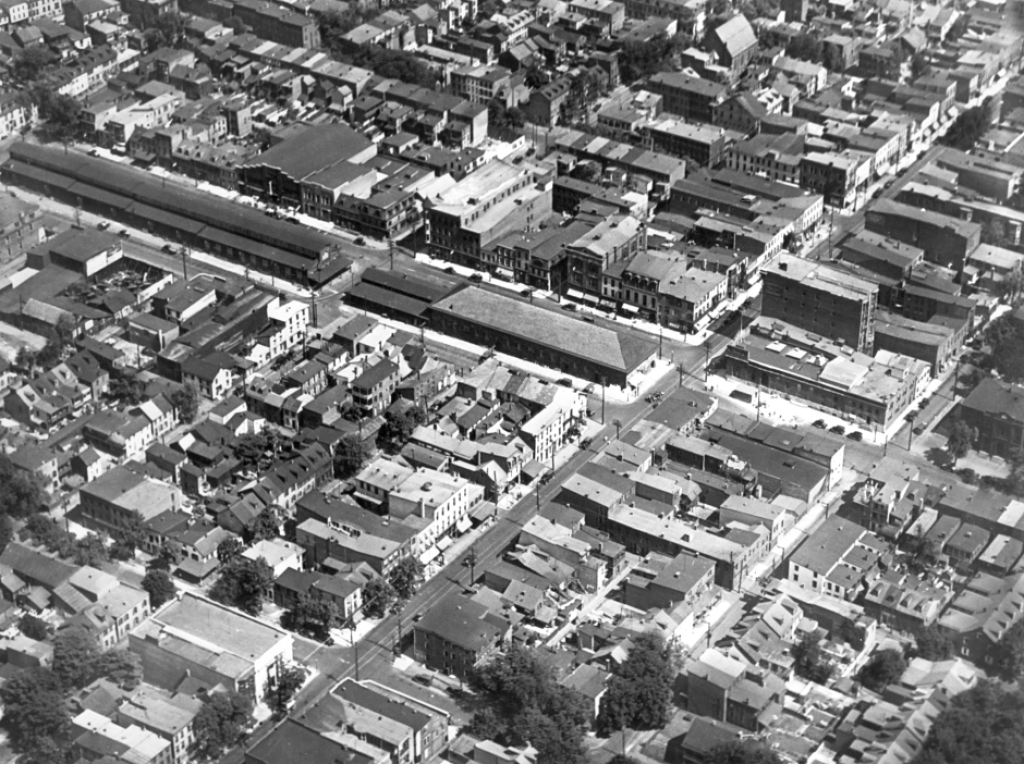
Aerial view of the Broad Street Market neighborhood, believed to have been taken in the 1920's/

Aerial view of the Broad Street Market neighborhood, believed to have been taken in the 1920s.

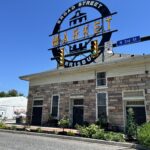
In the plaza of Harrisburg’s Broad Street Market, between the eastern building, made of brick, and the western one, made of stone, is an echo of something that used to be.

Years ago, a wooden frame structure stood on this spot, running from the end of the stone market house to Capital Street, where trolleys passed by throughout the day. Built in 1869, the wooden market, as the building was sometimes called, witnessed a century of growth and decline: the erection of the brick market house, in the 1870s and ‘80s; the swelling of the market’s occupancy through the 1920s, to hundreds of vendors; the emptying out of the inner city and the rise of the supermarket, the suburb and the automobile.

The wooden market was demolished in 1979, but you can still see its image preserved in the plaza stones. In the 1990s, as part of a $2.5 million renovation, a design team came up with a way to, in the words of Bret Peters, a Harrisburg architect and the project’s manager, bring back the wooden building “as a memory.” Darker stones correspond to the wooden market’s posts, while lighter ones trace its outline; raised ledges in the plaza correspond to the original market’s bays. At the end of one row of ledges, a ladder of dark granite, like a trilobite fossil, records the location of one of the old structure’s staircases. (On top of each ledge is another kind of fossil—a concrete cast derived from photos of a cornfield after harvesting.)

On a Friday in late January, the city’s new mayor, Eric Papenfuse, passed through this plaza on the way to lunch, tailed by a couple of reporters. Moments before, at a podium in the brick building, he had introduced the members of his Broad Street Market Task Force, assembled to address what he called the market’s “unacceptable” status quo. The previous month, in an appearance as mayor-elect before the PennLive editorial board, Papenfuse had critiqued a “crisis of the market’s own making”: hemorrhaged vendors, a stagnant board of directors, a complex dual-management structure and repeated battles with the city over maintenance of the buildings. Now, as one of his first undertakings as mayor, he was making good on a pledge to turn things around.

“There’s a lot positive going on at the market,” Papenfuse said from the podium, flanked by members of the task force. “That’s not what this is about. This is about saying that the market could be even more. It could be much greater than it is. It could have a role in fundamentally helping the economic development for the entire city of Harrisburg.” He suggested that, under proper management, the market could become a vehicle for developing “not just the city, but also the neighborhood in which the market is situated.” As he spoke, a handful of Amish vendors at Fisher’s Bakery, in aprons and bonnets, stood behind display cases of ice cream and shoo-fly pies, watching and talking among themselves.

The task force is not the only recent effort to overhaul the market’s operations. As Papenfuse took his seat in the stone building, over a bowl of Vietnamese noodle soup, he was joined by Josh Kesler, a market vendor and a local developer. Last July, Kesler and a business partner opened Harvest, a stand selling produce and other goods with a focus on locally sourced food. More recently, he bought the Stokes-Millworks building across the street from the market, with plans to convert it to a restaurant and studio space for artists.

Kesler is now a member of the mayor’s task force, but, in the fall, he helped launch the Broad Street Market Alliance, a separate and ongoing initiative focused on reform. Like Papenfuse, the Alliance critiqued the market’s management structure, under which a for-profit manager, the Broad Street Market Corporation, is accountable to its sole shareholder, a preservation non-profit called Historic Harrisburg Association. (This structure is what Papenfuse referred to as “dual management.”) The Alliance proposal, dated Oct. 10, recommended replacing this structure with a new non-profit, governed by a board representing the market’s key constituents: vendors, city government, residents and the “farm and market communities at large.”

Neither the Alliance proposal nor Papenfuse’s task force announcement made any reference to Bret Peters, the architect who oversaw the 1990s renovation. This was a noteworthy omission, given that the city, at the time of that renovation, commissioned and paid Peters to come up with a master plan for the market’s long-term success. The strategy drew upon input from several experts, including an acclaimed consultant on farmers markets, David K. O’Neil, who oversaw the turnaround of Philadelphia’s Reading Terminal Market in the 1980s. Like Papenfuse, the plan expressed a vision of the market as an anchor for development in the surrounding neighborhoods.

Peters updated his plan in 2010, when the market revisited the need for a long-term strategy. The new plan includes an ambitious expansion of the stone building’s hours, so that, in Peters’ words, it becomes a “seven-day engine for the whole market.” It also includes a strong emphasis on filling market stalls with abundant, high-quality produce, which the original plan’s research had shown to be the keystone of any successful farmers market.

In the weeks since the January press conference, the task force has started addressing questions about the market’s future. Will it also learn from the market’s past?

—– 

This is a biased story about the Broad Street Market. I want the Broad Street Market to succeed. I want there to continue to be a place in the middle of Harrisburg where, in a single lap of a 140-odd-year-old building, I can buy smoked gouda, grapes, Brussels sprouts and mushrooms, a loaf of fresh bread and a quart of fresh milk, a barbecue sandwich and a bouquet of flowers, and a tub of sweet pickle slices packed so tight that the lid swells like the skin of a balloon.

I can get these things, minus the historic architecture, at my supermarket across the river, but, there, I have to battle with careening grocery carts, along with what you might call the abstracted quality of supermarket commerce. At the grocery store, you don’t buy things from somebody; you just buy things. I like that, at the market, the person accountable for the goods I’m buying is within arm’s reach. Like the old men shooting the breeze over coffee at a table on the market floor, it makes me feel like part of a social enterprise. As D. H. Lawrence wrote in the 1920s, in his essay about the bustling weekly market of Oaxaca, Mexico, the market is a place to “buy and to sell, but above all, to commingle.”

In an earlier era, the Broad Street Market fulfilled this role spectacularly. Oral histories in the Highmark Blue Shield Living Legacy Series, a digital archive of interviews from 2010, portray the market as the anchor of a vibrant commercial district. In one interview, Joseph H. Kleinfelter, a former president judge of Dauphin County who died in 2011, recalled that, within two or three blocks of the market, “you could find just about anything you wanted”: a drugstore, a jewelry store, a movie theater, a furniture store, a candy shop, a dentist, an eye doctor and, among others, “a bar about every third or fourth establishment.”

The market was also an anchor in another sense—its weekly rhythms served as a kind of cultural and generational glue. David Wise, a former president of the Summit Terrace Neighborhood Association, recalled dragging a wagon on Saturdays from his Steelton home to offer chauffeur services to shoppers: “[W]e would put up our finger indicating to the visitor that we would like to carry her basket in the market…we made good money there.” Wise, who was born in 1923, is African-American; Kleinfelter, who was white, and born 15 years later, had much the same childhood experience. “We would park our wagons there along the curb outside the house,” Kleinfelter recalled. “‘Waiting for a haul,’ we called it.”

The Broad Street Market remains a community anchor today, but, by any measure, there’s a good deal less commingling than there used to be. As late as 1960, the market was home to around 250 vendors. Depending on how you count them, there are now around 23. To a large extent, the market’s fortunes have mirrored the city’s—especially in recent years, when the market, like the city, seemed stuck in a state of unending crisis. The market has gone through five managers in four years. It has closed multiple times over health violations, most recently in the summer of 2012. Last year, someone broke into the market and robbed the ATM machine. Because of the high cost of liability insurance, the market subsequently went without an ATM, to the frustration of customers and vendors.

“I have customers every day who ask about it,” David Lapp, the owner of the market’s Green Ridge Acres stand, told me. “A farmers market has to have an ATM.”

When you look at an aerial photo of Midtown from the 1920s, with the market lying in the middle of a grid crammed with businesses and homes, it’s not hard to grasp the reason for the decline. In the photo, just north of the market, is a series of awnings along 3rd Street; the area is now an empty field.

The more difficult question is why, when the city tried to jump-start the market 20 years ago, the revival didn’t take hold. What does it take for an urban market to thrive?

—– 

Around the time of the renovations in the mid-‘90s, the city, under the leadership of former Mayor Stephen Reed, sought proposals to take over the market’s management. Since 1974, the market’s operations had been in the control of a municipal authority, apparently with unsatisfactory results. In a July 11, 1995 memo to City Council, Reed expressed his displeasure with the existing arrangement. “As we know, the Market has been operating at a loss for years and therefore subsidized by the City,” he wrote. He listed three possible courses of action: close and sell the market, continue subsidizing its operations, or “undertake an extensive historic rehabilitation, coupled with upgraded product and operational policies, and institute a daily, on-going new management and marketing of the Market, with the Market required to be on a self-supporting basis.”

If those choices seem weighted, it’s because the city, in addition to having long since selected the latter option, had already selected a new manager—Historic Harrisburg Association. At the time, HHA was experiencing a surge in prestige and activity. In 1992, the organization had appointed David Morrison, a former executive assistant in the Thornburgh administration, as its first full-time executive director. Under Morrison’s leadership, HHA’s income and base of supporters had swelled; in 1993, the organization relocated to a new headquarters, in the old Pennsylvania National Bank building, across from the market on 3rd Street. “We didn’t want to be in center city, in a professional building,” Morrison told me. “Midtown was where the storefronts are.”

Morrison said that, in large part, the idea of HHA assuming management of the market emerged through conversations with the design team for the renovations, including the market consultant, David O’Neil.

“David specifically said to me, ‘You know, Historic Harrisburg would be ideal. You’re right across the street, you’re an established organization, this fits with your mission, you’ve got volunteers, you’ve got some momentum to get something going.’ And we were kind of looking for more to do at the time.”

O’Neil, when I spoke to him, told me much the same thing. “The fact that they were right there—they had a civic interest, plus an organizational interest. They were invested in the neighborhood, and had a lot of volunteers and a lot of contacts. It put them in very good stead.”

Peters also encouraged Morrison, at least initially. In January of 1994, the pair met at Jeffrey’s Parkside Café at the top of State Street. According to Peters, over dinner and drinks, Morrison expressed a strong interest in HHA’s involvement in the market’s future. Though Morrison’s tone struck him as “brazen,” Peters agreed that HHA could be a perfect fit for the market’s new management. But he advised Morrison that HHA should change its charter and become a community development corporation, or CDC, a legal designation that provides eligibility for various funding streams. (Morrison says he doesn’t remember the meeting, though he does recall discussions about a CDC that “never went anywhere,” in part because of HHA’s personnel limitations.)

As the months progressed, though, Peters felt that he and his team’s plan for the market were increasingly edged out of the frame. On March 7, he received a stop-work order from the city. A couple of weeks later, he was told to re-start the design, but with the scope of work diminished. In particular, though the city wanted to keep Peters’ architectural work on the buildings, it wanted his team to stop developing strategies for market operations—things like desired vendor mix, design guidelines for vendors’ stalls and marketing strategies.

It’s not clear why the city changed course, though some amount of vendor resistance seems to have been involved. That winter, the city began presenting its plans to the market’s existing vendors. One of the plan’s suggestions, based on recommendations from O’Neil, was that the market should place a high priority on fresh produce vendors, which typically drive the most traffic, and a low priority on non-food vendors, which drive the least. It so happened that, in the Broad Street Market, this suggestion wound up being interpreted along racial lines. Rafiyqa Muhammad, who had owned her stand, Creations of Family Muhammad, since the early 1980s, said that she and other vendors sensed a plan to “move black vendors out to make way for white vendors.”

“They felt our stands were not high-end enough,” Muhammad, whose own stand sold African clothes, incense, oils and herbs, told me. On one occasion, her husband returned from a vendor meeting and told her someone had said they didn’t want “none of that black stuff at the market.” When I asked for someone who could corroborate this, she gave me the name of Karen Hasan, another vendor, whose stand sold clothing and jewelry. Hasan said she didn’t recall any explicitly racial language, but that she, too, felt that “everybody who wasn’t white” was being asked to leave. Muhammad and other vendors circulated a protest petition and appeared before City Council; ultimately, they secured a pledge that all the existing vendors would be allowed to stay.

When I asked O’Neil about this, he said that the charge of racism was “ridiculous.” “Markets are best tenanted by local people,” he said. “The more diverse, the better.” He suggested that, perhaps, the vendors who weren’t selling food felt threatened by the promised changes. One of the duties of good management, he added, is to turn down the abundance of non-food applicants. “People selling non-food are relying on traffic that is food-driven,” he said.

“The city, in my mind, panicked,” Peters told me. “They decided to spend all the money on the building and didn’t do anything about the tenants.” In his binder, he has a copy of HHA’s initial management proposal, dated Sept. 30, 1994. Several pages in, under a section about the planned capital improvements, HHA expresses a wish “to collaborate with the City in a prompt review and analysis” of the master plan, “to ascertain if there are any features of the plan which merit change or reconsideration.” On top of Peters’ copy of the proposal is a sticky note, addressed to him and signed by David Morrison: “Our final proposal for your information,” it says. “Thanks for your encouragement and advice.”

—— 

On Sept. 12, 1996, the Broad Street Market launched a three-week long festival to celebrate its grand reopening. An article in the Patriot catalogued the renovations. In addition to the new plaza, the buildings had new doors, windows and lighting, a huge backlit circular sign on the roof, facing down Verbeke Street, and, on the perimeter, colored banners on 30-foot steel poles and fold-down tables for rent by outdoor vendors. The article quotes liberally from Morrison, who, at one point, describes the mayor’s hope that the market will be part of the city’s revitalization: “The mayor’s thinking is that just restoring a white elephant won’t do us any good,” he is quoted as saying. “It’s got to thrive.”

For a time, the market did thrive. Barbara Skelly, who served as market manager from 1997 to 2005, said that, in the years following the renovation, the market saw steady improvement under the guidance of an energized, cohesive board. “I was excited, and they were excited,” she said.

The prior management had grown lax about collecting rent, and one of Skelly’s first directives was to set up payment plans to get all vendors up to date. She orchestrated a deep clean of the stone building’s interior, purchased new tables and chairs, recruited vendors to sell on the outdoor tables and bought new custodial equipment. She also installed ATM machines, which she said were “like gravy”—they increased business for the stands, in addition to bringing in fees for the corporation. In her first year, the market broke even. In the years that followed, it even turned a profit. Skelly recalls giving a check to Mayor Reed on two separate occasions. “I think it was, like, $3,000,” she said. “And the mayor said, ‘I knew it. I knew it could be done.’”

After the initial burst of activity, however, the market once again found itself in decline. No one is exactly sure when the trouble started. A photograph from the summer of 2001 shows a bustling stone market, with vendors occupying both the center and the periphery of the building, and customers crowding the aisles. Skelly thinks the dip began a few months later, following the Sept. 11 terrorist attacks; others have attributed it to a loss of customers to the West Shore Farmers’ Market, which reopened in 2000 after its previous location burned down.

Recently, some observers have suggested that the city’s management agreement with HHA can partly explain the market’s decline. Part of HHA’s proposal included the idea of a philanthropic arm, called Friends of the Broad Street Market, that would help fund improvements through “annual giving” campaigns. Though HHA did secure occasional contributions, according to Morrison, the Friends program never materialized. In later years, as HHA’s own fundraising momentum stalled, it’s possible that its association with the market became more burdensome than useful.

“You could get a lot of people to support a ‘Friends of the Broad Street Market,’ something like that, a charity,” Gregg Fetterman, who served as chairman of the market board from 2007 to 2010, told me. “But the subset of people who would support HHA is a lot less than that. So it was just incompatible. Two completely different organizations. Two completely different missions.”

Peters thinks the problem was that the management was not so much structurally inappropriate as simply lax. “There was such a level of bizarre negligence, of basic issues like merchandizing,” he said. “Is the collection of people in this market a collection of vendors that the public is going to respond to, by coming here and buying stuff?”

In his view, the market has also let itself be dominated by concerns other than the most basic one: selling good food. “There’ve been these other layers of agenda that people have been wanting to get out of it…They use this thing as a vehicle for personal gain and self-importance, rather than using it as a place to sell and distribute first-quality food to the citizens of Harrisburg, Pennsylvania.”

Morrison attributes any decline to factors outside management’s control. I asked him, at one point, if he thought HHA had been a good steward of the market. “As the circumstances have evolved, yes,” he said. “Sure. I think that the system that we created worked very well, really until the time that we decided that it was time to separate it.” He acknowledged that there might have been a period in the 2000s “where the stewardship was a little nebulous,” but suggested that was because the market’s own leadership “was increasingly being trusted to do things on its own and wasn’t looking for HHA to provide more stewardship.”

—–           

In 2009, the market revisited Peters’ plan. That summer, a group including Peters, several of the market’s board members, and an urban planner for the city met one evening in the stone building to discuss the market’s future. The market was understaffed, due to funding shortfalls, and was $70,000 in debt from unpaid heating bills. Fetterman, then chairman of the board, warned of an impending major expense: the market would need to replace its heating system, because the provider was planning to abandon the steam line before the upcoming winter.

The group also discussed the market’s long-term vision. At some point, Peters produced a copy of the master plan from the mid-‘90s. It was the first time most of the group had seen it, including Fetterman. Peters explained that the foundations of the plan were even stronger than before, in part because of the presence of HACC on Reily Street, which provided a second Midtown anchor and an additional source of foot traffic. (Muhammad, who was also in attendance, and who objected to a perceived criticism of the neighborhood north of Reily, told me she raised her hand and said, “Excuse me, but there are families there.”)

In the months after the meeting, Fetterman, along with several other board members, began looking for ways to incorporate Peters’ expertise into the planning process. “Bret knew more about the market than anyone,” Fetterman told me.

Initially, they invited Peters to join the board, but he declined. Instead, he sent them a proposal to create an “architect of the market”—retaining him to update the master plan and to address building and design problems as they arose. “They didn’t have any money,” Peters told me. “I said, ‘I understand. But you need what I do.’” In particular, to be eligible for various forms of funding, the market needed a long-term business strategy. Ultimately, Peters agreed to a deferred-compensation contract, agreeing not to be paid until the market secured its funds. He would, however, require what he called a “token payment” of $500 per month.

In the meantime, the market’s financial situation plummeted further. In the course of a year, the market lost its manager, business manager and treasurer. The heating system, which had not been replaced, failed that winter, costing the market another $70,000 in repairs and in bills for excessive use. In February, the state Department of Agriculture inspected the market and shut it down, citing both the detection of rodents and the failure of the market’s hot water supply. This cost the market another $30,000 in lost rent, out of an annual budget of around $300,000. Board members assumed a greater role in operational duties; on several occasions, Fetterman used his own money to pay the market’s bills.

In the summer of 2010, Fetterman petitioned the city to reimburse the Broad Street Market Corporation for amounts spent maintaining the facilities. For years, he had been insisting that the management agreement was explicit about the city’s obligations: while the corporation was charged with “routine maintenance,” the city, which owned the buildings themselves, was responsible for major repairs. Yet the city’s response was to deny the market funding—not only declining to reimburse repairs, but also withholding previously awarded grant funds, demanding that the market first produce financial documents and a business plan. Fetterman turned to Peters, who produced a draft of a business strategy so the city would release the money.

That 15-page document starts from the premise that, because of the city’s financial difficulties, in the long term the market ought to plan to fund its own maintenance needs. “2011 must be a year of significant change for the market,” it says. The plan goes on to outline a strategy for increasing revenues, primarily by aggressively pursuing high-quality vendors of prepared and specialty foods. These vendors would occupy a reconfigured stone market, whose hours would be expanded to seven days per week; the brick building’s hours and occupants would continue unchanged. The plan also notes that, in past market practice, individual vendors were “encouraged to negotiate their position” without regard for the success of the market at large. To remedy this, the plan recommends “regular, structured communication” between management and vendors, including a leasing manual with rules for stand design and maintenance.

In the months that followed the drafting of the plan, however, board members began to question the market’s commitment to Peters. In late 2010, Alan Kennedy-Shaffer, a new board member, became concerned that Peters’ continuing work on the market was creating bills the market couldn’t afford. “The contract itself was a ballooning payment, where it had a huge potential liability for the market down the road, for services that were not clear and were never provided,” Kennedy-Shaffer told me. He then discovered that Fetterman had signed the Peters contract without getting board approval. Fetterman acknowledged this, but said it was a procedural oversight—the board’s wish to contract with Peters, he said, had never been in doubt. Nonetheless, Kennedy-Shaffer led a successful effort to have the board rescind and repudiate the agreement.

To this day, Fetterman remains mystified as to why the board refused to reconsider the contract with Peters. Peters “has done more work for this market than anyone in the past 10 years,” he told me. He said Peters “had always been open, like, ‘Fine, let’s revisit the contract, let’s do it.’ And no one was ever willing to say, ‘Here’s why I don’t like the contract and here’s what it needs to be.’ It was just dead. It was done.” (Last February, Peters sued the corporation for payment for his services, and the matter is pending litigation.)

In Kennedy-Shaffer’s telling, the dismissal of the Peters plan was largely about insulating the market from a financial liability. But Jonathan Bowser, who joined the board in the midst of the dispute, has said that, in addition to the legal and financial concerns, board members also disagreed with Peters about the plan’s “target market.” “It was more focused on being a regional market that wanted to be more of a tourist attraction,” he said. Before pursuing that strategy, he added, he “needed more confirmation from the community that that’s what they wanted.”

—– 

On Thursday, March 20, at 6 p.m., the task force held its first public meeting. It took place in the stone building, where more than 100 chairs had been set out, facing a couple of tables for task force members, which flanked a projector screen. Gradually, the crowd swelled until the chairs were nearly at capacity. Another 70 or so people stood at the back and along the sides.

As members of the public filed in, a man from the Pennsylvania Downtown Center, whose president, Bill Fontana, is one of the task force members, handed out 100 remote clickers. Their purpose was to allow the public to take a poll on the market and see the results in real time.

Fontana took to the microphone and explained that Mayor Papenfuse had charged the task force with “looking at the future,” rather than dredging up the past. One of the things he’d learned in his career, he said, was that it’s “very easy to rehash what happened.” “If you spend all your energy on these kinds of efforts, you never advance to the next level,” he said.The task force’s desire to leave behind the past seems largely shared by the market’s current board. Both Fetterman and Bowser speak of the market having survived a “perfect storm” of challenges.

“I think we’re weathering that storm,” Bowser told me. “I think people would probably want things to happen a lot sooner than they are, and I understand that completely, me being number one on that list. But the reality is that where we came from, probably being a month to weeks away from being insolvent, to where we’re at today, where we’re showing a monthly surplus as far as operations, I think is commendable, for not just me but for the entire board.”

Vendors, too, seem eager to move on. I spoke with more than a dozen vendors, many of whom expressed the same handful of sentiments—that the market was headed in the right direction, that it wouldn’t help to focus on the negative, that things would get better, but not overnight.

“Leave back what’s back and move ahead,” David Lapp, from Green Ridge Acres, told me. Last December, Lapp, along with Leon Glick, the owner of Two Brothers’ BBQ, were elected to serve as vendor representatives on the market board, where they hope to provide a voice for vendor concerns. When we spoke, they had only attended one meeting, which Lapp said was productive, if a bit too short. “We didn’t cover everything we should’ve,” he said.

At the public meeting in March, the task force polled the audience on a variety of topics relating to the market’s future. Fontana would read a question from the screen; the audience would vote on the remotes, and a few seconds later a bar graph would appear with the percentages. The sample pool had a fair number of regular shoppers (38 percent coming once or twice a week, 35 percent two to three times per month), who came primarily for groceries (72 percent). One question asked whether they thought market vendors should sell food only, or “food and crafts.” Two-thirds voted “food only.”

As I watched the votes, I wondered how useful they would be. We have examples elsewhere of markets that work. The city already paid a team of professionals to tell us that, above all else, people will go to a market to buy fresh food; 20 years later, they’re saying the same thing, with 20 more years of evidence behind them. We can also guess, from past experience, that energetic, consistent management is part of the formula. Regardless of what the community says it wants, won’t a successful plan for the market have to incorporate these things?

When the survey was over, the meeting ended, but much of the audience stayed on to keep talking about what the market could be. During the meeting, topics of race and class had been invoked, and, as the audience split up into circles of chairs, they remained part of the conversation. I watched people in the center of the dark market hall, engrossed in discussion, and thought about something Peters had mentioned, about markets being the “ultimate de-militarized zone.”

“All these other barriers go down when there’s food,” he said. “Harrisburg needs that very badly. And the market doesn’t become the community’s heart and soul when you put community people in charge of it. It becomes the community’s heart and soul when it’s got great food.”


Continue Reading

White Space: York College artist-in-residence Wayne White has created iconic pop art for our times.

Screenshot 2014-03-30 11.10.22Wayne White has had many second acts—and mastered all of them.

Starting his professional life as a cartoonist, the Chattanooga, Tenn., native also has been an artist, art director, puppeteer, set designer, animator and illustrator.  Both a fine artist and pop-art icon.

Fame came to him as the puppeteer/set designer for Pee-wee’s Playhouse, a hit children’s TV program in the 1980s; he won three Emmy Awards for his work.

Later, he worked in the music video industry, including as art director for Peter Gabriel’s “Big Time.”

After segueing into fine art, White became known for his word paintings—featuring oversized, three-dimensional text with thought-provoking messages integrated into vintage landscape reproductions.

The one thing that’s hard for the multi-talented, multi-faceted artist to do is name his favorite genre. “They’re all equal and all interrelated,” he commented. “They each inform each other.”

White is bringing all the elements together for a local stay, a two-month artist-in-residence stint at York College.

He has no direct connection to the college, but, as a lover of history, especially Civil War history, White can tell you that, “York was the largest town in the north captured by the Confederates.”

White’s  “oldest artistic influence” while growing up was, oddly, Mad Magazine and comic books. “My notion was that an artist was a cartoonist,” he said.

Chattanooga at the time had no real art world—no museums or galleries. White knew no working artists. In addition to comic strips, he drew inspiration from the beautiful landscapes of the Appalachian Mountains and from a mother who was an “amateur artist who loved shopping for antiques and had an aesthetic sense.”

White also recalls having a “natural talent to draw, which set me apart, and which, no matter where you are, everyone responds to.”

More-formal training began at Middle Tennessee State University, where he majored in painting and earned a bachelor’s degree in fine arts.

It was also in college that he first learned about art history. “I discovered the great artists through the centuries and who did what and what was still possible. I also met fellow artists and a community, which is really important.”

Moving to New York after graduation, White became a freelance illustrator for the Village Voice and the New York Times, among others, but also did puppet shows as a hobby. It was this activity he did for fun that led to the “biggest payoff” of his career.

“Pee-wee’s Playhouse was like an art project shot in downtown New York that happened to get on national TV,” he noted. “It was not like a factory product but something original. It couldn’t get better.”

Screenshot 2014-03-30 11.10.40In addition to the Emmys, the show gave him a chance to perform. That “bug” has stayed with him. Since 2009, White has been traveling the country, delivering an hour-long talk, both educational and entertaining, about his life and work. True to his roots, he also plays a little banjo and harmonica.

That was also the year White’s life and work were featured in a 382-page coffee-table monograph, with hundreds of images.

Entitled “Maybe Now I’ll Get the Respect I So Richly Deserve,” the book was a collaboration with writer Todd Oldham. According to Amazon.com, it offers a look at White’s “deadpan, strange and endlessly mesmerizing body of work.”

In 2012, White and his distinct artistic gifts were also the subject of a documentary film by Neil Berkeley called “Beauty is Embarrassing.”

Fourteen years ago, he began to move in the direction of more surreal work—including word paintings. It’s a form he actually popularized—based on reproductions he usually finds in thrift stores and a long-standing love of letters and topography.

White started the form on the spur of the moment, but, by now, has created nearly 1,000 word paintings. They have been featured in 18 solo exhibitions in galleries and museums in the United States and Europe and in several group shows.

In general, White’s work is slowly “trickling” into museums and into many private collections. “Hopefully, that will keep growing,” he said.

“The word paintings were born as a joke but became a serious thing,” he said. “I’m a frustrated writer, who here is telling very short stories. It is cutting things down to find the essence.”

One recurring theme is an exploration of hubris. “That’s what most humor does,” he explained. “It deflates human ego and shows how foolish we all are.”

White also creates giant puppets and installations of figurative sculpture.

York College was looking for someone “irreverent” as an artist-in-residence and knew it had found it in White, said Matthew Clay-Robison, gallery director.

“But I trust him completely,” he added, laughing.           

White looked forward to sharing his art but also to interacting with the students. He believes he still approaches art in a child-like, fantasy way.

He and his wife, Mimi Pond, a graphic novelist, cartoonist and writer who penned the first full-length broadcast of TV’s The Simpsons in 1989, have two children in college. Woodrow and Lulu are also both artists, as well.

What advice, irreverent or not, does the artist have for York’s students? That’s easy: “Do what you love doing. That’s the path you need to choose.” It certainly has worked for him.


White in Residence

As part of Wayne White’s artist-in-residency at York College, his “Masterworks 2000-2012” exhibition continues at the College Galleries through April 24, focusing primarily on White’s signature word paintings but also on works on paper and small sculptures.

Last month featured a reception, screening of the film “Beauty is Embarrassing,” and Q&A with the artist, who will also present the Center for Professional Excellence Lecture on April 2 at 6:30 p.m. at the Waldner Performing Arts Center.

White is constructing a large-scale public art installation in Gallery Hall of Marketview Arts (37 West Philadelphia St.) based on York’s role in the Civil War. It will be open to the public on April 4 for the First Friday Art Walk downtown. 

For information, contact the galleries, 815-6622. 

Continue Reading

History Lesson: New enhances the old at Landis House.

Screenshot 2014-03-30 11.09.36In a typical history class full of students, eager to be free of classrooms and boring lectures, one might expect to hear the usual inquiry, “Why does this matter to us?” or, “Who cares?”

But the students at Newport High School have found themselves immersed in the history of their town in an unexpected way. Inside Landis House, a collection of artifacts and memorabilia provided the students with an opportunity to look at history from a different perspective, one that was more personal than they may have encountered before.

The Landis family purchased the house in 1933 after living in Hamburg, Germany. Their home in Germany was furnished with many of the beautiful and elegant pieces that the students would later encounter in Newport: sparkling chandeliers, a Bechstein piano and large mirrors that remind one of a time period washed over with wealth and fantasy.

Unfortunately, the Landis’ time in Germany coincided with the rise of the Nazis. Hearing how the Nazis were stealing art throughout Europe, Mary Landis made the journey back to personally oversee the shipment of their belongings. The Landis family caused a stir upon bringing several boxcars full of large, ornate artifacts right into the heart of Newport.

In 2007, the Perry County Council of the Arts took possession of Landis House and began making needed renovations, turning it into an accessible place for people to gather and experience creative activities together. Even the renovations are a unifying act of generosity. Everything is done by local volunteers and made possible through donations.

It’s that sort of spirit that made way for the involvement of the students. When faced with the task of researching each item, PCCA Arts-in-Education Coordinator Amy Reed had an idea: work with local students and a visiting artist, Rand Whipple. The students of the Newport High School history class researched each artifact. The media communications class then took over, and, under Whipple’s guidance, created videos to accompany each artifact.

A conflation of new and old now greets visitors to Landis House. One sees the old antiques and then accesses the information about each piece by scanning a QR code on a smart phone to bring up the student-made videos, which also are available on YouTube.

The result of this collaboration is the current exhibit at Landis House, “Tangents: The Oral History Project,” which will be on display through April 11. The next exhibit at Landis House, “Director’s Choice,” featuring student artwork, opens on April 25 and runs through July 5.

Continue Reading