Corbett: Same-Sex Marriage Here to Stay

A scene from yesterday's celebration of same-sex marriage rights at the Pennsylvania Capitol.

A scene from yesterday’s celebration of same-sex marriage rights at the Pennsylvania Capitol.


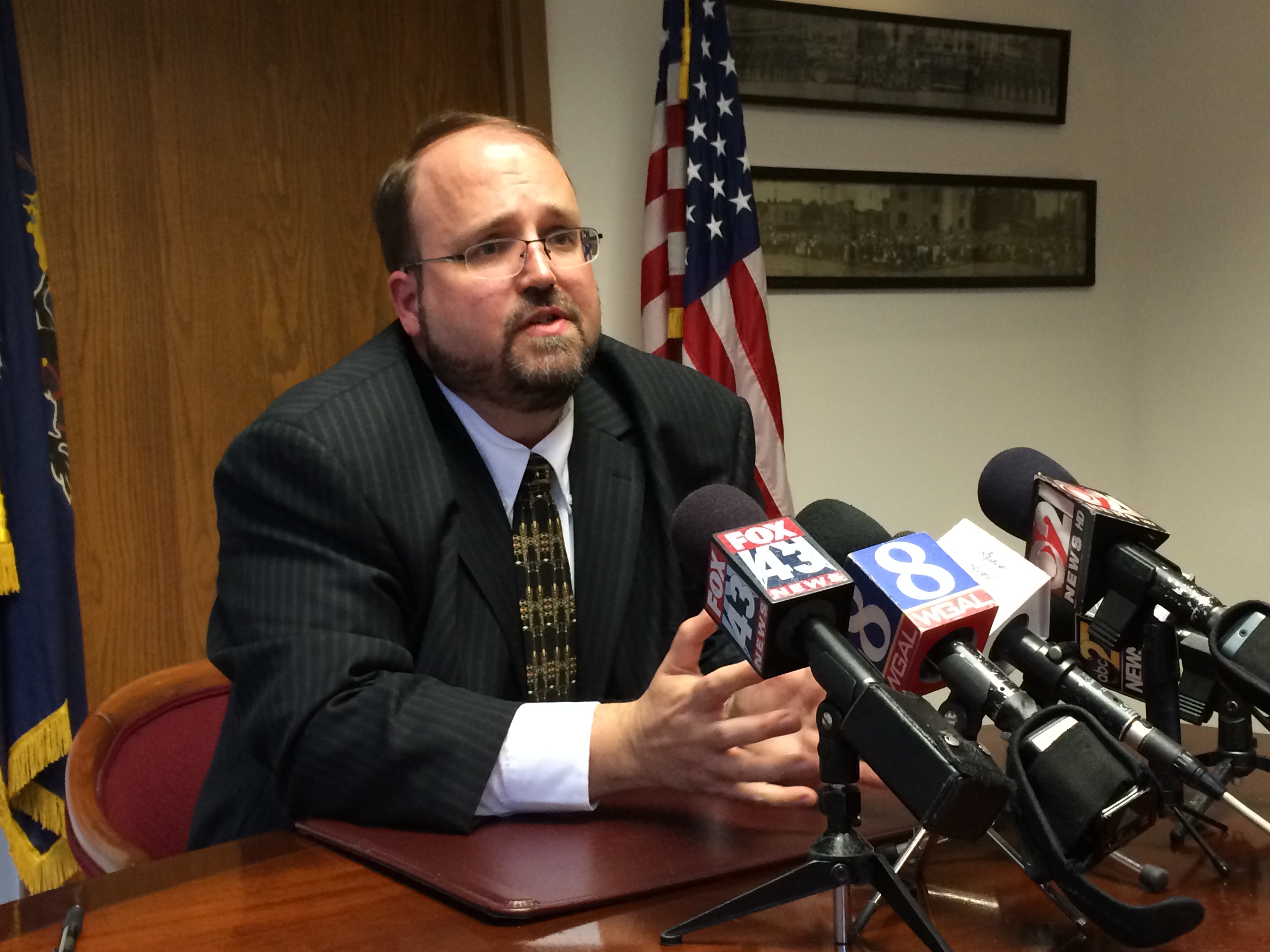
The right for same-sex couples to marry will not be taken away, as Pennsylvania Gov. Tom Corbett today said he will not appeal the federal court ruling that struck down the state’s prohibition on gay marriage.

Corbett today released the following statement. It says that, while he personally does not support same-sex marriage, he would not appeal yesterday’s ruling by U.S. District Judge John E. Jones III, as an appeal likely would not be successful.


Statement Regarding the Opinion of Judge Jones in the Whitewood Case 

“I have thoroughly reviewed Judge Jones’ opinion in the Whitewood case.  Given the high legal threshold set forth by Judge Jones in this case, the case is extremely unlikely to succeed on appeal.  Therefore, after review of the opinion and on the advice of my Commonwealth legal team, I have decided not to appeal Judge Jones’ decision.

“As a Roman Catholic, the traditional teaching of my faith has not w​​avered. I continue to maintain the belief that marriage is between one man and one woman.  My duties as Governor require that I follow the laws as interpreted by the Courts and make a judgment as to the likelihood of a successful appeal.

“Throughout the debate on this important and meaningful issue, I have maintained that Commonwealth officials and agencies would follow the provisions of Pennsylvania’s marriage law unless or until a court says otherwise.  The court has spoken, and I will ensure that my administration follows the provisions of Judge Jones’ order with respect for all parties.

“It is my hope that as the important issue of same-sex relationships continues to be addressed in our society, that all involved be treated with respect.”

Continue Reading

Harrisburg Mayor Ready to Perform Same-Sex Marriages

PapenfuseWeb

Harrisburg Mayor Eric Papenfuse speaks at a recent event.

Harrisburg Mayor Eric Papenfuse today said he stands ready to perform same-sex marriages after a federal court struck down Pennsylvania’s gay marriage ban. 

Furthermore, he said he “welcomes” the ruling by U.S. District Judge John E. Jones III, which was issued earlier today.

“This is an historic ruling, and one that I wholeheartedly welcome,” Papenfuse said. “The doors of City Hall are open to all couples who want to wed.”

Papenfuse has performed several wedding ceremonies in his first months in office, and he said will wed same-sex couples who request it.

Jones’ ruling was the fourth state ban to be struck down over the past month.

Click here for more information on this story.

Continue Reading

Harrisburg Mayor: The Lights Are Coming Back On

A l

Harrisburg has begun repairing light fixtures throughout the city, including this one in Riverfront Park in Shipoke.


Harrisburg plans to replace most of its streetlights by the end of the year, fixing a years-long problem that has left many streets in the dark, the city said today.

Shortly, the city will issue a request for proposals (RFP) to install energy-efficient LED lights for its 4,269 “cobra-head” light fixtures, said Mayor Eric Papenfuse.

“I believe [the installation] can be done before the end of the year,” he said.

The $2 to $3 million project will be paid through funds from the city’s infrastructure silo, which was set up as part of its economic recovery plan.

The city also has 1,131 “acorn-style” fixtures. Those lights will be replaced in a second phase of work.

LED lights should save the city about $250,000 a year in energy costs and are as much as 10-times brighter than the existing lights, said Papenfuse.

In addition, Harrisburg has begun repairing and replacing the 72 broken light fixtures in the city, many of which have been downed through auto accidents or age. So far, seven fixtures have been fixed. This work will continue over the next few months, independent of the RFP.

Harrisburg also is asking for help from the community. On June 7, two groups—Historic Harrisburg Association and Lighten Up Harrisburg—will sponsor a Glow Run to help raise money to defray some of the cost of the light replacement. A new bulb costs $75 to purchase, plus the cost of labor, said city Treasurer John Campbell.

To find out more about the Glow Run 5K, visit https://historicharrisburg.com.

Continue Reading

Peacemaker

Jeffrey Baltimore, right, takes the oath of office as Harrisburg's newest City Council member.

Jeffrey Baltimore, right, takes the oath of office as Harrisburg’s newest City Council member.


“I only want to serve. I want to do the best job I can for the people.”

Jeffrey Baltimore spoke those words following a whirlwind evening that saw him plucked from the audience and ushered in as Harrisburg’s newest councilman. No one seemed more surprised by the selection than Baltimore himself, a postal worker who had served for years as a mid-level official in former Mayor Steve Reed’s administration.

Dressed in denim, Baltimore, after taking the oath of office, gingerly approached the plush chair last occupied by Eugenia Smith, whose sudden death last month shook her council colleagues and the city itself. Baltimore sat down, and council President Wanda Williams patiently explained some procedure to him, offering a little background on the rather complex issues they’d be voting on that night. Just minutes in office, a steep learning curve ahead, Baltimore held equal authority to the other six members of council.

There are certain people who are well known in Harrisburg’s political circles. Of the four finalists for the council seat, two would fit that category: former Councilman Kelly Summerford and Alex Reber, who helped run former Controller Dan Miller’s recent mayoral campaign. Two would not: Baltimore and Michelle Blade, a retired conference facilitator and moderator.

So then why did the relatively unknown Baltimore prove successful, especially over Summerford and Reber, both well-connected and politically savvy? In the end, Baltimore’s selection seemed to be equal parts quality, politics and serendipity. Let’s begin with serendipity.

Last evening’s council meeting started with an unsettling revelation. Previously, council said it had received 12 applications for the open seat, which it winnowed to the four finalists. Actually, 16 were sent, the city revealed, as four were caught behind an anti-virus firewall, unceremoniously dumped into a spam folder. So, four applicants, who may have been well qualified, were immediately shut out.

In terms of quality, Baltimore, by some measures, is well-positioned for this role. He served for years in the Reed administration, ending his tenure in 2000 as acting deputy director in the Mayor’s Office of Economic Development. In that capacity, he administered Reed’s revolving loan fund program. He then took jobs both in the state Department of Community and Economic Development and in the York County Economic Development Corp. For the past seven years, he has worked as a building contractor, a mail carrier and an advocate for healthy city living.

But it’s perhaps the political dimension that seemed so fascinating in his selection. Through six rounds, Reber received three votes, Baltimore two and Summerford one, with council members refusing to change their votes despite the gridlock. Then Summerford took to the public microphone, withdrawing, as he said, for the good of the city.

With Summerford out, Councilwoman Sandra Reid switched her vote to Baltimore, tying the tally at three. With all rounds expired, it was up to Mayor Eric Papenfuse to break the stalemate. He rose from his seat, went to a microphone and firmly declared his support for Baltimore. With that, the man from the Reed administration completed his unlikely reintroduction to the body politic.

Immediately, the press and onlookers began to speculate on Papenfuse’s vote. Was Baltimore’s selection a swipe at the mayor’s former political rival, Dan Miller? Was it, as PennLive columnist Matt Zencey seemed to imply in a tweet denounced by several council members, partly racially motivated?

Personally, I found it fascinating that Papenfuse cast his deciding vote for the man who, for years, headed up Reed’s revolving loan fund, which loaned public money to private businesses. Just a couple of years ago, during a weekend-long program on Harrisburg history held at his Midtown Scholar Bookstore, Papenfuse characterized the fund as a source of corruption in the Reed administration. In a promotional blurb for the program, a Midtown Scholar brochure stated that the money was given to an assortment of unproven and unsavory businesses. Indeed, many of the businesses that received loans never paid them back. 

For his part, Papenfuse told me today that his vote for Baltimore was proactive, that he admired his “dedication to education and youth,” and that he seemed “well-connected to the community and independent-minded.” He said he also was impressed with Baltimore’s “extensive background in economic development.”

Speaking with me, Baltimore said he cared greatly about his community and only wished to serve the people. He seemed genuinely overwhelmed by his selection and vowed to be a conscientious, attentive member of council. In addition, as Reid pointed out when promoting Summerford, City Council should have more than one member from Allison Hill, the city’s most densely populated area. Baltimore, who lives on 17th Street, provides that geographical diversity.

However, I believe the greatest immediate benefit to the city would be if the appointment helped smooth the rocky relationship that has been building between the administration and a majority of City Council. Upon his election, Papenfuse vowed to work closely with council. However, the growing animosity between the two bodies has begun to resemble the antagonistic, dysfunctional relationships during the Reed and Thompson administrations.

In voting for Baltimore, Papenfuse sided with members of council who have opposed many of his initiatives, starting with a battle over the budget and growing after police arrested the Bishop Augustus Sullivan for code violations after his church partially collapsed. Last week’s strange public spat between city official Karl Singleton and council President Wanda Williams demonstrated just how frayed the relationship had become between administration and council.

Baltimore may end up being a fantastic councilman–or he may not. However, both sides should use this opportunity to re-set their relationship. To progress, Harrisburg needs its branches of government to respect one another and try to get along. The inability of the mayor and council to communicate and cooperate has been a continuing problem for years, leaving residents caught in the middle of a seemingly endless feud.

Baltimore, both as a symbol and through his actions, could offer a way to break free from this escalating hostility. He could even make it a priority to promote understanding between city officials, helping them seek common ground. The administration and City Council legitimately will never agree on everything, but, for the city to move forward, peace needs to be made.




Continue Reading

City Receives Gifts to Improve City Hall, Police Bureau

CityHallWeb

City Council chambers in Harrisburg City Hall.


Harrisburg has received several donations to improve City Hall and the Public Safety Building, the city said today.

Penn National Insurance donated $5,000 to help make repairs and renovations to the downtown building and will repair the flag post in the courtyard that was damaged recently when a car struck it, said spokeswoman Joyce Davis. 

Touch of Color Flooring soon will re-carpet the public hallway on the second floor, she said. Harrisburg-based Touch of Color already has installed new carpeting in the Public Safety Building’s Emergency Operations Center and walkway from City Hall, as well as in the main elevators.

In addition, the College Club of Harrisburg recently donated $100 to the City Hall Beautiful Fund, which has received other donations from individuals throughout the Harrisburg area, according to the city.

The family of the late Gov. George M. Leader has donated labor and materials to renovate the police bureau’s roll call and break rooms, in addition to new appliances for the break room, the city said.

“We continue to see area businesses and individuals step up to show support for Harrisburg’s recovery,” said Mayor Eric Papenfuse, who will officially announce the gifts tomorrow at a press conference. “The outpouring of local and regional support to help our capital city thrive is truly heartening. We encourage other civic-minded businesses throughout the region to join in this important program to maintain our government center.”


Continue Reading

Balancing Act

With receivership more than two months gone, and higher parking prices here to stay, it’s time we addressed an important question: where will Harrisburg’s prophets of doom direct their relentless cynicism?

One likely candidate is the 2014 budget. On Wednesday, during a City Council committee hearing, Mayor Eric Papenfuse announced a temporary hiring freeze, estimating that this year’s budget was more than $1 million out of balance. Given that the receiver’s Harrisburg Strong Plan projected a balanced budget through 2016, and that words like “hiring freeze” call to mind recent years of crisis, the announcement might have been expected to generate some carping about a failed recovery.

The important thing to remember about a budget, though, is that it’s only as good as its managers. The “balanced” 2014 budget, for all the expert advice that helped craft it, is really a mixture of educated guesswork and wishful thinking—revenues may or may not come in as predicted, and surprise events might add unexpected costs. There was also some amount of fudging, as with the $3.9 million “negative expenditure” tucked away on one line item towards the bottom, representing hoped-for personnel savings and as-yet-unfilled positions.

With respect to the revenues, there’s not much the city can do except hold its breath. As Councilman Ben Allatt, the budget and finance committee chair, explained, raising taxes isn’t really an option—residents are already feeling the pain of last year’s hikes. Steven Goldfield, a financial advisor to the receiver, also noted that two important revenue streams, the earned income tax (EIT) and parking system revenues, have been slow to arrive. In the case of the EIT, the problem largely seems to have been that small businesses failed to withhold properly under the new rates. In the case of parking revenues, a long winter, postponed installment of on-street meters and a delay in the consolidation of state parking contracts meant the city didn’t see its first payment until May 1.

Goldfield remained confident that the city would see its full $2 million payment, though he said he’d feel better once the second installment arrived. But in the meantime, the city must decide how to manage the possibility of a shortfall, which is where the expenses come in. Bruce Weber, the city’s finance director, explained that the city can really only control personnel costs: the other major expenses, health care and debt service, can’t be adjusted, at least in the short term.

That’s where the hiring freeze comes in, and it’s a choice that, in a sense, the original budget predicted. Most of the $3.9 million “negative expenditure” consisted of positions the budget hoped to fill, but which the mayor could leave empty at his discretion. It’s true that the city could use more staff (Weber and others have called current staffing levels “skeletal”). But it’s also true that, in the face of slower or lower revenues, it’s important that city officials not make promises they can’t keep.

The city’s budget may not be perfectly balanced, but it’s a vastly closer matching of revenues to expenses than Harrisburg has seen in years. And, Allatt said, one of his takeaways from Wednesday was that elected officials are “working together” to manage the budget as it goes. “Hiring freeze” has a ring of crisis about it, because it sounds like the fiscal distress of prior years. To capture the difference between then and now, a better word might be “prudence.”

Continue Reading

Harrisburg Mayor Has “Positive” Meeting with State Education Secretary, Remains Concerned About Academic Benchmarks

Harrisburg Mayor Eric Papenfuse.

Harrisburg Mayor Eric Papenfuse.

Harrisburg Mayor Eric Papenfuse met Tuesday with acting state Secretary of Education Carolyn Dumaresq, having what the mayor described as a “positive and productive” two-hour conversation with the secretary and two Department of Education consultants working closely on the state recovery plan for the Harrisburg School District.

Karl Singleton, the mayor’s senior advisor for education and youth, also attended the meeting.

According to the mayor, during the meeting Dumaresq and her consultants went “line by line” through the new performance standards in Veno’s recovery plan. Papenfuse had previously critiqued those standards as having lowered the bar from the original plan’s benchmarks. He said he still stands by that judgment after Tuesday’s meeting, though he also said the conversation had an overall “positive” tone and that he believed it was a very important first step in an ongoing discussion about the district. Papenfuse also expressed his appreciation for the meeting, saying the secretary was “very generous with her time.”

The modified academic benchmarks in Veno’s amended plan, made public at a school board meeting in late April, take their lead from a new state system of “school performance profiles,” which were adopted in the fall and provide a more in-depth look at the academic quality of Pennsylvania schools and districts.

On Thursday, Papenfuse said he had a “philosophical disagreement” with the new measures, which rely on assessments of annual growth in addition to students’ raw test scores. Harrisburg schools, though they typically score poorly on standardized tests, score better on the growth measures. The district’s overall growth score in mathematics, for example, is reported as 100 percent on its performance profile, meaning district students, on average, are making or exceeding a year’s worth of progress in one year of schooling.

The mayor expressed doubts about the merits of the growth measures in assessing the quality of Harrisburg’s schools, saying that “improvement is not the same as success.”

Papenfuse also said he still has questions about what will happen to the district if it doesn’t meet the benchmarks in the amended plan. The original plan explained that, if district schools didn’t meet the academic targets laid out through 2016, Veno and the state would be authorized to “take the necessary steps to transfer District-educated students to schools under external management.”

The amended plan appears to incorporate this language. But, Papenfuse said, when he asked Dumaresq about the consequences of missing Veno’s benchmarks, she told him she wasn’t sure. The mayor said he was “very surprised” she did not have an answer, though he did say she promised to provide one soon. Repeated inquiries last week by TheBurg to the Department of Education’s press office and to Veno about this same question have not received replies.

On April 3, following a private February meeting with Veno, state Sen. Rob Teplitz and state Rep. Patty Kim, Papenfuse had publicly called for Veno’s resignation. He remains committed to this request, he said Thursday, saying he believes Harrisburg needs a “new recovery officer with expertise in urban education reform.” As of this writing, Veno had not responded to calls.

This story has been updated with an additional quote from Papenfuse about school assessments.

Continue Reading

Grant Money Announced for Green Projects in Harrisburg (And A Brief History of Where It Comes From)

riverproblems

Harrisburg’s Environmental Advisory Council is calling for applications for up to $100,000 in grant funds for environmental projects across the city. The EAC will use the applications as the basis for recommendations to City Council and the mayor, who will ultimately decide how to appropriate the funds. Bill Cluck, the EAC’s chairman, said that applications will be evaluated on the criteria of environmental benefit, community benefit and sustainability.

Applications are due May 31, and can be picked up in the city clerk’s office, at 2 N. Second Street, or can be downloaded here.

The funding for these projects comes with a bit of history. The grant money will be provided out of so-called host fees the city receives as the site of the Susquehanna Resource Management Complex, also known as the Harrisburg incinerator. In the 1980s, as part of a comprehensive bill to improve waste management and recycling in Pennsylvania, the state legislature created the “host municipalities benefit fee,” a form of recompense for local governments with a landfill or trash-burning plant within their borders. But the fee—$1 for every ton of solid waste received—didn’t apply if the host municipality owned or operated the facility.

Harrisburg operated its incinerator until December 2006, when the Harrisburg Authority appointed a new private operator. The city would have started receiving its host fee the following year, but then-Mayor Stephen Reed engineered a different form of compensation, as permitted by the law. Under the agreement, instead of passing along a cash fee, the Authority would make certain facilities on the incinerator grounds available to the city rent-free, along with providing these facilities with free heat. Among the facilities were the city’s vehicle maintenance center and storage for certain city possessions, including artifacts Reed collected for his hoped-for Wild West museum.

In 2012, David Unkovic, the city’s first state-appointed receiver, updated the city’s recovery plan to include the restoration of cash host fee payments from the incinerator. The plan called for the money to be used for environmental projects in the city, and it encouraged the formation of an advisory group to help guide the use of the funds, which led to the reestablishment of the EAC.

The total in host fees to the city should now be between $290,000 and $300,000 per year, according to Jack Lausch, director of administration at Capital Region Water, which was formerly the Harrisburg Authority. Before April 2009, Lausch said, any fees would have been significantly less, because the plant was not fully operational. Lausch estimated the value of the heat provided by the Authority to city facilities in lieu of host fees at between $90,000 and $100,000 per year.

Bruce Weber, the city’s budget and finance director, said the city has so far received $355,000 in host fees—about a year’s worth of back payments by the Harrisburg Authority, plus just over $125,000 from the incinerator’s new owner, the Lancaster Solid Waste Management Authority. The fees are held in a separate deposit fund, established last October and advised, Weber said, by the controller and finance department of the previous administration, who thought that would be the “most transparent and accountable way to do it.”

This story has been updated to include figures provided by Capital Region Water about the value of the host fee and in-kind payments in prior years.

Continue Reading

City Releases List of 12 City Council Hopefuls

Susan Brown-Wilson, foreground, and other members of City Council at council's legislative session, Tuesday, Feb. 11.

Susan Brown-Wilson, foreground, and other members of City Council at a legislative session in February.

The city has released the names and resumes of applicants to an open seat on City Council, left vacant by the death of Councilwoman Eugenia Smith in April.

The list of 12 city residents includes current and former state workers, former city employees and two former members of council. Also represented are a local landlord, several consultants, an attorney, an accountant and one self-identified former “free lance political operative.”

The candidate who is chosen will serve until the next municipal election, in the fall of 2015. Members of council are paid $20,000 per year.

Council will conduct two-minute interviews with each candidate tomorrow, Thursday, May 8, at 5:30 p.m., during a public meeting in city hall. Following the interviews, council members will anonymously cast paper ballots to winnow the list of applicants and then perform a second round of interviews with the remaining candidates. Next Monday, May 12, council will vote to appoint their newest member.

Council most recently completed this process in December 2012, after then-Councilwoman Patty Kim was elected to the state House of Representatives. During that process, Bruce Weber was selected out of a field of more than 30 candidates. Weber now works as the city’s budget and finance director.

TheBurg has compiled this list of candidates, along with brief biographies, based on information the candidates reported in their applications.

The 12 council hopefuls are:

Jeffrey A. Baltimore, a postal worker and former deputy director in the office of economic development under Mayor Stephen Reed.

Michelle Blade, a retired conference facilitator for the Metanexus Foundation, a Philadelphia non-profit studying science and religion.

Ron Burkholder, a landlord and self-identified “solar energy pioneer,” and a former employee of the Department of Labor and Industry, where he reviewed unemployment compensation claims.

John Downs, a security officer and driver at Harrisburg Auto Auction in Mechanicsburg and a former city employee in the office of insurance and risk management.

Stanley Gruen, CEO of the Gruen Group, a local consulting firm, and a former “free lance political operative” consulting on the campaigns of Democratic candidates in New York, New Jersey and Connecticut.

Matthew Krupp, an attorney with the Department of Labor and Industry and a board member at Historic Harrisburg Association.

Rhonda Mays, a former budget analyst in the state Department of Public Welfare and the president of RE Mays Funding Solutions, which provides research and grant-management services to local non-profits.

Alex Reber, a senior accountant at Miller Dixon Drake and a member of Harrisburg Young Professionals.

Ellis R. Roy, Jr., a retired Harrisburg police lieutenant who currently serves on the Harrisburg Civil Service Commission.

Kathy Seidl, a research analyst with the Pennsylvania House of Representatives, Democratic caucus, and a member of the Governor’s Advisory Committee for People with Disabilities.

Patricia Stringer, a retired state employee, former Harrisburg City Council member and former human relations commissioner for the city.

Kelly Summerford, an arts management consultant with the Pennsylvania Council on the Arts who served on Harrisburg’s City Council from 2010 to 2014.

An earlier version of this story incorrectly reported that council members would hold a “closed-door caucus” to narrow the original 12 applicants down to a smaller number of finalists. Council members selected finalists by using anonymous paper ballots.

Continue Reading

Impermanence in Midtown

mandala_close

On Friday, a few minutes before 2 p.m., and some 40 hours, give or take, after a pair of moldering properties on Derry St. became the latest in the city’s run of high-profile collapses, there commenced in a back room in the heart of Midtown another kind of ritual destruction. To demonstrate the Buddhist doctrine of impermanence, six Tibetan monks from the Drepung Gomang monastery, in India, sat beside a temporary shrine to the Dalai Lama and prepared to obliterate a work of art.

The work in question was a sand mandala, which the monks had constructed, over the course of four days, in Historic Harrisburg’s office building at Verbeke and 3rd Street. Perched on a three-foot-square wooden table, and composed entirely of colored sand, in brilliant white, yellow, red, blue and green, the mandala contained images of conch shells, mongooses and Himalayan dragons in an intricate geometric array. There was also at least one pair of what looked like clouds trailing wisps of vapor, identified by one of the monks as “precious umbrellas,” and symbolizing, according to a printed cheat-sheet, “the wholesome activity of preserving beings from illness, harmful forces, obstacles and so forth in this life and all kinds of temporary and enduring sufferings of the three lower realms, and the realms of men and gods in future lives.”

The monks had come to town Monday afternoon and were to leave the following Sunday. They spent the week in and around the city, giving talks and workshops, chanting in the Capitol rotunda, and, on Thursday, coloring with children at the Midtown Scholar Bookstore. On the night of their arrival, they attended a welcome dinner at the Mohler Senior Center in Hershey, where one of them explained their training at the monastery while their handler, Tenzin, translated.

“They study Buddhist philosophy. They debate,” Tenzin said. The monk clapped. “They must spend day in debate.” The monk clapped again. (Later, addressing the room, Tenzin apologized for his translations: “I am monk’s van driver. We had translator, he went back to India.”)

mandala_shrine

Drepung Gomang sends a group of monks to the United States each year, to spread awareness of their plight—their literature explains that, like the Dalai Lama, they have been exiled from Tibet by the Chinese government—and to raise funds by selling their merchandise and soliciting donations. Sue Simone, who has been the national coordinator of their trips for the past seven years, noted that they’d traveled from coast to coast, to California and to New York City’s Carnegie Hall. Their host in Harrisburg was Simone’s cousin, Joan McCabe, who put them up on borrowed folding beds and air mattresses at her home in Hershey.

“They get up each morning and cook breakfast, and you wake up to the smell of cilantro,” McCabe said. “You think they’re all holy, but they like to laugh, too.” She pointed out her husband next to one of the monks. They were both soccer fans, she explained, and after the monk’s favored team beat her husband’s, the monk kept teasing him about it into the next day. “I’ll be devastated when their van pulls away Sunday,” she said.

After Monday’s dinner, the monks offered a long chanted prayer, which included passages of “throat singing,” a deep-register, droning form of vocalization which is to a bass singer what a subwoofer is to an iHome. For most, it was a brow-furrowed, eyes-closed, gently-rocking-to-and-fro kind of singing. The prayer leader, Lobsang Chosphel, cleared his throat now and again throughout, at one point wiping beads of sweat from his forehead with his saffron robe.

On Friday, when it came time to destroy the mandala, the monks began with more chanting. One rang a bell, and another clashed cymbals. Then they donned tall yellow hats, reminiscent of Trojan helmets, with fuzzy cloth ridges running from their foreheads to the back of their necks. One of the monks circled the mandala several times, ringing the bell, while the cymbals continued clanging. Then he picked up flower petals from a bowl and tossed them onto the table.

You wouldn’t think impermanence was something you could hear, but to a pair of ears at a certain distance, the thud of the flowers landing said it all: the invisible bubble around the mandala, a near-perfect work of art, with its crisp lines and blazing hues, had been pierced irrevocably. The rest was just follow-through. The monk made a few more passes, cutting lines through the sand with his thumb, until the mandala was split up into eight equal wedges, like a pizza. Then more monks came forward with brushes and swept over it, turning it first into a smear of bright colors and then into a pile of brown sand.

Tenzin, at the ready with a paper box from Giant, approached and began scooping the former mandala into sandwich bags, forming free souvenirs. Then, the monks marched down Verbeke Street to the riverfront, where, below a set of concrete stairs whose impermanence needs no ritual reminders, they dumped what was left of the mandala out of an urn and into the Susquehanna.

monks_river

Continue Reading