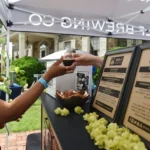
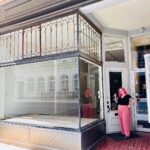
Healthy Appetite: Crave & Co. brings good food, good-for-you to Harrisburg’s cafe culture.

Screenshot 2014-07-30 21.21.44Kristin Messner-Baker is a woman of action.

After graduating from the University of Pittsburgh with a degree in creative writing, she went on to study at the Pennsylvania State/Dickinson School of Law. She then embarked on a variety of endeavors, including running for office in South Middleton Township.

Along the way, she purchased property in downtown Harrisburg, where she wore the hat of landlord for about a decade while practicing law with her mother Dorothy Mott and raising five children—Ethan, 19, David, 16, Sensi, 10, Bowie, 6 and Bijou,4.

When Messner-Baker took on the role of busy mom, she became acutely aware of the dearth of fast, accessible, on-the-go healthy food and dreamed of filling that niche “someday.”

Well, “someday” arrived this year when tenants moved out of her property at 614 N. 2nd St., ushering in a new beginning. Messner-Baker was finally ready to fulfill her dream of running an organic coffee shop featuring vegetarian food.

She and her husband, John Baker, decided to call their business “Crave & Co.” and began gutting the building, which once housed a barbershop. They used their collective creativity to give the café a contemporary, yet homey, feel. Attractive exposed brick lines the wall where customers place their orders, and a large window adds a bright, airy feel to the space.

“We uncovered that when we renovated,” said Messner-Baker, seemingly incredulous that someone would block off such a find.

Framed posters of rock stars like Joan Jett, John Lennon, Kurt Cobain and Bob Dylan contribute to the hip vibe, while red-and-white striped tables and chalkboards displaying the couple’s artistic talents add a hint of whimsy to the establishment.

John, who works as a teacher, is spending his summer side-by-side with Kristin. At times, you can find him drawing decorative designs with chalk on the front sidewalk, having a friendly chat with customers, or strumming a guitar outside the café.

The menu has been in the works for some time.

“I found some of the recipes on the Internet, then adapted and streamlined them,” said Kristin.

“Yes, and I was the benefactor of all this creativity and tried all the versions of her food,” added John.

Their tagline: “We aim to satiate.”

Breakfast customers on the go can grab a healthy blueberry muffin or a sprouted wheat bagel topped with organic cream cheese, preserves or peanut butter. An egg, tomato and cheddar breakfast sandwich served on pita is another option for a hearty meal and can be accompanied by a cup of Jim’s organic coffee or a variety of teas like burdock, chai or dandelion root—or just plain black, for the more conventional.

Lunch options include a popular curried egg salad sandwich, an equally well-liked Israeli sandwich featuring roasted eggplant, egg, hummus cucumber and tomato, or a black bean and quinoa burger, to name just a few.

Mikee Bentz, who heads the Harrisburg chapter of March Against Monsanto, an organization that advocates for non-genetically modified foods, lives up the block from Crave & Co. and is thrilled to have a healthy food option in his neighborhood.

“I love going there because, as a person who supports an organic lifestyle and local consumerism, I can vote with my dollar and put my money where my mouth is,” he said.

His favorite sandwich is the curried egg salad, and the coffee is an added plus.

“I am a huge coffee lover, so it’s great to know that I can walk half a block and grab a cup of organic coffee,” he said.

Monica Kline of Myerstown is also a fan and thanks her brother for putting Crave & Co. on her radar.

“My office is on State Street, and we always try to patronize local restaurants,” said Kline, whose choices are somewhat limited due to dietary sensitivities.

When she visits, she usually orders the kale and quinoa salad, which is tossed with pecans, currants and feta cheese.

“I just love the blending of good food, and that’s what they’re doing at Crave,” she said, adding that the drinks, like the ginger tea with blueberry, are very good also.

The Bakers are hoping to expand their hours as the business ramps up, and an open mic night might not be too far into the future.

“Kristin has the best of both worlds, where she can now mix her creative side with her technical side,” said John. “She has the poet, coffee-shop persona. It was part of her, so now she has come full circle.”

Crave & Co. is at 614 N. 2nd St., Harrisburg. Hours are Monday through Friday, 7 a.m. to 2 p.m. and Saturday, 9 a.m. to 2 p.m. More information is at www.craveandco.com.

Continue Reading

Swimming Lesson: A brief history of Harrisburg’s public pools.


Screenshot 2014-07-30 21.14.24“My hungry body’s burning for a swim,” the Jamaican-born Harlem Renaissance poet Claude McKay wrote in his poem “Thirst,” from his 1922 collection “Harlem Shadows.” For city dwellers in the midst of a hot summer, there’s no relief quite as sweet as jumping into a pool. And yet, for the past few summers, Harrisburg residents have had only one city pool in which to swim.

That’s expected to change this month, as the city plans to reopen the pool at Hall Manor after making some short-term repairs. The Hall Manor pool, at the end of S. 18th Street in south Harrisburg, was closed in 2012 due to leaks, and, according to city engineer Wayne Martin, it will also require extensive concrete work and a new paint job before it can be used. The necessary repairs, which began in July, represent part of an estimated $210,000 in renovations to both pools planned over the next year, to be paid for out of federal community development funds.

The administration of Mayor Eric Papenfuse announced the renovations in late June, shortly after the launch of its “Summer in the City” promotional campaign. “We chose the pools because we consider them critical to our public safety strategy as well as our summer enrichment strategy,” Papenfuse said, when asked about the project at a press conference in July. “We need two pools just to handle the demand. But also, we want to give kids and families something productive and happy to do.”

The other city pool is on N. 6th Street in Midtown, located behind the Jackson Lick public housing apartment towers and the Ben Franklin School. Both pools were substantially renovated in the late ‘90s. The initial investment will yield scant returns this year, as the Hall Manor opening, expected to be around Aug. 15, will only provide for two weeks of swimming before the summer ends. But, according to Martin, the repairs planned over the next year should extend the pools’ useful life by between 10 and 15 years.

“The Hall Manor pool has been closed for years, just neglected and forgotten about, and we said, ‘No, we’re gonna make fixing it a real priority.’ And it looks like we’re going to be able to get it up and running,” Papenfuse said. “We think that’s a wise investment of city dollars.”


Harrisburg undertook the construction of its two pools in the spring of 1968, under Republican Mayor Albert Straub.

“Big Al” Straub, whom the journalist Paul Beers, in a column in the Patriot-News, once described as “a senior-citizen sex symbol with a square jaw and a silver mane,” had taken office that January. Not unlike the current mayor’s initiative, the Straub administration’s efforts formed part of a citywide investment in recreation. Over the next year, the city would pledge more than $1 million—including $150,000 from a private donor—towards constructing the pools and developing playgrounds at seven city locations.

The recreation project came at a time of change and unrest. The city itself was shrinking: the U.S. census reported a loss of nearly 10,000 residents in the 1950s, and another 11,000 in the 1960s. On April 4, three months into Straub’s term, Martin Luther King, Jr., was assassinated. That summer, the school district, having been cited for “racial imbalance” by the state Human Relations Commission, drafted a plan to bus black students into three predominantly white schools. Less than a year later, pupils at John Harris High would boycott an afternoon assembly on the basis of, as Beers later wrote, “inadequate recognition of the recent Black History Week.” Harrisburg’s race riot flared only a few months afterwards.

The Hall Manor pool’s construction was delayed one year, but the Jackson Lick pool opened on Aug. 9, 1968, a Friday morning. At the time, the Jackson Lick apartment towers housed families with children, and in the days leading up to the opening, a residents’ association had raised safety questions in connection with the pool’s chain link fences, which some parents worried could be hopped by children. The association was also irked over a “complete lack of communication between the city and the tenants,” according to its president, Helen Moore. By opening day, the city had assuaged Moore by promising to post a night watchman at the pool and by inviting association leaders to sit with other city officials on opening day.

According to a report the next day in the Patriot, Straub led a 20-minute ceremony under a “hot noonday sun.” Perhaps in apology for construction delays, he announced that the public could use the pool free of charge for the remainder of the season. (Full admission prices would take effect the following summer—25 cents per visitor, or $8 for a family season pass.) While the mayor spoke, “kids and some parents stood impatiently by in swimming togs waiting for the program to end.” When it did, the report adds, “approximately 300 children entered the pool in 10 minutes.” Moore, of the residents’ association, remarked that she’d “never seen a happier bunch of children.”


On a recent weekday, during a few days’ break from summer temperatures, the men’s locker room at the Jackson Lick pool was empty. An inch-deep pool of standing water sat at the feet of a row of stalls. Outside, on the walk to the pool, a man named Andre sold sno-cones and candy out of a small garage. Andre owns a furniture store on S. Cameron Street, one of several businesses displaced by the massive fire at a nearby vehicle salvage business in May. At the snack stand, he said, he was merely standing in for the head of the operation—his 10-year-old daughter.

The Jackson Lick pool sits on a sloping rectangle of scrabbly grass in the shadow of the tinted-glass PHEEA building. On the other side is the Ben Franklin School, whose windows face directly onto the pool. In May, you would think this would prove a form of torture for the middle-school students, except that the pool isn’t filled until the school year ends. (Maybe it’s a form of torture anyway.) A pair of managers watched from under a sun umbrella, while perhaps 20 or 30 children, many from a nearby daycare, splashed around, tossed Nerf footballs, or dove from the boards. Behind them, a smaller, circular wading pool, filled, but with a broken pump, sat unused, its floor growing a brown-green fuzz.

It was a peaceful day, with lifeguards lazing at their posts and objects on the periphery—a crumpled stretch of fence, a dusty picnic table—looking quaintly timeworn. Nonetheless, the pool has seen its share of excitement over the years. Across the street, Keith Myers, a maintenance supervisor for the Harrisburg Housing Authority, reminisced about some of the wilder times. “Kids would sneak in at midnight, throw their towels over the fence,” he said. He recalled the discovery, several years back, of large bags of marijuana in the attic of the bathhouse, a gun battle that left bullets in the side of one of the apartment towers, and, most peculiarly, a deer bolting out from what used to be a woodsy patch adjacent to the parking lot.

Myers started with the housing authority in 1982. A year or two before, the organization had removed families from the southern tower, named for Alton W. Lick, and converted the building into apartments for people over 55. Before then, the tower had attracted gang activity. “Mayor Reed was calling us ‘Hall Manor in the sky,’” Myers said. The northern tower, named for C. Sylvester Jackson, was vacated in 2004 and is currently under renovation. Both of the buildings have 13 floors, which, in defiance of the superstition, are labeled 1 through 13 in the elevators. For the convenience of residents, many of whom are disabled, a wheelchair ramp was added to the Jackson Lick pool during a renovation in the 1990s.

In 1998, the city introduced a pool program that had nothing to do with swimming. Called the “Get Hooked on Fishing Derby,” it involved filling the pool with striped bass after it had closed for the season in September. In 2006, according to a press release from the office of former Mayor Stephen Reed, the city dumped in 1,100 12-inch stripers, 30 of which had been tagged with the names of various city celebrities. Anglers who hooked them would receive a special prize.

Bob Herman, the president of Capital City Bassmasters, the local BassPro Shop’s house fishing club, recalled that his members would team up with the city to help young fishermen manage their rods. “It was a mess,” he said. “You can imagine, kids around a swimming pool…we’d have, like, 20 kids at a time all tangled up.” The event was abandoned in later years, as the city’s deepening fiscal crisis led to a budgetary clampdown.

The present-day pool prices—$5 per visitor, $150 for a family of six—can make the city pools’ early years seem like ancient history. And, as far as I know, Harrisburg has no imminent plans to fill the Jackson Lick pool with stripers. But, for the first summer in a while, if only for a few weeks, it should once again have a second pool.

Continue Reading

A Meal, a Memory: Caruso’s may be gone, but the melody lingers.

Screenshot 2014-07-30 21.25.51Harrisburg’s restaurant scene has changed so much in recent years.

The places we considered “landmarks” in the city are gone: the Maverick (great steaks and a lobster fest in June), Italian classics at Lombardo’s (seafood fra diablo), the Esquire Room in the old Penn Harris (great burgers), and Santanna’s on 2nd Street with the fish tank at the door and hard shell crabs by the bushel.

We have new places to love now: Carley’s and Stock’s; Mangia Qui and Char’s; Café Fresco and Home 231; Bricco and El Sol; and many wonderful casual spots like the Federal Taphouse, Arepa City, Pastorante, Alvaro and Crawdaddy’s.

But driving on Chestnut Street in downtown Harrisburg always brings back memories of a little bistro that was very dear to my heart. Many years are gone since Dennis and Terry Snyder opened Caruso’s not far from the train station near what now is Bricco. It was a tiny place with a front-facing window, forest green walls decked with Italian art, and, on weekdays, the sounds of opera softly playing in the background. Caruso’s smelled like an Italian restaurant should smell, in my view: of olive oil and garlic.

It was the early ‘80s, and our children were very little back then. When my family could babysit, we would sneak out to Caruso’s for a late dinner, usually on a Saturday night. The little bistro was always bustling and, on weekends, Carl Iba, violinist for the Harrisburg Symphony, would stroll and play all night. I can never hear music from “Fiddler on the Roof” without thinking of him.

The food was wonderful: homemade pasta, fresh fish from Baltimore, chicken and meat dishes, all prepared in classic Mediterranean style. Terry made all the desserts herself. Her specialty was zuccotto, a chilled cake, brandy, chocolate and cream dessert prepared in a rounded mold. It was always on the menu. Lacrima Christi and Cortese di Gavi were always available for perfect wine accompaniments.

I still remember my first meal at Caruso’s: homemade spinach fettuccine with gorgonzola cream sauce and chicken with vinegar peppers. It was delightful. And, after that, we were regulars.

For this month’s column and as a tribute to Caruso’s, I searched and searched for a recipe for chicken with vinegar peppers to share with TheBurgreaders that was reminiscent of that first meal. I found a recipe by Bobby Flay called “Chicken and Peppers in Balsamic Vinegar Sauce”and decided to give it a try:

  • Heat 3 tablespoons olive oil in a medium Dutch oven over moderately high heat (I used my cast iron Le Creuset) until it shimmers.
  • Pat dry 8 chicken thighs (bone in or boneless) with a paper towel and season with salt and pepper. Brown the thighs in batches (give them room!) until golden brown, about 4 minutes per side. Remove each batch to a clean plate until the others are done and before adding the peppers.
  • Cut 3 bell peppers (I used red, yellow and green) into thin strips and add to the casserole. Cook the peppers about 5 minutes until slightly soft. (August is a great month for peppers.)
  • Add 4 cloves chopped garlic and toss with the peppers about 1 minute.
  • Then add 1 tablespoon tomato paste and cook for another minute, working the paste through the pepper mixture.
  • Add 1 cup balsamic vinegar (I used a good white balsamic) and cook the pepper mixture until the vinegar is reduced by half.
  • Add 2 tablespoons honey and a cup of low sodium chicken broth and cook for 5 minutes more. The heat should still be moderately high.
  • Return the chicken to the pot, reduce the heat to medium, and cover the lid. Simmer the chicken until completely cooked through (at least 30 minutes) and then remove the lid.
  • Remove the chicken to a platter and then boil down the sauce a little to thicken.
  • Pour the sauce over the chicken and sprinkle with chopped Italian parsley.

We loved this dish. I served it with rice for him and creamy mashed Yukon gold potatoes for me. Sliced summer tomatoes with chopped basil would be a nice accompaniment to the chicken, along with chilled melon slices.

Now, as a matter of full disclosure, this dish was very different from my first cherished entree at Caruso’s. (I will have to keep searching.) But writing this column brought back wonderful memories of that special place. Here’s to a little restaurant on Chestnut Street that was decades ahead of its time. Salute!

Continue Reading

Gael Force Fun: McLain Celtic Festival celebrates 2 decades of heritage, music, fun.

Screenshot 2014-07-30 21.32.19Fáilte!

In Irish Gaelic, that means “welcome,” and you’re sure to feel welcomed this month at the McLain Celtic Festival.

On Aug. 30, the festival celebrates its 20th anniversary at the Two Mile House in Carlisle. This family-oriented festival is an opportunity to immerse oneself in traditional Celtic music and food and learn more about the heritage of Scotland, Ireland and Wales.

I had something of a personal introduction to the festival. I met the director, Joan McBride and her husband, Jay, on a trip to Ireland a few years ago.

“Everybody thinks the Germans were here in Cumberland County first, but as a matter of fact, 90 percent of Cumberland County residents were Scotch-Irish in the early 18th century,” Joan said. “Through this festival, I wanted to share the exciting things I’ve learned about my Irish heritage during the 11 trips I’ve taken to Ireland over the past 15 years.”

At the festival, you’ll see authentic Highland athletics, border collie demonstrations, Scottish clans, vendors with Celtic goods and musical entertainment, including folk singers, bands and dancers. Come prepared to enjoy toe-tapping music, tasty food and plenty of craic (Irish word for fun).

An Irish Heritage

The festival has always been at the Two Mile House.

“At first,” Joan explained, “part of the festival was held on land borrowed from the phone company, but, as the festival grew, we cleared land, so now we use all five acres of the property. Eight years ago, we built a permanent stage to replace the rented stage we had to bolt together every year.”

The Two Mile House, named for its distance from the Carlisle town square, was built in 1820 and, from 1826 to 1857, housed the James Given Tavern. Given hailed from Colerain in Northern Ireland and saw to it that travelers could stop to quench their thirst, spend the night and enjoy the tavern’s simple fare.

Mary Wheeler King bequeathed the property to the Cumberland County Historical Society in 1992, and the society has been the steward of the mansion, preserving and maintaining it, since.

Celtic Sounds

For Joan, the festival revolves around the music, a form that has become widely known and admired throughout the world.

“I love traditional Celtic music,” she said, “and that’s what we bring to our two stages.”

Performing this year will be Across the Pond, Fire in the Glen, Iona, Mark Maurer, Celtic Martins and Charlie Zahm. The Coyle School of Irish Dance and the Scottish Country Dancers will be on the Glen Stage, and the Quittapahilla Highlanders Pipes and Drums will provide traditional bagpipe music.

Joan told me she has watched the Celtic Martins perform over the years, and it’s been fun to see the kids grow into top-flight performers.

“The family consists of mom and dad, three girls, three boys and a son-in-law playing a wide range of instruments, including fiddles, bagpipes and tin whistles,” she said. “And the girls do Irish step dancing while playing their fiddles.”

Joan’s husband, Jay, particularly loves the food.

“You’ll find a full assortment of traditional Celtic food,” he explained, “including fish and chips, bangers and mash, Scotch eggs and tasty meat pies. For the more American flavor, try the BBQ, burgers or hot dogs.”

Cabers and Shires

In addition to the music and food, two perennial attractions are the athletic competitions and the historical re-enactors.

Highland athletics features several events, including throwing 16- to 22-pound stones for strength (similar to shot put) and distance (similar to discus), a sheaf toss for height and the caber toss. A caber is a 15- to 20-foot tapered pole weighing 90 to 140 pounds. The object is to flip it end over end. Usually, there are 8 to 10 men in kilts participating.

There is a full selection of mini-Highland athletics for the younger generation. Children can learn how to toss a “mini-caber” using a cardboard tube. For the sheaf toss, kids can demonstrate their strength and skill with a hay-filled burlap bag. Both of these events are quite a challenge for youngsters—exciting for them and fun for adults to watch.

I also enjoy the re-enactors who join us at the festival,” Joan remarked.

For example, the Shire of Blak Rose group of the Society for Creative Anachronism is an international living history group with the aim of studying and recreating medieval European cultures and their histories before the 17th century. The group will display different projects depicting the various aspects of life in the Dark Ages through the Middle Ages in the Celtic world. The ladies in the Shire will bring a variety of crafts, including needlework and tailoring of period clothing.

The Scottish Society of Central Pennsylvania promotes an interest in the history, culture and traditions of Scotland and Scottish Americans. The group will be on hand with a display of different clan tartans.

The motto of the Welsh Society of the Greater Harrisburg Area is, “to be born Welsh is to be born privileged, not with a silver spoon in your mouth, but with music in your heart and poetry in your soul.” Their display will include photos of Wales, along with the symbols of Wales—the dragon and the daffodil.

Another group, Muskets of the Crown, is dedicated to preserving and demonstrating the life of the 18th-century British Soldier in North America. During the festival, they will portray the grenadier companies of two Scottish Highland Regiments, including the Black Watch. They also will demonstrate how to take nine yards of tartan and fold it into the “great” kilt.

I attended the festival last year, and it was great fun. I learned about Celtic heritage and enjoyed the music and dance. And I must agree with Jay about one very important thing. The fish and chips? Outstanding.


Going There

The McLain Celtic Festival is Saturday, Aug. 30 from 9 a.m. to 5 p.m. at the Two Mile House, 1189 Walnut Bottom Rd., Carlisle, just two miles west of the town center. Tickets are $10 and children under 10 are free. No pets allowed. For more information, call 717-243-3437 or visit www.historicalsociety.com.

Don Helin published his first thriller, “Thy Kingdom Come,” in 2009. His second, “Devil’s Den,” has been selected as a finalist in the Indie Book Awards. He lives in central Pennsylvania and his latest thriller, “Secret Assault,” was published in June. Contact Don on his website, www.donhelin.com.

Continue Reading

Residential Resurrection: You know that cruddy, old office building where you got your first job? It might just be the latest thing in stylish downtown living.

Screenshot 2014-07-30 21.13.39In June, Jennifer Lazarski moved into a one-bedroom apartment in downtown Harrisburg.

Normally, this would hardly be a remarkable event, as downtown has a number of apartment buildings, large and small, and people come and go all the time.

Lazarski, though, was a pioneer of sorts. She became one of the first tenants at 130 Locust St., a high-end, office-to-residential conversion that suddenly has become the next big thing in downtown living.

“I wanted to be downtown,” said the 28-year-old Lazarski, a nurse at Harrisburg Hospital. “Now, I can walk to work and to restaurants or to have a drink with friends.”

Lazarski was living in Hershey, but found the commute “frustrating,” she said. So, she began searching Harrisburg for a new home, only to be disappointed by housing that was not up to her standards.

Finally, she learned about 130 Locust, a time-worn office building that was being re-developed into 14 one- and two-bedroom apartments with new floors, exposed brick, skylights, stainless steel appliances and other designer finishes.

“It’s urban and has character and was all brand-new,” she said. “I felt it was perfect for a young professional who wanted something modern to live in.”

As the downtown office market has cooled, developers have found salvation for Harrisburg’s vintage properties in an unlikely place: upscale residential. Turns out that professionals like Lazarski don’t mind paying a bit more in rent for a nice apartment in a boutique building near restaurants, nightlife and, often, work.

“They want aspirational space,” said David Butcher, president of WCI Partners, which re-developed the building. “This type of city living is resonating with their aspirations, with their artistic, financial, political aspirations.”

New Era

You can break down the history of downtown housing in Harrisburg into three rough phases. The first spanned the initial settlement of the city, from the colonial to the Victorian periods. Much of that stock has been lost to the wrecking ball, though a few charming pockets remain.

The second phase came with the advent of high-rise living in the 1960s and ‘70s. That era gave us such modernist buildings as Executive House, Pennsylvania Place and Presbyterian Apartments.

The current phase is apart from both those periods in design and living. It involves renovating and repurposing Harrisburg’s old, often-rundown (sometimes empty) office stock into small, boutique apartment buildings, with rents usually around $1,000 a month for a medium-sized, one-bedroom unit.

WCI stuck its toe into this market last year with a high-end renovation of two units above Little Amps Coffee Roasters at N. 2nd and State streets. After those apartments leased quickly, the company began scouring downtown for more opportunities, said Butcher.

That search led to the purchase of 130 Locust St., which, within weeks of completion, was almost completely leased. The company next acquired 210 Walnut St., the long-time home of the Keefer, Wood, Allen & Rahal law firm. WCI now is converting that four-story structure at the corner of Walnut and Court streets into a 21-unit apartment building, expected to deliver next April.

And it isn’t just WCI.

Across the street from the state Capitol, Brickbox Enterprises just finished its conversion of the former Barto office building to the LUX, a 42-unit planned community whose first occupants moved in last month. In recent years, Brickbox also re-developed several old, dilapidated office buildings into housing for Harrisburg University students.

Nearby, Vartan Group is finishing up work on a six-unit conversion of the long-vacant Carson Coover House at 223 Pine St. Down on Front Street, Vartan just bought the historic, circa-1863 John Hanna Briggs Mansion, the long-time headquarters of the County Commissioners Association of Pennsylvania. That 5,500-square-foot building is slated to become seven luxury riverfront apartments.

Even the 1960s-era Executive House has jumped on the trend, last year converting three entire floors from offices to upscale apartments.

“There’s so much vacant office space in the city of Harrisburg,” said Derek Dilks, vice president of property development for Brickbox. “If people are willing to live in these cool spaces, why not adapt them?”

This type of living has strong appeal to younger people, said Dilks. But it also attracts single professionals of all ages; married couples, mostly without children; and empty-nesters who want to live in a walkable community, he said.

“People want the amenities,” he said. “They want to be close to the restaurants, close to the river.”

To illustrate that point, Nicole Conway shared a story from her own experience. A dozen years ago, fresh out of law school, she wanted to live downtown to be near the restaurants, bars and clubs that were popping up along 2nd Street. She decided against it after she couldn’t find the well-appointed apartment she wanted.

“There are people who want to live in the city who are looking for nice rental,” said Conway, executive vice president and general counsel for Vartan Group. “Until recently, you had trouble finding it.”

Long-Term Trend

Of course, you can’t mention downtown Harrisburg without bringing up the issue of parking, as the cost of on-street spaces has doubled since January. Monthly garage rates also have increased, though not nearly as much.

Generally speaking, the developers said they thought the issue had been overblown. Indeed, some people will not live downtown because of the parking situation. Others, however, find they don’t need to own a car or they reverse commute or they take advantage of Standard Parking’s special rates for downtown dwellers, they said. In some cases, units come with parking.

“It’s not quite as big of a deal as people are making of it,” said Vartan’s Conway. “You go to any other city in Pennsylvania or the United States, and you will face the same challenge. You have to pay to park. It’s just part of being in a city.”

If parking were a deal-breaker, these developers wouldn’t be buying and renovating buildings, and people wouldn’t be moving into them, the developers said.

“People have to weigh the barriers versus the benefits,” said Dilks. “People who decide to live [downtown] are yearning to be closer to restaurants and work and to have greater interactions with others.”

Several other trends are favoring downtown residential development. Banks are beginning to lend again, and developers, seeing pent-up demand, are looking to renovate and build, said Dilks.

Harrisburg might just follow other cities in creating a “living downtown,” a place where people reside, not just work and party. That would further affirm the city’s status as a center for dining and nightlife, but it also might offer a better market for something the city clearly lacks—quality retail.

“It’s a trend, and it’s a long-time trend,” he said. “The trend to move out of the city lasted 30 years. Hopefully, this trend will last for that long of a time.”

Disclosure: TheBurg’s publisher, Alex Hartzler, is a principal at WCI Partners LP.


Continue Reading

Known Unknowns: With a little digging and networking, you can find answers to your many questions.

Screenshot 2014-07-30 21.11.34I get asked a lot of questions about Harrisburg.

Sometimes, they are basic questions with easy answers. “What’s the rule about trashcans in the city?” Per the ordinance, all garbage must be placed in plastic or metal receptacles with tight-fitting lids, securely fastened and watertight. There. Answered.

Sometimes, though, the questions are more complex. “How did the city get into such a financial mess?” My response to this one inevitably starts with a deep breath and includes sundry chapters and digressions.

I get questions about city rules, ways of life and states of being.

I get questions asked in sincerity, curiosity, confusion, frustration, facetiousness and indignity.

The fact is many people have many questions about the city of Harrisburg. They want answers and the scoop.

It isn’t a problem that there’s a plethora of questions. The problem is that people just aren’t quite sure how to find answers when they need them.

That’s because there really isn’t a centralized source for information about Harrisburg. The exact who, what, when, where and how can be elusive. As a consequence, a significant number of people feel excluded and frustrated with the entire system, which hardens divisions.

Sure, there is some information in some places, but people complain those places aren’t necessarily familiar or accessible or up-to-date or accurate. The city’s website would seem the logical place to go, but, as of now, it’s still a work in progress. And a call or visit to City Hall doesn’t guarantee clarity.

Overall, people have to work hard to access information. Questions end up coming my way because I have made it a mission of sorts to acquire information and share it.

I try to discover it and impart it massively, which can be a daunting task indeed. Often, I get the comment, “I was told to ask you because you would know.”

That’s not true. I don’t always know. And, in matters that reach beyond factual answers, I’m not constantly poised to engage. Although, there are times when I do share my theories and perspective. In those instances, I’m sure to support my positions with evidence and reasoning. The rest is open to a spirit of fair debate.

That being said, the thing I think I do well is find out what’s going on.

I seek the answers. I go places and talk to people. I ask questions and verify responses. I read. I listen. I engage.

Over the years, it’s gotten easier. I know more people and am aware of more points of view. I know where to find reliable sources and documents. I’ve learned processes and protocols. If I don’t know the direct route to answers or explanations, I’ve figured out which direction to look.

Harrisburg is a small place. When it comes down to it, it’s a manageable place with manageable information.

I came to that realization with time and effort, though. I had to make an effort to know where to go, who to ask or how to find out things. I had to gather information and try to make sense of it all.

Much of my knowledge comes from spending hours and hours in a variety of places around the city. While I may spend much more time in locating information than the average person, I’d argue even a bit of effort by anyone could make for a better informed citizen.

City Council meetings, zoning hearings, and press conferences—even going once in awhile—puts you in touch with several resources. Public projects, initiatives and gatherings are other good places to meet people and exchange information. Even sitting on the front porch and walking around the neighborhood help make connections and expose you to multiple types of knowledge. Participating in community endeavors unavoidably gives you an earful, much of it valuable and useful.

By doing all of the above, I discovered an incredible network of people and resources. I met people who care, people who are accomplished and who want to make Harrisburg better. They, too, want to know more.

Plus, they are willing to share what they do know.

It’s a network of rich diversity of perspective, experience and information.

Of course, serious trust issues exist, but that can’t be surprising for a city in reconstruction.

It takes some determination to tap into the network. When I first moved here eight years ago, I didn’t know how to do that. When I researched, I found that most of the information came from the top down. There lacked a mass community exchange, especially one that stretched across the city. Accurate information was some sort of privilege granted a few. The network seemed small, tight and exclusive.

Fortunately, it’s not like that anymore. That system crashed and can’t easily be rebuilt because now there are too many people paying attention. More of us share knowledge and willingly pass it along. There’s more engagement and consensus on what the facts are. More people are participating and expanding the system of communication in Harrisburg.

Tara Leo Auchey is creator and editor of today’s the day Harrisburg. 

Continue Reading

An Optimist Strikes Back: Good things are happening right before our eyes. So, what’s with all the cynicism?

I meet people every day who love living and working in Harrisburg.

Often, just having a coffee at Little Amps or grabbing lunch at Café Fresco, I enjoy the fun and excitement of urban spontaneity. One meeting leads to two or three other conversations as people have unplanned interactions throughout the course of the day.

The essence of urban living and working is being out and about, walking around, meeting new people and reconnecting with friends and colleagues. Some of the best ideas spring from these chance encounters and enriching conversations, occasionally leading to actions and projects, both large and small.

This past month, a major new business joined Harrisburg when the Philadelphia Macaroni Co. took over operations at the former Unilever plant on S. 17th Street. This is but one of numerous new businesses and residents in Harrisburg recently. While this news was surprising to some (who generally have a cynical outlook of the city), it should not be a surprise to anyone who has been following all of the positive activity going on over the last year. Here is a list of just some other projects (and folks to talk to) if you want to hear the story of what is really happening this summer in Harrisburg.

WebpageFX recently moved 65 employees into a renovated, 9,000-square-foot building at 1705 N. Front St. Bill Craig and Karie Shearer have led the company since its inception. They said that moving to Harrisburg from a business incubator in Carlisle was a natural next step in the growth of their company and was essential for their recruitment efforts. WebpageFX has generally young and tech-savvy employees who prefer city amenities—like the beautiful view of the Susquehanna River right out their front window. (My company, WCI Partners is the developer and landlord of WebpageFX’s building.)

Speaking of views, Char’s Tracy Mansion, just up Front Street from WebpageFX, is having a record-breaking year. I spoke to Char Magaro this week, and her business is outperforming all the expectations that she had when she expanded from her prior location in Shipoke. At the time, many were skeptical that any restaurant on Front Street would be successful. However, her food and setting are as good as any in the region and state.

While I’m talking about restaurants, Harrisburg boasts not one but several national-class dining experiences. Qui Qui and her partner Staci, the long-time owners of Mangia Qui and Suba, are set to more than double their restaurant space when they open Rubicon this summer. Sitting in the shadow of the Capitol dome at N. 3rd and North streets, Qui and Staci have re-invested substantial new capital into their business and are excited to expand their offerings in the city.

Derek Dilks recently gave me a tour of the LUX condominium building that he and Dan Deitchman redeveloped at N. 3rd and State streets in Harrisburg. Consisting of 44 units, about half of which are already reserved prior to their opening, the building is a terrific redesign and conversion of vacant, rundown office space. Formerly a non-profit association headquarters, the building sat empty for years. Dan and Derek are working on a restaurant for the first floor and offer amazing views of the Capitol building and downtown for their residents from the building’s rooftop. When fully occupied, the building will add vibrancy and foot traffic in the downtown.

Josh Kesler recently gave me a tour of his ambitious new project across from the Broad Street Market. Over the winter, Josh and his team sandblasted and refinished the old wood timber in the historic Millworks building, which had sat empty for years. Now, they are putting finishing touches on 23 workspaces that have been 100-percent pre-leased to artists who will both make and market their wares in the new space. Josh and his wife are also adding a farm-to-table restaurant and beer garden inside the space. By removing part of the roof, they have created a very unique indoor/outdoor space unlike any other in the region. It is sure to be a new hot spot when it opens this fall.

Nick Laus is opening a new wine bar and upscale brick-oven pizzeria called Cork & Fork at the corner of N. 2nd and State streets this fall. Expanding on his already very successful city businesses at Café Fresco and Home 231, Nick’s additional investment shows his continued faith in Harrisburg. (WCI will be the landlord for Cork & Fork.)

And the reasons for optimism keep on coming:

  • Emma’s on Third recently opened an organic spa and yoga studio on 3rd Street in Midtown near the new Susquehanna Art Museum.
  • Yellowbird Café was packed this weekend when I swung by for take-out for some friends visiting from out of town.
  • Aaron Carlson at Little Amps tells me that his business has had its best three months running since it opened.
  • The team at The MakeSpace continues to impress with all their artistic and community endeavors.
  • Dan Webster (with an assist from Liz and Dani Fresh) recently produced a Harrisburg version of their magazine, Local. If you haven’t picked up a copy, please do—it is worth the read.
  • Out-of-town investors recently purchased the long-vacant properties previously owned by Mary Knackstedt and have started work, vowing to be the latest residents to make their home on N. Front Street.

I could go on and on, but you get the picture. This is truly an exciting time for Harrisburg. There is much more to be done, but our worst days are behind us and many terrific things are happening, if you just look and walk around.

Unlike the cynics, don’t be surprised. Just read TheBurg every month (and daily on the Web) to hear about the stories you won’t find elsewhere.

J. Alex Hartzler is publisher of TheBurg.

Continue Reading

Musical Notes: Big Bands, Small Spaces

DRGN KING (Photo credit: theswollenfox.com)

DRGN KING (Photo credit: theswollenfox.com)

Summer is heading towards its end, but that doesn’t mean that Harrisburg’s music scene is winding down too.

Our little city continues to invite visits from excellent, nationally renowned touring artists, often featured within some of our smaller venues. This is the perfect opportunity to hear excellent live music in a setting that promotes a level of interaction that cannot be replicated in a larger arena. So, make your way to one of these great shows and introduce yourself to the artists, buy an album (preferably on vinyl) straight from the source, and support Harrisburg’s amazing musical culture.


DRGN KING w/THE INDIAN BURN BAND, 8/17, 6PM, LITTLE AMPS UPTOWN, $5 SUGGESTED DONATION

There is nothing like seeing a solid, energetic rock band in the intimate confines of a small space. When Philadelphia’s DRGN KING takes the “stage” at Little Amps Uptown, their infectious rock hooks will fill every corner of the friendly coffee shop. But don’t let the setting fool you. This is a rock band with a solid repertoire of soaring and bombastic anthems designed to fill large clubs. Their full-length, 2013 album, “Paragraph Nights,”was released by the Hoboken, N.J., imprint Bar/None. DRGN KING will be supported by locals, the Indian Burn Band.

Ed. Note: This show has been cancelled.


ARBOREA, 8/22, 8PM, THE MAKESPACE, $5

The haunting folk duo, Arborea, will be making their way to the equally moody atmosphere of The MakeSpace. Wife and husband Shanti and Buck Curran compose delicate psychedelic folk that conjures up images of the autumnal wilderness, centered around Shanti’s lilting melodies and melancholic lyrics. They have caught the attention of WNYC’s “Spinning on Air,” been featured in a “Tiny Desk Concert,” and have been a showcase performer at Austin’s famed SXSW festival.


MATT WHEELER & VINTAGE HEART, 8/30, 9PM, HMAC

Lancaster County’s Matt Wheeler is a folk songwriter in the truest sense of the word. His songs are morose and thoughtful, designed to tell stories that are deeply personal yet instantly relatable. Channeling a long and rich tradition, his music invites comparisons to James Taylor, Josh Ritter and Iron & Wine. His backing band, Vintage Heart, only complements Wheeler’s tendency towards introspection, with laid back folk-rock percussion and moody string arrangements elevating the impact of tales of searching and heartbreak.

Mentionables: Dr. Slothclaw and The Dogs of Lust, Abbey Bar, 8/1; Indigo Girls, Whitaker Center, 8/13; Yo Momma’s Big Fat Booty Band, Abbey Bar, 8/26; Hot Jam Factory, Little Amps Downtown, 8/29

Continue Reading

6-Month Check-Up: Eric Papenfuse has been mayor for half-a-year. How’s he doing?

illustration by Nick Sider

illustration by Nick Sider

Back in January, I wrote that we couldn’t reasonably expect to judge the performance of Harrisburg’s new mayor until at least six months had passed. Last month, the Papenfuse administration reached that milestone—so let the judging begin!

Seriously, I still think it’s too early to say whether Eric Papenfuse should be regarded as a good mayor, a meh mayor or something else.

Heck, during his 28 years in office, former Mayor Stephen Reed had numerous ups and downs—even regarded by some as one of the best mayors in the country before he crashed and burned. And, of course, casting judgment is always subjective, depending almost as much on the person judging as the one being judged.

With those caveats, I think we can begin to form an opinion based on Papenfuse’s priorities, governing style and successes so far. If you believe these point Harrisburg in the right direction, then you probably approve of what he’s doing. If not, then you likely don’t.

So, six months in, here’s what I see from the administration.

Economic Development: Right out of the box, Papenfuse indicated that he would make economic development a top priority of his administration. He’s followed through on that pledge, reviving the moribund economic development office, getting CREDC to fund a director for the office, moving swiftly to pass the stalled zoning code update and indicating that he wants fast action on 10-year tax abatement for property improvements. One could argue the merits of any of these measures, and, in fact, various factions (from residents to gadflies to developers) have criticized all of them. Also, as I’ve stated repeatedly, I believe that shoring up the city’s iffy infrastructure, improving its appearance and firming up its management would do more to attract businesses and residents than more overt marketing efforts. Papenfuse, though, has maintained his administration can—and should—do it all.

Blight: For four decades, Harrisburg has been overrun with slumlords, uncaring property owners and abandoned buildings. Papenfuse is not the first mayor to identify blight as a major problem in Harrisburg, but his response has been both active and creative. He moved codes enforcement into public safety, began a Housing Court and created a land bank aimed at putting blighted properties back into productive use. He also took the heat, but refused to retreat, after one of the first people arrested for codes violations turned out to be a prominent minister.

Infrastructure: Harrisburg’s infrastructure, neglected for so long, is an embarrassment. The administration has made some progress on that front. A few streets have been striped, some potholes filled, some lights turned back on. Admirably, the city has kept the giant knotweed, which chokes the riverfront each summer, in check. Papenfuse says infrastructure is a priority of his administration. Unfortunately, he’s forced to live within the limitations of a tight municipal budget until the city can tap into the $6 million infrastructure fund set up as part of the financial recovery plan. That access, however, looks to be months away, as a nonprofit still must be set up to administer the fund.

Schools: Papenfuse believes that Harrisburg’s poor-performing schools are an impediment to repopulating and re-energizing the city. Few would disagree. The mayor, however, has little control over the system, which is run independently by the school board and administration. Papenfuse tried to sidestep that reality by appealing directly to the state Department of Education, then going public, in an effort to remove state-appointed Chief Recovery Officer Gene Veno. At this writing, Veno remains in his job. Papenfuse also failed in his public effort to have the school board approve the proposed Key Charter School. It now will be interesting to see whether Papenfuse continues to try to fight this uphill—and, so far, unproductive—battle.

Public Safety: A few years ago, as a private citizen, Papenfuse attempted to create an improvement district devoted to boosting security in Midtown. Therefore, it’s no surprise that he’s made public safety a central part of his administration. So far, his efforts seem to be working. As of this writing, crime is down year-over-year in Harrisburg, with homicides considerably lower. Meanwhile, both Police Chief Thomas Carter and Fire Chief Brian Enterline have been quietly and competently rebuilding their demoralized forces.

Governing Style: In prior administrations, Harrisburg bounced from a mayor who seemed to everywhere to one who was hardly seen at all. Papenfuse is somewhere in the middle, which is probably best. Behind the scenes, though, his government has operated at a frenetic pace. He’s tried to make many changes, large and small, in a short period of time. For the most part, that energy is needed, as the city lost years of progress through poor governance and financial despair. However, the torrential pace has led some to feel that he tries to steamroll change, such as his insistence that the city pass a new zoning code quickly. His impatience also has affected relations with some City Council members and parts of the community, who have reacted suspiciously to it.

Management: Papenfuse had to rebuild a government almost from scratch, which he’s done with some success. Unlike the past two administrations, he seems to have adequately devolved power from the mayor’s office, while holding his managers accountable. That said: his top staff varies significantly in ability and temperament. Also, the administration has benefitted from just how low expectations have sunk. In Harrisburg, it’s practically a reason to celebrate when Public Works fills a pothole or cuts the weeds; when codes enforcement cracks down on habitual violators; when a cop is seen on the street. He needs to ensure that his managers, first and foremost, are focused on these basic service delivery and quality-of-life issues.

Papenfuse has tried to do a lot, quickly. Most of his efforts have been successful. That’s a commendable result, as the new mayor faced an incredibly steep learning curve and the daunting mission of reconstructing a shattered government. As a resident, I hope that Papenfuse will build on his successes, while learning from his mistakes. He’s an intelligent, capable, well-intentioned man, but he also can be stubborn and impatient to make big changes. A successful tenure will depend upon his ability to exploit his many strengths while holding in check those tendencies that might impede progress.

Continue Reading

July News Digest


Zoning Code Gets OK

Harrisburg has a new zoning code, as City Council last month approved a complete overhaul to how the city guides residential and commercial development.

Council members gave their unanimous consent to the code, the first complete update in 64 years. The new code substantially streamlines the city’s zoning map, reducing the number of base zoning districts from 27 to nine and overlay districts from six to four.

At the last minute, council made a number of changes to the code to respond to concerns voiced by several developers during a series of hearings in June. Therefore, with a special exception, a wider variety of uses now will be permitted in certain zones, including the Institutional, Commercial and Downtown Center zones.

Notably, council narrowly defeated an amendment that would have allowed the owner of the former U.S. postal facility at 815 Market St. to continue a full range of industrial uses by right. Under the new code, his property falls into the Downtown Center zone, where most industrial uses are banned.

Under a grandfather clause, businesses will be able to continue their properties’ current uses, regardless of the new zoning.

The effort to revamp the zoning code began years ago. In 2010, the council introduced a new code, but it died in committee. With several changes, the Papenfuse administration re-introduced that code earlier this year, stating that a new code was needed to move the city forward economically.


Land Bank Established

City Council last month passed legislation creating the Harrisburg Land Bank, an effort to strengthen the city’s fight against blight.

The land bank aims to take vacant, abandoned and tax delinquent properties and return them to productive use, according to the city.

A seven-member board of directors will direct the land bank, giving it the right to acquire properties before they go to judicial tax sale. The board will make such decisions as which properties to acquire, how the properties will be managed, how funds will be acquired to make purchases, and how property will be disposed of.

It also allows the city to purchase and assemble clusters of property to make them more appealing for redevelopment.

“This is a major tool in our efforts to tackle the problem of abandoned and blighted properties in our city,” said Mayor Eric Papenfuse. “We can now proceed to refine our strategy to improve the housing stock in our city.”


HUD Funds Allotted

Harrisburg last month voted to disperse about $3 million in federal funds for housing, community and public service groups.

As it usually does, City Council made a number of changes to the administration’s recommendations on how to allot the annual funds from the Department of Housing and Urban Development.

In the end, Community Development Block Grant (CDBG) funds went to:

  • Administration and Indirect Costs: $376,279
  • Debt Service: $335,358
  • Housing Rehabilitation Program: $300,000
  • Emergency Demolition: $295,000
  • Homeowner Demolition Program: $150,000
  • Harrisburg Fair Housing Council: $131,000
  • Camp Curtin YMCA: $125,000
  • Heinz-Menaker Senior Center: $101,209
  • Park Playground Equipment: $100,000
  • Fire Station Roof Repairs: $98,050
  • Habitat for Humanity of the Greater Harrisburg Area: $90,000
  • Code Enforcement: $69,500
  • Public Safety: $50,000
  • Christian Recovery Aftercare Ministry: $35,000
  • Tri-County Community Action: $25,000

Home Investment Partnerships Program funds went to:

  • Targeted Area Rehab/New Construction: $330,326
  • Homeowner Improvement Program: $200,000
  • Operating Expenses: $66,065
  • Grant Administration: $44,043

Emergency Solutions Grant Program Funds went to

  • Christian Churches United/H.E.L.P.: $39,765
  • Shalom House: $39,765
  • YWCA Greater Harrisburg: $39,765
  • Grant Administration: $9,678

The Papenfuse administration had sought $150,000 for a rental rehabilitation program. Council, though, decided to redirect that money to several groups that had been denied funding in the administration’s initial proposal.


Sinkhole Probe Launched

Harrisburg City Council last month approved hiring an engineering firm to conduct an emergency sinkhole investigation.

Camp Hill-based Gannett Fleming will perform the work, focused around the 1400-block of S. 14th St., where several sinkholes have formed in recent months. The probe, which will employ seismic surface waves and verification drilling to develop a site map, should be completed by year-end.

The cost of the investigation will be shared with Capital Region Water. It is estimated to cost $166,000.


Trash Fees Adjusted

Harrisburg’s small business owners received some relief last month, after City Council temporarily lowered fees for trash collection.

For years, small businesses have complained that they were subject to high commercial collection rates, even though they generated little trash.

Under the new provision, small businesses will be charged the same rate as residential customers: $156 a year or $13 a month. To qualify for the lower rate, they must produce no more trash each week than can fit into two trashcans with lids.

The lower rate applies only until the end of the year. In November, the Department of Public Works will assess the impact of the reduction and report to council if it should be made permanent.


Jackson Hotel Gets Go-Ahead

The historic Jackson Hotel may be saved after all, as the Harrisburg City Council last month approved a plan that should lead to its renovation.

Council gave the OK to a land use plan that will subdivide the property at 1006 N. 6th St. from the Jackson House restaurant next door. Decades ago, the two parcels were combined into a single lot.

With council approval, Harrisburg residents Kerry and Lessa Helm can complete the purchase of the four-story, 6,000-square-foot Victorian townhouse from Dave Kegris, the owner of Jackson House.

Kegris has owned both properties since inheriting them from German Jackson, an African-American entrepreneur whose hotel once served prominent black celebrities and other visitors to Harrisburg who were not allowed to stay in whites-only establishments.

Kegris long has run the eatery, but couldn’t afford the extensive renovations to the hotel next door, which has deteriorated badly over the years.

The Helms learned about the house by reading a story in the May 2013 issue of TheBurg. They now plan to stabilize the rundown building and begin a long-term renovation with the goal of making it their home.


Mansion Named for Eugenia Smith

The Reservoir Park mansion has been renamed in honor of Eugenia Smith, a Harrisburg city councilwoman who died suddenly in April.

The mansion now will be called The Honorable Eugenia Smith Family Life Center.

The administration originally proposed renaming the smaller Brownstone Building for Smith. However, City Council changed the resolution after Councilwoman Susan Brown-Wilson insisted that the mansion would be a more fitting tribute to Smith.


City Requests Noise Exemption

Harrisburg plans to ask the state Liquor Control Board for an exemption to its noise regulations for establishments selling alcohol downtown.

City Council last month approved a resolution authorizing the city to apply for an exemption, so that it could enforce its own noise control ordinance. Currently, downtown Harrisburg restaurants, bars and nightclubs are under both sets of regulations.

The city has asked for—and been granted—exemptions to the state’s noise ordinance several times before.


Changing Hands

Adrian St., 2449: R. & H. Dougherty to A. McKune, $51,000

Bigelow Dr., 40: Fannie Mae to G. Neff & M. Murphy, $32,000

Boas St., 209: M. Roda to V. Padilla, $112,900

Brookwood St., 2624: J. Thompson et al to K. Patel, $220,000

Capital St., 1214: E. Hoynes to J. Forbes, $99,500

Chestnut St., 2113: G. Yarnall to J. Dos Santos, $190,000

Edgewood Rd., 2312: Fannie Mae to J. Whiteman, $85,000

Hale St., 427: J. Fox to D. & C. Taylor, $55,582

Manada St., 1905: U.S. Bank NA Trustee to PA Deals LLC, $30,000

Market St., 1317, 1321: W. & N. Schubauer to S. Betz, $440,000

N. 2nd St., 902: J. Salvemini & D. Vitale to L. & S. Freeman, $147,000

N. 2nd St., 1303: PA Deals LLC to D. Reinhart, $95,000

N. 2nd St., 2644: M. Ventresca to D. Castle, $250,000

N. 4th St., 2250: R. & T. Ruiz to Equity Trust Co. Custodian Linda Dean IRA, $39,000

N. 4th St., 3108: P. Purdy to E. & C. Thomas, $122,000

N. 7th St., 2712: PA Deals LLC to Merrick Solo 401K Trust, $57,000

N. 15th St., 1309: R. Floyd et al to M. Gabrielle, $47,000

N. 17th St., 88; 1150 Mulberry St.; 2332 N. 6th St.; 2519 N. 6th St.; 2308 Jefferson St.; 448 Hamilton St.; & 612, 613, 614, 616, 617, 619 Oxford St.: Redevelopment Authority of Harrisburg to SMKP Properties, $327,273

N. 7th St., 3205 & 3133: K. & J. Rust to Bass Pallets Realty LLC, $240,112

N. 17th St., 1007: Wells Fargo Bank NA to J. Mosley, $60,000

N. Front St., 1525, Unit 610: M. & C. Heppenstall to M. Hadginske, $80,000

N. Front St., 2901: M. Knackstedt to R. Edwards, $395,000

N. Front St., 2909 & 2917: M. Knackstedt to M. & S. Wilson, $361,000

Penn St., 1105: Fannie Mae to G. Knight, $40,000

Penn St., 2334: E. Stawitz to A. Yates, $83,000

Pennwood Rd., 3214: 360 Home Services LLC et al to CNC Realty LLC, $100,000

S. 17th St., 1701: J. & H. Garcia to Niel Real Estate Investments LLC, $225,000

S. 27th St., 634: A. & S. Velez to S. Moore, $55,000

Susquehanna St., 1709: G. & D. West to A. Fortune, $108,000

Susquehanna St., 1910: R. McLean to WCI Partners LP, $87,500



Continue Reading