Yes, And: Life unfolds at a silly pace at the Harrisburg Improv Theatre.

Screenshot 2014-07-30 21.30.26

HACC student Haad Naqvi of Hummelstown remembers being on his way to visit a professor on campus when a flyer caught his eye.

It was for a class—sans grades and credit points—to learn a comedy form known as improvisation. The place? The new Harrisburg Improv Theatre in Midtown Harrisburg. The instructors? Its resident troupe known as The HIT Squad.

“I was hesitant to participate,” Naqvi recalls. “I actually didn’t have any acting, singing, comedy, performing skills. At the same time, I know these things work better with everyone participating, so I decided that my hesitance should die right away.”

But that “hesitance” took a little while to make its exit. Naqvi had told The HIT Squad members that he would perform only if it were a requirement to take the class. After all, his initial intention was simply to think quicker on his feet, but Naqvi ended up performing, found it valuable and was hooked.

“The experience was fantastic,” he says. “I felt performing completed the experience.”

Intimate, Artsy

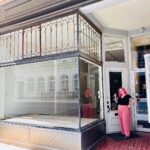
Harrisburg already lays claim to several improv groups that perform around the region, but now the comedy form has a home of its own. Go on over to the Midtown space—a former shoe repair and tailor shop and then an art gallery—now repurposed as a theater by Perry County native Jake Compton and his wife, Somers, a native of Etters. The Harrisburg couple are amazed that their dream of offering a place for improv and other creative endeavors has come true.

About 10 years ago, Jake got hooked on improv and took some classes in New York after inviting himself along when friends wanted to give it a try. He discovered that he loved it, but got busy with other things and put it on the back burner.

“I knew it would cycle back in my life,” Jake says, as he relaxes on one of the cushioned pews in this cozy theater. “We launched classes at MakeSpace and got a full house.”

That evidence of interest was all Jake needed. It fueled his need for a space where creativity and the improv mantra of “yes…and…” (meaning that performers always affirm each other’s contributions) could flourish. At the end of last year, Jake was online and noticed that a building on 3rd Street was available, and, when the price dropped, he and Somers were able to make that dream a reality.

It was perfect—intimate, artsy, filled with potential. Jake wanted a niche space for improv; Somers sought a place where people could rent the storefront building for events like birthday parties and bridal showers, as well as poetry slams. They compromised. It was going to be all of those things.

“We look at this and laugh,” Jake says. “How legitimate we must look to other people.”

Open, Welcoming

The theater officially opened in June, but not before hitting an unexpected snag. After taking ownership of the building, the Comptons decided to paint over a mural on an outside wall facing a community garden. At the time, they didn’t know that the mural was a commissioned work that had become a cherished part of the neighborhood.

A brief media kerfuffle ensued, and the Comptons suddenly found themselves facing TV news cameras, explaining and apologizing for their oversight. The controversy now seems to have receded, allowing them again to focus on the potential of the theater.

“We’re very excited about what the future holds,” Jake said.

So is Jennie Adams of Hummelstown, a seven-year improv performer/teacher, member of Gamut Theatre’s TMI Improv Troupe and a performer with and co-owner of the all-female No Artificial Sweeteners. She took a class at MakeSpace with Jake last spring and enjoyed it so much that she signed up for Level 2.

“Jake and Somers Compton have been very open and welcoming to the already strong Harrisburg improv community and are open to collaborating with all the existing troupes here,” Adams says. “In fact, No Artificial Sweeteners and The HIT Squad did a joint show that benefited their improv class scholarship program.”

The young improvisers scholarship is for young people ages 17 to 19 who are interested in taking a class but for whom price might be an issue.

“We are hoping it helps to draw in young people who otherwise would not become involved,” Jake says. “I lucked into getting involved with improv when I was 19. I’m excited at the chance to give young people the same opportunity I had.”

On Aug. 15, the Harrisburg Improv Theatre will present a Level 1 class show at 6 p.m. and a Level 2 class show at 7 p.m. Then The HIT Squad will take to the stage at 8 p.m. At 9 p.m., there will be a free mini class and mixer for those who want to try improv.

“If it terrifies you, you should take a class,” Jake says. “It will help you with life.”

The Harrisburg Improv Theater is at 1633 N. 3rd St., Harrisburg. See www.hbgimprov.com for more information on classes and shows.

Continue Reading

To Good Use: 3 years ago, Harrisburg’s main post office closed its doors. Now, a new owner is seeking clarity about what he can and can’t do there.

Screenshot 2014-07-30 21.21.20Adam Meinstein sweeps his arm forward as he speaks of his vision.

A restaurant here. Small-scale manufacturing there. Maybe a rental car office or workshops or a showroom.

We’re standing at 815 Market St., a cavernous building that once was the Keystone branch, Harrisburg’s main postal facility. For decades, millions of letters and parcels passed through, heading into town and out to who-knows-where. It was a noisy place, with the buzz and hum of sorting machines, conveyors and hundreds of employees.

Today, the building is mostly quiet, the silence broken up by an occasional voice or some tools banging. But Meinstein says he’s working hard to fill the building once again with the sound of commerce—people working, people creating, customers being served.

“This is an interesting property,” he said, “We’re sitting in the middle of an industrial zone, but we know there is long-term potential for many uses for the property.”

Meinstein is president of Equilibrium Equities, a suburban Philadelphia investment and development company that bought the facility in 2011 for $600,000, after the U.S. Postal Service wound down 50 years at the site. In addition to the 240,000-square-foot building, 700 parking spaces sit amid an 11-acre property that’s the equivalent of eight city blocks.

After the purchase, Meinstein invested about $1.5 million in improvements that included everything from paving, lights and security cameras outside to removing heavy postal equipment, sealing floors and knocking down walls inside.

The easiest sell was, as one might expect in Harrisburg, the parking. Under the name TransitPark, Meinstein’s company lets spaces on both a short-term and long-term basis at a deep discount to rates charged by Standard Parking, which took over city garages and street parking late last year as part of Harrisburg’s financial recovery plan.

Meinstein now does a lot of business with state and downtown workers who don’t mind walking a few extra blocks, including beneath the Market Street underpass, to save a fair chunk of change. Amtrak riders, downtown residents and short-term visitors represent other groups of customers.

Adam Meinstein

Adam Meinstein

But it’s inside the building where both the opportunities and challenges lie. After the post office closed in 2011, the doors were locked, and the only indication of activity was some new landscaping and a sign that said, “815 Market Street.”

But, says Meinstein, that outward perception was deceptive. Following some improvements and marketing, the building began to find occupants.

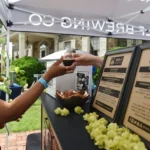
Harrisburg-based Exhibit Studios had run out of space at its main facility on Cameron Street, so took some space—and then some more. Restaurant Auction Co. needed a place to stash some equipment, as did Appalachian Brewing Co. Meinstein donated room to store 80 murals that used to line the Mulberry Street Bridge, which is undergoing a complete rehabilitation.

As of this writing, about 80,000 square feet of space was leased, with another 40,000 or so under negotiation, Meinstein said.

Who knew?

“Usually, I like to keep a low profile,” he said.

That, however, began to change in June, when the Papenfuse administration reintroduced a new zoning code that had been moldering on the shelves for four years.

The code rezoned the old post office site from industrial to a new zone called “Downtown Center,” as the city tried to push the boundaries of downtown up Market Street towards Cameron. With the change, industrial uses would not be permitted in the area by right.

“This building went from a single tenant, the U.S. Postal Service, to a living, breathing, mixed-use building, including industrial,” said Meinstein. “The new code takes away industrial use.”

He objected. His building, “grandfathered” in, would be exempt from the restrictions of the new zone as long as the existing uses were unchanged. But he feared negative consequences if a future tenant wanted to propose other industrial uses. The fact that the building was constructed for industrial purposes—with 40 dock doors, 22-foot-high ceilings, a large truck court and massive freight elevators—made that scenario likely, he said.

In fact, he said his building already housed a wide variety of uses, as tenant Exhibit Studios was using it for assembly and fabrication, in addition to storage. Therefore, all these uses should be grandfathered, he insisted.

“We were just trying to make sure that on Wednesday morning, we were allowed to do the same things we were doing on Tuesday night,” he said.

The city disagreed, insisting that the site served primarily as a warehouse.

“We’d have to have a more thorough understanding exactly of what economic activity is going on there, but it’s my understanding that it’s primarily storage or warehousing at this point,” said city Planner/Zoning Officer Geoffrey Knight at a City Council meeting last month.

To try to make changes to the code, Meinstein took a public stance, speaking his piece at several public hearings. He also saw it as an opportune time to let the people of Harrisburg know what had become of their old post office, that he was putting back into productive use an enormous, strategically located building that the federal government no longer wanted.

He received only slight satisfaction. Several City Council members tried, but failed, to pass a narrowly targeted amendment that would have continued to allow a full array of industrial uses at 815 Market by right, including manufacturing, assembly and distribution.

In the end, council agreed only that assembly would be allowed in the new Downtown Center zone—and not by right. The Zoning Hearing Board would have to agree to a special exception for the use.

Still, Meinstein plans to continue trying to change minds by suggesting amendments to the new zoning code during the six-month review period. Otherwise, he’ll operate on the belief that the building’s historic industrial uses—including warehouse, distribution and assembly/fabrication—are grandfathered uses for his building.

“We’re going to continue doing what we’re doing,” he said.

In his view, the city’s stance represents wishful thinking. The administration and council may want to extend downtown to Cameron Street, but there’s currently no demand for new offices or housing there—and may not be for many years, he said. What is there demand for? The industrial uses that his building was designed for.

“It was not a great message for the business community at large that these uses did not just get clearly approved in a highly functional, well-maintained industrial building,” he said.

In fact, 815 Market is one of the few decent structures left in a corridor that once housed thriving industrial concerns as diverse as a brewery, a print shop and the Patriot-News press and distribution facilities. Abandoned buildings and large surface lots now dominate the area between the railroad tracks and Cameron Street.

“Look around here,” he said, gesturing into the distance towards Market Street. “What do you see? There are vacant buildings, distressed properties. That one building has trees growing out of the roof.”

Then he pointed back to his building.

“This property has long-term potential,” he said. “We have a lot of room to do what we need to do, what the city needs to have happen.”


Continue Reading

All That Jazz: A fusion of styles, locales at annual Central PA Jazz Festival.

Screenshot 2014-07-30 21.28.04Sometimes, when life hands you lemons . . . well, you know the rest.

It may be a cliché, but making the best of a bad situation is exactly what the folks at the annual Central PA Friends of Jazz did after funding was reduced for their annual jazz festival.

“We used to hold our entire festival centered around the Harrisburg Hilton and downtown sights in Harrisburg,” explained Steve Rudolph, CPFJ’s executive director. “But, because of some funding cuts, we’ve lost some of the affiliations that made that possible.”

Instead, CPFJ has chosen to reinvent the event and spread it out over a broader geographic area.

“For the past three years, the festival has been in sites all over the place, “said Rudolph. “It’s really helped us to draw in a wider audience.”

CPFJ also recognizes that fans like to listen to their jazz in different type of settings.

“For this festival, we are trying to appeal to a variety of tastes,” said Rudolph. “Some people like the formal concert thing and some people prefer to enjoy music in a more intimate space.”

He also noted that a lot of people like to bring their families out to events such as their annual picnic. “We’ve had the picnic for about 30 years,” he said. “But only in the past two years have we included it as part of the festival schedule.”

Another departure from the original festival model is that now the event features fewer headliners, instead showcasing a cadre of excellent jazz musicians who live locally or in nearby cities.

”The one thing that we can still guarantee on a quality level is that, anytime you come to a Friends of Jazz event, you’re going to hear some of the best jazz musicians alive today,” said Rudolph. “It may not be anyone who you have ever heard of, but, if you love jazz music, you’ll love what we are presenting.”

With that, let’s take a look at what CPFJ has planned for the 34th annual festival.

Thursday, Aug. 7: Jazz Cruise, 5:30-8:30 p.m.

The Central PA Jazz Festival will kick off with a riverboat cruise on the Pride of the Susquehanna, which leaves from City Island in Harrisburg. During the summer months, CPFJ sponsors a weekly Thursday evening series called “Jazzin’ on the Pride,” but, according to Rudolph, “we beef up the money for the band on festival night.” The Dave Stahl Quintet, featuring Stahl and woodwind master Tom Strohman, will provide the entertainment. Food and drink will be available, and there is a $10 admission charge.

Friday, Aug. 8: Jazz Party, 6:30-11:30 p.m.

New for this year’s festival is a jazz party held in three different venues in the 1500 Condominium building at N. 6th and Reily streets in Harrisburg. Two restaurants in the facility, Café 1500 and Crawdaddy’s, will feature live jazz. Crawdaddy’s is scheduled to honor legendary area drummer Sammy Banks with music by pianist Danny Stuber and his trio. In addition, CPFJ will host “Jazz Under the Stars” on the building’s rooftop patio, featuring jazz vocalist Diane Wilson Bedford and Jimmy Wood’s Trio. There is no cover charge for the restaurants, but tickets are $12 for “Jazz Under the Stars.”

Saturday, Aug. 9: Picnic, 2-7 p.m.

The Jazz Picnic, a festival highlight for many, will be held this year on the grounds of Indian Echo Caverns at 368 Middletown Rd. in Hummelstown. Many activities for families will be available, including tours of the caverns and a petting zoo. Continuous music will be provided, including the Larry Marshall Trio at 2 p.m., Central PA Youth Band at 3 p.m., Greg and Tom Strohman at 4 p.m., the Sonia Vrooman Group at 5 p.m. and No Last Call at 6 p.m. Food is available for purchase or picnic-goers can bring their own. Complimentary beverages are included with the ticket, which is $15 for adults and free for children under 12.

Sunday, Aug. 10: Jam, 3:30-6:30 p.m.

A jam session will be held in the afternoon preceding the concert at The Timbers Restaurant at 350 Timber Rd. in Mt. Gretna. Jonathan Ragonese will be coming home from New York to lead the jam session, and all aspiring jazz musicians are welcome to sit in. Everyone is also encouraged to enjoy a meal at the restaurant. Admission to the jam is $5, but free for students, children and musicians who participate.

Sunday, Aug. 10: Concert, 7:30 p.m.

The festival will culminate with a concert featuring two great jazz luminaries—harmonica and vibraphone virtuoso Hendrik Meurkens and legendary bassist Lee Smith. It will be held in cooperation with Gretna Music at the Mt Gretna Playhouse at 200 Pennsylvania Ave. in Mt. Gretna.

Hendrik Meurkens is first on the bill. He will appear with his New York Samba Jazz Quartet, which features Russian pianist Misha Tsiganov and Brazilian musicians Gustavo Amarante on bass and Adriano Santos on drums. Meurkens, who is German born, fell in love with the music of Brazil while living there. He currently resides in New York, where he has recorded 15 CDs for Concord Records.

“Hendrik is a fantastic jazz musician,” said Rudolph. “He is widely considered to be the greatest jazz harmonica player ever.”

The Lee Smith Sextet will close out the festival. The group features Smith on bass, Marc Adler on flute, Tim Thompson on trumpet, Tim Warfield on sax, Joshua Richmond on piano and Justin Faulkner on drums. Perhaps better known as a sideman for jazz greats such as Lionel Hampton, Dizzy Gillespie and Roberta Flack, Smith started focusing on his own compositions and arrangements while working on his latest recording, ” Sittin’ on a Secret.” Now, with a new recording due out in the fall, Smith has had the opportunity to explore a growing repertoire with the members of his sextet.

“When I write, I try to compose in such a way to reach out to as many people as possible and not just the jazz enthusiasts,” he said. “At the concert, people are going to hear some songs that they know and some that they don’t. They should just expect to hear some really good melodies.”

For tickets and to learn more about the festival, visit www.friendsofjazz.org.

Continue Reading

“Quiet Is OK:” An essay from a student writer at Capital Area School for the Arts (CASA).

Grace Beatty

Grace Beatty

Children’s voices pierce the air. The sun burns bright in a crisp blue sky as they play on the blacktop. A boy kicks a ball through the air before sprinting around a painted kickball diamond. Four square games host lines of students, chatting away as they wait their turn. The swings creak, their seats full. Girls braid each other’s hair on the climbing rock, soaking in the warmth it absorbs.

Away from this chaos, one girl sits alone. Underneath a black lamppost, she shrinks into her bumblebee-colored coat, book in hand. Her little eyes dart back and forth, immersed in the story. Two kids walk past, ignored by the girl. This behavior could raise some questions. Is she socially developed? Is she mentally ill? Does she need medication?

Or perhaps it’s normal, a part of her introverted personality.

Introverts have often been categorized as shy, unconfident people, which couldn’t be further from the truth. It is not self-esteem that defines the introvert, but how they obtain and expend energy.

Kate Bartolotta explains this well in her Huffington Post article, “What Is it Really Like to be an Introvert?” She compares an introvert’s energy storage to a cup. Each moment an introvert spends with other people, a little more energy is taken from the cup. Once it’s empty, they need to go spend some alone time to fill it back up.

The opposite is true for those on the other end of the spectrum. Extroverts need to spend time socializing to fill their cups and become drained when solitary. People can usually identify themselves with one type or the other, but some are an equal mix of both, called ambiverts. However, someone cannot be all introvert or extrovert. Carl Jung, the psychologist who popularized “introvert” and “extrovert,” describes such a person as “a man who would be in the lunatic asylum.”

Introverts’ tendency toward being alone depends on the amount of energy they can hold in their cup. Some introverts are able to spend more time socializing, to the point where they may be mistaken for extroverts. But there are others who aren’t as easily motivated by social stimulation, their cups holding a small fraction of energy. These people might want to take solitary trips to restaurants or libraries, or stay at home, in contrast to going out each night and meeting new people.

Such introverts may appear, upon observation, anti-social, even hermitic. Those who prefer more extreme seclusion, or who speak only on occasion, could be labeled mentally ill. But this isn’t new. According to an article published in Psychology Today, the World Health Organization has included “introverted disorder of childhood” in its medical manual, “International Statistical Classification of Diseases and Related Health Problems,” for years. Having their personality catalogued in a book of mental illnesses gives introverts the hint that something is wrong with them.

Susan Cain writes often about Steve Wozniak in her book “Quiet.” Wozniak, a co-founder of Apple, worked often on what he called “The Dream.” His dream was to make a computer that used a screen and a keyboard and was small enough to use at home. He spent his time working on this prototype. According to “Quiet,” each morning he’d show up at work “around 6:30, and… read engineering magazines, study chip manuals, and prepare designs in his head. After work, he’d go home, make a quick spaghetti or TV dinner, then drive back to the office and work late into the night.” He labored alone and loved it, recalling it as “the biggest high ever.”

As a child, Wozniak studied alone, his skill with computers placing him on the low end of the social ladder. But he didn’t mind. He welcomed the solitude as a chance to spend more time messing with circuits and playing with knobs.

He’s not the only example. Bill Gates, another introvert, founded Microsoft and became a billionaire. Rosa Parks, a soft, quiet person, launched the Civil Rights movement with one act of bravery aboard a bus. Even actresses like Audrey Hepburn have described themselves as introverts.

An important part of these famous introverts’ stories would be missing if we only focused on one end of the spectrum. The fact that Wozniak met extrovert Steve Jobs is crucial in explaining the founding of Apple. Had it not been for Jobs, Wozniak would have had a more difficult time bringing his “Dream” to the world. Parks met Martin Luther King Jr., who helped raise awareness for Civil Rights by making groundbreaking speeches to huge crowds. It’s where the idea started—in solitude—that matters.

Just because someone is an introvert doesn’t make him or her better than anyone else. But to direct them from the world turning inside their heads to the party going on outside could rob the world of other great advances. Everyone has been created differently, to act differently, think differently, and express differently than everyone else. It’s what makes them individuals, helping to shape their future.

The future that little girl—curled up with her book in the bumblebee coat—will create.

Continue Reading

Taking Care of Business: 100 years old, the Harrisburg Chamber eyes its next century.

Screenshot 2014-07-30 21.15.31

A hundred years ago, the Harrisburg area was a completely different place.

Streetcars ran the length and breadth of the city; shoppers crowded the streets downtown. The suburbs, as we understand them today, did not exist.

It was in that environment that prominent businessman E.J. Stackpole set the wheels in motion to establish the Harrisburg Regional Chamber & CREDC, which this year celebrates its centennial.

Declaring that the Board of Trade, the city’s previous group for merchants, had outlived its usefulness, he recommended that the entity give way to a new organization possessing “wider powers” and a “broader scope of activity.”

Stackpole seems to have gotten what he wanted.

At its birth in 1914, the Chamber enlisted nearly 200 members, including newspapers, banks, printers, retailers and theaters, which agreed to pay dues set at $25 and up.

Today, the Chamber has about 1,400 members and has greatly expanded its portfolio of services.

“Helping both large and small businesses succeed are always a key part of [what we do],” said David Black, president and CEO.

But the group also provides aid in the form of research, lobbying, education, networking, and advice on reducing business expenditures, to name a few. Collaboration is key to the success of the organization, according to Black.

“We build bridges and coalitions to move things forward,” he said. “That’s both a challenge and a blessing. We have a pretty good reputation when it comes to business issues and getting things done. We help businesses connect with each other and to government at all levels.”

The Early Years

After its founding, the Harrisburg Chamber leased office space in the Kunkel building downtown and named George B. Tripp, head of Harrisburg Light and Power Co., as its first president.

The Chamber faced its share of problems early on. In 1923, a fire destroyed nearly all files and records. Shortly thereafter, it faced the difficult challenge of helping midstate businesses cope with the Great Depression, which brought about economic devastation as well as many new programs, rules and regulations mandated by the Roosevelt administration.

By the 1940s, things were looking up, and the Chamber moved into a new home at 114 Walnut St. in Harrisburg. During this era, it played a major part in persuading the federal government to build a Navy base in Hampden Township, which brought a plethora of jobs to the area.

More projects followed during the next decades. Some of the most notable included 1,200 new parking spaces on City Island, a four-lane highway from Baltimore to Harrisburg through York (I-83), construction of a $12-million, 10,000-foot runway at Olmsted Air Force Base in Middletown, and AMP’s purchase of a 42-acre site near Dauphin County Prison.

In 1968, Gov. Raymond Shafer cut the ribbon to open commercial air service at Olmsted. A Chamber-led plan to locate the Penn State-Harrisburg campus on the grounds of the Air Force base and relocate Fruehauf Trailer Co. nearby was hailed as a successful conversion of a military base to civilian use.

By 1972, the Chamber faced another natural disaster, losing its files once again, this time to Tropical Storm Agnes. While coping with the loss, it moutned citywide clean-up and revival efforts.

The Chamber expanded its scope even further as the years passed and, in 1984, founded the Capital Region Economic Development Corp. (CREDC), which was among the early investors in the Hilton Harrisburg and Towers, erected in 1990.

In the new millennium, major projects included the purchase, remediation and transfer of ownership of the vacant Bethlehem Steel Pipe Mill in Steelton; the founding of Harrisburg University of Science and Technology; the formation of several Keystone Opportunity Zones, Keystone Innovation Zones and Enterprise Zones; the construction of Perry County’s Business Campus One; and the organization’s Business Diversity Initiative, which began in 2004.

Looking Ahead

Black said the future looks bright for the organization and for the area in general.

“Economically, we are a fairly strong region, so there is a fair amount of money that supports our organization,” he said.

Adding to the optimism is the belief that the enormous financial problems facing Harrisburg may be waning. That’s the opinion of Linda Goldstein, vice president and chief operating officer of CREDC, who foresees a better business environment in the city following the Harrisburg Strong Plan.

“Mayor [Linda] Thompson was forced to focus on the city’s financial dilemma. Now that we’re more stable, Mayor [Eric] Papenfuse and City Council can focus on other initiatives that are key to the vitality of the city,” she said.

The Chamber, in fact, played a key role in Harrisburg’s recovery process. Black sat on the state receiver’s Financial Recovery Advisory Committee and now sits on the Harrisburg Strong Task Force, which is drafting rules for the formation of a non-profit group that will administer the city’s infrastructure and economic development funds. In addition, CREDC has provided funds to hire Harrisburg’s new director of economic development.

“We are committed to the long-term health and growth of the city of Harrisburg through involvement in the Strong Plan and the financial support for Harrisburg’s community and economic development director,” said Black.

Jack Sproch, CEO of Appalachian Brewing Company and a long-time Chamber member, said he is very satisfied with the benefits provided by the organization.

“They promote legislation that is favorable to the business and economic development of the area and provide demographics and numbers for those interested in starting a business here,” he said.

CREDC has been instrumental in ABC’s expansion, said Sproch.

“I spent money on accountants and a lot of my time meeting with various economic development people seeking favorable business development loans,” he said. “People assured me that if I located in the Cameron Corridor and the Enterprise Zone, it would be simple. Yet, I was unable to get any kind of state or tax benefits until I contacted CREDC.”

To learn more about the Harrisburg Regional Chamber & CREDC, visit www.HarrisburgRegionalChamber.org or call 717-232-4099.

Continue Reading

Art of the State: A Summertime Ritual

A summertime ritual in Harrisburg, Art of the State has returned to the State Museum, showcasing some of the finest painting, photography, sculpture, craft and work on paper in Pennsylvania.

The juried show features 122 works from 30 counties, culled from more than 1,700 submissions. We’re only able to highlight a fraction of the art here. So, please, motor on over to the museum and check out the exhibit, which runs through Sept. 14, the day of Harrisburg’s annual Gallery Walk.

Screenshot 2014-07-30 22.04.23 Screenshot 2014-07-30 22.04.30 Screenshot 2014-07-30 22.04.41 Screenshot 2014-07-30 22.04.56 Screenshot 2014-07-30 22.05.05 Screenshot 2014-07-30 22.05.14

Continue Reading

“What Team?”: An essay from a student writer at Capital Area School for the Arts (CASA).

Annabelle van Hemert

Annabelle van Hemert

The band waited in the tunnel, the atmosphere bristling with excitement and jangled nerves.

Someone tapped twice on the brim of a friend’s shako, the marching band hat, for good luck. That started a chain reaction; band members wanted all the luck they could get. The crowd cheered from inside the stadium. A beat started to lead the other band off the field, in time. Slowly, the new band moved out into the lighted stadium. The prop team raced to set up the smoke stacks in the back of the field and gears in the front. The band marched onto the field, clumped together for a quick pep talk from their director, and hurried to their dots, their placements on the field.

The Mechanicsburg Area Senior High Marching Band would place third in the USBands Nationals Competition. Preparation for the show, “The Factory,” started at the beginning of the summer. Since the beginning of the year, the director and leaders worked on the drill, the formations of the band during the show, and the music. During band camp, an extensive two-week camp, the band worked hard to learn as much drill, flag work and music as possible.

The color guard congregated out on the field, spinning their flags, racing to get to their dots, the girls, tired and sweaty, still managing to yell out an “and we’re loving it!” toward Kristy Templin, the color guard instructor. The pit squeezed together for warm ups, playing their scales faster and faster, building up callouses on their hands. The drum line practiced not far from the pit, their rhythms echoing throughout the small town of Mechanicsburg.

Jim Weaver, the percussion director, jumped between the two sections to keep them on track. The winds stood together in two arcs, playing their own set of warm-ups, trying to tune the flutes, piccolo and saxophones. William Stowman, a Messiah College music professor, led the band. Ben Goldsborough, the band director, hung out with the winds and could be seen enthusiastically jumping up and down to get the band to play louder at the crescendos.

The band got used to winning that season. Its hard work paid off in the end, winning every competition up until Nationals. The week before Nationals, the band won first place at the Atlantic Coast Championships with a score of 97.70 and earned awards for high music, auxiliary, visual, percussion and brass.

When asking Greg Hutchison, a Lower Dauphin band director, about performing as a high schooler in his marching band, he said, “I had an incredible marching band in high school. I went to Red Land and was a part of their band when they won three Atlantic Coast Championships in four years. Performances were great because we were taught to take so much pride in what we did.”

Mechanicsburg students feel the same way. Leaving the field after the Nationals performance, the band gathered together to rate their individual performances and talk about what would happen next. As soon as everyone gathered together, Goldsborough shouted, “MECHANICSBURG, HOW DO YOU FEEL?” The band yelled a collective “HOOHAH, FEEL GOOD,” in response.

Tournament of Bands (TOB), a competitive band organization founded in 1972 by the National Judges Association for high school marching band competitions, grew from 18 bands performing in the Atlantic Coast Championships to more than 400 schools that participate in competitions in 13 states.

The Mechanicsburg Area Senior High Marching Band performed with USBands for the first time for Nationals. USBands started in 1988, by the Cadets, to allow high school bands to perform in advanced competitions with top judges.

The Cadets, the founders of USBands, started as a program for boys in a church parish in the 1930s. In 1940, they won the American Legion Junior National Championship. They broke away from the parish in 1958, began their own organization, and placed second in Legion Nationals. The Cadets proceeded to become World Class Champions throughout the years.

USBands judge in a more difficult way than TOB, So, that morning, Mechanicsburg borrowed Cresskill High School’s football field to practice and perfect the details. The band arrived at the field in the morning and got right to work. The color guard took over the field. The drummers went their own way. The pit set up at the front of the field. The band went over to an open air to work on music and marching techniques, practicing until lunchtime, with a break for subs and chips. Then, they came out and worked some more. They gathered all together for group ensemble time, where every section practiced the show together to make sure everything fit together.

The band members nearly sprinted to their dots. The color guard ran around them, simultaneously waving and tossing their flags and rifles. The drumline, avoiding any collisions with the band members, crab stepped, a march that requires crossing one leg over the other, and yelled out the garbled phrases they use to remember what to do. The pit, using all its instruments, focused on keeping perfect time.

Judges used a 100-point system when judging a band’s show. They raced around the band members, glorifying the good components, catching the meaning behind the show, but pointing out feet not marching in time, bad technique and weak crescendos. They look for dropped flags and rifles in the color guard.

Sound touched silence. The beat moved faster. The last notes of the song ended together in a tired, but triumphant manner. The band exited the field.

The band director stood in the middle of the group, completely surrounded by sweaty, out-of-breath teens. He asked if any of them scored their individual performance less than a five. No one raised their hands. Six? Same response. Seven? None. Eight? A couple hands popped up in the air. Nine? More hands. Ten? Everyone else raised their hands, proud of their hard work.

The band hurried to the buses to put away the instruments and returned to the stadium for awards. The seniors are sent out before the ceremony to prepare to collect the awards. The rest of the group headed to the stands. They waited group by group, until they heard Group IV Open Class’s awards. The members linked arms, completely silent as they waited to hear the scores. Third place: Mechanicsburg Area Senior High School Marching Band. Cheers and screams erupted, but the band quickly quieted down to applaud the rest of the bands. Pride took over, knowing they earned and deserved this moment.

Continue Reading

“With Child:” An essay from a student writer at Capital Area School for the Arts (CASA).

Quadriya Cogman

Quadriya Cogman

In my school, I knew at least one student pregnant with her first child.

Society would lump her into the category of “teen mom” and be more likely to judge and dismiss her without digging deeper into her story. The notion that a teenager, pregnant or not, could be that easily dismissed bothered me enough to gather a panel of fellow teens to discuss teen pregnancy. One of the members of the panel appeared visibly nervous. When she noticed my notebook, she took a few deep breaths to prepare for the interview.

Basketball all-star MW enjoyed life as a normal teenager, but a doctor’s appointment changed all that. During a routine physical, the doctor pronounced her to be eight-and-a-half-months pregnant. Denying that she had only a few weeks to prepare for a newborn, the 14-year-old didn’t know what to do. She said she had no symptoms whatsoever. Knowing only how to be a teenager—showing up for practice, studying, socializing—she didn’t know if she wanted to take on the role of motherhood.

“When I found out that I was expecting a child in a few weeks, I started to think about my consequences. I started to wonder what people would think of me. I didn’t know if I could handle being judged,” she said.

Teen pregnancy is defined by the University of Maryland as pregnancy of a girl under the age of 20. Teen pregnancy remains the highest in industrialized countries. Almost 85 percent of these teen pregnancies are unplanned, meaning that 820,000 teens under the age of 20 become teen mothers each year. They have to drop some of the things they never thought they would have to let go of, so soon in their young lives.

As I wrote down the young mother’s answers to her shocking story, she lowered her head. I knew something bothered her because feelings of another participant during the interview became tense.

“I had to sacrifice a lot in life to care for my child. Even if it meant basketball, friends, or being a party girl.”

She sounded like a sad tune ready to burst when it hit the high note. “I chose to keep and care for my daughter,” she said. When a teenage girl becomes pregnant, she only has three options: abortion, adoption or keeping the baby.

Discovering and going through a pregnancy forever changes a woman, both mentally and physically,” said Dr. Stephanie Diamond, my pediatrician. “Many teen girls who believe they are not capable to care for a child will choose abortion or adoption. Looking from the outside in, teens who are so wrapped up in their teen lives don’t want to throw it all away only because they have a child. So, to avoid all the motherhood behaviors, they abort them. Many teens who do birth their child prefer to keep it because they can’t see themselves giving away a human they’ve grown attached to. Teens who believe that they cannot meet the satisfaction of a child financially, emotionally and physically will sometimes choose adoption.”

Dr. Diamond emphasized: “Newborns require your full attention day and night.”

On his website, FindYouthInfo.gov, Dr. Stanley Swierzewski discussed the effects of teen pregnancy and how it complicates a teen’s life. “Teenage pregnancy is an important issue,” he said. “Having a child can cause stress and low energy.”

Due to the human body not having enough hours of sleep, teen moms can become associated with low income, substance abuse or falling behind in school, Swierzewski said. The website shows how a child of a teen mom can greatly complicate life with behavioral problems or repeating the cycle of the birth parent.

Most teens are friends, or have been acquainted with, a teen parent. When I entered the lunchroom, a group of girls sat at the lunch table giggling and having fun, so I asked what they thought about teen parents.

“Sometimes, people seem to jump to conclusions when this topic is brought up, but I wonder what their story is?” said Caitlyn, a senior at CASA.

I asked what if you were to see a teen mother emotional and helpless? “Well, there’s not much you can do, but show them your support instead of standing there judging them on what may or may not have been their fault,” Brittany, a junior, stated.

As I questioned them, I noticed the young girls looked puzzled. I could tell they wondered why I chose this specific title. I told them I wanted to get the viewpoint of how others truly see teen moms rather than how society views teen parents.

“In the United States, the title of ‘single mother’ creates several assumptions about the mother’s ability to care for her child,” according to the website www.2.websters.edu.

Teen parents struggling to stay out of poverty settle for a minimum wage job to support their children on her own, but it may perpetuate the stereotypes of teen mothers, like becoming a high school dropout, which could lead to poverty, substance abuse and irresponsibility. These are some stereotypes that teen mothers face in today’s society, according to www.babygaga.com.

Most people enter parenthood with dreams about satisfying, rewarding relationships with their child as they grow and develop successfully,” stated Fredric Reamer, Ph,D., at the Rhode Island College Graduate Social Work Program.

“A struggling teen can feel like an assault on a parent’s dreams, abilities and confidence,” he said. “A parent who has a daughter who’s a teen mother often second- or third-guesses their decisions and judgments. They tend to abandon their rich fantasies and learn how to accept and honor the real child they have. One of life’s greatest challenge is accepting painful truths.”

Continue Reading

Coffee, Tea & History: For four decades, Kauffman’s has blended fine beverages, friendships.

Screenshot 2014-07-30 21.23.36A simple wooden sign hangs outside the unassuming door. Upon walking inside, I hear the chime of a hospitable bell and view a scene from years past. Glass jars with gold lettering line the shelves, chalkboards listing the available goods hang on the walls, and an ancient, silent cash register sits on the counter.

Kauffman’s, Coffee, Tea and Spice has resided in downtown Lemoyne for 36 years. Owner Betty Dorsey recounts that she and friend Barb Shultz bought the business, originally located in Harrisburg’s Shipoke neighborhood, 41 years ago.

“Why don’t we just shut up and buy it,” was Dorsey’s response to their indecision about purchasing the closing business.

They moved it to Lemoyne because they couldn’t afford to purchase the Shipoke building and because Lemoyne had greater customer traffic. Dorsey’s partner sold her part of the business to return to school five years into their venture. Dorsey’s husband, deceased for three years, served as the president of the Local Council of Churches, so she ran the business mostly by herself with the help of their children.

While Kauffman’s is an old-fashioned shop, there’s nothing old about Betty Dorsey. This forward-thinking pastor’s wife started a small business at a time when only about 15 percent of women entered the workforce.

She said that Kauffman’s is different than most teashops because it doesn’t just serve tea. It also sells a variety of products, including pastries prepared by Dorsey’s friend.

Kauffman’s dusty blackboards reveal the treasures within. Its loose teas, 35 types, include the exotic Russian gold, peony white and jasmine teas, as well as the more traditional Ceylon, Earl Grey and English breakfast. Tea lovers can also enjoy teas flavored with black currant, apple, apricot or Kauffman’s blend mint tea.

When speaking of tea, she explains that there is “tea the plant and tea the drink.”

“Tea the drink is not always tea the plant,” she said, referring to the fact that tea, in the broad sense, is a beverage created when leaves, berries or roots are steeped in hot water. Tea, in the strict sense, is a beverage made with the tea plant, Camellia sinensis.

Coffee rounds out the beverage menu with 25 varieties, including Sumatran, French roast, Guatemalan and Kona. All coffee is whole bean and ground on the premises for customers to take home or French-pressed to enjoy in the shop. Dorsey’s extensive travels in Europe have influenced her ideas about coffee, and she wrinkles her nose at any mention of a coffee-brewing method other than French press—it just doesn’t taste good, she believes.

Kauffman’s doesn’t restrict itself to selling beverages; it also deals in spices. Spices make up about a quarter of its business. Common kitchen spices—basil, oregano and thyme—line the shelves, which also include the less common saffron, whole nutmeg seeds and the mysterious tellicherry, a type of black pepper.

The place is full of breakables, but, in the corner on a simple wooden chair, are two handmade cloth dolls for children to play with when they come in. Dorsey wants people to feel comfortable bringing their children into the shop.

“It’s a special little coffeehouse,” said Fred, a regular at Kauffman’s.

He likes that it’s quiet with no cell phones or blenders making what he unapologetically calls “non-coffee” drinks. According to Fred, drinking tea or coffee at Kauffman’s, with the classical music in the background, feels like sitting in a living room.

“It’s like a bed and breakfast of coffee and tea,” he said.

What’s also special about Kauffman’s is that it sells a unique blend of Sumatran, house blend, Italian and Tanzanian coffee, which is sold under an acronym that most people would find vulgar. At Kauffman’s, though, Folgers is the only swear word.

When asked if she ever thought about updating the place, Dorsey replied “no way.” The early-1900s cash register only rings up to $6.95, but Dorsey has never considered changing a thing. She weighs her goods on a vintage scale, writes up sales on slips of paper and uses a calculator to tally up the cost. With a confident smile, she said that Kauffman’s style has gotten her where she wants to be.

About the only modern items at Kauffman’s are the various brewing devices available for purchase. The shop sells French presses and specialized tea brewers that go beyond the typical loose tea infuser.

Justin Walters, owner of JW Music just over the bridge and down the street from Kauffman’s, said that his parents went to Kauffman’s regularly and that his dad refused to buy coffee anywhere else. So, when his parents could no longer travel, Walters would make a special trip to Kauffman’s to purchase coffee for his dad—Colombian supreme.

Like most people who know the store, Walters’ face lights up when he talks about it, and a broad smile comes across his face. “It brings back memories,” he said.

Leaving Kauffman’s Coffee, Tea and Spices feels like leaving an old friend, even if you’ve just met. The aged wooden floor creaks as I walk to the door, the bell peals a goodbye, and Dorsey and friend wave a friendly farewell. Stepping out into the noisy street with a small brown bag full of delicious possibilities, I look forward to my next visit.

Kauffman’s Coffee, Tea and Spice is located at 222 S. 3rd St., Lemoyne. Call 717-763-0829 or visit the Facebook page.

Continue Reading

“I, the Runt:” Short fiction from a student writer at Capital Area School for the Arts (CASA).

Kelsee Baker

Kelsee Baker

They say the runt of the litter is the first one to die. They say it’s the weakest, that it won’t grow up and become strong like the other pups.

At least that’s what my father told me.

Me, the runt out of four older, tougher brothers who’d already learned to hold their liquor by the time they were 12. I shouldn’t have to tell you how hard it was growing up in a house dominated by this drunken, masochistic excuse of a family. It didn’t take long for me, the skinny little runt, to learn my place in the liquor-soaked patriarchy led by my father.

I kept to myself most of the time, finding solace in taking long walks down the boulevard during the day and bumming cigarettes outside of Dega’s Play and Trade at night. Tuesday nights were the best at Dega’s. Five bucks and you could get in to see all of the city’s greatest underground folk acts. Not to mention that Dega’s was the only place that had a liquor license, booze always flowing and the tunes always rolling into the night.

It was after a few of those intoxicated escapades when I started to realize how consumed I was by the environment around me. I constantly offered to buy more rounds, refused to stop downing drinks when it was time to close; but there was something else, something a little smaller and nearly unnoticeable had I not begun to tap my foot along to one of the musician’s common-time beat.

Stumbling closer to the stage, I drowned everything out and focused on his fingers picking away on his acoustic. Delving further into this musical bubble slowly encasing me, he began to sing:

“Life used to be good. Now look what I’ve done.

I’ve ruined my temple with drugs. My mind is gone.”

A whirlwind of memories started to play in my head—all the nights I’ve wasted here, drunk and falling into debt. His words sent shivers down my spine.

“How did I get this way? It’s so unreal.

I’m no longer a person. I can’t even feel.”

His stage presence was haunting. I closed my eyes to delve further into the music, shaping my fingers to each chord. I was in tears by the end of his set.

A roar of applause erupted from the crowd, and it was at that moment when I realized what I wanted to do with my life. I, the runt, was no longer going to wallow around in the filth created by my booze-laden household. I, the runt, realized what it was going to take to get me out of the shithole life I was living.

I managed to get a stable amount of pay busing tables at a diner not far from my house and began to save money for a used guitar from Dega’s. Saving money was easier said than done, as I was able to rake in a decent amount of profit only to blow it all again with drinks and cheap thrills. After an ebb and flow over three months, I was able to save about $40, not enough for a great guitar, but it was enough to get something playable.

After one of my evening shifts, I brought my savings jar home and put it above the refrigerator to conceal it from the family. I planned to take it to the bank the next day so I could be on the way to my future.

I slept better than I had in months, probably over-confident of the fact that I’d finally been able to save enough for a guitar. Filled to the brim with excitement, I bounded downstairs to the fridge, feeling my hand around for the jar, but I could only feel air.

Frantic, I began to pace around the kitchen, trying to recollect if I’d moved the jar during the night. Running about the house, I milled through every room until I was interrupted by the drunken steps of my brothers stumbling inside. I poked my head around the corner, and, lo and behold, there was the jar swinging back and forth in one of their hands.

“What the hell, you guys? Did you spend all that?” I grabbed the jar.

“Uh, yeah, we went to Dega’s and got what? Four, five rounds?” They started to laugh, drunk off their asses and completely carefree.

“It took me three months, three damn months to save all of that, and you shitheads blew it all on booze! What the hell is wrong with you?” They keeled over from laughing. Filling with anger, I clenched my hands into fists, ready to throw a punch. If they’d have been sober, there was no chance I’d get out of a fight without at least one swollen eye. But drunk, I could pack in a few before they’d have a chance to fight back.

As their laughter reach a crescendo, I could take no more. I closed my eyes and poured all my anger out through my fists, slugging left and right, not caring where the hits landed. A few muffled grunts and small screams ensued before I opened my eyes.

All four of my brothers sprawled on the floor, eyes swollen and blood flowing from their noses and small cuts on their faces. I looked down at my hands, bright red and raw from the sheer force of my bottled-up frustration. Behind me, I heard the sound of someone clapping slowly. I turned around to face my father, grinning from ear to ear.

“Well, son, I didn’t think you had that in you. You aren’t as weak as I thought.” He crossed the room and put a hand on my shoulder.

“But dad, you don’t understand. I spent so much time trying to get money for a guitar, and those idiots spent it on booze. I’m glad I did it, but I shouldn’t have beat the shit out of them like that.”

“How much did you save up?” he asked, and I explained how hard it was trying to get money in between struggling with my own alcoholism and sheer laziness. Knowing that he probably cared less and less the more I spoke, I wasn’t surprised when he stopped listening entirely and walked away. One by one, my brothers left the kitchen, leaving me with the empty jar. The awkward silence that ensues after a heated discussion suffocated me.

What else could I do at this point but move on? I was most likely going to fall further into alcoholism, end up a poor old man, and die a lonely death like all of the other men in my family. Oddly so, I felt a queer satisfaction from the thought of living the rest of my life in frustration, trying to piece together this hellish puzzle I called a life.

Continue Reading