Mayor Previews 2015 Spending Plan: Balanced Budget, No Tax Hike, More Police and Firefighters

Harrisburg Mayor Eric Papenfuse. (File photo.)

Harrisburg Mayor Eric Papenfuse. (File photo.)

Mayor Eric Papenfuse plans to propose a balanced 2015 budget that will include a $2 million investment in sanitation, nearly $250,000 in staff raises and the hiring of 14 additional public safety personnel, but no tax increases, according to remarks the mayor made during a “sneak peek” of the budget this afternoon.

The budget, which Papenfuse will present to City Council tonight at 6 p.m., projects general fund revenues of $59,370,699 and general fund expenditures of $59,359,748, a decrease of about $100,000 each from last year’s respective totals.

The 2015 budget, Papenfuse said, contains “no gimmicks,” a reference to a multimillion-dollar “plug” that was used to balance the 2014 budget without cutting certain unfunded, though vacant, positions.

The budget also commits the city to greater transparency, he said, by replacing several hundreds of thousands of dollars in off-book discretionary accounts with dedicated funds subject to oversight by City Council.

Papenfuse will also propose hiring 14 new public safety personnel: five firefighters and nine police officers. After the hires, the total number of city firefighters will be 81, up from 76 last year and 62 in 2013, including one secretarial post that will be changed from a uniformed to a non-uniformed position.

The police department hires will bring the city’s force to 147 officers, up from 138 last year and 129 in 2013. Five of the nine proposed police hires, however, are not scheduled to occur until the middle of the year, when they will enable the city to dedicate five school resource officers, or SROs, to protecting students in city schools.

Papenfuse said he has asked the school district to fund those five positions, including their cars and other equipment, in the amount of $1.4 million over the next three years. In the event the district does not come up with the funding, however, the city will seek outside grant money to pay for the positions, he said.

The budget also sets aside $2 million for investing in sanitation, to be spent on repairing and updating the city’s deteriorated fleet and adding equipment to provide more efficient service. The money will come from excess revenues from the disposal rates charged to customers, which were increased last year, although Papenfuse said he hopes to reduce them in the future.

Papenfuse said he hopes the investments in sanitation will allow the city to avoid privatizing the service, an option contemplated last year on the recommendation of the city’s state-appointed receiver. He said he hoped more consistent service from city employees would drive off competition from private haulers.

Papenfuse also promised a “major push” to increase rates of recycling.

The 2015 budget proposal will include raises for various city workers, beginning with a mandatory 1-percent raise for all union employees that will cost the city around $171,799 next year. Papenfuse also will propose $68,869 in raises for select management personnel.

During Tuesday’s preview, the mayor did not provide a complete list of management positions slated for raises, though he did say it would include increasing the police chief’s salary to $94,000 and the police captains’ salaries to $85,000 each, as promised during a council meeting on the subject earlier this fall.

Alongside these raises, Papenfuse said he would cut the salary of the arts, culture and tourism director, from $70,000 to $45,000.

The budget also recommends uses for the host fee, a $1-per-ton benefit that Harrisburg receives for trash delivered to its incinerator. The budget proposes spending $279,537 out of the host fee fund this year, broken down as follows:

-$124,537 for salaries of an arborist, recycling coordinator and planner;

-$50,000 for a recycling truck;

-$70,000 to pay for trash disposal after community cleanup events;

-$35,000 for grants to local environmental projects.
Continue Reading

TheBurg Podcast, Nov. 14, 2014

Welcome to TheBurg Podcast, a weekly roundup of news in and around Harrisburg.

Nov. 14, 2014: Where’s the proof? This week, Larry and Paul discuss a major drop in Harrisburg school scores, the selection (again) of a new city treasurer, getting over our parking problems and a proposed distillery in Midtown.

Special thanks to Paul Cooley, who wrote our theme music. Check out Paul’s own podcast, the PRC Show, available on iTunes.

Continue Reading

Local Spirits: Distillery Proposed for Midtown

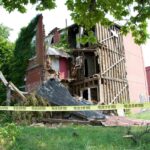
Two Harrisburg residents hope to transform this dilapidated building into the city's first distillery.

Two Harrisburg residents hope to transform this dilapidated building into the city’s first distillery since Prohibition.

In 2015, a new brewery and beer garden are slated to open in Midtown Harrisburg. If two city residents have their way, a distillery will be added to the mix.

Business partners Alan Kennedy-Shaffer and Stanley Gruen plan to open Kennedy Spirits, a distillery that would produce liquors such as whiskey, vodka, gin and rye. If all goes well, they hope to open in the historic “Carpets and Draperies” building at 1507 N. 3rd St. in mid-2015.

“We hope to be the first distillery in Harrisburg and Dauphin County since Prohibition,” said Kennedy-Shaffer, a former attorney for the Pennsylvania Liquor Control Board and founder of the community group Harrisburg Hope.

Next month, the city’s Planning Commission and Zoning Hearing Board will weigh in on the proposal, which will require a variance as that area is not zoned for industrial uses. In addition to the production facility, the plan for the distillery includes a fully renovated building with a tasting room and a bar.

Kennedy-Shaffer said he considered several options that would not have required a zoning variance, such as locating along the N. Cameron Street industrial corridor or in the suburbs. However, he said he rejected those ideas because he is committed to Harrisburg and to Midtown, where he lives. He also believes that a small-batch distillery would fit well into the continuing revitalization of the neighborhood.

“It’s in a perfect location,” he said. “There’s plenty of parking around, but a lot of people will just walk from Midtown or even downtown.”

The three-story industrial structure was built in 1910 as a factory that manufactured carpets, draperies and related products. The dilapidated building has sat empty for more than a dozen years, passing through a number of owners. It currently is owned by Mechanicsburg-based Mussani & Matz Co., which bought it in 2007 for $190,000, according to Dauphin County property records.

Sale of the building to Kennedy Spirits LLC will be contingent on the company receiving its zoning variance from the city, said Kennedy-Shaffer.

Kennedy-Shaffer and Gruen said they have several investors interested in the project, but hope to secure others as they expect the cost of the building renovation to exceed $1 million. They also are looking for qualified candidates to serve as their master distiller. 

Both partners said they see synergy between their proposed distillery and other businesses that will open soon in the same neighborhood. Zeroday Brewing Co. (formerly Alter Ego Brewing Co.) expects to open early next year at the rear of Midtown Cinema at 250 Reily St., while the Susquehanna Art Museum will open a block away in January. The Millworks, which includes a farm-to-table restaurant, a beer garden and artist studios, also will debut early next year across from the Broad Street Market.

“So far, the community has been extremely supportive and encouraging,” said Kennedy-Shaffer. “Most people welcome the prospect of drinking spirits made right here in the city of Harrisburg.”

Currently, Kennedy-Shaffer and Gruen are collecting signatures from neighbors to demonstrate support for their business.

For the past five years, Midtown residents thought that a new federal courthouse at N. 6th and Reily streets might act as a catalyst for the neighborhood, said Gruen. But that project, he added, has been delayed indefinitely, necessitating new ideas to spur the local economy.

“We want to add to the neighborhood,” he said. “We hope this will bring life to the street.”


Continue Reading

TheBurg Podcast, Nov. 7, 2014

Welcome to TheBurg Podcast, a weekly roundup of news in and around Harrisburg.

Nov. 7, 2014: This week, Larry and Paul discuss the election of Tom Wolf as Pennsylvania’s next governor, Paul’s story in the November issue about a top-ranked Harrisburg public school and Larry’s column on three kinds of government: good, bad and Italian.

Theme music by Paul Cooley, host of the PRC Show podcast.

Continue Reading

Harrisburg Schools Fail to Meet Performance Goals

Harrisburg public schools failed by a wide margin to meet academic standards set by the state-appointed chief recovery officer, according to state Department of Education academic performance measures released today.

None of Harrisburg’s schools met the academic goals for the 2013-14 school year set forth by Chief Recovery Officer Gene Veno in an April 2014 amendment to his recovery plan for the district. Several schools fell short of these goals by about 20 points.

The state’s “Building Level Academic Score” uses a 100-point scale to measure school performance. Much like a student report card, a score above 90 is considered excellent, while a score below 70 is deemed poor.

The following list shows each school’s performance, followed by a number in parenthesis that includes Veno’s goals for each school for the 2013-14 academic year.

  • Math Science Academy: 75.9 (94.2)
  • Harrisburg High School SciTech Campus: 63.8 (72.3)
  • Foose School: 57.8 (59.8)
  • Scott School: 57 (62.4)
  • Melrose School: 53.1 (69.7)
  • Downey School: 49.4 (67.5)
  • Benjamin Franklin School: 44.6 (63.5)
  • Marshall School: 44.4 (61.4)
  • Rowland School: 42.6 (56.5)
  • Harrisburg High School: 39.7 (57.6)
  • Camp Curtin School: 39.6 (60.3)

Scores are based upon several measures, including students’ performance on state standardized tests, improvement since the previous year, graduation and attendance rates and, in the case of high school students, SAT and ACT scores.

School Superintendent Sybil Knight-Burney indicated during a press conference in September that scores would be poor, as she described the results as “very disappointing.” However, at the time, it was not known just how poorly the city’s schools had performed, as the state prohibited the release of the results until today.

Not only did school scores fail to meet Veno’s goals, many scores declined significantly from the prior year, before the recovery plan was put into effect.

Math Science Academy suffered perhaps the greatest year-to-year decline. During the 2012-13 school year, the school received an excellent score of 92, which last year fell to 75.9.

Continue Reading

Trick or Treat

TrickorTreatWeb

The trick-or-treat rush commences on Green Street in Harrisburg.

They came in waves down Green Street.

Farmers. Cowboys. Superheroes. Princesses. Lots of princesses. There was a Super Mario and a ninja turtle and an ebola patient whom I mistook for a surgeon, dressed as he was in surgical robes and a mask.

This was my first year living on Harrisburg’s trick-or-treat flyway, the path that many of the city’s children take after their mandated first stop, the Governor’s Residence, two blocks away.

I had been warned by neighbors that I was in for an onslaught, so my wife and I stockpiled enough candy–five or six bags–to meet what we expected to be the heavy demand. After all, how many kids could possibly show up during a two-hour trick-or-treat window?

A half-hour in, I realized that we were radically underprepared. With the candy bowl quickly emptying, I dashed up to Rite Aid on Maclay Street for reinforcements, then did so again a short time later. And we still ran out before the night was over.

We went through almost 500 pieces of candy, which, at one candy each (we were pretty strict about that), equals–well, this is math that even I can do.

But here’s the important thing. Nearly 500 kids, and they were, almost without fail, polite and well-mannered. Most were escorted by adults, who seemed even more gracious than the children. If a kid didn’t say “thank you,” he invariably was nudged by a parent.

“What do you say?” said a patient mother or father.

“Thank you,” responded a shy, little voice.

Yes, this is Harrisburg. This is what Harrisburg really is like. It’s a place of mostly decent people who work hard, raise their kids and try to be kind to others.

Or, to take the contrary approach, here’s what it is not.

It’s not a war zone, a place where lawmakers should fear for their lives or that is “dangerous for anybody,” which is the impression one might get if their only exposure is from PennLive over just the past few weeks.

Yesterday, on the same day that hundreds of appreciative, well-behaved children made the trek up and down Green Street, PennLive released the results of a word cloud poll in which it asked readers to describe Harrisburg. The results were overwhelmingly negative, with terms such as “cesspool,” “Detroit” and “doomed” among the most commonly cited.

“Clearly, many readers are down on the capital city,” wrote reporter Chris Mautner.

So, how did this happen? How did Harrisburg, in the minds of many newspaper readers, become synonymous with “delusional,” “corrupt” and “sad?”

OK, so here’s how it happened.

Yesterday, city resident Beth Johns, exasperated by PennLive’s relentless negative coverage of Harrisburg, sent us an email. She said that, after reading the results of PennLive’s word cloud, she decided to conduct an experiment. Using a website that makes word clouds, she created several of her own.

The first, presented below, is a word cloud of PennLive’s last 30 headlines (as of midday yesterday) under its Harrisburg tab.

Harrisburg 30

As can be seen, the prominent words were almost all negative, including police, death, shot, murder, missing and robbery.

Johns then ran a similar experiment for the suburbs, pulling the last 30 headlines under the “West Shore” tab. Here’s that result:

West Shore 30

Outside of geographic terms and people’s names, the most popular words were largely neutral or positive, including school, area, residents, program, hunters, homes, project and pet.

Lastly, Johns decided to run the same experiment using the last 20 news headlines from TheBurg, to see what the contrast might be. Here’s that result.

Burg 20

Sure, there’s some negative stuff. If you click on the image, you can see small words that say “shooting” and “robbery.” But most of the words, like the words from the West Shore cloud, are neutral to positive.

So, does life in Harrisburg consist mostly of murder, death, shot and robbery, while, on the West Shore, it’s all school, homes, projects and pets? Or are there greater similarities than differences?

At TheBurg, we try to represent life as it is actually lived here. Yes, there’s more concern here about crime, as there is in almost every American city compared to its suburbs. There are more people, far greater density and more poverty. However, for the most part, people here–their concerns, their activities, their aspirations–are not very different from the folks who live on the West Shore.

They want good things for themselves and their families. They want decent jobs and safe lives. They want their elected officials to act responsibly and their city to be an attractive, more prosperous place.

They don’t want people believing things that aren’t true, that Harrisburg and, by implication, the people who live here, are some type of cartoon of crime and dysfunction.

For the people who believe what they read in the newspaper or online, I welcome them to Green Street for next Halloween. Or, even sooner, to the Broad Street Market on Saturday. And to Italian Lake and to downtown restaurants and to Reservoir Park and to the city’s many vibrant urban neighborhoods.

There, they will meet the people of the city, not the cardboard cutouts fed to them. The people of Harrisburg are not looking for charitable descriptions. We know we have problems, just as we know we have strengths. We only want to be represented as we actually are, our city depicted as it really is.


Continue Reading

TheBurg Podcast, Oct. 31, 2014

Welcome to TheBurg Podcast, a weekly roundup of news in and around Harrisburg.

Oct. 31, 2014: This week, Larry and Paul discuss a cryptic statement from the City Council president, the formal announcement of a balanced 2014 budget, and handing out candy to trick-or-treaters. Also, an interview with Burg writer Wendy Jackson-Dowe, whose column this month centers on a Harrisburg pig farmer who developed a neighborhood for middle-class blacks in the 1950s.

Intro and outro music: “Cadillac Baby,” by Will Batts.

Continue Reading

A Sign of Hope: Anchored by Hamilton Health Center, S. 17th Street struggles to come back.

Screenshot 2014-10-30 14.42.44If you drive through the heart of Allison Hill, near 13th and Derry, you’ll see a varying collection of small businesses, bodegas, eateries.

Some are busy, interesting and well kept; others, not so much.

But those highly visible convenience stores, bars and ethnic food joints are not the totality of commerce on Allison Hill. A few blocks up, there’s another commercial district, primarily industrial, that once was a job center of the community.

Along S. 17th Street, there are the remnants of a formerly vibrant local economy—empty and under-utilized buildings where factory workers once toiled all day and night. In some spots, parking lots take the place of where buildings once stood.

Over the decades, there have been attempts to re-energize S. 17th Street. New efforts are being made today, and, in fact, some people see signs of hope for the revitalization of the corridor.

The Catalyst

A newly constructed building occupies one of the key blocks along S. 17th, not too far from Market Street.

The major health care provider to the community, Hamilton Health Center, opened its new building two years ago to centralize its satellite locations. The facility now has become the focal point of a flurry of efforts aimed at revitalizing that part of Allison Hill.

CEO Jeannine Peterson said that access to good health care is key to a healthy and vibrant community and sees the health center’s expansion as leading the way in the neighborhood’s rejuvenation.

“I believe Hamilton Health Center is an economic catalyst for the S. 17th Street Allison Hill corridor, attracting other businesses to locate to this area,” she said.

Hamilton Health invested $16.2 million in the first phase of its development, completed in 2012. It’s now proceeding with phase two of the project.

“Our development has allowed us to increase the number of jobs from approximately 100 when we moved into our new location to our current staffing level of 180 people,” said Peterson.

Neighborhood residents hold many of those jobs. It’s been vital, she said, to have the facility integrated into the community because workers often don’t have cars. So, they’re able to walk to work or take public transportation.

Nearby, Philadelphia Macaroni Company, one of the nation’s oldest and largest industrial pasta manufacturers, acquired the former Unilever pasta plant earlier this year. Philadelphia Macaroni’s S. 17th Street plant employs about 50 people and produces Knorr Pasta Sides and Lipton Soup Secrets products.

“We have made a substantial investment in the community, and it is operating 24/7,” said company spokeswoman Linda Schalles. “We expect to be there for quite some time.”

The Opportunities

Despite the anchor of Hamilton Health, the location remains a hard sell for those trying to attract businesses to the area, say developers and realtors.

Fairly or not, too many people equate that part of Allison Hill with typical inner-city problems like crime and drugs. And the gritty nature of the area doesn’t offer a lot of visual appeal.

That’s why much of the 17th Street corridor falls into the Keystone Opportunity Zone (KOZ), a largely tax-free zone designed to encourage investment and make the area more attractive to businesses.

Shaun Donovan is the economic development specialist with the Harrisburg Regional Chamber of Commerce and its economic development arm, the Capital Region Economic Development Corp., known as CREDC. In that capacity, he helps administer Keystone Opportunity Zones in Harrisburg.

Recently, properties along the S. 17th Street corridor were selected for KOZ.

“The reason we kind of picked them is because of their proximity to the Hamilton Health Center,” Donovan explained.

He added that neighborhood input was elicited before they proceeded. The KOZ expansion followed discussions with local residents, businesses and community leaders.

“In this particular case, they really highlighted the 17th Street corridor, and they also said that they were really looking for commercial and industrial redevelopment in their neighborhood, more than residential development,” he said.

KOZ parcels on S. 17th now include the former Coca-Cola building at 227 S. 17th St., the Shimmel School at 548 S. 17th St. and the Hajoca Building at 101 S. 17th St.

In April, the for-profit Lebanon-based Pennsylvania Counseling Services offered the Harrisburg School District, which owns the Shimmel School, $550,000 for the 58,750-square-foot property.

Recently, representatives of the group were scheduled to appear before the city’s Zoning Hearing Board seeking a variance for their drug and alcohol recovery, mental health treatment and truancy programs. Because it is school district-owned, the building currently produces no tax revenue.

“A lot of people support it,” said Bill Gladstone of the Gladstone Group, a realtor involved with the sale. “We have to get through the system.”

CREDC’s Donovan explained that, by offering abatements on taxes on things like building supplies, earned income, net profits and real estate, the KOZ can entice potential buyers to look at vacant properties in neighborhoods they’d otherwise pass on.

“A lot of those buildings have minor issues that need to be resolved, but again, the KOZ program makes it more attractive for the new owners to come in,” Donovan said.

Gladstone also represents the Chicago-based owners of the Hajoca Building at 101 S. 17th St., across the street from the Hamilton Health Center. Gladstone said his clients like the KOZ concept, but they are still lacking a tenant or buyer for the 1.6-acre site, which is listed at $625,000.

“Unfortunately we still haven’t located a tenant, but I don’t think that has anything to do with it being in a KOZ; I think it has to do with locating someone willing to be in that location,” said Gladstone, referring to South Allison Hill’s less-than-stellar reputation. “We have other challenges besides the KOZ.”

When City Council’s Community and Economic Development Committee met to vote on the establishment of city KOZs late last year, some residents objected because they felt that, given the city’s slowly improving financial picture, the more tax revenue, the better. Others supported the plan, saying that anything that would spur renovations on crumbing community eyesores, create and sustain local jobs and, in time, generate property tax revenue would benefit the city.

Donovan pointed to the Shimmel School property as an example of how a KOZ can take a non-tax revenue producing property and, over time, transform it into a revenue-producing property.

“It’s kind of wrong to say you’ve lost that revenue because, without the program, you’d have no revenue,” he said.

KOZ or not, the 17th Street corridor appears to be making incremental progress after years of heading in the opposite direction. Having completed its new building, the neighborhood anchor, Hamilton Health Center, is investing another $6 million in its project.

“We expect [our employment] number to climb to over 200 when we complete our phase two renovations in December 2014,” said CEO Peterson.

To other area businesses, more employees mean more people buying local goods and investing in their properties and improving their quality of life. Ultimately, that’s what brings a neighborhood back.

Reggie Sheffield is a Harrisburg-based freelancer and is reachable at [email protected].

Continue Reading

Musical Notes: Lady’s Night–3 acclaimed female songwriters head the November lineup.

November sees a number of critically acclaimed female singer-songwriters passing through our city. Our three featured artists range in renown, but they all approach their music with a strong sense of independence. While some may be written off as “one-hit wonders,” all continue to write and perform and will surely put on fabulous shows when they grace Harrisburg’s stages.

SAMANTHA HARLOW, 11/5, 4:30PM, LITTLE AMPS DOWNTOWN, $5 suggested donation: Nashville’s Samantha Harlow is a songwriter who possesses that long sought after one-two punch, a powerful voice that is just as capable of conveying emotion when raised barely above a whisper. With her backing band, she is country at its best, heartbroken with the right amount of attitude. But when playing alone, her delicate approach is just as heartbroken, albeit in a far more introspective register. This is an earlier show, so make sure to stop by on your way home from work.

ANNA NALICK, 11/9, 8PM, HMAC STAGE ON HERR, $15: Anna Nalick is most famous for her 2005 single, “Breathe (2am).” Like so many songwriters suddenly thrust into the spotlight, she quickly found her record label was stifling her creativity. So, she left major label Sony to produce her music independently. Although her more recent work has failed to receive the same kind of radio exposure, she is happy with the trade and will be stopping by Harrisburg’s HMAC on her fall tour. Her songs are infused with a dash of the gothic, backed by haunting arrangements featuring cellos, glockenspiels and toy pianos.

JANIS IAN, 11/21, 8PM, ROSE LEHRMAN ARTS CENTER, $34/$40: Janis Ian, the New York-based singer-songwriter, played an important role in my childhood. Her most famous album, 1975’s “Between the Lines,”was among my mother’s extensive record collection, shelved along with the likes of Carole King and Joan Baez. But her career did not end in the ‘70s. She has continued to record while advocating for the rights of songwriters and musicians through her criticism of the Recording Industry Association of America (RIAA). Never afraid to tackle political subjects in her songwriting, Ian’s performance should prove to be powerful, perfect for longtime fans and the newly interested alike.

Mentionables: The People’s Temple, The MakeSpace, 11/7; DRGN KING, Little Amps Downtown, 11/14; Robyn Hitchcock, HMAC Stage on Herr, 11/15; Bill Staines, Fort Hunter Centennial Barn, 11/22; The Hackensaw Boys, Abbey Bar, 11/28; Dave Mason’s Traffic Jam, Whitaker Center, 11/28

Continue Reading

Student Scribes: “Play Along”

From left to right: Serena Stauffer,  Emily Kramer, Kelvin Reyes.

From left to right: Serena Stauffer,
Emily Kramer, Kelvin Reyes.

The arrival of summer, at least before I had acquired my job at a local restaurant, meant long mornings sleeping in below the gentle breeze of a ceiling fan and afternoons spent slathered in sunscreen by the side of the pool. One summer, it meant volunteering at a nursing home fifteen minutes away from my own home.

I was reluctant. I had been exposed to nursing homes at a young age. Both of my great-grandfathers lived in the same nursing home where I was volunteering and my great-grandmother currently lived there. Each time we visited, we could smell the horrible stench of the “food” in the dining rooms. I was also terribly shy and didn’t want to be interrogated by adults. But it was something my mom had insisted that my younger sister and I participate in; we would be giving back to the community as well as boosting our extracurricular activities list for college and beyond. In addition to all of this, we would gain a valuable real-world experience in dealing with a variety of people. I am sure that I created quite the fuss, but in the end my application was turned in and accepted, all on behalf of my mother’s prodding. I was left with no choice but to comply.

At orientation, fellow teen volunteers and I were instructed in the methods of privacy, adhering to the HIPPA law, and the importance of respecting and retaining the dignity of residents. We practiced putting the brakes on wheelchairs so the residents didn’t roll away. Most importantly, we learned to play along. Sometimes the situation wasn’t always what it appeared to be, but for the sake of ensuring the residents’ happiness, we were told to go along with it. I had seen nurses approach female residents who cradled dolls like they were their own babies. The nurses cooed and admired, much to the pride of the “parent” who was either perched in a wheelchair or a well-stuffed recliner.

Our first assignment was to head to one of the memory loss units to play a game called balloon ball, where we would assist the residents in hitting a balloon larger than a blow-up beach ball with pool noodles that had been cut in half. It was good for their hand-eye coordination. I remember that I was scared as the heavy white doors clicked behind us and we were now locked in. All the residents were sitting in a circle in the living room, and my sister and I took turns getting the balloon when a resident missed it or when it landed on the floor. One lady, a previous teacher, snatched the balloon away from the others declaring that she was the teacher, and that no one else was allowed to play. This was my first encounter, as well as my sister’s, with dementia and we were shocked. The nurse, I believe, smoothed the situation over, and led us to the door where she punched the code and the locks clicked open, freeing us.

One morning, behind the locked doors of the memory loss unit, I sat beside a withered old lady, her white braided hair sandwiched between her back and the wooden rocking chair. As a high schooler, I was constantly subject to answering the question on everyone’s mind. What was I going to do after I graduated high school? The white-haired lady next to me asked me this question. We chatted about my rabbits (always a good topic because almost everyone, as I had found out, had owned rabbits in their pre-nursing home lives), and I told her that I was going to go to college after graduation, but I was unsure of my major. She responded by telling me a story, laced with nostalgia, about a job that she had held for years after she graduated from school.

As we sat side-by-side, coloring pictures of chickens, sailboats, and fruit that were copied from a coloring book, our papers resting on a small, white plastic table, the round of the same questions began again, like a broken record stuck on the same lyrics. What was I going to do after high school? Again, I answered by saying I was going to college, my major was undecided, and then we talked about rabbits and her previous job. And then she asked again. And again. With each passing question, my answers became shorter and more concise. At one point, she apologized, saying, “I’m sorry dear, did I already ask you that?”

I smiled one of those big smiles, “No, you didn’t ask me. It’s fine.” I went on to tell her about my rabbits and my undecided major for at least the tenth time. This was the art of playing along. The lady was so sweet and genuine, I really didn’t mind. Besides, some residents were harder to deal with than others. Take, for example, a hundred-year-old woman sleeping in a recliner, waking every few minutes to ask, “How’d you do over Christmas?” and then “Who did you say your husband was?” to a sixty-some “friendly visitor” nearby who patiently explained time and time again that she was not married. Or the resident who aggressively pushed to know where the men were who left her there. (The nurses responded by telling her that the men left, to which she exclaimed, “WHAT?! That is NO way to run the place if you ask ME!”)

My sister was also coloring that morning, but with another resident. When I say coloring, I mean my sister was coloring, and the lady next to her had taken a hairpin out of her hair and was proceeding to hammer it into the plastic tabletop with a box of crayons. My sister, unsure what exactly to do, discouraged her from doing it, but it was to no avail. While volunteering, we couldn’t really carry much around with us, so my sister turned to the plump, white-haired woman in sitting in her wheelchair, and handed her the picture, telling her to keep it. The woman stopped her hammering and her whole face lit up. She clutched it to her chest, showed it to everyone who walked by, and took it with her when she went to eat lunch.

As I continued my volunteer shifts over the summer, getting up early each Tuesday and Thursday morning, I began to look forward to it just a little. The residents weren’t used to seeing younger kids and their faces brightened when they saw us- at least those who were competent enough to know that we were there. I began to enjoy bringing even a tiny sliver of happiness to their days, and their antics brought happiness to my own life, which I still recall with a smile. About an hour before lunch one morning, the group of teen volunteers and I were assigned to go to one of the memory-loss units. Usually, we colored with them, but on that day, the nurses decided that the elderly folks needed some fresh summer air so we shuttled wheelchairs a few feet away to the outside patio and parked them in front of an empty bird feeder and some overgrown grass. Most of the residents were asleep and could have cared less, but one man, who was able to walk and was situated on a stained wooden bench, appeared deep in thought as he surveyed the sky. He turned to me and made a comment about how fast birds could fly. “Yes,” I responded, “they are fast.”

“Why do you think the cops never give birds speeding tickets?” he said. He went on to say that someone needed to be giving traffic tickets to these birds, which happened to be unsuspecting robins flying overhead, and that if they didn’t slow down they would cause accidents. Whoa. I definitely wasn’t expecting that. It took me a minute to collect myself and control my silent laughter. “I guess they’re just so fast the cops can’t catch them,” I said, deciding to play along. Again, he grew quiet and contemplative. Then he posed another question. “Do you think… the mother bird and the father bird ever fight?”

“Well, I don’t think they do. I think they would try to get along.” More silence before another random question. “What would you do…if a bird walked up to you and said, ‘I’d like to talk to you about something?’” I chuckled as I imagined a human-sized bird, wearing a police hat and hopping up the patio toward me. By this time, I was laughing hard, and trying not to show it. “I guess I would try to talk to the bird and get along. Maybe we could be friends.” This must have satisfied him because he was silent again.

I realized that this tactic of playing along could be turned into an art form. It became easier with practice. I also surprised myself by how much this lesson would stick with me years after I had stopped volunteering at the nursing home. At school, if I didn’t exactly agree with the idea my group had for a project, I would just go with the flow. At a job I got a few years later, I worked at a pottery painting studio that was frequented by children and their parents. I was able to use this ingenious skill when interacting with the kids, especially the younger kids and their grand imaginations. I suppose playing along is really about being flexible: being willing to abandon the way you think something should be to please someone else. In that respect, it is also based in compassion, for if you do not care about someone, you would not be ready or willing to accommodate them.

Back at the nursing home, before I left for the day, the elderly man, with the metaphors for all things traffic related, was sitting quietly once again. As I got up to leave, he began yelled in displeasure, “I OBJECT to this! This fly did not pay his toll!” A small, black housefly was inching through the hairs on his pale arm. I wish I could have thought of a witty comeback, perhaps the fly had also evaded the cops, as the birds had, with his diminutive size and lightning speed. But instead, I smiled and most likely told the man to have a good day. He smiled too, and for that reason, and a bit of my own amusement, I was glad that I had decided to use my imagination and play along.

Serena Stauffer is a senior at Penn State University-Harrisburg, where she is completing a bachelor’s degree in English with minors in communications and writing. Outside of school, her interests include baking, reading cookbooks and trips to the beach. She resides in Lititz with her family, rabbit Shadow and dog Brandy.

Continue Reading