Mid-Century Masterpiece: Pour a martini and celebrate the golden anniversary of the State Museum building.

Screenshot 2015-02-22 11.27.06And it’s round because?

The 1965 State Museum of Pennsylvania is round because the 1956 Labor and Industry Building up the street was a high-rise slab. Because architects Lawrie & Green wanted to “soften the entire vista of the area.”

Because Frank Lloyd Wright’s circular Guggenheim in New York brought flow to contemporary museums. And maybe because other state government buildings—from florid Beaux Arts to staid neo-Colonial—represented bygone eras in the age of Sputnik and Apollo.

“It’s all about the late ‘50s, early ‘60s, and that modernist, looking-to-the-future idea, trying to be relevant with younger people,” says Beth Hager, director of strategic initiatives for the Pennsylvania Historical and Museum Commission. “It’s a whole different aesthetic, a break from what had been expected.”

On Oct. 13, 1965, what was then called the William Penn Memorial Museum was dedicated, making 2015 the 50th anniversary year of the State Museum of Pennsylvania, the commonwealth’s collected history in flora, fauna, art, artifacts and documents. In fact, the entire complex clocks in at half-a-century this year: the museum, the monolith-style State Archives tower and the surrounding plaza.

With today’s heightened interest in all things mid-century modern—thank you, “Mad Men”—staffers say they’re celebrating the 50th anniversary with a “Back to the Future” approach, recalling an age when the nation was shedding the flourishes of the past and going streamlined.

“It’s a government entity, but always remember we’re an educational institution,” says Hager. Education means “being fresh to young people, whether it be the colors or the space-age architecture, which was looking forward at that time.”

People’s Archives

The William Penn Memorial Museum emerged from the confluence of two post-World War II trends.

The first advocated for a memorial befitting the gigantic stature of Pennsylvania founder William Penn. The other, driven by historian and PHMC Executive Director Sylvester K. Stevens, clamored for a modern facility to house natural and social history collections crammed in the original State Museum, now the Matthew J. Ryan Building on Capitol Hill.

With legislative action and an $11 million appropriation, the William Penn Memorial Museum became reality. Unlike other Capitol Complex buildings, its construction wasn’t touched by scandal, but there was a hitch. The first exhibit, a display of N.C. Wyeth paintings, didn’t open until a week after the dedication. Such major exhibits as Mammal Hall wouldn’t open until 1968.

“Harrisburg Gets Museum—Empty,” headlined a snarky New York Times story. In it, Stevens derided “hard-headed budget officials” for their “lack of advance planning and contracts for exhibit work.”

A 2005 history by PHMC Associate Historian Eric Ledell Smith painted a more nuanced picture. To the confusion of the architects, museum officials eschewed formal, permanent galleries in favor of open spaces “that would be needed for the wide range of exhibits that were contemplated.” Plus, the lineup of architects, contractors and state staffers needed to coordinate gallery construction wasn’t entirely in place.

“You grow into museums rather than moving into them, but this is hard to make the public or sometimes a legislator, understand,” former museum Director William Richards said of the time.

Today’s staffers appreciate the forethought of those early designers.

“It’s the people’s museum, the people’s archives,” says Hager. “When the building was built, it was so important to have a big space that you could do anything in. It was really meant to be a multi-purpose space, because we already had collections going back 100 years.”

Big Responsibility

Museum and PHMC officials began preparing for the 50th anniversary around 2011, when PHMC Executive Director James M. Vaughan first took his post. The logo designed in-house for the occasion frames the complex’s three elements in the museum’s original color scheme of blue, yellow and coral.

For the 50th, that pallet was incorporated into an overall spiffing up. Original furniture, all in sleek mid-century modern, was reupholstered. Walls, then an institutional green, were repainted.

“There’s something about getting back to the architecture,” says Hager. “When you start to see that, you see that the building just starts to wake up. It likes that.”

Anniversary plans include a “photo glossary” of mid-century architecture, a juried photo exhibit of Pennsylvania’s modern architecture, features on mid-century modern in Pennsylvania Heritage magazine and an October gala. Of course, with budget constraints, no one can party like it’s 1965 anymore. Instead, staffers have looked inwards, spotlighting existing museum resources and collaborating on events and exhibits.

“You work smarter, rethink your systems and how you get things done,” says PHMC External Affairs Director Howard Pollman. “It’s an opportunity for focus.”

Many of the museum’s 100,000 visitors a year, including children on field trips, are seeing a museum for the first time.

“It’s a big responsibility,” says Hager. “It’s all about Pennsylvania. It’s just them getting to know their state and feeling some ownership. Most are in fourth, fifth and sixth grades. They’re very excited about learning about their state. It’s a rite of passage.”

As the museum looks ahead, changes big and small are in order. Mammal Hall is slated for restoration with help from the consultants who refurbished the American Museum of Natural History’s dioramas in 2012. The archives will move from the tower to a new space with 21st-century climate controls and electronic capabilities. And, it’s hoped, sharing collections and findings through social media will combine with the building’s “Mad Men” mystique to engage 20- and 30-somethings.

“This building was built to last,” says Hager. “It was built to change.”

Or as Pollman puts it, “Back to the future is a good way to go.”

Follow the latest news and events for the 50th anniversary of the State Museum of Pennsylvania building at www.statemuseumpa.org.
Continue Reading

A Tale of 40 Houses: Putting down roots on Green Street.

Screenshot 2015-02-22 11.25.00In late 2013, my wife and I bought a beautifully restored, century-old house in the Olde Uptown neighborhood of Harrisburg.


As editor of TheBurg, I certainly knew that some regarded that revitalized neighborhood as ground zero in the gentrification of the city. I’d even written a bit on that neighborhood and that subject.

However, I didn’t think much about the issue when I decided to buy there. I wanted to live in a spacious Harrisburg property that had much of its historic interior intact—the floors, the moldings, the staircase. I also loved the plans for the restoration and the charming neighborhood around me.

After I bought the house, I found out that the last occupant was an elderly African-American woman and her even more elderly mother, who had lived in it for decades. So, I thought to myself, intentionally or not, had I become a gentrifier?

A Myth?

Recently, an urban affairs reporter named John Buntin wrote an article with the provocative headline, “The Myth of Gentrification,” for the liberal online magazine, Slate.

Gentrification is commonly defined as upper-income, mostly white, people moving in and displacing low-income, mostly black, people from a neighborhood. That, however, rarely occurs, he argued.

What actually happens is something less dramatic and less conspiratorial.

Neighborhoods with high concentrations of poverty are profoundly unstable, he stated. People move in and out all the time, as low-income renters tend not to stay long in one place.

Occasionally, a neighborhood may become more desirable for homeownership. One by one, people filter in and fix up properties and live in them. Over time, this may flip the racial composition from majority-black to majority-white (though, he wrote, when a neighborhood changes racially, it’s more likely to change from majority-black to majority-immigrant).

As people buy and fix up houses, lower-income people are also less likely to move out, according to several studies that he cited, since they also find the area more desirable. The overall population of renters may decline as low-cost rentals are removed from the market, but few individuals actually lose their homes.

“In fact, so-called gentrifying neighborhoods appear to experience less displacement than non-gentrifying neighborhoods,” Buntin wrote.

Individual Stories

My block tells an interesting story that mostly supports Buntin’s theory. Having said that: I find the reality to be more complicated than Buntin states and far more complex than those who view gentrification as a developer-driven conspiracy.

To get an honest picture of what has happened along the 2000-block of Green Street, each property needs to be taken as an individual parcel—as an individual story. To do that, I’ve examined property records and spoken with a number of my neighbors.

Let me first say that I live on a wonderful block. Most of the houses are renovated and owner-occupied by middle-class people, both black and white. Only a few non-renovated houses remain, including one or two that are boarded up. For the most part, the street is well-maintained, quiet and charming.

But, not long ago, it looked very different.

The 40-or-so houses were built as spacious middle-class homes a century or so ago. Following industrial job loss and the 1972 flood, the slumlords arrived in force, buying the historic buildings for pennies-on-the-dollar, refusing to invest in or maintain them properly and then renting them out cheaply.

According to my neighbors, the house next to mine was divided into several small apartments, where people came and went all day and drugs were sold. On the other side of me, the house was flipped seven times over five years, even serving as a guardianship group home before a developer restored it and my neighbor bought it.

Directly across the street, one house had seven owners over 10 years. Up the block a bit, a house has changed hands 10 times over a dozen years, including three times in a single year.

A number of abandoned houses, including the house two doors away and another four doors from mine, fell to the Harrisburg Redevelopment Authority before a developer bought and renovated them about five years ago.

In other words, the block was dominated by troubled properties—abandoned, decrepit, bounced around by slumlords, sheltering illicit activities. Why would anyone, rich, poor or middle class, want to live there?

The block directly behind mine offers an interesting point of contrast. The snug houses on this street remain in poor condition, much like the Green Street houses were until recently.

The end house off the alley is boarded up—badly—so that squatters can sneak inside. Last year, police raided a house a few doors up, while, in another, a man had to be stopped from illegally breeding dogs he kept outside in his postage-stamp-sized yard.

But even the good tenants don’t stay. The occupant churn is very high, with tenants (both black and white) rarely staying more than a year, often less.

On this block, Buntin’s theory seems to hold. Something is displacing these people at a spectacular rate—the condition of the forlorn buildings, the decrepit state of the block, their own poverty. But it’s not because heartless developers are kicking them out.

Own History

My house has its own unique story.

Along the block, it was an exception, owner-occupied for decades by a single family. Before I bought it, a 90-something-year-old woman lived there with her 70-something-year-old daughter, who cared for her.

According to my neighbor, the pair lived in just a couple of rooms since much of the house was not habitable due to severe structural problems, including holes in the roof and extensive water damage. After the mother died, the daughter moved out and, in 2013, the house went to sheriff’s sale, reverting to Fannie Mae.

I can attest that the house was in horrible shape when WCI Partners bought it from Fannie Mae. When I first saw it, I questioned whether it could be saved at all. It was made livable—even beautiful again—but it took a comprehensive, costly renovation to do it.

So, to return to our original question—is gentrification a myth?

A place—a street, a block, a neighborhood—is a collection of many individual stories and lives. On my block, each house has its own history. Those histories share some common elements, but each also has its own path.

Some have been flipped repeatedly by slumlords. Some still are. Some are empty. Many were foreclosed on or went to tax sale. A few house inter-generational families. Some have been restored fully, others partially, and a couple not at all.

In the end, I don’t regard gentrification as a myth so much as a simplification of a complex reality. Along the 2000-block of Green Street, you may see more racial diversity than you once did, but what you’re really seeing are more people who are choosing to live on the block, who are coming and not leaving, thus helping to stabilize what was, until recently, a very transient place.

People are selecting that parcel, that house, that history. They are buying and putting down roots—and they plan to stay.

Lawrance Binda is editor-in-chief of TheBurg.

Disclosure: Alex Hartzler, TheBurg’s publisher, is a principal with WCI Partners LP.

Continue Reading

Time to Engage: Despite Harrisburg’s tough political scene, please get involved this election season.

Screenshot 2015-02-22 11.26.02If you’ve been reading what I write over the past five years, then you know I work to have a strong grasp on the city’s politics.

It’s a job I took upon myself, and not one I really set out to do. When I moved here, I was simply committed to being an engaged citizen. It was as basic as that. I picked up trash on my block and met my neighbors. I began to go to community meetings, talk to people, travel the city, learn ordinances, read documents, contact officials, go to City Council and school board hearings and ask a lot of questions of a lot of people. At one point, I began to write about it all, and that’s how it got bigger than just me, one citizen.

It became about a city.

My involvement in Harrisburg’s politics started with a sense of personal responsibility and evolved into a collective duty.

The word politics is derived from the Greek word politikos, which means “of the city.” The word “city” here means more than just a place. It’s a place along with its citizens. Polis (the city) and polities (the citizens) are inextricable from one another.

Looking to the origin of this concept, the ancient polises were relatively small places known as city-states. They were densely populated melting pots of cultures, ethnicities, religions and wealth. Because of these factors, the management of these municipalities—the politics—involved governmental considerations, as well as economic and social ones.

Aristotle declared politics a science. Seeing politicians as necessarily skilled craftspeople, he described an effective administration of the city as a thoughtful maintenance of law and community. Politicians should be experts not only in the rules of the land but in the make-up of the public. He basically believed there were best practices and necessary virtues to being a proficient administrative official.

More than once over the years, I’ve run this history lesson through my head. There are daunting days when it’s necessary to remember that politics doesn’t have to be as frustrating, nefarious and tiresome as it gets around here sometimes.

I also like to remind myself that rooted in politics is the notion that residents have a right and duty to manage the city. That’s actually the most political aspect of it all. Since citizens form the community that shapes the city, it’s the people who have the supreme authority of how things get done.

Now, how to collectively do that is the tricky part, especially in a reconstructing city like Harrisburg. However, that is precisely what gives us options to exercise this public power.

Of course, the most apparent way to do it is elections. After all, it’s our elected leaders who are the most public. They often have the most exposure and reach the most people inside and outside of the city. They are presented with a range of opportunities to network and influence processes, procedures and policies.

Traditionally, old-school rules and familiar faces have dominated Harrisburg elections. The same candidates tend to run and run again and, if they win, they tend to stay put for a long time. This is true at every level of government from local to state. Interestingly enough, it’s one of the most important things to note about this city—within five downtown blocks of one another, there are three seats of government. That’s always added a complexity to Harrisburg’s politics.

In fact, it could be said that politics around here has become like a club with unspoken rules of membership. And, yes, there are even dues, which manifests itself in ticket prices to events and campaign donations. I recommended you read a campaign finance report sometime and see how much information can be gleaned from the listing of who attends, donates and supports whom, not to mention how much. Campaign expenses are always worth noticing, too.

As a result of this political society that’s developed, more citizens don’t become involved. Not only don’t they run for office, they don’t pay attention. They shrug their shoulders convinced they have no say and either withdraw altogether or go along blindly with what they’re told.

This has been to the detriment of Harrisburg politics for generations.

There is an election in May. Since the middle of February, citizens have been circulating petitions to get candidates on the ballot and, by the end of this month, we’ll know who’s running in the primary for several seats in local government, including City Council and school board. Soon we’ll vote.

But, before Election Day comes, this city will be thrust into the intensity of the races, and we’ll see what Harrisburg politics is all about at this point in time.

As history teaches us, the essence of politics is the people of the place. So, whatever politics are produced, we should remember it ultimately reflects the will of the people.

If we don’t like how things are done, let’s change it. If we don’t like who’s in office, let’s change it.

In this election season, I call out to my fellow citizens and say, please engage. Pay attention and participate. Consider not just what the politics of the city is or has been, but what it can be.

Tara Leo Auchey is creator and editor of today’s the day Harrisburg. www.todaysthedayhbg.com


Continue Reading

February News Digest

Mayor OKs Verizon Workout

Harrisburg Mayor Eric Papenfuse last month signed off on an agreement to help the city avoid default on a $41.6 million bond tied to the so-called Verizon Tower—but did so reluctantly.

In 770-word open letter, Papenfuse blasted aspects of the deal with Assured Guaranty Municipal Corp. (AGM), attacking the amount of the city’s obligations under the agreement and saying that the state had pressured him to sign off on it.

However, not agreeing to the deal, which was approved by City Council in late January, would have been worse, he said.

The deal is the culmination of two years of negotiations to resolve an outstanding debt burden from a city-backed borrowing in 1998.

That year, the city sold three office towers in Strawberry Square to the Harrisburg Redevelopment Authority, guaranteeing the bonds issued to finance the $24 million purchase.

One of the buildings, constituting about $7 million of the original debt, was secured by rent from Verizon, the primary tenant. However, no payments would have to be made on that bond until 2016, at which time the $7 million debt would balloon to $41.6 million. Furthermore, Verizon was set to depart the building in 2016.

Beyond tenant payments, the only security for the bonds was city tax revenues, meaning that the empty office building would leave Harrisburg on the hook for the full principal and interest on the original debt, totaling $41.6 million.

In September, the state Department of General Services agreed to a 17-year lease that will pay off a portion of the city’s obligation each year, for a total of around $11 million through 2033.

The settlement agreement the mayor signed off on helped clear the way for a $16 million retrofit of the building, which the state required as a condition of its lease.


City Fights Gun Suits

Harrisburg went to court last month to fight two lawsuits challenging the city’s gun control laws.

The city filed three motions in the Court of Common Pleas to battle two lawsuits filed in January by the McShane Law Firm. The motions seek to delay the lawsuits and disqualify McShane from the suit.

Those lawsuits were prompted by a recent state law passed last year that grants gun-rights membership groups standing to sue local governments over their firearms regulations.

As a result, many cities and towns have repealed their gun ordinances. Several others, however, including Philadelphia, Pittsburgh, Lancaster and Harrisburg, have decided to fight back.

Harrisburg also established a “Protect Harrisburg” legal defense fund to help the city cope with the expense of the lawsuits. To contribute, visit www.harrisburgpa.gov/protectharrisburg.


Gaming Money Awarded

Dauphin County commissioners last month doled out $6.4 million in annual gaming grants for projects throughout the county.

Locally, grants included:

  • Harrisburg, $200,000 for four K9 patrol vehicles
  • Humane Society of Harrisburg Area, $120,000 for facility improvements
  • Swatara Township, $309,000 for a fire engine and other projects
  • Steelton, $70,866 for fire station repairs and to retire fire engine debt
  • Susquehanna Township, $202,000 for a pedestrian safety project and Vietnam Veterans memorial
  • Dauphin County Library System, $75,000 for HVAC improvements
  • Susquehanna Art Museum, $70,000 for a museum facility project
  • Gamut Theatre, $50,000 for renovation of its new facility (match required)
  • PA National Fire Museum, $50,000 for property acquisition
  • Camp Curtin YMCA, $75,000 for property improvements and sinkhole repair
  • Harrisburg River Rescue, $45,216 for facility improvements
  • Boys & Girls Club, $80,000 for facility expansion (match required)
  • Harrisburg Young Professionals, $75,000 for Market Square improvement project (match required)
  • Jewish Federation of Greater Harrisburg, $50,000 for security improvements

The grants originate from revenue generated by Hollywood Casino slot machines.


Mulder Square Proposed

Harrisburg has applied for a state grant to help revitalize a large swath of Allison Hill, an area the city is calling “Mulder Square.”

The Papenfuse administration last month submitted an application for a Redevelopment Assistance Capital Program grant totaling $6.5 million. If received, the money would pay for a wide variety of projects, such as streetscape improvements, blight removal and redevelopment, said the city.

The term “Mulder” was developed by combining Mulberry and Derry, two of the principal streets in the targeted area.


Uber Launches in Harrisburg

Got a car? Then you might be able to go into business for yourself, as the Uber ride-sharing service launched last month in Harrisburg.

Company General Manager Jennifer Krusius joined Mayor Eric Papenfuse to announce the arrival of Uber, which uses a smartphone application to link drivers and riders.

The cost to use the service is a $2 base fare, then $1.75 per mile and 25 cents per minute.

Harrisburg is at the center of the area’s Uber territory, which runs west-to-east in a peanut-shaped design that goes from the western Carlisle suburbs in Cumberland County to Palmyra in Lebanon County.

Besides Harrisburg, the territory includes such places as Mechanicsburg, Camp Hill, Linglestown, Hummelstown and Hershey.


HUD Hearings Set

Harrisburg will hold three hearings this month to get public input to help develop a plan for the annual distribution of federal housing funds.

The first will take place March 5 at 5:30 p.m. at Harrisburg school district headquarters, 1601 State St. The second will be held on March 12 at 5:30 p.m. at the Heinz-Menaker Senior Center, 1824 N. 4th St., and the third will be on March 19 at 11:30 a.m. at HACC Midtown 2, 1500 N. 3rd St.

The city expects to receive nearly $2 million in Community Development Block Grant (CDBG) funds; $481,295 in Home Investment Partnerships money; and $160,887 in Emergency Solutions Grants funding.


TRAN Passed

Harrisburg City Council has approved a tax and revenue anticipation note (TRAN) in the amount of $4.5 million.

A TRAN is a form of short-term borrowing that municipalities often issue to cover lean revenue periods, allowing the city to pay its bills in the event of a cash shortfall until property taxes and revenues begin to roll in. In Harrisburg, for instance, cash flow often is weak until late March, when people begin to pay their city property taxes.

The TRAN will cost the city a $1,500 legal fee, but no commitment fee.

Last year, the council authorized a $2 million TRAN with a $10,000 commitment fee and a $5,000 legal fee. Ultimately, the city did not draw on the TRAN at all.


Riviera Razed

The city last month demolished the Riviera Hotel, a dilapidated bar and rooming house at the corner of 6th and Kelker that rapidly deteriorated after a 2010 fire and recent series of collapses.

Dave Patton, codes administrator for the city, said the demolition work was bid out to Swatara Township-based Arney Brothers, Inc., for $24,549.

Patton also said the owners of the Riviera, Marion and Diana Nicklow of Hershey, have agreed in court to a plan to pay back the city for demolition costs.

The demolition concludes a troubled run for the century-plus-old Riviera, a three-story yellow brick building with faded, blue-gray paint on the window trim and the first-floor façade.

County property records show that the Nicklows purchased the building in March 1999 for $80,000. They filed for bankruptcy protection in 2009 after defaulting on a business line of credit for the Riviera and a mortgage on a separate property, according to court records.

The building was condemned in May 2010 following a fire, Patton said. Nonetheless, Patton said he recently discovered a homeless man living on the second floor, who had gained access via a fire escape.


Changing Hands

Berryhill St., 2110: Secretary of Housing & Urban Development et al to D. Murphy, $43,200

Chestnut St., 1722: M&T Bank to J. Palmer, $47,000

Derry St., 2426: J. Fleck to S. Rimal, $32,000

Fulton St., 1715: Secretary of Housing & Urban Development & Michaelson Connor & Boul to J. Leh, $60,000

Green St., 920: P. Wambach to C. Korinda, $126,000

Green St., 2015: WCI Partners LP to J. Blouch, $205,900

Green St., 2932: R. & E. Schwab to J.A. Hartzler, $65,000

Hale Ave., 421: R. Consoli to K. Nguyen & N. Ho, $69,900

Holly St., 1915: H. & K. Bey to E. & C. Smith, $73,000

Howard St., 1354: F. & L. String to NF String & Sons, $40,000

Industrial Rd., 4230: J. Niebauer Jr. to Cottage Real Estate LLC, $2,175,000

Luce St., 2365: R. & K. Stouffer to T. Nguyen & T. Mai, $37,500

Penn St., 1419: M. Rudy & M. English to N. Myers, $135,500

Reily St., 227: K. Kuss to R. Mundy, $166,000

Rolleston St., 1025: F. & E. Wonders to M. Jimenez & G. Abreu

Rose St., 925: S. & C. Hahn to D. Niles, $67,000

N. 2nd St., 2229: Aurora Loan Services LLC to P. & C. Ambrose, $32,500

N. 3rd St., 1219: C. Carson et al to T. Kelley, $70,000

N. 5th St., 3006: J. Hudock Jr. to C. Stockard, $66,000

N. 17th St., 98: Willow LLC to D&F Realty Holdings LP, $40,000

N. 18th St., 911; 1644 Market St.; 629 Wiconisco St.; 2040 N. 4th St.; 327 Peffer St.; 1831 Boas St.: Shokes Enterprises to JDP 2014 LLP, $433,000

Reily St., 227: K. Kuss to R. Mundy, $166,000

S. 13th St., 932: South 13th Street Properties LLC to Agree Limited Partnership, $1,783,000

S. 24th St., 706: B. & C. Shadle to M. Cornelius, $38,000

S. 25th St., 430: J. Wright to C. Munoz, $83,900

Verbeke St., 234: Centric Bank to J. Dixon, $120,000

Vineyard Rd., 218: R. & B. Seaton to S. & J. Clark, $199,000

Waldo St., 2641: P. Proctor to S. Clark, $30,000

Continue Reading

Park Ways

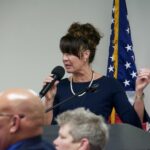
A Harrisburg resident addresses the Parking Advisory Board at Tuesday's meeting.

A Harrisburg resident addresses the Parking Advisory Board at Tuesday’s meeting.


“We hear you.”

Park Harrisburg made that its takeaway during Tuesday night’s annual meeting of the Parking Advisory Board.

It heard the public’s complaints and might be willing to make some adjustments in how it operates. Maybe. Possibly.

Since taking over the city’s parking system a year ago, Park Harrisburg officials have been largely invisible to both the public and the press. With the exception of this once-a-year gathering, the system’s face has been its yellow-jacketed foot soldiers, whose job is to dole out tickets, take payment and shield higher-ups from the wrath of the parking public.

So, in the meeting room of the Crowne Plaza, people got a rare glimpse of the folks who actually run Harrisburg’s parking system. It was not an impressive showing.

Several Park Harrisburg people spoke, as briefly and quietly as possible, so softly that an audience member had to ask them to please speak up. They gave a quick overview of last year’s mediocre financial results–blamed mostly on lingering bad weather and a slow rollout–and said they hoped to do better this year.

From the start, Park Harrisburg struck a defensive tone. Responding, for instance, to recent news reports, officials came armed with statistics about the rate of erroneous tickets. Of 60,000 parkers in January, 5,358 tickets were written, with only 143 dismissed due to error, mostly because of a modem problem, they said.

The most substantial commentary may have come from John Gass, director of parking system manager Trimont, who related a story about how a business owner had thanked him because the new system had freed up parking spots near his restaurant.

The entire summary took maybe 45 minutes.

This is what I heard: Don’t expect much. Park Harrisburg seemed willing to make some tweaks, but, for the most part, the system is set in stone, the result of a complicated agreement between the city, the state, the Parking Authority, bond insurer AGM, the city’s creditors and the system operator. It simply would be too difficult to change, especially if revenue projections would fall as a result.

As Steve Goldfield, the state receiver’s financial advisor, said that night: Without the parking deal, the city would be sunk, as about 40 percent of its annual budget would go to pay debt service.

Ultimately, that’s how we arrived at this place on that night. In the unusual, complex financial recovery plan, the receiver and his team had tried to squeeze every dime out of the system. Parking was a way to “democratize” the debt payback, to have non-residents contribute to the solution of decades of overspending by the city government, said Goldfield.

Perhaps most people have already adjusted to this reality. Entering the Crowne Plaza, I expected torches and pitchforks, based upon what folks have said to me, as well as the relentless negative press that the issue has received. What I witnessed, though, was pretty mild stuff–a half-filled room, a smattering of public complaints.

Just a handful of residents spoke during the public portion, mostly about aggressive enforcement on street-cleaning days, and only one restaurant worker complained about reduced business. Councilman Ben Allatt pleaded for reduced rates, but he was the only elected official who spoke. City Council President Wanda Williams, who sits on the advisory board, didn’t say a word, nor did Mayor Eric Papenfuse, who was in the audience.

Several public complaints were very specific and unique: a pastor wanted exceptions for funeral parking; a SciTech parent wanted free parking while visiting the downtown school during the day; a guy tried to pay his ticket in nickels and pennies, but was turned away.

The whole thing lasted less than 90 minutes, concluding with a brief statement by Gass that he heard the complaints and hopes to make improvements to the system. Specifically, Park Harrisburg would study reducing parking rates in the River Street Garage during lunchtime, happy hour and Saturdays, though no promises were made.*

Afterwards, I exited the hotel into the frigid February air. My wife picked me up out front, and we drove down 2nd Street to the Federal Taphouse for a bite to eat. Leaving the car, I instinctively went over to the parking meter.

“It’s 7:30,” she said, motioning me towards the front door, as enforcement had ended for the day.

“Oh, right,” I said, laughing that I had made such a mistake immediately after leaving a meeting about parking.

Then I thought: Well, those Park Harrisburg guys were right about one thing. There was a spot right in front of the restaurant.


*Update: City officials yesterday met with Park Harrisburg to review several “revenue-neutral” proposals, which might include reducing rates from 5 to 7 p.m.


Continue Reading

Free Primary Care Clinic To Open in Uptown Harrisburg

Ruth Stoll in one of the examination rooms at the new Beacon Clinic at 248 Seneca St.

Ruth Stoll in one of the examination rooms at the new Beacon Clinic at 248 Seneca St.

Uptown Harrisburg will get a new health care provider next week, as Beacon Clinic, a free, faith-based primary care facility at the corner of Seneca and Green streets, prepares to open its doors on March 3.

The clinic, which has taken over a hallway in the rectory building behind St. Paul’s Episcopal Church, will initially be open Tuesdays and Thursdays from 3 to 7 p.m.

Beacon will provide preventive care and counseling to uninsured and underserved adults, including the homeless, the working poor, immigrants and prisoners in transition, said Ruth Stoll, a nurse and member of the clinic’s board of directors.

The opening represents the culmination of four years of fundraising, planning, and scouting for a location. “It’s here, finally,” Stoll said at a preview breakfast program at the facility Thursday morning. “We’re really here.”

Stoll, who was a parish nurse at St. Paul’s for six years, said the idea for the clinic sprung from conversations with a new pastor there, who sought to take the church’s ministry “beyond the walls of the church” and into the community.

Since then, the clinic’s supporters have registered Beacon as a 501(c)(3) non-profit, procured the necessary medical equipment and installed a medical director, a nurse practitioner and an interim executive director as its three part-time staff members.

They have also taken surveys of residents in the area, in which, clinic representatives said on Thursday, a third of respondents indicated they had no insurance and received no health care except from emergency rooms.

“There’s a huge need in the community,” said Rev. Willie Dixon, the pastor at Wesley Union AME Zion, nearby at 5th and Camp streets, who worked with the clinic in the early days of planning. “This is a community that feels it’s been underserved for many years. So this will be a real encouragement to them.”

Beacon now occupies a suite of rooms, each bearing a fresh coat of mint-green paint, along a timeworn tiled hallway off the church’s Green St. parking lot. There are two examination rooms, a reception room, a counseling room and an office.

Among Beacon’s services will be counseling, assessment of patients, referral to other providers and management of chronic illnesses like diabetes. The clinic is equipped to perform simple laboratory work like blood tests and urinalysis, but will have no drugs onsite and will not dispense medication.

The goal in the initial period after opening will be to “aim small, miss small,” said David Froehlich, a doctor and Beacon board member, with the hopes to grow and expand as additional needs become known and resources become available.

“Harrisburg is really the world,” Froehlich added. “You don’t have to leave the country to take care of the world. If we don’t take care of our own community, what can we say?”

Some of Beacon’s medical equipment was donated by retired doctors. A retired dentist donated an entire dental suite, though the clinic does not yet have the capacity to provide dental care.

But Beacon is still looking for additional equipment, including a television and cart to help educate patients, desks and chairs, a laptop computer and projector and an i-STAT system for onsite blood analysis, Stoll said.

The clinic, which aside from the three part-time staff members is manned entirely by volunteers, is also looking for people who can donate time to the facility.

Stoll, addressing the faith-based aspect of the care, said the clinic would seek to communicate to patients that their “bodies are a temple of the Holy Spirit, and they need to take care of themselves.”

Rosalie Baker-Lambeth, a Camp Hill-based acupuncturist and Beacon volunteer, said she didn’t have to look far to find neighbors in need of care. Pointing to a vase of flowers, she related a story from the grocery store where she had recently purchased them.

“The woman at the checkout asked if they were for my husband,” Baker-Lambeth said. She explained that, in fact, she was buying them for a free clinic. “I said two sentences about the clinic. And she said, ‘Oh, I could use that. I could that.’”


Continue Reading

Judge Suspends City Gun Laws

Attorney and plaintiff Justin McShane.

Attorney and plaintiff Justin McShane.

A Dauphin County judge has ordered Harrisburg to stop enforcing three of its gun-control ordinances, while leaving two others in force.

Judge Andrew H. Dowling, in a 12-page opinion Wednesday morning, found that the three ordinances—prohibiting gun possession in a park, by a minor and in a mayor-declared state of emergency—violate the state’s Uniform Firearms Act, which preempts certain local government ordinances regulating firearms.

The act forbids municipalities from regulating the “lawful ownership, possession, transfer or transportation” of guns and ammunition for purposes that are not considered illegal under state law.

Two other city ordinances, requiring owners to report the loss or theft of guns and prohibiting the discharge of guns within city limits, do not overstep the bounds of state regulations and can therefore remain on the books, Dowling wrote.

The order partly granted and partly denied a request for a preliminary injunction by the plaintiffs in the case, the gun-rights organization U.S. Law Shield and two of its members. Under a preliminary injunction, which is an extraordinary measure issued prior to a final determination, a judge finds that plaintiffs have a right to relief from a present harm and that they will be ultimately likely to prevail.

Dowling’s order is the latest development in one of two lawsuits filed against the city this year, after the passage last fall of a state law granting standing to membership groups to sue municipalities over their gun-control ordinances.

Under pressure, a number of cities and towns repealed their ordinances, but several others, including Harrisburg, decided to fight back.

U.S. Law Shield, whose mission, according to its website, is “preserving 2nd Amendment rights for all legal gun owners in our country and ensuring legal representation” for its members, filed its complaint against the city on Jan. 13.

Another group, Firearm Owners Against Crime, filed a complaint Jan. 16. That suit, which raised a question regarding owners’ rights under the U.S. Constitution, was removed to a federal court last week.

Both suits were brought on behalf of the groups as well as certain of their members, some of whom are Harrisburg residents and some who are not.

Harrisburg also argued that Act 192, last year’s state law amending the Firearms Code, was unconstitutional. Dowling declined to rule on this issue, saying constitutional questions are the purview of the Commonwealth Court.

The city had additionally asked Dowling to stay the proceedings until a decision was reached in a complaint filed by three other Pennsylvania cities—Philadelphia, Lancaster and Pittsburgh—challenging the law’s constitutionality.

Dowling declined to do so, however, saying the “timing and effect” of a Commonwealth Court decision was “uncertain.” The state preemption clause, and not the constitutionality of Act 192, was at issue in the present case, he added.

On Wednesday afternoon, attorneys with the McShane Firm, the law firm representing U.S. Law Shield, celebrated the ruling at a press conference at the firm’s Susquehanna Twp. offices.

Justin McShane, an attorney as well as a U.S. Law Shield member and individual plaintiff in the suit, called the ruling a “great victory” and urged Harrisburg officials to stop spending money on a “dead loser” of a lawsuit.

McShane said his firm’s legal fees, which Act 192 would oblige the city to repay, are “approaching six figures.” Harrisburg Mayor Eric Papenfuse should “simply wake up” and “stop being Don Quixote,” he added.

Papenfuse, reached Wednesday afternoon, declined to give detailed comments on Dowling’s opinion, saying he had been preoccupied with a long meeting about parking enforcement and had not yet had time to review it thoroughly.

He did say, however, that he believed Act 192 would be found unconstitutional, and added he was “disappointed” in Dowling’s decision not to stay the proceedings until the Commonwealth Court had a chance to rule on the law.

Other aspects of the ruling, such as the leaving in place of the reporting and discharge ordinances, he said he found “encouraging,” however.

Asked about the state’s preemption clause, Papenfuse referred to separate laws and rulings empowering the city to place “reasonable regulations” on gun use as well as to take actions “protecting the public health and safety.”

McShane, however, described the ordinances as ineffective “feel-good laws” that had no meaningful impact on the use of firearms by criminals.

Dowling expressed a similar view in his ruling, arguing that, while Harrisburg’s laws date back decades, it “would be difficult to argue with any degree of conviction that gun violence within the City of Harrisburg has decreased during that time.”

Dowling then suggested that the city might more effectively use community policing to fight gun violence and that such violence has societal causes that Harrisburg may not be able to combat.

“Instead, gun violence is associated with a confluence of many risk factors including mental health, decline in parenting and values, violence depicted in movies and other sociocultural factors,” he wrote.

To read Judge Dowling’s order, click: Judge Dowling Ruling, Feb. 25, 2015.

This story has been updated with an additional information explaining that the judge’s ruling is a preliminary injunction and not a final determination, as well as an additional quote from Mayor Papenfuse.

Continue Reading

Over It

A scene from "Over It," at the Central PA LGBT Center.

A scene from “Over It,” at the Central PA LGBT Center.

The invitation popped up on my Facebook page. It read “Over It.” Over what? Global warming, snow, 15-degree temperatures? Clues developed as I read on.

“Join the cast and supporters of ‘The Vagina Monologues’ as we present ‘Over it,’” a dramatic presentation of an essay against rape and domestic violence, Feb. 13.

To be completely honest, two things scared me about this event. First, the “V” word. I have liberal leanings, but, when it comes to female body parts, I swing quickly to the conservative side. Blame it on Catholic school or growing up in a family that just didn’t talk about that stuff. I can’t say the word “vagina” without cringing a little inside.

Second, the anger and possible man-hating I thought I could encounter. Coming from a family with five brothers, raising three sons, and having a husband who has proved himself a wonderful partner, teammate in life and confidant, man-hating hits close to home for me.

Despite my concerns, which, by the way, were based not on any personal experience but only on media exposure, I wanted to attend this event. New experiences are good for us. They shape us, grow us and give experiences on which to form informed opinions and perspectives.

My friend and I carpooled together and navigated the Harrisburg parking meter system–a system that I’ve contributed about $100 to this year, because, in Harrisburg, if you are one minute late on your meter, you will be found and fined accordingly! I digress. That’s a rant for another blog.

We entered the LGBT Center on 3rd Street to standing room only, except for the dreaded front seats. Well-lit and cheery, the space had art on the walls and light, hardwood floors. The diverse group consisted mostly of women with a smattering of men.

The event began with a discussion around local violence against women, such as the death of Karlie Hall, a young Millersville student, recently killed, allegedly by her boyfriend. Then came a video about 1 Billion Rising, an event of which I was completely unaware. This campaign shines light on and seeks to end the violence perpetrated against 1 billion women and girls around the world.

It began with images of women and girls being harassed, beaten and mutilated. No gratuitous images of victimization, but images that captured the feelings of helplessness and pain. Then came the “one.” These same women and many others stand up to their abusers and, with one finger held high in the air, make a statement against gender-based violence, presenting a portrayal of unity and voice.

Then abruptly the “monologues,” based on an essay by Eve Ensler, began. An audience member stood up and said firmly, “I’m over rape.” Another woman rose and described rape’s “soul splintering” effects. A third emphatically communicated the lifelong, life-altering consequences of rape. The monologues continued with one woman after another asking difficult questions. Why do women blame themselves? Why does society blame them for the crime against them? Why do men who are accused get a free pass?

One question left a big impression on me. The good men out there: “Where the hell are they?” Why don’t they come to our aid?

The feelings expressed included anger, but, more importantly, frustration and disappointment at humanity for not standing up for those who need it.

Afterward, I introduced myself to a number of the performers and employees of the National Resource Center on Domestic Violence, so full of energy, enthusiasm and passion. I shared a personal experience of having unwanted sexual advances made toward me by a trusted father figure. I shared how my first thought after that experience was, “What did I do?” I shared how the second thing I did was immediately tell a trusted friend. Everyone shook their heads in understanding. I teared up.

We talked about what keeps women quiet about their abuse—shame. Shamed people deny and ignore. Shame tries to force silence because it assigns culpability. Women, however, are not responsible for their abuse.

I talked to Demora, a state employee by day and director of Harrisburg’s upcoming presentation of the “The Vagina Monologues” by night. I asked her why she’s participated in this event for the past seven years.

With great feeling, she said it was about healing. As women, we have a habit of hiding things. She said that we’ve all been raped in some way, if not sexually then emotionally or spiritually. If not by a man then by society or by life. That women hide their wounds and “The Vagina Monologues” brings those hurts to the surface so they can heal. I wanted to yell, “Preach it!”

Despite the weighty conversations, people smiled and laughed, drank some wine and ate cupcakes. This place and event were about unity, trust, about understanding and support. No mommy wars here, no facades. What I would have missed, had I succumbed to my unfounded misgivings. I left with a bolstered spirit and some new friends. One thing hasn’t changed though. I still can’t say the “V” word.

Continue Reading

TheBurg Podcast, Feb. 13, 2015

Welcome to TheBurg Podcast, a weekly roundup of news in and around Harrisburg.

Feb. 13, 2015: This week, Larry and Paul talk about selling off undeveloped forest near the DeHart Reservoir, a proposal to invest in south Allison Hill and the demolition of the Riviera Hotel, one of the last old buildings standing on its Uptown block.

Special thanks to Paul Cooley, who wrote our theme music. You can find his podcast, the PRC Show, on SoundCloud and in the iTunes Store.

TheBurg Podcast can be downloaded by clicking on the date above or by visiting the iTunes store. You can also access the podcast via its host page, here.

Continue Reading

Riviera Razed: City Demolishes Historic, Blighted Hotel

Workers today continued demolition at 1742 N. 6th, the former site of the Riviera Bar and Hotel.

Workers today continued demolition at 1742 N. 6th St., the former site of the Riviera Bar and Hotel.

The city continued demolition today on the Riviera Hotel, an abandoned bar and rooming house at the corner of 6th and Kelker that rapidly deteriorated after a 2010 fire and recent series of collapses.

Dave Patton, codes administrator for the city, said the demolition work was bid out to Swatara Township-based Arney Brothers, Inc., for $24,549.

Demolition began on Monday and will probably take a couple of weeks, he said.

Patton also said the owners of the Riviera, Marion and Diana Nicklow of Hershey, have agreed in court to a plan to pay back the city for demolition costs.

The demolition concludes a troubled run for the Riviera, a three-story yellow brick building with faded, blue-gray paint on the window trim and the first-floor façade.

County property records show that the Nicklows purchased the building in March 1999 for $80,000.

They filed for bankruptcy protection in 2009, after defaulting on a business line of credit for the Riviera and a mortgage on a separate property, according to court records.

In June 2005, the Patriot-News reported that a man and a woman were found dead in a room there after another resident noticed a foul odor. Charles Kellar, then the city’s police chief, told the paper it appeared the woman had died weeks before the man.

More recently, Patton recalled discovering a homeless man living on the second floor, who appeared to have gained access via a fire escape. The building was condemned in May 2010 after a fire, Patton said.

riviera2

A Google Earth satellite photo, dated Sept. 6, 2013, shows a gaping hole in the roof of the building, the sole standing structure on its side of the 1700-block of N. 6th Street. Most of the surrounding blocks, once home to rows of attached buildings, are also largely barren, emptied of their Victorian-era structures.

Patton, who said he sought bids for demolition when the north wall began to appear increasingly unsound, recalled witnessing the damage last summer after a further collapse of the roof into the basement.

“It looked like a meteor just came down through the roof,” he said.

The Nicklows have pled guilty to three property code citations so far, Patton said.

“It’s been a long journey with this structure and owner,” he later added, “but fortunately we are nearing the end.”

Continue Reading