Student Scribes: Travels of a Slug

Screenshot 2015-02-22 11.34.44“Watch out for the dead slugs,” I heard my friend shriek as I skipped over the dried skin and guts smeared about the sidewalk. The slugs lay trampled on the gray concrete near the entrance of her dorm. They were streaks of green, white, tan and black covered in dirt and made crispy by the sun.

They were leopard slugs. One of the only slugs I can differentiate due to their size and their pattern of black inkblot markings on a tan, glimmering, smooth membrane. The design, as the name hints, resembles a leopard pelt. Their length hits 4 inches and sometimes 8, considerably larger than your everyday garden slug.

Only a day or two before this scene, when the rain had been pouring and the air was thick with the smell of mud, I had seen a live slug of the same type in the exact same spot. After observing for a moment with what would be described as a mix of fascination and disgust, I ferried the little passenger, using a piece of paper to keep my distance. I transported my pilgrim to the side where pavement meets grass and where unwary pedestrians would be less likely to trample the smaller citizen making its way about the path as well. I have no particular affinity for slugs or worms, or any slimy creatures of that nature. However, I will admit I felt sympathy for the slippery soul trying to make its way in a place it had no place being, in a place where its life could be extinguished so easily and uneventfully.

Several days later, the sun had returned and, despite my attempt, the carcasses of not one, but three of these little travelers lay ground into the coarse pavement, causing my friend no small amount of distress upon exiting or entering her dorm. Some casualties cannot be stopped, I suppose. Even so, I wondered if the people who had trod on them had unintentionally ended the lives of the little streaks of slime, or if they had done it with a purposeful stomp and drag. I also wondered why these slugs had all chosen to travel on the pavement in the first place, instead of staying in the relative safety of the soil and grass where they belonged. Originally, I had thought that the answer was simple. The heavy rainfall must have rendered their usual home of soil and turf uninhabitable, forcing them to escape. They obviously could not live in such waterlogged conditions. Like victims of a flood, fleeing for higher and drier ground, these slugs must have been searching for a place to wait out the rain.

Satisfied with my own answer, I continued on up the stairs following my friend to her dorm, only mourning their disastrous end about as much as I mourned the death of my distant aunt who lived in one of those Midwestern states I can never remember. Distant was their existence from mine. They were only a few feet away in reality, but separated by scale and “intelligence,” these slugs were simply an unfortunate mess to be avoided as I went on my way.

It was not until recently that I learned the actual reason these slugs had been all about the pavement. Although it was a common belief for years that worms, slugs and other animals of that sort had been drawn out of their homes during heavy rain by the risk of drowning, the theory has changed. Unlike humans, these creatures breathe through the many pores in their skin, and they do not drown easily. In fact, they need moisture in the air and soil to survive. The main theory now is that rain provides these critters with an extraordinary chance for travel.

Traveling below the earth or close to soil and grass can be a slow and tough method of travel. Pushing through hot gravel, roots and grass prevents an easy voyage. The cool rain allows these creatures to survive above the earth in places they could not normally last for long. They can travel greater distances much quicker than on the average warm day, using the abundance of moisture to glide about the terrain.

Every day, I cross the same terrain so easily. It is the scale, again. The scale keeps us distant. Feet to me are like miles to them, and yet they still travel and attempt to get where things may be better. How can I get to where I want to be, even if I do not know where that is? I feel the danger involved with cutting out the paths I need to take. I desire to avoid the danger, afraid to be trampled by life. The slugs and worms take the risk to find green leaves and dandelions in plenty. They travel in storms, rain their aid, over scabrous manufactured tar. Although the scale is different, it is familiar all the same. The leopard slug is only indigenous to Europe, a distant continent even for human beings. Thousands of miles of salty ocean divide us. Yet, they made the crossing despite their size, and so did we. How distant are these creatures really, and why do they seem braver than me?

Kyle Bussino, a sophomore, is a computer science major at Penn State Harrisburg.

Continue Reading

Classical Magic: What happens when you combine Brahms, spectacle and the circus arts?

Screenshot 2015-02-22 11.32.52There’s an old cliché that says, “Everyone loves a circus.”

When Cirque de la Symphonie comes to town, don’t expect just to love it, however. Expect to be entranced and surprised and carried away, as well.

“This is not a popcorn and peanuts kind of presentation,” said Bill Allen, executive director and producer. “It’s more of a theatrical production. We perform to classical music with only one act going on at a time. Our show is meant to raise Cirque artistry to the fine arts level.”

Cirque de la Symphonie began in 2005 when Allen joined forces with Alexander Streltsov, a Russian aerial artist. On his own, Streltsov had put together similar programs with the Cincinnati Pops.

“The shows were very successful, and it was actually the conductor, Erich Kunzel, who gave us the idea of starting the company,” Streltsov said.

Now 10 years later, Cirque de la Symphonie works with 50 to 60 orchestras a season, along with some 65 Cirque artists, and regularly fills the house. In fact, last year’s two shows with the Harrisburg Symphony Orchestra at The Forum sold out, and, at press time, tickets for this month’s shows were going fast.

Allen said that the shows attract new patrons to the music hall, many of whom may never have seen an orchestra before.

“You would expect to see grandmothers luring in their grandchildren to be exposed to the symphony with the promise that they may see a clown or a juggler or something like that, but what’s really interesting is that you see a very large number of young adults in their 20s and 30s who have just about everything else in the world competing for their entertainment dollar, and they choose to come see this program,” he said. “These young adults are the very people that orchestras need to be recruiting as new subscribers.”

Cirque de la Symphonie is the only Cirque company in the world that works exclusively with symphony orchestras.

“Performing along with live classical music is a very different kind of performance for these Cirque performers,” said Allen. “The orchestra is not there just to be a background band and play along to what antics are going along down stage.”

Alina Sergeeva, a third generation circus performer who specializes in hoops and hand balancing, said that she loves getting into a venue, doing just one rehearsal with the orchestra and then putting on the show.

“Live music makes it all better,” she said.” The symphony really helps you do the best you can on stage.”

When Cirque de la Symphonie comes to Harrisburg, the group will perform feats that make the “nearly impossible look easy,” accompanied by well-known classical masterpieces, said Allen.

“They’ll hear a little bit of Shostakovich’s ‘Festive Overture,’ Rossini’s ‘Tarantella’ from ‘La Boutique fantasque,’ some Rimsky-Korsakov, Kabalevsky and Brahms,” he said. “We also have some recognizable music that the young people would find interesting, like ‘Flight to Neverland’ from the movie ‘Hook.’”

Streltsov is one of the eight Cirque artists who will be performing in Harrisburg. A celebrated aerial artist, he performs mostly on “silks,” which are long pieces of fabric that are suspended from the ceiling. Streltsov comes from a circus family and has performed for three Russian presidents, with the Bolshoi Ballet and on Broadway.

Other performers include award-winning acrobatic gymnast Christine Van Loo; Vitalii Buza, an elite gymnast with the Russian national team; master juggler and illusionist Vova Tsarkov; aerial and balancing specialist Sergeeva; and 13-year-old contortionist Nate Nordine.

Jaroslaw Marciniak and Dariusz Wronski (known as Jarek and Darek) appear as a matched pair, painted from head to toe in gold. They will display strength and agility as they show off their skills as Poland’s former national hand-balancing champions.

“All of our Cirque artists are consummate performers who are at the top of their game,” said Allen. “Imagine what it’s like for them to be highlighted as a solo artist with a sold-out music hall in front of you and the power of a full symphony orchestra behind you. It doesn’t get any better than that.”

Cirque de la Symphonie performs with the Harrisburg Symphony Orchestra on March 7 at 8 p.m. and March 8 at 3 p.m. at The Forum in Harrisburg. To find out about ticket availability or to learn about any of the Symphony’s other programs, visit www.harrisburgsymphony.org. 

Continue Reading

Student Scribes: “My best friend and I made a slip ‘n’ slide in the winter”


Screenshot 2015-02-22 11.34.51We went into the snow in socks and taped garbage bags together.
We went through 10 bottles of shampoo, 2 bottles of baby
oil, 8 bottles of conditioner, 1 bottle of dishwashing liquid, and 37
bottles of water. In addition, probably three or four toes each. What
we learned? Life is exhilarating, even in the blanketed white.

In the end, we were both soaked and shivering, but we rolled
up the garbage bags anyway and hid all the garbage; our parents
wouldn’t like our idea. What we learned? It didn’t matter
what they liked.

We liked the idea. We also liked the idea of an egg fight in the driveway.
The frozen eggs left welts on my arms; her aim was a little too
good. We liked the idea of mixing every food we could find in
the kitchen, and eating it. A challenge. What we learned? Never eat anything
that is bright purple.

We didn’t so much like the idea of her stage 4 cancer. She had
known that something was wrong, but not this.
19 and dying was a challenge, too. Taking every truth
of life and mixing it together. What we learned? Getting Subway
on the way to chemo every day will make you hate Subway.

We ate brownies to celebrate her remission. Then
we went to a concert and got into all the mosh pits.
Something you can shove back is a better bully.
What we learned? Screaming can be kind of fun if
no one knows about the rage behind it.


Alaina Richardson is a double major in English education and communications at Penn State Harrisburg. She is a junior.


Continue Reading

Charity Bowl: Animeals fills the belly, warms the heart.

Screenshot 2015-02-22 11.32.16In 2006, Theresa Fazzolari was a returning student completing her bachelor’s degree in social work at Temple University in Harrisburg. She was assigned to identify a community need and come up with a way to address it.

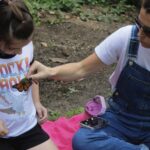

At the time, she was interning for the Dauphin County Department of Aging and began to be concerned that the low-income, elderly, often homebound clients being served by the Meals on Wheels program might be having trouble feeding their pets.

If folks couldn’t afford to feed themselves, she thought, how could they feed their four-legged friends?

Fazzolari discovered a program in California called Animeals, created in 1984 by the Helen Woodward Animal Center after a Meals on Wheels volunteer realized one of her clients was sharing her delivered food with her cats.

Clearly, there must be elderly people in the Harrisburg area facing similar issues, Fazzolari thought. So, she drafted a flyer that was distributed to Meals on Wheels recipients.

Soon, the names of people requesting pet food started arriving, and Fazzolari was stunned.

“There was such a need,” said Fazzolari, now 49. “ I didn’t think it would take off like it did.”

Purina sent 5,000 pounds of pet food to get the group started but Fazzolari—who today distributes more than 500 pounds of food a month—soon learned how quickly supplies dry up.

Compared with non-pet owners, elderly people with pets have lower blood pressure and cholesterol levels, have a better sense of security, are more active, experience less depression, and even live longer, according to research compiled by the Helen Woodward Center.

Beyond Kibble

Over the last decade, Fazzolari has helped scores of individuals keep their pets and, in turn, helped keep families intact.

Many of her early clients have passed away or been admitted into nursing homes, but new clients arrive with their pets on a regular basis.

This year, Animeals serves 57 elderly men and women and about the same number of cats and dogs. The group’s oldest client, Ann Dennis of Mechanicsburg, is 101. Animeals volunteers deliver a monthly bag of food for her cat, Marilyn Monroe.

Fazzolari, her husband Tony and her volunteers have expanded their good deeds far beyond kibble delivery.

She has enlisted her neighbor, Charles Palentz, a Navy Depot retiree, who pitches in to help with home repairs from changing light bulbs to building handrails and fixing roofs. Professional groomer LeeAnn Menut, who owns Pet Bath and Beyond in Camp Hill, provides nail trimming and bathing. Her husband Ken takes clients’ pets to vet Tracy Moussa of Animal Birth Control of Middletown, who donates most of her services, charging only for drugs and supplies.

In one case, Fazzolari dipped into the Animeals account to buy a client a tank of fuel oil when no crisis help was available from the county. “She was so grateful,” said Fazzolari. “We justified it by figuring their pet needs to stay warm, too.”

In some states, pet food delivery services operate through county Meals on Wheels programs. In Pennsylvania, most Animeals organizations receive county referrals, but are independent and must find donations, raise money and recruit volunteers on their own.

“It’s hard to believe,” said Amy Kaunas, executive director of the Humane Society of Harrisburg Area, which supplies Animeals with most of its food. “Pets are so important to older people for their mental health. Government agencies don’t get that they’d be feeding their county-funded people food to their pets if they had to.”

Every month, Fazzolari stocks up on dog and cat food from the Humane Society of the Harrisburg Area and Animal Rescue Food Bank in Wellsville that operate large pet food pantries to stock the shelves of area pet rescue groups.

“It’s amazing what she does,” said Kaunas, who has worked with Fazzolari since the program started. “Her group was one of my early partnerships when I got here.”

Fazzolari is grateful for what she gets to hand out each month, but sometimes that means lesser quality food and that animals have to eat different brands of food that come with each delivery.

“There’s no consistency,” she said. “And we struggle to fill the shelves every month.”

Just the Start

On a recent Saturday morning, Fazzolari’s porch was packed with several dozen paper bags of food, some with treats and toys sticking out.

She took a visitor to her storage facility—the not-quite bare shelves in the basement of her Camp Hill home.

“This is what it looks like after we distribute food each month,” she said, then picked up a lone donated pet bed. “I haven’t decided who’s going to get that.”

Later that morning, Larry Miller, 75, was standing outside his apartment on Maclay Street in Harrisburg, bundled up in a varsity letterman-style coat—a gift from Fazzolari—with his boxer Bronco (also wearing a coat thanks to Animeals).

When Bronco saw Fazzolari, he strained at the leash to greet her.

“Hey Bronco, how’s my boy,” she said, rubbing his head and bending down for a kiss.

Miller and Bronco, who is 7 years old, have been through some tough patches together. He’d never had a pet, but there was no question he would take over as Bronco’s caregiver after his owner and Miller’s friend, Emeric Bosak, suffered a stroke and was taken to a nursing home.

Every month for almost two years, Miller and Bronco would pile into Fazzolari’s car and visit Bosak at the nursing home until his death last November.

Fazzolari estimates it costs about $30 a month to feed a pet. But that’s just the start of a pet owner’s responsibilities. Routine vet care can run into the hundreds of dollars and emergency care into the thousands.

In 2013, Miller and Bronco were on the sidewalk just a few doors from his apartment when a pit bull pushed open the screen door of its house and viciously attacked Bronco. Miller tried to stop the mauling, but, when it was over, Bronco was lying on the sidewalk bloody and badly injured. A tearful Miller quickly called Fazzolari, who immediately contacted their vet. Bronco lost his right eye and required stitches for other wounds. The total Moussa charged Animeals was $70.

Miller said he gets by on about $600 a month, making a little extra for sweeping up street trash for landlords of neighboring properties, but knew he could never pay for regular food, let alone a large vet bill.

“I could never afford to keep him,” said Miller.

Tons of Food

Fazzolari said she would like to expand Animeals to other counties, but needs to find a sustained funding source to continue its work in Dauphin and Cumberland counties.

Her group is seeking a long-term donor and volunteers to design a website and help with grant writing. She also would like to find a mobile veterinarian to ease the burden of transporting animals to vet clinics.

Karel Minor, president of the Humane League of Lancaster County and the Humane Society of Berks County, runs a similar program, but his distributes most of its food to low-income pet owners through central sites rather than door-to-door delivery.

“It keeps animals out of shelters,” said Minor, who estimates his group doled out eight tons of food in 2013. In order to be enrolled in his group’s program, individuals and families must receive some type of government service and agree to participate in regular vet care, including mandatory spay/neutering.

“Vet care is a way to prevent benign neglect,” said Minor.

On that chilly Saturday morning in January, Miller and Bronco lapped up the attention on Maclay Street—a visit from a television crew, a news photographer and the occasional passerby greeting Bronco by name.

“Everybody knows Bronco,” said Miller, looking down at the wriggling bundle of brown fur at his feet. “He’s the king of the neighborhood.”

Then he paused and turned serious.

“I live alone,” said Miller. “He’s all I’ve got.”

If you’re interested in helping out Animeals, please contact Theresa Fazzolari at [email protected] or 717-571-8883.

Continue Reading

Community Corner: Notable March events.


Maple Sugar Festival
March 1: The outdoor season at Fort Hunter kicks off with the annual Maple Sugar Festival. Try tapping a tree, taste real maple syrup and see syrup- and candy-making. The event runs noon to 4 p.m. at the Centennial Barn. More information is at forthunter.org.

500 Men Reading
March 2-7: Men will fan out to Harrisburg-area schools to share a love of reading with elementary school students. In addition to reading stories, the men typically speak about their lives and careers and encourage positive character development in the children. Visit superreader.org/500-men-reading.

Nature Lecture
March 3: Writer Tom Benjey presents “The Craighead Naturalists,” a lecture on a family of siblings who became well-known nature writers and photographers. The program starts at 7 p.m. at the Nature Center at Wildwood Park in Harrisburg. For more, visit wildwoodlake.org.

Alzheimer’s Fundraiser
March 4: Help support those suffering from Alzheimer’s and other forms of dementia at a fundraiser sponsored by All Hands Home Care. Attendees are encouraged to donate iTunes or gently used iPods. The “Power of Music” event takes place between 4 and 9 p.m. at Zorba’s Taverna & Pizzeria, 3715 N. 6th St., Harrisburg. Visit allhandshomecare.com.

Art Lab
March 5: Local artists in all media can participate in a cooperative studio environment to experiment with new media and techniques. The event takes place at the Susquehanna Art Museum, 1401 N. 3rd St., Harrisburg. $5 registration fee. SAM will provide basic materials and a guest artist to share ideas. Information is at sqart.org.

Pet Expo
March 6-8: It’s time for animal-lovers to flock to the annual Pet Expo, featuring pet-related vendors, products and services, as well as numerous exhibits, talks and celebrity appearances. The three-day event takes place at the state Farm Show Complex in Harrisburg. Additional information is at nationalpetexpo.com.

Charter Day
March 8: The Pennsylvania Historical and Museum Commission will mark the 16th annual Charter Day at the PA State Museum in Harrisburg. Among the free events: presentations, a dance ensemble, special exhibits and historical interpretations. The original 1681 land grant charter will be on display from March 8 to 16. Visit statemuseumpa.org.

Local History Lecture
March 8: Jim Taljan will present a history of the Fackler Funeral Home, which dates to 1865. A $5 donation is requested for the 2:30 p.m. lecture at the Historical Society of Dauphin County (Harris-Cameron Mansion), 219 S. Front St., Harrisburg. A tour of the mansion will be offered at 1 p.m. Visit dauphincountyhistory.org.

Railroad Photography
March 10: A showcase of artistic photography, “Railroad in Historical Landscapes,” will be shown at the monthly public meeting of the Harrisburg Chapter, National Railway Society. The business meeting and speaker begin at 7 p.m. with a meal available as early as 5 p.m. at Hoss’s Restaurant, 743 Wertzville Rd., Enola. For more details, contact [email protected] or visit harristower.org.

Community Forum
March 12: Do you have ideas, complaints, compliments? Friends of Midtown will host a community forum to help spark communication among neighbors. The event takes place 6 to 8 p.m. at the Heinz-Menaker Senior Center, 1824 N. 4th St., Harrisburg. Information is at friendsofmidtown.org.

Education Presentation
March 12: The Circle School of Harrisburg will present “Education Untied,” a free multimedia program on the school’s approach to learning. The event starts at 6:30 p.m. at the school, 210 Oakleigh Ave., Harrisburg. For more information, call 717-564-6700 or visit circleschool.org.

Women Artists
March 12: Join artist/educator Selby M. Doughty for an anecdotal lecture about women artists from Pennsylvania—their work, those who influenced them and their influences on future artists. Social time begins at 6:30 p.m. with the discussion at 7 p.m. at Fredricksen Library in Camp Hill. Details are at fredricksenlibrary.org.

Volunteer Work Day
March 14: Help prepare Wildwood Park for the spring by volunteering a few hours of your weekend. The three-hour event begins at 10 a.m. at the Nature Center. More details are at wildwoodlake.org.

Railroad Show
March 14: Check out everything train-related at the annual Railroad Show & Collectors Market, 9 a.m. to 3 p.m. at the I.W. Abel Union Hall, 200 Gibson St., Steelton. Sponsored by the Harrisburg Chapter, National Railway Society, the show features model railroads, movies, train layouts, railroadiana and a digital program on the Enola train yards. Proceeds benefit the chapter’s preservation projects. For more information, email [email protected] or visit harristower.org.

Celtic Concert
March 16: Welcome St. Patrick’s Day with the musical group, Seasons. Free refreshments will be offered at the 7 p.m. Celtic-themed concert at Fredricksen Library, Camp Hill. Information is at fredricksenlibrary.org.

Poetry Reading
March 18: Join Harrisburg resident Marian Dornell as she reads selections from her newly published collection of poems, “Unicorn in Captivity,” which tells the story of slavery and discrimination. The free event runs 7 to 8 p.m. at the Centennial Barn at Fort Hunter. Additional information is at forthunter.org.

Chamber Mixer
March 18: Join the Central Pennsylvania Gay and Lesbian Chamber of Commerce for its monthly business networking mixer at Doubletree Resort by Hilton, 2400 Willow Street Pike, Lancaster, 6 to 8 p.m. More information is at cpglcc.org.

Home Builders Show
March 19-22: Attend seminars, visit booths and see the latest in everything for your home at the 41st annual Pennsylvania Home Show, sponsored by the Home Builders Association of Metropolitan Harrisburg. The four-day event takes place at the state Farm Show Complex in Harrisburg. For more information, visit pahomeshow.com.

3rd in The Burg
March 20: Enjoy the best of Harrisburg during 3rd in The Burg, the monthly arts event at galleries, restaurants and art spaces throughout downtown and Midtown. For more information, visit thirdintheburg.org.

St. Pat’s Day Parade
March 21: Grab your green sweater and join the throngs downtown for the annual Harrisburg St. Patrick’s Day parade. The parade steps off at 2 p.m. at Walnut and Commonwealth streets before proceeding down N. 2nd Street and up North Street. For complete information, visit craicpa.org.

Genealogy Workshop
March 21: Kathy Hale, librarian with the State Library, will lead a workshop for beginning genealogists, 10 a.m. to noon, at the Historical Society of Dauphin County (Harris-Cameron Mansion), 219 S. Front St., Harrisburg. The fee is $15 per person or $10 for society members. For more information, visit dauphincountyhistory.org.

City Beautiful Lecture
March 23: Join historian Louis Morgan as he presents “A Woman of Vision: Mira Lloyd Dock and the City Beautiful,” a program on the renowned environmentalist and activist. The free lecture takes place at 6 p.m. at Historic Harrisburg Association, 1230 N. 3rd St., Harrisburg. For more information, visit historicharrisburg.com.

Civil War Program
March 24: The Cumberland County Historical Society will reconstruct civilian life in the Cumberland Valley during the Civil War based upon diaries and letters between James and Annie Colwell. The 7 p.m. event takes place at the Fredricksen Library in Camp Hill. Details are at fredricksenlibrary.org.

Taste of the Chamber
March 25: The region’s culinary offerings will be showcased during the fourth annual Taste of the Chamber sponsored by the West Shore Chamber of Commerce. Tickets are $25 each for the 4 to 7 p.m. event at Appalachian Harley-Davidson, 6695 Carlisle Pike, Mechanicsburg. To purchase tickets, visit wschamber.org or call 717-761-0702.

AACA Egg Hunt
March 28: The Easter bunny and the annual egg hunt will roll into the AACA Museum, 161 Museum Dr., Hershey, 11 a.m. to 1:30 p.m. Children up to 10 years old are invited to participate. The day also will feature hot dogs, popcorn and a reduced $7 admission. Details are at aacamuseum.org.

County Egg Hunt
March 29: Pack up the kids and head to the annual Dauphin County Egg Hunt at Fort Hunter Park. The event, for ages 2 to 9, takes place 2 to 5 p.m., with hunts staggered according to age. Details are at forthunter.org.

Flower Walk
March 29: Take in early spring at Wildwood Park with a free nature walk. Along the way, you’ll see cold-tolerant plants and some early bloomers. Meet at the Nature Center at 1:30 p.m. For more, visit wildwoodlake.org.

Continue Reading

Mid-Century Masterpiece: Pour a martini and celebrate the golden anniversary of the State Museum building.

Screenshot 2015-02-22 11.27.06And it’s round because?

The 1965 State Museum of Pennsylvania is round because the 1956 Labor and Industry Building up the street was a high-rise slab. Because architects Lawrie & Green wanted to “soften the entire vista of the area.”

Because Frank Lloyd Wright’s circular Guggenheim in New York brought flow to contemporary museums. And maybe because other state government buildings—from florid Beaux Arts to staid neo-Colonial—represented bygone eras in the age of Sputnik and Apollo.

“It’s all about the late ‘50s, early ‘60s, and that modernist, looking-to-the-future idea, trying to be relevant with younger people,” says Beth Hager, director of strategic initiatives for the Pennsylvania Historical and Museum Commission. “It’s a whole different aesthetic, a break from what had been expected.”

On Oct. 13, 1965, what was then called the William Penn Memorial Museum was dedicated, making 2015 the 50th anniversary year of the State Museum of Pennsylvania, the commonwealth’s collected history in flora, fauna, art, artifacts and documents. In fact, the entire complex clocks in at half-a-century this year: the museum, the monolith-style State Archives tower and the surrounding plaza.

With today’s heightened interest in all things mid-century modern—thank you, “Mad Men”—staffers say they’re celebrating the 50th anniversary with a “Back to the Future” approach, recalling an age when the nation was shedding the flourishes of the past and going streamlined.

“It’s a government entity, but always remember we’re an educational institution,” says Hager. Education means “being fresh to young people, whether it be the colors or the space-age architecture, which was looking forward at that time.”

People’s Archives

The William Penn Memorial Museum emerged from the confluence of two post-World War II trends.

The first advocated for a memorial befitting the gigantic stature of Pennsylvania founder William Penn. The other, driven by historian and PHMC Executive Director Sylvester K. Stevens, clamored for a modern facility to house natural and social history collections crammed in the original State Museum, now the Matthew J. Ryan Building on Capitol Hill.

With legislative action and an $11 million appropriation, the William Penn Memorial Museum became reality. Unlike other Capitol Complex buildings, its construction wasn’t touched by scandal, but there was a hitch. The first exhibit, a display of N.C. Wyeth paintings, didn’t open until a week after the dedication. Such major exhibits as Mammal Hall wouldn’t open until 1968.

“Harrisburg Gets Museum—Empty,” headlined a snarky New York Times story. In it, Stevens derided “hard-headed budget officials” for their “lack of advance planning and contracts for exhibit work.”

A 2005 history by PHMC Associate Historian Eric Ledell Smith painted a more nuanced picture. To the confusion of the architects, museum officials eschewed formal, permanent galleries in favor of open spaces “that would be needed for the wide range of exhibits that were contemplated.” Plus, the lineup of architects, contractors and state staffers needed to coordinate gallery construction wasn’t entirely in place.

“You grow into museums rather than moving into them, but this is hard to make the public or sometimes a legislator, understand,” former museum Director William Richards said of the time.

Today’s staffers appreciate the forethought of those early designers.

“It’s the people’s museum, the people’s archives,” says Hager. “When the building was built, it was so important to have a big space that you could do anything in. It was really meant to be a multi-purpose space, because we already had collections going back 100 years.”

Big Responsibility

Museum and PHMC officials began preparing for the 50th anniversary around 2011, when PHMC Executive Director James M. Vaughan first took his post. The logo designed in-house for the occasion frames the complex’s three elements in the museum’s original color scheme of blue, yellow and coral.

For the 50th, that pallet was incorporated into an overall spiffing up. Original furniture, all in sleek mid-century modern, was reupholstered. Walls, then an institutional green, were repainted.

“There’s something about getting back to the architecture,” says Hager. “When you start to see that, you see that the building just starts to wake up. It likes that.”

Anniversary plans include a “photo glossary” of mid-century architecture, a juried photo exhibit of Pennsylvania’s modern architecture, features on mid-century modern in Pennsylvania Heritage magazine and an October gala. Of course, with budget constraints, no one can party like it’s 1965 anymore. Instead, staffers have looked inwards, spotlighting existing museum resources and collaborating on events and exhibits.

“You work smarter, rethink your systems and how you get things done,” says PHMC External Affairs Director Howard Pollman. “It’s an opportunity for focus.”

Many of the museum’s 100,000 visitors a year, including children on field trips, are seeing a museum for the first time.

“It’s a big responsibility,” says Hager. “It’s all about Pennsylvania. It’s just them getting to know their state and feeling some ownership. Most are in fourth, fifth and sixth grades. They’re very excited about learning about their state. It’s a rite of passage.”

As the museum looks ahead, changes big and small are in order. Mammal Hall is slated for restoration with help from the consultants who refurbished the American Museum of Natural History’s dioramas in 2012. The archives will move from the tower to a new space with 21st-century climate controls and electronic capabilities. And, it’s hoped, sharing collections and findings through social media will combine with the building’s “Mad Men” mystique to engage 20- and 30-somethings.

“This building was built to last,” says Hager. “It was built to change.”

Or as Pollman puts it, “Back to the future is a good way to go.”

Follow the latest news and events for the 50th anniversary of the State Museum of Pennsylvania building at www.statemuseumpa.org.

Continue Reading

A Tale of 40 Houses: Putting down roots on Green Street.

Screenshot 2015-02-22 11.25.00In late 2013, my wife and I bought a beautifully restored, century-old house in the Olde Uptown neighborhood of Harrisburg.

As editor of TheBurg, I certainly knew that some regarded that revitalized neighborhood as ground zero in the gentrification of the city. I’d even written a bit on that neighborhood and that subject.

However, I didn’t think much about the issue when I decided to buy there. I wanted to live in a spacious Harrisburg property that had much of its historic interior intact—the floors, the moldings, the staircase. I also loved the plans for the restoration and the charming neighborhood around me.

After I bought the house, I found out that the last occupant was an elderly African-American woman and her even more elderly mother, who had lived in it for decades. So, I thought to myself, intentionally or not, had I become a gentrifier?

A Myth?

Recently, an urban affairs reporter named John Buntin wrote an article with the provocative headline, “The Myth of Gentrification,” for the liberal online magazine, Slate.

Gentrification is commonly defined as upper-income, mostly white, people moving in and displacing low-income, mostly black, people from a neighborhood. That, however, rarely occurs, he argued.

What actually happens is something less dramatic and less conspiratorial.

Neighborhoods with high concentrations of poverty are profoundly unstable, he stated. People move in and out all the time, as low-income renters tend not to stay long in one place.

Occasionally, a neighborhood may become more desirable for homeownership. One by one, people filter in and fix up properties and live in them. Over time, this may flip the racial composition from majority-black to majority-white (though, he wrote, when a neighborhood changes racially, it’s more likely to change from majority-black to majority-immigrant).

As people buy and fix up houses, lower-income people are also less likely to move out, according to several studies that he cited, since they also find the area more desirable. The overall population of renters may decline as low-cost rentals are removed from the market, but few individuals actually lose their homes.

“In fact, so-called gentrifying neighborhoods appear to experience less displacement than non-gentrifying neighborhoods,” Buntin wrote.

Individual Stories

My block tells an interesting story that mostly supports Buntin’s theory. Having said that: I find the reality to be more complicated than Buntin states and far more complex than those who view gentrification as a developer-driven conspiracy.

To get an honest picture of what has happened along the 2000-block of Green Street, each property needs to be taken as an individual parcel—as an individual story. To do that, I’ve examined property records and spoken with a number of my neighbors.

Let me first say that I live on a wonderful block. Most of the houses are renovated and owner-occupied by middle-class people, both black and white. Only a few non-renovated houses remain, including one or two that are boarded up. For the most part, the street is well-maintained, quiet and charming.

But, not long ago, it looked very different.

The 40-or-so houses were built as spacious middle-class homes a century or so ago. Following industrial job loss and the 1972 flood, the slumlords arrived in force, buying the historic buildings for pennies-on-the-dollar, refusing to invest in or maintain them properly and then renting them out cheaply.

According to my neighbors, the house next to mine was divided into several small apartments, where people came and went all day and drugs were sold. On the other side of me, the house was flipped seven times over five years, even serving as a guardianship group home before a developer restored it and my neighbor bought it.

Directly across the street, one house had seven owners over 10 years. Up the block a bit, a house has changed hands 10 times over a dozen years, including three times in a single year.

A number of abandoned houses, including the house two doors away and another four doors from mine, fell to the Harrisburg Redevelopment Authority before a developer bought and renovated them about five years ago.

In other words, the block was dominated by troubled properties—abandoned, decrepit, bounced around by slumlords, sheltering illicit activities. Why would anyone, rich, poor or middle class, want to live there?

The block directly behind mine offers an interesting point of contrast. The snug houses on this street remain in poor condition, much like the Green Street houses were until recently.

The end house off the alley is boarded up—badly—so that squatters can sneak inside. Last year, police raided a house a few doors up, while, in another, a man had to be stopped from illegally breeding dogs he kept outside in his postage-stamp-sized yard.

But even the good tenants don’t stay. The occupant churn is very high, with tenants (both black and white) rarely staying more than a year, often less.

On this block, Buntin’s theory seems to hold. Something is displacing these people at a spectacular rate—the condition of the forlorn buildings, the decrepit state of the block, their own poverty. But it’s not because heartless developers are kicking them out.

Own History

My house has its own unique story.

Along the block, it was an exception, owner-occupied for decades by a single family. Before I bought it, a 90-something-year-old woman lived there with her 70-something-year-old daughter, who cared for her.

According to my neighbor, the pair lived in just a couple of rooms since much of the house was not habitable due to severe structural problems, including holes in the roof and extensive water damage. After the mother died, the daughter moved out and, in 2013, the house went to sheriff’s sale, reverting to Fannie Mae.

I can attest that the house was in horrible shape when WCI Partners bought it from Fannie Mae. When I first saw it, I questioned whether it could be saved at all. It was made livable—even beautiful again—but it took a comprehensive, costly renovation to do it.

So, to return to our original question—is gentrification a myth?

A place—a street, a block, a neighborhood—is a collection of many individual stories and lives. On my block, each house has its own history. Those histories share some common elements, but each also has its own path.

Some have been flipped repeatedly by slumlords. Some still are. Some are empty. Many were foreclosed on or went to tax sale. A few house inter-generational families. Some have been restored fully, others partially, and a couple not at all.

In the end, I don’t regard gentrification as a myth so much as a simplification of a complex reality. Along the 2000-block of Green Street, you may see more racial diversity than you once did, but what you’re really seeing are more people who are choosing to live on the block, who are coming and not leaving, thus helping to stabilize what was, until recently, a very transient place.

People are selecting that parcel, that house, that history. They are buying and putting down roots—and they plan to stay.

Lawrance Binda is editor-in-chief of TheBurg.

Disclosure: Alex Hartzler, TheBurg’s publisher, is a principal with WCI Partners LP.

Continue Reading

Time to Engage: Despite Harrisburg’s tough political scene, please get involved this election season.

Screenshot 2015-02-22 11.26.02If you’ve been reading what I write over the past five years, then you know I work to have a strong grasp on the city’s politics.


It’s a job I took upon myself, and not one I really set out to do. When I moved here, I was simply committed to being an engaged citizen. It was as basic as that. I picked up trash on my block and met my neighbors. I began to go to community meetings, talk to people, travel the city, learn ordinances, read documents, contact officials, go to City Council and school board hearings and ask a lot of questions of a lot of people. At one point, I began to write about it all, and that’s how it got bigger than just me, one citizen.

It became about a city.

My involvement in Harrisburg’s politics started with a sense of personal responsibility and evolved into a collective duty.

The word politics is derived from the Greek word politikos, which means “of the city.” The word “city” here means more than just a place. It’s a place along with its citizens. Polis (the city) and polities (the citizens) are inextricable from one another.

Looking to the origin of this concept, the ancient polises were relatively small places known as city-states. They were densely populated melting pots of cultures, ethnicities, religions and wealth. Because of these factors, the management of these municipalities—the politics—involved governmental considerations, as well as economic and social ones.

Aristotle declared politics a science. Seeing politicians as necessarily skilled craftspeople, he described an effective administration of the city as a thoughtful maintenance of law and community. Politicians should be experts not only in the rules of the land but in the make-up of the public. He basically believed there were best practices and necessary virtues to being a proficient administrative official.

More than once over the years, I’ve run this history lesson through my head. There are daunting days when it’s necessary to remember that politics doesn’t have to be as frustrating, nefarious and tiresome as it gets around here sometimes.

I also like to remind myself that rooted in politics is the notion that residents have a right and duty to manage the city. That’s actually the most political aspect of it all. Since citizens form the community that shapes the city, it’s the people who have the supreme authority of how things get done.

Now, how to collectively do that is the tricky part, especially in a reconstructing city like Harrisburg. However, that is precisely what gives us options to exercise this public power.

Of course, the most apparent way to do it is elections. After all, it’s our elected leaders who are the most public. They often have the most exposure and reach the most people inside and outside of the city. They are presented with a range of opportunities to network and influence processes, procedures and policies.

Traditionally, old-school rules and familiar faces have dominated Harrisburg elections. The same candidates tend to run and run again and, if they win, they tend to stay put for a long time. This is true at every level of government from local to state. Interestingly enough, it’s one of the most important things to note about this city—within five downtown blocks of one another, there are three seats of government. That’s always added a complexity to Harrisburg’s politics.

In fact, it could be said that politics around here has become like a club with unspoken rules of membership. And, yes, there are even dues, which manifests itself in ticket prices to events and campaign donations. I recommended you read a campaign finance report sometime and see how much information can be gleaned from the listing of who attends, donates and supports whom, not to mention how much. Campaign expenses are always worth noticing, too.

As a result of this political society that’s developed, more citizens don’t become involved. Not only don’t they run for office, they don’t pay attention. They shrug their shoulders convinced they have no say and either withdraw altogether or go along blindly with what they’re told.

This has been to the detriment of Harrisburg politics for generations.

There is an election in May. Since the middle of February, citizens have been circulating petitions to get candidates on the ballot and, by the end of this month, we’ll know who’s running in the primary for several seats in local government, including City Council and school board. Soon we’ll vote.

But, before Election Day comes, this city will be thrust into the intensity of the races, and we’ll see what Harrisburg politics is all about at this point in time.

As history teaches us, the essence of politics is the people of the place. So, whatever politics are produced, we should remember it ultimately reflects the will of the people.

If we don’t like how things are done, let’s change it. If we don’t like who’s in office, let’s change it.

In this election season, I call out to my fellow citizens and say, please engage. Pay attention and participate. Consider not just what the politics of the city is or has been, but what it can be.

Tara Leo Auchey is creator and editor of today’s the day Harrisburg. www.todaysthedayhbg.com


Continue Reading

February News Digest

Mayor OKs Verizon Workout

Harrisburg Mayor Eric Papenfuse last month signed off on an agreement to help the city avoid default on a $41.6 million bond tied to the so-called Verizon Tower—but did so reluctantly.

In 770-word open letter, Papenfuse blasted aspects of the deal with Assured Guaranty Municipal Corp. (AGM), attacking the amount of the city’s obligations under the agreement and saying that the state had pressured him to sign off on it.

However, not agreeing to the deal, which was approved by City Council in late January, would have been worse, he said.

The deal is the culmination of two years of negotiations to resolve an outstanding debt burden from a city-backed borrowing in 1998.

That year, the city sold three office towers in Strawberry Square to the Harrisburg Redevelopment Authority, guaranteeing the bonds issued to finance the $24 million purchase.

One of the buildings, constituting about $7 million of the original debt, was secured by rent from Verizon, the primary tenant. However, no payments would have to be made on that bond until 2016, at which time the $7 million debt would balloon to $41.6 million. Furthermore, Verizon was set to depart the building in 2016.

Beyond tenant payments, the only security for the bonds was city tax revenues, meaning that the empty office building would leave Harrisburg on the hook for the full principal and interest on the original debt, totaling $41.6 million.

In September, the state Department of General Services agreed to a 17-year lease that will pay off a portion of the city’s obligation each year, for a total of around $11 million through 2033.

The settlement agreement the mayor signed off on helped clear the way for a $16 million retrofit of the building, which the state required as a condition of its lease.


City Fights Gun Suits

Harrisburg went to court last month to fight two lawsuits challenging the city’s gun control laws.

The city filed three motions in the Court of Common Pleas to battle two lawsuits filed in January by the McShane Law Firm. The motions seek to delay the lawsuits and disqualify McShane from the suit.

Those lawsuits were prompted by a recent state law passed last year that grants gun-rights membership groups standing to sue local governments over their firearms regulations.

As a result, many cities and towns have repealed their gun ordinances. Several others, however, including Philadelphia, Pittsburgh, Lancaster and Harrisburg, have decided to fight back.

Harrisburg also established a “Protect Harrisburg” legal defense fund to help the city cope with the expense of the lawsuits. To contribute, visit www.harrisburgpa.gov/protectharrisburg.


Gaming Money Awarded

Dauphin County commissioners last month doled out $6.4 million in annual gaming grants for projects throughout the county.

Locally, grants included:

  • Harrisburg, $200,000 for four K9 patrol vehicles
  • Humane Society of Harrisburg Area, $120,000 for facility improvements
  • Swatara Township, $309,000 for a fire engine and other projects
  • Steelton, $70,866 for fire station repairs and to retire fire engine debt
  • Susquehanna Township, $202,000 for a pedestrian safety project and Vietnam Veterans memorial
  • Dauphin County Library System, $75,000 for HVAC improvements
  • Susquehanna Art Museum, $70,000 for a museum facility project
  • Gamut Theatre, $50,000 for renovation of its new facility (match required)
  • PA National Fire Museum, $50,000 for property acquisition
  • Camp Curtin YMCA, $75,000 for property improvements and sinkhole repair
  • Harrisburg River Rescue, $45,216 for facility improvements
  • Boys & Girls Club, $80,000 for facility expansion (match required)
  • Harrisburg Young Professionals, $75,000 for Market Square improvement project (match required)
  • Jewish Federation of Greater Harrisburg, $50,000 for security improvements

The grants originate from revenue generated by Hollywood Casino slot machines.


Mulder Square Proposed

Harrisburg has applied for a state grant to help revitalize a large swath of Allison Hill, an area the city is calling “Mulder Square.”

The Papenfuse administration last month submitted an application for a Redevelopment Assistance Capital Program grant totaling $6.5 million. If received, the money would pay for a wide variety of projects, such as streetscape improvements, blight removal and redevelopment, said the city.

The term “Mulder” was developed by combining Mulberry and Derry, two of the principal streets in the targeted area.


Uber Launches in Harrisburg

Got a car? Then you might be able to go into business for yourself, as the Uber ride-sharing service launched last month in Harrisburg.

Company General Manager Jennifer Krusius joined Mayor Eric Papenfuse to announce the arrival of Uber, which uses a smartphone application to link drivers and riders.

The cost to use the service is a $2 base fare, then $1.75 per mile and 25 cents per minute.

Harrisburg is at the center of the area’s Uber territory, which runs west-to-east in a peanut-shaped design that goes from the western Carlisle suburbs in Cumberland County to Palmyra in Lebanon County.

Besides Harrisburg, the territory includes such places as Mechanicsburg, Camp Hill, Linglestown, Hummelstown and Hershey.


HUD Hearings Set

Harrisburg will hold three hearings this month to get public input to help develop a plan for the annual distribution of federal housing funds.

The first will take place March 5 at 5:30 p.m. at Harrisburg school district headquarters, 1601 State St. The second will be held on March 12 at 5:30 p.m. at the Heinz-Menaker Senior Center, 1824 N. 4th St., and the third will be on March 19 at 11:30 a.m. at HACC Midtown 2, 1500 N. 3rd St.

The city expects to receive nearly $2 million in Community Development Block Grant (CDBG) funds; $481,295 in Home Investment Partnerships money; and $160,887 in Emergency Solutions Grants funding.


TRAN Passed

Harrisburg City Council has approved a tax and revenue anticipation note (TRAN) in the amount of $4.5 million.

A TRAN is a form of short-term borrowing that municipalities often issue to cover lean revenue periods, allowing the city to pay its bills in the event of a cash shortfall until property taxes and revenues begin to roll in. In Harrisburg, for instance, cash flow often is weak until late March, when people begin to pay their city property taxes.

The TRAN will cost the city a $1,500 legal fee, but no commitment fee.

Last year, the council authorized a $2 million TRAN with a $10,000 commitment fee and a $5,000 legal fee. Ultimately, the city did not draw on the TRAN at all.


Riviera Razed

The city last month demolished the Riviera Hotel, a dilapidated bar and rooming house at the corner of 6th and Kelker that rapidly deteriorated after a 2010 fire and recent series of collapses.

Dave Patton, codes administrator for the city, said the demolition work was bid out to Swatara Township-based Arney Brothers, Inc., for $24,549.

Patton also said the owners of the Riviera, Marion and Diana Nicklow of Hershey, have agreed in court to a plan to pay back the city for demolition costs.

The demolition concludes a troubled run for the century-plus-old Riviera, a three-story yellow brick building with faded, blue-gray paint on the window trim and the first-floor façade.

County property records show that the Nicklows purchased the building in March 1999 for $80,000. They filed for bankruptcy protection in 2009 after defaulting on a business line of credit for the Riviera and a mortgage on a separate property, according to court records.

The building was condemned in May 2010 following a fire, Patton said. Nonetheless, Patton said he recently discovered a homeless man living on the second floor, who had gained access via a fire escape.


Changing Hands

Berryhill St., 2110: Secretary of Housing & Urban Development et al to D. Murphy, $43,200

Chestnut St., 1722: M&T Bank to J. Palmer, $47,000

Derry St., 2426: J. Fleck to S. Rimal, $32,000

Fulton St., 1715: Secretary of Housing & Urban Development & Michaelson Connor & Boul to J. Leh, $60,000

Green St., 920: P. Wambach to C. Korinda, $126,000

Green St., 2015: WCI Partners LP to J. Blouch, $205,900

Green St., 2932: R. & E. Schwab to J.A. Hartzler, $65,000

Hale Ave., 421: R. Consoli to K. Nguyen & N. Ho, $69,900

Holly St., 1915: H. & K. Bey to E. & C. Smith, $73,000

Howard St., 1354: F. & L. String to NF String & Sons, $40,000

Industrial Rd., 4230: J. Niebauer Jr. to Cottage Real Estate LLC, $2,175,000

Luce St., 2365: R. & K. Stouffer to T. Nguyen & T. Mai, $37,500

Penn St., 1419: M. Rudy & M. English to N. Myers, $135,500

Reily St., 227: K. Kuss to R. Mundy, $166,000

Rolleston St., 1025: F. & E. Wonders to M. Jimenez & G. Abreu

Rose St., 925: S. & C. Hahn to D. Niles, $67,000

N. 2nd St., 2229: Aurora Loan Services LLC to P. & C. Ambrose, $32,500

N. 3rd St., 1219: C. Carson et al to T. Kelley, $70,000

N. 5th St., 3006: J. Hudock Jr. to C. Stockard, $66,000

N. 17th St., 98: Willow LLC to D&F Realty Holdings LP, $40,000

N. 18th St., 911; 1644 Market St.; 629 Wiconisco St.; 2040 N. 4th St.; 327 Peffer St.; 1831 Boas St.: Shokes Enterprises to JDP 2014 LLP, $433,000

Reily St., 227: K. Kuss to R. Mundy, $166,000

S. 13th St., 932: South 13th Street Properties LLC to Agree Limited Partnership, $1,783,000

S. 24th St., 706: B. & C. Shadle to M. Cornelius, $38,000

S. 25th St., 430: J. Wright to C. Munoz, $83,900

Verbeke St., 234: Centric Bank to J. Dixon, $120,000

Vineyard Rd., 218: R. & B. Seaton to S. & J. Clark, $199,000

Waldo St., 2641: P. Proctor to S. Clark, $30,000

Continue Reading

Park Ways

A Harrisburg resident addresses the Parking Advisory Board at Tuesday's meeting.

A Harrisburg resident addresses the Parking Advisory Board at Tuesday’s meeting.


“We hear you.”

Park Harrisburg made that its takeaway during Tuesday night’s annual meeting of the Parking Advisory Board.

It heard the public’s complaints and might be willing to make some adjustments in how it operates. Maybe. Possibly.

Since taking over the city’s parking system a year ago, Park Harrisburg officials have been largely invisible to both the public and the press. With the exception of this once-a-year gathering, the system’s face has been its yellow-jacketed foot soldiers, whose job is to dole out tickets, take payment and shield higher-ups from the wrath of the parking public.

So, in the meeting room of the Crowne Plaza, people got a rare glimpse of the folks who actually run Harrisburg’s parking system. It was not an impressive showing.

Several Park Harrisburg people spoke, as briefly and quietly as possible, so softly that an audience member had to ask them to please speak up. They gave a quick overview of last year’s mediocre financial results–blamed mostly on lingering bad weather and a slow rollout–and said they hoped to do better this year.

From the start, Park Harrisburg struck a defensive tone. Responding, for instance, to recent news reports, officials came armed with statistics about the rate of erroneous tickets. Of 60,000 parkers in January, 5,358 tickets were written, with only 143 dismissed due to error, mostly because of a modem problem, they said.

The most substantial commentary may have come from John Gass, director of parking system manager Trimont, who related a story about how a business owner had thanked him because the new system had freed up parking spots near his restaurant.

The entire summary took maybe 45 minutes.

This is what I heard: Don’t expect much. Park Harrisburg seemed willing to make some tweaks, but, for the most part, the system is set in stone, the result of a complicated agreement between the city, the state, the Parking Authority, bond insurer AGM, the city’s creditors and the system operator. It simply would be too difficult to change, especially if revenue projections would fall as a result.

As Steve Goldfield, the state receiver’s financial advisor, said that night: Without the parking deal, the city would be sunk, as about 40 percent of its annual budget would go to pay debt service.

Ultimately, that’s how we arrived at this place on that night. In the unusual, complex financial recovery plan, the receiver and his team had tried to squeeze every dime out of the system. Parking was a way to “democratize” the debt payback, to have non-residents contribute to the solution of decades of overspending by the city government, said Goldfield.

Perhaps most people have already adjusted to this reality. Entering the Crowne Plaza, I expected torches and pitchforks, based upon what folks have said to me, as well as the relentless negative press that the issue has received. What I witnessed, though, was pretty mild stuff–a half-filled room, a smattering of public complaints.

Just a handful of residents spoke during the public portion, mostly about aggressive enforcement on street-cleaning days, and only one restaurant worker complained about reduced business. Councilman Ben Allatt pleaded for reduced rates, but he was the only elected official who spoke. City Council President Wanda Williams, who sits on the advisory board, didn’t say a word, nor did Mayor Eric Papenfuse, who was in the audience.

Several public complaints were very specific and unique: a pastor wanted exceptions for funeral parking; a SciTech parent wanted free parking while visiting the downtown school during the day; a guy tried to pay his ticket in nickels and pennies, but was turned away.

The whole thing lasted less than 90 minutes, concluding with a brief statement by Gass that he heard the complaints and hopes to make improvements to the system. Specifically, Park Harrisburg would study reducing parking rates in the River Street Garage during lunchtime, happy hour and Saturdays, though no promises were made.*

Afterwards, I exited the hotel into the frigid February air. My wife picked me up out front, and we drove down 2nd Street to the Federal Taphouse for a bite to eat. Leaving the car, I instinctively went over to the parking meter.

“It’s 7:30,” she said, motioning me towards the front door, as enforcement had ended for the day.

“Oh, right,” I said, laughing that I had made such a mistake immediately after leaving a meeting about parking.

Then I thought: Well, those Park Harrisburg guys were right about one thing. There was a spot right in front of the restaurant.


*Update: City officials yesterday met with Park Harrisburg to review several “revenue-neutral” proposals, which might include reducing rates from 5 to 7 p.m.


Continue Reading