Student Scribes: The 72-Hour Hangover

Lindsey McKeever, Photo by www.danifresh.com

Lindsey McKeever, Photo by www.danifresh.com

Periodically, TheBurg highlights the work of student writers from Penn State Harrisburg. In this issue, we feature an essay with a lighter look at a serious condition.

The moment you realize that you’ve left your designated “hangover sunglasses” on the counter nestled next to the napkin holder, you’ll be shaking your fist at the sky, cursing out Mother Nature for her all-too-inconsistent weather changes. But, without the protective shield of those mirror-finished, polarized lenses, the only solution now is to pinch the bridge of your nose, squint against the sun’s unforgiving rays, and somehow will away the pounding behind your left eye through the power of your fingertips. Deep breath in, deep breath out. Ignore the wave of nausea rolling through your stomach and the fact that your professor has decided to toss her microphone over her shoulder, and shout the rest of her lecture. Four Excedrin later, you’re laying on the couch with a pillow over your face, counting the hours until you need to be up and back at school again.

Christian Nordqvist of Medical News Today defines a migraine as a severe, painful headache that is often preceded or accompanied by sensory warning signs such as flashes of light, blind spots, tingling in the arms and legs, nausea, vomiting and increased sensitivity to light and sound. While most people find themselves in the dark when trying to understand the easily misunderstood headache, the migraine is an extraordinarily common disease that affects 36 million men, women and children in the United States, according to the Migraine Research Foundation. The clincher? There is no real cure for migraines. In fact, most medical professionals are left scratching their heads while research into the causes and treatment of the migraine is severely underfunded. So, where does that leave the suffering population inflicted by the illness? With a drawer full of expensive painkillers and a notebook full of potential triggers that might have caused the migraine—and a prayer for death to knock on their front door with a promise of peace.

Knowing that migraines genetically ran through my family on my mother’s side, I once asked her how she remembered dealing with them without all of the medical therapies we have today. She said she would treat it by “lying in complete darkness with a big bag of ice over my head.” I considered that a simple enough routine, especially since I usually go for the gallon-sized Ziploc baggies when I’m afflicted.

Interestingly enough, trial-and-error treatment has dated back to 3000 B.C., more commonly known as the Mesopotamian Era. While maybe you can say that you do not personally know any migraine sufferers, the National Migraine Association, or MAGNUM Inc., has constructed a list of a few people who you can find in your history book who were afflicted with the disease, including Thomas Jefferson, Julius Caesar, Cervantes, Sigmund Freud, Ulysses S. Grant, Lewis Carroll and Vincent Van Gogh.

Now certainly Ol’ Caesar didn’t reach into his toga for his trusty stash of Advil; his treatment methods, along with those of his historical companions, were a tad more creative. Some of the prescriptions included applying a hot iron to the site of pain, inserting a clove of garlic through an incision in the temple, purges and bloodletting, and, my personal favorite, drilling a hole in the skull to free “evil spirits,” according to MAGNUM. Even though migraines can still be labeled as a mystery in the 21st century, medical professionals have developed their own theories about the physiological causes of the disease. One of these theories includes the prolonged period of vessel dilation, resulting in the characteristic, throbbing pain, while another discusses the birth of a migraine in the brain, causing major semi-hemispherical cranial vasodilatation, while a sequence of events initiates the release of serotonin.

Of course, not all is grim. Living with migraines can open up a new network of supportive friends and family members who truly understand what you’re going through. Learning to brush off such comments such as, “Well, you’ll be all right; it’s just a headache. What’s the big deal?” and, “You really should drink more water,” can give you the utmost confidence that there’s absolutely nothing crazy about what you’re going through. In my five years of living with migraines, I’ve caught the not-so-hidden eye-rolls, heard the audible whispers of the “It’s just an excuse to get out of work” conversation, and shouldered the blatant sighs of those employers who failed to fully comprehend the painful nature of the situation. But learning to forgive those who simply cannot understand is the first step to releasing an immense weight of guilt and discovering a less-sheltered world hidden above the shadows of doubt.

While most consider a migraine to be just an affliction of head pain, the Migraine Research Foundation lists other symptoms, which can often include visual disturbances, nausea, vomiting, dizziness, extreme sensitivity to sound, light, touch and smell, and tingling or numbness in the extremities or face. I’ve often pondered what it would be like to have a sixth sense, something that would enable access to a sense the world above a normal level. And, while my migraines don’t allow me to see a glimpse of the veil through Haley Joel’s eyes like in the movie “The Sixth Sense,” not that I’d really want to see anything with that sort of heightened awareness, I already have my own five senses on hyperactive-overdrive. Consider a hangover with all the glories of worshipping at the porcelain throne. Now consider a hangover without all of the past memories of the night before to help anchor you to the realm of the living. Now further consider that hangover to not only last a full 24 hours, but to a maximum of 72 hellish hours. I once felt compelled by my own frustration not only to investigate a collection of various hangover remedies, but to try them in an attempt to shake off a migraine. I then concluded my thoughts with the following:

  1. Grease is really not your friend. As Dean Winchester says in the popular sci-fi show “Supernatural,” “You know there’s a really good hangover remedy, it’s a greasy pork sandwich served up in a dirty ashtray.”
  2.  Guzzling water may quench your thirst, but it’s not some miracle purification remedy.
  3. The hair of the dog that bit you is now going to maul you into submission.

For those who aim to cure themselves through a more natural or organic method, a little research on Pinterest or Google can give you a wide variety of steps or cures. Personally, the old shower-with-the-bathroom-door-closed routine never worked for me, so for those searching for a more scientific solution that won’t fog up their vanity mirror, technology has stepped in to lend its assistance. The Cefaly Technology headband, possibly the newest of attempts, is the first cranial analgesic electrotherapeutic device to acquire ISO medical certification proven effective on migraine pain with no side effects. Meaning? It’s an electronic device that is placed around the head that stimulates the nerve center where the pain resides. “Star Trek”called, they want their headgear back. Envision not a cap, but a thin, simple, celestial crown adorning the princess of the latest sci-fi movie. Remove the jewels, substitute the luxury of white gold for gray medical plastic, and what you see is what you get. Although strides have been made, including an approval by the FDA for the United States, it is still a widely underutilized method. Getting your hands on one may require more than a toss of a lucky penny into a wishing well. And the fact is, you may very well be diving back into that well to scrounge for your penny so you can fully pay for it. As for me, I’ll wait for the reviews to come in before picking up my head adornments at the nearest Costco.

I consider being a migraine-sufferer to be more of a strength of character than a weakness. While it may not be possible to simply breathe through the pain, you certainly have acquired the diligence to live through it. Aside from the clichéd notion that what doesn’t kill you, makes you stronger, survival is the ultimate trophy of pride on your shelf of life-struggles.

Lindsey McKeever is a senior English major at Penn State Harrisburg.

Continue Reading

Skate with Cause: Art, boards to benefit kids with autism.

Screenshot 2015-03-30 01.28.02Get on Board for Autism is more than just a skateboard program.

It’s a program tied to a great cause, as well as a personal mission for Ray Young, the owner of Rayzor Tattoos in Steelton and one of the driving forces behind the Get on Board program.

“It’s tremendously enriching for everyone involved in the program, especially the kids,” said Young, who exudes energy when talking about the program.

Get on Board held its first event in April 2013 to coincide with National Autism Awareness Month. This month, the group will take part in the 10th Annual Logan’s 5K Run & Walk for Autism, which is slated for April 11 in Harrisburg.

Fun and Safety

There are two components to Get on Board: an art show and skating clinics.

After seeing tattoo artist Steve Kelly and artist Jimmie Campbell fundraise for another cause, Young approached Skelly about doing a similar fundraiser, with the goal of promoting skating lessons for autistic kids.

Young and the staff of Rayzor Tattoos first partnered with the Autism Society Greater Harrisburg Area. The Rayzor Tattoo staff then tapped into their connections with artists, venues and sponsors to get the program started. Since that first show two years ago, they’ve sold more than 250 skateboard decks, Young said.

The program’s second component involves working directly with the kids.

“The main point is providing fun and safety for these kids in a fun and safe environment,” said Gary Dutson, whom Young described as the head of logistics and the program’s “gatekeeper.”

The clinics, which are free of charge, allow kids to pair up one-on-one with trained instructors to learn to skateboard in 30-minute sessions.

Dutson said there are usually six experienced and well-trained instructors at each clinic, including two master instructors. They work to match kids up with the best instructor for each child’s needs—recognizing that some kids will respond better to different instructors. Kids are not required to bring anything unless they want to, as Get on Board has received support and sponsorship from several businesses.

Dutson and Young said the results are obvious and sometimes downright impressive. They’re clearly proud of the kids as they talk about a young boy who took his first ride within six minutes at one of the recent clinics. Kids are welcome to attend multiple clinics, and Young says the repeat participants’ skill levels are definitely improving.

Get on Board’s first clinic was in May 2014, at the Autism Society Greater Harrisburg Area’s 16th Annual Sensory Picnic. Since then, the program has hosted clinics in Middletown, Pittsburgh, Mechanicsburg and Elizabethtown. They even took the show on the road in December with a clinic in Green Bay, Wis.

Screenshot 2015-03-30 01.28.22Movement and Balance

Young jokingly described Get on Board for Autism, and himself, as a “30-year overnight success.”

He started skating in the 1970s, at 10 years old, as skateboarding was on the rise across the country. He was a semi-pro skateboarder in the 1980s and found the first outlet for his passion at a YMCA summer camp. Young designed and ran a summer skate program and taught nearly 1,000 kids to skateboard during his time there. He then earned a bachelor’s degree in art education from Millersville University.

Based on his experience and education, Young restructured and ran another skateboarding program at Camp Lohikan in the 1990s. He said the program is still running well and that the opportunity at that camp allowed him to refine his teaching method and add an educational development component.

Young came up with the idea of Get on Board for Autism after seeing a close friend’s son struggle with the disorder. He says that autistic children are very kinesthetic and sensory oriented with an innate drive for movement and balance.

The challenge for many autistic kids who want to participate in activities can be the environment. With Get on Board for Autism, kids have the chance to be in a social environment without being competitive. Young said kids can “evaluate their own improvement on an individual basis,” without their success being tied to other people.

The group’s determination to grow the program is palpable. Dutson, who has a son on the autism spectrum, said, “What they’re doing is what these kids need to do to be successful.”

He added that seeing the kids’ improvements in their own abilities and in their self-esteem is tremendously enriching for the instructors, parents and everyone else involved in Get on Board for Autism.

“You’re seeing children engaged, just being kids, having a good time,” Duston said.


To learn about Get on Board for Autism, including events for National Autism Awareness Month, visit www.rayzortattoos.com/getonboardforautism or the Facebook page.

Continue Reading

March News Digest: April Fool’s Edition

Dumping Ground Found

A capital improvement project turned ugly last month after the discovery that the Harrisburg incinerator site long has served as a dumping ground for central Pennsylvania’s infinitives.

“It’s a grisly scene,” said Jim Warner, executive director of incinerator owner Lancaster County Solid Waste Management Authority. “The ‘to be’s’ are just piled up on top of each other.”

State Police spokesman Lt. Gil Sanders said his office long had been searching for the missing infinitives in such phrases as, “That chicken needs cooked,” and, “The dog needs washed,” but couldn’t locate them until now.

“It’s a total massacre,” he said. “All that’s left are parts of speech.”

He added that police suspected pre-meditation, as some of the infinitives clearly had been split before they were dumped. The case is being investigated as a possible word crime.

Jill Stevens, a forensics expert from Penn State Harrisburg’s English department, was brought in to examine and diagram the scene.

Her analysis, she said, revealed that the infinitives clearly were designed to show future action, but had been crudely dismembered from verbs like “drank,” “cleaned” and “driven.”

“I don’t know what to do now,” she said. “I guess they just need buried.”


Zumba Mounts Coup

Zumba, the global dance fitness phenomenon with a rapidly growing base of practitioners, seized control of Harrisburg municipal government last month in a bloodless coup.

The program, which combines samba, salsa, reggae-ton and other dances in a signature workout regime appropriate for all ages, reportedly swept into city hall early on March 30, where it encountered an unsuspecting Mayor Eric Papenfuse preparing for a meeting.

“I’m a victim of the beat,” a flushed and sweaty Papenfuse told reporters in the plaza outside city hall later that day, his voice barely audible over the mambo-like music emanating from inside the locked front door. “Next thing I know, my abs are on fire, my legs feel like jelly, and I’m out on the street.”

Zumba’s plans for the city are not yet known. At press time, the only communication from the new regime was a series of commands to step, bend and “add some hip,” issued over and over by way of the city’s emergency broadcast system.

“We are not, at this time, going to risk angering Zumba with a counteroffensive,” said a breathless Police Chief Thomas Carter, as he engaged in an energetic merengue march back and forth across Market Square. “My advice to Harrisburg residents for now is this: Dance, dance, dance!”


Computer Takes Over

PennLive last month fired all its editors, replacing them with a computer algorithm.

Coverage now will be dictated by the most popular terms in the online paper’s reader comments section.

As a result, content will be approximately one-third partisan harangue, one-third potentially libelous slander and one-third stories about parking tickets.

“Penn State meter SEX hellhole morons Obama Obama Obama,” commented PennLive’s new executive editor, the disembodied presence of its search engine optimization (SEO) application.


Critics Indicted

In a stunning reversal of expectations, a Pennsylvania grand jury last month handed down a string of indictments on what it called “armchair critics” of Harrisburg’s former Mayor Stephen Reed and his 28-year reign over the city.

“We started off thinking the evidence would show that the former mayor’s predilection for risky debts and strained interpretations of state law would be the culprits,” Attorney General Kathleen Kane said of her department’s probe into the causes of Harrisburg’s near-bankruptcy. “To the contrary, as a preponderance of evidence shows, the problem was the people who doubted him.”

In fact, Kane went on, there would likely never have been a financial collapse at all if Reed had been given “just a little more time” to “complete his masterful tapestry.”

“The people at the helms of power had nothing to do with it,” Kane said. “All along, it was the critics in their armchairs, who, despite having no control over events and few, if any, connections to local power brokers, managed to ruin everything with negative thinking and bad vibes.”

In keeping with the results of the probe, convictions will be pursued against all Harrisburg residents who never thought the Wild West Museum and Sports Hall of Fame were particularly good ideas.


Market To Be Sealed

Caught between financial pressures and customer demands, the Broad Street Market board of directors last month announced plans to shroud its ailing stone building in a giant bubble for the foreseeable future.

Under the proposal, vendors who currently operate out of the building, as well as any customers currently shopping or eating inside, will be hermetically sealed inside an enormous, transparent polymer enclosure until further notice.

“This move should help further the market’s goals of fending off critics while simultaneously shielding vendors from the negative effects of competition and the steady advancement of time,” said board President Jonathan Bowser.

“We look forward to one day piercing the bubble, peeling back the layers and taking a peek at what a period of sustained inactivity has done for the interior.”


Neighborhoods Renamed

The Papenfuse administration plans to rename most of Harrisburg’s historic neighborhoods, now that it has dubbed a portion of Allison Hill as “Mulder Square.”

Mayor Eric Papenfuse said he has deployed the same creative team responsible for the name “Mulder Square,” which combines Mulberry and Derry streets.

From now on, Midtown will be known as Vercumbergreen Triangle, Uptown as Curtsixthcampisco and Shipoke as TuscaconnaPennDOT. Downtown will continue to be called Drunkie Lawmaker Quadrangle.


Parking Program Debuts

Amid criticism over city parking rates and fines, Harrisburg officials last month debuted a weekly alternative-parking program, “Tonight We Park In Hell.”

Under the program, drivers will be given a choice of either paying regular parking rates or parking in a special “hell-themed” garage, complete with pitchfork-wielding attendants, eternal fires and pits of brimstone. In exchange for enduring the underworld-type torture, drivers will get free parking all evening.

“Unrelenting torment or $3 an hour—your choice,” said Harrisburg Mayor Eric Papenfuse.

Initial reports of the program were mixed, as some drivers, though clearly unhappy about the intense heat and mocking by horned demons, found the unpleasant experience preferable to meter fees and enforcement fines.

“Sure, I came away with some blisters, and a guy in a flaming red robe kept yelling ‘This is the payment for your sin’ over and over,” said Matthew Kopecky, who parked in the satanic garage last Friday. “But my friend, who parked on the street, had to pay six bucks for two hours. So, in the end, I think I win.”


Beer Week Extended

The founders of Harrisburg Beer Week last month announced that they would extend their event indefinitely.

The new “Beer Years” involves drinking 24 hours a day, seven days a week, 52 weeks a year, for the foreseeable future, an extension supported by 97 percent of Harrisburg area residents.

“Eff it,” said Beer Years co-founder Tierney Pomone. “We’re just gonna drink all the time anyway. Might as well give it a name.”


Anonymous Commenters Honored

Anonymous commenters on local news sites were honored last month at the annual Capital Region News Media gala.

Awards for “Longest Rant,” “Least Relevance to Article” and “Most Blatant Racism” were given out to posters to comment sections throughout the Harrisburg area.

The gala was a cold, eerily quiet affair, as commenters such as ColdDeadHands, ThaHarrisburglar and Th@nksObama accepted their awards remotely, by way of a live-stream comment section projected on the ballroom walls.

The annual “Longevity” award was also bestowed, for the longest amount of time a veiled slur was able to escape censorship. The award-winning comment, though deemed unprintable, can be viewed underneath the Web version of this article.


Same 3 Guys Speak

Those same three guys who speak at every City Council meeting did so again last month during council’s two regular legislative sessions.

For the 135th consecutive meeting, those same three guys informed council of their complaints about the Broad Street Market, noise downtown and the white man, respectively, until told that their time was up.

Council members fantasized about winning the lottery and getting the hell out of Harrisburg until the meeting’s public portion was over.


Drinks Menu Analyzed

On her Facebook page, Messiah College Intersectionality major Denise Duncan last month dissected the drinks menu of a local bar, finding more than two dozen examples of micro-aggressions, triggering words and ableist language in the establishment’s two-page list of on-tap beers.

“India Pale Ale?? Are you kidding me???” Duncan wrote, before giving a lengthy history of the high-alcohol-content beer’s “colonial imperialist roots.”

Among the other drinks Duncan lambasted: all of New York-brewed Doc’s Draft Ciders, for endorsing the country’s “medico-industrial complex”; Colorado-brewed Yeti stout, for being “specist”; and California-brewed Ten Commandments dark ale, for “replicating and perpetuating the female prison of patriarchal monotheism.”

“Seriously, this stops now,” Duncan reiterated at the bar that night to her friends, before consuming two large glasses of white zinfandel and falling asleep in a taxi.


New Marketing Campaign

Young people looking to begin their careers should choose Harrisburg over Ganymede, Jupiter’s largest moon, according to a new marketing campaign launched last month by the Harrisburg Regional Chamber.

The “Live the Life You Want” campaign features a slick online video that tells the story of college graduates Anna and Ben, two attractive white people just beginning their careers. One stays in the Harrisburg area, while the other moves 365 million miles away in search of better job prospects.

“Anna was attracted to the big moon excitement and the magnetosphere,” says the video narrator. “Ben decided to stay in the Harrisburg area and now enjoys a low cost of living and surface oxygen.”

The video wraps up with Ben diving into his new pool, while Anna drowns in the deep salty ocean beneath Ganymede’s icy crust.

“While other places in the solar system may seem more exciting, Harrisburg is right here on Earth,” the narrator concludes.


Candidates Struck

This year’s municipal primary election has been plunged into chaos, as a series of court challenges have struck virtually every candidate from the ballot due to paperwork errors.

Candidates for City Council, school board and other offices were felled by seemingly avoidable errors, such as submitting papers on the wrong date, in the wrong county or with signatures from pets and children. Several apparently struggled to remember their own names.

One candidate’s papers were invalidated, according to elections bureau director Gerald Feaser, simply for being “too sticky.”

“It’s not supposed to be that hard,” Feaser said. “I always tell candidates to remember the three ‘don’ts’: don’t complete your paperwork in the dark, don’t use Klingon script and don’t eat jelly with your hands while filling out your petitions.”

Unaffected were the races for countywide office, as those are filled each year by a lottery among the Republican county commissioners’ friends and family.

It’s possible that the events on this page didn’t happen. Happy April Fools!


Continue Reading

“3 Hearts” = 1 Disappointment

Screenshot 2015-03-30 01.35.21If one were to guess the plot of French writer/director Benoît Jacquot’s “3 Hearts” from the first scene, one would think from the dialogue and the moody, atmospheric music that it was a thriller following a man as he preys on the women he meets in the streets.

Upon further observation, one would quickly come to wish that this was the plot, because, otherwise, this first scene is not a very convincing introduction for our protagonist. Marc (Benoît Poelvoorde) has missed his train home, so he asks Sylvie (Charlotte Gainsbourg), a passerby on the street, where the closest hotel is. He then continues to talk to her, prying into her life, asking odd questions and eventually describing himself as someone who “really like[s] women.” The interaction provokes a reaction more along the lines of discomfort than of romantic interest.

But something about Marc must be attractive to Sylvie (the influence of the screenwriter’s pen, perhaps), because she promises to meet up with him in Paris that Friday. But their rendezvous falls apart when Marc gets caught up in a (fairly racist) meeting at work, then delayed by symptoms of a heart condition triggered by stress on the way to meet her (this heart condition acts as a sympathy card for Marc’s otherwise mediocre character).

This missed connection is the deciding factor for Sylvie—she had been debating moving to America with her current partner and finally decides to go. Sylvie’s sister, Sophie (Chiara Mastroianni), to whom she is very close, becomes distraught by Sylvie’s departure and has a chance run-in with—you guessed it—Marc, who promises to help her with some tax mistakes that her sister had left behind at the family business (he is a tax inspector).

Marc and Sophie hit it off and fall in love (Marc lives up to the standard he’s set for himself of really liking women, and Sophie abruptly breaks it off with her current partner), and life carries on with nary a concern for Marc. His heart condition magically clears up once he’s removed the stress of landing a lady, and he does not realize the connection between the women until after the couple is engaged.

Instead of discussing the odd circumstance with his future wife, Marc bottles the information up—even after the wedding, when he and Sylvie finally meet again. And then, four years later, after he and Sophie have had a child together, Sylvie returns to France, and the two begin an affair behind her sister’s back, initiating the true conflict of the plot more than halfway through the film.

There is no light way of putting this: Everything about this film oozes chauvinistic fodder. Marc is a romanticized womanizer, winning two women’s hearts for no reason other than being the protagonist. The main characters behave in a way that goes beyond irrationality, which would be understandable if the purpose were to reveal human nature at its most selfish. But the film fancies itself a story about star-crossed lovers, asking its audience to submit to one implausible plot point after another (for example, pictures of Sylvie cover the walls of their mother’s house, and Sophie frequently Skypes her, but Marc somehow still never sees her face).

The actors do their best to salvage this mangled story, and the cinematography acts as a quiet relief, but Jacquot’s direction and writing have woefully come up short. “3 Hearts” is now playing at the Midtown Cinema.


Midtown Cinema
April Events

MOVIATE Presents
Black Mariah Film Festival
Sunday, April 5, 7:30pm
 
Down in Front!
Improv crew skewers
“Robot Monster” (1953) BYOB
Friday, April 10, 9:30ish

“Reefer Madness,” (1936) BYOB
Monday, April 20, 9:30ish
 
Saturday Morning Cartoons
April 11, 9:30-11:30am

Mommy & Me Matinees
Saturday, April 11

Classic Film Series
“Nanook of the North” (1922)
Sunday, April 12, 6pm

Digital Classic Theatre Series
Stratford Festival’s “King John”
Sunday, April 12, 4pm & Tuesday April 14, 7pm

Royal Shakespeare Company’s “Much Ado About Nothing”
Sunday, April 19, 4pm & Tuesday, April 21, 7pm

3rd in The Burg $3 Movie
“Honey, I Shrunk the Kids” BYOB
Friday, April 17, 9:30ish

Family Film Series
“Honey, I Shrunk the Kids”
Saturday, April 18, noon
 
Popcorn Bowl 2015
Taste testing! Free popcorn! Contests!
Sunday, April 19, 5-8pm
 
Earth Day Celebration
Wednesday, April 22, 5-8pm

MOVIATE Presents
“Oxyana” (2013 documentary)
Sunday, April 26, 7pm

Harrisburg Beer Week
“Brewed in The Burg” (local beer documentary premier!)
Tuesday, April 28, 7pm

“Beer Wars” (2009 documentary)
April 29-May 1, 7pm

Continue Reading

An Easter Feast: This holiday, sideline the pork and give traditional roast lamb a try.

Screenshot 2015-03-30 01.34.45Easter is a very important holiday in Italian families, its traditions sometimes even surpassing those of Christmas. “Pasqua” arrives along with spring, bringing with it happiness and hope for new beginnings.

I remember my childhood Easters vividly. Holy Week was a time of faith and reflection for us with lots of time spent in church for Holy Thursday and Good Friday. There were the expected trips to Pealer’s Flower Shop for Easter lilies and hyacinths and hot cross buns from the market. The long-awaited Easter candy was always purchased at Matango’s, a Harrisburg landmark since 1947. The white chocolate was real white chocolate, not the plastic-tasting version I seem to find today. The Easter bunny also left luscious coconut cream eggs (our favorite) and beautifully decorated ones with little windows to look inside.

Our Easter dinners were simple. We followed the Italian tradition of roasting lamb, itself a symbol of this Christian feast. There was always asparagus and scalloped potatoes and, often, pickled eggs, which are not Italian at all. My mother’s desserts were a herald to spring as well: coconut cream or lemon meringue pie and, sometimes, a chocolate pie for my Uncle Ray.

During my own married years, I have occasionally tried to complicate our Easter dinner. I once made a whole ham, wrapping it in strips of puff pastry because it looked so beautiful in a magazine. Then there was the time I devoted an entire day to making the traditional Italian Easter pie—rolling multiple layers of dough into paper thin sheets and layering them with ricotta cheese and spinach. No one ate it.

So, today, I have my own family tradition: a roast lamb studded with garlic and rosemary, asparagus roasted with olive oil, breadcrumbs and Parmesan cheese, and crispy roast potatoes bathed in olive oil and more rosemary. There is always lots of mint jelly to go around, and, if I’m ambitious, I will make some stuffed baked tomatoes.

Roasting lamb is not hard. Here are some steps to get started:

  • Count how many people you will be serving to determine how large a roast to buy. Figure about a half a pound of cooked meat per person.
  • Decide if you want a bone-in roast or a boneless one. I like both. A lot of people think a bone-in roast has more flavor, but boneless is so easy to carve.
  • Check out the farmers’ markets, which carry fresh, local lamb rather than the shrink-wrapped specimen from Australia.
  • Get a good meat thermometer. It helps prevent overcooking (though mint jelly can cover a lot of mistakes).
  • Buy lots of fresh garlic and rosemary.

Now, for cooking times. Trial and error is the best teacher. Ovens vary in temperature consistency; degree of rareness is a personal preference. Generally speaking, for “medium,” roast your lamb to an internal temperature of 160 degrees, about 25 to 30 minutes per pound. It’s a good idea to take the roast out at about 150 degrees, cover it loosely with foil and let it rest for about 15 minutes. The lamb will continue cooking as it rests.

I don’t adhere to a strict recipe for my Easter lamb. But here are the basic steps I follow:

Ingredients

  • 1 whole leg of lamb, either bone-in or boneless (about 7 pounds)
  • At least 12 cloves of fresh garlic, cut into slivers
  • A large bunch of fresh rosemary, split into small sprigs
  • Extra virgin olive oil
  • Good sea salt and freshly ground pepper

Preparing the lamb

  • Take the lamb roast out of the refrigerator at least 30 minutes before putting it in the oven.
  • With a small, sharp knife, cut multiple slits into the meat (about half an inch deep).
  • Insert a slivered garlic piece into each cut in the meat. You can’t have too many!
  • Into some of the cuts, place a sprig of rosemary with the garlic.
  • Brush olive oil over the entire roast and season with salt and pepper.

Place the roast in a pre-heated, 350-degree oven and cook according to the time noted above. Cover the lamb loosely with foil to prevent overbrowning. This can be removed at the end of roasting time if the lamb hasn’t browned enough.

After resting, slice the lamb into small medallions and place on a serving dish. I garnish the platter with lots of fresh mint and additional rosemary. You can skim the fat from the roasting pan and pour the pan juices over the meat.

The aroma of lamb roasting with rosemary and garlic is heavenly. I hope you will give it a try this Easter and not suffer too much from ham separation anxiety!

Just skip the spinach pie. Buona Pasqua!

Continue Reading

On the Right Path: Spiral Path Farm, a pioneer in progressive agriculture, seeks to assure its legacy.

Screenshot 2015-03-30 01.26.57As kids, Mike and Terra Brownback shared a dream, even if they didn’t know it.

They never mingled much, though they attended the same suburban Philadelphia school.

“There was no big connection between us in those days,” Terra said. “Mike was just one of the neighborhood guys.”

Their shared dream was to farm and, even more precisely, to farm organically.

Terra’s love of the outdoors was rooted in the three years she spent abroad as a teenager.

“Germany had a big impact on me,” she explained. “I learned to love the outdoors by spending time in the Black Forest—a beautiful place.”

After high school, Terra moved back to Philadelphia and enrolled in nursing school with plans to become a midwife. The idea of farming, however, never strayed from her mind. Meanwhile, Mike had bought a rototiller and had begun helping his grandmother cultivate her four-acre farm.

It was then that Terra and Mike reconnected and began dating. They discovered their common ambition and started dreaming about building a life together on a farm.

“I chose Perry County,” Mike explained, “because it had affordable land closest to my home near Valley Forge.”

So, in 1978, at the tender age of 23, the couple found themselves moving to a farm in western Perry County with a small nest egg, a dream and a 1-year-old baby.

And that’s how Spiral Path Farm was born.

Screenshot 2015-03-30 01.27.14Major Undertaking

In those early years, the Brownbacks maintained a small organic vegetable garden for their family. Most of their 255 acres of land, however, were farmed traditionally.

“Our farm was successful,” Terra said. “But we made a decision in 1991 to transition the entire farm to organic methods, a major undertaking.”

At the time, there was no organization in Pennsylvania to certify farms as organic.

“We had a number of friends who were also interested in growing crops organically,” Terra said. “So, we met with them and began to do research on organic certification.”

The group connected with the U.S. Department of Agriculture and received guidance on the necessary requirements for farm produce to be certified organic. From this beginning, Pennsylvania Certified Organic (PCO) became a reality.

For the Brownbacks, the first step was to eliminate the use of any toxic chemicals and fertilizers for a minimum of three years.

“We had been farming that one acre organically,” Terra said. “So, we had a start.”

Over the next few years, they transformed all of their acreage to meet the organic requirements.

“Every year,” Mike said, “our farm must undergo a rigorous inspection to ensure that all produce is free of any harmful chemicals.”

The Next Step

Their entire farm became certified organic in 1994, the same year that Mike and Terra took their next big step. They began a community-supported agriculture (CSA) program.

A CSA is a relationship between local farmers and community members who pay the farmer an annual membership fee to help cover the production costs of the farm. In turn, those members receive a weekly share of the harvest during the growing season.

CSA roots reach back to Japan, where a group of women were concerned with the use of pesticides. Originally called teikei in Japanese, it translates to “putting the farmer’s face on food.” The concept later moved to Europe, and eventually, in the mid-1980s, made its way to the United States.

Why were the Brownbacks interested in the CSA concept?

“A few of our friends who knew we were growing our own organic produce suggested we try serving CSA members,” Terra said. “They had seen the idea in a health magazine, and we decided to try it.”

Mike and Terra began their first year with 22 members and pickup sites in Mechanicsburg and Carlisle. The idea soon spread by word of mouth.

“It’s very satisfying that all of those families were eating the produce raised on our farm,” Terra said.

They now have more than 2,100 members in their CSA program, which runs from April to December. They also support the grocery chain, Wegman’s, with organic produce.

What’s Your Share?

This year will be Spiral Path’s 22nd season of delivering 100-percent organic produce to CSA members. There are two levels of shares: full and medium.

A full share normally contains eight to 10 produce items and is designed to feed a family of three or more.

“Sometimes, we experiment with new crops in a season,” Terra explained. “If that crop is a success, the full-share members will receive it, even though it may not yet be listed on the season’s harvest chart.”

Medium-share members normally receive six to eight produce items each week. A medium share is designed to feed a family of two, perfect for my wife and me.

From our medium share, we have received, over the 36-week period, produce like sweet potatoes, Napa cabbage, a Chinese cabbage originating in the Beijing area, red beets, arugula, Yukon Gold potatoes, greens like lacinato kale, a variety of peppers, kohlrabi, and a host of other organic vegetables that we’d never find in local stores. And I can’t imagine the driving required to purchase these items at various locations around the area. All we do is drive into our local town of Newport once each week and pick up our share.

As a special for her members, Terra includes with each box of vegetables many of her own recipes. Examples of these organic meals include potato leek soup, broccoli cheese casserole, sweet potato pie, garlic-rubbed roasted cabbage steaks and acorn squash with pasta.

Throughout the summer, Mike and Terra sponsor “Open Farm Days” when CSA members and their extended families can visit the farm. The staff provides tours of the packinghouse, the worm composting operation and other farm facilities, and all members have an opportunity to go out into the fields and pick selected produce.

“The purpose is to provide a connection to our farm for the members,” Terra said. “It’s been very successful, and we plan to continue it in the future.”

Each year, they also strive to expand and improve their operations.

“For example, we’ve built four acres of greenhouses, which allows us to protect a portion of our crops, thus extending the growing season,” Terra said. “Our members enjoy receiving fresh vegetables earlier in the spring and later into the fall.”

Back to the Farm

In recent years, the Brownbacks have been preparing for the future of their farm—its preservation and its legacy.

In 2007, they decided to create a conservation easement administered by the Central Pennsylvania Conservancy. This protects the farmland from future development.

In addition, the Brownbacks are planning a succession program where, gradually, Mike and Terra will pull back from the day-to-day operations of the farm.

“We’re proud of our sons, Will and Lucas,” Terra said. “Each of them has gone off to do their own thing, but both have returned to the farm and want to stay involved with our program.”

She leaned back and smiled.

“Who knows, maybe we’ll even get a chance to take a vacation.”


Spiral Path Farm is located at 538 Spiral Path Lane, Loysville. For more information, visit www.spiralpathfarm.com, call 717-789-4433 or email [email protected].

Don Helin published his first thriller, “Thy Kingdom Come,” in 2009. His recently published novel, “Devil’s Den,” has been selected as a finalist in the Indie Book Awards. His latest thriller, “Secret Assault,” was published in November. Contact Don at his website, www.donhelin.com.

Continue Reading

It’s a Man’s Whisk: Guys take over the kitchen at “Kings Who Cook.”

Screenshot 2015-03-30 01.34.15You can take a New Orleanian out of New Orleans, but you can’t take the New Orleans out of a New Orleanian.

When it comes to cooking, former resident James M. Ruiz hasn’t forgotten his roots.

That’s clear from the name of the business he co-owns with his wife: Cajuns in Exile Catering. The two launched the business after participating a few years ago in The Preservation Historical Trust of Lancaster County’s annual gala.

“We had no intention of starting a catering company then,” said Ruiz, a long-time New Orleans police officer and now associate professor in criminal justice at Penn State Harrisburg. “We were just trying to support a worthy cause.”
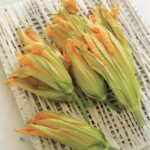
Customers grew out of the event nonetheless.

Ruiz is still pleasing customers and carrying on his involvement in special events with a social purpose.

For the past five or so years, Ruiz has participated in the Kings Who Cook festival, sponsored by the Harrisburg Alumnae Chapter of Delta Sigma Theta Sorority.

Delta Sigma Theta is an organization of college-educated women committed to the constructive development of its members and to public service, with a primary focus on the black community. The sorority turned 100 years old in 2013.

The festival itself is in its 17th year and has grown progressively larger, said Dorothy Jean Guy, a member of the Alumnae Chapter and director of human resources at Penn State Harrisburg.

“This is the signature and major fundraiser of our sorority chapter, “said Guy. “Its main purpose is to raise money for scholarships for worthy college students and for community service projects and programs.”

In 2014, the sorority raised more than $12,000 toward these purposes.

More than 100 cooking-loving men participated in the Kings Who Cook Festival last year. Two have taken part since the festival began in 1998.

In addition to the Kings, there are other men’s groups preparing food in the festival. Fraternity Row includes all Greek-letter participants, and Preacher’s Corner involves pastors of area churches. The International Cuisine participants bring dishes from their home countries, which have included India, Ghana, Kenya, Philippines and Nigeria, among others.

“We also have princes, participants 17 and under, who prepare a dish or serve one with a parent, grandparent or neighbor,” said Guy.

The festival was the brainchild of Ruth Johnson and Dr. Alfreda Johnson of Penn State (not related), who were looking for a great fundraiser, saw something similar, and borrowed the name, said Guy.

Ruiz will be serving some of his signature Cajun dishes at Kings Who Cook. Not exactly qualifying as “international cuisine,” Cajun food does have an exotic appeal. Yet it is, Ruiz noted, very popular in central PA.

“Perhaps the two most requested items in our catering business are garlic cheese and shrimp grits and cornbread salad,” he said. “The popularity stems from Cajun’s unique items and taste.”

Those who still haven’t tried Cajun may be operating under the misconception that it is spicy hot. “But that’s because the person preparing it does not know how to cook it,” he insisted. “The seasonings we use are orchestrated to excite your taste buds, not burn them out.”

Another regular at the festival is Charles Wallace, a barber by trade, who prepares salmon, shrimp and scallops and other seafood on site.

“Visitors will also find dishes ranging from mac and cheese to Italian sausage. We have at least 50 dishes to sample, and only ran out of food once,” Guy laughed.

One of the expected guests this year, as he was the past few years, is Mayor Eric Papenfuse. The festival, in fact, often has celebrity participants. About five or six years ago, a former White House chef with a pastry specialty brought cupcakes “so intricately designed no one wanted to bite into them,” Guy added. “Whatever you sample is part of the price.”

Although there have been Queens Who Cook festivals elsewhere, Delta Sigma Theta has stuck to its male-cooks-only format.

“Women are typically in the kitchen,” Guy said. “This gives men with real zest for cooking and are at their grills the opportunity to be specialty cooks on a Sunday. The men also enjoy the camaraderie—as well as gifts, like aprons from the sorority and chef hats.”

Much as Ruiz loves to cook and expose people to his beloved Cajun food, the most important goal for him is the same as the one at the Lancaster County event, which in a sense launched his business.

“It’s that the proceeds are used to sponsor scholarships for students,” he said. “That’s enough for us.”

The festival will also feature vendors, door prizes and community soul line dancing to “work off those temptingly delicious dishes,” said Guy.

The Kings Who Cook festival takes place Sunday, April 19, 2:30 p.m. to 5 p.m., at HACC’s Cooper Student Center on the Wildwood campus in Harrisburg. Tickets for adults are $25 in advance and $35 at the door; for ages 5 to 12, they’re $15 in advance and $25 at the door. For more information, call 717-902-9813 or visit the Facebook page for Delta Sigma Theta Sorority, Harrisburg Alumnae Chapter.

Continue Reading

Course of a Lifetime: This Harrisburg author marches forward, with no regrets.

Screenshot 2015-03-30 01.33.49Having a successful real estate career, traveling the world, calling France a part-time home, writing five books—accomplishing any of these things might be considered a life well lived. What then is a life that has attained all three?

Gene Albano knows and, with just a little prompting, he will tell you.

When he’s stateside, you can find him holding court most mornings over coffee in Café Fresco in downtown Harrisburg, which is where I encountered him, a dark, peaked beret perched atop his head, an air of relaxed determination over his face.

As I approached him, the first thing he said was, “You look like a writer.”

Yes, this is a guy who knows how to make friends fast.

No Obstacles

Albano has led a long life moving forward, not allowing regret, failure or any other obstacle to stand in his way.

Born Eugenio Michael Albano in 1939, he grew up in the hamlet of Philipsburg, Pa.

Following a less-than-impressive stint at Penn State (“I flunked out”) and a turn as an Arthur Murray dance instructor, he landed in the Army, which sent him to France, beginning a lifelong love affair with that country and language.

Fast-forward 50-plus years, and France is where Albano, now 76, writes his books.

His first novel, “The Letters of Peter Mitchell,” describes some of his initial experiences in that country. Published in 2008, the semi-autobiographical novel tells the story of a young soldier who can’t shake a memory of what happened to him just before his deployment abroad.

A year later, he published “Bashful Lucy,” a book that describes his mother’s life and also delves into the rich Italian, Roman Catholic culture of the early 1900s.

“I use nonfiction to draw out fiction,” Albano said of his approach to storytelling.

A good example of this blend of fact and fiction is Le Procope café, which finds its way into each novel. When in Paris, he frequents the restaurant and has even held book-signings there. His experiences as an adjunct professor crept into “Martin’s Story,” and Café Fresco, his morning Harrisburg haunt, appears in an early novel.

Intriguing

Writing may have fictionalized his real life, but being a writer is just Albano’s most recent reinvention of himself.

For 42 years, he worked in real estate, helping to plant the seeds of Harrisburg’s eventual revival.

In the late 1970s and early 1980s, he and two partners redeveloped and restored the 1700-block of Penn Street. Albano said that he introduced loft living, exposed kitchen brick and second-story laundries to the city, new ideas at the time.

Not willing to rest on his laurels and wanting to learn French, he returned to school in 1983, starting with a French course at HACC. Snagged by a love of learning, he continued to Penn State Capital Campus, even as a single parent of two boys, where he received his bachelor’s degree.

Thinking his age might preclude him from working towards a master’s degree, he told a friend, “I’m going to be 50!” The friend then replied, “Aren’t you going to turn 50 anyhow?” Seeing the point, he went on to receive a master’s degree in humanities from Penn State in 1988.

He put his humanities education to work by writing for the New Hope Gazette, a weekly paper in Bucks County, Pa. His editor, Scott Edwards, who also had an interest in travel, found Albano intriguing.

“It was great to see someone think something and accomplish it,” he told me, saying he admired Albano’s “well-rounded life.”

Edwards admits they were an odd pair, this guy in his 70s and a 20-something hanging out for coffee, but he felt as though he could learn something from Albano. As a young person, he appreciated Albano as “a guy who wasn’t going to let anything stand in his way.”

What could have stood in Albano’s way was the lack of a publisher for his books. No matter—he self-published.

Albano acknowledges that self-publishing isn’t as prestigious but said “that doesn’t bother me anymore.” He’s pleased with his ability to have written and published five books that have been well received by the community, both in the states and abroad.

“I want to share my writing with a reading audience,” which self-publishing has allowed, he said.

His advice for young writers: Your motivation should be purer than just to see your name in print.

“Please, don’t waste your time with that,” he said, saying there are other ways to make a name for yourself.

Secondly, believe in what you are writing and be willing to “stick your neck out.” Lastly, “Don’t let writing clubs dictate what you should be writing.”

Albano doesn’t want to prescribe what people read, either. When I asked what I should read if I only had time to read one of his novels, he said that it depends on what I want to get out of the book. I should read “Letters to Andrea,” for a narrative about a young woman’s life; “The Letters of Peter Mitchell” for a glimpse into Army life; and “Bashful Lucy” for the quality of the story.

Quality best describes Albano’s time on this planet and will continue to define it. Soon, he will travel to Europe for an Italian opera tour, continues to learn French and Italian and is working on a new book. Look for “The Other Marconi” on the shelves in a year or so.

In other words, after seven-plus decades, making the most of life remains Albano’s top priority.


Gene Albano will hold two book-signings this month: Friday, April 17, 11 a.m. to 2 p.m. at Strawberry Square in Harrisburg; and Sunday, April 19, 11 a.m. to 1:30 p.m. at Cornerstone Coffeehouse in Camp Hill. His books also can be purchased through Amazon.com, AuthorHouse Publishing or at the Hallmark Store in Strawberry Square, Harrisburg.

Continue Reading

Reversing Course: By returning its roads to its residents, Harrisburg begins the process of weaving itself back together.

With spring finally upon us, city residents’ thoughts turn to better days ahead after a particularly long, cold and snowy winter. In a similar way, the city itself is poised to emerge from a half-century-long “winter” of misguided urban planning and destructive transportation infrastructure with several upcoming projects that will reverse many of the mistakes made during the 1950s and give way to better days ahead.

Starting shortly, much of Front Street, historically Harrisburg’s most important road, will get a makeover with the addition of a bike lane, repaving, curb improvements and, most significantly, a reduction from three to two lanes of vehicle traffic. Then, perhaps in the next couple of years,N. 2nd Street will return to two-way traffic from Forster to Division streets. Both plans, approved by PennDOT and promoted by Mayor Papenfuse, are long overdue transportation improvements that have been talked about since the 1970s.

Most immediately, both changes will improve safety for residents and visitors alike by slowing vehicular traffic and encouraging pedestrians and bicycles. The Susquehanna River, physically divided from the city by not one, but two, three-lane “highways” running through residential neighborhoods, will be reconnected to those neighborhoods that border it. Property values and the overall condition of the Midtown and Uptown neighborhoods will improve as the highways shrink in favor of the original residential streets and traffic patterns. Currently, property values for similar-sized homes on 2nd Street are about one-third less between Forster and Division, where traffic is one-way, compared to properties north of Division Street, where traffic is two-way; no one really wants to live next to a three-lane highway, and market prices reflect that.

From an economic development perspective, the change could add tens of millions of dollars in increased value over the coming decade. From a civic perspective, the change is priceless.

Meanwhile, commuter traffic into and out of the downtown will experience slower traffic moving north to I-81. I personally take these streets several times a day from my downtown office to my home near Italian Lake and look forward to a more leisurely commute instead of the frantic current pace. Some traffic that uses these streets to go through the city as a route to somewhere outside of it will no doubt find alternative routes, to the benefit of all.

Just as important as the immediate practical impacts on safety, economic development and beautification is the profound symbolic and philosophical impact of these changes. They signal nothing less than the city beginning to reclaim itself as the central place in the region while simultaneously shaking off a mid-century view of cities as places to leave a quickly as possible, as reflected in their transportation infrastructure.

To understand the broader contextual impact, one must first understand why these streets were changed from their original two-way nature in 1956 by then-Mayor Nolan Ziegler. While the stated reason was “easing congestion,” ironically, Ziegler’s inspiration came not from local residents but from his traffic engineer Eugene Simms, a transplant from New York City. And those ideas had their roots in the ideas of an urban planner who had reinvisioned the nature of cities themselves.

Ziegler and Simms, it turns out, were mere applicants of the ascendant urban design and planning philosophy of the 1950s, known broadly as Modernism. One of the chief architects and leading proponents of Modernism (and perhaps its most destructively influential one) was the architect and city planner Charles-Edouard Jeanneret-Gris, better known as Le Corbusier. The Swiss-French Le Corbusier envisioned a clean and modern city that separated where people work and live. And he placed great value upon speeding the flow of traffic through cities with the creation of multi-lane superhighways.

Although offered as a solution to restore cities that were no doubt neglected and tired in many ways after the Great Depression and Second World War, Le Corbusier’s planning ideas actually caused great harm and have been largely rejected today by New Urbanism and a more mixed-use, pedestrian-friendly view of urban areas. Even at the time, Jane Jacobs, a prominent critic, pointed out in her book, “The Death and Life of Great American Cities,” that the Modernist view was profoundly at odds with the essential nature of cities that requires density, sidewalks and walkability, multiple overlapping uses and the mixing and mingling of people of all natures in order to achieve vibrancy and their full potential.

Put plainly, cities should be built and function foremost for their residents and visitors, not for commuters driving through. A vibrant city that is a great place to live, work and play will attract residents, businesses and visitors. As we’ve learned and as has been borne out in many cities, the ease of getting in and out is secondary, if relevant at all. Anyone who has been to Manhattan realizes that it is not easy or fast to drive in or through. That hardly limits the multitude of visitors, residents and workers who choose to live and visit one of the greatest cities in the world. Of course, this reality isn’t limited to New York. Nearly all great urban centers have traffic and congestion, but people want to live and visit them nonetheless.

So too Harrisburg, in order to realize its full potential, must function first and foremost to the benefit of its residents, not for the ease of entering or leaving. The fact that this has not been the case for more than 60 years is ironic on at least two levels. First, if Harrisburg were vibrant and aesthetically pleasing, more people from the surrounding area would want to live, work and visit, not just pass through. Secondly, when Harrisburg regains its place as the vibrant heart of central PA, the city and all of the region will benefit from a vibrant core. The racing in and out results in the worst of all worlds for both urban and suburban residents.

Most importantly, though, the coming change reflects an improvement in the very civic nature of Harrisburg. With three-lane super-highways racing up and down its best real estate, Harrisburg can never be thought of as anything more than a place to go through on the way to some other, “better” place. However, with restored residential neighborhoods and lovely homes and businesses along the Susquehanna, Harrisburg can once again be the best destination and address for those who choose to live and work in the region, just as it was a century ago. The few extra minutes to arrive and depart—if you must—will be well worth the effort.

In 1956, a mistaken philosophy was thrust upon Harrisburg, and it ripped apart several of its best neighborhoods, helping to hasten its decline in the name of progress. Long after the philosophy crumbled under its own weight, Harrisburg has been living with its consequences and enduring legacy. We are now on the cusp of a major restoration for our neighborhoods, for our city and for our own self-determination and civic pride. It can’t come soon enough.

J. Alex Hartzler is publisher of TheBurg.

Continue Reading

Resident Artist: Renowned artist Crystal Wagner could work anywhere. Attracted to The Millworks, she now calls Harrisburg her home.

Screenshot 2015-03-30 01.32.14Crystal Wagner was a kindergarten student in Baltimore when the teacher pulled her mother aside and predicted the young girl would be a famous artist.

“My mom kind of laughed at it,” Wagner said of the experience. “But, after that moment, everything in my life was geared toward art.”

At 33, Wagner is living the dream as a full-time artist, showcasing her meticulously crafted boxes that hold paper folded into three-dimensional objects at The Millworks in Harrisburg.

Cultivating her love of art at a young age, Wagner’s parents would line her bedroom floor with tiles instead of carpet so she could create without worry of ruining the flooring. An entire wall was devoted to a peg-system easel to allow her to paint and draw at will.

Wagner never doubted she would pursue art as a profession—it was the only option she saw for herself. Art as an expression was the language that spoke the loudest to her, she said.

She would spend the rest of her life moving around the country, living in Pine Grove through high school before pursuing an associate’s degree at Keystone College in La Plume. In 2004, she received her bachelor’s in fine arts from Atlanta College, and in 2008, she earned her master’s in fine arts from the University of Tennessee.

Like many artists, Wagner’s craft wasn’t lucrative enough to support her. Instead, she started teaching art at Georgia College of Liberal Arts, just south of Atlanta. After five years in academia, it was her time to shine as an artist.

“It was clear that the potential was there for me to live on my art alone,” Wagner said. “People were noticing the work that I was doing, and they wanted me to do more. It was a surreal time for me.”

Handing in her resignation felt much like the day she handed in her apron at her first job as a waitress, Wagner said. She was done with this. It was time for something new.

Screenshot 2015-03-30 01.32.27Now, on any given day, she’ll open her inbox to see fan mail from all over the world and requests from museums, galleries and collectors who want to showcase her work. After years of working to get that attention, she said, it’s nice to see people coming to her.

The decision to move to Harrisburg was one that seemed inevitable but worked out well, she said. Wagner and her ex-husband share custody of their two children, and, after he started attending school at Penn State, Wagner said, she needed to move closer. Hoping to not have to venture as far as Philadelphia, she searched for galleries in the area and found The Millworks.

“(Wagner) is passionate and focused, and we are delighted to have her,” said Tara Chickey, arts director for The Millworks.

Wagner will have three shadowboxes on display through April 30.

“These works are so unique, modern, organic, rhythmic and absolutely beautiful,” Chickey said. She has found herself admiring them on numerous occasions and is eager to see more of what Wagner has to offer.

In addition to her boxes, Wagner is known for creating larger-than-life paper sculptures that can take up entire rooms and require viewers to walk inside them. Her goal is to create a sense of wonder for those who enter the sculptures, and she’s seen people brought to tears, laughter and joy as they view them.

Since moving to Harrisburg in August, Wagner hasn’t spent too much time in the area. She’s often traveling to different exhibits where she sets up her sculptures for display—sometimes taking weeks at a time to complete the projects.

But she’s looking forward to the times she does get to settle in to her new home. While Harrisburg doesn’t have the amount of contemporary art she’s used to seeing in Los Angeles or San Francisco, she’s met many people who are proud and passionate about what they create.

“There are craftsmen here who value conviction in their labor and work,” Wagner said. “There’s a real sense of community in all of it. The excitement is really wonderful, and, the second this place becomes a destination for artists, I think we’ll see contemporary art take over.”

The Millworks is located at 340 Verbeke St., Harrisburg. Crystal Wagner’s shadowboxes will be on display through April 30. For more information, visit www.millworksharrisburg.com or call 717-695-4888.

Continue Reading