TheBurg Podcast, July 3, 2015

Welcome to TheBurg Podcast, a weekly roundup of news in and around Harrisburg.

July 3, 2015: In this week’s rockets’-red-glare edition of the podcast, Larry and Paul talk about a bad budget forecast stemming from parking problems, a City Island vendor who hasn’t been paying his rent, and a firework-style scattering of updates about the grand jury investigation into Harrisburg finances and the city’s July 4 celebrations.

Special thanks to Paul Cooley, who wrote our theme music. Check out his podcast, the PRC Show, on SoundCloud or in the iTunes store.

TheBurg Podcast can be downloaded by clicking on the date above or by visiting the iTunes store. You can also access the podcast via its host page.

Continue Reading

As Harrisburg Parking Fines Back Up, A Budget Falls Out of Balance

Mayor Eric Papenfuse, holding scissors, at a ribbon-cutting for Pango mobile parking app last year. (File photo.)

Mayor Eric Papenfuse, holding scissors, at a ribbon-cutting for Pango mobile parking app last year. (File photo.)

Last January, as Harrisburg made its final budget tallies for 2014, Mayor Eric Papenfuse pointed proudly to a major achievement of his first year—a budget so tightly managed that the city, so recently on the brink of bankruptcy, had paid nearly all its bills and still had $5 million in the bank to spare.

He achieved the surplus by spending millions less than authorized in the budget, a feat he is on track to repeat this year, with the latest projections showing the city is on target to spend $57.5 million out of a budgeted $59.5 million.

The same projections, however, show that a balanced budget may elude him. The reason, as reported in a court filing this week by the state coordinator of the city’s recovery, can be summed up in one word: parking.

Revenue from parking is down by an estimated $1.4 million, wrote Fred Reddig, the city’s coordinator under the state program for distressed municipalities, in a July 1 report to the Commonwealth Court judge overseeing the recovery process.

In particular, revenue from tickets is down due to a backlog in the courts. As of early May, there were around 20,000 unpaid tickets outstanding, Reddig wrote. Each month produces about 1,400 new delinquent tickets, but in the same period the sole district justice appointed to process them can only move through 250.

The result has been a steep departure from projected revenues that has in turn cut off the flow of money to the city, which is entitled to receive certain payments from the parking system under a 40-year lease signed in late 2013.

Over the year, the city is supposed to receive $2.5 million in these so-called “waterfall” payments, but it has so far only received a few hundred thousand dollars. In short, the parking revenues are “way, way, way off,” Papenfuse said.

And the consequence for city finances is that Harrisburg is now poised to end the year with a deficit of around $1 million, despite the continued penny-pinching.

“The budget is over-performing in all other areas, in terms of controlling expenses,” Papenfuse said. “The deficit is entirely due to shortfalls in parking.”

A remaining question is the cause of the ticket backlog, a point over which the mayor’s office and the state coordinator sharply diverge.

Reddig, in his report, pins the slowdown partly on the city’s own failure to pass a required parking ordinance in 2014, the year to which three-fourths of the backlogged tickets can be attributed.

Papenfuse dismisses this explanation, however, saying the ordinances have nothing to do with this year’s projected revenues. Instead, he points to the inadequate court processing and says he would like more help from the state.

“The city is doing everything in its power,” he said.

Nonetheless, both the mayor and the coordinator agree that the city is still on the track towards recovery. The city is current on its debt payments, Reddig wrote, and “would be able to weather an operating deficit of $1 million this year.”

Aside from the decline in parking revenues, “we’re feeling pretty good,” Papenfuse said. And the city should eventually get the money it’s owed. The question is when.

Continue Reading

Probe Into Harrisburg Finances Extended

Investigators removing artifacts from the Midtown home of former Mayor Stephen Reed in early June. (File photo.)

Investigators removing artifacts from the Midtown home of former Mayor Stephen Reed in early June. (File photo.)

A statewide grand jury probe into Harrisburg’s debt crisis has been extended another six months to late January 2016, a court administrator confirmed this week.

James Koval, of the Administrative Office of Pennsylvania Courts, said the state Supreme Court approved the extension on May 26, after a majority of the jurors voted to request the additional time.

The grand jury has been meeting in Pittsburgh under supervising Judge Norman A. Krumenaker III of Cambria County, with an 18-month term originally set to expire in late July. The extension means it will now last up to 24 months, the maximum length allowable for grand juries, Koval said.

The grand jury is reportedly probing the financial crisis that bloomed under former Mayor Stephen Reed, focusing particularly on a set of risky borrowings related to the city incinerator but including other areas of governance during his 28-year reign.

The extension was previously reported by WITF news.

Grand juries are protected by secrecy rules, but there have been occasional hints about the probe’s scope and progress.

Attorney General Kathleen Kane, whose office is spearheading the probe, said during a Senate committee hearing in March that she hoped it was nearing a conclusion but that “no stone will be left unturned.”

Mayor Eric Papenfuse acknowledged testifying before the jury in 2014, but he said Tuesday he is now under a judicial gag order and cannot comment on his testimony.

Bill Cluck, a board member of what was formerly the Harrisburg Authority, which borrowed to retrofit the incinerator in 2003 and 2007, has also said he testified.

The Patriot-News published photographs in April of past city officials arriving in Pittsburgh, either to testify or to meet with prosecutors.

Among those identified were former city controller James McCarthy, Daniel Lispi, a project manager of the incinerator retrofit, and Reed himself.

TheBurg also reported that month that records of a $33,000 reimbursement paid to Reed in 2003 for artifacts he ostensibly bought for city archives were among the materials presented to jurors.

Just last month, investigators raided Reed’s Midtown home, carrying out boxes and various Western-style artifacts, including saddles, barrels and a stuffed coyote.

Reed later told reporters that everything removed was his personal property.

Continue Reading

Mayor, PennDOT: No Meeting on Front Street Trees

One of four trees slated for removal. A freshly installed pedestrian ramp is visible in the background.

One of four trees slated for removal. A freshly installed pedestrian ramp is visible in the background.

Four trees in the way of planned pedestrian ramps on Front Street are not as old as previously thought and should come down without further public discussion, city officials said this week.

The trees, located in Riverfront Park at the intersections with Radnor and Emerald streets, are slated for removal as part of a PennDOT resurfacing project currently underway between Forster and Division.

A state historic preservation office urged the city and PennDOT last week to hold a public meeting to discuss the removal, noting the trees were in a historic district and possibly planted as part of the early-20th-century City Beautiful movement.

Doug McLearen, of the Pennsylvania Historical and Museum Commission, wrote on June 23 that his office “strongly suggests that PennDOT solicit and consider stakeholder comments and provide an open public meeting to discuss the project and its potential to affect historic resources.”

TheBurg previously reported that three of the trees were likely American elms dating to 1919, while a fourth was a Chinese elm or maple from the post-Depression era, relying on information from PennDOT project findings.

But Erik Josephson, who was hired this year as the city’s arborist, said at least three of the trees were actually Zelkovas planted between 40 and 50 years ago to replace elms that were likely wiped out by Dutch elm disease in the 1960s.

Harrisburg Mayor Eric Papenfuse said Tuesday that in lieu of a meeting about the removal, the city would be holding a public meeting Aug. 24 to solicit input on a multi-year replanting plan.

“PennDOT has indicated to the city that there will be no public meeting before the trees are taken down,” Papenfuse wrote in a message. “The city agrees that a better use of time and energies would be to create a positive, community-supported tree replanting plan for Front Street and Riverfront Park.”

Greg Penny, a spokesman for PennDOT District 8, confirmed Wednesday there would be no public meeting and that his agency planned to go forward with removal, which he said was not only necessary for the installation of wheelchair-accessible ramps but also to improve sight lines for people crossing the street.

Penny also said the pink “X” marks visible on some trees along the road had not been painted by PennDOT, but rather appeared to be a “stunt of some sort.” “It’s just an assumption on my part, but I think it was done to cause some alarm,” he said.

Jean Cutler, a former historic preservationist at the Pennsylvania Historical and Museum Commission and one of a group of citizens concerned about the tree removal, petitioned PennDOT again on Wednesday to hold a meeting.

“Their loss will mean a great change to the sense of place they help to create along Front Street,” Cutler wrote of the trees. “Harrisburg has lost many of its important resources over the last number of years and healthy trees should not be among them.”

Continue Reading

TheBurg Furry Friend

7J7A5073 CPAA_logo

If you’re looking to accessorize your life with fun and happiness, Madison is your girl!

This petite pup with a pretty pink nose couldn’t be any cuter. She loves people and has mastered the art of being a lap dog. One of Maddie’s favorite past-times is simply relaxing, except when she can chew on her rawhide bone or chase her big red ball. For reasons no one can understand, Maddie has been waiting for a very long time to find her forever home. She’s faced some tough times in life, but she never loses that smile…and that’s the best accessory of all!

Make this beautiful girl’s day by inquiring about adoption. To meet Madison or for more information, please email [email protected] or visit www.hopedogs.org

Burg Furry Friend is brought to you by

jezwater-logo (1)

JezWater is Water on a Mission® – a mission to rescue animals.

We’re dog lovers striving to make a difference in the lives of animals in need. We started JezWater – named after Jezzy, our founder and Canine Executive Officer – to raise funds for and improve the lives of animals, as well as to give people who actively seek ways to promote animal rescue a healthy and easy way to get involved.

Buying JezWater makes a difference. https://www.jezwater.com

Join our growing community to support animal rescue on Facebook, Twitter, and Instagram. Follow JezWater, share your stories and help us rescue more dogs that need our help.

Photo of Maddie is by CarisaK Photography (https://www.carisak.com)

Continue Reading

Condensed Luxury: Increasingly, high-end living comes in smaller packages.

Screenshot 2015-06-27 12.20.10It’s been said that, when it comes to urban trends, Harrisburg is often a decade-plus behind larger cities.

Therefore, it may be no surprise that a style of living already rooted in such places as Philadelphia and Washington, D.C., is only now migrating in. More and more, younger people and downsizing retirees are shunning large, mediocre space for well-appointed, well-located apartments that clock in at less than 750 square feet, say local real estate professionals.

“This is driven in large part by millennial preferences,” said David Butcher, president of developer WCI Partners. “In short, small but very nice is much preferred over large but ‘just OK.’”

A prime example is WCI’s Walnut Court Apartments, which has just been completed at the corner of Walnut and Court streets in a building that long housed the Keefer, Wood, Allen & Rahal law firm. Most of the 21 apartments are snug, one-bedroom units, but have high-end finishes and an industrial feel, which, according to Butcher, is popular among younger professionals.

“The market seems to be willing to exchange square footage for high-quality space—and will even pay a premium for it,” he said.

Demand for Convenience

Harrisburg’s flirtation with small-footprint luxury began about five years ago, when the old Boas Elementary School at the corner of Green and Forster streets was re-made into a boutique, executive-style apartment building. Brickbox Enterprises and Greenworks Development then reconstructed the dilapidated Furlow Building, which was rechristened the COBA, featuring units with a modern, clean design, granite countertops and stainless steel appliances.

Brickbox followed that project by tackling the conversion of one of Harrisburg’s premier historic buildings, the former Masonic Temple at N. 3rd and State streets. Today, that building, known as The LUX, features 42 condo units ranging from 545 to 820 square feet, said Pete Weigher, president of TeamPete Realty Services, which manages the building.

At an average sales price of $150,000, the condos tie in granite countertops and stainless steel appliances, as well as luxury cabinetry and flooring. A rooftop patio, community lounge and fitness center also make it appealing for buyers who want a low-maintenance, urban lifestyle, Weigher said.

The short walking distance to downtown restaurants, the riverfront and businesses has been a huge selling point, he added.

“The demand for convenience has gotten higher,” Weigher said. “In this case, you have the architecture of something built in 1909 but with complete renovations. Everything from the plumbing, framing, heating and electric is new, but you’re still within that historical structure. It’s something affordable in a niche market.”

Screenshot 2015-06-27 12.20.20Small Looks Big

WCI stuck its toe into the higher-end, multi-family market with the redevelopment of two apartments above Little Amps Coffee Roasters at the corner of N. 2nd and State streets. After the units rented quickly, the company bought and renovated Locust Street Apartments, which filled up after just two months, said Lori Fortini, operations manager.

Those one-bedroom apartments average just 650 square feet, but are decked out with high-end finishes, such as quartz countertops, tiled showers with frameless doors and bowl sinks. They also come with central air, a garbage disposal and a washer/dryer—necessities for most urban professionals, Fortini said.

And now that Walnut Court is done, WCI is undertaking its most ambitious project to date, building upon the trend for small-sized luxury. It recently received approval from the city’s Zoning Hearing Board to convert the former Moose Lodge/Ron Brown Charter School in Midtown into 33 one-bedroom apartments that will average 500 square feet each.

Kristine Werley, owner of Urban Interiors, is a design consultant for WCI Partners and has helped attract the clientele who walk into the small living spaces.

Having worked in Brooklyn and Philadelphia, Werley is excited to see something that feels like the big city finally coming to Harrisburg. To help the spaces not feel so small, she is drawn to open concept design, in which rooms flow from one to another without the obstruction of walls to divide the spaces. A large kitchen island and bar stools allow residents to cook, entertain and watch TV all in the same area.

Werley said she tries to use neutral colors so that the eye isn’t distracted in a space. The same style floor through various rooms also makes it flow together, she said. In addition, she blends old with the new, such as exposed brick and modern finishes, as a sort of signature for the apartments.

Werley said she sees the development of luxurious, small spaces as necessary to help recruit and retain young professionals.

“Harrisburg has been trying for so long to attract people,” she said. “If you get the right job here but not the place to live, you’re not getting that full, young professional feeling. We’ve found a way to give people a great apartment for that work-life balance, and they don’t have to pay the prices of a big city.”

As plans for the Moose Lodge project take shape, Fortini sees the perks of smaller apartments across the board.

“The biggest benefit for the city as a whole is going to be for the downtown businesses,” she said. “We’re bringing in people who are in the middle-income to higher wage bracket, making it a win for the city itself as an increase to the tax base.”

While forgotten structures finally get the attention they deserve, and life returns to parts of the city that long have been dormant, Harrisburg seems to be waking up to what younger people are after.

When people can really live in a city—work, sleep and play there—“that’s when exciting things can happen,” Fortini said. “That’s what Harrisburg is ready to offer.”

Disclosure: Alex Hartzler, TheBurg’s publisher, is a principal with WCI Partners.

Continue Reading

Playing It Forward: Musician Koji comes home to share The Giving Keys.

Screenshot 2015-06-27 12.18.53

Koji. Photo by Dani Fresh.

Living a life of art and activism is something that many of us who work 9-to-5 jobs can only dream about.

Singer/songwriter Andrew Koji Shiraki (Koji) says that choosing this path has allowed him to connect the dots between the things that he feels most passionate about.

“My lifestyle gives me the opportunity to not only pursue music, which I love, but doing it in such a way that is thinking about community and thinking about service and taking action,” said the Harrisburg native. “I think it’s a really powerful thing that not only do I get to play 150 shows a year, put out records and tour the world, but I’m also able to facilitate a dialogue and create the space for a different conversation to happen around music.”

Koji has been involved with numerous social justice projects throughout the years, and he says that one of his career goals is to honor these kinds of opportunities.

Recently, he was approached by a friend who works for The Giving Keys, a California-based company that sells jewelry with inspirational messages stamped on old keys, to come up with a message for a custom key. Since the company’s mission is to address the enormous homeless problem in Los Angeles and beyond by employing people who want to transition out of homelessness, Koji jumped at the opportunity.

When thinking about the message to put on his Giving Key, Koji decided on “Peacemaker” in memory of friend and fellow activist Nate Henn, who was killed during a terrorist attack in Uganda at a screening of the 2010 World Cup final.

Henn, a former college rugby player who toured U.S. colleges and churches urging people to help children in that war-plagued country, had been visiting some of the youth that he had helped when he was killed. The following year, Koji wrote the song “Peacemaker,” which he dedicated to his friend.

“I thought, for my key, I’d like to honor his story and his mission in terms of bringing peace to Africa,” he said. “But I also wanted to celebrate local leaders here in our communities.”

The Peacemaker key first became available during a concert last month at The Millworks in Harrisburg that featured The Koji Band. The concert was an exciting one for Koji, who often performs solo, because it was the first time in a long while that he was able to bring his band to his hometown. It was also a chance to celebrate with friends and family before heading out for the summer to perform on the Vans Warped Tour.

The Millworks concert was particularly special because three Harrisburg-area residents—Ashlee Dugan, Loretta Barbee-Dare and Stephen Michael Haas—had been chosen to receive a Peacemaker key in recognition of their community leadership.

“Brad Coletta and Dani Fresh, who are a part of the art and activism organization Colormake, were the ones who selected the Peacemaker key recipients,” said Koji. “They both are helping to promote the key, too. Their efforts have helped to forge a connection between The Giving Keys, which is a national initiative, and our Harrisburg community.”

According to the Colormake website “Ashlee Dugan, Loretta Barbee-Dare and Stephen Michael Haas are much like keys themselves; unlocking the goodness, the potential, the beauty of their communities and allowing us into the places that we need most.”

Dugan and Barbee-Dare have had a rich history together of activism and community work, ranging from their time with Food Not Bombs, Association of Community Organizations for Reform Now (ACORN) and Pennsylvanians Against the Death Penalty. Dugan currently works as the interim market manager at the Broad Street Market, and Barbee-Dare works to get members of the community into homes they can love and afford. Haas is a multimedia artist known for his colorful, multi-dimensional works that have honest, positive messages that encourage self-discovery.

In The Giving Keys tradition, Dugan, Barbee-Dare and Haas are encouraged to “pay their keys forward”—giving them away when the right time comes.

To find out more about The Giving Keys, visit www.thegivingkeys.com. To learn more about Colormake, go to www.clrmk.com.

Continue Reading

The Last Stitch: After more than 2 decades, renowned costume designer Gwen Alsedek retires from Open Stage.

Screenshot 2015-06-30 07.36.30There’s an advantage to retiring from theater when you love to watch theater.

Since 1993, when Gwen Alsedek became resident costume designer at Open Stage of Harrisburg—the professional downtown theater established 10 years earlier by her older brother, Donald, his wife, Anne, and Marianne Fischer—she’s been too occupied behind the scenes to be in the audience very often.

Now that Alsedek is retiring, she expects to spend more hours on the other side of the lights.

“I love to go to the theater, and I love being part of an audience,” she said.

Her professional affiliation with Open Stage actually began in 1991, when she costume-designed “Nora,” Ingmar Bergman’s take on Ibsen’s “A Doll’s House,” as a freelancer.

Early on in her tenure, she costumed such diverse plays as “Harvey,” about an imaginary rabbit, and “The Lioness of Berry,” about writer George Sand. Sometimes, she both stage-managed and designed costumes.

Fittingly, she wrapped up her career at Open Stage last month with “Stories from Home: People Who Care,” a celebration of those who have worked hard to make Harrisburg a better place.

“When I look back, I’m amazed how many shows I’ve done and how many the theater has done,” she said. “I wanted to be here because of the plays.”

Coming Home

If not for a family crisis, Alsedek might not have returned to her native Harrisburg. She was a visiting artist at Hofstra University in Long Island when her mother became ill.

“I knew she needed help, so I came home,” she said.

Meanwhile, Open Stage was growing and changing. It had moved from a tiny location in Elizabethtown to its present venue on Walnut Street in Harrisburg, and Alsedek found herself more and more “entrenched.”

“It’s pretty amazing to do in your hometown and make a living doing what you studied,” she said. “As a graduate student, I wrote in my final paper how much I was looking forward to a theater family. Literally, I found it.”

Alsedek studied costume design at the University of Missouri-Kansas City, which is affiliated with the Missouri Repertory Theatre (now Kansas City Rep).

Over the years, she accumulated wonderful experiences and memories. She rattles off the names of many shows, always with awareness that she might be leaving something major out. She mentions “’Master Harold’ . . . and the Boys,” “A Trip to Bountiful,” “Glengarry Glen Ross” and “The Laramie Project,” among others.

“The Big Bang Theory” was particularly memorable, because, as Alsedek described it, “all things had to turn into other things.” There was “The Immigrant,” in which she also performed and “got to wear these cute little outfits.”

The costume designer also had a cameo in Arthur Miller’s “Death of a Salesman”—it took longer for her to get dressed for the part than the time she was onstage.

Alsedek did both the sets and costumes for “The Threepenny Opera,” which remains one of her favorites.

“I love the work of composer Kurt Weill and librettist Berthold Brecht,” she said.

Dynamo

Alsedek’s career at Open Stage has been nothing if not diverse.

Over the years, she has designed for “I Am My Own Wife,” about a transgendered German who survived Nazi and Communist rule, all the way to “Crowns,” a soul-stirring Gospel musical, which meant a lot of hats for the church ladies.

Two annual productions, “A Christmas Carol” and “The Diary of Anne Frank,” gave Alsedek the opportunity to dress (and wig) many different casts over the years.

She recalls actors and staffers, including the late Jim Woland, set designer for the theater, whose talents she admired and whose company she enjoyed. “It’s special if everyone is committed to a project 100 percent,” Alsedek said.

Though she seems like a quiet, one-woman dynamo, Alsedek didn’t work totally alone. She had volunteer helpers “along the way” who came in and sewed with her, especially mothers from the “Christmas Carol” casts.

Then I asked her the obvious question: Is it easier or more stressful to work with family?

She responded that the experience has been overwhelmingly positive. She and brother Don had previously been co-workers in their family restaurant. And, she said, they share the “same work ethic and the same tastes” and get along well.

“I sort of knew what he wanted, and we were always on the same page,” Alsedek explained. “It was very collaborative, but Don gave me full artistic license. We agreed on the message we’re putting out and how to get it out.”

The two siblings also have a younger brother, who is not in theater but whom Alsedek calls “very artistic.”

Other than seeing more theater, Alsedek prefers to remain a little vague about her future plans, including where she may end up living. She does say, “there’ll be some trips and visiting people—both were difficult to pull off,” while working full-time-plus—and there will be “no deadlines.”

Alsedek acknowledges she’ll “truly miss” tech week, when all the elements, all the artists, come together and the play gels.

“There is always a certain wonder in that magical week before the show opens,” she said.

She’ll also think with nostalgia about the “dark, quiet theater with only the sounds of the artists at work. It can be very spiritual.”

Speaking of “spiritual,” she expects to devote more time to her hobby of a decade—studying and creating the sacred art of Byzantine iconography. While today the term is most closely associated with wooden panel painting, in Byzantium, icons could be crafted in many media, including ivory.

Alsedek also hopes to spend more time outdoors—she loves the seashore and mountains and once was an active kayaker.

Unequivocally, though, Alsedek says she’s “really happy” the time for retirement has come.

What message does she have for other costume designers? Ironically, she said, the greatest satisfaction often comes when their work isn’t noticed.

“If clothes don’t get in the way, if people don’t think about it, but about the acting and what a great show it was, I’ve done my job,” she said. “I’m there to support the actors.”

To learn more about Open Stage of Harrisburg, visit www.openstagehbg.com.

Continue Reading

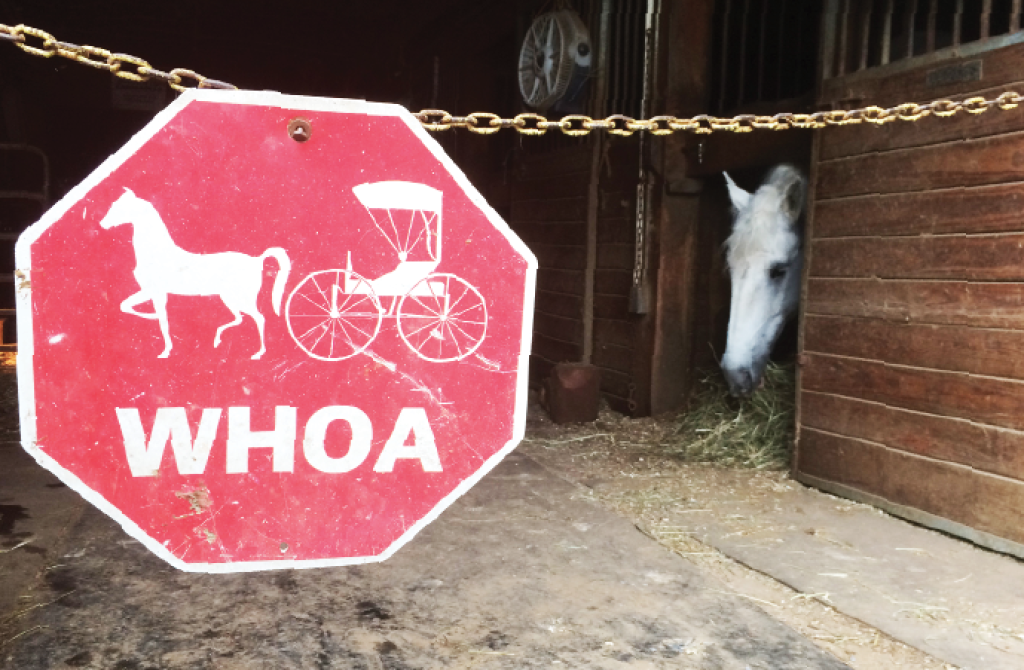
Free Ride: One City Island business hasn’t paid rent in more than 5 years. Is Harrisburg finally ready to crack the whip?

Screenshot 2015-06-27 12.18.26In 1975, Fred Lamke, the son of a Harrisburg police officer and graduate of John Harris High, graduated from Point Park University in Pittsburgh with a journalism degree and returned to the city to look for a job.

“It was the kind of economy just like we just had,” he recalled, in an interview in 2013. He had an offer to work as a reporter for a local radio station, at $110 per week—or to drive a beer truck for more than double that amount. “So I took the job in the beer business,” he said. He spent a few years in the industry, later working as a manager and a salesman, before eventually buying a tavern off Paxton Street with his family.

One day, Lamke, who had minored in business, approached his father with an idea. “I said to my father, ‘You know what Harrisburg doesn’t have? Harrisburg doesn’t have any horse-drawn conveyance.’ He said, ‘Were you drinking?’ I said, ‘Well, yeah, I was drinking.’ He said, ‘Well, go sober up.’” But Lamke continued to nurse the idea, convinced it could work in the city. He eventually befriended an Amish man at a carriage auction who agreed to give him driving lessons. After a year and a half of training, he bought a horse and a vis-à-vis, a style of carriage in which passengers sit facing each other on opposite benches. In May 1984, Lamke registered the Harrisburg Carriage Company with the state corporations bureau.

Over the next few years, the business grew. By the summer of 1991, according to an article in the Patriot-News, the company had five horses and three carriages. That April, it had also moved to a new home—a carriage house newly constructed on City Island, which Lamke shared with the police department’s mounted patrol. In the several years prior, then-Mayor Stephen Reed had made the revitalization of the island, which he once described as a “long unused and blighted 63-acre land mass,” a major priority. A visitor pamphlet from the early 1990s highlighted the many facets of the island’s revival: a riverboat, a miniature golf course, a nature walk, the Senators baseball team. Among the photos was a shot of the carriage house at sunset, a crisply painted white carriage in the foreground being drawn by a sleek brown horse.

The company is the city’s only horse-drawn carriage service, and three decades after its founding, it remains something of a Harrisburg institution. It maintains an active Facebook page, where it posts photos of the occasional customer, most often a bride and groom or a couple who just got engaged on the ride. In September, one of Lamke’s carriages bore the coffin of Elijah Massey, a retired city police captain, in his funeral procession. “Fabulous people and lovely horses,” one person wrote in a five-star review. “Harrisburg is a beautiful location for a ride along the river.”

Yet the company’s relationship with the city, especially in recent years, has been far from ideal. Last month, in response to inquiries by TheBurg, the city furnished several records relating to the company. Together, they reveal a history of complacency and neglect dating back at least seven years. Lamke’s operating permit expired in 2008, making Mayor Eric Papenfuse’s administration the third in a row that has failed, at least so far, to renegotiate or renew it. The terms of the permit are generous—for the use of the carriage house, a nearby “corral and staging area” and multiple personal parking spaces, all of which were constructed and maintained at city expense, the Harrisburg Carriage Company pays a monthly fee of $100. (As a point of reference, the monthly rate for a single City Island parking space is $125.) Nonetheless, in 2010, after Mayor Linda Thompson took office, Lamke stopped paying this fee; he is currently more than $6,000 in arrears.

Part of the problem is a willful confusion of government and business functions. Lamke has been a city employee for nearly as long as he has provided carriage rides—he started working as Harrisburg’s animal control officer in 1985. He appears to use the carriage house as a remote office; both of the city’s animal-control trucks are frequently parked outside, whether or not he’s on duty. The city dissolved its mounted patrol unit in 2008, and since then Lamke has had exclusive use of a property that was once shared with a public entity. Papenfuse, contrasting Lamke’s permit with those of other City Island vendors, described it as “singularly problematic.” You “shouldn’t have a city employee renting from the city. Shouldn’t have a city employee in contract with the city for a private enterprise,” he told me. “That’s wrong.”

Last month, TheBurg reported on efforts to revitalize City Island. This year, the Papenfuse administration has reopened vendors’ permits, raising questions about the proper relationship between businesses and a government that wants to encourage them. The Harrisburg Carriage Company offers a case-in-point of how that relationship can go awry.

Among the records produced by the city were two letters addressed to Lamke from 2013, the last year of the Thompson administration. The first was dated Jan. 22 and signed by Brenda Alton, Thompson’s parks director. In the letter, Alton wrote she was “making a personal effort to inform myself about the businesses on City Island.” She noted Lamke’s expired permit term and the delinquent payments, but didn’t make any demands, aside from gently requesting a meeting. The second letter was signed by the city solicitor and dated in June. It described Lamke as “in default” and included language about the city’s right to evict. It’s not clear whether this second letter was ever sent; the version the city provided appears to be a draft.

“That one did not get resolved,” Alton, who left the city in early 2014, told me. “I worked with the police department, tried to get information, tried to work with Fred Lamke. I just couldn’t figure out what the relationship was.” Alton said that, in an effort to be “fiscally responsible on behalf of my department and the citizens,” she had tried to go through all of the island permits and ensure they were up-to-date. In many cases, she found the written permits unclear and gradually learned that several of the vendors had “verbal agreements” with the prior administration. She said that, in most cases, she was able to resolve her questions, but in the case of the carriage company it was “difficult to get the answers I needed.”

To some extent, the city may also have been falling short of its own obligations. The carriage house has badly deteriorated from the gleaming facility in the pamphlet from the ‘90s—the paint is peeling and dingy, vegetation sprouts from the gutters, and there’s a substantial hole in the roof, patched with plastic bags and moldering plywood. Inside, thick cobwebs hang from the rafters. It’s not obvious from the permit who should be held responsible. On the one hand, the permit refers to the company’s duty to repair any damage it causes, but on the other, it’s explicit that the house is city property and that it has been constructed at the city’s “sole expense.” Additionally, the city has neglected the fenced-in paddock the company uses for the horses’ exercise. Jenise Mattern, who volunteers at the stables six days a week, said a missing section of fence, drainage ditches leading from the ballpark and unchecked weeds have made the paddock unsuitable for the horses. “The city doesn’t keep up with it,” she said. The horses “need to get out for their health.”

This has also raised concerns about the safety and well-being of the horses. In May, I got an email from Annie Leguennec, an area resident who was worried the horses were being confined “inside their stable day and night.” A few days later, she posted complaints on the company’s Facebook page, challenging it over whether the horses received adequate time outdoors. The company, which currently keeps a total of eight horses, replied that it exercises them both in the City Island paddock and at a farm in North Annville. “For the safety of the horses, we only use the paddock on the island when there aren’t many people around,” the company wrote. (Aside from general animal cruelty provisions, there are no state laws regulating commercial providers of horse-drawn carriage services. A spokesman for the state public utility commission, which regulated the industry until 1990, said Lamke was issued a certificate in 1984 that was subsequently cancelled in 1989, after Lamke “was found guilty of failing to file his annual reports.”)

In June, after failing to reach him through visits to the carriage house and through Facebook, I reached Lamke by phone. It was around 8:30 in the evening, and he asked me to call him back in the morning, when he could give me his “full attention.” The next morning, he told me he “really can’t talk about anything.” “I’m just not permitted to talk,” he said, citing “longstanding city protocol.” I told him my questions concerned his private business, not his work as a city employee. He demurred, saying he could get fired for talking. (Joyce Davis, the city’s communications director, said there was no such prohibition; when I mentioned Lamke’s claims to Papenfuse, he said simply, “That’s not true.”)

When I first asked Papenfuse about the Harrisburg Carriage Company, he said he’d had conversations with Lamke as part of a “comprehensive review” of all the permits on the island. He described the expired permit and delinquent payments as a “bad situation” that his administration had inherited, though he also said, with regards to the city, “I don’t think we’ve lived up to our responsibilities, either.” He added that he saw the “concept of carriage rides” as a “good thing for Harrisburg.” “I think the city has some interest in hopefully preserving that,” he said. “I think once it’s gone, it’s going to be unlikely it will ever come back.” He also said he was still collecting information and asked me to follow up.

Several days later, I asked him about the company again. This time, Papenfuse said the city was on the brink of sending a letter—Lamke would be asked to fully repay his delinquent fees within 30 days or else cease operations on the island. The city would devote the proceeds to restoring the carriage house, he said, with the understanding that it needed to receive timely rent in order to keep up with maintenance on its end. Meanwhile, Lamke, like the other vendors, would be given a one-year permit renewal until new terms could be negotiated. Neil Grover, the city solicitor, referred to these permits as “holding the status quo” while the city examined the island’s economics and plans for future development.

When I spoke to Alton about the island, she expressed regret that she hadn’t been able to make more progress there. “I always thought City Island could be more and could be bringing in more revenue,” she told me. She blamed herself, saying she never seemed to have enough time, but she also thought the vendors bore some responsibility. “Everybody seemed to want their piece of the pie, but they failed to remember it was the city’s property, that some revenue needed to come back to the city.” She said she believed the island could be an attraction like Baltimore’s Inner Harbor, if it just had the right development. “But we never had the opportunity to look forward,” she said. “We were always putting out fires.”


Continue Reading

Bringing Up Baby: Puppies are adorable, but exercise caution before adopting one.

Screenshot 2015-06-27 12.23.34People often come to me seeking advice on their next dog. Sometimes, before I even have a chance to respond, they will inform me that they want a puppy.

As a Certified Pet Dog Trainer and American Kennel Club evaluator, I can tell you that most of those people end up regretting that decision. Before buying or adopting a dog from any place, thought and consideration need to be taken into the animal’s health and welfare, as well as the cost to feed, train, board, groom and provide veterinary care.

Right Fit

A reputable animal rescue will be informative on all these issues, as well as know the dog’s personality because it has been properly assessed. A reputable breeder will supply the same information and the same support as a reputable rescue, but most purchasers are unaware of what constitutes a “reputable breeder.”

Reputable breeders will be listed or registered with an organization such as the American Kennel Club and will have references, as well as information on their breeding practices and breeding lines. They will have health certificates for their dogs and proper vaccinations. They will have a valid kennel license. The sire or dam will be on site, and only a few litters will be bred a year.

Most reputable breeders also keep their dogs and puppies as members of the household. The breeder will want to stay in contact with you because they care where the puppy ends up and the quality of life it will have. So, they will want to screen potential buyers to make sure the match is a good fit and the dog will not be sold or given away.

Why all the hassle? Unfortunately, many dogs end up in rescues or in shelters due to people purchasing a puppy and then deciding that it is not going to work out. Regrets and excuses are plentiful, but the real reason is that the dog was not what the person expected. Puppies grow, and they chew things, and they urinate and defecate on your stuff, and they require attention and training.

Puppies can be shaped and molded into what you want them to be, but it takes time, patience and training. The breeder will retain properly bred dogs so that there is time for the puppies to have the proper socialization and interaction with their littermates. They will be housebroken, and they will have received their shots and be de-wormed prior to leaving the breeder. It is not uncommon for a reputable breeder to keep the litter together until the dogs are 12 weeks or three months of age.

Other factors to consider when purchasing a puppy include where you live, your lifestyle, who comes and goes from your household and the other animals already living there. You must ensure that the breed of puppy is compatible with the conditions in your home. For example, a hound dog may not be the best match for someone who lives in an apartment or in a house close to other houses because the breed tends to be very vocal. There are exceptions in every breed, but an informed decision should be made rather than one based on impulse.

Research, Research

The Internet is a great source of information for all things puppy dog.

Websites like www.akc.org have listings for breeders that are reputable, as well as information on the different breeds of dogs. A dog show also is a great place to meet breeders. Animal rescues have puppies, too. And, at local adoption events at pet stores, you can meet the puppy and speak to the volunteers about the health and behavior of the dog. Petfinder.com is a great site for finding dogs. It does not always list puppies, but it is a way to find a local rescue organization and begin the search.

To sum up: Before buying a puppy, careful thought and consideration should be taken into what you are committing to, where the dog is coming from and how the relationship develops for the duration of its lifetime. Puppies are fun and adorable. If they come from a reputable source, they then can be a wonderful addition.

Amy Powell is a dog trainer and, since 2004, owner of Doggie U, LLC. For more information, visit the Facebook page: Doggie U LLC.

Continue Reading