Defiant Former Mayor Reed Faces Charges for Theft, Bribery

Attorney Henry E. Hockeimer, Jr., left, and former Mayor Stephen Reed outside a district courtroom Tuesday.

Attorney Henry E. Hockeimer, Jr., left, and former Mayor Stephen Reed outside a district courtroom Tuesday.

Stephen Reed, Harrisburg’s seven-term former “mayor for life” who oversaw a renaissance of the Pennsylvania capital as well as its descent into an all-consuming debt crisis, was arraigned Tuesday morning on criminal charges resulting from a long-running state grand jury probe.

Reed, 65, arrived at the Linglestown offices of Dauphin County District Judge William C. Wenner around 8 a.m., wearing a dark suit and glasses. He was accompanied by attorney Henry E. Hockeimer, Jr., who leads the white-collar defense practice of the Philadelphia firm Ballard Spahr.

The pair pulled into the parking lot a few seconds behind Clarke Madden, the prosecutor in the attorney general’s office who is said to be leading the probe.

“Surreal,” Reed said in response to a question about how he was feeling, as he crossed the lot and entered the court building. When asked if he had done anything criminal, he replied, “Not that I know of.”

Less than an hour later, Judge Wenner read out a list of 17 charges in the criminal complaint against Reed, encompassing more than 400 counts that included theft, bribery, and evidence tampering.

The counts covered actions related to the Harrisburg Parking Authority and the Harrisburg School District, as well as actions connected to city government. Several of them also name Richard Pickles, a former Harrisburg police detective, whom the complaint alleges was involved in criminal solicitation and theft of service.

Wenner said that accompanying the complaint was a “voluminous” grand jury presentment that more specifically detailed the individual counts, and referred to a set of exhibits that would outline the individual claims of receiving stolen property.

After reading the charges, Wenner said he would set bail at $150,000 unsecured, meaning that Reed would not have to post bond. He also said he would ask Reed to forfeit his passport and would restrict his travel to within state boundaries.

Following the arraignment, Hockeimer and Reed each read from prepared statements outside the court building defending Reed’s motives and integrity.

“For 28 years Steve Reed served the people of Harrisburg with energy, commitment and love for the city,” Hockeimer said. “He loved his job as mayor and he poured his heart and soul into it. Mr. Reed also had a deep respect for his position as a public servant and carried out his role with dedication and integrity.”

Hockeimer said Reed would be fighting the charges, which he suggested were “inspired more by political agendas than by anything else,” and said the former mayor “looks forward to his day in court.”

He also expressed concern about how media initially learned of the charges, saying it was information the grand jury process should have protected.

Reed also spoke briefly, saying that “misperceptions and politics are very much intertwined” in the accusations against him. “I regarded service as mayor to be a sacred trust and a calling to a high and noble purpose.”

He went on to compliment the staff that worked with him and to point to the city’s progress as his administration’s legacy. “I devoted my life to the city of Harrisburg, and I look forward to waging a vigorous fight against these charges,” he said.

Neither Hockeimer nor Madden gave any statement in the courtroom. A press release from the office of Attorney General Kathleen Kane said there would be a “major announcement” about the grand jury investigation at 11 a.m. Tuesday at the state capitol, but did not provide further details.

Reed had been presumed to be a target of the probe since its existence was first confirmed in 2013. The grand jury has reportedly been investigating the origins of a debt crisis tied to a city incinerator that nearly pushed Harrisburg into bankruptcy.

Past reports suggested the probe may have expanded into other areas of governance under Reed, a mayor who has been both praised for his vision and work ethic and criticized for reckless spending and an autocratic governing style.

In particular, investigators were said to have taken an interest in how Reed used the Harrisburg Authority, a municipal financing entity, as a kind of checking account for pet projects, such as acquiring artifacts for a hoped-for network of museums.

In early June, investigators raided Reed’s home on Cumberland street in Midtown, hauling away boxes and numerous Western-style artifacts, including saddles, barrels and a stuffed coyote. Reed later told reporters that the artifacts removed were all his personal possessions.
Continue Reading

Former Harrisburg Mayor Reed To Be Criminally Charged

Former Harrisburg Mayor Stephen Reed, left, at a Senate hearing on the incinerator financings in 2012.

Former Harrisburg Mayor Stephen Reed, left, at a Senate hearing on the incinerator financings in 2012.

A state grand jury has approved criminal charges against Stephen Reed, the former Harrisburg mayor who left the capital city with hundreds of millions in debt after 28 years in office, according to sources familiar with the investigation.

Reed, 65, was expected to be arraigned Tuesday before a Dauphin County district judge, the sources said. The charges are not known.

Reed has been a presumed target of the grand jury’s probe since its existence was first confirmed in 2013. It is reportedly investigating the origins of a debt crisis tied to a city incinerator that nearly pushed Harrisburg into bankruptcy.

Past reports suggested the probe may have expanded into other areas of governance under Reed, a mayor who has been both praised for his vision and work ethic and criticized for reckless spending and an autocratic governing style.

In particular, investigators were said to have taken an interest in how Reed used the Harrisburg Authority, a municipal financing entity, as a kind of checking account for pet projects, such as acquiring artifacts for a hoped-for network of museums.

TheBurg reported in April that records of a $33,000 reimbursement, paid to Reed in 2003 for artifacts he ostensibly bought for city archives, were among the materials presented to jurors.

In early June, investigators raided Reed’s home on Cumberland street in Midtown, hauling away boxes and numerous Western-style artifacts that Reed later told reporters were all his personal possessions.

The grand jury was most recently confirmed to have been extended by court order another six months to early January of next year. It is not known whether the investigation is ongoing or the filing of charges means the jury’s work is concluded.

Jeffrey Johnson, a spokesman for the office of Attorney General Kathleen Kane, which is overseeing the investigation, declined to comment Monday but said that more information may be available Tuesday.

Continue Reading

Market Board Elects Joshua Kesler, Millworks Developer, as New President

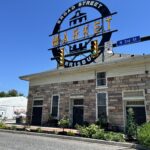
The Broad Street Market.

The Broad Street Market.

The Broad Street Market board of directors has elected Joshua Kesler, a local developer who most recently opened the Millworks farm-to-table restaurant in Midtown, as its new president, the market manager said Monday.

Kesler, 39, took over at the beginning of this month for Jonathan Bowser, who announced his resignation in May. Kesler was elected at the board’s June meeting and agreed to succeed Bowser for a two-year term, said interim market manager Ashlee Dugan.

The announcement comes on the heels of the release last week of a 13-page report by the Broad Street Market task force, which was appointed in early 2014 by Mayor Eric Papenfuse to examine the market’s operations.

Among other things, the report urged the market to shed its current management structure, which involves a private corporation owned by the non-profit Historic Harrisburg Association, in favor of a single, independent non-profit that might be better positioned to solicit grants and donations.

A market press release cited this recommendation Monday, saying that Kesler planned to oversee the transition to non-profit status during his term.

Kesler, who once described himself for a story in this magazine as a “serial risk-taker,” has been active in a number of Harrisburg ventures in recent years.

He was a founding partner of Savannah’s on Hanna, a club off South Cameron Street that opened in 2009, but is no longer involved. Earlier this year, he completed the renovation of the Millworks building next door to the market into a farm-to-table restaurant adjoined by a suite of artists’ studios.

He was also a co-founder, along with Dugan and Julia James, of the Broad Street Market Alliance, which called for the market to revise its structure and improve its offerings in the fall of 2013.

James and Kesler are now two of seven members on the market board, which is looking to fill two vacancies, Dugan said. In addition to Bowser, board member Bret Kiesling gave up his seat at the start of July.

Continue Reading

TheBurg Podcast, July 10, 2015

Welcome to TheBurg Podcast, a weekly roundup of news in and around Harrisburg.

July 10, 2015: This week, Larry and Paul talk about a task force report on the Broad Street Market, some new regulations on mobile food vendors, the latest tools in the city’s fight against blight and a new chief recovery officer for the Harrisburg School District.

Special thanks to Paul Cooley, who wrote our theme music. Check out his podcast, the PRC Show, on SoundCloud or in the iTunes store.

TheBurg Podcast can be downloaded by clicking on the date above or by visiting the iTunes store. You can also access the podcast via its host page.

Continue Reading

Task Force Releases Report on Broad Street Market

BSMInterior

The interior of the brick building at the historic Broad Street Market in Harrisburg.


The Broad Street Market Task Force last night released a long-anticipated report on how to improve the condition, the management and the overall operations of the historic Midtown market.

Reading from the task force report, Chairwoman Jackie Parker told Harrisburg City Council that the market’s two buildings are in decent condition, but that they will require “large capital investments” over the next decade. In particular, gutters, downspouts, ventilation systems, fire suppression systems, plumbing and electrical systems are “functional yet antiquated,” she said.

More immediately, the report strongly recommended changing the market’s management structure.

Currently, the Broad Street Market Corp. operates the market, with the Historic Harrisburg Association as its sole shareholder. The task force advised separating from HHA and transitioning to a new nonprofit entity, which could better pursue grants and other funding.

“It would be a newly established nonprofit that is dedicated to full-time fundraising for the market,” said Harrisburg Mayor Eric Papenfuse, who announced the 10-member task force early last year as one of his first acts as mayor.

The transition to a nonprofit could take the better part of two years, said Parker, who also is director of the city’s Department of Community and Economic Development.

Under the new structure, the market’s two buildings would remain owned by the city, but ongoing repair and maintenance would shift to the nonprofit, which would be overseen by a board of directors composed of market stakeholders and volunteers from the community.

The report also praised the market’s “current management,” including market Manager Ashlee Dugan for “adequately recruiting new vendors, retaining current vendors in good standing and maintaining the facilities.”

Parker said that vendor capacity in the circa-1878 brick building was at 90 percent with the addition of several new prepared food businesses in recent months, including Elementary Coffee Co., Soul Burrito and the just-opened Evanilla doughnut stand.

Infrastructure problems have made vendor recruitment more difficult in the old stone building, according to the report, which calculated occupancy there at 40 percent. Market manager Ashlee Dugan, however, later said that figure was incorrect and that eight out of 12 stalls were currently filled.

The task force report, however, also had its detractors, who aired their concerns during the public portion of the council meeting.

Sylvia Rigal, a task force member, said she had been asked to attend in support of the report but instead came to tell council she was “appalled” by its conclusions. She said she was surprised to see the report presented now, since it was her impression the task force had been disbanded months ago.

“I’m a lifelong resident, and the market is dear to my heart,” she said, warning council members to “be careful” implementing any recommendations.

Parker said that, indeed, the task force had been disbanded, but the report was being discussed publicly now because it took while to get on the council’s meeting agenda.

Mary Hess, a former market vendor, said she was dismayed to learn the report’s recommended changes would preserve the corporate board currently managing the market, albeit in a new, nonprofit form.

“This constant recycling of these two entities has poisoned the market,” she said, referring to the market board and HHA. “Thank you to the task force, but you’ve reached the wrong conclusion.”

After the meeting, Papenfuse said that the nonprofit, after separating from HHA, would have new membership from the current market board.

The task force report recommended a number of other improvements to the operations of the market, including free WiFi, greater recycling efforts, extended hours, a greater diversity of food options, a marketing budget for the market and better litter management.

The report also disclosed the results of a poll conducted last year during a public meeting at the market. In that poll, residents suggested that the market should focus on food items, on extended hours and on serving the needs of people throughout the greater Harrisburg area.

This story has been updated with information from the Broad Street Market manager about correct occupancy figures in the stone building.


Continue Reading

State Names New Recovery Officer for Harrisburg Schools

Cougar Academy, an online school within the Harrisburg school district that has been expanded under the state's recovery plan.

Cougar Academy, an online school within the Harrisburg school district that has been expanded under the state’s recovery plan.

The Pennsylvania education secretary today appointed Dr. Audrey Utley, a Middletown native and a former acting Harrisburg superintendent, to oversee the Harrisburg school district’s state recovery plan.

Utley replaces Gene Veno, a Harrisburg-based consultant and lobbyist and the district’s first recovery officer, who announced his resignation in May.

Utley, who the education department said has worked in schools for more than 40 years, taught elementary school in the Steelton-Highspire school district and went on to serve as a superintendent in both Middletown and Steelton-Highspire.

She led the education transition team of former Harrisburg Mayor Linda Thompson after Thompson’s election in 2009, the Patriot-News reported.

Utley later served briefly as Harrisburg’s acting superintendent in 2010, in the midst of a power struggle between the city’s elected school board and a mayor-appointed board of control whose authority was set to expire that year.

“In addition to Dr. Utley’s experience as a superintendent, she also comes to this position with firsthand knowledge of the unique issues that fiscally distressed school districts face due to her time working to improve other struggling schools,” state education secretary Pedro Rivera said in a prepared statement Monday.

He went on, “I have complete confidence that under Dr. Utley’s guidance, the Harrisburg School District will continue on the path toward financial stability, which will allow the district’s leadership team and educators to focus on the goal of ensuring every student graduates college- and career-ready.”

The state appointed Veno as the district’s first recovery officer in December 2012, after declaring the district fiscally distressed under a law passed earlier that year.

Veno’s recovery plan, approved by the state in May 2013, described a district in rapid decline, with test scores significantly below state and county averages and budget deficits that threatened to put it out of business within a few years.

The plan set new targets for academic performance, sought to expand Harrisburg’s in-house options for online education, and called for two years of pay cuts followed by a wage freeze, among other recommendations.

Many proposals were controversial, and though Veno’s plan is generally viewed as having stabilized district finances, Veno himself has faced no shortage of opposition, particularly from critics who believe he has done little to improve academics.

In early 2014, Mayor Eric Papenfuse asked the state to replace Veno following a meeting in which he allegedly told the mayor he believed his plan was unlikely to succeed, a claim Veno subsequently disputed.

By some measures school performance has worsened since the plan was enacted, with state test results last November showing Harrisburg schools had universally failed to meet the plan’s academic goals by substantial margins.

“It was time,” Veno said on May 8 in reference to his resignation earlier that day, noting that he was leaving the district in a “good financial position” from which it could focus on academic improvement.

Continue Reading

TheBurg Podcast, July 3, 2015

Welcome to TheBurg Podcast, a weekly roundup of news in and around Harrisburg.

July 3, 2015: In this week’s rockets’-red-glare edition of the podcast, Larry and Paul talk about a bad budget forecast stemming from parking problems, a City Island vendor who hasn’t been paying his rent, and a firework-style scattering of updates about the grand jury investigation into Harrisburg finances and the city’s July 4 celebrations.

Special thanks to Paul Cooley, who wrote our theme music. Check out his podcast, the PRC Show, on SoundCloud or in the iTunes store.

TheBurg Podcast can be downloaded by clicking on the date above or by visiting the iTunes store. You can also access the podcast via its host page.

Continue Reading

As Harrisburg Parking Fines Back Up, A Budget Falls Out of Balance

Mayor Eric Papenfuse, holding scissors, at a ribbon-cutting for Pango mobile parking app last year. (File photo.)

Mayor Eric Papenfuse, holding scissors, at a ribbon-cutting for Pango mobile parking app last year. (File photo.)

Last January, as Harrisburg made its final budget tallies for 2014, Mayor Eric Papenfuse pointed proudly to a major achievement of his first year—a budget so tightly managed that the city, so recently on the brink of bankruptcy, had paid nearly all its bills and still had $5 million in the bank to spare.

He achieved the surplus by spending millions less than authorized in the budget, a feat he is on track to repeat this year, with the latest projections showing the city is on target to spend $57.5 million out of a budgeted $59.5 million.

The same projections, however, show that a balanced budget may elude him. The reason, as reported in a court filing this week by the state coordinator of the city’s recovery, can be summed up in one word: parking.

Revenue from parking is down by an estimated $1.4 million, wrote Fred Reddig, the city’s coordinator under the state program for distressed municipalities, in a July 1 report to the Commonwealth Court judge overseeing the recovery process.

In particular, revenue from tickets is down due to a backlog in the courts. As of early May, there were around 20,000 unpaid tickets outstanding, Reddig wrote. Each month produces about 1,400 new delinquent tickets, but in the same period the sole district justice appointed to process them can only move through 250.

The result has been a steep departure from projected revenues that has in turn cut off the flow of money to the city, which is entitled to receive certain payments from the parking system under a 40-year lease signed in late 2013.

Over the year, the city is supposed to receive $2.5 million in these so-called “waterfall” payments, but it has so far only received a few hundred thousand dollars. In short, the parking revenues are “way, way, way off,” Papenfuse said.

And the consequence for city finances is that Harrisburg is now poised to end the year with a deficit of around $1 million, despite the continued penny-pinching.

“The budget is over-performing in all other areas, in terms of controlling expenses,” Papenfuse said. “The deficit is entirely due to shortfalls in parking.”

A remaining question is the cause of the ticket backlog, a point over which the mayor’s office and the state coordinator sharply diverge.

Reddig, in his report, pins the slowdown partly on the city’s own failure to pass a required parking ordinance in 2014, the year to which three-fourths of the backlogged tickets can be attributed.

Papenfuse dismisses this explanation, however, saying the ordinances have nothing to do with this year’s projected revenues. Instead, he points to the inadequate court processing and says he would like more help from the state.

“The city is doing everything in its power,” he said.

Nonetheless, both the mayor and the coordinator agree that the city is still on the track towards recovery. The city is current on its debt payments, Reddig wrote, and “would be able to weather an operating deficit of $1 million this year.”

Aside from the decline in parking revenues, “we’re feeling pretty good,” Papenfuse said. And the city should eventually get the money it’s owed. The question is when.

Continue Reading

Probe Into Harrisburg Finances Extended

Investigators removing artifacts from the Midtown home of former Mayor Stephen Reed in early June. (File photo.)

Investigators removing artifacts from the Midtown home of former Mayor Stephen Reed in early June. (File photo.)

A statewide grand jury probe into Harrisburg’s debt crisis has been extended another six months to late January 2016, a court administrator confirmed this week.

James Koval, of the Administrative Office of Pennsylvania Courts, said the state Supreme Court approved the extension on May 26, after a majority of the jurors voted to request the additional time.

The grand jury has been meeting in Pittsburgh under supervising Judge Norman A. Krumenaker III of Cambria County, with an 18-month term originally set to expire in late July. The extension means it will now last up to 24 months, the maximum length allowable for grand juries, Koval said.

The grand jury is reportedly probing the financial crisis that bloomed under former Mayor Stephen Reed, focusing particularly on a set of risky borrowings related to the city incinerator but including other areas of governance during his 28-year reign.

The extension was previously reported by WITF news.

Grand juries are protected by secrecy rules, but there have been occasional hints about the probe’s scope and progress.

Attorney General Kathleen Kane, whose office is spearheading the probe, said during a Senate committee hearing in March that she hoped it was nearing a conclusion but that “no stone will be left unturned.”

Mayor Eric Papenfuse acknowledged testifying before the jury in 2014, but he said Tuesday he is now under a judicial gag order and cannot comment on his testimony.

Bill Cluck, a board member of what was formerly the Harrisburg Authority, which borrowed to retrofit the incinerator in 2003 and 2007, has also said he testified.

The Patriot-News published photographs in April of past city officials arriving in Pittsburgh, either to testify or to meet with prosecutors.

Among those identified were former city controller James McCarthy, Daniel Lispi, a project manager of the incinerator retrofit, and Reed himself.

TheBurg also reported that month that records of a $33,000 reimbursement paid to Reed in 2003 for artifacts he ostensibly bought for city archives were among the materials presented to jurors.

Just last month, investigators raided Reed’s Midtown home, carrying out boxes and various Western-style artifacts, including saddles, barrels and a stuffed coyote.

Reed later told reporters that everything removed was his personal property.

Continue Reading

Mayor, PennDOT: No Meeting on Front Street Trees

One of four trees slated for removal. A freshly installed pedestrian ramp is visible in the background.

One of four trees slated for removal. A freshly installed pedestrian ramp is visible in the background.

Four trees in the way of planned pedestrian ramps on Front Street are not as old as previously thought and should come down without further public discussion, city officials said this week.

The trees, located in Riverfront Park at the intersections with Radnor and Emerald streets, are slated for removal as part of a PennDOT resurfacing project currently underway between Forster and Division.

A state historic preservation office urged the city and PennDOT last week to hold a public meeting to discuss the removal, noting the trees were in a historic district and possibly planted as part of the early-20th-century City Beautiful movement.

Doug McLearen, of the Pennsylvania Historical and Museum Commission, wrote on June 23 that his office “strongly suggests that PennDOT solicit and consider stakeholder comments and provide an open public meeting to discuss the project and its potential to affect historic resources.”

TheBurg previously reported that three of the trees were likely American elms dating to 1919, while a fourth was a Chinese elm or maple from the post-Depression era, relying on information from PennDOT project findings.

But Erik Josephson, who was hired this year as the city’s arborist, said at least three of the trees were actually Zelkovas planted between 40 and 50 years ago to replace elms that were likely wiped out by Dutch elm disease in the 1960s.

Harrisburg Mayor Eric Papenfuse said Tuesday that in lieu of a meeting about the removal, the city would be holding a public meeting Aug. 24 to solicit input on a multi-year replanting plan.

“PennDOT has indicated to the city that there will be no public meeting before the trees are taken down,” Papenfuse wrote in a message. “The city agrees that a better use of time and energies would be to create a positive, community-supported tree replanting plan for Front Street and Riverfront Park.”

Greg Penny, a spokesman for PennDOT District 8, confirmed Wednesday there would be no public meeting and that his agency planned to go forward with removal, which he said was not only necessary for the installation of wheelchair-accessible ramps but also to improve sight lines for people crossing the street.

Penny also said the pink “X” marks visible on some trees along the road had not been painted by PennDOT, but rather appeared to be a “stunt of some sort.” “It’s just an assumption on my part, but I think it was done to cause some alarm,” he said.

Jean Cutler, a former historic preservationist at the Pennsylvania Historical and Museum Commission and one of a group of citizens concerned about the tree removal, petitioned PennDOT again on Wednesday to hold a meeting.

“Their loss will mean a great change to the sense of place they help to create along Front Street,” Cutler wrote of the trees. “Harrisburg has lost many of its important resources over the last number of years and healthy trees should not be among them.”

Continue Reading