What’s Old Is New: At PassItOn, consigned goods aren’t just used, but a “cycle of life.”

Screenshot 2015-10-30 12.33.15This holiday season, you could break the bank shopping the boutiques and luxury stores for just the right item for mom, sis or even yourself.

But the thing is—you don’t have to.

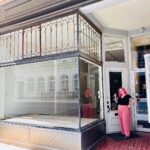
The Harrisburg area is replete with consigned goods stores, and none may have quite the eclectic selection of home décor (and an assortment of other items) as PassItOn Consignment in Lower Allen Township.

“October 1st starts our Christmas consignments,” said owner Antoinette “Toni” Miller. “We’re like Kathy’s Christmas on steroids. We get really nice, high-end pieces.”

Looking for a personal gift? Check out PassItOn’s like-new collection of glittering costume jewelry, stylish purses and other accessories. How about a quilted Vera Bradley purse for $30, around half of its regular retail price?

A large battery-operated pillar candle for only $2.50?

Then there’s the marble-top cocktail table consigned from the Hilton Harrisburg and a Pennsylvania House wooden dining set comprising six chairs, a table and a hutch.

I could go on and on.

It’s no wonder that PassItOn was selected as a Reader’s Choice in the “Consignment Shops— Furniture” category of Harrisburg Magazine’s 2015 Reader’s Poll.

Miller sells consigned merchandise for a total 60 days. After 20 days on the shelf, an item’s price is reduced by 20 percent. After 40 days, the price is reduced by a total of 50 percent. Meanwhile, consigners reap 50 percent of their item’s final selling price.

Items not sold within 60 days are either returned to consigners or donated to various local charities with consigners’ approval. Some household merchandise is donated to Operation Wildcat, an organization comprising Mechanicsburg Area School District PTOs and Parent Advisory Committee members that pools community resources to assist local students and families in need.

Other goods are donated to New Digs Ministry, Inc., of Mechanicsburg, a volunteer organization helping people rebuild their lives. Another beneficiary of PassItOn’s unsold merchandise is New Bloomfield United Methodist Church, which runs a program that provides holiday presents for disadvantaged families.

PassItOn also has donated unsold women’s accessories to Dress For Success South Central PA, a local branch of the worldwide non-profit organization that provides clothing, accessories and an overall confidence boost for low-income women seeking employment.


Community Outreach

PassItOn first opened in 2007 in a 1,000-square-foot storefront on the Carlisle Pike in Hampden Township. Until then, Miller had worked as a real estate settlement closer.

“I was working so hard all the time, and I felt that I wanted to do something for myself and my family,” she said.

Indeed, PassItOn has turned into a family affair. Miller’s grown daughter, Ashley Sweigart, works at the store full-time, while her husband, Duane Dagen, does merchandise pickups and deliveries on weekends.

Before running PassItOn, Miller said she’d “never set foot in a consignment shop, so I didn’t understand the whole concept at first.” However, she loves home decorating and previously worked in sales, so she figured she could do it. Miller noted that she’s “always been people-oriented” and maintains an overall positive outlook about things.

It didn’t take long for PassItOn to become a hit, maintaining regular customers while attracting new ones. In 2009, the store moved to its current, 5,000-square-foot location at the Lower Allen Shopping Center. It’s five times bigger than the original PassItOn, but there’s plenty of inventory to fill the floor.

Today, Miller sees her business as a community outreach of sorts.

“There are so many avenues for helping people with this recycling (of merchandise),” she noted. “It’s good for the environment, too, because with repurposing, less stuff winds up in landfills.”

What makes PassItOn different from other consignment shops is “a flair for staging merchandise and a compassion and passion for working with families,” said Miller.

“We help families who lost their parents and are breaking up their homes,” she explained. “We help people who are going into assisted living and need to get rid of things.”

Other goods originate from senior citizens who move out of the state, their old things bought by young people who are moving into new—often their first—homes.

“It’s a neat cycle of life,” Miller said.

PassItOn Consignment of Home Décor is located at 2202 Gettysburg Rd. in the Lower Allen Shopping Center. For more information, call 717-730-4663 or visit www.passitonconsignment.com.

Continue Reading

October News Digest


Funding Dispute Hits SAM
 
A battle over state funds has pitted a bank against a local construction firm and put in question the future of the newly opened Susquehanna Art Museum.

Last month, the Dauphin County Industrial Development Authority asked the Commonwealth Court to intervene in a dispute between the Harrisburg-based JEM Group and Fulton Bank, which both are laying claim to $1.2 million of a state Redevelopment Assistance Capital Program grant.

JEM, the project’s general contractor, states that it is owed the money as part of its construction fee and cannot pay its subcontractors without it. Fulton put a claim on the money after SAM failed in March to repay half of a $3 million loan.

At press time, negotiations between the parties had opened, but no resolution had been reached.

SAM opened its new, 20,000-square-foot facility in Midtown Harrisburg last January to great fanfare. However, museum officials since have said they have not been able to meet ambitious fundraising goals.

Leaf Collection Changed

Harrisburg is changing its leaf-collecting procedure this year, asking residents to use compostable paper bags for leaf collecting and disposal.

Moreover, the city is urging residents not to rake leaves into the street, which has been a common practice for many years.

“We are asking Harrisburg residents to cooperate with our Public Works employees this fall to help the city efficiently manage leaf collections,” said Mayor Eric Papenfuse. “We strongly encourage residents not to blow leaves into the street, but to put them in brown paper bags that workers can take to the Swatara Township composting site.”

The administration said that the city has a “limited number” of large brown bags available to residents for free. They can be picked up at the Public Works Center at 1820 Paxton St. during regular work hours from 7:30 a.m. to 4 p.m. Otherwise, residents will need to buy the bags, which can be purchased at many stores, including hardware and home improvement stores.

After collecting the leaves, residents should leave the bags on curbs for collection during street cleaning days. Plastic bags will be not accepted.

Bridge Rehab Work Approved
 
The Harrisburg City Council last month agreed to enter into an agreement with a civil engineering company to provide pre-construction services for two city bridges.

Council unanimously agreed to hire Herbert, Rowland & Grubic at a cost not to exceed $77,700 for design, engineering, permitting and other services for the bridge that carries Market Street over Paxton Creek and the bridge that carries Sycamore Street over the railroad tracks.

According to the city, inspections have revealed “deteriorating conditions” on both bridges.

City Engineer Wayne Martin said that the administration had not yet agreed on a funding source for the actual construction work, but may use a portion of the state liquid fuels tax, which is provided to municipalities for roadway maintenance and construction.

PHFA Expansion Weighed

The Harrisburg City Council last month began consideration of a proposal to add about 35,800 square feet of office space to the riverfront headquarters of the Pennsylvania Housing Finance Agency (PHFA).

PHFA’s plan includes construction of a 120-foot tall office tower in a surface parking lot at the rear of the agency’s current, eight-story building at 211 N. Front St.

The project also would raze a mid-20th century addition to the historic Hickok Mansion, located at the corner of Locust and Front streets and also owned by PHFA.

The plan previously had been approved by both the city Planning Commission and the Zoning Hearing Board.

PHFA has been trying to expand its decade-old headquarters for the past several years.

To do so, it first proposed razing the Hickok Mansion, and, after that met with public opposition, proposed knocking down two 19th-century houses on Locust Street. The final plan preserves both the original mansion and the two houses.

Donor Names Sought

An attorney in a legal battle with Harrisburg over its gun laws plans to appeal a ruling in the city’s favor over the privacy of donors to a legal defense fund, according to court filings.

Joshua Prince, of the Berks County-based Prince Law Offices, requested court transcripts for an appeal after Dauphin County Judge Andrew Dowling ruled the donors’ names could be kept private.

Prince is representing a gun-rights membership organization in a separate lawsuit against Harrisburg over its firearms ordinances. He sought documents, including donors’ names and addresses, in an open records request last February.

The city provided a list with the names and addresses redacted. Prince appealed to the state open records office, which ordered the city to release the full record.
Dowling, however, agreed with the city on appeal that the identity of donors is exempt under state open records law. He also sided with the city in finding it had provided records sufficient to meet other parts of Prince’s request.

Harrisburg set up its legal defense fund earlier this year after two groups sued the city over its ordinances regulating the use and ownership of firearms.

 
So Noted

Char’s Tracy Mansion is up for sale as owner Char Magaro last month announced her intention to retire and sell her Front Street restaurant. Magaro said that she had hired Lancaster-based Strategic Endeavors to manage the sale of the fine-dining restaurant, which she opened about three years ago after closing her original bistro in Shipoke. Magaro said she wanted to spend more time with her grandchildren and in her role as vice chair of the environmental group, Citizens for Pennsylvania’s Future.

Mulligan’s Pub has a new name and look after a redesign of the downtown Harrisburg bar. The interior of the renamed Mulligan’s Café and Courtyard has been divided in two, with the front area dominated by a large bar and the back area featuring an interior courtyard, which primarily serves as a restaurant. Mulligan’s, located at 17 N. 2nd St., is one of four Harrisburg establishments owned by Kamionka Entertainment Group.

Danielle Bowers has been named to the Harrisburg Zoning Hearing Board. The City Council last month unanimously made the appointment, with a term that expires in July 2018. Bowers is a research analyst for the Tourism and Recreational Development Committee of the state House of Representatives and holds a master’s degree in public administration from Penn State.

Changing Hands

Adrian St., 2433: Harrisburg Rentals LLC to C. Austin, $64,000

Calder St., 102: C. McCormack to K. Goodling & K. Shepherd, $149,900

Croyden Rd., 2871: J. Staniszewski to G. Dennis & S. Campbell, $60,000

Derry St., 2060: KSAG LLC to S. & M. Mejia, $140,000

Duke St., 2610: Residential Mortgage Loan Trust 2013 TT2 to M. & M. Kaif, $67,500

Graham St., 610: W. Taylor & S. London to Cment Enterprises LLC, $33,000

Green St., 802: K. Sheets to P. Rosen, $199,900

Green St., 1525: Mid Penn Bank to C. & S. Bikle, $35,000

Green St., 1704: L. Stevens to B. & C. Hansen, $199,900

Green St., 2006: Becodi Associates to B. Colucci, $129,900

Green St., 2915: J. & S. Kelly to K. Manderino, $211,000

Green St., 2932: J.A. Hartzler to B. & A. Smith, $330,900

Herr St., 403: S. Hankins to C. Kotlarski, $104,900

Herr St., 850 & 900: Acquired Capital I LP to Cameron Street Investments, $281,000

Kensington St., 2232: Harrisburg Rentals LLC to C. Austin, $62,000

Market St., 1849: Acquired Capital I LP to Nish Properties LLC, $40,000

Market St., 1927: J. Santiago to K. & E. High, $88,000

Midland Rd., 2408: H. McFarland to J. Jaxheimer, $40,000

N. 2nd St., 306: G. Dobrinoff to NJR Group LLC, $120,000

N. 2nd St., 1509: Flores Prado Real Estate Inc. to J. Tang, $42,000

N. 2nd St., 1517: W. Oliver to N. Shamatutu & K. Kelly, $203,550

N. 2nd St., 1605: NR Group LLC to T. Wylie, $269,000

N. 2nd St., 2531: M. & H. Hope to S. Mirza & F. Jabari, $60,000

N. 3rd St., 916, 918, 920 & 922: EFA Co. LLC & Mosaica Education to Third Street Partners LLC, $900,000

N. 3rd St., 1312: 1312 North 3rd Street LLC to Qui Zhen LLC, $250,000

N. 3rd St., 3215: R. & P. Alexander to L. Grandstaff II, $169,900

N. 4th St., 1619: GWD Capitol Heights LP to C. Hippensteel, $104,900

N. 4th St., 1701: J. & B. Sadlier to R. Steinmetz III, $115,000

N. 4th St., 2709: B. Siddons to T. Landis, $103,000

N. 7th St., 1943, 1945 & 1947: P. Dobson to Shentel Communications LLC, $65,250

N. 7th St., 2926 & 2940: Casim Inc. to Seventh Street Real Estate Holdings LLC, $224,000

Peffer St., 264: M. Linksie to J. Stimple, $105,000

Pennwood Rd., 3203: PA Deals LLC to Heller Investments LLC, $106,000

Radnor St., 127: E. Poling to A. Mentzer & S. Jones, $229,500

Shellis St., 2102: A. Bos to T. Thanasakrungruang, $53,250

S. 12th St., 1517: Joy Ark Builders Inc. to A. Early, $51,000

S. 13th St., 216 & 228: B. Santago to Keystone Community Development Corp., $35,000

S. 15th St., 226, 228, 232, 234 & 1430, 1436, 1438, 1440, 1442, 1444 Derry St.: T. Koutsokostas to Willow LLC, $120,000

S. 18th St., 1218: S. & M. Mavric to J. Johnson, $99,999

S. 20th St., 1226: R. & G. MacWhinnie to W. & M. Branche, $132,000

S. 26th St., 601: M. Brown & S. Anderson to D. Aye, $74,000

S. 26th St., 605: US Bank NA Trustee to L. Mosley, $38,000

S. Cameron St., 1119: Statewide Enterprises LLC to Paradise Pizzeria & Coffee Shop LLC, $575,000

S. Front St., 317: M. Homa to A. & K. Thornton, $119,000

S. Front St., 587: D. & W. Weigle to M. Robert, $114,000

Susquehanna St., 1703: S. Everett to R. Taylor, $103,000

Valley Rd., 205: C. Best to K. Stewart, $155,000

Vernon St., 1413: E. & A. Castillo to T. Sweet, $75,000

Walnut St., 407-409: J. & C. Bowen to M. Kurnig, $225,000

Harrisburg property sales for September 2015, greater than $30,000. Source: Dauphin County. Data is assumed to be accurate.


Continue Reading

Their Voices Will Be Heard: A story of courageous women unfolds in “Suffragette.”

Screenshot 2015-10-30 12.37.40“Deeds, not words.”

This is a mantra that is heartily repeated throughout “Suffragette,” the passionate account of the foot soldiers of the feminist movement in the 1920s.

Penned by Abi Morgan (“Shame,” “The Iron Lady”) and directed by Sarah Gavron, the film follows Maud Watts (Carey Mulligan), a woman who works in the laundries in London to make ends meet. But it is not easy to work in grueling conditions that reap low wages and often cut the women’s lives short—a life into which she was born, and to which any future daughter that she may have would be doomed.

But when Maud gets caught amidst a protest involving women—including her coworker, Violet (Anne-Marie Duff)—throwing rocks at windows and screaming, “Vote for women!” she sees hope in the future. Maud begins asking questions about the movement with Violet at work and with her son’s doctor, Edith Ellyn (Helena Bonham Carter), slowly inching herself toward civil disobedience, until finally she is asked to give her testimony for a trial that the suffragettes hope will bring about their right to vote.

Meanwhile, there are rumors that the leader of the movement, Emmeline Pankhurst (Meryl Streep) will come out of hiding to rally up the women in their cause. Inspector Arthur Steed (Brendan Gleeson) has been assigned to track down a list of suffragettes in order to get to Pankhurst—and Maud is included in that list. Though she initially insists that she is not a suffragette, eventually she finds herself taken by the undertow and embracing the cause, as the pieces of her life that she holds dearest begin to fall away.

It is a moving, gritty film, virtually bleeding human spirit. Here, we see a group of women whose situation has become so dire that they only see escape—and in effect, forward movement—in the form of violence. This includes a theme of sacrifice, illustrated by the story of Emily Wilding Davison (Natalie Press), the woman who literally gave her life for women’s voices to be heard.

It is not surprising that cast members throw themselves so earnestly into their roles, and what amazing performances we see from all of them. Mulligan is, as usual, raw and emotive; Duff and Carter also deserve high accolades. And, in a film where the women are not dolled up to fit today’s societal standards, value is found in the blatant reality that these women bring to the unfolding scenes. In fact, the majority of the cast matches the energy brought on by its leading ladies, though, surprisingly enough, Streep’s role as Pankhurst felt a bit disjointed. One can see the parallels of the widely acknowledged queen of theater playing the leader of the suffragette movement, but, beyond that, the role felt like it was thrown in.

“Suffragette” speaks of an era that flaunted inequality to an era that still maintains that same struggle. It is a vivid depiction of the continuing fight for equality, a film that you won’t want to miss. Coming soon to the Midtown Cinema!

MIDTOWN CINEMA
NOVEMBER EVENTS

“Oklahoma”
Nov. 1, 6pm

Gamut Theatre Presents:
Digital Theatre Series
“Hamlet”
Sunday, Nov. 1, 4pm
Sunday, Nov. 8, 4pm

“Henry V”
Sunday, Nov. 22, 4pm
Sunday, Nov. 24, 7pm
 
Midnight Matinee
“The Dark Knight”
Saturday, Nov. 7, 11:55pm

Classic Film Series
“Casablanca”
Sunday, Nov. 8, 6pm

Down in Front!
“Showgirls”
Friday, Nov. 13, 9:30pm

3rd in the Burg
“Blade Runner: The Final Cut”
Friday, Nov. 20, 9:30pm

Faulkner Honda Family Film Series
“The Iron Giant”
Saturday, Nov. 21, 12pm
Sunday, Nov. 22, 2pm


Continue Reading

Student Scribes: “Walking with Ghosts: Reflecting on Autism”

Every year, I take a walk that I loathe taking. It entails coming face to face with some of my most painful emotional scars. I stand on my doorstep and take a deep breath. My legs push off, and I end up on the next step and the next after.

I pass my car, a silver Nissan Versa, and my keys jingle. That’s when I see my first ghost.

I see myself as a boy with red hair, talking with his father, a man in his late 30s in a black leather jacket. They walk 10 feet or so in front of me, trading stories. I can hear my excited, young voice.

“First, we were talking about ‘Air Bud: Golden Receiver,’ then we talked about your work, now we’re talking about school. The things we discuss while walking to school, huh!”

We pass through a neighborhood of white picket fences and incessantly barking dogs. As we get closer to our destination, the air seems to thicken. Every step feels heavier than the last. I find myself leading with the point of my foot, stabbing the ground to keep moving.

Part of the reason this journey is as hard as it is for me comes from what it represents. Before I started as a student at Lawnton Elementary, none of the faculty (or the students for that matter) had any idea what autism was. Over the course of the next several years, I would witness the best and the worst of the human race: compassion and an eagerness to do what’s right, and cruelty in the most seemingly innocent of gestures.

Since I’d been walking so slowly, the ghosts got ahead of me. By the time I catch up, they’re standing by the entrance. Exchanging warm smiles, they fold their middle and ring fingers into their palms while extending index, pinky and thumb—sign language for “I love you.”

“Be good,” the father says. He watches his son disappear into the school, then turns and crosses my path. He keeps his smile but continues walking, vanishing at the stop sign.

The lobby of the school is almost empty, with only a few older people wandering the halls, observing the students’ artwork. I recognize none of them (probably a good thing) but the sound of a door to a nearby conference room shutting triggers my next memory.

After several principals had come and gone, the one who took over for the remainder of my elementary school days did not believe autistic students had any business in a public school. Every time I found myself in the most minimal of trouble, he would leave my parents a message suggesting stricter discipline instead of getting to the root of my problems.

In one of my worst memories, I’m sitting in a chilly room devouring a cold lunch while other students peer through the window slit. Eventually, I stand up and—“The Count of Monte Cristo” having made an everlasting impression on me—start to pace around the room, shouting “God will give me justice!” I make it to my third declaration before I notice the principal at the door, his eyes burning with rage.

“What do you think you’re doing?! Sit down and shut up!” he roars. I freeze in place and see him stomp towards me—and then the memory stops, and I’m in the present again, looking through the window at the empty room. My fist has stopped just moments before colliding with the door. I sigh and lean against the wall. “I’m sorry, kid,” I say quietly.

My journey takes me through the lobby, where I’m visited by another memory—myself as a boy again, sitting on a bench. He unzips a giant pack and pulls out a copy of “The Hobbit.” Occasionally, his eyes dart to his right, and he nods to himself, seeming to know what got him there.

The end is in sight. From where I stand, I can see the painted silhouettes of athletes on the gym wall. The only problem is that, to get there, I have to pass by my fifth-grade classroom.

As I draw closer, I notice it still has the same decorations. All of the supplies are stored in the back of the room, including a paper trimmer. The hopeful and optimistic child from the start of my journey is there, but now he’s a depressed, self-destructive pariah. His peers joke about him behind his back and coat his textbooks in gibberish with their pencils.

At the end of another miserable day, he gets out of his seat and walks over to the paper trimmer. The teacher forbade students from using it because of its sharpness. Putting his hand on the handle, he moves it up and down, testing its movement. His eyes shoot to his right hand before his teacher can make out what he’s doing. “Justin, get away from that!” she screams. She tears his hand from the handle and escorts him down the hallway.

As he passes me, I remember his confusion—his longing to be noticed, and the endless, futile attempts in the days that followed to convince people he didn’t want to slice his hand off. If there’s a hell, that kid was in it for the rest of the school year. As the teacher marches them down the hallway, they disappear.

Somehow, in spite of the painful memories, I arrive at the gym. There are tables all across one side, with attendants checking the names of people who will cast their votes in the machines in the center of the room. Eventually I find my section.

“Name, please?” the attendant asks.

Despite being at the end of this journey, my mind is still processing every memory. Half of me is in the present while the other is very much in the past.

“Name?” she asks again, snapping me back to reality.

“Justin Miller,” I say, giving her my driver’s license.

“Long day?” she asks.

“You could say that.”

She hands back my driver’s license and tells me to head for the machine in the middle. At the moment, I’m fourth in line. Watching the other voters cast their ballots, I notice that as they disappear through the back, bright light briefly spills into the room.

That light makes me experience one final memory, not from Lawnton, but from my house years later, as I hold my bachelor’s degree in my hands. I want to make photocopies and send them in spite to everyone who thought I would amount to nothing. I ask my mom if I should do it. She brings her hand down on the document.

“No, this isn’t good enough for them,” she said. “Send them your Emmy when your TV concept becomes a hit, send them your Oscar when you write the next great motion picture. But don’t you dare make them settle for only this.”

The election official calls my name, and I go under the curtain. After a vicious struggle, the final few steps become painless. I cast my vote and disappear out the back, humming the refrain of Steely Dan’s “My Old School”: “And I’m never going back to my old school.” At least, not until the next election.

 
Justin Marc Miller is a graduate student in communications at Penn State Harrisburg.

Continue Reading

Musical Notes: A Month for Tradition

In November, a number of critically acclaimed traditional musical acts will make their way through Harrisburg.

Considering the season, I think the timing is good. In November, we celebrate the last bounty of the harvest and more traditional ways of life. It represents the last month before winter hibernation begins. Something about the plucking of a harp or the picking of a banjo just seems right. So, before you hole up for the colder months, take an evening and celebrate autumn with one of these old-fashioned folk ensembles.

MÁIRE NÍ CHATHASAIGH & CHRIS NEWMAN, 11/1, FORT HUNTER CENTENNIAL BARN, $10/$20: Máire is an award-winning, traditional Irish harpist. Chris is an award-winning guitar virtuoso. Therefore, when they perform together, the traditional folk music press takes notice. Touring the world, Máire and Chris have earned praise throughout Europe, as well as from more distant locales, such as Japan and Australia. They have recorded seven albums together, including “Out of Court,” which earned the Daily Telegraph’s “Folk Album of the Year” in 1991. Performing at the Centennial Barn, one of Harrisburg’s most historical and picturesque gems, this concert is a must see for any fan of traditional Celtic folk.

CHATHAM COUNTY LINE, 11/7, H*MAC HERR STREET STAGE, $18/$20: The first of two featured bluegrass bands this month, Chatham County Line formed in Raleigh, N.C., in 1999. The band has seven albums under its belt, earning the attention of many of bluegrass’s tastemakers, including the Punch Brothers, headed by country mega-star Chris Thile. Meanwhile, the band has found some surprise success abroad, earning two Spellemannprisen, the top musical prize in Norway. The most recent album, “Tightrope,” was released in 2014 on Yep Roc Records. Fittingly titled, it strikes a careful balance between traditional arrangements and fresh approaches to bluegrass. So, whether you’re a seasoned bluegrass fan or a young person interested in some of the genre’s innovators, make sure to head to H*MAC for this exciting show.

LONESOME RIVER BAND, 11/15, 7PM, ABBEY BAR, $26/$30: Lonesome River Band wraps up this month’s slate of folk. This contemporary bluegrass ensemble has been earning accolades since it first formed in 1982. Featuring five-time IMBA Banjo Player of the Year award winner Sammy Shelor, the outfit brings a large helping of virtuosity to this time-honored American musical genre. The band released its most recent record, “Turn on a Dime,”in 2014, which, like all of its previous records, received critical acclaim. The band has jammed with the renowned banjo-playing comedian Steve Martin and has played in some of the music world’s most prestigious venues. Now, Lonesome River Band will be gracing the stage at the Abbey Bar, so don’t miss out on the privilege of seeing one of the nation’s premier bluegrass bands.

Mentionables: Screaming Females w/Potty Mouth, 11/1, H*MAC; Richard Shindell, 11/5, H*MAC; Lee Ann Womack, 11/12, Carlisle Theatre; Carly Clark, 11/14, Midtown Scholar; Zach Deputy, 11/18, Abbey Bar; The Machine, 11/25, Whitaker Center

Continue Reading

At Anniversary of Downtown Stabbing Death, Police Still Looking for Leads

Richard McQuown. (Harrisburg police.)

Richard McQuown. (Harrisburg police)

One year after the stabbing death of Richard McQuown, a state worker who was found beneath downtown Harrisburg’s Walnut Street bridge, police are once again calling attention to the open investigation in the hopes someone will come forward with new information.

“We need the public’s help at this time,” Dauphin County district attorney Ed Marsico said Thursday afternoon, adding that his office had increased the reward for a tip in the case to $5,000.

McQuown, 41, was found on the river walk on the morning of Nov. 1, 2014, having suffered multiple stab wounds. His body temperature indicated he was still alive, but he died soon after being transported to a local hospital, said Harrisburg police Capt. Gabriel Olivera.

According to police, McQuown had been out with his friends downtown the night before. Surveillance video captured him leaving MoMo’s BBQ and Grill on Market Street around 11:30 p.m., but police have not been able to determine where he went from there. Because it was a Friday night and Halloween, McQuown was quickly lost in the crowd, Olivera said.

He was next seen around 8 the next morning by a passerby, who did not initially call police because she believed he was homeless and sleeping under the bridge, police said. A second passerby came upon his body and called police around 10:30 a.m.

Police were able to track down an individual who used McQuown’s credit cards, but determined he was not involved in the death after corroborating his claim that he had found them on the ground. Detectives have had no success chasing down leads in recent months, and police said it had been some time since they had gotten any new tips or information.

Police described McQuown as a white male, 5 feet 9 inches tall, weighing between 170 and 180 pounds. He was clean shaven and wearing a navy blue Ricky Vaughn Cleveland Indians baseball jersey, a white shirt underneath and black high-top shoes when he died.

Anyone with information on the case is asked to contact Det. Richard Iachini at 717-255-3118 or Capt. Olivera at 717-255-6531. Tips can also be submitted via the Dauphin County Crime Stoppers tip line, 1-800-262-3080, or electronically at https://dauphin.crimewatchpa.com.

Continue Reading

Big Ideas: The City Council write-in candicacy of Chris Siennick.

Siennick GTFOOne evening last week, as City Council President Wanda Williams was walking from city hall to a meeting on parking at the Crowne Plaza hotel, she crossed paths with a young man wearing a button-down shirt and tie and towing a skateboard. Dylan-goateed, his eyes behind aviator sunglasses, the man hoisted a sign with a handwritten message for the parking system operators: “Extortion of working people and earned labor hours?” it read. “G.T.F.O.!”

“What’s G.T.F.O. stand for?” Williams asked him.

“Get the fuck out,” he said mildly.

“Oh!” Williams replied.

The young man was Chris Siennick, a 25-year-old Midtown resident who is running a write-in campaign this fall for a four-year council seat. Though it is only a week away, the race for council has barely made a headline since May, when the solidly Democratic Harrisburg electorate sent four picks on from the primary to a presumed easy victory in the general. Siennick, as a write-in, will come before voters for the first time Nov. 3, with a platform utterly unlike any of his contenders. He is running on what he describes as a “socialist-pirate-green” ticket, with legislative goals that include legalizing marijuana, creating free municipal wireless Internet, and acquiring a 3-D printer for shared use by the Harrisburg citizenry.

Write-in campaigns can marshal significant support—in the 2013 mayoral race, a write-in bid by Aaron Johnson, the city’s public works director, came away with 18 percent of the vote—but they face considerable obstacles. To boost his chances, Siennick, who announced his candidacy in April, is asking supporters to vote for him and no one else. In an at-large election, such a tactic would reduce his opponents’ tallies, making it easier for him to rank among the top three vote-getters. The goal, as he explained during an appearance on The Voice 17104, a local community radio station, is “to level the playing field with the party machine.”

Siennick’s parents moved to central Pennsylvania in 1993. He spent his late childhood and adolescence in Linglestown, before moving to Harrisburg five years ago. When he was 16, his father—a “little bit of a Tea Party kind of guy” whose politics are nothing like his son’s—was deployed to Iraq. “I thought it was a bunch of bogus that we were going out to the Middle East, and I didn’t want my dad to be at risk for something that was illegitimate,” Siennick said. He started listening to political punk rock songs, like Anti-Flag’s “Die For Your Government” (“You’ve gotta die, gotta die, gotta die for your government? Die for your country? That’s shit!”). He got involved in the protest movement, showing up on the Capitol steps on Wednesdays to demonstrate against the war, and started a local chapter of Students for a Democratic Society, a reincarnation of the 1960s leftist group.

Studying the war and the country’s military spending led Siennick to the tenets of anarchism and socialism. Like Bernie Sanders, the presidential candidate with whom he most closely aligns, he thinks it high time that “socialism” cease to be a dirty word. (“If you’re catching on, the cold war is over,” his platform statement says.) The socialist component of his platform is about access to resources. The 3-D printer, he said, should be available for use “like a public library,” and could be housed in an abandoned property repurposed as a “shared community entity.” Public Internet “would eliminate all the cost on the consumer. Like, wipe it away.” He also supports paid maternity leave, free health care and free education, because they “should be our rights as part of the richest country in the world.”

In his campaign materials, Siennick projects an insurrectionist look—in the banner photo on his campaign Facebook page, he is flanked by one woman holding a bazooka and another wielding swords. But in conversation, he is temperate and thoughtful. (In this way, he resembles the Pirate Party, which, underneath the swashbuckling label, promotes democratic participation and open access to technology and information.) This is true even when he is discussing things you might expect him to be resentful about, like his arrest last spring after an altercation late one night with two state troopers downtown. The police claimed he spat on them and tried to avoid arrest; Siennick, who was riding his skateboard the wrong way on 2nd Street, says they told him to leave the road and used a homophobic slur. After a violent arrest, during which he says he was tased, pepper sprayed and kicked in the face, the troopers charged him with 14 crimes, including two felonies. Unable to post the $250,000 bail, he spent three weeks in Dauphin County prison. (The district attorney’s office, after viewing video footage of the arrest, withdrew the charges and asked the state police to investigate the officers.)

One of Siennick’s campaign goals is to create a civilian review board to oversee complaints against officers. But he is not anti-police; he told me Harrisburg has “some really exceptional officers,” and that he wants cops to be there when people need help. While he was in prison, he saw people he “definitely wouldn’t want on the street,” he said. “I was in there with, like, heroin dealers and murderers. Really bad people.” At the same time, he met decent people who had been overwhelmed by difficult circumstances, like being unable to pay child support. He felt that, in general, the legal system could benefit from greater oversight and transparency. “There are some bad police officers,” he said. “Those are the ones that need to get taken out, so we can have a feeling of security and normalcy.”

Siennick lives in the realm of big ideas. Alongside the concrete items in his platform are things like “eliminate racism” and “abolish property.” (The latter, he says, is primarily about reclaiming swaths of unused land for community use.) He does not always couple these goals with a clear grasp of the particulars. Regarding public Internet, for instance, he pointed to the taxpayer-owned network in Chattanooga, Tenn., which he observed was funded with a federal grant. That’s true—but the city also chipped in by borrowing $220 million, and it charges customers $70 a month. He told me that Mayor Eric Papenfuse’s vision was “a little bit focused on Midtown,” but then cited, as his only examples, “putting parking meters along 3rd Street” (they predate the mayor) and the Front Street repaving (a PennDOT project). He opposes the new parking system for having private operators “not interested in making the city a better place so much as lining their own pockets”—which might be true, in a rough way, though Siennick did not seem aware that the city receives far more of the system’s proceeds (around $5 million each year) than the private managers (about one-tenth of that).

But a generous view of Siennick’s campaign would observe that, more than any other candidate, he has sought to insert a national conversation about race, poverty, inequality and disillusionment into a decidedly local race. “[R]est assured,” his platform statement says, “if you are poor, broke, working, renting, have a mortgage, bored, desperate, cold, or hungry I will never cease to force the issue.” The statement is addressed to the “peoples and townsfolk of Harrisburg City” and signed in “love and rage.” The Democratic presumptives have experience Siennick undeniably lacks, on school board (Destini Hodges), in city government (Cornelius Johnson), in government relations (Westburn Majors) and on council (Jeff Baltimore). Siennick has something their campaigns lack, too—a righteous fury.

Continue Reading

Mayor Unveils Counter-Proposal at “Positive” Meeting with Tourism Bureau

The image from a "teaser" billboard forming part of the Hershey Harrisburg Regional Visitors Bureau's $179,000 fall and holiday marketing campaign for the city.

An image from a “teaser” billboard forming part of the Hershey Harrisburg Regional Visitors Bureau’s fall and holiday marketing campaign for the city.

A breakthrough in the standoff over a marketing plan for Harrisburg may be on the horizon, as representatives of a regional tourism bureau sat down last Friday with Mayor Eric Papenfuse to consider a proposal on how to spend city marketing dollars for the next four years.

Mary Smith, director of the Hershey Harrisburg Regional Visitors Bureau, and David Black, vice-chairman of the bureau’s board, left the meeting “feeling very positive about the conversation,” said Rick Dunlap, a bureau spokesman.

The mayor’s proposal is for a four-year agreement at $178,000 per year to fund two full-time city positions—a marketing director and a web content manager—as well as $80,000 in ads promoting festivals and other city events each year.

Under the agreement, the bureau, which is charged with marketing the area to business and leisure travelers, would pay these costs out of its portion of a county hotel tax earmarked for promoting the city.

“It was one of the most reasonable proposals the mayor has made in the 15 months we’ve been negotiating,” Dunlap said. He added, however, that the bureau was not done with discussions and had set no deadline for accepting or rejecting the proposal. “It’s still a negotiation, and there will be things we’ll be asking for in return,” he said.

The proposal represents a counter-offer of sorts to a $179,000 campaign the bureau launched this month, which the mayor critiqued as ineffective. Though the bureau appears committed to its current campaign, with a second stage set to launch in early November, the mayor’s proposal, if accepted, would make up the bulk of city marketing efforts in future years.

The proposal is “one which incorporates the city’s needs and one in which the money I think would be much better spent,” Papenfuse said. The agreement would also leave around $100,000 in hotel taxes unused each year, which the mayor said could be spent with input from a rebuilt committee of city and bureau representatives.

Papenfuse said he developed the proposal with city staff after the Dauphin County commissioners asked him last week to suggest an alternative spending plan. “Capacity-wise, this is what the city needs. Marketing-wise, this is what the city needs,” he said. “If the city were truly to promote tourism, this is what we need.”

Papenfuse and the bureau have been locked in a stalemate since July 2014, when the mayor asked it to freeze spending on city promotions until a dispute over the National Civil War Museum could be resolved.

The museum, which was opened in Harrisburg’s Reservoir Park in 2001, receives around $300,000 each year from the city’s share of hotel taxes, covering a major part of its $1 million annual budget.

Papenfuse would like to see that subsidy ended so that the money can be spent promoting other city attractions, though he said his latest proposal was not contingent on an agreement over the museum.

The bureau partly broke the stalemate earlier this month when it launched an initial “teaser” stage of a $179,000 campaign to market the city this fall and through the holidays. Papenfuse attacked the move, saying the bureau acted without input from the city and betrayed its agreement to freeze spending during negotiations.

But the bureau said that after months of stalling it had no choice but to move forward with a campaign. “We finally decided that, under state law, the bureau is the legal steward of the money and would be held accountable,” Dunlap said.

Noting the summer season had already come and gone without a city marketing plan, Dunlap said his agency was guided by a quote attributed to P.T. Barnum: “Without promotion something terrible happens…Nothing!”

Continue Reading

Holiday Cheer: Midstate Distillery Set to Open

Midstate1

Dan Healy and Brian Myers soon will open the doors to Midstate Distillery in Harrisburg.

If all goes according to plan, Harrisburg’s first craft distillery will open next month, as Midstate Distillery today received its final permission to manufacture spirits and serve customers.

Business partners Dan Healy and Brian Myers said the distillery passed its state Liquor Control Board inspection this morning, which means the pair can begin to produce their first batches of spirits. They plan first to offer rum, vodka and moonshine, with whiskey and gin to follow.

“My hope is to be open no later than Thanksgiving,” said Healy.

For almost two years, Healy and Myers have been renovating the 6,000-square-foot, former Smith Paint building across Cameron Street from Consolidated Scrap Resources. The building was severely dilapidated when they bought the property in December 2013, and they’ve done most of the work themselves.

“It needed everything,” said Healy, who said the pair chose Harrisburg due to its central location in the metropolitan area.

Midstate3

The production, aging and storage areas.

Today, most of the pieces are in place. A gleaming copper still was recently installed near the rear of the industrial space, with the bar and restored vintage stools at the front. Tables will occupy much of the area between the bar and the still.

“I’ll be working day and night to get everything finished,” Healy said.

Midstate2

The bar area near the front of the house.

Healy said Midstate Distillery will produce about 20 cases of liquor a week to start, with the ability to ramp up as demand increases. They will serve drinks by the glass, as well as sell bottles, and also would like to distribute to bars in the area.

It is believed that Midstate Distillery will be the first legal distillery to operate in Harrisburg since Prohibition.

Midstate Distillery is located at 1817 N. Cameron St., Harrisburg. More information is at their website and Facebook page.

Midstate5

Continue Reading

TheBurg Podcast, Oct. 23, 2015

Welcome to TheBurg Podcast, a weekly roundup of news in and around Harrisburg.

Oct. 23, 2015: This week, Larry and Paul talk about complaints and revelations at the recent meetings on Harrisburg’s parking system. Then they discuss Mayor Papenfuse’s beef with the local tourism bureau, which reached boiling point this week. Also, a quick update on the Reed defense team battling the city over the release of records, and a test-ride in the new Front Street bike lane.

Special thanks to Paul Cooley, who wrote our theme music. Check out his podcast, the PRC Show, on SoundCloud or in the iTunes store.

TheBurg Podcast can be downloaded by clicking on the date above or by visiting the iTunes store. You can also access the podcast via its host page.

Continue Reading